The following is the full text of the remarks prepared by our co-editor Keith Bennett, as the final speaker at our webinar, organised in conjunction with the International Manifesto Group (IMG), on Sunday September 6, marking the 50th anniversary of the death of Chinese revolutionary leader Mao Zedong.
Keith’s speech was delivered in slightly abbreviated and adapted form due to time constraints. A report on the webinar can be read here. The livestream of the event is also available on YouTube.
I’m not sure whether having to speak last after such a galaxy of brilliant speakers is a blessing or a curse. Perhaps it is both.
Let me try to draw together some threads that I believe constitute the theme of this webinar.
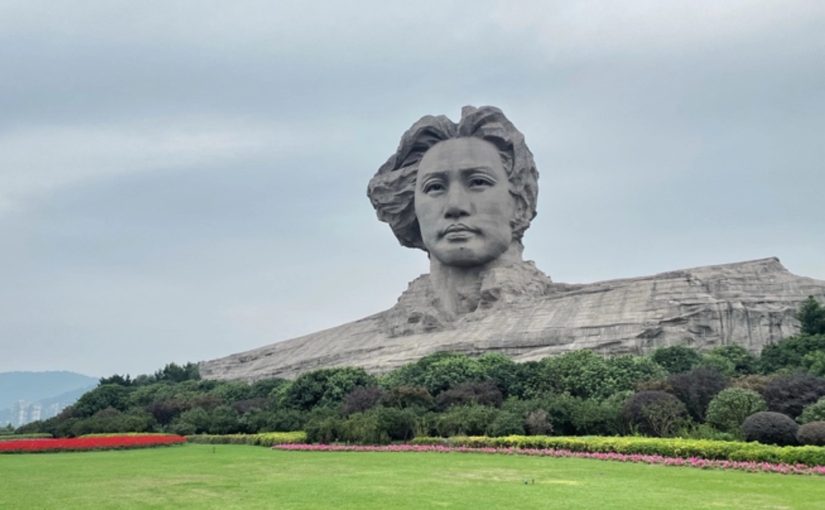
It will be 50 years since the death of Chairman Mao this coming Wednesday. I was one of those strange teenagers whose bedroom wall, much I’m sure to my parents’ bemusement, was not decorated with posters of footballers or rock stars but rather of Mao.
So, I remember so well when I heard the news that he’d died. I’d just turned 18. It was the summer between finishing school and starting university and, as part of my holiday job, I was on my hands and knees washing a kitchen floor when the lunchtime news on the radio led with this story.
Such are the kind of memories this anniversary evokes for me.
But the passage of half a century should allow for at least the beginnings of an objective assessment of a person’s life, work and legacy.
And in this spirit, let me express a perhaps controversial view that no single person in history has ever made a greater contribution to the liberation of humanity as that made by Mao Zedong. Further, if that is the case, then it is not unreasonable to suggest that he is the greatest person to have ever lived.
In the brief time available let me try to sketch a pathway to that bold assertion.
First, regarding his style of work, Mao insisted on careful study and social investigation.
Continue reading Was Chairman Mao the greatest person to have ever lived?