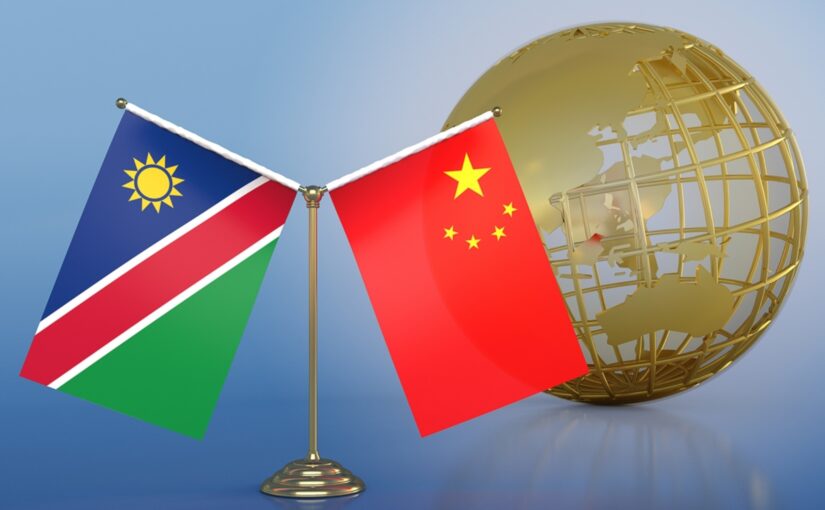
The Republic of Namibia celebrated the 36th anniversary of its independence on March 21 – an independence won after years of armed struggle against the imperialist-backed South African apartheid racist regime.
Marking the occasion, Sophia Shaningwa, secretary general of the country’s South West Africa People’s Organisation (SWAPO), gave an interview to China’s Xinhua News Agency. SWAPO led the liberation struggle and has governed the country since independence.
Shaningwa said that the historical bonds between Namibia and China continue to underpin a deepening strategic partnership, reflecting a model of South-South cooperation rooted in solidarity, equality and shared development goals.
China’s solidarity with Namibia dates back to a time “when the forces of apartheid and imperialism sought to crush our legitimate quest for self-determination. This solidarity was not merely rhetorical; it was concrete, consistent and rooted in the shared anti-imperialist principles that define South-South cooperation.”
Noting that China played a pivotal role on multiple fronts during Namibia’s liberation struggle, the secretary general said that what distinguished China’s support from that of some other partners was its principled and consistent nature.
“Unlike some partners whose assistance was sometimes tempered by geopolitical calculations or conditionalities, China’s solidarity was rooted in genuine anti-imperialist conviction and mutual respect for national sovereignty. It combined political advocacy, diplomatic engagement and practical aid without seeking influence or concessions.”
Since independence, China’s role in Namibia’s infrastructure development has been particularly visible, with projects delivered by Chinese companies, including major road networks, port expansions at Walvis Bay and energy infrastructure, she noted. “These projects have significantly improved connectivity, facilitated trade, and contributed to employment creation and energy security.”
Regarding trade and investment, Shaningwa said the relationship is “mutually beneficial and sustainable,” with a focus on “local content, skills transfer and long-term value creation. Our partnership with China is one of equals, characterised by mutual respect, non-interference in internal affairs and tangible results that advance national development.
“Through continued South-South cooperation, we aim to deepen people-to-people ties, expand trade on equitable terms, and jointly advance the Global Development Initiative. This partnership will remain a cornerstone of Namibia’s inclusive and sustainable development.”
The following article was originally published by the Xinhua News Agency.
As Namibia marks its 36th Independence Day, the historical bonds between Namibia and China continue to underpin a deepening strategic partnership, reflecting a model of South-South cooperation rooted in solidarity, equality and shared development goals, said Sophia Shaningwa, secretary general of the country’s South West Africa People’s Organization (SWAPO).
Namibia celebrated its 36th Independence Day under the theme “Beyond 35: For a Prosperous Future” in late March with President Netumbo Nandi-Ndaitwah presiding over the commemorations. Founded in 1960, the SWAPO has been the governing party since the country gained independence in 1990.
In an exclusive interview with Xinhua, Shaningwa said China’s solidarity with Namibia dates back to a time “when the forces of apartheid and imperialism sought to crush our legitimate quest for self-determination.”
“This solidarity was not merely rhetorical; it was concrete, consistent and rooted in the shared anti-imperialist principles that define South-South cooperation,” she said.
According to Shaningwa, China played a pivotal role on multiple fronts during Namibia’s liberation struggle. In 1973, the United Nations General Assembly recognized the SWAPO as the sole legitimate representative of the Namibian people.
Shaningwa said that what distinguished China’s support from that of some other partners was its principled and consistent nature.
“Unlike some partners whose assistance was sometimes tempered by geopolitical calculations or conditionalities, China’s solidarity was rooted in genuine anti-imperialist conviction and mutual respect for national sovereignty,” she said.
“It combined political advocacy, diplomatic engagement and practical aid without seeking influence or concessions,” she added, noting that the solidarity forged during the liberation struggle later evolved into a development partnership after independence.
“The history of solidarity has forged an unbreakable bond of mutual trust and respect that has seamlessly transitioned from a liberation partnership into strategic cooperation. Since independence, this legacy has manifested in a relationship built on equality, non-interference and shared development goals,” she said.
This enduring foundation has ensured that cooperation remains guided by the spirit of South-South solidarity, while Namibia’s engagement with frameworks such as the Forum on China-Africa Cooperation and its participation in the Belt and Road Initiative have further deepened bilateral ties, Shaningwa said.
China’s role in Namibia’s infrastructure development has been particularly visible, with projects delivered by Chinese companies, including major road networks, port expansions at Walvis Bay and energy infrastructure, she noted. “These projects have significantly improved connectivity, facilitated trade, and contributed to employment creation and energy security.”
Regarding trade and investment, Shaningwa said the relationship is “mutually beneficial and sustainable,” with a focus on “local content, skills transfer and long-term value creation.”
“Our partnership with China is one of equals, characterized by mutual respect, non-interference in internal affairs and tangible results that advance national development,” she said.
Looking ahead, Shaningwa identified industrialization, renewable energy, digital infrastructure and value addition in key sectors, such as mining and agriculture, as priority areas for future cooperation with China.
“Through continued South-South cooperation, we aim to deepen people-to-people ties, expand trade on equitable terms, and jointly advance the Global Development Initiative. This partnership will remain a cornerstone of Namibia’s inclusive and sustainable development,” she said.






*Socialist League of Malawi (LESOMA)*
*Rules of Internal Discipline and Organizational Conduct*
To safeguard ideological unity, organizational cohesion, and accountability to the working class, marginalized groups, and members dependent on social services, LESOMA adopts the following discipline framework. These rules are grounded in the principles of democratic centralism, ideological education, and principled criticism and self-criticism.
*1. Democratic Centralism*
The foundation of party unity and effectiveness.
*1.1 Unity of Action*: After thorough democratic deliberation, all members shall uphold and implement collective decisions, irrespective of personal reservations. Public dissent after a decision is contrary to discipline.
*1.2 Organizational Subordination*: Individual members are subordinate to the branch; the minority is subordinate to the majority; lower organs are subordinate to higher organs; all members and organs are subordinate to the Central Committee and Party Congress.
*1.3 Prohibition of Factionalism*: Formation of organized factions, cliques, or parallel centers within the party is prohibited. All debate occurs through established party channels and concludes with binding decisions.
*2. Ideological Clarity and Political Education*
To build a party of conscious socialists, not transient members.
*2.1 Mandatory Political Study*: All members shall undertake regular study of socialist theory, LESOMA’s programme, and Malawi’s political economy. Completion of basic ideological training is required for full membership.
*2.2 Ideological Evaluation*: Members are expected to demonstrate political consciousness through participation, conduct, and adherence to socialist values. Passive membership is inconsistent with LESOMA’s objectives.
*2.3 Combat Opportunism*: Careerism, political opportunism, and ideological wavering are incompatible with membership. Members must maintain integrity and reject alliances or conduct that compromise socialist principles.
*3. Revolutionary Discipline and Organizational Integrity*
To ensure the party remains an instrument of the people, not personal interest.
*3.1 Strict Accountability*: All members and leaders are accountable to the membership. Leaders are subject to regular review and recall by electing bodies for failure to perform duties or violation of party principles.
*3.2 Organizational Regularity*: Members shall attend meetings, participate in assigned work, and adhere to the chain of command and reporting structures. Unexcused absenteeism constitutes a breach of discipline.
*3.3 Zero Tolerance for Corruption*: Abuse of office, misappropriation of funds, nepotism, and favoritism are expellable offenses. All finances are subject to audit by the party’s elected treasury committee.
*3.4 Financial Discipline*: Members shall pay dues regularly and on time. Financial independence from external manipulation is a core principle; dues ensure collective ownership of the party.
*4. Criticism and Self-Criticism*
The method for resolving contradictions and strengthening the party.
*4.1 Constructive Feedback*: The principle of “unity — criticism — unity” shall guide all internal evaluation. Criticism must be factual, comradely, and aimed at improving work, not personal attacks.
*4.2 Open Internal Evaluation*: Party organs shall provide forums for members to scrutinize leadership decisions and organizational performance. No leader is above principled criticism.
*4.3 Timely Correction of Errors*: Mistakes shall be acknowledged openly and corrected swiftly. Concealing errors or defending them for prestige undermines the party and is a disciplinary matter.
*Enforcement*: Breaches of these rules shall be addressed through the party’s disciplinary committee, with penalties ranging from warning and suspension to expulsion, proportionate to the offense and consistent with due process.
*Purpose*: These rules ensure LESOMA remains a national, ideologically coherent party of committed socialists, not a vehicle for regionalism, opportunism, or career advancement.
*5. Membership and Structural Rules*
To maintain organizational security, ideological depth, and effective grassroots presence.
*5.1 Rigorous Recruitment and Political Induction*
Prospective members shall demonstrate commitment to socialist ideology, not merely practical or electoral interests. All new members must complete a basic political education module covering:
– Principles of democratic socialism and their application in Malawi
– LESOMA’s history, founding manifesto, and the political legacy of Dr. Attati Mpakati
– The party’s program for economic emancipation and social justice
This ensures members are well-informed advocates capable of advancing socialism in their communities and reduces politically inconsistent cross-party movement.
*5.2 Active Participation in Party Structures*
Every member shall belong to and actively participate in a basic party unit — cell or branch. Duties include attending meetings, executing assigned tasks, contributing to political work, and supporting organizational campaigns. Inactive membership is inconsistent with LESOMA’s requirements.
*5.3 Protection of Organizational Information and Security*
Members shall safeguard party information, plans, and internal communications. Vigilance against infiltration by hostile elements is a standing duty of all members. The party mandates regular political security briefings, drawing lessons from historical experience, including the infiltration of LESOMA branches in Zimbabwe that contributed to the assassination of founding President Dr. Attati Mpakati on 23 March 1983. Knowledge of socialist theory and party history is therefore a security measure: an ideologically grounded membership is the strongest defense against subversion.
—
*Purpose of these rules*: To ensure LESOMA functions as a disciplined, cohesive political instrument of the working masses, not as a platform for individual advancement. Organizational integrity and ideological clarity are non-negotiable safeguards of the party’s mission.