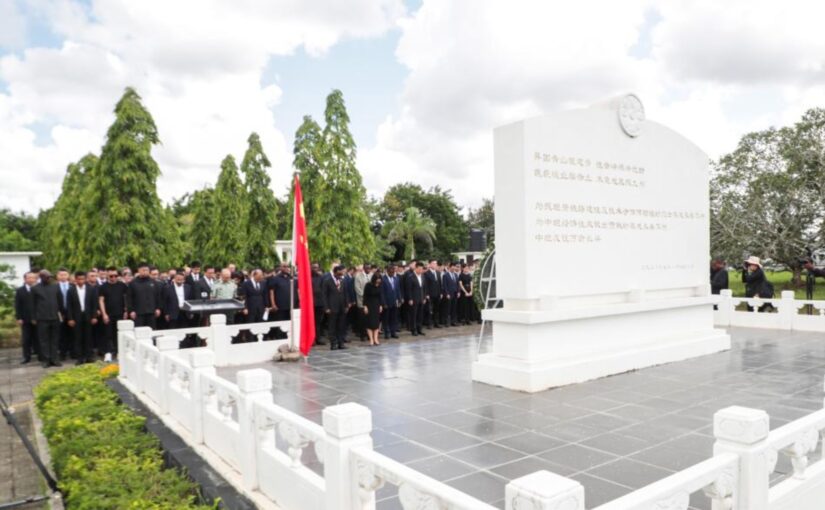
The Qingming Festival, when Chinese people traditionally remember their dead and their ancestors, this year fell on April 5.
Far away from China, in Tanzania, east Africa, the festival acquired particular poignancy. On its eve, China and Tanzania jointly commemorated the Chinese experts who sacrificed their lives during the construction of the Tanzania-Zambia Railway (TAZARA), the occasion also marking 50 years since the railway’s commercial operations began. Dignitaries from both countries gathered at the Chinese Expert Cemetery in Dar es Salaam, where they solemnly laid wreaths at the graves of the fallen heroes in a gesture of remembrance and respect.
Chinese Ambassador to Tanzania Chen Mingjian noted that more than 50,000 Chinese workers participated in the railway’s construction in the 1970s, with 70 losing their lives in the process.
Together with Tanzanian and Zambian counterparts, they carved a railway through mountains, valleys, and wilderness, overcoming immense logistical and environmental challenges.
“They are heroes who built a monument of China-Tanzania and China-Africa friendship,” she said.
Reporting the occasion, the Xinhua News Agency wrote: “What emerged was not just infrastructure, but a powerful symbol of solidarity among developing nations… For many in Zambia and Tanzania, TAZARA is not an abstract symbol; it is a lifeline woven into personal and national histories.”
Bruno Ching’andu, managing director of TAZARA, reflected on its importance to Zambia’s survival during the early years of independence.
“Without this railway, we would have suffered greatly,” the Zambian national said. “It gave us access to the port of Dar es Salaam when we needed it most.”
The railway enabled the movement of copper exports, agricultural goods, and essential supplies at a time when all land-locked Zambia’s neighbours to the south were under white racist colonial and apartheid rule, while Zambia, as one of the ‘frontline states’ that had itself just shaken off the yoke of British colonialism, was supporting its sister liberation movements whilst itself facing constant threats of aggression.
Tanzania’s Deputy Minister for Foreign Affairs and East African Cooperation James Kinyasi Millya highlighted that China’s support came at a time when it was itself still developing.
“They gave assistance purely as a gesture of friendship,” he said. “No conditions, no demands, just solidarity.”
He contrasted this with colonial-era railways, which were often built to extract resources rather than empower local populations. That difference, officials said, continues to define the spirit of China-Tanzania relations today.
A fresh agreement signed between China, Tanzania and Zambia in 2025 aims to revitalise the railway. Millya said:
“To honour those who sacrificed, we must ensure this railway continues to serve future generations. Generation after generation will remember. This is a friendship written not just in history, but in blood.”
The following articles were originally published by the Xinhua News Agency.
China, Tanzania pay tribute to fallen Chinese nationals in TAZARA railway construction
DAR ES SALAAM, April 4 (Xinhua) — China and Tanzania on Saturday jointly commemorated Chinese experts who sacrificed their lives during the construction of the Tanzania-Zambia Railway (TAZARA), marking 50 years since the railway’s commercial operations began.
Dignitaries from both countries gathered at the Chinese Expert Cemetery in Dar es Salaam, where they solemnly laid wreaths at the graves of the fallen heroes in a gesture of remembrance and respect during the Qingming Festival, a traditional Chinese occasion for paying tribute to the deceased and remembering ancestors.
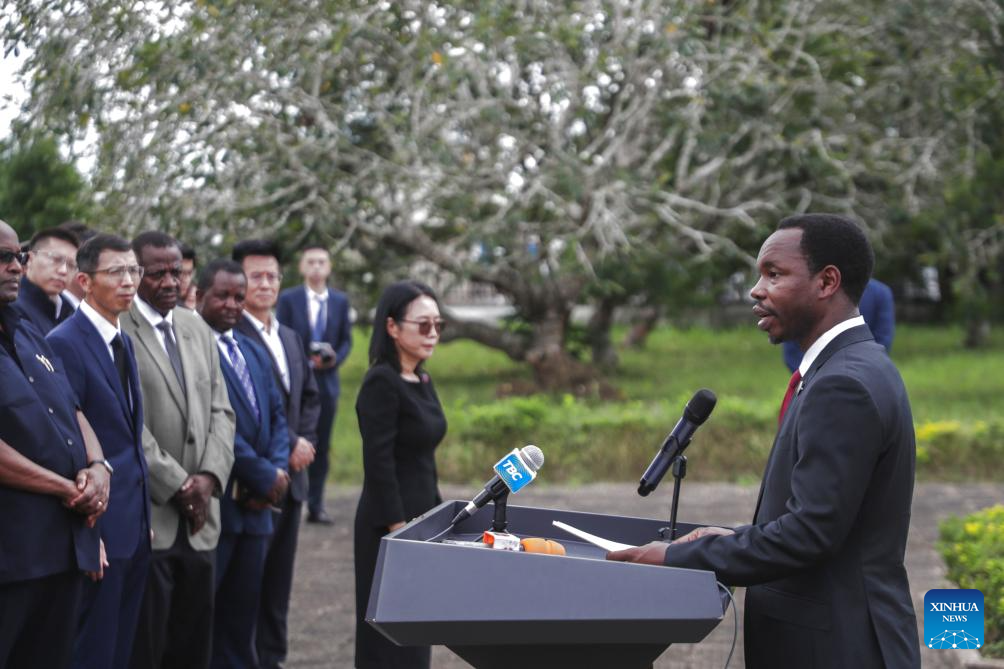
Speaking at the ceremony, Tanzania’s Minister of Home Affairs Patrobas Katambi hailed the TAZARA railway as “a living testament to South-South cooperation” and a symbol of the enduring friendship between Tanzania and China.
He emphasized the need to safeguard and modernize the railway as part of its revitalization agenda.
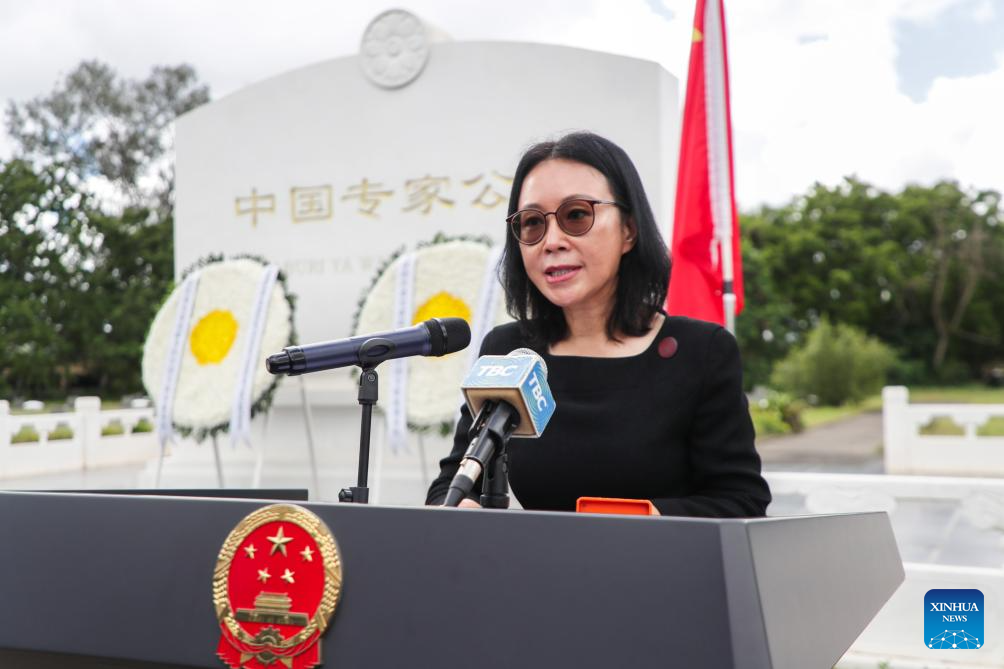
Chinese Ambassador to Tanzania Chen Mingjian noted that more than 50,000 Chinese workers participated in the railway’s construction in the 1970s, with 70 losing their lives in the process.
“They are heroes who built a monument of China-Tanzania and China-Africa friendship,” she said.
Also at the ceremony, Tanzania-Zambia Railway Authority Managing Director Bruno Ching’andu and Tanzania’s Deputy Minister of Foreign Affairs and East African Cooperation James Kinyasi Millya expressed gratitude to China, praising the traditional friendship between the two countries.
Honoring the fallen, carrying forward a shared China-Tanzania legacy through TAZARA
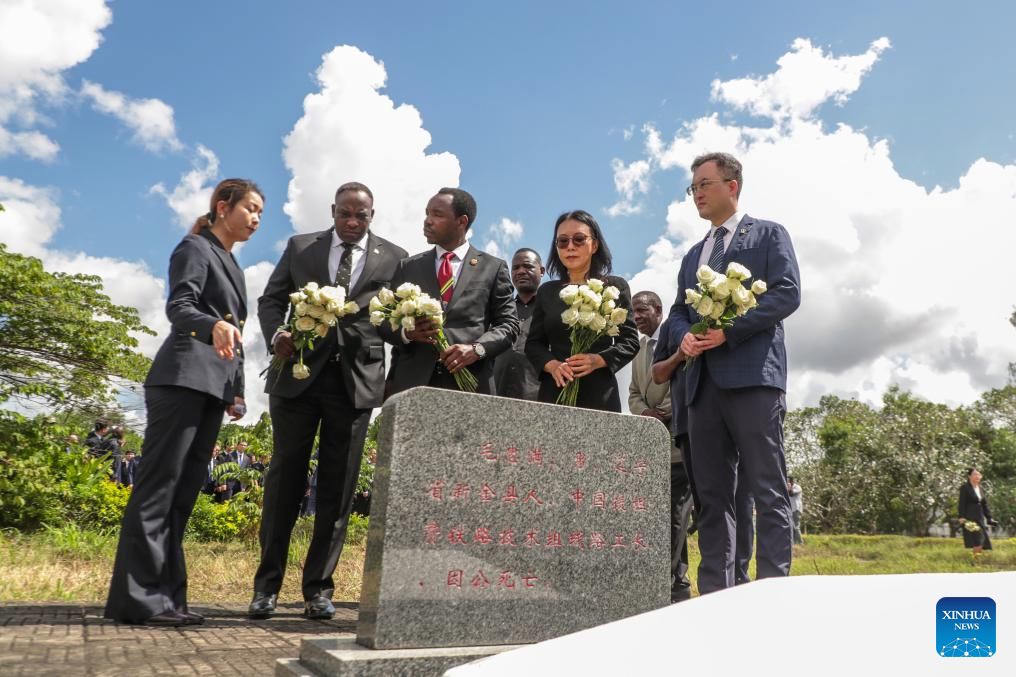
DAR ES SALAAM, April 5 (Xinhua) — Beneath the quiet coastal skies of Tanzania, rows of modest headstones at the Chinese Experts Cemetery were adorned with fresh wreaths, as leaders, diplomats, and citizens stood in silent tribute to lives lost far from home. This year’s Qingming Festival was not only solemn but deeply human.
The ceremony also marked the 50th anniversary of the start of commercial operations of the Tanzania-Zambia Railway Authority (TAZARA), a railway that continues to carry both goods and the enduring story of friendship among China, Tanzania, and Zambia.
Decades ago, China offered assistance without conditions, sending more than 50,000 experts, engineers, and workers to East Africa. Together with Tanzanian and Zambian counterparts, they carved a railway through mountains, valleys, and wilderness, overcoming immense logistical and environmental challenges.
What emerged was not just infrastructure, but a powerful symbol of solidarity among developing nations.
Yet the story of TAZARA is not only one of ambition, but it is also one of sacrifice. Seventy Chinese experts lost their lives during the railway’s construction and related projects.
On Saturday, dignitaries, including Tanzania’s Minister for Home Affairs Patrobas Katambi and Chinese Ambassador to Tanzania Chen Mingjian, stepped forward to lay wreaths on their graves, bowing in tribute to the fallen.
“These are not just names,” one attendee murmured as the ceremony unfolded. “They are part of our story.”
Katambi described TAZARA as “far more than a railway line,” calling it a living testament to mutual respect, trust, and a shared vision for development. He urged renewed commitment to preserving and modernizing the railway as a way of honoring those who built it.
Chen echoed that sentiment, noting that this railway has transported more than 30 million tons of freight and more than 40 million people over the years, making it an important economic artery for Tanzania, Zambia, and neighboring countries.
“They are heroes who built a monument of China-Tanzania and China-Africa friendship,” she said.
For many in Zambia and Tanzania, TAZARA is not an abstract symbol; it is a lifeline woven into personal and national histories.
Bruno Ching’andu, managing director of TAZARA, reflected on its importance to Zambia’s survival during the early years of independence.
“Without this railway, we would have suffered greatly,” the Zambian national said. “It gave us access to the port of Dar es Salaam when we needed it most.”
The railway enabled the movement of copper exports, agricultural goods, and essential supplies, helping stabilize economies and connect communities. Over time, it also facilitated cultural exchange, bringing people from different backgrounds together along its route.
Speakers at the ceremony emphasized that TAZARA stands apart from many infrastructure projects of the past.
Tanzania’s Deputy Minister for Foreign Affairs and East African Cooperation James Kinyasi Millya highlighted that China’s support came at a time when it was itself still developing.
“They gave assistance purely as a gesture of friendship,” he said. “No conditions, no demands, just solidarity.”
He contrasted this with colonial-era railways, which were often built to extract resources rather than empower local populations.
That difference, officials said, continues to define the spirit of China-Tanzania relations today.
Half a century on, TAZARA is entering a new chapter.
A concession agreement signed in 2025 aims to revitalize the aging railway, improving efficiency and restoring its role as a key regional transport corridor. And the revitalization has been led by China Civil Engineering Construction Corporation, a Chinese construction company.
“To honor those who sacrificed, we must ensure this railway continues to serve future generations,” he said.
China’s engagement in Tanzania has also expanded significantly, encompassing major infrastructure projects and growing trade ties. According to TAZARA’s official data, bilateral trade surpassed 10 billion U.S. dollars in 2025, reflecting deepening economic cooperation.
As the ceremony drew to a close, the atmosphere shifted from mourning to quiet resolve. Wreaths rested gently against the headstones, their colors vivid against the earth — a reminder that memory, too, can be an act of renewal.
“Generation after generation will remember,” Millya said. “This is a friendship written not just in history, but in blood.”
Fifty years after its first trains began to run, TAZARA remains more than steel and sleepers stretching across East Africa. It is a bridge between continents, a testament to what nations can achieve together, and a living story shaped by ordinary people who did extraordinary things.
Along its tracks, the past and the future continue to meet, guided by a spirit of friendship that, like the railway itself, endures.






That’s a really beautiful story. It’s incredible to think of people honoring those sacrifices so far from home.