The following article by Sara Vivacqua, a Brazilian lawyer and investigative journalist, examines the campaign of legal, diplomatic, economic and military pressure being waged by the Trump administration against Brazil ahead of the presidential election on 4 October. With Venezuela under military assault, Cuba under siege, new US bases in Argentina and Paraguay and marines deployed in Ecuador and Bolivia, Brazil stands as one of the very few remaining obstacles to Washington completing its sphere of influence across the hemisphere.
Of particular interest is the article’s account of China’s role. On 27 July, the day after Lula responded to a fresh 25 percent tariff with an op-ed in the Washington Post, Xi Jinping telephoned him to say that China highly values Brazil’s international status and influence and supports Brazil in safeguarding its sovereignty and independence and opposing external interference. Wang Yi reaffirmed that support once the tariff took effect.
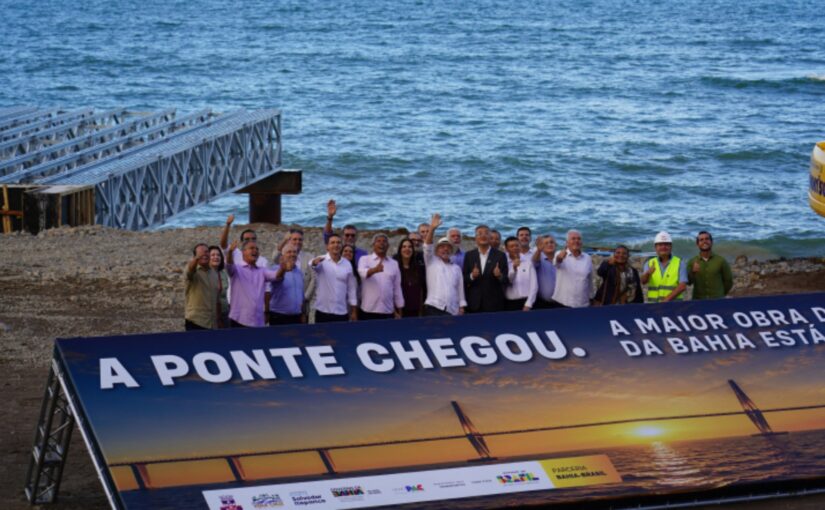
The support goes well beyond communiqués. China is now the destination for 28.7 percent of everything Brazil exports and supplies just over a quarter of its imports. Chinese investment reached $6.1 billion in 2025, a 45 percent rise that made Brazil the single largest destination for Chinese outbound investment. BYD assembles vehicles at Camaçari, in Bahia, on the site Ford abandoned in 2021; Brazilian purchases of Chinese cars rose 147 percent year on year in the first five months of 2026, taking Brazil from sixth place in the world to first. The Salvador–Itaparica bridge, which will be Latin America’s largest cable-stayed cross-sea bridge, is being built by Chinese companies.
Most consequential of all is the monetary architecture. Brazil and China now settle trade directly between the real and the yuan, backed by a central bank swap line of 190 billion yuan, clearing the next working day through China’s own cross-border payment system. Transactions that once had to pass through correspondent banks in New York no longer need to – which, as Sara puts it, is the quiet reason the tariffs bite less than they once did. The more of the relationship that sits outside the dollar system, the less leverage a hostile US Treasury has.
None of this is lost on Washington. The article notes that the “Shield of the Americas”, an 18-member hemispheric intelligence-sharing coalition ostensibly aimed at transnational crime, is widely understood to be directed at China – whose trade with Latin America has risen from $12 billion in 2000 to over $500 billion in 2024. Latin America, the author concludes, has become a priority in the US campaign of encirclement against China and its war on multipolarity, and Brazil’s election now sits at the epicentre of that project.
This article first appeared in Beijing Review.
When Brazil votes for its president on October 4, the election will either be a decisive step forward for the future of the Global South and the emerging multipolar order or aid the continued reassertion of U.S. hegemony across the region. President Luiz Inácio Lula da Silva of the Workers’ Party is in a statistical dead heat with Flávio Bolsonaro, son of convicted and imprisoned former President Jair Bolsonaro and a key ally in U.S. President Donald Trump’s efforts to consolidate the region into a far-right sphere of U.S. vassalage.
The U.S. military assault on Venezuela’s sovereignty, the campaign for the terminal strangulation of Cuba, the expansion of counterterrorism designations targeting political opponents, the establishment of new military bases in Argentina and Paraguay, the deployment of Marines on the ground in Ecuador, Bolivia and Venezuela, and the installation of AI-driven war machinery in Argentina have already begun to reshape the continent in the vision of the Monroe Doctrine, which aims to control the Western Hemisphere and plunder its resources.
Brazil, the largest economy in Latin America, now stands as one of the very few remaining obstacles to the Trump administration completing its sphere of influence, with the Lula da Silva government advancing an independent, multipolar agenda and strengthening ties with the Global South.
Concerningly, the Trump administration is treating the electoral contest in Brazil as if it were its own, launching a coordinated campaign of overt legal, diplomatic, economic and political aggression targeting the Brazilian left. For Lula da Silva and for Brazil’s institutions, the systematic character of these attacks is a sign the election will have existential consequences for the whole region. For Lula da Silva, the goal is not only reelection; it is creating a precedent that demonstrates U.S. political interference can be resisted and defeated.
The tariff plot that backfired
Contrary to what Trump’s impulsive nature might suggest, his targeting of Brazil operates in a coordinated and organized manner on multiple simultaneous fronts and it relies on allies inside the country itself. The Bolsonaro family have solicited and lobbied Washington for sanctions against Brazilian institutions and officials; fed its agencies with national security information that, according to the Brazilian Supreme Federal Court, was stolen by the Bolsonaro administration; and timed this pressure to coincide with Brazil’s electoral calendar.
In June 2025, Eduardo Bolsonaro, another of Jair Bolsonaro’s sons, along with Paulo Figueiredo, grandson of Brazil’s last military dictator, General João Figueiredo, met with U.S. Secretary of State Marco Rubio and Trump at the White House, requesting an investigation into Brazil covering digital trade, electronic payment services, preferential tariffs, intellectual property, ethanol market access and deforestation. Less than a month later, the Office of the U.S. Trade Representative (USTR) opened a Section 301 investigation against Brazil, with Trump announcing a 50-percent tariff on Brazilian imports in a public letter, conditioning the withdrawal of the measure on the release of Jair Bolsonaro, calling his conviction a “witch hunt,” and citing what he described as Brazilian restrictions on free speech. (Section 301 of the Trade Act of 1974 allows the U.S. president to unilaterally impose tariffs or other trade restrictions on foreign countries for alleged unfair trade practices—Ed.)
On July 30, 2025, the U.S. Treasury placed sanctions on Justice Alexandre de Moraes of Brazil’s Supreme Federal Court under the Global Magnitsky Act, citing political persecution in the Bolsonaro case. That law is a sweeping extraterritorial expansion of U.S. jurisdiction, allowing the United States to freeze the assets of foreign nationals it accuses of corruption or rights violations with no foundation whatsoever in international law. It was the first time it was applied to a sitting justice of a country’s highest court. Eduardo Bolsonaro bragged on social media that the sanction proved the success of their lobbying: “When I exiled myself to the U.S., I made my intention very clear: to sanction Alexandre de Moraes. Today, I have the feeling of a mission accomplished.”
Lula da Silva understands the situation clearly and has moved to strengthen relations with the Global South. At the BRICS summit hosted by Brazil in Rio de Janeiro in July 2025, he called for a coordinated response to the U.S. tariffs and placed Brazil at the center of the organization, which is a group of emerging economies. He also made efforts to deepen ties with China, with the two governments expanding trade talks and pledging to defend multilateralism. Other measures included coordinating with other Global South leaders, including India’s Narendra Modi, over the tariff pressure; enforcing its Economic Reciprocity Law, which empowers it to retaliate against unilateral trade measures; and accelerating its trade pivot toward non-U.S. markets.
One year later, presidential candidate Flávio Bolsonaro went to Washington to explain that the tariff campaign had backfired. According to Flávio Bolsonaro, he met with Trump, Vice President JD Vance and Rubio to ask the U.S. to tie its economic pressure on Brazil to the electoral result, applying it only if Lula da Silva wins. Testifying as a witness in the USTR investigation opened at his brother Eduardo’s request, he stated that “each additional tariff strengthens exactly the government it is meant to pressure.”
The episode constitutes a serious electoral offence under Brazilian electoral law.
What is more, Flávio and Eduardo Bolsonaro hold no executive mandate, do not represent the Brazilian state on tariff, trade or diplomatic matters, and have no institutional authority to negotiate, on behalf of Brazil, foreign economic measures directed against the country. Yet they have acted as a kind of parallel government—or even a parallel presidency—by directly asking U.S. authorities to suspend or postpone a decision with potentially nationwide consequences for Brazil’s economy and its own citizens, in the interests of a foreign government.
On July 16, Washington announced a fresh 25-percent tariff on a wide range of Brazilian goods under Section 301, effective from July 22 and openly tied to the coming election. On July 27, the day after Lula da Silva responded with an op-ed in The Washington Post calling the tariffs a mistake, President Xi Jinping telephoned him, stating that China highly values Brazil’s international status and important influence and supports Brazil in safeguarding its sovereignty and independence, opposing external interference, and calling for closer coordination between the two countries as members of the Global South. Foreign Minister Wang Yi reaffirmed China’s support for Brazil’s sovereignty after the new tariff took effect.
Beijing’s support for Brazil goes well beyond communiqués. In addition to the aforementioned bilateral trade record set in 2025, China now takes 28.7 percent of everything Brazil exports and supplies just over a quarter of what it imports.
Crucially, Brazil and China now settle trade directly between the real and the yuan, backed by a central bank swap line of 157 billion reals (190 billion yuan or $26.39 billion), and clear it the next working day through China’s own cross-border payment system. Transactions that once had to pass through correspondent banks in New York no longer need to. This is the quiet reason tariffs bite less than they once did: The more of the relationship that sits outside the dollar system, the less leverage a hostile U.S. Treasury has.
Investment has followed. Chinese capital committed to Brazil reached $6.1 billion in 2025, a 45-percent rise, making Brazil the single largest destination for Chinese outbound investment. Between January and May, Brazil bought $5.2 billion of Chinese cars, up 147 percent year on year, moving from sixth in the world to first. Chinese electric car maker BYD now assembles vehicles at Camaçari, in the Brazilian state of Bahia, on the site Ford abandoned in 2021.
Bolsonaro family’s legal crisis
Eduardo Bolsonaro is today a fugitive from Brazilian justice and was convicted this year by Brazil’s Supreme Federal Court of coercion in the course of judicial proceedings. The charge arose from his systematic efforts in the United States to pressure and intimidate the Brazilian judiciary, seeking to interfere in the proceedings against Jair Bolsonaro and others accused of attempting to overthrow the government. Also charged with coercion over his alleged role alongside Eduardo Bolsonaro is Paulo Figueiredo, a key figure in the interface with the Trump administration. Flávio Bolsonaro is himself linked to a suspected international money-laundering scheme allegedly run with his brother Eduardo in Texas.
Jair Bolsonaro was convicted and imprisoned for attempting a coup d’état in a plot involving parts of the military establishment to overturn the election results. The plot culminated on January 8, 2023, when his supporters violently stormed Congress, the Supreme Federal Court and the presidential palace in Brasília.
For the Bolsonaros, an electoral victory has become as existentially essential as it is for Trump’s plans in Latin America. It is their only apparent path to resolving their pending legal battles and securing Jair Bolsonaro’s release from prison. It is therefore no coincidence that they have called for the impeachment of Supreme Federal Court justices, accusing the court of corruption and of suppressing free speech.
The military threat
In 2026, U.S. pressure extended beyond trade. In May, Trump signed the National Counterterrorism Strategy that, for the first time, defines “violent left-wing extremists” as terrorists alongside jihadist groups and cartels. On June 5, the United States designated two Brazilian criminal organizations, the Primeiro Comando da Capital (PCC) and the Comando Vermelho, as Foreign Terrorist Organizations and Specially Designated Global Terrorists—categories that expose entities and individuals connected to them to U.S. secondary sanctions.
Speaking at Guantanamo Bay on June 10, U.S. War Secretary Pete Hegseth said the United States was “taking back our hemisphere” and would pursue targets in Latin America using the same intelligence and methods employed against al-Qaeda and ISIS. The administration had earlier returned Cuba to its list of state sponsors of terrorism and, in October 2025, added Colombian President Gustavo Petro to a Treasury sanctions list. The Trump administration has set out a clear and deliberate doctrine that redefines terrorism, using the category to label hostile governments as terrorist threats.
In July, Brazil’s Foreign Ministry warned Congress that the terrorist designation could be used to justify U.S. military action on Brazilian territory, now surrounded by new U.S. military bases.
Through the so-called Shield of the Americas, an 18-member hemispheric coalition with the region’s more right-wing governments at its core, the U.S. has created an intelligence-sharing network whose declared target is transnational crime, but whose language about “foreign influence” and “interference in the hemisphere” is widely read as being aimed at China. China’s trade with the region rose from $12 billion in 2000 to over $500 billion in 2024.
A U.S.-Israel diplomatic offensive
One of the fronts of the pressure campaign against Brazil has been the erosion of diplomatic rules themselves. In August 2026, Israel’s appointment of Vivian Aisen, a dual Israeli-Brazilian national, as consul-general in São Paulo was rejected by Brasília under the Vienna Conventions, which allow a host state to refuse the appointment of its own national or dual national.
Paulo Sérgio Pinheiro, one of Brazil’s most internationally recognized human rights experts, former UN Special Rapporteur and former Chair of the UN Independent International Commission of Inquiry on Syria, described the nomination, in an interview with the author, as a deliberate provocation. He argued that Israel is fully aware of diplomatic appointment rules, having previously used the agrément process as a political tool in its disputes with Brazil.
Days later, Washington revoked the visa of Brazil’s ambassador to the United States, Maria Luiza Ribeiro Viotti, in what the Brazilian Foreign Ministry described as retaliation for rejecting another nomination by Marco Rubio that deliberately bypassed established diplomatic norms and the principle of mutual consent governing relations between states.
Latin America has become a priority for the Trump administration in its campaign of encirclement against China and its ongoing war on multipolarity. Today Brazil’s elections are at the epicenter of this project. Washington is building an overt legal and military architecture to reclaim Latin America as its “backyard,” and Lula da Silva is clearly standing in its way.






One thought on “Brazil’s election is a test case for the Global South”