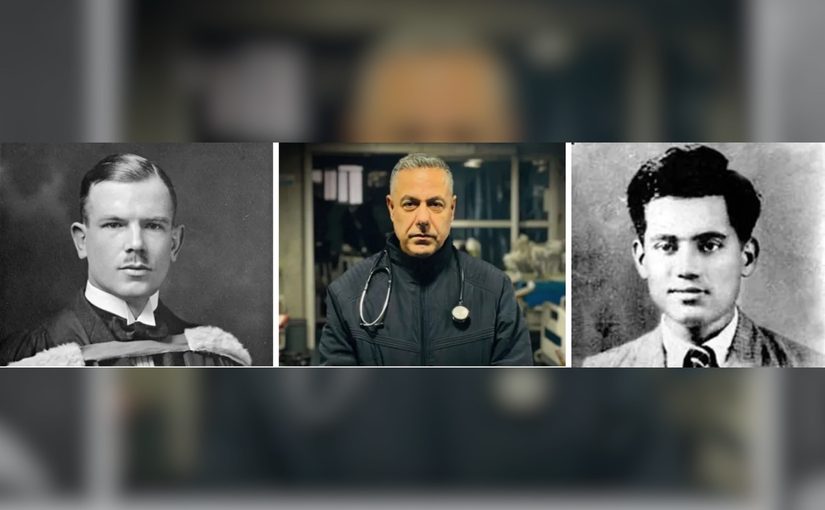
October 7, 2026 marked the third anniversary of the Al Aqsa Flood, when fighters of the Islamic Resistance Movement Hamas and other militant Palestinian resistance organisations broke out of Gaza, aptly described as the greatest concentration camp in the contemporary world, by air, land and sea, taking the war to the zionist enemy.
It also marks the third anniversary of an ongoing, relentless and pitiless genocide against the Palestinian people, distinguished from nazi barbarism only by its brazenness and boastfulness.
Amongst the myriad of statistics it could have chosen to cite on this occasion, Palestine Chronicle notes a report from Palestine’s education ministry that a total of 20,748 Palestinian students and 1,058 educational and administrative staff were killed in Gaza and the occupied West Bank during the last three years of genocide.
“The overwhelming majority of the deaths occurred in Gaza, where Israeli attacks killed 19,189 school students and 1,386 university students. Another 28,586 school students and 3,082 university students were injured.”
Another report from Gaza’s Ministry of Social Development highlights that 71,846 children have lost one or both parents during three years of Israeli genocide, while the number of widows has reached 64,413.
Hospitals, their patients and their heroic staff have been particular targets of the genocidal onslaught. In his Substack, Journal of International Solidarity, A. Shantha notes that Dr. Hussam Abu Safiya was first illegally captured and interned by the Israeli military on December 27, 2024.
He notes that the health of Dr. Abu Safiya, whose dignity, courage and heroism has moved and inspired the world, has severely declined since his internment. “His weight dropped by one-third of what it previously was as he continues to be underfed and is forced to sustain brutal and barbaric physical abuse and medical negligence [at the hands of] his Israeli captors. Dr. Abu Safiya remains in Israeli captivity alongside at least 160 other medical professionals, including 20 doctors.”
In solidarity with Dr. Abu Safiya, Shantha republished on August 19, an article he originally posted on February 12, 2025, just over a month after Dr. Abu Safiya was first illegally captured and interned by the Israeli military on December 27, 2024.
He writes: “I am republishing this article as a modest attempt to join this broader chorus drawing attention to the situation of Dr. Hussam Abu Safiya. In particular, this article attempts to situate the events of Dr. Abu Safiya’s abduction and internment within the broader context of a protracted anti-colonial national liberation struggle and seeks to address the role played by healthcare workers in resisting the colonial drive to de-develop and genocidally lay waste to indigenous societies. This article looks at the case of Palestine alongside the historical context of China’s national liberation struggle and two doctors – Dr. Norman Bethune (Canada) and Dr. Dwarakanath Kotnis (India) – who were internationalists and sought to contribute to China’s struggle for sovereignty and, ultimately, the Chinese people’s collective right to life.”
This year also marks the 90th anniversary of the victorious conclusion of the Long March and Shantha writes:
“The 1930s were a tumultuous decade in recent Chinese history. The Communist Party of China (CPC) and the movement it led suffered a major strategic setback in the civil war against the Nationalist Party (Kuomintang – KMT), resulting in the need for the Communists to retreat from a base area in the south to another base area up in the north. This retreat became known as the Long March. Freedom fighters literally walked approximately 10,000 km from Jiangxi to Shaanxi while continuing to fend off attacks from the KMT. This year-long… journey started with 100,000 people while only around 8,000 reached Shaanxi – many perished as a result of war, exhaustion, and hunger, while many others discontinued and stayed in villages along the route. The sacrifices made during this year-long ordeal for national liberation are unimaginable.”
He further notes: “One could argue that both Dr. Bethune and Dr. Kotnis would be much less known (if at all) in Canada and India respectively, if it were not for China’s commitment to keeping their memory alive domestically as well as diplomatically. This commitment on the part of the Chinese people indicates an understanding of the immense hardship and sacrifice required to achieve national liberation. There is an understanding that these two individuals – by virtue of their medical expertise – contributed significantly to the Chinese people’s collective struggle for the right to life, in opposition to imperial Japan’s desire to deprive them of that right.
“One would wish that the unfathomable sacrifices made in the Chinese national liberation struggle, and those of the South Asian, West Asian, African, and Caribbean liberation struggles of the mid-20th century remained relegated to that era. Unfortunately, that is not the case. The imperialist force from which these liberation struggles attempted to break has – though weakened – transformed its mechanisms of domination in order to continue its hegemony. [These] kinds of unfathomable sacrifices… continue to be made at the hands of imperialism, most acutely in Palestine today.”
And despite three years of genocide, supported by the most powerful imperialist states, the heroic Palestinian people, of whom Dr. Hussam Abu Safiya is an outstanding symbol and representative, remain unbroken, undefeated and unbowed. The zionist entity is unable to secure control over Gaza. And the Israeli regime and its backers have never been more isolated and more hated across an entire world whose peoples stand with Palestine. As the Irish hunger strike martyr Bobby Sands, himself much loved in Palestine, wrote in his Prison Diary:
“If they aren’t able to destroy the desire for freedom, they won’t break you. They won’t break me because the desire for freedom, and the freedom of the Irish people, is in my heart.”
It is in the spirit of the worldwide call to Free Dr. Hussam Abu Safiya and to Free Palestine, that we now reprint the Journal of International Solidarity post of August 19.
Dr. Hussam Abu Safiya and the Anti-Colonial Right to Life
I am republishing this article that I first released on Feb 12, 2025, just over a month after Dr. Hussam Abu Safiya was first illegally captured and interned by the israeli military on December 27, 2024.
Dr. Hussam Abu Safiya’s health has severely declined since his internment. His weight dropped by one-third of what it previously was as he continues to be underfed and is forced to sustain brutal and barbaric physical abuse and medical negligence by his israeli captors. Dr. Abu Safiya remains in israeli captivity alongside at least 160 other medical professionals, including 20 doctors.
In October 2024, the israeli regime began its siege of northern Gaza. As part of this, the regime intensified its attacks against hospitals in the area, primarily Kamal Adwan Hospital in Beit Lahia, at which Dr. Abu Safiya was the Director. The regime deprived the hospital of essential needs like medicine and oxygen supplies, while forcibly expelling patients in need of medical attention and medical staff, as well as bombing buildings surrounding the hospital.
For more than 100 days between October and December 2024, Dr. Abu Safiya pleaded daily to the world over social media to stop the attacks on healthcare in the north of the strip, but to no avail. This ordeal ended with the forced evacuation of the hospital and the barbaric capture of its Director.
In recent months, as Dr. Abu Safiya’s health has seen a marked decline, calls for his immediate release have been growing louder globally, including from the UN Independent International Commission of Inquiry on the Occupied Palestinian Territory, including East Jerusalem, and Israel, Amnesty International, and several other healthcare associations and coalitions.
I am republishing this article as a modest attempt to join this broader chorus drawing attention to the situation of Dr. Hussam Abu Safiya. In particular, this article attempts to situate the events of Dr. Abu Safiya’s abduction and internment within the broader context of a protracted anti-colonial national liberation struggle, and seeks to address the role played by healthcare workers in resisting the colonial drive to de-develop and genocidally lay waste to indigenous societies. This article looks at the case of Palestine alongside the historical context of China’s national liberation struggle and two doctors — Dr. Norman Bethune (Canada) and Dr. Dwarakanath Kotnis (India) — who were internationalists and sought to contribute to China’s struggle for sovereignty and, ultimately, the Chinese people’s collective right to life.
Free Dr. Hussam Abu Safiya.
Imperialism is a global system — the one we live in — whereby the wealth of the world’s land, natural resources, and the labour of its peoples flows to a certain class of Euro-American and Japanese capitalist elites. Some of this wealth gets redistributed to the working people of those countries, but decreasingly so. This wealth actually does not simply flow to the global north (the United States, Europe, the white settler colonies, and Japan), it is expropriated by force from the peoples of the global south. Across the global south, the conditions of survival are harsh. The right to life is deprived from you and those you care about, continuing to suck more out of you.
The most extreme example of imperialism stealing the right to life is the genocidal occupation of Palestine. The past 15 months have seen unspeakable horrors — the targeting of children, the annihilation of entire bloodlines, and barbaric levels of torture and cruelty. And yet, the story of the Palestinian people is not a story of defeat, it is one of resistance and resilience. This resistance represents the audacity of a people to live and prosper. The Al-Aqsa Flood military offensive against Zionist occupation was the latest stage in a protracted struggle that represents a people’s audacity to advocate for their right to life.
The basis for any society’s right to life is its ability to socially reproduce itself, which necessarily entails robust access to healthcare. It is no coincidence that israel skirts international law and has intentionally targeted and undermined — if not almost entirely destroyed — all of Gaza’s hospitals; part of genocide involves systematically destroying the ability for the targeted population to recover.
It is in this context that a colonized population’s medical workers — doctors, nurses, and medical staff — serve as frontline defenders of their people’s right to life.
I would now like to introduce you to a similar story of national liberation from nearly a century ago, the role two particular medical workers played in it, and how they continue to be remembered almost a century after liberation. I introduce this story because for many of us that are witnessing both the horror and resilience of a national liberation struggle, it is worth putting this struggle into historical perspective, especially since the individual accounts of national liberation histories are obscured in the western information-sphere.
The Memory of Two Foreign Doctors in China’s National Liberation
The 1930s were a tumultuous decade in recent Chinese history. The Communist Party of China (CPC) and the movement it led suffered a major strategic setback in the civil war against the Nationalist Party (Guomindang – KMT), resulting in the need for the Communists to retreat from a base area in the south to another base area up in the north. This retreat became known as the Long March. Freedom fighters literally walked approximately 10,000 km from Jiangxi to Shaanxi while continuing to fend off attacks from the KMT. This year-long (1934-1935) journey started with 100,000 people while only around 8,000 reached Shaanxi — many perished as a result of war, exhaustion, and hunger, while many others discontinued and stayed in villages along the route. The sacrifices made during this year-long ordeal for national liberation is unimaginable.
It was only two years later in 1937 when Japan invaded China for a second time, forcing the CPC and KMT to unite against this external threat. It is worth noting that, leading up to that point, Japan had gradually been forcibly acquiring more territory — China’s Taiwan island in 1895, Korea in 1910, and Manchuria (China’s northeast region) in 1931. Less than 6 months into the Japanese invasion of China, the notorious Nanjing Massacre took place, wherein approximately 300,000 were killed within the span of just six weeks. The carnage committed by imperial Japan included ‘killing contests’ between soldiers, the targeting of children, and mass sexual violence against Chinese women. For those of us observing and in tune with the Palestinian national liberation struggle today, events such as the Long March, the Nanjing Massacre, and ultimately the War of Resistance against Japan waged by the Chinese demonstrate the tumultuousness of the path of liberation in China — though liberation did indeed ultimately arrive in 1949.
It is in the context of the War of Resistance against Japan that Chinese General Zhu De (朱德) had made a formal request in 1938 to Jawaharlal Nehru — then a key leader in the struggle for Indian independence — for assistance in matters of healthcare, in order to support the effort for national liberation against Japanese occupation. In response, India sent a team of 5 doctors, all of whom eventually returned to India, except for one Dr. Dwarakanath Kotnis (柯棣华). Dr. Kotnis was from Solapur, Maharashtra and received his medical training at the then-University of Bombay. The 5-person team, though small, was a significant convoy of personnel, given that it represented a solidarity between two nations that were both striving for independence. In fact, in preparation to send a team to China, the Indian National Congress ran a “China Day” campaign to raise funds among Indians in order to support this Indian delegation; there were events held, speeches given, and performances among other things to support this campaign. There was a strong consciousness in India at this time that the invasion of China by the Japanese was recognizable to India’s subordination under Britain — something that Dr. Kotnis was also conscious of, and ultimately acted on.
Dr. Norman Bethune, a Canadian, arrived in China also in 1938 and joined the CPC’s Eighth Route Army led by Mao Zedong. Prior to coming to China, he had received medical training at the University of Toronto and practiced at McGill University’s Royal Victoria Hospital, where he developed several medical innovations in thoracic technique. In addition to his technical prowess, he was very much concerned with the socio-economic dimensions of medicine; he was an early advocate for universal healthcare in Canada (four decades before it was instituted country-wide) — a central concern of his that eventually led him to take up the communist cause and join the Communist Party of Canada. While serving the national liberation struggle in China, he treated wounded soldiers and organized medical training for local doctors and nurses, and has been credited for bringing modern medicine to rural China. Dr. Bethune died just around a year after arriving in China by blood poisoning contracted while operating on a soldier. Following this, Mao Zedong wrote his eulogy titled “In Memory of Norman Bethune”. This text is a mandatory read for primary school children in China today, and is why Dr. Bethune is still widely remembered. Mao writes of Bethune:
He arrived in [Yan’an] in the spring of last year, went to work in the Wutai Mountains, and to our great sorrow died a martyr at his post. What kind of spirit is this that makes a foreigner selflessly adopt the cause of the Chinese people’s liberation as his own?
He continues:
Leninism teaches that the world revolution can only succeed if the proletariat of the capitalist countries supports the struggle for liberation of the colonial and semi-colonial peoples and if the proletariat of the colonies and semi-colonies supports that of the proletariat of the capitalist countries. Comrade Bethune put this Leninist line into practice.
Not long after Bethune’s death, Dr. Kotnis (who also arrived in China in 1938) became the Director of the newly-renamed Dr. Bethune International Peace Hospital. Like Bethune, Dr. Kotnis also served with the CPC’s Eighth Route Army operating on wounded Chinese soldiers — as many as 800 in 13 days, even once providing medical service continuously for 72 hours without sleep. While in China, Dr. Kotnis picked up both spoken and written Chinese and had eventually gotten married to a local nurse, Guo Qinglan (郭庆兰), while working at the same hospital. Just three months after the two had their only child, Dr. Kotnis died at just 32 years old due to a series of epileptic seizures, seemingly related to the intense demands of his work.
These two foreign doctors are still to this day commemorated as martyrs of China’s national liberation struggle. The West and South sides of the Martyrs’ Memorial Park in Shijiazhuang, Hebei province are dedicated to Dr. Bethune and Dr. Kotnis respectively. Dr. Bethune continues to have many statues in China dedicated to him, as well as several medical institutions and awards named after him. Dr. Kotnis continues to be honoured on every high-level official trip to India by the Chinese government, who also maintains close ties to Dr. Kotnis’ family in India. Dr. Kotnis’ living family has been visited by Chinese state representatives in 1950, 1996, 2001, 2002, 2006, 2013, and 2014. In 2017, China presented to the University of Mumbai — where Dr. Kotnis attained his medical training — a restored version of Mao’s handwritten calligraphic condolence note sent to Dr. Kotnis’ family in the 1950s. On several Indian official delegations to China, Dr. Kotnis’ widow, Guo Qinglan, has been an honoured guest present at these diplomatic functions, including in 2000, 2003, and 2006.
One could argue that both Dr. Bethune and Dr. Kotnis would be much less known (if at all) in Canada and India respectively, if it were not for China’s commitment to keeping their memory alive domestically as well as diplomatically. This commitment on the part of the Chinese people indicates an understanding of the immense hardship and sacrifice required to achieve national liberation. There is an understanding that these two individuals — by virtue of their medical expertise — contributed significantly to the Chinese people’s collective struggle for the right to life, in opposition to Imperial Japan’s desire to deprive them of that right.
Palestine’s Medical Workers and the Right to Life
One would wish that the unfathomable sacrifices made in the Chinese national liberation struggle, and those of the South Asian, West Asian, African, and Caribbean liberation struggles of the mid-20th century remained relegated to that era. Unfortunately, that is not the case. The imperialist force from which these liberation struggles attempted to break has — though weakened — transformed its mechanisms of domination in order to continue its hegemony. The kinds of unfathomable sacrifices mentioned in the previous section continue to be made at the hands of imperialism, most acutely in Palestine today.
Here, I highlight the story of Dr. Hussam Abu Safiya, a pediatrician and the Director of Kamal Adwan Hospital in the north of the Gaza strip. Since the beginning of the genocidal war on Gaza in 2023, the israeli occupation divided the Gaza strip into two — the north and the south — making a militarized border in the middle, known as the Netzarim corridor. At the beginning of the war, israel attempted to forcefully displace “all the civilians” out of the north and into the south (remember that a significant part of the population in the strip are concentrated in the north because it includes Gaza City). As a result of this much of the population of the north were forcibly displaced into the south. Important to note though: a significant portion of the population in the north resisted forced displacement and stayed in the north knowing it would be where israel concentrates its barbaric military operations.
In October 2024, a year after the first round of forced displacement from the north, israel declared a siege on the north of the strip and once again attempted to forcibly “evacuate civilians” in order to declare it a “military zone”. Still, much of the population resisted by staying firmly on the land that is theirs. As part of this siege, israel intensified its attacks on the remaining hospitals in the north, including and especially Kamal Adwan Hospital. The patients and staff at this hospital were subject to the deprivation of essential needs like medicine and oxygen supplies, followed by the forced expulsion of patients in need of medical attention as well as medical staff, who were forced to exit the hospital stripped down and semi-naked. A building next to the hospital where many staff were staying with their families was hit with an israeli airstrike, killing at least 50.
It is in these dire conditions that Dr. Hussam Abu Safiya and his entire team at Kamal Adwan had to continue their work of preserving and reproducing the population of Gaza, and by extension, its ability to resist colonial occupation. Since the beginning of the siege in October, Dr. Abu Safiya continually pleaded with the rest of the world via social media to get the assault on the hospital and the siege on the north to stop. He did this multiple times on video over the course of almost 100 days. Videos of the forced displacement from the hospital, the stripping of medical staff as they are expelled, and of Dr. Abu Safiya’s appeals to the world can be found here — the Electronic Intifada has reported in detail on these issues.
Ultimately, Dr. Abu Safiya was abducted by the israeli army at the end of December following the forcible emptying out of the hospital. For quite a while, his whereabouts were unknown until eyewitnesses that were released from Sde Teiman military base reported that he was allegedly being held there. Sde Teiman military base doubles as a concentration camp where Palestinian prisoners are held and subject to extreme abuse and torture. Since his abduction, there has been a worldwide campaign to raise awareness, especially among the medical community, of Dr. Abu Safiya’s abduction and to get him released. The latest update on February 11 from his family is that he was subject to severe torture in the early days of his arrest and that he is now in stable condition though still receiving treatment.
Final Thoughts: National Liberation and the Right to Life
The terms of the Gaza ceasefire agreement between the Palestinian resistance and israel are a clear victory for the Palestinian resistance. Since israel started this genocidal war, its stated aims were to “destroy Hamas’ military capabilities and its rule in Gaza and bring all [the] hostages home”. None of these aims were met. Following the ceasefire, each prisoner exchange in Gaza — wherein Palestinian resistance forces hand over israeli prisoners of war to Red Cross officials — have been staged as celebrations of national triumph. Hamas fighters, including their elite cadres, have been out in great numbers in the streets of the Gaza strip.
The return of displaced Palestinians from the south of the strip back to the north following the ceasefire marks the first time in any war since the Nakba in 1948 that Palestinians have returned to their land after being forcefully displaced. It cannot be understated how significant of a win this is — a win spearheaded by the Palestinian resistance. Further, more than 500 Palestinian prisoners — some of whom were serving life sentences — have been released since the ceasefire agreement on January 19. Several of these prisoners were initially imprisoned when their children were infants or toddlers, and are now being reunited with them as adults upon their release. These are all gains made, once again, primarily by the Palestinian armed resistance on behalf of the entire Palestinian nation.
However, the Palestinian armed resistance does not operate in isolation or in a vacuum; the nearly 16 months of genocidal war against the Palestinians of Gaza has proven that there exists a mass civil resistance as well. As mentioned, this has taken the form of Palestinians insisting on staying on their land and refusing to be forcibly displaced, no matter what the cost seemed like it would be. Most relevant to this article is how Gaza’s medical workers served as frontline soldiers of this civil resistance.
Doctors, nurses, and staff have had to work at severely reduced capacity with shortages of almost everything required to run a healthcare facility, including medicine, fluids, surgical tools, electricity, water, etc. These medical workers, understanding that they represent a minority of the population with their breadth of medical knowledge, have dedicated almost all hours of their day to their work, day after day after day — and obviously, without pay. I emphasize this because it sits in stark contrast to the motivations of a doctor in the western world.
Whereas in the west, medical knowledge constitutes a niche skill set that can be commercialized by higher education to attract aspirational students in search of upward mobility, who then, by virtue of acquiring these niche but vital skills, can market their medical expertise in exchange for extraordinary levels of remuneration (especially in the US), Palestinian medical workers must socialize their medical knowledge and skills because it means the survival of their nation against colonization and genocidal elimination. This dynamic is what explains Palestinian medical workers’ tireless efforts for over 16 months, working in conditions that would otherwise drive western doctors into a state of despair and defeat.
Medical workers in contexts of national liberation — be it Palestine or China — are forced to absorb the costs of the colonizers’ oppression on behalf of their nation. Medical workers absorb costs to their bodies — in terms of the time they dedicate to medical service, the sleep they give up in serving their people, and sometimes in the form of their own deaths. Throughout the genocidal war on Gaza, the lives of many medical workers have been given up for the cause of national liberation. From the long-view of history that includes an inevitable future in which Palestine is decolonized, the lives given up in this particular phase of Palestinian history will have necessarily contributed to the advance of the protracted national liberation struggle — much like the sacrifices made during the Long March and the entire War of Resistance against Japan ultimately contributed to Chinese national liberation in 1949.
It is this very same understanding of sacrifice and of the trajectory of national liberation that explains China’s popular memory of Dr. Bethune and Dr. Kotnis almost 80 years after their national liberation. Within the imperialist world system that necessitates the destruction of life in the global peripheries so that wealth can flow toward the imperial core, medical workers across histories of national liberation have represented the right to life of the colonized through the fighting spirit of the sacrifices they have made.