Donald Trump has declared that the United States “will not let China take over the Panama Canal”.
Start with the obvious: China does not own, run or control the Panama Canal, and has no plans to do so. The canal is the sovereign property of Panama, operated by the Panama Canal Authority. The Chinese Embassy in Panama has stated plainly that China has never participated in the canal’s management or operation, respects Panama’s sovereignty over it, and recognises it as a permanently neutral international waterway. There is no Chinese takeover, planned or otherwise.
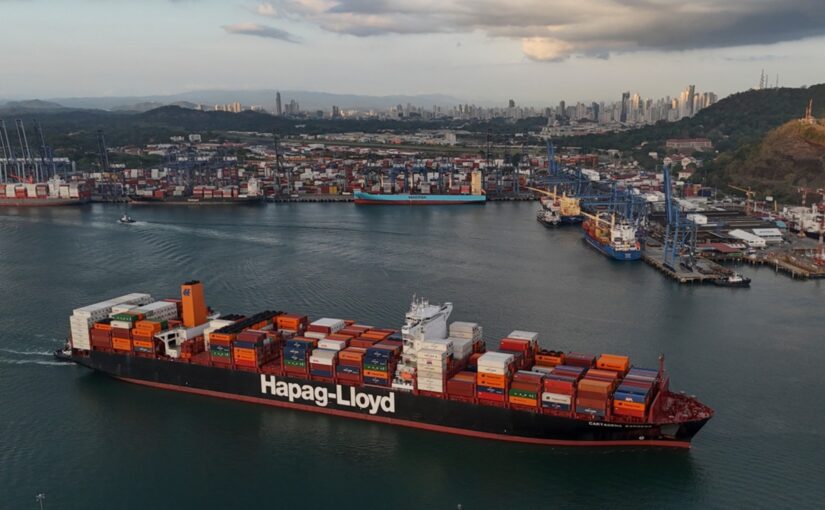
What actually exists is a modest commercial footprint. A Hong Kong company, CK Hutchison, won – through open bidding – the rights to handle cargo and warehousing at two terminals at either end of the canal. Terminals, not the waterway; commerce, not control. Chinese vessels transit the canal paying the same tolls, under the same rules, as everyone else.
And even that footprint is being dismantled: under relentless US pressure, Hutchison’s ports are being sold to a consortium led by the US asset manager BlackRock, while Panama has already been strong-armed out of the Belt and Road Initiative.
There’s a rich historical irony here. The one country that has actually seized and controlled the canal is the United States. Washington engineered Panama’s secession from Colombia in 1903 to build and own the canal; the US held Panama as a colonial enclave for most of the twentieth century; and invaded the country in 1989, killing hundreds of Panamanians. It returned the canal only because a mass sovereignty movement, and the Torrijos-Carter Treaties, forced it to. To this day the US retains a treaty-based claim to send troops into Panama whenever it unilaterally decides a “security risk” exists. If you want to identify the foreign power that constrains Panama’s sovereignty, there it is.
This is the Monroe Doctrine, alive and well. Trump’s own National Security Strategy states the aim plainly: to “deny non-Hemispheric competitors the ability to… own or control strategically vital assets in our Hemisphere”. Latin America is once again to be treated as the imperial backyard, and any Chinese presence – however commercial, however welcomed by the host nation – recast as a hostile incursion to be purged.
And the canal is only one piece on a much larger board. Driving Chinese investors out of Panama belongs to a broader global strategy: the same logic behind Washington’s designs on Greenland, Iceland, the Baltic and the Strait of Hormuz. The goal is to control the world’s trade routes, keep the oil trade priced in dollars, and preserve a financial system so thoroughly weaponised that the US can seize any country’s assets at will – as it has done with Venezuela’s gold, Russia’s reserves and Iran’s savings. Panama’s canal is a chokepoint on that map, and the “China threat” is simply the pretext for tightening Washington’s grip on it.
But Latin American countries are turning to China for a reason. Since establishing ties with Panama in 2017, China has helped revive stalled infrastructure and supported the country’s coffee industry through the UN’s Food and Agriculture Organisation. Across the region, trade with, and investment from, China have grown more than 20-fold since 2000, and the new Chancay mega-port in Peru is reshaping trade across the Pacific – cooperation on terms of sovereign equality and mutual benefit that Washington has never offered and never will.
The real question isn’t whether China will “take over” the Panama Canal. It’s whether Panama, and the region, get to make their own choices – or whether the empire next door still decides for them.
The following article was originally published by the Global Times.
Latin American media, businessman rebut US’ claim of China ‘taking over’ Panama Canal
By Tang Luyi and Tao Mingyang
The US’ latest claim that China is trying to take control over Panama Canal has drawn rebuttals from Spanish-language media outlets, while a Chinese businessman based in Panama told the Global Times that the canal’s core operations rest entirely in the hands of the Panamanian authorities, making the claim of the so-called Chinese pursuit of control of the canal completely groundless.
US President Donald Trump claimed on Wednesday that the US will not let China take over the Panama Canal, Reuters reported. In delivering remarks at the opening of the Theodore Roosevelt Presidential Library, Trump claimed “China is trying to take over the Panama Canal, and we’re not going to let that happen,” according to the NBC.
The remarks quickly drew criticism from Spanish-language media. Colombian news magazine Semana cited a statement from the Chinese Embassy in Panama, which said that China has never participated in the management or operation of the Panama Canal, nor has it ever interfered in the canal’s affairs. The embassy said China has always respected Panama’s sovereignty over the canal and recognizes it as a permanently neutral international waterway.
Trump’s claim that the Panama Canal was sold to Panama “for one dollar” in 1977 has been widely questioned by historians, Panama-based newspaper La Estrella de Panamá reported.
The Torrijos-Carter Treaties was signed by the Panamanian and US governments in 1977, establishing that the Panama Canal would be turned over to Panamanian control on Dec 31, 1999, and the treaties were the outcome of bilateral negotiations between the two countries, according to the report.
The report noted that this is not the first time the US has used the Panama Canal as a political bargaining chip, and that the Panamanian government has repeatedly reaffirmed that sovereignty over the canal belongs to Panama, and that it is a permanently neutral international shipping waterway.
Refuting the false narrative that “China is controlling the Panama Canal”, a Chinese businessman surnamed Xu, who has been engaged in trade in Panama for a long time, told the Global Times on Friday that core functions of the canal – including channel scheduling, transit approval and the setting of toll rules – are entirely in the hands of the Panamanian authorities.
Hong Kong-based CK Hutchison only obtained commercial operating rights for cargo handling and warehousing at terminals on both ends of the canal through open bidding, which constitutes market-based supporting investment and by no means amounts to overall control of the canal, Xu said, noting that all Chinese vessels transiting the canal pay tolls in full under the same standards applied to shipping companies worldwide, and the claim that China seeks control of the canal is completely untenable.
In the eyes of the Panamanian public, it is the US that has long and deeply shaped the geopolitical security landscape surrounding the canal, Xu said. Relying on historical treaties, the US retains the power to send troops to Panama if it unilaterally determines a security risk exists, and has repeatedly exerted pressure on the country through various means. By hyping the “China threat” narrative, the US is in fact seeking a pretext to maintain its hegemony over the waterway, he said.
Panama’s public and business communities widely recognize the value of cooperation with China, Xu noted. Since the establishment of diplomatic ties between China and Panama in 2017, China has helped resume local infrastructure projects and supported the development of Panama’s coffee industry through the platform of the UN Food and Agriculture Organization, with the practical cooperation winning broad recognition from various sectors in the country, he said.
Chinese Foreign Ministry spokesperson Lin Jian said on April 29 that it is the US that has framed normal affairs concerning relevant terminals as issues of politics and security, and it is the US that has been making pretenses and slandering others with rumors.
“China’s position on the Panamanian ports issue is clear and [China] will firmly defend its legitimate rights and interests. We urge relevant countries not to be blinded and utilized by those with ill intention,” Lin said.





