During his recent visit to the Philippines’ capital Manila, to attend the China-ASEAN [Association of South East Asian Nations] Foreign Ministers’ Meeting, Chinese Foreign Minister Wang Yi held meetings between July 21-23 with a broad range of his counterparts who were also in Manila for a series of meetings with the ASEAN countries.
On July 21, Wang met with the Secretary-General of ASEAN as well as with his counterparts from Malaysia, Canada and Australia.
Meeting with Secretary-General of ASEAN Kao Kim Hourn, Wang Yi noted that this year marks the 50th anniversary of the signing of the Treaty of Amity and Cooperation in Southeast Asia (TAC). China was the first major country to accede to the TAC, which encouraged other major countries to follow suit and significantly enhanced ASEAN’s international standing. China will continue to support ASEAN community building and ASEAN’s efforts in seeking strength through unity.
He added that the South China Sea is the common home of regional countries, and the South China Sea issue should not become an obstacle in China-ASEAN relations. Certain elements within the Philippine military and police forces have made deliberate provocations and created maritime incidents, serving the interests of external forces and undermining the improvement of China-Philippines relations as well as peace and stability in the South China Sea. Regional countries must remain on high alert against this.
Kao Kim Hourn recalled that the two sides have established 65 cooperation mechanisms. The ASEAN-China Free Trade Area has been upgraded, and bilateral trade exceeded one trillion US dollars last year. He added that next year marks the 25th anniversary of the signing of the Declaration on the Conduct of Parties in the South China Sea (DOC). ASEAN supports the dual-track approach and is committed to accelerating consultations on the Code of Conduct in the South China Sea, so as to make the South China Sea a sea of peace, cooperation and friendship. ASEAN is ready to work with China to jointly maintain regional peace and stability and make important contributions to the development and prosperity of the Asia-Pacific.
Meeting with Malaysian Foreign Minister Mohamad Hasan, Wang Yi noted that last year, President Xi Jinping paid a successful state visit to Malaysia, during which the two sides announced the building of a high-level strategic China-Malaysia community with a shared future, ushering in a new ‘Golden 50 Years’ of bilateral relations. This year marks the 35th anniversary of the establishment of dialogue relations between China and ASEAN and the fifth anniversary of the comprehensive strategic partnership. ASEAN is an important component of the multipolar landscape and a key force of the Global South. China expects Malaysia to play its role well as the Country Coordinator for China-ASEAN Dialogue Relations, safeguard the common interests of China and ASEAN, and uphold peace and stability in East Asia. China is ready to strengthen communication and coordination with Malaysia, so as to keep China-ASEAN relations at the forefront of the times and set an example for Global South countries in pursuing strength through unity.
Mohamad Hasan stated that China is a trusted friend and partner of Malaysia and also Malaysia’s largest trading partner. Malaysia cherishes the traditional friendship between the two countries, firmly adheres to the one-China policy, and is ready to deepen practical cooperation with China in areas such as digital technology and artificial intelligence. Some countries outside the region have nothing to do with the South China Sea, yet they always want to flex military muscles there. Malaysia looks forward to the early conclusion of the Code of Conduct in the South China Sea and to jointly maintaining peace and stability in the South China Sea.
Meeting with Canadian Foreign Minister Anita Anand, Wang Yi noted that since the beginning of this year, China-Canada relations have continued to improve, with increasingly close exchanges at all levels and fruitful cooperation across various fields. In the first half of this year, bilateral trade volume grew by 16 percent year-on-year, with Canadian exports to China increasing by 23.3 percent. Facts have proven that the improvement and growth of China-Canada relations serve the common interests of both countries, are welcomed by the two peoples, and represent the right choice in line with the trend of history.
Anand said that the current momentum of improvement and development in Canada-China relations is strong. The two sides have actively delivered on the common understandings reached between the leaders of the two countries during Prime Minister Mark Carney’s visit to China in January this year. Exchanges at all levels are increasingly active, economic and trade cooperation continues to deepen, especially with Canadian exports to China achieving growth, and the two countries have continuously achieved new outcomes in building their new Strategic Partnership.
Meeting with Australian Minister for Foreign Affairs Penny Wong, Wang Yi noted that under the joint guidance of the leaders of the two countries, China-Australia relations have been put on the right track of improvement and development, which serves the interests of the two peoples and meets the expectations of the international community. The two sides should handle differences in the spirit of equality and respect, seek common ground while properly managing differences, and bring the bilateral relationship into a virtuous cycle of positive development, rather than being disrupted or undermined by certain prejudices. It is hoped that Australia will adhere to the principle of non-interference in internal affairs, reject double standards, and move toward each other with China to sustain the momentum of improvement in bilateral relations.
Wong said that a peaceful, stable and prosperous Asia-Pacific serves the common interests of both Australia and China. Australia will support China in hosting this year’s APEC Economic Leaders’ Meeting.
On July 22, Wang Yi met with the foreign ministers of Vietnam, India, Bangladesh, Papua New Guinea, Brunei, the USA, the Philippines and Brazil.
Meeting with Vietnamese Foreign Minister Le Hoai Trung, Wang Yi stated that in April this year, General Secretary and President Xi Jinping held an important meeting with General Secretary and President To Lam. The meeting provided top-level guidance for delivering on the overarching goals characterised by ‘six mores’, namely, stronger political mutual trust, more substantive security cooperation, deeper practical cooperation, more solid popular foundation, closer coordination and collaboration on multilateral affairs, and better management and resolution of differences, and accelerating efforts to build a higher-level China-Viet Nam community with a shared future that carries strategic significance. As socialist countries and two major developing nations, China and Vietnam should earnestly implement the consensus reached at high levels between the two Parties and two countries. Proceeding from the broader interests of their respective long-term development, the two sides should effectively strengthen solidarity and coordination.
Le Hoai Trung stated that the Party and Government of Vietnam cherish the traditional friendship between Vietnam and China and attach high importance to relations with China. The Vietnamese side stands ready to work with China to implement the outcomes of General Secretary To Lam’s visit to China and the important consensus reached by the top leaders of the two Parties and two countries.
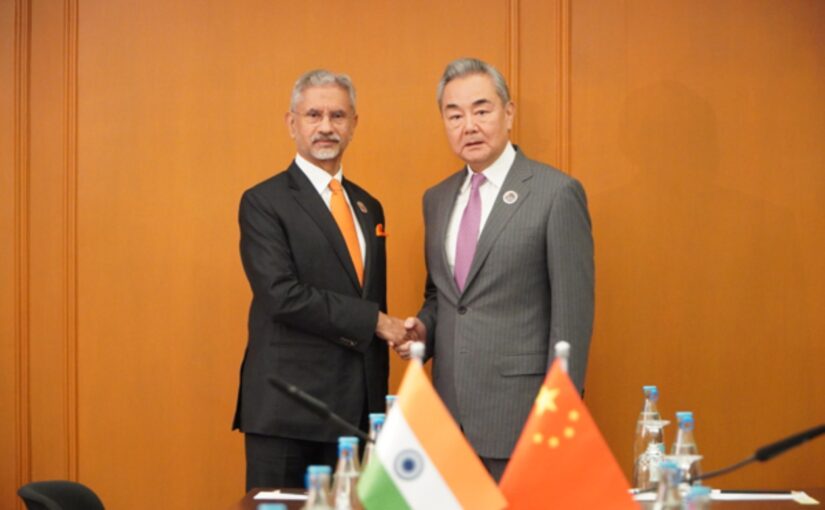
In his meeting with Indian External Affairs Minister Subrahmanyam Jaishankar, Wang Yi noted that over the past two years, President Xi Jinping and Prime Minister Narendra Modi have held successful meetings in Kazan and Tianjin. The leaders of the two countries agreed that China and India are partners rather than competitors, and each represents a development opportunity rather than a threat to the other, setting China-India relations on the track of improvement and development. With the joint efforts of both sides, institutional exchanges between the two countries have been gradually resumed, peace and tranquility have been maintained in the border areas, and bilateral trade volume has reached a new high. These outcomes are hard-won and should be all the more cherished. As representatives of emerging economies and important members of the Global South, China and India should bear in mind the well-being of humanity, demonstrate the responsibility of major countries, consolidate the momentum of improvement in bilateral relations, and strengthen coordination and cooperation in international and regional affairs, so as to make positive contributions to promoting multipolarity and greater democracy in international relations. China is ready to work with India to implement the important common understandings reached by the leaders of the two countries, maintain close high-level exchanges, strengthen cooperation in such areas as economy and trade, media, and people-to-people and cultural engagement, properly handle sensitive issues, and encourage various sectors and the people of the two countries to form correct mutual perceptions. This year and next year, India and China will successively assume the BRICS chairmanship. The two sides should strengthen coordination and cooperation, promote the development and growth of greater BRICS cooperation, and better represent and safeguard the common interests of developing countries. China will continue to support India in successfully hosting this year’s BRICS Summit.
Subrahmanyam Jaishankar said that his country looks forward to continuing to strengthen coordination with China to jointly uphold multilateralism and the legitimate rights and interests of developing countries.
Meeting with Bangladeshi Foreign Minister and President-elect of the United Nations General Assembly (UNGA) Khalilur Rahman, Wang Yi said that Prime Minister Tarique Rahman paid a successful official visit to China last month. The leaders of the two countries jointly announced the decision to build a China-Bangladesh community with a shared future in the new era, which provides new strategic guidance and maps out a new blueprint for bilateral relations.
Khalilur Rahman thanked China for supporting his campaign for President of the UNGA. He said Prime Minister Tarique Rahman’s visit to China achieved great success and garnered positive feedback from all sectors in Bangladesh. China has always been a valued and trusted partner for Bangladesh and occupies an important place in Bangladesh’s foreign policy. Bangladesh firmly adheres to the one-China principle. Bangladesh stands ready to work with China to fully deliver on the outcomes of this visit, advance cooperation including the China-Myanmar-Bangladesh Economic Corridor and jointly build a Bangladesh-China community with a shared future in the new era.
Meeting with Minister for Foreign Affairs of Papua New Guinea Justin Tkatchenko, Wang Yi said that China highly appreciates the Papua New Guinea government’s announcement on closing the “Taipei Economic Office in Papua New Guinea.” This is yet another crucial step taken by the Papua New Guinea government in implementing the one-China principle, following the closure of the “Papua New Guinea Trade Office in Taiwan”. It is an entirely correct decision that serves the fundamental interests of the country and its people, will further consolidate the political foundation of China-Papua New Guinea relations, inject strong impetus into the bilateral comprehensive strategic partnership, and set an example for other countries in properly handling the issues concerning Taiwan-related institutions. In developing relations with Pacific Island countries, China does not engage in geopolitical games or seek so-called ‘spheres of influence.’ The purpose is to strengthen mutually beneficial cooperation and help island countries accelerate development. Pacific island countries have the right to independently choose their development partners and should not be subjected to interference by any third party.
Justin Tkatchenko noted that this year marks the 50th anniversary of diplomatic relations between Papua New Guinea and China. Over the past five decades, cooperation with China has yielded fruitful results, greatly boosting Papua New Guinea’s socioeconomic development and improving people’s livelihood. Papua New Guinea firmly adheres to the one-China principle and holds that Taiwan is part of China and has never been a country.
Meeting with Minister of Foreign Affairs of Brunei Prince Abdul Mateen, Wang Yi noted that China-Brunei friendship stretches back over a thousand years. Under the strategic guidance of the two heads of state, China-Brunei relations have stood as an exemplary model of equal treatment and win-win cooperation between countries of different sizes. This year marks the 35th anniversary of the establishment of diplomatic relations between China and Brunei, and Crown Prince Haji Al-Muhtadee Billah paid a successful visit to China recently. China stands ready to work with Brunei to deliver on the important consensus reached by the two heads of state, step up cooperation in economy and trade, energy, artificial intelligence and other areas, advance maritime joint development, enable more fruitful outcomes from practical bilateral cooperation, and foster a higher-level China-Brunei strategic cooperative partnership.
Prince Abdul Mateen noted that China is Brunei’s most trusted friend as well as its largest trading and investment partner. Brunei attaches great importance to cooperation with China and firmly adheres to the one-China policy. It is ready to consolidate the strategic cooperative partnership with China, maintain close high-level exchanges, strengthen exchanges and cooperation in trade, investment, artificial intelligence, and people-to-people fields, and steadily advance efforts to build a Brunei-China community with a shared future.
Meeting with US Secretary of State Marco Rubio, Wang Yi elaborated on China’s solemn position regarding a string of negative remarks and actions by the US side recently. He urged the US side to respect China’s core interests, abide by the one-China principle, effectively manage differences and disputes, address China’s legitimate concerns, and turn this year of opportunities for China-US relations into reality.
Given the current state of bilateral relations, Wang Yi’s meeting with Secretary of Foreign Affairs of the Philippines Ma. Theresa Lazaro, which China pointedly noted was held at the latter’s request, was particularly frosty, with Wang Yi lodging a strong protest against the reckless act of Philippine personnel ramming a Chinese law-enforcement vessel at Ren’ai Jiao. [For a brief background to this incident, see this social media post by our co-editor Carlos Martinez.]
Wang Yi said that China-Philippines relations have faced persistent difficulties and challenges over the past few years. This clearly runs counter to the interests of both sides and is even more detrimental to the Philippines’ own development. Faced with a world intertwined with changes and turmoil, we ought to jointly uphold the hard-won momentum of peace and development in the region. Yet the Philippines has acted contrary to other regional countries and become a source of disruption to regional peace and stability. Facts have proven that allowing external forces to meddle and deliberately hyping up maritime differences will only turn the country into a tool to be exploited. Attempts to provoke troubles with the backing of extra-regional countries will ultimately force the Philippines to bear the bitter consequences of its own making. Regrettably, every time China and the Philippines are about to engage in dialogue, certain individuals in the Philippines, especially some forces within the military and police, deliberately stage incidents to undermine the dialogue process. These people harbour ulterior motives. They are not acting for the well-being of the Philippine people, but rather to carry out the will of external forces and pursue their own personal interests.
Wang Yi added that China has never been a security threat to the Philippines and has never invaded or colonised the Philippines in history. It is an objective fact that China and the Philippines have disputes over territorial and maritime delimitation. China has consistently committed itself to managing differences and stabilising the situation through bilateral dialogue and consultation. However, the Philippine side has turned away from bilateral negotiation channels. Encouraged by external forces, it set up an ad hoc “arbitral tribunal”, fabricated and hyped up the so-called “award” which is illegal and null and void. From the very beginning, China has neither accepted nor participated in the arbitration, let alone recognised it. The Philippine side should immediately stop provocative actions on maritime-related issues, abide by all commitments it has made to China to date, and make concrete efforts to stabilise bilateral relations.
We previously reported on Wang Yi’s meeting with Brazilian Foreign Minister Mauro Vieira here.
Finally, Wang Yi met with his counterparts from Egypt and the United Kingdom on July 23.
Meeting with Egyptian Foreign Minister Badr Abdelatty, Wang Yi noted that this year marks the 70th anniversary of the establishment of diplomatic relations between China and Egypt. Over the past seven decades, China and Egypt have braved rain and wind together and traversed an extraordinary journey, setting a fine example of solidarity and cooperation between major developing countries. This highlights the historic, special and important nature of bilateral relations and has also played a significant role in promoting world peace and development.
Badr Abdelatty stated that Egypt was the first Arab and African country to establish diplomatic relations with the People’s Republic of China. After 70 years of development, the bilateral relationship enjoys a solid foundation, fruitful outcomes and strong momentum. Egypt firmly adheres to the one-China principle and is ready to serve as a gateway for China’s engagement with Africa. Taking the 70th anniversary of diplomatic relations as an opportunity, Egypt looks forward to strengthening exchanges at all levels with China, consolidating political mutual trust, deepening practical cooperation in such areas as electric vehicles, solar energy and industrial parks, and elevating the Egypt-China comprehensive strategic partnership to a new level.
The two sides also exchanged views on international and regional issues, including the situation in the Middle East and the Gulf. Wang Yi reiterated China’s principled position, stating that the memorandum of understanding reached between the US and Iran is hard-won and should be cherished by all parties. China supports Egypt in playing a mediating role and actively promoting peace and facilitating talks. The Palestinian question is at the core of the Middle East issue and should not be ignored or marginalised. The pressing priority is to alleviate the humanitarian situation in Gaza.
We previously reported on Wang Yi’s meeting with UK foreign secretary Ed Miliband here.
The following articles were originally published on the website of the Chinese Foreign Ministry.
Wang Yi Meets with Secretary-General of ASEAN Kao Kim Hourn
July 21 (MFA) – On July 21, 2026, Member of the Political Bureau of the CPC Central Committee and Foreign Minister Wang Yi met with Secretary-General of ASEAN Kao Kim Hourn in Manila.
Wang Yi noted that China always believes that all countries, big or small, are equal and always pursues a policy of good neighborliness and friendship. This year marks the 50th anniversary of the signing of the Treaty of Amity and Cooperation in Southeast Asia (TAC). China was the first major country to accede to the TAC, which encouraged other major countries to follow suit and significantly enhanced ASEAN’s international standing. China will continue to support ASEAN Community building and ASEAN’s efforts in seeking strength through unity. This year also marks the fifth anniversary of the establishment of the China-ASEAN Comprehensive Strategic Partnership, a year of great significance that builds on past achievements and looks toward the future. Amid a world of change and instability, East Asia has on the whole maintained prosperity and stability, a hard-won situation that all parties should cherish. China is the most important stabilising anchor in the region and stands ready to strengthen cooperation with ASEAN, deepen mutual trust, enhance mutual understanding, extend mutual support, safeguard the common interests of China and ASEAN, uphold the legitimate rights and interests of the Global South, and work for a more just and equitable international order. China has just successfully held the World Artificial Intelligence Conference in Shanghai and initiated the establishment of the World Artificial Intelligence Cooperation Organization. This Organization is designed to enhance the AI capacity building of Global South countries, enabling them to keep pace with the development of the times and advance their own development and modernisation. China hopes that ASEAN will continue to actively participate in international AI cooperation and welcomes more ASEAN countries to join the Organization.
Wang Yi noted that the South China Sea is the common home of regional countries, and the South China Sea issue should not become an obstacle in China-ASEAN relations. Certain elements within the Philippine military and police forces have made deliberate provocations and created maritime incidents, serving the interests of external forces and undermining the improvement of China-Philippines relations as well as peace and stability in the South China Sea. Regional countries must remain on high alert against this. China is ready to work with ASEAN countries to remove disruptions, accelerate consultations on the Code of Conduct in the South China Sea (COC), jointly create a new narrative of peace, stability, cooperation and friendship in the South China Sea, and keep the initiative over the South China Sea issue firmly in the hands of our regional countries.
Kao Kim Hourn spoke positively of ASEAN-China relations and the fruitful outcomes of practical cooperation between the two sides, and thanked China for its firm support for ASEAN centrality in the regional architecture. ASEAN and China are inseparable neighbors. China is ASEAN’s most important comprehensive strategic partner. The two sides have established 65 cooperation mechanisms. The ASEAN-China Free Trade Area has been upgraded, and bilateral trade exceeded one trillion U.S. dollars last year. Taking the fifth anniversary of the ASEAN-China Comprehensive Strategic Partnership as an opportunity, ASEAN looks forward to strengthening strategic synergy with China, deepening practical cooperation in trade, investment and the digital economy, and conducting more people-to-people exchanges, so as to achieve greater development in China-ASEAN relations. Next year marks the 25th anniversary of the signing of the Declaration on the Conduct of Parties in the South China Sea (DOC). ASEAN supports the dual-track approach and is committed to accelerating consultations on the Code of Conduct in the South China Sea, so as to make the South China Sea a sea of peace, cooperation and friendship. ASEAN is ready to work with China to jointly maintain regional peace and stability and make important contributions to the development and prosperity of the Asia-Pacific.
On the same day, Wang Yi also met with Canadian Foreign Minister Anita Anand, Australian Minister for Foreign Affairs Penny Wong and Malaysian Minister of Foreign Affairs Mohamad bin Haji Hasan.
Wang Yi Meets with Malaysian Foreign Minister Mohamad Hasan
July 21 (MFA) – On July 21, 2026, Member of the Political Bureau of the CPC Central Committee and Foreign Minister Wang Yi met with Malaysian Foreign Minister Mohamad Hasan in Manila.
Wang Yi noted that last year, President Xi Jinping paid a successful state visit to Malaysia, during which the two sides announced the building of a high-level strategic China-Malaysia community with a shared future, ushering in a new “Golden 50 Years” of bilateral relations. Both China and Malaysia are at a critical stage of development and rejuvenation. China is ready to seize opportunities with Malaysia, maintain close exchanges at all levels, deepen all-round cooperation, promote maritime exchanges and cooperation, and jointly elevate China-Malaysia relations to higher levels.
Wang Yi said that this year marks the 35th anniversary of the establishment of dialogue relations between China and ASEAN and the 5th anniversary of the comprehensive strategic partnership. ASEAN is an important component of the multipolar landscape and a key force of the Global South. China expects Malaysia to play its role well as the Country Coordinator for China-ASEAN Dialogue Relations, safeguard the common interests of China and ASEAN, and uphold peace and stability in East Asia. China and ASEAN countries, on the basis of the Declaration on the Conduct of Parties in the South China Sea (DOC), have advocated and are committed to bringing the consultations on the Code of Conduct in the South China Sea (COC) to an early conclusion. This helps maintain peace and stability in the South China Sea, enables countries in the region to shape their own future, and denies external forces any opportunity to stir up trouble. China is ready to strengthen communication and coordination with Malaysia, so as to keep China-ASEAN relations at the forefront of the times and set an example for Global South countries in pursuing strength through unity.
Mohamad Hasan stated that at present, both Malaysia-China relations and ASEAN-China relations are at their best in history, with inter-state cooperation and people-to-people exchanges being close and vibrant. The task is to take this relationship to a higher level. China is a trusted friend and partner of Malaysia and also Malaysia’s largest trading partner. Malaysia cherishes the traditional friendship between the two countries, firmly adheres to the one-China policy, and is ready to deepen practical cooperation with China in areas such as digital technology and artificial intelligence. As the Country Coordinator for ASEAN-China Dialogue Relations, Malaysia will make every effort to promote ASEAN-China cooperation and jointly uphold ASEAN centrality in the regional architecture. Some countries outside the region have nothing to do with the South China Sea, yet they always want to flex military muscles there. Malaysia looks forward to the early conclusion of the Code of Conduct in the South China Sea and to jointly maintaining peace and stability in the South China Sea.
Wang Yi Meets with Canadian Foreign Minister Anita Anand
July 21 (MFA) – On July 21, 2026, Member of the Political Bureau of the CPC Central Committee and Foreign Minister Wang Yi met with Canadian Foreign Minister Anita Anand in Manila.
Wang Yi noted that since the beginning of this year, China-Canada relations have continued to improve, with increasingly close exchanges at all levels and fruitful cooperation across various fields. In the first half of this year, bilateral trade volume grew by 16 percent year-on-year, with Canadian exports to China increasing by 23.3 percent in particular. Canadian agricultural products such as canola and beef have returned to the Chinese market, and Chinese electric vehicles have entered the Canadian market, providing more quality choices for the people of both countries. Facts have proven that the improvement and growth of China-Canada relations serve the common interests of both countries, are welcomed by the two peoples, and represent the right choice in line with the trend of history. China is ready to work with Canada to implement the important common understandings reached by the leaders of the two countries, prepare well for high-level exchanges in the next stage, enhance political mutual trust, expand exchanges and cooperation, strengthen coordination on multilateral affairs such as global governance and artificial intelligence, properly handle differences and sensitive issues, and continuously enrich the substance of the China-Canada new Strategic Partnership, so as to inject more certainty into a world of change and instability.
Anita Anand stated that the relationship with China is one of Canada’s most valued bilateral relationships. The current momentum of improvement and development in Canada-China relations is strong. The two sides have actively delivered on the common understandings reached between the leaders of the two countries during Prime Minister Mark Carney’s visit to China in January this year. Exchanges at all levels are increasingly active, economic and trade cooperation continues to deepen, especially with Canadian exports to China achieving growth, and the two countries have continuously achieved new outcomes in building the new Strategic Partnership. Canada firmly adheres to the one-China policy and is ready to further enhance high-level exchanges with China, deepen mutually beneficial cooperation in areas such as energy, trade, finance and drug control, promote people-to-people exchanges, strengthen multilateral coordination, resolve differences through dialogue, and work for the long-term, sound and steady development of Canada-China relations.
The two sides also exchanged views on international and regional issues of common interest.
Wang Yi Meets with Australian Minister for Foreign Affairs Penny Wong
July 21 (MFA) – On July 21, 2026, Member of the Political Bureau of the CPC Central Committee and Foreign Minister Wang Yi met with Australian Minister for Foreign Affairs Penny Wong in Manila.
Wang Yi noted that under the joint guidance of the leaders of the two countries, China-Australia relations have been put on the right track of improvement and development, which serves the interests of the two peoples and meets the expectations of the international community. China is ready to work with Australia to enhance exchanges, build mutual trust and expand cooperation, and bring about new progress in China-Australia relations. The two sides should handle differences in the spirit of equality and respect, seek common ground while properly managing differences, and bring the bilateral relationship into a virtuous cycle of positive development, rather than being disrupted or undermined by certain prejudices. It is hoped that Australia will adhere to the principle of non-interference in internal affairs, reject double standards, and move toward each other with China to sustain the momentum of improvement in bilateral relations.
Penny Wong stated that Australia values its relations with China and firmly adheres to the one-China policy and does not support “Taiwan independence.” Australia is ready to work with China to deliver on the important common understandings reached by the leaders of the two countries, maintain close exchanges at all levels, advance mutually beneficial cooperation, properly handle differences and disagreements through dialogue and contact, and promote the sound and steady development of Australia-China relations. A peaceful, stable and prosperous Asia-Pacific serves the common interests of both Australia and China. Australia will support China in hosting this year’s APEC Economic Leaders’ Meeting.
Wang Yi Meets with Vietnamese Foreign Minister Le Hoai Trung
July 23 (MFA) – On July 22, 2026, Member of the Political Bureau of the CPC Central Committee and Foreign Minister Wang Yi met with Vietnamese Foreign Minister Le Hoai Trung in Manila.
Wang Yi stated that in April this year, General Secretary and President Xi Jinping held an important meeting with General Secretary and President To Lam. The meeting provided top-level guidance for delivering on the overarching goals characterized by “six mores”, namely, stronger political mutual trust, more substantive security cooperation, deeper practical cooperation, more solid popular foundation, closer coordination and collaboration on multilateral affairs, and better management and resolution of differences, and accelerating efforts to build a higher-level China-Viet Nam community with a shared future that carries strategic significance. At present, the destabilizing factors amid the major changes unseen in a century have become more prominent, posing severe challenges to regional countries. As socialist countries and two major developing nations, China and Viet Nam should earnestly implement the consensus reached at high levels between the two Parties and two countries. Proceeding from the broader interests of their respective long-term development, the two sides should effectively strengthen solidarity and coordination. The two sides should continue to maintain close high-level exchanges, give full play to the China-Viet Nam “3+3” strategic dialogue on diplomacy, defense and public security, and advance practical cooperation in connectivity, artificial intelligence and other fields. This will ensure that China-Viet Nam relations remain at the forefront among regional countries, and that both sides jointly safeguard the sound momentum of peace and development in the region.
Le Hoai Trung stated that the Party and Government of Viet Nam cherish the traditional friendship between Viet Nam and China and attach high importance to relations with China. The Vietnamese side stands ready to work with China to implement the outcomes of General Secretary To Lam’s visit to China and the important consensus reached by the top leaders of the two Parties and two countries. The Vietnamese side will step up exchanges at all levels and advance practical cooperation in railways, agriculture and other areas to jointly deliver more outcomes for the Viet Nam-China comprehensive strategic cooperative partnership. The Vietnamese side supports the four major global initiatives proposed by China, and congratulates China on the successful convening of the World Artificial Intelligence Conference in Shanghai and the establishment of the World Artificial Intelligence Cooperation Organization. Viet Nam will give full support to China in hosting this year’s APEC Economic Leaders’ Meeting, and is ready to strengthen multilateral communication and coordination with China to safeguard the common interests of the two countries and the region.
Wang Yi Meets with Indian External Affairs Minister Subrahmanyam Jaishankar
July 23 (MFA) – On July 22, 2026, Member of the Political Bureau of the CPC Central Committee and Foreign Minister Wang Yi met with Indian External Affairs Minister Subrahmanyam Jaishankar in Manila.
Wang Yi noted that over the past two years, President Xi Jinping and Prime Minister Narendra Modi have held successful meetings in Kazan and Tianjin. The leaders of the two countries agreed that China and India are partners rather than competitors, and each represents a development opportunity rather than a threat to the other, setting China-India relations on the track of improvement and development. With the joint efforts of both sides, institutional exchanges between the two countries have been gradually resumed, peace and tranquility have been maintained in the border areas, and bilateral trade volume has reached a new high. These outcomes are hard-won and should be all the more cherished. As changes unseen in a century are unfolding at a faster pace, the world has entered a new period of turbulence and transformation. As representatives of emerging economies and important members of the Global South, China and India should bear in mind the well-being of humanity, demonstrate the responsibility of major countries, consolidate the momentum of improvement in bilateral relations, and strengthen coordination and cooperation in international and regional affairs, so as to make positive contributions to promoting multipolarity and greater democracy in international relations. China is ready to work with India to implement the important common understandings reached by the leaders of the two countries, maintain close high-level exchanges, strengthen cooperation in such areas as economy and trade, media, and people-to-people and cultural engagement, properly handle sensitive issues, and encourage various sectors and the people of the two countries to form correct mutual perceptions. On the basis of peaceful coexistence, the two sides should explore the right way for two neighboring major countries to treat each other with mutual respect and mutual trust and achieve shared development and common prosperity, continuously injecting new impetus into China-India relations. This year and next year, India and China will successively assume the BRICS chairmanship. The two sides should strengthen coordination and cooperation, promote the development and growth of greater BRICS cooperation, and better represent and safeguard the common interests of developing countries. China will continue to support India in successfully hosting this year’s BRICS Summit.
Subrahmanyam Jaishankar noted that the two meetings between the leaders of India and China confirmed that the two countries are partners rather than rivals, pointing the way for the growth of bilateral relations. As important neighbors and countries with large populations, the India-China relationship has regional and global significance. India’s position on such issues as Taiwan and Xizang remains unchanged. India respects China’s sovereignty and has always pursued a positive and cooperative bilateral relationship with a forward-looking approach. India is ready to work with China to implement the common understandings of the two leaders, strengthen high-level exchanges, make good use of bilateral mechanisms, advance practical cooperation in trade, people-to-people and other fields, maintain peace and stability along the border, properly handle differences, and make sustained efforts to promote the improvement and growth of bilateral relations. India appreciates China’s support for its BRICS chairmanship this year and looks forward to continuing to strengthen coordination with China to jointly uphold multilateralism and the legitimate rights and interests of developing countries.
The two sides also exchanged views on international and regional issues of common interest, including issues related to Iran and Myanmar.
Wang Yi Meets with Bangladeshi Foreign Minister Khalilur Rahman
July 23 (MFA) – On July 22, 2026, Member of the Political Bureau of the CPC Central Committee and Foreign Minister Wang Yi met with Bangladeshi Foreign Minister and President-elect of the United Nations General Assembly (UNGA) Khalilur Rahman in Manila.
Wang Yi said that Prime Minister Tarique Rahman paid a successful official visit to China last month. The leaders of the two countries jointly announced the decision to build a China-Bangladesh community with a shared future in the new era, which provides new strategic guidance and maps out a new blueprint for bilateral relations. As a trusted good neighbor and good friend of Bangladesh, China will continue to support the Bangladeshi government in its governance work as always. China stands ready to work with Bangladesh to deliver on the consensus reached by the two leaders, enhance strategic communication, deepen political mutual trust, pursue high-quality Belt and Road cooperation, steadily advance efforts to build a China-Bangladesh community with a shared future in the new era, and bring more benefits to the two peoples.
Wang Yi congratulated Khalilur Rahman on his successful election as President of the 81st Session of the UNGA. He noted that the world is fraught with chaos and the United Nations faces severe challenges. China will give full support to you in your work and firmly uphold the status and role of the United Nations. Implementation of the Agenda for Sustainable Development has fallen far behind schedule. The international community should place development issues at the center of the international agenda and launch post-2030 development cooperation planning. China supports advancing UN reform in the right direction. It put forward proposals on United Nations reform at the High-level Meeting of the Group of Friends of Global Governance held in May this year, and looks forward to working with the President of the UNGA to push for their implementation and unlock the potential of the United Nations.
Khalilur Rahman thanked China for supporting his campaign for President of the UNGA. He said Prime Minister Tarique Rahman’s visit to China achieved great success and garnered positive feedback from all sectors in Bangladesh. China has always been a valued and trusted partner for Bangladesh and occupies an important place in Bangladesh’s foreign policy. Bangladesh firmly adheres to the one-China principle. Bangladesh stands ready to work with China to fully deliver on the outcomes of this visit, advance cooperation including the China-Myanmar-Bangladesh Economic Corridor, and jointly build a Bangladesh-China community with a shared future in the new era. Bangladesh supports the four major global initiatives proposed by China and is ready to strengthen coordination with China, leverage the role of the United Nations and safeguard multilateralism.
Wang Yi Meets with Minister for Foreign Affairs of Papua New Guinea Justin Tkatchenko
July 23 (MFA) – On July 22, 2026, Member of the Political Bureau of the CPC Central Committee and Foreign Minister Wang Yi met with Minister for Foreign Affairs of Papua New Guinea Justin Tkatchenko in Manila.
Wang Yi noted that under the strategic guidance of the leaders of the two countries, China-Papua New Guinea relations have achieved new progress, with further enhanced political mutual trust, deepened mutually beneficial cooperation, and closer communication in international and regional affairs. China places high importance on its relations with Papua New Guinea and is pleased to see Papua New Guinea play a bigger role in international affairs. This year marks the 50th anniversary of the establishment of diplomatic relations between China and Papua New Guinea. China stands ready to work with the Papua New Guinean side to deliver on the important common understandings reached by the leaders of the two countries, deepen cooperation in various fields, and continuously enrich the dimensions of the comprehensive strategic partnership between the two countries, so as to better benefit the two peoples.
Wang Yi said that China highly appreciates the Papua New Guinea government’s announcement on closing the “Taipei Economic Office in Papua New Guinea.” This is yet another crucial step taken by the Papua New Guinea government in implementing the one-China principle, following the closure of the “Papua New Guinea Trade Office in Taiwan.” It is an entirely correct decision that serves the fundamental interests of the country and its people, will further consolidate the political foundation of China-Papua New Guinea relations, inject strong impetus into the bilateral comprehensive strategic partnership, and set an example for other countries in properly handling the issues concerning Taiwan-related institutions. In developing relations with Pacific Island countries, China does not engage in geopolitical games or seek so-called “spheres of influence.” The purpose is to strengthen mutually beneficial cooperation and help island countries accelerate development. Pacific island countries have the right to independently choose their development partners and should not be subjected to interference by any third party.
Justin Tkatchenko noted that this year marks the 50th anniversary of diplomatic relations between Papua New Guinea and China. Over the past five decades, cooperation with China has yielded fruitful results, greatly boosting Papua New Guinea’s socioeconomic development and improving people’s livelihood. Papua New Guinea firmly adheres to the one-China principle and holds that Taiwan is part of China and has never been a country. The announcement to close the “Taipei Economic Office in Papua New Guinea” sends a clear and strong message that Papua New Guinea is firmly committed to developing relations with China and resolutely upholding the one-China principle. This was a unanimous decision made by the top leadership of Papua New Guinea and makes history in the Asia-Pacific region. Papua New Guinea will ensure that this decision is implemented and demonstrate that the development of relations and deepening of cooperation with China enjoy strong momentum and broad space, so as to elevate bilateral relations to a new height. Papua New Guinea stands ready to deepen cooperation with China in trade and investment, infrastructure, medical and health care, and other fields, and strengthen communication and coordination on multilateral platforms such as APEC.
Wang Yi Meets with Minister of Foreign Affairs of Brunei Abdul Mateen
July 23 (MFA) – On July 22, 2026, Member of the Political Bureau of the CPC Central Committee and Foreign Minister Wang Yi met with Minister of Foreign Affairs of Brunei Prince Abdul Mateen in Manila.
Wang Yi conveyed President Xi Jinping’s warm greetings to Sultan of Brunei Haji Hassanal Bolkiah Mu’izzaddin Waddaulah, and congratulated Abdul Mateen on assuming office. He noted that China-Brunei friendship stretches back over a thousand years. Under the strategic guidance of the two heads of state, China-Brunei relations have stood as an exemplary model of equal treatment and win-win cooperation between countries of different sizes. Last year, President Xi Jinping and His Majesty Sultan Haji Hassanal Bolkiah Mu’izzaddin Waddaulah reached important consensus on building a China-Brunei community with a shared future, opening a new chapter in bilateral ties. This year marks the 35th anniversary of the establishment of diplomatic relations between China and Brunei, and Crown Prince Haji Al-Muhtadee Billah paid a successful visit to China recently. China stands ready to work with Brunei to deliver on the important consensus reached by the two heads of state, give full play to the China-Brunei intergovernmental joint steering committee, step up cooperation in economy and trade, energy, artificial intelligence and other areas, advance maritime joint development, enable more fruitful outcomes from practical bilateral cooperation, and foster a higher-level China-Brunei strategic cooperative partnership.
Prince Abdul Mateen passed on sincere greetings from Sultan Haji Hassanal Bolkiah Mu’izzaddin Waddaulah to President Xi Jinping, and said that Brunei-China friendship has a long-standing history. Crown Prince Haji Al-Muhtadee Billah’s successful visit to China recently yielded a set of consensus on advancing Brunei-China relations. China is Brunei’s most trusted friend as well as its largest trading and investment partner. Brunei attaches great importance to cooperation with China and firmly adheres to the one-China policy. It is ready to consolidate the strategic cooperative partnership with China, maintain close high-level exchanges, strengthen exchanges and cooperation in trade, investment, artificial intelligence, people-to-people fields, and steadily advance efforts to build a Brunei-China community with a shared future.
Wang Yi Meets with U.S. Secretary of State Marco Rubio
July 22 (MFA) – On July 22, 2026, Member of the Political Bureau of the CPC Central Committee and Foreign Minister Wang Yi met with U.S. Secretary of State Marco Rubio in Manila.
Wang Yi stated that this year is a “big year” for China-U.S. relations. The two heads of state successfully held a historic meeting in Beijing, defined the positioning of a constructive China-U.S. relationship of strategic stability, and identified the direction for joint efforts by both sides. This marks important progress made by China and the U.S., two major countries, as they explore a path of peaceful coexistence. It serves the fundamental interests of the two peoples and meets the shared expectations of the international community. Our responsibility now is to follow the course set by the two heads of state, remove distractions and overcome obstacles, and ensure that the consensus reached by the leaders translates into consensus and actions across all government departments and all fields. We should advance world peace and tranquility through strategic stability between China and the U.S., and provide important impetus for international cooperation through constructive interactions between the two countries. Wang Yi also elaborated on China’s solemn position regarding a string of negative remarks and actions by the U.S. side recently. He urged the U.S. side to respect China’s core interests, abide by the one-China principle, effectively manage differences and disputes, address China’s legitimate concerns, and turn this year of opportunities for China-U.S. relations into reality.
The two sides also exchanged views on international and regional hotspot issues.
The two sides noted that the meeting was pragmatic, positive and constructive. They agreed to jointly deliver on the important common understandings reached by the two heads of state, leverage the role of political and diplomatic channels, make thorough preparations for high-level exchanges in the next stage, and advance tangible progress in building a constructive China-U.S. relationship of strategic stability.
Wang Yi Meets with Secretary of Foreign Affairs of the Philippines Ma. Theresa Lazaro
July 22 (MFA) – On July 22, 2026, on the sidelines of the foreign ministers’ meetings on East Asia cooperation in Manila, Member of the Political Bureau of the CPC Central Committee and Foreign Minister Wang Yi met with Secretary of Foreign Affairs of the Philippines Ma. Theresa Lazaro upon request, elaborating on China’s solemn position to the Philippine side and lodging a strong protest against the reckless act of Philippine personnel ramming a Chinese law-enforcement vessel at Ren’ai Jiao.
Wang Yi said that China-Philippines relations have faced persistent difficulties and challenges over the past few years. This clearly runs counter to the interests of both sides and is even more detrimental to the Philippines’ own development. Faced with a world intertwined with changes and turmoil, we ought to jointly uphold the hard-won momentum of peace and development in the region. Yet the Philippines has acted contrary to other regional countries and become a source of disruption to regional peace and stability. Facts have proven that allowing external forces to meddle and deliberately hyping up maritime differences will only turn the country into a tool to be exploited. Attempts to provoke troubles with the backing of extra-regional countries will ultimately force the Philippines to bear the bitter consequences of its own making. Regrettably, every time China and the Philippines are about to engage in dialogue, certain individuals in the Philippines, especially some forces within the military and police, deliberately stage incidents to undermine the dialogue process. These people harbor ulterior motives. They are not acting for the well-being of the Philippine people, but rather to carry out the will of external forces and pursue their own personal interests. China-Philippines relations are now at a crossroads, and the Philippine side needs to make the right and rational choice about where to go from here.
Wang Yi emphasized that steering China-Philippines relations forward hinges on staying on the right track. China has never been a security threat to the Philippines and has never invaded or colonized the Philippines in history. It is an objective fact that China and the Philippines have disputes over territorial and maritime delimitation. China has consistently committed itself to managing differences and stabilizing the situation through bilateral dialogue and consultation. However, the Philippine side has turned away from bilateral negotiation channels. Encouraged by external forces, it set up an ad hoc “arbitral tribunal”, fabricated and hyped up the so-called “award” which is illegal and null and void. From the very beginning, China has neither accepted nor participated in the arbitration, let alone recognized it. The Philippine side should immediately stop provocative actions on maritime-related issues, abide by all commitments it has made to China to date, and take concrete efforts to stabilize bilateral relations.
Ma. Theresa Lazaro stated that the Philippines and China enjoy a long history of exchanges and are neighbors that cannot move away from each other. The Philippines consistently adheres to the one-China policy and honors the commitments made upon the establishment of diplomatic relations. There is but one China in the world, and Taiwan is an inalienable part of China’s territory. The Philippines hopes to find proper solutions to maritime-related issues through dialogue and strive for improvement in bilateral relations.
Wang Yi Meets with Egyptian Foreign Minister Badr Abdelatty
July 23 (MFA) – On the morning of July 23, 2026, Member of the Political Bureau of the CPC Central Committee and Foreign Minister Wang Yi met with Egyptian Foreign Minister Badr Abdelatty in Manila.
Wang Yi noted that this year marks the 70th anniversary of the establishment of diplomatic relations between China and Egypt. Over the past seven decades, China and Egypt have braved rain and wind together and traversed an extraordinary journey, setting a fine example of solidarity and cooperation between major developing countries. This highlights the historic, special and important nature of bilateral relations and has also played a significant role in promoting world peace and development. In recent years, President Xi Jinping and President Abdel Fattah El-Sisi have maintained close communication and built deep mutual trust, providing strategic underpinning for the growth of bilateral relations. China stands ready to work with Egypt to maintain close high-level exchanges, deepen cooperation in such areas as economy and trade, military affairs and artificial intelligence, enhance coordination on multilateral affairs, and jointly build a China-Egypt community with a shared future in the new era. With Egypt’s support, a monument commemorating the Cairo Declaration has been erected at the Mena House Hotel. This carries important commemorative significance and also reflects Egypt’s positive attitude of respecting history, championing justice, and valuing its relations with China.
Badr Abdelatty stated that Egypt was the first Arab and African country to establish diplomatic relations with the People’s Republic of China. After 70 years of development, the bilateral relationship enjoys a solid foundation, fruitful outcomes and strong momentum. Egypt firmly adheres to the one-China principle and is ready to serve as a gateway for China’s engagement with Africa. Taking the 70th anniversary of diplomatic relations as an opportunity, Egypt looks forward to strengthening exchanges at all levels with China, consolidating political mutual trust, deepening practical cooperation in such areas as electric vehicles, solar energy and industrial parks, and elevating the Egypt-China comprehensive strategic partnership to a new level.
The two sides also exchanged views on international and regional issues, including the situation in the Middle East and the Gulf. Wang Yi reiterated China’s principled position, stating that the memorandum of understanding reached between the U.S. and Iran is hard-won and should be cherished by all parties. China supports Egypt in playing a mediating role and actively promoting peace and facilitating talks. The Palestinian question is at the core of the Middle East issue and should not be ignored or marginalized. The pressing priority is to alleviate the humanitarian situation in Gaza.