The following article by Sara Flounders marks the 105th anniversary of the founding of the Communist Party of China and the 90th anniversary of the victory of the Long March, reflecting on China’s distinctive path to modernisation – one achieved “without colonialism, without enslavement, without wars of conquest” – and on what the CPC’s record means for the countries of the Global South.
Sara is a member of the Friends of Socialist China US committee and a longtime anti-imperialist organiser with the International Action Center.
This article first appeared in Workers World.
The 105th anniversary of the founding of the Communist Party of China (CPC) and the 90th anniversary of the victory of China’s Long March on July 1 were barely noted in the U.S. media. However, there were big celebrations in hundreds of Chinese cities. The focus was on reinforcing the “socialist direction of China in building Socialist Modernization in all aspects.”
The anniversary was celebrated as a confident assertion of the way forward. Events were organized to focus on the strong vitality of Marxism and socialist planning and as a preparation for and warning of future global upheavals.
President Xi Jinping’s major address on July 1 underscored the importance of meeting the goal to fully realize socialist modernization by the middle of the 21st century. President Xi cautioned: “We must be prepared to withstand major tests involving high winds and rough waves, or even stormy seas.”
The CPC has grown from a small group of just over 50 founding members — meeting secretly in 1921 in Shanghai, China — into the world’s largest governing party, a workers’ party with 101 million members that has tremendous global influence.
In 1921, China was fragmented and impoverished. It was reeling from the collapse of the feudal Qing Dynasty, carved apart by foreign imperialist exploitation into zones of colonial control and weakened by the British and U.S.-imposed Opium Wars to enforce the sale of opium. China was confronted with the chaos of contending factions of oppressive warlordism.
China was overwhelmingly a peasant country in 1921, 85% to 90% rural, with millions of landless, impoverished and illiterate peasants living in undeveloped areas and relying on subsistence farming.
From its founding the CPC declared that its goal was to overthrow imperialist domination and establish a dictatorship of the proletariat — the organization of society by workers and peasants.
Achievements of socialist China
Today China’s urban residents comprise 83.7% of the country’s total population. (geofactbook.com, Nov. 20, 2025)
China’s cities are modern, well-planned and green. China has one of the highest rates of homeownership in the world, with 90% of Chinese households owning their homes; 87% of urban dwellers are homeowners and 96% of rural residents own their homes. (cnn.com, May 20)
China has established the world’s largest education, social security and healthcare systems. These systems are freely accessible to all.
Modernization in China means it has the world’s most advanced mass transit and high speed rail lines and advanced energy systems based on solar, wind and water energy and electric vehicles.
All major financial institutions, industries, natural resources, communications networks and rail lines are owned collectively. The enormous profits they generate are used for development, benefitting the whole population.
In the 105 years of its stormy existence through revolutionary upheavals, wars, invasions and then determined rebuilding, the Communist Party of China has gone through very different stages of national and party development.
A different form of modernization
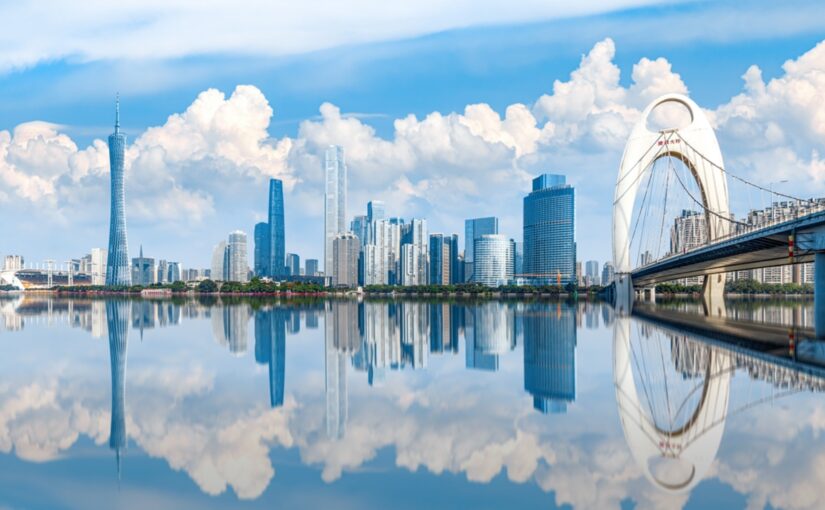
China’s rapid modernizing development is taking place in a wholly different way than how modern industrial development unfolded in the imperialist countries. China is not exploiting other countries in order to develop China.
In discussing how to modernize, many China commentators highlight that Chinese modernization is historically very unique and radically new. It is being achieved without colonialism, without enslavement, without wars of conquest. It is modernization through peaceful development with a focus of common prosperity for all.
The advanced capitalist countries in Western Europe, North America and Japan relied heavily on global plunder, pillage and conquest. From its early beginnings to global imperialist domination today, capitalism has required unleashing chaos, destruction and economic disruption all over the world. The process of modernization and industrialization required the extraction of wealth from the colonies, the genocide of Indigenous peoples and the exploitation of the labour of enslaved people.
Today the People’s Republic of China is a global resource. It is a lifeline for former colonies to assert their sovereignty and national development.
Through the Belt and Road Projects, China today offers unique opportunities to 150 countries in Africa, Asia and Latin America to develop massive infrastructure projects. They include ports, railways, highways, power stations, aviation and telecommunications. This is having a profound influence on the course of world history.
After 105 years, the Communist Party of China can point to lifting 800 million people out of absolute poverty and to the greatest improvement in human wellbeing in history. Its foreign policy is oriented towards peace, cooperation and development.
105 years of building the Communist Party of China is worthy of celebration!






China is primary to the future prosperity of humanity.