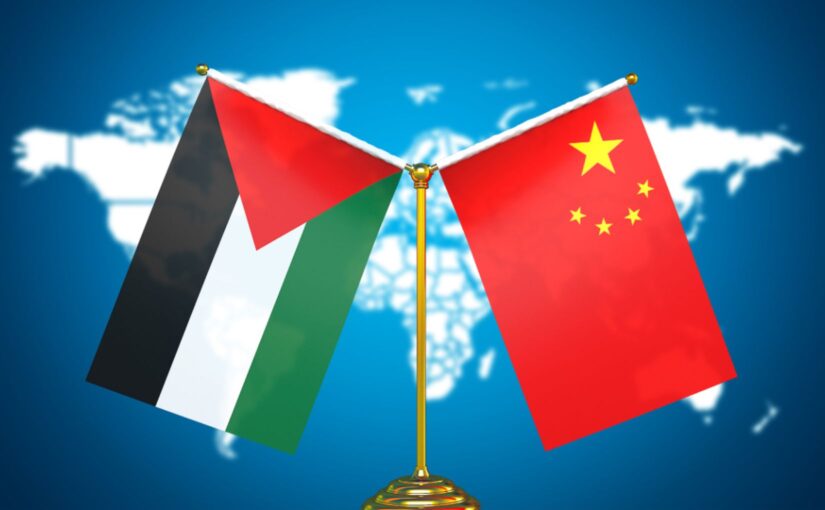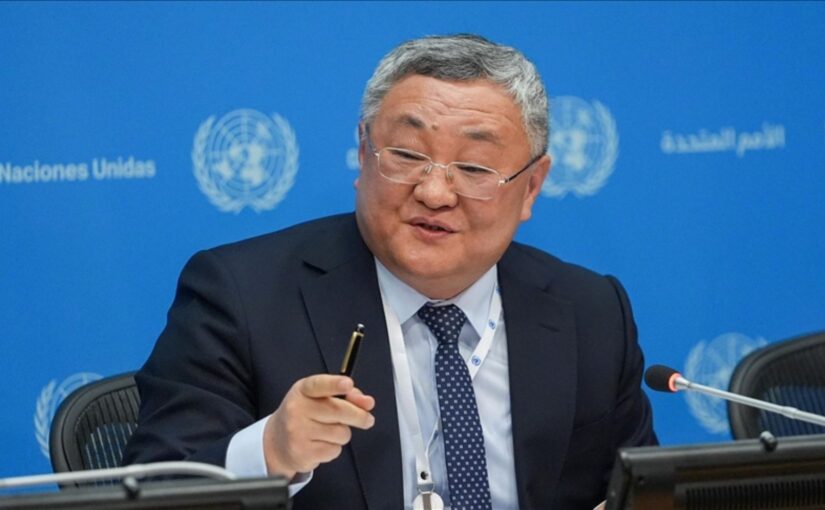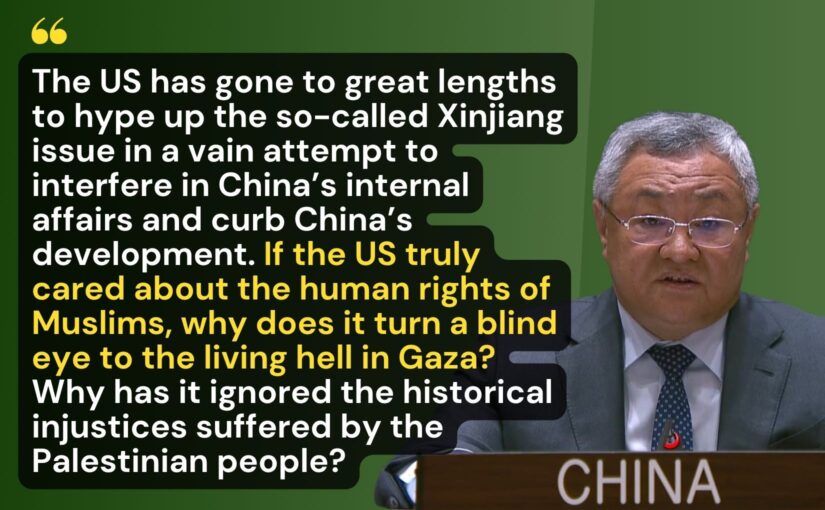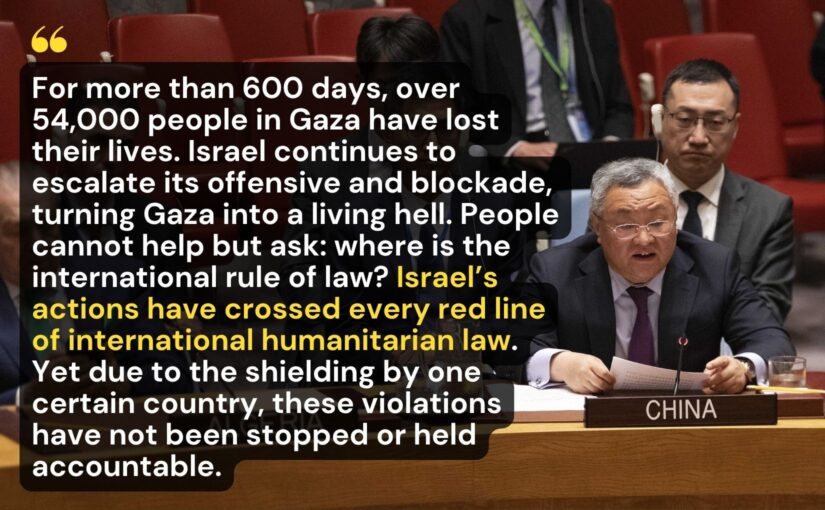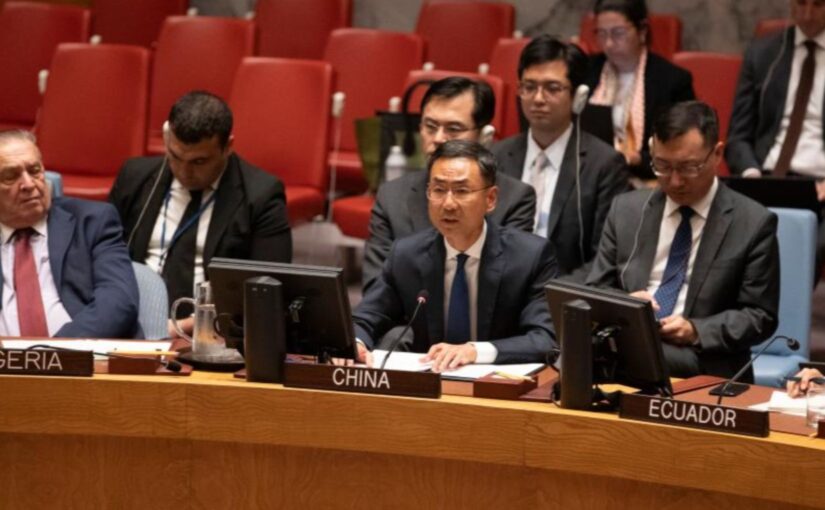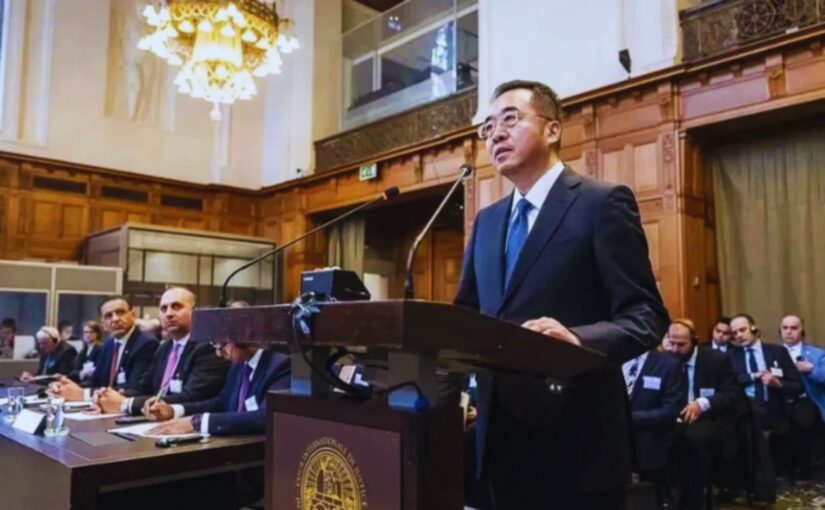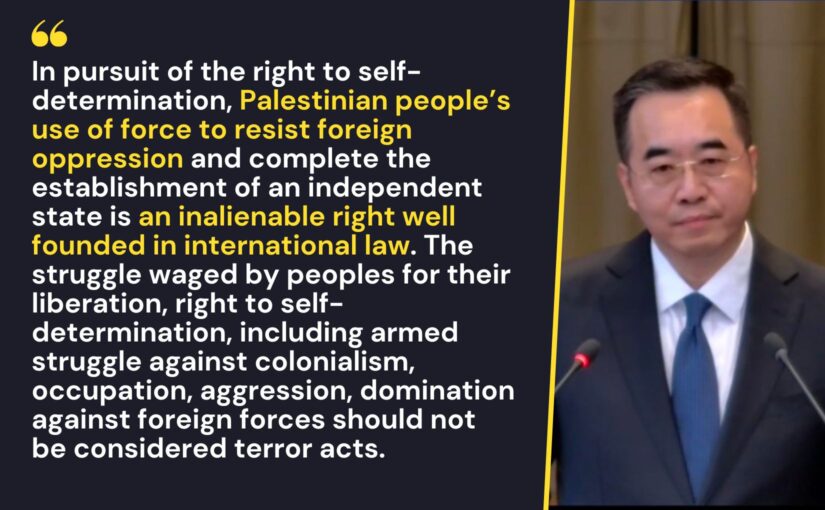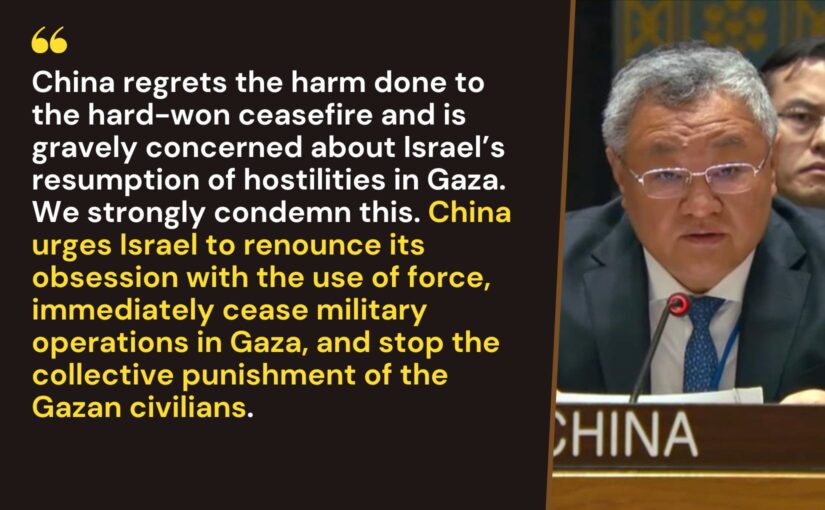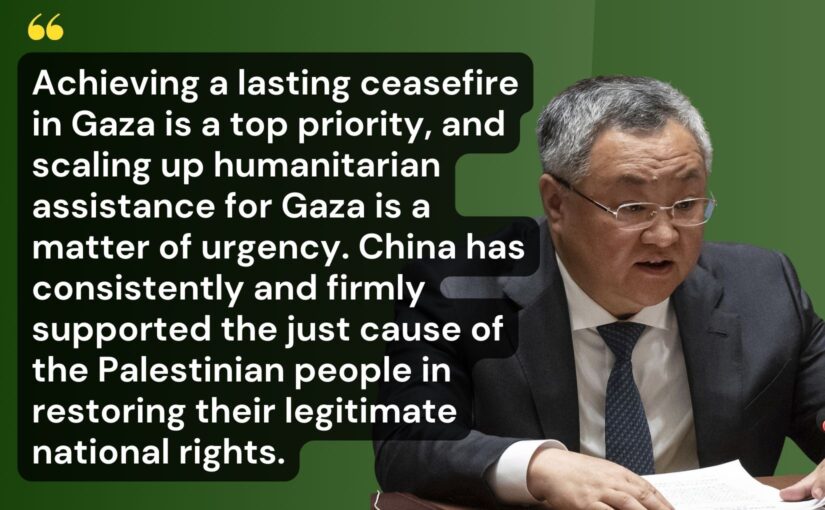
China’s UN Ambassador Fu Cong has again reiterated his country’s strong solidarity with the Palestinian people and condemned Israel for its ceasefire violations, continued obstruction of desperately needed humanitarian aid and worsening settler violence in the occupied West Bank.
Speaking at a UN Security Council briefing on November 24, Fu began by stating that: “The Palestinian question lies at the heart of the Middle East issue and bears on peace and security in the region and beyond.”
He continued: “We welcome the agreement reached on the first phase of the Gaza ceasefire. However, peace between Palestine and Israel is still far from being achieved, and the suffering of civilians continues. We call on the international community to work harder with the greatest sense of urgency and unwavering political will toward restoring peace in the region.”
In this regard, he advanced four points:
- Achieving a lasting ceasefire in Gaza is a top priority. We note with concern that violent clashes persist despite the ceasefire. Israel has reportedly committed over 400 violations of the agreement, resulting in more than 300 civilian deaths in Gaza. A ceasefire means the complete cessation of all attacks and should be observed by all parties in good faith. Any incident causing civilian casualties is unacceptable and repeated attacks must not become the new normal in Gaza.
- Scaling up humanitarian assistance for Gaza is a matter of urgency. The humanitarian situation remains dire, with severe shortages of essential supplies and medical equipment. Humanitarian access to Gaza continues to face multiple obstacles, and the aid that does reach Gaza falls far short of the quantity specified in the ceasefire agreement. The International Court of Justice has issued multiple advisory opinions and orders of provisional measures, stating unequivocally that, as the occupying power, Israel is under obligation to ensure the provision of humanitarian assistance to Gaza.
- Easing tensions in the West Bank is a pressing demand. The occupying power’s continued settlement expansion and connivance of settler violence have further fuelled the tensions in the West Bank. As documented by the UN, there were more than 260 incidents of settler violence last month alone, resulting in significant civilian casualties and property damage, making it the most devastating month since 2006.
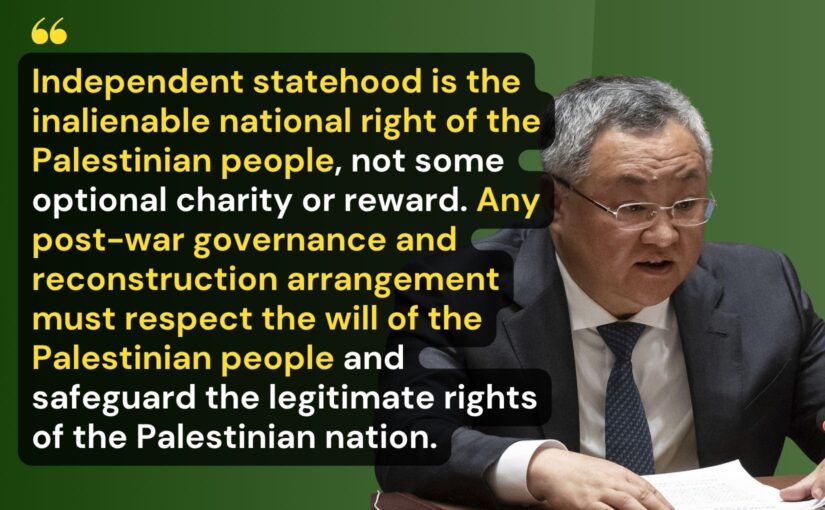
- Implementing the two-State solution is the only way out. Both Gaza and the West Bank are inseparable parts of the Palestinian state. Any future arrangements on Gaza should be guided by the principle of Palestinians governing Palestine and respect the will of the Palestinian people. The international community must redouble efforts to advance the two-State solution, oppose any unilateral actions that undermine its foundation, and support the early realisation of independent Palestinian statehood and its full UN membership.
We reproduce Fu Cong’s full statement below. It was originally published on the website of China’s permanent mission to the UN.
Continue reading China demands an end to Israeli ceasefire violations and increased humanitarian aid to GazaChina’s UN Ambassador Fu Cong has again reiterated his country’s strong solidarity with the Palestinian people and condemned Israel for its ceasefire violations, continued obstruction of desperately needed humanitarian aid and worsening settler violence in the occupied West Bank.
Speaking at a UN Security Council briefing on November 24, Fu began by stating that: “The Palestinian question lies at the heart of the Middle East issue and bears on peace and security in the region and beyond.”
He continued: “We welcome the agreement reached on the first phase of the Gaza ceasefire. However, peace between Palestine and Israel is still far from being achieved, and the suffering of civilians continues. We call on the international community to work harder with the greatest sense of urgency and unwavering political will toward restoring peace in the region.”
In this regard, he advanced four points:
- Achieving a lasting ceasefire in Gaza is a top priority. We note with concern that violent clashes persist despite the ceasefire. Israel has reportedly committed over 400 violations of the agreement, resulting in more than 300 civilian deaths in Gaza. A ceasefire means the complete cessation of all attacks and should be observed by all parties in good faith. Any incident causing civilian casualties is unacceptable and repeated attacks must not become the new normal in Gaza.
- Scaling up humanitarian assistance for Gaza is a matter of urgency. The humanitarian situation remains dire, with severe shortages of essential supplies and medical equipment. Humanitarian access to Gaza continues to face multiple obstacles, and the aid that does reach Gaza falls far short of the quantity specified in the ceasefire agreement. The International Court of Justice has issued multiple advisory opinions and orders of provisional measures, stating unequivocally that, as the occupying power, Israel is under obligation to ensure the provision of humanitarian assistance to Gaza.
- Easing tensions in the West Bank is a pressing demand. The occupying power’s continued settlement expansion and connivance of settler violence have further fuelled the tensions in the West Bank. As documented by the UN, there were more than 260 incidents of settler violence last month alone, resulting in significant civilian casualties and property damage, making it the most devastating month since 2006.
- Implementing the two-State solution is the only way out. Both Gaza and the West Bank are inseparable parts of the Palestinian state. Any future arrangements on Gaza should be guided by the principle of Palestinians governing Palestine and respect the will of the Palestinian people. The international community must redouble efforts to advance the two-State solution, oppose any unilateral actions that undermine its foundation, and support the early realisation of independent Palestinian statehood and its full UN membership.
We reproduce Fu Cong’s full statement below. It was originally published on the website of China’s permanent mission to the UN.
Continue reading China demands an end to Israeli ceasefire violations and increased humanitarian aid to Gaza