Pure socialism is pure idealism: a reply to Jacobin on China

In the following article, Friends of Socialist China co-editor Carlos Martinez responds to a recent Jacobin book review which presents China’s economic rise as a simple story of “brutal exploitation” indistinguishable from the horrors of Britain’s industrial revolution.

While not doubting the hardships described in the book under review, Carlos argues that Jacobin’s framing is ahistorical and idealist. China’s growth has not merely enriched a class of capitalists but transformed the lives of the majority, lifting hundreds of millions out of poverty and improving working class wages and conditions at an extraordinary pace.

The book review essentially compares China with an imagined socialist utopia, rather than comparing China with other destinations of outsourced production – where wages are lower, repression harsher, and no comparable rise in living standards is on offer.

Drawing on Friedrich Engels, Deng Xiaoping, Michael Parenti and John Smith, the article shows how China’s socialist land ownership system has protected living standards for hundreds of millions, and how the state is working to expand protections for workers in the “gig economy”. The article concludes:

At a moment when China is the largest and most developed socialist country on earth; when it is the leading proponent of a multipolar world order; and when it is the target of a systematic propaganda war designed to manufacture consent for a New Cold War (and ultimately hot war), for self-described socialists and anti-imperialists to offer this kind of context-free condemnation is, to say the least, deeply unhelpful.

Jacobin has published a review by Daniel Cheng of Adrift in the South, the memoir of the Chinese worker-poet Xiao Hai, detailing the harsh conditions he faced as a migrant worker in the megacities of southern China.

The book itself sounds interesting and worthwhile, and there is no reason to doubt the harshness of the conditions Xiao Hai describes. But the frame the review wraps around his story – that China’s economic miracle was “made possible by the brutal exploitation of millions of workers”, and that China’s development and the dark satanic mills of Britain’s industrialisation can be comfortably placed together in a category of “the universal suffering of capitalism” – is ahistorical, idealist, and, in the present geopolitical conjuncture, actively unhelpful.

Exploitation has to be contextualised

The first thing to say is that China’s growth has not simply enriched a class of capitalists. It has transformed the lives of the great majority. Over the past half-century, China has lifted an estimated 800 million people out of extreme poverty – by the World Bank’s own reckoning, more than three-quarters of the entire reduction in global poverty over the same period. Chinese workers and farmers today live longer, eat better, are far better educated and enjoy a level of material security their grandparents could barely have imagined.

Manufacturing wages roughly trebled between 2005 and 2016, and real wages have continued to climb at an impressive clip. The rate of exploitation of Chinese labour has been falling, not rising.

Continue reading Pure socialism is pure idealism: a reply to Jacobin on China

China’s courts draw a line in the sand: AI cannot be an excuse to fire workers

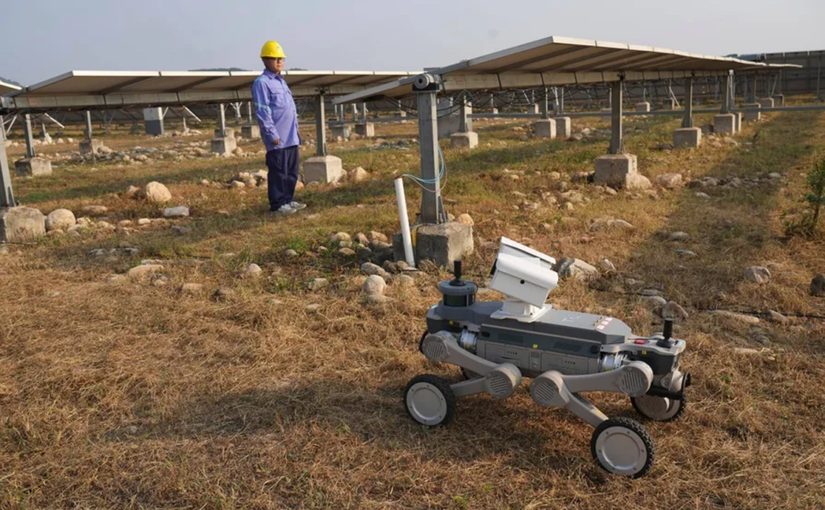
Artificial intelligence is reshaping the world of work at breakneck speed, and almost everywhere the same question is being asked: who pays the price when a machine can do your job? Across much of the capitalist world the answer has been brutally simple – the worker does. In China, the courts are giving a very different answer.

In this detailed original analysis for Friends of Socialist China, İbrahim Can Eraslan examines a landmark ruling handed down by the Hangzhou Intermediate People’s Court on the eve of International Workers’ Day 2026, which found that a technology company had unlawfully dismissed an employee after replacing his role with AI. Far from being an isolated case, Eraslan shows how it builds on a consistent and growing body of jurisprudence in Beijing, Guangzhou and beyond, all resting on a single principle: that voluntary AI adoption is a business decision, and that companies which automate must therefore shoulder the corresponding social responsibilities rather than dumping the costs onto their workforce.

Crucially, Eraslan situates these rulings within China’s wider policy architecture – from the 15th Five-Year Plan’s commitment to assessing AI’s employment effects, to proposals for compulsory employment impact assessments before large-scale AI deployment – and contrasts this socialist, employment-first approach with the ‘employment at will’ doctrine of the United States and the patchwork protections of the European Union. The result, he argues, is one of the first coherent national legal frameworks anywhere in the world for managing AI-driven job displacement: not Luddism, but a principled insistence that the fruits of technological progress be shared and that its costs not be socialised onto working people.

He concludes:

China’s courts have drawn a line in the sand. AI is welcome. But AI cannot be an excuse to fire workers. The cost of progress must be shared, and the burden must not fall on those who can least afford to bear it. In a world where capital everywhere is racing to automate labor out of existence, China’s socialist legal system is saying: not so fast.

Continue reading China’s courts draw a line in the sand: AI cannot be an excuse to fire workers

China marks May Day with tangible gains for working people

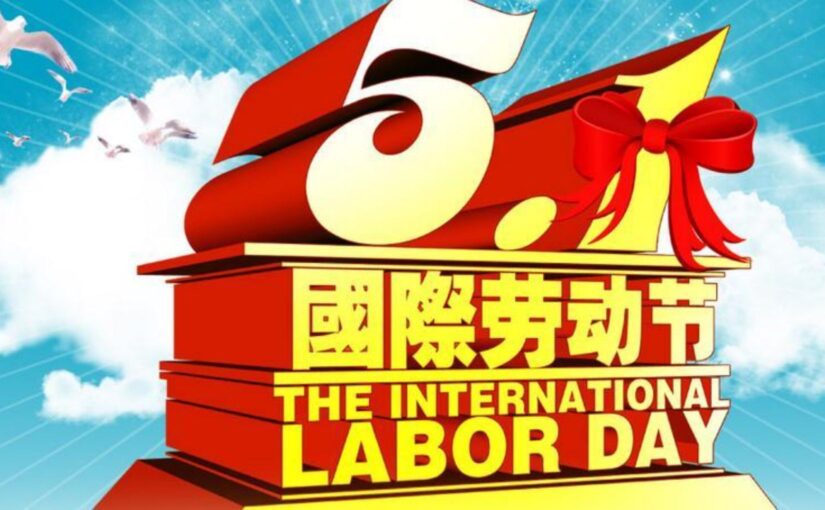
On the eve of May Day, Chinese President Xi Jinping extended festive greetings and best wishes to the country’s working people. He called on workers across the country to work hard, deliver solid results, and play a leading role in driving high-quality economic and social development. Party committees and governments at all levels, he added, should safeguard workers’ lawful rights and interests, address their most pressing concerns, and encourage them to strive unremittingly for the country’s grand goals.

A feature article published by the Xinhua News Agency explored these themes in greater depth.

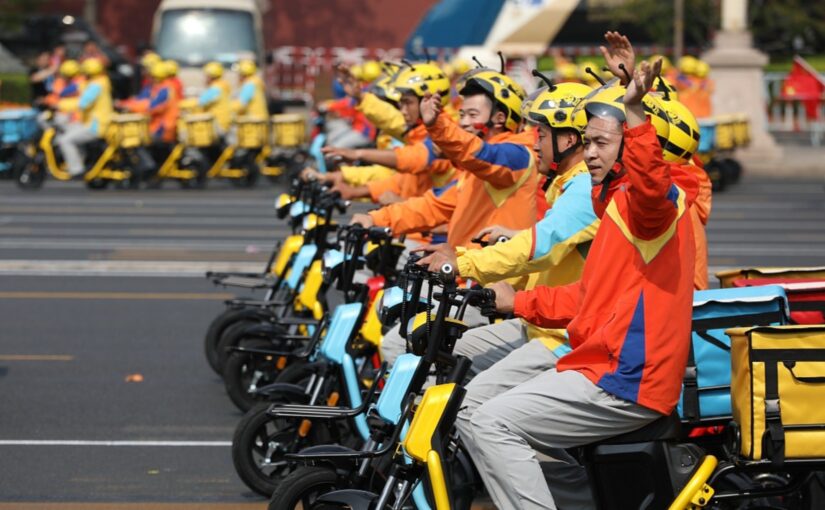
Noting that Xi Jinping has said that “model workers and exemplary individuals are the moral exemplars of the people and the pillars of the nation,” it added that in the week leading up to May Day, 3,024 individuals and organisations were honoured for their contributions to major national strategies, projects and priority industries. Recipients ranged from engineers, technicians, teachers and doctors, to delivery workers.

The article added: “Xi has built a reputation for hard work since his early years as a village official in a poor rural area of northwest China more than half a century ago. As the country’s top leader, he has called on the society as a whole to respect model workers and promote the spirit they embody and has backed the commitment with a range of policy and institutional measures.

“He has called for building a large, highly skilled industrial workforce with strong ideals, technical expertise, a capacity for innovation, and a sense of responsibility and dedication, while also emphasising workers’ welfare and protections.

“In recent years, China has continued to expand legal protections and social security coverage for workers, with growing attention to those in new forms of employment such as food delivery couriers and ride-hailing drivers, as well as older workers beyond the standard retirement age…

“Beyond policy measures, Xi has also conducted on-site inspections to ensure their needs are being met. In 2023, he went to a migrant worker housing complex in Shanghai, entering homes, inspecting shared facilities such as communal kitchens and laundries, and speaking with residents about their daily lives.

Continue reading China marks May Day with tangible gains for working people

Alex Gordon: PRC’s 75th anniversary a moment of hope and inspiration for peoples around the world
The following is the text of the speech delivered by Alex Gordon to the opening session of our conference held on September 28 to celebrate the 75th anniversary of the founding of the People’s Republic of China, “a moment of pride and achievement for the people of China, but also a moment of hope and inspiration for peoples around the world.”

Alex refers to President Xi Jinping’s May Day message this year to the Chinese working class as well as his letter to Serbian steel workers and contrasts this to the looming job cuts at the at the Port Talbot steel plant in South Wales.

He goes on to compare the fiasco of Britain’s HS2 high-speed rail project with the relevant experience in China:

“In the decade it took to turn HS2 from a rail infrastructure project into luxury homes opportunities for billionaires, China developed a 40,000 km publicly owned, high-speed rail network, the largest in world history.”

He also outlines the work of the Chinese trade union movement, noting that Xi Jinping had emphasised that the unions should earnestly safeguard the rights of workers and strive to solve practical problems concerning their vital interests, in particular for workers in new forms of employment.

Alex Gordon is the President of the rail workers and seafarers’ trade union RMT, the Chair of the Marx Memorial Library and Workers’ School and a member of the Political and Executive Committees of the Communist Party of Britain (CPB).

Chair, Minister, Your Excellencies, Comrades and Friends,

On behalf of the Executive Committee of the Communist Party of Britain (CPB), please allow me first to pay tribute to the great work and militant life of our late comrade Sitaram Yechury, General Secretary of the Communist Party of India (Marxist) (CPI[M]). CPB General Secretary, Robert Griffiths has paid tribute to Comrade Sitaram in a eulogy published in the Morning Star. Comrade Sitaram was a friend of China, but also a friend of the CPB and did so much to strengthen and deepen the links between our two parties. We mourn his loss and send our condolences to all his comrades. Vale comrade.

The 75th anniversary of the founding of People’s China is a moment of pride and achievement for the people of China, but also a moment of hope and inspiration for peoples around the world.

On behalf of the CPB, I want to recognise also the significance of this achievement for the working class in our country. But my remarks apply to workers more widely across the developed G7 economies and beyond.

In his May Day greeting to China’s working people this year, President Xi Jinping called on them to “actively participate in advancing Chinese modernisation with high-quality development and work tirelessly to promote the building of a strong country and the rejuvenation of the Chinese nation on all fronts.” He asked party committees and government bodies at all levels to “realise, safeguard and develop the legitimate rights and interests of workers.”

President Xi also replied to a letter from Serbian workers at the HBIS Smederevo Steel Plant who he met on a state visit to Serbia in 2016.

Continue reading Alex Gordon: PRC’s 75th anniversary a moment of hope and inspiration for peoples around the world