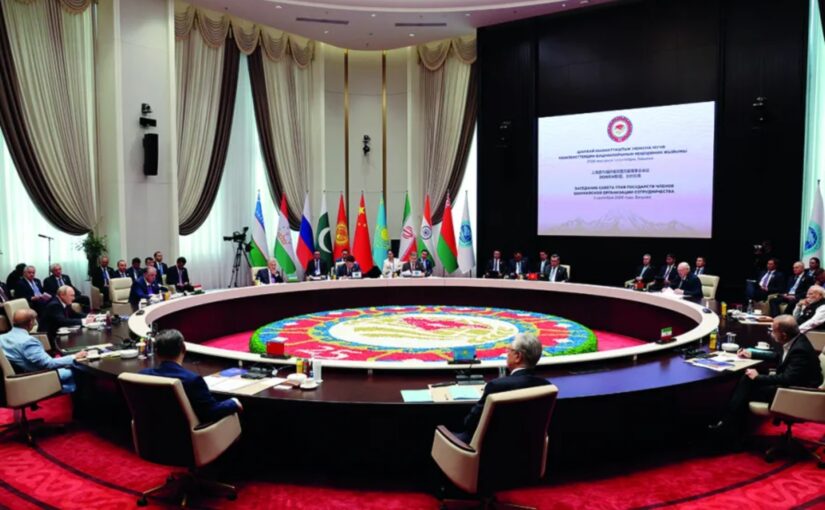
The website of the President of Russia carried the text of the speech delivered by President Vladimir Putin at the Shanghai Cooperation Organisation (SCO) Summit 2026 recently held in the Kyrgyz capital Bishkek.
Vladimir Putin noted that: “The SCO has covered a really long path during these 25 years. I would like to remind you that the organisation, which was established in 2001 at the initiative of six states – Russia, China, Kazakhstan, Kyrgyzstan, Tajikistan and Uzbekistan – has grown to become stronger, turning into an independent and influential centre of the emerging multipolar world. It has, de facto, become the largest regional association not only on our shared Eurasian continent but in the world as a whole. Nearly half of the global population lives in its countries, which account for over one-third of global GDP.”
Referring to the draft protocol on amending the fundamental SCO Charter, he explained that “all current observer states and dialogue partners will receive the newly-introduced SCO partner status. This decision will help streamline and expand mutually beneficial cooperation between the SCO and countries and international organisations which are interested in this cooperation.”
President Putin went on to note that: “Reciprocal trade and investment exchanges continue to expand each year. For example, Russia’s trade with the SCO member states exceeded US$400 billion last year. Our states use national currencies in mutual settlements more actively. Their share exceeds 98 percent in Russia’s operations with the organisation’s members.
“The SCO Business Council and the SCO Interbank Consortium make a major contribution to implementing joint mutually beneficial economic projects. The Development Bank, being established within the framework of our organisation, could take part in this work in the future. In my opinion, this bank should receive maximum independence from the financial systems of the states which weaponise economic tools in order to obtain unilateral advantages in international affairs.”
“Yesterday”, he continued, “we attended the opening ceremony of the World Nomad Games, which are currently taking place in the Kyrgyz Republic and in which representatives of many SCO member states, including Russia, are participating. Our country stands ready to host the next games in 2028 in Kazan, Russia. We will be pleased to welcome teams from all interested states.”
Concluding he noted: “I would like to remind you that today is September 1 – the day on which the Second World War began. We must do everything in our power to prevent a return to the global practice of instigating armed conflicts. I am convinced that our efforts are directed precisely towards this objective.”
The official website of the Russian head of state also reported that: “In conclusion of the meeting, the leaders signed and adopted the final documents, including the Bishkek Declaration, decisions of the SCO Heads of State Council on joint initiatives on combatting drug addiction and on countering the spread of synthetic drugs and their precursors for the period until 2030; initiatives for the conservation and sustainable management of biodiversity and a joint action plan for their implementation for 2026–2031; as well as scientific and technological cooperation programmes for creating the SCO Green Technology Corridor for 2026–2030.
“The SCO leaders also adopted decisions on declaring the city of Lahore (Pakistan) as the SCO Tourism and Cultural Capital for 2026–2027, and on signing a Memorandum of Understanding between the SCO Secretariat and the African Union Commission.
“The following documents were adopted without signing: the Declaration of the SCO Heads of State Council on Strengthening Multilateral Partnership for Nuclear and Physical Nuclear Security, statements of the SCO Heads of State Council on expanding interaction in energy conservation and energy efficiency, energy systems, on supporting and strengthening the institution of the family, and on assistance to states affected by disasters.”
The Morning Star newspaper carried a feature article by Kenny Coyle analysing the significance of the Bishkek Declaration.
According to Kenny: “If you wondered where world leaders were this past week, you certainly wouldn’t have found them in London, Brussels or Washington, not even Kiev. In fact, many of the most significant leaders were in Bishkek, capital of Kyrgyzstan, a former Soviet republic, from August 31 to September 1 at the summit of the Shanghai Cooperation Organisation (SCO).
“Despite disagreements on many critical issues, a joint statement, the ‘Bishkek Declaration’, was signed by Chinese President Xi Jinping, Russian President Vladimir Putin, Indian Prime Minister Narendra Modi, Pakistani Prime Minister Shehbaz Sharif, as well as other leaders of SCO member nations.”
Also underlining the growing economic significance and focus of the SCO, he writes: “This central concern, over the past quarter century, has been to break the US stranglehold over international finance and trade. The Bishkek Declaration strongly promotes the transformation of existing structures. ‘Member states support reform of the international financial architecture aimed at increasing the representation and strengthening the role of developing countries in the governing bodies of international financial institutions, including the International Bank for Reconstruction and Development and the International Monetary Fund’.”
The declaration also states that: “Member states, reaffirming their support for the sovereignty and territorial integrity of the Islamic Republic of Iran, call for the conflict to be resolved exclusively through political and diplomatic means. In this regard, they welcome all efforts aimed at reducing tensions in the region.”
“On Afghanistan, which is a neighbour to several SCO members, it was stated that: ‘Member states reiterate that only an inclusive government with broad representation from all ethnic and political groups can bring lasting peace,’ and support ‘establishing Afghanistan as an independent, neutral and peaceful state free from terrorism, war and drugs.’ [Afghanistan also has observer status in the SCO. However, since the return to power of the Taliban its participation has largely been dormant.]
“On nuclear weapons and disarmament, the declaration reaffirmed support for the Treaty on the Non-Proliferation of Nuclear Weapons by SCO ‘signatory members’. This is an important caveat, since neither India nor Pakistan are NPT signatories.”
[A more striking caveat is to be found in the part of the declaration dealing with China’s Belt and Road Initiative. It reads: “The Republic of Belarus, the Islamic Republic of Iran, the Republic of Kazakhstan, the Kyrgyz Republic, the Islamic Republic of Pakistan, the Russian Federation, the Republic of Tajikistan, and the Republic of Uzbekistan reaffirmed their support for the People’s Republic of China’s joint construction of the Belt and Road initiative, affirming the efforts of all parties to jointly implement the initiative, including promoting the alignment of the Belt and Road with the construction of the Eurasian Economic Union.” In other words, BRI is endorsed by all SCO members with the sole exception of India.]
At just over 4,200 words, the declaration also deals with a huge range of other issues.
Kenny concludes: “While far from perfect, the Bishkek Declaration is an example of what used to be understood in the West as ‘diplomacy’, the focus on multilateral discussions and agreements, however limited, stands in stark contrast to what is currently on offer from Washington. More countries can now be expected to explore this alternative path.”
The following articles were originally published on the website of the President of Russia, by the Morning Star and on the website of the Chinese Foreign Ministry. The texts of the Bishkek Declaration and of the Declaration of the Council of Heads of State of the Shanghai Cooperation Organisation on Strengthening Nuclear Security and Multilateral Partnerships in Nuclear Security were published in Chinese. They have been machine translated and subedited by us.
Meeting of the SCO Heads of State Council
September 1 (President of Russia) – Vladimir Putin took part in the meeting of the SCO Heads of State Council. The event was held at the Yrys Ordo Congress Hall in Bishkek, the capital of the Kyrgyz Republic.
Before the meeting, President of the Kyrgyz Republic Sadyr Japarov hosted an official welcoming ceremony for the leaders of the Shanghai Cooperation Organisation, followed by a photo op.
The Russian delegation at the meeting comprises Minister of Foreign Affairs Sergei Lavrov, Deputy Prime Minister Alexei Overchuk, Deputy Chief of Staff of the Presidential Executive Office Maxim Oreshkin, Deputy Chief of Staff of the Presidential Executive Office – Presidential Press Secretary Dmitry Peskov, Aide to the President of the Russian Federation Yury Ushakov, and Special Presidential Representative for SCO Affairs, Ambassador-at-Large of the Ministry of Foreign Affairs Bakhtiyer Khakimov.
In conclusion of the meeting, the leaders signed and adopted the final documents, including the Bishkek Declaration, decisions of the SCO Heads of State Council on joint initiatives on combatting drug addiction and on countering the spread of synthetic drugs and their precursors for the period until 2030; initiatives for the conservation and sustainable management of biodiversity and a joint action plan for their implementation for 2026–2031; as well as scientific and technological cooperation programmes for creating the SCO Green Technology Corridor for 2026–2030.
Some of the adopted decisions concern the regulations on the SCO Universal Centre for Countering Security Challenges and Threats and the Executive Committee of the SCO Anti-Drug Centre, as well as an action plan for the development of ports and logistics centres of the SCO members states for 2026–2030 and a Concept for Establishing Regional Data Centres and Computing Capacities and Developing the Artificial Intelligence Industry.
The SCO leaders also adopted decisions on declaring the city of Lahore (Pakistan) as the SCO Tourism and Cultural Capital for 2026–2027, and on signing a Memorandum of Understanding between the SCO Secretariat and the African Union Commission.
The following documents were adopted without signing: the Declaration of the SCO Heads of State Council on Strengthening Multilateral Partnership for Nuclear and Physical Nuclear Security, statements of the SCO Heads of State Council on expanding interaction in energy conservation and energy efficiency, energy systems, on supporting and strengthening the institution of the family, and on assistance to states affected by disasters.
Speech by the President of Russia at the meeting of the SCO Heads of State Council
President of Russia Vladimir Putin: Mr Japarov, friends,
First of all, I would like to support what my colleagues said when they praised Kyrgyzstan for its efforts as chair of the Shanghai Cooperation Organisation and rightly noted the SCO’s achievements reached over 25 years since its inception.
The SCO has covered a really long path during these 25 years. I would like to remind you that the organisation, which was established in 2001 at the initiative of six states – Russia, China, Kazakhstan, Kyrgyzstan, Tajikistan and Uzbekistan – has grown to become stronger, turning into an independent and influential centres of the emerging multipolar world.
As you know, its membership has grown considerably. India and Pakistan joined the SCO in 2017, Iran did the same in 2023 and Belarus in 2024. Observer states – Afghanistan and Mongolia – and 15 dialogue partners have been proactively contributing to SCO’s activities.
The SCO has de facto become the largest regional association not only on our shared Eurasian continent but in the world as a whole. Nearly half of the global population lives in its countries, which account for over one-third of global GDP.
The SCO possesses powerful intellectual and technological potential and a substantial share of the world’s natural resources. The key transcontinental, transport and logistics routes run through the SCO space.
SCO countries have been proactive in their political, economic and humanitarian cooperation, and this interaction helps ensure steady and sustainable development for each of our states, and helps promote peace, stability, trust and cooperation throughout our Eurasian continent.
I am convinced that a substantial package of decisions, drafted for approval by leaders following the current meeting, will provide a new impetus to our partnership within the SCO.
Russia shares the coordinated approaches to key issues of the global and regional agenda that are reflected in the main document of the summit – the Bishkek Declaration.
We support efforts to improve the activities of the Organisation and to make its working mechanisms more effective. For example, this is stipulated by a draft protocol on amending the fundamental SCO Charter. Its approval will make it possible to launch the Universal Centre for Countering Challenges and Threats to the Security of the SCO Member States, established last year in Tashkent, and the SCO Anti-Drug Centre in Dushanbe.
Additionally, all current observer states and dialogue partners will receive the newly-introduced SCO partner status. This decision will help streamline and expand mutually beneficial cooperation between the SCO and countries and international organisations which are interested in this cooperation.
I would like to single out some key practical objectives facing the Shanghai Cooperation Organisation, including efforts to further strengthen commercial ties between member states. This gives all of us obvious dividends, facilitates sustained socio-economic growth and helps improve people’s living standards.
Reciprocal trade and investment exchanges continue to expand each year. For example, Russia’s trade with the SCO member states exceeded US$400 billion last year. Our states use national currencies in mutual settlements more actively. Their share exceeds 98 percent in Russia’s operations with the Organisation’s members.
The SCO Business Council and the SCO Interbank Consortium make a major contribution to implementing joint mutually beneficial economic projects. The Development Bank, being established within the framework of our Organisation, could take part in this work in the future. In my opinion, this bank should receive maximum independence from the financial systems of the states which weaponize economic tools in order to obtain unilateral advantages in international affairs.
I believe it is in our common interests to continue the coordinated and balanced energy policy, as envisaged by the Shanghai Cooperation Organisation Strategy for Energy Cooperation until 2030.
There are also promising prospects for cooperation in the high-tech sector. The adoption of the Memorandum on Cooperation in Artificial Intelligence and the Action Plan for the Introduction of Green Technologies will be an important step in this regard.
It is most gratifying to observe the dynamic and substantive nature of cultural and humanitarian interaction within the SCO. Our countries are strengthening ties in education, healthcare, environmental protection, scientific and youth exchanges. SCO University, which unites more than 100 institutions of higher education of our member states, is operating successfully. Women’s forums dedicated to enhancing the role of women in public, political, business and social life are held under the Organisation’s auspices.
Yesterday, we attended the opening ceremony of the World Nomad Games, which are currently taking place in the Kyrgyz Republic and in which representatives of many SCO member states, including Russia, are participating. Our country stands ready to host the next games in 2028 in Kazan, Russia. We will be pleased to welcome teams from all interested states.
In accordance with a good tradition, we also look forward to receiving cultural figures and artists from SCO countries at the International United Cultures Forum, which will be held in our country, in St Petersburg, at the end of September.
In conclusion, I would like to once again express my gratitude to President of the Kyrgyz Republic Sadyr Japarov and to all our Kyrgyz friends for their hospitality, warm welcome, and excellent organisation of this summit.
I am confident that our joint work in Bishkek will facilitate the development of multifaceted cooperation within the Shanghai Cooperation Organisation, in the interests of strengthening security, peaceful development, and prosperity across Eurasia.
Friends, in this connection I would like to remind you that today is September 1 – the day on which the Second World War began. We must do everything in our power to prevent a return to the global practice of instigating armed conflicts. I am convinced that our efforts are directed precisely towards this objective. Naturally, I wish every success to Prime Minister of the Islamic Republic of Pakistan Muhammad Shehbaz Sharif and to our Pakistani colleagues, who will assume the chairmanship of the Shanghai Cooperation Organisation following this summit.
Thank you.
The West isn’t watching but Bishkek summit may offer a glimpse of revived diplomacy
The 25th anniversary meeting of the Shanghai Co-operation Organisation in the Kyrgyz capital may offer a glimmer of hope that international relations do not need to be defined by endless confrontation, writes KENNY COYLE
September 2 (Morning Star) – IF YOU wondered where world leaders were this past week, you certainly wouldn’t have found them in London, Brussels or Washington, not even Kiev. In fact, many of the most significant leaders were in Bishkek, capital of Kyrgyzstan, a former Soviet republic, from August 31 to September 1 at the summit of the Shanghai Co-operation Organisation (SCO).
The gathering, which marked the SCO’s 25th anniversary, brought together heads of state from powers such as China, India, Pakistan and Russia, as well as the UN secretary-general and the Turkish premier.
Despite disagreements on many critical issues, a joint statement, the “Bishkek Declaration,” was signed by Chinese President Xi Jinping, Russian President Vladimir Putin, Indian Prime Minister Narendra Modi, Pakistani Prime Minister Shehbaz Sharif, as well as other leaders of SCO member nations.
The SCO is one of a number of multilateral networks that have sprung up outside of the post-1945 Western-created international organisations. Its importance should neither be underestimated despite the West’s unwillingness to acknowledge its status, nor discounted due to its internal frictions. This, like many of the structures of the emerging multipolar world, is still partial and incomplete, but most importantly a work in progress.
Attendees included Kyrgyzstan, as chair and host, China, Russia, India, Pakistan, Iran, Belarus, as well as the Central Asian states of Kazakhstan, Tajikistan, and Uzbekistan. UN secretary-general Antonio Guterres and Turkish President Recep Tayyip Erdogan, also attended the event although neither the UN nor Turkey are members of the SCO and were not signatories to the final declaration.
The SCO was originally established as a non-Western based network for co-operation on non-contentious issues, such as cross-border terrorism and the international drugs trade, but also with an eye on a profoundly more ambitious project, namely the creation of international financial structures that would be independent of US-dominated trade and banking architecture.
Economic power
This central concern, over the past quarter century, has been to break the US stranglehold over international finance and trade. The Bishkek Declaration strongly promotes the transformation of existing structures. “Member states support reform of the international financial architecture aimed at increasing the representation and strengthening the role of developing countries in the governing bodies of international financial institutions, including the International Bank for Reconstruction and Development and the International Monetary Fund.”
Given the paucity of Western media coverage, it’s worth a reminder that the since the SCO began in 1996, its economic clout has grown massively. Its 10 member states now account for 43 per cent of the world’s population and nearly a quarter of the global economy.
Given Russia’s membership and the membership of several former Soviet states, it’s perhaps not surprising that the statement makes no mention of the Russia-Ukraine conflict. Although, in what is clearly a reference to the current rewriting of WWII because of the Ukraine war, the declaration says: “Member states will continue to preserve the memory of the outcome of World War II and oppose attempts to falsify history.”
It is, however, crystal clear on condemning the Israeli-US war against Iran, denying any role for a US-Israeli military solution. “Member states, reaffirming their support for the sovereignty and territorial integrity of the Islamic Republic of Iran, call for the conflict to be resolved exclusively through political and diplomatic means. In this regard, they welcome all efforts aimed at reducing tensions in the region.”
On Afghanistan, which is a neighbour to several SCO members, it was stated that: “Member states reiterate that only an inclusive government with broad representation from all ethnic and political groups can bring lasting peace,” and support “establishing Afghanistan as an independent, neutral and peaceful state free from terrorism, war and drugs.”
On nuclear weapons and disarmament, the declaration reaffirmed support for the Treaty on the Non-Proliferation of Nuclear Weapons by SCO “signatory members.” This is an important caveat, since neither India nor Pakistan are NPT signatories.
The statement also made clear members’ “inherent right to develop research, production and use of nuclear energy for peaceful purposes and to engage in equal, sustainable and mutually beneficial international co-operation in this area without discrimination.”
However, at the same time the SCO warned that “unilateral and unrestricted expansion of global missile defence systems by individual countries or groups undermines international security and stability. They consider it unacceptable for countries to pursue their own security at the expense of others.”
On the issue of whether the SCO should become a military alliance, the declaration states that SCO countries “adhere to an approach that excludes bloc-based and confrontational methods of addressing international and regional development issues.”
The SCO outlines its version of non-interference. “Member states emphasise the indivisibility, interdependence and interconnectedness of all human rights and recall the universal nature of obligations to respect rights and fundamental freedoms, oppose the use of ‘double standards,’ particularly on human rights, as well as interference in the internal affairs of sovereign states.”
The SCO further criticised illegal unilateral Western sanctions in general. It opposes “unilateral coercive measures that contradict the UN Charter and other norms of international law, as well as World Trade Organisation rules and principles, harm efforts to ensure international security, including its food, energy and humanitarian components, and negatively affect the global economy.”
While far from perfect, the Bishkek Declaration is an example of what used to be understood in the West as “diplomacy,” the focus on multilateral discussions and agreements, however limited, stands in stark contrast to what is currently on offer from Washington. More countries can now be expected to explore this alternative path.
The 25th anniversary Bishkek Declaration of the Shanghai Cooperation Organisation
September 2 (MFA) – On the occasion of the 25th anniversary of the establishment of the Shanghai Cooperation Organisation (hereinafter referred to as the “SCO”), the leaders of member states convened a meeting of the Council of Heads of State to reaffirm their commitment to uphold the purposes and principles of the SCO Charter, further enhance good-neighbourliness and friendship, carry out comprehensive and efficient cooperation, and issued the following declaration:
Since its establishment, the SCO has successfully passed the historical stages of mechanism building and conceptual shaping and has now become an internationally recognised and rapidly developing multilateral organisation, with an increasingly important role in international and regional affairs.
Over the past 25 years, the SCO has built a solid legal foundation, established efficient cooperation mechanisms, and set the strategic direction for the organisation’s long-term development.
Member states highly appreciate the SCO’s achievements in maintaining regional security and stability, responding to various threats and challenges, promoting economic and social development, and deepening exchanges and cooperation in humanities, sports, science and technology, education, and other fields.
Member states continue to work on consolidating organisational solidarity and implementing the tasks and goals set out in the SCO Development Strategy for the Next 10 Years (2026-2035).
Member states emphasised that the SCO is a non-military-political group that does not target any country or international organisation, and operates on the principles of openness, non-interference in internal affairs, equality, and mutual respect.
Member states welcome all countries, international organisations, and multilateral institutions willing, and without harming the interests of the SCO and its member states, to cooperate with the SCO, believing that the “SCO+” cooperation model helps build broad and inclusive global partnerships.
Member states particularly emphasised that to maintain peace, promote sustainable development, and advance cultural cooperation, it is crucial for the SCO to strengthen dialogue with the United Nations and its specialised agencies.
Member states believe that the “Shanghai Spirit” of mutual trust, mutual benefit, equality, consultation, respect for diverse civilisations, and seeking common development is crucial.
1
Member states pointed out that global geopolitics are undergoing profound evolution, with profound changes in economic, social, and technological development. Currently, the international situation remains complex, with ongoing conflicts, prominent challenges in energy and food security, global market volatility, and increasingly severe climate change conditions.
Member states reaffirm their commitment to always uphold the recognised principles and norms of international law established in the UN Charter, and to strengthen the United Nations’ role in safeguarding international peace and security, achieving sustainable development, and building a more representative, democratic, and just multipolar world. Member states are committed to making greater contributions to improving the international system.
Member states welcome the United Nations General Assembly’s declaration of 2027–2036 as the “Decade of Building Peace for Future Generations”.
Member states will deepen cooperation within the SCO framework to lay the foundation for building an equal and indivisible security in the Eurasian region.
Member states advocate reforming and improving the global governance system, including establishing corresponding rules and guidelines to ensure that all countries participate equally, make equal decisions, and benefit equally in global governance.
Member states oppose grouping and adversarial approaches to resolving international and regional issues, and advocate for the peaceful resolution of differences and disputes between nations.
Member states advocate building a world of lasting peace and call for a coordinated response to both traditional and non-traditional security threats and challenges.
Member states reiterated that promoting the building of a new type of international relations and a community with a shared future for humanity based on mutual respect, fairness, justice, and win-win cooperation, as well as conducting dialogue based on the concept of “One Earth, One Home, One Future,” is of great practical significance.
Member states call on the international community to jointly participate in the “SCO Initiative on Countries Uniting and Promoting a Just, Harmonious, and Developing World”.
Member states consider Central Asia the core area of the SCO and welcome the achievements of regional countries in consolidating peace and sustainable development. To this end, member states welcome the annual high-level meetings on related topics held by the Republic of Tajikistan.
Member states will continue to firmly defend the achievements of World War II, remember and oppose the distortion of history.
Member states support preventing the weaponisation of outer space, believing that strict adherence to the existing legal framework for the peaceful use of outer space is crucial.
Member states believe it is necessary to sign international instruments with mandatory legal force to enhance transparency and provide strong safeguards against an arms race in outer space.
Member states reiterate that unilaterally and unconditionally strengthening the global missile defence system by individual countries or groups of countries endangers international security and stability and believes that seeking their own security at the expense of other countries is unacceptable.
Member states expressed concern over the growing threats in the field of information security and firmly opposed the militarisation of information and communication technology, as well as threats to the security of critical information infrastructure.
Member states believe it is crucial to ensure that countries enjoy equal rights in internet governance and possess cyber sovereignty.
Member states believe that providing satellite internet services within their territory without the necessary permits or approval from their competent authorities violates international law in the telecommunications sector.
Member states emphasised the United Nations’ key role in international information security, supported the continued development of universally accepted codes of conduct for international information security within the UN framework on a voluntary basis, called for joint efforts to promote the signing and ratification of the UN Convention on Combating Cybercrime, and in continuing to improve mechanisms for combating cybercrime within the SCO framework.
Member states emphasised their resolute crackdown on the use of the internet for terrorism, separatism, and extremist activities, and will strengthen cooperation in safeguarding international information security, information protection, and combating new types of crime.
Member states emphasised the need to ensure that AI technology is used safely and responsibly, and that the misuse of AI technology is not permitted to deliberately endanger human life and health, nor to harm national sovereignty, security, or territorial integrity.
To this end, all parties emphasise the importance of signing the Memorandum of Understanding among SCO Member States in the field of artificial intelligence.
As a member of the SCO and a signatory to the Treaty on the Non-Proliferation of Nuclear Weapons (NPT, July 1, 1968), [member states] advocate adherence to the treaty’s provisions, comprehensively and in a balanced way promoting the implementation of its purposes and principles, advancing the global nuclear disarmament process, consolidating the global nuclear non-proliferation system, and stressing that researching, producing, and utilising nuclear energy for peaceful purposes is an inalienable right of all countries and that equal and sustainable mutually beneficial international cooperation should be carried out without discrimination. Member states emphasised that restrictive measures that violate international law should not be implemented in this area.
Member states pointed out that the establishment of a nuclear-weapon-free zone by regional countries based on voluntary consensus has made important contributions to strengthening the nuclear non-proliferation mechanism and advancing nuclear disarmament. They welcomed the 20th anniversary of the signing of the Central Asian Nuclear-Weapon-Free Zone Treaty and emphasised that continuing its implementation is of great significance for enhancing regional security, mutual trust, and cooperation.
To this end, member states have pointed out the importance of issuing the “Declaration of the Council of Heads of State of the SCO on Strengthening Multilateral Partnerships in Nuclear Security and Nuclear Security”.
Member states call on the parties to the Chemical Weapons Convention to fully implement the convention, making it an effective legal instrument in the fields of disarmament and non-proliferation. Member states reiterate their support for the work of the Organisation for the Prohibition of Chemical Weapons.
Member states have pointed out that the Biological Weapons Convention (BWC) is of great significance in improving global biosafety governance and advocate adherence to the convention.
To this end, member states emphasise the importance of strengthening international cooperation in this field, including exploring the possibility of establishing an international biosafety agency.
Member states expressed serious concern over developments in the Middle East and around the Islamic Republic of Iran, reiterating the SCO’s condemnation of military strikes on Iranian territory, which have caused heavy civilian casualties and severe economic damage.
Such actions violate the UN Charter and the principles and norms of international law, posing serious risks to world peace, security, and stability.
Member states extend their sincere condolences to the Iranian government and people regarding the unfortunate death of Ali Khamenei, Supreme Leader of the Islamic Republic of Iran, and also extend heartfelt sympathies to the families of other victims.
Member states reiterated their support for the sovereignty and territorial integrity of the Islamic Republic of Iran, advocated resolving the conflict through political and diplomatic means, and welcomed all efforts conducive to de-escalating regional tensions.
Member states pointed out that only by comprehensively and justly resolving the Palestinian issue can peace and stability be achieved in the Middle East.
Member states reaffirm their commitment to helping Afghanistan become an independent, neutral, peaceful country free from terrorism, war, and drugs, and support the international community’s efforts to promote peace, stability, and development in Afghanistan.
Member states reiterated that forming a truly inclusive government that incorporates broad participation from all ethnic groups and political factions in Afghan society is the only way to achieve lasting peace and stability in Afghanistan.
2
Member states reaffirmed their firm determination to combat terrorism, separatism, and extremism, prohibiting the exploitation of terrorism, separatism, and extremism for personal gain, and emphasised the key role played by sovereign states and their competent authorities in preventing terrorism and extremist threats.
Member states consider the stigmatisation of SCO member states’ organs and institutions unacceptable, emphasising that such actions violate international law and undermine the principles of sovereign equality and non-interference in each other’s internal affairs as stipulated in the UN Charter.
Member states strongly condemn terrorism in all forms and manifestations, firmly oppose double standards regarding terrorism, and call on the international community to abide by the UN Charter and principles of international law, adhere to the central role of the United Nations, fully implement relevant UN Security Council resolutions and the UN Global Counter-Terrorism Strategy, work together to combat terrorism and all terrorist organisations, curb the cross-border movement of terrorists, and emphasise the importance of adopting the Comprehensive Convention on Terrorism by consensus.
Member states emphasised that the SCO regional counterterrorism structure plays an important and active role in the SCO construction and development process, and highly appreciates its contributions in coordinating cooperation among countries in combating terrorism, separatism, and extremism, organising joint counter-terrorism exercises, and other related actions.
Member states pointed out that the work of the SCO Meeting of Public Security and Interior Ministers is very important, and signing the “Protocol on Amending and Supplementing the Agreement on Intergovernmental Cooperation on Combating Crime of June 11, 2010” will help better address new threats and challenges.
Member states reiterated that strengthening cooperation in addressing global drug issues under current international drug control laws is crucial, prohibiting the use of all types of narcotic drugs for non-medical purposes and legalising drugs, which will further enhance anti-drug capabilities and build a “drug-free society”.
Member states support further strengthening cooperation in combating illegal trafficking of narcotic drugs, psychotropic substances, and their precursors based on SCO documents adopted in the field of drug control, systematically advancing drug prevention efforts, reducing dependence on drugs, and regularly carrying out special actions such as the “Spider Web” anti-drug campaign and the “Drug-Free World” anti-drug prevention campaign.
Member states welcome and implement the “SCO Member States Cooperation Outline on Drug Control and Rehabilitation by 2030” and the “SCO Member States Cooperation Outline on Measures to Combat the Spread of Synthetic Drugs and Their Precursors by 2030”.
Member states welcome the signing of the Memorandum of Understanding between the SCO Secretariat and the Central Asia Regional Anti-Drug Information Coordination Centre, advocating for continued deepening of international anti-drug cooperation.
Member states pointed out the need to further strengthen the institutionalisation of the SCO’s security sector, enhance cooperation among competent bodies, and provide analysis and support for various decisions.
Member states have ratified the Regulations on the SCO Member States’ Integrated Centre for Security Threats and Challenges (which includes the Information Security Centre and the Centre for Combating Transnational Organised Crime) and the Regulations on the Executive Committee of the SCO Centre for Drug Control. Member states believe that the early substantive operation of these permanent institutions will help further strengthen SCO cooperation in relevant fields.
Member states believe that cooperation among defence departments should be deepened, regular “Peace Mission” joint counterterrorism exercises continued, and other pragmatic cooperation in the defence field should be carried out to consolidate peace and security in the SCO region.
Member states support the implementation of the “Roadmap for Strengthening Military Cooperation in the Defence Sector of SCO Member States,” consider enhancing mutual trust and transparency of great significance, and will continue consultations on the “Agreement on Confidence-Building Measures in the Military Sector of SCO Member States”.
Member states will adhere to the principle of the rule of law, respect the legal systems of each country, further deepen legal and judicial cooperation, and enhance exchanges and dialogue among the highest courts, supreme procuratorates, and judicial departments of all countries.
3
Member states pointed out that the SCO region plays a leading role in the world economy and ensuring global sustainable development, advocates further reform and improvement of the global economic governance system, and will firmly uphold and strengthen an open, transparent, fair, inclusive, and non-discriminatory multilateral trading system based on internationally recognised principles and rules, promote world economic development, ensure fair market access, and provide special and differential treatment for developing countries.
Member states oppose unilateral coercive measures that violate the UN Charter, other international legal norms, and WTO principles and rules. Such practices undermine international security in areas such as food, energy, and humanitarian areas, and impact the global economy.
Member states will continue to implement the SCO Economic Development Strategy to 2030, deepen economic cooperation, expand trade scale, and promote trade balance; maintain the stability of regional industrial and supply chains, promote sustainable economic development in all countries, and help build a broad, open, mutually beneficial, and equal cooperation pattern in the Eurasian region.
The Republic of Belarus, the Islamic Republic of Iran, the Republic of Kazakhstan, the Kyrgyz Republic, the Islamic Republic of Pakistan, the Russian Federation, the Republic of Tajikistan, and the Republic of Uzbekistan reaffirmed their support for the People’s Republic of China’s joint construction of the Belt and Road initiative, affirming the efforts of all parties to jointly implement the initiative, including promoting the alignment of the Belt and Road with the construction of the Eurasian Economic Union.
Member states advocate further cooperation in the field of antitrust and will strengthen pragmatic collaboration among competent departments.
Member states believe that e-commerce plays a positive role in deepening regional economic and trade cooperation, will improve cross-border e-commerce infrastructure, reduce transaction costs, enhance mutual trust among business entities in the SCO region, and rely on digital technology to strengthen consumer rights protection and develop unified online solutions for cross-border e-commerce disputes.
Member states will continue to advance cooperation in priority customs areas, improve customs management systems, and carry out cooperation in building smart customs.
Member states emphasised the need to further deepen cooperation in the transportation sector, including unlocking the transit transport potential of SCO member states, building and upgrading existing international roads and railways, creating multimodal transport corridors and logistics centres, and promoting digital, innovative, and energy-saving technologies.
Member states support expanding inclusive and mutually beneficial cooperation in the energy sector, continuously enhancing the resilience of energy industry and supply chains, and promoting sustainable, stable, and balanced development of a non-discriminatory global energy market. Member states will continue to implement the “SCO Member States’ Energy Cooperation Development Strategy Until 2030”.
Member states pointed out that cooperation in the industrial sector is playing an increasingly important role and will jointly promote the development of mutually beneficial partnerships in this field.
Member states emphasised that cooperation in the field of standardisation is of great significance for reducing technical barriers in areas of common interest and supported the establishment of contacts by the standardisation departments of SCO member states.
Member states will continue to deepen cooperation in agriculture and food security, support agricultural technology exchanges and agricultural talent cultivation, and carry out cooperation in crop breeding and cultivation.
Member states will strengthen cooperation in animal and plant inspection and quarantine, agricultural products, and food safety, expand agricultural product trade, and enhance international cooperation in preventing the spread of epidemics and eliminating their impact.
Member states reaffirmed their commitment to building the SCO region’s leading position in innovation, promoting the construction of a close-knit SCO startup ecosystem, and creating synergies through infrastructure development and support policies for innovative enterprises in member states.
Member states emphasised that cooperation in the financial sector plays an important role in economic growth in the SCO region, and relevant member states should continue to work to implement the “Roadmap for Expanding the Share of Local Currency Settlements among SCO Member States”.
Member states support reforming international financial institutions to increase the representation and voice of developing countries in the governing bodies of international financial institutions such as the International Bank for Reconstruction and Development and the International Monetary Fund.
Member states will continue pragmatic dialogue on strengthening financial cooperation within the framework of the SCO Interbank Consortium. Member states advocate for promptly resolving the issue of Iranian authorised banks joining the SCO interbank consortium.
Member states noted that during Kyrgyzstan’s tenure as rotating chairman, relevant member states made positive progress in establishing the SCO Development Bank, emphasising the importance of continuously advancing work in this field.
Member states emphasised the importance of further deepening investment cooperation and advocated making good use of the SCO’s existing cooperation mechanisms and platforms.
Member states will strengthen local exchanges and fully tap into the potential of the SCO Forum of Local Leaders.
Member states will promote the development of small and medium-sized enterprises, highly appreciate the important contributions made by the SCO Business Committee to advance SCO economic and trade cooperation, and will continue to realise its potential to expand multilateral pragmatic cooperation.
4
Member states support cooperation in environmental protection to address the adverse impacts of climate change, welcome the adoption of environmental technologies and innovative solutions, and implement projects for biodiversity and natural ecosystem restoration and protection.
Member states pointed out that signing the “SCO Council of Heads of State Biodiversity Conservation and Sustainable Management Initiative and Implementation of the Joint Action Plan (2026-2031)” and the “Intergovernmental Memorandum of Cooperation on Climate Change Response by SCO Member States” is of great significance.
Member states have noted the initiative to host the second Bishkek+25 Global Mountain Summit in 2027.
Member states have positively evaluated cooperation in disaster emergency rescue and will improve cooperation in early warning of emergencies, joint emergency response, and post-disaster reconstruction.
Member states pointed out that the important role of tourism in driving economic development is increasingly prominent, helping to expand mutual trade, improve transportation connectivity, attract investment, create jobs, and enhance regional competitiveness.
Member states highly praised Chophong-Ata City in the Kyrgyz Republic as the “SCO Tourism and Cultural Capital for 2025-2026,” which will contribute to unlocking the region’s tourism potential and deepening cultural cooperation.
Member states welcome the declaration of Lahore City in the Islamic Republic of Pakistan as the “SCO Tourism and Culture Capital for 2026-2027”.
Member states are willing to deepen cooperation in the medical and health sector, enhance cooperation in emergency medicine, telemedicine, traditional medicine, primary healthcare, and other fields, prevent and respond to the threat of infectious diseases and potential outbreaks, and provide the people with equitable, accessible, systematic, continuous, high-quality, and efficient medical and health services.
Member states support the proposal to establish the SCO Dialogue Platform on Health Governance Experience.
Member states affirmed the role of the SCO Member States Health and Epidemic Prevention Department Meeting Mechanism, believing it helps SCO countries engage in equal dialogue on addressing regional infectious disease threats.
Member states emphasised the need to further deepen cooperation in education, expand inter-school exchanges and academic exchanges, and increase efforts to cultivate professional talent in line with national conditions and development needs.
Member states believe that promoting the construction of SCO universities to make them an important pragmatic cooperation mechanism in the SCO education sector is of great significance.
Member states reiterated the need to strengthen cooperation in science and innovation, including fully engaging youth participation through regular SCO Young Scholars forums and other means.
Member states welcome the proposal to establish a dialogue platform between member states’ national academies of sciences and heads of advanced basic scientific research.
Member states reaffirm the universality, indivisibility, interdependence, and interconnectedness of human rights, respect human rights and fundamental freedoms, oppose double standards on human rights issues, and oppose interference in other countries’ internal affairs under the pretext of protecting human rights.
Member states reaffirm their commitment to protecting women’s and children’s rights to education, health, social services, to access legal aid, and to strengthen family institutions.
Member states support SCO member states’ departments, state organs, and other organisations responsible for human rights affairs in carrying out normalised cooperation on a voluntary basis.
Member states emphasised that the SCO region is the birthplace of ancient civilisations, world achievements, and traditional religious beliefs, a treasure trove of outstanding cultural and scientific achievements and rich spiritual heritage of the peoples of member states, and these achievements have become an inseparable part of humanity’s shared historical wealth.
Member states have noted the flourishing development of cooperation in the cultural field and support SCO member states in organising various international cultural events.
Member states emphasised the significance of the 200th birthday of Leo Tolstoy and Chingiz Aitmatov, supported the initiative to hold related events within the SCO framework in 2028, and commemorated the immeasurable contributions of these two outstanding writers to world literature, promoting humanistic values, and strengthening cultural exchanges among countries.
Member states emphasised the need to engage in inter-civilisational and cross-cultural dialogue, promote mutual respect and inclusiveness among peoples of all countries, and protect and promote the rich tangible and intangible cultural heritage. To this end, member states welcome the SCO Forum of Civilisations to be held in India in autumn 2026 and note the importance of the “International Day of Dialogue among Civilisations”.
Member states pointed out that maintaining and promoting tangible and intangible cultural heritage should fully respect the culture and history of member states.
Member states will continue to expand cultural exchanges, enhance mutual understanding through people-to-people diplomacy, and carry out productive cooperation.
Member states will continue to deepen exchanges in the youth field and highly appreciate the work of the SCO Youth Committee. Member states pointed out that the SCO National Youth Writers Forum, Young Leaders and Young Talent Conference, SCO International Young Scientists Summer Camp, and SCO Youth Exchange Camp and SCO Youth Development Forum play a positive role in enhancing people-to-people exchanges among SCO countries.
Member states emphasised that further strengthening sports cooperation is of great significance, supporting the hosting of international sporting events within the SCO framework, and fostering friendly exchanges between sports associations and the public of member states. Member states support the promotion of traditional and ethnic sports programs.
Member states welcome the hosting of the Sixth World Nomadic Games in the Kyrgyz Republic.
5
Member states highly appreciate the achievements made by the Kyrgyz Republic during its 2025–2026 SCO rotating presidency. With the slogan “25th Anniversary of the SCO: Joining Hands for Sustainable Peace, Development, and Prosperity”, the presidency has made significant contributions to enhancing the organisation’s international reputation, strengthening institutional capacity building, and expanding cooperation across various fields.
The next rotating chairmanship of the SCO will be held by the Islamic Republic of Pakistan, and the next meeting of the Council of Heads of State of SCO member states will be held in Pakistan in 2027.
Member states believe that as the SCO enters a new stage of development, it will continue to enrich cooperation achievements in various fields according to the SCO Development Strategy for the Next 10 Years (2026-2035), further enhancing the organisation’s role in international affairs.
On the occasion of the 25th anniversary of the founding of the SCO, the heads of state of member states issued this declaration and solemnly declared that the SCO will continue to firmly uphold its original aspiration and mission, making important contributions to maintaining regional peace and stability and achieving security and prosperity for all countries.
President of the Republic of Belarus, Lukashenko
Prime Minister of the Republic of India, Modi
President of the Islamic Republic of Iran, Pezeshkian
President of the Republic of Kazakhstan, Tokayev
President of the People’s Republic of China, Xi Jinping
President of the Kyrgyz Republic, Japarov
Shehbaz, Prime Minister of the Islamic Republic of Pakistan
President of the Russian Federation, Putin
President Rahmon of the Republic of Tajikistan
President of the Republic of Uzbekistan, Mirziyoyev
September 1, 2026, Bishkek
Declaration of the Council of Heads of State of the Shanghai Cooperation Organisation on Strengthening Nuclear Security and Multilateral Partnerships in Nuclear Security
September 1 (MFA) – Member states of the Shanghai Cooperation Organisation (hereinafter referred to as “SCO”),
Based on historical ties, a century-old tradition of good neighbourliness, and mutual respect,
The statement abides by the SCO Charter, the United Nations Charter, and recognised principles and norms of international law, including respect for sovereignty, territorial integrity, and non-interference in internal affairs,
Upholding the “Shanghai Spirit” of “mutual trust, mutual benefit, equality, consultation, respect for diverse civilisations, and seeking common development”,
Confirm that the responsibility for nuclear security lies entirely with the country concerned, and point out that responsibility for nuclear safety lies with the nuclear facility operator and the country where the facility is located,
Attach great importance to nuclear safety and nuclear security issues, which are important international security elements that directly affect the lives of the peoples of SCO member states,
Expressing deep concern over the illegal trafficking of nuclear materials and other radioactive materials, threats to nuclear facilities and infrastructure (including computer security), and the risks of nuclear terrorism,
Recognising the necessity of creating conditions to prevent the malicious use of nuclear materials and other radioactive substances,
Considering the significant importance of the peaceful use of nuclear energy development for the economic growth, energy security, and technological progress of member states,
Emphasising the importance of constructively strengthening regional cooperation to enhance nuclear security levels,
In the spirit of seeking the welfare of humanity now and in the future,
This declaration is hereby adopted.
1. General Provisions
SCO member states confirmed that nuclear safety and security within their borders are priorities closely related to ensuring regional sustainability, stability, and the long-term development of member states.
Member states firmly condemn any attack or threat to attack peaceful nuclear facilities, consider such acts to violate international law, and call for the avoidance of such actions that threaten international peace and security.
Member states consider it necessary to take effective measures to prevent nuclear and radiation emergencies, ensure the physical safety of nuclear materials and other radioactive materials and related facilities, and strengthen cooperation to prevent the illegal trafficking of nuclear materials and other radioactive materials.
Enhancing mutual trust among member states and engaging in constructive dialogue are key conditions for improving nuclear safety and security levels and reducing risks related to the use of nuclear technology.
Member states support effective cooperation to prevent the malicious use of nuclear materials and other radioactive materials.
Member States note the importance of the peaceful use of nuclear energy in accordance with recognised international legal norms and domestic law.
Member States place particular emphasis on deepening multilateral cooperation in timely notification, response, and assistance (upon request) of nuclear and radiation emergencies, including information sharing, joint exercises, personnel training, and the establishment of special cooperation mechanisms.
Member states confirmed that strengthening nuclear safety and nuclear security not only ensures public safety and enhances the resilience of critical infrastructure but also helps enhance mutual trust within the SCO and globally.
Member states believe that the Protocol to the Central Asian Nuclear-Weapon-Free Zone Treaty will make an important contribution to safeguarding regional security and strengthening the international mechanisms of the Non-Proliferation Treaty (NPT).
Member states support developing countries in contributing to strengthening international cooperation in nuclear safety and nuclear security.
2. Nuclear safety and nuclear security cooperation
Member states plan to strengthen nuclear security and nuclear security cooperation through the following measures:
Promote cooperation with national regulatory agencies, including sharing experiences, best practices, and technical approaches in nuclear safety and nuclear security.
Strengthen domestic control mechanisms for nuclear materials and other radioactive materials, improve accounting and control systems, and prevent leaks, illegal trafficking, theft, or misuse.
Promote joint education, research, and technology projects, upgrade nuclear infrastructure, strengthen physical protection of facilities, optimise radioactive waste management, and develop radiation monitoring systems.
Expand cooperation and exchange advanced practices and experiences in the safe operation of nuclear facilities, including prevention and maintenance, and the development of modern automated control systems.
Carry out joint actions for safe disposal of radioactive waste, develop environmentally friendly radioactive waste disposal technologies, and implement innovative solutions that reduce risks to humans and the ecological environment.
Exercises, training, and practical activities will be held among the competent authorities of member states to enhance capabilities in responding to potential nuclear and radiation emergencies.
Strengthen early warning systems, share technical data, predictive models, and analytical information in real time when necessary, optimise emergency response effectiveness, and ensure the security and confidentiality of sensitive information.
Promote the establishment of research platforms, focusing on developing innovative technologies and solutions to improve nuclear industry safety and strengthen the scientific and technological potential of SCO member states.
Encourage technological cooperation aimed at improving the safety level of nuclear facilities, perfecting radiation monitoring technologies, and reducing risks to the public and the environment.
Relying on leading professional institutions in member countries, develop national talent training and retraining programs in nuclear safety and nuclear security.
3.
Member States reaffirm their willingness to expand partnerships with all countries, international and regional organisations dedicated to strengthening nuclear security and nuclear security. A dedicated action plan (or outline) may be formulated to implement this declaration.
It is believed that developing multilateral cooperation in nuclear safety and security, along with strengthening trust mechanisms, will help ensure peace, stability, and sustainable development in the Asia-Europe region. These efforts will make important contributions to consolidating nuclear safety and nuclear security.
Member states emphasised that this declaration reflects their shared position on creating a safe and predictable environment in the field of peaceful nuclear energy, addressing nuclear security and security threats, and developing technologies aimed at benefiting all humanity.
September 1, 2026, Bishkek