Wang Yi meets counterparts in Kyrgyzstan

During his recent visit to Kyrgyzstan, where he attended the foreign ministers meeting of the Shanghai Cooperation Organisation (SCO), Chinese Foreign Minister Wang Yi also met with the country’s president as well as his counterparts from various other SCO member states.

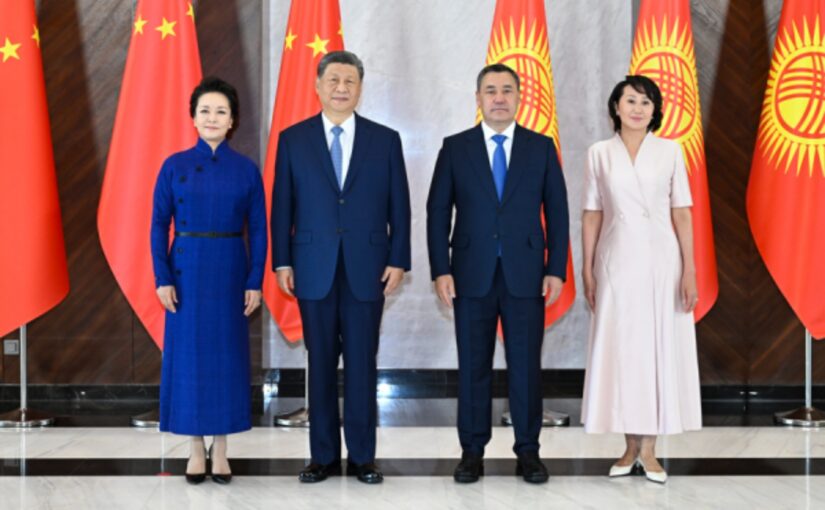
Wang Yi met with Kyrgyz President Sadyr Japarov on July 24, who asked him to convey his sincere greetings to President Xi Jinping and extended warm congratulations on the 105th anniversary of the founding of the Communist Party of China (CPC). He stated that under the leadership of the CPC, the Chinese people have made remarkable achievements in socialist modernisation, which the Kyrgyz side sincerely admires. A good neighbour is more valuable than gold. Developing relations with China remains a priority of Kyrgyzstan’s foreign policy. Kyrgyzstan and China are fellow travellers in pursuing development and prosperity as well as natural partners. The Kyrgyz side cherishes the strategic partnership featuring mutual respect, equality, mutual benefit and good-neighbourliness, and is ready to learn from China’s experience in governance, strengthen mutually beneficial cooperation in such fields as economy, trade, investment, agriculture and people-to-people exchanges, vigorously advance key projects including the China-Kyrgyzstan-Uzbekistan railway, provide a sound business environment for Chinese enterprises operating in Kyrgyzstan, and safeguard their lawful rights and interests. Kyrgyzstan has joined the World Artificial Intelligence Cooperation Organisation and the International Organisation for Mediation, demonstrating through concrete actions its support for the four major global initiatives proposed by China.

Wang Yi said that China is ready to strengthen the alignment of development strategies with Kyrgyzstan, translate the important consensus reached by the two heads of state into more tangible outcomes, elevate mutually beneficial cooperation, expand people-to-people exchanges, and consolidate the foundation of the China-Kyrgyzstan community with a shared future. China congratulates Kyrgyzstan on its election as a non-permanent member of the UN Security Council by a large majority and looks forward to strengthening coordination and cooperation with Kyrgyzstan on UN affairs. China will support Kyrgyzstan in successfully hosting the Bishkek Summit of the SCO [to be held August 31-September 1] and making greater contributions to promoting world peace, development and prosperity.

The next day, Wang held talks with Kyrgyz Foreign Minister Jeenbek Kulubaev during which he congratulated Kyrgyzstan on successfully hosting the Meeting of the Council of the Ministers of Foreign Affairs of the Shanghai Cooperation Organisation (SCO) Member States, saying it had laid a solid foundation for the Bishkek Summit of the SCO. China, he said, will always be a trustworthy good neighbour to Kyrgyzstan. In recent years, under the strategic guidance of President Xi Jinping and President Sadyr Japarov, China and Kyrgyzstan have established a comprehensive strategic partnership for the new era in the spirit of solidarity and mutual benefit and are working together to build a China-Kyrgyzstan community with a shared future featuring good-neighbourliness, friendship, and shared prosperity. The two heads of state met three times last year, charting the course for the development of bilateral relations and injecting strong momentum into deepening all-round mutually beneficial cooperation.

He added that the two countries enjoy broad prospects for aligning their development strategies and jointly pursuing development and revitalisation. At the next stage, the two sides should make good preparations for high-level exchanges, consolidate political mutual trust and carry forward their traditional friendship. Both sides should implement the medium- and long-term program for trade and economic cooperation, advance the construction of the China-Kyrgyzstan-Uzbekistan railway, accelerate the construction and upgrading of cross-border ports, deepen cooperation in such areas as agriculture, energy and mineral resources, and foster new growth drivers in cooperation including artificial intelligence and the digital economy.

Jeenbek Kulubaev stated that Kyrgyzstan thanks China for its strong support for the country’s economic and social development and is willing to work with China to pursue high-quality Belt and Road cooperation, accelerate the construction of the China-Kyrgyzstan-Uzbekistan railway, deepen cooperation in trade, investment, finance and energy, and welcomes Chinese companies to invest and operate in Kyrgyzstan and is willing to provide a sound business environment. Kyrgyzstan looks forward to China’s continued support for its SCO presidency and for jointly hosting a successful Bishkek Summit.

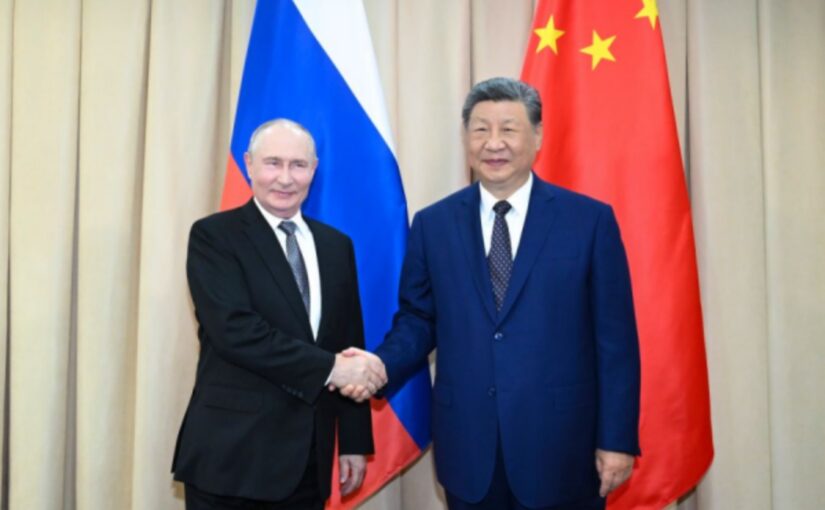
Wang met with Russian Foreign Minister Sergey Lavrov on July 24. He said that China wishes Russia success in its State Duma elections to be held in September, and firmly supports the choice independently made by the Russian people. He further noted that the current international situation is complex and turbulent. In the face of the question of the times regarding the future of the world, China and Russia have a firm and clear answer. China and Russia should strengthen strategic coordination, uphold the outcomes of World War II, and never allow Japan to rearm.

Sergey Lavrov stated that head-of-state diplomacy serves as an important driving force for Russia-China relations. President Vladimir Putin’s successful visit to China this year and the more than 50 meetings between the two heads of state have continuously elevated bilateral relations to new heights. The Russian side congratulated China on successfully hosting the 2026 World Artificial Intelligence Conference, and Russia has joined the World Artificial Intelligence Cooperation Organisation and looks forward to deepening bilateral cooperation in innovation and in science and technology through this platform. Over the past 25 years since its founding, and driven by Russia and China, the SCO has developed into a regional organisation full of potential, attracting an increasing number of like-minded countries to join. Russia remains highly vigilant against and firmly opposes Japan’s accelerated remilitarisation and pursuit of nuclear weapons capability. The two sides can further strengthen strategic coordination within multilateral frameworks such as the United Nations, APEC, the G20, BRICS and East Asia cooperation, and jointly promote a more democratic and equitable multipolar world.

The previous evening, Wang Yi met with Belarusian Foreign Minister Maxim Ryzhenkov and noted that China and Belarus are trustworthy good partners. In recent years, under the strategic planning and personal attention of President Xi Jinping and President Aleksandr Lukashenko, the China-Belarus all-weather comprehensive strategic partnership has continued to operate at a high level, with gratifying results achieved in cooperation across various fields. Not long ago, the two heads of state met again in Beijing, making new plans for the future growth of bilateral relations. [Lukashenko paid a working visit to China, June 28-29, the first stop on a regional tour that also took him to Indonesia and Myanmar.]

Wang Yi said that mutual support is an inherent feature of the China-Belarus all-weather comprehensive strategic partnership. China will, as always, support Belarus in safeguarding its sovereignty, independence and territorial integrity, pursuing a development path suited to its national conditions, and opposing any external interference in Belarus’ internal affairs under any pretext. China appreciates Belarus’ longstanding and unwavering solidarity with China on issues concerning China’s core interests. China congratulates Belarus on becoming a founding member of the World Artificial Intelligence Cooperation Organisation.

Maxim Ryzhenkov noted that the heads of state of Belarus and China have maintained high-level and frequent communication, bringing bilateral relations to an unprecedented level and fostering ironclad brotherly mutual trust. Belarus thanks China for its long-term and strong support and assistance, and will firmly develop relations with China, advance all-round cooperation, and draw on China’s successful experience.

The same evening, Wang Yi also met with Uzbek Foreign Minister Bakhtiyor Saidov and stated that the development strategies of China and Uzbekistan are complementary. As fellow travellers on the journey toward modernisation, the two countries can achieve common development and each other’s success and jointly draw up a new ‘golden decade’. China is ready to work with Uzbekistan to fully tap into and unleash cooperation potential, advance high-quality construction of the China-Kyrgyzstan-Uzbekistan Railway and create more flagship projects in the field of new industrialisation.

Bakhtiyor Saidov noted that Uzbekistan cherishes the brotherly friendship with China, and developing relations with China is a priority in Uzbekistan’s foreign policy. He extended warm congratulations on the 105th anniversary of the founding of the CPC. The CPC set the aim of serving the people wholeheartedly at its founding and has led the Chinese people to great achievements. Uzbekistan is ready to learn from China’s experience in governance, promote alignment between its “Uzbekistan-2030” strategy and the Belt and Road Initiative, and accelerate its own development and revitalisation.

On July 24, Wang met with Tajikistan’s Foreign Minister Sirojiddin Muhriddin and noted that in May this year, President Emomali Rahmon paid a successful state visit to China, during which President Xi Jinping and he made new strategic plans for the development of China-Tajikistan relations. The most important outcome of the visit was the signing of the China-Tajikistan Treaty on Permanent Good-Neighbourliness, Friendship and Cooperation, which set a precedent in Central Asia.

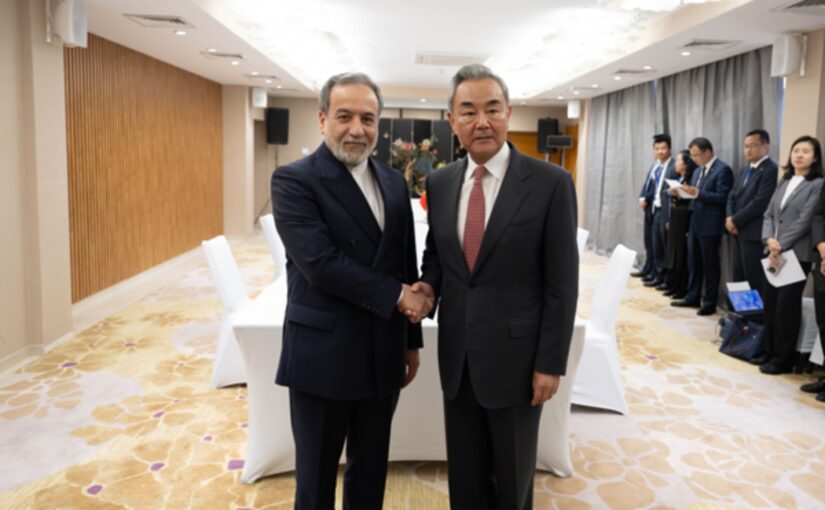
He also met on the same day with Iranian Foreign Minister Seyed Abbas Araghchi and noted that the situation in the Middle East and the Gulf region has recently experienced renewed tensions and escalation, which is a matter of deep concern to China. The MoU signed more than a month ago was a valuable outcome of mediation efforts by multiple parties and reflected the aspirations of the Iranian people and other peoples in the region for peace and stability. The progress achieved through dialogue should not be abandoned. The door to negotiations, once opened, should not be closed, and as long as there is hope for peace, it should not be given up.

Wang added that as a comprehensive strategic partner of Iran, China firmly supports Iran in safeguarding its sovereignty, security and national dignity. China will continue to act in line with President Xi Jinping’s four-point proposal on maintaining and promoting peace and stability in the Middle East, support mediation efforts by Pakistan and other parties, facilitate the early resumption of dialogue and negotiations, properly address issues related to the Strait of Hormuz, improve relations among neighbouring countries, advance collective security among Gulf states, and help restore peace and stability in the Middle East at an early date.

Seyed Abbas Araghchi briefed Wang Yi on the latest developments in the Middle East and the Gulf region, stating that the United States’ violation of the MoU reached by both parties has led to heightened tensions. Iran’s willingness to negotiate remains unchanged and Iran does not wish to see the conflict continue. It is crucial for Iran and China, as comprehensive strategic partners, to strengthen communication and coordination at the current critical moment. Iran thanks China for consistently maintaining an objective and impartial position, promoting peace and urging an end to hostilities, and expresses hope that China will continue to play an important role in helping ease regional tensions.

Wang Yi also met on July 24 with Pakistani Deputy Prime Minister and Foreign Minister Mohammad Ishaq Dar, telling him that China highly appreciates Pakistan’s key role in facilitating the memorandum of understanding reached between the United States and Iran. China will continue to firmly support Pakistan in its efforts to mediate, promote the return of all parties to dialogue and negotiations, and achieve a lasting ceasefire. China is ready to strengthen coordination with Pakistan in multilateral platforms such as the SCO and the United Nations to safeguard the common interests of the two countries and the legitimate rights and interests of the Global South.

Dar stated that Pakistan is willing to continue its efforts in peace mediation and appreciates China’s consistent support and assistance. Pakistan is ready to strengthen coordination with China under multilateral frameworks such as the SCO and the China-Pakistan-Bangladesh trilateral cooperation and make due contributions to safeguarding regional peace, stability and development.

This was the second meeting between the two ministers in just a week. They also met on July 16 in Shanghai in the margins of the 2026 World AI Conference, where they exchanged views on the situation in Iran and coordinated their positions.

The two sides expressed concern over the deteriorating situation and called on the parties concerned to immediately cease hostilities, overcome difficulties, remove disruptions, restart contacts, resume dialogue, and strive to reach a comprehensive peace agreement through negotiations. The international community should also continue to provide support to this end.

Wang Yi stressed that the first-phase memorandum of understanding reached between the US and Iran is hard-won. All parties should honour their commitments and abide by the provisions of the memorandum. China will, as always, support Pakistan’s mediation efforts and continue to play a constructive role in its own way in promoting the de-escalation of the situation.

Mohammad Ishaq Dar briefed Wang Yi on Pakistan’s recent efforts, thanked China for its understanding and support, and said that Pakistan will rise to the challenges and continue to actively promote peace and facilitate talks.

Continue reading Wang Yi meets counterparts in Kyrgyzstan

Wang Yi attends meeting of Shanghai Cooperation Organisation foreign ministers

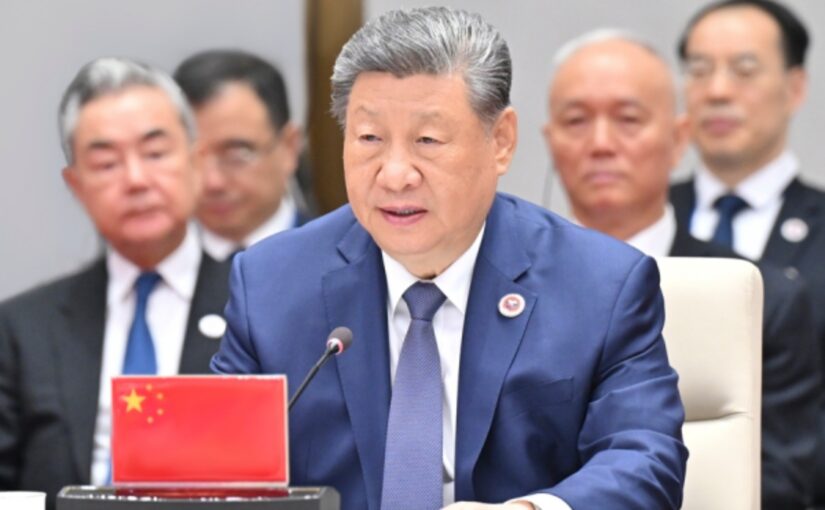
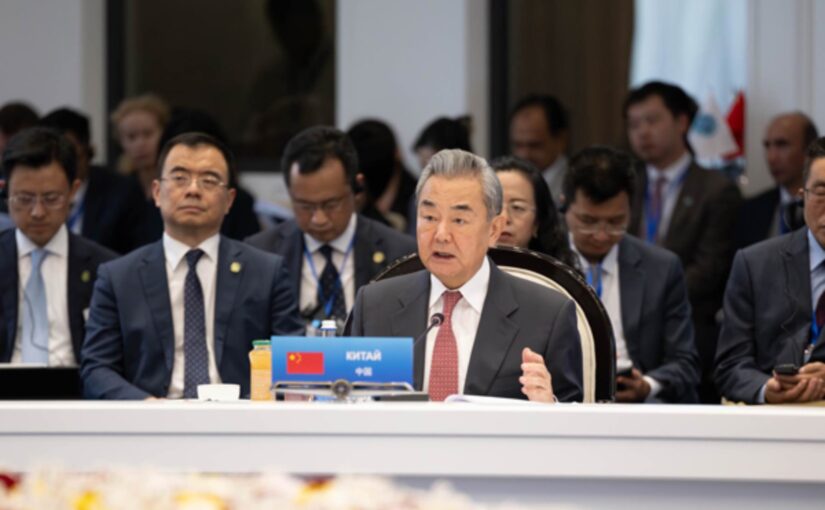
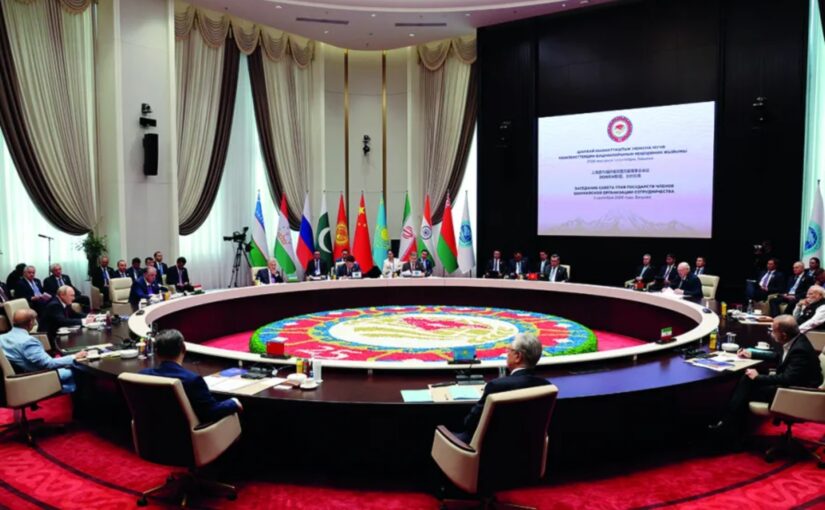
Chinese Foreign Minister Wang Yi attended the Meeting of the Council of the Ministers of Foreign Affairs of the Shanghai Cooperation Organisation (SCO) Member States, held in Cholpon-Ata, Kyrgyzstan on July 24.

Addressing the meeting, Wang Yi stated that the SCO Tianjin Summit, held in August-September 2025, mapped out a strategic blueprint for the organisation’s development over the next decade and opened a new stage of high-quality development. Seven cooperation platforms in green industry, digital economy, scientific and technological innovation, energy, higher education, vocational and technical education, and artificial intelligence have been launched, generating more than 160 projects. Nearly three-quarters of the planned 10 GW solar PV and wind power projects have been implemented, while over two-thirds of the 100 ‘small and beautiful’ livelihood programs have been approved.

Wang Yi noted that this year marks the 25th anniversary of the SCO. From the early days when six countries enhanced military trust in border areas and combated terrorism, separatism and extremism, to the present when 27 countries, representing nearly half of the world’s population, are engaged in cooperation across more than 50 fields, the SCO has consistently upheld the ‘Shanghai Spirit’ of mutual trust, mutual benefit, equality, consultation, respect for diversity of civilisations, and pursuit of common development, continuously expanding the path of a new type of international relations and multilateral cooperation. Currently, profound changes unseen in a century are accelerating, and the world is experiencing tremendous turbulence and transformation. The international community expects the SCO to promote regional security and development and to resolve global governance challenges. The development strategy for the next decade makes clear that member states will deepen cooperation and make greater contributions to building a more democratic and just multipolar world.

Wang Yi put forward four proposals:

The SCO should continue to uphold the ‘Shanghai Spirit’ as its fundamental guiding principle in handling internal affairs and conducting external exchanges, strengthen strategic mutual trust, maintain solidarity and coordination, firmly support one another, and remain open and inclusive.

The SCO should strengthen the firewall for peace and stability by consistently advocating dialogue to settle disputes, consultation to resolve differences and cooperation to safeguard peace.

The SCO should inject stronger momentum into win-win development by strengthening synergy between national development strategies and regional cooperation initiatives.

The SCO should build a model zone for global governance by safeguarding the authority and role of the United Nations, upholding the purposes and principles of the UN Charter and the basic norms governing international relations, and working together with nearly 160 participants in the Global Governance Initiative and over 120 UN member states who support deeper cooperation with the SCO to explore an effective global governance model with broad participation. The SCO should also improve its own operational mechanisms and welcome more countries to join the organisation.

The SCO foreign ministers adopted a joint statement, in which they reaffirmed their commitment to multilateral cooperation, regional security and a more representative and inclusive multipolar world.

The member states reiterated the SCO’s commitment to the principles of not targeting other states and organisations, mutual respect for sovereignty, independence and territorial integrity, non-interference in internal affairs, and non-use of force or threats of using force in international relations.

The statement said the world today is entering a new period of rapid development and profound transformation. The role of Global South countries continues to grow, emerging economic and political centres are playing an increasingly prominent role, countries are becoming increasingly intertwined and interconnected, and the process of informatisation and digitalisation is constantly accelerating.

Amid rising global and regional security threats, the ministers expressed deep concern over the developments in the Middle East and around Iran. They reaffirmed the principled position regarding the condemnation of military strikes against Iran as outlined in the Tianjin Declaration adopted at the 25th Meeting of the Council of Heads of State of the SCO on September 1, 2025, holding that such acts of aggression constitute a grave violation of the UN Charter and the principles and norms of international law.

The ministers once again expressed their sincere condolences over the tragic death of Iran’s Supreme Leader Ayatollah Ali Khamenei and extended their sympathies to the Iranian government and people as well as his family.

Meanwhile, the council reaffirmed that Central Asia is the core region of the SCO, supports the efforts of Central Asian countries to maintain peace and security in their own countries and the region, and advocates that the SCO play an active role in further consolidating stability and promoting economic and social development there.

The member states regarded unilateral coercive measures, including economic sanctions, that violate the UN Charter and other norms of international law as unacceptable, saying such measures impede international cooperation and the achievement of the UN Sustainable Development Goals.

The member states also advocated further expanding mutual trade among SCO countries to create more opportunities for businesses.

The next SCO Summit, marking its 25th anniversary, will be held in the Kyrgyz capital Bishkek from August 31-September 1.

Continue reading Wang Yi attends meeting of Shanghai Cooperation Organisation foreign ministers

SCO debates sovereign financial infrastructure for the Global South

The Shanghai Cooperation Organisation (SCO) – which now represents some 42 percent of the world’s population – is increasingly turning its attention to building financial infrastructure independent of the US dollar. At a forum held on the sidelines of the 14th World Peace Conference in Beijing, officials and analysts from Iran, Russia, China, Belarus and Uzbekistan debated how the bloc might construct alternative settlement mechanisms capable of insulating its members from Washington’s unilateral sanctions.

The context is the growing use of sanctions as a weapon of economic warfare against independent states – Iran, Russia, Belarus, Venezuela and Cuba among them. As the following report from Press TV explains, the proposals under discussion build on an initiative advanced by Iranian President Masoud Pezeshkian at the SCO’s Tianjin summit: expanding trade in national currencies, developing secure digital infrastructure for cross-border payments, and establishing a multilateral swap fund to cushion members against financial shocks.

For its proponents, such a system is about more than evading sanctions. It is about establishing a sovereign financial architecture for the Global South – one that would allow nations to decouple from Western financial hegemony and conduct their trade, investment and development on their own terms. It is a further sign of the emerging multipolar order.

Continue reading SCO debates sovereign financial infrastructure for the Global South

Shanghai Cooperation Organisation marks a quarter century

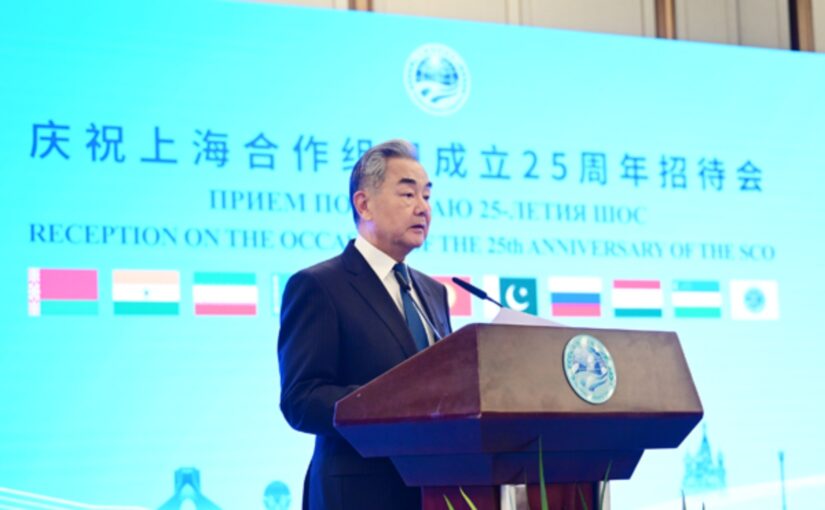
The Shanghai Cooperation Organisation (SCO) celebrated the 25th anniversary of its foundation on June 15.

Marking the occasion, Chinese Foreign Minister Wang Yi spoke at a Beijing reception.

Wang said that the founding of the SCO 25 years ago turned a new page in contemporary international relations. Over the past 25 years, member states have worked together in solidarity, upheld moral principles, pursued common development and engaged in mutual learning. They have nurtured the “Shanghai Spirit”, which features mutual trust, mutual benefit, equality, consultation, respect for cultural diversity, and pursuit of common development. The SCO has pioneered a new model of regional cooperation among neighbouring countries featuring partnership instead of alliance, under which all parties jointly safeguard security and stability and advance common development and prosperity.

Setting out some key tasks for the organisation in the coming period, he said:

  • We need to safeguard peace and tranquility: adding the need to promote peace and stability in the Middle East, support Afghanistan’s reconstruction and development, and realise long-term stability in the region.
  • We need to advance sustainable development: including accelerating the preparation for the establishment of the SCO Development Bank.
  • We need to enhance good-neighbourly friendship and cooperation.

Secretary-General of the SCO Nurlan Yermekbayev noted in his speech that after 25 years of dedicated efforts, the SCO has entered its prime and grown into the world’s largest transregional international organisation. China Daily further reported him as noting the growing international interest in the organisation, saying that there are now about 20 applications from countries seeking to join the SCO in one capacity or another, which demonstrates the appeal of its values and principles.

Meanwhile Djoomart Otorbaev, a former prime minister of Kyrgyzstan, the country that chairs the SCO this year, contributed an ‘op ed’ to China Daily, in which he noted:

“The 25th anniversary of the founding of the Shanghai Cooperation Organization on June 15 marks more than a symbolic milestone. Over the past 25 years, the SCO has evolved from a narrowly focused border-security mechanism into one of the largest transregional organisations in Eurasia and one of the central pillars of the emerging multipolar order.

“In a world marked by fragmented globalisation, sanctions, conflicts and institutional crises within the Western system, the SCO is increasingly establishing itself as a contributor to international cooperation, emphasising sovereignty, consensus and strategic pragmatism. The SCO is becoming a symbol of resistance against the unipolar development model some powers are desperate to impose on Eurasian countries.”

Today, he points out, the SCO includes 10 member states, two observer states and 15 dialogue partners:

“The organisation’s expanding geography reflects the growing demand for non-Western mechanisms of international coordination.

“The SCO’s scale is unprecedented. The combined territory of its member states exceeds 36 million square kilometres — more than 25 percent of the Earth’s land area. The total population of SCO countries has surpassed 3.4 billion, representing nearly half of the total world population. Economically, the organisation already constitutes one of the world’s principal centers of gravity, representing about a quarter of global GDP.”

China and Russia, he continues, “remain the primary engines of this process, but the rapid integration of Central Asian economies demonstrates the broader regional significance of the SCO framework. For smaller member states, the organisation has become economically indispensable. It is estimated that SCO countries account for approximately 75 percent of Kyrgyzstan’s trade turnover, 67 percent for Tajikistan and nearly half for Uzbekistan… One of the organisation’s most strategically significant trends has been the transition toward settlements in national currencies. In trade between key SCO countries, the share of transactions conducted in rubles, yuan, rupees and other national currencies has greatly increased, gradually reducing dependence on the US dollar and Western-controlled financial systems.”

Comparing the SCO to BRICS, Otorbaev writes:

“Unlike many informal geopolitical platforms, the SCO possesses a fully institutionalised structure. It functions as a formal international organisation with a charter, permanent bodies, an approved budget, a secretary-general and fixed headquarters in Beijing and Tashkent… This institutional depth sets the SCO apart from groups such as BRICS. While BRICS mainly serves as an informal platform of geopolitical dialogue without an official charter or permanent secretariat, the SCO is a formal Eurasian organisation with legal responsibilities and ongoing operations.”

He identifies three strategic priorities that will likely determine the SCO’s future trajectory:

  • Financial integration across SCO countries strengthens regional economic independence.
  • Transport integration would actively advance a unified Eurasian transport network.
  • The SCO brings together the world’s largest energy producers and key consumers. The SCO is progressively establishing the groundwork for a self-sufficient Asian energy market, complete with its own pricing structures and settlement systems.

He concludes: “Twenty-five years after its founding, the SCO is no longer merely a regional organisation. It is one of the institutional foundations of the new Eurasian century.”

Continue reading Shanghai Cooperation Organisation marks a quarter century

Wang Yi visits Mongolia: A close neighbour is better than a distant relative

At the invitation of Minister of Foreign Affairs of Mongolia Battsetseg Batmunkh, Member of the Political Bureau of the Communist Party of China Central Committee and Minister of Foreign Affairs Wang Yi visited Mongolia from June 13 to 15.

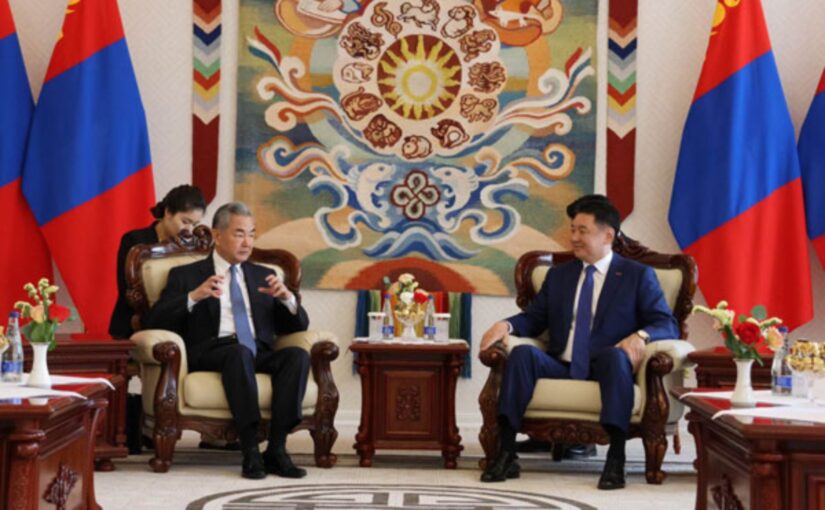
Soon after his arrival in the capital Ulan Bator, Wang Yi met with Mongolian President Khurelsukh Ukhnaa.

Khurelsukh Ukhnaa said that he is deeply honoured to have built a profound friendship and mutual trust with President Xi Jinping, maintaining close communication and jointly steering the continuous development of the comprehensive strategic partnership between the two countries. The Mongolia-China relationship has become a model for inter-state relations in the region. The two sides have always understood and trusted each other, respected each other’s independence, sovereignty and territorial integrity while deepening mutually beneficial cooperation across various sectors, and the bilateral trade is expected to reach $20 billion this year. The vision of building a community with a shared future for humanity and the four major global initiatives proposed by President Xi Jinping have played a vital role in safeguarding world peace and stability, serving the interests of people around the globe. Mongolia actively supports these major concepts and initiatives put forward by President Xi and stands ready to strengthen cooperation with China in regional and international affairs to jointly implement them.

Wang Yi stated that China and Mongolia, linked by mountains and rivers and sharing a common future, are permanent neighbours and comprehensive strategic partners. China has always put China-Mongolia relations at an important place in its neighbourhood diplomacy, and it has both the will and the capability to be a neighbour that Mongolia can rely on, a trustworthy friend, and a partner in accelerating its development. China respects Mongolia’s independence, sovereignty and territorial integrity, as well as the development path that Mongolia has chosen for itself. A close neighbour is better than a distant relative. China appreciates Mongolia’s decision to make developing ties with China the top priority of its foreign policy, which fully serves the fundamental interests of the Mongolian state and its people. China is willing to strengthen solidarity and coordination with Mongolia on multilateral platforms such as the trilateral cooperation among China, Russia and Mongolia and the Shanghai Cooperation Organisation. Together with other Global South countries, the two sides strive for self-strengthening through unity and promote the building of a more just and equitable global governance system.

Wang Yi met with Mongolian Prime Minister Nyam-Osor Uchral on June 15.

Nyam-Osor Uchral stated that Mongolia and China have consistently respected each other’s independence, sovereignty, territorial integrity, and chosen paths of development. Mongolia firmly adheres to the one-China principle. He expressed the hope that both sides would introduce additional measures to facilitate trade, diversify trade structures, strengthen connectivity through infrastructure projects such as ports and railways, and expand cooperation in the mining sector.

Wang Yi stated that good-neighbourly friendship, solidarity, cooperation, and working together to create a better future represent the only correct choice for both sides. China highly appreciates Mongolia’s commitment to prioritising relations with China in its foreign policy and its support for China’s legitimate positions on issues concerning its core interests. Having both celebrated their centenary anniversaries, the Communist Party of China and the Mongolian People’s Party could further enhance exchanges on governance and development experience, thereby contributing to national development, improving people’s livelihoods, and deepening the traditional friendship between the two countries.

Wang Yi added that development and national revitalisation are shared goals of both China and Mongolia, while stronger cooperation reflects the common aspirations of both peoples. The two economies are highly complementary with mutual needs, presenting vast space for cooperation. China is willing to strengthen the alignment of development strategies with Mongolia, jointly advance high-quality Belt and Road cooperation, and support Mongolia in making full use of three major engines for development, including bilateral cooperation mechanisms, China-Mongolia-Russia cooperation and the Shanghai Cooperation Organisation, in pursuing a modernisation path suited to its national conditions.

Wang Yi held talks with his Mongolian counterpart Foreign Minister Batmunkh Battsetseg on June 13.

Wang said that China has always upheld the principle that all countries, big or small, are equal. Guided by the Principle of Amity, Sincerity, Mutual Benefit and Inclusiveness in Neighbourhood Diplomacy, as well as the policy of forging friendship and partnership with its neighbours, China attaches high importance to ties with Mongolia in its neighbourhood diplomacy and actively promotes good-neighbourliness and friendly cooperation between the two countries. The China-Mongolia Treaty of Friendly Relations and Cooperation explicitly stipulates that both sides will adhere to the Five Principles of Peaceful Coexistence and not allow any third country to use its territory to undermine the sovereignty and security of the other. This serves as an important safeguard for the sound development of bilateral relations.

He added that as fellow developing countries, China and Mongolia share broad common interests and similar policy stances on international and regional affairs. China supports Mongolia in continuing to make positive contributions to regional peace and development and welcomes its efforts to gain more growth drivers through bilateral cooperation, the trilateral cooperation among China, Russia and Mongolia, and the Shanghai Cooperation Organisation (SCO). In the face of rampant unilateralism and rising protectionism, China has consistently advocated and practiced multilateralism and supports the United Nations in playing a central and leading role in international affairs. China stands ready to work with all countries, including Mongolia, to promote the building of a more just and equitable global governance system.

Batmunkh Battsetseg said that Mongolia-China relations have reached a high level of comprehensive strategic partnership. Cooperation across various sectors is thriving, bringing tangible benefits to the peoples of both countries. The two sides have always respected and trusted each other, engaging in equal and mutually beneficial cooperation, making their relationship an exemplary model among neighbouring countries. On all issues concerning China’s core interests, the Mongolian side understands and supports China’s position.

Mongolia attaches great importance to China’s 15th Five-Year Plan and looks forward to strengthening the alignment of development strategies with China. Mongolia hopes to expand trade and investment, enhance connectivity, and deepen cooperation in areas such as critical minerals and ecological governance. Mongolia values multilateral mechanisms including the trilateral cooperation among China, Russia and Mongolia, the SCO, and the Asia-Pacific Economic Cooperation, and it stands ready to play a greater role in regional peace, stability, and prosperity. Last month, during its rotating presidency of the United Nations Security Council, China convened a high-level meeting and put forward important proposals on reinvigorating the UN and reforming and improving global governance. Mongolia highly commends these initiatives and looks forward to strengthening cooperation with China to jointly uphold multilateralism and safeguard the U.N.-centred international system.

The two foreign ministers also held a joint press conference.

Both sides stated that, in the face of a volatile international landscape and increasingly prominent global challenges, China and Mongolia should stand together through thick and thin, unite as one, and firmly remain good neighbours and partners built on mutual trust and support. The two sides should continue to work hand in hand towards building a China-Mongolia community with a shared future characterised by peaceful coexistence, mutual assistance, and win-win cooperation.

Wang Yi noted that good neighbours should visit each other frequently, and good partners should offer mutual assistance. The Chinese side supports Mongolia in developing its economy and improving people’s livelihoods and welcomes Mongolia to ride on the express train of China’s development. According to international institutions, every one-percentage-point increase in China’s economic growth contributes to a four percent increase in Mongolia’s exports and a 0.6 percent increase in Mongolia’s economic growth, which demonstrates the strong complementarity and close economic ties between the two countries. The second cross-border railway linking China and Mongolia is currently under construction and is expected to become another major corridor for connectivity between the two countries. China remains a trustworthy and reliable partner for Mongolia and will continue to extend support whenever Mongolia needs it most. To help Mongolia cope with the recent outbreak of foot-and-mouth disease, the Chinese side has decided to urgently supply one million doses of vaccines to the Mongolian side. Furthermore, the China-aided shantytown renovation project in Mongolia has been completed and handed over. Positive progress has also been made in projects closely related to the Mongolian people’s well-being, such as the China-Mongolia Heads of State Sports Centre and the Erdeneburen hydropower plant. Wang Yi said that during this visit to Mongolia he would also have the opportunity to attend the completion ceremony of the Ulan Bator Wastewater Treatment Plant, which will help ensure safe water access for the citizens of Ulan Bator.

Modernisation, he added, is a shared objective for both China and Mongolia. The two sides will focus on the present while looking to the long term, promote the alignment of the Belt and Road Initiative with Mongolia’s Steppe Road development strategy, deepen exchanges on governance experience, explore opportunities for cooperation in emerging sectors, and jointly pursue modernisation paths suited to their respective national conditions.

Wang Yi added that both China and Mongolia are constructive forces for global peace, stability, and development. The two countries are willing to strengthen coordination in regional and international affairs and work together to safeguard the common interests of developing nations. China welcomes Mongolia’s active role in international and regional affairs and supports its hosting of the 17th Conference of the Parties of the United Nations Convention to Combat Desertification, to be held in August this year.

The two sides also agreed to uphold the purposes and principles of the UN Charter, safeguard the victorious outcomes of World War II, oppose all forms of fascism and militarism, and reject any words or actions that seek to distort or reverse the course of history. In addition, both countries agreed to enhance coordination within multilateral frameworks such as the Shanghai Cooperation Organisation and the Asia-Pacific Economic Cooperation (APEC) to jointly promote regional stability, development, and cooperation.

In a joint press communique both sides further reaffirmed that they will not join any military or political alliance directed against the other, will not conclude treaties with any third country that undermine the sovereignty and security of the other, and will not allow any third country to use their territory to harm the sovereignty and security of the other.

They agreed to strengthen alignment of their development strategies, advance projects under the frameworks of high-quality Belt and Road cooperation and Mongolia’s Steppe Road Program, expand mutually beneficial cooperation in various sectors, and further enhance the scale, quality, and level of bilateral economic and trade cooperation.

China highly appreciated Mongolia’s role in hosting the Ulan Bator Dialogue on Northeast Asian Security in June.

The two sides agreed to oppose and condemn all forms of fascism and militarism, jointly safeguard world peace and security, and uphold international fairness and justice. They spoke highly of the achievements of trilateral cooperation among China, Mongolia, and Russia, expressing their firm belief that the implementation of the China-Mongolia-Russia Economic Corridor plan plays an important role in promoting regional prosperity and stability.

The two sides also emphasised that the growing political and economic influence of multilateral mechanisms such as the Shanghai Cooperation Organisation (SCO), APEC, and BRICS has contributed significantly to advancing regional cooperation.

Continue reading Wang Yi visits Mongolia: A close neighbour is better than a distant relative

Li Qiang attends SCO heads of government meeting in Moscow

From November 17-24, Chinese Premier Li Qiang visited Russia to attend the 24th Meeting of the Council of Heads of Government of Member States of the Shanghai Cooperation Organisation (SCO); Zambia to pay an official visit; and South Africa to attend the 20th G20 Summit.

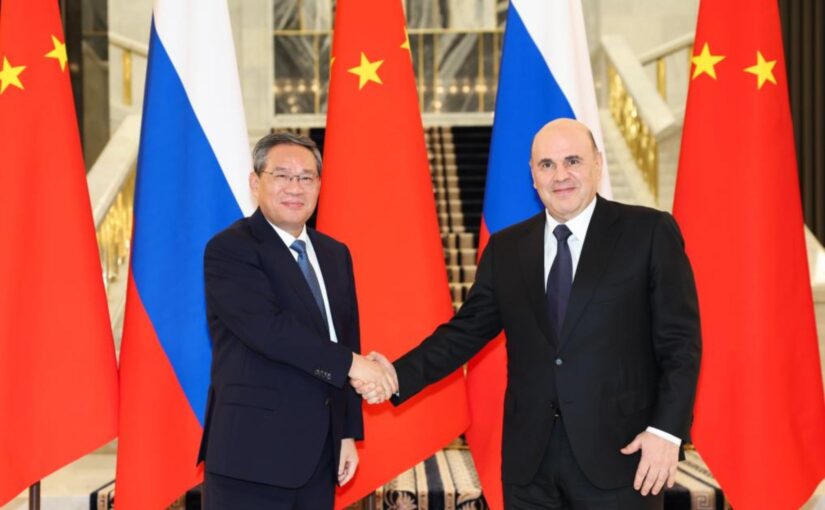
On November 17, Li Qiang met with his Russian counterpart Mikhail Mishustin and said that China stands ready to deepen cooperation with Russia in investment, energy, agriculture and other fields, adding that the Chinese market welcomes more high-quality agricultural and food products from Russia.

Li said that not too long ago he and Mishustin held in Hangzhou, the capital of east China’s Zhejiang Province, the 30th regular meeting of the Chinese and Russian heads of government, which focused on the implementation of the important consensus reached by Chinese President Xi Jinping and Russian President Vladimir Putin.

China stands ready to work with Russia to follow the strategic guidance of the two heads of state, further strengthen communication, continuously deepen mutually beneficial cooperation between the two sides, and create more benefits for the two peoples, Li said. He also urged both sides to continue to expand people-to-people and cultural exchanges, and to strengthen cooperation in areas such as culture, education and films.

Noting that the Tianjin Summit of the Shanghai Cooperation Organisation (SCO) held in September achieved a series of fruitful results, Li said China is willing to maintain close coordination and collaboration with Russia to encourage all parties of the SCO to uphold the Shanghai Spirit and materialise the development blueprint outlined by the leaders at an early date.

He urged further advancing pragmatic cooperation to bolster the development momentum of all member states, to continuously improve the institutional building of the SCO, to enhance its influence in international affairs, and to stand in solidarity with the vast number of Global South countries to promote an equitable and orderly multipolar world as well as a universally beneficial and inclusive economic globalisation.

Continue reading Li Qiang attends SCO heads of government meeting in Moscow

Tianjin Declaration advances roadmap for Shanghai Cooperation Organisation

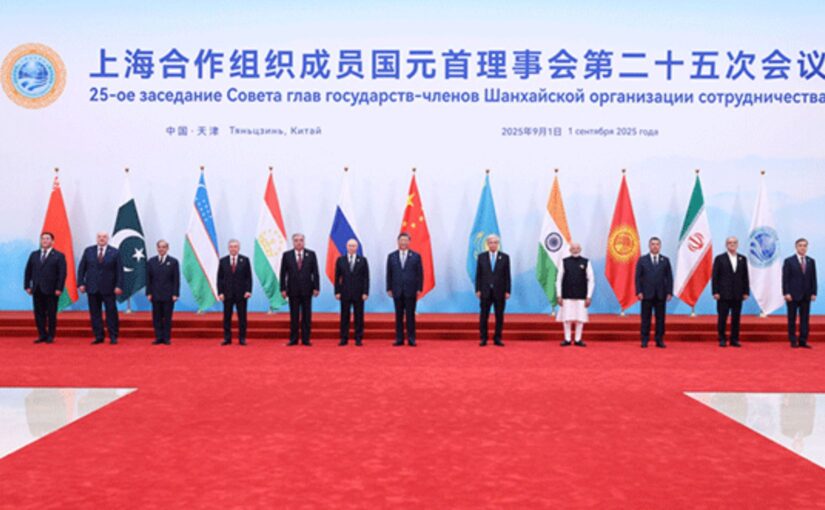
On August 31-September 1, the Chinese coastal city of Tianjin hosted the 25th Meeting of the Council of Heads of State of the Shanghai Cooperation Organisation (SCO).

The meeting adopted the Tianjin Declaration. At just over 6,000 words, it sets out a comprehensive roadmap for the next phase of the organisation’s development across a wide range of issues and sectors. It begins by noting that:

“The global political and economic landscape, as well as other fields of international relations, are undergoing profound historical changes. The international system is evolving toward a more just, equitable, and representative multipolarity, opening new prospects for countries’ own development and mutually beneficial cooperation.

“At the same time, geopolitical confrontations are intensifying, posing threats and challenges to the security and stability of the world and the SCO region. The global economy, particularly international trade and financial markets, is suffering severe shocks.

“The year 2025 marks the 80th anniversary of the victory in World War II and the founding of the United Nations. The great victory of peace-loving nations united to defeat Nazism, fascism, and militarism determined the course of world history and created conditions for establishing a stable international relations system ensuring peaceful development for humanity. Member states call for remembering the heroic feats of peoples and the historical lessons of World War II.”

In a clear reference to the Five Principles of Peaceful Coexistence, adopted by China’s Premier Zhou Enlai and Indian Prime Minister Jawaharlal Nehru in 1954, it states:

“Member states advocate respect for the right of all peoples to independently choose their political, economic, and social development paths, emphasising that mutual respect for sovereignty, independence, territorial integrity, equality, mutual benefit, non-interference in internal affairs, and the principle of non-use or threat of use of force are the foundation for the stable development of international relations.”

It adds that: “Member states reaffirm the practical significance of promoting the building of a new type of international relations featuring mutual respect, fairness, justice, and win-win cooperation, as well as a community with a shared future for humanity, and conducting dialogue based on the concept of ‘One Earth, One Family, One Future.’”

Regarding some key international issues at present, the Declaration affirms:

PALESTINE:

“Member states reaffirm their deep concern over the ongoing escalation of the Palestinian-Israeli conflict and strongly condemn the actions that have caused numerous civilian casualties and a humanitarian disaster in the Gaza Strip.

Continue reading Tianjin Declaration advances roadmap for Shanghai Cooperation Organisation

Xi Jinping meets UN Secretary General and leaders from Egypt, Myanmar and Kazakhstan

With the largest ever gathering of the quarter century old Shanghai Cooperation Organisation (SCO) in Tianjin (August 31-September 1) and the commemoration of the 80th anniversary of the victory in the Chinese People’s War of Resistance Against Japanese Aggression and the World Anti-Fascist War in Beijing (September 3), China’s high-level diplomacy has recently experienced a particularly busy period.

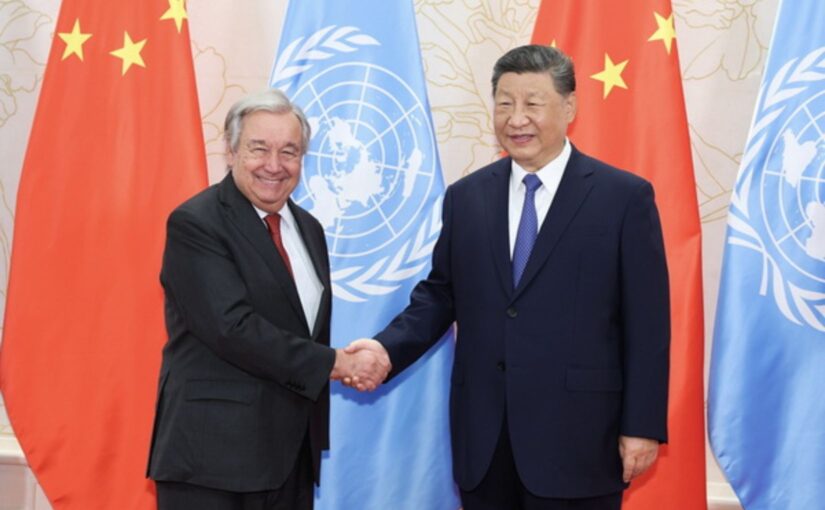
President Xi Jinping began a round of bilateral meetings in Tianjin on August 30, the eve of the SCO Summit, meeting with United Nations Secretary General António Guterres, Egyptian Prime Minister Mostafa Madbouly and Myanmar’s Acting President Min Aung Hlaing in the afternoon and with Kazakhstan President Kassym-Jomart Tokayev in the evening.

Meeting with António Guterres, President Xi noted that the founding of the United Nations was the most important decision made by the international community at the end of the Second World War. This year marks the 80th anniversary of the victory of the World Anti-Fascist War and the founding of the United Nations. History teaches that multilateralism, solidarity and cooperation are the right way to address global challenges.

Guterres expressed his gratitude for China’s strong and solid support to the UN. He noted that at a time when multilateralism, international law and the authority of the United Nations are being challenged, and the international governance architecture is in urgent need of reform, it is all the more important to recall the founding mission and values that led to the creation of the UN 80 years ago. China has made significant contributions to safeguarding international law and ensuring international rule of law and has been a cornerstone of multilateralism. The UN will strengthen cooperation with China to uphold the purposes and principles of the UN Charter, defend the basic norms of international relations, advance a multipolar world, enhance the representation of developing countries, and enable the UN to play a greater role in international affairs.

Meeting with Egyptian Prime Minister Mostafa Madbouly, President Xi noted that Egypt was the first Arab and African country to establish diplomatic relations with the People’s Republic of China. Next year marks the 70th anniversary of China-Egypt diplomatic ties. The two sides should take it as an opportunity to steer the bilateral relationship toward the goal of building a China-Egypt community with a shared future in the new era, add new impetus to China-Arab and China-Africa relations, and make greater contributions to upholding world peace and stability and promoting global development and prosperity. The two countries should be good friends that closely collaborate in multilateral affairs, shoulder historical and major-country responsibilities as important members of the Global South, safeguard the victorious outcomes of World War II, jointly oppose unilateralism and bullying practices, and defend the international system with the United Nations at its core and the international order underpinned by international law.

Prime Minister Madbouly said China is a true partner and friend of Egypt, and the two sides have always trusted and supported each other. Egypt places high importance on its relations with China and is firmly committed to the one-China principle. Egypt stands ready to take next year’s 70th anniversary of diplomatic ties with China as an opportunity to increase high-level exchanges, expand trade and investment, and deepen cooperation in such areas as new energy, electric vehicles, finance and seawater desalination, in a bid to achieve greater progress in bilateral relations.

Meeting with Myanmar’s Acting President Min Aung Hlaing, President Xi noted that Myanmar was part of the Eastern battlefield of the World Anti-Fascist War and it is an important dialogue partner of the SCO. The China-Myanmar pauk-phaw (brotherly) friendship, rooted in the hearts of the two peoples, is as strong and relevant as ever. The two sides should seize the opportunity of the 75th anniversary of their diplomatic relations to deepen strategic cooperation, accelerate the building of their community with a shared future, and bring greater benefits to people in both countries.

The two sides should advance key projects of the China-Myanmar Economic Corridor and promote economic and trade cooperation. Joint efforts should be made to combat cross-border crimes, maintain peace and tranquility in the China-Myanmar border region, and ensure the safety and security of Chinese personnel, institutions, and projects in Myanmar.

Acting President Min Aung Hlaing said that Myanmar and China share a deep pauk-phaw friendship and a common pursuit of peace and stability, and both countries made significant contributions to the victory of the World Anti-Fascist War. China has always been a good neighbour and a good friend to Myanmar, providing long-term assistance to Myanmar’s economic and social development, supporting its post-disaster rehabilitation efforts, and playing a constructive role in facilitating peace and stability in northern Myanmar.

Continue reading Xi Jinping meets UN Secretary General and leaders from Egypt, Myanmar and Kazakhstan

Largest ever gathering of SCO family held in Tianjin

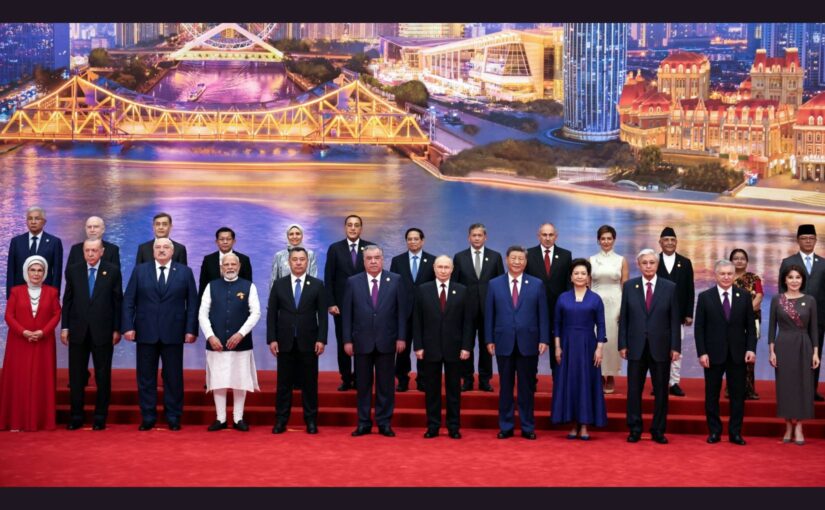
On August 31-September 1, immediately prior to China’s grand celebration of the 80th anniversary of victory in the Chinese People’s War of Resistance Against Japanese Aggression and the World Anti-Fascist War, the north China coastal city of Tianjin, near to Beijing, hosted the 25th Meeting of the Council of Heads of State of the Shanghai Cooperation Organisation (SCO) followed by the Shanghai Cooperation Organisation Plus meeting.

These were the biggest gatherings to date in the SCO’s quarter century history, drawing more than 20 heads of state or government, along with the heads of 10 international organisations, including the Secretary-General of the United Nations.

As we previously reported, at the latter meeting, President Xi Jinping proposed the Global Governance Initiative (GGI), which aims at establishing “a more just and equitable global governance system and advancing toward a community with a shared future for humanity.”

Presiding over the SCO Summit, President Xi delivered an important statement entitled, “Staying True to SCO Founding Mission and Ushering in a Better Future.”

He said that the SCO has established itself as a model for a new type of international relations. The organisation was the first to set up a military confidence-building mechanism in its member states’ border areas and the first to take multilateral actions against the three forces of terrorism, separatism and extremism, thereby maintaining peace and tranquility in the region. The SCO was the first to launch Belt and Road cooperation, providing a robust driving force for development and prosperity and further improving the multidimensional connectivity network across the region. The SCO was the first to conclude a treaty on long-term good-neighbourliness, friendship and cooperation, and proclaim the member states’ commitment to forge lasting friendship and refrain from hostilities, bringing the hearts of the peoples closer to each other. The SCO was the first to put forth a vision of global governance featuring extensive consultation and joint contribution for shared benefit as an effort to practice true multilateralism, thus becoming a proactive force for world peace and development.

President Xi emphasised that the SCO has grown into the world’s largest regional organisation, and its international influence and appeal are increasing day by day. Looking ahead, the member states should carry forward the Shanghai Spirit, forge ahead with solid steps, and better tap into the potential of the SCO in the following five ways:

  • Seeking common ground while putting aside differences. SCO member states should respect their differences, maintain strategic communication, build up consensus, and strengthen solidarity and collaboration.
  • Pursuing mutual benefit and win-win results. SCO member states need to better align their development strategies and promote the high-quality implementation of the Belt and Road Initiative, improve trade and investment facilitation, enhance cooperation in such areas as energy, infrastructure, green industry, the digital economy, scientific and technological innovation, and artificial intelligence, so as to march toward modernisation hand in hand by bringing out the best in one another and working together for a shared future.
  • Championing openness and inclusiveness. SCO member states need to enhance mutual understanding and friendship through people-to-people exchanges, firmly support one another in economic cooperation, and jointly cultivate a garden of civilisations in which all cultures flourish in prosperity and harmony through mutual enlightenment.
  • Upholding fairness and justice. SCO member states must promote a correct historical perspective on World War II, oppose the Cold War mentality, bloc confrontation and bullying practices, safeguard the UN-centred international system, support the multilateral trading system with the WTO at its core, and make the global governance system more just and equitable.
  • Striving for real results and high efficiency. SCO member states should continuously promote the reform of the Organisation, increase resources input and enhance capacity building to improve its institutional structure and make its decision-making more scientific and its actions more efficient, and provide stronger underpinnings for security and economic cooperation among them.

The leaders of the member states signed and issued the Tianjin Declaration of the Council of Heads of State of the Shanghai Cooperation Organisation, approved the SCO Development Strategy to 2035, released a statement on the victory of World War II and the 80th anniversary of the founding of the United Nations, a statement on supporting the multilateral trading system, and adopted 24 outcome documents covering enhanced cooperation in security, economy, people-to-people ties, and organisational development.

Continue reading Largest ever gathering of SCO family held in Tianjin

China proposes Global Governance Initiative

On Monday 1 September at the Shanghai Cooperation Organisation Plus meeting in Tianjin, President Xi Jinping proposed the Global Governance Initiative (GGI), which aims at establishing “a more just and equitable global governance system and advancing toward a community with a shared future for humanity”.

He set out five guiding principles for the GGI:

  • Adhere to sovereign equality: all countries, regardless of size, strength or wealth, have their sovereignty and dignity respected; have the right to independently choose their social system and development path; and have the right to participate in, make decisions in and benefit from the global governance process as equals.
  • Abide by international rule of law: The purposes and principles of the UN Charter are universally recognised as the basic norms of international relations. International law and rules must be applied equally and uniformly, without double standards.
  • Practise multilateralism: Global affairs should be decided by all, the governance system built by all, and the fruits of governance shared by all.
  • Commit to a people-centred approach: The people of all nations are the fundamental actors in global governance, and their well-being is its ultimate benefit.
  • Focus on results: Effective global governance is essentially one that resolves real problems.

The proposal makes clear that the GGI is not about overturning the UN-based system or trying to create a parallel international order. Rather, it aims to improve the existing international system and make it more effective in addressing global challenges. In his speech announcing the initiative, Xi Jinping observed that “while the historical trends of peace, development, cooperation and mutual benefit remain unchanged, Cold War mentality, hegemonism and protectionism continue to haunt the world”, and noted that new threats and challenges to peace and development are emerging.

The GGI concept paper notes some important deficiencies in global governance that need to be urgently addressed:

  • First, serious underrepresentation of the Global South. “The collective rise of emerging markets and developing countries necessitates boosting the representation of the Global South and redressing historical injustice.”
  • Second, erosion of the UN’s authority, particularly due to unilateral measures and violations of international law taken by some countries.
  • Third, the need for greater effectiveness. Urgent issues such as climate change, the digital divide, AI regulation and cyberspace need to be effectively managed within a global framework.

The concept paper insists:

We must stand firmly on the right side of history, and join hands with all progressive forces in the world to build a community with a shared future for humanity and make relentless efforts for mankind’s noble cause of peace and development.

The GGI is the fourth major initiative proposed by China, following the Global Development Initiative (GDI), the Global Security Initiative (GSI) and the Global Civilisation Initiative (GCI), which collectively aim to foster global development, peace, friendship, understanding and cooperation. Xinhua reports that Russia, Cuba, Pakistan, Nicaragua, Nepal and Venezuela – as well as UN Secretary-General Antonio Guterres – have already stated their support for the initiative.

Continue reading China proposes Global Governance Initiative

Li Qiang: The only true security is security for all

Following his visits to Laos and Vietnam, Chinese Premier Li Qiang paid an official visit to Pakistan, October 14-17, and participated in the 23rd Meeting of the Council of Heads of Government of Member States of the Shanghai Cooperation Organisation (SCO), chaired by Pakistan.

In his address to the heads of government meeting, delivered on October 16, Premier Li noted that:

“At the Astana Summit held last July, President Xi Jinping and fellow leaders of member states reached important understandings on jointly building a common home of the SCO featuring solidarity and mutual trust, peace and tranquility, prosperity and development, good-neighbourliness and friendship, and fairness and justice. This endeavour to build a common home is driven by the values we all share; it focuses on the tough issues we all face, and will help create a future we all desire.”

He expressed the view that this common vision necessitated efforts in five aspects:

  • To build an even more solid political foundation.
  • To provide more reliable security safeguards. “As we speak, geopolitical conflicts, power politics and acts of bullying continue to undermine regional peace and stability, while on such fronts as cyber security and biosecurity, new threats and new challenges continue to emerge. No country is immune, and the only true security is security for all.”
  • To foster closer economic bonds. “The SCO’s continuous expansion of membership in recent years has created more notable economic complementarity among member states. By deepening our economic ties, resisting external attempts at pulling us apart, and tapping into and pooling our respective strengths in resources, market and industries, we will be able to foster even stronger synergy for development.”
  • To cultivate stronger emotional bonds. “Our region is home to diverse and splendid civilisations, where different nations and cultures have interacted and converged with each other throughout the course of history and coexisted in harmony. This has been the source of popular support for cooperation among SCO member states.”
  • To boost coordination in multilateral fora. “Embracing 26 countries from three continents [including Members, Observers and Dialogue Partners], the SCO family is a constructive force that carries important global influence.”

The meeting adopted a Joint Communique, in which:

“The Heads of Delegation noted that the Member States advocate respect for the right of peoples to independently and democratically choose their political, social and economic development, emphasising that the principles of mutual respect for the sovereignty, independence, and territorial integrity of states, equality, mutual benefit, non-interference in internal affairs, non-use of force or threat of use of force, are the basis for the sustainable development of international relations. They reaffirm the commitment to the peaceful settlement of differences and disputes between countries through dialogue and consultations.”

They further noted the tectonic shifts in the global economy, characterised by rapid advancements and interconnectivity in the areas of information technology, digitalisation, artificial intelligence, virtual/digital assets, e-commerce, and so on. They expressed concern over the exacerbation of various challenges that have led to reduced investment flows, disrupted supply chains and caused uncertainty in global financial markets as a result of protectionist measures and other impediments to international trade.

They also opposed protectionist actions, unilateral sanctions and trade restrictions that undermine the multilateral trading system and impede global sustainable development. The heads of delegations emphasised that the unilateral application of sanctions is incompatible with the principles of international law and has a negative impact on third countries and international economic relations.

Recognising the unique role of physical culture and sport in strengthening solidarity and peace, the Heads of Delegations stressed that the SCO Member States will promote the development of international sports cooperation on an equal and depoliticised basis, oppose discrimination against athletes on any grounds, including nationality, language, political and other beliefs, national or social origin. [This refers, in particular, to the discrimination against and exclusion of athletes from member states Russia and Belarus by the Olympic and Paralympic movements as well as some other international sporting bodies.]

The communique further addresses a large number of practical matters across a broad range of subjects.

On October 16, in the margins of the meeting, Li Qiang met with his Russian counterpart Mikhail Mishustin.

Li noted that, under the strategic guidance of President Xi Jinping and President Vladimir Putin, the China-Russia comprehensive strategic partnership of coordination for a new era has maintained a high level of development. The two sides firmly support each other on issues concerning their respective core interests and enjoy fruitful strategic coordination, continued progress in practical cooperation, as well as vigorous people-to-people and sub-national exchanges, delivering tangible benefits to the people of both countries.

Continue reading Li Qiang: The only true security is security for all