New phase of China-Pakistan Economic Corridor aims to bring new opportunities to local communities and every family

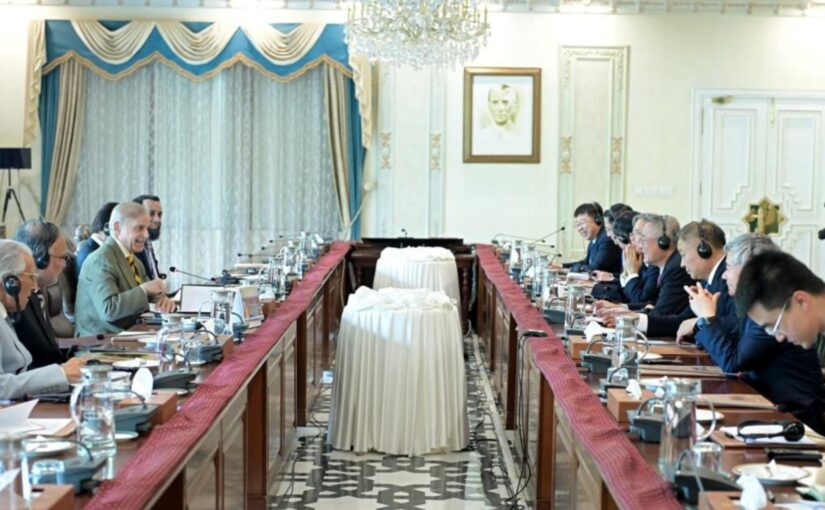
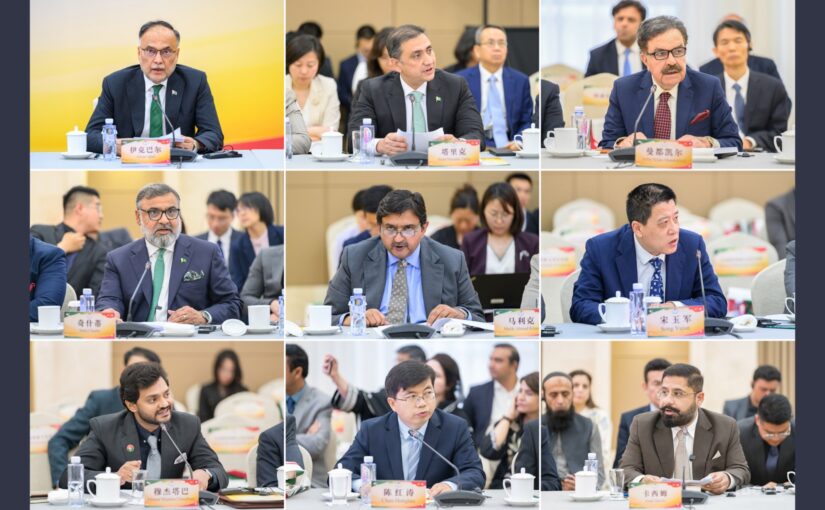
As part of the Beijing activities marking the 75th anniversary of the diplomatic relations between China and Pakistan, the China-Pakistan Political Parties Forum and the Meeting of the CPEC [China Pakistan Economic Corridor] Political Parties Joint Consultation Mechanism, hosted by the International Department of the Communist Party of China (CPC) Central Committee (IDCPC), was held on May 24 under the theme “Jointly Building a China-Pakistan Community with a Shared Future in the New Era: Political Parties in Action”.

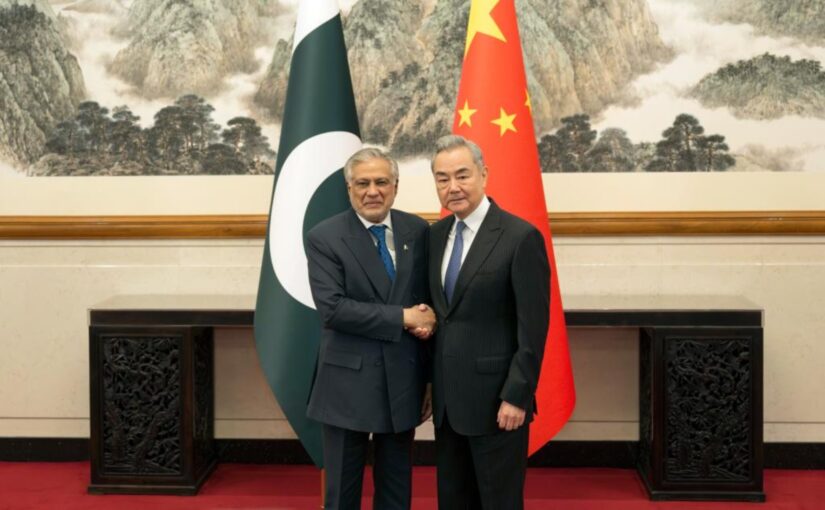
IDCPC Minister Liu Haixing and Ishaq Dar, Deputy Prime Minister and Foreign Minister of Pakistan, delivered keynote speeches. The event was attended by about 140 participants, including leaders of 12 major Pakistani political parties, along with representatives from Pakistani think tanks, media and social organisations, and representatives from Chinese ministries, commissions, enterprises, media and academic circles.

Liu noted, over the 75 years since the establishment of diplomatic ties, China and Pakistan have always stood side by side through thick and thin, setting an example of political mutual trust, mutual benefit, win-win cooperation, friendship between the two peoples and multilateral coordination between countries with different ideologies and systems.

The CPC stands ready to work with all major Pakistani political parties to build political consensus, make full use of platforms such as the China-Pakistan Political Parties Forum, and conduct regular consultations on major issues in bilateral relations to continuously consolidate the political foundation for bilateral strategic cooperation. It is necessary to build development consensus, leverage the CPEC Political Parties Joint Consultation Mechanism to advance high-quality practical cooperation and ensure cooperation outcomes benefit all Pakistani people.

Dar noted, Pakistan and China share a close, brotherly relationship. Inter-party exchanges are an important part of bilateral relations. Over the past 75 years since diplomatic ties were established, exchanges and cooperation between political parties of both countries have never been interrupted despite changes in the international landscape. Maintaining and developing the Pakistan-China all-weather strategic cooperative partnership is a cross-party consensus in Pakistan. The world today is undergoing profound changes unseen in a century, and China-Pakistan solidarity and cooperation serves as an important stabilising force in the region.

Pakistan Federal Minister for Planning, Development and Special Initiatives Ahsan Iqbal, who is also secretary-general of the Pakistan Muslim League – Nawaz (PML-N) said that CPEC, a flagship project of the Belt and Road Initiative, has helped reshape Pakistan’s economic landscape over the past decade and is now moving into a more demanding phase. Its focus is shifting beyond infrastructure-led growth and toward industrialisation, innovation, sustainability, agricultural modernisation, and people-centred development — areas that require stronger planning, policy continuity, and institutional coordination. China’s development offers useful references for that transition.

Syed Hussain Tariq, a senior leader of the Pakistan People’s Party (PPP), said CPEC 2.0 will require more than project-level cooperation, calling on Pakistani political parties to help build the policy understanding, social support, and political momentum needed for the corridor’s future development. He said that the delegation’s visit to Beijing has offered a closer look at China’s push to develop new quality productive forces and its emphasis on making artificial intelligence serve ordinary people, including farmers. Such exchanges, he said, have offered inspiration for Pakistan as it seeks to turn CPEC into broader gains for society.

Balochistan Governor Jaffar Khan Mandokhail said Pakistan-China cooperation should be measured not only by the projects completed, but also by whether ordinary people can see real changes in their daily lives. Stronger public trust depends on tangible benefits, especially for young people, he said, citing scholarships, support for public universities, and cooperation in digital connectivity, artificial intelligence, and green technology as ways to bring new opportunities to local communities.

Amir Chishti, a senior leader of the Muttahida Qaumi Movement (Pakistan) (MQM-P), said CPEC’s future development should place greater emphasis on local empowerment and youth employment. Industrial projects and job creation, he said, can improve living standards, strengthen people’s sense of ownership, and make the corridor more socially sustainable. The second phase of CPEC is therefore not only an economic necessity, but also a social and strategic one, as its success will depend on whether local communities can share in the prosperity it brings.

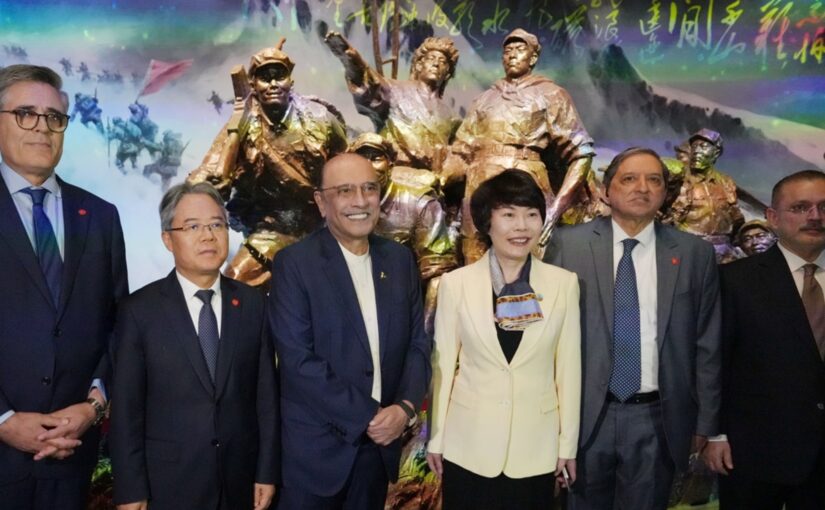
The question of whether development can reach ordinary families also shaped Malik Ahmad Khan’s view of China’s poverty reduction record. The speaker of the Provincial Assembly of Punjab said China’s success in lifting nearly 800 million people out of poverty is one of the greatest achievements in human history. For Pakistan, cooperation with China should not only be about learning how to build, but also about ensuring that every family truly benefits from development.

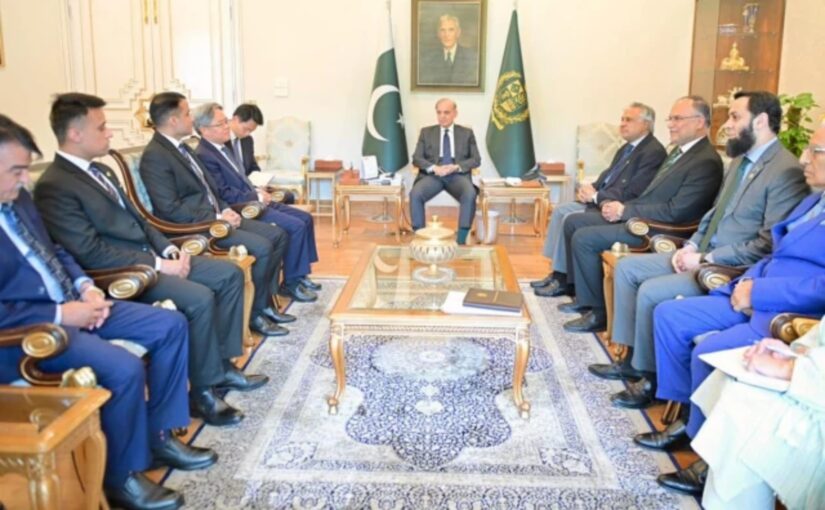
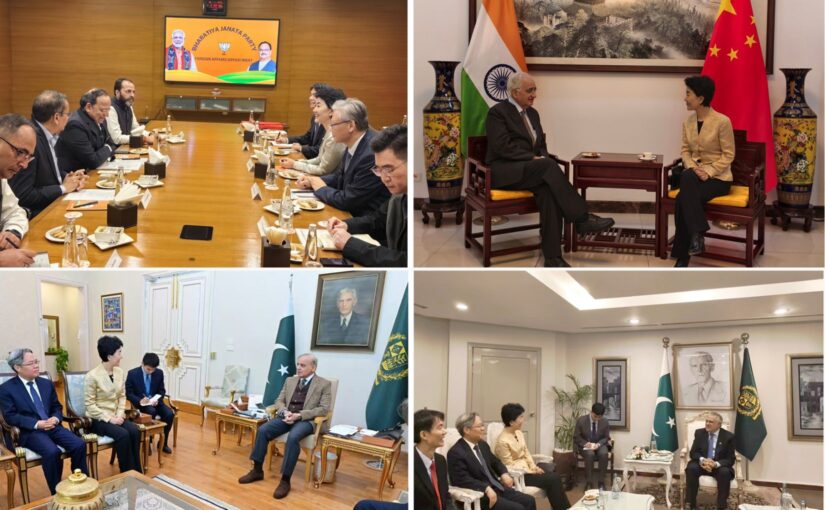
On the same day, the Pakistan delegation also met with IDCPC vice-minister Sun Haiyan.

The Pakistan side spoke highly of the fruitful outcomes achieved over the 75 years since the establishment of China-Pakistan diplomatic relations, noting that developing friendly relations with China has long been the cross-party consensus in Pakistan. In recent years, the development of CPEC has given a strong boost to Pakistan’s economic and social development, including the development of Balochistan Province. All political parties in Pakistan hope to continue strengthening inter-party exchanges with the CPC and contribute the strength of political parties to the development of bilateral relations.

Sun also met with the delegation of the Punjab Provincial Assembly of Pakistan led by its speaker Malik Ahmad Khan.

Sun noted, over the 75 years since the establishment of diplomatic relations between China and Pakistan, bilateral relations have maintained high-level development under the strategic guidance of the two countries’ leaders. The CPC stands ready to take the 75th anniversary of China-Pakistan diplomatic relations as an opportunity to work with Pakistan to implement the important consensus reached by the leaders of the two countries and promote exchanges and cooperation between relevant Chinese provinces and Punjab in agriculture, artificial intelligence, youth and other fields.

Malik said, China is Pakistan’s most reliable all-weather strategic partner, and friendship with China is a cross-party consensus in Pakistan. CPEC has transformed the lives of the Pakistani people. Punjab hopes to take the opportunity of the Upgraded Version 2.0 of CPEC to deepen exchanges and cooperation with China in agriculture, artificial intelligence, youth and other fields, and ensure the enduring friendship between the two countries from generation to generation.
The following articles were originally published on the website of the IDCPC and by China Daily.

China-Pakistan Political Parties Forum and Meeting of CPEC Political Parties Joint Consultation Mechanism Held

Beijing, May 24th (IDCPC) — China-Pakistan Political Parties Forum and Meeting of CPEC Political Parties Joint Consultation Mechanism, hosted by the International Department of the CPC Central Committee (IDCPC), was held here today under the theme “Jointly Building a China-Pakistan Community with a Shared Future in the New Era: Political Parties in Action”. Liu Haixing, Minister of the IDCPC, and Ishaq Dar, Deputy Prime Minister and Foreign Minister of Pakistan, attended and delivered keynote speeches. The event was attended by about 140 participants, including Ahsan Iqbal, Secretary-General of the PML-N and Federal Minister for Planning, Development and Special Initiatives, leaders of 12 major Pakistani political parties, as well as representatives from Pakistani think tanks, media and social organizations, and representatives from Chinese ministries, commissions, enterprises, media and academic circles.

Liu noted, over the 75 years since the establishment of diplomatic ties, China and Pakistan have always stood side by side through thick and thin, setting an example of political mutual trust, mutual benefit, win-win cooperation, friendship between the two peoples and multilateral coordination between countries with different ideologies and systems. Since the beginning of the new era, under the strategic guidance of President Xi Jinping and Pakistani leaders, the China-Pakistan all-weather strategic cooperative partnership has been continuously deepened, advancing steadily toward the goal of building a China-Pakistan community with a shared future. Both countries are currently at a crucial stage of development and rejuvenation. The two sides should implement the latest important consensus reached by the two countries’ leaders, seize the opportunities of the new round of scientific and technological revolution and industrial transformation, promote the upgrading of the China-Pakistan Economic Corridor (CPEC), maintain close communication and coordination on major international and regional hotspot issues, and jointly build a China-Pakistan community with a shared future featuring stronger political mutual trust, closer economic ties, deeper security cooperation and a firmer public opinion foundation, contributing more to safeguarding world peace and stability.

Liu said, political parties should play an active role in providing ideological guidance and building consensus for the building of a China-Pakistan community with a shared future. The CPC stands ready to work with all major Pakistani political parties to build political consensus, make full use of platforms such as the China-Pakistan Political Parties Forum, and conduct regular consultations on major issues in bilateral relations to continuously consolidate the political foundation for bilateral strategic cooperation. We need to build development consensus, leverage the CPEC Political Parties Joint Consultation Mechanism to advance high-quality practical cooperation and ensure cooperation outcomes benefit all Pakistani people. We need to foster security consensus to support deeper cooperation in counter-terrorism, security and defense, and build social consensus to tell stories of China-Pakistan friendship well, expand exchanges on areas such as think tanks, youth, women, and culture, and launch “small and beautiful” livelihood projects to consolidate public support for China-Pakistan friendship.

Dar noted, Pakistan and China share a close, brotherly relationship. Inter-party exchanges are an important part of bilateral relations. Over the past 75 years since diplomatic ties were established, exchanges and cooperation between political parties of both countries have never been interrupted despite changes in the international landscape. Maintaining and developing the Pakistan-China all-weather strategic cooperative partnership is a cross-party consensus in Pakistan. The world today is undergoing profound changes unseen in a century, and China-Pakistan solidarity and cooperation serve as an important stabilizing force in the region. The two countries maintain high-level communication and coordination on international and regional issues. Pakistan highly appreciates the major global initiatives proposed by President Xi Jinping, which reflect his far-sighted vision. Pakistan will firmly support and actively participate in these initiatives. Pakistan stands ready to further consolidate strategic and political mutual trust with China, deepen practical cooperation across all fields, jointly build an upgraded version of the CPEC, promote exchanges at all levels including political parties, legislatures, media and youth, implement the action plan for building a China-Pakistan community with a shared future, and inject more stability and positive energy into the region and the world.

Foreign guests attending the meeting noted, the Pakistan-China friendship has stood the test of international changes and remains unbreakable. A firm policy of developing friendly relationship with China is the cornerstone of Pakistan’s foreign and development strategies. The China-Pakistan Political Parties Forum provides an important platform for both countries to implement the important consensus of the two countries’ leaders, enhance mutual trust and build consensus. The CPEC has provided significant support for improving Pakistan’s economic and social landscape and is a jewel in the Belt and Road Initiative. China’s 15th Five-Year Plan is highly aligned with URAAN Pakistan Program. Pakistan stands ready to strengthen inter-party exchanges and cooperation, promote the alignment of national development strategies through the political party channel, provide political support for the upgraded version of the CPEC, and strive for more outcomes in the Pakistan-China all-weather strategic cooperative partnership to better benefit the two peoples.

Participants also exchanged views on topics including consolidating high-level political mutual trust, deepening high-level cooperation, and promoting high-level people-to-people exchanges.

Sun Haiyan, Vice Minister of the IDCPC, chaired the meeting.

The meeting adopted the Joint Initiative of Chinese and Pakistani Political Parties to Join Hands to Build a China-Pakistan Community with a Shared Future in the New Era.


Party exchanges spur evolution of China-Pakistan cooperation

May 25 (China Daily) – Pakistani political leaders said party-to-party exchanges with China are gaining greater significance as the two countries mark the 75th anniversary of diplomatic ties and seek to advance the China-Pakistan Economic Corridor into a new phase focused on industry, technology, agriculture, and people’s livelihoods.

Speaking at the China-Pakistan Political Parties Forum and Meeting of CPEC Political Parties Joint Consultation Mechanism, they said cooperation with China now goes beyond infrastructure and trade to include lessons from China’s long-term planning, policy continuity, poverty reduction, and people-centered development.

The event, hosted by the International Department of the Communist Party of China Central Committee, was attended by about 140 people from China and Pakistan. Liu Haixing, head of the International Department of the CPC Central Committee, said the two countries’ political parties should deepen exchanges, strengthen strategic coordination, and build a consensus on development.

China would work with Pakistan to upgrade CPEC with high standards and bring more tangible benefits to the Pakistani people through practical cooperation, he said.

Pakistan’s Deputy Prime Minister and Foreign Minister Ishaq Dar said party-to-party exchanges have been a key pillar of bilateral cooperation over the past 75 years, helping the relationship withstand changes in the international environment and domestic political cycles.

The all-weather strategic cooperative partnership enjoys cross-party support in Pakistan, he said, adding that both countries attach importance to the people, social development, and economic growth. China’s achievements, Dar said, have been underpinned by policy consistency, the hard work of its people, and zero tolerance for corruption.

Federal Minister for Planning, Development and Special Initiatives Ahsan Iqbal said CPEC, a flagship project of the Belt and Road Initiative, has helped reshape Pakistan’s economic landscape over the past decade and is now moving into a more demanding phase.

Its focus, he said, is shifting beyond infrastructure-led growth and toward industrialization, innovation, sustainability, agricultural modernization, and people-centered development — areas that require stronger planning, policy continuity, and institutional coordination.

China’s development offers useful references for that transition, Iqbal said, adding that Pakistani political parties, provincial governments, and public institutions can deepen exchanges with their Chinese counterparts under the CPEC framework on poverty alleviation, digital governance, urban planning, public services, and local development.

Syed Hussain Tariq, a senior leader of the Pakistan People’s Party, said CPEC 2.0 will require more than project-level cooperation, calling on Pakistani political parties to help build the policy understanding, social support, and political momentum needed for the corridor’s future development.

Tariq said that the delegation’s visits to Beijing have offered a closer look at China’s push to develop new quality productive forces and its emphasis on making artificial intelligence serve ordinary people, including farmers. Such exchanges, he said, have offered inspiration for Pakistan as it seeks to turn CPEC into broader gains for society.

Balochistan Governor Jaffar Khan Mandokhail said Pakistan-China cooperation should be measured not only by the projects completed, but also by whether ordinary people can see real changes in their daily lives.

Stronger public trust depends on tangible benefits, especially for young people, he said, citing scholarships, support for public universities, and cooperation in digital connectivity, artificial intelligence, and green technology as ways to bring new opportunities to local communities.

Amir Chishti, a senior leader of the Muttahida Qaumi Movement-Pakistan, said CPEC’s future development should place greater emphasis on local empowerment and youth employment. Industrial projects and job creation, he said, can improve living standards, strengthen people’s sense of ownership, and make the corridor more socially sustainable.

The second phase of CPEC is therefore not only an economic necessity, but also a social and strategic one, he said, as its success will depend on whether local communities can share in the prosperity it brings.

The question of whether development can reach ordinary families also shaped Malik Ahmad Khan’s view of China’s poverty reduction record. The speaker of the Provincial Assembly of Punjab said China’s success in lifting nearly 800 million people out of poverty is one of the greatest achievements in human history, achieved not through slogans, but through generations of persistent and practical effort.

Malik said his visit to Beigou village showed how a once underdeveloped community had achieved prosperity within a single generation. For Pakistan, cooperation with China should not only be about learning how to build, but also about ensuring that every family truly benefits from development, he said.

Ahmad Mujtaba Chaudhary, a member of the Pakistan Tehreek-e-Insaf, said his first visit to China replaced a childhood image shaped by films with the reality of a country that had eliminated extreme poverty.

That achievement was not a cold statistic, but “a living testimony of a civilization”, he said, adding that China’s development showed what people can achieve when they work together toward a shared goal.


Sun Haiyan Meets with a Delegation of Political Parties of Pakistan

Beijing, May 24th (IDCPC) — Sun Haiyan, Vice-minister of the International Department of the CPC Central Committee, met here today on the morning with a delegation of political parties of Pakistan.

Sun said, since the establishment of diplomatic relations between China and Pakistan 75 years ago, the two countries have withstood numerous trials in history and forged an ironclad friendship. In recent years, under the strategic guidance of General Secretary Xi Jinping and Pakistani leaders, the China-Pakistan all-weather strategic cooperative partnership has advanced steadily. China stands ready to take the 75th anniversary of diplomatic relations as an opportunity to work with all political parties in Pakistan to deliver on the important consensus reached by the two countries’ leaders, enhance exchanges and interactions, enable China-Pakistan cooperation to benefit more people, and promote the building of an even closer China-Pakistan community with a shared future in the new era.

The Pakistani side spoke highly of the fruitful outcomes achieved over the 75 years since the establishment of China-Pakistan diplomatic relations, noting that developing friendly relations with China has long been the cross-party consensus in Pakistan. In recent years, the development of the China-Pakistan Economic Corridor (CPEC) has given a strong boost to Pakistan’s economic and social development, including the development of Balochistan Province. It is expected that the two countries will seize the opportunity of the 75th anniversary of diplomatic relations to further deepen exchanges and cooperation in infrastructure, new energy, digital economy, agriculture and fisheries, as well as education and youth affairs. All political parties in Pakistan hope to continue strengthening inter-party exchanges with the CPC and contribute the strength of political parties to the development of bilateral relations.


Sun Haiyan Meets with a Delegation of the Punjab Provincial Assembly of Pakistan

Beijing, May 24th (IDCPC) — Sun Haiyan, Vice-minister of the International Department of the CPC Central Committee, met here today with a delegation of the Punjab Provincial Assembly of Pakistan led by Malik Muhammad Ahmad Khan, Speaker of the Punjab Provincial Assembly.

Sun noted, over the 75 years since the establishment of diplomatic relations between China and Pakistan, bilateral relations have maintained high-level development under the strategic guidance of the two countries’ leaders. The CPC stands ready to take the 75th anniversary of China-Pakistan diplomatic relations as an opportunity to work with Pakistan to implement the important consensus reached by the leaders of the two countries, and promote exchanges and cooperation between relevant Chinese provinces and Punjab in agriculture, artificial intelligence, youth and other fields. She also emphasized the CPC’s readiness to maintain close contacts with political parties in Pakistan including the Pakistan Muslim League-Nawaz, deepen mutual learning, and contribute to building an even closer China-Pakistan community with a shared future in the new era.

Malik said, China is Pakistan’s most reliable all-weather strategic partner, and friendship with China is a cross-party consensus in Pakistan. Under the wise leadership of General Secretary Xi Jinping, China has maintained long-term political stability and lifted nearly 100 million rural people out of absolute poverty, creating a remarkable “China model”. The China-Pakistan Economic Corridor (CPEC) has transformed the lives of the Pakistani people. Punjab hopes to take the opportunity of the Upgraded Version 2.0 of the CPEC to deepen exchanges and cooperation with China in agriculture, artificial intelligence, youth and other fields, and ensure the enduring friendship between the two countries from generation to generation.
China and Pakistan reaffirm rock solid friendship and common striving for peace

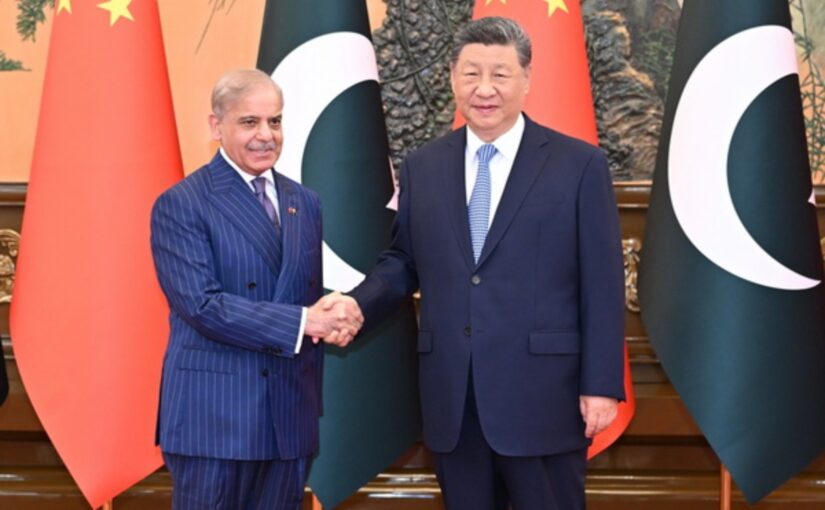
Pakistan Prime Minister Muhammad Shehbaz Sharif paid an official visit to China, May 23-26, at the invitation of his Chinese counterpart Li Qiang. The visit marked the 75th anniversary of the two countries’ diplomatic relations. Pakistan was one of the first non-socialist countries to establish diplomatic ties with the People’s Republic of China.

On the afternoon of May 25, President Xi Jinping met with Prime Minister Sharif at the Great Hall of the People in Beijing.

President Xi noted that over the past 75 years since the establishment of diplomatic relations, China and Pakistan have enjoyed mutual understanding, trust and support, and forged an unbreakable traditional friendship. Their strategic mutual trust and practical cooperation have strongly promoted the development of both nations. No matter how the international landscape may evolve, China will always place priority on the development of China-Pakistan relations in its diplomacy with neighbouring countries.

President Xi shared his pleasure in receiving a letter from Pakistani students studying at Tianjin University, in which they expressed their aspiration to become builders of cooperation, promoters of exchanges, and guardians of friendship between China and Pakistan. He said he was truly heartened to see that the cause of China-Pakistan friendship has dedicated young successors. The two sides should accelerate the development of an even closer China-Pakistan community with a shared future in the new era and deliver more outcomes from their all-weather cooperation to better benefit the two peoples, contribute to regional peace and stability, and set a fine example for building a community with a shared future with neighbouring countries.

The Chinese leader further stressed that China firmly supports Pakistan in safeguarding its independence, sovereignty, and territorial integrity. The two sides should make solid progress in implementing the Action Plan to Foster an Even Closer China-Pakistan Community with a Shared Future in the New Era, advance both major signature projects and “small and beautiful” livelihood programs, and deepen all-round cooperation in areas such as agriculture, industry, artificial intelligence, and talent cultivation. China appreciates Pakistan for demonstrating a proactive spirit and mediating for peace to return to the Middle East. The two sides should maintain close communication and coordination, jointly oppose unilateralism and the Cold War mentality, and promote an equal and orderly multipolar world and an economic globalisation that is universally beneficial and inclusive.

Prime Minister Shehbaz Sharif said that President Xi is a great friend of the Pakistani people and also a great friend of all peace-loving humanity. Under President Xi’s strong leadership, China has achieved remarkable economic progress and provided strength for maintaining world peace and building a multipolar world. The ironclad friendship between Pakistan and China was forged personally by the elder generation of leaders. It is growing ever stronger and is next to none. Pakistan firmly upholds the one-China principle and stands resolutely with China on all issues concerning China’s core interests. Pakistan will always be China’s good friend and good partner.

He added that Pakistan appreciates China for supporting its mediation of the negotiations between the United States and Iran. The four propositions put forward by President Xi on the Middle East situation provide a guiding framework for peace in the region. Pakistan stands ready to coordinate closely with China to jointly contribute to world peace and stability.

Prime Minister Sharif also met with Premier Li Qiang on the same day.

Li said that China stands ready to further advance the construction of the China-Pakistan Economic Corridor (CPEC) and push forward major connectivity projects between the two countries. China, he added,  always prioritises relations and cooperation with Pakistan in its neighbourhood diplomacy, and is willing to stand in even closer solidarity with Pakistan to carry forward traditional friendship, strengthen mutual support, continuously expand practical cooperation, and see the building of a China-Pakistan community with a shared future yield more fruitful outcomes.

Continue reading China and Pakistan reaffirm rock solid friendship and common striving for peace

Pakistan Prime Minister to visit China as the two countries celebrate 75 years of diplomatic ties

Chinese President Xi Jinping and his Pakistani counterpart Asif Ali Zardari exchanged congratulatory messages on May 21, marking the 75th anniversary of diplomatic ties between their two countries.

Xi said that China and Pakistan are good friends and all-weather strategic cooperative partners linked by mountains and rivers and sharing weal and woe. Since the establishment of diplomatic relations 75 years ago, no matter how the international situation has changed, the friendship between China and Pakistan has always remained rock-solid and unbreakable.

For his part, Zardari said the Pakistan-China all-weather strategic cooperative partnership has stood the test of time and become a steadfast pillar for regional peace, stability and development. Pakistan sincerely appreciates China’s steadfast support for Pakistan in safeguarding its sovereignty and territorial integrity and promoting its economic and social development, said Zardari, adding that his country will continue to support China on issues concerning its core interests and further elevate the Pakistan-China friendship to new levels.

On the same day, Chinese Premier Li Qiang and Pakistani Prime Minister Shehbaz Sharif also exchanged congratulatory messages.

Also on May 21, the Chinese Foreign Ministry announced that at the invitation of Premier Li Qiang, Prime Minister Shehbaz Sharif will pay an official visit to China from May 23-26.

Spokesperson Guo Jiakun said at a regular press briefing that Sharif’s visit is an important high-level exchange between China and Pakistan on the occasion of the 75th anniversary of their diplomatic relations. During the visit, President Xi Jinping will meet with Sharif and Premier Li Qiang will hold talks with him.

Noting that China and Pakistan are good friends and all-weather strategic cooperative partners, Guo said that over the past 75 years, China-Pakistan relations have stood all tests and remained rock-solid, setting a fine example for state-to-state relations. He added that in recent years, under the strategic guidance of leaders of the two countries, the two sides have maintained close high-level exchanges and steadily advanced practical cooperation, yielding fruitful outcomes in the high-quality development of the China-Pakistan Economic Corridor (CPEC).

Meanwhile, Cai Dafeng, vice chairman of the Standing Committee of China’s National People’s Congress (NPC), led a delegation to visit Pakistan from May 20-22 at the invitation of the National Assembly of Pakistan.

During his stay, Cai met with President Asif Ali Zardari, Prime Minister Shehbaz Sharif, National Assembly Speaker Sardar Ayaz Sadiq and Senate Chairman Yusuf Raza Gilani, and attended the commemorative activities marking the 75th anniversary of the establishment of diplomatic relations between China and Pakistan together with the four Pakistani leaders.

Continue reading Pakistan Prime Minister to visit China as the two countries celebrate 75 years of diplomatic ties

Pakistan president pays tribute to Chairman Mao on Hunan visit

Pakistan president Asif Ali Zardari visited China’s Hunan and Hainan provinces from April 25-May 1.

In the year in which the two countries are celebrating the 75th anniversary of their diplomatic relations, a key focus of the visit was on a wide range of economic sectors along with other areas of practical cooperation. It was also notable that the Pakistan head of state chose to visit the home province of Chairman Mao, paying warm tribute to the leader of the Chinese revolution and founder of New China and referencing his own family’s special relationship with China over three generations.

An April 26 post on the official social media page of The President of Pakistan, datelined from Changsha, Hunan’s provincial capital, noted:

“President Asif Ali Zardari, currently visiting Changsha in Hunan province of China, held a meeting with Mr Shen Xiaoming, Party Secretary of Hunan Province, and attended a banquet hosted in his honour by Governor of Hunan Province, Mr Mao Weiming…

“During the meeting, the President invited Mr Shen Xiaoming to visit Pakistan in connection with the 75th anniversary celebrations of diplomatic relations between the two countries. He underscored that Pakistan-China ties remain a cornerstone of Pakistan’s foreign policy and continue to enjoy broad-based support. He also referred to his long-standing personal connection with China, recalling that his family, including his late father-in-law Shaheed Zulfikar Ali Bhutto and his late wife Shaheed Mohtarma Benazir Bhutto, had always attached special importance to relations with China. He said this tradition is now being carried forward by the next generation, including his son, former foreign minister Bilawal Bhutto Zardari and [daughter] First Lady Bibi Aseefa Bhutto Zardari…

“In his remarks, President Zardari said that Hunan holds a special place as the birthplace of Chairman Mao Zedong, whose legacy continues to resonate. He observed that the idea that power rests with the people remains deeply admired by the Pakistanis. Reflecting on his personal connection with China, he noted that he first visited the country in 1989 and that his affinity for China has grown stronger over time…

“Speaking at the banquet, the Chinese Ambassador to Pakistan Jiang Zaidong remarked that the President’s decision to visit Hunan reflects his special regard for Chairman Mao. He noted that Pakistan and China are expanding collaboration in agriculture, industry and minerals, and expressed hope that the visit would further strengthen bilateral cooperation, bring the two peoples closer and add significance to the 75th anniversary of diplomatic relations.”

On April 28, the president’s social media updated from Chairman Mao’s birthplace, Shaoshan:

Continue reading Pakistan president pays tribute to Chairman Mao on Hunan visit

Pakistani astronaut to join China’s space station

Two Pakistani candidates have been selected as the first foreign astronauts for China’s space mission training, the China Manned Space Agency announced on April 22, calling it a landmark achievement in international cooperation on the Chinese space station.

The statement added that Muhammad Zeeshan Ali and Khurram Daud will come to China soon as reserve astronauts for training. After completing all training and evaluations, one of them will participate in a space mission as a payload specialist, becoming the first foreign astronaut onboard the Tiangong space station. This selection and training of astronauts for Pakistan, it noted, is also a milestone in China’s space program and another successful example of the China-Pakistan all-weather strategic cooperative partnership in the space sector, adding that the peaceful use of outer space for the benefit of all humanity has always been the original aspiration and mission of China’s space program development.

The following day, Pakistan Prime Minister Shehbaz Sharif met the astronauts and described their participation in space research as a landmark achievement for the country and a matter of national pride. The successful candidate will conduct several scientific experiments in microgravity, which span areas including material science, fluid physics, life and bio science, and biotechnology.

“I am confident that you are going to write a new chapter in Pakistan’s history,” the prime minister told the astronauts, appreciating their dedication and hard work that enabled them to reach this important stage.

The astronauts expressed gratitude for the opportunity and termed their participation in space research a “unique honour and a source of pride for Pakistan”. They reaffirmed their resolve to meet the nation’s expectations through dedication and hard work.

On April 24, the Xinhua News Agency reported that the two astronauts had arrived in China and been admitted to the Astronaut Centre of China in Beijing.

The next day, Xinhua further reported that China had launched a Pakistani satellite from the Taiyuan Satellite Launch Centre in north China’s Shanxi Province. The satellite, named PRSC-EO3, was lifted off at 8:15 p.m. by a Long March-6 carrier rocket and successfully entered its planned orbit. This launch marked the 640th flight mission of the Long March carrier rocket series.

On the evening of April 25, our co-editor Keith Bennett was an invited speaker at the annual dinner of Third World Solidarity, in which many prominent members of Britain’s Pakistani community participated. In the course of his speech, Keith said:

“And there is something else to take pride in this week. Thanks to Pakistan’s friendship with China, on Wednesday it was announced that two Pakistani candidates have been selected for training as the first foreign astronauts to participate in China’s space program. Muhammad Zeeshan Ali and Khurram Daud arrived in China today and later this year one of them will be chosen to participate in a space mission as a payload specialist, becoming the first foreign astronaut onboard the Tiangong space station.

“It is often said that China-Pakistan friendship is higher than the Himalayas. Well, now it is literally true. And just as the smiling face and engaging personality of Yuri Gagarin, the first man in space, won hearts around the world, I’m sure that Pakistan’s astronauts, or taikonauts as they are termed in China, will win hearts not just in Pakistan, but throughout the Ummah [the global Muslim community] and indeed beyond.”

The following articles were originally published by the Xinhua News Agency and by the Pakistani newspaper Express Tribune.

Two Pakistani astronauts selected for China’s space mission training

BEIJING, April 22 (Xinhua) — Two Pakistani candidates have been selected as the first foreign astronauts for China’s space mission training, the China Manned Space Agency announced on Wednesday afternoon, calling it a landmark achievement in international cooperation on the Chinese space station.

The agency said in a statement that Muhammad Zeeshan Ali and Khurram Daud will come to China soon as reserve astronauts for training. After completing all training and evaluations, one of them will participate in a space mission as a payload specialist, becoming the first foreign astronaut onboard the Tiangong space station.

In February 2025, China and Pakistan signed a cooperation agreement on the spaceflight of a Pakistani astronaut to the Chinese space station in Islamabad, officially launching the selection process for Pakistani astronauts. After three rounds of rigorous screening, two Pakistani reserve astronauts were ultimately chosen.

Continue reading Pakistani astronaut to join China’s space station

China and Pakistan work jointly for peace

China and Pakistan have jointly launched a five-point peace initiative aimed at ending the US-Israeli war of aggression against Iran.

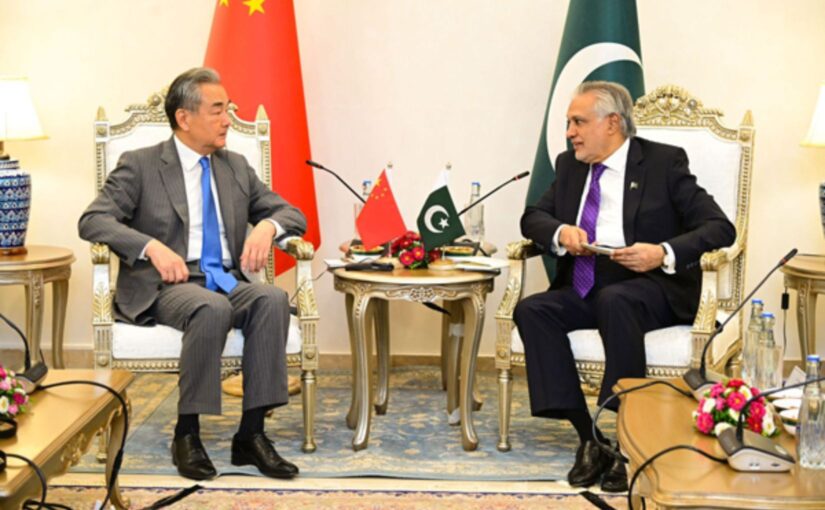
The move came as the centrepiece of a March 31 visit to Beijing by Pakistani Deputy Prime Minister and Foreign Minister Mohammad Ishaq Dar for talks with his Chinese counterpart Wang Yi.

At their meeting, Wang said that the mediation efforts of the Pakistani side regarding the conflict are in the common interests of all parties. China supports and looks forward to Pakistan playing a unique and important role in easing the situation and resuming peace talks.  China is willing to make joint efforts with Pakistan to end the hostilities as soon as possible, create opportunities for peace and open the window for peace talks.

On bilateral ties, Wang said this year marks the 75th anniversary of the establishment of diplomatic relations between China and Pakistan, calling on both sides to implement the important consensus reached by the leaders of the two countries and constantly advance the building of a China-Pakistan community with a shared future.

For his part, Dar said the Pakistan-China friendship is precious and deeply rooted in people’s hearts, adding that Pakistan is willing to work with China to promote the continuous development of the all-weather strategic cooperative partnership between the two countries. He thanked China for supporting Pakistan’s mediation of the situation in Iran, adding that the current conflict has disrupted international energy supplies and caused heavy damage to developing countries.

Dar had earlier visited China, January 3-5. The two foreign ministers also held phone conversations on March 10 and March 27.

The five-point initiative calls for:

  • Immediate Cessation of Hostilities. Humanitarian assistance must be allowed to all war-affected areas.
  • Start of peace talks as soon as possible. Sovereignty, territorial integrity, national independence and security of Iran and the Gulf states should be safeguarded. China and Pakistan support the relevant parties in initiating talks, with all parties committing to peaceful resolution of disputes, and refraining from the use or the threat of use of force during peace talks.
  • Security of nonmilitary targets. The principle of protecting civilians in military conflict should be observed. China and Pakistan call on parties to the conflict to immediately stop attacks on civilians and nonmilitary targets and to fully adhere to International Humanitarian Law (IHL), and stop attacking important infrastructure, including energy, desalination and power facilities, and peaceful nuclear infrastructure, such as nuclear power plants.
  • Security of shipping lanes. China and Pakistan call on the parties to protect the security of ships and crew members stranded in the Strait of Hormuz, allow the early and safe passage of civilian and commercial ships, and restore normal passage through the Strait as soon as possible.
  • Primacy of the United Nations Charter. China and Pakistan call for efforts to practice true multilateralism, to jointly strengthen the primacy of the UN, and to support the conclusion of an agreement for establishing a comprehensive peace framework and realising lasting peace based on the purposes and principles of the UN Charter and international law.

At a Chinese Foreign Ministry press conference on April 1, spokesperson Mao Ning said that the initiative is open and all countries and international organisations are welcome to respond to and participate in it.

Continue reading China and Pakistan work jointly for peace

China working to restore peace between Pakistan and Afghanistan

A considerable period of rising tension between Pakistan and Afghanistan erupted into open and ongoing conflict on February 21. As a friendly neighbour to both countries China is actively working for the restoration of peace.

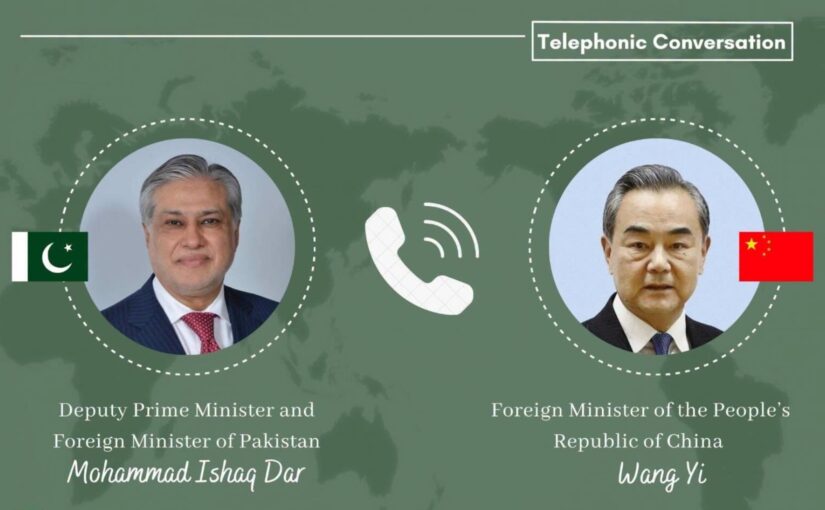
Accordingly, on March 10, Chinese Foreign Minister Wang Yi held a phone conversation with Pakistani Deputy Prime Minister and Foreign Minister Mohammad Ishaq Dar at the latter’s request.

Given the overall situation, primary emphasis was given to the US-Israeli war of aggression against Iran, launched on February 28.

Wang Yi said that as all-weather strategic cooperative partners, China and Pakistan share a fine tradition of communication and coordination on major international and regional issues. Both countries have promptly expressed their firm stance on the situation in Iran, demonstrating a responsible attitude and commitment to the purposes and principles of the UN Charter. The outbreak of this war lacks justification and legitimacy, and its continuation will only result in more unnecessary casualties. The key to preventing further escalation lies in the United States and Israel ceasing military operations.

The Chinese side appreciates Pakistan’s mediation efforts to de-escalate regional tensions and stands ready to maintain multilateral and bilateral coordination and cooperation with Pakistan, support Pakistan in continuing to play a constructive role, and jointly work toward the early restoration of peace and stability in the region.

Turning to the situation in Afghanistan, Wang Yi said that the special envoy on Afghan Affairs of the Ministry of Foreign Affairs of China is currently shuttling between Afghanistan and Pakistan to promote peace talks. The pressing priority is to prevent the escalation of the conflict and return to the negotiating table at an early date. The Chinese side firmly supports Pakistan in its counterterrorism efforts and hopes that Pakistan will continue to make the utmost efforts to ensure the safety of Chinese personnel, projects, and institutions in Pakistan.

This was followed by Wang Yi’s call with Afghan Foreign Minister Mawlawi Amir Khan Muttaqi on March 13, again at the latter’s request.

This conversation foregrounded the conflict between Kabul and Islamabad and Mawlawi Amir Khan Muttaqi appreciated China’s active efforts to mediate in the border conflict between Afghanistan and Pakistan, stating that the Afghan people, having suffered greatly from war, cherish the opportunities for peace and development. Afghanistan aspires to be a source of regional peace rather than instability. The Afghan side reiterates that its territory will not be used to attack neighbouring countries, expresses no desire for military confrontation with other nations, and looks forward to mutual trust and friendly coexistence among neighbors. The Afghan side believes that dialogue and consultation are the only way to resolve issues and expects China, as a major country and friendly neighbour, to play an even greater role.

Wang Yi stated that the more turbulent the external environment becomes, the more regional countries should strengthen unity and cooperation to overcome difficulties together, forging a path of cooperative and common security. Afghanistan and Pakistan are inseparable brothers and neighbours that cannot be moved away from each other. Any issues between the two countries can only be resolved through dialogue and consultation. The use of force will only complicate the situation, exacerbate contradictions, benefit neither side, and threaten regional peace and stability. China has always maintained an objective and fair stance on the Afghanistan-Pakistan conflict, and the special envoy on Afghan Affairs of the Ministry of Foreign Affairs of China is currently shuttling between Afghanistan and Pakistan to mediate, urging both sides to remain calm and exercise restraint, engage in face-to-face exchanges as soon as possible, achieve a ceasefire at the earliest opportunity, and resolve contradictions and differences through dialogue.

Continue reading China working to restore peace between Pakistan and Afghanistan

CPC delegation visits India and Pakistan

Sun Haiyan, Vice-Minister of the International Department of the Communist Party of China (CPC) Central Committee (IDCPC), led a party delegation to visit India, January 12-14, and then visited Pakistan on January 15.

In India, the delegation met respectively with Vikram Misri, Indian Foreign Secretary, Arun Singh, National General Secretary of the Bharatiya Janata Party (BJP), and Salman Khurshid, Chairman of the Foreign Affairs Department of the Indian National Congress (INC) and former Minister of External Affairs of India, and held collective exchanges with Indian left-wing leaders including D. Raja, General Secretary of the Communist Party of India (CPI), G. Devarajan, General Secretary of All India Forward Bloc, and Arun Kumar, Member of the Political Bureau of the Communist Party of India (Marxist) (CPIM).

Vikram Misri said that under the joint guidance of the leaders of both countries, India-China relations have developed steadily, and exchanges and cooperation have made positive progress. India hopes to work with China to take positive measures to promote closer exchanges and cooperation in various fields and jointly create a favorable atmosphere. The website of India’s Ministry of External Affairs added that: “The discussions covered the progress made in stabilising and rebuilding bilateral ties with priority on business and people-centric engagements, and ways to take bilateral engagement forward in the new year. The Chinese side congratulated the Indian side on assuming the BRICS chairship this year and expressed its strong support for a successful BRICS Summit in India.”

Arun Singh said that the BJP hopes to strengthen dialogue with the CPC to enhance understanding and mutual trust and contribute to the development of relations between the two countries. For his part, Salman Khurshid said that the INC had made important contributions to promoting India-China friendship in history and believes that under the new circumstances, both sides should strengthen exchanges to jointly improve the well-being of the people of both countries.

Indian left-wing leaders expressed their firm support for India-China friendship and their hope of further strengthening inter-party relations and deepening exchanges and mutual learning with the CPC. Representatives from Indian think tanks, media, youth, and other sectors expressed their willingness to actively participate in and promote people-to-people and cultural exchanges between the two countries, as well as play a part in forming an objective and positive mutual understanding between the people of both countries.

The day after its meeting with the BJP, the CPC delegation also held a brief meeting with the leaders of the Rashtriya Swayamsevak Sangh (RSS), which is considered to be the ideological progenitor of the BJP and other organisations based on Hindu communalism. This, in turn, triggered a verbal spat between the BJP and INC, initiated by the latter, in which each sought to impugn the integrity of the other party’s engagements with China and specifically with the CPC. A summary of the dispute, which reflects the continued sensitivity and fragility of China-India relations, as reported in the Hindustan Times, may be read here.

Continue reading CPC delegation visits India and Pakistan

Strategic dialogue enhances China-Pakistan friendship

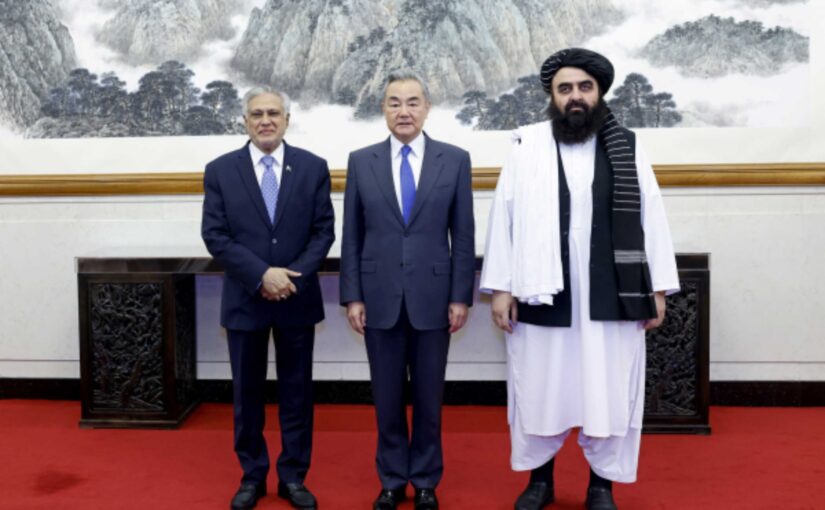
Mohammad Ishaq Dar, Deputy Prime Minister and Foreign Minister of Pakistan, visited China from January 3-5, 2026 and co-chaired the Seventh Round of China-Pakistan Foreign Ministers’ Strategic Dialogue in Beijing with his Chinese counterpart and host Wang Yi on January 4.

Following the dialogue a detailed Joint Press Communiqué was issued setting out its decisions. Among its key points are:

  • The two sides announced the launch of commemorative activities in 2026 celebrating the 75th anniversary of the establishment of diplomatic relations between China and Pakistan, which will serve as an opportunity to consolidate China-Pakistan friendship and expand new areas of cooperation so that China-Pakistan friendship could grow from strength to strength and pass from generation to generation.
  • The two sides reaffirmed their unyielding support for each other on issues concerning their respective core interests. Pakistan reaffirmed its firm commitment to the one-China principle and reiterated that Taiwan is an inalienable part of China’s territory. Pakistan firmly supports every effort of China to achieve national reunification and opposes any form of “Taiwan independence” and any attempt to create “two Chinas” or “one China, one Taiwan.”
  • China reiterated its steadfast support for Pakistan in safeguarding its sovereignty, independence and territorial integrity. China supports Pakistan in pursuing a development path suited to its national conditions and achieving economic prosperity and supports Pakistan in firmly combating terrorism and playing a bigger role in international and regional affairs.
  • The two sides agreed to further align their development plans and priorities and build an upgraded version 2.0 of the China-Pakistan Economic Corridor (CPEC), which is a pioneering project of the Belt and Road Initiative. The two sides agreed to focus on the three key sectors of industry, agriculture and mining, promote the building and operation of the Gwadar Port, ensure the smooth passage of the Karakoram Highway, and enhance Pakistan’s capacity for sustainable development. The two sides will deepen cooperation in areas such as trade and investment, information technology, science and technology, cybersecurity, technical and vocational training and education, and people-to-people and cultural exchanges.
  • The two sides welcomed third-party participation in CPEC cooperation that conforms with the modalities set by China and Pakistan.
  • The two sides expressed satisfaction at their expanding space cooperation and for the expected early entrance of Pakistani astronauts into the China Space Station. They agreed to explore space in a peaceful and mutually beneficial manner for greater economic and social development and prosperity.
  • The two sides agreed that it is essential to firmly uphold the outcomes of the victory of World War II, adhere to the purposes and principles of the UN Charter, reject attempts to distort historical facts, and oppose the plotted resurgence of fascism and militarism.
  • The two sides emphasised the importance of a South Asian regional order underpinned by the UN Charter, international law, and the basic norms governing international relations, reiterated opposition to any unilateral actions, and reaffirmed the significance of maintaining peace and stability in South Asia and the necessity of resolving all outstanding disputes through dialogue and consultation.
  • The Pakistani side briefed the Chinese side on its position on and latest developments of the situation in Jammu and Kashmir. China reiterated that the Jammu and Kashmir dispute is left over from history and should be properly and peacefully resolved in accordance with the UN Charter, relevant UN Security Council resolutions and bilateral agreements.
  • The two sides expressed readiness to continue leveraging the China-Afghanistan-Pakistan Trilateral Foreign Ministers’ Dialogue and the China-Bangladesh-Pakistan cooperation mechanism to deliver new outcomes.
  • Pakistan highly commended China’s efforts to safeguard developing countries’ right to sustainable development.
  • The two sides expressed satisfaction over their cooperation within multilateral mechanisms such as the UN and the Shanghai Cooperation Organisation (SCO) and agreed to deepen coordination and collaboration to safeguard the common interests of developing countries and international fairness and justice.
  • The two sides reaffirmed their commitment to the purposes and principles of the UN Charter, their support for multilateralism and free trade, and their opposition to hegemonism, bullying behaviours violating national sovereignty of other countries, the forming of “small circles” and bloc confrontation.
  • China congratulated Pakistan on its outstanding performance during its UN Security Council presidency and expressed full support for Pakistan to work as the rotating president of the SCO from 2026 to 2027.
  • The two sides agreed to keep in close communication and coordination on the Afghan issue, work with the international community to encourage the Afghan government to build an inclusive political framework, adopt moderate policies, focus on development, pursue good-neighbourliness, and play a constructive role in helping Afghanistan achieve stable development and integrate into the international community. The two sides called for more visible and verifiable actions to dismantle and eliminate all terrorist organisations based in Afghanistan which continue to pose serious threats to regional and global security and prevent terrorist organisations from using the Afghan territory for terrorism against any other country and to endanger any other country.
  • The two sides called for an unconditional, comprehensive and permanent ceasefire in Gaza, and reaffirmed their support for the Palestinian people’s right to self-determination and for the implementation of the two-state solution with the establishment of an independent state of Palestine. The two sides also expressed their concern at the situation in the occupied West Bank and urged the need for urgently addressing it.
  • The two sides agreed to hold the next round of Foreign Ministers’ Strategic Dialogue in Islamabad next year on mutually convenient dates.

The following is the full text of the joint communiqué. It was originally published by the Xinhua News Agency.

Continue reading Strategic dialogue enhances China-Pakistan friendship

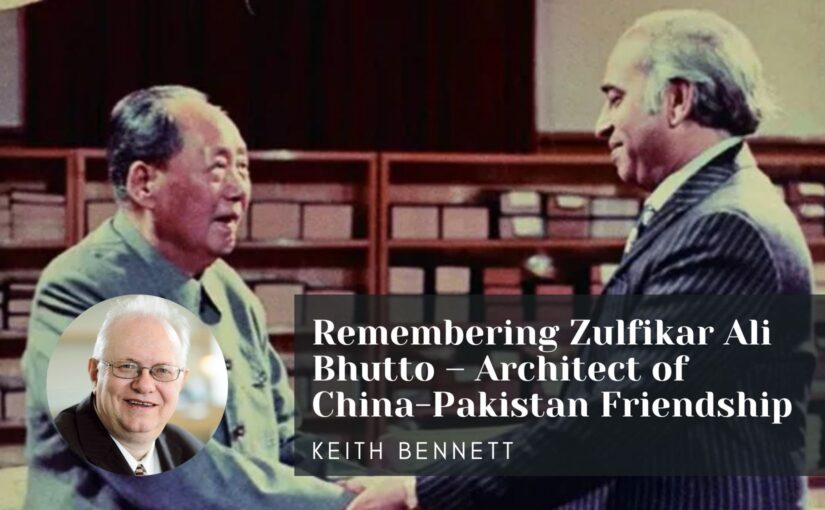
Remembering Zulfikar Ali Bhutto – Architect of China-Pakistan Friendship

Third World Solidarity organised a meeting on Monday January 5, 2026, marking the 98th birth anniversary of the late Pakistani leader Zulfikar Ali Bhutto, who made an outstanding contribution to the friendship between his country and China.

The meeting, held in the Baseline Studios, home to a number of community organisations and projects in west London, was attended by many prominent members of the Pakistani community, and others who have been friends with members of the Bhutto family.

Chairing the meeting, Mushtaq Lasharie, Chair of Third World Solidarity, the British Pakistani Mayors Association and Lancaster West Residents Association, drew attention to the price that has often been paid by leaders of the Global South who stand for independence and popular democracy, from the martyrdom of Zulfikar Ali Bhutto and his daughter Benazir Bhutto, to today’s illegal kidnapping of Venezuelan President Maduro and his wife. This was also one of the themes that was returned to in the discussion period following the main speeches, in which Keith Bennett explained how the hand of US imperialism was present in all these cases, whether overtly or covertly.

The first speaker was London-based Pakistani journalist Javed Soomro, whose family has long had a close relationship with the Bhuttos. He explained that before Z.A. Bhutto founded and led the Pakistan People’s Party (PPP), politics in the country had been confined to the feudal class and the boardrooms of the industrialists. The people were irrelevant. Bhutto was “the first to bring the voices of the masses and ordinary people” to the political arena. The basic slogan of the PPP was for clothes, food and shelter. [Note: In its simplicity and profundity this has echoes of the Bolshevik call for bread, peace and land.]

In 1974, he organised a major conference aimed at uniting the Muslim countries. This effort was key to the animosity that the United States came to harbour for Bhutto. [This has clear parallels with the way that the efforts of the late Hugo Chávez and President Maduro to unite the countries of Latin America and the Caribbean has intensified the hatred of the United States for the Bolivarian revolution in Venezuela.]

Javed was followed by Keith Bennett, co-editor of Friends of Socialist China, who spoke on the great contributions of Z.A. Bhutto, as well as his daughter Benazir Bhutto and grandson Bilawal Bhutto Zardari, to Pakistan’s friendship with both the People’s Republic of China and the Democratic People’s Republic of Korea (DPRK).

The full text of Keith’s speech is reproduced below.

The final speaker was Victoria Schofield, author of ‘Bhutto: Trial and Execution’ (1979) and ‘The Fragrance of Tears: My Friendship with Benazir Bhutto’ (2020).

Victoria forged a close friendship with Benazir Bhutto when they were fellow students at Oxford University. With Benazir’s encouragement she succeeded her as President of the Oxford Union. She travelled to Pakistan in 1978, when Z.A. Bhutto was on trial and subsequently hanged, at Benazir’s invitation. She was one of the last people to see Bhutto alive and recalled how Benazir was not even allowed to hug her father on their last meeting, just a couple of days before he was executed.

She further recalled Bhutto’s vision for his country, as outlined to the Spectator:

“My vision is that of a Pakistan whose social standards are comparable to some parts of Europe. This means a war against illiteracy and ignorance. It means fighting prejudice and obscurantism. It involves the equality of men and women. It demands the mobilisation of the people’s selected energies. It dictates the restoration of dignity to the human person… It requires a check on the growth of population and easy access to education and medical care throughout the country. It contemplates better towns and cities and cleaner villages. It raises 100 challenges. It is a long haul. We have braced ourselves for it.”

Following a lively Q&A, closing remarks were delivered by Mian Saleem, President of PPP Greater London.

The formal proceedings were followed by two songs from Hugh Goodacre on guitar and dinner.

The following is the full text of Keith’s speech.

Continue reading Remembering Zulfikar Ali Bhutto – Architect of China-Pakistan Friendship