Pakistani astronaut to join China’s space station

Two Pakistani candidates have been selected as the first foreign astronauts for China’s space mission training, the China Manned Space Agency announced on April 22, calling it a landmark achievement in international cooperation on the Chinese space station.

The statement added that Muhammad Zeeshan Ali and Khurram Daud will come to China soon as reserve astronauts for training. After completing all training and evaluations, one of them will participate in a space mission as a payload specialist, becoming the first foreign astronaut onboard the Tiangong space station. This selection and training of astronauts for Pakistan, it noted, is also a milestone in China’s space program and another successful example of the China-Pakistan all-weather strategic cooperative partnership in the space sector, adding that the peaceful use of outer space for the benefit of all humanity has always been the original aspiration and mission of China’s space program development.

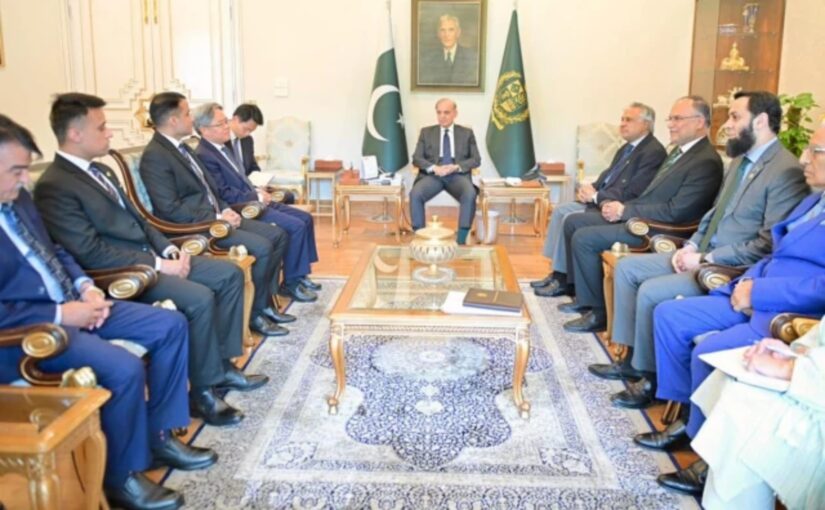
The following day, Pakistan Prime Minister Shehbaz Sharif met the astronauts and described their participation in space research as a landmark achievement for the country and a matter of national pride. The successful candidate will conduct several scientific experiments in microgravity, which span areas including material science, fluid physics, life and bio science, and biotechnology.

“I am confident that you are going to write a new chapter in Pakistan’s history,” the prime minister told the astronauts, appreciating their dedication and hard work that enabled them to reach this important stage.

The astronauts expressed gratitude for the opportunity and termed their participation in space research a “unique honour and a source of pride for Pakistan”. They reaffirmed their resolve to meet the nation’s expectations through dedication and hard work.

On April 24, the Xinhua News Agency reported that the two astronauts had arrived in China and been admitted to the Astronaut Centre of China in Beijing.

The next day, Xinhua further reported that China had launched a Pakistani satellite from the Taiyuan Satellite Launch Centre in north China’s Shanxi Province. The satellite, named PRSC-EO3, was lifted off at 8:15 p.m. by a Long March-6 carrier rocket and successfully entered its planned orbit. This launch marked the 640th flight mission of the Long March carrier rocket series.

On the evening of April 25, our co-editor Keith Bennett was an invited speaker at the annual dinner of Third World Solidarity, in which many prominent members of Britain’s Pakistani community participated. In the course of his speech, Keith said:

“And there is something else to take pride in this week. Thanks to Pakistan’s friendship with China, on Wednesday it was announced that two Pakistani candidates have been selected for training as the first foreign astronauts to participate in China’s space program. Muhammad Zeeshan Ali and Khurram Daud arrived in China today and later this year one of them will be chosen to participate in a space mission as a payload specialist, becoming the first foreign astronaut onboard the Tiangong space station.

“It is often said that China-Pakistan friendship is higher than the Himalayas. Well, now it is literally true. And just as the smiling face and engaging personality of Yuri Gagarin, the first man in space, won hearts around the world, I’m sure that Pakistan’s astronauts, or taikonauts as they are termed in China, will win hearts not just in Pakistan, but throughout the Ummah [the global Muslim community] and indeed beyond.”

The following articles were originally published by the Xinhua News Agency and by the Pakistani newspaper Express Tribune.
Two Pakistani astronauts selected for China’s space mission training

BEIJING, April 22 (Xinhua) — Two Pakistani candidates have been selected as the first foreign astronauts for China’s space mission training, the China Manned Space Agency announced on Wednesday afternoon, calling it a landmark achievement in international cooperation on the Chinese space station.

The agency said in a statement that Muhammad Zeeshan Ali and Khurram Daud will come to China soon as reserve astronauts for training. After completing all training and evaluations, one of them will participate in a space mission as a payload specialist, becoming the first foreign astronaut onboard the Tiangong space station.

In February 2025, China and Pakistan signed a cooperation agreement on the spaceflight of a Pakistani astronaut to the Chinese space station in Islamabad, officially launching the selection process for Pakistani astronauts. After three rounds of rigorous screening, two Pakistani reserve astronauts were ultimately chosen.

Continue reading Pakistani astronaut to join China’s space station

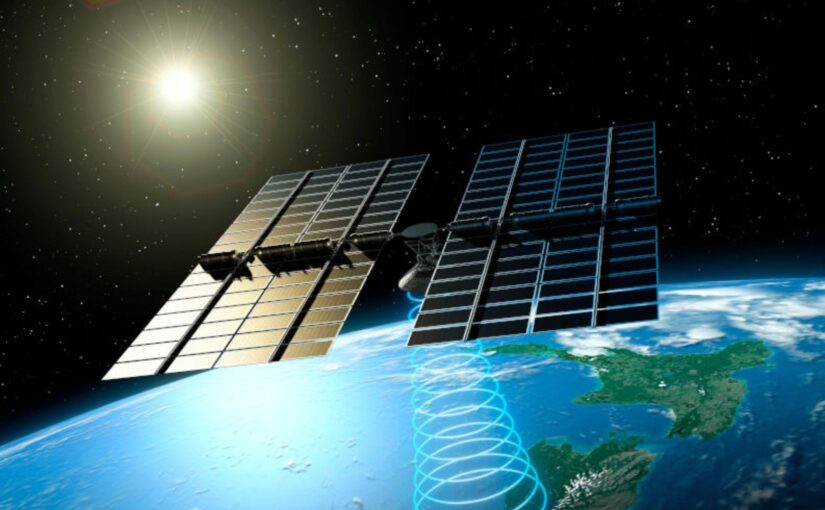
China’s solar space station: A game-changer in renewable energy

We are pleased to republish below an article by James Wood, a British-Australian technologist and geopolitical analyst based in China, about exciting developments being made by Chinese scientists in the realm of space-based solar power (SBSP), supplementing the article we posted several weeks ago, Science fiction or science reality: China makes impressive progress towards space-based solar power, and providing an Australian perspective.

Describing the technology in easy-to-understand terms, James writes: “Imagine a kilometre-wide solar array orbiting Earth, harvesting limitless, uninterrupted solar energy and beaming it back home, day and night, without the interference of clouds or darkness… Unlike Earth-based solar farms, which suffer from weather conditions and night-time dips, a solar station in space captures continuous, unfiltered solar radiation, potentially more efficient than anything on the ground. The energy is then converted into microwaves and beamed down to terrestrial receiving stations, where it is transformed back into electricity and integrated into the grid.”

The author notes that China’s “state-driven, centralised approach allows for massive co-ordination and rapid development, unlike the fragmented, slow-moving private sector initiatives in the US”. Meanwhile Australia, “despite its vast potential, has been lagging in both space-based technology and terrestrial renewable energy advancements”. This is attributed to inadequate infrastructure and a lack of long-term strategic planning.

In this as in many other fields, China’s socialist system is proving its superiority over capitalism in terms of moving human understanding and capacity forward.

This article originally appeared on Pearls and Irritations.

China is making the once sci-fi dream of space-based solar power a reality and leaving the West scrambling to keep up. Imagine a kilometre-wide solar array orbiting Earth, harvesting limitless, uninterrupted solar energy and beaming it back home, day and night, without the interference of clouds or darkness. The China Academy of Space Technology is spearheading this geostationary solar power station and with a 2028-2050 roadmap, Beijing is set to redefine the global energy game.

In 2028, China plans to launch a low Earth orbit test satellite generating 10 kilowatts (kW) to trial microwave power transmission. By 2030, a 1-megawatt (MW) station is expected to be deployed in geostationary orbit at 36,000 km, where it will be assembled in space before beaming power back to Earth. By 2035, the system aims to scale up to 10 MW, proving its potential for mass energy production. By 2050, the goal is to have a commercially operated solar power plant in space generating two gigawatts (GW) of electricity with an approximately one-kilometre-wide antenna and complex solar cell array assembled in space.

Unlike Earth-based solar farms, which suffer from weather conditions and night-time dips, a solar station in space captures continuous, unfiltered solar radiation, potentially more efficient than anything on the ground. The energy is then converted into microwaves and beamed down to terrestrial receiving stations, where it is transformed back into electricity and integrated into the grid. The Bishan testing facility in Chongqing, backed by $15 million in funding, is already fine-tuning the radio wave transmission technology needed to transmit solar energy from orbit to Earth.

Continue reading China’s solar space station: A game-changer in renewable energy