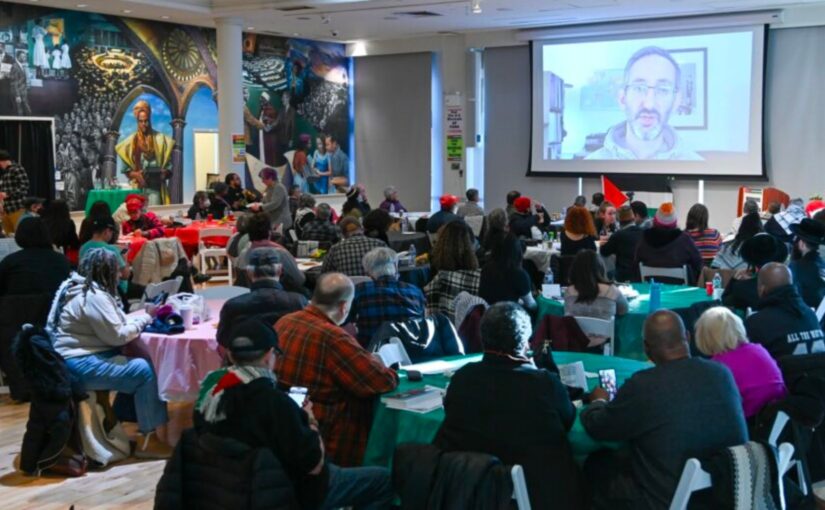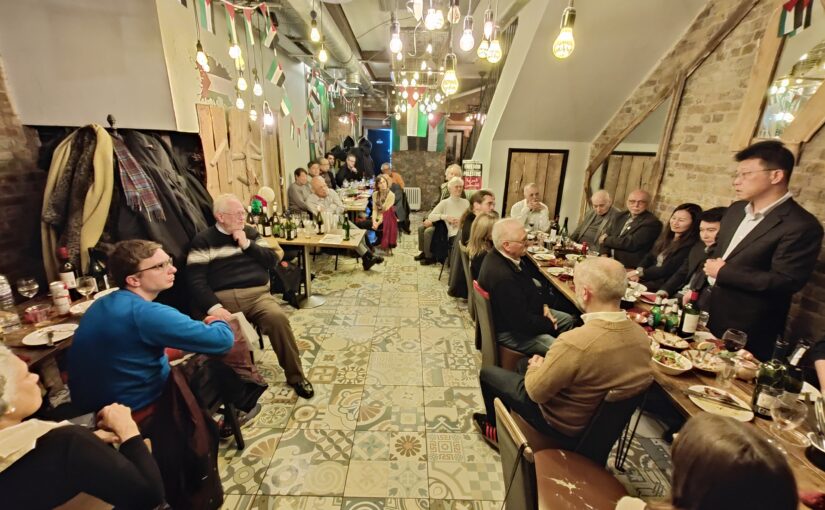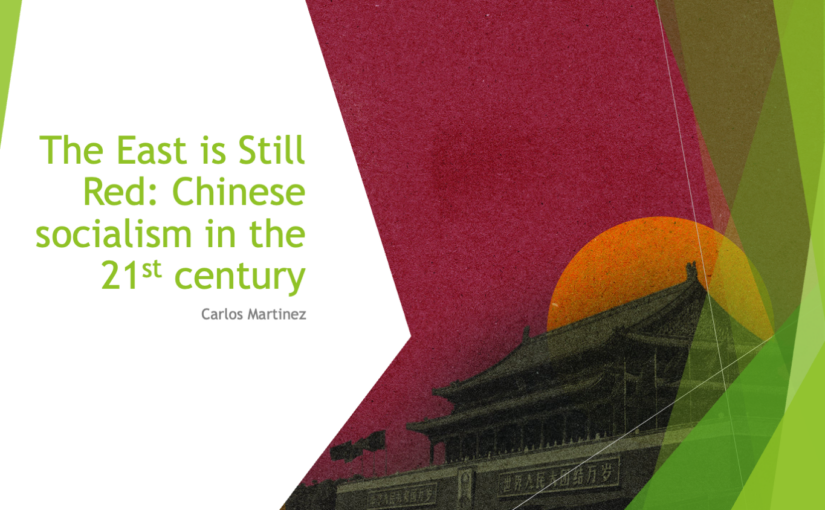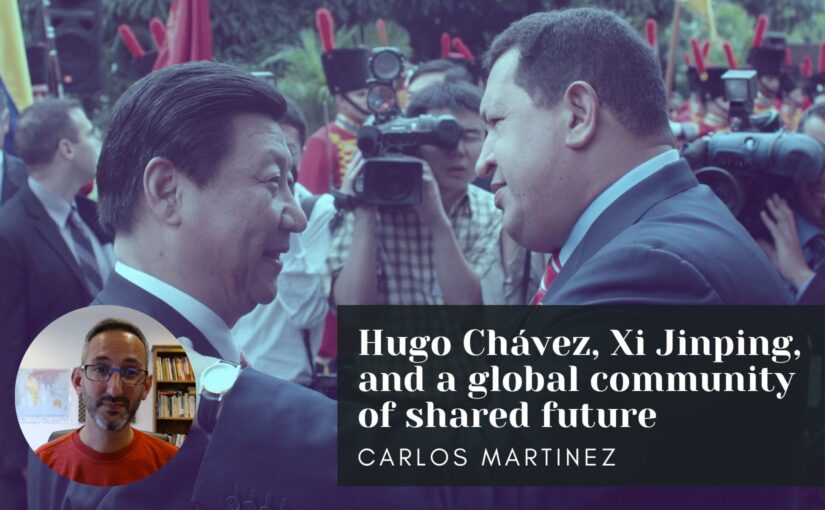
The following is the text of the presentation delivered by Carlos Martinez, co-editor of Friends of Socialist China, at a round-table discussion on Venezuela’s foreign policy in a changing world, held on 20 February 2024 at Bolivar Hall in London. The event was organised by the Ambassador of the Bolivarian Republic of Venezuela in the UK in coordination with the Venezuela Solidarity Campaign.
The speech discusses Hugo Chávez’s vision of a multipolar world, and explores how that vision overlaps with China’s strategy of pursuing a global community of shared future.
Other speakers at the event included Her Excellency Rocío Maneiro, Ambassador of the Bolivarian Republic of Venezuela in the UK; Francisco Domínguez, Secretary of the Venezuela Solidarity Campaign; Calvin Tucker, Campaigns Manager of the Morning Star; and Radhika Desai, Convenor of the International Manifesto Group.
Dear friends and comrades, thanks so much for inviting me to today’s important event.
And thank you in particular to Her Excellency compañera-embajadora Rocío Maneiro, who continues to do such a wonderful job representing her country and standing in solidarity with the progressive movement here in Britain and with the working class and oppressed peoples of the world.
Thanks also to the indefatigable comrade Francisco Domínguez for his hard work putting this event together.
I’m going to focus these brief remarks on the connection between Venezuela’s foreign policy and that of China.
As you’re all no doubt aware, Hugo Chávez had an extremely far-sighted worldview. While the Bolivarian Revolution has always aimed to have good relations with the US, its foreign policy has nonetheless been informed by the identification of that country as the principal enemy to sovereignty and to socialism, not just in Venezuela but throughout the world.
And of course the US’s consistently aggressive stance in relation to Venezuela – its campaign of sanctions, of coercion, of destabilisation – has only confirmed what Chávez and his comrades already knew.
Chávez saw Venezuela as part of a global movement challenging half a millennium of colonialism, imperialism and racism; a global movement that included the growing leftist and pro-sovereignty trend in Latin America and the Caribbean, but also China, Cuba, Russia, Libya (until NATO’s war of regime change in 2011), Syria, South Africa, Vietnam, Iran, the DPRK, Belarus and others.
This global movement seeks to put an end to the unipolar era of US hegemony, and to create a multipolar – or as Chávez called it, pluripolar – world, with multiple centres of power, in which countries and regions all have their role in global politics and in which no one power can impose its will on others.
Under the guidance of Hugo Chávez and then Nicolás Maduro, Venezuela has become one of the most prominent voices in support of this multipolar project.
Indeed, one of the slogans of Chávez’s 2012 presidential election campaign was: “to develop a new international geopolitics forming a multicentric and pluripolar world to achieve equilibrium in the universe and guarantee planetary peace.”
Continue reading Hugo Chávez, Xi Jinping, and a global community of shared future