China and Cuba stand together at UN

During his recent stay in New York, where he attended the United Nations Security Council high-level meeting on ‘Upholding the Purposes and Principles of the UN Charter and Strengthening the UN-centred International System’, called by China during its rotating presidency, along with the meeting of the Group of Friends of Global Governance, Chinese Foreign Minister Wang Yi also held numerous bilateral meetings with his counterparts who had also made special trips to join the meetings.

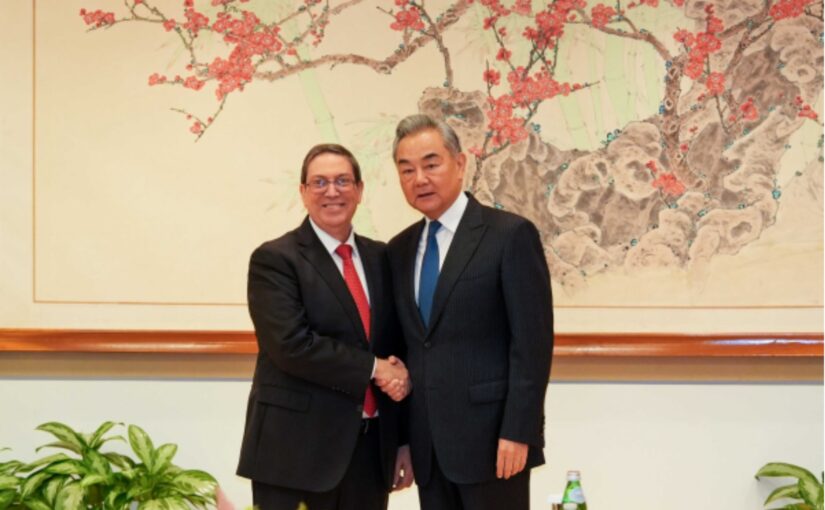
On May 27, Wang met with Cuban Foreign Minister Bruno Rodríguez Parrilla.

Having conveyed President Xi Jinping’s sincere greetings to Comrade Raúl Modesto Castro Ruz and President Miguel Díaz-Canel Bermúdez, Wang noted that the theme of the UN meeting has received wide response and support. To achieve its goal, it is essential to respect the sovereignty and independence of all countries and oppose all forms of power politics and bullying. The Cuban people, united as one, firmly safeguard their legitimate rights and interests, demonstrating a strong will to oppose external blockade and interference, which has earned the respect of the international community. China will continue to stand up for justice for Cuba, support the just cause of the Cuban people, and assist Cuba in its economic and social development.

Bruno Rodríguez Parrilla thanked China for inviting Cuba to the meeting, stating that the world today is facing turmoil and disorder. Only China is capable of convening such a meeting, building consensus among the international community, and safeguarding the legitimate rights and interests of the Global South. Cuba is experiencing its most severe situation since the revolution, the root cause of which is the US blockade and sanctions against Cuba. Cuba appreciates China’s firm support for its sovereignty and security, as well as the assistance and vocal support provided during difficult times. This fully demonstrates the special friendship between Cuba and China.

The previous day, Minister Rodríguez had addressed the Security Council meeting.

In his remarks, he acknowledged China’s leadership in convening the debate and linked the defence of the international order to the need to address conflicts and threats affecting global stability.

The Foreign Minister denounced US policy toward Cuba, which he described as a violation of international law and a threat to regional peace. He rejected the indictment against Army General Raúl Castro Ruz, considering it a politically motivated decision, and warned of its possible use as a pretext to justify military aggression against the island. He also noted that the energy blockade and the tightening of the embargo have serious humanitarian consequences for the Cuban population.

He reiterated that Cuba does not pose a threat to the United States and reaffirmed the country’s willingness to engage in bilateral dialogue on issues of common interest, always based on respect for sovereignty and non-interference. Finally, he called on the international community, Latin America and the Caribbean, the Global South, the UN Security Council, and the UN General Assembly to act to prevent a humanitarian catastrophe or military aggression against Cuba.

Continue reading China and Cuba stand together at UN

China turns the tables: the slow collapse of US sanctions power

US sanctions have long been a primary weapon of imperial coercion – designed, in Henry Kissinger’s chilling phrase, to “make the economy scream” until a target country submits. For decades, Cuba, Venezuela, Iran, the DPRK, Zimbabwe, Nicaragua and many others have lived under their crushing weight. Increasingly, however, this weapon is losing its edge.

In early May, Washington added five Chinese oil refineries to its Specially Designated Nationals list, accusing them of buying Iranian petroleum in defiance of US sanctions. China’s Ministry of Commerce responded by invoking the country’s 2021 Blocking Rules for the first time, declaring the sanctions an “improper extraterritorial application” of US law and ordering all Chinese entities to ignore them. Any bank or supplier that stops doing business with the five firms in compliance with US demands can now be sued for damages in Chinese courts.

In the following article, first published in the Morning Star, our co-editor Carlos Martinez situates this development in the wider context of Washington’s weaponisation of sanctions – and the construction of a legal counter-architecture by Beijing that, together with the parallel resistance of Russia and Iran, is bringing the era of unchallenged US economic coercion to an end.

In early May, the US sanctioned five Chinese oil refineries — four of them small independent operations known as “teapot” refineries — for allegedly purchasing Iranian petroleum in violation of Washington’s unilateral sanctions on Iran.

All five were added to the US Treasury Department’s Specially Designated Nationals (SDN) list, which bars them from accessing the US financial system and penalises any company that does business with them.

China’s Ministry of Commerce conducted an in-depth assessment of this action and concluded that it “constitutes improper extraterritorial application” of US law. It then ordered all Chinese companies, banks and other entities not to recognise, enforce or comply with the sanctions.

This was the first application of China’s 2021 Rules on Counteracting Unjustified Extraterritorial Application of Foreign Legislation and Other Measures, commonly known as the Blocking Rules.

Continue reading China turns the tables: the slow collapse of US sanctions power

China’s aid to Cuba: Solidarity against the US embargo in the time of Trump 2.0

The following article by Lee Siu Hin, originally published in Workers World, documents the scale and substance of China’s support for Cuba under the intensified pressure of Trump’s second term.

While the Trump regime tightens the screws on Cuba, China has been demonstrating its solidarity with the Cuban people in myriad ways, including sending food aid, restoring buses to the streets of Havana, and building solar power infrastructure designed to free Cuba from the energy stranglehold that forms the sharpest edge of the US blockade.

Since Trump returned to the White House last year, the embargo on Cuba has reached its most punishing levels. The US invasion of Venezuela in January, which severed Cuba’s oil supply lifeline, has compounded the crisis. Cuba faces food shortages, an energy emergency, and the continued denial of basic medical supplies – not through political or economic mismanagement (as the Western media would have you believe) but as a deliberate policy of economic warfare conducted by the US empire.

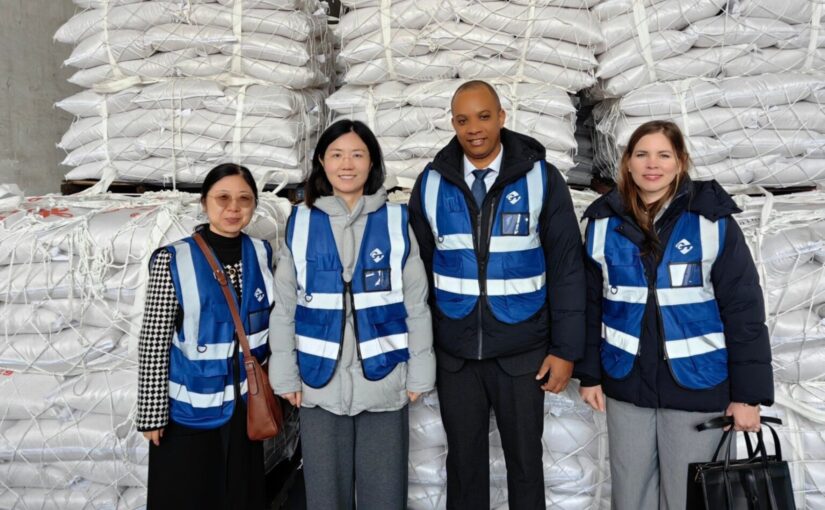
China’s response has been concrete and strategic. Ninety thousand tons of rice; emergency financial assistance of $80 million; medical equipment that Cuba cannot source elsewhere due to the embargo. The solar energy program being developed by the two countries is designed not merely to plug gaps but to structurally transform Cuba’s energy system so that it can enjoy energy sovereignty.

The economic aid provided by China constitutes a comprehensive, multi-pronged strategy, encompassing not only firm and robust political backing but also extensive, substantive assistance across vital sectors such as energy, food security and public welfare.

This is what solidarity looks like when it is not a gesture. Siu Hin concludes:

Everyone has a vital role to play in international solidarity. Western activists can also learn a great deal from the positive experience of the Global South, notably from China.

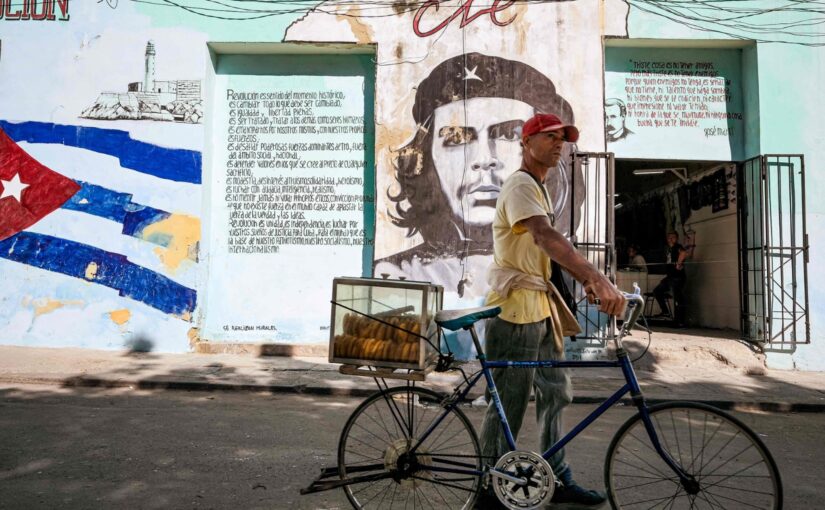
China has supported Cuba since its revolution in 1959. Shortly after, Che Guevara visited China in 1960 to secure comprehensive support for the newly born socialist island nation.

China played a critical role as a true friend in times of U.S. threat

For the past year, since Donald Trump returned to the White House in 2025, he has continued the imperialist policy of all-out blockade against Cuba — first during his initial term (2017–2021) and then under Biden (2021–2025). In response, China has offered timely and critical assistance to Cuba when it was needed most. The Chinese Foreign Ministry spokesperson declared on Jan. 27 that China “calls for immediate lifting of blockade and sanctions on Cuba. We will continue to support and assist Cuba.” (Spokesperson of Ministry of Foreign Affairs of China on X)

Continue reading China’s aid to Cuba: Solidarity against the US embargo in the time of Trump 2.0

BRICS laying the groundwork for a more balanced global financial system

In the following article, which was originally published in China Daily, Endalkachew Sime, a former Minister of Planning and Development in Ethiopia, who is currently studying for his PhD at Peking University, provides a balanced overview of the trend towards de-dollarisation and the role played by the BRICS+ cooperation mechanism.

He notes that it has emerged as a pivotal actor in this regard, adding: “This strategic shift seeks to reduce dependence on the US dollar in international trade, investments and monetary reserves.” But “far from being an antagonistic move against the United States, it represents a pragmatic effort by the BRICS nations to assert financial autonomy and protect their economies from external shocks.” The New Development Bank, established by the BRICS nations in 2015, represents a concrete institutional response to dollar dominance and China’s trade with such major partners as Russia and South Africa have seen significant shifts away from the ‘greenback’.

BRICS nations have also developed alternative payment systems to bypass traditional US-dominated infrastructure. China’s Cross-Border Interbank Payment System and Russia’s System for Transfer of Financial Messages offer alternatives to SWIFT, while India’s rupee-based trade settlement mechanism challenges the US dollar’s dominance in regional trade. These systems enhance financial sovereignty by providing secure, independent channels for international transactions.

Moreover, by diversifying their foreign exchange reserves into alternative currencies and assets – such as the euro, yen and gold – BRICS countries aim to enhance financial stability. Gold reserves have seen particularly dramatic increases.

Sime notes that: “Developing economies face significant risks when their financial systems are closely tied to the US dollar. Changes in US interest rates, quantitative easing, or other monetary policies can trigger capital flows, currency volatility, and economic instability in dollar-dependent economies. By reducing dollar dependence, Global South nations can insulate themselves from these external shocks and maintain greater control over their domestic economic policies. US sanctions have become a powerful tool of economic coercion, particularly against countries such as Russia, Iran and Venezuela. De-dollarisation efforts provide a mechanism for these nations to conduct international trade and finance outside the reach of US sanctions.”

He adds that the current global financial architecture disproportionately benefits developed economies, particularly the US. By creating alternative financial institutions and mechanisms, BRICS nations contribute to a more multipolar system where multiple currencies and financial architectures coexist. This evolution could lead to greater fairness and representation for developing economies in global financial governance.

However, he goes on to warn: “Despite these advances, challenges remain in establishing a fully integrated BRICS financial architecture. The heterogeneity of economic structures, political priorities, and developmental stages among member countries complicates coordination. Furthermore, the US dollar retains its dominance in global finance, and transitioning to alternative systems requires significant investment and institutional development.”

Nevertheless, he concludes: “By creating alternative financial institutions and instruments, BRICS nations are laying the groundwork for a more balanced global financial system. This shift could potentially reduce the effectiveness of the US’ politically motivated unilateral sanctions, enhance financial sovereignty for developing economies, and promote greater stability in international monetary relations… De-dollarisation represents not a threat to the global economic system but an opportunity to create a more resilient and equitable architecture that respects the sovereign economic interests of all nations. For the Global South, this movement is fundamentally about protecting domestic economies from external shocks, asserting financial autonomy, and participating in a more multipolar world order.”

The “BRICS Plus” grouping — Brazil, Russia, India, China, South Africa, Egypt, Ethiopia, Saudi Arabia, Iran, the United Arab Emirates and Indonesia — has emerged as a pivotal actor in the global movement toward de-dollarization. This strategic shift seeks to reduce dependence on the US dollar in international trade, investments and monetary reserves. Far from being an antagonistic move against the United States, it represents a pragmatic effort by the BRICS nations to assert financial autonomy and protect their economies from external shocks.

The US dollar accounted for about 58 percent of global foreign currency reserves and 88 percent of the daily foreign exchange market turnover as of 2023. However, this dominance creates vulnerabilities for countries whose economies are closely tied to its performance.

The New Development Bank, established in 2015 with an initial capital of $50 billion, represents a concrete institutional response to the dollar dominance. By 2023, the NDB had approved over $30 billion in funding for infrastructure and sustainable development projects across BRICS nations, with approximately 30 percent of these funds disbursed in nondollar currencies. Further, the Contingent Reserve Arrangement, a $100 billion financial safety net established in 2014, provides liquidity support in nondollar currencies during financial crises. This mechanism helps BRICS nations mitigate the risks associated with dollar volatility and potential capital flight.

Bilateral trade settlements have seen significant shifts away from the dollar. For instance, the share of the US dollar in Russia-China bilateral trade settlement plummeted from nearly 90 percent in 2015 to 46 percent in the first half of 2020, while the use of local currencies in India-Russia bilateral trade surged from 6 percent to 30 percent between 2014 and 2019. Similarly, the renminbi’s usage in South African trade grew by 65 percent in 2016 alone. These changes reflect a deliberate strategy to reduce exposure to dollar fluctuations and enhance trade stability.

Continue reading BRICS laying the groundwork for a more balanced global financial system

China, Russia and Iran condemn unlawful unilateral sanctions

Against a background of US President Donald Trump’s heightened threats to Iran, unmistakably contained in his recent letter to Iranian Supreme Leader Ayatollah Khamenei, ostensibly offering dialogue, and the aggravated threat of a general and all out war in West Asia, an important meeting, at Deputy Foreign Minister level, between China, Russia and Iran, was held in Beijing on March 14.

It was chaired by Deputy Foreign Minister Ma Zhaoxu of the People’s Republic of China, with participation of Deputy Foreign Minister Ryabkov Sergey Alexeevich of the Russian Federation and Deputy Foreign Minister Kazem Gharibabadi of the Islamic Republic of Iran.

The three countries engaged in in-depth discussions on the latest state of play with regard to the Iranian nuclear issue and the question of sanctions lifting and issued a joint statement.

The statement emphasised the necessity of terminating all unlawful unilateral sanctions and reiterated that political and diplomatic engagement and dialogue based on the principle of mutual respect remain the only viable and practical option. Relevant parties, they noted, should be committed to addressing the root cause of the current situation and abandoning sanction, pressure, or threat of force.

They also reiterated the importance of upholding the Treaty on the Non-proliferation of Nuclear Weapons (NPT) as the cornerstone of the international non-proliferation regime. China and Russia welcomed Iran’s reiteration that its nuclear programme is exclusively for peaceful purposes and not for development of nuclear weapons.

Iran and Russia commended China for its constructive role and for hosting the Beijing meeting. The three countries agreed to continue their close consultation and cooperation in the future. They also exchanged views on regional and international issues of common interest and agreed to maintain and strengthen their coordination in international organisations and multilateral arrangements such as BRICS and Shanghai Cooperation Organisation.

Also on March 14, Chinese Foreign Minister Wang Yi met with the Deputy Foreign Ministers of Russia and Iran.

Wang Yi said that over the past year or so, tensions in the Middle East have continued to escalate, with the regional security situation deteriorating significantly and hotspot issues emerging one after another. He added that there are enough issues in the Middle East, and all parties should focus on addressing the Israeli-Palestinian conflict, an unresolved historical injustice lingering since World War II, rather than creating new tensions or even crises.

The Chinese Foreign Minister put forward a five-point proposal on the Iranian nuclear issue, the first of which is to stay committed to peaceful settlement of disputes through political and diplomatic means and to oppose the use of force and illegal sanctions.

Meanwhile, in the days immediately before the meeting, China, Russia and Iran held joint naval drills in the Gulf of Oman. It was the fifth year for the three countries to hold such joint drills, which begun near the Iranian port of Chabahar.

The Chinese newspaper Global Times reported that the exercises featured three phases – an assembly and preparation phase, a maritime drill phase and a harbour summary phase.

The maritime drill phase featured such training courses as maritime target strikes, VBSS (visit, board, search and seizure), damage control, as well as joint search and rescue operations. Exercises included live-fire shooting of heavy machine guns against maritime targets, night live-fire shooting practices, light communication practices, rescuing simulated hijacked commercial ships and a fleet review.

Zhang Junshe, a Chinese military affairs expert, told Global Times that the exercises had boosted the three navies’ maritime combat capabilities through maritime strike and damage control trainings. Routine joint exercises among the three sides continuously enhance their navies’ interoperability, he added, and the three sides’ joint command and control as well as joint strike capabilities were displayed through the drill courses.

Qatar based Al Jazeera noted that the exercises had got underway at a time when Iran accused the US of bullying. It noted that the Russian Ministry of Defence reported that “the ships’ crews conducted daytime and nighttime fire from large-calibre machine guns and small arms at targets simulating unmanned boats and unmanned aerial vehicles of a mock enemy.”

Al Jazeera further noted that Iran’s Press TV reported that naval groups from Azerbaijan, South Africa, Oman, Kazakhstan, Pakistan, Qatar, Iraq, the United Arab Emirates and Sri Lanka also observed the drills.

The following articles were originally published on the website of the Chinese Foreign Ministry.

Joint Statement of the Beijing Meeting between China, Russia and Iran

March 14 (MFA) — The Beijing Meeting between China, Russia and Iran was successfully held on March 14, 2025. The Beijing Meeting was chaired by Deputy Foreign Minister Ma Zhaoxu of the People’s Republic of China, with participation of Deputy Foreign Minister Ryabkov Sergey Alexeevich of the Russian Federation and Deputy Foreign Minister Kazem Gharibabadi of the Islamic Republic of Iran.

China, Russia and Iran engaged in in-depth discussions on the latest state of play with regard to nuclear issue and sanctions lifting. The three countries emphasized on the necessity of terminating all unlawful unilateral sanctions.

Continue reading China, Russia and Iran condemn unlawful unilateral sanctions

Kazan Declaration: Strengthening multilateralism for just global development and security

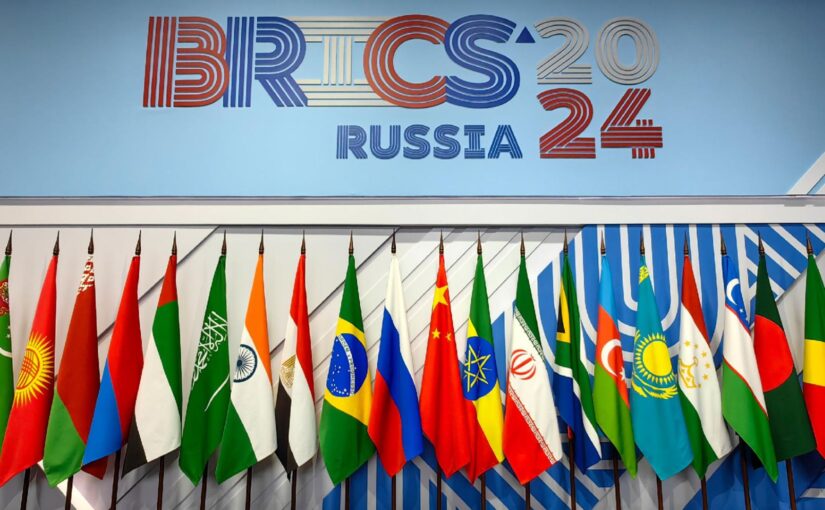
The BRICS cooperation mechanism of Emerging Markets and Developing Countries took a major step forward at its 16th Summit held in the Russian city of Kazan, October 22-24. Following decisions taken at last year’s summit in South Africa, a total of nine countries took part as full members for the first time, with Ethiopia, Egypt, the United Arab Emirates (UAE) and Iran joining Brazil, Russia, India, China and South Africa. A total of 36 countries and subnational entities participated at a high level, along with the leaders of six international organisations. A new category of Partner countries was formally initiated and is seen by many as a steppingstone to possible future full membership for the several dozen countries that have already expressed such an interest. An initial tranche of 13 countries were granted partner status in Kazan. The list of countries is yet to be officially released, but numerous reports have identified them as:

  • Algeria
  • Belarus
  • Bolivia
  • Cuba
  • Indonesia
  • Kazakhstan
  • Malaysia
  • Nigeria
  • Thailand
  • Türkiye
  • Uganda
  • Uzbekistan
  • Vietnam

On October 23, the nine full members adopted the Kazan Declaration, entitled ”Strengthening Multilateralism for Just Global Development and Security”. Running to a little over 13,300 words, and with 134 clauses, the declaration covers a vast number of subjects and itself reflects and reinforces the growing – although not without challenges – cohesiveness of key players in the Global South. It states:

“As we build upon 16 years of BRICS Summits, we further commit ourselves to strengthening cooperation in the expanded BRICS under the three pillars of political and security, economic and financial, cultural and people-to-people cooperation and to enhancing our strategic partnership for the benefit of our people through the promotion of peace, a more representative, fairer international order, a reinvigorated and reformed multilateral system, sustainable development and inclusive growth.”

It further notes the emergence of new centres of power, policy decision-making and economic growth, which can pave the way for a more equitable, just, democratic and balanced multipolar world order.

The declaration reaffirms support for a comprehensive reform of the United Nations, including its Security Council, with a view to making it more democratic, representative, effective and efficient, and to increase the representation of developing countries in the Council’s memberships so that it can adequately respond to prevailing global challenges and support the legitimate aspirations of emerging and developing countries from Africa, Asia and Latin America, including BRICS countries, to play a greater role in international affairs, in particular in the United Nations, including its Security Council, adding:

“We are deeply concerned about the disruptive effect of unlawful unilateral coercive measures, including illegal sanctions, on the world economy, international trade, and the achievement of the sustainable development goals. Such measures undermine the UN Charter, the multilateral trading system, the sustainable development and environmental agreements. They also negatively impact economic growth, energy, health and food security, exacerbating poverty and environmental challenges.”

It recalls the 2001 Durban Declaration and Programme of Action (DDPA) and the Outcome Document of the 2009 Durban Review Conference and acknowledges the need to intensify the fight against racism, racial discrimination, xenophobia and related intolerance as well as discrimination based on religion, faith or belief, and all their contemporary forms around the world including the alarming trends of rising hate speech, and acknowledge the annual UNGA resolution on “Combating glorification of Nazism, neo-Nazism, and other practices that contribute to fuelling contemporary forms of racism, racial discrimination, xenophobia and related intolerance”.

Continue reading Kazan Declaration: Strengthening multilateralism for just global development and security

Building on past achievements and forging ahead together toward a Community with a Shared Future

Chinese Foreign Ministry Wang Yi, who is also a member of the Political Bureau of the Communist Party of China (CPC) Central Committee, visited New York from September 22-28 to attend the United Nations (UN) Summit of the Future and the general debate of the 79th session of the UN General Assembly as the special representative of President Xi Jinping.

During that week, in a hectic program, Wang Yi also attended a number of events hosted by China, including to promote the Global Development Initiative and to enhance international cooperation on AI, as well as multilateral events, including the Security Council High Level Open Debate, the BRICS foreign ministers’ meeting and the G20 foreign ministers’ meeting. He also met with the UN Secretary-General, the President of the 79th session of the General Assembly, and with leaders and foreign ministers of numerous countries.

On September 28, Wang Yi addressed the General Assembly, taking as his theme, ‘Building on Past Achievements and Forging Ahead Together Toward a Community with a Shared Future for Humanity’. He stated that:

This institution, the United Nations, embodies the aspirations of people across the world for lasting peace and common prosperity, and bears witness to the glorious journey of the international community coming together in pursuit of progress. President Xi Jinping stressed on multiple occasions that the role of the UN should be strengthened, not weakened.

He went on to note that, in today’s world:

  • The security of all countries is tied together. In the face of various kinds of global challenges and risks, no one can stay immune or enjoy security alone. Countries need to be guided by a vision of common, comprehensive, cooperative and sustainable security. We should respect each other’s sovereignty and territorial integrity, take the legitimate security concerns of others seriously, and resolve disputes and differences through dialogue and consultation.
  • The development of all countries is deeply integrated. If the rich get richer while the poor remain poor, then “everyone is born equal” would become an empty slogan, and fairness and justice would be even more elusive. Achieving modernisation is a legitimate right of the people of all countries, not a prerogative of a few.
  • Each civilisation has its own strengths. President Xi Jinping pointed out that there is no such thing as a superior or inferior civilisation, and civilisations are different only in identity and location. We should respect the diversity of civilisations and strive to replace estrangement and clash of civilisations with exchanges and mutual learning.
  • Countries should all enjoy sovereign equality. As a large number of Global South nations are growing with a strong momentum, gone are the days when one or two major powers call the shots on everything. We should advocate an equal and orderly multipolar world, and see that all countries, regardless of their size, have their own place and role in the multipolar system.

Prior to addressing a number of the acute areas of conflict and tension at present, the Chinese Foreign Minister noted that:

Peace is the most precious thing in our world today. You may wonder if there is a path leading to peace. In fact, peace is the path. Without peace, development will not sustain; without peace, cooperation cannot happen. For the sake of peace, a single ray of hope is reason enough not to give up; the slightest chance deserves a hundredfold effort.

Besides outlining China’s positions on Ukraine and Afghanistan, Wang said:

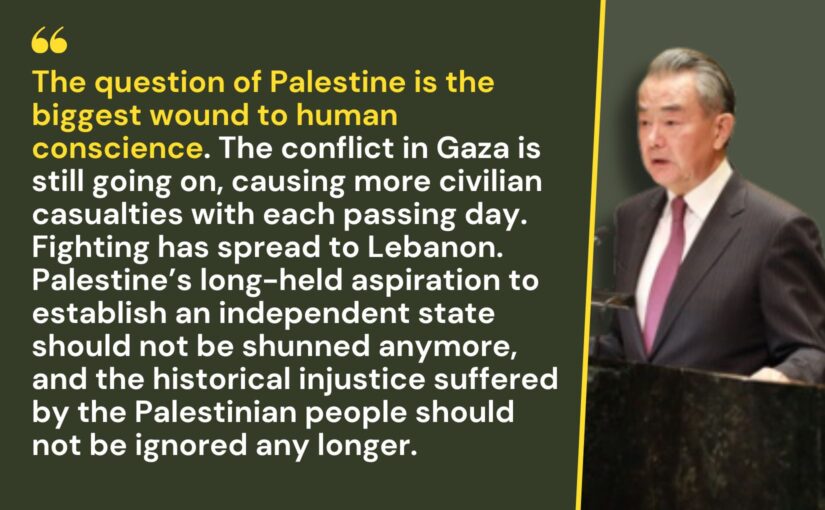
The question of Palestine is the biggest wound to human conscience. As we speak, the conflict in Gaza is still going on, causing more civilian casualties with each passing day. Fighting has spread to Lebanon; might must not take the place of justice. Palestine’s long-held aspiration to establish an independent state should not be shunned anymore, and the historical injustice suffered by the Palestinian people should not be ignored any longer.

China, he added, has always been a staunch supporter of the just cause of the Palestinian people to regain their legitimate national rights, and a staunch supporter of Palestine’s full UN membership. We have recently helped to bring about breakthroughs in intra-Palestine reconciliation and will continue to work in concert with like-minded countries for a comprehensive and just settlement of the question of Palestine and durable peace and security in the Middle East.

The Korean peninsula, he stressed, should not experience war again. The important thing is to make persistent effort for de-escalation, commit to seeking solutions through dialogue and consultation, realise a transition from the armistice to a peace mechanism, and safeguard peace and stability on the peninsula.

China, once a victim of foreign power bullying, knows full well the value of peace and the hard-won gains of development. In fact, China is the only major country that has written peaceful development into its constitution, and the only country among the five nuclear-weapon states [recognised by the nuclear Non-Proliferation Treaty (NPT)] to pledge no-first-use of nuclear weapons.

Wang further noted that:

In the face of unilateral, bullying acts such as sanctions and blockade, China firmly supports countries in defending their legitimate rights, upholding the equity and openness of the international system, making global development more coordinated and beneficial for all, and jointly opposing technology blockade and rejecting decoupling or severing supply chains. Sanctions and pressure will not bring monopolistic advantages. Suppressing and containing others will not solve problems at home. The right of people of all countries to pursue a better life should not be taken away. Here, we once again urge the United States to completely lift its blockade, sanctions and terrorism-related designation against Cuba.

In the face of aggravating ecological challenges, he said that China is firmly committed to a path of green, low-carbon and sustainable development. We will move from carbon peaking to carbon neutrality in the shortest time span in world history, contributing China’s efforts to harmonious coexistence between humanity and nature.

In conclusion, Wang Yi stated that:

Next year will mark the 80th anniversary of the victory of the World Anti-Fascist War and the founding of this very organisation. China stands ready to work with all countries to renew the founding purposes and mission of the UN, reaffirm our steadfast commitment to the UN Charter, advocate and practice true multilateralism, build a community with a shared future for humanity, and jointly usher in a better world.

The following is the full text of the Chinese Foreign Minister’s speech. It was originally published on the website of the Chinese Foreign Ministry.

Mr. President,
Colleagues,

Continue reading Building on past achievements and forging ahead together toward a Community with a Shared Future

UN expert: Unilateral sanctions against China are illegal

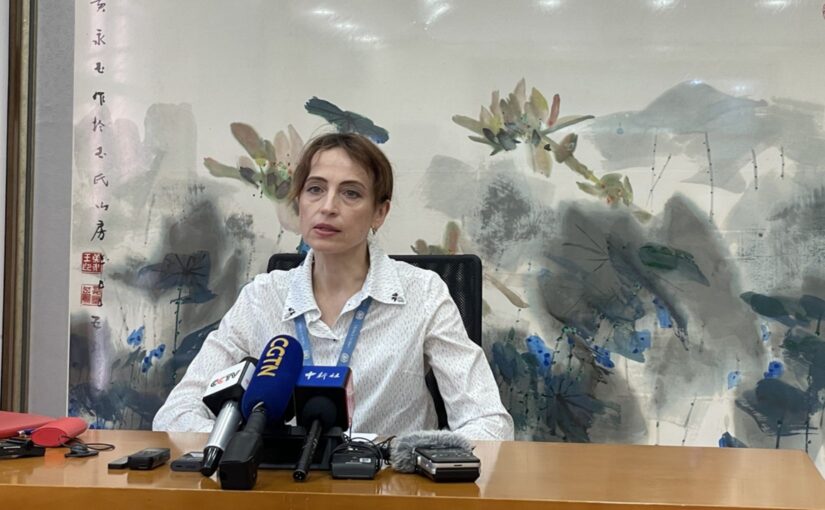
Following a 12-day official visit to China, Alena Douhan, UN Special Rapporteur on the negative impact of the unilateral coercive measures on the enjoyment of human rights, has called on the US and its allies to lift their sanctions against China, which she says are illegal and are having a negative impact on the human rights of the Chinese people.

These sanctions, imposed in 2017 and since significantly expanded (most notably with the 2021 ‘Uyghur Forced Labor Prevention Act’ (UFLPA)), target key sectors including agriculture, construction, trade, green technologies, energy, finance and telecommunications. The sanctions contravene the most fundamental legal norm by placing the burden of proof on the accused, rather than the accuser. The UFLPA in particular demands that Chinese companies prove that their products are not made with forced labour.

Douhan notes: “Access to justice and the fundamental principles of due process and the presumption of innocence are also seriously undermined by the listing and de-listing procedures, based on the rebuttable presumption of wrongfulness of everything with any nexus to Xinjiang or designated companies.”

A report on the UN Human Rights Council website cites Douhan as saying that a “decline in business activities and the significant loss of global markets either due to unilateral sanctions per se or due to over-compliance with such measures by foreign businesses and entities have led to job losses, with consequent disruptions in social protection schemes, by disproportionately affecting the most vulnerable, particularly in labour-intensive sectors, including women, older persons, and all those in informal employment”.

That is to say, not only are the sanctions illegal, they are also adversely affecting the human rights of precisely those people they are purportedly intended to protect.

Alena Douhan’s visit took her to Beijing, Urumqi, Shihezi, Changji, Hotan, and Shenzhen, and included meetings with representatives from national and local government institutions, NGOs, humanitarian actors, businesses, UN entities, academics, businesses and diplomats.

The full text of Douhan’s statement can be found here.

The report below is republished from Global Times.

Unilateral sanctions against China do not conform with a broad number of international legal norms, are introduced to apply pressure on the country, and can be qualified as unilateral coercive measures, the UN Special Rapporteur on unilateral coercive measures and human rights, Alena Douhan, said in a press conference in Beijing on Friday after a 12-day official visit to several cities in China, including Urumqi, Shihezi and Hotan in Northwest China’s Xinjiang Uygur Autonomous Region. 

Unilateral sanctions have been imposed against China since 2017 with mounting US pressure on Chinese technological companies and the imposition of export controls, designation of companies’ officials and the launch of administrative and civil charges. These have been followed by further sanctions and restrictions related to China’s Xinjiang region and Hong Kong Special Administrative Region, by expanding the list of targets to include key sectors, including in agriculture, construction, trade, green technologies, energy, finance, telecommunications and others. 

As the Special Rapporteur on the negative impact of unilateral coercive measures on the enjoyment of human rights, Douhan visited China from May 6 to 17 to gather firsthand information on the negative impact of unilateral sanctions in China. During her stay in China, she met representatives from national and local government institutions, non-governmental organizations, associations, humanitarian actors, businesses, UN entities, academia, businesses, as well as the diplomatic community. 

One day before the UN expert’s press conference, the US announced on Thursday that it was adding another 26 Chinese cotton traders or warehouse facilities to the entity list of the so-called Uyghur Forced Labor Prevention Act (UFLPA) that bars goods related to so-called forced labor in the Xinjiang region, Reuters reported.

The UFLPA, which was enacted in December 2021, has been widely criticized as “one of the most notorious laws of the 21st century.” It creates a “rebuttable presumption” that all goods partially or wholly produced in the Xinjiang region are “tainted by forced labor” and it requires corporations to prove with “clear and convincing evidence” that imports from the region are not made by forced labor. 

During the Friday meeting with media, Douhan noted that the establishment of a “rebuttable presumption” regarding the “wrongdoing” of companies with any connection to Xinjiang or designated entities, particularly those involved in recruiting individuals from ethnic minority groups in China or operating within designated sectors of the economy, places the burden of proof on business actors. 

It violates fundamental principles of international law, as well as provisions outlined in resolutions of the UN General Assembly and UN Human Rights Council and represents an attempt to supplement legal standards with a so-called rules-based order, said Douhan. 

Sanctions against broad sectors of the economy in China’s Xinjiang region coupled with those against large companies affect the overall economy of the region, result in disruptions of industrial and trade relations, adversely affect all those involved in the supply chains with a link to this region, even outside China, including third country employees, and consequently result in rising unemployment, particularly affecting the most vulnerable, said Douhan.

The UN expert also noted that minorities in the Xinjiang region would also be affected and those who have been lifted out of poverty may face the risk of falling into poverty once again in an interview with the Global Times on Friday. 

There are no legal grounds from the perspective of international law to impose sanctions against specific types of industry, cotton or high-tech area or batteries or any others. And “transparency does not exist” when companies submit explanations to related departments to protect their rights by judicial means, said Douhan. 

Douhan also called on sanctioning parties to lift and suspend all unilateral sanctions applied to China, Chinese nationals and companies without authorization from the UN Security Council. 

“I wish to reiterate the illegality of extraterritorial application of unilateral sanctions and I call on states, in particular sanctioning states, to effectively address over-compliance of businesses and other entities under their jurisdiction in order to mitigate or completely eliminate any adverse humanitarian impact,” said the expert.

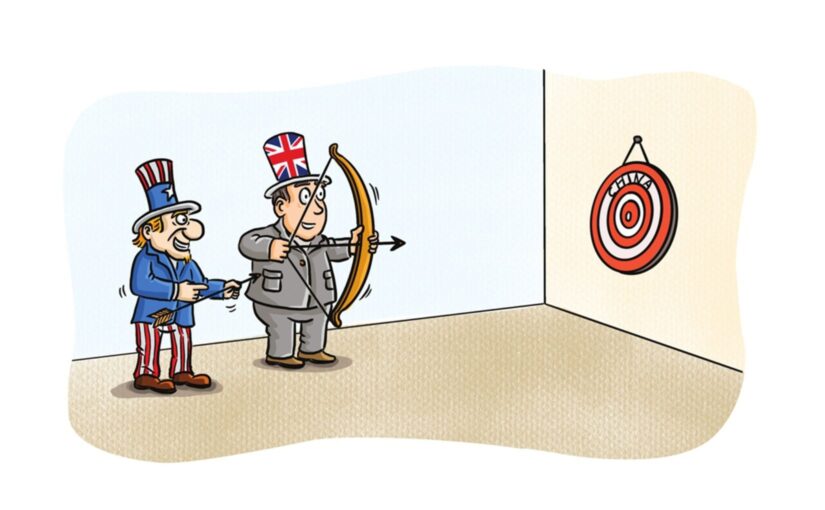
Britain issues malicious and groundless accusations about Chinese cyberattacks

On Monday 25 March 2024, in an obviously coordinated move, the US, UK, New Zealand and Australia expressed concerns over Chinese cyber-hacking, which they claim is being leveraged by the PRC government to gather data and undermine Western democracy. On top of their unproven allegations, these countries announced the introduction of new unilateral sanctions against China.

In Britain, the charges were led by members of the viscerally anti-China Inter-Parliamentary Alliance on China (IPAC), the ostensible purpose of which is to “counter the threats posed by the Chinese Communist Party to democratic principles”. IPAC lists its funding sources as the Open Society Foundations, the National Endowment for Democracy and the Taiwan Foundation for Democracy, which should give readers some idea as to its ideological orientation.

Unfortunately the two major British political parties are equally enthusiastic about waging a propaganda war against China. Writing in the Mirror of 25 March 2024, shadow foreign secretary David Lammy stated: “The wave of cyber-attacks against British politicians and the hack of 40 million voters’ data is chilling. One country, China, is responsible.” He promised that, if elected, “Labour will work with NATO allies to develop new measures designed to protect our democratic values, institutions and open societies.”

Chinese Foreign Ministry spokesperson Lin Jian responded that “China firmly opposes and combats all kinds of cyberattacks, and is committed to working with all countries, on the basis of mutual respect, equality and mutual benefit, to strengthen cooperation and jointly deal with the threats of cybersecurity through channels such as bilateral dialogue or judicial assistance.”

He further affirmed that “the evidence provided by the British side was inadequate and relevant conclusions lack professionalism”, and noted that the US, Britain and their allies have a long history of cyberattacks and espionage against China. He called on the US and Britain to “stop politicising cybersecurity issues, stop smearing China and imposing unilateral sanctions on China, and stop cyberattacks against China.”

A statement issued by the Chinese Embassy in the UK noted that “China has always adhered to the principle of non-interference in each other’s internal affairs”, adding drily that “whether the British government is good or bad, the British people will come to a conclusion sooner or later.”

An editorial in the Global Times pointed out that Britain’s shift away from a ‘golden era’ of relations with China towards a position of hostility coincides with a post-Brexit economic decline and corresponding increased dependence on the US. “It seems that the only way for Britain to secure its position in the ‘co-pilot’ seat is by closely aligning with the US and causing trouble for China.” Issuing slanders against China is simply an example of “deliberately stoking fear to advance their political agendas and achieve their political goals.”

A further Global Times report points to another incentive for Britain in painting China as a security threat: it paves the way for protectionism, for example in relation to Chinese-made electric vehicles and telecommunications infrastructure.

The Chinese Embassy statement and the two Global Times reports are reproduced below.

The Chinese Embassy in the UK issues statement to strongly condemn the UK side’s groundless accusation

On 25 March, the UK government made the groundless accusation that China had carried out cyberattacks against the UK, and announced sanctions on two Chinese individuals and one Chinese entity. In response to this, the Chinese Embassy in the UK issued a statement, strongly condemning the UK’s sinister action. The statement reads as follows:

The UK’s claim that China was responsible for malicious cyber campaigns targeting the UK is completely unfounded and constitutes malicious slander. We firmly oppose and strongly condemn this and have made a serious démarche to the UK side.

China is a major victim of cyberattacks. We have firmly fought and stopped all kinds of malicious cyber activities in accordance with the law, and have never encouraged, supported or condoned cyberattacks. The UK’s hype-up of the so-called “Chinese cyber attacks” without basis and the announcement of sanctions is outright political manipulation and malicious slander.

China has always adhered to the principle of non-interference in each other’s internal affairs. We have no interest or need to meddle in the UK’s internal affairs. Whether the British government is good or bad, the British people will come to a conclusion sooner or later.

The UK falsely accused China of attempting to interfere with UK democracy. This is nothing more than a publicity stunt. This is also a typical example of a thief crying “catch thief”.

China has always stood against illegal unilateral sanctions and will make a justified and necessary response to this.

We strongly urge the UK to immediately stop spreading false information about China, stop such self-staged, anti-China farces, and refrain from going further down the wrong path that leads only to failure.

Continue reading Britain issues malicious and groundless accusations about Chinese cyberattacks

Hands off China! Full solidarity with Palestine!

The following article by Sara Flounders, based on a talk given at our event Peace delegates report back from China: Building solidarity and opposing the New Cold War, calls for a joined-up anti-imperialism, positing that “the best way to oppose the new Cold War with China is to be the most militant opponent of every US war.”

Sara observes that the events of 7 October 2023 “opened a new chapter in the worldwide class war”. US imperialism is backing Israel to the hilt, desperate to protect its interests in the region – part of defending and expanding US global hegemony. “That means Palestine fights for all of us”, and those that oppose the US-led program to encircle and contain China should also stand with the people of Palestine.

Further, we should be standing firmly against the US’s unilateral sanctions, which are being used to undermine and destabilise a total of 40 countries currently.

The US and its allies are also engaged in a proxy war against Russia in Ukraine. The over-arching strategy is to “impose regime change on Russia, which would be a key step to their next move — against China.”

The basic dynamic in geopolitics today is the contest between a moribund imperialism and a rising multipolarity. As Sara writes, “China’s very existence as a prosperous, developing country confirms that humanity has another choice. The developing world, the Global South, looks to China — not to U.S. imperialism. That is a threat to imperialism.”

Sara concludes by calling on our movement to unite behind the slogans: “Hands off China! Full solidarity with Palestine!”

This article appeared first in Workers World.

With U.S. wars coming thick and fast, the best way to oppose the new Cold War with China is to be the most militant opponent of every U.S. war.

If Israel succeeds in crushing Palestinian resistance, based on U.S. financial, political and military support, then U.S. imperialism is stronger on a world scale. That means Palestine fights for all of us. Palestine’s resistance has ignited a global resistance.

Before October 7, Israel, after 75 years of U.S. backing, seemed all powerful. Now the Israeli military has been frustrated at every turn by the indomitable spirit of Palestinian resistance. The Israelis face ambushes without end.

There is a sea change in the U.S. working class. For the first time, a majority of the population supports Palestine. There is sharp opposition to U.S. policy, shown by mass marches, shutdowns, walkouts. Let’s build on this global outrage over the U.S. role as the “enabler” of this genocide!

Global support for Palestine

On a world scale, people side with Palestine, whose resistance is our resistance. The liberation of Palestine is an important step in the liberation of humanity.

October 7 opened a new chapter in the worldwide class war. The Israeli regime’s genocidal crimes against the people of Gaza demand our international solidarity.

Faced with an unwinnable quagmire, the U.S. and Israel have expanded this war. Just this week, they bombed Muslims in Syria, Iraq and Yemen. Three days ago, they blew up two main natural gas pipelines in Iran, leaving millions of Iranians without heat and cooking fuel in winter. This is the way the U.S. and Israel fight wars — they target essential civilian infrastructure.

The U.S. and NATO countries cut off all food, medical care and schools to all Palestinians — even in Jordan and Lebanon, and on the West Bank, by cutting off funding to UNRWA [United Nations Relief and Works Agency for Palestine Refugees in the Near East].

I raise all of this, because the U.S. media and politicians claim they want to protect Uyghur Muslims in Xinjiang. The sheer hypocrisy of this claim is blatant. Yet it is the basis of the sanctions! This false charge is a big weapon in the war on China and in lining up and demanding compliance of all U.S. allies against China.

Thousands of Volkswagen, Audi, and Porsche cars are impounded on ships at U.S. ports, just because they include a small Chinese electronic part. These German auto corporations are told they must pay U.S. fines, remove the offending part and agree to U.S. charges against China regarding Xinjiang.

Bales of clothing made in Vietnam and Malaysia go through isotopic testing at U.S. Customs. If even a thread of cotton comes from Xinjiang, the clothing is destroyed. This is because the U.S. authorities allege there is slave labor in Xinjiang — even though Xinjiang’s cotton industry is fully mechanized.

Anti-war activists need to militantly oppose the wanton use of economic sanctions, which are used against not only China but a total of 40 countries, inhabited by one-third of the world’s population. Applying sanctions is a powerful weapon of economic destabilization.

However, this is a double-edged sword. Enforcement of these sanctions now widens U.S. isolation. They intensify trade wars with Washington’s imperialist “partners” — or are they better called imperialist rivals?

Much to the frustration of U.S. imperialism, sanctioned countries are finding new roads to cooperation and trade.

Continue reading Hands off China! Full solidarity with Palestine!

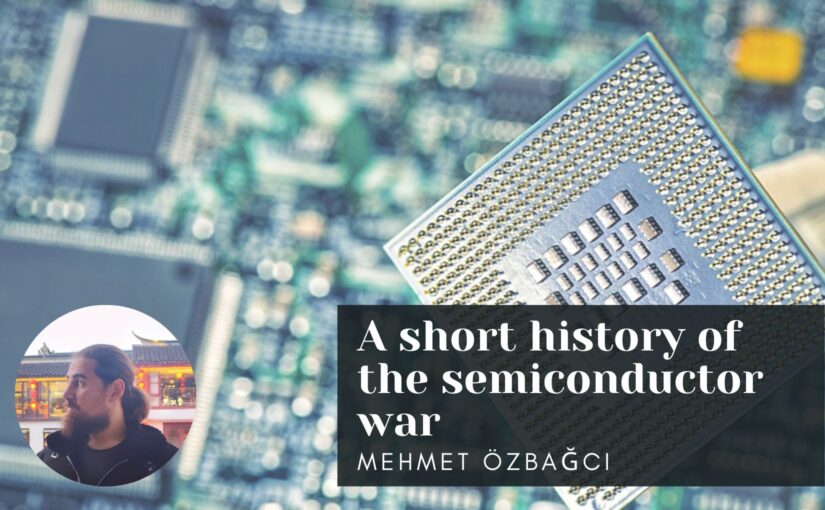
A short history of the semiconductor war

The following article, written for Friends of Socialist China by Mehmet Özbağcı, provides a brief history of the semiconductor industry, followed by a description of the ongoing ‘chip war’ initiated by the US in 2018.

Mehmet explains that the US is attempting to use its dominance of the semiconductor industry – particularly advanced chip design – to prevent China from developing its own semiconductor infrastructure and thereby impede China’s progress in advanced manufacture, artificial intelligence and modern military technology.

However, the US’s strategy – based primarily around sanctions – is likely to fail. The nature of China’s economic system is such that it can direct enormous resources to critical projects, and China has already made significant progress on domestic semiconductor design and production.

Mehmet concludes that “the US’s attempts to suppress China’s progress in semiconductors have been unsuccessful. The supply problems created by sanctions and the restriction on Chinese researchers’ access to new technologies have led the state, the private sector and academia to unite and work together towards the goal of technological self-reliance. It seems that China has not only developed short-term solutions to US sanctions, but has also paved the way to disrupt US control over semiconductors in the long term.”

Mehmet Özbağcı is a Turkish socialist currently studying towards a Master’s degree in Shanghai.

Throughout the industrialised world, steel was the peak of production technologies and the heart of all economic activities from the beginning of the 19th century to the second half of the 20th century. Machines that drove the industrial revolution, steamships and trains that shaped transportation and global trade, cannons, tanks and planes that changed the face of modern war… All of these were the result of steel production that became more widespread and efficient day by day.

The importance of steel began to decline from the second half of the 20th century for two reasons. First, technological advances and maturation of the production process reduced the strategic significance of the sector; and second, the emergence of nuclear weapons made direct war between great powers difficult and made steel, the raw material of conventional weapons, less important.

Towards the end of the 20th century, a new technology began to make different economic sectors (including transportation, communication and military) more and more dependent on itself. This technology was semiconductors, the basic building block of digital transformation. The increase in the processing capacity of semiconductors and the cheapening of their production led to the filling of every area of daily life and economy with digital technologies. (MILLER:2022)

The direct sales of semiconductors amounted to $515 billion in 2023, accounting for approximately 3.5 percent of global GDP. The main drivers of semiconductor demand are smart devices, computers, automotive, industrial technologies, and government services. Considering that semiconductors are vital for the existence and development of those technologies, it can be confidently stated that the impact of semiconductors on the global economy goes far beyond their share in global GDP: According to some calculations, the annual contribution of semiconductors to the global economy between 1995 and 2015 is more than $3 trillion. (SIA:2024)

Like steel, semiconductors also transcend the economic and social sphere and become decisive in the military field: air defence systems, drones, modern missile batteries, electronic warfare systems and surveillance technologies cannot be produced without semiconductors. But the military importance of semiconductors goes far beyond their current uses. According to many military analysts, artificial intelligence (AI) applications and autonomous weapon technologies, which will completely change the face of the battlefield, depend on access to the latest technology semiconductors. (Gargeyas:2022)

The importance of semiconductors has placed them at the centre of China-US rivalry. The aim of this article is to examine the mutual moves of these two actors in the process following 2018 and to list the factors that could be decisive in the semiconductor competition based on them.

United States: protectionist technology leader

The US, which is the birthplace of semiconductor technology, is the leader of the sector with a 48 percent share. Semiconductors are the US’s fourth largest export item. But this leadership does not stem from direct production. Semiconductor production is largely concentrated in East Asia and especially in the island of Taiwan. The US market share stems from its specialisation in semiconductor design and the licences it has in the sector: The copyrights of the main semiconductor architectures and the technologies that produce them belong to the US. (SIA:2024, MILLER:2022)

The US has considered its de facto monopoly on semiconductor technologies an important part of its national security long before 2018. Semiconductor manufacturers were also included in the Wassenaar Arrangement on export control for critical military technologies for American interests in 1996. (ACO:2022)

US protectionism specifically targeted China’s attempts to establish a semiconductor production substructure in 2018: the Trump administration banned the export of various technologies of critical importance for semiconductor production to China, claiming that China’s state incentives led to unfair competition. (MILLER:2022)

In 2020, Chinese communication giant Huawei and China’s largest semiconductor manufacturer SMIC’s access to US suppliers and technologies was effectively cut off. This move was justified on the basis of US national security interests and the relations of those companies with the PLA. (MILLER:2022)

Continue reading A short history of the semiconductor war

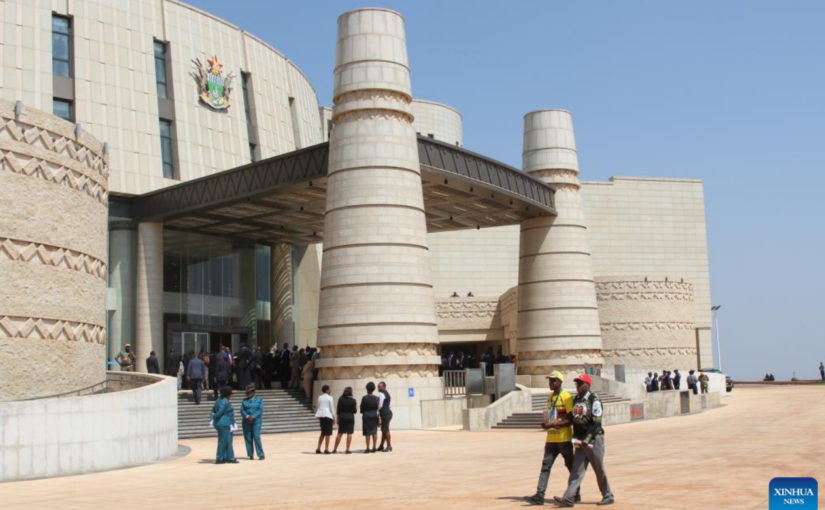
China hands over new parliament building to Zimbabwe

On Thursday October 26, the Chinese government handed over to Zimbabwe a new parliament building that was constructed and funded by China. The building, which photographs show to have been built in a distinct Zimbabwean national style, was handed over to President Emmerson Mnangagwa at a ceremony attended by government officials, diplomats, Chinese embassy officials, and others.

Speaking at the ceremony, President Mnangagwa said that the building is a pivot point around which a new administrative capital will be built.

“The new parliament building, which stands as one of the most magnificent and modern buildings in our country, signifies the excellent relations that exist between Zimbabwe and the People’s Republic of China,” he added.

These excellent relations date back to the Zimbabwean people’s armed struggle to overthrow the racist and colonial regime and win national independence. China fully supported that struggle. President Mnangagwa himself was one of those who were trained in guerilla warfare in China.

The timing of the handover of the parliament building was very apposite as it came the day after Anti-Sanctions Day. October 25 was designated as Anti-Sanctions Day by the 16-member Southern African Development Community (SADC) in response to the sanctions placed on Zimbabwe, and other anti-imperialist, independent countries, by leading imperialist powers such as the United States and Britain. According to Zimbabwean Vice-President Constantino Chiwenga, addressing an Anti-Sanctions Day rally in the capital, Harare:

“Since 2001, we estimate that Zimbabwe has lost or missed over 150 billion US dollars through frozen assets, trade embargoes, export and investment restrictions from potential bilateral donor support, development loans, the International Monetary Fund and World Bank balance of payment support, and commercial loans.” 

A meeting was also held in New York to express solidarity with the Zimbabwean people on this occasion. It was organised by the December 12 Movement (D12), a revolutionary nationalist organisation that has maintained close ties with Zimbabwe and its ruling ZANU-PF party for many years. While three members of D12 were in Zimbabwe to take part in the anti-sanctions activities there, veteran member Colette Pean told the New York gathering that settlers had stolen 86% of Zimbabwe’s land. Despite the sanctions, Zimbabwe has built hydroelectric dams and shared development projects equally among its 10 provinces.

US and other capitalists now want to grab Zimbabwe’s large lithium reserves, vital to making batteries for electric cars. But December 12th Movement member Vinson Verdree said Zimbabwe won’t let its lithium be stolen. The country will build a battery plant and other facilities to process the raw material.

The timing of China’s handover of the new parliament to Zimbabwe therefore underlines its utter rejection of universal sanctions.

This was also made clear in the Chinese Foreign Ministry’s regular press conference on October 25. The Global Times newspaper asked spokesperson Mao Ning:

“During the General Debate of the United Nations General Assembly this year, leaders of many African countries condemned Western countries for abusing sanctions and interfering in internal affairs of African countries. Today, October 25, is the Anti-Sanctions Day declared by the Southern African Development Community (SADC). African countries have called on the West to lift illegal sanctions on Zimbabwe as soon as possible. What’s China’s comment?”

She replied: “The 39th SADC Summit held in 2019 named October 25 as the Anti-Sanctions Day and called on the US and some other Western countries and organisations to remove sanctions on Zimbabwe. Today, on the occasion of the fifth Anti-Sanctions Day, we noted that multiple African countries have once again strongly called for lifting the sanctions. China supports that.

“The unlawful sanctions of the US and some Western countries on Zimbabwe, which have lasted for over two decades, have seriously violated the country’s sovereignty, infringed upon the development right of the Zimbabwean people, and disrupted the international political and economic order and the global governance system. 

“China, as always, firmly supports Zimbabwe in opposing external interference and keeping to its own development path. We once again urge the few countries and organisations to listen to the international call for justice, lift the unlawful sanctions on Zimbabwe as soon as possible, take responsible and concrete steps to help the country develop its economy and improve people’s wellbeing, and play a constructive role in promoting world peace and development.”

The following articles were originally published by the Xinhua News Agency and the US publication Struggle/La Lucha.

China hands over Zimbabwe’s new parliament building

HARARE, Oct. 26 (Xinhua) — The Chinese government on Thursday handed over to Zimbabwe a new parliament building that was constructed and funded by China through a grant.

Tang Wenhong, vice chairman of China International Development Cooperation Agency (CIDCA) and head of a visiting Chinese delegation, officially handed over the majestic building to Zimbabwean President Emmerson Mnangagwa at a ceremony attended by government officials, diplomats, and Chinese embassy officials, among others.

The new parliament building, with a combined floor area of 33,000 square meters, is a pivot point around which a new administrative capital will be built, said Mnangagwa in his address at the ceremony.

“The new parliament building, which stands as one of the most magnificent and modern buildings in our country, signifies the excellent relations that exist between Zimbabwe and the People’s Republic of China. The attention to detail and high standards of workmanship exhibited in this project are indeed commendable,” Mnangagwa said.

Mnangagwa said Zimbabwe recognizes the development milestones achieved by China and its quest for global peace and a shared future for mankind.

Tang, in his address at the ceremony, said the project is a vivid manifestation of the cooperation between Zimbabwe and China.

Both sides have achieved fruitful results in practical cooperation in infrastructure, agriculture, health, education and other fields, setting a model for South-South cooperation, Tang said. 

Continue reading China hands over new parliament building to Zimbabwe

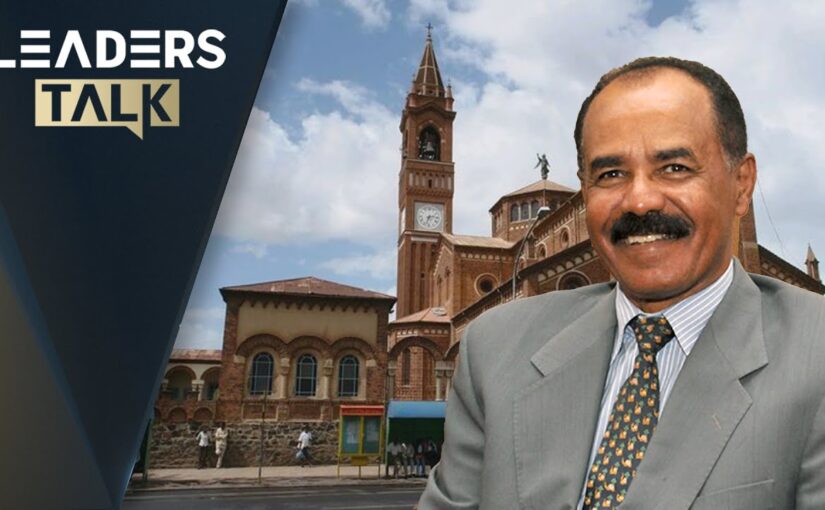
Video interview with Eritrean President Isaias Afwerki

In this edition of the CGTN series Leaders Talk, Zou Yun interviews Eritrean President Isaias Afwerki during the latter’s recent state visit to China.

Speaking on the day after his talks with Chinese President Xi Jinping, and on the eve of the 30th anniversary of the counties’ diplomatic relations, which were established on the day that Eritrea proclaimed its independence, President Afwerki situated the bilateral relationship within what he described as the broader context of the historic mission of humanity. China had immediately stood on the side of the right of the Eritrean people to independence. Independence is the foundation of any international relationship. China, he said, stands on the side of the people of the world. And Eritrea, in solidarity with China, continues to uphold a mission for humanity.

The interview discussed the recent fallout from the conflict in Sudan, where Eritrea had assisted Chinese people who were being evacuated from the war-struck country, while China had also helped Eritrean people to leave Sudan. The Eritrean president described this as “our commitment to our common cause”. In  words that should shame British government ministers, he described how Eritrea had opened its borders to refugees – “No visa. No permissions. Everything is open for saving human lives.”

There was a need, Afwerki said, to create a new world order. No people can survive without solidarity and what China has achieved, both domestically and internationally, is very attractive to people around the world.

Saying that the future is bright, the Eritrean leader was of the view that hegemonism “is no longer the rule of the game” because of what China has achieved. 

Turning to the sanctions imposed on his country by the United States and some other countries, Afwerki described them as the product of a sick mind. Such sanctions, he said, are imposed on all those who defend their independence and sovereignty. Sanctions have inflicted tremendous damage on Eritrea and its development, but they have also taught a powerful lesson with regard to the struggle that needs to be waged to build a nation and have made the Eritrean people more determined to continue that struggle.

Zou Yun referred to President Afwerki as having a “special bond” with China. Over 50 years ago, at the age of 20, he came to China and spent two years in military and political training at the dawn of the Eritrean revolution. Questioned on this period, he said that he learned so much in a short time and what he had learned had changed lives. The main lesson, he said, was the commitment of the country’s leaders and the Communist Party to the people. This has provided a model of success for everyone. China had been considered a backward country by others, but now it is reshaping the global order.

The full interview with President Isaias Afwerki is embedded below.

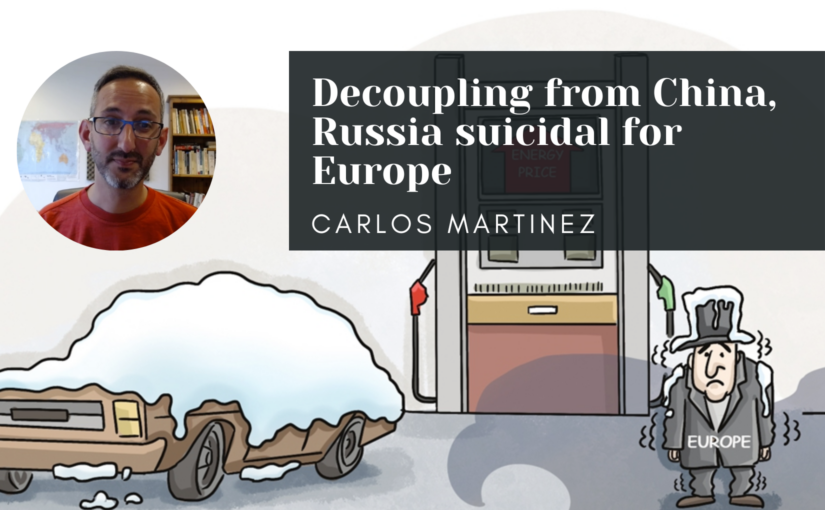
Decoupling from China, Russia suicidal for Europe

This article by Friends of Socialist China co-editor Carlos Martinez, originally published in Global Times, discusses the record of the Biden administration in ramping up Cold War hostilities against China and Russia, and its attempts to get Europe on board with its strategy for protecting US hegemony. Carlos points out that “Anti-Russia and anti-China positions are harming the people of Europe”: sanctions on China’s semiconductor and solar energy industries are utterly self-defeating, and sanctions on Russian energy are feeding directly into a very serious cost of living crisis. He concludes that “the countries of Europe would be well advised to exercise foreign policy independence and to make decisions based on the needs of their own populations, which are calling out for peace, prosperity and a sustainable future.”

When Joe Biden was elected in November 2020, many around the world were hoping for a change of course in the US’ reckless new Cold War.

US-China relations have always been complex and difficult; yet from the early 1970s onward, the trajectory had been toward deepening economic cooperation and a nuanced handling of the contradictions immanent in the relationship. Even with the Obama-Clinton “Pivot to Asia,” which signaled the US’ shift in geostrategic focus toward China containment, there was still significant and productive cooperation between the two countries – most notably in the drafting of the Paris Agreement.

Donald Trump came to power with a promise to stop China “raping” the US economy. Blaming China soon became the new magic wand for explaining away the problems of US capitalism without having to deal with any of the real underlying causes of American decline. Singaporean academic and former diplomat Kishore Mahbubani noted that, rather than blaming China for everything, living standards in the US might improve if America stopped fighting unnecessary foreign wars and used its resources to improve the well-being of its people.

The Trump team initiated a trade war, imposed a ban on Huawei, and sought to ban TikTok and WeChat. They aimed to generate mass anti-China sentiment by engaging in flagrant racism, most infamously blaming the coronavirus pandemic on China. They introduced sanctions and issued disgraceful slanders. So it was assumed that surely, things would only get better under Biden.

Continue reading Decoupling from China, Russia suicidal for Europe

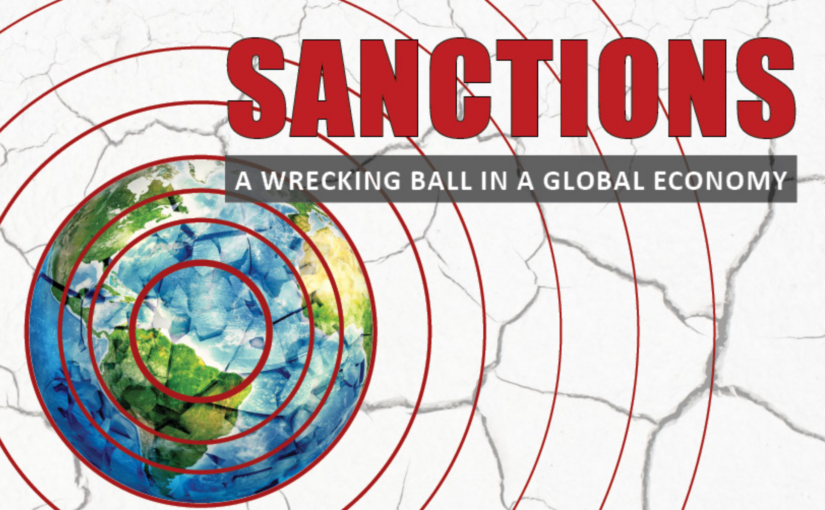
Book launch: Sanctions – A Wrecking Ball in a Global Economy (10 December)

Sanctions, the illegal unilateral coercive measures imposed on a third of humanity by the US and its allies, are a form of warfare and an ever more contested means of enforcing the dominance of the west on the majority of the world’s peoples. In fact, sanctions are boomeranging on the US bloc with inflation causing hardship at home and US dollar dominance being challenged. However, by far the greatest burden so is borne by some 40 countries targeted by the lethal sanctions, with the impacts ever more punishing.

We are proud to co-sponsor this webinar launching the new SanctionsKill book Sanctions: A Wrecking Ball in a Global Economy (to which we have contributed a chapter: Sanctions in the New Cold War on China).

  • DATE: Saturday 10 December 2022
  • TIME: 1pm US Eastern / 10am US Pacific / 6pm Britain

Speakers include:

  • Sara Flounders, International Action Center
  • Ajamu Baraka, Black Alliance for Peace
  • Carlos Martinez, International Manifesto Group
  • Lee Siu Hin, China-US Solidarity Network
  • Judy Bello, United National Antiwar Coalition, Syria Solidarity Movement
  • Erica Jung, Nodutdol Korean Community Development
  • Ann Garrison, Pacifica Radio Reporter and Black Agenda Report
  • Rick Sterling, Task Force on the Americas

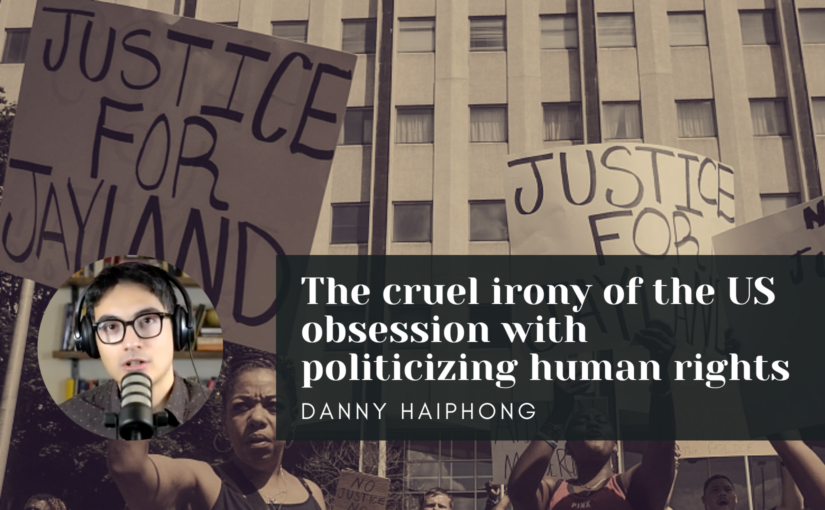
The cruel irony of the US obsession with politicizing human rights

Co-editor of Friends of Socialist China Danny Haiphong explains why the US’s obsession with politicizing human rights against China is both baseless in substance and a deflection from its own heinous human rights record in all areas of economic, social, and political development. This article was originally published on CGTN.

The 50th session of the United Nations Human Rights Council (UNHRC) has entered its last week of deliberation. This particular session of the UNHRC saw the United States immediately politicize the issue of human rights by signing a statement from the Kingdom of the Netherlands and 46 other countries condemning China. The letter expressed “grave” concern over the human rights situation in China, listing the popular talking points in the West regarding the Xinjiang Uygur Autonomous Region, Hong Kong Special Administrative Region, and the Tibet Autonomous Region. 

China’s Permanent Representative to the UN Office at Geneva Chen Xu said that “disinformation has become rampant, which seriously runs counter to the original purpose of the Human Rights Council.” Cuba made a joint statement on behalf of 70 countries, stating that “the affairs of Xinjiang, Hong Kong and Tibet are China’s internal affairs.”

The U.S.’s politicization of human rights against China is ironic in a cruel way. Washington refuses to acknowledge the mountain of evidence proving that its allegations against China are illegitimate in the eyes of the rest of the world. The Organization of Islamic Cooperation (OIC) sent a delegation to China and expressed satisfaction with its treatment of Muslims, including Uygurs, in a resolution on their findings. The OIC includes 57 member states and a population of near two-billion people. In 2020, Cuba made a statement on behalf of 45 countries that praised China’s counterterrorism and deradicalization policies in Xinjiang.

Continue reading The cruel irony of the US obsession with politicizing human rights

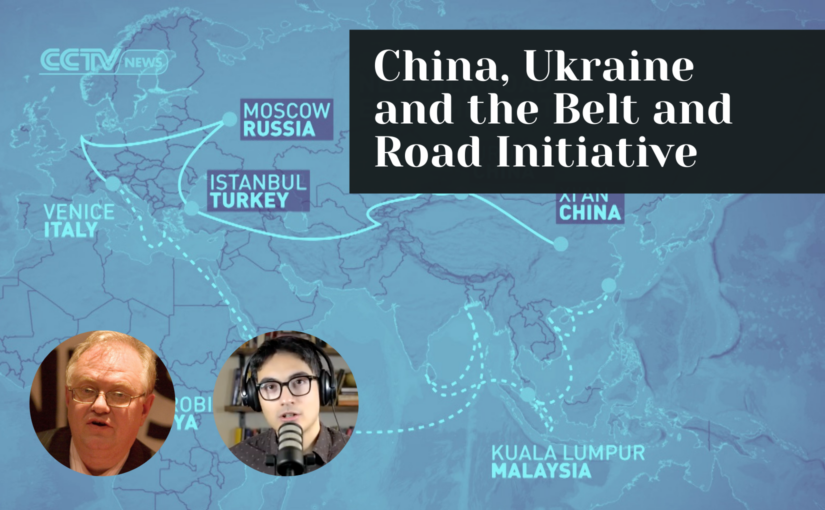
China, Ukraine and the Belt and Road Initiative

On Saturday May 21st, Friends of Socialist China joined the Belt and Road Initiative Quarterly (BRIQ) journal, the Russian Cultural House in Ankara, the Turkish Students Union in China and the Istanbul Kent University as a co-organizer of a conference themed on ‘The Challenges and Opportunities for BRI Under the Background of the Ukraine Crisis’. It was a hybrid event, held both online and physically at Kent University.

Our co-editors Danny Haiphong and Keith Bennett both presented papers and we reproduce them, slightly edited for publication, below. The other speakers were Adnan Akfirat, Chair of the BRIQ journal; Professor Hasret Comak of Istanbul Kent University; Professor Ma Xiaolin of Zhejiang University; Daria Platonova of Moscow State University; Rajiv Ranjan, Associate Professor at Shanghai University; Pakistani Senator Mushahid Hussain; Dr Vali Kaleji of Tehran University; and Dr. Ahmet Shahidov, Chair of the Azerbaijan Institute for Democracy and Human Rights.

The full event can be viewed on Facebook Live.

Danny Haiphong: Why the Belt and Road Initiative won’t be derailed by the Ukraine crisis

Thank you to all the organizers of this event, including the Belt and Road Initiative Quarterly Journal, the Russian Cultural House in Ankara, the Friends of Socialist China platform which I co-edit, the Turkish Student’s Union, and Kent University. My discussion centers on the politics of the Belt and Road Initiative (BRI) and how they ensure that the development plan won’t be derailed by the monumental crisis underway in Ukraine.

The Ukraine crisis has revealed quite starkly that there is a huge divergence between the path that’s being taken by the United States, NATO, the EU, and that of China. The former, perhaps more aptly called the Western imperialist sphere, has poured gasoline onto the fire that is the Ukraine crisis. The consequences have been enormous. Sanctions on Russia have sent shockwaves throughout the global economy. Economic growth has declined and inflation skyrocketed. The IMF’s economic forecast is dimmer now than it was prior to the Ukraine crisis and much of this is due to Western imperialist policy.

On the other hand, for China and the BRI, the situation is quite different. A commitment to peace and neutrality, cooperation, and robust and quality growth characterizes the partnerships within the BRI. It is clear that the massive trade and infrastructure project is not a prisoner of the moment. The BRI is not just about a single region or a particular country but rather an overall vision for global development that seeks to harness the present to brighten the future. The BRI does what Western-led economies such as the United States and its allies cannot and will not do, which is to offer opportunities for economic progress and true investment in all areas social and economic development.

The BRI, as Xi Jinping remarked, began in China but its achievements belong to the world. There are 140 countries and 30 international organizations that have already signed on to the BRI since 2013. Thus far, 8 trillion USD in trade and investment has been directed toward the BRI to cover the cost of more than 2,500 projects worldwide. The size and scope of the BRI demonstrates that it is not dependent upon the whims and the interests of the U.S. and the West. The BRI operates almost entirely independent of from Western imperialism, with the exception of the European countries which have accepted China’s invitation to join the project.

It is also worth noting that China is no stranger to operating in conflict zones. The world has been engaged in a war against the COVID-19 pandemic over the past several years and yet China has not only been able to extend solidarity and cooperation over this period but also advance the aims of the BRI. China has adjusted its own economic and political development in a way that takes into account the challenges of the global pandemic. That’s why China has achieved so much success in containing the pandemic and led the way in providing critical solidarity in the form of vaccines and protective equipment to Asia, Africa, and Latin America. The pandemic has been a flashpoint for a people’s war to protect human life and this war is inextricably linked to the BRI’s overall vision.

China has also prioritized Belt and Road Initiative relationships with countries such as Pakistan that have been embattled with external and internal conflict. Pakistan has been subject to numerous conflicts over the past decade alone, whether in the form of the U.S.’s drone strikes killing thousands of civilians or the ongoing struggle in Kashmir. While these sensitive issues have inevitably caused economic difficulty, Pakistan and China’s cooperation in the BRI through the China-Pakistan Economic Corridor (CPEC) has only grown. The BRI has already brought about significant achievements in Pakistan such as the launch of the first transit system in Lahore in 2020 amid the COVID-19 pandemic.

No matter what is happening internally in Pakistan, the BRI’s vision of development which emphasizes win-win cooperation rather than political interference or influencing the politics internally of any one country has been a major reason as to why these two nations have been able to build such a strong friendship despite internal and external threats to Pakistan’s stability. This includes a recent change in political administration just in the last few months.

The Biden administration recently completed his first trip to Asia, visiting South Korea and Japan in an attempt to organize the Southeast Asia into a conflict with China. The region has quickly become the most important flashpoint in the U.S.’s New Cold War and has been flooded with hundreds of U.S. military bases and hundreds of thousands of U.S. military personnel. Still, China has been able to build even stronger relations with the region that have led to remarkable achievements in the last few years alone. In 2021, the Sino-Laos high-speed railway was launched and is projected to increase economic growth for Laos by several percentage points. Laos is a country that was bombed by the U.S. more times than the entire number dropped in World War II during the U.S. invasion of Vietnam, Laos, and Cambodia in the 1960s and 1970s.

In January 2022, Syria joined the BRI as a major step in its own rebuilding process from the U.S.-led war on the country. The U.S. currently occupies 30 percent of Syria’s territory. Despite being engaged in a deadly conflict that has displaced millions and killed more than 300,000 people, the Syrian government is committed to rebuild the country through the BRI.

Of course, the Ukraine crisis has indeed inflicted damage on the global economy. Mainstream media reports have emphasized disruptions in rail traffic that have slowed global trade to Europe. While these short-term challenges will delay certain aspects of the BRI, particularly the Eurasia rail link, the vision of the BRI is more than a century long and remains an incredibly attractive project for development. The Ukraine crisis does not take away from the BRI’s global advantages. In fact, the Ukraine crisis is likely to make the BRI even more attractive to countries around the world, including Ukraine.

For one, the United States and its allies offer few alternatives in the form of financial and economic arrangements to help rebuild from conflict and war. Furthermore, the United States and the West is pursuing a policy that will make the Ukraine’s economy “scream,” to paraphrase Henry Kissinger’s description of Chile in 1970s during the U.S.-backed coup there. The U.S. has provided predatory loans to Ukraine since the war began. In addition, the U.S.-sponsored lend-lease program has provided Ukraine billions in military aid, $40 billion of which was just passed in the U.S. Congress. Ukraine will be expected to pay back what it has received in conditional aid, making these arrangements detrimental to Ukraine’s long-term economic stability and growth.

The neoliberal policies of the U.S. and the West are laying the foundations for the BRI to become an even more important feature of Ukraine’s economic future. Ukraine is one of the earliest member of the BRI. China’s capacity to maintain a stable relationship with Ukraine and strengthen the Russia-China partnership at the same time has demonstrated what it means to place narrow and selfish interests to the background and the interests of humanity in the foreground. Whatever short term difficulties arise from the Ukraine crisis will not derail Latin America, Africa, and Central Asia’s desire to adhere to the BRI’s principles of creating a win-win model of infrastructure and economic development that addresses the need for real South-South cooperation, decreases extreme poverty, and reduces dependency on external lenders.

The BRI is already doing just that. The World Bank has acknowledged that the BRI offers a path forward out of extreme poverty. Monumental achievements have already come out of the BRI in countries such as Pakistan and Laos. Though the Ukraine crisis is a warning shot about the dangers of war and the neoliberal path led by Western imperialism, China’s approach to global development as manifested in the BRI will not just remain consistent but is also likely to strengthen its influence within the international order in the coming period.


Keith Bennett: China, Ukraine and the Belt and Road Initiative

Thank you for your invitation.

I would like to offer some brief comments on four of the topics you raise, namely:

  • The effect of the Ukraine crisis on the use of national currencies in foreign trade
  • The consequences of US and EU sanctions on the BRI
  • The impact of the crisis on the international pro-USA terrorist network
  • The impact of the crisis on the energy security of the EU and China

With regard to the first issue, namely the effect of the Ukraine crisis on the use of national currencies in foreign trade, I believe it is likely to have a profound impact. Developing countries, especially Russia and China, but also others, such as the other members of the Eurasian Economic Union, some African countries, the ALBA grouping led by Venezuela and Cuba, and so on, have been exploring this for some time. But this will now intensify. As will the development of digital currencies by countries like China.

The major sanctions imposed on Russia and Belarus will undoubtedly cause considerable difficulties in the short to medium term.

However, strategically they are an example of what the Chinese leader Mao Zedong called, lifting a rock only to drop it on your own feet.

In fact, they really announce the end of dollar hegemony. Measures like excluding Russian banks from the SWIFT international payments system were prefigured, for example, in the sanctions imposed on Iran. But this is the first time that such measures have been taken against a G20 economy, a member of the Permanent Five on the United Nations Security Council and a major nuclear power.

We know that China is looking very closely at the implications of this for its own economic and financial security.

We’ve also seen the imperialist powers freezing the assets of so-called Russian oligarchs. Literally stealing them. Incidentally, one should note that the likes of Roman Abramovich, Alisher Usmanov and Oleg Deripaska are always described with the pejorative term oligarch, whereas the likes of Jeff Bezos, Elon Musk and Bill Gates are described as entrepreneurs. However, the combined wealth of the last named three equals the combined wealth of all of Russia’s top 20 ‘oligarchs’ – that is before the recent assault on their wealth.

Such actions are again in a sense nothing new. We’ve seen them in numerous cases recently, like Afghanistan, Venezuela, Iran and so on. Even as far back as the Albanian gold illegally held by the Bank of England from 1948-1996, a full half century.

But again, this is unprecedented in its scope – being against a major power and not just against its national institutions, but also against numerous individuals, some of them apparently designated solely as a result of citizenship or even just ethnicity.

The implications of this are huge.

If you are a citizen of any country of the Global South – be it Saudi Arabia, Qatar, the United Arab Emirates, Kazakhstan, Azerbaijan, India, Pakistan, or wherever – how secure should you now feel about investing, depositing funds, or acquiring assets in the United States or the United Kingdom? When, should your government do anything to displease Washington or London, they can be frozen or confiscated overnight, apparently on a whim and with little or no regard for the so-called ‘rule of law’.

Yet it is partnerships such as these that financial centres like the City of London, on which the UK economy is disproportionately dependent, are increasingly reliant upon. It will therefore lead to the relative decline of long-established financial centres in the UK and elsewhere and impel the growth and development of new ones, along the Belt and Road, including in countries like Turkiye and Kazakhstan, as well as in the Far East, including in Hong Kong and Shanghai.

Regarding the consequences of US and EU sanctions on the BRI, I think it will have a contradictory impact. On the one hand, part of the dynamic of the BRI was to draw to draw together the whole of the Eurasian space through increased trade, enhanced connectivity, developed infrastructure and so on. Clearly the EU is to a large measure and for now excluding itself from a number of these aspects, which is absolutely not a situation that China wishes to see. However, the unity of the EU in this aggressive policy is not so solid as is being suggested. Countries with energy supplies that have pivoted on Russia, those with traditionally strong economic or cultural ties, or who preserve some measure of independence and neutrality in their politics and diplomacy are already restive. This can only increase as the economic pain that Europe has brought on itself increases. There are already signs that Berlin, Paris and Rome do not share London and Washington’s apparent appetite for endless war.

However, there are other challenges, too. In general terms, conflict is simply not conducive to investment and development. Trade, transport, logistics, communications and connectivity are disrupted, not only by the fighting itself, but also by ruptured political relations, sanctions, such as on overflights, and so on. And the threat or use of secondary sanctions is also a very serious one.

But, whilst serious, many of these issues are essentially transient in nature. The potential of this conflict to reconfigure the international balance of forces lends greater urgency to BRI and to enhancing the unity of the Global South, something that is reflected, for example, in their almost unanimous rejection of sanctions on Russia.

Regarding the impact of the crisis on the international pro-USA terrorist network, again I think the impact will be contradictory. Terrorist networks instigated or manipulated by the imperialist powers may ultimately serve one goal, but they take different forms.

If Russia is successful in attaining its military objectives, then the anti-hegemonic front will be strengthened and it will be in a more advantageous position to confront and defeat terrorist forces.

However, the resilience of such forces should not be underestimated. For example, the leadership of the Taliban has repeatedly expressed a wish to have good neighbourly relations with China and other countries. But it seems hard for them to fully enforce this, including on some of their rank and file and regional commanders. Hence, there have been border incidents with Pakistan and Iran, the Pakistan Taliban has increased its activities and the central Taliban authorities are not yet in a position to completely suppress groups like the East Turkistan Independence Movement (ETIM) or  Islamic State – Khorasan Province (IS-K), the local franchise of Daesh, which has emerged as the Taliban’s rival.

In the case of Ukraine, we know that neo-nazi and far right elements are flocking there from throughout Europe and North America. In the future, some of them will definitely pose a threat to their own societies. This is exactly what we saw with Afghanistan from the 1980s onwards and with Syria and Libya more recently. This is precisely what the American political scientist Chalmers Johnson termed blowback.

Finally, regarding the impact of the crisis on the energy security of the EU and China. In a word the impact is likely to be negative for the EU and positive for China. That the results are not what the EU intended can already be seen from the spiraling costs of energy, Russia’s increased earnings from energy exports and the strengthening of the ruble. At present, Germany has wasted billions on the now mothballed Gazprom 2 project. Meanwhile, countries like Hungary, are already indicating their willingness to pay their energy bills in rubles.

Further, in seeking to find alternative energy sources, it is not all plain sailing for the EU. Most of Qatar’s natural gas production is tied up in existing, long-term contracts, principally with the Far East. Saudi Arabia, at least for now, is sticking to its OPEC+ agreements and refusing to increase production. And it is indicating a willingness to price its oil exports to China in RMB, the so-called petroyuan. Both France and Spain have issues with Algeria – France due to the colonial legacy and Spain due to its acquiescence to Moroccan demands concerning the liberation struggle of the Saharawi people led by the Polisario Front.

In the case of China, close energy ties with Russia have been developing for some time now, for example through Gazprom’s Power of Siberia natural gas pipeline, part of a deal generally valued at $400 billion.

Whilst there are obvious, and not insignificant, obstacles to be overcome, China is essentially well positioned to absorb whatever Russian energy that the EU elects not to purchase.

China can also be expected to increase its interaction with other regional energy suppliers that are not impacted by potential maritime chokeholds. Turkmenistan, Kazakhstan, Myanmar and, with enhanced BRI connectivity, Iran and Iraq, are all important in this regard.
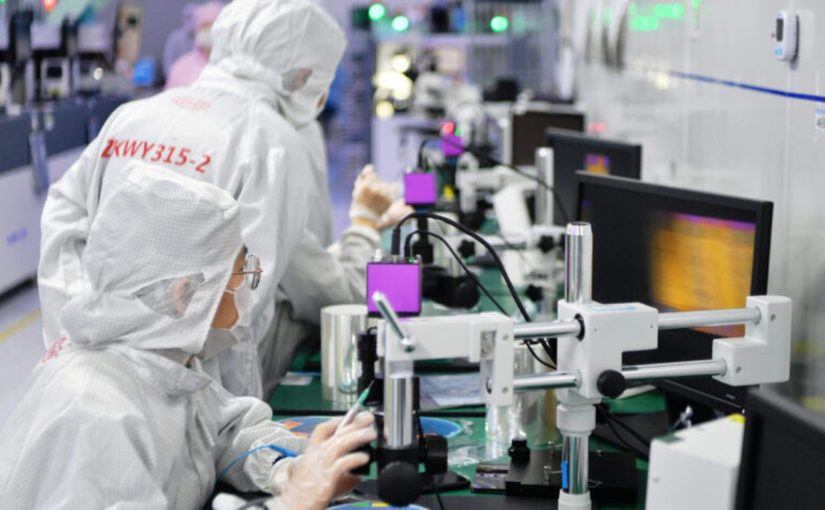
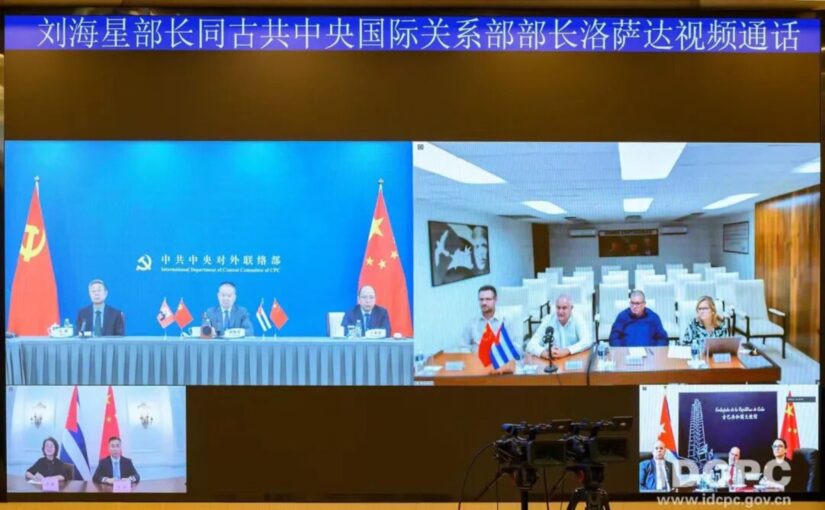
Developing nations should jointly deal with fallout of Western sanctions on Russia

We’re pleased to republish this thought-provoking opinion piece from Wang Jiamei in the Global Times. Wang notes that the unilateral sanctions being imposed by the major Western countries are causing significant economic harm around the world, driving up energy and food prices, along with inflation. Furthermore, the extreme financial sanctions (such as removing Russia from the SWIFT system) may affect the ability of developing countries to trade with Russia, and serve as a reminder that the developing countries need to deepen their coordination in order to insulate themselves from the negative effects of the decisions taken by the imperialist countries.

It seems that a gradual embargo on Russian oil has become the focus of the latest round of US-led economic sanctions against Russia, which may lead to further volatility throughout the world economy.

Leaders of the Group of Seven (G7) nations committed on Sunday to “phasing out or banning the import of the Russian oil” in an aim to remove reliance on Russian energy supplies, according to a joint statement.

The G7 decision came just days after Ursula von der Leyen, president of the European Commission, announced a plan last week to phase out Russian crude oil within six months and refined products by the end of the year.

Continue reading Developing nations should jointly deal with fallout of Western sanctions on Russia

Fact sheet: China’s position on the situation in Ukraine

We are pleased to present the following fact sheet about China’s position on the situation in Ukraine, sent to us by the International Department of the Communist Party of China.

The fact sheet debunks the US State Department’s allegations and insinuations that China is fomenting or taking sides in the Ukraine crisis. China consistently works toward peace and stands for negotiated solutions to problems between countries. Furthermore, as the largest trading partner of Russia, Ukraine and the European Union, China’s basic interests demand peace.

China has refused to support the US-led unilateral sanctions against Russia, on the basis that these sanctions are illegal and only serve to increase tensions and prolong the conflict. Meanwhile they are having a serious economic impact on countries around the world, particularly in the Global South, where the rise in prices for food and energy is seriously impacting wellbeing.

The fact sheet points out: “An enduring solution would be for major countries to respect each other, reject the Cold War mentality, refrain from bloc confrontation, and build step by step a balanced, effective and sustainable security architecture for the region and for the world. China has been doing its best for peace and will continue to play a constructive role.”

Zhao Lijian: China stands with the DPRK against sanctions and intimidation

The DPRK has long faced external threats to its security, which is the crux of the Korean Peninsula issue. To fundamentally solve the Korean Peninsula issue, the DPRK’s legitimate security concerns should be addressed. Otherwise, it’s like solving one problem only to find another cropping up. If the US truly cares about the well-being of the Korean people, it should stop pressuring the DPRK with sanctions. Instead, it should face up to the denuclearization measures already taken by the DPRK, respond to its legitimate and reasonable concerns and take measures to ease sanctions on the DPRK.

Foreign Ministry Spokesperson Zhao Lijian’s Regular Press Conference on February 9, 2022