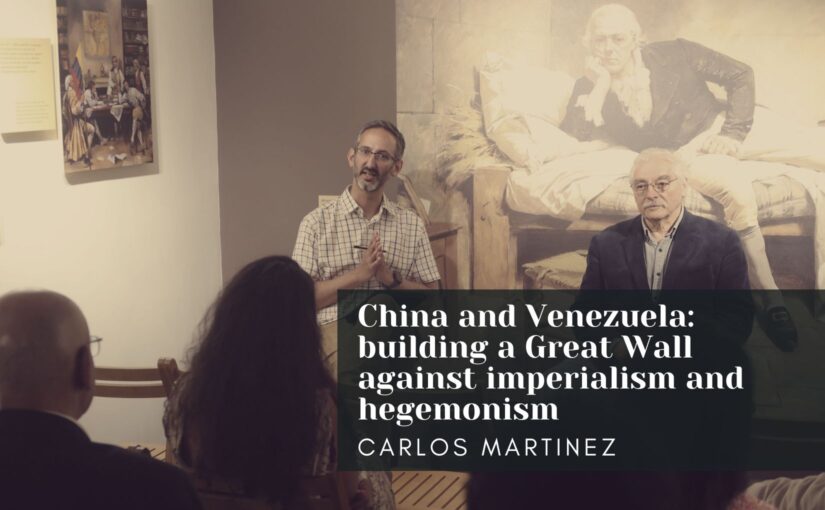
Friends of Socialist China participates in Karl Marx commemoration

Friends of Socialist China joined hundreds of comrades at the grave of Karl Marx in north London’s Highgate Cemetery on Sunday March 17 to mark the 141st anniversary of the death of the founder of scientific socialism.

In 2018, marking the 200th anniversary of his birth, Chinese leader Xi Jinping said that Marx is the “teacher of revolution for the proletariat and working people all over the world, the main founder of Marxism, creator of Marxist parties, a pathfinder for international communism and the greatest thinker of modern times.”

With noble ideals and no fear of difficulty or adversity, throughout his life, Marx devoted himself to perseveringly striving for the liberation of humanity, scaling the peak of thought in his pursuit of truth, and the unremitting fight to overturn the old world and establish a new one, Xi added.

This year’s Highgate commemoration, the largest for many years, was jointly organised by the Communist Party of Britain (CPB) and the Marx Memorial Library (MML) and chaired by Mary Davis, Secretary of the Library and Executive Committee (EC) member of the CPB.

It heard orations from Lord (John) Hendy KC, a prominent labour movement lawyer on behalf of the MML, and from Alex Gordon, Chair of the Library, President of the railworkers’ union RMT and CPB EC member.

In his address, Alex noted that: “What Marx could not foresee, because no socialist planned economy arose in his lifetime, is that the world capitalist economy in 2024 would depend for its economic growth, technological and scientific innovation, and new developments in world trade on the rise of the economies of the global South, and the leading role of socialist China.”

Alex’s full speech may be read here. And Lord Hendy’s may be read here.

Following the speeches, floral tributes were paid by the CPB and MML, the Embassy of socialist Vietnam, the communist parties of Kenya, Cyprus, Spain, Malaya, India (Marxist), Iraq, Iran, Sudan, and Greece, the Communist Front (Italy), Friends of Socialist China, the Young Communist League, the UK branch of the Student Federation of India, the Morning Star, the London District of the CPB, and a delegation of Chinese students in the UK.

Representatives of the Cuban Embassy and the Irish party Sinn Féin also attended the ceremony, which closed with the singing of the Internationale. The Friends of Socialist China comrades accompanied Booker Ngesa Omole (National Vice-Chairperson and National Organising Secretary of the Communist Party of Kenya), who addressed our event Africa, China and the Rise of the Global South the previous evening.

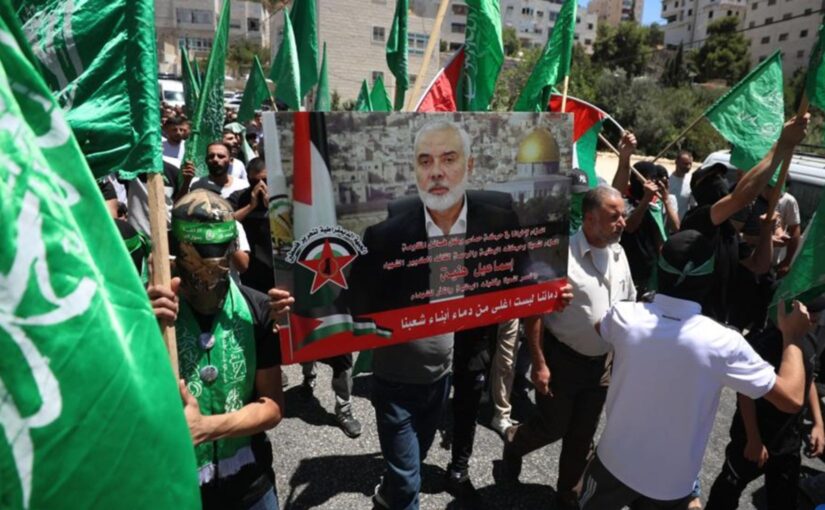
Hamas, China representatives Meet in Qatar – Haniyeh praises Beijing’s position on Gaza war

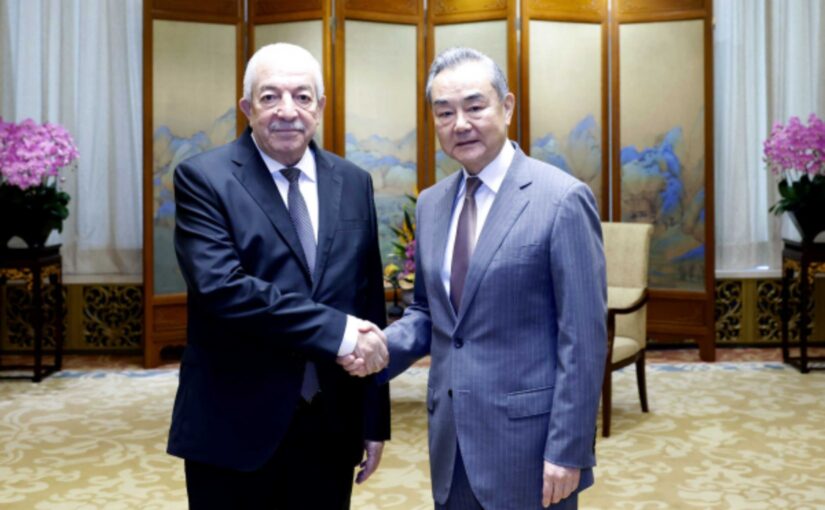
According to a statement on the website of the Chinese Foreign Ministry, on March 17, its envoy, Ambassador Wang Kejian met with Ismail Haniyeh, Politburo Chairman of the Islamic Resistance Movement Hamas, during Wang’s visit to Qatar, where they exchanged views on the Gaza conflict and other issues.

The Palestine Chronicle further reports that:

“According to a statement released by Hamas, Haniyeh ‘emphasised the necessity of quickly stopping the (Israeli) aggression and massacres (in Gaza), the withdrawal of the occupation army, the return of the displaced, providing shelter and (the) reconstruction (of the Strip).’

“Haniyeh also reportedly ‘praised the role that China plays in the Security Council, the United Nations, the International Court of Justice, and in sending humanitarian aid to the Gaza Strip.’

“For his part, Beijing’s envoy ‘affirmed the close and historical relationship between the Palestinian and Chinese peoples and China’s firm positions towards the Palestinian cause and its support for the just demands of the Palestinian people for freedom, independence, and the establishment of a state.’

“Wang Kejian also ‘emphasised the necessity of stopping this war and ending the killing that the Palestinians are subjected to and providing for their humanitarian needs.’”

The Jerusalem Post further reported that: “[Wang] Keijan visited Israel and the Palestinian Authority last week, meeting with diplomats and discussing the war in Gaza… Additionally, according to Hamas, [Wang] Keijan stressed to Haniyeh that ‘the Hamas movement is part of the Palestinian national fabric and China is keen on relations with it.’”

The following article was originally published by the Palestine Chronicle.

A Chinese foreign ministry envoy met with Ismail Haniyeh, head of the political bureau of the Palestinian Resistance movement Hamas, Beijing’s foreign ministry confirmed in a statement on Tuesday. 

In the brief statement, the Chinese ministry said that Chinese Ambassador Wang Kejian met Haniyeh in Doha, Qatar, on Sunday, and that the two “exchanged views on the Gaza conflict and other issues”.

According to a statement released by Hamas, Haniyeh “emphasized the necessity of quickly stopping the (Israeli) aggression and massacres (in Gaza), the withdrawal of the occupation army, the return of the displaced, providing shelter and (the) reconstruction (of the Strip).”

Haniyeh also reportedly “praised the role that China plays in the Security Council, the United Nations, the International Court of Justice, and in sending humanitarian aid to the Gaza Strip.”

For his part, Beijing’s envoy “affirmed the close and historical relationship between the Palestinian and Chinese peoples and China’s firm positions towards the Palestinian cause and its support for the just demands of the Palestinian people for freedom, independence, and the establishment of a state.”

Wang Kejian also “emphasized the necessity of stopping this war and ending the killing that the Palestinians are subjected to and providing for their humanitarian needs.”

This is reportedly the first such meeting between Hamas and China since the beginning of the Israeli war on Gaza, following the military operation carried out on October 7 by Hamas and other Palestinian Resistance groups in southern Israel. 

Right to Armed Struggle

Unlike Washington, which gave total backing to Israel to continue with its war on Gaza, thus refusing international calls for ceasefire, the Chinese position called for the respect of international law. 

Beijing’s position went further by openly supporting the Palestinian people’s right to the use of armed struggle to achieve national liberation. 

Addressing the International Court of Justice on February 22, the Chinese representative said the Palestinians’ use of armed struggle to gain independence from foreign and colonial rule is “legitimate” and “well-founded” in international law.

“In pursuit of the right to self-determination, Palestinian people’s use of force to resist foreign oppression and complete the establishment of an independent state is (an) inalienable right well founded in international law,” Ma Xinmin told the International Court of Justice in The Hague.

Citing resolutions by the UN General Assembly, Beijing’s envoy to the top world court said that people struggling for self-determination could use “all available means, including armed struggle.”

“The struggle waged by peoples for their liberation, right to self-determination, including armed struggle against colonialism, occupation, aggression, domination against foreign forces should not be considered terror acts,” Ma stated in his address to the ICJ, citing international conventions.

Gaza Genocide

Currently on trial before the International Court of Justice for genocide against Palestinians, Israel has been waging a devastating war on Gaza since October 7. 

According to Gaza’s Ministry of Health, 31,819 Palestinians have been killed, and 73,934 wounded in Israel’s ongoing genocide in Gaza starting on October 7.

Moreover, at least 7,000 people are unaccounted for, presumed dead under the rubble of their homes throughout the Strip.

Palestinian and international organizations say that the majority of those killed and wounded are women and children.

The Israeli aggression has also resulted in the forceful displacement of nearly two million people from all over the Gaza Strip, with the vast majority of the displaced forced into the densely crowded southern city of Rafah near the border with Egypt – in what has become Palestine’s largest mass exodus since the 1948 Nakba. 

Israel says that 1,200 soldiers and civilians were killed during the Al-Aqsa Flood Operation on October 7. Israeli media published reports suggesting that many Israelis were killed on that day by ‘friendly fire.’

A rising China and a rising Africa? This is doubly frightening to the imperialist powers

What follows below is the text of a speech given by Fiona Sim on behalf of the Black Liberation Alliance at the recent Friends of Socialist China event Africa, China and the Rise of the Global South, held at the Marx Memorial Library on 16 March 2024.

Fiona describes the blossoming relationship between Africa and China – which even extends to South Africa and China collaborating to build a research base on the moon – and contrasts it with the “playbook of neo-colonial extraction and political puppeteering” that the West has used to exploit Africa for centuries. The China-Africa partnership is inspiring fear and loathing in the West, representing as it does a challenge to the global hegemony of the US and its allies:

“A rising China and a rising Africa? This is doubly frightening to the imperialist powers. It is the precursor to the fall of western hegemony altogether.”

The West’s response has been to ramp up its propaganda war against China and to try to drive a wedge between China and Africa – most obviously by denouncing Chinese “imperialism” and slandering its investments as “debt traps”. But the reality is that “China’s loans to African countries have some of the lowest interest rates, no political strings attached, mass debt relief programmes, and the massive infrastructure projects they fund and build result in positive net growth.” Chinese loans and investment are paving a road out of poverty and underdevelopment.

Fiona concludes by calling for solidarity with China and Africa in their struggle against imperialism, for countering the lies and distortions of the Western media, and for resolutely opposing the New Cold War.

It is my great honour to be included in this panel alongside our esteemed comrade from the Communist Party of Kenya and all these powerful organisers and activists. There is nothing more powerful than being united in struggle with comrades who are not only from across the diaspora but from around the globe. 

It is a reminder of the importance of internationalist, anti-imperialist solidarity that transcends borders and bureaucracy. Our struggles are connected by the chains of imperialist domination and sown from the seeds of destruction left by colonial conquest. But our joint history stretches back centuries further. 

While Europe was in its so-called Dark Ages, Africa, Asia and the Islamic world were experiencing their Golden Ages. The renowned Chinese Muslim naval navigator Zheng He led peaceful expeditions along the ancient Silk Road, with voyages as far as East Africa, where the seas connecting the two continents would go on to establish trade routes and friendly relations for years to come.

Now, centuries later, with the Silk-Road-inspired Belt and Road initiative, we are seeing the rebirth of Africa-China relations and establishment of South-South cooperation at an unprecedented scale. The relationship between Africa and China could not be stronger. Kenya is China’s number one trade partner in East Africa. South Africa and China are collaborating to build a research base on the moon. After the uprisings in the Sahel, the coup governments formed were quick to affirm their relations with China, which reiterated its policy of non-intervention and non-interference in African politics. Burkina Faso’s President Traore declared that he considered China an important trade partner early on, and Niger’s interim President General Tchiani has reportedly met with the Central and North African representative for BRICS in the last few weeks.

It is no wonder that the countries of the West – where whole civilisations have been built on the foundations of plunder and pillaging of the global South – see this as a threat. The West has seen that Africa has taken great interest in the rise of China especially in the last decade and it is running scared. Scared that its playbook of neo-colonial extraction and political puppeteering is no longer going to work on its former colonies. 

Let us be clear. The West only sees China as a threat to its hegemony because it cannot conceive a country that less than a century ago was one of the poorest in the world is now a global powerhouse whose economy rivals the US. Since the 1990s, China has been the only country whose GDP has grown exponentially, increasing on average by 9 percent a year. In 2023, China’s GDP increased by 5.2 percent – the highest among the major powers, with the US in second place at 1 percent. 

Continue reading A rising China and a rising Africa? This is doubly frightening to the imperialist powers

US targets TikTok in escalating economic war against China

The following article by Gary Wilson addresses the US government’s latest attempt to ban TikTok, the hugely popular social media app owned by Chinese company ByteDance.

Gary points out that “there isn’t even a sliver of evidence” for politicians’ claims that TikTok poses a national security threat or that ByteDance is working with the Chinese military. Meanwhile, Facebook’s well-documented history of working with the Pentagon provides ample proof of the US government’s hypocrisy.

The true reason for the attack on TikTok is that “the US government, under both the Trump and Biden administrations, has been escalating its economic war against China by imposing sanctions and restrictions on Chinese tech companies. The goal is to eradicate socialist China’s entire system of advanced technology.” This is part of a wider New Cold War strategy to contain China’s rise, in a geopolitical context where “US imperialism considers socialist China’s economic rise as its most significant contemporary challenge.”

This article was originally published in Struggle/La Lucha on 15 March 2024.

TikTok has emerged as a dominant force in social media, reshaping not just online culture but also extending its influence beyond the digital realm. Since its launch in 2016, TikTok has become one of the most popular social media platforms in the world, surpassing Facebook, Instagram, WhatsApp and YouTube in terms of downloads and engagement.

Through its unique format of short, audio-driven videos curated through algorithms, TikTok has propelled numerous artists, like Lil Nas X and Noah Kahan, into the mainstream spotlight. Music from Africa has gained a global audience. Even the Biden campaign is on TikTok with “BidenHQ,” hoping to appeal to a younger audience than its base of retirees and Wall Street bankers.

Facebook is considered to be TikTok’s biggest competitor. 

“Meta clearly sees itself in a battle against TikTok for the hearts, minds, and attention spans of millennials, a significant chunk of the social media market. TikTok has experienced a staggering growth of users since the onset of the global pandemic, taking over a huge chunk of its competitor’s audience,” the Guardian reported.

So why do the Biden administration and Congress want to ban TikTok?

Are they all just fans of Mark Zuckerberg? Or in Zuckerberg’s pocket? For sure, they’ve all probably had a few clubhouse dinners with Meta.

But this goes beyond Facebook. The target, and they clearly say this, is China. The ban passed by the House of Representatives is called the “ Protecting Americans from Foreign Adversary Controlled Applications Act.” China is the “foreign adversary.” 

A day after the House passed the bill, former U.S. Treasury Secretary Steven Mnuchin (under Donald Trump) announced he is putting together an investor group to take over TikTok. “This should be owned by U.S. businesses,” he said.

TikTok’s only “crime” is beating out Facebook and the others. They claim TikTok is somehow working with the Chinese military, but there isn’t even a sliver of evidence of that.

Facebook has ties to the Pentagon (google “Fake Facebook and Instagram accounts promoting U.S. interests had ties to U.S. military” or “Big Tech Has Made Billions Off the 20-Year War on Terror”). Maybe we should ban Facebook. But that’s another discussion.

Trump, Biden both target China

The U.S. government, under both the Trump and Biden administrations, has been escalating its economic war against China by imposing sanctions and restrictions on Chinese tech companies. The goal is to eradicate socialist China’s entire system of advanced technology.

Reuters just reported on March 14 that while he was president, “Trump launched CIA covert influence operation against China.” Reuters says that Trump had also given the CIA greater powers to launch offensive cyber operations against China and Russia. “Sources described the 2019 authorization uncovered by Reuters as a more ambitious operation.”

The anti-TikTok propaganda is part of what Reuters calls a “covert messaging” operation.

“Covert propaganda campaigns were common during the Cold War,” Reuters adds.

Some call it the New Cold War. However, the New Cold War cannot reproduce the old Cold War. China has emerged as a major manufacturing power, including in advanced technology, and is the largest trade partner for 70% of the world’s countries. The U.S. no longer has the same dominant position in the global market.

The global landscape has changed dramatically since the Cold War era, but capitalism’s fundamental contradictions persist today, mirroring those of the 1960s during the Vietnam War. 

Financially and militarily, the U.S. empire is dangerously overextended.

Before the genocidal invasion of Gaza, the Biden administration was seeking to consolidate its dominance in the region by brokering Saudi Arabia’s recognition of Israel. Now, the U.S. is spending billions of dollars on bombs and weapons systems for the Zionist regime’s war on the Palestinian people. 

For two years, the U.S. has engaged in the largest arms transfer in history, sending to Ukraine some $113.4 billion in “emergency funding” over and above the regular Pentagon budget. Growing war fatigue, however, has now reduced the funds.

The New York Times puts it this way: 

“American support has sharply declined. House Republicans have blocked additional aid to Ukraine, and the Biden administration cannot send many more weapons. (The $300 million package announced this week will likely help Ukraine for only a few weeks.)” 

In fact, the Times almost says, it is only U.S. weapons and ammunition that started this war and have kept it going. “It falls on the U.S. to supply Ukraine,” the Times says. “The war is at a stalemate.” The funds have run out.

U.S. imperialism considers socialist China’s economic rise as its most significant contemporary challenge. It is resolute in thwarting Chinese industry from dominating the global markets. This ongoing “New Cold War” raises the specter of a potential war in the Pacific.

Booker Ngesa Omole: Amidst the rise of the Global South, we welcome China’s engagement with Africa

On Saturday 16 March, Friends of Socialist China hosted an event on Africa, China and the Rise of the Global South at the Marx Memorial Library in London (and online). The library was packed to capacity, and heard powerful contributions from Booker Ngesa Omole (National Vice-Chairperson and National Organising Secretary of the Communist Party of Kenya (CPK)), Roger McKenzie (Foreign Editor, Morning Star), Fiona Sim (The Black Liberation Alliance), Cecil Gutzmore (veteran Pan-African community activist and historian), Alex Gordon (RMT President), and Radhika Desai (Convenor, International Manifesto Group). Unfortunately Frank Murray of Caribbean Labour Solidarity was unable to attend due to personal reasons. Roger McKenzie’s event report can be read in the Morning Star.

Booker’s wide-ranging and passionate keynote speech focused on China-Africa relations and China’s role in the world. Booker noted that his two visits to China in 2023 “filled me with a renewed sense of hope and convinced me of the superiority of the Chinese socio-economic and political system over the liberal Western model often imposed on African nations wholesale.”

On the economic relationship between China and Kenya – and Africa more generally – Booker observed that the character of this partnership is profoundly different to the exploitative relationships that African nations have historically had with Western powers. “This relationship has highlighted an alternative approach to engaging with development partners and international capital. Unlike the United States and Western nations, which have historically imposed detrimental policies on African nations through institutions like the IMF and World Bank—such as the infamous Structural Adjustment Plan—China has adopted a policy of non-interference in the internal affairs of sovereign countries. This shift has spared African nations from the suffering and hardships inflicted by such destructive policies.”

Booker went on to state that “the United States and the rest of the West have used exploitation and force to impose their will for far too long.” However, in an era of emerging multipolarity and a rising Global South, “the geopolitical environment has fundamentally changed, with the Global South emerging as a major actor in world affairs. And it is amidst this shift that China has emerged as a beacon of hope for the oppressed and exploited.” In relation to imperialism, “China stands as a counterforce, presenting an alternative path founded on mutual respect and cooperation… China’s policy of non-interference starkly opposes Western interventionism, whose legacies of looting and colonialism still haunt and define regions like Africa.”

Turning his attention to the propaganda war on China, Booker asserted: “The racist and cynical attacks on China are intolerable”, and that “labelling China as an imperial power is both ridiculous and reactionary.” He reminded the audience that Africans know only too well what imperialism looks like: “Having experienced direct and indirect imperialist interventions in Africa, we have witnessed the devastating consequences of imperialist wars and interventions.” This contrasts starkly with China’s engagement with the continent, which is based on mutual benefit, respect for sovereignty, and assisting African countries to develop their own economies and infrastructure. “Leveraging China’s resources and expertise, Africa can accelerate its development and address important issues such as infrastructural deficiencies, industrialization, and poverty.”

Booker concluded:

The voices of the Global South demand respect and sovereignty, challenging the hegemony of the West. Amidst the rise of the Global South, we welcome China’s engagement with Africa in this new era of collaboration.

This speech was first published on the website of the Communist Party of Kenya.

Ladies and Gentlemen, Esteemed Comrades, it is an honour to stand before you today, representing the Communist Party of Kenya (CPK) and the Pan African Socialist Alliance (PASA). I extend my deepest gratitude to the Friends of Socialist China (FSC), particularly Comrade Keith Bennett, for their steadfast support and for granting me this forum to address such a significant topic.

Gathered here in the Karl Marx Memorial Library, we are reminded of the enduring influence of Marx’s ideas, which continue to guide us in our struggle for a just and egalitarian society. It is the ideal place as we embark on a discussion that not only holds relevance but also holds the key to shaping the future of the Global South: “China and the Rise of the Global South.”

Comrades, today I represent the Communist Party of Kenya, a party that has undergone a split resulting in the formation of two factions: the majority faction, which I am part of, and a minority faction that has entered into a strategic alliance with the current kleptocratic regime and serves as a puppet of US interests in Nairobi. While this split can be seen as both fortunate and unfortunate, it underscores the complex dynamics within our party.

It is fortunate in the sense that a united Communist Party of Kenya based on opportunism would serve no purpose for the Kenyan working class. However, it is unfortunate because a united party would undoubtedly be stronger and more effective in advancing the interests of the working class. Yet, such is the nature of development—just as in the human body, where cells divide and multiply to maintain health, our party undergoes transformations to adapt to changing circumstances. I proudly represent the majority faction of the Communist Party of Kenya, which stands in staunch opposition to the comprador ruling class in Nairobi.

As for the Pan-African Socialist Alliance (PASA), it is a revolutionary movement that unites Pan-Africanist organizations in Kenya and beyond. Dedicated to achieving African liberation and unity on a global scale, PASA vehemently opposes imperialism in all its manifestations, including colonialism, settler-colonialism, Zionism, and neo-colonialism. Moreover, PASA advocates against social oppressions rooted in gender, class, or nationality.

Aligned with genuine Pan-African forces worldwide, PASA advocates for a unified socialist and non-capitalist path to development in Africa and the African diaspora. It stands in solidarity with oppressed peoples fighting against labour exploitation and land exploitation, striving for a future where all Africans can thrive free from oppression and exploitation.

In 2023, I had the privilege of visiting China twice, where I witnessed first-hand the remarkable achievements of Chinese Socialist Construction. These visits filled me with a renewed sense of hope and convinced me of the superiority of the Chinese socio-economic and political system over the liberal Western model often imposed on African nations wholesale. Contrary to Western rhetoric, I found a nation and its people in harmony with nature, dispelling the myth that Chinese socialist development wreaks ecological havoc.

Despite potential language barriers, I was pleasantly surprised to find that many young Chinese individuals in the streets of Beijing were proficient in English and engaged in lively debates. Unlike the institutionalized racism prevalent in the United States, China actively discourages and punishes racist behaviour—a stark contrast to the US, where racial privilege persists. It became evident to me that Western media propagates falsehoods far too often, obscuring the realities of Chinese society and governance.

Allow me to revisit my 2017 commentary on the Africa-China relationship. The partnership between China and Kenya, as well as Africa at large, has not only spurred remarkable infrastructural development but has also fostered a genuine cultural exchange between Chinese and African communities. It has provided Africans with first-hand insights into Chinese culture, dispelling the half-truths and misinformation perpetuated against China and its people, often propagated globally by western media outlets like CNN, BBC, Fox News et al.

Moreover, this relationship has highlighted an alternative approach to engaging with development partners and international capital. Unlike the United States and Western nations, which have historically imposed detrimental policies on African nations through institutions like the IMF and World Bank—such as the infamous Structural Adjustment Plan—China has adopted a policy of non-interference in the internal affairs of sovereign countries. This shift has spared African nations from the suffering and hardships inflicted by such destructive policies.

Another notable aspect is the efficiency with which projects are executed. Previously, bureaucratic red tape and exorbitant costs often prolonged project timelines, sometimes spanning several years before ground activities commenced. However, with the influx of Chinese investment, we have witnessed a swift turnaround. Projects are now executed promptly, delivering high-quality results. This stands in stark contrast to the portrayal by Western media, which often dismisses products and projects from China and Russia as inferior before their arrival. These words remain true today even though the attitude of the ruling class in the global north towards the Chinese socialist experiment remains unchanged, more than five years later.

The challenges facing the Global South are vast, encompassing a myriad of socio-economic and political issues rooted in colonial and neo-colonial histories. From underdevelopment to disease, violence, and exploitation, these afflictions persist. Yet, amidst these struggles, it is essential to recognize the shared responsibility between the global North and South.

While geopolitical unrest and interventions ravage countless lives worldwide, there is a glimmer of hope. The vulnerability of imperialism is laid bare in places like Gaza, where Western hegemony faces daily erosion, and in conflicts like the NATO-led proxy war with Russia in Ukraine, which exposes fractures in imperialist stability. Recent events in the Congo underscore the diminishing influence of Western imperialism.

In the Sahel region, including Mali, Burkina Faso, and Niger, French imperialism falters on a daily basis. In the North, Libya stands in history and in the present as the perfect example of imperialist violence and failure. Southwards, Somalia’s position since the Black Hawk Down incident highlights the pitfalls of US interventions. The Sudanese people have remained strong in their continued resistance against imperialism since the war broke out in Sudan.

Eritrea, often likened to the “Cuba of Africa,” bears the brunt of punitive unilateral actions and economic sanctions imposed by the United States. Its perceived transgression? Embracing self-reliant economic strategies. This exemplifies the treatment meted out by the US towards African nations daring to diverge from the neoliberal norms dictated by the West. Such brazen arrogance of the US begs the question: How can such dominance prevail on a global scale? The inevitable outcome is not progress but rather a descent into chaos, perpetuating a cycle of disorder and instability similar to what has now become of Libya.

And every day, the escalating Cold War tensions with China further shake the foundations of the fragile imperialist economy. Overall, the emerging picture reveals that the decline of the US empire mirrors historical patterns, signalling the dawn of a new era where empires inevitably fall.

Continue reading Booker Ngesa Omole: Amidst the rise of the Global South, we welcome China’s engagement with Africa

China is blazing a trail towards modernisation for the global majority

A high-level forum on the Chinese path to modernisation amidst great global changes was held in hybrid format on March 3-4. The organisers were the Institute of Japanese Studies of the Chinese Academy of Social Sciences (CASS); the Advanced Research Institute for 21st Century Chinese Marxism of the CASS University; and the Shanghai Research Institute, CASS-Shanghai People’s Government. Some 17 senior Chinese specialists in Marxism addressed the forum, including Wang Weiguang, a member of the Standing Committee of the Chinese People’s Political Consultative Conference (CPPCC), and Deng Chundong, a member of the CPPCC National Committee.

FoSC co-editor Keith Bennett presented a paper, in which he outlined Xi Jinping’s five key criteria for Chinese modernisation and went on to note that, “whilst China’s socialist modernisation shares some characteristics with the path trod by western capitalist nations, it has more differences than similarities. It represents something fundamentally new – something that moreover will come to be seen as a trail blazer for the only modernisation that is actually comprehensive, equitable and sustainable. The Chinese leader’s thesis on modernisation is a significant component of Xi Jinping Thought and as such even a cursory study of its significance will highlight both that it is thoroughly grounded in the scientific socialist tradition and also that it constitutes Marxism for the 21st century.”

Touching on the international significance of this, Keith continued:

“As China advances in its modernisation goals, so, through such means as the Belt and Road Initiative, the steady expansion of the BRICS Plus mechanism, the institutionalised forums for cooperation with Africa, with Latin America and the Caribbean, and with other regions, the Shanghai Cooperation Organisation, and so on, it is also inviting fellow developing countries of the Global South, and indeed others, to join the train of China’s rapid development and growing prosperity. As a result, Socialist China has truly become the powerful locomotive blazing the trail towards modernisation for the global majority.”

The fact that China’s modernisation is modernisation of peaceful development is the most fundamental point of all and provides the starkest contrast with the capitalist road to modernisation, Keith noted, before going on to illustrate how capitalist modernisation had been built on the super exploitation of the oppressed nations and peoples, yet, “the fact that the key developed nations, to a very great extent, built their modernisation on the blood and bones of the global majority does not mean that they have been able to achieve common prosperity for all at home. In the advanced capitalist countries, even after hundreds of years, not only does the gap between rich and poor remain, does the phenomenon of the rich getting richer and the poor getting poorer persist, they are once again being exacerbated and becoming acute.”

Other international speakers included Fukushima Mizuho, leader of the Social Democratic Party of Japan; several prominent scholars from Russia; leading members of the communist parties of Portugal, Italy and the USA; and Stephen Perry, Honorary President of Britain’s 48 Group Club.

We reprint below the full text of Keith’s contribution.

Dear comrades and friends

I would like to thank the Institute of Japanese Studies of the Chinese Academy of Social Sciences, the Advanced Research Institute of 21st Century Contemporary Chinese Marxism, the University of the Chinese Academy of Social Sciences, and the Chinese Academy of Social Sciences – Shanghai Research Institute of the Shanghai People’s Government for their kind invitation to address this timely conference on the important theme of Chinese Modernisation under Great International Changes.

The process of modernisation, as it is generally understood today, essentially began with the development of first Great Britain, and then some other countries in Western Europe, as well as the United States, in the nineteenth century, with the industrial revolution. Following the Meiji Restoration in 1868, Japan became the first non-white nation to join this historical process.

Continue reading China is blazing a trail towards modernisation for the global majority

Senior AKEL delegation visits China

A delegation of the Progressive Party of Working People (AKEL) of Cyprus, led by its General Secretary Stephanos Stephanou, recently visited China. AKEL is Cyprus’s communist party and plays a major part in the political life of the country. 

On February 27 Liu Jianchao, Minister of the International Department of the Communist Party of China (CPC) Central Committee (IDCPC), met with Stephanou and his delegation. 

Liu said that AKEL is an important political party in Cyprus. The CPC and AKEL are both Marxist parties, and the two parties maintain close exchanges through various forms, injecting strong impetus into the development of China-Cyprus relations. The Chinese side is willing to work with the Cypriot side to strengthen mutual visits between the two parties at all levels, deepen exchanges of experience in state governance and administration, promote in-depth and solid practical cooperation between the two countries in various fields, and promote the steady and long-term development of China-Cyprus strategic partnership. 

Stephanou noted that AKEL and the CPC share similar ideals and beliefs and are close comrades and friends. AKEL is willing to learn from the CPC’s experience in building socialism with Chinese characteristics and promote the further development of relations between the two parties. AKEL supports the Cypriot government in developing relations with China in an all-round way, firmly adheres to the one-China principle, and appreciates China’s stance on the Cyprus question.

The following day the delegation met with Li Hongzhong, vice chairman of the National People’s Congress (NPC) Standing Committee, who is also a member of the Political Bureau of the CPC Central Committee. Li said that the CPC attaches great importance to friendly relations with AKEL and is willing to strengthen exchanges between political parties and legislative bodies to push China-Cyprus strategic partnership to a higher level.

The following articles were originally published on the website of the IDCPC and by the Xinhua News Agency.

Liu Jianchao Meets with a Delegation of the AKEL of Cyprus

Beijing, February 27th—Liu Jianchao, Minister of the International Department of the CPC Central Committee (IDCPC), met here today with a delegation of the Progressive Party of the Working People (AKEL) of Cyprus led by Stephanos Stephanou, General Secretary of the AKEL.    

Liu said, the AKEL is an important political party in Cyprus. The CPC and the AKEL are both Marxist parties, and the two Parties maintain close exchanges through various forms, injecting strong impetus into the development of China-Cyprus relations. The Chinese side is willing to work with the Cypriot side to strengthen mutual visits between the two Parties at all levels, deepen exchanges of experience in state governance and administration, promote in-depth and solid practical cooperation between the two countries in various fields, and promote the steady and long-term development of China-Cyprus strategic partnership. The Chinese side appreciates Cyprus’ support and active participation in the three major global initiatives, and is willing to work with the Cypriot side to safeguard world peace and development, and promote the building of a community with a shared future for mankind.    

Stephanou noted, the AKEL and the CPC share similar ideals and beliefs and are close comrades and friends. The AKEL is willing to learn from the CPC’s experience in building socialism with Chinese characteristics and promote the further development of relations between the two Parties. The AKEL supports the Cypriot government in developing relations with China in an all-round way, firmly adheres to the one-China principle, and appreciates China’s impartial stance on the Cyprus problem. China has made world-renowned development achievements in recent years. It is believed that under the leadership of the CPC, China will achieve its second centenary goal as scheduled and make greater contributions to world peace and development. As a member of the European Union (EU), Cyprus is willing to actively advance the development of EU-China relations. 

Sun Haiyan, Vice-minister of the IDCPC, was present. 


Senior Chinese legislator meets delegation of Cypriot Progressive Party of Working People

BEIJING, Feb. 28 (Xinhua) — Li Hongzhong, vice chairman of the National People’s Congress Standing Committee, met with a delegation of the Cypriot Progressive Party of Working People (AKEL), led by its general secretary Stefanos Stefanou, in Beijing on Wednesday.

Li, also a member of the Political Bureau of the Communist Party of China (CPC) Central Committee, said that under the strategic guidance of the two heads of state, China and Cyprus have continuously deepened political mutual trust, and achieved fruitful results in various fields of practical cooperation.

The CPC attaches great importance to friendly relations with the AKEL, and is willing to strengthen exchanges between political parties and legislative bodies to push China-Cyprus strategic partnership to a higher level, Li said.

For his part, Stefanou said that the AKEL adheres to the one-China principle, supports key global initiatives proposed by China, and hopes to strengthen exchanges with the CPC to promote the development of Cyprus-China and EU-China relations. 

China: Palestine has right to armed struggle

In the following article, which was originally published in Workers World, John Catalinotto welcomes the presentation made by senior Chinese Foreign Ministry official Ma Xinmin to the International Court of Justice at The Hague, Holland, on February 22, affirming that the Palestinian people have the right in international law to engage in armed struggle. 

He writes that this bold statement “illustrates the worldwide shift in popular support for Palestine and the growing mass anger against the Israeli occupation state and its imperialist enablers,” adding that it, “not only reflects the strength of a massive worldwide movement, it adds to that strength… Even if China’s actions were limited to diplomatic support, the Palestinian position would be strengthened. But the Chinese government has also announced plans to send its third shipment of material aid to Gaza.”

John notes that while the US corporate media constantly attacks on China on a wide range of issues, it had avoided even negative commentary on this statement and concludes:

“China’s positions hold authority with many anti-imperialist and pro-socialist activists and organisations worldwide. Should this statement be publicised it can help build solidarity of communist and workers’ organisations in the imperialist countries with the organisations of different ideologies who are leading the struggle for self-determination in Palestine and in all of West Asia.

“China’s leaders have aided the peoples’ struggles worldwide by taking this bold position in solidarity with the Palestinian resistance.”

Senior Chinese official Ma Xinmin made a powerful statement Feb. 22 before the International Court of Justice that Palestinians have the right to engage in armed struggle, because they live under an illegal Israeli occupation.

Ma, who is director general of the department of treaty and law at China’s Ministry of Foreign Affairs, told the 15-judge panel in The Hague, Netherlands, that armed struggle differed from terrorism. “In pursuit of the right to self-determination,” said Ma, “Palestinian people’s use of force to resist foreign oppression and complete the establishment of an independent state is an inalienable right well founded in international law.” (Palestine Chronicle, Feb. 22)

Ma’s statement marked a break with China’s policy prior to Oct. 7, 2023, of normalizing economic and diplomatic ties with Israel. China’s latest statement confronted the U.S.-European Union policy of supporting Israel with military, diplomatic and economic assistance.

While avoiding any military provocation, the Chinese government and Communist Party have consistently defended Chinese sovereignty and Chinese national interests against any challenge from U.S. imperialism and its allies. Ma’s statement extends that defense in the diplomatic arena to the right of the Palestinian people to fight for self-determination.

Reflects mass worldwide support for Palestine

That China’s policy makers would make such a bold challenge illustrates the worldwide shift in popular support for Palestine and the growing mass anger against the Israeli occupation state and its imperialist enablers. It indicates that political leaders are well-aware that hundreds of millions of people around the world are pressuring political actors regarding what position they are taking to stop the genocide in Gaza.

The massive international solidarity with Palestine emboldens those in leadership or vital positions to take steps to stop the massacre of Palestinian civilians, stop the slaughter of children, stop killings that much of the world sees as genocide.

Now a representative of People’s China has said that international law is on the side of the Palestinians. That Palestine has a legitimate fight for self-determination. That Palestinians have the right to wage armed struggle.

“The struggle waged by peoples for their liberation, right to self-determination, including armed struggle against colonialism, occupation, aggression, domination against foreign forces should not be considered terror acts,” Ma said. (Palestine Chronicle, Feb. 22)

The Chinese statement not only reflects the strength of a massive worldwide movement, it adds to that strength. After all, as much production takes place in China as the next nine countries combined — including the U.S., Germany, Japan, Britain and India. That’s according to the Centre for Economic Policy Research (CEPR) in Europe.

Even if China’s actions were limited to diplomatic support, the Palestinian position would be strengthened. But the Chinese government has also announced plans to send its third shipment of material aid to Gaza.

Through much of 2023, it seemed the U.S. corporate media, including establishment media like The New York Times, went out of their way to attack some aspects of life in People’s China or policies of the Chinese Communist Party. Strangely enough, there has been no or little coverage of Ma’s statement to the court, not even an attack, as of Feb. 26.

Media based in the Middle East and South Asia, on the contrary, gave Ma’s statement full coverage.

China’s positions hold authority with many anti-imperialist and pro-socialist activists and organizations worldwide. Should this statement be publicized it can help build solidarity of communist and workers’ organizations in the imperialist countries with the organizations of different ideologies who are leading the struggle for self-determination in Palestine and in all of West Asia.

China’s leaders have aided the peoples’ struggles worldwide by taking this bold position in solidarity with the Palestinian resistance.

Why is China’s economy doing so well and why is that a good thing?

In this thoughtful and highly informative article, Marc Vandepitte – an author on international politics from Belgium – uncovers some of the secrets behind China’s remarkable economic success, and explains why this success should be considered favourably in Europe.

Marc starts by debunking the narrative gaining ground among Western ‘China-watchers’ that China’s economic outlook is grim; after all, “the country is still achieving growth rates that we can only dream of”, in spite of a US-led containment campaign and assorted other challenges.

Marc notes that China’s per capita GDP has increased by a factor of 50 in the last four decades, and that since 1990 China’s share of global industrial production has increased from 2.5 percent to 35 percent. What’s more, “in terms of industrial production of the future – green production – China is the absolute leader.”

The article goes on to explain how China’s economic success is based on a combination of factors, including its socialist model of land ownership, its huge investment in education and health care, its focus on science and technology, and its striking blend of state-led planning and decentralisation.

China’s dramatic successes are driving development throughout the Global South – in particular via the Belt and Road Initiative – but the country’s emergence is also a boon for the West. “Western economies are closely intertwined with the Chinese economy and in many areas the West needs China more than the other way around. For example, Europe cannot possibly achieve its climate goals without China.”

Marc concludes:

Europe stands at an important crossroads in history. Will it allow itself to be dragged into a destructive trade war initiated by the US, or will it succeed in charting its own autonomous course and building a constructive economic relationship with China, based on mutual benefit? The stakes are high.

Peculiar media framing

If you believe the mainstream media, China is in bad shape: the economic engine is said to be sputtering, or worse, the economy is in a downward spiral. Bizarre, as the IMF expects economic growth of 4.6 percent in China this year. That is almost five times as much as in Europe and more than three times as much as in the US.

The Western media are apparently struggling with China’s growth miracle, and so they focus blindly on the problems and challenges. By concentrating on what is going less well, they lose sight of what China is very strong at.

Certainly, the Chinese economy is facing some significant challenges, but despite an aging population and increasing hostility from the West, both in terms of investment and trade, the country is still achieving growth rates that we can only dream of.

In this article, we are exploring the reasons for this decades-long spectacular growth. We also look at why this is a good thing and what is the best way for Europe to respond.

Continue reading Why is China’s economy doing so well and why is that a good thing?

Government Work Report signals China’s commitment to peace, development, sustainability and common prosperity

Premier Li Qiang delivered the government work report on behalf of the State Council at the opening meeting of the second session of the 14th National People’s Congress, held at the Great Hall of the People on 5 March. The report provides an extraordinarily thorough and comprehensive account of the government’s work over the past year and the major tasks facing China in the months ahead.

The ambitious GDP growth target of 5 percent has already attracted a great deal of commentary. As FoSC co-editor Carlos Martinez points out in comments to China Daily (article republished below), this figure signals significant confidence in China’s continued economic rebound following the pandemic, as well as resilience to a complex and challenging international environment characterised by numerous conflicts, sluggish growth and attempts at decoupling. “However it also reflects China’s economic new normal, in which ultra-fast growth based on quantity is giving way to high-quality, sustainable growth based on innovation.” This is highly consistent with China’s medium-term modernisation strategy of becoming a moderately developed country by 2035.

The report notes China’s impressive advances in renewable energy, artificial intelligence, quantum computing and other high-tech fields which are increasingly becoming cornerstones of the Chinese economy. In terms of its commitment to humanity’s shared fight against climate breakdown, the report observes that, in the past year, China accounted for over half of newly installed renewable energy capacity worldwide. Furthermore, green development and the principle of nurturing harmony between humanity and nature are clearly recognised as key pillars of China’s economic strategy going forward.

Per capita disposable income has increased faster than GDP growth in recent years, and the increase in income is highest for low-income groups. This reflects the government’s ongoing commitment to common prosperity and its sincere efforts to reduce inequality. Living standards are improving, and the government is working to ensure that the benefits of economic growth are shared by all. This is an inspiration for those of us in the West, where inequality, poverty, homelessness, food insecurity and social alienation are all on the rise.

The report concludes by discussing China’s continued commitment to world peace and development, and its opposition to hegemony and bullying. At a time when the US and its allies are escalating their aggression against China, expanding NATO operations against Russia and supporting a genocide in Gaza, China’s commitment to peace, multipolarity and international fairness is a breath of fresh air.

China has set a rational GDP growth target that indicates substantial confidence and robustness in its economy and the government is working to ensure that the benefits of economic growth are shared by all, global experts said.

Premier Li Qiang delivered the latest Government Work Report to the National People’s Congress on Tuesday, in which he disclosed major targets for this year’s development, including GDP growth of around 5 percent. He also outlined major tasks for 2024, including striving to modernize the industrial system and developing new quality productive forces at a faster pace, invigorating China through science and education, expanding domestic demand, continuing to deepen reform and pursuing higher-standard opening-up.

Carlos Martinez, co-editor of the London-based platform Friends of Socialist China and author of The East is Still Red, said that China’s GDP growth target signals significant confidence in its continued economic rebound following the COVID-19 pandemic, as well as resilience to a complex and challenging international environment characterized by numerous conflicts, sluggish growth and attempts at “decoupling”.

“It also reflects China’s economic ‘new normal’, in which ultrafast growth based on quantity is giving way to high-quality, sustainable growth based on innovation,” he said.

He added that the Government Work Report showed that China’s per capita disposable income increased faster than GDP growth, and the increase in income was highest for low-income groups.

“This reflects the government’s ongoing commitment to common prosperity and its sincere efforts to reduce inequality,” he said. “Living standards are improving, and the government is working to ensure that the benefits of economic growth are shared by all.”

The report also discussed China’s continued commitment to world peace and development, and its opposition to hegemony and bullying. Martinez said that China’s commitment to peace, multipolarity and international fairness is “a breath of fresh air” compared with the United States-led West.

George Koo, a retired international business adviser in Silicon Valley, California, said that China’s GDP growth target of around 5 percent for this year is “a reasonable, general consensus target”.

He added that China has highlighted the development of “future industries” as a key part of its development plan for the next few years, and frontier technologies have to be an essential part of China’s future industries.

Hugh Goodacre, a lecturer in the history of economic thought at University College London, said the Government Work Report is a milestone document on the path chosen by China in pursuing its own characteristic model of economic development. Having in recent years advanced well beyond the former focus on extremely high growth, most notably in its export sector, the Chinese government and people are now confronting the tasks of orienting production toward domestic consumption with determination and energy as well as directing the country’s productive forces into the advanced sectors that count most in a modern economy.

Christopher Bovis, a professor of international business law at the University of Hull in the United Kingdom, said that China is ambitious in setting targets for economic growth at around 5 percent, a figure which when compared with other economies is a “near game changer”. To facilitate this growth plan, the Chinese government has set a proactive fiscal policy, coupled with a prudent monetary policy.

He said that what has taken the markets by surprise is the creation of conditions, including investments, that will boost domestic demand for products and services. The plan of the Chinese government has prioritized the features of research and development in disruptive and innovative markets to spearhead growth fueled by domestic consumption.

The report also prioritized sustainable agriculture to ensure food security, alongside an innovative approach to transitioning to cleaner energy production, contributing to global environmental objectives for decarbonization, Bovis added.

Cavince Adhere, a Kenyan scholar of international relations with a focus on China-Africa relations, said the Chinese economy exhibited remarkable resilience to beat last year’s growth target and “was the most important anchor of global economic wellness” last year. With the right environment in place, backed by responsive tools and policies, the new growth target of around 5 percent for this year will “certainly be achieved”.

Because of its economic stability at home, China has morphed into an important development partner for emerging economies, especially those in Africa. China has provided markets for Africa’s products and continues to be a strong source of technology and finance for the continent’s development, Adhere added.

China: The Palestinian people’s use of force to resist foreign oppression is an inalienable right

We previously reported on the important statement made by Ma Xinmin, Legal Adviser to the Chinese Foreign Ministry, to the public sitting of the International Court of Justice at The Hague, Holland, on the Legal Consequences arising from the Policies and Practices of Israel in the Occupied Palestinian Territory, including East Jerusalem, on February 22, 2024.

We now reprint the verbatim record of Ma’s statement, which deals with a number of key aspects of this question, strictly within the parameters of international law and in a comprehensive and forensic manner.

Ma begins by stating that:

“Dealing with the question of Palestine serves as a litmus test for the collective conscience of humanity, the wisdom of the United Nations and the authority of international law. The question of Palestine has persisted for over half a century, inflicting sufferings across generations. Countless Palestinians have been waiting in vain their entire lives, yet there remains no glimmer of hope in their efforts to restore the legitimate rights of the Palestinian people.

“China has consistently supported the just cause of the Palestinian people in restoring their legitimate rights. Chinese President Xi Jinping has stressed on multiple occasions that China calls for a comprehensive ceasefire and an early solution to the question of Palestine on the basis of the two-State solution through negotiation.”

Ma then proceeds to address the question as to whether the court, which was asked to give an advisory opinion by the United Nations General Assembly, has the relevant jurisdiction. He states: “The question of Palestine, with its origin in the mandate system under the League of Nations, goes beyond the scope of bilateral affairs between Palestine and Israel. It directly relates to the responsibility of the United Nations on international peace and security. The United Nations has a ‘permanent responsibility’ toward the question of Palestine.”

He then goes into detail regarding how Israel has been violating the Palestinian people’s right to self-determination:

“The Palestinian-Israeli conflict stems from Israel’s prolonged occupation of Palestinian territory and Israel’s long-standing oppression of the Palestinian people. The Palestinian people’s fight against Israeli oppression and their struggle for completing the establishment of an independent State on the occupied territories are, essentially, just actions for restoring their legitimate rights. The right to self-determination serves as the precise legal foundation for their struggle.

“Self-determination of peoples is a fundamental principle of modern international law enshrined in the United Nations Charter and a collective human right under customary international law. In 1955, during the Bandung Conference, the Chinese Premier and Foreign Minister, Zhou Enlai, solemnly declared ‘full support of the principle of self-determination of peoples and nations as set forth in the [UN] Charter’ and ‘took note of the [UN] resolutions on the rights of peoples and nations to self-determination, which is a prerequisite of the full enjoyment of all fundamental Human Rights’ This declaration was fully incorporated into the Final Communiqué of the Bandung Conference.”

On this basis:

“The Palestinian people enjoy the right to self-determination, which includes five main aspects: first, the right to preserve territorial integrity; second, the right to maintain national unity, that is, the Palestinian people, in its group identity, collectively enjoys and exercises the right to self-determination; third, the right to freely determine their political status; fourth, the right to freely pursue their economic, social and cultural development; fifth, the right to permanent sovereignty over natural wealth and resources.

“Every State is obliged to promote the realisation of the right to self-determination and to refrain from any forcible action which deprives peoples of that right. In their pursuit of the right to self-determination, these peoples have the right to engage in struggles, seek and receive support. On the basis of that right, the Palestinian people declared the establishment of the State of Palestine in 1988, which has been recognised by over 130 countries.

“In pursuit of the right to self-determination, the Palestinian people’s use of force to resist foreign oppression and to complete the establishment of an independent State is an inalienable right well founded in international law. Various peoples freed themselves from colonial rule and foreign oppression to realise independent statehood after World War II. Their practices serve as convincing evidence for this right. Numerous UNGA [United Nations General Assembly] resolutions recognise the legitimacy of struggling by all available means, including armed struggle, by peoples under colonial domination or foreign occupation to realise the right to self-determination. For instance, the UNGA resolution 3070 of 1973 ‘reaffirms the legitimacy of the people’s struggle for liberation from colonial and foreign domination and alien subjugation by all available means, including armed struggle’.”

This, Ma insists, should not be confused with terrorism: “Armed struggle in this context is distinguished from acts of terrorism. It is grounded in international law. This distinction is acknowledged by several international conventions. For example, Article 3 of the Organisation of African Unity Convention on the Prevention and Combating of Terrorism of 1999 provides that ‘the struggle waged by peoples in accordance with the principles of international law for their liberation or self-determination, including armed struggle against colonialism, occupation, aggression and domination by foreign forces shall not be considered as terrorist acts’.”

He then moves on to issues of international law relating to the occupation:

“In China’s view, the question of the Occupied Palestinian Territory involves both the legality of the occupation per se and the legality of Israel’s acts during the occupation. These two aspects are governed by distinct legal frameworks…

“The principle of non-use of force is at the core of jus ad bellum [the conditions under which States may resort to war or to the use of armed force in general]. As a corollary of this principle, the prohibition on the acquisition of territory by force is firmly established in customary international law. Using force to occupy and maintain such occupation for the purposes of territorial acquisition or annexing an occupied territory by force in whole or in part, is each illegal…

“Israel’s occupation has been explicitly recognised as unlawful by several United Nations resolutions…

“China is of the view that the temporary and non-sovereign nature of belligerent occupation means that an occupying Power cannot acquire sovereignty over the territory during the belligerency. Belligerent occupation, under any circumstances, does not have the effect of lawful annexation…

“Fifty-seven years have passed since Israel began its occupation of the Palestinian territory. Regardless of the duration of the occupation, the unlawful nature of the occupation and the sovereignty over the occupied territories remain unchanged.”

These points have particular bearing on the question of East Jerusalem (as well as of Syria’s Golan Heights) as well as the illegal settlements in the Occupied Territories.

Concluding, Ma stated that “justice has been long delayed, but it must not be denied.”

China’s position was welcomed by the Islamic Resistance Movement Hamas. According to the Jerusalem Post, its politburo member in charge of international relations Osama Hamdan said in a statement:

“We also appreciate the position expressed by the People’s Republic of China, and its emphasis on the legality of the occupied peoples’ pursuit of self-determination, by various means, including armed resistance, and the necessity not to confuse terrorism with the armed struggle practiced by the Palestinian people against the Zionist occupation.”

The below text was originally published by the International Court of Justice. Ma Xinmin’s statement can also be viewed on UN Web TV.

Continue reading China: The Palestinian people’s use of force to resist foreign oppression is an inalienable right

Wang Yi: China will remain a staunch force for peace, stability and progress

Chinese Foreign Minister Wang Yi gave a press conference on March 7 in the margins of the annual meeting of the National People’s Congress (NPC). 

In his opening remarks, Wang noted that: “In this changing and turbulent international environment, China will remain a staunch force for peace, stability and progress of the world… China will stand firmly on the right side of history and on the side of human progress, and will advocate vigorously peace, development, cooperation and mutual benefit. It will pursue its development along with its efforts for peace and development of the world, and at the same time, it will make greater contributions to world peace and development through its own development.”

Following his introductory comments, he spent some 90 minutes answering 20 questions, concerning numerous international issues, from both the Chinese and foreign media.

Responding to a question from Rossiya Segodnya, Wang Yi said:

“The China-Russia relationship moves ahead along the trend of the times toward multipolarity and greater democracy in international relations and is thus very important for maintaining global strategic stability, enabling positive interactions among major countries, and promoting cooperation among emerging major countries.

“This year marks the 75th anniversary of China-Russia diplomatic relations. The two sides will also jointly launch the China-Russia Years of Culture. The relationship faces new opportunities. China is ready to work with Russia to foster new driving forces for cooperation and steadily enhance the foundation of friendship between the two peoples.”

Bloomberg raised a question regarding relations between China and the United States, following last year’s meeting between the two heads of state in San Francisco, and Wang stated:

“There has been some improvement in China-US relations since the summit in San Francisco. This meets the interests and wishes of people of both countries and the world. But it has to be pointed out that US misperception toward China continues and US promises are not truly fulfilled. The US has been devising various tactics to suppress China and kept lengthening its unilateral sanctions list, reaching bewildering levels of unfathomable absurdity. If the US says one thing and does another, where is its credibility as a major country? If it gets jittery whenever it hears the word ‘China,’ where is its confidence as a major country?… The challenge for the US comes from itself, not from China. If the US is obsessed with suppressing China, it will eventually harm itself… This year marks the 45th anniversary of China-US diplomatic relations. President Xi Jinping pointed out that the hope of the China-US relationship lies in the people, its foundation is in grassroots connections, its future depends on the youth, and its vitality comes from subnational exchanges.”

A question from the Xinhua News Agency gave Wang Yi the opportunity to set out China’s views on the related questions of multipolarity and globalisation:

“China believes in an equal and orderly multipolar world and a universally beneficial and inclusive economic globalisation. An equal multipolar world means equal rights, equal opportunities, and equal rules for every nation. Certain or a few powers should not monopolise international affairs. Countries should not be categorised according to their strength. Those with the bigger fist should not have the final say.”

And invoking an already infamous remark uttered by US Secretary of State Antony Blinken at this February’s Munich Security Conference, he pointedly added:

“And it is definitely unacceptable that certain countries must be at the table while some others can only be on the menu.”

Responding to a question from the Nile News Egyptian Network, Wang Yi made a strong statement in support of the just cause of the Palestinian people on behalf of the Chinese government:

“The current Palestinian-Israeli conflict has caused 100,000 civilian casualties, and countless innocent people remain buried under the rubble. There is no distinction between noble and humble lives, and life should not be labelled by race or religion. The failure to end this humanitarian disaster today in the 21st century is a tragedy for humanity and a disgrace for civilisation. Nothing justifies the protraction of the conflict, or the killing of the civilian population. The international community must act promptly to promote an immediate ceasefire as its overriding priority and ensure humanitarian assistance as its pressing moral obligation. People in Gaza have the right to life in this world, and women and children deserve the care from their families…

“The calamity in Gaza is another wake-up call for the world that the long occupation of the Palestinian territories is a fact that should not be ignored anymore, and that the long-cherished aspiration of the Palestinians for an independent state should not be evaded anymore. More importantly, the historical injustice to the Palestinians must not be allowed to continue uncorrected from generation to generation…

“China firmly supports the Palestinian people’s just cause of regaining their legitimate national rights, and is always committed to a comprehensive, just and lasting solution to the question of Palestine at an early date. We support Palestine’s full membership in the UN and urge a certain UN Security Council member not to lay obstacles to that end.”

The Foreign Minister also reiterated China’s call for a peaceful settlement of the Ukraine crisis:

Continue reading Wang Yi: China will remain a staunch force for peace, stability and progress

‘Disgrace to Civilisation’ – China reiterates call for immediate ceasefire in Gaza

In his March 6 press conference, held in the margins of the annual session of China’s main parliamentary body, the National People’s Congress, Foreign Minister Wang Yi described the ongoing genocidal assault on the Palestinian people in Gaza as a “tragedy for humanity and disgrace for civilisation.”

“Nothing justifies the protraction of the conflict or the killing of the civilian population,” he added.

Wang Yi also affirmed his country’s strong support for the “just cause of the Palestinian people to restore their legitimate national rights.”

He stressed that China “will continue to work with the international community to restore peace, save lives, and uphold justice”, adding that China supports “Palestine’s bid to become a full member state of the United Nations.”

Reporting this latest statement, the Palestine Chronicle also referred to other recent expressions of China’s support for the Palestinian cause, namely its criticism of the US vetoing (for the third time) of a ceasefire resolution in the United Nations Security Council and its presentation to the International Court of Justice affirming the right in international law for the Palestinian people to engage in armed resistance.

The following article was originally published by the Palestine Chronicle.

Chinese Foreign Minister Wang Yi described the Israeli war on the Gaza Strip as a “disgrace to civilization,” reiterating his country’s call for an “immediate ceasefire” and affirming its support for full membership of Palestine in the United Nations.

During a press conference on the sidelines of the second session of the National Council in Beijing on Wednesday, the Chinese minister said that “the failure to end this humanitarian disaster today, in the 21st century, is a tragedy for humanity and disgrace for civilization,”

“Nothing justifies the protraction of the conflict or the killing of the civilian population,” he added.

Wang Yi also affirmed his country’s strong support for the “just cause of the Palestinian people to restore their legitimate national rights”.

He stressed that China “will continue to work with the international community to restore peace, save lives, and uphold justice” adding that China supports “Palestine’s bid to become a full member state of the United Nations.”

Right to Armed Struggle

On February 21, China sharply criticized the United States for vetoing a United Nations Security Council resolution calling for an immediate ceasefire in Gaza.

Beijing said the move effectively gave a “green light to the continued slaughter” of Palestinians.

One day later, addressing the International Court of Justice, the Chinese representative said the Palestinians’ use of armed struggle to gain independence from foreign and colonial rule is “legitimate” and “well-founded” in international law.

“In pursuit of the right to self-determination, Palestinian people’s use of force to resist foreign oppression and complete the establishment of an independent state is (an) inalienable right well founded in international law,” Ma Xinmin told the ICJ in The Hague.

Citing resolutions by the UN General Assembly, Beijing’s envoy to the top world court said that people struggling for self-determination could use “all available means, including armed struggle.”

“The struggle waged by peoples for their liberation, right to self-determination, including armed struggle against colonialism, occupation, aggression, domination against foreign forces should not be considered terror acts,” Ma stated in his address to the ICJ, citing international conventions.

Genocide Continues

Currently on trial before the International Court of Justice for genocide against Palestinians, Israel has been waging a devastating war on Gaza since October 7. 

According to Gaza’s Ministry of Health, 30,800 Palestinians have been killed, and 72,298 wounded in Israel’s ongoing genocide in Gaza starting on October 7.

Moreover, at least 7,000 people are unaccounted for, presumed dead under the rubble of their homes throughout the Strip. 

Palestinian and international organizations say that the majority of those killed and wounded are women and children.

The Israeli aggression has also resulted in the forceful displacement of nearly two million people from all over the Gaza Strip, with the vast majority of the displaced forced into the densely crowded southern city of Rafah near the border with Egypt – in what has become Palestine’s largest mass exodus since the 1948 Nakba.

Israel says that 1,200 soldiers and civilians were killed during the Al-Aqsa Flood Operation on October 7. Israeli media published reports suggesting that many Israelis were killed on that day by ‘friendly fire.’

Xi Jinping: Chinese modernisation is unprecedented in both scale and difficulty

The following is a partial text of a speech given by Xi Jinping, General Secretary of the Central Committee (CC) of the Communist Party of China (CPC), on February 7, 2023, to newly-elected members and alternate members of the CPC CC and other senior party officials following the 20th party congress, held in October 2022, in which he expounds on the significance of the five distinctive features of Chinese modernisation put forward by the Congress. 

As Xi Jinping notes, the path to modernisation a country chooses is determined by its historical traditions, social system, developmental conditions, and external environment, among other factors. To achieve modernisation, a country needs not only to follow the general laws governing this pursuit; more importantly, it needs to keep in mind its own realities and distinctive features.

Moreover, a sure path does not mean that there will be no challenges along the way to modernisation. To fully leverage the following five distinctive features of Chinese modernisation and turn them into unique strengths calls for arduous efforts. 

Dealing with these five distinctive features in turn, Xi notes first that China’s is a modernisation of a huge population. Today, only more than 20 countries around the world, with a combined population of around one billion, have achieved modernisation. China is working to achieve modernisation for more than 1.4 billion people, more than the combined population of the world’s developed countries. This will largely reshape the landscape of global modernisation. Chinese modernisation is unprecedented in human history in terms of both scale and difficulty.

Second, it is the modernistion of common prosperity. “This is a defining feature of Chinese modernisation, and what distinguishes it from Western modernisation. The biggest problems with Western modernisation are that it is capital-centred rather than people-centred and that it seeks to maximise capital gains rather than serve the interests of the vast majority of the people. This has created a huge gap between the rich and the poor and led to severe polarisation.”

He also relates this to the so-called ‘middle-income trap’ that has plagued and derailed many developing countries:

“In their efforts to achieve modernisation, some developing countries once approached the developed country threshold only to fall into the ‘middle-income trap’ and become mired in prolonged stagnation, or even experience severe regression. A major cause for this is that these countries failed to solve the problems of polarisation and solidification of social strata.”

Third, it is the modernisation of material and cultural-ethical advancement. Material poverty is not socialism, nor is cultural impoverishment.  An important cause of Western countries’ predicaments today is their failure to check greed, which is the nature of capital.

Fourth, is the modernisation of the harmony between humanity and nature. Western modernisation has typically involved a stage of wanton plundering of natural resources and destruction of the environment. While creating enormous material wealth, it has often caused serious problems such as environmental pollution and resource depletion. Whereas, in pursuing modernisation, China is committed to sustainable development.

Finally, it is the modernisation of peaceful development.

“Western modernisation was fraught with sanguineous crimes such as war, slave trade, colonisation, and plunder, which inflicted untold misery on developing countries. Having suffered from aggression, bullying, and humiliation by Western powers, we Chinese are keenly aware of the value of peace and will never follow the beaten path of the West… We should never oppress other nations or loot the wealth and resources of other countries in any form. Rather, we should provide support and assistance to other developing countries to the best of our ability.”

This speech extract was originally published in the Chinese language edition of the CPC theoretical journal, Qiushi (No. 16, 2023). This English language version is reproduced from Qiushi English Edition, No. 6, November-December 2023.

The path to modernization a country chooses is determined by its historical traditions, social systems, developmental conditions, and external environment, among other factors. As countries differ in their conditions, they may take different paths to modernization. As we have seen, to achieve modernization, a country needs not only to follow the general laws governing this pursuit; more importantly, it needs to keep in mind its own realities and distinctive features. Chinese modernization has features that are common to the modernization processes of all countries as well as features that are unique to the Chinese context. The Report to the 20th National Congress of the Communist Party of China (CPC) articulated the five distinctive features of Chinese modernization, profoundly capturing the essence of the concept. Both a theoretical summary and a guide to action, this offers a sure path for China to build itself into a great modern socialist country and achieve the rejuvenation of the Chinese nation.

A sure path does not mean that there will be no challenges along the way to modernization. To fully leverage the following five distinctive features of Chinese modernization and turn them into unique strengths calls for arduous efforts. 

First, the modernization of a huge population 

This is a salient feature of Chinese modernization. As countries differ in population size, they face different tasks which vary in magnitude and complexity, and their paths of development and ways of advancement are necessarily different. Today, only more than 20 countries around the world, with a combined population of around one billion, have achieved modernization. China is working to achieve modernization for more than 1.4 billion people, more than the combined population of the world’s developed countries. This will largely reshape the landscape of global modernization. Chinese modernization is unprecedented in human history in terms of both scale and difficulty.

A huge population provides ample human resources and a vast market, but it also poses many problems and challenges. Ensuring that our more than 1.4 billion people are fed is a tough challenge to begin with, and there are other issues to be resolved, such as employment, income distribution, education, health care, housing, eldercare, and childcare. None of these issues can be easily solved and each of them involves an enormous number of people. When we are considering problems, making decisions, and taking actions, we need to keep in mind our population size as well as the gaps in development between urban and rural areas and between different regions. We should neither pursue grandiose goals nor stick to old ways. We need to be patient in advancing our course and take steady and incremental steps to sustain progress.

Continue reading Xi Jinping: Chinese modernisation is unprecedented in both scale and difficulty

Zhang Jun: We must actively advocate the equitable and orderly multi-polarisation of the world

The following is the full text of the remarks by Chinese Ambassador to the United Nations Zhang Jun at the UN Security Council briefing on Ukraine held on February 23, 2024. 

Noting that the Ukraine crisis is a “tragedy that could have been avoided”, Zhang sets out four points.

First, he says that efforts should remain focused on a political settlement. “The most pressing priority of the hour is to stop hostilities, launch peace talks, and restore peace. Peace is in the interest of all parties. The sooner peace talks begin, the less the damage that is done. Any action that is conducive to peace and greater trust, however small it may seem, is worth our genuine effort as long as there is a glimmer of hope. We call upon the parties concerned to show a sense of responsibility and make constructive diplomatic efforts to promote deescalation and detente. It is favourable conditions for the resumption of negotiations that they should be creating, not man-made obstacles to make peace harder to achieve, much less to supply weapons, stoke the fire and pour oil on it, and to profit from the prolonged crisis.”

Second is to stay the course towards common security. “We must respect the legitimate security concerns of all countries and never lose sight of the fact that security is indivisible, that one country’s security cannot be achieved at the expense of other countries’ security, and that regional security cannot be guaranteed by strengthening or even expanding a military bloc. The legitimate security interests and concerns of all countries should be taken seriously and addressed properly. It must be pointed out that the situation Europe is facing today is closely related to the repeated eastward expansion of NATO since the end of the Cold War. We encourage NATO to do some soul-searching, come out of the cage of Cold War mentality, and refrain from acting as an agent of trouble instigating bloc confrontation. We urge the head of NATO to look at the world through an objective lens, stop saber-rattling, and do things that are genuinely conducive to world peace.”

Third, “the spillover effects of the crisis must be proactively managed. The world is in enough turmoil. It cannot afford to be hit by more crises that are bigger than what we already have. Attempting to solve problems by creating more problems does not work. Certain countries, using the Ukraine crisis as a pretext, have indiscriminately imposed unilateral sanctions and long-arm jurisdiction and exerted unjustified pressure on the businesses of other countries, which has adversely impacted the global industrial and supply chains and disrupted the order of global trade… China firmly opposes the unlawful sanctions imposed on Chinese companies by the United States, the United Kingdom, and the European Union using the Ukraine issue as an excuse.”

Fourth, “we must actively advocate the equitable and orderly multi-polarisation of the world. The Cold War ended over 30 years ago… Humanity is a community with a shared future. All countries, large and small, are equal members of the global community when it comes to international relations and are entitled to a place in the international arena… For the world to slide back to the colonial age is not an option.”

In conclusion, Zhang notes that: “China played no part in the creation of the Ukraine crisis, nor is China a party to the crisis itself. We have not been watching the fire from across the river, much less cashing in on the crisis. On the question of Ukraine, China has always maintained that the sovereignty and territorial integrity of all countries should be respected, the purposes and principles of the UN Charter should be observed, the legitimate security concerns of all countries should be taken seriously, and all efforts conducive to a peaceful settlement of the crisis should be supported.”

Shortly after these remarks were delivered China announced that its Special Envoy Li Hui would begin another round of shuttle peace diplomacy, with scheduled stops including Russia, Ukraine, Poland, Germany, France, and the headquarters of the European Union (EU) in Brussels.

The following article originally appeared on the website of the Chinese Foreign Ministry.

Madam President, 

I thank Secretary-General Guterres for his earlier briefing. 

The ongoing Ukraine crisis is threatening to become a protracted, compounded, and wider one. This tragedy that could have been avoided has become what it is today. This is most distressing and worthy of deep reflection. The international community should pull together in search of a just and sensible solution to settle the crisis politically and let peace prevail as soon as possible.

First, efforts should remain focused on a political settlement. The Ukraine crisis has caused incalculable damage. The most pressing priority of the hour is to stop hostilities, launch peace talks, and restore peace. Peace is in the interest of all parties. The sooner peace talks begin, the less the damage that is done. Any action that is conducive to peace and greater trust, however small it may seem, is worth our genuine effort as long as there is a glimmer of hope. We call upon the parties concerned to show a sense of responsibility and make constructive diplomatic efforts to promote deescalation and detente. It is favorable conditions for the resumption of negotiations that they should be creating, not man-made obstacles to make peace harder to achieve, much less to supply weapons, stoke the fire and pour oil on it, and to profit from the prolonged crisis. We look forward to greater efforts by the UN to promote peace talks and alleviate the humanitarian situation.

Second, we must stay the course towards common security. In the face of complexities and challenges, we must be firmly committed to the vision of common, comprehensive, cooperative, and sustainable security. We must respect the legitimate security concerns of all countries and never lose sight of the fact that security is indivisible, that one country’s security cannot be achieved at the expense of other countries’ security, and that regional security cannot be guaranteed by strengthening or even expanding a military bloc. The legitimate security interests and concerns of all countries should be taken seriously and addressed properly. It must be pointed out that the situation Europe is facing today is closely related to the repeated eastward expansion of NATO since the end of the Cold War. We encourage NATO to do some soul-searching, come out of the cage of Cold War mentality, and refrain from acting as an agent of trouble instigating bloc confrontation. We urge the head of NATO to look at the world through an objective lens, stop saber-rattling, and do things that are genuinely conducive to world peace.

Third, the spillover effects of the crisis must be proactively managed. The world is in enough turmoil. It cannot afford to be hit by more crises that are bigger than what we already have. Attempting to solve problems by creating more problems does not work. Certain countries, using the Ukraine crisis as a pretext, have indiscriminately imposed unilateral sanctions and long-arm jurisdiction and exerted unjustified pressure on the businesses of other countries, which has adversely impacted the global industrial and supply chains and disrupted the order of global trade. The world economy is interdependent, and it is wrong to instrumentalize or weaponize the world economy. China firmly opposes the unlawful sanctions imposed on Chinese companies by the United States, the United Kingdom, and the European Union using the Ukraine issue as an excuse. China will continue to take necessary measures to safeguard the legitimate rights and interests of Chinese enterprises and citizens.

Fourth, we must actively advocate the equitable and orderly multi-polarization of the world. The Cold War ended over 30 years ago. Since then, the international landscape has undergone profound adjustments and the multi-polarization of the world has picked up pace. This is the trend of the times and the tide of history. Humanity is a community with a shared future. All countries, large and small, are equal members of the global community when it comes to international relations and are entitled to a place in the international arena. All countries should jointly abide by the purposes and principles of the UN Charter, adhere to the universally accepted basic norms governing international relations, and practice true multilateralism together without selective application or double standards. For the world to slide back to the colonial age is not an option. International affairs should not be monopolized by a minority of countries. Trying to obstruct other countries’ progress through hegemony and bullying is not right, and it would not work. On the other hand, major countries have a special responsibility for world peace and security, and must conduct their relations responsibly and manage their differences properly in pursuit of win-win cooperation.

Madam President,

China played no part in the creation of the Ukraine crisis, nor is China a party to the crisis itself. We have not been watching the fire from across the river, much less cashing in on the crisis. On the question of Ukraine, China has always maintained that the sovereignty and territorial integrity of all countries should be respected, the purposes and principles of the UN Charter should be observed, the legitimate security concerns of all countries should be taken seriously, and all efforts conducive to a peaceful settlement of the crisis should be supported. China will continue to play a constructive role and make unremitting efforts towards a political settlement of the Ukraine issue.

Thank you, Madam President.

Hands off China! Full solidarity with Palestine!

The following article by Sara Flounders, based on a talk given at our event Peace delegates report back from China: Building solidarity and opposing the New Cold War, calls for a joined-up anti-imperialism, positing that “the best way to oppose the new Cold War with China is to be the most militant opponent of every US war.”

Sara observes that the events of 7 October 2023 “opened a new chapter in the worldwide class war”. US imperialism is backing Israel to the hilt, desperate to protect its interests in the region – part of defending and expanding US global hegemony. “That means Palestine fights for all of us”, and those that oppose the US-led program to encircle and contain China should also stand with the people of Palestine.

Further, we should be standing firmly against the US’s unilateral sanctions, which are being used to undermine and destabilise a total of 40 countries currently.

The US and its allies are also engaged in a proxy war against Russia in Ukraine. The over-arching strategy is to “impose regime change on Russia, which would be a key step to their next move — against China.”

The basic dynamic in geopolitics today is the contest between a moribund imperialism and a rising multipolarity. As Sara writes, “China’s very existence as a prosperous, developing country confirms that humanity has another choice. The developing world, the Global South, looks to China — not to U.S. imperialism. That is a threat to imperialism.”

Sara concludes by calling on our movement to unite behind the slogans: “Hands off China! Full solidarity with Palestine!”

This article appeared first in Workers World.

With U.S. wars coming thick and fast, the best way to oppose the new Cold War with China is to be the most militant opponent of every U.S. war.

If Israel succeeds in crushing Palestinian resistance, based on U.S. financial, political and military support, then U.S. imperialism is stronger on a world scale. That means Palestine fights for all of us. Palestine’s resistance has ignited a global resistance.

Before October 7, Israel, after 75 years of U.S. backing, seemed all powerful. Now the Israeli military has been frustrated at every turn by the indomitable spirit of Palestinian resistance. The Israelis face ambushes without end.

There is a sea change in the U.S. working class. For the first time, a majority of the population supports Palestine. There is sharp opposition to U.S. policy, shown by mass marches, shutdowns, walkouts. Let’s build on this global outrage over the U.S. role as the “enabler” of this genocide!

Global support for Palestine

On a world scale, people side with Palestine, whose resistance is our resistance. The liberation of Palestine is an important step in the liberation of humanity.

October 7 opened a new chapter in the worldwide class war. The Israeli regime’s genocidal crimes against the people of Gaza demand our international solidarity.

Faced with an unwinnable quagmire, the U.S. and Israel have expanded this war. Just this week, they bombed Muslims in Syria, Iraq and Yemen. Three days ago, they blew up two main natural gas pipelines in Iran, leaving millions of Iranians without heat and cooking fuel in winter. This is the way the U.S. and Israel fight wars — they target essential civilian infrastructure.

The U.S. and NATO countries cut off all food, medical care and schools to all Palestinians — even in Jordan and Lebanon, and on the West Bank, by cutting off funding to UNRWA [United Nations Relief and Works Agency for Palestine Refugees in the Near East].

I raise all of this, because the U.S. media and politicians claim they want to protect Uyghur Muslims in Xinjiang. The sheer hypocrisy of this claim is blatant. Yet it is the basis of the sanctions! This false charge is a big weapon in the war on China and in lining up and demanding compliance of all U.S. allies against China.

Thousands of Volkswagen, Audi, and Porsche cars are impounded on ships at U.S. ports, just because they include a small Chinese electronic part. These German auto corporations are told they must pay U.S. fines, remove the offending part and agree to U.S. charges against China regarding Xinjiang.

Bales of clothing made in Vietnam and Malaysia go through isotopic testing at U.S. Customs. If even a thread of cotton comes from Xinjiang, the clothing is destroyed. This is because the U.S. authorities allege there is slave labor in Xinjiang — even though Xinjiang’s cotton industry is fully mechanized.

Anti-war activists need to militantly oppose the wanton use of economic sanctions, which are used against not only China but a total of 40 countries, inhabited by one-third of the world’s population. Applying sanctions is a powerful weapon of economic destabilization.

However, this is a double-edged sword. Enforcement of these sanctions now widens U.S. isolation. They intensify trade wars with Washington’s imperialist “partners” — or are they better called imperialist rivals?

Much to the frustration of U.S. imperialism, sanctioned countries are finding new roads to cooperation and trade.

Continue reading Hands off China! Full solidarity with Palestine!

China reiterates its solidarity with Syria

The following is the full text of the remarks made by senior Chinese diplomat Dai Bing to the United Nations Security Council briefing on Syria held on February 27th, 2024.

Dai puts forward three points, calling first for containing the spillover effects of the war in Gaza to Syria, noting that, “over the past four months, Israel has continued to launch airstrikes on various locations in Syria through the occupied Golan Heights, about which China is deeply concerned.”

Second, he says that a political solution to the Syrian issue must be promoted. “The international community should uphold the Syrian-led and Syrian-owned principle, encourage dialogue and consultations, and find a solution acceptable to all parties… We support the Syrian government in taking necessary measures to combat terrorism, maintain security and stability, and eliminate the long-term threats to the political process in Syria. The international community must combat all terrorism in Syria with zero tolerance.”

Third, there is a need to work together to alleviate the humanitarian crisis in Syria. “Unilateral sanctions and the plundering of resources have long impeded Syria’s economic recovery, social development, and improvement of people’s livelihood, thereby exacerbating the humanitarian disaster in Syria. We urge the countries concerned to immediately end their unlawful acts and foreign forces to immediately end their illegal military presence in Syria.”

The following article was originally published on the website of the Chinese Foreign Ministry.

Madam President,

I would like to thank Special Envoy Geir Pedersen and Under-Secretary-General Martin Griffiths for their briefings. In light of their briefings, I would like to make the following three points. 

First, containing the spillover effects of the escalation of the Gaza conflict on Syria. Over the past four months, Israel has continued to launch airstrikes on various locations in Syria through the occupied Golan Heights, about which China is deeply concerned. We call on all parties to exercise restraint and to avoid exacerbating tensions. Countries outside the region should play a constructive role in deescalating the situation and preventing the conflict from spreading and expanding.

Second, promoting a political solution to the Syrian issue. China welcomes the successful convening of the 21st round of High-Level Meetings on Syria within the framework of the Astana format as well as Special Envoy Pedersen’s extensive engagement with all parties on the implementation of UN Security Council Resolution 2254. The international community should uphold the Syrian-led and Syrian-owned principle, encourage dialogue and consultations, and find a solution acceptable to all parties. We believe help from regional countries will inject new momentum into the political settlement of the Syrian issue. We support the Syrian Government in taking necessary measures to combat terrorism, maintain security and stability, and eliminate the long-term threats to the political process in Syria. The international community must combat all terrorism in Syria with zero tolerance. 

Third, working together to alleviate the humanitarian crisis in Syria. Over the past year, the UN and the Syrian Government have maintained effective and smooth communication and cross-border points have been extended several times. We urge the parties concerned to show sincerity and make positive progress in cross-line operations. As humanitarian funding for Syria has long been insufficient, the international community should increase its input in humanitarian assistance to Syria and support humanitarian operations and early recovery projects throughout the country. Unilateral sanctions and the plundering of resources have long impeded Syria’s economic recovery, social development, and improvement of people’s livelihood, thereby exacerbating the humanitarian disaster in Syria. We urge the countries concerned to immediately end their unlawful acts and foreign forces to immediately end their illegal military presence in Syria.

Thank you, Madam President.

President Xi’s three key global initiatives on development, security and civilisation

On the eve of China’s annual twin parliamentary sessions, China Dally published the below interview with our co-editor Keith Bennett, focusing on President Xi’s three key global initiatives on development, security and civilisation.

According to Keith, they constitute a “step-by-step process, [whereby] China is setting out its view of the world – not only the view of the world as it is, but a view of the world as it should be, and what kind of world humanity should be aspiring to.”

He notes that the Global Development Initiative, first proposed by President Xi at the United Nations General Assembly in September 2021, has received a warm welcome from the majority of countries in the Global South, as its philosophies and policies are in the interests of the majority of the people in every country. 

“This reflects the fact that development is still the most pressing need for the majority of humanity… But what are the things that people need to realise development? Peace and security.”

The following article was first published by China Daily.

China’s three major global initiatives on development, security, and civilization have been welcomed by the majority of the world, and the West needs to gain a better understanding of them, said Keith Bennett, an analyst of international relations.

“In a step-by-step process, China is setting out its view of the world — not only the view of the world as it is, but a view of the world as it should be, and what kind of world humanity should be aspiring to,” said Bennett, co-editor of the online platform Friends of Socialist China, as he discussed the Global Development Initiative, Global Security Initiative and Global Civilization Initiative.

He added that the two sessions, the annual gatherings of the National People’s Congress and the National Committee of the Chinese People’s Political Consultative Conference, provide an important window for the West to learn about China’s domestic policy and its global vision.

NPC deputies and CPPCC members come to the sessions representing all walks of life, and the government report is a result of many deliberations and wide-ranging consultations.

“A lot of people in the West say that China is unpredictable. But actually, China puts forward its policies and its philosophy and its proposals very clearly,” said Bennett, who studied Chinese history and politics at the University of London in the late 1970s and has visited China more than 200 times.

“I think whether people support China, or they don’t support China, they actually should understand China first,” said Bennett, who is also a long-time member of the Society for Anglo-Chinese Understanding, which was founded in 1965 to promote understanding and friendship between the British and Chinese people.

Bennett said the three initiatives outline China’s experience and wisdom that can be used to deal with current world problems, such as how to achieve growth for developing countries and how to resolve conflicts in the Middle East.

Since President Xi Jinping proposed the Global Development Initiative at the 76th Session of the United Nations General Assembly in September 2021, the initiative has received a warm welcome by the majority of countries in the Global South, as its philosophies and policies are “in the interests of the majority of the people in every country”, Bennett said.

According to China’s Permanent Mission to the United Nations and Other International Organizations in Vienna, more than 100 countries and international organizations have voiced support for the GDI, and over 70 countries had joined the Group of Friends of the GDI by the end of last year.

“This reflects the fact that development is still the most pressing need for the majority of humanity,” Bennett said.

“But what are the things that people need to realize development? Peace and security.”

In that regard, the Global Security Initiative was put forward by Xi at the Boao Forum for Asia Annual Conference in April 2022, stressing the importance of upholding a vision of common, comprehensive, cooperative and sustainable security, respecting the sovereignty and territorial integrity of all countries and adhering to non-interference in internal affairs.

Last year, the reconciliation between Iran and Saudi Arabia under a China-brokered deal was a remarkable achievement of the initiative, Bennett said, adding that he has observed how China has been assisting in reconciliations in various regions.

“All three initiatives are linked as a whole. It’s like you put one on top of the other to make the house,” he said, adding that the Global Civilization Initiative, which was introduced by Xi during the CPC in Dialogue with World Political Parties High-Level Meeting in March last year has been indispensable in realizing those achievements.

“In the Western capitalist countries, Samuel Huntington’s ideas of a ‘clash of civilizations’ find a strong resonance… but at base, it is a racist conception which constructs a hierarchy of civilizations, elevating that of the West and placing them in an adversarial and antagonistic relationship to one another,” he wrote in another recent commentary.

“In stark contrast, the Global Civilization Initiative makes clear that the history of humanity, spanning thousands of years, has seen a variety of civilizations come into being, develop and thrive, and this has in return promoted the overall development of human society,” Bennett said.

Zhang Jun: Israel must halt its collective punishment of the Palestinian people

The following is the full text of the statement by Zhang Jun, China’s Ambassador to the United Nations, at a UN Security Council briefing on the situation in the Middle East, including the Palestinian question, held on February 22, 2024, in which he forcefully addresses the dire humanitarian situation facing the people of Gaza as a result of Israel’s genocidal war. 

Ambassador Zhang notes that the veto cast by the United States two days previously meant that the council had missed yet another opportunity to push for a ceasefire in Gaza: “The continuation of the conflict even for another day would cause even more civilian casualties and lead to a greater catastrophe…

“We need to point out that the essence of any action of this Council is to achieve an immediate ceasefire. Any message sent out via our action must be clear, unequivocal, unambiguous, and unmistakable, rather than prevaricate or beat about the bush… The military offensive into Rafah must cease immediately. Over 1.5 million Gazans are packed into Rafah having nowhere else to go. Escalated Israeli military incursions into Rafah will result in unthinkable civilian casualties and humanitarian disasters and cause irreparable damage to regional peace. We strongly oppose such actions. Israel should immediately cancel its plan to attack Rafah and halt its collective punishment of the Palestinian people. The International Court of Justice requires that the provisional measures issued to prevent genocide be effectively implemented without delay.”

Endorsing the testimony of the Director General of the World Health Organisation (WHO), Zhang said that, “Gaza is becoming a death zone. Millions of people in Gaza lack the basic necessities for survival and are languishing in hunger, in disease, and in despair. Meanwhile, humanitarian relief is hampered by man-made barriers, so much so that it is becoming unsustainable… Israel must take concrete action to open all land, sea, and air routes into Gaza, provide all that is required by humanitarian agencies for their relief operations, and ensure the safety and security of the staff and facilities of humanitarian agencies.”

Turning to the national rights of the Palestinian people, Zhang said: “Independent Palestinian statehood is not a gift given by one party to another in charity, but an inalienable right of the Palestinian people as a nation… The historical wrongs suffered by Palestine must be righted. Palestine’s long aspiration for independent statehood must be fulfilled.”

The below article first appeared on the website of the Chinese Foreign Ministry.

Editor’s Note: Christopher Lockyear, to whom Ambassador Zhang refers at the start of his remarks, is the Secretary General of the NGO Médecins Sans Frontières (Doctors Without Borders).

Zhang Jun at the UN Security Council Briefing on the Situation in the Middle East, including the Palestinian Question

Madam President, 

I thank the two briefers for their briefings. We were left appalled by Mr. Christopher Lockyear’s briefing. We hope the tragic picture in Gaza that he painted for us can touch the conscience of a certain member of this Council.

The veto by the United States two days ago meant that the Council missed yet another opportunity to push for a ceasefire in Gaza. The continuation of the conflict even for another day would cause even more civilian casualties and lead to a greater catastrophe. An immediate ceasefire in Gaza is an urgent imperative to save innocent lives and to prevent a wider war. An immediate ceasefire is the common wish voiced by the international community and the consensus of the Council’s overwhelming majority. We are aware that the United States has tabled a new draft resolution. We hope the US will show a responsible attitude, respond positively to the international voice, and respect the established consensus among Council members. 

We need to point out that the essence of any action of this Council is to achieve an immediate ceasefire. Any message sent out via our action must be clear, unequivocal, unambiguous, and unmistakable, rather than prevaricate or beat about the bush. At this point, the Council needs to demonstrate a strong resolve rather than negotiating skills only.

Madam President, 

More than four months have passed since the conflict in Gaza began. It is the bounden duty of this Council to slam on the brakes to head off a greater calamity. 

The military offensive into Rafah must cease immediately. Over 1.5 million Gazans are packed into Rafah having nowhere else to go. Escalated Israeli military incursions into Rafah will result in unthinkable civilian casualties and humanitarian disasters and cause irreparable damage to regional peace. We strongly oppose such actions. Israel should immediately cancel its plan to attack Rafah and halt its collective punishment of the Palestinian people. The International Court of Justice requires that the provisional measures issued to prevent genocide be effectively implemented without delay. 

It is imperative to ensure sufficient unimpeded humanitarian deliveries into Gaza. As said by the Director General of WHO, Gaza is becoming a death zone. Millions of people in Gaza lack the basic necessities for survival and are languishing in hunger, in disease, and in despair. Meanwhile, humanitarian relief is hampered by man-made barriers, so much so that it is becoming unsustainable. The WFP announced that it had been forced to suspend its assistance to Northern Gaza because of security threats. Right now, Security Council Resolutions 2712 and 2720 must be fully implemented. Israel must take concrete action to open all land, sea, and air routes into Gaza, provide all that is required by humanitarian agencies for their relief operations, and ensure the safety and security of the staff and facilities of humanitarian agencies. UNRWA plays a vital role that is indispensable and irreplaceable in alleviating the humanitarian plight in Gaza. We call on the donors concerned to resume funding to UNRWA as soon as possible out of humanitarian considerations to keep the lifeline for the people of Gaza alive. All parties should give their full support to the work of Sigrid Kaag, UN senior humanitarian and reconstruction coordinator for Gaza. 

Every effort must be made to prevent the conflict from spilling over to the wider region. Right now, the Middle East is in turmoil. Exchanges of fire between Lebanon and Israel and between Syria and Israel are escalating. Tensions in the Red Sea are continuing. And the specter of the wider war is looming over the Middle East. We call on the parties concerned, especially those with significant influence, to exercise calm and restraint and to refrain from acts that would aggravate the tensions. Parties should endeavor to stop war through peace and break the vicious circle of violence and conflict. 

The political horizon offered by the two-State solution must be given a new lease on life. Independent Palestinian statehood is not a gift given by one party to another in charity, but an inalienable right of the Palestinian people as a nation. We are gravely concerned by the recent repeated public dismissal of the two-State solution by some Israeli politicians and their rejection of any international effort towards independent Palestinian statehood. Gaza is an inalienable part of Palestine, and the two-State solution is the bottom line of international justice and the only viable path towards the settlement of the Palestinian-Israeli issue. China urges Israel to stop without delay eroding the foundation of the two-State solution, halt the forced displacement of Palestinian civilians, and cease the searches, arrests, and raids in the West Bank. The historical wrongs suffered by Palestine must be righted. Palestine’s long aspiration for independent statehood must be fulfilled. China supports Palestine in becoming a member of the United Nations as soon as possible and calls for the convening of a larger, more authoritative, and more effective international peace conference to push for a comprehensive, just, and lasting solution to the question of Palestine. 

Thank you, President.

Xi: China has always regarded solidarity with Africa as an important cornerstone of our foreign policy

Julius Maada Bio, President of the west African state of Sierra Leone, paid a state visit to China from February 27-March 2 at the invitation of his Chinese counterpart Xi Jinping.

Meeting his guest on February 28, Xi Jinping noted that China and Sierra Leone enjoy a time-honoured friendship, adding that the two sides have supported each other on issues concerning their core interests and major concerns, carried out efficient cooperation in the fields of economic and social development, coordinated closely on issues such as world peace and development, and worked together to fight against Ebola and the COVID-19 pandemic.

China-Sierra Leone relations are a good example of China-Africa solidarity and cooperation, Xi said, adding that China is willing to work with Sierra Leone to consolidate high-level political mutual trust, advance pragmatic and mutually beneficial cooperation, and strengthen coordination on international and regional affairs so as to push bilateral relations to a new level.

China is also willing to provide assistance and support to the best of its ability for Sierra Leone’s development in agriculture, infrastructure construction and human resources, and encourage Chinese enterprises to invest and do business in Sierra Leone.

Both sides should strengthen cooperation on UN Security Council affairs and jointly safeguard the interests of Africa and developing countries.

“China has always regarded solidarity and cooperation with African countries as an important cornerstone of our foreign policy,” Xi recalled.

China will work with African countries to align its initiatives to support Africa’s industrialisation, agricultural modernisation and talent development with the African Union’s Agenda 2063 and the development strategies of African countries; and to further integrate the development of China, Africa and the world to promote the upgrading of China-Africa cooperation and move the world towards a bright future of peace, security, prosperity and progress.

China is ready to work with African friends, including Sierra Leone, to make this year’s session of the Forum on China-Africa Cooperation (FOCAC) a success, Xi said.

Bio said China is a trustworthy and reliable friend, thanking China for its great support for his country’s economic and social development.

He spoke highly of the Communist Party of China leading the Chinese people to achieve leapfrog development and promoting national rejuvenation. China’s experience provides inspirations for developing countries to accelerate their development.

He said Sierra Leone is willing to learn from China’s experience, strengthen cooperation with China on the Belt and Road Initiative, and tap the potential for cooperation on infrastructure, trade, education and public services.

After the talks, the two heads of state witnessed the signing of bilateral cooperation documents in the fields of the Belt and Road Initiative, agriculture, economic development, and the implementation of the Global Development Initiative.

Both sides issued a joint statement on deepening their comprehensive strategic cooperative partnership.

A February 28 article by the Reuters news agency, further noted that, during the Sierra Leonean President’s meeting with Xi, China announced 50 million yuan ($6.95 million) in economic and technical assistance, a 20 million yuan debt cancellation and 1,500 tonnes of food assistance for Sierra Leone, according to a statement from Sierra Leone’s State House.

It added that Chinese firms have invested $6.4 billion in Sierra Leone since 2010, according to data from the American Enterprise Institute think tank, predominantly in metals.

In November, China granted Sierra Leone $13 million to “support the economic and social development of Sierra Leone.”

In December, Sierra Leone signed a pact with China Road and Bridge Corporation to build an 8-km (5-mile) bridge crossing the river separating the capital Freetown from the country’s main airport at an estimated cost of $1.5 billion.

 In the Joint Statement on Deepening The Comprehensive Strategic Cooperative Partnership Between the People’s Republic of China and The Republic of Sierra Leone, the two sides agreed that since the establishment of diplomatic relations more than 50 years ago [in 1971], China and Sierra Leone have deepened their traditional friendship, continuously enhanced political mutual trust, achieved fruitful results in practical cooperation and coordinated closely in international affairs. Such a relationship has greatly benefited both countries and peoples, and set a fine example of a new type of international relations.

They spoke highly of the new progress made in China-Sierra Leone relations since President Bio’s state visit to China in 2018. In particular, the two sides recalled the spirit of friendship and solidarity demonstrated in the fight against COVID-19, during which the people of China and Sierra Leone supported each other and fought the pandemic side by side.

The two sides concurred that China-Sierra Leone relations have gained further strategic significance in the face of complex challenges in the world. To further promote the development of China-Sierra Leone relations and expand cooperation in various fields, the two leaders have decided to deepen the China-Sierra Leone comprehensive strategic cooperative partnership and jointly build a community with a shared future for humanity.

Sierra Leone highly commends that under the leadership of the Communist Party of China (CPC), the Chinese people have made great progress in realising the transformation of the Chinese nation on all fronts through Chinese modernisation, and believes that the Chinese path to modernisation offers options and solutions to fellow developing countries seeking independent development.  Sierra Leone will also support all efforts made by the Chinese government to achieve national reunification. 

China commended Sierra Leone for joining and actively participating in the Belt and Road Initiative (BRI) since 2018. Sierra Leone highly commended the BRI’s positive role in advancing economic development and people’s livelihood in partner countries since its inception over 10 years ago. The two sides have signed the Cooperation Plan on Jointly Promoting the BRI. Guided by the Silk Road spirit of peace and cooperation, openness and inclusiveness, mutual learning and mutual benefit, the two sides will follow the principle of extensive consultation, joint contribution and shared benefits, adhere to the philosophy of open, green and clean cooperation, and make the cooperation high-standard, people-centered and sustainable.

The Chinese side will strengthen cooperation with Sierra Leone in human resource development and continue to dispatch medical teams to Sierra Leone. The Sierra Leonean side expressed gratitude for China’s long-standing support for Sierra Leone’s health sector, especially during Ebola and COVID-19.

The two sides agreed to uphold the principle of equality among all countries regardless of size, oppose hegemonism and power politics, and work to build an equal and orderly multipolar world and a universally beneficial and inclusive economic globalisation. As developing countries, China and Sierra Leone share extensive common interests and similar positions on international affairs, and will support each other in this regard. China congratulated Sierra Leone again on its election as non-permanent member of the UN Security Council 2024-2025, and expressed its readiness to strengthen cooperation with Sierra Leone and safeguard the common interests of developing countries. The two sides reiterated their support for the authority of the UN, and agreed that reform of the UN Security Council needs to support developing countries including Africa in playing a bigger role, increase their representation and voice in the Security Council and redress the historical injustices done to Africa. 

Chinese Premier Li Qiang also met with President Bio on February 28 and said that since the establishment of diplomatic ties more than half a century ago, China and Sierra Leone have always respected each other, treated each other as equals and cooperated with each other sincerely, and are good friends, good partners and good brothers who share weal and woe.

Li pointed out that China is willing to strengthen the alignment of development strategies with Sierra Leone, carry out practical and efficient cooperation, advance the construction of key projects and livelihood projects in an orderly manner, and provide support to the economic and social development of Sierra Leone within its capacity.

China will continue to send agricultural technical experts to help Sierra Leone cultivate quality crops and train technical personnel, strengthen exchanges and the sharing of experience in agricultural policy planning with Sierra Leone, and push for deeper and more solid agricultural cooperation between the two countries.

“China stands ready to further strengthen people-to-people exchanges with Sierra Leone on youth, education, training and medical care to consolidate public support for friendly relations between the two countries,” the Chinese Premier added.

China’s top legislator Zhao Leji, Chairman of the National People’s Congress (NPC) Standing Committee, also met the Sierra Leonean head of state on the same day. He said that under the guidance of the leaders of the two countries, bilateral relations had been running at a high level and cooperation had yielded fruitful results.

The Chinese side attaches great importance to cooperation with the Sierra Leonean parliament and is willing to strengthen exchanges at all levels of the legislature, provide better legal guarantees for bilateral cooperation, promote exchanges among political parties and localities, as well as people-to-people exchanges, and share experience in strengthening democracy and the rule of law.

Following his talks in Beijing, President Bio visited Wuhan in central China’s Hubei Province, marking his first trip to the Chinese city that has close ties with Sierra Leone in multiple fields such as trade, education and agriculture.

During this visit, Bio went to the Institute of Food Crops of Hubei Academy of Agricultural Sciences, where he learned about the research achievements in rice cultivation. Noting that rice is a staple food for many African countries, including Sierra Leone, he expressed hope for collaboration between Sierra Leone and Hubei in this field. He was also awarded an honorary doctorate degree by the China University of Geosciences (Wuhan). Expressing his gratitude, Bio said that this accolade is “not just a personal achievement, but a testimony of the enduring friendship between our two countries.”

The following articles were originally published by the Xinhua News Agency.

Xi holds talks with Sierra Leonean president

BEIJING, Feb. 28 (Xinhua) — Chinese President Xi Jinping held talks with President of the Republic of Sierra Leone Julius Maada Bio, who is on a state visit to China, in Beijing on Wednesday.

Noting that China and Sierra Leone enjoy a time-honored friendship, Xi said the two sides have supported each other on issues concerning their core interests and major concerns, carried out efficient cooperation in the fields of economic and social development, coordinated closely on issues such as world peace and development, and worked together to fight against Ebola and the COVID-19 pandemic.

China-Sierra Leone relations are a good example of China-Africa solidarity and cooperation, Xi said, adding that China is willing to work with Sierra Leone to consolidate high-level political mutual trust, advance pragmatic and mutually beneficial cooperation, and strengthen coordination on international and regional affairs to push bilateral relations to a new level.

Xi said China firmly supports the Sierra Leonean people in pursuing a development path suited to their national conditions. He said China stands ready to strengthen exchanges with Sierra Leone on national governance, and work with Sierra Leone to continue supporting each other’s major concerns and safeguarding their respective sovereignty, security and development interests.

China is also willing to provide assistance and support to the best of its ability for Sierra Leone’s development in agriculture, infrastructure construction and human resources, and encourage Chinese enterprises to invest and do business in Sierra Leone, Xi said.

Both sides should strengthen cooperation on UN Security Council affairs and jointly safeguard the interests of Africa and developing countries, Xi noted.

The Chinese president welcomed Sierra Leone to participate in the Global Development Initiative, the Global Security Initiative and the Global Civilization Initiative, and jointly promote the building of a community with a shared future for humanity.

“China has always regarded solidarity and cooperation with African countries as an important cornerstone of our foreign policy,” Xi said.

China will work with African countries to align its initiatives to support Africa’s industrialization, agricultural modernization and talent development with the African Union’s Agenda 2063 and the development strategies of African countries; and to further integrate the development of China, Africa and the world to promote the upgrading of China-Africa cooperation and move the world towards a bright future of peace, security, prosperity and progress, Xi said.

Continue reading Xi: China has always regarded solidarity with Africa as an important cornerstone of our foreign policy