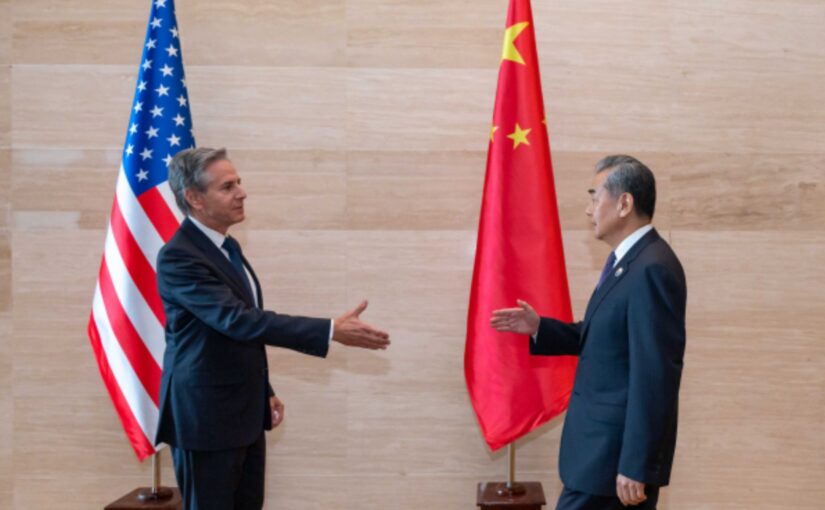
Zhang Jun: We must actively advocate the equitable and orderly multi-polarisation of the world

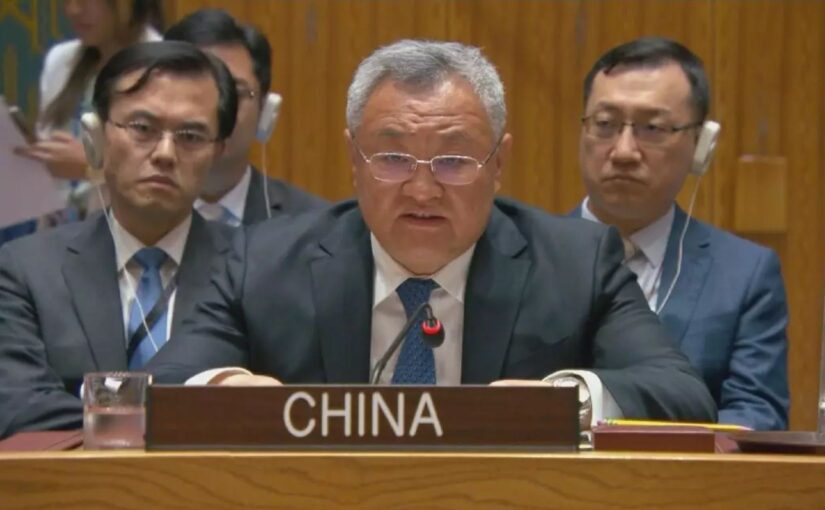
The following is the full text of the remarks by Chinese Ambassador to the United Nations Zhang Jun at the UN Security Council briefing on Ukraine held on February 23, 2024. 

Noting that the Ukraine crisis is a “tragedy that could have been avoided”, Zhang sets out four points.

First, he says that efforts should remain focused on a political settlement. “The most pressing priority of the hour is to stop hostilities, launch peace talks, and restore peace. Peace is in the interest of all parties. The sooner peace talks begin, the less the damage that is done. Any action that is conducive to peace and greater trust, however small it may seem, is worth our genuine effort as long as there is a glimmer of hope. We call upon the parties concerned to show a sense of responsibility and make constructive diplomatic efforts to promote deescalation and detente. It is favourable conditions for the resumption of negotiations that they should be creating, not man-made obstacles to make peace harder to achieve, much less to supply weapons, stoke the fire and pour oil on it, and to profit from the prolonged crisis.”

Second is to stay the course towards common security. “We must respect the legitimate security concerns of all countries and never lose sight of the fact that security is indivisible, that one country’s security cannot be achieved at the expense of other countries’ security, and that regional security cannot be guaranteed by strengthening or even expanding a military bloc. The legitimate security interests and concerns of all countries should be taken seriously and addressed properly. It must be pointed out that the situation Europe is facing today is closely related to the repeated eastward expansion of NATO since the end of the Cold War. We encourage NATO to do some soul-searching, come out of the cage of Cold War mentality, and refrain from acting as an agent of trouble instigating bloc confrontation. We urge the head of NATO to look at the world through an objective lens, stop saber-rattling, and do things that are genuinely conducive to world peace.”

Third, “the spillover effects of the crisis must be proactively managed. The world is in enough turmoil. It cannot afford to be hit by more crises that are bigger than what we already have. Attempting to solve problems by creating more problems does not work. Certain countries, using the Ukraine crisis as a pretext, have indiscriminately imposed unilateral sanctions and long-arm jurisdiction and exerted unjustified pressure on the businesses of other countries, which has adversely impacted the global industrial and supply chains and disrupted the order of global trade… China firmly opposes the unlawful sanctions imposed on Chinese companies by the United States, the United Kingdom, and the European Union using the Ukraine issue as an excuse.”

Fourth, “we must actively advocate the equitable and orderly multi-polarisation of the world. The Cold War ended over 30 years ago… Humanity is a community with a shared future. All countries, large and small, are equal members of the global community when it comes to international relations and are entitled to a place in the international arena… For the world to slide back to the colonial age is not an option.”

In conclusion, Zhang notes that: “China played no part in the creation of the Ukraine crisis, nor is China a party to the crisis itself. We have not been watching the fire from across the river, much less cashing in on the crisis. On the question of Ukraine, China has always maintained that the sovereignty and territorial integrity of all countries should be respected, the purposes and principles of the UN Charter should be observed, the legitimate security concerns of all countries should be taken seriously, and all efforts conducive to a peaceful settlement of the crisis should be supported.”

Shortly after these remarks were delivered China announced that its Special Envoy Li Hui would begin another round of shuttle peace diplomacy, with scheduled stops including Russia, Ukraine, Poland, Germany, France, and the headquarters of the European Union (EU) in Brussels.

The following article originally appeared on the website of the Chinese Foreign Ministry.

Madam President, 

I thank Secretary-General Guterres for his earlier briefing. 

The ongoing Ukraine crisis is threatening to become a protracted, compounded, and wider one. This tragedy that could have been avoided has become what it is today. This is most distressing and worthy of deep reflection. The international community should pull together in search of a just and sensible solution to settle the crisis politically and let peace prevail as soon as possible.

First, efforts should remain focused on a political settlement. The Ukraine crisis has caused incalculable damage. The most pressing priority of the hour is to stop hostilities, launch peace talks, and restore peace. Peace is in the interest of all parties. The sooner peace talks begin, the less the damage that is done. Any action that is conducive to peace and greater trust, however small it may seem, is worth our genuine effort as long as there is a glimmer of hope. We call upon the parties concerned to show a sense of responsibility and make constructive diplomatic efforts to promote deescalation and detente. It is favorable conditions for the resumption of negotiations that they should be creating, not man-made obstacles to make peace harder to achieve, much less to supply weapons, stoke the fire and pour oil on it, and to profit from the prolonged crisis. We look forward to greater efforts by the UN to promote peace talks and alleviate the humanitarian situation.

Second, we must stay the course towards common security. In the face of complexities and challenges, we must be firmly committed to the vision of common, comprehensive, cooperative, and sustainable security. We must respect the legitimate security concerns of all countries and never lose sight of the fact that security is indivisible, that one country’s security cannot be achieved at the expense of other countries’ security, and that regional security cannot be guaranteed by strengthening or even expanding a military bloc. The legitimate security interests and concerns of all countries should be taken seriously and addressed properly. It must be pointed out that the situation Europe is facing today is closely related to the repeated eastward expansion of NATO since the end of the Cold War. We encourage NATO to do some soul-searching, come out of the cage of Cold War mentality, and refrain from acting as an agent of trouble instigating bloc confrontation. We urge the head of NATO to look at the world through an objective lens, stop saber-rattling, and do things that are genuinely conducive to world peace.

Third, the spillover effects of the crisis must be proactively managed. The world is in enough turmoil. It cannot afford to be hit by more crises that are bigger than what we already have. Attempting to solve problems by creating more problems does not work. Certain countries, using the Ukraine crisis as a pretext, have indiscriminately imposed unilateral sanctions and long-arm jurisdiction and exerted unjustified pressure on the businesses of other countries, which has adversely impacted the global industrial and supply chains and disrupted the order of global trade. The world economy is interdependent, and it is wrong to instrumentalize or weaponize the world economy. China firmly opposes the unlawful sanctions imposed on Chinese companies by the United States, the United Kingdom, and the European Union using the Ukraine issue as an excuse. China will continue to take necessary measures to safeguard the legitimate rights and interests of Chinese enterprises and citizens.

Fourth, we must actively advocate the equitable and orderly multi-polarization of the world. The Cold War ended over 30 years ago. Since then, the international landscape has undergone profound adjustments and the multi-polarization of the world has picked up pace. This is the trend of the times and the tide of history. Humanity is a community with a shared future. All countries, large and small, are equal members of the global community when it comes to international relations and are entitled to a place in the international arena. All countries should jointly abide by the purposes and principles of the UN Charter, adhere to the universally accepted basic norms governing international relations, and practice true multilateralism together without selective application or double standards. For the world to slide back to the colonial age is not an option. International affairs should not be monopolized by a minority of countries. Trying to obstruct other countries’ progress through hegemony and bullying is not right, and it would not work. On the other hand, major countries have a special responsibility for world peace and security, and must conduct their relations responsibly and manage their differences properly in pursuit of win-win cooperation.

Madam President,

China played no part in the creation of the Ukraine crisis, nor is China a party to the crisis itself. We have not been watching the fire from across the river, much less cashing in on the crisis. On the question of Ukraine, China has always maintained that the sovereignty and territorial integrity of all countries should be respected, the purposes and principles of the UN Charter should be observed, the legitimate security concerns of all countries should be taken seriously, and all efforts conducive to a peaceful settlement of the crisis should be supported. China will continue to play a constructive role and make unremitting efforts towards a political settlement of the Ukraine issue.

Thank you, Madam President.

Hands off China! Full solidarity with Palestine!

The following article by Sara Flounders, based on a talk given at our event Peace delegates report back from China: Building solidarity and opposing the New Cold War, calls for a joined-up anti-imperialism, positing that “the best way to oppose the new Cold War with China is to be the most militant opponent of every US war.”

Sara observes that the events of 7 October 2023 “opened a new chapter in the worldwide class war”. US imperialism is backing Israel to the hilt, desperate to protect its interests in the region – part of defending and expanding US global hegemony. “That means Palestine fights for all of us”, and those that oppose the US-led program to encircle and contain China should also stand with the people of Palestine.

Further, we should be standing firmly against the US’s unilateral sanctions, which are being used to undermine and destabilise a total of 40 countries currently.

The US and its allies are also engaged in a proxy war against Russia in Ukraine. The over-arching strategy is to “impose regime change on Russia, which would be a key step to their next move — against China.”

The basic dynamic in geopolitics today is the contest between a moribund imperialism and a rising multipolarity. As Sara writes, “China’s very existence as a prosperous, developing country confirms that humanity has another choice. The developing world, the Global South, looks to China — not to U.S. imperialism. That is a threat to imperialism.”

Sara concludes by calling on our movement to unite behind the slogans: “Hands off China! Full solidarity with Palestine!”

This article appeared first in Workers World.

With U.S. wars coming thick and fast, the best way to oppose the new Cold War with China is to be the most militant opponent of every U.S. war.

If Israel succeeds in crushing Palestinian resistance, based on U.S. financial, political and military support, then U.S. imperialism is stronger on a world scale. That means Palestine fights for all of us. Palestine’s resistance has ignited a global resistance.

Before October 7, Israel, after 75 years of U.S. backing, seemed all powerful. Now the Israeli military has been frustrated at every turn by the indomitable spirit of Palestinian resistance. The Israelis face ambushes without end.

There is a sea change in the U.S. working class. For the first time, a majority of the population supports Palestine. There is sharp opposition to U.S. policy, shown by mass marches, shutdowns, walkouts. Let’s build on this global outrage over the U.S. role as the “enabler” of this genocide!

Global support for Palestine

On a world scale, people side with Palestine, whose resistance is our resistance. The liberation of Palestine is an important step in the liberation of humanity.

October 7 opened a new chapter in the worldwide class war. The Israeli regime’s genocidal crimes against the people of Gaza demand our international solidarity.

Faced with an unwinnable quagmire, the U.S. and Israel have expanded this war. Just this week, they bombed Muslims in Syria, Iraq and Yemen. Three days ago, they blew up two main natural gas pipelines in Iran, leaving millions of Iranians without heat and cooking fuel in winter. This is the way the U.S. and Israel fight wars — they target essential civilian infrastructure.

The U.S. and NATO countries cut off all food, medical care and schools to all Palestinians — even in Jordan and Lebanon, and on the West Bank, by cutting off funding to UNRWA [United Nations Relief and Works Agency for Palestine Refugees in the Near East].

I raise all of this, because the U.S. media and politicians claim they want to protect Uyghur Muslims in Xinjiang. The sheer hypocrisy of this claim is blatant. Yet it is the basis of the sanctions! This false charge is a big weapon in the war on China and in lining up and demanding compliance of all U.S. allies against China.

Thousands of Volkswagen, Audi, and Porsche cars are impounded on ships at U.S. ports, just because they include a small Chinese electronic part. These German auto corporations are told they must pay U.S. fines, remove the offending part and agree to U.S. charges against China regarding Xinjiang.

Bales of clothing made in Vietnam and Malaysia go through isotopic testing at U.S. Customs. If even a thread of cotton comes from Xinjiang, the clothing is destroyed. This is because the U.S. authorities allege there is slave labor in Xinjiang — even though Xinjiang’s cotton industry is fully mechanized.

Anti-war activists need to militantly oppose the wanton use of economic sanctions, which are used against not only China but a total of 40 countries, inhabited by one-third of the world’s population. Applying sanctions is a powerful weapon of economic destabilization.

However, this is a double-edged sword. Enforcement of these sanctions now widens U.S. isolation. They intensify trade wars with Washington’s imperialist “partners” — or are they better called imperialist rivals?

Much to the frustration of U.S. imperialism, sanctioned countries are finding new roads to cooperation and trade.

Continue reading Hands off China! Full solidarity with Palestine!

China reiterates its solidarity with Syria

The following is the full text of the remarks made by senior Chinese diplomat Dai Bing to the United Nations Security Council briefing on Syria held on February 27th, 2024.

Dai puts forward three points, calling first for containing the spillover effects of the war in Gaza to Syria, noting that, “over the past four months, Israel has continued to launch airstrikes on various locations in Syria through the occupied Golan Heights, about which China is deeply concerned.”

Second, he says that a political solution to the Syrian issue must be promoted. “The international community should uphold the Syrian-led and Syrian-owned principle, encourage dialogue and consultations, and find a solution acceptable to all parties… We support the Syrian government in taking necessary measures to combat terrorism, maintain security and stability, and eliminate the long-term threats to the political process in Syria. The international community must combat all terrorism in Syria with zero tolerance.”

Third, there is a need to work together to alleviate the humanitarian crisis in Syria. “Unilateral sanctions and the plundering of resources have long impeded Syria’s economic recovery, social development, and improvement of people’s livelihood, thereby exacerbating the humanitarian disaster in Syria. We urge the countries concerned to immediately end their unlawful acts and foreign forces to immediately end their illegal military presence in Syria.”

The following article was originally published on the website of the Chinese Foreign Ministry.

Madam President,

I would like to thank Special Envoy Geir Pedersen and Under-Secretary-General Martin Griffiths for their briefings. In light of their briefings, I would like to make the following three points. 

First, containing the spillover effects of the escalation of the Gaza conflict on Syria. Over the past four months, Israel has continued to launch airstrikes on various locations in Syria through the occupied Golan Heights, about which China is deeply concerned. We call on all parties to exercise restraint and to avoid exacerbating tensions. Countries outside the region should play a constructive role in deescalating the situation and preventing the conflict from spreading and expanding.

Second, promoting a political solution to the Syrian issue. China welcomes the successful convening of the 21st round of High-Level Meetings on Syria within the framework of the Astana format as well as Special Envoy Pedersen’s extensive engagement with all parties on the implementation of UN Security Council Resolution 2254. The international community should uphold the Syrian-led and Syrian-owned principle, encourage dialogue and consultations, and find a solution acceptable to all parties. We believe help from regional countries will inject new momentum into the political settlement of the Syrian issue. We support the Syrian Government in taking necessary measures to combat terrorism, maintain security and stability, and eliminate the long-term threats to the political process in Syria. The international community must combat all terrorism in Syria with zero tolerance. 

Third, working together to alleviate the humanitarian crisis in Syria. Over the past year, the UN and the Syrian Government have maintained effective and smooth communication and cross-border points have been extended several times. We urge the parties concerned to show sincerity and make positive progress in cross-line operations. As humanitarian funding for Syria has long been insufficient, the international community should increase its input in humanitarian assistance to Syria and support humanitarian operations and early recovery projects throughout the country. Unilateral sanctions and the plundering of resources have long impeded Syria’s economic recovery, social development, and improvement of people’s livelihood, thereby exacerbating the humanitarian disaster in Syria. We urge the countries concerned to immediately end their unlawful acts and foreign forces to immediately end their illegal military presence in Syria.

Thank you, Madam President.

President Xi’s three key global initiatives on development, security and civilisation

On the eve of China’s annual twin parliamentary sessions, China Dally published the below interview with our co-editor Keith Bennett, focusing on President Xi’s three key global initiatives on development, security and civilisation.

According to Keith, they constitute a “step-by-step process, [whereby] China is setting out its view of the world – not only the view of the world as it is, but a view of the world as it should be, and what kind of world humanity should be aspiring to.”

He notes that the Global Development Initiative, first proposed by President Xi at the United Nations General Assembly in September 2021, has received a warm welcome from the majority of countries in the Global South, as its philosophies and policies are in the interests of the majority of the people in every country. 

“This reflects the fact that development is still the most pressing need for the majority of humanity… But what are the things that people need to realise development? Peace and security.”

The following article was first published by China Daily.

China’s three major global initiatives on development, security, and civilization have been welcomed by the majority of the world, and the West needs to gain a better understanding of them, said Keith Bennett, an analyst of international relations.

“In a step-by-step process, China is setting out its view of the world — not only the view of the world as it is, but a view of the world as it should be, and what kind of world humanity should be aspiring to,” said Bennett, co-editor of the online platform Friends of Socialist China, as he discussed the Global Development Initiative, Global Security Initiative and Global Civilization Initiative.

He added that the two sessions, the annual gatherings of the National People’s Congress and the National Committee of the Chinese People’s Political Consultative Conference, provide an important window for the West to learn about China’s domestic policy and its global vision.

NPC deputies and CPPCC members come to the sessions representing all walks of life, and the government report is a result of many deliberations and wide-ranging consultations.

“A lot of people in the West say that China is unpredictable. But actually, China puts forward its policies and its philosophy and its proposals very clearly,” said Bennett, who studied Chinese history and politics at the University of London in the late 1970s and has visited China more than 200 times.

“I think whether people support China, or they don’t support China, they actually should understand China first,” said Bennett, who is also a long-time member of the Society for Anglo-Chinese Understanding, which was founded in 1965 to promote understanding and friendship between the British and Chinese people.

Bennett said the three initiatives outline China’s experience and wisdom that can be used to deal with current world problems, such as how to achieve growth for developing countries and how to resolve conflicts in the Middle East.

Since President Xi Jinping proposed the Global Development Initiative at the 76th Session of the United Nations General Assembly in September 2021, the initiative has received a warm welcome by the majority of countries in the Global South, as its philosophies and policies are “in the interests of the majority of the people in every country”, Bennett said.

According to China’s Permanent Mission to the United Nations and Other International Organizations in Vienna, more than 100 countries and international organizations have voiced support for the GDI, and over 70 countries had joined the Group of Friends of the GDI by the end of last year.

“This reflects the fact that development is still the most pressing need for the majority of humanity,” Bennett said.

“But what are the things that people need to realize development? Peace and security.”

In that regard, the Global Security Initiative was put forward by Xi at the Boao Forum for Asia Annual Conference in April 2022, stressing the importance of upholding a vision of common, comprehensive, cooperative and sustainable security, respecting the sovereignty and territorial integrity of all countries and adhering to non-interference in internal affairs.

Last year, the reconciliation between Iran and Saudi Arabia under a China-brokered deal was a remarkable achievement of the initiative, Bennett said, adding that he has observed how China has been assisting in reconciliations in various regions.

“All three initiatives are linked as a whole. It’s like you put one on top of the other to make the house,” he said, adding that the Global Civilization Initiative, which was introduced by Xi during the CPC in Dialogue with World Political Parties High-Level Meeting in March last year has been indispensable in realizing those achievements.

“In the Western capitalist countries, Samuel Huntington’s ideas of a ‘clash of civilizations’ find a strong resonance… but at base, it is a racist conception which constructs a hierarchy of civilizations, elevating that of the West and placing them in an adversarial and antagonistic relationship to one another,” he wrote in another recent commentary.

“In stark contrast, the Global Civilization Initiative makes clear that the history of humanity, spanning thousands of years, has seen a variety of civilizations come into being, develop and thrive, and this has in return promoted the overall development of human society,” Bennett said.

Zhang Jun: Israel must halt its collective punishment of the Palestinian people

The following is the full text of the statement by Zhang Jun, China’s Ambassador to the United Nations, at a UN Security Council briefing on the situation in the Middle East, including the Palestinian question, held on February 22, 2024, in which he forcefully addresses the dire humanitarian situation facing the people of Gaza as a result of Israel’s genocidal war. 

Ambassador Zhang notes that the veto cast by the United States two days previously meant that the council had missed yet another opportunity to push for a ceasefire in Gaza: “The continuation of the conflict even for another day would cause even more civilian casualties and lead to a greater catastrophe…

“We need to point out that the essence of any action of this Council is to achieve an immediate ceasefire. Any message sent out via our action must be clear, unequivocal, unambiguous, and unmistakable, rather than prevaricate or beat about the bush… The military offensive into Rafah must cease immediately. Over 1.5 million Gazans are packed into Rafah having nowhere else to go. Escalated Israeli military incursions into Rafah will result in unthinkable civilian casualties and humanitarian disasters and cause irreparable damage to regional peace. We strongly oppose such actions. Israel should immediately cancel its plan to attack Rafah and halt its collective punishment of the Palestinian people. The International Court of Justice requires that the provisional measures issued to prevent genocide be effectively implemented without delay.”

Endorsing the testimony of the Director General of the World Health Organisation (WHO), Zhang said that, “Gaza is becoming a death zone. Millions of people in Gaza lack the basic necessities for survival and are languishing in hunger, in disease, and in despair. Meanwhile, humanitarian relief is hampered by man-made barriers, so much so that it is becoming unsustainable… Israel must take concrete action to open all land, sea, and air routes into Gaza, provide all that is required by humanitarian agencies for their relief operations, and ensure the safety and security of the staff and facilities of humanitarian agencies.”

Turning to the national rights of the Palestinian people, Zhang said: “Independent Palestinian statehood is not a gift given by one party to another in charity, but an inalienable right of the Palestinian people as a nation… The historical wrongs suffered by Palestine must be righted. Palestine’s long aspiration for independent statehood must be fulfilled.”

The below article first appeared on the website of the Chinese Foreign Ministry.

Editor’s Note: Christopher Lockyear, to whom Ambassador Zhang refers at the start of his remarks, is the Secretary General of the NGO Médecins Sans Frontières (Doctors Without Borders).

Zhang Jun at the UN Security Council Briefing on the Situation in the Middle East, including the Palestinian Question

Madam President, 

I thank the two briefers for their briefings. We were left appalled by Mr. Christopher Lockyear’s briefing. We hope the tragic picture in Gaza that he painted for us can touch the conscience of a certain member of this Council.

The veto by the United States two days ago meant that the Council missed yet another opportunity to push for a ceasefire in Gaza. The continuation of the conflict even for another day would cause even more civilian casualties and lead to a greater catastrophe. An immediate ceasefire in Gaza is an urgent imperative to save innocent lives and to prevent a wider war. An immediate ceasefire is the common wish voiced by the international community and the consensus of the Council’s overwhelming majority. We are aware that the United States has tabled a new draft resolution. We hope the US will show a responsible attitude, respond positively to the international voice, and respect the established consensus among Council members. 

We need to point out that the essence of any action of this Council is to achieve an immediate ceasefire. Any message sent out via our action must be clear, unequivocal, unambiguous, and unmistakable, rather than prevaricate or beat about the bush. At this point, the Council needs to demonstrate a strong resolve rather than negotiating skills only.

Madam President, 

More than four months have passed since the conflict in Gaza began. It is the bounden duty of this Council to slam on the brakes to head off a greater calamity. 

The military offensive into Rafah must cease immediately. Over 1.5 million Gazans are packed into Rafah having nowhere else to go. Escalated Israeli military incursions into Rafah will result in unthinkable civilian casualties and humanitarian disasters and cause irreparable damage to regional peace. We strongly oppose such actions. Israel should immediately cancel its plan to attack Rafah and halt its collective punishment of the Palestinian people. The International Court of Justice requires that the provisional measures issued to prevent genocide be effectively implemented without delay. 

It is imperative to ensure sufficient unimpeded humanitarian deliveries into Gaza. As said by the Director General of WHO, Gaza is becoming a death zone. Millions of people in Gaza lack the basic necessities for survival and are languishing in hunger, in disease, and in despair. Meanwhile, humanitarian relief is hampered by man-made barriers, so much so that it is becoming unsustainable. The WFP announced that it had been forced to suspend its assistance to Northern Gaza because of security threats. Right now, Security Council Resolutions 2712 and 2720 must be fully implemented. Israel must take concrete action to open all land, sea, and air routes into Gaza, provide all that is required by humanitarian agencies for their relief operations, and ensure the safety and security of the staff and facilities of humanitarian agencies. UNRWA plays a vital role that is indispensable and irreplaceable in alleviating the humanitarian plight in Gaza. We call on the donors concerned to resume funding to UNRWA as soon as possible out of humanitarian considerations to keep the lifeline for the people of Gaza alive. All parties should give their full support to the work of Sigrid Kaag, UN senior humanitarian and reconstruction coordinator for Gaza. 

Every effort must be made to prevent the conflict from spilling over to the wider region. Right now, the Middle East is in turmoil. Exchanges of fire between Lebanon and Israel and between Syria and Israel are escalating. Tensions in the Red Sea are continuing. And the specter of the wider war is looming over the Middle East. We call on the parties concerned, especially those with significant influence, to exercise calm and restraint and to refrain from acts that would aggravate the tensions. Parties should endeavor to stop war through peace and break the vicious circle of violence and conflict. 

The political horizon offered by the two-State solution must be given a new lease on life. Independent Palestinian statehood is not a gift given by one party to another in charity, but an inalienable right of the Palestinian people as a nation. We are gravely concerned by the recent repeated public dismissal of the two-State solution by some Israeli politicians and their rejection of any international effort towards independent Palestinian statehood. Gaza is an inalienable part of Palestine, and the two-State solution is the bottom line of international justice and the only viable path towards the settlement of the Palestinian-Israeli issue. China urges Israel to stop without delay eroding the foundation of the two-State solution, halt the forced displacement of Palestinian civilians, and cease the searches, arrests, and raids in the West Bank. The historical wrongs suffered by Palestine must be righted. Palestine’s long aspiration for independent statehood must be fulfilled. China supports Palestine in becoming a member of the United Nations as soon as possible and calls for the convening of a larger, more authoritative, and more effective international peace conference to push for a comprehensive, just, and lasting solution to the question of Palestine. 

Thank you, President.

Xi: China has always regarded solidarity with Africa as an important cornerstone of our foreign policy

Julius Maada Bio, President of the west African state of Sierra Leone, paid a state visit to China from February 27-March 2 at the invitation of his Chinese counterpart Xi Jinping.

Meeting his guest on February 28, Xi Jinping noted that China and Sierra Leone enjoy a time-honoured friendship, adding that the two sides have supported each other on issues concerning their core interests and major concerns, carried out efficient cooperation in the fields of economic and social development, coordinated closely on issues such as world peace and development, and worked together to fight against Ebola and the COVID-19 pandemic.

China-Sierra Leone relations are a good example of China-Africa solidarity and cooperation, Xi said, adding that China is willing to work with Sierra Leone to consolidate high-level political mutual trust, advance pragmatic and mutually beneficial cooperation, and strengthen coordination on international and regional affairs so as to push bilateral relations to a new level.

China is also willing to provide assistance and support to the best of its ability for Sierra Leone’s development in agriculture, infrastructure construction and human resources, and encourage Chinese enterprises to invest and do business in Sierra Leone.

Both sides should strengthen cooperation on UN Security Council affairs and jointly safeguard the interests of Africa and developing countries.

“China has always regarded solidarity and cooperation with African countries as an important cornerstone of our foreign policy,” Xi recalled.

China will work with African countries to align its initiatives to support Africa’s industrialisation, agricultural modernisation and talent development with the African Union’s Agenda 2063 and the development strategies of African countries; and to further integrate the development of China, Africa and the world to promote the upgrading of China-Africa cooperation and move the world towards a bright future of peace, security, prosperity and progress.

China is ready to work with African friends, including Sierra Leone, to make this year’s session of the Forum on China-Africa Cooperation (FOCAC) a success, Xi said.

Bio said China is a trustworthy and reliable friend, thanking China for its great support for his country’s economic and social development.

He spoke highly of the Communist Party of China leading the Chinese people to achieve leapfrog development and promoting national rejuvenation. China’s experience provides inspirations for developing countries to accelerate their development.

He said Sierra Leone is willing to learn from China’s experience, strengthen cooperation with China on the Belt and Road Initiative, and tap the potential for cooperation on infrastructure, trade, education and public services.

After the talks, the two heads of state witnessed the signing of bilateral cooperation documents in the fields of the Belt and Road Initiative, agriculture, economic development, and the implementation of the Global Development Initiative.

Both sides issued a joint statement on deepening their comprehensive strategic cooperative partnership.

A February 28 article by the Reuters news agency, further noted that, during the Sierra Leonean President’s meeting with Xi, China announced 50 million yuan ($6.95 million) in economic and technical assistance, a 20 million yuan debt cancellation and 1,500 tonnes of food assistance for Sierra Leone, according to a statement from Sierra Leone’s State House.

It added that Chinese firms have invested $6.4 billion in Sierra Leone since 2010, according to data from the American Enterprise Institute think tank, predominantly in metals.

In November, China granted Sierra Leone $13 million to “support the economic and social development of Sierra Leone.”

In December, Sierra Leone signed a pact with China Road and Bridge Corporation to build an 8-km (5-mile) bridge crossing the river separating the capital Freetown from the country’s main airport at an estimated cost of $1.5 billion.

 In the Joint Statement on Deepening The Comprehensive Strategic Cooperative Partnership Between the People’s Republic of China and The Republic of Sierra Leone, the two sides agreed that since the establishment of diplomatic relations more than 50 years ago [in 1971], China and Sierra Leone have deepened their traditional friendship, continuously enhanced political mutual trust, achieved fruitful results in practical cooperation and coordinated closely in international affairs. Such a relationship has greatly benefited both countries and peoples, and set a fine example of a new type of international relations.

They spoke highly of the new progress made in China-Sierra Leone relations since President Bio’s state visit to China in 2018. In particular, the two sides recalled the spirit of friendship and solidarity demonstrated in the fight against COVID-19, during which the people of China and Sierra Leone supported each other and fought the pandemic side by side.

The two sides concurred that China-Sierra Leone relations have gained further strategic significance in the face of complex challenges in the world. To further promote the development of China-Sierra Leone relations and expand cooperation in various fields, the two leaders have decided to deepen the China-Sierra Leone comprehensive strategic cooperative partnership and jointly build a community with a shared future for humanity.

Sierra Leone highly commends that under the leadership of the Communist Party of China (CPC), the Chinese people have made great progress in realising the transformation of the Chinese nation on all fronts through Chinese modernisation, and believes that the Chinese path to modernisation offers options and solutions to fellow developing countries seeking independent development.  Sierra Leone will also support all efforts made by the Chinese government to achieve national reunification. 

China commended Sierra Leone for joining and actively participating in the Belt and Road Initiative (BRI) since 2018. Sierra Leone highly commended the BRI’s positive role in advancing economic development and people’s livelihood in partner countries since its inception over 10 years ago. The two sides have signed the Cooperation Plan on Jointly Promoting the BRI. Guided by the Silk Road spirit of peace and cooperation, openness and inclusiveness, mutual learning and mutual benefit, the two sides will follow the principle of extensive consultation, joint contribution and shared benefits, adhere to the philosophy of open, green and clean cooperation, and make the cooperation high-standard, people-centered and sustainable.

The Chinese side will strengthen cooperation with Sierra Leone in human resource development and continue to dispatch medical teams to Sierra Leone. The Sierra Leonean side expressed gratitude for China’s long-standing support for Sierra Leone’s health sector, especially during Ebola and COVID-19.

The two sides agreed to uphold the principle of equality among all countries regardless of size, oppose hegemonism and power politics, and work to build an equal and orderly multipolar world and a universally beneficial and inclusive economic globalisation. As developing countries, China and Sierra Leone share extensive common interests and similar positions on international affairs, and will support each other in this regard. China congratulated Sierra Leone again on its election as non-permanent member of the UN Security Council 2024-2025, and expressed its readiness to strengthen cooperation with Sierra Leone and safeguard the common interests of developing countries. The two sides reiterated their support for the authority of the UN, and agreed that reform of the UN Security Council needs to support developing countries including Africa in playing a bigger role, increase their representation and voice in the Security Council and redress the historical injustices done to Africa. 

Chinese Premier Li Qiang also met with President Bio on February 28 and said that since the establishment of diplomatic ties more than half a century ago, China and Sierra Leone have always respected each other, treated each other as equals and cooperated with each other sincerely, and are good friends, good partners and good brothers who share weal and woe.

Li pointed out that China is willing to strengthen the alignment of development strategies with Sierra Leone, carry out practical and efficient cooperation, advance the construction of key projects and livelihood projects in an orderly manner, and provide support to the economic and social development of Sierra Leone within its capacity.

China will continue to send agricultural technical experts to help Sierra Leone cultivate quality crops and train technical personnel, strengthen exchanges and the sharing of experience in agricultural policy planning with Sierra Leone, and push for deeper and more solid agricultural cooperation between the two countries.

“China stands ready to further strengthen people-to-people exchanges with Sierra Leone on youth, education, training and medical care to consolidate public support for friendly relations between the two countries,” the Chinese Premier added.

China’s top legislator Zhao Leji, Chairman of the National People’s Congress (NPC) Standing Committee, also met the Sierra Leonean head of state on the same day. He said that under the guidance of the leaders of the two countries, bilateral relations had been running at a high level and cooperation had yielded fruitful results.

The Chinese side attaches great importance to cooperation with the Sierra Leonean parliament and is willing to strengthen exchanges at all levels of the legislature, provide better legal guarantees for bilateral cooperation, promote exchanges among political parties and localities, as well as people-to-people exchanges, and share experience in strengthening democracy and the rule of law.

Following his talks in Beijing, President Bio visited Wuhan in central China’s Hubei Province, marking his first trip to the Chinese city that has close ties with Sierra Leone in multiple fields such as trade, education and agriculture.

During this visit, Bio went to the Institute of Food Crops of Hubei Academy of Agricultural Sciences, where he learned about the research achievements in rice cultivation. Noting that rice is a staple food for many African countries, including Sierra Leone, he expressed hope for collaboration between Sierra Leone and Hubei in this field. He was also awarded an honorary doctorate degree by the China University of Geosciences (Wuhan). Expressing his gratitude, Bio said that this accolade is “not just a personal achievement, but a testimony of the enduring friendship between our two countries.”

The following articles were originally published by the Xinhua News Agency.

Xi holds talks with Sierra Leonean president

BEIJING, Feb. 28 (Xinhua) — Chinese President Xi Jinping held talks with President of the Republic of Sierra Leone Julius Maada Bio, who is on a state visit to China, in Beijing on Wednesday.

Noting that China and Sierra Leone enjoy a time-honored friendship, Xi said the two sides have supported each other on issues concerning their core interests and major concerns, carried out efficient cooperation in the fields of economic and social development, coordinated closely on issues such as world peace and development, and worked together to fight against Ebola and the COVID-19 pandemic.

China-Sierra Leone relations are a good example of China-Africa solidarity and cooperation, Xi said, adding that China is willing to work with Sierra Leone to consolidate high-level political mutual trust, advance pragmatic and mutually beneficial cooperation, and strengthen coordination on international and regional affairs to push bilateral relations to a new level.

Xi said China firmly supports the Sierra Leonean people in pursuing a development path suited to their national conditions. He said China stands ready to strengthen exchanges with Sierra Leone on national governance, and work with Sierra Leone to continue supporting each other’s major concerns and safeguarding their respective sovereignty, security and development interests.

China is also willing to provide assistance and support to the best of its ability for Sierra Leone’s development in agriculture, infrastructure construction and human resources, and encourage Chinese enterprises to invest and do business in Sierra Leone, Xi said.

Both sides should strengthen cooperation on UN Security Council affairs and jointly safeguard the interests of Africa and developing countries, Xi noted.

The Chinese president welcomed Sierra Leone to participate in the Global Development Initiative, the Global Security Initiative and the Global Civilization Initiative, and jointly promote the building of a community with a shared future for humanity.

“China has always regarded solidarity and cooperation with African countries as an important cornerstone of our foreign policy,” Xi said.

China will work with African countries to align its initiatives to support Africa’s industrialization, agricultural modernization and talent development with the African Union’s Agenda 2063 and the development strategies of African countries; and to further integrate the development of China, Africa and the world to promote the upgrading of China-Africa cooperation and move the world towards a bright future of peace, security, prosperity and progress, Xi said.

Continue reading Xi: China has always regarded solidarity with Africa as an important cornerstone of our foreign policy

Understanding the role of the private sector in the Chinese economy

We are pleased to publish below the text of a speech by Dr Jenny Clegg at a public meeting in Manchester, Britain, organised by the Greater Manchester Morning Star Readers and Supporters Group. The title of the event was China and the Western Left, and it aimed to uncover the nature of China’s political economy and its role in the world. The other guest speaker was Friends of Socialist China co-editor Carlos Martinez.

Jenny’s speech seeks to explain the role of the private sector in the current phase of China’s development. Jenny lays the ground for understanding today’s domestic capitalist class by uncovering the role of the national bourgeoisie in the history of the Chinese Revolution, including in the massive strike wave of the 1920s, the United Front to resist Japanese invasion, and the period of rebuilding during the New Democracy phase between 1949 and 1956. Jenny posits that this group, while not always reliable, “had an anti-imperialist side” and furthermore “was prepared to accept CPC leadership in the right circumstances – something still influencing the CPC’s attitude to today’s private entrepreneurs.”

The speech explains the unusual nature of China’s socialist market economy, in which the public and private sectors have an essentially symbiotic relationship, and where the state maintains overall control.

“The majority of large-scale private enterprises are linked into the state through mixed-ownership arrangements, with the state investing and divesting to shape industrial growth according to overall plans… Around 40 percent of private entrepreneurs are Party members and around half of private enterprises have CPC cells organised within them. Over 40 percent of workplaces so far are unionised, more than twice the rate here in Britain.”

As such, “the relationship then between the socialist state and the private sector is one of unity in developing the economy as well as struggle to ensure public benefit.”

A member of our advisory group, Jenny is a retired academic and an activist in the anti-nuclear, peace and friendship movements. She is the author of China’s Global Strategy: Towards a Multipolar World, published by Pluto Press.

The major stumbling point for the Western Left in understanding China as a socialist country is the question of the growth in recent decades of market relations and the private sector. This question requires in the first place a consideration of the contribution that the domestic capitalist class made in China’s revolutionary process before getting some measure of the private economy in China today.

The historical role of the national bourgeoisie in the Chinese revolution

One hundred years ago – minus one year – in 1925, on May 30, a British officer ordered the police in the Shanghai British concession to open fire on Chinese protestors, killing at least nine of them. The protests were part of a mounting strike wave in which the Communist Party of China (CPC) – founded in 1921 – was very active, and the incident sparked some momentous developments as anti-imperialist feelings surged.

Ayear-long strike in Hong Kong, starting in 1925, dealt a great blow to British imperialism, which from its island base had extended its influence, becoming the leading imperialist power not only in China but across Southeast Asia. The fact that Chinese capitalists supported and funded the strike, showing they too had an anti-imperialist side, was a particular lesson for the CPC.

The Kuomintang (KMT), supported by the CPC in the first United Front, began to prepare its army for the Northern Expeditionwhich set off in 1926to overthrow the feudal warlords and imperialist rule. As it advanced, peasant associations spread like wildfire.

The British Tory government launched a 20,000 strong expeditionary force; and in due course cities along the Yangtze came under British bombardment.

And in Britain, Hands off China became the largest anti-imperialist movement during the General Strike.

The situation in China became highly radicalised as peasants’ moderate demands for rent reductions gave way to land seizures and workers took over the British concession in Wuhan. These developments caused KMT Nationalist army officers to take fright, and what followed was a brutal massacre of communists in Shanghai, ordered by KMT head Chiang Kai-shek. Too late, the remaining CPC activists formed their own Red Army but, failing to capture an urban base, retreated to the mountains to set up worker-peasant soviets.

Over the next ten years, the CPC carried out various land reform policies with limited success. It was Mao who recognised the Leftist errors thatfailed to take capital into account in implementing reforms to eradicate feudal relations. Taking corrective measures, following the Long March (1934-35), by the time the Japanese escalated its occupation of China in 1937, the CPC was ready to meet the new anti-imperialist upsurge by entering a second United Front of resistance with the KMT. 

In the red base areas under its control, the CPC moderated its land reform policies, and the two-class Soviet strategy was replaced with a New Democratic alliance including the national bourgeoisie as well as the petty bourgeoisie.

These adjustment proved a great success: in the eight years to the defeat of Japan in 1945, the red bases grew from a population of one million to nearly 100 million people, almost a quarter of China, and the Red Army from 30,000 to 900,000.

New Democracy was to continue through the ensuing years of civil war (1945-49), the founding of the People’s Republic (1949), up to the 1956 transition to socialism.

In 1949, whilst others fled, some capitalists stayed on to make valuable contributions to China’s recovery. The fact that China was able to stabilise within three years to 1952 after a century of wars and economic ruin was truly remarkable.

Then in 1956, when private enterprises were nationalised, these former owners stayed on as managers, as Mao declared the contradiction with the national bourgeoisie, now antagonistic under socialism, was to be handled in non-antagonistic ways, that is by ideological struggle.

History thus shows the important role the nationalist capitalist class played in the Chinese revolution: if not always reliable, not only did it have an anti-imperialist side but it was prepared to accept CPC leadership in the right circumstances – something still influencing the CPC’s attitude to today’s private entrepreneurs.

Continue reading Understanding the role of the private sector in the Chinese economy

George Galloway: Chinese dragon soars despite West’s biased caricature

The veteran British parliamentarian and anti-imperialist campaigner George Galloway has been returned to Westminster after a dramatic February 29th byelection victory in the northwestern English town of Rochdale, caused by the death of the sitting MP, Tony Lloyd.

The leader of the Workers’ Party of Britain (WPB) polled 12,335 votes, giving him a majority of 5,697 and 39.7 percent of the vote. He began his victory speech with reference to the current leader of the British Labour Party:

“Keir Starmer, this is for Gaza. You will pay a high price for the role that you have played in enabling, encouraging and covering for the catastrophe presently going on in occupied Palestine, in the Gaza Strip.”

George Galloway is also a long-standing and prominent friend of China. In this short video, shown by CGTN on February 5, five days before the start of the Year of the Loong or Dragon, George cites examples of how western media have used dragon imagery to project a hostile picture of China. For example, the Economist had branded China as the “world’s worst polluter”, ignoring both the culpability of western countries since the industrial revolution and current per capita emissions.

Such narratives, George continues, contrast with China’s actual contributions and initiatives fostering global cooperation and prosperity. Referencing this year’s 75th anniversary of the founding of the People’s Republic, George notes that many western leaders have tried to stop the rise of the dragon, but all have failed in the face of modern China with its mixed economy under socialist leadership. The sun has risen in the east.

Referring to the Belt and Road Initiative (BRI), in which more than 130 countries participate, George says that while China’s adversaries deliver lectures, orders, threats and invasion, China delivers airports, high-speed rail, six-lane highways and rising prosperity.

Last year, he concludes, Britain named China as its biggest threat. He relates this to the increasing dysfunction and decay of Britain’s economy, politics and society. The more China advances, the more the UK falls behind.

People gather to celebrate the life of communist activist Claudia Jones

Comrades from Friends of Socialist China participated in the third annual commemoration of the birth of Claudia Jones (21 February 1915) organised by the Communist Party of Britain (CPB) at her graveside, to the left of Karl Marx, in London’s Highgate Cemetery on Sunday February 25. 

Claudia was outstanding activist and leader of the US, British and international communist movements, who creatively enriched and developed Marxist-Leninist theory on questions of national, racial and gender oppression in particular. A staunch friend of China, she met with Chairman Mao Zedong on her 1964 visit to the People’s Republic, shortly before her tragically early death at the age of 49.

More than 50 people attended the ceremony including a delegation from the Chinese Embassy led by Minister Zhao Fei.

Dr. Claire Holder, who was the longest serving Director of the Notting Hill Carnival, Europe’s largest street festival that was originally inspired by Claudia, read the text of her February 2, 1953 speech from the dock immediately before she was imprisoned under US anti-communist legislation on account of her struggle for peace and in particular against what she called the “bestial Korean war”, which was then still raging.  

In a speech that surely ranks among the greatest made by a communist revolutionary before a bourgeois court, Claudia noted that she was being sentenced for an appeal that, “urges American mothers, Negro women and white, to emulate the peace struggles of their anti-fascist sisters in Latin America, in the new European democracies, in the Soviet Union, in Asia and Africa to end the bestial Korean war, to stop ‘Operation Killer’, to bring our boys home, to reject the militarist threat to embroil us in a war with China, so that their children should not suffer the fate of the Korean babies murdered by napalm bombs of B-29s, or the fate of Hiroshima.

“Is all this not further proof that what we were also tried for was our opposition to racist ideas, so integral a part of the desperate drive by the men of Wall Street to war and fascism.”

This theme was echoed in speeches by CPB General Secretary Robert Griffiths, who referred to the immense destruction visited upon the Democratic People’s Republic of Korea (DPRK) and the Korean people during the war of 1950-53, and by historian David Horsley of the CPB’s Anti-Racist and Anti-Fascist Committee, and the author of a pamphlet on Claudia’s life, who said that if she were still with us, Claudia would surely be at the head of every demonstration in solidarity with the Palestinian people in Gaza. 

Other speakers were veteran Pan-Africanist activist and scholar Cecil Gutzmore and Fran Heathcote, General Secretary of the Public and Commercial Services Union (PCS), the largest trade union representing civil servants in the UK. The proceedings were chaired by CPB Chair Ruth Styles.

Floral tributes were paid by the Chinese Embassy, the CPB, the CPB London District Committee, the Young Communist League, PCS, the Greater London Association of Trade Union Councils and Friends of Socialist China. Among the attendees were Michael and Paul Crook, sons of the veteran communists and lifelong friends of China, Isabel and David Crook. Michael is also a member of the Friends of Socialist China advisory group.

The following report was originally published by the Morning Star.

More than 50 people gathered at London’s historic Highgate Cemetery on Sunday to celebrate the life of legendary communist activist Claudia Jones.

Jones, who is buried to the left of Karl Marx, died on Christmas Day 1964, having made a massive contribution to the movement for socialism in the United States and Britain.

Among the speakers was Fran Heathcote, the first female general secretary of the PCS union.

She highlighted the continued attacks and superexploitation of low-paid women and black members who work in outsourced industries.

Leading pan-African activist Cecil Gutzmore highlighted the continued racism faced by the black community in Britain.

Historian David Horsley said that he was convinced that “comrade Claudia would have been at the forefront of today’s fight for migrants and refugees.”

Dr Clare Holder, a past director of the Notting Hill Carnival, read out the statement Jones made to the US court before her deportation to Britain. She said it was as “powerful as others made by others such as Castro and Mandela.”

Communist Party general secretary Rob Griffiths recalled how the Smith Act in the US “was used against trade unionists, socialists as well as communists.”

Chinese president’s special envoy attends state funeral of late Namibian president

Chinese President Xi Jinping’s Special Envoy and Vice Chairperson of the National Committee of the Chinese People’s Political Consultative Conference (CPPCC) Jiang Zuojun attended the state funeral of the late Namibian President Hage Geingob, who died from cancer on February 4, which was held at the Heroes’ Acre (a project built by the Democratic People’s Republic of Korea) in the capital Windhoek, over the weekend of February 24-25. 

Jiang delivered a speech at the mourning event and also met with new President Nangolo Mbumba. During the meeting, Jiang conveyed cordial greetings and best wishes from President Xi to President Mbumba, expressing deep condolences over the death of President Geingob and extending sincere sympathy to the government and people of Namibia.

He noted that China and Namibia enjoy profound traditional friendship and bilateral cooperation in various fields has maintained a sound momentum of development in recent years. 

Numerous high-ranking delegations attended the funeral for Namibia’s late leader who had devoted his life to the struggle for national liberation and the building of a new society. They included the Presidents of South Africa, Zimbabwe, Angola, Mozambique, Zambia, Botswana, Malawi, Tanzania, Kenya, Burundi, and Ghana, the President of the People’s National Assembly of Algeria, and the President of the Senate of Nigeria.

The following article was originally published by the Xinhua News Agency.

WINDHOEK, Feb. 26 (Xinhua) — Chinese President Xi Jinping’s Special Envoy and Vice Chairperson of the National Committee of the Chinese People’s Political Consultative Conference Jiang Zuojun attended the state funeral of the late Namibian President Hage Geingob, held in Windhoek, the capital of Namibia, from Saturday to Sunday, and delivered a speech at the mourning event.

Namibia’s new President Nangolo Mbumba met with Jiang at the Presidential Palace Sunday afternoon. During the meeting, Jiang conveyed cordial greetings and best wishes from President Xi to President Mbumba, expressing deep condolences over the death of President Geingob and extending sincere sympathy to the government and people of Namibia.

China and Namibia enjoy profound traditional friendship and bilateral cooperation in various fields has maintained a sound momentum of development in recent years, said the Chinese special envoy.

China attaches great importance to its relations with Namibia and is willing to work with the new government of Namibia to deepen political mutual trust and friendly cooperation and push forward the comprehensive strategic cooperative partnership between the two countries, Jiang noted.

Mbumba thanked President Xi for appointing a special envoy to offer condolences and asked Jiang to convey sincere greetings to President Xi.

He stressed that Namibia is willing to make concerted efforts with China to carry forward bilateral friendship and strengthen cooperation in trade, investment, agriculture, science and technology for the benefit of both countries and their peoples. 

Chinese Embassy in London organises round table discussion on building a shared future for humanity

On February 21, the Chinese Embassy in London organised a lunch and round table discussion for representatives of fraternal parties and other British friends of China to celebrate the Lunar New Year and to explore the topic of building a shared future for humanity along with the other major themes raised at the Central Conference on Work Related to Foreign Affairs, held in Beijing last December. 

In his keynote report, Ambassador Zheng Zeguang first dealt with economic developments. China’s economy, he noted, had become greener, the middle income group had already reached 400 million, and Premier Li Qiang has noted that it will reach 800 million in five years. There were intensified efforts to sort out the problems in the real estate market. 

On foreign policy, the Ambassador laid particular stress on high quality Belt and Road (BRI) developments, the historic reconciliation between Iran and Saudi Arabia, brokered by China, China’s contribution to the UAE consensus on climate change reached at COP 28, along with China’s role in the Global South, championing the expansion of the BRICS cooperation mechanism and the African Union’s admission to the G-20. 

China’s policy, he explained, was to promote peace and oppose war. Without peace there could be no development and peace can only be possible if the independence and territorial integrity of nations was defended. It was further necessary to uphold mutual learning and to oppose ideas of a clash of civilisations. 

Friends of Socialist China was represented by our co-editor Keith Bennett along with committee member Dr. Ali Al-Assam. In his contribution, Keith laid stress on how President Xi’s concept of a community with a shared future for humanity, which is described as the core tenet of Xi Jinping Thought on Diplomacy, embodies Xi’s concept of the “two integrations”, namely the integration of Marxism with China’s specific realities and especially the best of its traditional culture. 

Other speeches were made by Robert Griffiths, General Secretary of the Communist Party of Britain (CPB); Andy Brooks, General Secretary of the New Communist Party of Britain (NCP); Christina Kostoula, Vice Chair of the Communist Party of Great Britain (Marxist-Leninist) (CPGBML); Wang Qi, Minister of the Chinese Embassy; Stephen Perry, Honorary President of the 48 Group Club; Right Honourable Lord Davidson KC of Glen Cova, Labour Member of the House of Lords; Martin Albrow, Fellow of Britain’s Academy of Social Sciences; Martin Jacques, author of the best selling ‘When China rules the world’; Sam Daws, Director of the Project on UN Governance and Reform at the Centre for International Studies, University of Oxford; and Hugh Goodacre, Secretary of the Xi Jinping Thought Study Group of the Institute for Independence Studies.

Further contributions were made in discussion by Roger McKenzie, Foreign Editor of the Morning Star; and Ali Al-Assam of Friends of Socialist China.

The below article was originally published on the website of the Chinese Embassy in the UK. It is followed by the full text of Keith’s contribution to the discussion.

The Chinese Embassy in the UK Holds a Chinese New Year Luncheon for Representatives of British Political Parties to Discuss China’s Practice and the Global Significance of Building a Community with a Shared Future for Mankind

On 21 February 2024, the Chinese Embassy in the UK invited representatives from various British political parties and people from different sectors for a Chinese New Year luncheon. H.E. Ambassador Zheng Zeguang delivered a keynote address and the other participants shared their views. While celebrating the Chinese New Year, the participants engaged in in-depth discussions on China’s practice and the global significance of building a community with a shared future for mankind.

In his address, Ambassador Zheng pointed out that building a community with a shared future for mankind is the core tenet of Xi Jinping Thought on Diplomacy. It is the Communist Party of China (CPC)’s answer to the question of what kind of world we should build and how to build it. It is also the noble goal pursued by China in conducting major country diplomacy with Chinese characteristics in the new era.

Ambassador Zheng elaborated on the goal, the pathway, the guiding principle, the basic underpinning, the strategic guidance and the platform for building a community with a shared future for mankind. He pointed out that building a community with a shared future for mankind has developed from a conceptual proposition to a scientific system, from a promising vision to substantive actions and from a Chinese initiative to an international consensus. Extending to various regions and covering various areas, it has served as a glorious banner leading the progress of the times.

Ambassador Zheng noted that over the past year, China continued to steadfastly advance the building of a community with a shared future for mankind through practical actions. China’s economy grew by 5.2%, contributing about one-third of the global economic growth. China’s rapid green and low-carbon transition propelled global sustainable development. And China shared more development opportunities with the world through expanded high-level opening up.

China made active efforts to improve relations between other major countries, successfully mediated a historic reconciliation between Saudi Arabia and Iran, and played a constructive role in addressing regional hotspots such as the Palestine-Israel conflict and the Ukraine crisis, making new contributions to world peace.

China actively contributed to the UAE Consensus at the COP28 UN Climate Change Conference, enhanced solidarity of the Global South, promoted the historic expansion of BRICS and gave support to the African Union in joining the G20, playing an important role in improving global governance.

Continue reading Chinese Embassy in London organises round table discussion on building a shared future for humanity

Chinese envoy urges nations to prevent further humanitarian catastrophe in Gaza

With the humanitarian situation in Gaza deteriorating by the day in the face of Israel’s genocidal war against the Palestinian people, a senior Chinese diplomat has again made a powerful call for action to “protect civilians, save lives, and make every effort to prevent an even greater humanitarian disaster.”

Dai Bing, Charge d’Affaires of China’s permanent mission to the United Nations, speaking at the Security Council briefing on the food security risks in Gaza on February 27, said that:

“Millions of people in Gaza are suffering the pain of losing their loved ones or are still unable to find safe shelter after multiple times of forced displacement.

“They lack the most basic safety guarantees and supplies for survival and are constantly faced with the threat of death, hunger, and disease. Even more so, women and children are living in fear and desperation every single day.” 

He added that events in Gaza severely violate international law and international humanitarian law and go beyond the bottom line of human morality and conscience.

“The international community must take actions to protect civilians, save lives, and make every effort to prevent an even greater humanitarian disaster.”

Noting that the Security Council had already adopted two resolutions on protecting civilians and expanding humanitarian access, he continued:

“However, due to man-made obstacles, the entry of humanitarian supplies into Gaza has faced many difficulties. For nearly a month now, the humanitarian supplies received in Gaza have been far below the average of earlier periods, and Northern Gaza has not received any humanitarian supplies.

“We call on Israel to earnestly fulfill its obligations as the occupying power under the Geneva Convention, fully cooperate in the implementation of Security Council resolutions, open up all land, sea, and air access routes, and ensure the safe, rapid, and unimpeded entry of humanitarian supplies.”

He underscored that the International Court of Justice had ordered provisional measures that require Israel to take all measures to prevent genocide and provide the population in Gaza with urgently needed basic services and humanitarian assistance. “The order of provisional measures must be effectively implemented.”

The following article was originally published by the Xinhua News Agency.

UNITED NATIONS, Feb. 27 (Xinhua) — A Chinese envoy urged the global community to take action to avert a more severe humanitarian crisis in Gaza.

“The international community must take actions to protect civilians, save lives, and make every effort to prevent an even greater humanitarian disaster,” Dai Bing, charge d’affaires of China’s permanent mission to the United Nations, said Tuesday at the UN Security Council briefing on the food security risks in Gaza.

Dai said Gaza has sunk into an unprecedented humanitarian catastrophe since the conflict’s outbreak over four months ago, with nearly 30,000 civilians having lost their lives. “Millions of people in Gaza are suffering the pain of losing their loved ones or still unable to find safe shelter after multiple times of forced displacement.”

“They lack the most basic safety guarantees and supplies for survival and are constantly faced with the threat of death, hunger, and disease. Even more so, women and children are living in fear and desperation every single day,” he said.

He said events in Gaza severely violate international law and international humanitarian law and go beyond the bottom line of human morality and conscience.

“The international community must take actions to protect civilians, save lives, and make every effort to prevent an even greater humanitarian disaster,” said Dai.

The envoy stressed that humanitarian assistance is what the people in Gaza rely on for hope of survival.

“With the focus on protecting civilians and expanding humanitarian access, the council has adopted Resolutions 2712 and 2720.”

“However, due to man-made obstacles, the entry of humanitarian supplies into Gaza has faced many difficulties. For nearly a month now, the humanitarian supplies received in Gaza have been far below the average of earlier periods, and Northern Gaza has not received any humanitarian supplies,” the envoy added.

“We call on Israel to earnestly fulfill its obligations as the occupying power under the Geneva Convention, fully cooperate in the implementation of Security Council resolutions, open up all land, sea, and air access routes, and ensure the safe, rapid, and unimpeded entry of humanitarian supplies,” Dai said.

Dai pointed out that Israel should strictly comply with the requirements of deconfliction, effectively guarantee the safety of humanitarian agencies and personnel and provide necessary facilitation for humanitarian agencies to carry out assistance in Gaza.

He underscored that the International Court of Justice ordered provisional measures that require Israel to take all measures to prevent genocide and provide the population in Gaza with urgently needed basic services and humanitarian assistance. “The order of provisional measures must be effectively implemented.”

Noting that the United Nations Relief and Works Agency for Palestine Refugees (UNRWA) is the lifeline for the people in Gaza, the envoy said that “its role is indispensable and irreplaceable. We support the UN in conducting an independent and impartial investigation into the allegations against UNRWA staff. Israel should support and cooperate with the UN in the investigation.”

Dai said that the international community should continue to support UNRWA and other humanitarian agencies in their work.

“We call upon the international community, and in particular, the major donors, to promptly resume their funding for UNRWA.”

Dai quoted UN Secretary-General Antonio Guterres as saying that with Gaza under gunfire, conditions are impossible for the delivery of humanitarian aid.

The envoy stressed that an immediate ceasefire is necessary to protect civilians, deliver assistance and alleviate the humanitarian disaster.

“This is currently the overwhelming call of the international community and the overwhelming consensus among Council members.”

“We hope that the relevant country will adopt a responsible and constructive attitude and support the Council in taking action to demand an immediate ceasefire in Gaza,” he said.

“China will continue to work with the international community to make tireless efforts to restore peace and save lives, to end the fighting in Gaza, to implement the two-state solution, and to achieve lasting peace in the Middle East,” Dai said. 

Xi says ready to join president of the Republic of the Congo for stronger strategic partnership

Chinese President Xi Jinping exchanged congratulations on February 22 with President Denis Sassou-N’guesso of the Republic of the Congo (commonly known as Congo Brazzaville) on the 60th anniversary of their diplomatic relations and vowed to join Sassou-N’guesso in promoting the strategic partnership between the two sides.

Noting that their friendship has stood the test of time, Xi added that over the 60 years, the two countries, despite changes in the international situation, have consistently engaged in sincere cooperation and mutual development, and have become good friends who trust each other politically and good partners for win-win economic cooperation.

Sassou-N’guesso observed that over the 60 years of diplomatic relations, the people of both countries have always been united and friendly, upholding common aspirations for peace, justice, and prosperity. This has propelled the rapid development of the comprehensive strategic and cooperative partnership between the Republic of the Congo and China.

On the basis of mutual trust and mutual benefit, both sides have engaged in extensive cooperation with fruitful outcomes, Sassou-N’guesso said, adding that he is willing to further consolidate and deepen the friendly cooperation between the Republic of the Congo and China, so as to make positive contributions to the building of a high-level community with a shared future between China and Africa. 

On the same day, at the Chinese Foreign Ministry’s regular press conference, spokesperson Mao Ning replied to a question from the Xinhua News Agency as follows:

“Today marks the 60th anniversary of the diplomatic relations between China and the Republic of the Congo. President Xi Jinping and President Denis Sassou-N’Guesso exchanged messages of congratulations to commemorate this important day.

“When meeting with President Sassou-N’Guesso last October, President Xi Jinping noted that shared ideals, mutual trust and mutual support are the key to the sustained and steady growth of China-Congo relations. Over the past six decades, no matter how the international landscape has evolved, the two countries have always shared weal and woe, and given each other mutual understanding and support on major issues of core interests. Our two countries have journeyed together with similar philosophies and been each other’s true partners with mutual trust and iron-clad friends with mutual support. Over the past six decades, the two sides have striven forward together, made solid efforts and engaged in sincere cooperation that delivered tangible benefits to the two peoples. The No.1 National Highway in the Congo has shortened travel time between the capital Brazzaville and the economic centre Pointe-Noire from one week to eight hours. The Sino-Congolese Bank for Africa is providing convenient financial services to local residents. The aircraft maintenance centre that is under construction will further boost the aviation industry of the Congo and the sub-region. The China-Congo Friendship Primary School, built with the aid from the Congo to the earthquake-stricken area in Yushu, Qinghai, is a vivid illustration of China-Congo friendship that shines in difficult times.

“Going forward, China stands ready to continue working with the Congo to deliver on the common understandings of the leaders of the two countries and bring the China-Congo comprehensive strategic cooperative partnership to a new level. China will take the Forum on China-Africa Cooperation meetings to be held this year as an opportunity to seek synergy between Chinese modernisation and Africa’s peace and development, work with friendly countries of Africa including the Congo, and build the China-Africa community with a shared future at a higher level.”

The references to “shared ideals” and “similar philosophies” are significant. Between 1969-1977, under the leadership of President Marien Ngouabi, the then People’s Republic of Congo made serious efforts to build a socialist state under the guidance of Marxism-Leninism. President Sassou-N’Guesso continues to lead the Congolese Party of Labour (PCT), founded by Ngouabi, and has frequently referred to the teachings of Lenin and to the historical experiences of both the Soviet Union and China. The website of the PCT may be viewed here.

The following article was first published by the Xinhua News Agency.

BEIJING, Feb. 22 (Xinhua) — Chinese President Xi Jinping exchanged congratulations on Thursday with President Denis Sassou Nguesso of the Republic of the Congo on the 60th anniversary of diplomatic relations, and vowed to join Sassou in promoting the strategic partnership of the two sides.

The friendship between China and the Republic of the Congo has stood the test of time, Xi remarked.

Over the 60 years, the two countries, despite changes in the international situation, have consistently engaged in sincere cooperation and mutual development, during which the two sides have become good friends who trust each other politically and good partners for win-win economic cooperation, Xi added.

In recent years, the frequent exchanges between the two countries, the continuous deepening of political mutual trust, and the steady progress of practical cooperation have brought tangible benefits to the people of both countries, which is a vivid reflection of the spirit of friendly cooperation between China and Africa, Xi said.

The Chinese president said he highly values the development of bilateral relations and is willing to work with President Sassou to take the anniversary of relations as a new starting point, continuously enrich the comprehensive strategic and cooperative partnership between the two countries, and work together to build a high-level China-Africa community with a shared future.

Sassou expressed that over the 60 years of diplomatic relations, the people of both countries have always been united and friendly, upholding common aspirations for peace, justice, and prosperity. This has propelled the rapid development of the comprehensive strategic and cooperative partnership between the Republic of the Congo and China.

On the basis of mutual trust and mutual benefit, both sides have engaged in extensive cooperation with fruitful outcomes, Sassou said, adding that he is willing to further consolidate and deepen the friendly cooperation between the Republic of the Congo and China, so as to make positive contributions to promote the building of a high-level community with a shared future between China and Africa. 

Peace delegates report back from China

Although the Biden administration has made some small gestures towards improving US-China relations, the US continues to escalate its campaign of encirclement and containment. The US has ramped up its military aid to Taiwan; it is attempting to strengthen the AUKUS nuclear alliance; it is doing everything it can to prevent China’s emergence as a major computing power; it is imposing sanctions and tariffs on China; and it is relentlessly spreading lurid anti-China slander.

Recognising the terrible dangers posed by the New Cold War (and its potential degeneration into a hot war), a number of peace activists from the US have recently taken part in delegations to China, in order to build understanding and solidarity, and to see China’s reality with their own eyes.

On Sunday 18 February 2024, we heard back from these peace delegates and discussed ways to continue building people-to-people links between the West and China, and to develop a powerful movement for peace and cooperation.

Embedded below are the videos from the event.

Full event stream

Lee Siu Hin: building US-China relations at the grassroots

Charles Xu (Qiao Collective): reflections on a trip to China

Sara Flounders: Organize collectively to demand hands off China and show solidarity with Palestine

Danny Haiphong: telling the truth about China and being an ambassador for peace

Dee Knight: If we want to make peace, more of us should visit China

Bahman Azad: debunk lies about China in order to advance the cause of peace

CPUSA: By developing people-to-people relations, we can all build a bedrock for peace

Africa, China and the Rise of the Global South

Date Saturday 17 March
Time6pm Britain / 1pm US Eastern / 10am US Pacific
VenueMarx Memorial Library
London EC1R 0DU
And Zoom

Speakers

  • Booker Ngesa Omole – National Vice-Chairperson and National Organising Secretary of the Communist Party of Kenya (CPK)
  • Roger McKenzie – Foreign Editor, Morning Star
  • Fiona Sim – Black Liberation Alliance
  • Cecil Guzmore – veteran Pan-African community activist and historian
  • Alex Gordon – RMT President
  • Frank Murray – Caribbean Labour Solidarity
  • Radhika Desai – Convenor, International Manifesto Group

Information

The geopolitical map of the world is changing at a rapid pace and in profound ways, with the dominant characteristic being the rise of the Global South, with the rise of socialist China at its heart.

Two years ago, the imperialist powers, led by the United States, were shocked when, almost in its entirety, the Global South, repulsed by the hypocrisy and double standards, refused to follow in imposing sanctions on Russia following the launch of its Special Military Operation.

Now, that hypocrisy and double standards are on unprecedented and shameless display, with the United States having so far used its veto three times in the United Nations Security Council to block calls for a ceasefire in Israel’s genocidal war against the Palestinian people.

As Chinese President Xi Jinping often says, the world is currently witnessing changes unseen in a century, a timeframe that links to the creation of the world’s first workers’ state in the Soviet Union. Today, President Xi has noted, socialism with Chinese characteristics offers a new option for countries that wish to rapidly develop their economies while maintaining their independence. The expansion of the BRICS grouping, whose GDP has surpassed that of the G7, and the admission of the African Union to the G-20, both of which were championed by China, are important reflections of this.

In his February 17th message to the 37th Summit of the African Union, Xi said that the Global South, represented by China and Africa, is booming and this has a profound impact on the course of world history.

Our meeting provides a rare chance to hear a first-hand perspective from the frontline of this anti-imperialist struggle in Africa.

Booker Ngesa Omole is the National Vice-Chairperson and National Organising Secretary of the Communist Party of Kenya (CPK). He also serves as the President of the Marxist-Leninist Institute, responsible for training party cadres, and is the editor of the party’s official quarterly publication, “Itikadi – Socialism Theory and Practice,” which reflects the CPK’s unwavering commitment to the principles of Marxism-Leninism as its guiding ideology.

The CPK is at the heart of an emerging new wave of Marxist-Leninist parties across Africa. Their website explains:

“CPK is conscious of Kenya’s noble history of struggle against foreign domination and imperialism. Our Party is the continuation of the social and national liberation struggle of the Kenyan patriots that ultimately brought about independence from British colonialism in 1963. We remember those elders who died or survived with great suffering in the struggles for national freedom. They sacrificed their lives and blood to give us self-respect in the period and aftermath of colonial domination… However, these noble wishes and aspirations will only be realised when Kenya replaces the capitalist system with the socialist system… CPK is a vanguard Party, as well as a mass organisation guided by the ideology of Marxism-Leninism and its application based on the historical and material conditions of Kenya and the world around us. The Party is a people’s organisation, its paramount interests are the interests of the broadest masses of the people.”

The CPK is building unity and solidarity with the socialist countries, with Comrade Booker having visited China twice in 2023, the second time for the World Socialism Forum, which was also attended by Friends of Socialist China.

We hope as many comrades and friends as possible will take the opportunity to hear him during his brief visit to London.

Organisers

This event is organised by Friends of Socialist China and supported by the Morning Star, Caribbean Labour Solidarity, the Black Liberation Alliance and the International Manifesto Group.

China, a member of the Global South, cares about and takes root in the Global South

The United Russia party organised the International Forum of Supporters of the Struggle against Modern Practices of Colonialism, “For the Freedom of Nations!” in Moscow, from February 16-17. It was attended by more than 400 participants from over 60 political parties in more than 55 countries as well as prominent people from other social circles.

In his message of greetings, Russian President Vladimir Putin said that: “Neocolonialism is a shameful legacy of centuries of plunder and exploitation of the peoples of Africa, Asia, Latin America and other regions of the world. We see its aggressive manifestations today in the attempts of the collective West to preserve its domination by any means, to economically subjugate other countries, [and] to deprive them of sovereignty.”

Referring primarily to the historical legacy of the Soviet Union, he added: “I would like to note that our country has done a lot to destroy the foundations of the colonial system and support national liberation movements. It has provided serious assistance to the young independent states in ensuring security, developing the economy, and solving acute social and humanitarian problems. And today, we are ready to join forces in the struggle for genuine freedom and justice, for progress for all countries and peoples, for the formation of a democratic multipolar world order. It is based on the principles of international law, respect for each other’s legitimate interests, mutual trust and constructive cooperation.”

Chairman of United Russia Dmitry Medvedev proposed that the UN General Assembly consider the possibility of establishing a Day of Remembrance for the Victims of Colonialism on December 14, the date of the adoption of the Declaration on the Granting of Independence to Colonial Countries and Peoples in 1960, and also to systematise information regarding the crimes committed during the colonial period, so as to begin an objective assessment of the damage caused by them.

As the head of the United Russia Commission on International Cooperation, Foreign Minister Sergei Lavrov, recalled that Russia has previously been a leader in promoting decolonisation processes. “We propose to develop common approaches of the world majority to the understanding of neocolonialism, to complete the work on decolonisation initiated by Soviet diplomacy at the UN. To this day, 17 territories remain in colonial dependence. The time has come to join forces and start systematic work to eradicate neocolonial practices.”

Entrusted by the Communist Party of China’s Central Committee, Minister Liu Jianchao of the party’s International Department (IDCPC) extended warm congratulations on the establishment of the forum and the convening of the conference. He said, in the current world intertwined with turbulence and changes, humanity faces many common challenges. The establishment of the forum conforms to the trend of the times for countries around the world to pursue peace, development and cooperation, and builds a good dialogue platform for political parties in various countries to jointly respond to challenges. Colonialism once brought grave disasters to the world and left a very disgraceful page in human history. Even today, it continues to appear in new ways, bringing pain and disaster to the world. China, like most of the countries represented by the participating political parties, emerged from the historical quagmire of colonialism. After going through untold hardships and making huge sacrifices, China achieved national independence and people’s liberation. China, a member of the Global South, cares about and takes root in the Global South. China breathes the same breath with other countries of the Global South and pursues a shared future with them. China is willing to work with all progressive forces to jointly safeguard international fairness and justice, resolutely oppose colonialism of all forms and manifestations, and work for a more just and equitable international order.

Kim Su Gil, alternate member of the Political Bureau of the Central Committee of the Workers’ Party of Korea (WPK) and chief secretary of its Pyongyang Municipal Committee, said in his speech that the desire of the peoples of all the countries to build up their own strength and develop in their own way is getting stronger day by day and, accordingly, the world’s multipolarisation has become an irresistible trend of the times. He continued:

The US and the West, very fearful of their waning dominant position, are clinging to the modern-day neocolonialist policy to maintain political and military subjugation and economic infiltration by inciting inter-state, inter-national and inter-religious confrontations and distrust and causing bloodshed in different parts of the world. Thus, the structure of a ‘new Cold War’ has been fixed on a global scale and proxy wars broke out in Ukraine and the Middle East, more badly plaguing the international security environment.

We will never tolerate the US arrogant infringement upon sovereignty, consistently holding fast to independence against imperialism as the first state policy in the future, too, and will strive to defend justice and peace and establish a new international order while strengthening unity and solidarity with all the countries and political parties aspiring after independence.

He extended the warmest militant respect and full support to the fraternal Russian people and service members who have turned out in the heroic struggle to firmly defend the sovereign rights, development and interests of the country against the hegemonic policy of the US and Western group.

He firmly reaffirmed that the WPK would always fight shoulder to shoulder with all the progressive political parties of the world in the struggle for opposing the tyranny and arbitrary practices of the imperialists and for building an independent new world.

Among other important political figures and forces participating in the forum were Faustin-Archange Touadéra, President of the Central African Republic; Milorad Dodik, President of the Republika Srpska (in Bosnia and Herzegovina); Mbalula Fikile, Secretary-General of the African National Congress (ANC) of South Africa; Oleg Romanov, Chairman  of the Belaya Rus Party of Belarus; as well as delegations from the Lao People’s Revolutionary Party (LPRP), the Communist Party of Cuba, Workers’ Party of Brazil, Party of Socialists of the Republic of Moldova, and Union Solidarity and Development Party of Myanmar, among many others.

Dmitry Medvedev said that United Russia will hold a meeting of the standing committee of the forum in July in Vladivostok. It will be timed to coincide with the BRICS inter-party conference, which United Russia plans to organise as part of Russia’s chairmanship of the cooperation body.

In addition, the Forum itself will be held every two years, and its organising committee has been transformed into a standing committee with executive powers until 2026.

The following articles were originally published on the website of the IDCPC.

Liu Jianchao Attends the Forum of Supporters of the Struggle Against Modern Practices of Neocolonialism “For the Freedom of Nations”

Moscow, February 16th—Liu Jianchao, Minister of the International Department of the CPC Central Committee, attended and addressed here today the opening ceremony of the Forum of Supporters of the Struggle Against Modern Practices of Neocolonialism “For the Freedom of Nations”.

Entrusted by the CPC Central Committee, Liu extended warm congratulations on the establishment of the forum and the convening of the conference. He said, in the current world intertwined with turbulence and changes, mankind faces many common challenges. The establishment of the forum conforms to the trend of the times for countries around the world to pursue peace, development and cooperation, and builds a good dialogue platform for political parties in various countries to jointly respond to challenges. Colonialism once brought grave disasters to the world and left a very disgraceful page in human history. Even today, it continues to appear in new ways, bringing pain and disaster to the world. China, like most of the countries represented by the participating political parties, emerged from the historical quagmire of colonialism. After going through untold hardships and making huge sacrifices, China achieved national independence and people’s liberation. China, a member of the Global South, cares about and takes root in the Global South. China breathes the same breath with other countries of the Global South and pursues a shared future with them. China is willing to work with all progressive forces to jointly safeguard international fairness and justice, resolutely oppose colonialism of all forms and manifestations, and work for a more just and equitable international order.

Liu said, China is currently advancing the noble cause of building a great country and national rejuvenation on all fronts through a Chinese path to modernization. China adheres to the path of peaceful and high-quality development, and high-level opening up to the outside world. In advancing modernization, China will neither tread the old path of colonization and plunder, nor the crooked path taken by some countries to seek hegemony once they grow strong. Instead, China will provide new opportunities brought by Chinese modernization for all countries in the world to realize modernization. The CPC calls on all sides to jointly defend all countries’ rights to develop and prosper, maintain world peace, promote exchanges and mutual learning among civilizations, promote the reform of the global governance system, and help build a community with a shared future for mankind.

Continue reading China, a member of the Global South, cares about and takes root in the Global South

Message of greetings on the 55th anniversary of the founding of the DFLP

The Democratic Front for the Liberation of Palestine (DFLP), a Marxist-Leninist party which forms part of the Palestine Liberation Organisation (PLO) and which plays a full part in the resistance of the Palestinian people against Zionism and imperialism, marked its 55th anniversary on February 22.

In this regard, the Foreign Affairs Department of the DFLP wrote to fraternal and friendly parties and organisations as follows:

On the occasion of the 55th anniversary of the founding and launch of the Democratic Front for the Liberation of Palestine (DFLP) on February 22, 1969, and in light of the Israeli genocidal crimes committed against the Palestinian people that have continued for more than 75 years, the DFLP continues its struggle and resistance in order to end the Israeli occupation of its lands and establish the independent Palestinian state with Jerusalem as its capital, the return of refugees to their homes, and self-determination of the Palestinian people.

DFLP has sacrificed a large number of martyrs in the face of the Israeli occupation and its crimes against the Palestinian people, including members of the Central Committee and the Political Bureau, and it is still defending its Marxist-Leninist ideas in order to implement its political program.

Based on the extent of the real suffering and tragedy that the Palestinian people are experiencing in the Gaza Strip, DFLP will suspend its celebrations on the 55th anniversary of its launch, and activities will be limited to support the resistance and struggle of the Palestinian people.

In response, Friends of Socialist China sent the following message to the DFLP:

Please accept our warmest fraternal greetings on the 55th anniversary of the founding of your party. We greet you with particularly intense and heartfelt feelings of solidarity at this time, in particular, when the heroic Palestinian people are facing the sternest of tests and the most arduous of trials in the face of the rabid genocidal onslaught of the Israeli Zionists and their masters and backers among the imperialist powers led by the United States.

Our hearts are broken as we witness the unspeakable cruelty visited upon the Palestinian people, women, and children, the old, the sick and the young, in flagrant violation of the tenets of international law, international humanitarian law in particular, as well as the most basic principles of humanitarianism and human conscience.

This is not a time for celebration. It is a time for resistance. The fighters of the DFLP are standing in their place, defending their people and struggling for liberation, and we salute them.

We know that throughout the last 55 years the comrades of the DFLP have never wavered in their anti-imperialist and socialist struggle. Comrade Mao Zedong observed that the party, the people’s army and the united front were the three magic weapons with which the Chinese people were able to defeat their enemies and win their liberation. The DFLP has also embodied this idea, building its ranks as a Marxist-Leninist party, persisting in armed struggle, and standing for a principled unity among all national Palestinian political forces and institutions.

Faithful to proletarian internationalism, your party has also maintained unity and solidarity with the socialist countries, as well as with revolutionary states, national liberation movements, and communist, workers and left-wing political parties and organisations worldwide. We appreciate the hand of friendship that you have extended to Friends of Socialist China even at this most difficult moment.

The Irish revolutionary martyr Bobby Sands once wrote: “Our revenge will be the laughter of our children.” We stand with you until the trauma etched on the faces of the children of Gaza, the West Bank and the whole of historic Palestine is replaced with smiles and laughter. Until all the children of Palestine can live a happy life and realise their dreams in a free and independent country.

Until then we join with you in saying:

Victory to the Palestinian Resistance!
Revolution until victory!

Once again, dear comrades, please accept our warmest and most comradely greetings.

China affirms Palestinian people’s right to wage armed struggle for liberation

The government of China has made an extremely important statement affirming the right of the Palestinian people to engage in armed struggle for liberation.

Speaking on February 22, on the second day of the International Court of Justice (ICJ)’s hearings on ‘The Legal Consequences arising from the Policies and Practices of Israel in the Occupied Palestinian Territory, including East Jersusalem’, held at the Hague, Holland, Ma Xinmin, Legal Adviser to China’s Ministry of Foreign Affairs, said, referring to the results of the ‘Six Day War’ in June 1967, that 57 years have passed since Israel began its occupation and that the unlawful nature of the occupation as well as the sovereignty over the occupied territory remain unchanged. The Palestinians must not be denied justice, he added. “Justice has been long delayed, but it must not be denied.”

In the section of his speech released as a short clip by Al Jazeera, Ma said that the “Palestinian people’s use of force to resist foreign oppression and complete the establishment of an independent state is an inalienable right. This recognition is also [having previously referred to a resolution of the United Nations General Assembly] reflected in international conventions. For example, the Arab Convention for the Suppression of Terrorism of 1998 affirms, ‘the right of peoples to combat foreign occupation and aggression by whatever means, including armed struggle, in order to liberate their territories and secure their right to self-determination and independence.’ Armed struggle in this context is distinguished from acts of terrorism.”

Telesur reported that: “Besides mentioning the United Nations General Assembly’s resolutions related to the Palestinian case, the Chinese ambassador indicated that the armed struggle is usually one of the means to which nations resort when seeking to achieve their self-determination.”

“The 1973 UNGA Resolution 3070 reaffirms the legitimacy of the people’s struggle for liberation from colonial and foreign domination and alien subjugation by all available means, including armed struggle,” he stressed.

The Palestine Chronicle described the Chinese statement as the strongest made in the day’s proceedings.

It quoted Ma as saying that: “The struggle waged by peoples for their liberation, right to self-determination, including armed struggle against colonialism, occupation, aggression, domination against foreign forces should not be considered terror acts.” 

In a separate article, The Palestine Chronicle reports that, “Ma also noted that the conflict stems ‘from Israel’s prolonged occupation of Palestinian territory and Israel’s longstanding oppression of the Palestinian people.’

Therefore, according to the Chinese representative, “‘the Palestinian peoples’ fight against Israeli oppression and their struggle for completing the establishment of an independent state under occupied territory are essentially just actions.’”

Hugo Chávez, Xi Jinping, and a global community of shared future

The following is the text of the presentation delivered by Carlos Martinez, co-editor of Friends of Socialist China, at a round-table discussion on Venezuela’s foreign policy in a changing world, held on 20 February 2024 at Bolivar Hall in London. The event was organised by the Ambassador of the Bolivarian Republic of Venezuela in the UK in coordination with the Venezuela Solidarity Campaign.

The speech discusses Hugo Chávez’s vision of a multipolar world, and explores how that vision overlaps with China’s strategy of pursuing a global community of shared future.

Other speakers at the event included Her Excellency Rocío Maneiro, Ambassador of the Bolivarian Republic of Venezuela in the UK; Francisco Domínguez, Secretary of the Venezuela Solidarity Campaign; Calvin Tucker, Campaigns Manager of the Morning Star; and Radhika Desai, Convenor of the International Manifesto Group.

Dear friends and comrades, thanks so much for inviting me to today’s important event.

And thank you in particular to Her Excellency compañera-embajadora Rocío Maneiro, who continues to do such a wonderful job representing her country and standing in solidarity with the progressive movement here in Britain and with the working class and oppressed peoples of the world.

Thanks also to the indefatigable comrade Francisco Domínguez for his hard work putting this event together.

I’m going to focus these brief remarks on the connection between Venezuela’s foreign policy and that of China.

As you’re all no doubt aware, Hugo Chávez had an extremely far-sighted worldview. While the Bolivarian Revolution has always aimed to have good relations with the US, its foreign policy has nonetheless been informed by the identification of that country as the principal enemy to sovereignty and to socialism, not just in Venezuela but throughout the world.

And of course the US’s consistently aggressive stance in relation to Venezuela – its campaign of sanctions, of coercion, of destabilisation – has only confirmed what Chávez and his comrades already knew.

Chávez saw Venezuela as part of a global movement challenging half a millennium of colonialism, imperialism and racism; a global movement that included the growing leftist and pro-sovereignty trend in Latin America and the Caribbean, but also China, Cuba, Russia, Libya (until NATO’s war of regime change in 2011), Syria, South Africa, Vietnam, Iran, the DPRK, Belarus and others.

This global movement seeks to put an end to the unipolar era of US hegemony, and to create a multipolar – or as Chávez called it, pluripolar – world, with multiple centres of power, in which countries and regions all have their role in global politics and in which no one power can impose its will on others.

Under the guidance of Hugo Chávez and then Nicolás Maduro, Venezuela has become one of the most prominent voices in support of this multipolar project.

Indeed, one of the slogans of Chávez’s 2012 presidential election campaign was: “to develop a new international geopolitics forming a multicentric and pluripolar world to achieve equilibrium in the universe and guarantee planetary peace.”

Continue reading Hugo Chávez, Xi Jinping, and a global community of shared future

Dismantling Western hypocrisy on Xinjiang and Gaza

We are pleased to republish below a valuable article by Arjae Red, a union activist and Workers World Party leader, on the attempts by the imperialist media to misdirect pro-Palestinian sentiments on the left towards an anti-China narrative based on slanders about the treatment of Uyghurs in Xinjiang.

Arjae observes that Western propagandists are “making bogus comparisons between the Israeli settler regime’s treatment of Palestinians and the treatment of Uyghur people by the Chinese government and Communist Party.” He points out that, however, not a single government in a majority-Muslim country has backed these slanders against China, whereas they do unequivocally condemn Israel’s genocidal acts.

The article explores the national question as it relates to both situations. The US views Palestine as a “strategic staging ground for US military and economic domination of West Asia”, and the Palestinian people as “an obstacle in the way of the accumulation of superprofits”. This provides the clear context for the sustained national oppression of the Palestinians. The People’s Republic of China, on the other hand, was founded “as a multinational workers’ state, forged through the overthrow of feudal and capitalist ruling classes and by ousting parasitic forces, such as Japanese and British imperialism.” From the beginning, the PRC has promoted the rights and cultures of minority nationalities. Indeed, “the Chinese People’s Republic inscribed into its political framework regional autonomy for formerly oppressed nationalities, like the Uyghurs in Xinjiang.”

Comparing the Israeli state’s treatment of Palestinians with the Chinese state’s treatment of Uyghurs, the difference could hardly be starker. While Palestinians experience blockade, occupation, siege, apartheid, ethnic cleansing and bombardment, “Uyghur and other ethnic minorities enjoy government grants and other affirmative action programs in education and job opportunities… Rather than destruction and extraction in Xinjiang, Beijing’s policies promote development. Major infrastructure projects have built housing, schools, hospitals and high-speed public transport.”

Arjae further notes that the US-led sanctions over Xinjiang have a dual purpose: to disrupt Xinjiang’s integration into the Belt and Road Initiative; and to cause economic hardship and discontent among the local population.

The author concludes with two key slogans of our time: “Free Palestine from the river to the sea! US hands off China!”

This article was originally published in Workers World on 16 January 2024.

The movement in the U.S. supporting Palestinian national liberation has drawn truly massive numbers of people in action. On Jan. 13, for example, a reported 400,000 people marched on the White House, marking the largest pro-Palestine demonstration in U.S. history.

To counter this growing outpouring of support for Palestine in the center of world imperialism, Western propagandists are trying to misdirect the popular outrage towards People’s China. They are trying to revive the discredited “Uyghur genocide” narrative, making bogus comparisons between the Israeli settler regime’s treatment of Palestinians and the treatment of Uyghur people by the Chinese government and Communist Party. A closer look at each situation reveals enormous differences.  

Who do we believe? 

The intense propaganda charging “Uyghur genocide,” starting in 2016, saturated the U.S. corporate media, quoting statements by U.S.-funded NGOs and U.S. politicians. The statements aimed to slam through heavy sanctions against China.

Following a fact-finding trip to the region, however, a 2019 delegation from the Council of Foreign Ministers — a key decision-making body of the Organization of Islamic Cooperation (OIC) — endorsed and commended China’s treatment of its Muslim citizens (hongkongfp.com, March 3, 2019). With 57 member states, the OIC is one of the largest intergovernmental bodies in the world.

A week after our trip to Xinjiang last year, a large delegation from the League of Arab States, including top official representatives from more than 16 Arab/Muslim countries, visited Xinjiang. In a June 2023 press statement, the delegation praised “the social harmony, economic development, people of all ethnic groups living in harmony in Xinjiang and accelerated progress.” They urged caution toward “international forces who smear and even demonize Xinjiang.”

No governments in majority-Muslim countries support the U.S. charge of “genocide” of a Muslim minority population in Xinjiang. Meanwhile, these governments publicly criticize U.S.-supported Israeli genocide in Gaza.

Multinational workers’ state vs. Zionist settler colony

Central to the comparison is a class analysis of the social foundation of the states of Israel and the People’s Republic of China. Like the United States, Israel was founded as a settler colony, built upon the slaughter and forced removal of Indigenous peoples, theft of their lands and the settlement of a majority European population. 

U.S. strategists viewed the Israeli state on Palestine’s land mainly as a strategic staging ground for U.S. military and economic domination of West Asia, and thus as a major contributor to the profits of the world imperialist ruling class. They saw Palestinians as an obstacle in the way of their accumulation of these superprofits. To accomplish this conquest, the Israeli state has threatened to appropriate or erase every vestige of Palestinian culture, including Palestine’s history and food.

Israel as a state is thoroughly exploitative, extractive, and oppressive to the core. The state and the settler population, if it subscribes to Zionist ideology, serve the ends of the global imperialist ruling class.

The People’s Republic of China, on the other hand, was founded as a multinational workers’ state, forged through the overthrow of feudal and capitalist ruling classes and by ousting parasitic forces, such as Japanese and British imperialism. The Chinese Revolution established a state based on the political rule of an alliance between the workers, peasants and other progressive classes, led by the Communist Party. 

The Chinese People’s Republic inscribed into its political framework regional autonomy for formerly oppressed nationalities, like the Uyghurs in Xinjiang. Historic Uyghur cities, such as Ürümqi, which had been renamed “Dihua” (meaning “to civilize”) following a 1755 Qing Dynasty invasion, regained their original Uyghur names. 

Uyghur culture is widespread and celebrated in today’s China, which includes teaching the Uyghur language, as well as the languages of other ethnic populations in the region, in public schools. Before the Chinese Revolution, these languages were suppressed.

The People’s Republic is thoroughly multinational, based on the political rule of the working class and guided by the Communist Party. Its public goals involve developing a socialist economy and maintaining social harmony between ethnicities. 

Israel destroys, China builds

Videos abound of the unmitigated destruction of Gaza by Israeli Occupation Forces. The IOF have bombed and bulldozed entire city blocks to dirt and rubble, razing homes, hospitals and schools. 

Over decades, Israel has kept Gaza under a brutal blockade and crushed Palestinian businesses. Now the attacks have left the population without food, water, medicine and electricity.

Rather than destruction and extraction in Xinjiang, Beijing’s policies promote development. Major infrastructure projects have built housing, schools, hospitals and high-speed public transport. These projects outdo anything U.S. business or government projects have done on U.S. territory. 

Uyghur and other ethnic minorities enjoy government grants and other affirmative action programs in education and job opportunities, which enable them to establish their own thriving businesses and fully participate in the vibrant Chinese economy. All of this has gradually reduced the wealth and development gap between the western Xinjiang region and the eastern coastal region of China, where, historically, all of the heavy industry was concentrated. 

Xinjiang experiences no economic blockade except what U.S. policies impose. The Chinese government ensures that the basic needs of the people are met. During the COVID-19 outbreak, for example, Communist Party organizations delivered food and other supplies to Uyghur communities.

Continue reading Dismantling Western hypocrisy on Xinjiang and Gaza