In the following article, Grenville Cross dissects the likely foreign policy trajectory and options of Britain’s new Labour government which took office following the July 4 general election.
Regarding the manifesto on which the Labour Party fought the election, he notes that its references to foreign policy are relatively sparse, but that it committed the party to “working with the US, supporting NATO, enhancing the AUKUS pact, and backing Ukraine in its conflict with Russia, so no surprises there. They mirrored the policies of Rishi Sunak’s Conservative government, and [now Prime Minister Sir Keir] Starmer was trying to steal its clothes,” adding that he had also thrown in some Cold War rhetoric of his own:
“This will have delighted the US and its military-industrial complex, even though it is the long-suffering Ukrainian people who will pay the price of their bellicosity.”
Having noted that the manifesto promised that “Labour will bring a long-term and strategic approach to managing our relations” [with China] and committed to an “audit of our bilateral relationship” to “understand and respond to the challenges and opportunities China poses,” Cross observes, “If Starmer can be more principled on the world stage, this will be welcome, although the early signs are less than reassuring,” adding:
“On July 7, his new foreign secretary, David Lammy, eager to make a splash on his second day in office, said he hoped China would not become involved in the Ukraine conflict. He warned that Beijing had to be ‘very careful’ about ‘deepening its partnerships with Russia, Iran and North Korea’. As China has remained neutral in the conflict, has not supplied weapons to either side, and is pressing for a ceasefire, Lammy should have congratulated it upon its continuing role as an honest broker. Unfortunately, years of instinctive prejudice toward Beijing have taken their toll on British foreign policy.”
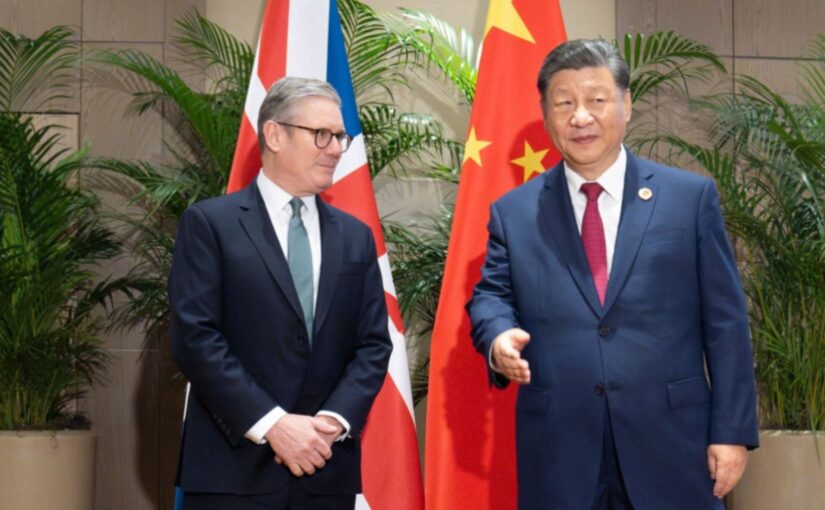
However, as China was Britain’s fifth-largest trading partner in 2023, the last thing the UK needs is a political neophyte like Lammy trying to worsen relations. Citing Chinese Premier Li Qiang’s congratulatory message to Starmer on his election, where he expressed his willingness “to work with the new UK government to consolidate mutual political trust and expand mutually beneficial cooperation”, Cross opines that it is regrettable that Lammy did not respond in kind.
He argues that: “The hypocrisy that was the hallmark of Sunak’s administration in other areas is again rearing its ugly head and suggests the two governments have more in common than people realised. After a Russian air raid (accidentally, according to Putin) hit a children’s hospital in Kyiv, killing 22 people, Starmer, on July 9, accused him of ‘the most depraved of actions’. However, his words came back to bite him.
“The former First Minister of Scotland, Humza Yousaf, whose relatives have suffered in Gaza, immediately took Starmer to task. He compared Putin’s invasion of Ukraine with Israeli Prime Minister Benjamin Netanyahu’s bombardment of Gaza. Writing on X, Yousaf told Starmer that if he condemned Russia for killing children but continued ‘to sell arms to Israel, who have killed over 14,000 children (and counting) and destroyed Gaza’s hospitals with impunity, then you are a hypocrite.”
The author argues that: “Starmer would do well to heed Yousaf’s words. If he wishes to be taken seriously, he cannot slavishly follow his predecessor’s policy of condemning Putin’s actions in Ukraine while allowing Netanyahu to get away with blue murder in Gaza. In the general election on July 4, pro-Palestinian candidates became effectively the sixth-largest party in parliament when five independents opposed to the Gaza massacres were elected, and they will undoubtedly hold Starmer’s feet to the fire.”
Grenville Cross is a senior counsel and law professor and was previously Hong Kong’s Director of Public Prosecutions.
The article originally appeared in China Daily Hong Kong edition.
On June 13, when the UK Labour Party issued its manifesto for the general election on July 4, its focus was domestic issues. This was understandable, as elections are won and lost on bread-and-butter issues. There were, however, some references to foreign policy, albeit nothing too beefy. Signed by the Labour Party leader (now prime minister), Sir Keir Starmer, the manifesto committed the party to working with the US, supporting NATO, enhancing the AUKUS pact, and backing Ukraine in its conflict with Russia, so no surprises there. They mirrored the policies of Rishi Sunak’s Conservative government, and Starmer was trying to steal its clothes.
He also threw in some Cold War rhetoric of his own, claiming that the Russian president, Vladimir Putin, was “attempting to break European security with his full-scale invasion of Ukraine”. If nothing else, this showed that he, like Sunak, favored turning an eastern European territorial dispute into a “forever war”. This will have delighted the US and its military-industrial complex, even though it is the long-suffering Ukrainian people who will pay the price of their bellicosity.
However, despite the similarities, Starmer insisted his party would “end the chaotic approach to foreign affairs”. The UK would “once again stand strong on the world stage”, which sounded fine. A new approach to UK-China relations was also foreshadowed, and time alone will tell if this is serious.
The manifesto declared, “After 14 years of damaging Conservative inconsistency over China, Labour will bring a long-term and strategic approach to managing our relations.” This meant “we will cooperate where we can, compete where we need to, and challenge where we must,” all very nice sound bites. Moreover, an “audit of our bilateral relationship” was also envisaged for improving the UK’s ability to “understand and respond to the challenges and opportunities China poses”.
As Sunak cynically enfranchised the estimated 140,000 BN(O) passport holders who have relocated to the UK since 2021, hoping they would then vote Conservative in gratitude, Starmer decided he better go after their votes. His manifesto said the Labour Party would “stand with and support members of the Hong Kong community who have relocated to the UK”, and many undoubtedly voted for Labour.
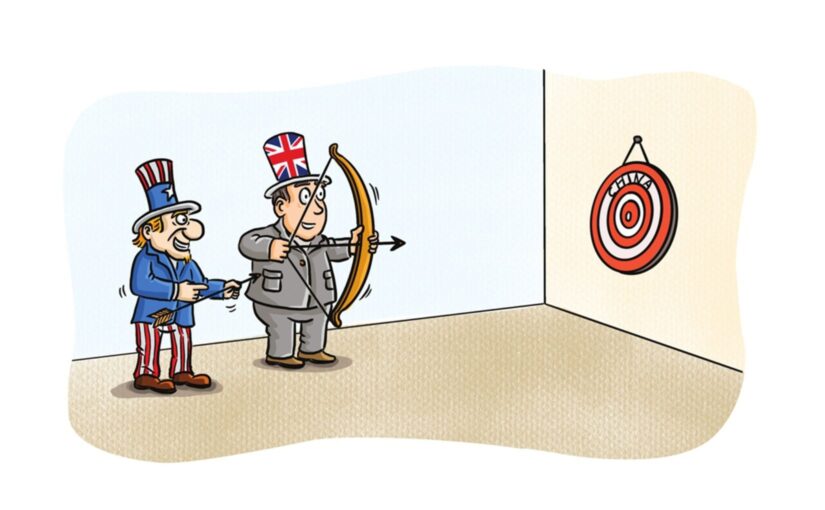
If nothing else, Starmer was right about the inconsistencies of successive Conservative governments in their policies toward Beijing. Whereas then-prime minister David Cameron (2010-16) saw the development of UK-China relations as heralding a “golden era”, his successors, notably Boris Johnson and Liz Truss (2019-22), switched to confrontation (albeit under US pressure).
Not only did Johnson join the US in imposing hostile measures upon Hong Kong when China acted decisively to end the insurrection that sought to wreck the “one country, two systems” policy in 2019, but he also hoodwinked China in 2020. Having granted Huawei a 35 percent stake in the UK’s 5G network in January 2020, he then, at US insistence, reneged on the agreement six months later. If Starmer can be more principled on the world stage, this will be welcome, although the early signs are less than reassuring.
On July 7, his new foreign secretary, David Lammy, eager to make a splash on his second day in office, said he hoped China would not become involved in the Ukraine conflict. He warned that Beijing had to be “very careful” about “deepening its partnerships with Russia, Iran and North Korea”. As China has remained neutral in the conflict, has not supplied weapons to either side, and is pressing for a cease-fire, Lammy should have congratulated it upon its continuing role as an honest broker. Unfortunately, years of instinctive prejudice toward Beijing have taken their toll on British foreign policy.
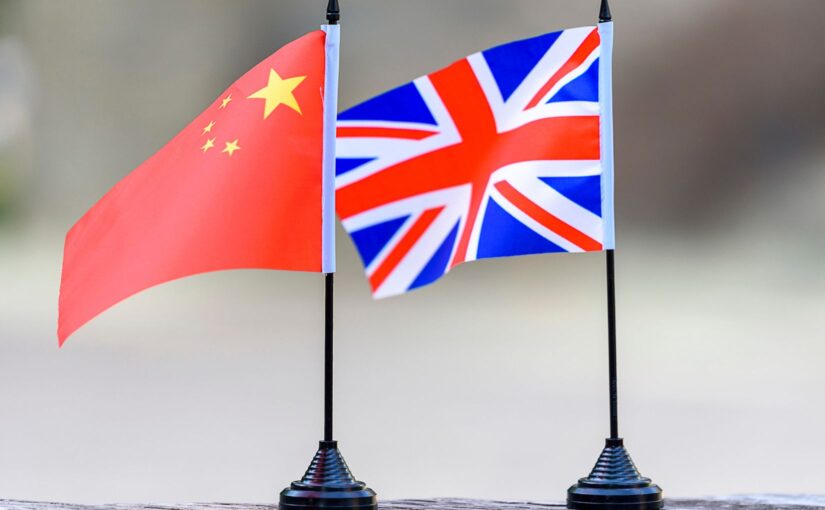
However, as China was Britain’s fifth-largest trading partner in 2023, the last thing the UK needs is a political neophyte like Lammy trying to worsen relations. When the Chinese premier, Li Qiang, congratulated Starmer on his election, he said China was “willing to work with the new UK government to consolidate mutual political trust and expand mutually beneficial cooperation”, and it is regrettable that Lammy has not responded in kind.
However, while Lammy was busy stoking tensions, the peacemakers were at work. The Hungarian prime minister, Viktor Orban, having discussed the conflict over several days with both the Russian and Ukrainian presidents, met with President Xi Jinping in Beijing on July 8, in what he described on X (formerly Twitter) as “Peace mission 3.0”. Although Hungary currently holds the rotating presidency of the European Union, the EU, which is pouring cash and arms into the conflict, distanced itself from Orban’s initiative. Instead of wishing Orban well, the European Commission president, Ursula von der Leyen, announced that “appeasement will not stop” the Russian president, Vladimir Putin, which was music to the ears of the warmongers.
However, Orban refused to be deterred, given that peace in Ukraine benefits not only Europe but also mankind. He said China was a “key power in creating the conditions for peace,” which was “why I came to meet with President Xi”. He described China as a stabilizing force during global turbulence and praised its “constructive and important” peace initiatives. These included China’s six-point peace plan, which it issued with Brazil on May 23 and which the West downplayed.
It is a pity that Starmer has yet to take a leaf out of Orban’s book, although hope springs eternal.
According to CCTV, Xi said, “Only when all major powers exert positive energy rather than negative energy can the conflict see the dawn of a cease-fire as soon as possible,” and Lammy was hopefully listening. However, it was not only the EU that was unhappy with the peace talks. The US National Security Council spokesman, John Kirby, also weighed in. He said the Xi-Orban meeting was “concerning” for the US and did not hold any promise “of trying to get things done in Ukraine”.
It is, moreover, not only with Ukraine that the new Labour government has been found wanting. The hypocrisy that was the hallmark of Sunak’s administration in other areas is again rearing its ugly head, and suggests the two governments have more in common than people realized. After a Russian air raid (accidentally, according to Putin) hit a children’s hospital in Kyiv, killing 22 people, Starmer, on July 9, accused him of “the most depraved of actions”. However, his words came back to bite him.
The former first minister of Scotland, Humza Yousaf, whose relatives have suffered in Gaza, immediately took Starmer to task. He compared Putin’s invasion of Ukraine with Israeli Prime Minister Benjamin Netanyahu’s bombardment of Gaza. Writing on X, Yousaf told Starmer that if he condemned Russia for killing children but continued “to sell arms to Israel, who have killed over 14,000 children (and counting) and destroyed Gaza’s hospitals with impunity, then you are a hypocrite”.
Given his background as a human rights lawyer, Starmer would do well to heed Yousaf’s words. If he wishes to be taken seriously, he cannot slavishly follow his predecessor’s policy of condemning Putin’s actions in Ukraine while allowing Netanyahu to get away with blue murder in Gaza. In the general election on July 4, pro-Palestinian candidates became effectively the sixth-largest party in Parliament when five independents opposed to the Gaza massacres were elected, and they will undoubtedly hold Starmer’s feet to the fire.
On July 10, moreover, when at least 29 Palestinians were killed and dozens injured in an Israeli air strike on a camp for displaced people outside the al-Awda school in southern Gaza, it was immediately condemned by the European Union. It was the fourth attack on or near schools sheltering displaced people in four days, and the German Foreign Ministry, in a statement on X, said, “The repeated attacks on schools must stop and an investigation must come quickly.” However, there were no such words of condemnation from Starmer (or Lammy), and his silence cannot be explained away by his absence abroad.
If, as seems likely, the International Criminal Court issues arrest warrants shortly against Netanyahu, Starmer must give it his full support. The warrants have been sought by Karim Khan KC, the ICC’s British chief prosecutor. Like Starmer, Khan made his mark as a human rights lawyer, and Starmer must stand with him, even if it upsets the US. He must also immediately end arms sales to Israel, as the UK can no longer be a party to Netanyahu’s crimes against humanity.
On July 10, Starmer arrived in the US for the NATO summit hosted by the US president, Joe Biden. Like his predecessors, he decided that some tough talking at China’s expense would not go amiss. He declared he would be “robust” with Beijing, and willing to challenge China about human rights and security concerns.
Although this undoubtedly pleased Biden, he must have been ecstatic when Starmer announced that, although he plans to force members of the UK’s House of Lords to retire at 80, it did not mean that Biden was too old to carry on serving as president at the age of 81 (and beyond).
If Starmer imagined this type of sycophancy could advance the so-called “special relationship” between the UK and the US, so be it. He will have to learn the hard way that all the US is really concerned about is British subservience, including unquestioning support of its hegemonistic policies around the world.
Biden would also have been relieved that Starmer’s concern for human rights in China did not extend to Gaza, where Israel, with US connivance, is committing human rights violations on an industrial scale on an almost daily basis.
Although it is still early days, the Labour government has already misstepped on foreign policy. While its ministers are on a learning curve, they must quickly master their briefs and make a clean break from the past. If they can stop kowtowing to the US, build a constructive relationship with China, support the peacemakers, and plow an independent furrow, a new dawn is still possible.
In his manifesto, Starmer declared “This election is about change,” and this must encompass foreign affairs. He needs to develop global strategies that are honest, pragmatic and balanced. If he can achieve this, he will not only undo much of the harm caused by his predecessors, but also promote the UK’s best interests and those of humanity.