Anniversary of Vietnam-China diplomatic relations marked in Beijing

Vietnam and China recently celebrated the 74th anniversary of their establishing diplomatic relations on January 18, 1950.

On the anniversary day, the Chinese Embassy in the Vietnamese capital, Hanoi hosted a banquet attended by Vietnamese Deputy Prime Minister Tran Luu Quang.

In his remarks, Quang, who is also Chairman of the Vietnam-China Steering Committee for Bilateral Cooperation, affirmed that the party, state, and people of Vietnam view the development of relations with China as a strategic choice and leading priority in the foreign policy of independence, self-reliance, and multilateralisation and diversification of external relations.

The Deputy PM emphasised that after the historic visit to China by Party General Secretary Nguyen Phu Trong in October 2022, the two countries’ comprehensive strategic cooperative partnership made great strides and obtained significant achievements in 2023.

During the state visit to Vietnam by Party General Secretary and President of China Xi Jinping in December 2023, the two Parties and two countries agreed to continue deepening and elevating their comprehensive strategic cooperative partnership and to build a Vietnam-China community with a shared future that carries strategic significance. 

Then, on January 22, the Vietnamese Embassy in Beijing held a ceremony attended by Chinese Vice Foreign Minister Ma Zhaoxu.

In his remarks, Vietnamese Ambassador Pham Sao Mai said that the Vietnam–China friendship, which was nurtured and fostered by President Ho Chi Minh and Chairman Mao Zedong, as well as successive generations of the two countries’ leaders, has become a valuable asset of the two nations, adding that the two countries’ people have stood shoulder to shoulder and supported each other in their cause of national liberation and the process of national construction and development.

The Vietnamese diplomat further recalled the recent state visit to Vietnam by General Secretary of the Communist Party of China Central Committee and President of China Xi Jinping, during which General Secretary of the Communist Party of Vietnam Central Committee Nguyen Phu Trong and the Chinese leader discussed and reached agreement on continuing to deepen and elevate the Comprehensive Strategic Cooperative Partnership, building a Vietnam–China community with a shared future that carries strategic significance, for the happiness of the two nations’ people and for the peace and progress of humanity.

The Vietnamese party, state and people always attach much importance to consolidating and bolstering the friendship and cooperation with the Chinese party, state and people, and consider developing the ties with China as a top priority and a strategic choice in the country’s foreign policy, he stressed.

The following articles were originally published by the Vietnamese newspaper Nhân Dân.

Ceremony marks 74th anniversary of Vietnam – China diplomatic ties

Jan 19 (Nhan Dan) — The Chinese Embassy in Vietnam hosted a banquet on January 18 in the presence of Vietnamese Deputy Prime Minister Tran Luu Quang to celebrate the 74th founding anniversary of the two countries’ diplomatic relations (January 18, 1950 – 2024).

In his remarks, Quang, who is also Chairman of the Vietnam – China Steering Committee for Bilateral Cooperation, affirmed that the Party, State, and people of Vietnam view the development of relations with China as a strategic choice and leading priority in the foreign policy of independence, self-reliance, and multilateralisation and diversification of external relations.

Vietnam holds that the stable and sustainable development of the bilateral ties matches practical benefits of the two countries’ peoples and also benefits cooperation and prosperous development in the region and the world, he said.

The Deputy PM emphasised that after the historic visit to China by Party General Secretary Nguyen Phu Trong in October 2022, the two countries’ comprehensive strategic cooperative partnership made great strides and obtained significant achievements in 2023.

During the state visit to Vietnam by Party General Secretary and President of China Xi Jinping in December 2023, the two Parties and the two countries agreed to continue deepening and elevating the comprehensive strategic cooperative partnership and to build a Vietnam – China community with a shared future that carries strategic significance. This was an important milestone during the development of the bilateral relations, raising the ties between the two Parties and the two countries to a new stage, Quang added.

For his part, Chinese Ambassador to Vietnam Xiong Bo noted that China is ready to join hands with Vietnam to properly implement the important common perceptions reached between the Parties and countries’ top leaders, and unceasingly develop the comprehensive strategic cooperative partnership

and the Vietnam – China community with a shared future, thereby generating tangible benefits for the people of both nations.

The two sides agreed to keep close coordination to concretise the achievements and new dimensions of the comprehensive strategic cooperative partnership, on which Party General Secretary of Vietnam Nguyen Phu Trong and Party General Secretary and President of China Xi Jinping agreed, to promote the relations between the two Parties and the two countries with higher political trust, more practical defence – security cooperation, more solid social foundation, closer multilateral coordination, and better controlled and resolved differences, the diplomat said.


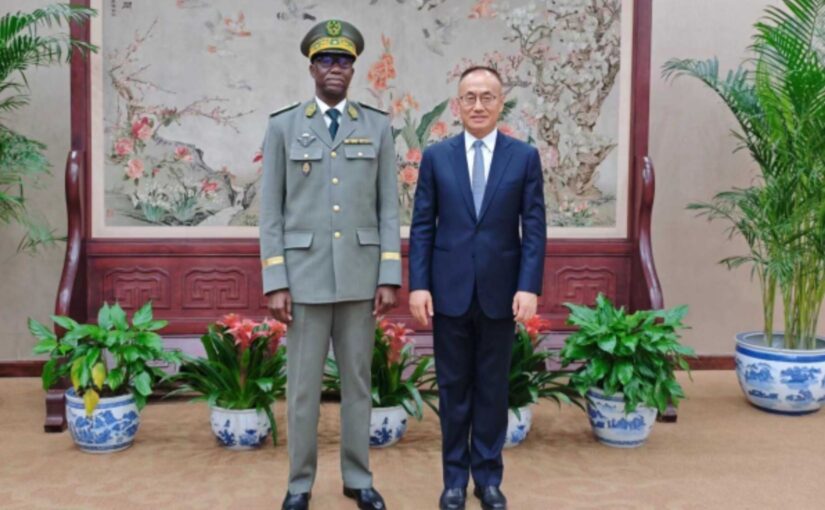
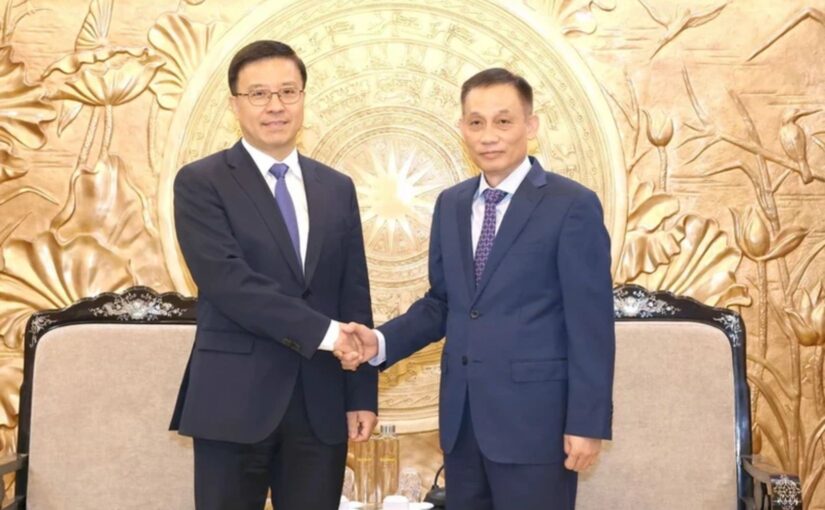
Anniversary of Vietnam-China diplomatic relations marked in Beijing

Jan 23 (Nhan Dan) — The Vietnamese Embassy in China held a ceremony in Beijing on January 22 to celebrate the 74th founding anniversary of Vietnam – China diplomatic relations (January 18, 1950 – 2024).

The event was attended by Chinese Vice Minister of Foreign Affairs Ma Zhaoxu, representatives of Chinese ministries, sectors, agencies, localities and businesses, experts, scholars and press agencies of both nations.

In his remarks, Vietnamese Ambassador Pham Sao Mai highlighted the significance of the establishment of the diplomatic ties between the two countries, and reviewed their cooperation achievements over the past time.

The Vietnam – China friendship, which was nurtured and fostered by Presidents Ho Chi Minh and Mao Zedong as well as generations of the two countries’ leaders, has become a valuable asset of the two nations, he said, adding the two countries’ people have stood shoulder by shoulder and supported each other in their cause of national liberation and the process of national construction and development.

Amidst complicated and unprecedented developments across the globe, the Vietnam – China Comprehensive Strategic Cooperative Partnership has developed in a stable manner and recorded important progress thanks to the sound direction of high-level leaders of the two Parties and States as well as concerted efforts made by sectors and people of both sides, he said.

The Vietnamese diplomat recalled the recent state visit to Vietnam by General Secretary of the Communist Party of China Central Committee and President of China Xi Jinping, during which General Secretary of the Communist Party of Vietnam Central Committee Nguyen Phu Trong and the Chinese leader discussed and reached perceptions on continuing to deepen and elevate the Comprehensive Strategic Cooperative Partnership, building a Vietnam – China community with a shared future that carries strategic significance for the happiness of the two nations’ people and for peace and progress of the humankind.

Mai said that the stable Vietnam – China relations have played an important role in the development in each country, contributing to peace, cooperation and development in the region and the world.

The Vietnamese Party, State and people always attach much importance to consolidating and bolstering the friendship and cooperation with the Chinese Party, State and people, and consider developing the ties with China as a top priority and a strategic choice in the country’s foreign policy, he stressed.

He suggested that both sides should continue enhancing the exchange of delegations at all levels, fully and effectively carry out the perceptions reached by the two Parties and nations, enhance political trust, promote cooperation in economy, trade, investment, tourism, and properly control and handle disagreements on the basis of respect for each other’s legitimate interests and in line with international law.

Participants at the event congratulated Vietnam and China on the achievements they have attained over the past time.

Lenin, China, Palestine, and the global struggle against imperialism

Below is the text and video of a short speech given by Carlos Martinez on behalf of Friends of Socialist China at the International Assembly Against Imperialism in Solidarity with Palestinian Resistance, held at the Malcolm X & Dr Betty Shabazz Memorial & Educational Center in New York City on January 21, 2024.

The event was organised by Workers World Party, and the date was chosen to honour the centennial of Russian revolutionary Vladimir Lenin, who died that day in 1924.

Carlos asks “what ties together these seemingly disparate themes of Palestine, China and Leninism”, suggesting that the answer lies in the global struggle against imperialism. He explains the effect of Lenin’s analysis of imperialism in expanding the scope and applicability of Marxism to cover the entire world; how this informed Soviet support for socialist and national liberation projects in the Global South; and how People’s China carried forward this tradition. “China has been and remains a bulwark against imperialism, standing in solidarity with the Global South.”

The speech discusses China’s long history of solidarity with Palestine, and its current positive diplomatic role in opposition to the genocide in Gaza, and concludes:

“The brave Palestinian people, with the solidarity and support of freedom-loving people around the world, will surely win their liberation.”

Dear comrades and friends,

It’s a great honour for Friends of Socialist China to be invited to contribute to this International Assembly Against Imperialism, in solidarity with the Palestinian resistance and coinciding with the 100th anniversary of the death of Vladimir Ilyich Lenin.

What ties together these seemingly disparate themes of Palestine, China and Leninism?

The answer lies in the struggle against imperialism.

The original slogan of the communist movement, ‘Workers of the world unite’ – the rallying cry and final phrase from the Communist Manifesto, written by Marx and Engels in 1848 – was put forward at a time when the nascent communist movement was geographically limited to Europe and North America, and focused almost exclusively on the industrial working class.

Lenin’s study of global political economy, and particularly of the dynamics of monopoly capitalism and the emergence of modern imperialism, led him to an acute understanding of the expanded – global – applicability of Marxist thought. He understood that, as a result of imperialist domination, the capitalist class of the metropolis had become an enemy not just to the working class in the advanced capitalist countries but to the broad masses of the oppressed in all countries.

Lenin and the Bolsheviks thus proposed the development of a worldwide united front of the working class and all peoples oppressed by imperialism. Such a united front would be capable – indeed still is capable – of taking the fight to the oppressors, of defeating imperialism, of establishing national independence and sovereignty for the peoples of the Global South, and thereby opening the possibility for a global advance to socialism.

Hence at the second congress of the Comintern in 1920, ‘Workers of the world unite’ was updated to ‘Workers and oppressed peoples of all countries, unite’.

In his letter titled Better Fewer, But Better, the last document he wrote, Lenin observed that “in the last analysis, the outcome of the struggle will be determined by the fact that Russia, India, China etc account for the overwhelming majority of the population of the globe. And during the past few years it is this majority that has been drawn into the struggle for emancipation with extraordinary rapidity, so that in this respect there cannot be the slightest doubt what the final outcome of the world struggle will be. In this sense, the complete victory of socialism is fully and absolutely assured.”

The Chinese communists of course played a crucial role in developing this ideology and applying it in practice. The overthrow of imperialist domination and the construction of socialism in China, Korea and Vietnam represented a profound shift of the revolutionary centre of gravity in the world towards the East and the South.

The Chinese benefited enormously from the solidarity of the Soviet peoples.

Mao Zedong stated in 1949, just two months before the proclamation of the People’s Republic, that “it was through the Russians that the Chinese found Marxism. The salvoes of the October Revolution brought us Marxism-Leninism. The October Revolution helped progressives in China, as throughout the world, to adopt the proletarian world outlook as the instrument for studying a nation’s destiny and considering anew their own problems.”

In turn, China has been and remains a bulwark against imperialism, standing in solidarity with the Global South.

China’s history of support for the Palestinian national struggle in particular goes back to the 1950s. As Xi Jinping has put it, no matter how the international and regional situation changes, China always firmly supports the just cause of the Palestinian people to restore the legitimate rights and interests of their nation, and always stands with the Palestinian people.

China sent its first aid to the Palestinian people in 1960, and when the PLO was founded in 1964, China became the first non-Arab country to recognise it. The first Palestinian fighters were sent for military training in China in 1965. It was also one of the first countries to recognise the State of Palestine – on 20 November 1988. Indeed Yasser Arafat – Chairman of the PLO from 1969 to 2004 – stated in 1970 that “China is the biggest influence in supporting our revolution and strengthening its perseverance.”

Premier Zhou Enlai wrote in 1967; “Wherever there is oppression, there is resistance; wherever there is aggression, there is struggle against aggression. I believe that having taken up arms, the revolutionary Arab people of Palestine and the entire Arab people will not lay down their arms and, like the heroic Vietnamese people, will fight on unflinchingly, resolutely and stubbornly until final victory.”

Today, China is among the loudest voices calling for a ceasefire in Gaza and insistently calling for the restoration of the legitimate national rights of Palestine, and for the establishment of an independent State of Palestine with East Jerusalem as its capital and with the right of return.

The heroic Palestinian resistance has put the issue of Palestine back at the centre of global politics. Meanwhile the shift towards a multipolar world and away from US hegemony is creating favourable conditions for finding a lasting and just solution.

Even as we witness the horrors of Israel’s genocidal assault on Gaza, we remember the words of the great Paul Robeson, that the people’s will for freedom is stronger than atom bombs. The brave Palestinian people, with the solidarity and support of freedom-loving people around the world, will surely win their liberation.

Xi Jinping meets with Gaston Browne, Prime Minister of Antigua and Barbuda

Gaston Browne, Prime Minister of the Caribbean twin island state of Antigua and Barbuda, who is also the leader of the Antigua and Barbuda Labour Party, paid an official visit to China at the invitation of his counterpart, Premier Li Qiang, January 22-28. His previous visit had been in 2014, the year he assumed the premiership.

On January 24, Prime Minister Browne met in Beijing with both President Xi Jinping and Premier Li Qiang. 

Noting that Antigua and Barbuda is one of the first countries in the Eastern Caribbean to establish diplomatic ties with the People’s Republic of China, Xi said that since the establishment of diplomatic ties 41 years ago, the two countries have always respected and supported each other, setting an example of equality and win-win cooperation between countries of different sizes. The bilateral relations have maintained healthy and stable development, pragmatic cooperation has yielded fruitful results, and people’s friendship has deepened, Xi added.

He emphasised that the two sides should continue their traditional friendship, consolidate political mutual trust, and continue to understand and support each other on issues concerning each other’s core interests and major concerns.

Xi observed that Antigua and Barbuda is the first Eastern Caribbean country to sign a Belt and Road cooperation MoU with China and said the cooperation between the two sides has brought tangible benefits to the two peoples, adding that China is now advancing Chinese modernisation on all fronts through high-quality development and this will bring new opportunities for the development of Antigua and Barbuda and bilateral cooperation.

Stressing the need to strengthen cultural and people-to-people exchanges, Xi said China welcomes more young people from Antigua and Barbuda to come and study in the country.

He added that China attaches importance to the concerns and demands of Antigua and Barbuda and other small-island developing countries in the field of climate change and is ready to support Antigua and Barbuda in hosting the fourth International Conference on Small Island Developing States, continue to provide assistance to the economic and social development of regional countries within its capacity, and promote the continuous development of relations between China and Caribbean countries.

Browne thanked the Chinese government for its valuable support, saying that China’s assistance and cooperation have greatly promoted the development of Antigua and Barbuda and helped with its poverty alleviation efforts.

China adheres to the principle that all countries, regardless of size, are equal, and actively promotes the noble vision of building a community with a shared future for humanity, Browne said, adding that by proposing the Belt and Road Initiative, the Global Development Initiative, the Global Security Initiative and the Global Civilisation Initiative, China has taken concrete actions to promote common development and prosperity of the world and benefit the people, showing unparalleled leadership and charisma in the world, and will surely lead more countries in the Global South to strengthen unity and cooperation.

Antigua and Barbuda is willing to be China’s most reliable partner, and will stand firmly with China on issues concerning the well-being of all humanity, and safeguard the common interests of developing countries, Browne added.

In his meeting, Premier Li Qiang  said that since the establishment of diplomatic ties 41 years ago, China and Antigua and Barbuda have always respected and supported each other, adding that China stands ready to work with Antigua and Barbuda to implement the important consensus reached by the leaders of the two countries, consolidate and carry forward the traditional friendship, continuously deepen strategic mutual trust, and enhance mutually beneficial cooperation in various fields to benefit the two countries and two peoples.

He noted that China, within its capacity, is ready to provide assistance to Antigua and Barbuda in addressing climate change under the framework of South-South cooperation, and to continue strengthening multilateral coordination and cooperation to build a community with a shared future for humanity.

Browne  expressed his appreciation of China’s strong support for the economic and social development of Antigua and Barbuda over the years. Antigua and Barbuda abides by the one-China principle, believes that Taiwan is a province of China, and firmly supports China in safeguarding its sovereignty and territorial integrity. He noted that Antigua and Barbuda stands ready to promote cooperation between the Caribbean Community (Caricom) and China, promote the reform of the global economic governance system, elevate bilateral relations to a new level, work with China to cope with climate change, and strengthen cooperation with China on agriculture, education and infrastructure construction.

Antigua and Barbuda finally won its national independence on November 1, 1981, after having been a British colony since 1632. The newly independent country established diplomatic relations with China on January 1, 1983, and the two countries’ friendly ties have developed smoothly ever since. 

In order to make his country’s sovereignty complete, Prime Minister Browne has joined the regional trend to remove the British monarch as head of state and for Antigua and Barbuda to become a republic, pledging to hold a referendum on the subject in the near future.

The following articles were originally published by the Xinhua News Agency.

Continue reading Xi Jinping meets with Gaston Browne, Prime Minister of Antigua and Barbuda

China hails Non-Aligned Movement’s endeavours in advancing global peace

The Ugandan capital Kampala hosted the 19th summit meeting of the Non-Aligned Movement (NAM), January 19-20. Chinese President Xi Jinping’s special representative Liu Guozhong attended and delivered a speech, highlighting the movement’s important role in promoting the cause of world peace and human progress and noting its birth, “at the climax of the national liberation movements in Asia, Africa, and Latin America.” Liu is also a member of the Political Bureau of the Communist Party of China Central Committee and a Vice Premier of the State Council.

The NAM should continue to uphold independence and oppose power politics, seek common ground while shelving differences, promote peaceful coexistence, seek strength through unity, strive for common development, and advocate equality, fairness and justice, Liu added.

The NAM Summit was followed on January 21 with the third South Summit, the highest decision-making body of the Group of 77 (G77), which now groups 135 developing countries. 

Speaking there, Liu said that this year marks the 60th anniversary of the founding of the Group of 77, and over the past six decades, the Global South has followed the right path of equality, mutual trust, mutual benefit, solidarity, and mutual assistance.

Independence is the defining political feature of the Global South, seeking strength through unity is the glorious tradition of the Global South, development and revitalisation are the historical mission of the Global South, and fairness and justice are the common propositions of the Global South, he noted.

As a developing country and a member of the Global South, China has always shared a common destiny with other developing countries and will continue to take South-South cooperation as a priority in its foreign cooperation and contribute to the common development of developing countries in the Global South.

On January 21, Liu had a meeting with Ugandan President Yoweri Museveni, who has also assumed the rotating chair of the NAM and G77.  

Museveni asked Liu to convey his sincere greetings to President Xi. He welcomed the vice premier and his delegation to attend the two summits and thanked China for its significant contribution to the success of the meetings.

From joining hands to oppose colonialism and hegemonism and strive for national liberation, to strengthening unity and cooperation and jointly promoting development and revitalisation, the destiny of the African and Chinese people has always been closely linked, Museveni stressed.

The Hong Kong newspaper South China Morning Post further reported Museveni as telling Liu: “We have been together in the anti-colonial struggle. China supported us when we were fighting for independence. It also supported the freedom fighting groups in Southern Africa – Mozambique, Zimbabwe and South Africa.

“Since then, China has grown economically [and] has helped Africa even more. We are therefore very happy with China.”

Liu responded that China was still a very poor country in 1949 when the People’s Republic was founded, “but the Chinese leaders made a very important decision” to develop relations with Africa through “supporting African people in fighting for national independence, liberation and their efforts to fight imperialism.”

In a meeting with another high-level Chinese delegation last November, the Ugandan presidential website quoted Museveni as saying that: “Ever since 1949, when the Communist Party took power in China, China has been on the side of Africa. At that time, Chinese leaders like Mao Zedong supported our struggle against colonialism. Then, after independence, even when China was not so prosperous, they extended support to Africa. I remember China building the Tanzania-Zambia railway after independence, and that was to help landlocked Zambia against the white supremacists in Southern Africa.”

Prior to visiting Uganda, Liu had visited Algeria and Cameroon.

The Kampala NAM Summit saw the admission to full membership of South Sudan, the first expansion in 13 years, meaning that the body now has 121 member states – 54 from Africa, 26 from the Americas, 36 from Asia, 3 from Oceania and 2 from Europe. In addition, there are 19 observer countries, including China, and 11 observer organisations, including liberation movements from the US colony Puerto Rico and Kanaky, the French colony known as New Caledonia in the South Pacific.

The following articles were originally published by the Xinhua News Agency.

China hails Non-Aligned Movement’s endeavors in advancing global peace

KAMPALA, Jan. 21 (Xinhua) — Chinese President Xi Jinping’s special representative Liu Guozhong attended the 19th Non-Aligned Movement (NAM) Summit on Friday and Saturday in the Ugandan capital Kampala and delivered a speech, highlighting the movement’s important role in promoting the cause of world peace and human progress.

The NAM, born at the climax of the national liberation movements in Asia, Africa and Latin America, has effectively advanced the cause of world peace and human progress, said Liu, also a member of the Political Bureau of the Communist Party of China Central Committee and vice premier of the State Council.

It should continue to uphold independence and oppose power politics, seek common ground while shelving differences, promote peaceful coexistence, seek strength through unity, strive for common development, and advocate equality, fairness and justice, Liu said.

Liu stressed that China will always be a member of the developing world and is willing to work with the NAM countries to promote the implementation of the Global Development Initiative, Global Security Initiative and Global Civilization Initiative under the guidance of building a global community of shared future.

China is ready to advance Belt and Road cooperation, practice the common values of humanity, and advocate an equal and orderly multipolar world and a universally beneficial and inclusive economic globalization, to promote the world toward a bright future of peace, security, prosperity and progress, Liu said.

Heads of state and government and high-level representatives from more than 100 countries, and heads of international organizations attended the summit. Ugandan President and the chair of the NAM Yoweri Museveni, heads of state of South Africa, Sri Lanka and other countries, the president of the UN General Assembly, and the UN secretary-general delivered speeches, expressing their views on the current international situation and strengthening the role of the NAM. Liu’s speech was positively recognized and widely appreciated by representatives of other countries.

On Saturday, Liu was invited to attend a seminar of the Mwalimu Nyerere Foundation on development held by President Museveni and delivered a speech. 

Continue reading China hails Non-Aligned Movement’s endeavours in advancing global peace

China, Maldives upgrade ties as presidents hold talks

President Mohamed Muizzu of the Republic of Maldives, an island nation in South Asia, became the first foreign head of state to visit China in 2024, paying a state visit from January 8-12. His visit, 10 years after President Xi Jinping paid a state visit to Maldives in 2014, was also President Muizzu’s first overseas state visit since assuming office in November 2023. 

Meeting President Xi on January 10, the two heads of state announced the elevation of their bilateral ties to a comprehensive strategic cooperative partnership.

Xi said that the people of the two countries established friendly ties through the ancient Maritime Silk Road, undertook productive cooperation in the construction of the Belt and Road and other areas in recent years, and set a good example of equality, mutual assistance, and mutual benefit between countries big and small over the past 52 years of diplomatic ties.

“Under the new circumstances, China-Maldives relations face a historic opportunity to build on past achievements and forge ahead,” Xi said, noting that the elevation of ties is necessary alongside the growth of bilateral relations and meets the expectations of the two peoples.

Xi spoke about the hard work and valuable experience of the Communist Party of China over the last century. He stressed that China respects and supports the Maldives in exploring a development path suited to its national conditions and firmly supports the Maldives in safeguarding its national sovereignty, independence, territorial integrity and national dignity.

He called on the two sides to strengthen cooperation in such areas as the economy, trade and investment, agricultural parks, and the blue, green and digital economies. He also called for expanded cooperation on marine ecological and environmental protection, as well as strengthened people-to-people exchanges. He said China will support more Maldivian students to study in China and promote more direct flights between the two countries.

Xi noted that the two sides should strengthen multilateral communication and coordination to safeguard genuine multilateralism and the common interests of developing countries and build a community with a shared future for humanity to make the world more peaceful, secure and prosperous.

He said that China is willing to work with the Maldives to implement the consensus reached at the UN Climate Change Conference in Dubai, and to promote the full and effective implementation of the Paris Agreement on climate change.

Muizzu said he was honoured to pay his first state visit to China with a number of important cabinet ministers and to become the first foreign head of state that China has hosted this year, fully demonstrating the great importance both sides attach to the development of bilateral relations.

Noting that this year marks the 10th anniversary of President Xi’s historic state visit to the Maldives, Muizzu said that China has provided a significant amount of valuable assistance to his country’s economic and social development. He added that the Maldivian people have benefited greatly from the Belt and Road Initiative, citing the Maldives-China Friendship Bridge a symbol of the bond between the two peoples.  He said the Maldives looks forward to taking the elevation of ties as an opportunity to expand new channels of cooperation and promote high-quality partnership in the construction of the Belt and Road, and that it welcomes more Chinese tourists to visit the country.

After their talks, the two heads of state witnessed the signing of an action plan to establish the China-Maldives comprehensive strategic cooperative partnership, as well as cooperation documents on the construction of the Belt and Road, disaster management, the economy and technology, infrastructure, people’s livelihoods, green development, and the blue and digital economies.

Meeting with Premier Li Qiang the next day, Muizzu noted that the visit to China is his first state visit since taking office, adding that the Maldives firmly adheres to the one-China policy, stands firmly with China, and firmly supports the Belt and Road Initiative, the Global Development Initiative, the Global Security Initiative, and the Global Civilisation Initiative proposed by China.

He also met with Zhao Leji, the Chairman of the National People’s Congress (NPC) Standing Committee the same day.

According to the joint communiqué released by the two heads of state after their meeting, the two sides share the view that China and the Maldives are sincere friends of mutual trust and assistance, and partners for common development and prosperity. Since the establishment of diplomatic ties 52 years ago, the two countries have always respected and supported each other, setting a fine example of equality, mutual benefit and win-win cooperation between countries of different sizes. 

They also share the view that as changes of the world, our times and history unfold, the strategic significance of China-Maldives relations has become more pronounced. The two sides agree to elevate China-Maldives relations to a comprehensive strategic cooperative partnership, better leverage the political guidance of high-level engagement, expand practical cooperation between the two countries in various fields, strengthen collaboration on international and multilateral affairs, enhance the well-being of the two peoples, and work toward a China-Maldives community with a shared future.

China firmly supports the Maldives in upholding its national sovereignty, independence and national dignity, respects and supports the Maldives’ exploration of a development path that suits its national conditions, and firmly opposes external interference in the internal affairs of the Maldives. 

China also expresses its readiness to continue providing support for the Maldives to the best of its capability in areas that the Maldives deems as priorities, including infrastructure construction, medical service and health, improvement of people’s livelihood, new energy, agriculture, and protection of the marine environment. And the two sides intend to continue exchanges and cooperation in such areas as science and technology, culture, tourism, education, sports, civil aviation, personnel training, health, affairs related to women, youth, and people with disabilities, press and publication, radio, film and television, people-to-people ties, and subnational cooperation.

The two sides further agree to deepen cooperation in the field of ecology and environment, advocate green, low-carbon, circular and sustainable development, implement the UN 2030 Agenda for Sustainable Development, work together for building the green Belt and Road, and strengthen communication and cooperation on climate change and other issues.

Following President Muizzu’s return home, he announced that all Indian troops must quit his country by March 15. There are currently some 80 Indian troops stationed in the Maldives. 

The Indian newspaper The Hindu reported that: “Veteran Indian diplomat Rakesh Sood said that Mr. Muizzu was ‘playing to his base and presumably, his ‘benefactor’.’ He added: ‘He is being deliberately provocative but there is little to be gained by India engaging in tit-for-tat rhetoric. Far better to let him realise the relevance of India to Maldives, in socio-economic terms.’” 

However, the paper further noted: “The Maldivian president has been consistent in his demand for Indian troops’ withdrawal, his chief poll pledge last year. The demand also figured in his inaugural address soon after he assumed office in November 2023. In December, days after his meeting with [Indian Prime Minister] Mr. Modi in Dubai [at the COP 28 climate summit], Mr. Muizzu announced that India had ‘agreed’ to withdraw its troops, although New Delhi has made no statement to that effect so far.” 

Hong Kong’s South China Morning Post wrote that, “After his state visit to China, Muizzu said… that his country’s small size does not give anyone the licence to bully it… ‘We are a free and independent nation. So this territorial integrity is something China respects firmly.'”

This announcement also comes after a series of disagreements between India and the new administration in the Maldives, with India standing accused of attempting to undermine the Maldives’ tourism industry. Tourism is the largest industry in the Maldives, accounting for 28% of GDP and more than 60% of the country’s foreign exchange receipts. 

Reporting just as President Muizzu began his state visit, China’s Global Times, prefigured this issue, noting that, “ President Muizzu’s decision to visit China before India has raised concerns among some Indian media outlets, with many speculating that the Maldivian leader is pursuing an ‘India-out’ policy and leaning toward China. 

“Chinese analysts said that interpreting Muizzu’s China visit as being pro-China reflects the lack of confidence among certain Indian politicians. They believe that India’s long-standing hegemonic mentality in South Asia is the root cause of strained relations with some regional countries, including the Maldives and that India should not shift the blame onto China by hyping the narrative of competition with China in the region as an excuse.”

Long Xingchun, a professor at the School of International Relations at Sichuan International Studies University, noted that China respects the Maldives’ sovereignty and does not interfere in its domestic affairs. Unlike India, China does not exclude other countries’ cooperation with the Maldives. On the contrary, China encourages and welcomes more countries, including India, to engage in collaboration with the Maldives. 

Global Times also reported that Chinese analysts said that India’s strained relations with certain countries in South Asia can be attributed to its perception of being the regional boss. Instead of shifting blame to China, India should take a moment to reflect on its policies toward its neighbours and abandon the zero-sum mentality.

Lin Minwang, deputy director at the Centre for South Asian Studies at Fudan University, told Global Times that the Indian media has attempted to exert pressure on Muizzu by hyping the so-called “pro-China” policy. This highlights India’s view of itself as a hegemon in the region, expecting leaders of other countries to seek its approval.

The following articles were originally published by the Xinhua News Agency and Global Times.

China, Maldives upgrade ties as presidents hold talks

BEIJING, Jan. 10 (Xinhua) — Chinese President Xi Jinping held talks with President of the Republic of Maldives Mohamed Muizzu in Beijing on Wednesday.

The two heads of state announced the elevation of bilateral ties to a comprehensive strategic cooperative partnership.

Xi said that the people of the two countries established friendly ties through the ancient Maritime Silk Road, undertook productive cooperation in the construction of the Belt and Road and other areas in recent years, and set a good example of equality, mutual assistance and mutual benefit between countries big and small over the past 52 years of diplomatic ties.

Continue reading China, Maldives upgrade ties as presidents hold talks

Webinar: Building solidarity and opposing the New Cold War – Peace delegates report back from China

Date Sunday 18 February
Time4pm Britain / 11am US Eastern / 8am US Pacific

Although the Biden administration has made some small gestures towards improving US-China relations, the US continues to escalate its campaign of encirclement and containment. The US has ramped up its military aid to Taiwan; it is attempting to strengthen the AUKUS nuclear alliance; it is doing everything it can to prevent China’s emergence as a major computing power; it is imposing sanctions and tariffs on China; and it is relentlessly spreading lurid anti-China slander.

Recognising the terrible dangers posed by the New Cold War (and its potential degeneration into a hot war), a number of peace activists from the US have recently taken part in delegations to China, in order to build understanding and solidarity, and to see China’s reality with their own eyes.

We will hear back from these peace delegates and discuss ways to continue building people-to-people links between the West and China, and to develop a powerful movement for peace and cooperation.

Speakers

  • Ajamu Baraka (Coordinating Committee Chairperson, Black Alliance for Peace)
  • Bahman Azad (President, US Peace Council)
  • Sara Flounders (Co-director, the International Action Center)
  • Danny Haiphong (Youtuber; Author, ‘American Exceptionalism and American Innocence’)
  • Dee Knight (DSA International Committee’s Anti-War Subcommittee)
  • Lee Siu Hin (Founder, China-US Activist Solidarity Project)
  • Charles Xu (Writer and researcher, Qiao Collective)
  • Radhika Desai (Convenor, International Manifesto Group)
  • Chinese People’s Association for Peace and Disarmament
  • Communist Party USA International Department

Organisers

This webinar is jointly organised by Friends of Socialist China and the International Manifesto Group.

China and Nauru resume diplomatic relations

China resumed diplomatic relations with the South Pacific island nation of Nauru on January 24. This came nine days after Nauru independently announced that it was severing its so-called “diplomatic relations” with the authorities on the Chinese island of Taiwan. 

Nauru thus becomes the 183rd country to have diplomatic relations with China. (Nauru previously had diplomatic relations with China, 2002-2005.)

The formal resumption of ties came with the signing of a joint communiqué in Beijing by Foreign Minister Wang Yi and his visiting Nauruan counterpart, Minister for Foreign Affairs and Trade Lionel Aingimea. 

According to the joint communiqué:

“The two governments agree to develop friendly relations between the two countries on the basis of the principles of mutual respect for sovereignty and territorial integrity, mutual non-aggression, non-interference in each other’s internal affairs, equality, mutual benefit and peaceful coexistence.

“The Government of the Republic of Nauru recognises that there is but one China in the world, the Government of the People’s Republic of China is the sole legal Government representing the whole of China, and Taiwan is an inalienable part of China’s territory. The Government of the Republic of Nauru shall sever ‘diplomatic relations’ with Taiwan as of this day and undertakes that it shall no longer develop any official relations or official exchanges with Taiwan. The Government of the People’s Republic of China appreciates this position of the Government of the Republic of Nauru.”

At the talks that preceded the signing, Wang Yi said that, bearing in mind the long-term development of Nauru and the fundamental interests of its people, the government of Nauru has made the political resolve to recognise the one-China principle, sever ‘diplomatic ties’ with the Taiwan region and resume diplomatic relations with the People’s Republic of China. In so doing, Nauru has chosen to stand on the right side of history. The Parliament of Nauru has unanimously adopted a motion in support of this decision, which fully represents the will of the Nauruan people. China welcomes and appreciates the decision.

China will work with Nauru to take the resumption of diplomatic ties as an opportunity to increase exchanges at all levels, share governance experience, and synergise development strategies, so that the two countries will become good brothers, good friends and good partners that trust each other politically, benefit each other economically and support each other in international affairs. Together, the two sides will contribute to a closer community with a shared future between China and Pacific Island countries.

Foreign Minister Aingimea said that his country’s decision was unanimously adopted by the Parliament of Nauru, with a standing ovation by all of its members. It fully shows that this is a right decision which is welcomed by the people and serves the fundamental interests of Nauru. 

He added that the way China says what it means and does what it says has won the hearts of the people of Nauru. With their diplomatic ties resumed, droplets of friendship between the two countries will create an ocean. Nauru admires China’s remarkable development achievements and great contribution to global growth, and firmly believes in the vast and promising future of the bilateral relationship. Nauru highly commends and will take an active part in President Xi Jinping’s vision of building a community with a shared future for humanity and in the important global initiatives President Xi has put forward.

Following the signing of the communiqué, the two ministers met the press. 

Foreign Minister Wang pointed out that although China and Nauru are far apart geographically, the two peoples enjoy a long-standing friendship. As developing countries, China and Nauru face the common tasks of growing the economy, improving people’s lives and realising modernisation. As members of the Global South, the two countries share the common aspirations to safeguard sovereignty and independence, uphold the common interests of developing countries, and work for an equal and orderly multipolar world and a universally beneficial and inclusive economic globalisation.

He added that China always believes that countries, regardless of size, strength, and wealth, are equals and important members of the international community. China will, following the Five Principles of Peaceful Coexistence, treat Nauru as an equal and support Nauru in pursuing a development path suited to its national conditions and chosen independently by its people. China looks forward to working with Nauru to deepen political mutual trust, advance mutually beneficial cooperation, enhance friendship between the people, and take bilateral ties to new heights. China will share with Nauru the development opportunities brought by Chinese modernisation in a joint pursuit of a community with a shared future for humanity.

Noting that just a handful of countries still maintain “diplomatic relations” with the Taiwan region for various reasons, Wang said that this not only contravenes the interests of their own countries and people and goes against Resolution 2758 of the UN General Assembly (which restored China’s seat in the United Nations), but also constitutes an infringement of China’s sovereignty. It must be redressed sooner or later. China urges those countries to be clear-eyed about the trend of the times, seize the historical opportunities, fulfil their obligations under international law, and join the international community in coming to the right side of history. It is never too late to forge a friendship. China is ready to turn a new page in its relations with those countries on the basis of the one-China principle.

The following day, Minister Aingimea met with Chinese Vice President Han Zheng. Hailing the political decision made independently by the Nauru government to resume diplomatic relations with China, Han said history will prove that this is the right decision and once again shows that the one-China principle is deeply rooted in the hearts of the people.

China supports Nauru in exploring the path of modernisation that suits its national conditions, and is willing to do its best to help Nauru achieve development based on mutual respect, equality, win-win cooperation, openness and inclusiveness, he added.

Aingimea said that the establishment of diplomatic ties with China has put Nauru on the right side of history, and becoming a partner with China will make Nauru’s development prospects brighter and bring more benefits to its people. Nauru looks forward to strengthening exchanges and cooperation with China and will actively participate in the Belt and Road cooperation and the three global initiatives put forward by President Xi.

Meanwhile, speaking to the Xinhua News Agency in the Nauruan capital Yaren shortly before the announcement, Joanna Olsson, director of the Government Information Office of Nauru, said that the Belt and Road Initiative brings development opportunities to Pacific Island nations, and Nauru looks forward to more practical cooperation with China after the two nations resume diplomatic relations.

She said that she is optimistic about future practical cooperation between the two nations, particularly on climate change, water supply and agriculture, among others.

Being a Pacific Island nation, Nauru is deeply affected by climate change, facing urgent challenges such as rising sea levels and land erosion. Some coastal areas are being submerged, necessitating the relocation of residential areas and some public service facilities to higher ground.

Moreover, the scarcity of fresh water for daily life is a persistent concern for local residents. Global climate change has worsened water crises, posing even more severe challenges to the islanders, she said.

Nauru’s move leaves just 12 countries having “diplomatic relations” with Taiwan. Of these, the South Pacific Island state of Tuvalu will hold an election on January 26. At time of writing, there is much speculation in the international media that it may then follow Nauru in establishing diplomatic relations with China.

Nauru won its national independence in 1968 having been under the colonial rule of Britain, Australia, and New Zealand in the form of a “UN Trusteeship”. Tuvalu achieved national independence from British colonialism in 1978.

The following articles were originally published on the websites of the Chinese Foreign Ministry and the Xinhua News Agency.

Joint Communiqué on the Resumption of Diplomatic Relations Between the People’s Republic of China and the Republic of Nauru

Jan. 24 (Chinese Foreign Ministry) –The People’s Republic of China and the Republic of Nauru, in keeping with the interests and desire of the two peoples, have decided to resume diplomatic relations at the ambassadorial level, effective as of this day.

The two Governments agree to develop friendly relations between the two countries on the basis of the principles of mutual respect for sovereignty and territorial integrity, mutual non-aggression, non-interference in each other’s internal affairs, equality, mutual benefit and peaceful coexistence.

The Government of the Republic of Nauru recognizes that there is but one China in the world, the Government of the People’s Republic of China is the sole legal Government representing the whole of China, and Taiwan is an inalienable part of China’s territory. The Government of the Republic of Nauru shall sever “diplomatic relations” with Taiwan as of this day and undertakes that it shall no longer develop any official relations or official exchanges with Taiwan. The Government of the People’s Republic of China appreciates this position of the Government of the Republic of Nauru.

The Government of the People’s Republic of China and the Government of the Republic of Nauru agree to exchange Ambassadors as early as possible and to provide each other with all the necessary assistance for the establishment of Embassies and their performance of functions in each other’s capitals on a reciprocal basis in accordance with the Vienna Convention on Diplomatic Relations of 1961 and international customary practices.

The undersigned, being duly authorized by their respective Governments, signed this communiqué on January 24, 2024 in Beijing. Done in duplicate in the Chinese and English languages, both texts being equally authentic.


Foreign Minister Wang Yi Holds Talks With Foreign Minister of Nauru Lionel Aingimea

Jan. 24 (Chinese Foreign Ministry) — On January 24, Member of the Political Bureau of the CPC Central Committee and Minister of Foreign Affairs Wang Yi and Minister of Foreign Affairs and Trade of Nauru Lionel Aingimea held talks in Beijing and signed a Joint Communiqué on the Resumption of Diplomatic Relations Between the People’s Republic of China and the Republic of Nauru.

Foreign Minister Wang noted that the two sides are about to open a new chapter in China-Nauru relations, which is a historic moment that will go down in history. Bearing in mind the long-term development of Nauru and the fundamental interests of its people, the government of Nauru has made the political resolve to recognize the one-China principle, sever “diplomatic ties” with the Taiwan region and resume diplomatic relations with the People’s Republic of China. In so doing, Nauru has chosen to stand on the right side of history. The Parliament of Nauru has unanimously adopted a motion in support of this decision, which fully represents the will of the Nauruan people. China welcomes and appreciates the decision.

Continue reading China and Nauru resume diplomatic relations

China, Jamaica highlight fruits of bilateral cooperation

Chinese Foreign Minister Wang Yi concluded his first overseas tour of 2024 with a visit to Jamaica.

Meeting Prime Minister Andrew Holness, who was joined by a number of his ministerial colleagues including for foreign affairs, on January 20, Wang said that China hopes to work with Jamaica to synergise development strategies, expand cooperation in various fields, enhance people-to-people and cultural exchanges, and consolidate the public opinion foundation for China-Jamaica friendship.

Holness recalled that in 2009, he had the honour of receiving Xi Jinping who visited Jamaica as Chinese vice president and that in 2019 he and President Xi jointly announced an upgrading of their bilateral relations to a strategic partnership. He added that China did not hesitate to lend a helping hand when Jamaica encountered difficulties, which has strongly supported his country’s economic development and the improvement of people’s lives, and vividly demonstrated China’s sincere will to help developing countries.

Wang Yi said that China advocates that all countries, big or small, are equal and respects Jamaica’s choice of a system and way of life with its own characteristics.  Briefing the Jamaican side on China’s development achievements and centenary goals, Wang said that China is accelerating Chinese modernisation and is willing to provide a useful reference for developing countries that hope to achieve rapid development while maintaining independence.

Following the meeting, Prime Minister Holness wrote on X, formerly Twitter, that “this visit marks a significant milestone in our diplomatic ties, reflecting the enduring partnership and collaboration between our two great nations.”

The Chinese Foreign Minister also had a separate meeting with his Jamaican counterpart, Minister of Foreign Affairs and Foreign Trade Kamina Johnson Smith. She expressed her pleasure to receive the Chinese foreign minister at Jamaica’s new foreign ministry building, one of China’s aid projects in the country. And she thanked China for providing valuable support to Jamaica’s economic development and improvement of people’s livelihood, and for helping Jamaica successfully fight the pandemic.

Wang said that China and Jamaica are geographically far apart but have a long history of friendly exchanges. It has been 170 years since Chinese migrants first arrived in Jamaica.

Jamaica is one of the first Caribbean countries to establish diplomatic relations with the People’s Republic of China and the first Caribbean country to establish a strategic partnership with China. China appreciates the correct decision made by Jamaica, its unwavering friendship with China, and its firm support for China in safeguarding core interests, Wang noted.

Strategic partnership means mutual trust and mutual support. China and Jamaica respect each other and treat each other as equals. Their bilateral relations have achieved a historic leap, and their friendly cooperation has achieved fruitful results, bringing tangible benefits to the two peoples. 

In a world lacking fairness and full of injustice, China will always stand on the side of fairness and justice, and support the cause of the vast mass of developing countries, in particular small and medium-sized countries. China supports the Caribbean countries in their efforts to unite for development and advance regional integration, Wang remarked.

Jamaica and China established diplomatic relations on November 21, 1972, eight months after the late Michael Manley, who pursued anti-imperialist and socialist-oriented policies, first became Prime Minister.

The following articles were originally published by the Xinhua News Agency.

China hopes to synergize development strategies with Jamaica: Chinese FM

KINGSTON, Jan. 20 (Xinhua) — China hopes to work with Jamaica to synergize development strategies, expand cooperation in various fields, enhance people-to-people and cultural exchanges, and consolidate the public opinion foundation for China-Jamaica friendship, Chinese Foreign Minister Wang Yi said Saturday.

Wang, also a member of the Political Bureau of the Communist Party of China Central Committee, made the remarks in a meeting with Jamaican Prime Minister Andrew Holness, which was also attended by Jamaica’s ministers of foreign affairs, finance, health and infrastructure.

Holness recalled that in 2009, he had the honor of receiving Xi Jinping who visited Jamaica as Chinese vice president and that in 2019, he and President Xi jointly announced upgrading bilateral relations to a strategic partnership.

Asking Wang to convey his sincere greetings to Xi, Holness said that China did not hesitate to lend a helping hand when Jamaica encountered difficulties, which has strongly supported Jamaica’s economic development and improvement of people’s lives, and vividly demonstrated China’s sincere will to help developing countries.

Jamaica will continue to firmly adhere to the one-China policy, give priority to the relationship between Jamaica and China, and strive to build a strong strategic partnership between the two countries, the prime minister stressed.

Wang conveyed Xi’s cordial greetings, noting that China appreciates Jamaica’s firm adherence to the friendly policy towards China and the one-China principle, and thanks Jamaica for understanding and supporting China in safeguarding its core interests.

China advocates that all countries, big or small, are equal and respects Jamaica’s choice of a system and way of life with its own characteristics, Wang said.

China supports Jamaica in safeguarding its sovereignty, independence, and national dignity and playing a more important role in regional and international affairs, Wang added.


Wang said that the Belt and Road cooperation between China and Jamaica has achieved fruitful results and has broad prospects.

Briefing the Jamaican side on China’s development achievements and centenary goals, Wang said that China is accelerating Chinese modernization and is willing to provide a useful reference for developing countries that hope to achieve rapid development while maintaining independence.

The two sides can share experience in state governance and achieve common development, he added.

Holness said that Chinese modernization has set a benchmark for high-quality development. Noting he has witnessed China’s adherence to the principle of equality and treating small and medium-sized countries sincerely, he firmly believes that China will continue to play a leading role in responding to global challenges.

On the same day, Wang also held talks with Jamaican Minister of Foreign Affairs and Foreign Trade Kamina Johnson Smith. 


China, Jamaica highlight fruits of bilateral cooperation

KINGSTON, Jan. 21 (Xinhua) — Chinese Foreign Minister Wang Yi and Jamaican Minister of Foreign Affairs and Foreign Trade Kamina Johnson Smith highlighted fruitful results of bilateral cooperation during their meeting in the Jamaican capital of Kingston on Saturday.

Johnson Smith expressed her pleasure to receive the Chinese foreign minister at Jamaica’s new foreign ministry building, one of China’s aid projects in the country. Noting that Jamaica is the first English-speaking Caribbean country to support the one-China principle and has since adhered to this position, she said Jamaica is proud of this tradition and will continue to unswervingly stick to the one-China principle.

Johnson Smith said the two countries enjoy solid mutual political trust, highly compatible ideas, mutually beneficial cooperation, and active people-to-people exchanges, yielding fruitful results in their strategic partnership.

She thanked China for providing valuable support to Jamaica’s economic development and improvement of people’s livelihood, and for helping Jamaica successfully fight the pandemic.

Jamaica values China’s experience in governance and has been strengthening economic development planning and striving to eliminate poverty, Johnson Smith said, adding that her country looks forward to expanding bilateral cooperation in infrastructure, economy and trade, agriculture, education, science and technology, while developing a strong strategic partnership between the two countries.

Wang, also a member of the Political Bureau of the Communist Party of China Central Committee, said China and Jamaica are geographically far apart, but have a long history of friendly exchanges. It has been 170 years since Chinese migrants first arrived in Jamaica.

Jamaica is one of the first Caribbean countries to establish diplomatic relations with the People’s Republic of China and the first Caribbean country to establish a strategic partnership with China. China appreciates the correct decision made by Jamaica, its unwavering friendship with China, and its firm support for China in safeguarding core interests, Wang noted.

Strategic partnership means mutual trust and mutual support. China and Jamaica respect each other and treat each other as equals. Their bilateral relations have achieved a historic leap, and their friendly cooperation has achieved fruitful results, bringing tangible benefits to the two peoples, said Wang.

History has proved and will continue to prove that the China-Jamaica friendship is in line with the fundamental and long-term interests of both countries, Wang said, adding that China is willing to continue to support Jamaica in accelerating national development and revitalization, to write a new chapter of the China-Jamaica friendship as well as make new achievements in bilateral win-win cooperation.

Wang stressed that China adheres to the path of peaceful development, practices genuine multilateralism, and promotes the political settlement of hot-spot issues, making it a major country with the best record in peace and security.

In a world lacking fairness and full of injustice, China will always stand on the side of fairness and justice, support the cause of the vast developing countries, in particular small and medium-sized countries. China supports the Caribbean countries in their efforts to unite for development and advance regional integration, Wang said.

China is willing to jointly implement a series of important global initiatives proposed by Chinese President Xi Jinping with Caribbean countries, promoting a high-level China-Jamaica comprehensive partnership featuring mutual respect, equality, mutual benefit and common development, he added.

Johnson Smith stated that Jamaica fully agrees with the concept of peaceful diplomacy, highly appreciates China’s role as a major country, supports and will actively participate in a series of Chinese global initiatives, and stands ready to make more achievements in the relationship between Caribbean countries and China. 

Premier Li Qiang holds talks with Irish President and Taoiseach

In his first overseas visit of 2024, China’s Premier Li Qiang attended the annual meeting of the World Economic Forum (WEF) in the Swiss resort of Davos and paid official visits to Switzerland and Ireland.

The visit to Ireland coincides with the 45th anniversary of the two countries’ establishment of diplomatic relations, but more generally, as the only other European destination chosen by Premier Li around his attendance at Davos, it represents a significant statement by China regarding its friendly sentiments towards Ireland and its keen desire to promote that relationship.

This was further underlined by two unilateral gestures announced during the visit. With immediate effect, China has reopened its market to Irish beef. China suspended imports last year after a routine check detected an atypical BSE (bovine spongiform encephalopathy, commonly known as ‘mad cow disease’) case in a cow. China is Ireland’s fourth largest trade partner, and this move was greatly welcomed by the country’s farming community. 

In addition, China added Ireland to its list of countries whose citizens will enjoy visa-free entry.

Following his arrival on January 16, Premier Li held meetings with Irish President Michael D. Higgins and Taoiseach (Prime Minister) Leo Varadkar on the 17th.

Premier Li told President Higgins that, although China and Ireland are geographically far apart with different national conditions, they have enjoyed enduring friendship. 

In recent years, he added, under the strategic guidance of President Xi Jinping and President Michael D. Higgins, China-Ireland relations have developed steadily, and bilateral practical cooperation has yielded fruitful results. 

The Irish Times further reported that Li praised Higgins as “a seasoned political leader in Ireland [who has] all along attached importance to Ireland-China relations and followed China’s development.”

China, Li said, stands ready to work with Ireland to adhere to mutual respect and equality, and take the opportunity of the 45th anniversary of China-Ireland diplomatic ties this year to further implement the important consensuses reached by the heads of state of the two countries, continuously enhance mutual understanding and trust, fully accommodate each other’s major interests and core concerns, continuously advance the level and boost the effects of cooperation in various fields, and push for greater development of the China-Ireland strategic partnership for mutually beneficial cooperation.

He added that both sides should practice genuine multilateralism, bridge differences through dialogue and resolve disputes through cooperation, so as to push for better global governance, promote common development and inject greater stability and energy into a world rocked by changes and chaos.

President Higgins recalled his state visit to China in December 2014 and his discussions with President Xi Jinping both during that visit and when President Xi visited Ireland as China’s Vice-President in 2012.

The two statesmen agreed on the need for science and technology to be shared where they have the greatest effect, without borders, and that the test for this should be where it can have the greatest benefit for humanity.

In their discussions, the President also recalled conversations which he had with President Xi in 2014 with regard to the interacting crises of climate change, global poverty, food security, global conflict, and the need to recast development to take account of debt.

In his meeting with Leo Varadkar, Li said that China and Ireland have maintained healthy and stable development of their ties since their establishment of diplomatic relations. China is ready to work with Ireland to carry forward traditional friendship, consolidate political mutual trust, deepen mutually beneficial cooperation and share development opportunities more fully, in a bid to bring more benefits to the two countries and the two peoples.

The Chinese Premier expressed his country’s willingness to work with the Irish side to adhere to mutual respect and trust, strive to seek common ground while shelving and resolving differences, deepen mutual understanding, and support each other on major issues.

China and Ireland should continuously expand trade, strengthen cooperation in green and low-carbon development, sustainable agriculture, finance, and other fields, and expand innovation cooperation in digital economy, biomedicine, and artificial intelligence, he added.

Varadkar said that Ireland appreciates China’s great achievements in economic and social development, always abides by the one-China policy, and hopes that China will achieve peaceful reunification at an early date.

Ireland, he added, stands ready to expand two-way investment with China, strengthen bilateral cooperation in such fields as agriculture, food, innovation, and green development, and deepen people-to-people exchanges in education and culture.

The following articles were originally published by the Xinhua News Agency and the website of the President of Ireland.

China, Ireland should jointly practice genuine multilateralism: Chinese premier

DUBLIN, Jan. 17 (Xinhua) — Visiting Chinese Premier Li Qiang on Wednesday called on China and Ireland to work together to uphold a free and open international trading system and practice genuine multilateralism.

Li made the call while meeting with Irish President Michael D. Higgins here in Aras an Uachtarain, the official residence of the Irish president.

Though China and Ireland are geographically apart with different national conditions, they have enjoyed enduring friendship as well as highly compatible development concepts, Li noted.

In recent years, under the strategic guidance of President Xi Jinping and President Michael D. Higgins, China-Ireland relations have developed steadily and bilateral practical cooperation has yielded fruitful results, he said.

China stands ready to work with Ireland to adhere to mutual respect and equality, and take the opportunity of the 45th anniversary of China-Ireland diplomatic ties this year to further implement the important consensuses reached by the heads of state of the two countries, continuously enhance mutual understanding and trust, fully accommodate each other’s major interests and core concerns, continuously advance the level and boost the effects of cooperation in various fields, and push for greater development of the China-Ireland strategic partnership for mutually beneficial cooperation, Li said.


The Chinese premier also pointed out that mutually beneficial cooperation between China and Ireland is promising.

Li said China is willing to deepen cooperation with Ireland in such fields as economy, trade and investment, green development as well as scientific and technological innovation.

He also pledged strengthening people-to-people exchanges in education, culture and other fields to facilitate personnel exchanges between the two countries.

Both sides should work together to uphold a free and open international trading system and maintain the stable and smooth flow of global industrial and supply chains, Li noted.

He said that both sides should practice genuine multilateralism, bridge differences through dialogue and resolve disputes through cooperation, so as to push for better global governance, promote common development and inject greater stability and energy into a world rocked by changes and chaos.

For his part, Higgins said that relations between Ireland and China have maintained a sound momentum of development and both sides have always adhered to mutual understanding and respect.

Ireland stands ready to strengthen friendly communications with China to deepen mutually beneficial cooperation, jointly meet climate change, food security, sustainable development and other global challenges, and deepen the friendship between the two peoples so as to promote the continuous and in-depth development of bilateral ties, he said. 


President meets Premier Li Qiang of the People’s Republic of China

Jan. 17 (President of Ireland) — Uachtarán na hÉireann, President Michael D. Higgins received H.E. Mr Li Qiang, Premier of the State Council of the People’s Republic of China, on a courtesy call at Áras an Uachtaráin. Premier Li relayed warm greetings to the President from President Xi Jinping, which were reciprocated by the President.

At their meeting, President Higgins recalled his State Visit to China in December 2014 and his discussions with President Xi Jinping both during that State Visit and when President Xi visited Ireland as China’s Vice-President in 2012.

In their discussions, the President resumed conversations which he had with President Xi in 2014 with regard to the interacting crises of climate change, global poverty, food security, global conflict, and recasting development to take account of debt.

President Higgins further took up some of the points on the five macro-economic principles which Premier Li advanced in his recent special address in Davos. There was agreement between the President and the Premier on the need for science and technology to be shared where they have the greatest effect without borders and there was common agreement that the test for this should be where it can have the greatest benefit for humanity.

The President referred to the 45th anniversary of diplomatic relations between Ireland and China, and in that context noted the value of enabling straightforward dialogue on issues between countries with friendly relations to the benefit of all in a fundamental and long-term sense.

In this regard, the President referenced the forthcoming meetings of the Universal Periodic Review taking place in Geneva, the points that are likely to arise during that process, and gave the background to the Irish position on those matters.


Chinese premier says China, Ireland should regard each other as key cooperative partners

DUBLIN, Jan. 17 (Xinhua) — China and Ireland should adhere to mutual benefit, and always regard each other as key cooperative partners and development opportunities, Chinese Premier Li Qiang said here Wednesday.

Li made the remarks when meeting with Irish Prime Minister Leo Varadkar at Farmleigh House, the official Irish state guest house, in the Irish capital of Dublin.

During their talks, Li said China and Ireland have maintained healthy and stable development of their ties since the establishment of their diplomatic relations 45 years ago.

In recent years, particularly, under the strategic guidance of President Xi Jinping and President Michael D. Higgins, the China-Ireland strategic partnership for mutually beneficial cooperation has increasingly deepened, and exchanges and cooperation in various fields have continuously expanded, bringing tangible benefits to the two peoples, Li said.

China is ready to work with Ireland to carry forward traditional friendship, consolidate political mutual trust, deepen mutually beneficial cooperation and share development opportunities more fully, in a bid to bring more benefits to the two countries and the two peoples, Li noted.

Li expressed China’s willingness to work with the Irish side to adhere to mutual respect and trust, strive to seek common ground while shelving and resolving differences, deepen mutual understanding, and support each other on major issues.

China and Ireland should continuously expand trade, strengthen cooperation in green and low-carbon development, sustainable agriculture, finance and other fields, and expand innovation cooperation in digital economy, biomedicine and artificial intelligence, making the pie of cooperation bigger, he said.

China will apply unilateral visa-free policy to Ireland to facilitate personnel exchanges between the two countries, Li said, voicing the expectation that Ireland will provide an open, fair and non-discriminatory business environment for Chinese enterprises.

China is willing to strengthen coordination and cooperation with Ireland within the United Nations and other multilateral frameworks, practice genuine multilateralism, jointly tackle global challenges and promote the building of a community with a shared future for mankind, he said.

It is hoped that Ireland will play a greater role in promoting the sound and stable development of China-Europe relations, said Li.

For his part, Varadkar said that China is an important cooperative partner of Ireland, and the two countries have always adhered to mutual respect and trust.

Ireland appreciates China’s great achievements in economic and social development, always abides by the one-China principle, and hopes that China will achieve peaceful reunification at an early date, he added.

Ireland stands ready to expand two-way investment with China, strengthen bilateral cooperation in such fields as agriculture, food, innovation, and green development, and deepen people-to-people exchanges in education and culture, Varadkar continued.

The Irish side is willing to actively consider providing more convenience for Chinese citizens to visit Ireland, and welcomes more Chinese enterprises to invest and do business in Ireland, he noted, adding that Ireland supports further deepening Europe-China cooperation.

Prior to the talks, Li attended a grand welcome ceremony held by Varadkar and reviewed the Irish Guard of Honor. 

A short history of the semiconductor war

The following article, written for Friends of Socialist China by Mehmet Özbağcı, provides a brief history of the semiconductor industry, followed by a description of the ongoing ‘chip war’ initiated by the US in 2018.

Mehmet explains that the US is attempting to use its dominance of the semiconductor industry – particularly advanced chip design – to prevent China from developing its own semiconductor infrastructure and thereby impede China’s progress in advanced manufacture, artificial intelligence and modern military technology.

However, the US’s strategy – based primarily around sanctions – is likely to fail. The nature of China’s economic system is such that it can direct enormous resources to critical projects, and China has already made significant progress on domestic semiconductor design and production.

Mehmet concludes that “the US’s attempts to suppress China’s progress in semiconductors have been unsuccessful. The supply problems created by sanctions and the restriction on Chinese researchers’ access to new technologies have led the state, the private sector and academia to unite and work together towards the goal of technological self-reliance. It seems that China has not only developed short-term solutions to US sanctions, but has also paved the way to disrupt US control over semiconductors in the long term.”

Mehmet Özbağcı is a Turkish socialist currently studying towards a Master’s degree in Shanghai.

Throughout the industrialised world, steel was the peak of production technologies and the heart of all economic activities from the beginning of the 19th century to the second half of the 20th century. Machines that drove the industrial revolution, steamships and trains that shaped transportation and global trade, cannons, tanks and planes that changed the face of modern war… All of these were the result of steel production that became more widespread and efficient day by day.

The importance of steel began to decline from the second half of the 20th century for two reasons. First, technological advances and maturation of the production process reduced the strategic significance of the sector; and second, the emergence of nuclear weapons made direct war between great powers difficult and made steel, the raw material of conventional weapons, less important.

Towards the end of the 20th century, a new technology began to make different economic sectors (including transportation, communication and military) more and more dependent on itself. This technology was semiconductors, the basic building block of digital transformation. The increase in the processing capacity of semiconductors and the cheapening of their production led to the filling of every area of daily life and economy with digital technologies. (MILLER:2022)

The direct sales of semiconductors amounted to $515 billion in 2023, accounting for approximately 3.5 percent of global GDP. The main drivers of semiconductor demand are smart devices, computers, automotive, industrial technologies, and government services. Considering that semiconductors are vital for the existence and development of those technologies, it can be confidently stated that the impact of semiconductors on the global economy goes far beyond their share in global GDP: According to some calculations, the annual contribution of semiconductors to the global economy between 1995 and 2015 is more than $3 trillion. (SIA:2024)

Like steel, semiconductors also transcend the economic and social sphere and become decisive in the military field: air defence systems, drones, modern missile batteries, electronic warfare systems and surveillance technologies cannot be produced without semiconductors. But the military importance of semiconductors goes far beyond their current uses. According to many military analysts, artificial intelligence (AI) applications and autonomous weapon technologies, which will completely change the face of the battlefield, depend on access to the latest technology semiconductors. (Gargeyas:2022)

The importance of semiconductors has placed them at the centre of China-US rivalry. The aim of this article is to examine the mutual moves of these two actors in the process following 2018 and to list the factors that could be decisive in the semiconductor competition based on them.

United States: protectionist technology leader

The US, which is the birthplace of semiconductor technology, is the leader of the sector with a 48 percent share. Semiconductors are the US’s fourth largest export item. But this leadership does not stem from direct production. Semiconductor production is largely concentrated in East Asia and especially in the island of Taiwan. The US market share stems from its specialisation in semiconductor design and the licences it has in the sector: The copyrights of the main semiconductor architectures and the technologies that produce them belong to the US. (SIA:2024, MILLER:2022)

The US has considered its de facto monopoly on semiconductor technologies an important part of its national security long before 2018. Semiconductor manufacturers were also included in the Wassenaar Arrangement on export control for critical military technologies for American interests in 1996. (ACO:2022)

US protectionism specifically targeted China’s attempts to establish a semiconductor production substructure in 2018: the Trump administration banned the export of various technologies of critical importance for semiconductor production to China, claiming that China’s state incentives led to unfair competition. (MILLER:2022)

In 2020, Chinese communication giant Huawei and China’s largest semiconductor manufacturer SMIC’s access to US suppliers and technologies was effectively cut off. This move was justified on the basis of US national security interests and the relations of those companies with the PLA. (MILLER:2022)

Continue reading A short history of the semiconductor war

China and Brazil express solidarity and agree to strengthen cooperation

Following his visits to the four African countries of Egypt, Tunisia, Togo and Côte d’Ivoire, maintaining a 34-year tradition that the first overseas visit of a new year by China’s foreign minister is to Africa, Wang Yi continued his travels with visits to Brazil and Jamaica.

On January 19, Foreign Minister Wang Yi met with Brazilian President Luiz Inácio Lula da Silva in Fortaleza, a provincial capital in the north-east of the country. 

Wang said that China has firmly supported Brazil in accelerating its economic and social development as well as in playing a greater role in international and regional affairs.

China is willing to take this year’s 50th anniversary of the establishment of diplomatic relations between the two countries as an opportunity to implement the important consensus reached by the two heads of state, strengthen high-level exchanges, deepen strategic communication, and open up new prospects for China-Brazil comprehensive strategic partnership.

Both sides, he added, should further strengthen unity, mutual trust and strategic coordination, and demonstrate the responsibility of major developing countries in regional and international affairs. 

The two countries should actively explore and deepen the all-round cooperation between China and the Community of Latin American and Caribbean States (CELAC) and between China and the Southern Common Market (Mercosur), and help Latin American and Caribbean countries to unite and strengthen themselves, so as to move toward modernisation together, and promote a just and reasonable international order.

For his part, Lula asked Wang to convey his sincere greetings to President Xi Jinping, saying that he attaches great importance to their mutual trust and friendship, and looks forward to strengthening high-level exchanges between the two countries and lifting the Brazil-China comprehensive strategic partnership to a new height.

Brazil is optimistic about China’s development prospects and looks forward to learning from China’s experience in governance and enriching cooperation with China, Lula said, adding that Chinese enterprises are welcome to invest more in Brazil.

Noting that Brazil and China fully agree on many major issues, the Brazilian president said he looks forward to working with China to improve global governance and enhance the overall strength and the voice of developing countries in international affairs.

The same day, Wang Yi also met with Lula’s adviser Celso Amorim, who said that the Brazil-China comprehensive strategic partnership transcends the bilateral scope and has become an important balancing factor in the international arena, which is conducive to world peace and stability.

Wang noted that the world has entered a new period of turbulence and transformation, marked by increased uncertainty and instability. As independent emerging powers, China and Brazil should first manage their own affairs well, while strengthening unity and cooperation, and anchoring common goals to demonstrate their responsibilities as major countries, thereby becoming crucial stabilising forces in a multipolar system.

The previous day, Wang had met with his counterpart, Brazilian Foreign Minister Mauro Vieira, who said that 2024 is of special significance as it marks the 50th anniversary of the establishment of diplomatic relations between Brazil and China. President Lula’s historic visit to China last year had yielded fruitful results, he added. 

Brazil looks forward to taking the opportunity of hosting the Group of 20 (G20) Leaders’ Summit in Rio de Janeiro to strengthen high-level exchanges between Brazil and China, inject strong impetus into bilateral relations, and lead Brazil-China friendly cooperation towards the next 50 years with broader prospects.

Wang said that during his successful visit to China last year, President Lula and President Xi had in-depth communication, established solid mutual trust, and laid out strategic plans and guidance for the development of China-Brazil comprehensive strategic partnership.

The Chinese side cherishes the friendship between China and Brazil, and is willing to take the 50th anniversary of the establishment of diplomatic relations as an opportunity to prepare for further high-level exchanges, as well as celebrations for the 50th anniversary, and to elevate the China-Brazil comprehensive strategic partnership to a new level, enabling it to display new vitality and open up new horizons.

China supports Brazil in hosting the G20 Leaders’ Summit, supports Brazil in playing a greater role in international and regional affairs, and is willing to work with Brazil to build an open, inclusive, clean and beautiful world that enjoys lasting peace, security for all and common prosperity, so as to take good care of Earth — the only planet that hosts human life, Wang added.

The next day, the two foreign ministers co-chaired the fourth China-Brazil Foreign Ministerial-Level Comprehensive Strategic Dialogue.

Wang Yi said that China has always given priority to its relations with Brazil in its overall diplomacy and in its diplomacy with Latin America and supports Brazil in promoting national development and rejuvenation.

Vieira described bilateral cooperation as mutually beneficial, large-scale, high-quality, fast-growing, and wide-ranging, adding that it has provided vital support for the development of both countries and brought tangible benefits to the two peoples.

Recognising the increasing global influence of the China-Brazil relationship, that has gone far beyond the bilateral scope, both sides expressed their willingness to strengthen strategic coordination within the frameworks of the United Nations, the Group of 20 (G20), BRICS, and the World Trade Organisation, enhance the voice and representation of developing countries, and safeguard the common interests of emerging markets and developing countries.

Wang and Vieira also gave a joint press conference. Outlining the consensus they had reached, Wang said it included deepening cooperation to benefit the people of the two countries. The China-Brazil cooperation ranges “from space to soybeans.” China has been Brazil’s largest trading partner, export market and source of trade surplus for 15 consecutive years. Brazil is also China’s largest trading partner in Latin America.

It is also important, he continued, to enhance people-to-people exchanges and consolidate the public support for the China-Brazil friendship. The two sides will push for more active exchanges in fields including culture, education, tourism, and sports, provide mutual visa facilitation, and accelerate the opening of the consulate general of Brazil in Chengdu.

The two countries will also strengthen communication and coordination so as to safeguard common interests of developing countries, promote an equal and orderly multipolar world and an inclusive economic globalisation, and build a China-Brazil community with a shared future and a China-Latin America community with a shared future. China fully supports Brazil in hosting the G20 Leaders’ Summit, the BRICS Leaders Meeting, and the United Nations climate change conference.

The following reports were originally published by the Xinhua News Agency.

China, Brazil applauds bilateral strategic partnership: Chinese FM

BRASILIA, Jan. 20 (Xinhua) — Visiting Chinese Foreign Minister Wang Yi on Friday met with Brazilian President Luiz Inacio Lula da Silva in Fortaleza, Brazil, with both sides speaking highly of the China-Brazil comprehensive strategic partnership.

Wang, also a member of the Political Bureau of the Communist Party of China Central Committee, conveyed President Xi Jinping’s cordial greetings and expressed his appreciation for Brazil’s adherence to the one-China principle and for supporting China’s legitimate stance.

Wang said that China has firmly supported Brazil in accelerating its economic and social development, and firmly supported Brazil in playing a greater role in international and regional affairs.

China is willing to take the 50th anniversary of the establishment of diplomatic relations between the two countries as an opportunity to implement the important consensus reached by the two heads of state, strengthen high-level exchanges, deepen strategic communication, and open up new prospects for China-Brazil comprehensive strategic partnership, he noted.

Both sides should set the long-term goal of jointly building a China-Brazil community with a shared future, which will send a positive signal that China and Brazil are long-term and reliable strategic partners, he added.

Both sides should further strengthen unity, mutual trust and strategic coordination, and demonstrate the responsibility of major developing countries in regional and international affairs, added Wang.

The two countries should actively explore and deepen the all-round cooperation between China and the Community of Latin American and Caribbean States (CELAC) and between China and the Southern Common Market (Mercosur), help Latin American and the Caribbean countries to unite and strengthen themselves, so as to move toward modernization together, and promote a just and reasonable international order, said Wang.

For his part, Lula asked Wang to convey his sincere greetings to President Xi, saying that he attaches great importance to mutual trust and friendship with President Xi, and looks forward to strengthening high-level exchanges between the two countries and lifting the Brazil-China comprehensive strategic partnership to a new height.

The Brazilian president said that Brazil has openly supported and adhered to the one-China principle and will maintain this position.

Continue reading China and Brazil express solidarity and agree to strengthen cooperation

Togolese President Faure Gnassingbe: Africa needs China’s support and Africa-China cooperation more than ever

Following his visits to Egypt and Tunisia, Chinese Foreign Minister Wang Yi concluded his January 2024 visit to Africa with visits to the west African states of Togo and Côte d’Ivoire. 

Meeting Togolese President Faure Gnassingbe on January 17, both sides expressed a willingness to promote bilateral ties and advance cooperation between Africa and China.

Under the framework of the Forum on China-Africa Cooperation (FOCAC), Togo and other African countries have achieved development in infrastructure construction, Gnassingbe said.

Africa has accelerated its economic growth, enhanced security and brought benefits to the people on the continent, he said, stressing that these achievements could not be realised without China’s long-term and selfless assistance.

Togo expresses gratitude to China for upholding justice in the international arena, opposing interference in Africa’s internal affairs, and playing an indispensable role in Africa’s peaceful development, the president added.

The African people need a friend like China, who takes care of Africa’s realities, listens to Africa’s demands, and never imposes its will on others. As a beneficiary of Africa-China cooperation, Togo will always trust China and carry forward the traditional friendship while deepening cooperation in various fields.

In today’s volatile world, Africa faces new challenges to its peaceful development and needs China’s support and Africa-China cooperation more than ever, he added.

Wang said that the China-Togo friendship, forged by the older generation of leaders, has become a model of South-South cooperation.

China understands and believes in Africa, he said, noting that as long as Africa is united and independent, grows strong through unity, and finds a development path suited to its national conditions, it will be able to overcome difficulties and create new opportunities.

The 21st century is a century of revitalisation for developing countries, Wang stressed, noting that China will always stand firmly with Africa, support Africa in accelerating its independent development, and promote the upgrading of China-Africa cooperation, to deliver more fruits of China-Africa cooperation to Togo and other African countries.

Wang went on to say that China has provided a reference for developing countries to explore development paths suited to their national conditions, and stands ready to share development experience and opportunities with Africa so as to realise modernisation for both China and Africa.

In her meeting with Wang, Prime Minister Victoire Sidemeho Tomegah Dogbe said that Togo admires China’s remarkable development achievements and hopes to learn from China’s experience and to strengthen cooperation in such fields as poverty alleviation, agriculture, industrial parks, interconnectivity, digital economy, personnel training and environmental protection, to create more jobs and achieve inclusive and sustainable growth. She added that Togo welcomes more investment from Chinese enterprises.

Dogbe said that FOCAC has played a vital role in accelerating Africa’s development, and the “nine projects” proposed by Chinese President Xi Jinping have greatly benefited Togo. Togo is ready to work closely with China to prepare for the next meeting of the forum, she added. This is scheduled to be held in China in autumn this year.

Wang responded that China will continue to support Togo in safeguarding its sovereignty, independence, national security and national dignity, promising that China will strengthen all-round cooperation with Togo and assist it in accelerating its industrialisation process.

Wang stressed that the FOCAC has become an important platform for promoting Africa’s development, served as a banner for China-Africa solidarity and cooperation, and effectively guided international cooperation with Africa.

In his meeting, Foreign Minister Robert Dussey said that Togo highly appreciates China’s tradition of adhering to the annual first visit of foreign ministers to Africa over the decades. 

Wang Yi said that over the years, China and Togo have set an example by treating each other on an equal footing and fostering mutually beneficial cooperation, and this relationship has also become a symbol of China-Africa solidarity and friendship. China appreciates Togo’s adherence to Pan-Africanism and its active mediation of sub-regional hotspot issues, and China supports Togo in playing a greater role in international and regional affairs. Wang expressed China’s wish for Togo to successfully hold a Pan-African Congress.

Africa is a continent full of hope and represents an independent pole in a multipolar world, Wang said. He stressed that China supports African countries in upholding independence, seeking strength through unity, and holding Africa’s destiny in their own hands.

In the historical process of seeking development and revitalisation, Togo and other African countries can always rely on China as a long-term strategic partner. He affirmed that China fully supports Africa in exploring the African path to modernisation and in jointly creating an even brighter future for China-Africa cooperation.

On January 18, President of Côte d’Ivoire Alassane Ouattara met with Wang Yi in his country’s economic capital, Abidjan. He said that he admires China’s remarkable achievements, and thanked China for shouldering responsibilities as a major country in promoting peace and development.

The president said that Côte d’Ivoire’s position on the Taiwan question is clear: there is only one China in the world, and Taiwan is part of China. He stated that Cote d’Ivoire would continue to abide by the one-China principle.

Wang congratulated Cote d’Ivoire on successfully hosting the 34th Africa Cup of Nations (AFCON) football tournament, saying that it is a grand event for the African people and a source of pride for Cote d’Ivoire.

China delivered the main stadium on time and with high quality, and the Cocody Bridge built by Chinese companies in Abidjan has become a new landmark for the country, symbolising mutually beneficial cooperation between the two sides and representing China-Africa friendship.

In his meeting, Foreign Minister Kacou Houadja Leon Adom thanked the Chinese side for always caring for the needs of  Côte d’Ivoire and providing valuable support in various fields, noting that China has helped Cote d’Ivoire successfully host the 34th Africa Cup of Nations.

Africa looks forward to taking the next meeting of FOCAC as an opportunity to deepen bilateral cooperation in various fields, and achieve mutual benefit and win-win results, he added.

Wang expressed delight over China’s contribution to the success of the ongoing football tournament, stressing that China is willing to work with Côte d’Ivoire to advance pragmatic cooperation in various fields and open up new prospects for bilateral relations in a new era, under the guidance of the important consensus reached by the two heads of state.

China will firmly support Africa in safeguarding national sovereignty, independence and national dignity, and support African countries in seeking strength through unity and exploring a development path with African characteristics that accelerates its development while maintaining independence, Wang said. China has confidence in Africa’s development and supports Africa in striving for its rightful place in the global multipolar system and fully enjoying the dividends of economic globalisation.

Following these visits, Wang Yi continued his foreign tour to Brazil and Jamaica.

The following reports were originally published by the Xinhua News Agency.

China, Togo look forward to closer cooperation

LOME, Jan. 17 (Xinhua) — Togolese President Faure Gnassingbe on Wednesday met here with visiting Chinese Foreign Minister Wang Yi, with both sides expressing willingness to promote bilateral ties and advance cooperation between Africa and China.

Gnassingbe asked Wang to convey his sincere greetings and best wishes to Chinese President Xi Jinping and spoke highly of the bilateral relations and practical cooperation.

Under the framework of the Forum on China-Africa Cooperation, Togo and other African countries have achieved development in infrastructure construction, Gnassingbe said.

Africa has accelerated its economic growth, enhanced security and brought benefits to the people on the continent, he said, stressing that these achievements cannot be realized without China’s long-term and selfless assistance.

Togo expresses gratitude to China for upholding justice in the international arena, opposing interference in Africa’s internal affairs, and playing an indispensable role in Africa’s peaceful development, the president said.

Continue reading Togolese President Faure Gnassingbe: Africa needs China’s support and Africa-China cooperation more than ever

Lenin walks around the world

The following article by Friends of Socialist China co-editor Carlos Martinez, was originally published on 20 January 2024 in the Morning Star, to coincide with the centenary of Lenin’s death.

Carlos highlights Lenin’s contribution to the understanding of imperialism; how this understanding fed into the expansion of Marxism to the Global South; and how this in turn created a material basis for a worldwide united front of the working class and all peoples oppressed by imperialism.

The article explores some of the historic achievements of this united socialist and anti-imperialist struggle, citing Mao Zedong in 1949: “It was through the Russians that the Chinese found Marxism. The salvoes of the October Revolution brought us Marxism-Leninism. The October Revolution helped progressives in China, as throughout the world, to adopt the proletarian world outlook as the instrument for studying a nation’s destiny and considering anew their own problems.”

Also mentioned is the rejection of Lenin’s anti-imperialism by the forces of social democracy in the West, where, Lenin wrote, “high monopoly profits for a handful of very rich countries” opens up “the economic possibility of corrupting the upper strata of the proletariat, and thereby fosters, gives form to, and strengthens opportunism”.

Carlos concludes:

To be Marxist-Leninists in the 21st century means to return to a strategy of a worldwide united front between the socialist countries, the oppressed nations, and the working class in the imperialist countries. It means standing up for Palestine. It means continuing the fight for a united Ireland. It means opposing the campaign of containing and encircling China. It means opposing NATO. It means supporting the emerging multipolar trend. It means standing with Cuba, with Vietnam, with the DPRK, with Laos, with Venezuela, with Nicaragua, with Syria, with all countries defiantly standing up against imperialist hegemony. It means opposing racism, sexism and all forms of exploitation and oppression, rejecting collaborationism and social chauvinism, going “lower and deeper” and fighting resolutely for a socialist future.

The original slogan of the communist movement, ‘Workers of the world unite’ – the rallying cry and final phrase from the Communist Manifesto, written by Marx and Engels in 1848 – was put forward at a time when the nascent communist movement was geographically limited to Europe and North America, and focused almost exclusively on the industrial working class.

Lenin’s study of global political economy, and particularly of the dynamics of monopoly capitalism and the emergence of modern imperialism, led him to an acute understanding of the expanded – global – applicability of Marxist thought.

Study of imperialism

Marx had already outlined the economic dynamics of an emerging international capitalism in Volume 1 of Capital, first published in 1867: “A new and international division of labour springs up, one suited to the requirements of the main industrial countries, and it converts one part of the globe into a chiefly agricultural field of production for supplying the other part, which remains a pre-eminently industrial field.”

By the end of the 19th century, the extraordinary concentration of capital and the supremacy of finance capital had brought the era of ‘free market’ capitalism to an end and ushered in an era of monopoly capitalism – in which phase capitalism remains.

Having dominated and saturated the home market, monopolies were increasingly driven abroad in pursuit of profit. Lenin wrote in Imperialism, the Highest Stage of Capitalism that “the export of capital greatly affects and accelerates the development of capitalism in those countries to which it is exported.” Export of capital stimulated the incorporation of the “chiefly agricultural” economies of the Global South into the world capitalist system, introducing industrial production and creating a social class that had no option but to sell its labour power – the working class.

With the internationalisation of capital and the subjugation of the greater part of the planet by a handful of wealthy nations, capitalism became more and more militarised. Extreme force was needed to keep colonies and “spheres of influence” under control, and furthermore was a key feature of the rising competition between the imperialist countries for control of the world’s land, labour, natural resources and markets. Such competition was the basis for World War 1.

Lenin understood that, with capitalism having “grown into a world system of colonial oppression and of the financial strangulation of the overwhelming majority of the people of the world by a handful of ‘advanced’ countries”, the capitalist class of the metropolis had become an enemy not just to the working class in the advanced capitalist countries but to the broad masses of the oppressed in all countries. “Imperialism is leading to annexation, to increased national oppression, and, consequently, also to increasing resistance.”

This analysis provided the theoretical basis for a strategic unity of the socialist and national liberation movements, on which basis Lenin and the Bolsheviks proposed the development of a worldwide united front of the working class and all peoples oppressed by imperialism. Such a united front would be capable – indeed still is capable – of taking the fight to the oppressors, of defeating imperialism, of establishing national independence and sovereignty for the peoples of the Global South, and thereby opening the possibility for a global advance to socialism.

Hence at the second congress of the Communist International (Comintern) in 1920, ‘Workers of the world unite’ was updated to ‘Workers and oppressed peoples of all countries, unite’.

Continue reading Lenin walks around the world

China, Algeria pledge to continue mutual support, cooperation

China and Algeria have vowed to continue extending firm support to each other on issues related to their core interests and to enhance bilateral cooperation in various fields.

The two sides made the pledge during a visit by Liu Guozhong, a member of the Political Bureau of the Communist Party of China (CPC) Central Committee and vice premier of the State Council, who met separately with Algerian President Abdelmadjid Tebboune and Prime Minister Nadir Larbaoui on January 16 in the capital Algiers.

During the meetings, Liu spoke positively of Algeria’s development achievements, adding that China and Algeria are “sincere friends and natural partners in the pursuit of common development and national rejuvenation.”

The Chinese vice premier noted that an important consensus was reached last July by Chinese President Xi Jinping and Tebboune, who paid a successful state visit to China.

As this year marks the 10th anniversary of the establishment of the China-Algeria comprehensive strategic partnership, Liu said that China is willing to take it as an opportunity to work with Algeria to continue firmly supporting each other on issues related to their core interests and promoting mutual exchanges and cooperation under the framework of high-quality joint construction of the Belt and Road.

He further noted that China is also committed to continuing its close coordination and cooperation with Algeria in international and regional affairs. 

Tebboune and Larbaoui said that strengthening cooperation with China is a strategic choice for Algeria, vowing to actively participate in the joint construction of the Belt and Road, attract more Chinese companies to Algeria to invest, and jointly promote development.

During the visit, Liu also held a meeting with representatives of the Chinese medical teams on an aid mission in Algeria.

This latter meeting carries particular significance as Algeria was the very first country to which China dispatched its overseas medical aid teams, with last year marking the 60th anniversary. The first team was dispatched on April 6, 1963, shortly after Algeria had won its national independence from French colonialism at the cost of some one million martyrs and the fledgling nation was in desperate need of assistance in the medical and other fields. Chinese medical teams have remained in Algeria on a constant and uninterrupted basis since then, while China’s medical assistance has expanded to embrace 76 countries, retaining a focus on Africa.

An event to mark the 60th anniversary was held in Beijing in late December 2023.

On December 29, Chinese leader Xi Jinping met with the delegates and Liu Guozhong delivered a speech. He said that the CPC Central Committee attaches great importance to international medical aid and that General Secretary Xi has fully affirmed the achievements that have been made in this regard.

Six decades on, medical workers on foreign aid missions have benefited local people with their proficient medical skills and lofty medical ethics, presenting a better China through their practical actions and winning high praise from the governments of recipient countries and their people, Liu added.

He encouraged them to open up new fronts in international medical aid, and make even greater contributions toward building a global community of health for all.

The following articles were originally published by the Xinhua News Agency.

China, Algeria pledge to continue mutual support, cooperation

ALGIERS, Jan. 16 (Xinhua) — China and Algeria on Tuesday vowed to continue firm support to each other on issues related to their core interests and enhance bilateral cooperation in various fields.

The two sides made the pledge during the visit of Liu Guozhong, a member of the Political Bureau of the Communist Party of China Central Committee and vice premier of the State Council, who met Tuesday separately with Algerian President Abdelmadjid Tebboune and Prime Minister Nadir Larbaoui in the Algerian capital of Algiers.

During the meetings, Liu spoke positively of Algeria’s development achievements, adding that China and Algeria are “sincere friends and natural partners in the pursuit of common development and national rejuvenation.”

The Chinese vice premier noted that an important consensus was reached last July by Chinese President Xi Jinping and Tebboune, who paid a successful state visit to China.

As this year marks the 10th anniversary of the establishment of the China-Algeria comprehensive strategic partnership, Liu said that China is willing to take it as an opportunity to work with Algeria to continue firmly supporting each other on issues related to their core interests and promoting mutual exchanges and cooperation under the framework of high-quality joint construction of the Belt and Road.

He noted that China is also committed to continuing its close coordination and cooperation with Algeria in international and regional affairs and making active efforts to promote the building of a community with a shared future for mankind.

Tebboune and Larbaoui said that strengthening cooperation with China is a strategic choice for Algeria, vowing to actively participate in the joint construction of the Belt and Road, attract more Chinese companies to Algeria to invest, and jointly promote development.

The Algeria-China relations are unbreakable, as the two sides have a broad consensus on major international and regional issues, said the Algerian leaders, who voiced Algeria’s willingness to work with China to uphold international fairness and justice and safeguard the common interests of developing countries.

During the visit, Liu also held a meeting with representatives of the Chinese medical teams on an aid mission in Algeria. 


Xi meets representatives to event marking 60th anniversary of China dispatching int’l medical aid teams

BEIJING, Dec. 29 (Xinhua) — Chinese President Xi Jinping on Friday met with representatives to an event marking 60th anniversary of China dispatching its first international medical aid team.

Xi, also general secretary of the Communist Party of China (CPC) Central Committee and chairman of the Central Military Commission, congratulated them and extended regards to all those who are or were on foreign medical aid missions.

Cai Qi, a member of the Standing Committee of the Political Bureau of the CPC Central Committee and director of the General Office of the CPC Central Committee, was present at the meeting.

At around 11:30 a.m., Xi and others arrived at the East Hall of the Great Hall of the People amid a warm round of applause. Xi and others waved to the representatives and had a cordial exchange with them before taking a group photo together.

Liu Guozhong, a member of the Political Bureau of the CPC Central Committee and vice premier, delivered a speech. He said that the CPC Central Committee attaches great importance to international medical aid, and General Secretary Xi fully affirmed the achievements that have been made in this regard.

Six decades on, medical workers on foreign medical aid missions have benefited local people with their proficient medical skills and lofty medical ethics, presenting a better China through their practical actions and winning high praise from the governments of recipient countries and their people, Liu said.

Liu encouraged them to open up new fronts in international medical aid, and make even greater contributions toward building a global community of health for all.

A total of 30 outstanding international medical aid groups and 60 outstanding individuals were commended at the meeting.

Sun Haiyan meets with delegation from the Janatha Vimukthi Peramuna of Sri Lanka

A delegation of the Janatha Vimukthi Peramuna (JVP – People’s Liberation Front), the largest Marxist party in Sri Lanka, visited China in December 2023. It was headed by party leader Anura Dissanayake.

Meeting the Sri Lankan visitors, Sun Haiyan, Vice-Minister of the International Department of the Communist Party of China (CPC) Central Committee (IDCPC), said that China and Sri Lanka enjoy a long-standing friendship that has been deeply rooted in the hearts of the people. The CPC is willing to further intensify friendly exchanges with the JVP, strengthen mutual learning, carry forward the traditional friendship between China and Sri Lanka, and promote China-Sri Lanka relations for greater development.

Dissanayake highly appreciated the remarkable achievements the Chinese people made under the leadership of General Secretary Xi Jinping and the CPC. He thanked the CPC and the Chinese government for their critical support when Sri Lanka was hit by the COVID-19 pandemic and the economic crisis. He expressed willingness to strengthen exchanges and cooperation with the CPC, learn the successful experience in party building and state governance from the CPC, and work with the Chinese side to promote cooperation between Sri Lanka and China in various fields for continuous and new results.

The JVP leads the Jathika Jana Balawegaya (JJB – National People’s Power), an alliance of 28 left wing political parties and mass organisations of workers, women, youth, ethnic groups, and others, that it formed in 2015. With three MPs, it is currently the fourth largest party in the Sri Lankan parliament. In the previous parliament, the JVP held six seats, also as the fourth largest party. However, to put this into context, the Sri Lanka Freedom Party (SLFP) and the United National Party (UNP), the two main political parties throughout most of Sri Lanka’s post-colonial history, are both now reduced to holding just one parliamentary seat each. The UNP, which despite the collapse in its support still holds the presidency, held 106 seats as the largest party in the last parliament.

The China visit by the JVP delegation is significant as, having enjoyed close relations for a considerable time, the relations between the two parties appeared to have gone into abeyance in recent years due to some disagreements on the part of the Sri Lankan comrades. It is to be hoped that the December visit marks a fresh start in their friendly ties.

The following article was originally published on the IDCPC website.

Beijing, December 25th—Sun Haiyan, Vice-minister of the International Department of the CPC Central Committee, met here today with a delegation led by Anura Dissanayake, Leader of the Janatha Vimukthi Peramuna (JVP) of Sri Lanka.

Sun said, China and Sri Lanka enjoy a long-standing friendship that has been deeply rooted in the hearts of the people. The two countries have joined hands to cope with various challenges such as the COVID-19 pandemic and economic difficulties, and have always firmly supported each other on issues involving each other’s core interests and major concerns. The CPC is willing to further intensify friendly exchanges with the JVP, strengthen mutual learning, carry forward the traditional friendship between China and Sri Lanka, and promote China-Sri Lanka relations for greater development.

Dissanayake highly appreciated the remarkable achievements the Chinese people made under the leadership of General Secretary Xi Jinping and the CPC. He thanked the CPC and the Chinese government for the critical support when Sri Lanka was hit by the COVID-19 pandemic and the economic crisis. He expressed the willingness to strengthen exchanges and cooperation with the CPC, learn the successful experience in party building and state governance from the CPC, and work with the Chinese side to promote cooperation between Sri Lanka and China in various fields for continuous and new results.

Xi congratulates Sheikh Hasina on reelection as Bangladeshi PM

A general election was held in Bangladesh on January 7, which saw a decisive victory for the Awami League, the party that led the liberation struggle leading to the formation of an independent state. As a result Sheikh Hasina, party leader, and daughter of the country’s founding father, Bangabandhu Sheikh Mujibur Rahman, became Prime Minister for her fourth consecutive – and fifth in total – term.

The election was boycotted by the main opposition party, the right-wing Bangladesh Nationalist Party (BNP), leading the United States and Britain to condemn the electoral process. However, China, Russia and India welcomed the Awami League’s victory.

Also boycotting the election was the Left Democratic Alliance, led by the Communist Party of Bangladesh (CPB) and consisting of six parties, also including the Socialist Party of Bangladesh. However, a number of other Marxist parties continued to form part of the Grand Alliance led by the Awami League. These include the Jatiya Samajtantrik Dal (JSD – National Socialist Party), which won three seats, the Workers’ Party of Bangladesh, which won two seats, and the Communist Party of Bangladesh (Marxist-Leninist) led by Dilip Barua.

On January 11, Chinese President Xi Jinping congratulated Sheikh Hasina on her election victory. He said that since the establishment of diplomatic ties 49 years ago, the two countries have respected each other, treated each other as equals, and shared mutual benefits.

Xi recalled that he and Hasina had met in Johannesburg, South Africa, in August last year, and reached an important consensus on developing China-Bangladesh relations.

The following article was originally published by the Xinhua News Agency.

BEIJING, Jan. 11 (Xinhua) — Chinese President Xi Jinping on Thursday congratulated Sheikh Hasina on her reelection as Bangladeshi prime minister.

In his congratulatory message, Xi noted that China and Bangladesh are neighbors with traditional friendship.

Since the establishment of diplomatic ties 49 years ago, Xi said, the two countries have respected each other, treated each other as equals, and shared mutual benefits.

Xi said China and Bangladesh have always supported each other on issues concerning their respective core interests and joined hands in advancing their respective paths of development and revitalization, bringing tangible benefits to the peoples of the two countries.

Xi recalled that he and Hasina met in Johannesburg, South Africa, in August last year, and reached an important consensus on developing China-Bangladesh relations.

It is hoped that China and Bangladesh will work together to further implement the important consensus reached between the two sides, deepen political mutual trust, carry forward traditional friendship, strengthen the synergy of development strategies, enhance Belt and Road cooperation with high quality, and continuously push China-Bangladesh strategic cooperative partnership to new levels, Xi said.

On the same day, Chinese Premier Li Qiang also sent a congratulatory message to Hasina. 

Pro-poor development – how China eradicated poverty

This article by Li Xiaoyun, Chair Professor of Humanities at the China Agricultural University and a widely-respected expert in the field of poverty alleviation, makes a number of important and thought-provoking points about China’s successes in eradicating poverty.

Li makes the oft-overlooked point that China’s poverty alleviation efforts have been a long-term process starting not with the initiation of Reform and Opening Up in the late 1970s but with the land reform and social welfare measures of the 1950s. This is consistent with research showing that, around the world, “redistributive land reform, starting with breaking up land concentration and land monopolies, maximises economic efficiency and social justice and helps to alleviate rural poverty.”

By 1978, famine had been eradicated, feudal land ownership systems had been dismantled, and education and healthcare services were available throughout the country. This progress “provided an important basis for the high economic growth and massive poverty reduction that followed the reform and opening up.” Further, “the 1978 reform and opening-up policy effectively utilised the material and human resource base laid down in the area of agricultural development prior to 1978 and became the second interface of China’s poverty reduction mechanism.”

Rapid economic growth in the reform period, starting with the household responsibility system in the countryside, has been a crucial driver of poverty reduction in China. But Li also emphasises the importance of the government’s active role in this process, including through the provision of basic public services, the development of infrastructure, and the implementation of targeted poverty alleviation measures. He further notes that many countries of the Global South have experienced relatively high GDP growth but have not enjoyed similar levels of poverty reduction. This indicates that GDP growth alone does little to improve the lives of the poor, and that governments must devote substantial focus and resources to this project.

The author writes that although inequality has risen rapidly over the last four decades, the government has taken active and decisive measures to ensure that the benefits of economic growth are shared by all. “In order to address the issue of inequality, in 1986, the Chinese government formally established a leading agency for rural poverty alleviation at both the central level and at the local level. At the same time, special funds for poverty alleviation were set aside at the central financial level to designate poverty-stricken areas, thus beginning a targeted and planned rural poverty alleviation and development strategy.”

Tackling rural poverty has been a particular focus over the last two decades, starting with the complete abolition of agricultural taxes in 2006, the implementation of rural low income insurance in 2004 and the realisation of medical care coverage for all rural residents by 2010. With the start of the targeted poverty alleviation campaign in 2014, “resources are pooled through extraordinary administrative initiatives, concentrating human, material and financial resources on the poorest areas and neediest groups.”

Li observes that China’s urbanisation has also made an important contribution to poverty reduction – “the movement of the rural population into industry and cities means an increase in income and welfare, and thus industrialisation and urbanisation have a direct poverty-reducing effect.” Meanwhile “the significant decline in the rural population has also meant a relative increase in the labour productivity of those who remained in the countryside and continue to work in agriculture.” It’s worth noting that in several other countries, rapid urbanisation has taken place in a relatively disorganised manner, with peasants escaping a life of grinding poverty and debt in the countryside, only to end up in peri-urban slums without secure employment or access to services. China’s urbanisation, while not without challenges and problems, has been generally well-managed.

The article concludes with a hugely important point about the indispensable role of the Communist Party of China in the fight against poverty:

The main reason why China was able to finally eradicate absolute rural poverty was because the CPC relied on its political advantage of unifying society and strongly integrated its political commitment to poverty reduction across all sectors of government and society, breaking the constraints of interest groups and administrative bureaucracy and achieving a redistribution of wealth and opportunities.

Which is to say that a socialist system provides the best possible framework for improving people’s lives.

This article first appeared on Progressive International.

On 25 February 2021, Chinese President Xi Jinping officially declared in Beijing that China will finally eliminate absolute rural poverty. As the standard for absolute rural poverty in China is higher than the World Bank’s standard for extreme poverty,2 China lags behind the World Bank’s estimates for eliminating absolute rural poverty. According to the World Bank’s poverty line of US$1.9 per person per day, there were 878 million poor people in China in 1981, and the incidence of poverty was 88.3%. By 2015, that number had fallen to 9.7 million, with an incidence of 0.7%.3

Economic growth and income redistribution are generally accepted as two important drivers of poverty reduction. Based on the situation in the United States, in 1964 Anderson suggested that economic growth was an important contributor to poverty reduction in the country.4 However, the experience of developing countries has been different. States in sub-Saharan Africa, for example, have, to varying degrees, seen relatively high levels of economic growth over the past two decades, but they have not achieved significant poverty reduction. This shows that economic growth is only one factor in poverty reduction. For poverty reduction to succeed, economic growth must also be set to address poverty alleviation.5 Secondly, the rise in income inequality accompanying economic growth is a major problem for developing countries and many middle-income countries. The rise in inequality directly worsens relative poverty, a process that China began to experience at the turn of the century. In the context of poverty reduction, China’s primary challenge before the new century was to put economic growth in the service of the poor. Since then, inequality became increasingly pronounced. These two features have greatly influenced changes in China’s poverty reduction strategies and policies.

Views on poverty reduction in China tend to fall into two categories. One sees China’s development and poverty reduction as part of a universal trend of socio-economic transformation that followed as a result of China’s assimilation into globalisation. The other sees China’s achievement of development and poverty reduction as a particular case, with its own unique Chinese characteristics.6 This paper will mainly introduce and analyse the process of poverty reduction in China from three aspects – the historical role of development in poverty reduction before 1978, economic growth in service of poverty alleviation after 1978, and the goal of poverty eradication in the face of increasing inequality – at the same time considering its core elements and their global significance.

Continue reading Pro-poor development – how China eradicated poverty

Wang Yi in Tunisia: All countries, big or small, rich or poor, should have the right to development

Chinese Foreign Minister Wang Yi visited Tunisia as the second leg of his January Africa tour following his visit to Egypt.

Meeting with Tunisian President Kais Saied on January 13, both men expressed opposition to interference in other countries’ internal affairs under the pretext of human rights and democracy.

During their talks, President Saied voiced great appreciation for Chinese President Xi Jinping’s philosophy of governance, commending China’s great achievements in promoting modernisation, as well as the 60 years of development of Tunisia-China relations and the fruitful results of their pragmatic cooperation.

“Although Tunisia and China are far apart, our friendship is strong and our people are close to each other,” he said, expressing thanks for China’s long-term and valuable support in helping Tunisia to develop and improve people’s lives.

He added that Tunisia will continue to actively participate in the Belt and Road Initiative, learn from China’s successful experience, and promote modernisation with Tunisian characteristics.

For his part, Wang said that since the establishment of diplomatic relations between China and Tunisia 60 years ago, bilateral ties have stood the test of an evolving international landscape and have maintained healthy and stable development. The most important experience is that the two countries have trusted each other and carried out mutually beneficial cooperation based on mutual trust and equal treatment.

The world today is afflicted with uncertainty and instability as well as rampant unilateralism, power politics and hegemony, he added, noting that China opposes the imposition of one’s own values, opposes the transformation of other countries according to one’s own standards, and opposes the interference in other countries’ internal affairs under the pretext of human rights and democracy.

Saied said that the history of colonialism cannot be repeated, and the world cannot return to unipolar hegemony. Tunisia opposes double standards and interference in other countries’ internal affairs.

China’s top diplomat also met with Nabil Ammar, Tunisian minister of foreign affairs, migration and Tunisians abroad.

During their meeting, Wang emphasised that Xi Jinping Thought on Socialism with Chinese Characteristics for a New Era provides the fundamental guidance for building China into a great country and for the great cause of national rejuvenation. through Chinese modernisation. China’s development in the new era has also provided a useful reference for other countries intending to speed up development while preserving their independence, he added.

For his part, Ammar said that the two sides will strengthen solidarity and coordination to jointly safeguard the legitimate interests of developing countries and uphold the principle of non-interference in internal affairs and international equity and justice.

The two ministers also exchanged views on the Palestinian-Israeli conflict and agreed to continue to jointly support the just cause of the Palestinian people to restore their legitimate national rights.

President Saied and Minister Ammar also joined Wang Yi for the inauguration of the International Diplomatic Academy in the capital Tunis, the first of its kind that China has built in an Arab country.

At the ceremony, Wang also called for building an equal and orderly multipolar world and advancing an inclusive economic globalisation that benefits all. He underlined that all countries, big or small, strong or weak, rich or poor, should play their due role and enjoy the right to development and revitalisation.

The following articles were originally published by the Xinhua News Agency.

Tunisia, China oppose interference in internal affairs under pretext of human rights

TUNIS, Jan. 16 (Xinhua) — Tunisian President Kais Saied and visiting Chinese Foreign Minister Wang Yi on Monday expressed opposition to interference in other countries’ internal affairs under the pretext of human rights and democracy.

During their talks, Saied voiced great appreciation for Chinese President Xi Jinping’s philosophy of governance, commending China’s great achievements in promoting modernization, the 60 years of development of Tunisia-China relations and the fruitful results of pragmatic cooperation.

“Although Tunisia and China are far apart, our friendship is strong and our people are close to each other,” Saied said, expressing thanks for China’s long-term and valuable support in helping Tunisia to develop and improve people’s lives.

He said that Tunisia will continue to actively participate in the Belt and Road Initiative, learn from China’s successful experience, and promote modernization with Tunisian characteristics.

Tunisia will uphold the one-China principle, abide by UN General Assembly Resolution 2758, and support China in exercising sovereignty over all its territory, he said.

For his part, Wang, also a member of the Political Bureau of the Communist Party of China Central Committee, said that since the establishment of diplomatic relations between China and Tunisia 60 years ago, bilateral ties have stood the test of an evolving international landscape, and have maintained healthy and stable development. The most important experience is that the two countries have trusted each other and carried out mutually beneficial cooperation based on mutual trust and equal treatment.


The heads of state of the two countries have lately exchanged congratulatory messages, charting the course of the development of bilateral ties, said Wang, thanking Tunisia for its support on issues involving China’s core interests and major concerns.

China also firmly supports Tunisia in safeguarding sovereignty, independence and national dignity, exploring a development path in line with its own national conditions, and independently advancing the national reform process.

“We stand ready to consolidate political mutual trust between the two sides, deepen cooperation in various fields, accelerate respective development and revitalization,” he said.

The world today is afflicted with uncertainty and instability as well as rampant unilateralism, power politics and hegemony, said Wang, noting that China opposes the imposition of one’s own values, opposes the transformation of other countries according to one’s own standards, and opposes the interference in other countries’ internal affairs under the pretext of human rights and democracy.

China is willing to strengthen unity and coordination with Tunisia to jointly implement the Global Development Initiative, Global Security Initiative and Global Civilization Initiative, to promote economic globalization featuring equal, orderly global multipolarity and inclusiveness.

Saied said that the history of colonialism cannot be repeated and the world cannot return to unipolar hegemony. Tunisia opposes double standards and interference in other countries’ internal affairs under the banner of democracy and human rights.

“The series of important global initiatives proposed by President Xi demonstrate China’s cultural heritage and global vision,” Saied said, expressing willingness to work with China and other developing countries to safeguard common values of mankind, defend international fairness and justice, and build a community with a shared future.

The two sides also exchanged views on the Palestinian-Israeli conflict and other issues.

Also on Monday, Wang held talks with Tunisian Foreign Minister Nabil Ammar. 


Chinese, Tunisian FMs stress independent development

TUNIS, Jan. 16 (Xinhua) — Visiting Chinese Foreign Minister Wang Yi and Nabil Ammar, Tunisian minister of foreign affairs, migration and Tunisians abroad on Monday voiced willingness to support each other’s independent development.

Wang, also a member of the Political Bureau of the Communist Party of China Central Committee, said that this year marks the 60th anniversary of the establishment of diplomatic ties between China and Tunisia, thereby having great significance in bridging the past and the future.

“We are ready to take this opportunity to work with Tunisia to review the successful experience and grow our traditional friendship so as to write a new chapter in China-Tunisia friendly cooperation,” he said.

The two sides need to support each other on issues involving each other’s core interests and major concerns, so as to provide a solid foundation for and add strong impetus into bilateral relations, he added.

Xi Jinping Thought on Socialism with Chinese Characteristics for a New Era, Wang said, provides the fundamental guidance for building China into a great country and for the great cause of national rejuvenation through Chinese modernization.

China’s development in the new era has also provided a useful reference for other countries intending to speed up development while preserving their independence, said Wang.

China will promote the modernization of the world with Chinese modernization, and is willing to share experience in governance with Tunisia and enhance Tunisia’s capacity for independent development so as to achieve common development and prosperity, said Wang.

For his part, Ammar said that Tunisia and China, sharing extensive common interests and values, have a solid political foundation, sound development momentum, and inspiring cooperation results in bilateral relations.

The Tunisian side cherishes its friendship with China and will always remember China’s support and help.

Ammar reiterated that Tunisia always firmly upholds the One-China principle and stands ready to work with China to push for greater development of bilateral relations.

As China-Tunisia relations have broad prospects, the two sides agreed to strengthen high-level exchanges, add strategic substance to bilateral relations, and expand all-round cooperation.

The two sides will strengthen solidarity and coordination to jointly safeguard the legitimate interests of developing countries, and uphold the principle of non-interference in internal affairs and international equity and justice.

The two sides also exchanged views on the Palestinian-Israeli conflict and agreed to continue to jointly support the just cause of the Palestinian people to restore their legitimate national rights. 


Chinese FM lauds great progress in China-Tunisia ties in past 6 decades

TUNIS, Jan. 15 (Xinhua) — Chinese Foreign Minister Wang Yi on Monday spoke highly of the “great friendship” achieved by China and Tunisia during the past six decades since the establishment of their diplomatic ties.

Wang, also a member of the Political Bureau of the Communist Party of China Central Committee, made the remarks at a ceremony held in the Tunisian capital of Tunis to inaugurate the China-built International Diplomatic Academy of Tunis, which was also attended by Tunisian President Kais Saied and Tunisian Foreign Minister Nabil Ammar.

It took eight years to build the academy, the only one of its kind that China has helped build in an Arab country, the Chinese top diplomat noted.

The academy, which has demonstrated the high level and quality of the China-Tunisia ties, will become a new symbol of and platform for carrying forward the traditional China-Tunisia friendship, he added.

Over the past decades, China and Tunisia have firmly supported each other in safeguarding independence, sovereignty and territorial integrity, and choosing their own paths of development, Wang said.

The two countries have also achieved fruitful results in pragmatic cooperation by successfully implementing a number of high-quality projects to improve people’s livelihoods, maintaining close communication and coordination in international and regional affairs, and working together to safeguard common interests as well as international fairness and justice, he said.

At the ceremony, Wang also called for building an equal and orderly multipolar world and advancing an inclusive economic globalization that benefits all.

He underscored that all countries, big or small, strong or weak, rich or poor, should play their due role and enjoy the right to development and revitalization.

Ammar, for his part, said that this year marks the 60th anniversary of the establishment of diplomatic relations between Tunisia and China, which have achieved smooth progress in bilateral cooperation in various fields.

Strengthening the bilateral friendship is the shared political wish of both sides and conforms to the common interests of the two countries and their peoples, said Ammar.

He expressed gratitude to China for building the academy, which is the concrete result of the joint construction of the Belt and Road and has crystallized the profound friendship between Tunisia and China.

Tunisia will use the academy as a bridge for boosting mutual understanding and exchanges between Tunisia and China, as well as the rest of the world, the Tunisian top diplomat said. 

Wang Yi calls for intensifying China-Russia strategic coordination

Chinese Foreign Minister Wang Yi exchanged new year greetings with his Russian counterpart, Sergei Lavrov in a January 10 phone call. 

Wang Yi said that, as two responsible major countries, China and Russia should strengthen strategic communication, build more strategic consensuses and carry out more strategic cooperation on the future of humanity and the world.

In the past year, under the strategic guidance of Chinese President Xi Jinping and Russian President Vladimir Putin, the China-Russia comprehensive strategic partnership of coordination for a new era has been running on high gear, he said, adding that through high-quality strategic coordination, the two sides have not only well managed the affairs of their respective countries, but also played mainstay roles in the international arena and maintained global strategic stability.

Noting that this year marks the 75th anniversary of the establishment of diplomatic relations between China and Russia and the commencement of the China-Russia Years of Culture, Wang said the two sides should, in accordance with the consensus reached by the two heads of state, hold celebration activities, intensify high-level exchanges, promote the in-depth development of bilateral practical cooperation, advance people-to-people exchanges in various fields, and further consolidate the public support and social foundation for bilateral relations.

The People’s Republic of China was founded on October 1, 1949. The next day, the Soviet Union became the first country to recognise the new China and establish diplomatic relations with it. 

Wang added that China firmly believes that Russia will be able to successfully complete its important domestic political agenda, and maintain national stability and development. Russia is scheduled to hold its presidential election, March 15-17, in which President Putin is widely expected to be re-elected.

Lavrov said that Russia is willing to work with China to promote BRICS cooperation to achieve greater results, and strengthen communication and coordination on the Palestinian-Israeli conflict to safeguard peace and stability in the Middle East. Wang responded that both China and Russia should continue to beef up communication and coordination, and urge for an immediate ceasefire and cessation of hostilities in the Palestinian-Israeli conflict, ensure smooth delivery of humanitarian relief, and make joint efforts for restarting the two-state solution.

The following article was originally published by the Xinhua News Agency.

BEIJING, Jan. 10 (Xinhua) — As two responsible major countries, China and Russia should strengthen strategic communication, build more strategic consensuses and carry out more strategic cooperation on the future of mankind and the world, Chinese Foreign Minister Wang Yi said here on Wednesday.

Wang made the remarks in a phone conversation with Russian Foreign Minister Sergei Lavrov, during which they exchanged New Year greetings.

In the past year, under the strategic guidance of Chinese President Xi Jinping and Russian President Vladimir Putin, the China-Russia comprehensive strategic partnership of coordination for a new era has been running on high gear, said Wang, also a member of the Political Bureau of the Communist Party of China Central Committee.

Through high-quality strategic coordination, the two sides have not only well managed the affairs of their respective countries, but also played mainstay roles in the international arena and maintained global strategic stability, Wang said.

Noting that this year marks the 75th anniversary of the establishment of diplomatic relations between China and Russia and the commencement of the China-Russia Years of Culture, Wang said the two sides should, in accordance with the consensus reached by the two heads of state, hold celebration activities, intensify high-level exchanges, promote the in-depth development of bilateral practical cooperation, advance people-to-people exchanges in various fields, and further consolidate the public support and social foundation for bilateral relations.

China firmly believes that Russia will be able to successfully complete its important domestic political agenda, and maintain national stability and development, Wang said.

At the recent Central Conference on Work Relating to Foreign Affairs, President Xi comprehensively reviewed China’s major-country diplomacy with Chinese characteristics in the new era, made strategic plans for the next steps, particularly elucidating the profound connotations of the scientific system of building a community with a shared future for mankind, and advocated an equal and orderly multipolar world, as well as an inclusive economic globalization that benefits all, which conforms to the trend of development and progress of the times and resonates with the common aspirations of most countries, Wang said.

Noting that Russia-China relations have yielded fruitful results in 2023, Lavrov said that in the new year, Russia stands ready to work with China to maintain high-level exchanges, strengthen bilateral cooperation in such areas as economy, trade, and investment, deepen people-to-people exchanges in the fields of sports and culture, hold successful China-Russia Year of Culture, advance communication and coordination in international affairs, and join hands to push for new achievements in bilateral relations.

Russia firmly adheres to the one-China principle, he added.

The two sides also exchanged views on BRICS cooperation and the Palestinian-Israeli conflict.

Lavrov said Russia is willing to work with China to promote BRICS cooperation to achieve greater results, and strengthen communication and coordination on the Palestinian-Israeli conflict to safeguard peace and stability in the Middle East.

Wang said China fully supports Russia, which assumes BRICS chairmanship this year, in hosting a successful BRICS summit, and stands ready to make joint efforts with Russia to enhance the international influence of BRICS and lift BRICS cooperation to a new level.

Both China and Russia should continue to beef up communication and coordination, and urge for an immediate ceasefire and cessation of hostilities in the Palestinian-Israeli conflict, ensure smooth delivery of humanitarian relief, and make joint efforts for restarting the two-state solution.

They also discussed other international and regional issues of common concern. 

China puts forward four-point proposal for ending Gaza conflict

Chinese Foreign Minister Wang Yi began a visit to Africa on January 13, visiting Egypt, Tunisia, Togo and Cote d’Ivoire till January 18. This marks the 34th consecutive year that a Chinese foreign minister makes Africa the first destination for his overseas visits. Wang Yi’s itinerary this time also takes him to Brazil and Jamaica, January 18-22.

On January 14, Wang Yi met in Cairo with Egyptian President Abdel-Fattah al-Sisi, where he stressed the importance of implementing an immediate ceasefire in Gaza.

For his part, President Sisi congratulated China on its great development achievements under the leadership of President Xi Jinping and its increasingly important role in international affairs. China, he said, is a great country, and no country or force can stop China’s progress.

Expressing his gratitude to China for its strong support for Egypt’s economic and social development, Sisi said that the joint construction of the Belt and Road Initiative (BRI) by Egypt and China has achieved remarkable results.

He also thanked Chinese enterprises for their “important contribution” to Egypt’s national construction and economic development and welcomed more Chinese investments in Egypt.

Noting that Egypt is an important Arab, African, Islamic, and developing country, Wang once again congratulated Egypt on becoming a new member of the BRICS. China, he added, is willing to work with Egypt to promote a more equal and orderly multipolarisation as well as a universally beneficial and inclusive economic globalisation, and jointly build a community of shared future for humanity.

The same day, Wang also met with Egyptian Foreign Minister Sameh Shoukry.

Shoukry said that Egypt is proud of being the first Arab and African country to have forged diplomatic relations with the People’s Republic of China, and it is a great pleasure to make Egypt the first stop of the Chinese foreign minister’s first visit abroad again in a new year, which demonstrates the solid and profound friendship between Egypt and China.

Egypt adheres to the one-China principle, unswervingly supports China in safeguarding national unity, stability and development, as well as regarding China’s legitimate position on issues related to Xinjiang and Hong Kong.

Wang noted that the China-Egypt friendship has brought tangible benefits to the two peoples and set a model for South-South cooperation. 

Both sides, he continued, should promote cooperation in various fields, including new energy, aerospace, agricultural science and technology, digital economy, artificial intelligence, and medical and health care. China encourages Chinese enterprises to invest in Egypt, more Chinese citizens to visit Egypt, and stands ready to import more high-quality products from Egypt.

He pointed out that both China and Egypt, as representatives of major developing countries and emerging forces, pursue independent foreign policies and support genuine multilateralism. In a turbulent and intertwined world, China and Egypt are important factors for maintaining strategic stability. China is ready to work with Egypt to support an equal and orderly multipolar world and economic globalisation that benefits all, promote the development of global governance in a more just and reasonable direction, and safeguard the common interests and legitimate rights of developing countries.

In a joint press conference of the two foreign ministers, Wang Yi called for the convening of a more comprehensive, authoritative, and effective international peace conference to formulate a road map for implementing the two-state solution to settle the Israeli-Palestinian conflict.

He also put forward a four-point proposal for resolving the conflict in Gaza.

First, the overriding priority now is to end the Gaza conflict as soon as possible. The international community must take immediate action and focus all efforts on achieving a ceasefire, protecting the safety of civilians, and avoiding the loss of more lives.

Second, it is a moral responsibility to ensure the urgent delivery of humanitarian aid to the Gaza Strip. It is necessary to establish a humanitarian relief mechanism as soon as possible to ensure the rapid, safe, barrier-free and sustainable delivery of humanitarian aid to the Palestinians in Gaza. China has decided to provide its third batch of humanitarian aid to Gaza.

Third, the will of the Palestinian people must be fully respected regarding the future arrangements of Gaza. “The Palestinians governing Palestine” is the basic principle for discussing the future of Gaza. Strengthening the power of the Palestinian Authority and supporting Palestine’s internal reconciliation is the realistic approach to ensuring “the Palestinians governing Palestine” principle.

Fourth, the essence of settling the Palestinian issue is to correct historical injustice. Justice must be returned to the Palestinian people as soon as possible, and a political settlement must be achieved in accordance with relevant UN resolutions and the Arab Peace Initiative by establishing an independent and sovereign Palestinian state based on the 1967 borders, with East Jerusalem as its capital. 

Wang also noted that Egypt is a major Arab, African, Islamic, and developing country. This year, China will host the 10th Ministerial Conference of the China-Arab States Cooperation Forum, and the new session of the Forum on China-Africa Cooperation. China looks forward to working with Egypt to lead China-Arab States and China-Africa collective cooperation to a new level, and to build a model of high-quality South-South cooperation.

The Chinese Foreign Minister also met in Cairo with the League of Arab States Secretary-General Ahmed Aboul Gheit.

The Arab League has become the first regional organisation to sign a joint statement with China aimed at further implementing the Global Civilisation Initiative, Wang noted, adding that China is willing to work with the Arab side to push for new progress in China-Arab practical cooperation.

He said that this year marks the 20th anniversary of the establishment of the China-Arab States Cooperation Forum, and that over the past two decades, the forum has made important contributions to promoting the development of China-Arab relations and has become a “prestige brand” for China-Arab collective cooperation.

Gheit said that the Arab League firmly adheres to the one-China principle and “one country, two systems,” opposes using double standards on issues related to human rights and Xinjiang and stands against interference in China’s internal affairs.

“We deeply appreciate China for upholding justice on the Palestinian question, and for its important contributions to ceasefire, an end to violence, de-escalation and the protection of civilians. We believe that China will continue to play an indispensable role,” he added.

China issued joint statements with both Egypt and the League of Arab States on the question of Palestine.

The joint statement with Egypt demanded an immediate and comprehensive ceasefire and  opposed and condemned all violations of international law, including international humanitarian law, as well as of international human rights law, including the forced individual and collective transfers and forcible transfers of the Palestinian population from their land.

That with the League of Arab States demanded that: “The UN Security Council should heed the voices of Arab and Islamic countries and other countries that oppose Israel’s continued war against civilians in Gaza and take binding measures to ensure that international security and peace are properly assured,” adding that: “Any arrangement concerning the future and destiny of Palestine should follow the principle of ‘Palestinians governing Palestine’. Efforts should be made to achieve intra-Palestinian reconciliation and the support of both China and Algeria for an inclusive national dialogue with the participation of all Palestinian factions should be underlined in order to achieve the above-mentioned goals.”

The two sides also expressed “deep concern over the recent escalation of the situation in the Red Sea and stressed the need to respect Yemen’s national sovereignty and territorial integrity, while ensuring the safety of international commercial routes in the Red Sea.”

“The Arab side highly appreciates China’s extensive efforts to calm the conflict in Gaza, achieve a ceasefire and support the just cause of the Palestinian people, and appreciates China’s Position Paper on the Settlement of the Palestinian-Israeli Conflict. The two sides are willing to continue to strengthen communication and coordination, make unremitting efforts to achieve a ceasefire in Gaza and end the grave humanitarian crisis suffered by more than two million Palestinian people, and work to end the occupation and promote a comprehensive, just and lasting settlement of the Palestinian question.”

The following articles were originally published by the Xinhua News Agency and the Chinese Foreign Ministry. The two joint statements have been machine translated and lightly edited by us.

Egyptian president, Chinese FM discuss bilateral ties, Gaza conflict

CAIRO, Jan. 14 (Xinhua) — Egyptian President Abdel-Fattah al-Sisi held a meeting with visiting Chinese Foreign Minister Wang Yi on Sunday, during which the two sides discussed the ways to strengthen bilateral ties and stressed the importance of implementing an immediate ceasefire in the Gaza Strip.

Continue reading China puts forward four-point proposal for ending Gaza conflict