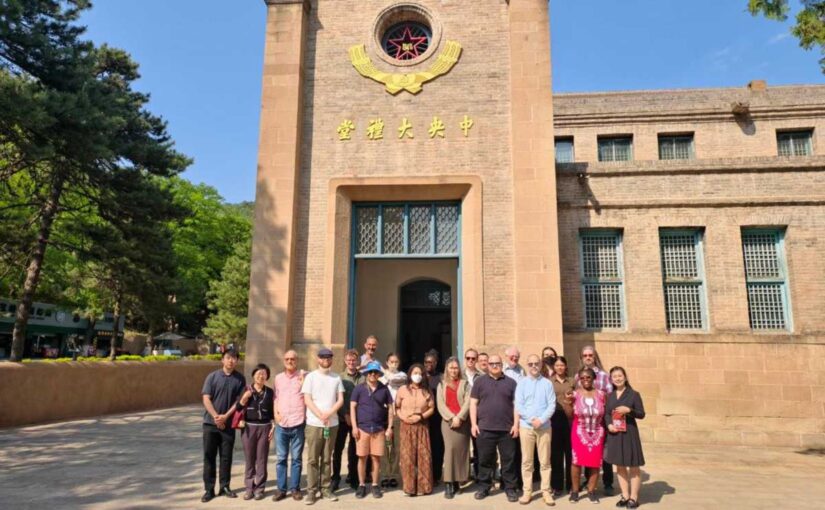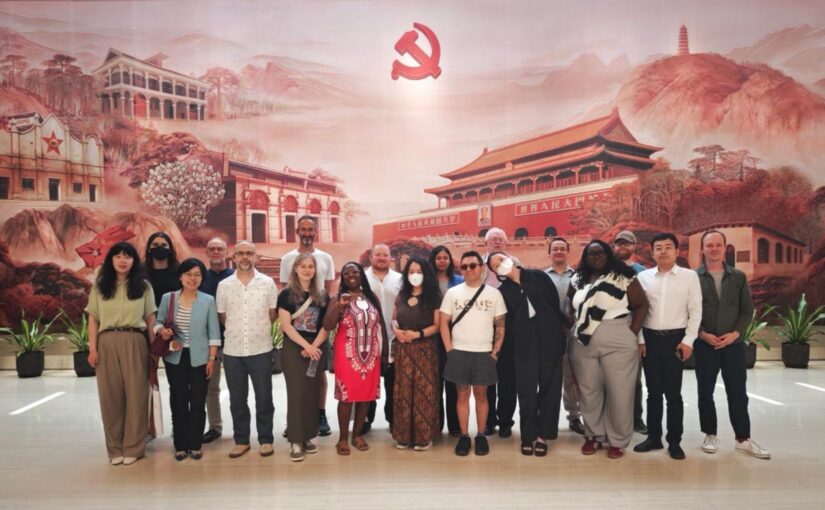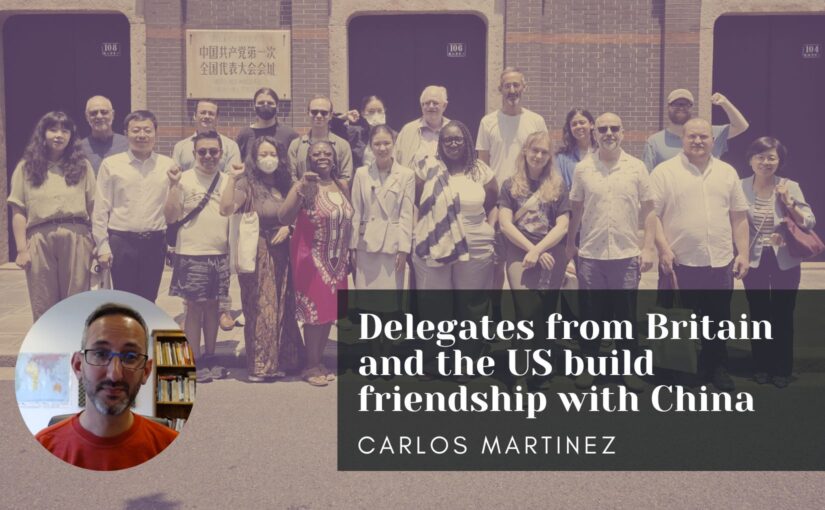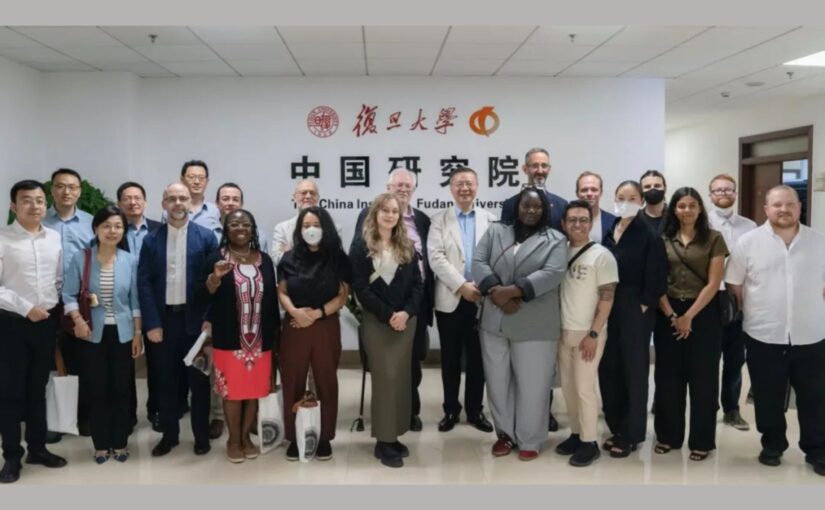
Continuing our series of articles related to the ‘Path to Modernisation: Takeaways from China’s Theory and Practice of Poverty Alleviation’ conference which took place in Yinchuan, Ningxia, in July 2026, David Peat, Secretary of Friends of Socialist China Britain Committee, recounts his experiences in Ningxia Hui Autonomous Region, including local site visits, attending the conference, meeting local leaders, and highlighting how all of China’s regions worked together (in ‘paired assistance’ programmes) to achieve the goal of abolishing absolute poverty, and tying together the many ethnic minorities, varying geographical regions, and different levels of development in the Chinese nation.
David’s first article can be read here.
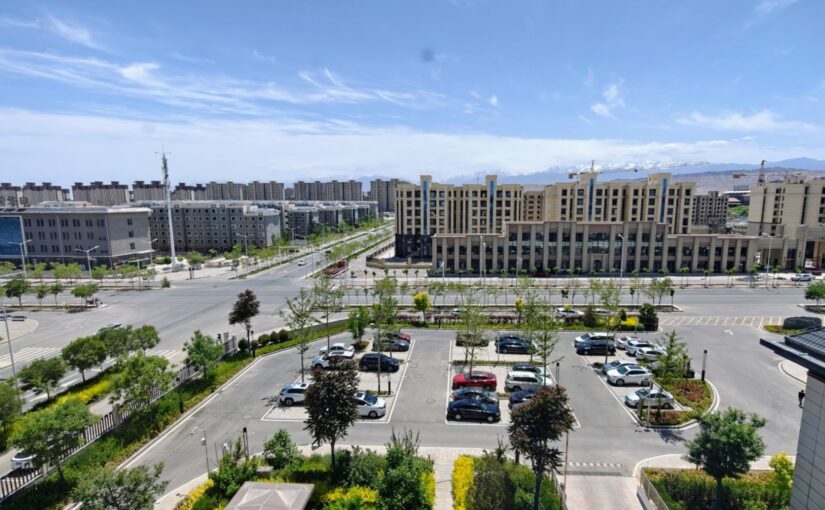
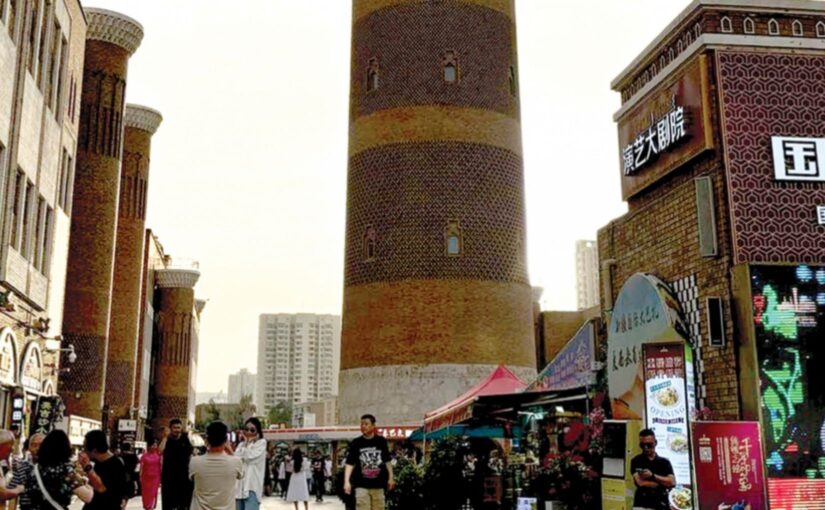
Our delegation continued overland, crossing the border from Gansu to Ningxia Hui Autonomous Region, China’s smallest autonomous region or province, and one equally known for its rugged terrain and (up until recently) persistent poverty. Even in this area, however, high-speed rail can be found and we enjoyed a journey taking in the changing landscapes. As its name also denotes, the region is an area with a relatively large ethnic minority population (38% Hui Muslim, with 62% Han) and as such it is one of China’s five designated ‘autonomous regions’, which have the ability to exercise certain additional rights, relative to standard Chinese provinces. China’s territory and population is enormous and extremely diverse, and, as will be seen below, its success has been due to a combination of finding solutions that work for local conditions, as well as cooperation between regions.
The delegation’s first stop in Ningxia was Minning Town, a flagship poverty alleviation project and moreover a case study of the ‘paired assistance’ model, which sees more developed regions of the country pairing with less developed ones in order to support their journey to achieve better living conditions for their residents. This particular partnership, which has been in place for 30 years, is revealed in the town’s name ‘Minning’, which is built out of the old name ‘Min’ for today’s Fujian, a relatively wealthy coastal province in China’s southeast, and ‘Ning’ from Ningxia. The story of the partnership, and Minning’s overall journey, is vividly portrayed in a popular Chinese television drama Minning Town, and the entire series is available to watch for free with English subtitles on YouTube.
This model was put forward by Chinese President Xi Jinping, who was then Deputy Party Secretary of Fujian Province. In 1997 he visited a site where the new town would be built (and would be populated by villagers who would relocate from their older, unsuitable residencies.) The paired assistance model involves the sharing of resources, expertise, funding and investment, and personnel, between the two regions. Those with technical knowhow were able to come from Fujian to improve the capacities of the rural residents, and alternately, those from Ningxia were able to share agricultural expertise with those in Fujian who could assist with wider rural revitalisation projects. Furthermore, financial support between the regions allowed for major infrastructural improvements to take place in the poorer districts. The evidence of the success of this long-term partnership can be seen in income levels: annual per capita disposable income for rural residents in Ningxia has risen from about 1,400 yuan in 1996 to more than 20,000 yuan in 2025. The model of East-West collaboration within China (such as that between Fujian and Ningxia) has shown huge success, as exemplified by Minning, and is set to continue to expand to support China’s ongoing development goals.
As seen in Gansu, any poverty alleviation project requires consideration of both the development of basic infrastructure to support wellbeing, as well as the development of ways of making a living for the residents. Minning is no different, and our delegation was able to witness (and even participate in) one aspect of its economic development: its e-commerce infrastructure, which has been put into place to assist residents to expand the market access for their (primarily agricultural) products. Local villagers reported how they had received vocational training, and how in particular this kind of work provided opportunities for those with disabilities, who represented 30% of the workforce in the company we visited. One villager remarked on their change of circumstances: “Previously we didn’t know how to use computers, but now we are able to become e-commerce influencers.” Delegates were given the opportunity to appear directly on a livestream and assisted the locals in selling their products (which, at that time, was goat milk). A local news report captured some opinions of delegates at the site.
A book launch event was held in Minning, which told its redevelopment story, alongside other such stories from the length and breadth of the country: Leaving No One Behind: China’s Stories of Poverty Alleviation, published by Contemporary World Press. The book is available in English and the launch was to celebrate its translation into Khmer language, for distribution in Cambodia.
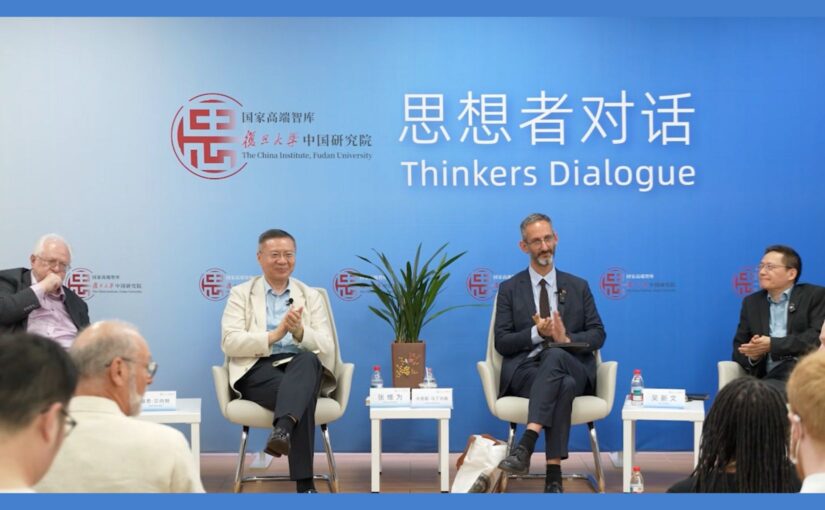
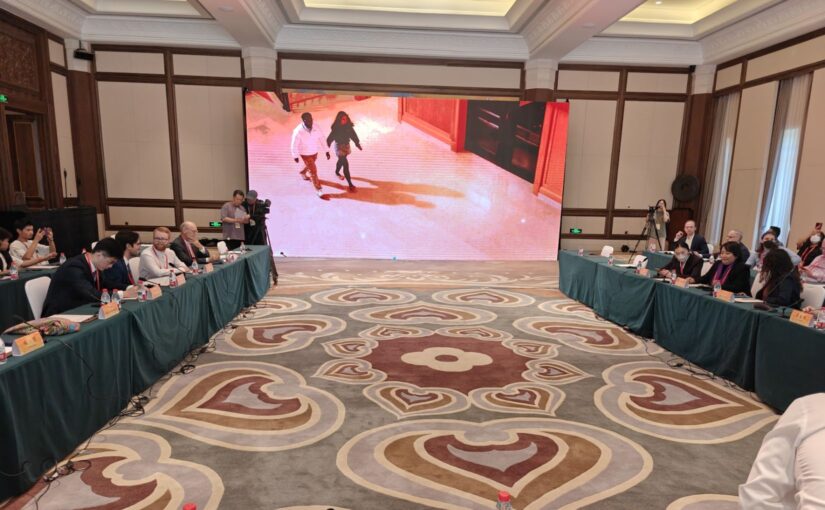
Following the explorations of the rural regions on the road from Gansu to Ningxia, we arrived at the region’s capital of Yinchuan, which sits on the Yellow River, considered the “mother river” of Chinese civilisation. Several delegations, with over 120 representatives from more than 55 countries, who had inspected poverty alleviation projects in other parts of the country, all convened here for the conference on the theme of ‘Path to Modernisation: Takeaways from China’s Theory and Practice of Poverty Alleviation’, which took place on July 9, 2026.
The conference was convened by International Department of the CPC (IDCPC) Vice Minister Sun Haiyun, who remarked that Ningxia had been chosen as the location since it was so central to General Secretary Xi Jinping’s vision for poverty alleviation, as represented by the Fujian-Ningxia East-West paired assistance model, and stated that the purpose of the gathering was for all attendees to be able to apply some of the lessons learned in their own national contexts. Vice Minister Sun also noted the timeliness of the gathering, taking place not long after China had celebrated the 105th anniversary of the founding of the CPC.
Continue reading Ningxia: the Global South meets to study China’s ‘Long March’ to abolish absolute poverty