Wang Yi visits DPRK

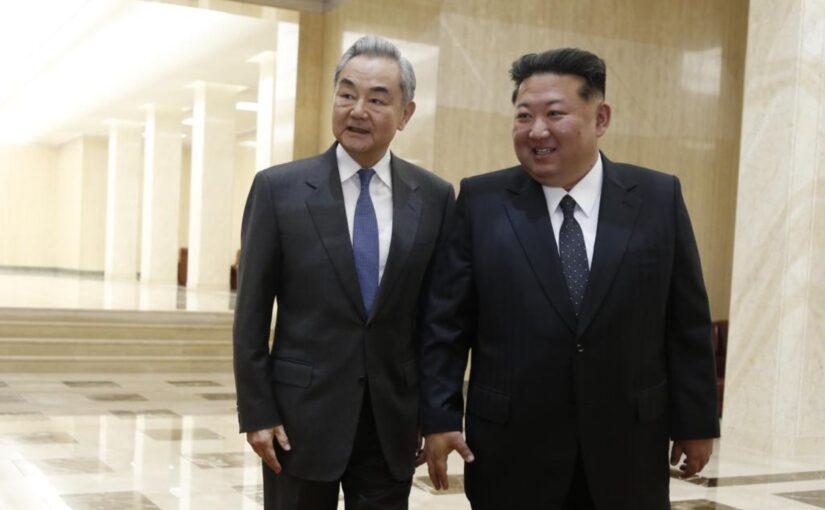
Chinese Foreign Minister Wang Yi, who is also a member of the Political Bureau of the Central Committee of the Communist Party of China (CPC), visited the Democratic People’s Republic of Korea (DPRK) on April 9-10 at the invitation of his DPRK counterpart Choe Son Hui, who is Foreign Minister and also a member of the Political Bureau of the Central Committee of the Workers’ Party of Korea (WPK).

In their talks on April 9, Wang said that in early September last year, Xi Jinping, general secretary of the CPC Central Committee, and Kim Jong Un, general secretary of the WPK, held a historic meeting in Beijing, reaching important consensus on the overall, strategic and directional issues concerning bilateral ties.

Their meeting provides important strategic guidance for further developing China-DPRK relations, pushes bilateral ties into a new stage and opens a new chapter in friendly exchanges between the two countries, which is of great and far-reaching significance, Wang added.

The past year has witnessed a series of highlights in China-DPRK exchanges, which strongly demonstrated that the two countries’ traditional friendship forged in blood remains everlasting and unbreakable, the Chinese Foreign Minister said, noting that this year marks the 65th anniversary of the signing of the China-DPRK Treaty of Friendship, Cooperation and Mutual Assistance. (The DPRK is the only country with which China has a treaty of this type.)

Over the past 65 years, Wang said, no matter how the international and regional situations have changed, China and the DPRK, as good neighbours, good friends and good comrades, have always trusted and supported each other, making unremitting efforts to maintain regional and world peace and stability and promote their respective development.

Wang added that China is willing to work with the DPRK side to hold commemorative events for the 65th anniversary of the signing of the treaty, strengthen high-level exchanges, enhance dialogue and practical cooperation at all levels and in various fields, deepen people-to-people exchanges and mutual understanding, and contribute to their respective economic and social development.

For her part, Choe said that the DPRK-China friendship is based on the common socialist system and traditional friendship, describing bilateral relations as deep-rooted, solid and sustainable. It is the unwavering position of the WPK and the nation to advance DPRK-China friendship and cooperation following the trend of the times and the will of the two peoples.

The DPRK, Choe said, fully supports the one-China principle, firmly opposes any interference in China’s internal affairs, and resolutely supports China’s position on safeguarding sovereignty and territorial integrity concerning Taiwan, Xizang [Tibet], Xinjiang, and other issues of China’s core interests.

She also said that the DPRK side fully endorses the vision of building a community with a shared future for humanity and the four global initiatives proposed by Xi, and highly values China’s just position on and important role in international and regional affairs.

The DPRK government hosted a reception for Wang Yi and his delegation that evening.

In her speech, Choe Son Hui said that it is the consistent policy of the WPK and the DPRK government to value and steadily develop the friendly relations with China, which have given steady continuity to the good traditions of unity and cooperation with socialism as their core, overcoming all the tempests of history.

Continue reading Wang Yi visits DPRK

China’s peace diplomacy aids defeat of US imperialism

In what cannot but be described as a humiliating climbdown and significant defeat for US imperialism, on the evening of April 7, barely minutes before his self-set deadline for unleashing a genocide of unprecedented savagery and barbarism aimed at wiping out the millennia long Iranian civilisation, US President Donald Trump suddenly announced that he had accepted a Pakistani proposal for a two-week ceasefire, with negotiations between the two main protagonists set to begin in the Pakistani capital Islamabad on April 10.

After a month of bestial aggression characterised from the first day by the most egregious war crimes, including the massacre of more than 170 people, the majority of them little girls, in the bombing of a school, along with the murder of the religious and political supreme leader of the Iranian people together with numerous members of his family as well as leading political figures of the country; after a rising crescendo of ever more deranged and psychotic threats of a kind not publicly uttered by a head of state since Adolf Hitler, albeit the nazi leader refrained from using such profane language in public, the US mafia boss performed a volte face and declared that Iran’s 10-point peace proposal, which had been on the table since the start of the aggression, constituted a “workable basis on which to negotiate.”

According to Iran’s Press TV, these ten points are as follows:

  • No new aggression against Iran
  • Continued Iranian control over the Strait of Hormuz
  • Acceptance of (uranium) enrichment
  • Removal of all primary sanctions
  • Removal of all secondary sanctions
  • Termination of all UN Security Council resolutions
  • Termination of all (International Atomic Energy Agency – IAEA) Board of Governors resolutions
  • Payment of compensation to Iran
  • Withdrawal of US combat forces from the region
  • Cessation of war on all fronts, including against the heroic Islamic Resistance of Lebanon

Even on the reasonable assumption that any serious negotiation is unlikely to see any side fully realise all its objectives, and irrespective of what the future holds, this climbdown by Trump represents a humiliation for the United States on a scale not seen since the defeats inflicted by the heroic peoples of Vietnam, Laos and Cambodia half a century ago.

A statement from Iran’s National Security Council said:

“On the first day, when the criminal enemies of Iran began this oppressive war, they imagined they would succeed in complete military dominance over Iran in a short time and force Iran to surrender by creating political and social instability. They thought Iran’s missile and drone fire would be quickly extinguished and did not believe that Iran could deliver such a powerful response beyond its borders and across the entire region…

“Iran and the Resistance almost completely destroyed the American military machine in the region; they dealt crushing and profound blows to the vast infrastructure and facilities that the enemy had built and stationed around the region over the years for this war against Iran. In regional dimensions, they imposed extensive casualties on the criminal American army, and within the occupied territories, they delivered heavy and shattering blows to the enemy’s forces, infrastructure, facilities, and assets…

“Now, the honourable Prime Minister of Pakistan has informed Iran that the American side, despite all outward threats, has accepted these principles as the basis for negotiations and has surrendered to the will of the Iranian nation. Accordingly, at the highest level, it has been decided that Iran will engage in negotiations in Islamabad with the American side for a period of two weeks, based solely on these principles. It is emphasised that this does not mean the end of the war; Iran will only accept the termination of the war once the details—given the acceptance of Iran’s preferred principles in the 10-point plan—are finalised in the negotiations…

“If the enemy’s surrender on the battlefield is transformed into a decisive political achievement in the negotiations, we will celebrate this massive historical victory together; otherwise, we will fight side-by-side on the battlefield until all the demands of the Iranian nation are met. Our hands are on the trigger, and the moment the slightest error is committed by the enemy, it will be responded to with full power.”

Continue reading China’s peace diplomacy aids defeat of US imperialism

Shield of the Americas: The pinnacle of subordination in the silent war against China

While the world’s attention has been focused on Washington’s wars of aggression in the West Asia, the Trump administration has been quietly advancing a parallel offensive in Latin America – one whose real target, as Oscar Rotundo makes clear in this incisive analysis (originally published in English on the website Internationalist 360), is China.

The “Shield of the Americas” summit, hosted by Secretary of State Marco Rubio and Kristi Noem at Trump’s Doral golf resort in Miami, brought together twelve compliant Latin American governments and committed them to a Washington-monitored protocol covering security, economic and digital cooperation. As Rotundo shows, this is nothing new: the US has long used regional proxies to advance its interests while making others pay the bill. What’s relatively new is the explicit anti-China dimension.

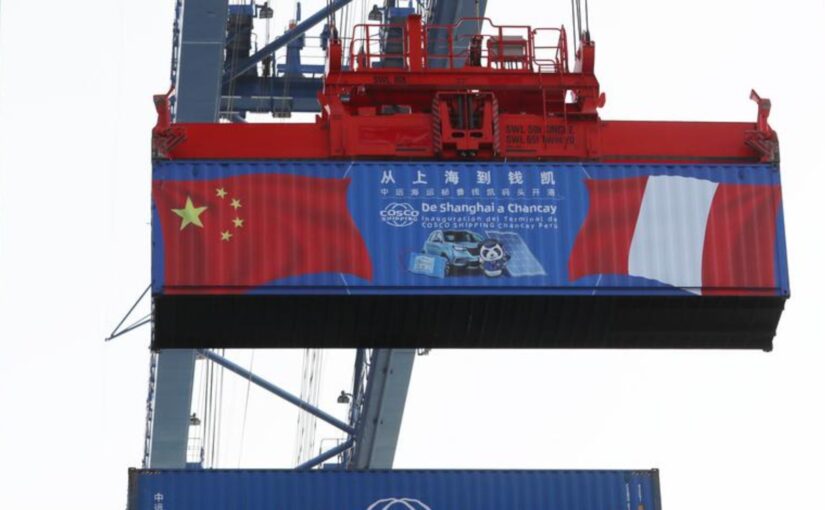
Every country invited to Miami has significant economic ties with China – ties that are, in most cases, irreplaceable. China is the largest trading partner of Chile; it is Bolivia’s largest creditor; a key investor in Ecuador; and a key destination for much of the region’s commodity exports. The Chancay megaport in Peru, Chinese EVs and green energy investment are all in Washington’s crosshairs.

But as Rotundo argues, the US has nothing comparable to offer. It brings no investment, no infrastructure, no technology transfer – only threats, sanctions and hegemonism. China, by contrast, “builds quality infrastructure and incorporates cutting-edge technology” without demanding political submission.

“The train of the future,” Rotundo concludes, “has left Trump stranded.”

The so-called “Shield of the Americas,” which includes Argentina, Bolivia, Chile, Costa Rica, the Dominican Republic, Ecuador, El Salvador, Guyana, Honduras, Panama, Paraguay, and Trinidad and Tobago , met at a golf club in Doral, Miami, and was hosted by Secretary of State Marco Rubio and Kristi Noem, former Secretary of Homeland Security, who will now serve as special envoy for the “Shield of the Americas.”

The idea behind this meeting is to commit those present to a regional control protocol in security, economy, and digital cooperation, monitored from Washington.

Just as the United States once turned to private contractors such as DynCorp International (now part of Amentum), a US security and aviation contractor for the Pentagon and the State Department, who operated in “Plan Colombia,” it is now turning to the military forces of these countries to act as police officers under its command.

Sending migrants to prisons in El Salvador or Guantanamo in Cuba, the kidnapping of the sitting constitutional president Nicolás Maduro and the deputy Cilia Flores in Caracas, Venezuela, the threats of invasion or overthrow of the legitimate government of Cuba, the constant extortion against Mexico, are all part of the same package to which the cohort of lackeys is added.

The United States, with the same zeal with which it bombs boats under the pretext of drug trafficking, taking the lives of people who cannot be held responsible for any crime; under this cloak of suspicion, it intends to implement a regional security policy with military forces paid for by each State to multiply the protection of its interests in the region.

What is hidden beneath that shield

Supposedly a shield protects, but not always. We could say that the TIAR (Inter-American Treaty of Reciprocal Assistance) – a mutual defense pact signed in 1947 by countries of America, under the principle that an armed attack against a member state is considered an attack against all, obliging cooperation – was also a shield promoted by the northern hegemon, which, when it came to intervening and discouraging the aggression of an extra-continental force like Great Britain, which since 1833 has illegitimately occupied the Falkland Islands, a territory belonging to Argentina, a member country, did the opposite and joined the aggression by logistically supporting the colonialist force.

Under this shield, “friendly” countries agree to hand over natural resources and sovereignty over these and over the territories where interoceanic passages are located, so that the United States can exercise control over the movement of goods and military resources that can be moved from one place to another, as Donald Trump has just proposed regarding the Strait of Hormuz, which he is “considering taking control of,” a strategic maritime passage through which 20% of the world’s crude oil and also significant quantities of liquefied natural gas (LNG) circulate.

Also, as seen in Ecuador with the presence of Erik Prince, founder of the private military company Blackwater, who in 2025 collaborated with the government of Daniel Noboa to combat organized crime and drug trafficking, participating in operations in Guayaquil and in the training of security forces, it would not be surprising if contractors of this nature were to occupy the ground and the operation of this purported fight against Narcoterrorism, under the auspices of this “strategic protection” in the associated countries.

Continue reading Shield of the Americas: The pinnacle of subordination in the silent war against China

China strengthens ties with Portugal and Spain

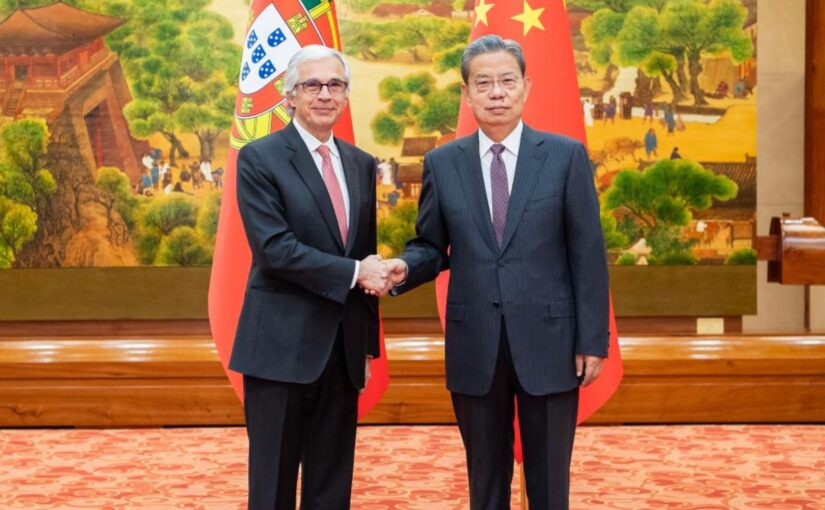
The speaker of the Portuguese parliament Jose Pedro Aguiar-Branco recently visited China.

Meeting his guest on April 8, Zhou Leji, Chair of the Standing Committee of the National People’s Congress (NPC), said that China and Portugal are traditional friendly countries and comprehensive strategic partners with mutual respect, mutual trust and win-win cooperation. China is willing to work with Portugal to respect each other’s core interests and major concerns and continuously build and expand consensus on the basis of equality and sincere dialogue.

Noting that the two sides should deepen cooperation in culture, science and technology, education and tourism, and build a solid public opinion foundation for bilateral ties, Zhao called for making good use of mechanisms such as the Forum for Economic and Trade Cooperation between China and Portuguese-speaking Countries, expand trilateral cooperation with Africa, Latin America and other regions, and jointly practice true multilateralism.

Aguiar-Branco said Portugal firmly adheres to the one-China policy, adding that deepening the comprehensive strategic partnership between Portugal and China is an important consensus among all political parties in Portugal.

Chinese Vice President Han Zheng met with Aguiar-Branco the same day. He said China is willing to work with Portugal to jointly expand cooperation using Macao as a platform, promote the China-EU partner positioning, and maintain international unity and cooperation.

Aguiar-Branco said the Portuguese side appreciates the successful implementation of “one country, two systems” in Macao and hopes to further promote bilateral practical cooperation and multilateral communication and collaboration with China.

Friendly relations between China and Portugal have developed steadily since the April 1974 revolution overthrew the fascist Caetano regime and especially following the formal establishment of bilateral diplomatic relations in February 1979. What is particularly striking, and indicated above, is the contrast between the Portuguese approach regarding Macao and that of British governments regarding Hong Kong. In the latter case, continual neo-colonial interference and bad faith act as a constant irritant in and impediment to bilateral relations. In stark contrast, Macao acts as a bridge of friendship and practical cooperation not only between China and Portugal, but also between China and all the Portuguese-speaking countries, both bilaterally and multilaterally.

Additionally, Spanish Prime Minister Pedro Sanchez will pay an official visit to China from April 11 to 15 at the invitation of his counterpart Li Qiang.

Announcing the visit, Foreign Ministry spokesperson Mao Ning observed that this would be Sanchez’s fourth visit to China in a four-year period, adding that it represents another significant high-level exchange between China and Spain in a short period.

Noting that Spain is an important partner of China within the European Union, Mao pointed out that in recent years, China-Spain relations have developed at a high level under the strategic guidance of the leaders of both countries, with solid progress made in cooperation across various fields and benefiting the two peoples.

“China is willing to work with Spain to take Prime Minister Sanchez’s visit as an opportunity to further deepen strategic mutual trust, enhance communication and cooperation, strengthen multilateral coordination, and promote China-Spain relations to a higher level, contributing more to safeguarding world peace and stability,” Mao said.

Sanchez has stood out as a strong opponent of the US-Israeli war of aggression against Iran, as well as in defence of the rights of the Palestinian and Lebanese peoples, prompting US President Trump to make an escalating series of threats against Spain, including one to sever all trade.

The following articles were originally published by the Xinhua News Agency.

Continue reading China strengthens ties with Portugal and Spain

Vietnam’s new president to visit China

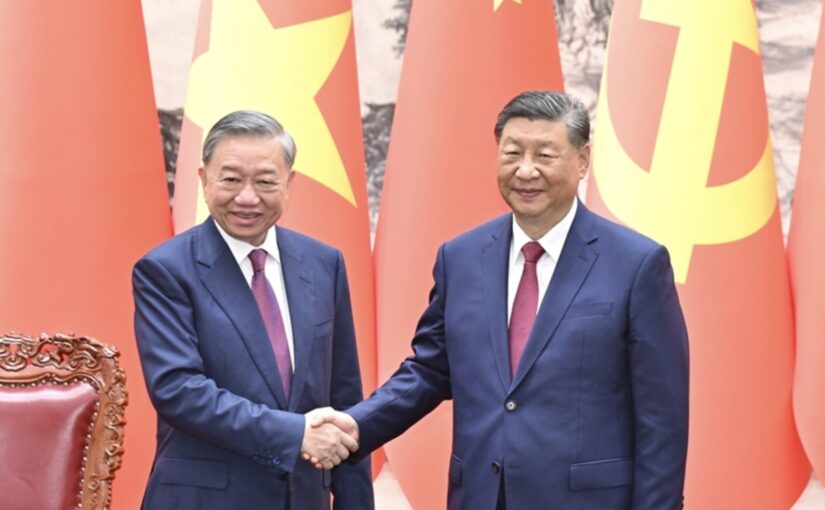
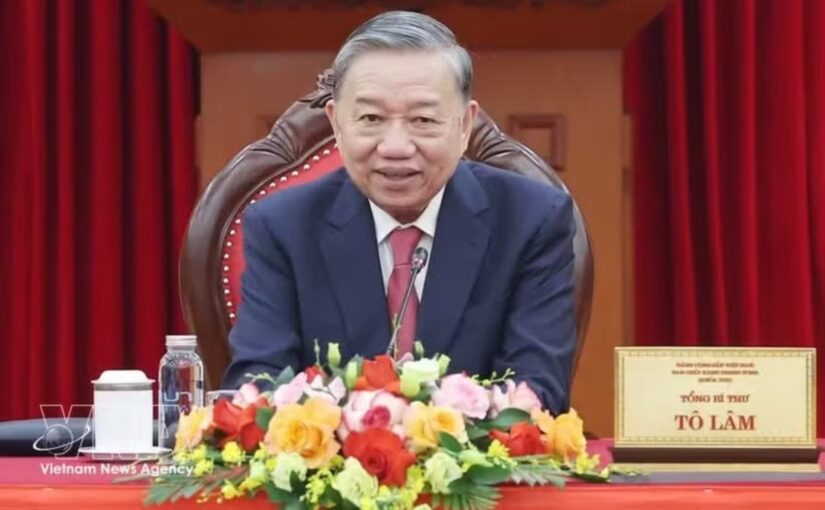
At its first session, held in Hanoi on April 7, the 16th National Assembly of the Socialist Republic of Vietnam elected To Lam, who is the general secretary of the Central Committee of the Communist Party of Vietnam, to serve concurrently as state president.

In combining the top posts of the party and state in the same individual, the political arrangements of Vietnam in this regard now mirror those of China, Laos, the Democratic People’s Republic of Korea and Cuba.

In a message of congratulations sent the same day, To Lam’s Chinese counterpart Xi Jinping noted that China and Vietnam are a community with a shared future that carries strategic significance. In recent years, under the joint guidance and promotion of the leaders of the two parties and the two countries, China-Vietnam relations have achieved leapfrog development, and the comprehensive strategic cooperation has yielded fruitful results, bringing tangible benefits to the people of both countries.

Xi added that he attaches great importance to the development of relations between the two parties and the two countries, and stands ready to work with To Lam to advance development and national rejuvenation, promote steady progress in the building of a China-Vietnam community with a shared future, continuously strengthen their respective socialist causes, and better benefit the two peoples.

On April 9, it was announced that To Lam will pay a state visit to China from April 14 to 17. This will be his first foreign visit since becoming head of state.

Foreign Ministry spokesperson Mao Ning said that: “China hopes that through the visit, the two countries will carry forward the traditional friendship, continue to deepen the comprehensive strategic cooperative partnership, advance the building of an even higher level of community with a shared future that carries strategic significance, jointly promote the socialist cause in the world, and together maintain regional and world peace, stability and development.”

The following articles were originally published by the Xinhua News Agency.

Xi congratulates To Lam on election as president of Vietnam

BEIJING, April 7 (Xinhua) — Chinese President Xi Jinping, also general secretary of the Communist Party of China Central Committee, extended on Tuesday congratulations to To Lam on his election as president of Vietnam.

Continue reading Vietnam’s new president to visit China

Afghanistan and Pakistan hold peace talks in Urumqi

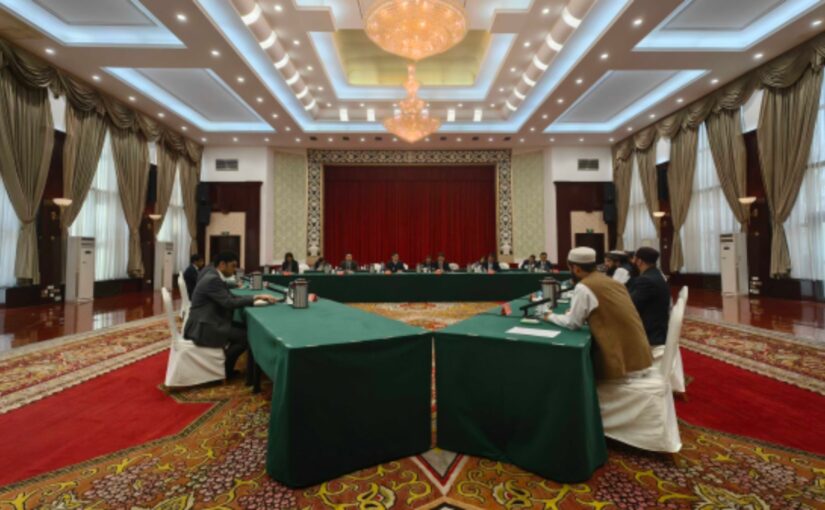
Chinese Foreign Ministry spokesperson Mao Ning announced at a regular press conference on April 8 that representatives from China, Afghanistan and Pakistan held informal talks from April 1 to 7 in Urumqi, capital of northwest China’s Xinjiang Uygur Autonomous Region, in a bid to address and resolve the recent armed clashes between China’s two neighbours.

She described the discussions as being candid, pragmatic and proceeding in a sound atmosphere, with an approach oriented towards solving problems, striving for results and taking actions.

Mao further noted that the Afghan and Pakistani delegations spoke highly of the Global Security Initiative and the Asian security model put forward by the Chinese side, in particular the important visions of seeking commonality despite differences, treating each other as equals, and championing dialogue and consultation for peaceful settlement of disputes.

“The two sides commended and thanked China for the mediation effort and thoughtful arrangement as the host country of the talks.”

The Afghan and Pakistani sides reiterated that they follow the purposes and spirit of the UN Charter and the Five Principles of Peaceful Coexistence, stay committed to resolving differences as soon as possible, work for the turnaround of Afghanistan-Pakistan relations, and agree to refrain from actions that may escalate or complicate the situation, Afghanistan and Pakistan reiterated that the two countries are Muslim brothers and neighbours.

The following article was originally published by the Xinhua News Agency. Some recent background may be read here.

BEIJING, April 8 (Xinhua) — Representatives from China, Afghanistan and Pakistan held informal talks from April 1 to 7 in Urumqi, northwest China’s Xinjiang Uygur Autonomous Region, Chinese foreign ministry spokesperson Mao Ning said on Wednesday.

Mao told a regular press briefing that the cross-departmental delegations of the three sides include representatives from authorities in charge of foreign affairs, defense and security.

Based on the common understandings reached between Chinese Foreign Minister Wang Yi, who is also a member of the Political Bureau of the Communist Party of China Central Committee, Pakistani Deputy Prime Minister and Foreign Minister Mohammad Ishaq Dar and Afghan Foreign Minister Mawlawi Amir Khan Muttaqi, the discussions were candid, pragmatic and proceeded in a sound atmosphere, which shows that the talks follow an approach oriented towards solving problems, striving for results and taking actions, said Mao.

Mao noted that the Afghan and Pakistani delegations spoke highly of the Global Security Initiative and the Asian security model put forward by the Chinese side, in particular the important visions of seeking commonality despite differences, treating each other as equals, and championing dialogue and consultation for peaceful settlement of disputes.

“The two sides commended and thanked China for the mediation effort and thoughtful arrangement as the host country of the talks,” she said, adding that they also expressed appreciation for China’s fair and just position and utmost effort.

The Afghan and Pakistani sides reiterated that they follow the purposes and spirit of the UN Charter and the Five Principles of Peaceful Coexistence, stay committed to resolving differences as soon as possible, work for the turnaround of Afghanistan-Pakistan relations, and agree to refrain from actions that may escalate or complicate the situation, Mao pointed out.

“China expressed readiness to maintain communication with both sides, provide the platform for dialogue, and continue to play a constructive role for improving and developing Afghanistan-Pakistan relations and enhancing practical trilateral cooperation among the three countries,” said the spokesperson.

Mao said after intensive bilateral and trilateral meetings over the past week, China noted and summed up the talks and common understandings.

Afghanistan and Pakistan reiterated that the two countries are Muslim brothers and neighbors, Mao said.

The three sides believed that amid the turbulent and changing international and regional situation, maintaining friendly ties between Afghanistan and Pakistan is of vital importance to peoples in both countries as well as peace and stability in South Asia, she added.

The three sides stressed that dialogue and consultation is the viable and effective way to resolve complex international disputes, including the disputes between Afghanistan and Pakistan, according to the spokesperson.

The three sides agreed to discuss a comprehensive plan to resolve issues in the relations between Afghanistan and Pakistan, and identified the core and priority issues, Mao said.

China stressed that terrorism is the core issue affecting Afghanistan-Pakistan relations, the spokesperson said.

The three sides believed that the Urumqi process is substantive, and agreed to maintain communication and dialogue on the process, she added.

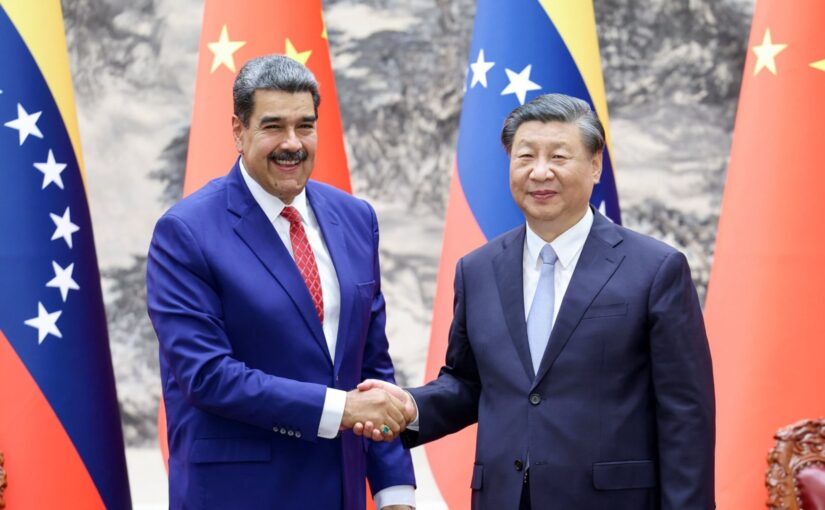
China’s solidarity with Venezuela, Iran and Cuba

The text below is an edited version of a talk given by Alex C during a launch event for the book “China Changes Everything” held at the SHAPE (Self Help for African People Everywhere) Center in Houston and online on March 28, 2026.

The speech observes that, as the US escalates its wars of aggression against the Global South – invading Venezuela, bombing Iran and tightening its stranglehold on Cuba – the People’s Republic of China has stood firmly alongside the peoples under attack. Alex C traces China’s concrete solidarity with three revolutionary nations on the frontlines of the struggle against imperialism. In Venezuela, China defended Maduro’s government against US-backed coup attempts, and provided critical economic assistance and diplomatic support.

In Iran, China has been a lifeline, purchasing Iranian oil to offset the impact of sanctions, supplying military components, and building a comprehensive strategic partnership that has fundamentally undermined Washington’s efforts to economically strangle the Islamic Republic.

In Cuba, China has contributed $80 million toward the island’s electrical grid, forgiven substantial debt, and partnered with Havana on an ambitious transition to renewable energy.

Drawing on the lessons of Lenin and Mao, the speech reminds us that “nations which embrace revolutionary socialism can and will endure the onslaught of imperialism” – and calls on those of us in the imperial core to stand with the anti-imperialist camp.

The text of the speech first appeared on Workers World. The text is followed by a video of the full launch event.

Venezuela — like China, Iran, Cuba and so many other countries under siege by the United States — is one of many links in the chain of international proletarian revolution. To paraphrase China’s Chairman Mao Zedong, the Venezuelan people stood up in 1999, proclaiming that from that day forth, they would be the masters of Venezuela’s destiny, not international capital. 

Continue reading China’s solidarity with Venezuela, Iran and Cuba

The historical bonds between Namibia and China continue to underpin a deepening strategic partnership – SWAPO secretary general

The Republic of Namibia celebrated the 36th anniversary of its independence on March 21 – an independence won after years of armed struggle against the imperialist-backed South African apartheid racist regime.

Marking the occasion, Sophia Shaningwa, secretary general of the country’s South West Africa People’s Organisation (SWAPO), gave an interview to China’s Xinhua News Agency. SWAPO led the liberation struggle and has governed the country since independence.

Shaningwa said that the historical bonds between Namibia and China continue to underpin a deepening strategic partnership, reflecting a model of South-South cooperation rooted in solidarity, equality and shared development goals.

China’s solidarity with Namibia dates back to a time “when the forces of apartheid and imperialism sought to crush our legitimate quest for self-determination. This solidarity was not merely rhetorical; it was concrete, consistent and rooted in the shared anti-imperialist principles that define South-South cooperation.”

Noting that China played a pivotal role on multiple fronts during Namibia’s liberation struggle, the secretary general said that what distinguished China’s support from that of some other partners was its principled and consistent nature.

“Unlike some partners whose assistance was sometimes tempered by geopolitical calculations or conditionalities, China’s solidarity was rooted in genuine anti-imperialist conviction and mutual respect for national sovereignty. It combined political advocacy, diplomatic engagement and practical aid without seeking influence or concessions.”

Since independence, China’s role in Namibia’s infrastructure development has been particularly visible, with projects delivered by Chinese companies, including major road networks, port expansions at Walvis Bay and energy infrastructure, she noted. “These projects have significantly improved connectivity, facilitated trade, and contributed to employment creation and energy security.”

Continue reading The historical bonds between Namibia and China continue to underpin a deepening strategic partnership – SWAPO secretary general

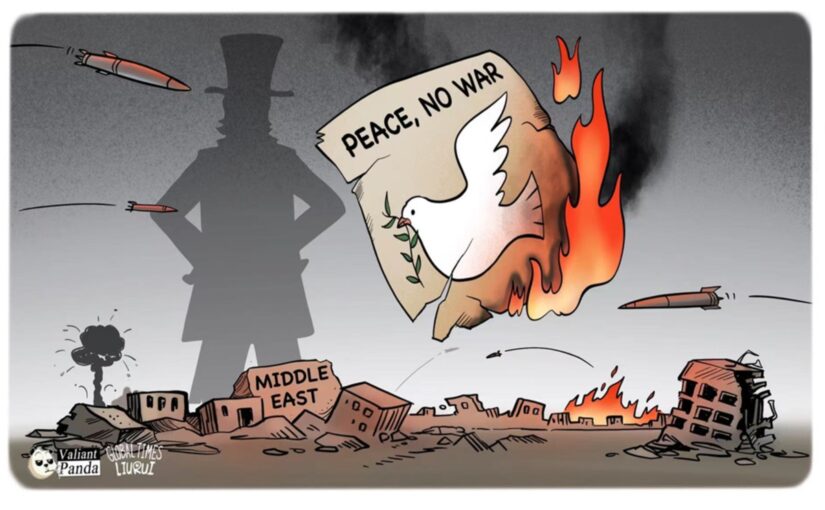
China wants an end to the criminal war on Iran

We are pleased to republish below an editorial from the Global Times calling on the US and Israel to immediately end their criminal aggression against Iran, before a conflict that “should never have happened” slides beyond all control.

The editorial’s assessment is damning. The US government’s prediction of a “four to five week” war has already been proven wrong, and the conflict’s geography has expanded far beyond its original scope – from the Persian Gulf to the eastern Mediterranean, from the Strait of Hormuz to the Bab el-Mandeb. US assets in Kuwait, Iraq, Qatar, the UAE and Bahrain have all come under attack. Oil prices have surged past $112 a barrel. The risk of global recession is rising.

Most alarming, the editorial argues, is the erosion of limits on targets, with the US and Israel showing no restraint in their attacks on key civilian infrastructure, including oil refineries, desalination plants and power stations.

The editorial identifies a narrow window for peace: both the US and Iran have previously signalled openness to negotiation. China meanwhile has called for ceasefire from the first day and has been working consistently at the level of diplomacy towards that end. “War has no winners, only irreparable harm.”

It has now been a full month since the US and Israel launched military strikes against Iran on February 28. Far from achieving their so-called “intended objectives,” this conflict, which was initiated by the US and Israel without justification amid negotiations, has instead edged steadily toward the brink of losing control. Although it is uncertain how this conflict will end, its shock to geopolitics and the global order is already profound. What is urgently needed now is to prevent this conflict – one that should never have happened – from sliding into the abyss of complete loss of control.

Continue reading China wants an end to the criminal war on Iran

The unbreakable China-Latin America ties

As the US wages a criminal war on Iran and attempts to tighten its grip on Venezuela, the Trump administration is simultaneously mounting an aggressive campaign to drive China out of Latin America.

Writing in CGTN, Oliver Vargas – a British-Bolivian current affairs commentator based in Beijing – provides a sharp and timely analysis of Washington’s latest bid to reassert colonial dominance over its southern neighbours. At the centre of this effort is the so-called “Shield of the Americas” summit – a gathering in early March of handpicked right-wing governments whose stated purpose is to “push China out” of Latin America. But as Oliver notes, the material forces driving China-Latin America cooperation are “far more powerful than any summit communique”.

The coercive tactics on display are extraordinary. Chile has been threatened with the loss of its US visa waiver programme for merely considering a $500 million undersea cable connecting it to China. Panama’s Supreme Court was bullied into ruling against
CK Hutchison’s port concessions – concessions built on $1.8 billion of investment over nearly three decades. These are not the actions of a confident power competing on merit; they are the desperate manoeuvres of a declining hegemon that, as the author puts it, has “only one card to play”.

The contrast with China could not be starker. Since 2000, China-Latin America trade has expanded approximately 35-fold. Peru’s Chancay megaport has cut shipping times to Asia by nearly two weeks. BYD has built a major EV factory in Brazil. Chinese Foreign Minister Wang Yi, speaking at the recent Munich Security Conference, called for all countries to be “equal in terms of rights, opportunities and rules.” US Secretary of State Marco Rubio, from the same platform, lamented the decline of “great Western empires”.

Continue reading The unbreakable China-Latin America ties

China and Pakistan work jointly for peace

China and Pakistan have jointly launched a five-point peace initiative aimed at ending the US-Israeli war of aggression against Iran.

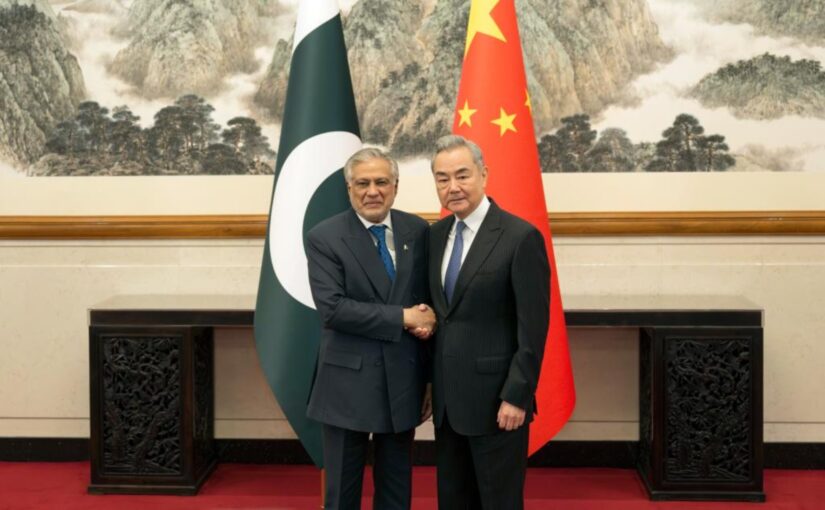
The move came as the centrepiece of a March 31 visit to Beijing by Pakistani Deputy Prime Minister and Foreign Minister Mohammad Ishaq Dar for talks with his Chinese counterpart Wang Yi.

At their meeting, Wang said that the mediation efforts of the Pakistani side regarding the conflict are in the common interests of all parties. China supports and looks forward to Pakistan playing a unique and important role in easing the situation and resuming peace talks.  China is willing to make joint efforts with Pakistan to end the hostilities as soon as possible, create opportunities for peace and open the window for peace talks.

On bilateral ties, Wang said this year marks the 75th anniversary of the establishment of diplomatic relations between China and Pakistan, calling on both sides to implement the important consensus reached by the leaders of the two countries and constantly advance the building of a China-Pakistan community with a shared future.

For his part, Dar said the Pakistan-China friendship is precious and deeply rooted in people’s hearts, adding that Pakistan is willing to work with China to promote the continuous development of the all-weather strategic cooperative partnership between the two countries. He thanked China for supporting Pakistan’s mediation of the situation in Iran, adding that the current conflict has disrupted international energy supplies and caused heavy damage to developing countries.

Dar had earlier visited China, January 3-5. The two foreign ministers also held phone conversations on March 10 and March 27.

The five-point initiative calls for:

  • Immediate Cessation of Hostilities. Humanitarian assistance must be allowed to all war-affected areas.
  • Start of peace talks as soon as possible. Sovereignty, territorial integrity, national independence and security of Iran and the Gulf states should be safeguarded. China and Pakistan support the relevant parties in initiating talks, with all parties committing to peaceful resolution of disputes, and refraining from the use or the threat of use of force during peace talks.
  • Security of nonmilitary targets. The principle of protecting civilians in military conflict should be observed. China and Pakistan call on parties to the conflict to immediately stop attacks on civilians and nonmilitary targets and to fully adhere to International Humanitarian Law (IHL), and stop attacking important infrastructure, including energy, desalination and power facilities, and peaceful nuclear infrastructure, such as nuclear power plants.
  • Security of shipping lanes. China and Pakistan call on the parties to protect the security of ships and crew members stranded in the Strait of Hormuz, allow the early and safe passage of civilian and commercial ships, and restore normal passage through the Strait as soon as possible.
  • Primacy of the United Nations Charter. China and Pakistan call for efforts to practice true multilateralism, to jointly strengthen the primacy of the UN, and to support the conclusion of an agreement for establishing a comprehensive peace framework and realising lasting peace based on the purposes and principles of the UN Charter and international law.

At a Chinese Foreign Ministry press conference on April 1, spokesperson Mao Ning said that the initiative is open and all countries and international organisations are welcome to respond to and participate in it.

Continue reading China and Pakistan work jointly for peace

The 15th Five-Year Plan and China’s economic outlook

We are pleased to republish the below article by the distinguished Marxist economist Michael Roberts, which looks at the reality of the Chinese economy and its prospects in the context of the adoption in March of the 15th Five-Year Plan, by the country’s highest legislative body, the National People’s Congress (NPC).

Adopting the Marxist standpoint of seeking truth from facts in his economic analysis, Michael deals with a number of erroneous claims often made regarding the Chinese economy in a rigorous but comprehensible fashion, which also does not shy away from some of the very real challenges it faces.

He sees the economic growth target set for this year of around 4.5-5% as being well justified and goes on to explain:

“In 2025, China’s real GDP growth was 5%, a rate among the major economies of the world only surpassed by India (which exaggerates its GDP data) and more than twice the US growth rate and three times that of the rest of the top G7 capitalist economies.

“Since 2020, the government has set a target for China to become a ‘mid-level’ economy, (as defined by the World Bank at $20,000 per person at 2020 prices) by 2035. That meant effectively doubling its per capita GDP over those 15 years.  It is clearly on target to do that as China’s per capita income would need to grow only at an average annual rate of about 4.17% a year from hereon.  Assuming China averages an annual real per capita GDP growth rate from hereon of about 4.5%, then it will surpass the World Bank definition by 2034.”

Making an important comparison, he further notes: “China’s per capita GDP would still be only 27% of that of the US (assuming the US per capita GDP grows at a 1.5% average rate from here).  In contrast, India’s per capita GDP would be only 5% of the US by 2035.”

He then proceeds to deal with the fact that: “China’s GDP and growth rates are continually dismissed by many mainstream Western economists as well as by some on the heterodox left,” but points out:

“Recently the prestigious Penn World Tables have confirmed that they consider China’s growth data as broadly accurate and no longer attempt to ‘adjust’ it downwards… Yes, corporate debt is high, and the property market is still falling.  But nearly all this debt is financed entirely from domestic savings, unlike many examples of rapid credit expansion elsewhere. So, this debt is perfectly manageable.”

He also deals with the balance and relationship between investment and consumption, another issue on which a measure of confusion abounds:

“China’s household consumption is not stagnating, it’s growing 4.4%, more or less in line with GDP growth. Exports are not driving growth. Net trade accounted for about 20% of 2025 growth, the rest was driven by domestic consumption and investment.”

Continue reading The 15th Five-Year Plan and China’s economic outlook

China-South Africa relations increasingly demonstrate global and strategic influence

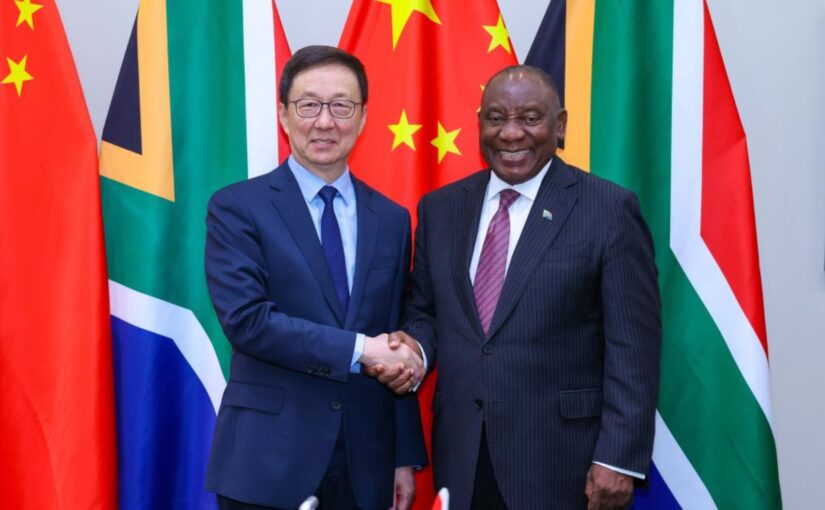
Chinese Vice President Han Zheng recently visited South Africa, meeting President Cyril Ramaphosa and co-chairing the ninth plenary session of the China-South Africa Bi-National Commission.

Meeting with President Ramaphosa on March 25, Han said that China attaches great importance to its relations with South Africa and stands ready to work with the country to further advance the China-South Africa all-round strategic cooperative partnership in the new era established by the two heads of state.

He added that, as true friends who share weal and woe, China and South Africa should continuously enhance political mutual trust, support each other on issues of their respective major concern, maintain the momentum of high-level exchanges, strengthen mutual learning between their ruling parties, and promote practical cooperation in a coordinated manner.

Starting from May 1, China will fully implement zero-tariff measures for 53 African countries with which it has established diplomatic relations. In this context, Han said, China is willing to work with South Africa to finalise, as soon as possible, the early harvest arrangements under the Framework Agreement on Economic Partnership for Shared Development to ensure that South Africa can benefit on a long-term and stable basis from China’s zero-tariff measures.

Han also stressed that both sides should jointly uphold fairness and justice. In the face of a complex and volatile international landscape, China stands ready to remain South Africa’s most reliable friend, strengthen communication and coordination within multilateral mechanisms, and work together to enhance the representation and voice of the Global South in international affairs.

President Ramaphosa noted that the South Africa-China partnership is both distinctive and strategic, development-oriented, and has effectively promoted the development and progress of South Africa and Africa. He expressed appreciation to President Xi for announcing the full implementation of the zero-tariff measures, saying that South Africa will make good use of these policies to expand exports to China and strengthen cooperation with China in areas such as infrastructure, investment and technology, so as to further enrich the bilateral relations.

South Africa stands ready to further enhance communication and coordination with China under multilateral frameworks to promote the common development of Africa and other countries of the Global South.

The following day, Han Zheng met with South African Deputy President Paul Mashatile and co-chaired the ninth plenary session of the China-South Africa Bi-National Commission.

In his speech, Han said that under the strategic guidance of Chinese President Xi Jinping and South African President Cyril Ramaphosa, the China-South Africa relations have entered a “golden era,” elevated to an all-round strategic cooperative partnership in the new era, and are moving towards the goal of building a high-level community with a shared future.

In a world of intertwined changes and challenges today, China and South Africa, both major developing countries and important countries in the Global South, share extensive common interests and a broad space for cooperation. China-South Africa relations go beyond the bilateral scope and increasingly demonstrate global and strategic influence.

Continue reading China-South Africa relations increasingly demonstrate global and strategic influence

The claws of a dying beast: US imperialism’s existential quagmire

As the US-Israeli war on Iran enters its second month, a striking vulnerability has emerged that the mainstream media has largely chosen to ignore: the Pentagon’s ability to replenish its rapidly depleting weapons stockpiles is now to a significant degree dependent on China’s rare earth exports, which are essential to everything from jet engine coatings to precision guidance systems. Alternative supply chains are three to five years away at best. China’s leading position in critical minerals processing gives important leverage in any confrontation with Washington.

In the following article, Ileana Chan, Director and Producer at Empire Watch, illuminates this contradiction, situating the criminal war on Iran within the broader imperial logic of a system that is simultaneously dependent on China and desperate to contain it – recognising that China will have surpassed the West in most economic and technological measures within the coming years, and calculating that the window for action is closing.

Ileana highlights the role of China’s steady, principled diplomacy as a counterpoint to US belligerence – a model of sovereignty, development and mutual respect that meets the needs of a rising Global South.

While we grieve for lives lost today and those to come, we know the Global South is building something new. A world defined not by bombastic slogans, but by the steady, even-keeled diplomacy China exemplifies, where sovereignty, development, and mutual respect are paramount.

This article was first published on the Empire Watch Patreon.

The latest US-Israeli war on Iran exposes the desperate belligerence of an empire in inevitable freefall.

It is a war decades in the making, completely aligned with Washington’s geopolitical maneuvering to perpetuate a unipolar world. This empire demands fealty from its vassal states and allies, without being able to articulate a rational strategy and objective. It claims self-defense while committing war crimes and breaking international law with impunity. Yet, somehow, behind the shock and awe tactics and tired propaganda tropes, the US seems utterly unprepared for the reality it has unleashed.

Continue reading The claws of a dying beast: US imperialism’s existential quagmire

China condemns US and Israeli atrocities at UN Human Rights Council

On March 27, at the request of Iran, China and Cuba, the 61st session of the UN Human Rights Council (UNHRC), meeting in Geneva, Switzerland, held an urgent debate on the attacks on the Shajareh Tayyebeh Girls’ School in Minab, Iran.

Chinese Ambassador Jia Guide stated that the attacks on the Shajareh Tayyebeh Girls’ School in Minab, Iran, which claimed the lives of 168 innocent girls, are an act that crosses the line of human morality, the worst violation of human rights, and a blatant contempt of international humanitarian law. China is deeply shocked by the attack, strongly condemns it, and expresses its sympathies for the families of the victims.

The ambassador pointed out that the United States and Israel launched the attack on Iran without the authorisation of the UN Security Council, killed the leaders of Iran, seriously violated the human rights of the Iranian people, and triggered an escalation of conflicts in the Middle East, forcibly dragging regional countries into the fray.

The following article was originally published on the website of China’s Permanent Mission to the UN Office at Geneva and other international organisations in Switzerland.

On March 27, at the request of Iran, China and Cuba, the 61st session of the UN Human Rights Council held an urgent debate on the attacks on the Shajareh Tayyebeh Girls’ School in Minab, Iran. Ambassador Jia Guide, Permanent Representative of China to the United Nations Office at Geneva and other International Organizations in Switzerland, attended and elaborated on China’s position.

Ambassador Jia Guide stated that the attacks on the Shajareh Tayyebeh Girls’ School in Minab, Iran, which claimed the lives of 168 innocent girls, are an act that crosses the line of human morality, the worst violation of human rights, and a blatant contempt of international humanitarian law. China is deeply shocked by the attack, strongly condemns it, and expresses our sympathies for the families of the victims.

Ambassador Jia pointed out that the United States and Israel launched the attack on Iran without the authorization of the UN Security Council, which is the root cause of this tragedy. The US and Israel killed the leaders of Iran, seriously violated the human rights of the Iranian people, and triggered an escalation of conflicts in the Middle East, forcibly dragging regional countries into the fray. The sovereignty, security and territorial integrity of all countries should be fully respected. China strongly condemns all acts that violate international law and launch indiscriminate attacks on civilian and non-military targets.

Ambassador Jia stressed that all hotspot issues should be resolved through dialogue and negotiation, and not by the use of force. All parties must seize every opportunity for peace, launch the peace process in good faith as soon as possible, take practical actions to protect the basic human rights of people in the region, and safeguard peace and stability in the Middle East.

See China’s achievements for yourself – Britain’s visa-free travel to China explained

Friends of Socialist China Britain Committee Secretary David Peat recently attended a London event organised by the Chinese National Tourism Office (CNTO) and industry partners celebrating and raising awareness of the Chinese government’s recent policy change allowing British passport holders to visit the People’s Republic of China for tourism or business purposes visa-free for up to 30 days. In the article below David explains how the policy works and how China’s tourism strategy is a fitting and effective way for the country to celebrate its successes and show the world how its system is working to improve its citizens’ lives—a living and vibrant contrast to the increasing chaos and declining living standards in the Western world.

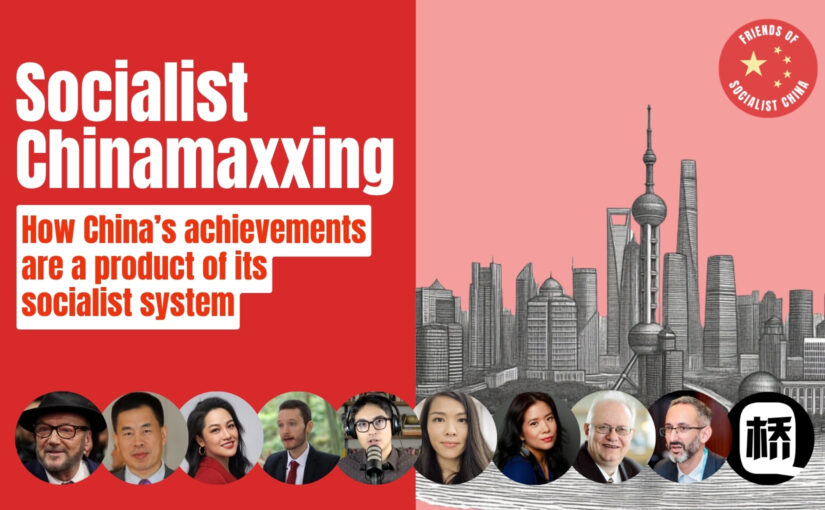
The recent viral phenomenon of “Chinamaxxing”—in which Westerners, increasingly exposed to less biased content highlighting the reality of everyday life in China, are expressing their excitement and admiration of aspects of Chinese culture (see the upcoming online seminar on the topic, organised by Friends of Socialist China)—is set to receive a further boost in Britain as it has just recently joined the group of countries whose citizens can visit the People’s Republic of China (PRC) without requiring a visa, allowing more and more people to conveniently see the country’s achievements for themselves.

The new policy came into effect on February 17 and allows UK passport holders to visit the country for the purposes of “business, tourism, family/friends visit, exchange and transit purposes.” Britain joins around 50 other countries, including most of Europe, Canada, Japan, and many others, to which China has offered a unilateral visa-free policy,[1] alongside around 30 countries with which China has bilateral agreements. All part of the Communist Party of China’s strategy to facilitate people-people connection and show the world a “more open, accessible China.”[2]

Continue reading See China’s achievements for yourself – Britain’s visa-free travel to China explained