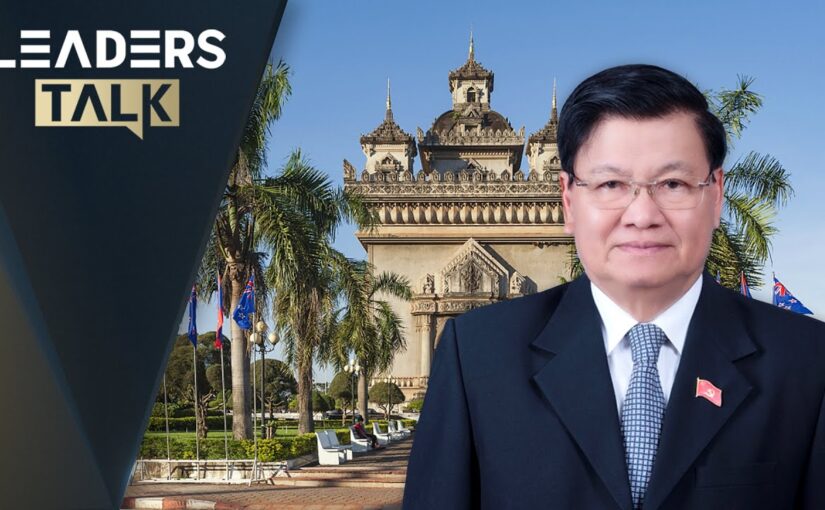
In this episode of the new CGTN series Leaders Talk, Zou Yun interviews Thongloun Sisoulith, President of Laos and Secretary-General of the Lao People’s Revolutionary Party.
Describing the inauguration of the Laos-China High-Speed Railway as the dream of the Lao people come true, President Thongloun refers to the long history of brotherly connections between the two countries and peoples, specifically to their helping each other in the fight against foreign aggressors. During the Lao people’s war of liberation, the communist party, army and people of China rendered timely, effective and unconditional support to their Lao comrades, and this friendship, comradeship and brotherhood has continued in the new phase of nation building.
Thongloun recalls his own first visit to China in 1970, when he was a young man in his 20s, working in the Hanoi office of the Lao Patriotic Front. At that time he was escorting 500 students who were to study at the China-Laos Friendship School, which had been established in the city of Nanning in 1967. With Laos facing a brutal US war of aggression, “we sent our kids to China for the Chinese comrades to take care of them.”
Over many subsequent visits to China, Thongloun notes that the Chinese economy has boomed, the country has remained stable, and China has become a pillar of world peace and stability.
He speaks at some length about his impressions of, and personal relationship with, President Xi Jinping, which is clearly characterised by a deep friendship and comradeship. He also talks about the cultural similarities between Laos and China. Noting that China has “many good old revolutionary songs”, he says that he “loves them very much.”
Zou Yun also takes a ride on the high-speed train to get the impressions of some passengers.
The full interview is embedded below.
Category: Asia
China hosts state visits from the Philippines and Turkmenistan
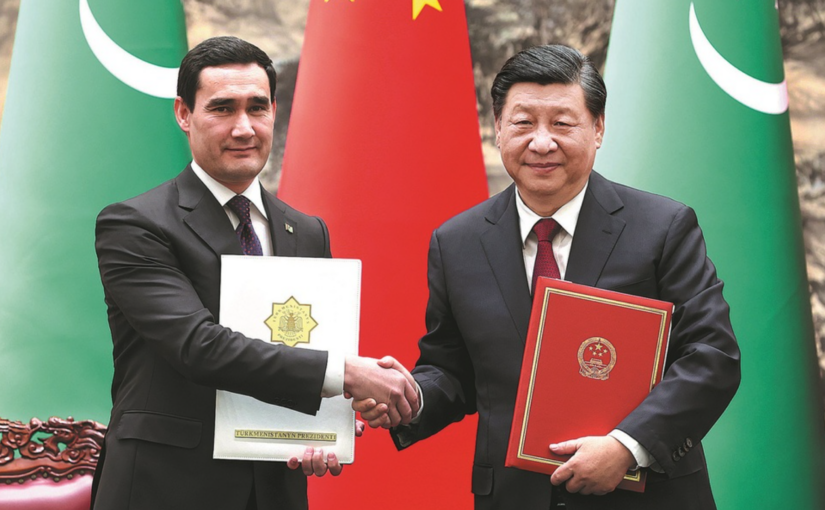
China’s diplomatic year began in the first week of January with President Xi Jinping hosting state visits by President Ferdinand Romualdez Marcos Jr. of the Philippines from January 3-5 followed by that of President Serdar Berdimuhamedov of Turkmenistan from January 5-6. China’s hosting in this way of two leaders from neighbouring countries, in South East Asia and Central Asia respectively, reflects the strong and increasing emphasis given in its foreign policy to relations with fellow Asian countries, neighboring countries in particular.
Marcos was not only the first foreign leader hosted by China in 2023 – this was also his first visit to China since he assumed his country’s presidency on June 30 2022 and his first official visit to a country outside the Association of South East Asian Nations (ASEAN). However, he is certainly no stranger to the country. In 1974, at the age of 17, he accompanied his mother, Imelda Marcos to a meeting in Beijing with the late Chairman Mao Zedong, one year before his father, the late President Ferdinand E. Marcos established diplomatic relations with the People’s Republic.
His visit this time was a major success, resulting in the adoption of an extensive Joint Statement between the two countries along with 14 cooperation documents across a wide range of sectors. In particular, both sides agreed to continue to properly handle maritime issues through friendly consultation and resume negotiations on oil and gas exploration.
According to their joint statement: “The two leaders had an in-depth and candid exchange of views on the situation in the South China Sea, emphasized that maritime issues do not comprise the sum-total of relations between the two countries and agreed to appropriately manage differences through peaceful means. Both sides reaffirmed the importance of maintaining and promoting peace and stability in the region and the freedom of navigation in and overflight above the South China Sea, and reached consensus on the peaceful resolution of disputes on the basis of the Declaration on the Conduct of Parties in the South China Sea (DOC), the United Nations Charter and the 1982 United Nations Convention on the Law of the Sea (UNCLOS).”
For his part, President Xi, “expressed readiness to stay in regular strategic communication with President Marcos Jr. and make comprehensive plans for the growth of bilateral ties so that the two countries will stay good neighbors helping each other, good relatives sharing affinity, and good partners pursuing win-win cooperation, delivering more benefits to the two peoples and contributing more positive energy to peace and stability in the region.”
All of this constitutes a significant blow to the efforts of the United States, which has worked overtime to create and exacerbate discord between the Philippines and China over the maritime and other issues with a view to maintaining its own neo-colonial domination over the Philippines alongside its strategic position in the region.
Hosting his Turkmen counterpart, Xi Jinping highlighted the similar values, goals and converging interests shared by the two nations, saying that they should work together in their respective paths toward rejuvenation, enhance their strengths, explore further potential for cooperation and attain common growth. It was the two leaders’ second meeting in a few months, having met in September on the sidelines of the Shanghai Cooperation Organization (SCO) Summit held in the Uzbek city of Samarkand.
At their meeting this time, they announced that their two countries were elevating their bilateral ties to those of a comprehensive strategic partnership. Turkmenistan is a major producer of natural gas and President Xi noted that cooperation in this sector is the cornerstone of their bilateral relations, with the two countries needing to further explore the potential for cooperation in green energy, natural gas exploitation and technological equipment, and work toward cooperation covering whole industry chains.
Turkmenistan is a key supplier of natural gas to China, with the two nations having developed three gas pipelines in a project known as the China-Central Asia Gas Pipeline. The project supplies natural gas to over 500 million residents in 27 provincial-level regions and the Hong Kong Special Administrative Region, according to Xinhua News Agency.
Berdimuhamedov told a ceremony in June that the construction of a fourth line of the China-Central Asia Gas Pipeline will take the annual transmission capacity to China to 65 billion cubic meters. The current pipeline delivered over 40 billion cubic meters of natural gas in the January-November period last year, according to its operator.
During their meeting, Xi said the cooperation mechanism between China and the five Central Asian countries is open, transparent, mutually beneficial, equal and pragmatic. China stands ready to work with Turkmenistan to ensure the success of the first summit between China and the five nations, he said.
Xi said China supports constructive cooperation between Turkmenistan and the Shanghai Cooperation Organization, and is willing to make joint efforts in practicing true multilateralism. Since its emergence as an independent state, following the dissolution of the Soviet Union, Turkmenistan has firmly upheld its independence and practices strict neutrality. It presently attends SCO meetings in the capacity of an official guest. Coinciding with his visit, President Berdimuhamedov contributed an article to the Decision Makers platform of CGTN, where he wrote that:
“Turkmenistan closely monitors the development of China and is pleased with the nation’s achievements. In a very short period of its history, China has emerged as a world pioneer in economic and scientific development, with robust growth in industrial output and the completion of many large-scale social development programs. China has managed to pull off an outstanding achievement ‒ the eradication of absolute poverty. Today, China is taking confident steps towards building a modern socialist country in an all-round way. There is no doubt that the above brilliant achievements are made possible by the political will, strong determination and correct strategic policies of the Communist Party of China, as well as the understanding and support of the Chinese people.”
The following articles were originally published by the Xinhua News Agency, China Daily and CGTN.
China, Philippines cement ties in new year
Xinhua, 5 January 2023
Chinese President Xi Jinping held talks with Philippine President Ferdinand Romualdez Marcos Jr. at the Great Hall of the People during the latter’s state visit to China on Wednesday.
Marcos is the first foreign leader hosted by China in 2023. This visit is his first visit to China as president and his first official visit to a country outside the Association of Southeast Asian Nations (ASEAN).
“This speaks volumes about the close ties between China and the Philippines and the important place that the two countries take in each other’s foreign policies,” Xi told Marcos.
A journey to retrace history and plan for the future
China and the Philippines are close neighbors facing each other across the sea. In their exchanges over a millennium, good faith and mutual assistance have remained the defining feature of bilateral relations and a precious legacy cherished by the two peoples, Xi said.
Continue reading China hosts state visits from the Philippines and Turkmenistan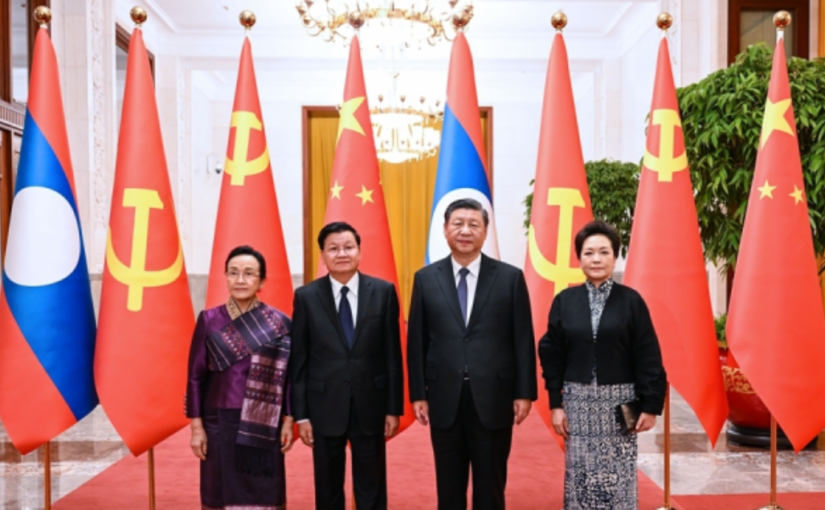
Xi Jinping holds talks with Lao and Mongolian presidents
In the last week of November, Chinese leader Xi Jinping hosted his counterparts from two of China’s friendly neighbors.
Thongloun Sisoulith, General Secretary of the Lao People’s Revolutionary Party (LPRP) Central Committee and President of the Lao People’s Democratic Republic (LPDR), became the third leader of a socialist country to visit China since the Communist Party of China’s 20th National Congress in October, following visits by the leaders of Vietnam and Cuba.
Meeting Thongloun on November 30, Xi Jinping informed his guest of the passing away of former Chinese leader Jiang Zemin. Thongloun expressed deep condolences, saying that this is a huge loss for the CPC and the Chinese people, and that the LPRP and the Lao people feel the sorrow in the same way. Comrade Jiang Zemin was a close friend of the LPRP and the Lao people. During his visit to Laos in 2000, Jiang Zemin proposed the principle of “long-term stability, good-neighborly friendship, mutual trust and all-round cooperation”, which has played a guiding role in the development of Laos-China relations.
Xi Jinping briefed his Laotian counterpart on the 20th Congress of the CPC and also said that since the LPRP held its 11th National Congress it had focused its efforts on improving itself, pursued a socialist path in line with the country’s own characteristics, striven to maintain political and social stability and sustained economic development. At the same time, it has contributed to maintaining regional peace and stability and safeguarding the common interests of developing countries.
The Laotian leader said that at a time when the world is undergoing complex changes, China is a pillar of safeguarding world peace and stability and is committed to promoting the common development of humanity and building a human community with a shared future.
Two days previously, on November 8, President Ji met with President Ukhnaagiin Khurelsukh of Mongolia. Xi pointed out that the two presidents meeting again after two months as promised fully reflects the high level of China-Mongolia relations. In September, the Chinese and Mongolian leaders had met in the Uzbek city of Samarkand, including at the sixth tripartite meeting also attended by Russian President Vladimir Putin. Xi said that following the principle of amity, sincerity, mutual benefit and inclusiveness, China pursues friendship and partnership with its neighboring countries. It attaches great importance to growing the friendship, mutual trust and common interests with Mongolia. Outlining the five principles of Chinese-style modernization, he added that China will not only realize its own prosperity but also contribute to its neighborhood and beyond through its own development. On economic matters, he said that the two countries would actively advance the China-Mongolia-Russia economic corridor as well as the section of the China-Russia natural gas pipeline in Mongolia. China applauds Mongolia’s “Billion Trees” initiative and is ready to discuss with Mongolia the establishment of a cooperation center to combat desertification.
President Khurelsukh said that as permanent neighbors connected by mountains and rivers, Mongolia and China are good neighbors, good friends and good partners. The two sides have rendered each other support and assistance during the pandemic and jointly responded to global challenges, a vivid example of “a friend in need is a friend indeed”. China, he added, is a peace-loving country that has never invaded other countries in its history but has sincerely helped others develop. China’s Global Development Initiative and Global Security Initiative are for humanity’s peace and development. Mongolia fully supports them.
The following articles were originally carried on the website of the Chinese Foreign Ministry.
Xi Jinping Holds Talks with General Secretary of the LPRP Central Committee and Lao President Thongloun Sisoulith
On November 30, 2022, General Secretary of the Communist Party of China (CPC) Central Committee and President Xi Jinping held talks with General Secretary of the Lao People’s Revolutionary Party (LPRP) Central Committee and Lao President Thongloun Sisoulith at the Great Hall of the People. The two sides stressed the need to uphold the principle of “long-term stability, good-neighborly friendship, mutual trust and all-round cooperation” and the spirit of “good neighbors, good friends, good comrades and good partners”, respect and trust each other politically, benefit each other economically, foster mutual understanding and affinity through people-to-people and cultural exchanges, constantly advance the building of a China-Laos community with a shared future, and make positive efforts and contribute to the building of a human community with a shared future.
At the beginning of the talks, Xi Jinping said that Comrade Jiang Zemin passed away on Wednesday in Shanghai due to illness after all medical treatments had failed. Comrade Jiang Zemin was an outstanding leader enjoying high prestige acknowledged by the whole Party, the entire military and the Chinese people of all ethnic groups, a great Marxist, a great proletarian revolutionary, statesman, military strategist and diplomat, a long-tested communist fighter, an outstanding leader of the great cause of socialism with Chinese characteristics, the core of the CPC’s third generation of central collective leadership, and the principal founder of the Theory of Three Represents. Xi Jinping said that Chinese people profoundly mourn Comrade Jiang Zemin and will turn grief into strength to strive in solidarity to build a modern socialist country in all respects and advance the great rejuvenation of the Chinese nation on all fronts in accordance with the plan of the 20th CPC National Congress.
Continue reading Xi Jinping holds talks with Lao and Mongolian presidents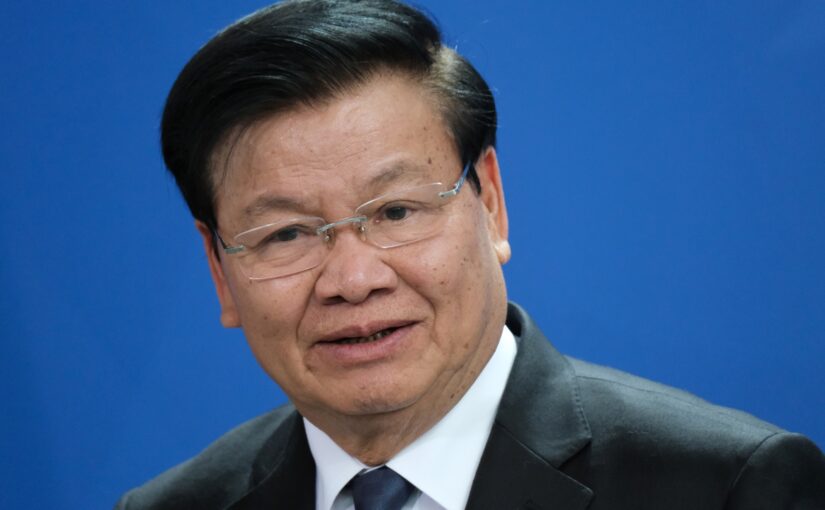
Lao president’s visit to China expected to deepen political mutual trust, inject new momentum to economic ties
Comrade Thongloun Sisoulith, General Secretary of the Lao People’s Revolutionary Party (LPRP) and President of the Lao People’s Democratic Republic (LPDR), is currently on a visit to China at the invitation of his Chinese counterpart Xi Jinping, becoming the third leader of a socialist country to visit Beijing, following the visits of the Vietnamese and Cuban leaders, since the Communist Party of China held its 20th National Congress in October.
This is Thongloun’s first visit to China after taking office as General Secretary in January in 2021 and becoming state President of March the same year. However, he has previously visited China many times, the first occasion being in 1970, five years before his country’s liberation, testifying to the long and intimate ties between the Chinese and Laotian revolutions.
The following article, reprinted from Global Times, outlines the background and context to his current visit.
The top leader of Laos is paying a visit to China from Tuesday to Thursday in a trip that is believed to highlight the positive interactions between the two socialist countries, enhance their political trust and bring new economic opportunities to both sides.
Thongloun Sisoulith, general secretary of the Lao People’s Revolutionary Party Central Committee and Lao president, is paying the three-day visit at the invitation of Xi Jinping, general secretary of the Communist Party of China (CPC) Central Committee and Chinese president.
This is Thongloun’s first visit to China after taking office as general secretary of the Lao People’s Revolutionary Party Central Committee in January in 2021, and assuming office as president of Laos in March the same year.
As close neighbors and socialist countries, China and Laos have constantly deepened their trade and economic ties in recent years. According to the Xinhua News Agency, China has become the second-largest trading partner and the country with the largest foreign direct investment in Laos.
Thongloun has visited China many times since he first visited Nanning, South China’s Guangxi Zhuang Autonomous Region, in 1970. “Laos and China have helped each other in various periods of history, and in modern times they supported each other when fighting against foreign aggression. In particular, the Communist Party of China, the army and the people of China have provided timely and effective assistance to the cause of national salvation of Laos without any strings attached,” Thongloun described China-Laos relations in a previous interview with China Central Television (CCTV) News.
Continue reading Lao president’s visit to China expected to deepen political mutual trust, inject new momentum to economic ties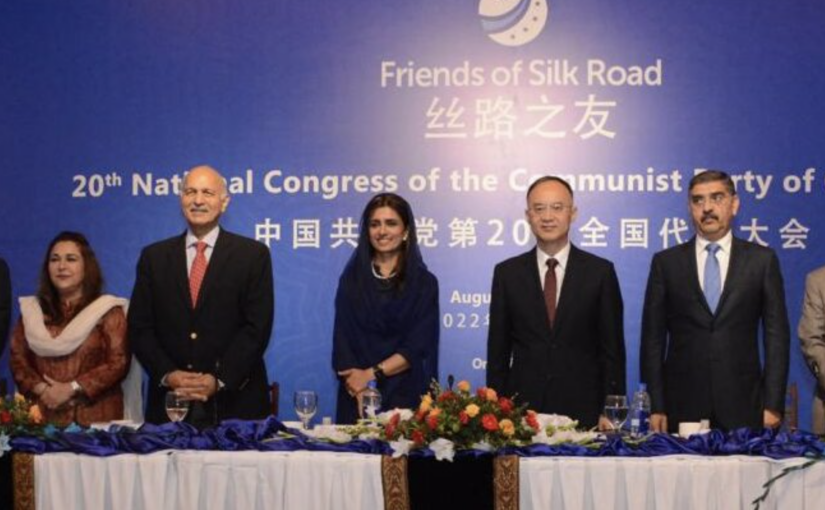
Pakistan: Experts laud Chinese leader Xi Jinping’s vision for transforming China
Our good friends in the Pakistan China Institute organised a special event in connection with the upcoming 20th National Congress of the Communist Party of China, under their Friends of Silk Road programme, on August 29.
Some 200 participants gathered to hear speakers including Hina Rabbani Khar, Minister of State for Foreign Affairs; Senator Mushahid Hussain Sayed, Chairman of the Senate Defence Committee and the Pakistan China Institute; Nong Rong, China’s Ambassador to Pakistan; Senator Farhat Ullah Babar, Secretary-General of the Pakistan People’s Party (PPP); Senator Anwaar-ul-Haq Kakar, Parliamentary Leader of the Balochistan Awami Party; and Senator Dr. Zarqa Suharwardy Taimur of the Pakistan Tehreek-e-Insaf (PTI, the party led by former Prime Minister Imran Khan).
Naturally the terrible floods that have ravaged Pakistan in recent days were in the minds of all participants, and Senator Hussain Sayed thanked China for its prompt donations of tents and cash, while Ambassador Nong Rong said that his country would not abandon Pakistan in such testing times. He also recalled how Pakistan had always supported China at such moments. For example, following the terrible Wenchuan earthquake in 2008, Pakistan had donated its entire available stock of tents to China.
The Secretary-General of the Pakistan People’s Party (PPP) stressed the importance of learning from China’s experience in fighting terrorism and alleviating poverty. He expressed fears that the US might use a resurgence of militancy to foment terrorism against both Pakistan and China.
Senator Kakar of the Balochistan Awami Party praised China’s whole process people’s democracy, which goes far beyond the rhetoric deployed at election times by political parties in the model of western democracy, only to then leave their voters in the lurch and with unresolved problems once the election is over.
Senator Dr. Zarqa Suharwardy Taimur of the PTI praised the China Pakistan Economic Corridor (CPEC), which, she said, contributes 1-2% to Pakistan’s annual economic growth and has so far created around 80,000 jobs for Pakistanis.
Pakistan is currently experiencing a period of intense and even bitter domestic political dispute. However, it was noteworthy that leading representatives of both government and opposition parties participated in the seminar. As the Chief Guest, Minister of State Hina Rabbani Khar stressed in her closing remarks, China is the country that unites Pakistan, “that brings all of Pakistan together.”
The below report was carried by the newspaper Pakistan Today.
Pakistan-China Institute organised a special event for the upcoming 20th National Congress of the Communist Party of China under its flagship ‘Friends of Silk Road’ initiative.
The dialogue featured speeches by the chief guest, Hina Rabbani Khar, Minister of State for Foreign Affairs, Senator Mushahid Hussain Sayed, Chairman Senate Committee on Defence & Pakistan-China Institute, Nong Rong, Ambassador of China to Pakistan, Senator Farhat Ullah Babar, Secretary General Pakistan People’s Party (PPP), Senator Anwaar-ul-Haq Kakar, Parliamentary Leader of Balochistan Awami Party, and Senator Dr. Zarqa Suharwardy Taimur of the PTI. The dialogue was moderated by Mustafa Hyder Sayed, Executive Director Pakistan-China Institute.
The panelists discussed the prospects of the 20th National Congress of the Communist Party of China (CPC), which will be held later in 2022. This congress is held every five years, where China watchers look for clues to the country’s future. President Xi Jinping is expected to be re-elected for his third term as Secretary General of CPC and President of China. Moreover, the Party Congress will set key priorities for the next five years, in particular, as well as China’s two-stage development plan for the middle of the twenty-first century.
A special documentary titled ‘China’s Governance under President Xi Jinping in the New Era (2012-2022)’ was also screened, depicting China’s achievements under President Xi Jinping.
The content of the documentary reflected the on-ground realities in China & aspirations of Chinese people who regard President Xi Jinping as the ‘core leader’ of the Communist Party of China, who, through his people-centered approach to governance and development has proven to be the worthy successor to Chairman Mao and Deng Xiaoping.
Mustafa Hyder Sayed, Executive Director Pakistan-China Institute, introduced the Friends of Silk Road Initiative which has become the premier platform to understand China, bridge people-to-people connectivity between Pakistan and China, serving as a platform to gather political leaders, students, media professionals, and think tanks to brainstorm new ideas of thought which both countries can further cement their relationship in various fields.
Continue reading Pakistan: Experts laud Chinese leader Xi Jinping’s vision for transforming China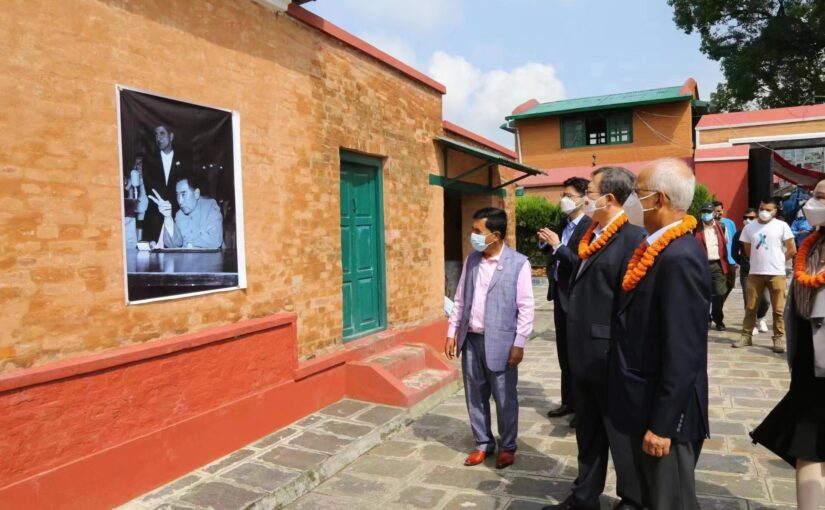
Reports from Liu Jianchao’s visit to Nepal
Comrade Liu Jianchao, the newly-appointed Minister of the International Department of the Communist Party of China, recently visited Nepal, his first overseas visit since assuming office. His visit followed closely on from a series of video meetings held with leading Nepalese politicians.
His first reported meetings on arrival in Kathmandu were with the Prime Minister Sher Bahadur Deuba, who is also President of the Nepali Congress Party, and Foreign Minister Narayan Khadka, Leader of the Nepali Congress. (The Nepali Congress is a social democratic party with a broadly similar historical trajectory to that of the Indian National Congress.)
Deuba said that Nepal-China friendship has a long history, and the Nepali Congress Party and the Nepali government have always adhered to a friendly policy toward China. He thanked China for providing important assistance for Nepal in fighting the epidemic, developing economy and improving people’s livelihood, and looked forward to strengthening friendly cooperation with China in various fields and building the Belt and Road initiative together for mutual benefits and win-win results. Nepal sees China as a trustworthy friend and firmly adheres to the one-China principle, and will not allow any force to use its territory for anti-China activities. For his part, Liu said that China has always viewed and developed China-Nepal relations from a strategic and long-term perspective, and has maintained a consistent policy of friendship toward Nepal, maintaining and developing friendly and cooperative relations with all political parties in Nepal. China believes that developing friendly relations with China is also the consensus of all political parties in Nepal and the aspiration of the Nepali people.
Later in the visit, Liu met with Nepalese President Bidya Devi Bhandari. Prior to becoming head of state, Bhandari was a long-term militant and then central leader of the Communist Party of Nepal (Unified Marxist Leninist). She is also the widow of Madan Bhandari, the General Secretary of the CPN(UML), who died in a suspicious car accident in 1993.
In their meeting, Bhandari said, Nepal and China are good friends and brothers. The most important experience of maintaining the healthy and stable development of Nepal-China relations is that both sides have always respected each other and safeguarded our common interests. The Chinese side has never interfered in the internal affairs of Nepal, and has always opposed the practice of the strong bullying the weak. The Nepali side trusts China completely. She continued, China is an important development partner of Nepal, and has played a significant role in boosting Nepal’s development. When Nepal was struck by a massive earthquake in 2015, the Chinese side immediately lent a helping hand to help Nepal with disaster relief and reconstruction. Now Nepal has survived the huge losses of the earthquake. China’s selfless help for Nepal at the critical moment played a vital role. When the COVID-19 broke out, China once again offered precious help to Nepal. The Nepali people are deeply moved. In his response, Liu said, please rest assured that whenever Nepal is in difficulty, your Chinese brother over the Himalayas is always there for you.
Meetings with the leaders of Nepal’s communist movement also formed an important part of Liu’s visit. They included with KP Sharma Oli, Chairman of the Communist Party of Nepal (Unified Marxist Leninist), Prachanda, Chairman of the Communist Party of Nepal (Maoist Center), Madhav Kumar Nepal, Chairman, and Jhala Nath Khanal, Senior Leader, of the Communist Party of Nepal (Unified Socialist) – all four of whom are also former Prime Ministers – and Narayan Man Bijukchhe, President of the Nepal Workers’ and Peasants’ Party.
Welcoming Liu, Chairman Oli of the CPN(UML) said that Nepal and China are connected by mountains and rivers, and share the same destiny. The Nepali side appreciates the firm support of the Chinese side in Nepal’s efforts in safeguarding sovereignty, independence and territorial integrity, and the selfless support for Nepal’s development and stability over a long time. Liu said that China resolutely supports Nepal’s efforts in safeguarding sovereignty, independence and territorial integrity, supports the Nepali people in choosing a social system and development path independently, and is willing to continue its support and help for Nepal’s economic and social development.
Comrade Prachanda said that Nepal sees China as a trustworthy friend and thanks China for giving a helping hand when needed by Nepal. Though the political parties in Nepal have different political views, they share a high degree of consensus on developing friendly relations with China, are all firmly committed to developing friendly relations with China, and will not allow any force to use Nepal’s territory for anti-China activities.
What was also significant was that the Chinese leader also visited and participated in poverty alleviation programmes supported by China as well as the grassroots units and activities of the communist parties.
On his way home, Liu also made a stop over in Singapore where he held meetings with leading members of the ruling People’s Action Party and government and participated in a dialogue with leading local scholars, including Kishore Mahbubani, author of the influential book, ‘Has China won? The Chinese challenge to American Primacy’.
The following reports first appeared on the website of the CPC International Department.
Sher Bahadur Deuba, Prime Minister of Nepal and President of Nepali Congress Party Meets with Liu Jianchao
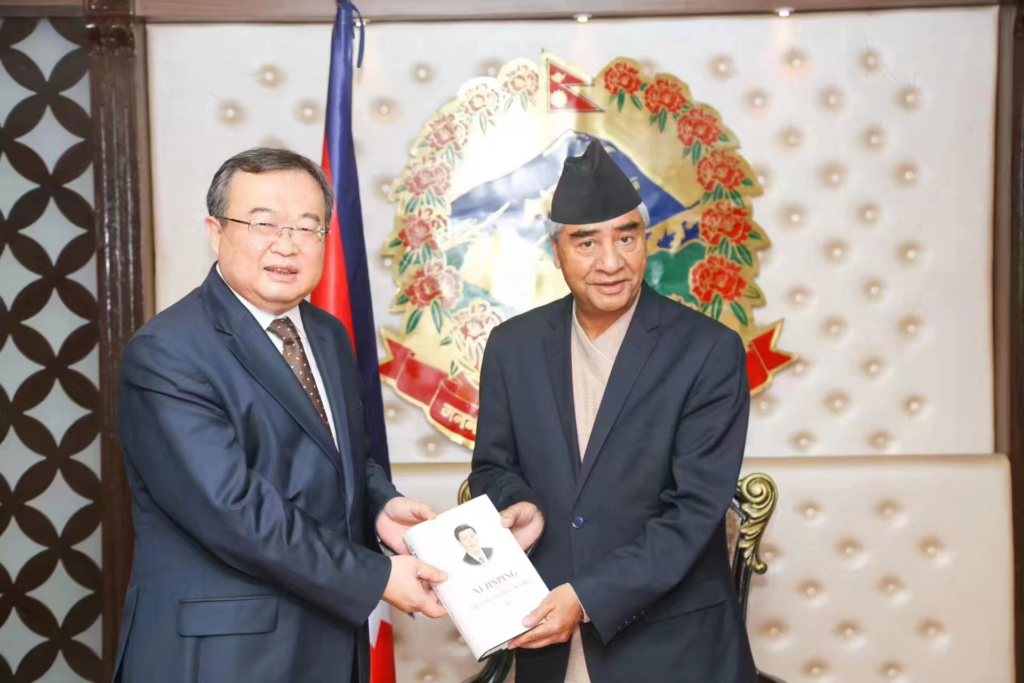
Sher Bahadur Deuba, Prime Minister of Nepal and President of Nepali Congress Party met here today on the afternoon with Liu Jianchao, Minister of the International Department of the CPC Central Committee, who was on his visit to Nepal.
Deuba said, Nepal-China friendship has a long history, and the Nepali Congress Party and the Nepali government have always adhered to a friendly policy toward China. He thanked China for providing important assistance for Nepal in fighting the epidemic, developing economy and improving people’s livelihood, and looked forward to strengthening friendly cooperation with China in various fields and building the Belt and Road initiative together for mutual benefits and win-win results. Nepal sees China as a trustworthy friend and firmly adheres to the one-China principle, and will not allow any force to use its territory for anti-China activities. The Nepali Congress Party attaches great importance to developing friendly exchanges with the CPC, and looks forward to deepening exchanges and cooperation between the two Parties to push Nepal-China relations for in-depth development. Deuba wished the 20th CPC National Congress to be held in the second half of 2022 a complete success.
Liu said, China has always viewed and developed China-Nepal relations from a strategic and long-term perspective, and has maintained a consistent policy of friendship toward Nepal, maintaining and developing friendly and cooperative relations with all political parties in Nepal. China believes that developing friendly relations with China is also the consensus of all political parties in Nepal and the aspiration of the Nepali people. The high-level political mutual trust between China and Nepal not only stems from the traditional friendship and extensive common interests between the two countries, but also cannot be separated from the important role played by political parties of both countries in bilateral relations. At a historical moment when the world is undergoing profound changes unseen in a century and the world is entering a period of turbulence and transformation, the CPC is willing to, together with the Nepali Congress Party, strengthen strategic communication, promote mutually beneficial cooperation, deepen exchanges and mutual learning, support each other on issues related to each other’s core interests and major concerns, implement the important consensus reached during General Secretary Xi Jinping’s visit to Nepal in October 2019, and push China-Nepal strategic partnership of cooperation featuring ever-lasting friendship for development and prosperity for constant development, so as to benefit the two countries and peoples.
Liu Jianchao presented Deuba with the English version of the fourth volume of “Xi Jinping: The Governance of China”.
Nepali President Bidya Devi Bhandari Meets with Liu Jianchao
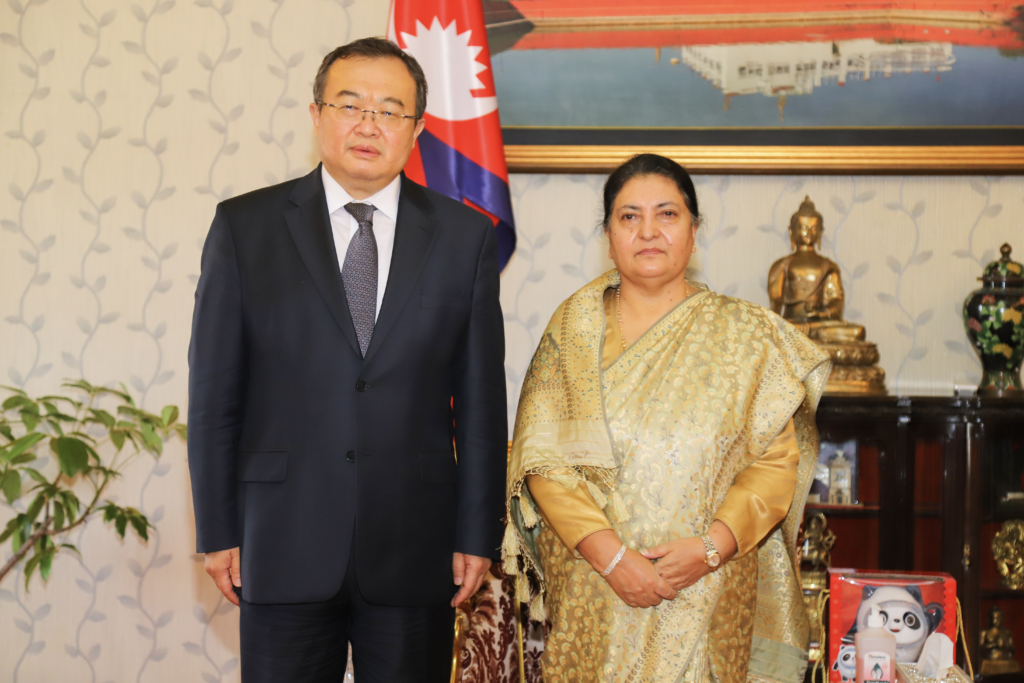
Bidya Devi Bhandari, Nepali President, met here today on the morning with Liu Jianchao, Minister of the International Department of the CPC Central Committee.
Bhandari welcomed Liu and his delegation, who were on a visit to Nepal, and asked Liu to convey her warm greetings and best wishes to President Xi Jinping. She said, Nepal and China enjoy an ever-lasting and long-standing friendship. President Xi Jinping paid a historic visit to Nepal in October 2019, bringing Nepal-China relations to new highs with constant new progress. Implementing the important consensus reached between both sides during the visit of President Xi Jinping is a goal that requires the joint efforts of both countries. Nepal hopes to push the construction of Trans-Himalayan Multi-Dimensional Connectivity Network for more fruitful results.
Bhandari said, Nepal and China are good friends and brothers. The most important experience of maintaining the healthy and stable development of Nepal-China relations is that both sides have always respected each other and safeguarded our common interests. The Chinese side has never interfered in the internal affairs of Nepal, and has always opposed the practice of the strong bullying the weak. The Nepali side trusts China completely. Nepal adheres to the one-China principle, and supports the Chinese side’s position on Taiwan and issues regarding Tibet, Xinjiang and Hong Kong. The Nepali side opposes interference and expansion in Nepal of any force, and by no means allows any force to use Nepal’s territory for anti-China activities.
Bhandari said, China is an important development partner of Nepal, and has played a significant role in boosting Nepal’s development. When Nepal was struck by a massive earthquake in 2015, the Chinese side immediately lent a helping hand to help Nepal with disaster relief and reconstruction. Now Nepal has survived the huge losses of the earthquake. China’s selfless help for Nepal at the critical moment played a vital role. When the COVID-19 broke out, China once again offered precious help to Nepal. The Nepali people are deeply moved.
Bhandari said, our world has yet to achieve full peace. China has made huge contributions to safeguarding world peace and development. China develops peaceful and friendly relations with all countries in the world on the basis of mutual respect, winning extensive support from the international community. The Nepali side again congratulates the CPC on its centenary, wishes greater development achievements of the Chinese people under the leadership of the CPC, and wishes the 20th CPC National Congress a complete success.
Liu conveyed President Xi Jinping’s warm greetings and best wishes to President Bhandari. Liu said, the main purpose for my visit is to implement the important consensus reached between President Xi Jinping and President Bhandari in an in-depth way, carry out friendly exchanges with all political parties of Nepal, and push bilateral relations for healthy and stable development. During the visit, I met leaders of the government and political parties of Nepal. I have gained three major impressions. The first is, though the political parties of Nepal have different political views, they all share a high degree of consensus of deepening China-Nepal friendship. The second is that China and Nepal are true friends with mutual support. Nepal firmly adheres to the one-China principle, and does not allow any force to use Nepal’s territory for anti-China activities. The Chinese side resolutely supports Nepal’s efforts in safeguarding sovereignty, independence and territorial integrity, and in choosing a social system and development path suited to its national conditions. The third is that the two peoples share an ever-lasting friendship. Both sides have huge potential in mutually beneficial cooperation. The Chinese side will work with the Nepali side to resolutely promote the implementation of the consensus reached by the two heads of state.
Liu said, developing friendly relations with Nepal is China’s long-term policy that is open to all the political parties and people of Nepal. The Chinese side’s support and assistance for Nepal is truly for the good of Nepal and the Nepali people. The Chinese side is willing to continue to offer support and assistance to Nepal within its capacity in developing economy and improving people’s livelihood. Please rest assured that whenever Nepal is in difficulty, your Chinese brother over the Himalayas is always there for you.
KP Sharma Oli, Chairman of the Communist Party of Nepal (Unified Marxist Leninist) and Former Prime Minister of Nepal, Meets with Liu Jianchao
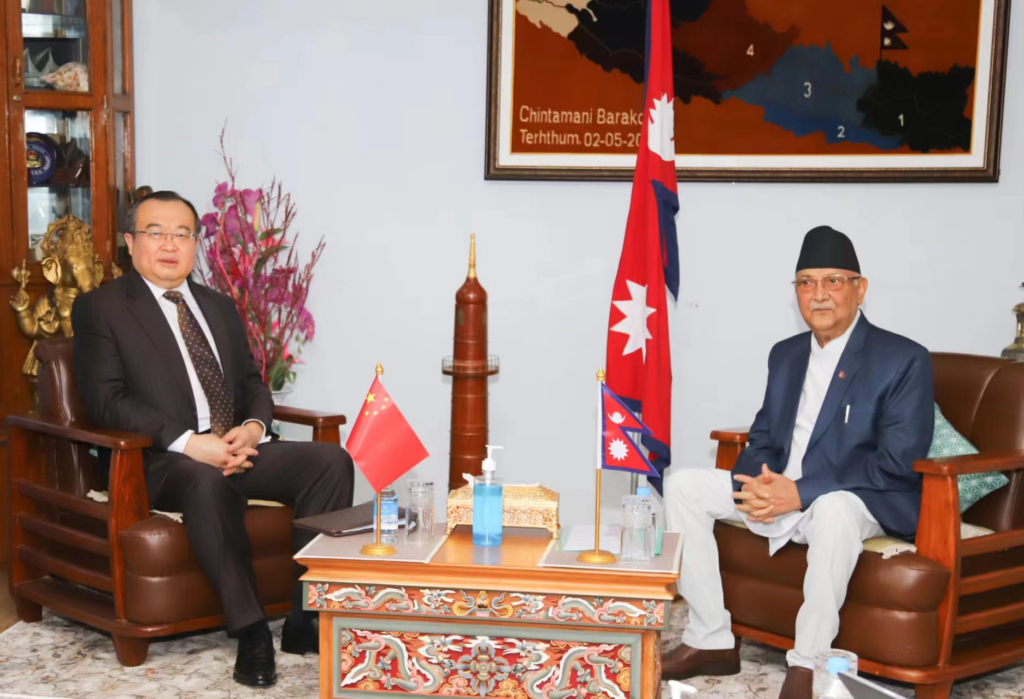
KP Sharma Oli, Chairman of the Communist Party of Nepal (Unified Marxist Leninist) and former Prime Minister of Nepal, met here today on the morning with Liu Jianchao, Minister of the International Department of the CPC Central Committee.
Oli welcomed Liu and his delegation, who were on a visit to Nepal, saying that Nepal and China are connected by mountains and rivers, and share the same destiny. Recent years have witnessed rapid development of Nepal-China relations. The Nepali side appreciates the firm support of the Chinese side in Nepal’s efforts in safeguarding sovereignty, independence and territorial integrity, and the selfless support for Nepal’s development and stability over a long time. The Nepali side has always adopted a consistent policy towards issues concerning the core interests and major concerns of the Chinese side, has always upheld the one-China principle, and has never allowed any force to use Nepal’s territory for anti-China activities. The achievements and experience of the CPC over the past centenary is an important inspiration to Nepal and Nepal’s political parties. The Communist Party of Nepal (Unified Marxist Leninist) looks forward to strengthening exchange and cooperation with the CPC, and learning the successful experience in party building and state governance from the CPC. Oli wished the 20th CPC National Congress a complete success.
Liu thanked Oli for his contributions to the development of China-Nepal relations, saying that China and Nepal are close neighbors sharing an ever-lasting friendship. The Chinese side appreciates Nepal’s adherence to the one-China principle, and its firm support for China’s position on Taiwan, and issues related to China’s Tibet, Xinjiang and Hong Kong. China firmly adopts a long-term, strategic and solid policy towards Nepal. China resolutely supports Nepal’s efforts in safeguarding sovereignty, independence and territorial integrity, supports the Nepali people in choosing a social system and development path independently, and is willing to continue its support and help for Nepal’s economic and social development. At a historic moment when the world is undergoing profound changes unseen in a century, and the world is entering a period of turbulence and transformation, China-Nepal relations assume more strategic significance. The Chinese side is willing to work with the Nepali side to implement the important consensus reached during General Secretary Xi Jinping’s visit to Nepal in October 2019, and constantly push China-Nepal strategic partnership of cooperation featuring ever-lasting friendship for development and prosperity to new highs. The CPC is willing to reinforce high-level exchanges and strategic communication with the Communist Party of Nepal (Unified Marxist Leninist) and promote practical cooperation.
Prachanda, Chairman of Communist Party of Nepal (Maoist Center) and Former Prime Minister of Nepal Meets with Liu Jianchao
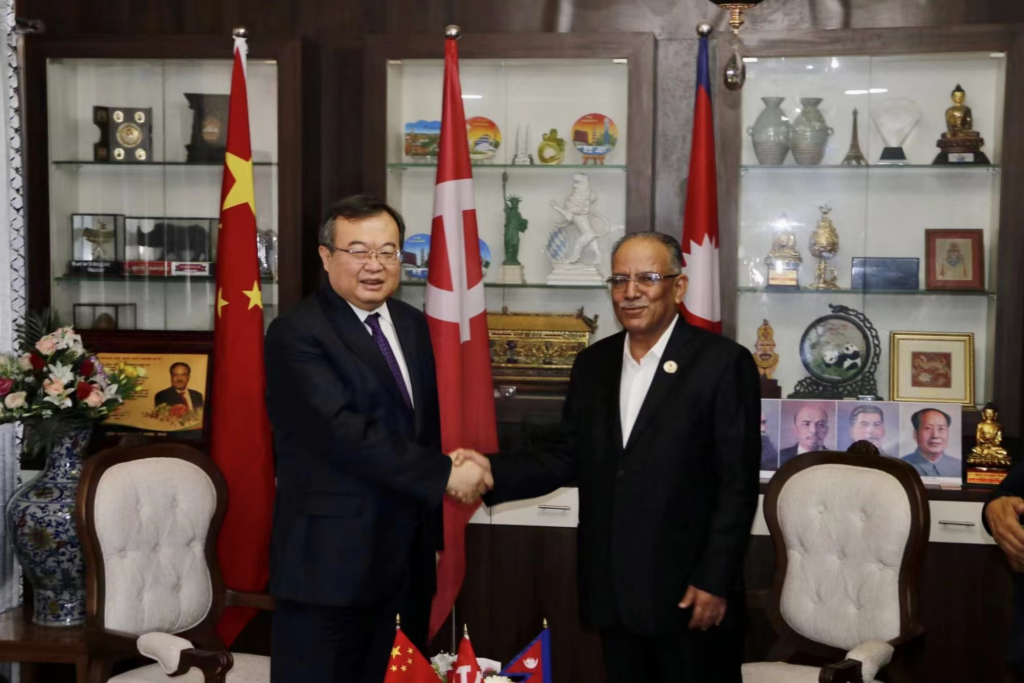
Prachanda, Chairman of the Communist Party of Nepal (Maoist Center) and former Prime Minister of Nepal met here today on the afternoon with Liu Jianchao, Minister of the International Department of the CPC Central Committee.
Prachanda welcomed Liu and the CPC delegation to visit Nepal, and said that Nepal and China are friendly neighbors linked by mountains and rivers. Nepal sees China as a trustworthy friend and thanks China for giving a helping hand when needed by Nepal. Though the political parties in Nepal have different political views, they share a high degree of consensus on developing friendly relations with China, are all firmly committed to developing friendly relations with China, and will not allow any force to use Nepal’s territory for anti-China activities. The Nepalese side supports strengthening Nepal-China friendship and cooperation, and accelerating the construction of the Belt and Road Initiative, especially the Trans-Himalayan Multi-Dimensional Connectivity Network. The Communist Party of Nepal (Maoist Center) admires the development achievements of the CPC in the past century and looks forward to deepening experience exchange and mutual learning between the two sides in party building and state governance, so as to contribute to in-depth development of Nepal-China relations. Prachanda wished the 20th CPC National Congress a complete success.
Liu appreciated Prachanda’s long-standing contributions to the development of China-Nepal relations, saying that the key to the long-term friendly relations between China and Nepal lies in mutual respect for each other’s core interests and major concerns. China’s friendly policy toward Nepal is a long-term policy, not a matter of expediency. China appreciates the Nepalese side for its firm support on issues related to China’s core interests, and will continue to support Nepal in safeguarding national sovereignty and territorial integrity and in exploring a social system and development path suited to its national conditions. The friendly exchanges between the CPC and the Communist Party of Nepal (Maoist Center) are an important bond in the relations between the two countries. In the new situation of accelerating changes unseen in a century and emerging international and regional challenges, the CPC is willing to strengthen high-level contacts and strategic communication with the Communist Party of Nepal (Maoist Center), deepen experience exchange and mutual learning in state governance and administration, jointly implement the important consensus reached between the two sides during General Secretary Xi Jinping’s visit to Nepal, and push China-Nepal strategic partnership of cooperation featuring ever-lasting friendship for development and prosperity for constant development, so as to benefit the two countries and peoples.
Leaders of Communist Party of Nepal (Unified Socialist) Meet with Liu Jianchao
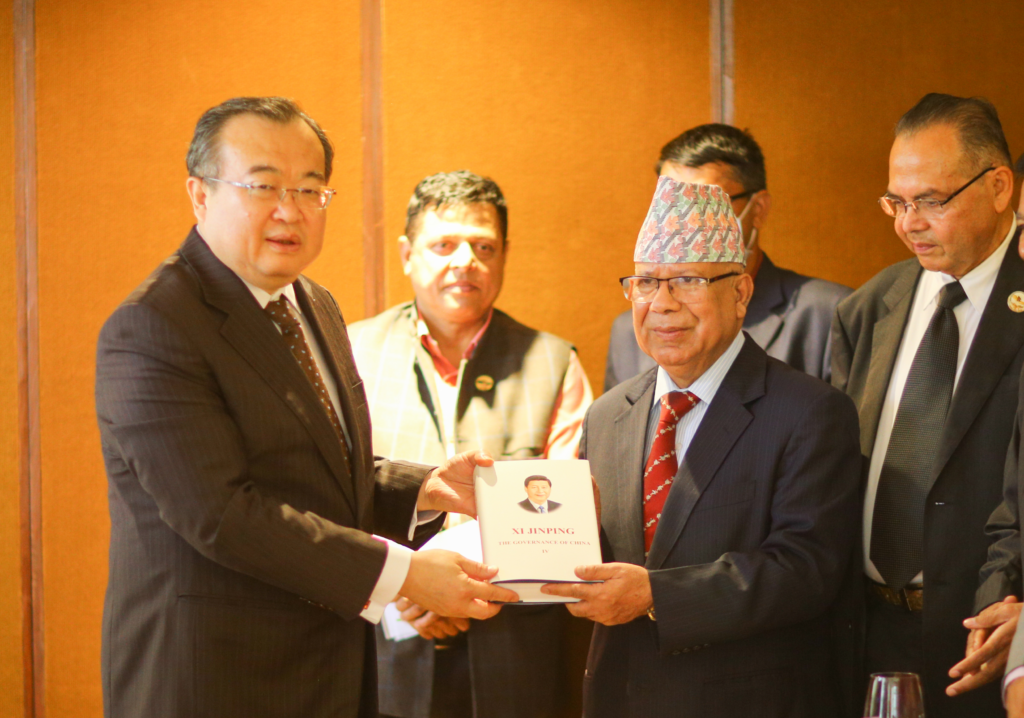
Madhav Kumar Nepal, Chairman of the Communist Party of Nepal (Unified Socialist) and former Prime Minister and Jhala Nath Khanal, the senior leader of the Communist Party of Nepal (Unified Socialist) and former Prime Minister of Nepal met here today on the afternoon with Liu Jianchao, Minister of the International Department of the CPC Central Committee.
The Nepali side said, the two countries and peoples have a history of friendly exchanges spanning thousands of years. Nepal thanks the Chinese side for helping Nepal fight the epidemic, develop its economy and improve people’s livelihood. Nepal’s friendly policy towards China is consistent and Nepal will not allow any force to use Nepal’s territory for anti-China activities. The Nepali side is willing to further strengthen the Belt and Road cooperation with China and support the Global Development Initiative and the Global Security Initiative proposed by the Chinese side. The Communist Party of Nepal (Unified Socialist) hopes to learn more about the successful experience of socialism with Chinese characteristics, and looks forward to strengthening experience exchanges and mutual learning with the CPC in party building and state governance, so as to contribute to the further development of Nepal-China relations. The Nepali side wished the 20th CPC National Congress a complete success.
Liu appreciated the long-standing contributions of Nepal and Khanal to the development of China-Nepal relations and said that his visit aims at deepening the traditional friendship between China and Nepal and promoting friendly exchanges with the political parties in Nepal. The Chinese side appreciates Nepal’s long-term friendly policy toward China. The Chinese side’s friendly policy toward Nepal is long-term and consistent, and the Chinese side firmly supports Nepal in safeguarding its sovereign, independence and territorial integrity. Under the new situation, the CPC is willing to strengthen contacts with the Communist Party of Nepal (Unified Socialist), deepen experience exchange and mutual learning in state governance and administration, and push China-Nepal friendship and practical cooperation for constant development.
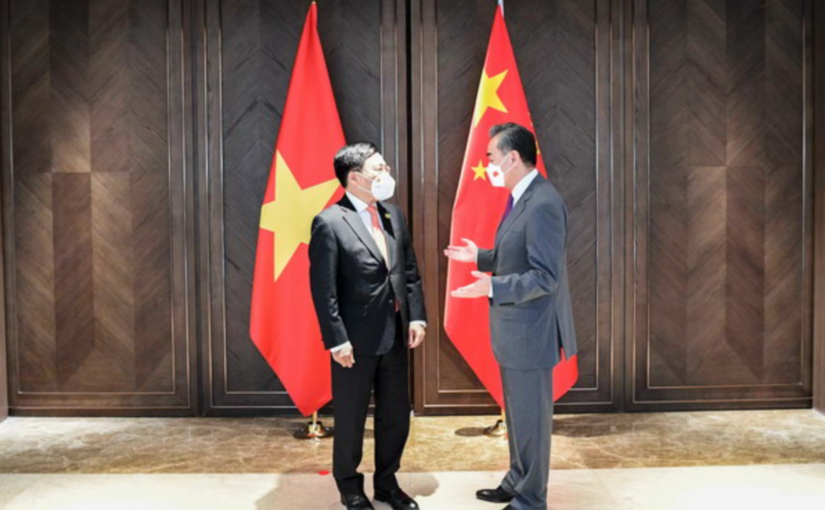
Pham Binh Minh: China and Vietnam are brotherly and friendly neighbors with the same socialist cause
Immediately following an extensive tour of South East Asian nations, which included both bilateral visits and meetings as well as participation in regional and international fora, on July 13, Chinese Foreign Minister Wang Yi held the 14th meeting of the China-Vietnam Steering Committee for Bilateral Cooperation in Nanning, capital of the Guangxi Zhuang Autonomous Region, together with Pham Binh Minh, Vietnam’s Standing Deputy Prime Minister.
Citing the two countries special friendship, Wang Yi said that their two parties should “provide strong theoretical support for the development of the socialist cause of the two countries.”
Pham Binh Minh said, “China and Vietnam are brotherly and friendly neighbors with the same socialist cause, and also comprehensive strategic cooperative partners. Vietnam sticks to the leadership of the Communist Party of Vietnam and the path of socialism, and pursues an independent, all-round and diversified foreign policy. Relations with China are the top priority of Vietnam’s foreign policy, and it’s Vietnam’s strategic choice to develop friendly relations with China.”
The next day, Wang Yi held the Sixth Meeting of the China-Cambodia Intergovernmental Coordination Committee via video link, together with Cambodian Deputy Prime Minister Hor Namhong. Wang noted that next year will see the 65th anniversary of the establishment of diplomatic relations between China and Cambodia, and added:
“China and Cambodia have built a community with a shared future under the guidance of high-level exchanges, strengthened solidarity and mutual assistance with the goal of safeguarding common interests, deepened mutually beneficial cooperation in a people-centered approach, and strengthened multilateral coordination and collaboration with the purpose of championing international fairness and justice, thus consolidating political mutual trust and cementing the foundation for strategic cooperation. Facts have proved that the building of a China-Cambodia community with a shared future serves the fundamental and long-term interests of the two peoples, meets the trend of the times, and conforms to the big picture of peace and stability in the region, thus representing a completely right direction.”
The following reports were first carried on the website of the Chinese Foreign Ministry.
The 14th Meeting of the China-Vietnam Steering Committee for Bilateral Cooperation Is Held
On July 13, 2022, the 14th Meeting of the China-Vietnam Steering Committee for Bilateral Cooperation was held in Nanning, Guangxi Zhuang Autonomous Region. The meeting was co-chaired by State Councilor and Foreign Minister Wang Yi and Vietnamese Standing Deputy Prime Minister Pham Binh Minh, and attended by officials in charge of relevant ministries, commissions, and local governments from both sides in an online and offline format.
Wang Yi said, General Secretary Xi Jinping and General Secretary Nguyen Phu Trong have maintained strategic communication to steer bilateral relations. All departments of both sides have made joint efforts to continuously push for new progress in practical cooperation. This year, both China and Vietnam have important domestic political agendas. It’s important to strengthen coordination in a holistic approach, and make joint efforts in the direction of building a strategic community with a shared future. Facing the risks and challenges on the way forward and the arduous tasks of reform and development, we should inherit and carry forward the special friendship, consolidate solidarity and mutual trust, and deepen mutually beneficial cooperation, so as to serve respective national construction and development, and make greater contributions to peace, stability and prosperity in the region.
Continue reading Pham Binh Minh: China and Vietnam are brotherly and friendly neighbors with the same socialist cause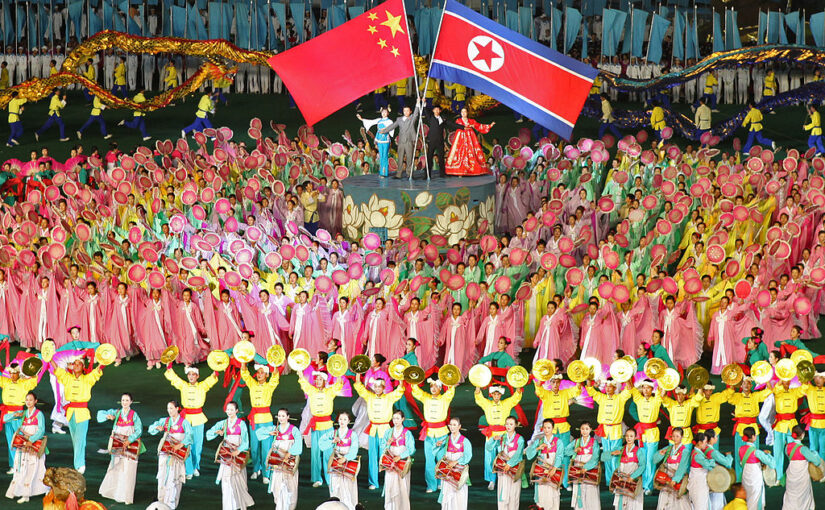
Steady development of relations between socialist neighbors, China and DPRK
July 11 marked the 61st anniversary of the DPRK (Democratic People’s Republic of Korea)-China Treaty of Friendship, Cooperation and Mutual Assistance. Signed in Beijing by Premier Zhou Enlai and President Kim Il Sung, the treaty is still in force. It is China’s only formal alliance with any country.
Marking the occasion the leading newspapers of the Communist Party of China and the Workers’ Party of Korea, Renmin Ribao (People’s Daily) and Rodong Sinmum (Workers’ Daily) both carried authoritative articles.
According to People’s Daily: “The China-DPRK friendship, personally provided by the leaders of elder generation of the two countries in the struggle against the imperialists’ aggression, is a precious wealth common to both sides.
“China, as a good comrade and neighbor, will as ever continue to support the DPRK developing the economy, improving the people’s living standard and accelerating socialist construction. And it heartily wishes the fraternal Korean people greater successes on the road of achieving the prosperity of the country and creating happiness.
“No matter how the international and regional situation may change, invariable are the firm stand of the Chinese party and government to reliably defend the China-DPRK relations and consolidate and develop them on good terms, the Chinese people’s feelings of friendship toward the Korean people and the support of China to socialist Korea.”
Roding Sinmun noted that the treaty had served as “a motive force accelerating the struggle of the Korean and Chinese peoples for socialism” and continued:
“Our people sincerely hope that everything will go well in China and successes will be registered in socialist construction of China.
“We will as ever extend full support and solidarity to all the measures taken by the Chinese party and government to defend the core interests of the country, preserve the development of the state and defend the life and security of the people, and will always be with the Chinese people on the road of further developing the bilateral relations of friendship with socialism as the core.”
The following reports were originally carried by the Korean Central News Agency (KCNA).
Chinese Paper on China-DPRK Friendship
The Chinese People’s Daily carried its commentator’s article on July 11, the 61st anniversary of the conclusion of the DPRK-China Treaty of Friendship, Cooperation and Mutual Assistance.
Continue reading Steady development of relations between socialist neighbors, China and DPRK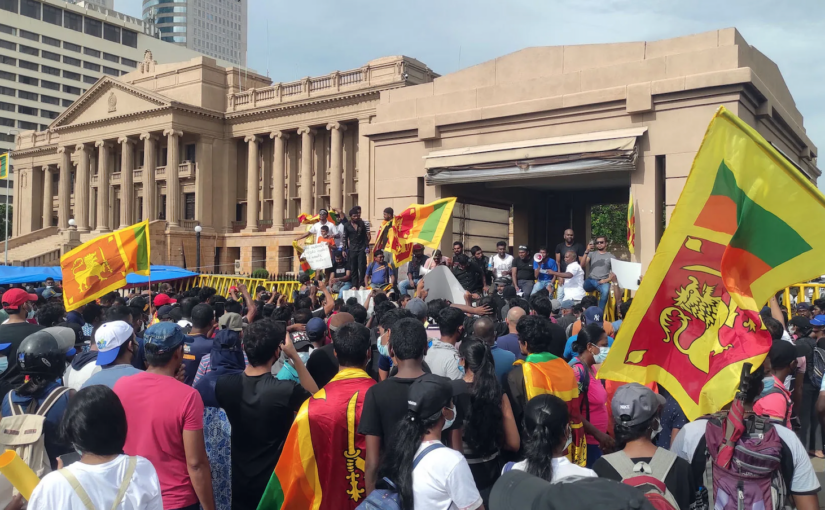
Real debt trap: Sri Lanka owes vast majority to West, not China
With world attention still focused on the multiple crises – political, economic, humanitarian – gripping the South Asian island nation of Sri Lanka, we are very pleased to republish this admirable and thorough article by our Advisory Group member Benjamin Norton, originally carried on Multipolarista. With the Sri Lankan situation being cynically distorted into a supposed example of alleged Chinese ‘debt trap diplomacy’, Benjamin makes clear that 81% of Sri Lanka’s external debt is owed to US and European financial institutions, along with those of Japan and India. China accounts for just 10%. Sri Lanka has already suffered the imposition of no less than 16 IMF structural adjustment programs – a key factor in the country’s economically parlous state.
Benjamin notes that the Sri Lankan protests have been “driven by skyrocketing rates of inflation, as well as rampant corruption and widespread shortages of fuel, food and medicine – a product of the country’s inability to pay for imports.” He considers claims that the popular protests constituted some kind of “anti-China uprising” in the former British colony to be “even more detached from reality” than those suggesting ‘debt trap diplomacy’ on the part of Beijing. With regard to that issue, he shows in detail how both the BBC and mainstream academics have debunked such notions.
Facing a deep economic crisis and bankruptcy, Sri Lanka was rocked by large protests this July, which led to the resignation of the government.
Numerous Western political leaders and media outlets blamed this uprising on a supposed Chinese “debt trap,” echoing a deceptive narrative that has been thoroughly debunked by mainstream academics.
In reality, the vast majority of the South Asian nation’s foreign debt is owed to the West.
Sri Lanka has a history of struggling with Western debt burdens, having gone through 16 “economic stabilization programs” with the Washington-dominated International Monetary Fund (IMF).
These structural adjustment programs clearly have not worked, given Sri Lanka’s economy has been managed by the IMF for many of the decades since it achieved independence from British colonialism in 1948.
As of 2021, a staggering 81% of Sri Lanka’s foreign debt was owned by US and European financial institutions, as well as Western allies Japan and India.
This pales in comparison to the mere 10% owed to Beijing.
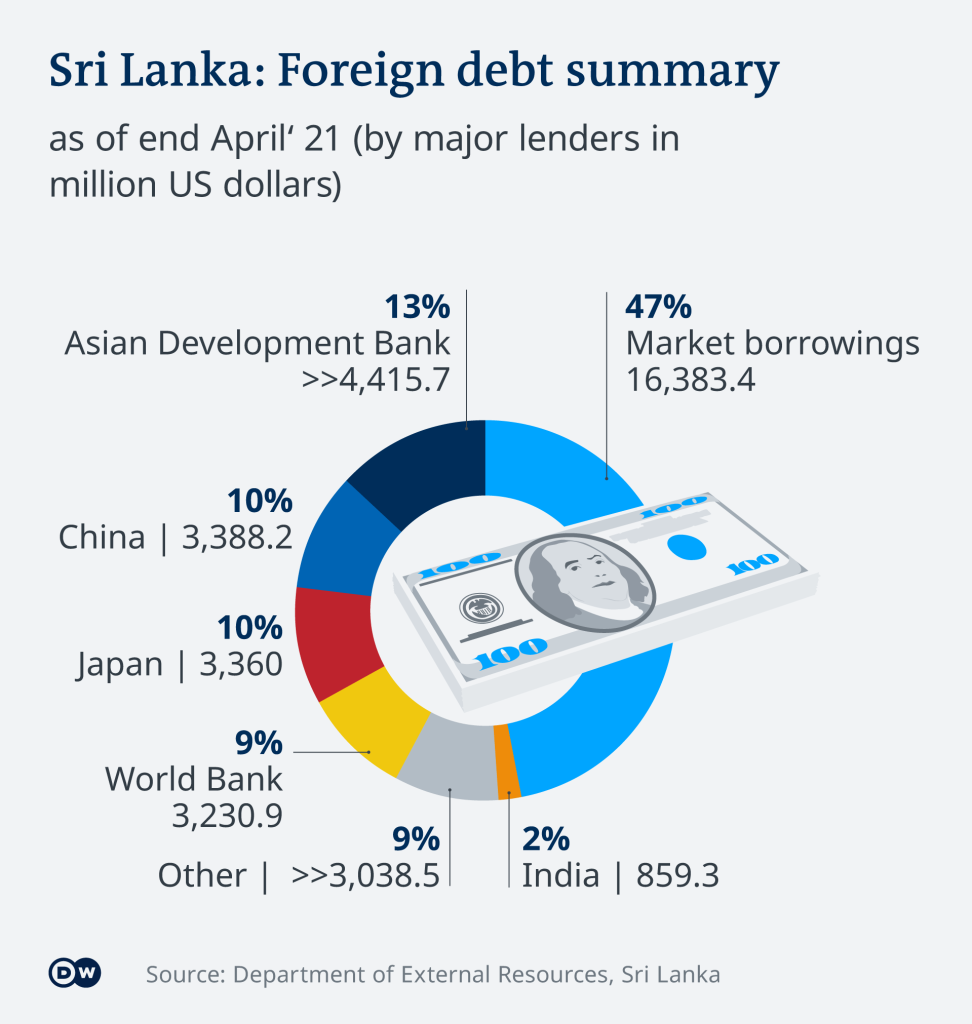
According to official statistics from Sri Lanka’s Department of External Resources, as of the end of April 2021, the plurality of its foreign debt is owned by Western vulture funds and banks, which have nearly half, at 47%.
The top holders of the Sri Lankan government’s debt, in the form of international sovereign bonds (ISBs), are the following firms:
- BlackRock (US)
- Ashmore Group (Britain)
- Allianz (Germany)
- UBS (Switzerland)
- HSBC (Britain)
- JPMorgan Chase (US)
- Prudential (US)
The Asian Development Bank and World Bank, which are thoroughly dominated by the United States, own 13% and 9% of Sri Lanka’s foreign debt, respectively.
Continue reading Real debt trap: Sri Lanka owes vast majority to West, not China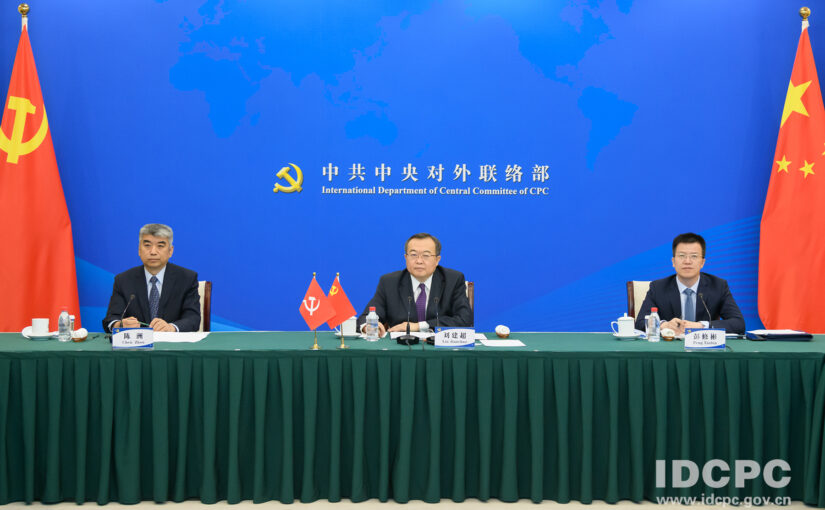
CPC deepens relations with Nepal’s communist parties
Liu Jianchao was recently appointed as the Minister of the International Department of the Central Committee of the Communist Party of China, succeeding Song Tao, who completed his term of office. On being informed of his appointment, in a message to a relevant official of the International Department, Friends of Socialist China wrote:
“We wish him every success in his responsible work, and good health, and stand ready, as ever, to maintain and develop our greatly valued friendship and our close cooperation.”
Comrade Liu’s first announced engagement in his new role was to meet separately with the Ambassadors of the four other socialist countries to China, namely the Democratic People’s Republic of Korea (DPRK), Vietnam, Laos and Cuba. In a brief report, the International Department noted that the meetings, “focused on exchanging views on consolidating and deepening the traditional friendship between China and the four countries, and relations between the ruling parties of China and the four countries, continuously promoting cooperation in various areas, and jointly boosting the development of socialist causes in the new era.”
A longer report was issued on his next reported engagements, which took place on June 23 and 24, when he held video calls with the leaders of Nepal’s two main communist parties – Prachanda, Chairman of the Communist Party of Nepal (Maoist Center) and KP Sharma Oli, Chairman of the Communist Party of Nepal (Unified Marxist Leninist), both of whom are also former Prime Ministers.
According to Liu, the CPC and the two Nepalese parties share similar philosophies and close ties. In turn, both Nepalese parties said that they give top priority to relations with China and the CPC.
Following the calls, the CPC signed memoranda of exchange and cooperation with both parties.
Some days later, Liu also held a video call with Nepalese Foreign Minister Narayan Khadka, who is also the leader of the Nepali Congress party.
The following report on the online meeting with the Nepali communist leaders was originally carried on the website of the CPC International Department.
On June 23 and 24, Liu Jianchao, Minister of the International Department of the CPC Central Committee, held video calls with Prachanda, Chairman of the Communist Party of Nepal (Maoist Center) and former Prime Minister of Nepal, and KP Sharma Oli, Chairman of the Communist Party of Nepal (Unified Marxist Leninist) and former Prime Minister of Nepal respectively.
Liu said that China and Nepal are friendly neighbors linked by mountains and rivers, and development partners sharing the same destiny. In October 2019, General Secretary Xi Jinping paid a historic visit to Nepal. China-Nepal relations were upgraded to the China-Nepal strategic partnership of cooperation featuring ever-lasting friendship for development and prosperity, and entered a new era of rapid development. The Chinese side is willing to work with the Nepali side to implement the important consensus reached by the leaders of the two countries, deepen mutual political trust, actively promote practical cooperation in major projects and various fields under the framework of the Belt and Road Initiative, and push the friendship across the Himalayas to new heights.
Liu said, the CPC and the Communist Party of Nepal (Maoist Center) and the Communist Party of Nepal (Unified Marxist Leninist) share similar philosophies and close ties. The CPC is willing to strengthen inter-party exchanges, promote “political parties plus” cooperation, enhance people-to-people bond, and respect each other’s core interests and major concerns, so as to play a role in facilitating the healthy and stable development of China-Nepal relations. The 20th CPC National Congress will be held in the second half of this year, which will draw a blueprint for China’s development in the next phase and will certainly provide new impetus for the development of China-Nepal relations. The CPC is willing to strengthen exchanges with political parties in Nepal on state governance and administration.
Prachanda and Oli said, the friendship between Nepal and China has grown ever stronger as time goes by and the Nepali side appreciates the Chinese side’s support for Nepal in safeguarding sovereignty and territorial integrity and opposing foreign interference and China’s valuable help for Nepal to fight against the Covid-19 epidemic. The Communist Party of Nepal (Maoist Center) and the Communist Party of Nepal (Unified Marxist Leninist) give top priority to the relations with China and the CPC. The two Parties will continue to firmly uphold the one-China principle, support the issues related to each other’s core interests and major concerns, adhere to the path of independent development, and will never allow any forces to use the Nepali territory to engage in any anti-China activities. The major achievements and historical experience of the CPC’s century-long struggle have provided important inspiration and lessons for the Nepali political parties. The Communist Party of Nepal (Maoist Center) and the Communist Party of Nepal (Unified Marxist Leninist) are willing to strengthen cooperation with the CPC in such areas as the joint construction of the Belt and Road Initiative, so as to promote the long-term and stable development of Nepal-China relations. We look forward to the 20th CPC National Congress and wish it a complete success.
After the video calls, the Chinese representatives also signed memorandums of exchange and cooperation with the representatives of the Communist Party of Nepal (Maoist Center) and the Communist Party of Nepal (Unified Marxist Leninist) respectively.
China-Sri Lanka relations: Carry forward the spirit of the Rubber-Rice Pact
There has been much media attention and international public concern regarding the economic and humanitarian crisis that has recently developed in Sri Lanka. In this regard, China’s Ministry of Foreign Affairs released an unusually detailed, and in our view significant, report on a June 9 meeting between their Asian Affairs Department’s Director-General Liu Jinsong and the Sri Lankan Ambassador Dr. Palitha Kohona.
Liu began by noting that this year is the 70th anniversary of the Rubber-Rice Pact. Concluded five years before the two countries established diplomatic relations, this pact is considered the root of the modern friendship between the two countries and was of particular importance as the newly independent Sri Lanka concluded the deal at a time when crippling sanctions had been imposed on China following its entry into the Korean War. Liu described it as “breaking the Western ideological barriers and sanctions”.
According to Liu, “the reasons for Sri Lanka and other developing countries to fall into debt difficulties are very complex. One of the backgrounds is that certain developed countries have long implemented quantitative easing policies, irresponsibly unleash a deluge of strong stimulus policies, and recently raised interest rates and shrunk the balance sheet abruptly, leading to drastic changes in the international financial environment, with developing countries particularly impacted. Some countries imposed unilateral sanctions and tariff barriers and built various small cliques, which have undermined the security of global supply and industrial chains, and fuelled the soaring prices of energy, food and other commodities, worsening the economic and financial situations of developing countries including Sri Lanka.”
Outlining some of China’s practical help to Sri Lanka, he added that: “China believes that the wise and tenacious Sri Lankan people will stick to the independent domestic and foreign policies and overcome difficulties together with confidence and in solidarity.”
On June 9, 2022, Director-General of the Department of Asian Affairs of the Foreign Ministry Liu Jinsong met with Ambassador of Sri Lanka to China Dr. Palitha Kohona. The two sides had a candid and in-depth exchange of views on Sri Lanka’s economic and financial debt issues.
Liu Jinsong said, 70 years ago, China and Sri Lanka upheld the spirit of independence, braved external pressure and reached the Rubber-Rice Pact on the basis of equal consultation and mutual benefits, breaking the Western ideological barriers and sanctions, opening the door to friendly exchanges and also setting an example of mutually beneficial cooperation between different types of countries. The Buddhist Sigalovada Sutta says, “True friends are the ones who stand by you when you need them.” China and Sri Lanka have always been such friends. China is ready to work with Sri Lanka to draw wisdom from the 65th anniversary of the establishment of diplomatic ties between the two countries, carry forward the spirit of the Rubber-Rice Pact characterized by “independence, self-reliance, unity and mutual support”, jointly advance high-quality Belt and Road cooperation, implement the Global Development Initiative and Global Security Initiative, and create a better future for the two countries and peoples.
Liu Jinsong said, the reasons for Sri Lanka and other developing countries to fall into debt difficulties are very complex. One of the backgrounds is that certain developed countries have long implemented quantitative easing policies, irresponsibly unleash a deluge of strong stimulus policies, and recently raised interest rates and shrunk the balance sheet abruptly, leading to drastic changes in the international financial environment, with developing countries particularly impacted. Some countries imposed unilateral sanctions and tariff barriers and built various small cliques, which have undermined the security of global supply and industrial chains, and fueled the soaring prices of energy, food and other commodities, worsening the economic and financial situations of developing countries including Sri Lanka.
Liu Jinsong said, China fully relates to the current difficulties faced by Sri Lanka and always provides assistance within its capacity. China immediately provided 500 million yuan of emergency humanitarian assistance to Sri Lanka. The first batch of materials arrived on June 3. China’s local governments and enterprises as well as the Red Cross Society of China have all lent a helping hand to the Sri Lankan people by providing them with diversified aids in multiple batches that improve people’s lives. The Buddhist Association of China and temples in different places voluntarily raised funds for the Sri Lankan people, and teachers and students from Caihe No. 3 Primary School in Hangzhou also sent love to children from low-income families in Sri Lanka thousands of miles away. China is ready to continue to work with Sri Lanka to jointly tackle risks and challenges and help Sri Lanka overcome the current difficulties, ease the debt burden and realize sustainable development. China believes that the wise and tenacious Sri Lankan people will stick to the independent domestic and foreign policies, and overcome difficulties together with confidence and in solidarity.
Kohona said, Sri Lanka has always pursued an independent and non-aligned foreign policy and opposed power politics and bloc confrontation. China-Sri Lanka friendship enjoys a time-honored history. China has provided full support and assistance in many important periods of Sri Lanka’s national development and is a reliable strategic partner of Sri Lanka. China’s Belt and Road Initiative and Chinese-funded projects have made important contributions to Sri Lanka’s economic development. Sri Lanka thanks China for mobilizing all resources possible to provide emergency humanitarian assistance at the most difficult time in Sri Lanka, and hopes to continue to work with Chinese friends to tide over the difficulties.
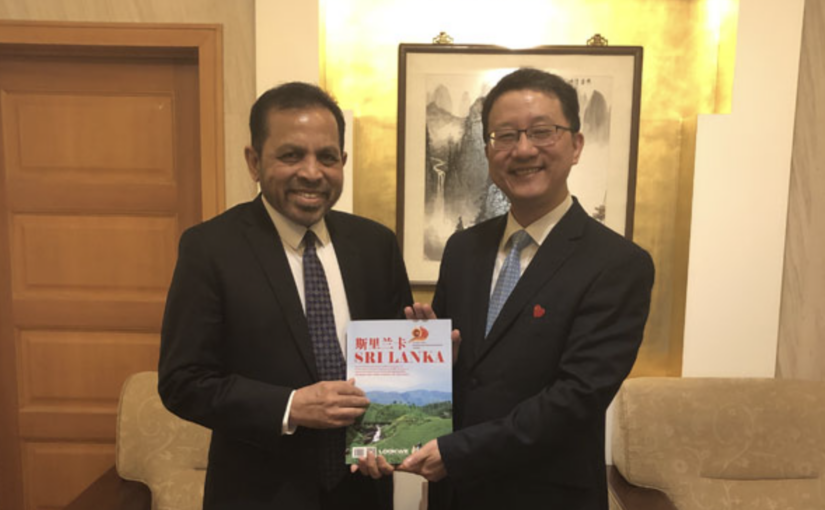
After the meeting, Ambassador Kohona presented to Director-General Liu Jinsong a sample commemorative album for the 65th anniversary of the establishment of diplomatic ties between Sri Lanka and China produced by the Embassy of Sri Lanka in China.
Wang Yi holds talks with Pakistani Foreign Minister Bilawal Bhutto Zardari
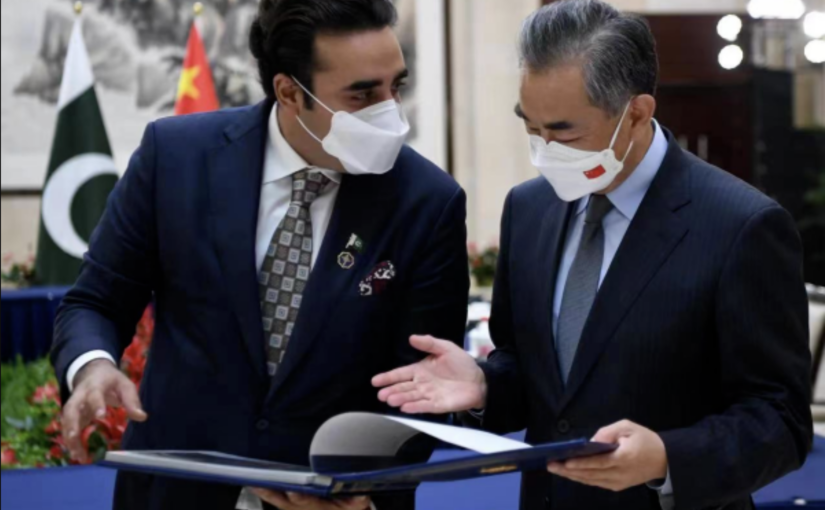
As his first official bilateral visit after taking office as Pakistani foreign minister, Bilalwal Bhutto Zardari met with his Chinese counterpart Wang Yi in Guangzhou on May 22nd. Wang said that this visit “carries forward the fine tradition of friendly exchanges between China and Pakistan… China and Pakistan are true friends sharing weal and woe and good brothers having a heart-to-heart affinity.”
For his part, Bilalwal said that: “Pakistan and China enjoy time-honoured amicable relations. I am particularly proud that all three generations of my family are firmly committed to the Pakistan-China friendship. As an ‘ironclad’ friend, Pakistan is heartened by China’s great achievements and firmly believes that no force can stop China from forging ahead.”
Bilalwal’s father Asif Ali Zardari, former president, his late mother Benazir Bhutto, and especially his grandfather Zulfikar Ali Bhutto, both former Prime Ministers, as well as the Pakistan People’s Party (PPP) they have led, have all made major contributions to the development of the friendly relations between Pakistan and China, together with successive generations of Chinese leaders, over more than half a century.
The two foreign ministers affirmed their will to further promote cooperation through the China-Pakistan Economic Corridor (CPEC), the Global Development Initiative (GDI) and the Global Security Initiative (GSI).
A joint statement released by the two countries following the talks noted that the visit coincided with the 71st anniversary of the establishment of their diplomatic relations and touched on a number of other issues, including defence cooperation, the Ukraine crisis and the situations in Jammu & Kashmir and Afghanistan.
The following report of the talks between Bilalwal and Wang and the full text of their joint statement were originally published on the website of the Chinese Foreign Ministry.
On May 22, 2022, State Councilor and Foreign Minister Wang Yi held talks with visiting Pakistani Foreign Minister Bilawal Bhutto Zardari in Guangzhou.
Wang Yi said, China welcomes the fact that Bilawal carries forward the fine tradition of friendly exchanges between China and Pakistan, and paid a visit to China, which was his first official bilateral visit after taking office as foreign minister. China appreciates the new Pakistani government’s firm commitment to developing the all-weather strategic cooperative partnership between the two countries. China and Pakistan are true friends sharing weal and woe and good brothers having a heart-to-heart affinity. The friendship between China and Pakistan, jointly nurtured by several generations of leaders of the two countries, remains strong with new vitality. History has witnessed and will continue to witness that no matter how the international landscape may evolve, China-Pakistan relations are rock-solid and unshakable. China is ready to, as always, prioritize Pakistan in its neighborhood diplomacy, and join hands with Pakistan to meet risks and challenges, continuously consolidate the “ironclad” friendship between China and Pakistan, let the building of a China-Pakistan community with a shared future take root, make China-Pakistan relations a powerful stabilizing factor in the region, and enable China-Pakistan cooperation to provide more robust vitality for regional development and revitalization.
Continue reading Wang Yi holds talks with Pakistani Foreign Minister Bilawal Bhutto Zardari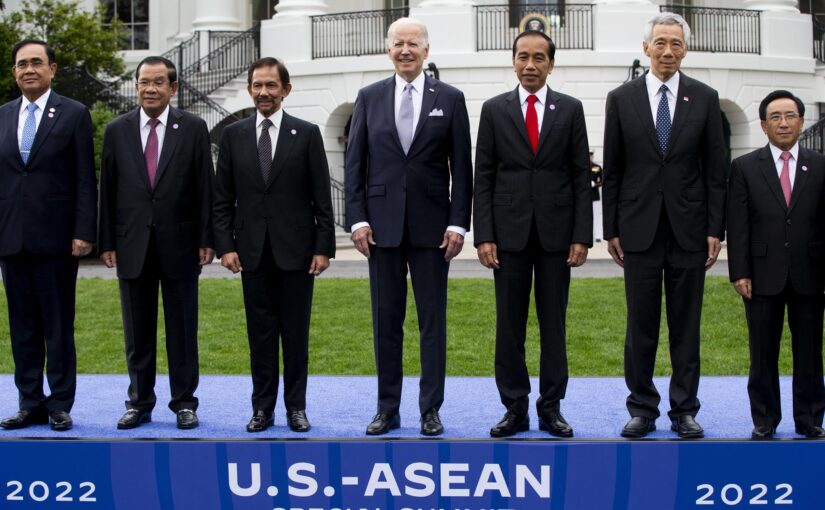
US-Asean Summit exposes the US’s real priorities
This article by Austin Ong, originally published in the Manila Times, discusses US President Biden’s visit to Asia and the recent US-ASEAN summit, during which the US offered $150 million in infrastructure development funding to the countries of Southeast Asia. Ong notes that this is a very small amount compared with China’s ongoing investment in the region, which includes the recently-completed high-speed railway link between Laos and Yunnan, alone worth $6 billion. The US has also failed to offer ASEAN members tariff-free access to its domestic market; whereas China was a strong proponent of the Regional Comprehensive Economic Partnership (RCEP), which came into force at the beginning of this year. The US’s economic commitments to Asia pale in comparison to its military commitments such as the AUKUS trilateral pact, which will provide nuclear-powered submarines to Australia. This indicates very clearly that while China focuses on win-win cooperation and development, the US continues to pursue hegemony.
Optimism was replaced with frustration and disbelief after the much feted hosting by Washington of visiting Asean leaders resulted only in a paltry $150-million pledge. For such a vital region at the heart of great power competition, the sum is infinitesimal. It is hard to imagine how this small drop in the bucket will get to be apportioned to 10 countries with pressing developmental needs raring to recover from a pandemic.
Biden’s meeting with Asean leaders is the first meeting of a US President since 2017, was rescheduled twice, and came a year after Blinken did not show up for his first virtual meeting with the Asean ministers which the US had arranged. The US blamed it on a technical glitch as Blinken was enroute to Israel. Twelve days later, China’s foreign minister Wang Yi met with his counterparts in person at the Special Asean-China Foreign Ministers’ Meeting in China.
Furthermore, Biden’s pledge speaks volume of where the US is focused on — security — much to the dismay of regional countries which hoped the US will step up in providing economic goods to provide a counterweight to China. Of America’s $150 million commitment to the region, $60 million will go to deepening maritime cooperation led by the US Coast Guard ships in the South China Sea. Absent robust dialogue and crisis management mechanisms, this may only raise tensions and trigger an arms build-up in the region and chances for miscalculations.
The US only allotted $40 million in infrastructure. To put things in perspective, under China’s decade-old Belt and Road Initiative, the China-funded high-speed railway in Laos which opened last December is worth $6 billion. The two friendship bridges donated by China to help decongest Manila’s notorious traffic are already worth $150 million, in addition to over $350 million in grants for various livelihood projects from 2016 to 2021. Billions of dollars worth of major infrastructure and development projects across the Philippines, Brunei, Cambodia, Malaysia, Vietnam, Thailand, Indonesia, even in Myanmar are being fast-tracked. While some projects face issues and may even get derailed, they are still light years away from what the US is investing in the region.
Continue reading US-Asean Summit exposes the US’s real priorities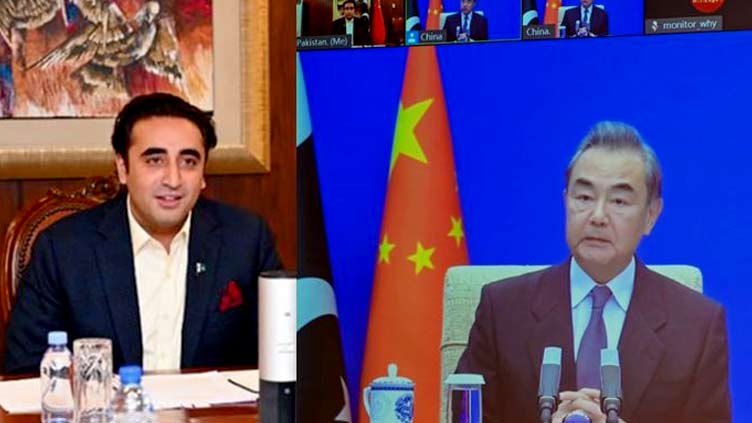
Wang Yi: China-Pakistan friendship will not be shaken
Chinese Foreign Minister Wang Yi met by video link on May 11th with new Pakistan Foreign Minister Bilawal Bhutto Zardari. It was Bhutto Zardari’s first official bilateral engagement since assuming office. The meeting also occurred against the background of recent terrorist attacks targeting Chinese nationals in Pakistan.
Wang Yi stressed that the friendship between China and Pakistan will be passed on from generation to generation and will not be shaken or changed by a single incident.
Bhutto Zardari’s mother, Benazir Bhutto, and especially his grandfather, Zulfikar Ali Bhutto, both former Prime Ministers, were pioneers of the special friendship between China and Pakistan. Zulfikar Ali Bhutto was the last foreign leader to meet with Chairman Mao Zedong on May 27th 1976. The last publicly known photos of Chairman Mao also date from that meeting.
The following report first appeared in CGTN.
Chinese State Councilor and Foreign Minister Wang Yi on Wednesday said that the friendship between China and Pakistan will be passed on from generation to generation and will not be shaken or changed by a single incident.
Wang made the remarks when meeting with Pakistani Foreign Minister Bilawal Bhutto Zardari via video link, calling on the two sides to thwart any attempt to undermine bilateral ties.
China and Pakistan are unique and time-tested all-weather strategic cooperative partners, Wang noted.
Continue reading Wang Yi: China-Pakistan friendship will not be shaken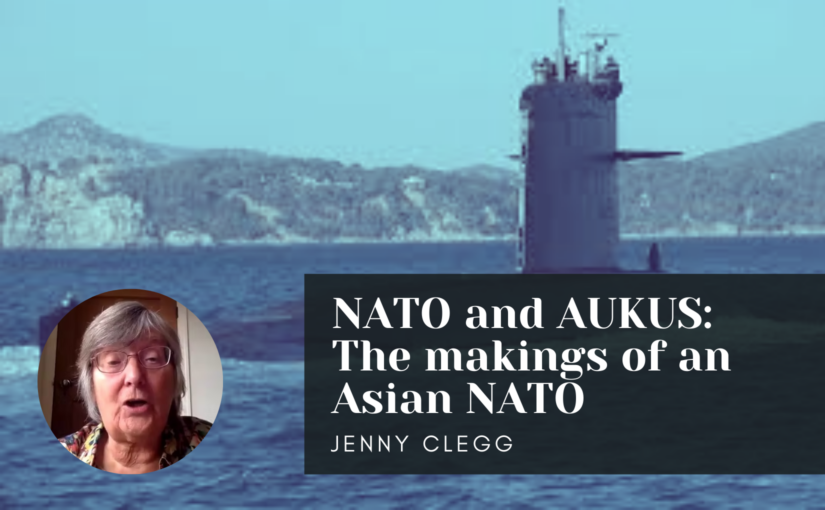
NATO and AUKUS: the makings of an Asian NATO
In this recent presentation to the International Manifesto Group webinar, The Case Against NATO, Dr Jenny Clegg traces the makings of an Asian NATO via such mechanisms as AUKUS and the Quad whose fundamental purposes are to contain and confront a rising China. She further draws attention to the extension of NATO influence into the Asia Pacific through its Partnerships for Peace for example with Japan, South Korea and Australia; and also considers the impact of the Ukraine crisis in relation to these developments with the increase of tensions, divisions and militarisation in the region
NATO serves as the nuclear-armed fortress that helps to elevate the West above the ‘Rest’; it anchors Europe to its western orientation, severing it from its Eurasian geography.
But NATO members are also Pacific powers – the US, Canada, but also France and Britain, which maintain possession of a few islands and hence some considerable maritime territory.
In this Pacific presence can be seen the makings of an Asian NATO as a counter to the growing Eurasian dimension.
Whilst the world’s focus is on Russia in the Ukraine, for the US, China is the ‘pacing challenge’, and from this perspective, the Ukraine crisis can be seen as the first phase in the US’s last-ditch battle to retain its world supremacy, a battle pitting ‘democracies against autocracies’ in which NATO is to serve as the armed vanguard against the so-called Russia-China alliance.
The world before NATO was to be a new world of the UN Charter which, in the coordination of the wartime allies – the US, UK, Soviet Union and China – and in its commitment to national sovereignty, held the promise of a multipolar world.
It was this new world of the equality of nations that the US set out to smash in driving the first Cold War.
From Cold War to thaw back to Cold War in the Asia Pacific
The Cold War in the Pacific divided China and Korea and involved two hot wars – in Korea and Indochina – at the cost of countless lives and countless war crimes.
The US sought to set up an Asian NATO – however Australia lacked trust in Japan after WW2; Japan’s military was constrained under Article 9 of its constitution; and many South East Asian states, having fought to gain independence, chose non-alignment over subordination in a military alliance.
SEATO – Southeast Asia Treaty Organization – was set up in 1955 to block the ‘communist domino effect’ but it lacked unity and folded in 1977. The US instead relied on bilateral alliances and a spread of some 400 military bases to encircle China.
The Cold War never ended in the Pacific – China and Korea remain divided. Nevertheless, a degree of thaw in the 1990s allowed China to improve its relations in the region whilst ASEAN extended membership to the three communist-aligned Indochinese nations along with Myanmar. Regional economic growth entered a new phase.
But then, sending things into reverse, Obama embarked on his Asian pivot launching the freedom of navigation operations in the South China Sea. Following this, Trump declared China a strategic competitor, initiating the Quad to draw India into a new network with Australia, Japan and the US.
2020 saw the counter-hegemonic trend gather momentum with agreement on RCEP – the Regional Comprehensive Economic Partnership, embracing large parts of East Asia and Oceania; the EU was also about to sign a major investment deal with China – these two developments recalling the coalition of Germany all the way across to China which Brzezinski foresaw in 1997, claiming this would be hostile to the US.
The US then prepared to strike back, launching the New Cold War, followed in September 2021 by AUKUS – a mini–Asian NATO, an intervention by the outside Anglosphere which started to sow disunity within the region, undermining its resolve for Asians to deal with Asian affairs.
NATO in the Pacific
NATO itself has been expanding into Asia since 2012 with its Partnerships for Peace programme drawing in Australia, Japan, New Zealand, Pakistan, and the Philippines.
By 2014, an equation was already being drawn between Russia and the Ukraine and China in the South China Sea.
At the 2019 NATO summit, Pompeo raised the issue of the China threat and, in 2021, the NATO 2030 document widened its focus to include the ‘IndoPacific’, making very clear a strategy of: Russia first then China.
Biden has advanced on Trump’s anti-China approach in two key ways, elevating the Quad and bringing the Taiwan issue more into view. But the Quad lacks military muscle – hence the announcement of AUKUS.
The US and UK are to equip Australia with nuclear-powered submarines, not only violating the nuclear Non-Proliferation Treaty but also subverting the nuclear weapons free zones of South East Asia and the South Pacific – both important advances of regional independence in the 1980s. These submarines will extend Australia’s naval reach much further into the South and East China Seas.
Australia is to be transformed into a forward base for the US military, providing the core of a regional ‘hybrid warfare’ network, with looser links bringing nations into various regional networks under US direction, covering diplomacy, intelligence sharing, media narratives, supply chains and so on.
The pact also represents a new level of cooperation in military technologies – in quantum computing and digital technologies – as exemplified in the recent announcement on the development of hypersonic weaponry.
Accompanying the promotion of arms sales and the implementation of sanctions, AUKUS then is designed to secure US dominance over East Asia’s future growth in its support of US competition at the cutting edge of new technologies.
The impact of the Ukraine crisis
Amidst the Ukraine crisis, fears have been raised of a Chinese military takeover of Taiwan – in a completely false parallel between Ukraine, a sovereign state and Taiwan, recognised by the UN as a part of China.
As in Europe, militarisation in East Asia is accelerating: Japan has just increased its military budget by $50bn; Australia has estimated the cost of AUKUS at an eye-watering $250bn. With the newly elected conservative president in South Korea, a North East Asian arc with Japan and the US, comes into view, and with both Japan and South Korea strengthening military links with Australia, there are possible ties here into AUKUS in the South.
AUKUS only received a lukewarm reception amongst regional powers with Indonesia and Malaysia most openly expressing their reservations. Again, as in Europe, pressure is being brought to bear to erode the long held stabilising positions of Japan’s peace clause and ASEAN’s non-aligned inclinations, using the threat of sanctions to splinter and subordinate the organisation so as to clear the obstacles to militarisation.
Rather than Ukraine-Taiwan, Ukraine-the South China Sea may offer a better parallel: whilst Russia insists on Ukraine’s neutrality, China has been seeking the neutrality of the South China Sea in negotiations on a code of conduct which limits permission for outside powers to set up naval bases.
The marker of the Cold War battle line of ‘democracies versus autocracies’ is being drawn by the US around the so-called democratic right of nations to choose their allies. This is also the meaning behind the ‘free and open IndoPacific’ – that is freedom to join in the making of an Asian NATO.
Why is it that the US is blocking peace negotiations on Ukraine’s neutrality? Why can’t it accept the legitimacy of Russia’s security concerns? Not least, because this would set a precedent for China over Taiwan and the South China Sea. And it is China that is seen as the real, comprehensive challenger.
Amidst false allegations that China is supplying arms to Russia and propping Russia up, NATO is strengthening its links with the Pacific 4 – Australia, Japan, South Korea and New Zealand. The upcoming summit this June will set the stage for an attempt to legitimise NATO’s increasing penetration into the IndoPacific region as the necessary opposition to the so-called ‘Russia-China alliance’.
In conclusion
NATO expansion is the root cause of the war in Europe; through its links into the Asia Pacific, it is equally intent to divide and destabilise a region now forecast to overtake Europe as the centre of the world economy by 2030.
Russia first, China next, NATO is bringing on a new world order – it’s called the jungle.
If China has not criticised Russia, at least one reason is because it looks to the long term – to a new security plan not just for Europe but one which restores its Eurasian orientation, a new Eurasian Security Order
China, in taking its stand on the indivisibility of security, on security for all – not of one at the expense of another – is keeping alive the spirit of the UN Charter.

Luna Oi showcases Hanoi’s new metro
In the following video, Vietnamese blogger and broadcaster Luna Oi, who spoke at our Summit for Socialist Democracy in December, showcases Hanoi’s new metro system, which opened to the public in January this year. Luna shows how efficient and convenient the metro is, and notes that, since it is subsidized by the Vietnamese government, it is also very affordable. The Hanoi metro is a good example of China-Vietnam cooperation: built by China Railway Sixth Group, its operation is 100 percent in the hands of the Vietnamese metro company.
Political crisis in Pakistan won’t affect friendship with China
The current political crisis in Pakistan, which, at time of writing, has seen Prime Minister Imran Khan forced to relinquish office following his loss of a parliamentary vote of no confidence, a vote he had attempted to derail by dissolving parliament, only to have the dissolution overruled by the Supreme Court, has led to considerable speculation in some anti-imperialist circles, focused not least on the nature and extent of the US role in the crisis and the prospects for China/Pakistan relations.
In an attempt to provide some clarity on these matters we are pleased to republish two important and thoughtful articles from China’s Global Times, both published on April 10. They deserve to be carefully read in full, but we highlight here some salient points by way of introduction.
An OpEd piece bylined simply as Observer and entitled Futile for US to sow discords between Pakistan and China, states:
“[Imran] Khan implied that the US was behind the motion against him. Chinese scholars argue that even if the US was playing tricks from behind the scene, it cannot sow discord between China and Pakistan.”
It goes on to quote Qian Feng, director of the research department at the National Strategy Institute at Beijing’s Tsinghua University, as saying:
“There is no difference between Pakistan’s major political parties in their friendship and the all-weather strategic cooperative partnership with China. If there’s a difference, it would lie in which party will uphold such relations better.”
Qian further notes that, “In China-Pakistan relations, the Pakistani military has played the role of a stabilizer and ballast stone in building a closer China-Pakistan community with a shared future”, adding that, “no matter which party is in power in Pakistan in the future, it should not be labeled as pro-US.”
In similar vein, the article Pakistan’s political change ‘won’t affect solid friendship with China’ , written by senior journalists Yang Sheng and Liu Caiyu, notes:
“The potential successor of Khan is from the Sharif family which has been promoting China-Pakistan ties for a long time, and cooperation between the two countries could be even better than under Khan.”
This article also quotes Qian Feng as noting: “The latest political change in Pakistan is mainly caused by political party struggles and issues with the economy and people’s livelihoods,” adding that “due to the impact from the COVID-19 pandemic, many people in the country believe that Khan’s administration has failed to stop the economic situation from worsening… In general, current internal problems in Pakistan have nothing to do with its solid ties with China, so there will not be a significant impact on China-Pakistan cooperation. Khan is from a newly rising political party – the Pakistan Movement for Justice, and when traditional major political parties like the Pakistan Muslim League (Nawaz) or the Pakistan People’s Party (PPP) return to power, China-Pakistan cooperation could be even better because these traditional major parties have much closer and deeper ties with China.”
“When [Shehbaz] Sharif [candidate for Prime Minister] was regional leader of the eastern province of the Punjab, he struck many BRI cooperation deals with China directly to improve local infrastructure and economic development, and his family have maintained long-standing ties with China as his brother Nawaz Sharif is a three-time former prime minister and the leader who kicked off the CPEC project,” the paper quoted unnamed experts as saying.
Neither article seeks to deny that the US is interfering in Pakistan and attempting to create discord both internally and in the country’s relations with China. However the newspaper quotes Rana Ali Qaisar Khan, executive member of the Central Standing Committee of the Pakistan National Party, one of the country’s historic left-wing parties, with its main base in Balochistan Province, as saying, “the US has always tried to influence many countries’ domestic affairs, including Pakistan’s, but its role should not be exaggerated and the current political situation in Pakistan is mainly caused by internal reasons.”
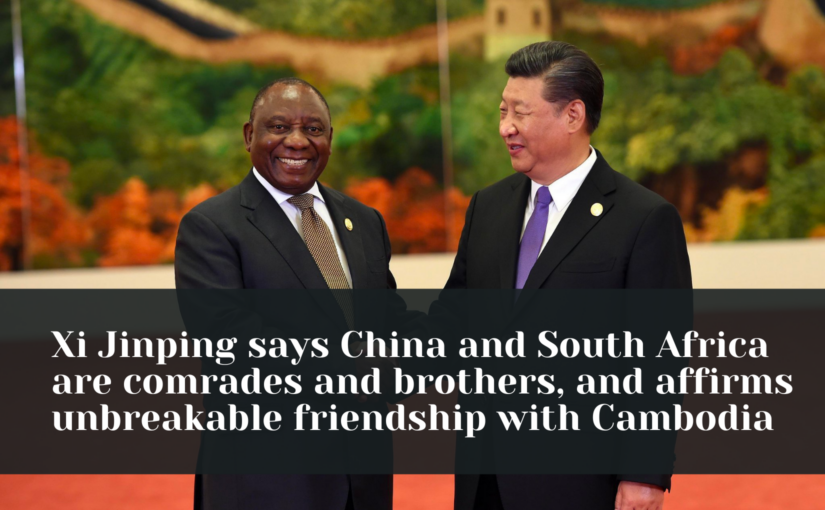
Xi Jinping says China and South Africa are comrades and brothers, and affirms unbreakable friendship with Cambodia
Whilst international media coverage understandably focused on President Xi Jinping’s March 18 telephone conversation with US President Biden, the Chinese leader also held two other important conversations that day with leaders of countries that have particularly friendly relations with China.
Speaking with South African President Cyril Ramaphosa, Xi said that their two countries “share a special friendly relationship of comrades and brothers”. This phrase is particularly significant – whilst it has been used several times by the Chinese leadership to describe their ties with South Africa, it is highly unusual, if not unique, for China to describe its state relations with a non-socialist country as embracing comradeship. In this context, it is worth noting that the friendship between the Communist Party of China and the African National Congress of South Africa date back to at least 1953, when Nelson Mandela sent ANC Secretary General Walter Sisulu to China to gain support for the steadily building anti-apartheid struggle, following Sisulu’s participation in the fourth World Festival of Youth and Students in Romania. China consistently supported the South African people’s struggle against apartheid and for national liberation.
President Xi further said that the relationship with South Africa is of great significance both for China/Africa relations as well as solidarity and cooperation among developing countries. The two leaders also exchanged views on the development of the BRICS grouping, which links Brazil, Russia, India, China and South Africa, and which China chairs this year. They noted that their two countries share a very close position on the conflict in Ukraine, standing for dialogue and negotiation. There have been a number of suggestions that South Africa could play an important role in this regard. Clearly alluding to the US pressures that both countries are facing, the two leaders agreed that sovereign countries are entitled to independently decide on their own positions.
The same day, President Xi also spoke with Cambodian Prime Minister Samdech Techo Hun Sen, with a key focus being their bilateral Belt and Road Cooperation. Xi stressed that China would pay particular attention to developing roads and education in Cambodia’s rural areas so as to help develop agriculture and lift farmers out of poverty. Noting that next year will see the 65th anniversary of their diplomatic relations, President Xi said that their ties had become even more unbreakable whilst Prime Minister Hun Sen described the two countries as true ironclad brothers. Discussion also centred on the prospects for the Regional Comprehensive Economic Partnership (RCEP), to which both belong, and relations between China and ASEAN, a ten-country bloc of South East Asian nations that Cambodia chairs this year.
China ready to move ties with South Africa to deeper level
Originally published in Xinhua.
China stands ready to work with South Africa to move their ties forward toward a deeper level with higher quality and broader scope, Chinese President Xi Jinping said on Friday afternoon.
Continue reading Xi Jinping says China and South Africa are comrades and brothers, and affirms unbreakable friendship with Cambodia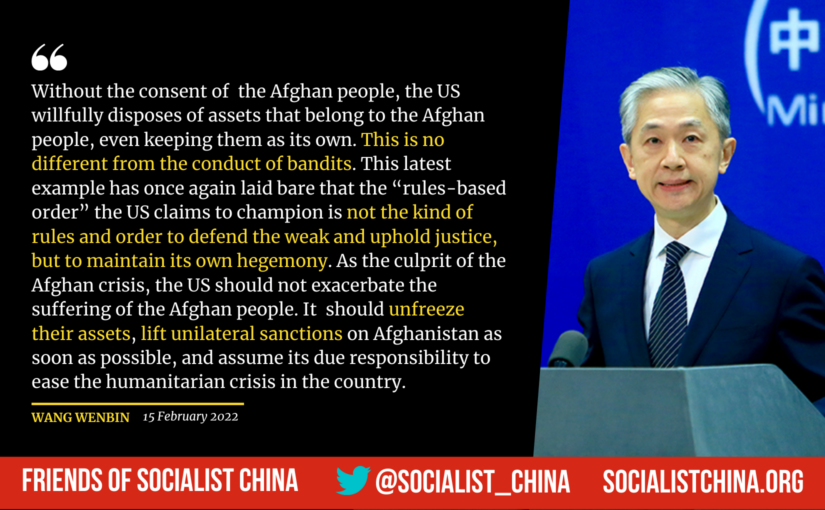
Wang Wenbin: US theft of Afghan assets is no different from the conduct of bandits
Without the consent of the Afghan people, the US willfully disposes of assets that belong to the Afghan people, even keeping them as its own. This is no different from the conduct of bandits. This latest example has once again laid bare that the “rules-based order” the US claims to champion is not the kind of rules and order to defend the weak and uphold justice, but to maintain its own hegemony. As the culprit of the Afghan crisis, the US should not exacerbate the suffering of the Afghan people. It should unfreeze their assets, lift unilateral sanctions on Afghanistan as soon as possible, and assume its due responsibility to ease the humanitarian crisis in the country.
Foreign Ministry Spokesperson Wang Wenbin’s Regular Press Conference on February 15, 2022
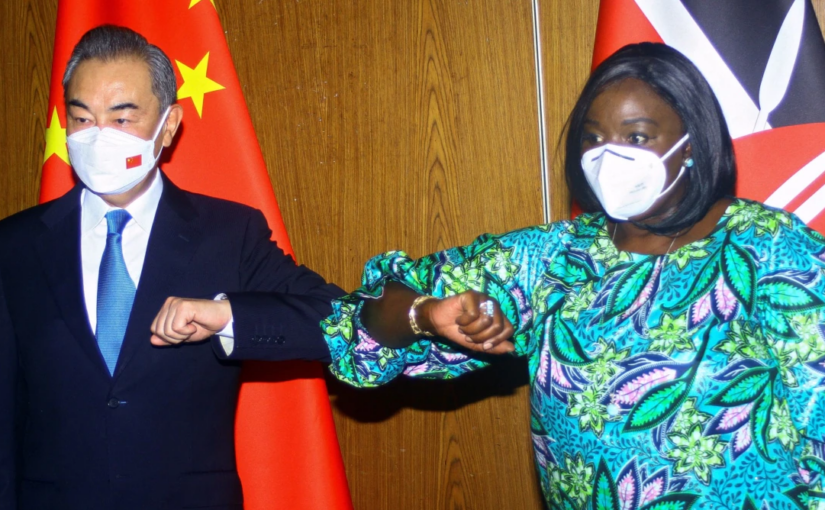
Wang Yi’s Africa and Asia tour further debunks ‘debt trap’ conspiracy theory
This article by Stephen Ndegwa, first published in CGTN, discusses the ‘debt trap’ narrative in the context of Foreign Minister Wang Yi’s recent trip to several countries in Africa and Asia. Ndegwa notes that, although Western media and politicians often decry Chinese infrastructure loans as being exploitative, these accusations don’t stand up to scrutiny. Indeed, the debtor countries don’t share these criticisms and are highly appreciative of China’s support for their sovereign development.
One of the most popular rules of power says if you tell a lie big enough and keep repeating it, people will eventually come to believe it. Well, that could be so. But those who religiously apply this maxim, which purportedly emanated from Nazi Germany’s Joseph Goebbels, forget that it carries a rider. The lie can only be maintained for as long as the originator shields people from the truth.
This has been the case with the so-called debt trap, a phrase generally coined by Western countries that alleges that China ensnared developing countries with unserviceable debt to take over their national assets. China’s aim, so goes the lie, is to enable China to get a foothold in various strategic locations around the world.
Interestingly, even after the United States-led Western bloc’s warning that choices have consequences, China’s partners do not seem to be relenting in expanding and deepening their Sino cooperation. The stress-free partnership has given developing countries much-needed breathing space that has helped them make economic choices best suited to their needs, rather than experimenting with high-blown models that have no practicality.
Continue reading Wang Yi’s Africa and Asia tour further debunks ‘debt trap’ conspiracy theory