China says: Hong Kong has long returned to China and British colonial rule over Hong Kong has long ended

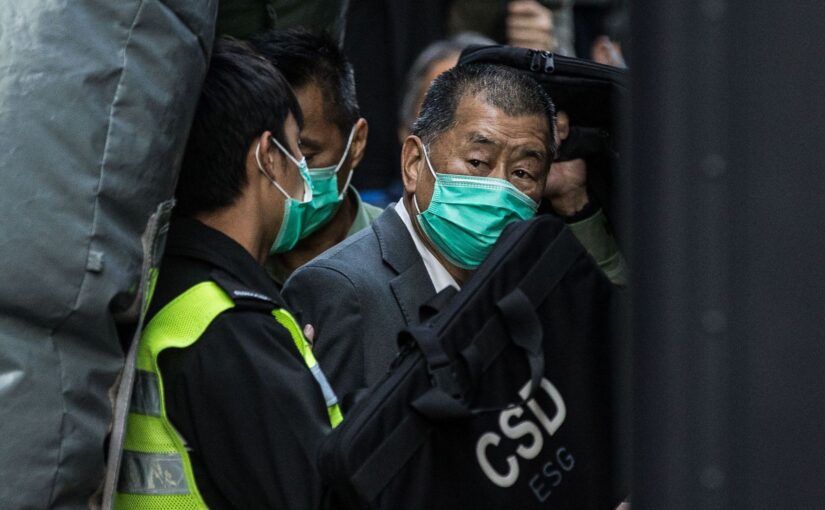
On February 9, the High Court of the Hong Kong Special Administrative Region (HKSAR) of China sentenced Jimmy Lai, an instigator of anti-China riots in Hong Kong, to 20 years in prison.

Lai was found guilty in December by the High Court of the HKSAR on two charges of conspiring to collude with external forces and a charge of conspiracy to publish seditious materials. Mitigation hearing for Lai’s case began on January 12 and concluded on January 13.

The Xinhua News Agency quoted a spokesperson for the Office for Safeguarding National Security of the Central People’s Government in the HKSAR as noting that the 156-day public trial, which involved the examination of 2,220 exhibits, over 80,000 pages of case files and testimonies of 14 prosecution witnesses, had established that Lai colluded with external forces to endanger national security.

A commentary published by the news agency asserted that: “Disguised as a media man while acting as an agent for external anti-China forces, Lai was the principal mastermind and perpetrator of a series of riots that shook Hong Kong and undermined the fundamental interests of both the country and the HKSAR. The reality of Lai’s crimes is clear, backed by conclusive evidence. The traitor has received the penalty he deserves… The days when external forces and anti-China destabilising elements could act with impunity are obviously over.”

An article posted on the social media account of the Hong Kong and Macao Work Office of the Communist Party of China Central Committee noted:

“People have realised that Jimmy Lai has never been the so-called ‘fighter for freedom, democracy and human rights,’ but rather the chief culprit and a traitor to the nation who has harmed the country’s fundamental interests and the well-being of Hong Kong residents. Lai’s sentencing has once again proved that justice may be late, but it will come in the end.”

Hong Kong’s Chief Executive John Lee said that Lai had long used the now-defunct Apple Daily to poison the minds of Hong Kong people, by inciting hatred, distorting facts, deliberately stirring up social antagonism and glorifying violence. Lai had openly begged for external forces to impose sanctions against China and the HKSAR, sacrificing the well-being of the people of China and the HKSAR.

Lai betrayed the country and harmed the HKSAR. His conviction is supported by overwhelming evidence and he for sure deserves his punishment after all the harm he has done.

The sentence passed on Lai has led to renewed outbursts on the part of international anti-China, anti-socialist forces, not least the British government and media.

British Foreign Secretary Yvette Cooper said in a statement: “We stand with the people of Hong Kong, and will always honour the historical commitments made under the legally binding Sino-British Joint Declaration. China must do the same.”

A joint statement by Cooper and Home Secretary Shabana Mahmood announced an “expanded Hong Kong British National (Overseas) route” whereby, “Thousands more Hong Kongers will be able to build new lives in Britain as the government strengthens safe and legal routes to the UK… It is estimated 26,000 people will arrive in the UK over the next 5 years.”

This from a government that is engaged in a relentlessly wicked, cruel and blatantly racist crusade against the most oppressed sections of the working class, particularly refugees and asylum seekers, the overwhelming majority of whom are fleeing from the devastation caused to their homelands by centuries-long and continuing wars, poverty and climate disasters directly resulting from colonial and imperialist super exploitation and oppression.

Continue reading China says: Hong Kong has long returned to China and British colonial rule over Hong Kong has long ended

China and Uruguay pledge closer bilateral and multilateral cooperation

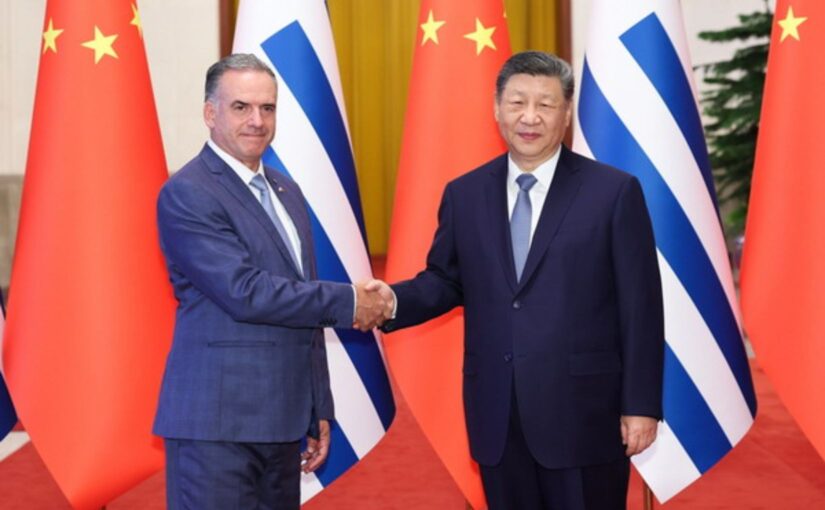
President Yamandú Orsi of Uruguay recently paid a one-week state visit to China, becoming the first leader from Latin America and the Caribbean to do so in 2026. The visit coincided with the 38th anniversary of the establishment of bilateral diplomatic relations and with Uruguay’s assumption of the rotating chair of the Group of 77 and China, an economic grouping of developing countries, as well as in the wake of the brazen US kidnapping of the Venezuelan president and his wife at the beginning of the year.

President Xi Jinping met his Uruguayan counterpart on the morning of February 3.

Xi said that despite long distance between the two countries, China and Uruguay share similar ideals and profound friendship. On this very day 38 years ago, China and Uruguay established diplomatic relations. Thirty-eight years on, no matter how the international situation evolves, China and Uruguay have always engaged with each other in the spirit of mutual respect and mutual benefit. Under the new circumstances, the two countries should carry forward past traditions, deepen the comprehensive strategic partnership, and let the tree of China-Uruguay friendship continue to grow and flourish.

The two sides should strengthen the alignment of development strategies, deepen cooperation in areas such as economy and trade, finance, agriculture and animal husbandry, infrastructure construction, and information and communications technology, tap into the cooperation potential in emerging sectors such as green development, digital economy, artificial intelligence, and clean energy, and promote the transformation and upgrading of economic growth. The Chinese and Uruguayan people share a natural bond of affinity. The two sides should continue to deepen exchanges in areas such as culture, education, sports, and media and at the sub-national level, facilitate cross-border travel, and strengthen people-to-people connectivity.

Turning to the regional and international situation, President Xi Jinping noted that the world is undergoing changes unseen in a century, the international situation is volatile and turbulent, and unilateral bullying practices are growing more rampant. China supports Uruguay in assuming the rotating chair of the Group of 77 and China, and stands ready to work with Uruguay to strengthen solidarity and cooperation across the Global South, jointly promote an equal and orderly multipolar world and a universally beneficial and inclusive economic globalisation, move forward together in pursuit of common development, and make greater contributions to the building of a community with a shared future for humanity. China attaches high importance to its relations with countries in Latin America and the Caribbean (LAC), supports LAC countries in safeguarding their sovereignty, security and development interests, and supports Uruguay in assuming the rotating chair of both the Community of Latin American and Caribbean States (CELAC) and the Southern Common Market (MERCOSUR). China stands ready to work with Uruguay and other regional countries to further deepen and substantiate the joint initiative of building a China-LAC community with a shared future.

President Yamandú Orsi said that China is an important cooperation partner of Uruguay and has provided selfless assistance for Uruguay’s economic and social development. Growing relations with China is now Uruguay’s state policy, gaining unanimous support from all political parties and across the society. The two sides should strengthen the alignment of development strategies, deepen cooperation in areas such as trade, investment, science and technology, poverty alleviation, green economy, and digital economy, and promote people-to-people exchanges in education, sports, tourism, and other fields in order to inject stronger momentum into Uruguay-China relations and deliver greater benefits to the two peoples. Uruguay commends the vision of building a community with a shared future for humanity proposed by President Xi Jinping. Facing the challenging international and regional situations, Uruguay stands ready to work with China to promote respect for the purposes and principles of the UN Charter, uphold multilateralism, safeguard the international trading system, further advance LAC-China relations, and defend the common interests of the Global South.

Continue reading China and Uruguay pledge closer bilateral and multilateral cooperation

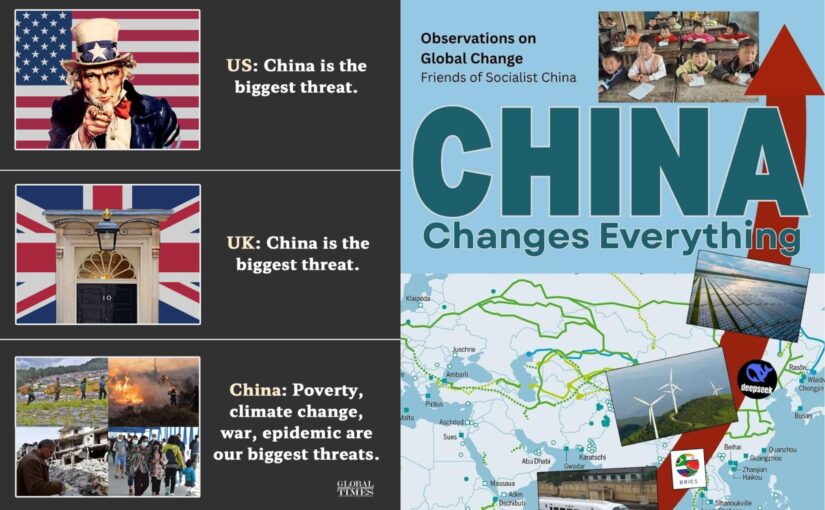
Ignoring China’s poverty alleviation success is costing us all

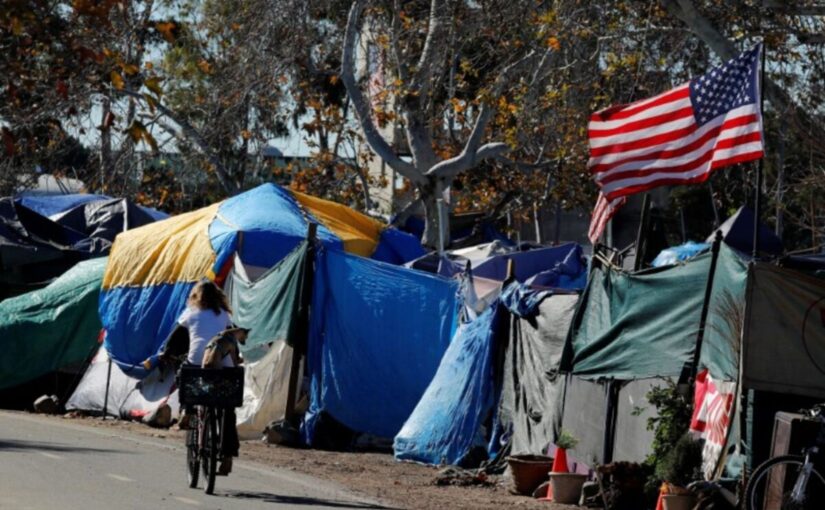
In recent years, public discussion about China in the United States – and the West more generally – has been dominated by accusations, slander, McCarthyite fear-mongering and geopolitical posturing. The relentless anti-China narrative has meant that one of the most consequential social achievements of the modern era has been almost entirely ignored: China’s eradication of extreme poverty.

As global inequality deepens and economic insecurity becomes a defining feature of life for millions in the West, the refusal to seriously examine how China transformed the lives of hundreds of millions of people is a consequential political failure.

Megan Russell’s article for CODEPINK, republished below, confronts this silence head-on by juxtaposing two starkly different realities. On the one hand is the growing exposure, even within China itself, of the fragility of life in the US – a society where healthcare, housing and survival itself often rest on a razor-thin margin. On the other is China’s systematic, state-led effort to ensure its entire population can enjoy fundamental human rights: a minimum income level, guaranteed housing, adequate food and clothing, free healthcare, universal education, running water and access to modern energy.

Rather than treating poverty as an individual moral failing, China approached it as a structural problem requiring coordinated national action, public accountability and sustained investment in human well-being. The result has been the largest poverty alleviation campaign in human history.

Megan argues that the suppression of these facts in the US – through media omission, political censorship and ideological hostility – prevents meaningful learning at a moment when it is urgently needed. If global cooperation is to replace confrontation, and human needs are to take precedence over militarism and profit, then China’s experience must be examined honestly, not buried. The article concludes:

We need to stop funneling vast resources into military expansion and foreign intervention. We need to prioritize the needs of the people over the profits of the elite. We need to end preparations for a war on China and the propaganda campaigns that justify it. Most importantly, we need the United States, China, and the rest of the world to work together to end global inequality and ensure a just and sustainable future for all. If this does not happen, we will all face the consequences.

Over the past month, Chinese social media platforms like Xiaohongshu and Bilibili have begun dismantling the myth of the “American dream,” replacing glossy imagery with firsthand accounts showing that life in the so-called “land of the free” is far from bright and picturesque. In its place, a new concept has emerged, borrowed from video games, when a character’s health drops so low that a single hit can end everything. It’s called the “kill line,” and the term has rapidly entered mainstream political discussion in China.

The “kill line” describes the fragile margin of survival in the lives of many Americans, where one medical emergency, job loss, or unexpected expense can push a person into homelessness or permanent poverty. This precarious balance is a constant threat embedded in the structure of a society that prioritizes profit over people. One mistake, one illness, or one stroke of bad luck can place someone’s entire life in jeopardy.

Continue reading Ignoring China’s poverty alleviation success is costing us all

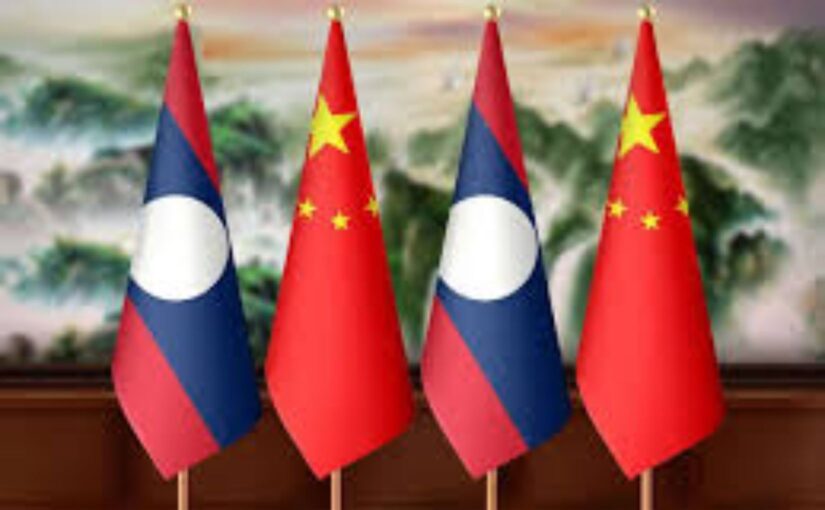
China and Laos designate 2026 as friendship year

Chinese President Xi Jinping replied on February 5 to his Lao counterpart Thongloun Sisoulith’s new year greetings to jointly designate 2026 as the Year of China-Laos Friendship.

The friendship year will feature a number of celebratory events and Xi, in his letter, noted that China and Laos are good neighbours and good friends connected by mountains and rivers with generations of friendship, as well as good comrades and good partners who share ideals and a common future.

China has always viewed its relations with Laos from a strategic height and a long-term perspective, and is willing to take the celebration of the 65th anniversary of diplomatic relations and the friendship year as an opportunity to carry forward traditional friendship, deepen practical cooperation, strengthen strategic coordination, and advance the building of a China-Laos community with a shared future to the forefront of state-to-state relations.

For his part, Thongloun has pledged to instruct various departments of his country to work with the Chinese side to ensure the success of the celebrations marking the 65th anniversary of diplomatic relations and the friendship year, build a Laos-China community with a shared future with high standards, high quality and high level, and continue to elevate bilateral relations and practical cooperation in all fields to new heights in the new era, setting an example for building a community with a shared future for humanity.

On the same day, Laos and China marked the Lunar New Year with a transnational cultural and arts performance held in the Laotian capital Vientiane, bringing together officials, artists, and representatives from both countries to promote friendship and people-to-people ties.

Speaking at the ceremony, Cai Xiangrong, Executive Deputy Director of the Publicity Department of the Communist Party of China Yunnan Provincial Committee, noted that Laos and China are close neighbors connected by shared mountains and rivers and are strategic partners with a shared future. The top leaders of both countries had officially announced the launch of the Friendship Year earlier the same day.

The following articles were originally published by the Xinhua News Agency and the KPL Lao News Agency.

Continue reading China and Laos designate 2026 as friendship year

China and Vietnam exchange special envoys

Following the successful conclusion of its 14th National Congress, the Communist Party of Vietnam (CPV) has intensified its strategic coordination with its Chinese counterpart with an exchange of special envoys between the two parties.

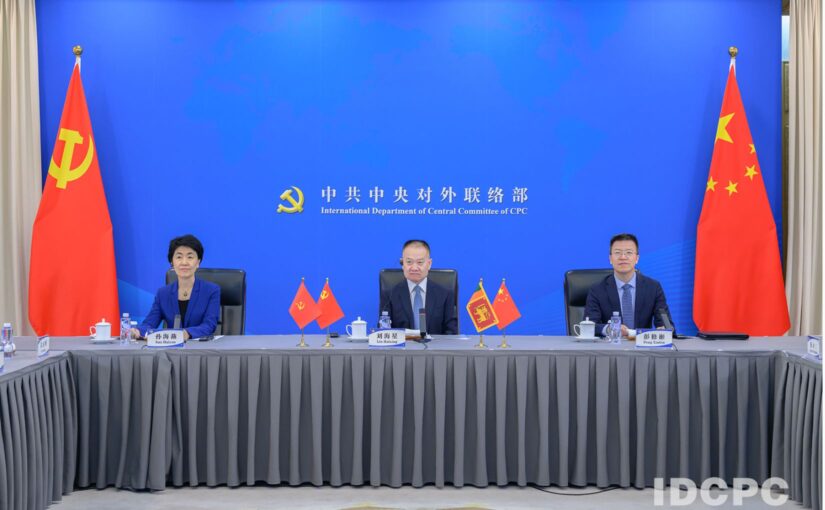
First, Liu Haixing, Minister of the International Department of the Communist Party of China (CPC) Central Committee (IDCPC), visited Vietnam as the Special Envoy of General Secretary Xi Jinping.

Liu met with To Lam, General Secretary of the CPV Central Committee, in Hanoi on January 30.

According to the website of the IDCPC, Liu delivered a congratulatory letter from General Secretary Xi Jinping to To Lam and conveyed Xi’s sincere greetings and best wishes to him. Liu said, China warmly congratulates Vietnam on the successful convening of the 14th National Congress of the CPV and Comrade To Lam on his re-election as General Secretary of the CPV. China is willing to work with Vietnam to earnestly implement the important consensus reached by the general secretaries of the two Parties, adhere to the six overarching goals of “stronger political mutual trust, more substantive security cooperation, deeper practical cooperation, more solid popular foundation, closer coordination and collaboration on multilateral affairs, and better management and resolution of differences”, firmly safeguard the security of governance, intensify high-level exchanges, enhance political mutual trust, expand common interests, jointly uphold international justice, and promote the continuous development of the China-Vietnam community with a shared future.

The Vietnam News Agency (VNA) added that, welcoming the special envoy, General Secretary Lam emphasised that the visit carries profound political significance, reflecting the high priority, deep respect, and sincere friendship of the Chinese party, state, and people towards their Vietnamese counterparts, as well as the long-standing solidarity and close bonds between the two Communist Parties.

He appreciated the very positive outcomes of the phone talks with General Secretary and President Xi immediately after the CPV’s 14th National Congress, which created a favourable starting point for relations between the two Parties and countries in the new term and Vietnam’s new development era.

Sharing with the special envoy the important outcomes of the 14th National Party Congress, the party chief underscored that its success marked a turning point and a particularly important milestone determining Vietnam’s future development in the new era. The congress not only reviewed the past five years and summed up 40 years of renewal, set goals and tasks for the next five years, but also shaped strategic mindset, vision, and long-term development orientations toward the mid-21st century. Vietnam will continue to play an active and responsible role in maintaining peace, stability, and development in the region and the world, he stressed.

On the same day, Liu Haixing held the first meeting of the mechanism for meetings between the Minister of the IDCPC and the Secretary of the Party Committee of Vietnam’s Ministry of Foreign Affairs with Le Hoai Trung, Member of the Political Bureau of the CPV, Secretary of the Party Committee of the Ministry of Foreign Affairs, and Minister of Foreign Affairs of Vietnam.

The IDCPC reported Liu as saying that the two sides should walk hand in hand on the path of socialist modernisation and jointly create a brighter future for China and Vietnam, contributing positive energy to regional peace, stability, development and prosperity.

For his part, Le Hoai Trung thanked Special Envoy Liu Haixing for coming to Vietnam to extend congratulations. He said, Vietnam and China are like-minded partners on the socialist path. Vietnam always regards its relations with China as an objective requirement, strategic choice and top priority of its foreign policy. The development of bilateral relations is of great strategic significance to the socialist cause of the two countries. Under the new circumstances, Vietnam is willing to work with China to strengthen high-level exchanges between the two parties, deepen exchanges and mutual learning of experience in state governance and administration, expand exchanges and cooperation in various fields, and jointly build a Vietnam-China community with a shared future that carries strategic significance.

Continue reading China and Vietnam exchange special envoys

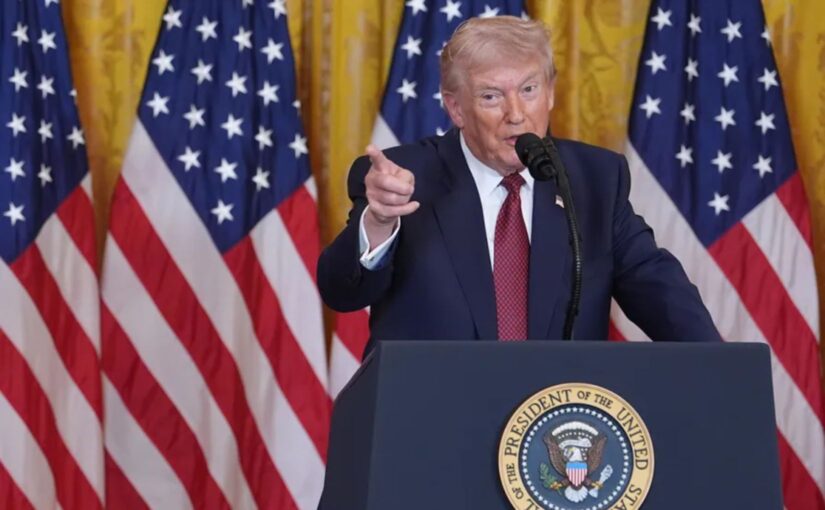
Xi Jinping holds same day conversations with Presidents Putin and Trump

In an unusual diplomatic coincidence, Chinese President Xi Jinping held separate conversations with Russian President Vladimir Putin and US President Donald Trump on February 4.

Xi Jinping first met with President Putin by videoconference.

The readout published by the Chinese Foreign Ministry said that President Xi extended sincere Spring Festival greetings to President Putin and the Russian people, and noted that today is the Beginning of Spring, one of the solar terms in the Chinese lunar calendar. It means the return of spring and signals a new start. He added that that over the past year, we met twice and steered China-Russia relations into a new stage of development. The two countries solemnly commemorated the 80th anniversary of the victory of the World Anti-Fascist War, demonstrating a firm resolve to defend the victorious outcomes of WWII and international fairness and justice. The Shanghai Cooperation Organisation (SCO) Tianjin Summit and the 24th meeting of the Council of Heads of Government of Member States were successfully held in China and Russia respectively. The two sides have increased multilateral coordination and stayed committed to building a more just and equitable global governance system.

President Xi noted that the first few weeks of the year have witnessed increasing turbulence around the world. As responsible major countries and permanent members of the UN Security Council, China and Russia are duty-bound to pool global efforts to firmly uphold fairness and justice, firmly defend the victorious outcomes of WWII, firmly safeguard the UN-centred international system and the basic norms of international law, and jointly maintain global strategic stability.

President Putin said that over the past year, Russia and China jointly commemorated the 80th anniversary of the victory of WWII, firmly safeguarded world peace secured with great sacrifice by the people of both countries and defended historical truth. Cooperation between the two countries in areas such as trade, energy, science and technology, and agriculture has deepened and achieved tangible results. People-to-people exchanges have grown closer, the China-Russia Years of Culture concluded successfully, and mutual visa exemption has facilitated travel between the two peoples. Looking ahead to the new year, Russia has full confidence in the bilateral relationship.

For its part, the website of the President of Russia released the text of the opening remarks of both leaders.

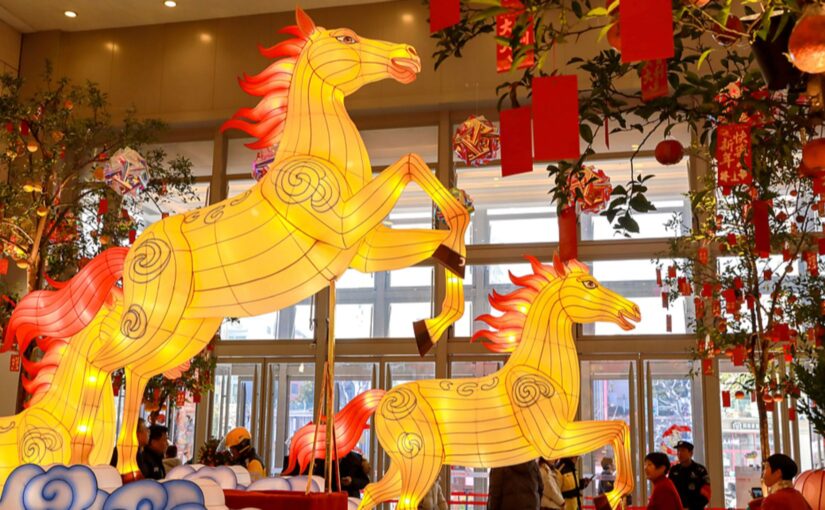
President Putin said: “I would like to personally wish Happy New Year 2026 to you and through you to the entire friendly Chinese nation. Please also accept my greetings on the Spring Festival, which will signal the beginning of the Year of the Fire Horse. As far as we know, this horse stands out by its strength, energy and determination to move ahead. This is also what makes the relations between our two countries so special.”

He added: “I believe that we properly celebrated the 80th anniversary of victory in World War II in Moscow in May and in Beijing in September. The fact that we did this together has demonstrated to the world our solidarity and Russia and China’s readiness to uphold historical truth and carefully preserve the memory of the heroism of our countries’ people, who sacrificed tens of millions of lives to restore peace on the planet.”

Xi Jinping said, among other things: “I would like to thank you for sending Comrade (Sergei) Shoigu to Beijing recently for consultations with Comrade Wang Yi on international and regional issues in preparation for our meeting. He has briefed me on the content of their discussions.” [See below.]

The Russian Presidency also released a commentary on the conversation by Presidential Aide Yury Ushakov.

He also noted that: “Consultations were held on February 1 in Beijing between Secretary of the Russian Security Council Sergei Shoigu and Director of the Office of the Central Commission for Foreign Affairs of the Communist Party of China Central Committee, Minister of Foreign Affairs of China Wang Yi. The heads of state discussed the information received following these consultations,” and added:

“I would like to emphasise that Xi Jinping was the principal guest in Moscow at the Victory Day Parade on May 9, while Vladimir Putin was the principal guest at the commemorative events in Beijing on September 3. Both Russia and China intend to continue upholding historical truth and preserving the memory of the heroism of our fathers and grandfathers in those harsh years.”

Continue reading Xi Jinping holds same day conversations with Presidents Putin and Trump

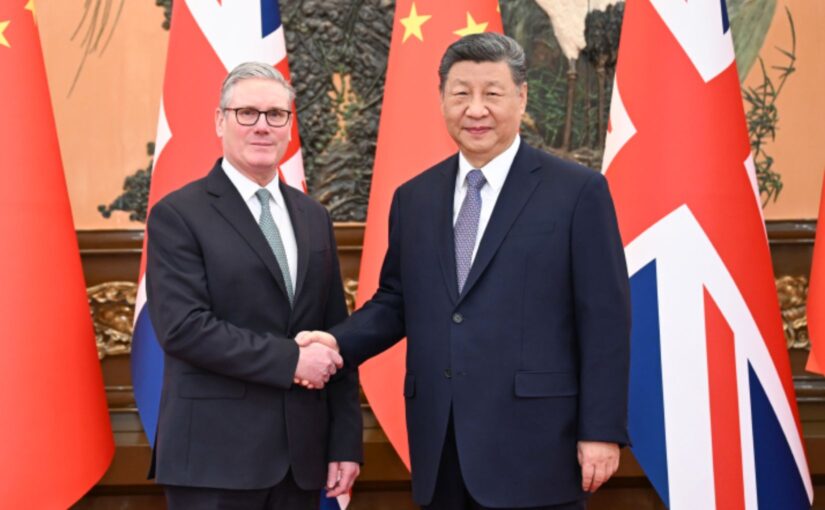
Keir Starmer’s small-stick diplomacy

In the article below, published in the Morning Star on 4 February, Andrew Murray argues that Keir Starmer’s visit to China marks a rare moment of realism in British foreign policy after years of hopelessly counterproductive hostility shaped by the demands of Washington. Starmer’s pragmatism reflects an overdue recognition that rebuilding relations with China is in Britain’s material interest.

Andrew dismisses the loud and oft-repeated fears about Chinese spying and influence as hypocritical, noting Britain’s own intelligence operations and aggressive military posture in the Asia-Pacific alongside the US and its allies.

China is not parking aircraft carriers off our coast, nor entering into an Aukus-like bloc to help encircle Britain and drag it into an escalating arms race. Nor even did it hold the Isle of Wight as a colony for a century. And the considerable place it has secured in our markets was achieved without recourse to gunboats. Imagine!

The article underlines the importance of engagement in terms of the British government’s much-vaunted growth agenda: China has grown at roughly 7.5 per cent annually over the last decade, while Britain has stagnated at around 1.2 per cent.

Starmer’s willingness to proceed with the visit despite pressure from Donald Trump is praised, though Andrew notes Britain’s continued aggression in East Asia: “Britain continues to indulge in various military provocations in the Far East directed at China, alongside the US, Japan and Australia, all in service of the imperial vanity project ‘global Britain’”.

Ultimately, no major British constituency benefits from confrontation with China. The British government appears to be slowing getting to grips with this fact.

One cheer for Keir Starmer. The hapless Prime Minister has finally found a problem bequeathed by the Tories that he is addressing with some sense of purpose.

His visit to Beijing is the moment when the monkey at No 10, furiously pounding at the typewriter of governance for the last 19 months has finally produced, if not Shakespeare, at least a line or two of coherent prose.

Continue reading Keir Starmer’s small-stick diplomacy

Breaking the ice: Starmer’s pragmatic turn to China

In the following article, which was originally published by the Morning Star, Keith Bennett notes that the recent China visit by British Prime Minister Keir Starmer marked the end of a long diplomatic hiatus and produced tangible, if limited, economic results.

It had been nearly eight years since a British prime minister, Theresa May, had set foot in China. In contrast, French President Emmanuel Macron had made three visits, the most recent in last December, and the leader of Germany has also visited multiple times, with a further visit scheduled for this month.

Moreover, while travelling in the first month of the year, Starmer was already the third European head of government to visit China, being preceded by those of Ireland and Finland, and the second from the Anglophone “Five Eyes” intelligence-sharing alliance, being also preceded by his Canadian counterpart. Starmer was thus beating an already well-trodden path.

Among the results of Starmer’s visit were a Chinese pledge to unilaterally grant short-stay visa free entry to UK passport holders – a facility already enjoyed by the citizens of some 50 other countries, a halving of tariffs on whisky, and a decision by Chinese company Chery Commercial Vehicles (CCV) to open its European headquarters in Liverpool.

However, the visit predictably attracted opposition from reactionary quarters at home and abroad.

Asked what he thought of Starmer trying to forge closer business ties with China, US President Donald Trump, who himself plans to visit China in April, said: “Well, it’s very dangerous for them to do that.”

Negative reaction also came from Conservative Party leader Kemi Badenoch, the Liberal Democrats, Reform UK and the right-wing press. Keith opines that: “To face all this down may require not simply common sense and pragmatism but degrees of political skill and courage that the Prime Minister has yet to show signs of possessing.”

For his part, Chinese Premier Li Qiang said that China and Britain should continue to carry forward the “ice-breaking spirit” and tighten their bonds of cooperation. In so doing, he invoked China’s continued respect for the July 1953 “Icebreaker Mission” — the first business delegation of its kind from any Western nation following the founding of New China — that led to the formation of the 48 Group of British Traders with China, with its core values, inspired by premier Zhou Enlai, of equality and mutual benefit.

A version of the article was also published by China Today.

Continue reading Breaking the ice: Starmer’s pragmatic turn to China

From Zimbabwe to Algeria: China-Africa solidarity, a living tradition

2026 marks the 70th anniversary of diplomatic relations between China and African nations as well as being the China-Africa Year of People-to-People Exchanges. In  the history of relations between China and Africa, Zimbabwe in the south of the continent and Algeria in the north may both be considered to hold a special place, in that both countries’ protracted and heroic armed struggles for national liberation against settler colonial rule were strongly supported by China from their inception and the three countries have continued to advance hand-in-hand as a community of shared future.

On June 28, Chinese President Xi Jinping replied to a letter he received from a group of veterans of Zimbabwe’s national liberation war.

In his letter, Xi noted that in their youth, the veterans devoted themselves to the great cause of national liberation, left their homelands, and forged with China a profound friendship and comradeship in the struggle. To this day, they remain deeply committed to China-Zimbabwe and China-Africa friendship, which is deeply moving.

Stressing that 2026 marks the 70th anniversary of diplomatic relations between China and African nations as well as the China-Africa Year of People-to-People Exchanges, Xi wrote that over the past 70 years, China has always been a good comrade and partner in Africa’s quest for national liberation, development and rejuvenation and against imperialism and colonialism. He also expressed the hope that the veterans will inspire more African youth to devote themselves to the cause of China-Zimbabwe and China-Africa friendship.

The veterans recently wrote to Xi, expressing gratitude for China’s valuable support for Zimbabwe’s national liberation, admiration for his leadership of the Communist Party of China and the Chinese people in achieving remarkable accomplishments in the new era, and for forging a Chinese path to modernisation that offers valuable insights for other developing countries. They expressed pride in the all-weather Zimbabwe-China community with a shared future, pledging to dedicate themselves to carrying forward the friendship between the two countries.

A commentary carried by the Xinhua News Agency recalled that China has firmly supported Africa’s struggle against imperialism and colonialism and the continent’s cause of national liberation. During Zimbabwe’s national liberation struggle in the 1960s and 1970s, many fighters received training in China or from Chinese instructors in Africa, creating enduring stories in the history of the two countries’ relations.

Ahead of his state visit to Zimbabwe in 2015, Xi published a signed article in Zimbabwean media, recalling the profound and time-tested friendship between the two countries.

“During the national liberation struggle in Zimbabwe, the Chinese people steadfastly stood behind the Zimbabwean people as comrades in arms. I was touched to learn that many Zimbabwean freedom fighters who received training from the Chinese side both in China and at Nachingwea camp in Tanzania can still sing songs such as the ‘Three Rules of Discipline and the Eight Points for Attention’,” Xi wrote.

Continue reading From Zimbabwe to Algeria: China-Africa solidarity, a living tradition

Roar, China! Langston Hughes in Shanghai

February is celebrated as Black History Month in a number of countries, including the United States and Canada, and February 1st 2026 was the 125th anniversary of the birth of Langston Hughes, the great African-American jazz poet, social activist, novelist, playwright, and columnist, who is widely considered to have been the key leader of the Harlem Renaissance in the 1930s.

Marking these anniversaries, the Historic Shanghai website, noting that the city “has a fascinating, hidden history of Black American poets, activists, and musicians” carried an article on the three months that Hughes spent there in the summer of 1933, during which he met with Soong Ching Ling, the widow of China’s first president Dr. Sun Yat-sen and later the Honorary President of the People’s Republic of China, as well as with the great revolutionary writer Lu Xun.

The article notes: “With barbed wire and guards separating the International Settlement and French Concession from the Chinese sections of Shanghai, and with American race laws (i.e. segregation) often applied in the International Settlement, the parallels between segregated Shanghai and segregated America were all too stark… As a Black American, Langston Hughes was not permitted to enter the Cathay Hotel or the Foreign YMCA, which he called the Whites’ YMCA.”

However, this was also “the era of Shanghai jazz, when Black Americans who had limited performing opportunities at home took their talent to the world, and Shanghai, said Hughes, ‘seemed to have a weakness for American Negro performers.’ There was the ‘sparkling’ Nora Holt at the Little Club, the radio singer Midge Williams, and Valaida Snow, who Louis Armstrong called the ‘second greatest trumpeter’ – after himself, of course!”

Continue reading Roar, China! Langston Hughes in Shanghai

The sun has risen in the east – George Galloway’s message to Europe

The following is an interview with George Galloway, former member of the British parliament and leader of the Workers’ Party of Britain, published by the Chinese newspaper Global Times on January 25, focused on the present position and prospects of Europe in geopolitics.

Asked first about the reported ‘framework of a deal’ supposedly reached by NATO and US President Trump in the margins of the World Economic Forum in Davos, Switzerland, regarding the Danish colony of Greenland, which Trump is threatening to annex, George replies:

“We’ll have to wait and see what deal emerges, whether it will be acceptable to the people of Greenland, and whether it will be acceptable to the people of Denmark. But none of that, even if there is a deal, can wipe out the sheer thuggery – really mafia-style gangsterism – of the current US administration’s conduct over this matter in the last few months.

“The world has never seen a situation where an ally can be so openly aggressive, belligerent and threatening toward a country like Denmark, which has been an unquestioning supporter of everything the US has ever asked of it. It was the very first country in the whole world to recognise the NATO annexation of Kosovo, when Kosovo was torn from its motherland in Serbia.”

In his view, relations between Europe and the US “are comprehensively ruined, and that’s why European leaders who have been lecturing, badgering, and pressuring China for years are all making hasty reservations – not for a slow boat to China, but a quick one. That’s why Canadian Prime Minister Mark Carney was there. That’s why French President Emmanuel Macron was there. That’s why British Prime Minister Keir Starmer is coming.”

In this new situation, Europe “should make peace and amity with China and with Russia, make new arrangements with the rising powers in the world.”  However, “their current political leadership almost certainly will not do that, because, if I can quote Shakespeare in Macbeth – they are steeped in blood so far that it is difficult to know whether to go on or to go back.”

[“I am in blood / Stepped in so far, that, should I wade no more, / Returning were as tedious as go o’er” – William Shakespeare, Macbeth, Act III, Scene IV]

Referring to Canadian Prime Minister Mark Carney’s Davos speech, where he said that “the so-called rules-based order is not just fading; it was always a lie. He said the rest of us knew that it was a lie, but we went along with it because it benefited us to do so,” George adds:

“This is a remarkable admission. I’m not sure whether there has been a more remarkable admission in modern history than this. Some clear-sighted politicians and observers have been saying it all along, for which they were insulted, marginalised or even punished, but this view is now being openly acknowledged by a member of NATO, and by the prime minister of a Five Eyes country.”

Continue reading The sun has risen in the east – George Galloway’s message to Europe