Ben Norton: The US is trying to break Latin America’s growing relations with China and Russia

We’re pleased to republish this article by Ben Norton, originally carried in Multipolarista, which summarizes the remarks he made to our recent webinar, 21st Century Socialism: China and Latin America on the Frontline. Ben highlights the various ways in which the US-led New Cold War is playing out in Latin America, particularly in terms of successive US administrations attempting to disrupt the growing links between the countries of Latin America and the Caribbean, on the one hand, and China and Russia on the other.

The United States has turned Latin America and the Caribbean into a key battlefield in its new cold war on China and Russia.

Washington’s hybrid war on Beijing and Moscow took shape in 2018, when the Pentagon published a National Defense Strategy identifying the two Eurasian powers as the biggest “threats” to US national security.

Following the attacks on September 11, 2001, the US government had shaped its foreign policy around a so-called “war on terror.” But Defense Secretary James Mattis announced in January 2018 that the Pentagon had changed its priorities, and “great power competition, not terrorism, is now the primary focus of U.S. national security.”

The US director of national intelligence, Avril Haines, echoed this perspective in a Senate Intelligence Committee hearing this March. Summarizing the US intelligence community’s 2022 Annual Threat Assessment report, Haines said China and Russia constitute the top “threats” to Washington, and she emphasized that Beijing in particular “remains an unparalleled priority for the intelligence community.”

In this Cold War Two, Latin America has been caught in Washington’s crosshairs.

After Russia invaded Western ally Ukraine on February 24, the US military responded by threatening China and Venezuela.

On February 26, the US Navy sent a guided-missile destroyer warship through the narrow Taiwan Strait, in a move that the Chinese government condemned as an “adventurist” and “provocative action” seeking “to bolster the ‘Taiwan independence’ forces.”

Continue reading Ben Norton: The US is trying to break Latin America’s growing relations with China and Russia

Margaret Kimberley: Countries struggling against US domination are inevitably turning to China

Below is the video and text of a speech by Margaret Kimberley, Executive Editor of Black Agenda Report, at our recent event 21st Century Socialism: China and Latin America on the Frontline. Margaret draws on her recent participation in delegations to Nicaragua to highlight the growing links of cooperation and solidarity between China and progressive Latin America, and she contextualizes this within an emerging multipolar system of international relations which stands in stark contrast to US unipolarity and hegemony.

Greetings everyone. Of course I want to start by thanking Friends of Socialist China for inviting me to participate in this meeting today. When I received the invitation in early February I didn’t know, I don’t think anyone knew, that the world would change irrevocably just a few weeks later. But here we are and I’ll discuss a little bit how the conflict in Ukraine is connected to the subject of today’s discussion.

Only people in the United States were unaware that the unipolar world was ending but the rest of the world was very much aware. China’s economic ascendancy is a direct challenge to US power and is being felt and embraced in Latin America.

I saw this for myself on my first trip to Nicaragua in November 2021. I was invited to be an electoral companion, an acompanante, during that nation’s election and I attended as a member of a Black Alliance for Peace delegation.

Continue reading Margaret Kimberley: Countries struggling against US domination are inevitably turning to China

Wang Wenbin: NATO serves no other purpose than war

Speaking at the Ministry of Foreign Affair’s press conference on March 25, 2022, Spokesperson Wang Wenbin commented on NATO’s attack on Yugoslavia (which was launched 23 years ago) and NATO’s record as an aggressive alliance and product of Cold War.

On March 24 1999, US-led NATO forces blatantly bypassed the UN Security Council and began the 78-day incessant bombing of the Federal Republic of Yugoslavia, a sovereign country, in grave violation of relevant international conventions and basic norms governing international relations. In 12,000 strikes, over 10,000 tonnes of explosives were dropped and more than 3,000 missiles fired, targeting everything from medical facilities to ancient cultural relics, residential buildings and schools. Thousands of innocent civilians including three Chinese journalists were killed. During the bombing campaign, NATO even used depleted uranium bombs prohibited by international conventions, causing long-term damage to Serbia’s environment and people’s health. The people of Serbia will not forget NATO’s aggression, nor will the people of China and the rest of the world.

NATO is convening a summit on Ukraine on the 23rd anniversary of its bombing of the Federal Republic of Yugoslavia. I wonder if the US and other NATO members have asked themselves: What is the root cause of the Ukraine crisis? What responsibility should the US and NATO assume? Before reflecting on their crimes against the people in countries like Serbia, Iraq and Afghanistan, the US and NATO have neither right nor authority to judge others. Born out of the Cold War, NATO serves no other purpose than war. It has never contributed to peace and security of our world and will never do so. All those who truly love peace and are committed to advancing peace will resolutely reject NATO’s continued expansion. 

When will China become a high-income country?

We are pleased to reprint this important speech, recently delivered at Peking University, by Dr. Justin Yifu Lin, one of China’s leading economists and a former Vice President of the World Bank, which addresses the speed of economic growth in China this year; the relationship between economic growth and innovation; how to achieve common prosperity; and when will China become a high-income country.

Dr. Lin concludes: “Up to now, the population living in high-income countries only accounts for 16% of the world’s population. If China also becomes a high-income country, the world’s population living in high-income countries will double, from 16% to 34%. I believe that we will have the opportunity to witness this history.”

The speech was published in English by Asia Times and originally in Chinese on guancha.cn

This article is compiled from a speech by former World Bank Vice-President Justin Yifu Lin at the Peking University National School of Development’s “China Economic Watch No 60: Interpretation of the Two Sessions and China’s Economic Prospects” event. This article has not been reviewed by the speaker himself.

Good afternoon, everyone, online and offline. As a member of the Chinese People’s Political Consultative Conference (CPPCC), I am glad to have this opportunity to talk to you about some of the hot issues that were of concern to the delegates and members of the CPPCC during the two sessions.

I will mainly talk about three points. First, the speed of economic growth this year; second, economic growth should be innovative; third, how to achieve common prosperity? When will China become a high-income country?

First of all, for China, the economic growth rate is the biggest big picture, because we want to build a new development pattern mainly based on a large domestic circulation. In fact, the larger China’s economy is and the higher the share of the service sector is, the greater the share of the domestic circulation is bound to be.

So, how to make the economy bigger and increase the share of service industry? Of course, we need to raise income levels and economic growth.

Second, we need to have two big pictures in mind. One is the overall strategic picture of the great rejuvenation of the Chinese nation, which includes politics, culture, and many other aspects, but the economy is the foundation.

To achieve the great rejuvenation of the Chinese nation, the goal is to set China’s GDP per capita at 50 percent of that of the United States at purchasing power parity (PPP) – about the level of South Korea in 2002 – a requirement that should be in place. But China’s GDP per capita at PPP is currently just over 20% of the US. To go from just over 20% to 50%, and to achieve it by 2049, would require a relatively high rate of economic growth.

Another big picture is that we are now facing a major global change that has not been seen in a century. How should we manage this big change? Only if China’s GDP per capita at purchasing power parity reaches 50% of the US, the U.S. will accept China as the number one economy by then, because by then, the US will probably have no means to jam our necks.

Continue reading When will China become a high-income country?

Whole-Process People’s Democracy has deep roots in China’s history and the Chinese Revolution

Friends of Socialist China were honored to be invited to speak at a March 22 webinar organised by our friends in the Pakistan China Institute under the banner of Friends of Silk Road. The webinar, entitled Whole-Process People’s Democracy: Understanding the Chinese System, used this concept of President Xi Jinping’s to explore various aspects of China’s unique form of socialist democracy. It was chaired by Senator Mushahid Hussain Sayed, who chairs both the Defense Committee in the Pakistan Senate as well as the Pakistan China Institute, and who is also a member of the Friends of Socialist China advisory group.

Opening the event, Senator Hussain noted that it coincided with Chinese Foreign Minister Wang Yi’s speech as a special guest at the ministerial meeting of the 57-member Organisation for Islamic Cooperation (OIC), also being held in Islamabad. A highlight of Minister Wang’s South Asian tour, this historic first, Senator Hussain noted, represented the close camaraderie and support to Muslim countries and Muslim causes, such as Kashmir and Palestine, on the part of China.

Joining our co-editor Keith Bennett as speakers were HE Ambassador Masood Khalid, Pakistan’s former Ambassador to China; Group Captain Sultan M. Hali, author of four books on China; Zoon Ahmed Khan, a research fellow at the Center for China and Globalisation in Beijing; and Raza Naeem, President of the Progressive Writers Association in Lahore.

The webinar was reported in Pakistan’s leading English-language daily newspapers, Dawn and The News.

The full webinar is embedded below, followed by Keith Bennett’s speech.

Covid-19: Why can’t we learn from China instead of lecturing it?

In this timely article, which we reproduce from CGTN, Keith Lamb asks why the major capitalist countries refuse to learn from China’s tackling of Covid-19, “when China’s methods have proven to be among the most successful”. The answers, Lamb observes, highlight “precisely why capitalists should not be given the key to the state apparatus”.

Why are we unable to grasp even the basic lessons from recent history? Overall, looking at COVID-19 responses, China’s methods have proven to be among the most successful. When COVID-19 broke out, swift lockdowns saved millions of lives; grassroots resident groups instantly manned checkpoints in and out of large residential areas, checking temperatures, and apps tracking COVID-19 swiftly followed.

Residents were not cowered into their homes and it wasn’t the humanitarian “hell-scape” made out in the Western press. Even before official restrictions came into place, residents voluntarily isolated en masse. I can say this with confidence because I was in China, not just in one province but three.

When it comes to COVID-19 deaths per million, China’s loss is three, compared to the U.S. at 2,989 and the UK at 2,393. Thus, when it comes to protecting life, the words “horror” hardly applies to China yet, not learning from even recent history, as China now battles new outbreaks of COVID-19, using its “dynamic zero-COVID-19” strategy, this is precisely the sort of language the Western corporate press is using. Even in more measured reporting where language describing China’s strategy as “brutal” and “extreme” is not being used, China’s COVID-19 strategy is predicted to bring economic woes.

Continue reading Covid-19: Why can’t we learn from China instead of lecturing it?

Brazil’s ex-president Dilma Rousseff: US-China conflict is neoliberalism vs socialism

We’re pleased to republish this very useful article by Ben Norton in Multipolarista, introducing and summarizing Dilma Rousseff’s keynote speech at our recent webinar, 21st Century Socialism: China and Latin America on the Frontline (at which Ben also spoke).

Brazil’s former president Dilma Rousseff has condemned US meddling and “hybrid war” in Latin America, while simultaneously praising China for creating a new model of economic development that challenges US-led neoliberal capitalism and the “Washington Consensus” imposed on the world.

“We want, basically, to be able to break with the Monroe Doctrine,” Rousseff said, referring to the nearly 200-year-old colonial doctrine in which the US government claims Latin America as its geopolitical “backyard.”

“We want Latin America to be for the Latin Americans, and not as the US wants it, in the Monroe Doctrine, which means Latin America for the North Americans, precisely the opposite,” the former Brazilian head of state added.

“The so-called hybrid war unleashed by the US through second-generation coups, lawfare processes, and sanctions against Cuba and Venezuela led to a great setback, returning to the continent the inequality, misery, and hunger that had been overcome, or that it was about to get over,” she lamented.

A leader of the left-wing Workers’ Party, Rousseff served as president of Brazil from 2011 until August 2016, when she was overthrown in a soft coup backed by the US government and her country’s powerful right-wing corporate oligarchy.

Continue reading Brazil’s ex-president Dilma Rousseff: US-China conflict is neoliberalism vs socialism

Ambassador Ma Hui: China and Cuba are bound together by common experiences and beliefs

On 19 March 2022, China’s ambassador to Cuba, Ma Hui, spoke at our event 21st Century Socialism: China and Latin America on the Frontline.

Ambassador Ma discusses the nature, development and trajectory of Socialism with Chinese Characteristics; the history of China-Cuba relations; Cuba’s remarkable progress in pursuing its own form of socialism; and the importance of ending the criminal US blockade against Cuba.

Dear friends:

I am delighted to join you at this very important webinar. The topics are wide-ranging. I will first share two points on what socialism with Chinese characteristics is and what it is not, then two points on Chinese-Cuban relations, and then my observations about Cuba.

First, socialism with Chinese characteristics is the result of the Chinese people’s painstaking trials and great sacrifices. It just doesn’t come easy to us.

Since the 1840s, through successive aggression such as the two Opium Wars, the Sino-French War, the First Sino-Japanese War, and the Eight-Allied Powers invasion, the Western powers bullied China into signing a series of unequal treaties, gradually reducing China from a world power to a semi-colonial and semi-feudal state. As a result, the Chinese people embarked on the arduous quest for survival and rejuvenation. China tried constitutional monarchy, parliamentary system, multi-party system, presidential system, you name it, but all failed.

Continue reading Ambassador Ma Hui: China and Cuba are bound together by common experiences and beliefs

China and Latin America: Dilma speaks

The following is a detailed report of our recent webinar, 21st Century Socialism: China and Latin America on the Frontline, by US-based political analyst Charles McKelvey.

The Friends of Socialist China sponsored on March 19, 2022, a Webinar on “21st Century Socialism: China and Latin America on the Frontline.”  Friends of Socialist China, located in London, is a platform dedicated to supporting the People’s Republic of China and promoting understanding of Chinese socialism.  The event was co-sponsored by lborada, ANTICONQUISTA, CODEPINK, Geopolitical Economy Research Group, International Action Center, International Manifesto Group, Kawsachun News, Morning Star, Multipolarista, and Simón Bolívar Institute for Peace and Solidarity Among Peoples. 

The event was moderated by Radhika Desai, Director of the Geopolitical Economy Research Group (University of Manitoba, Winnipeg Canada), and Convener of the International Manifesto Group.  She observed that the relation between China and Latin America is of growing importance, and it is central to a world-wide shift from decadent capitalism to modern and progressive socialism, from a US-centered world to a China-centered world.  As an indication of this shift, U.S. trade with Latin America has decreased significantly, while Chinese trade and investment in Latin America has greatly increased.  China is now the top trading partner of Brazil, Uruguay, and Peru; and it is the second trading partner of several Latin American nations.

The events of recent weeks have given a boost to the Chinese-Latin American relation, as it has become increasingly clear that the United States demands the subordination of the nations with which it has relations, including its supposed allied and friends.

Continue reading China and Latin America: Dilma speaks

Carlos Miguel Pereira Hernández: Cuba and China are united in the struggle for peace and socialism

On 19 March 2022, Cuba’s ambassador to China, Carlos Miguel Pereira Hernández, spoke at our event ‘21st Century Socialism: China and Latin America on the Frontline‘. The speech was given in Spanish, with English subtitles provided by the Cuban Embassy in Beijing.

Ambassador Pereira makes a number of crucial points about the nature of Marxism as a living science as opposed to a dogma; about the cruel blockade imposed by the US on Cuba, the aim of which is to destroy the viability of the socialist system; and about the importance of the Cuba-China relationship.

Dear Friends:

I would like to congratulate the platform Friends of Socialist China for this valuable initiative of organizing this seminar and opportunity granted to me to address a topic that is gaining more and more theoretical and practical relevance, with good friends, colleagues and scholars whom I deeply respect.

A retrospective look at the theory of socialism allows establishing in advance that the founders of Marxism did not intend to design a scheme of socialist society, so in their works we only find the fundamental theses of the model that would necessarily replace the still-developing capitalism.

The persistent attempts to attribute an exclusive character to the model implemented in the USSR, to the point of trying to impose it as a “single socialist model”, distorted from the beginning the discussions on the alternatives of functioning of socialism. The controversy unleashed between the constituted leadership of the Bolshevik Party and the so-called left opposition after the passing away of Lenin, contributed to the emergence of different theories on the model that should prevail in socialism and, consequently, the parameters to assess it.

The profound differences between the socialism built in regions of the developed world and that one built in that world which was overwhelmed by the global expansion of capitalism led to great theoretical and political mistakes and no less serious practical misunderstandings during the 20th century.

Continue reading Carlos Miguel Pereira Hernández: Cuba and China are united in the struggle for peace and socialism

Xi Jinping says China and South Africa are comrades and brothers, and affirms unbreakable friendship with Cambodia

Whilst international media coverage understandably focused on President Xi Jinping’s March 18 telephone conversation with US President Biden, the Chinese leader also held two other important conversations that day with leaders of countries that have particularly friendly relations with China. 

Speaking with South African President Cyril Ramaphosa, Xi said that their two countries “share a special friendly relationship of comrades and brothers”. This phrase is particularly significant – whilst it has been used several times by the Chinese leadership to describe their ties with South Africa, it is highly unusual, if not unique, for China to describe its state relations with a non-socialist country as embracing comradeship. In this context, it is worth noting that the friendship between the Communist Party of China and the African National Congress of South Africa date back to at least 1953, when Nelson Mandela sent ANC Secretary General Walter Sisulu to China to gain support for the steadily building anti-apartheid struggle, following Sisulu’s participation in the fourth World Festival of Youth and Students in Romania. China consistently supported the South African people’s struggle against apartheid and for national liberation.

President Xi further said that the relationship with South Africa is of great significance both for China/Africa relations as well as solidarity and cooperation among developing countries. The two leaders also exchanged views on the development of the BRICS grouping, which links Brazil, Russia, India, China and South Africa, and which China chairs this year. They noted that their two countries share a very close position on the conflict in Ukraine, standing for dialogue and negotiation. There have been a number of suggestions that South Africa could play an important role in this regard. Clearly alluding to the US pressures that both countries are facing, the two leaders agreed that sovereign countries are entitled to independently decide on their own positions.

The same day, President Xi also spoke with Cambodian Prime Minister Samdech Techo Hun Sen, with a key focus being their bilateral Belt and Road Cooperation. Xi stressed that China would pay particular attention to developing roads and education in Cambodia’s rural areas so as to help develop agriculture and lift farmers out of poverty. Noting that next year will see the 65th anniversary of their diplomatic relations, President Xi said that their ties had become even more unbreakable whilst Prime Minister Hun Sen described the two countries as true ironclad brothers. Discussion also centred on the prospects for the Regional Comprehensive Economic Partnership (RCEP), to which both belong, and relations between China and ASEAN, a ten-country bloc of South East Asian nations that Cambodia chairs this year.

China ready to move ties with South Africa to deeper level

Originally published in Xinhua.

China stands ready to work with South Africa to move their ties forward toward a deeper level with higher quality and broader scope, Chinese President Xi Jinping said on Friday afternoon.

Continue reading Xi Jinping says China and South Africa are comrades and brothers, and affirms unbreakable friendship with Cambodia

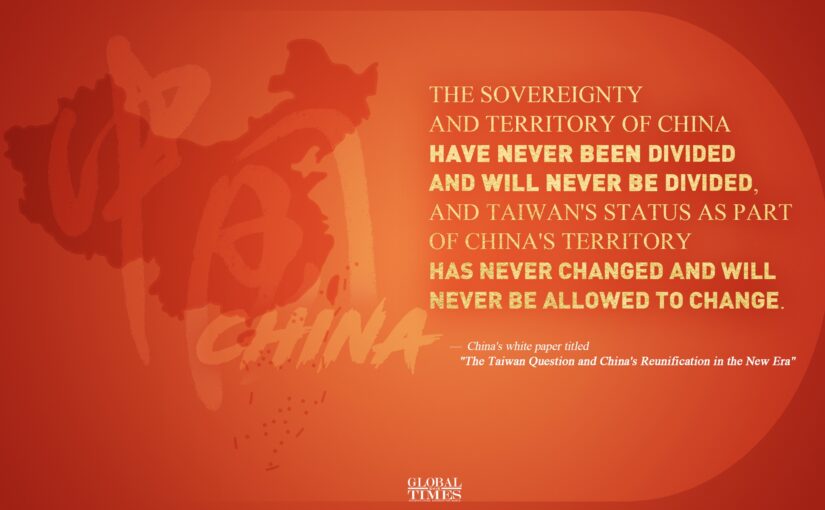
The One-China Principle: sole guarantee for stability and prosperity

We are pleased to publish this original analysis by Dirk Nimmegeers, co-editor of ChinaSquare.be and China Vandaag (Belgium) and Friends of Socialist China advisory group member, on the issue of Taiwan.

Taiwanese and Western politicians and journalists are spotlighting alleged similarities between the war in Ukraine and Mainland China-Taiwan relations. Ignoring or concealing real differences and turning reality upside down undermines the one-China principle.

Chinese top diplomats such as Foreign Minister Wang Yi, director of the Office of the Foreign Affairs Commission of the CPC Central Committee Yang Jiechi, and Ministry of Foreign Affairs spokesperson Hua Chunying react sharply to this, and rightly so.

‘Taiwan is not Ukraine’

On February 23, a reporter from Hong Kong’s Phoenix TV asked Hua Chunying, Deputy Minister and Foreign Affairs spokesperson, what she thought of ‘the Taiwanese leaders’ comparing the Ukraine problem to the Taiwan question, and expressing the hope that the international community will continue to provide Taiwan with weapons so that China’s mainland dare not invade Taiwan by force’.

Hua Chunying replied: ‘Taiwan for sure is not Ukraine. Taiwan has always been an inalienable part of China’s territory. This is an indisputable historical and legal fact’. On March 7, a Bloomberg reporter asked Secretary Wang Yi, ‘What similarities are there between the current situation in Ukraine and the question of Taiwan? How likely would you say conflict in the Taiwan Strait is at the moment?’ Wang Yi’s reply began as follows: ‘Let me first make it clear that the Taiwan question and the Ukraine issue are different in nature and are not comparable at all. Most fundamentally, Taiwan is an inalienable part of China’s territory, and the Taiwan question is entirely China’s internal affair’.

The comparisons that you now see popping up in our media for a specific purpose revolve around the themes of independence, political-economic systems and violence.

Taiwan is not an independent state, Ukraine is.

Russia has reattached a part of independent Ukraine, Crimea (which had been transferred from Russia to Ukraine in 1954), and might plan to annex more regions. China wants to eventually, and peacefully reintegrate Taiwan, which is de facto autonomous, back into the motherland. The resemblance is only there for those who drag it in purposefully. Taiwan is not an independent country and China will never recognize it diplomatically. China has indeed recognized Ukraine and has good relations with that country, of which it is the main trading partner. Moreover, as Benjamin Ho observes: ‘Kyiv joined the Belt and Road Initiative in 2017, Chinese companies have been upgrading the country’s ports and subways. In 2020, Ukraine also signed a memorandum of understanding with China’s Huawei.’

Continue reading The One-China Principle: sole guarantee for stability and prosperity

NATO, not China, is to blame for the Ukraine crisis

This combative opinion piece from Global Times addresses the recent comment by NATO Secretary General Jens Stoltenberg effectively labelling China as an accomplice in Russia’s military operation in Ukraine. The article recalls NATO’s history of aggression – belying the alliance’s claims to a ‘defensive’ character – and draws the logical conclusion that “this obsolete military organization … should have been dismantled long ago.”

The Ukraine crisis was largely triggered by NATO’s aggressive eastward expansion. The bloc is the culprit. Instead of reflecting on itself, NATO piles pressure on other countries to stand with it against Russia. This is unreasonable and quite sinister.

“China should join the rest of the world in condemning strongly the brutal invasion of Ukraine by Russia,” NATO Secretary General Jens Stoltenberg said on Tuesday, “The Russian invasion of Ukraine is a blatant violation of international law so we call on [China] to clearly condemn the invasion and of course not support Russia. And we are closely monitoring any signs of support from China to Russia.”

NATO is a puppet of the US, a Cold War military bloc manipulated by the US. The obsolete military organization has launched many ruthless military aggressions and triggered corresponding disasters in which local people underwent great suffering. NATO’s aerial bombing campaign against the Federal Republic of Yugoslavia in 1999 during the Kosovo War is one example. 

Continue reading NATO, not China, is to blame for the Ukraine crisis

Reminder: 21st Century Socialism – China and Latin America on the Frontline (19 March)

Our next webinar takes place on Saturday 19 March 2022, midday (US Eastern) / 9am (US Pacific) / 4pm (Britain)

China is the world’s largest socialist country and a leading proponent of multipolarity. As such it has an indispensable role in inspiring and creating a favourable environment for the global transition to socialism. Meanwhile, in the last two decades, progressive governments and movements in Latin America have been blazing a trail in exploring new paths towards socialism in the 21st century. Friendship and cooperation between the People’s Republic of China and the Latin American left is therefore an indispensable component of the global struggle for socialism and against imperialism.

This event will explore a number of themes, including the history of friendship and solidarity between China and Latin America; the legacy of Hugo Chávez in encouraging a new era of socialist internationalism; the US’s aggression against popular movements – regime change coups, economic warfare, lawfare and destabilisation; China’s emerging role as a key partner for Latin America and the Caribbean; the growing attraction of the Belt and Road Initiative in Latin America; the place of Latin America in the US-led New Cold War; China and Latin America on the global frontlines of resisting imperialism; the renewal of diplomatic relations between China and Nicaragua; and the role of international law and the UN in pushing back against hegemony.

Confirmed speakers

  • Dilma Rousseff (keynote) – Former President of Brazil
  • Ma Hui – China’s ambassador to Cuba
  • Carlos Miguel Pereira – Cuban ambassador to China
  • Carlos Ron – President, Simón Bolívar Institute (Venezuela)
  • Jiang Shixue – Director, Center for Latin American Studies, Shanghai University (China)
  • Margaret Kimberley – Executive Editor, Black Agenda Report (US)
  • Ben Norton – Journalist, Multipolarista (Nicaragua)
  • Camila Escalante – Reporter, Kawsachun News (Bolivia)
  • Elias Jabbour – Adjunct Professor of Economics, Rio de Janeiro State University (Brazil)
  • Francisco Domínguez – Secretary, Venezuela Solidarity Campaign (Britain)
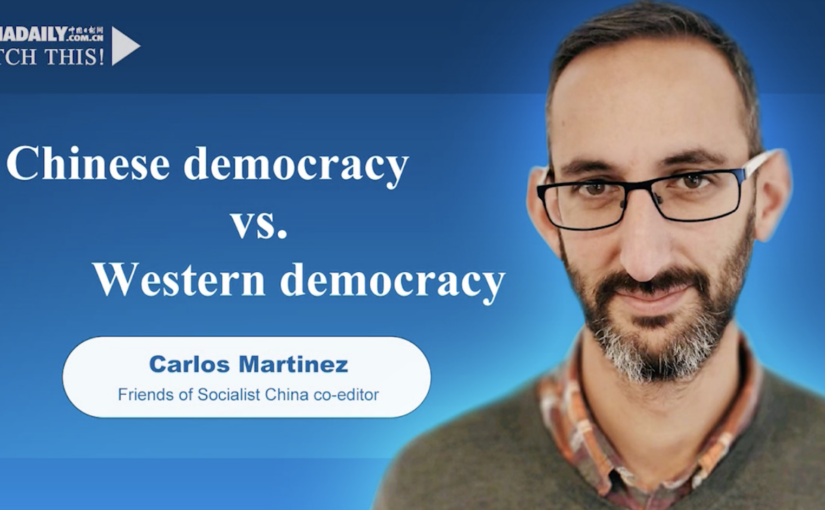
  • Carlos Martinez – Co-editor, Friends of Socialist China (Britain)
  • Moderator: Radhika Desai – Convenor, International Manifesto Group (Canada)

Supported by

Ambassador Qin Gang: Where China stands regarding Ukraine

In this important article, originally published as an op-ed piece in the Washington Post, Qin Gang, China’s Ambassador to the US and one of his country’s most skilled and experienced diplomats, sets out Beijing’s principled position on the conflict between Russia and Ukraine for the American public and refutes a number of misconceptions being spread in that regard. Most importantly, he makes it crystal clear that:

Assertions that China knew about, acquiesced to or tacitly supported this war are purely disinformation. All these claims serve only the purpose of shifting blame to and slinging mud at China. There were more than 6,000 Chinese citizens in Ukraine. China is the biggest trading partner of both Russia and Ukraine, and the largest importer of crude oil and natural gas in the world. Conflict between Russia and Ukraine does no good for China. Had China known about the imminent crisis, we would have tried our best to prevent it.

Many Americans are understandably trying to understand where China stands as the crisis in Ukraine unfolds, so I want to take this opportunity to explain fully and dispel any misunderstandings and rumors.

There have been claims that China had prior knowledge of Russia’s military action and demanded Russia delay it until the Winter Olympics concluded. Recent rumors further claimed that Russia was seeking military assistance from China. Let me say this responsibly: Assertions that China knew about, acquiesced to or tacitly supported this war are purely disinformation. All these claims serve only the purpose of shifting blame to and slinging mud at China. There were more than 6,000 Chinese citizens in Ukraine. China is the biggest trading partner of both Russia and Ukraine, and the largest importer of crude oil and natural gas in the world. Conflict between Russia and Ukraine does no good for China. Had China known about the imminent crisis, we would have tried our best to prevent it.

Continue reading Ambassador Qin Gang: Where China stands regarding Ukraine

Deteriorating healthcare system reflects deep-rooted problems with US democracy

The following article by Carlos Martinez, first published in CGTN, describes the escalating healthcare crisis in the US, particularly the wave of maternity ward closures in low-income and remote areas. Carlos compares this with the universal public healthcare system in China, which continues to gain strength.

A recent Vox report notes that maternity wards throughout the United States have been closing down, a process that has been underway for several years but which has accelerated over the course of the pandemic.

Predictably, this wave of maternity ward closures has resulted in increased travel times for women in labor. There have even been reports of people having to give birth on the side of the road, unable to reach a medical facility in time. Such a situation is scandalous, particularly in one of the world’s richest countries and a country that considers itself a leading force of democracy and human advancement. And yet it is barely considered newsworthy to the Western media.

As is so often the case, low-income and ethnic minority groups are disproportionately impacted. This is a direct function of the private healthcare system in the U.S., which is driven by profits rather than the imperative of providing crucial services to the population. It is often not financially viable for hospitals to provide labor and delivery services in remote rural or low-income areas.

Continue reading Deteriorating healthcare system reflects deep-rooted problems with US democracy

China’s Two Sessions vs Biden’s State of the Union: A tale of system divergence

In his latest article on The Chronicles of Haiphong, Danny Haiphong compares two recently-held major political events: China’s ‘Two Sessions’ and the US State of the Union address. Danny observes that, while Biden’s address was a predictable sequence of false promises and assertions of American hegemony, China’s Two Sessions were an exercise in democracy, summing up thousands of intensive discussions and debates over the past year and, on that basis, setting out concrete tasks for the coming year – with a clear focus on improving living standards and stepping up efforts to tackle climate change and biodiversity. Danny notes that this system divergence, with China continuing to rise and the US continuing to decline, is a major part of the US ruling class’s motivation in fomenting the current New Cold War, which offers nothing for ordinary people in the West and which must be firmly opposed.

The two largest economies in the world have been busy on the political front. U.S. President Joe Biden opened the month of March with his first State of the Union (SOTU) Address. China’s National People’s Congress (NPC) and the Chinese People’s Political Consultative Conference (CPPCC) convened at the Great Hall of the People in Beijing on March 4th for the annual two sessions conference. Rarely are these events discussed together. What binds them is a tale of system divergence.

Joe Biden’s SOTU presented a snapshot into an empire in decline. The first fifteen-plus minutes of the speech were spent beating the drums of war with Russia over its intervention in Ukraine. Biden announced new restrictions on airline flights to and from Russia that pile onto an already intense package of sanctions designed to starve Russia into submission. Ukraine was portrayed in a predictably heroic light, with Biden passionately asserting that the U.S. stands with the people of Ukraine for “freedom over tyranny.” Biden promised that the U.S. would punish Russian President Vladimir Putin for his so-called rejection of diplomacy, but stopped short of calling for direct U.S. military involvement.

Beyond pouring gasoline on the Russia-Ukraine crisis, Biden used the State of the Union to pour American exceptionalism on the U.S. public. “We are going to be okay” assured Biden, detailing accomplishment after accomplishment with the typical American hubris. Job numbers are growing. The pandemic situation has improved. And Biden made sure to spend ample time promising the public more jobs and a revival of manufacturing to win the battle of “democracy” versus China’s “autocracy.”

Continue reading China’s Two Sessions vs Biden’s State of the Union: A tale of system divergence

Wang Yi’s press conference provides global snapshot of China’s foreign policy

The following transcript of Foreign Minister Wang Yi’s press conference on 7 March 2022, held on the sidelines of the Fifth Session of the 13th National People’s Congress, provides an instructive and valuable global snapshot of China’s foreign policy. Touching on Ukraine, Russia, Korea, Japan, Indonesia, the South Pacific, China-Africa cooperation, China-Latin America cooperation, Taiwan, the Global Development Initiative, the Belt and Road Initiative, the New Cold War and more, the constant theme is China’s unwavering commitment to peace, global development, conflict resolution through dialogue, solidarity and cooperation; in summary, the building of a community with a shared future for mankind. Wang reiterates China’s unambiguous opposition to the New Cold War, to unilateralism and bloc politics, and calls for safeguarding the UN-based system of international law, based on the UN Charter.

Wang Yi: Friends from the media, good afternoon. I am very pleased to meet you again. For the world, the year ahead continues to be full of challenges. The world has not completely defeated COVID-19, and yet it is now facing the Ukraine crisis. An international situation already rife with uncertainties is becoming more complex and fluid. At such a critical moment, countries need solidarity, not division; dialogue, not confrontation. As a responsible major country, China will continue to hold high the banner of multilateralism. We will work with all peace-loving and development-seeking countries to strengthen solidarity and cooperation, jointly meet challenges, and continue to promote the building of a community with a shared future for mankind. We will strive together for a brighter and better future for the world. With these words, I’m ready to take your questions.

China Central Television: The Beijing Olympic Winter Games has been a great success, which was not easy under the current international circumstances. Some foreigners say that China has more confidence and strength than it staged the Olympic Games in 2008. What is your view?

Wang Yi: With the joint efforts of China and the international community, the Beijing Olympic Winter Games has achieved a full success. We have presented to the world a streamlined, safe and splendid Games, and a more confident, self-reliant, open and inclusive China. Around 170 official representatives from close to 70 countries and international organizations were at the Opening Ceremony, supporting China with concrete actions. Here, I would like to express my sincere appreciation to friends from all countries that have participated in and supported Beijing 2022.

Beijing 2022 is not only a success for China, but also a success for the world. It represents not just the triumph of sport but, more importantly, the triumph of solidarity. The Games was held amid the spread of Omicron and rising tensions over regional hot-spots. It also faced politically-motivated attempts of disruption and sabotage by a handful of countries. Under such circumstances, it was inspiring to see that the overwhelming majority of countries and people chose to unite under the Olympic spirit, bringing hope to people beset by the pandemic and confidence to a world overshadowed by instability.

As we speak, athletes from around the world are giving their best performance on the winter Paralympic field of play. I am confident that the light of unity and cooperation created by the Olympic and Paralympic Games will shine through mist and rain, and illuminate the path for humanity to jointly forge ahead into the future.

Continue reading Wang Yi’s press conference provides global snapshot of China’s foreign policy

Ben Norton, Danny Haiphong and Carlos Martinez discuss China-Latin America relations

In this stream recorded on 10 March 2022, Ben Norton, Danny Haiphong and Carlos Martinez discuss a number of issues: the evolving relationship between China and Latin America; the motivation for our forthcoming event 21st Century Socialism: China and Latin America on the Frontline; the connection between multipolarity and socialism; the unfolding crisis in Ukraine; and Russia’s role in an increasingly multipolar world.