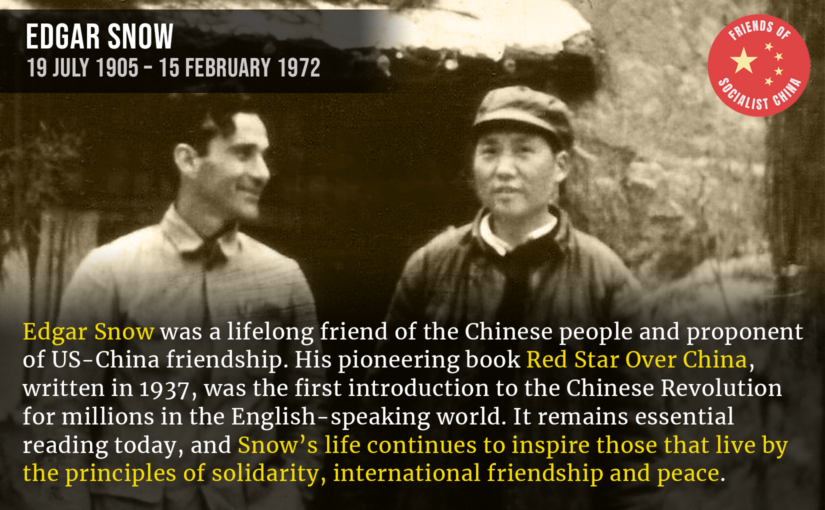
On the 50th anniversary of his death, we celebrate the life of Edgar Snow, a lifelong friend of the Chinese people and proponent of US-China friendship. Snow’s pioneering book Red Star Over China, written in 1937, was the first introduction to the Chinese Revolution for millions in the English-speaking world. It remains essential reading today, and Snow’s life continues to inspire those that live by the principles of solidarity, international friendship and peace.
Category: Solidarity
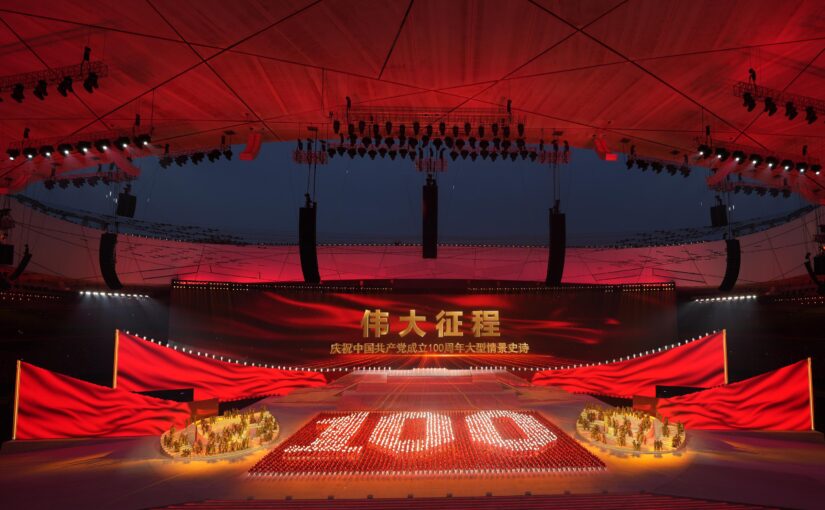
The CPC at 100 – An exemplar in the innovation and adaptation of Marxism
The 12th World Socialism Forum was held on December 21st 2021, hosted by the Chinese Academy of Social Sciences (CASS) and organised by the World Socialism Research Centre, the Academy of Marxism and the Research Centre of Xi Jinping Thought on Socialism with Chinese Characteristics for a New Era of CASS. It was held in the Chinese Academy of History of CASS, with both offline and online participation.
The theme of the event was the Preservation and Innovation of Marxism in the 21st Century, with a key focus on:
- The Major Achievements and Inspiring Experience of the Communist Party of China over the Past Century
- The Contribution of the Path of Socialist Political Development with Chinese Characteristics to Political Civilisations of Humanity
- Lessons and Insights from the Downfall of the Soviet Communist Party and the Dissolution of the Soviet Union
- Upholding and Developing Marxism in the 21st Century
The Forum heard a total of 23 presentations, including 13 from leading Chinese Marxist thinkers and theoreticians as well as from the Cuban Ambassador to China; Egon Krenz, former leader of the German Democratic Republic (GDR); two speakers from Russia, including the Vice Chair of the Communist Party of the Russian Federation (CPRF); Keith Bennett, Co-Editor of Friends of Socialist China; and speakers from Argentina, Italy, Cameroon, Venezuela and Vietnam.
We print below Keith Bennett’s speech to the Forum.
Dear Comrades and Friends
On behalf of Friends of Socialist China, a platform established earlier this year to support the People’s Republic of China and spread understanding of Chinese socialism on the basis of Marxism, I’d like to extend our thanks to the World Socialism Forum for inviting us to attend this important meeting and to submit a paper. We also extend warm greetings to everyone participating and hope that we can find concrete ways of working together in the future.
Continue reading The CPC at 100 – An exemplar in the innovation and adaptation of Marxism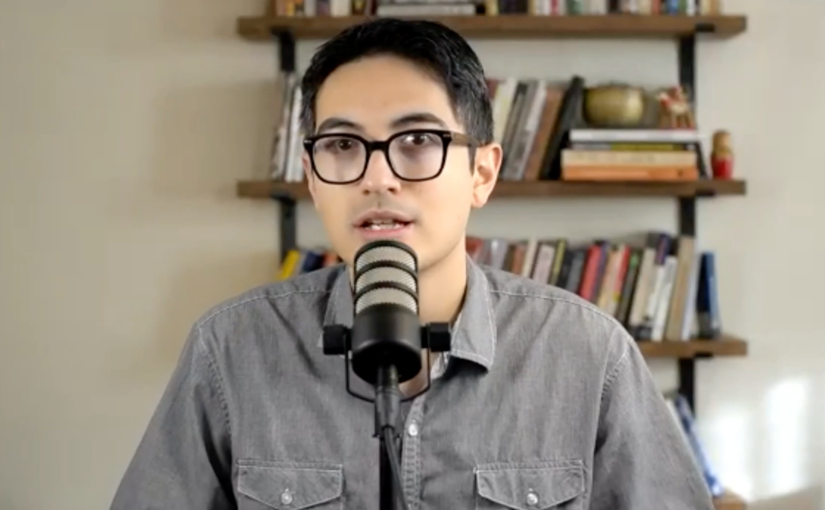
Danny Haiphong: The West distorts the China-Africa relationship in order to justify its own imperialism
In this speech to a recent webinar entitled Africa/China Relations: Challenges of Cooperation and Development (organized jointly by the International Manifesto Group and the Group for Research and Initiative for the Liberation of Africa), Danny Haiphong explores the evolving win-win relationship between China and Africa, and exposes the West’s distortion of this relationship. The full webinar can be watched on YouTube.
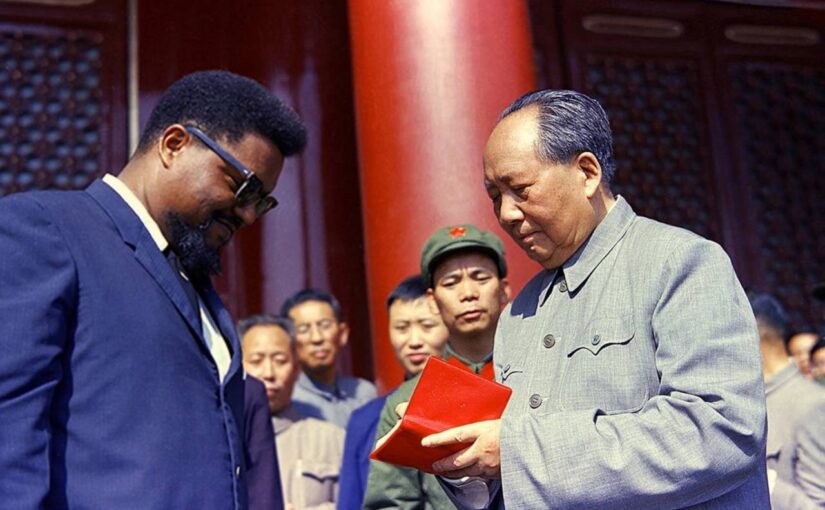
Then and now: Proletarian internationalism and Friends of Socialist China
What follows is a presentation on the Western left’s solidarity with the Chinese Revolution and the People’s Republic of China over the years, and the motivation for setting up Friends of Socialist China. It was delivered at the the Fifteenth Forum of the World Association for Political Economy (hosted by the Shanghai International Studies University, China, and held online on 18-19 December 2021), and was jointly written by Friends of Socialist China’s co-editors.
The accompanying slides can be found at SlideShare.
Dear Comrades
On behalf of Friends of Socialist China, I would like to express our thanks to the World Association of Political Economy for inviting us to participate in this important conference and to extend our greetings to all our fellow participants.
Friends of Socialist China was formed in May 2021 by a small group of activists in Britain and the USA with a long record in the progressive movement and specifically of solidarity with the People’s Republic of China and the Chinese revolution.
Our analysis of our tasks and our understanding of our work flow from the basic tenets of Marxism, starting from the observation by Marx and Engels in the Communist Manifesto that, unlike other parties in the working-class movement, communists bring to the fore the interests of the working class as a whole, independent of all nationality. This premise was further elaborated and developed by Mao Zedong, who noted that the people of countries yet to win their liberation have a duty to support the socialist countries, whilst the socialist countries have the responsibility to support the countries and peoples who are still struggling for their liberation.
Continue reading Then and now: Proletarian internationalism and Friends of Socialist China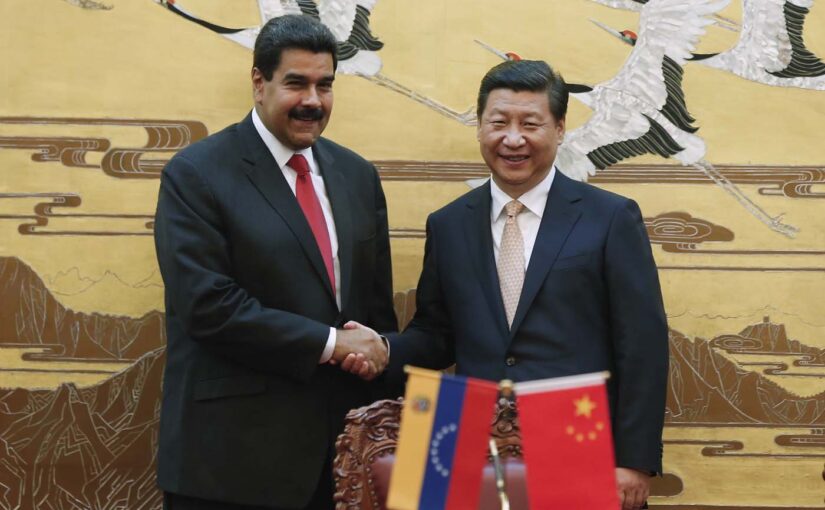
China plays a crucial role supporting progress and sovereignty in Latin America
This article by Carlos Martinez, which first appeared in the Morning Star of 4 December 2021, discusses China’s economic engagement with Latin America in recent decades; debunks claims that this engagement is a form of neocolonialism; and concludes that China’s solidarity with Latin America is an important support for sovereign development in the region.
In the last two decades, economic links between Latin America and the People’s Republic of China have been expanding at a dizzying rate. Bilateral trade in 2000 was just 12 billion USD (1 percent of Latin American’s total trade); now it stands at 315 billion USD. In the same time period, China’s foreign direct investment in Latin America has increased by a factor of five.
Since the launch of the Belt and Road Initiative in 2013, 19 of the 33 countries in the Latin American and Caribbean region have signed up to the China-led global infrastructure development strategy. Infrastructure projects have been a particular focus for Chinese firms. Writing in Foreign Policy in 2018, Max Nathanson observed that “Latin American governments have long lamented their countries’ patchy infrastructure.” China has “stepped in with a solution: roughly $150 billion loaned to Latin American countries since 2005.”
Continue reading China plays a crucial role supporting progress and sovereignty in Latin America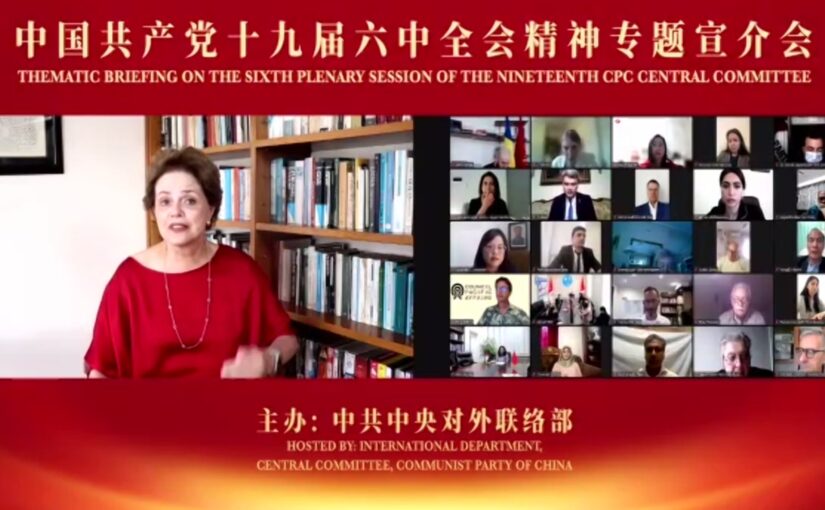
Chinese and international experts discuss China’s progress and vision for the future
On 19 November 2021, the International Department of the Communist Party of China (CPC) held a briefing in Beijing about the recently-concluded 6th Plenary Session of the 19th CPC Central Committee. Friends of Socialist China’s co-editors were among the several hundred international guests attending via video link.
The speakers from the CPC gave an overview of the Plenary Session and the Resolution of the CPC Central Committee on the Major Achievements and Historical Experience of the Party over the Past Century it adopted. The key message of the Plenary and Resolution is a reaffirmation and further definition of China’s evolving socialist path in the present era, central elements of which include: a strong emphasis on sustainable development and the construction of an ecological prosperity; tackling relative poverty and building common prosperity; continuing to develop whole-process people’s democracy; continuing the party’s self-reform and the fight against corruption; expanding the Belt and Road Initiative, upholding multipolarity and working towards a human community with a shared future; and moving confidently towards the CPC’s Second Centenary Goal: “to build China into a great modern socialist country that is prosperous, strong, democratic, culturally advanced, harmonious, and beautiful.”
Continue reading Chinese and international experts discuss China’s progress and vision for the future
Ambassadors commend China for upholding multilateralism at the UN
We are pleased to republish this article from Global Times, featuring quotes from the ambassadors of Russia, Iran, Cuba, Zimbabwe and the African Union to China about China’s role promoting a multipolar world order and standing up for the developing world against hegemonism and imperialism.
The ambassadors of Russia, Iran, Cuba, Zimbabwe and the African Union commended China’s role in the UN for upholding multilateralism and being a responsible major power on the occasion of the 50th anniversary of the restoration of the People’s Republic of China (PRC)’s lawful seat in the UN.
On October 25, 1971, the United Nations General Assembly (UNGA) voted to restore all lawful rights of the PRC in the United Nations. Russian Ambassador to China Andrey Denisov told the Global Times in an exclusive interview that it was indeed a historic moment 50 years ago. Since then, the PRC, as a responsible member of the international community, has contributed a lot to world peace and development.
Continue reading Ambassadors commend China for upholding multilateralism at the UN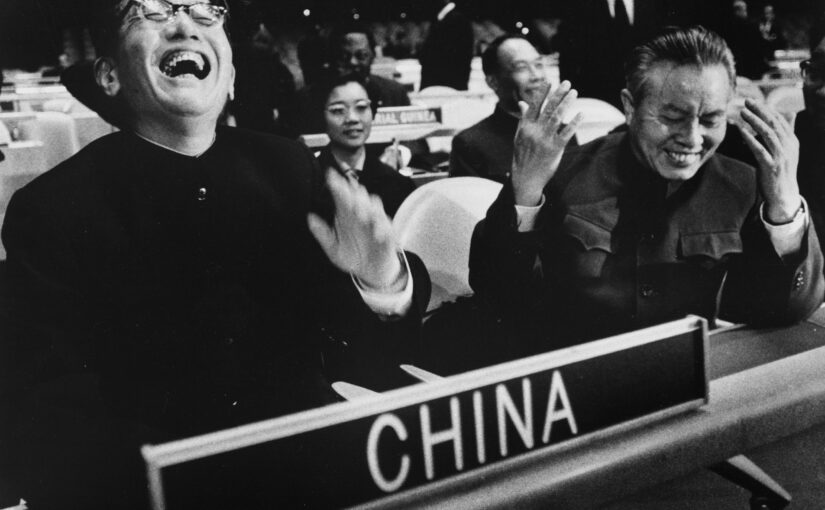
Former African diplomats recall joys at China’s restoration of lawful seat at UN
The support of the independent African nations was crucial for the restoration of China’s legitimate seat at the United Nations fifty years ago, on 25 October 1971. This article from Xinhua captures the excitement and emotion of that day.
Fifty years ago today, the 26th Session of the United Nations General Assembly (UNGA) adopted Resolution 2758 with an overwhelming majority and decided to restore the lawful seat of the People’s Republic of China (PRC) in the world body.
In the conference hall at the UN Headquarters located in New York City, thunderous applause and cheers echoed from all sides of the hall.
Continue reading Former African diplomats recall joys at China’s restoration of lawful seat at UN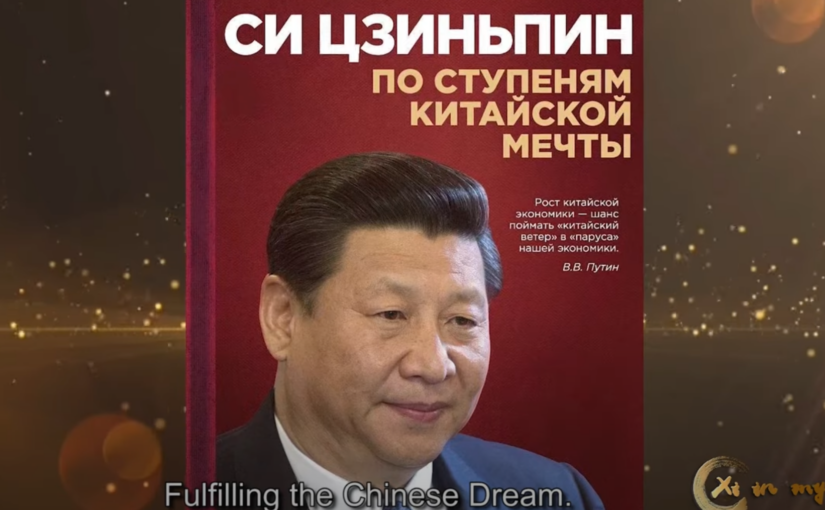
Video: Yuri Tavrovsky on China’s political leadership
China’s political leadership, while maligned by detractors in the United States and the West, has served as an inspiration to nations around the world in tackling the most pressing global problems of this generation. Russian Sinologist Yuri Tavrovsky discusses his deep experience in studying the contributions of China’s current President and General Secretary of the Communist Party of China, Xi Jinping.
Socialist and progressive countries greet China’s 72nd National Day
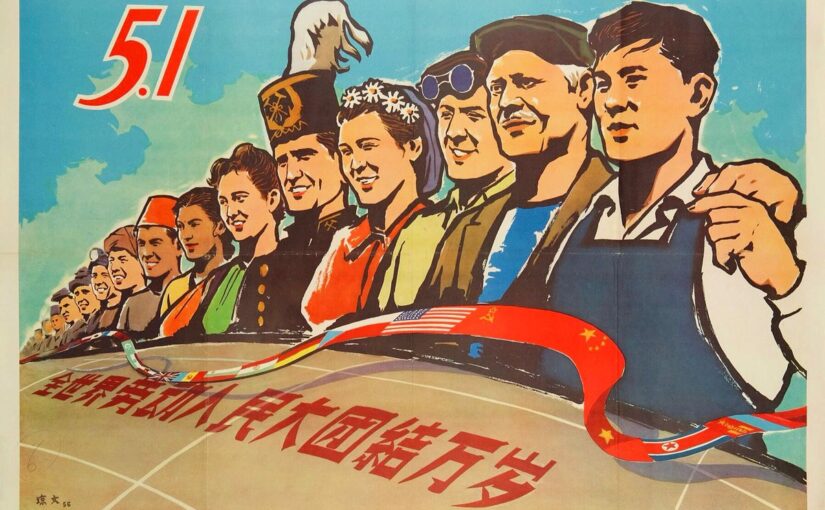
Countries around the world that are in the forefront of building socialism and struggling against imperialism sent warm greetings to the People’s Republic of China on the 72nd anniversary of its founding on 1 October. We are pleased to present some highlights below.
Democratic People’s Republic of Korea
The leader of the Democratic People’s Republic of Korea (DPRK) Comrade Kim Jong Un congratulated his Chinese counterpart Xi Jinping as follows:
“On behalf of the Workers’ Party of Korea, the Government of the Democratic People’s Republic of Korea and the Korean people, and on my own behalf, I extend warm congratulations to you, Comrade General Secretary, and to the Communist Party of China, the Government of the People’s Republic of China and the fraternal Chinese people on the occasion of the 72nd founding anniversary of the PRC.
“For 72 years after the founding of the PRC, the Chinese people have achieved great successes in the struggle to carve out the destiny of the nation and bring prosperity under the leadership of the CPC, braving all sorts of challenges and difficulties of history.
Continue reading Socialist and progressive countries greet China’s 72nd National Day
Charles McKelvey: China and the Third World
We are pleased to republish this interesting piece by Charles McKelvey which explores the parallel trajectories – and recent convergence – of the projects for Third World liberation and Chinese socialist construction. The article, rich in historical detail, concludes that the continuing and deepening coordination between China and the rest of the developing world is crucial to the emergence of a more rational, prosperous and democratic world system.
Two projects of importance to the future of humanity have sustained themselves for the last seven decades, namely, the Third World project of national and social liberation, and the Chinese project of socialist construction. They evolved in a parallel form, with occasional points of contact and coincidence. But for the past ten years, they have moved toward significant cooperation, and in the process, they are constructing an alternative more just and less conflictive world-system. And they are doing so precisely in a historic moment in which the capitalist world-economy is falling into parasitic decadence. The project of the Third World plus China is laying the foundation for a sustainable future for humanity; whereas the neocolonial world-system is demonstrating its unsustainability.
Continue reading Charles McKelvey: China and the Third World
Happy birthday socialist China!
We are republishing this excellent article by Stephen Millies in Struggle for Socialism. The article gives an overview of China’s extraordinary achievements since the founding of the People’s Republic on 1 October 1949, and highlights its continuing significance to working class and oppressed peoples worldwide.
Seventy-two years ago, on Oct. 1, 1949, Mao Zedong declared “China has stood up!” The socialist People’s Republic of China was born after decades of struggle.
Chinese women stepped forward with unbound feet. No longer could U.S. and British warships prowl the Yangtze River. Peasants, workers and progressive intellectuals knew their liberation had come.
Continue reading Happy birthday socialist China!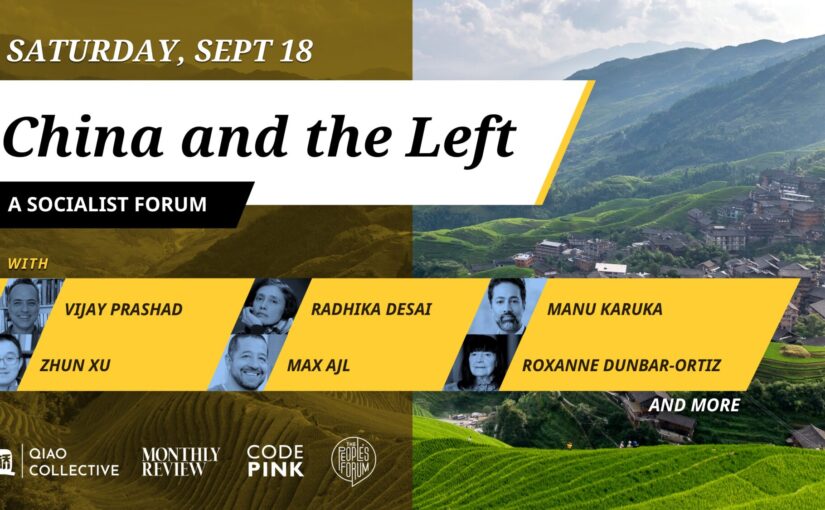
Review of ‘China and the Left: a socialist forum’
We are pleased to republish this detailed and helpful summary of the recent ‘China and the Left’ forum recently organised by Qiao Collective in association with the People’s Forum, Monthly Review and CODEPINK. The review first appeared on Charles McKelvey’s blog.
A full playlist of videos from the forum can be found on YouTube.
A socialist forum on China and the Left, sponsored by the Qiao Collective, was held in New York City on September 18, 2021. The Qiao Collective was formed in January 2020 by intellectuals and activists of the Chinese diaspora, with the intention of defending Chinese socialism against imperialist aggression.
Opening Keynote Address by the Qiao Collective
In the Opening Keynote address on the “The U.S. Hybrid War,” Michelle of the Qiao Collective maintained that Chinese trade has long stimulated imperialist aggression, which has included the colonial concession zones, the taking of Hong Kong, the backing of Chinese nationalists, and the support of Formosa. Imperialist aggression against China is historic.
Continue reading Review of ‘China and the Left: a socialist forum’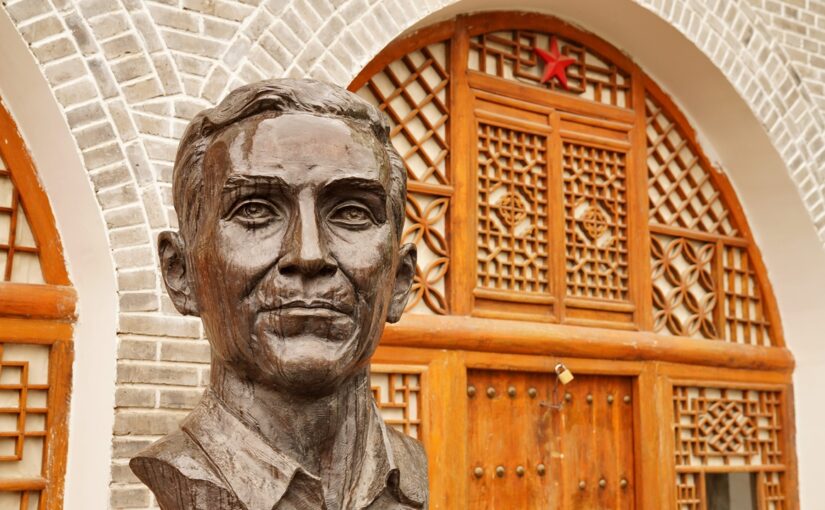
Xi Jinping’s reply to letter sent by the family members of historic friends of China
Demonstrating the unbroken internationalist ties between the Chinese revolution and its internationalist comrades across centuries and generations, President Xi Jinping has replied to a joint letter received from the family members of foreign comrades and friends who made outstanding contributions to China’s liberation and the building of socialism. They include relatives of such legendary figures as Edgar and Helen Snow, George Hatem (Ma Haide), Rewi Alley, Israel Epstein, Hans Muller and David Crook.
Originally published on the Ministry of Foreign Affairs website.
On September 14, 2021, General Secretary of the Communist Party of China (CPC) Central Committee and President Xi Jinping replied to the letter from family members of some international friends, including Edgar and Helen Snow, George Hatem, Rewi Alley and Israel Epstein, paying high tribute to the international friends who had stood and fought shoulder to shoulder with the CPC and the Chinese people through thick and thin and made invaluable contributions to China’s revolution, development and reform.
In his reply, Xi Jinping pointed out that in the first half of the 20th century, a large number of international friends, including Snow, Hatem, Norman Bethune, Dwarkanath Kotnis, Alley and Epstein, traveled thousands of miles to China, where they shared weal and woe and fought side by side with the CPC and the Chinese people. We always remember their invaluable contributions to China’s revolution, development and reform and their genuine friendship with the CPC and the Chinese people.
Xi Jinping underlined, in the past 100 years since its founding, the CPC has, answering the call of the times, people’s expectations, and trust of its international friends, united and led the Chinese people in delivering the first centenary goal of building a moderately prosperous society in all respects through unrelenting hard work, and is now leading the Chinese people in marching toward the second centenary goal of fully building a great modern socialist country and in promoting the noble cause of world peace and development. The choices your loved ones made decades ago are exactly right.
Xi Jinping noted, history keeps surging on, and the great spirit is passed down from generation to generation. I hope you will follow the steps of your loved ones, and contribute your fair share to strengthening the friendship and cooperation between the Chinese people and people of the world, and to building a community with a shared future for mankind.
Recently, 16 family members of international friends, including Snow, Hatem, Alley, Epstein, Hans Muller, David Crook, Zheng Lvcheng, Elizebetta Pavlovna Kishkina, Richard Frey, Ruth Weiss, Eva Sandberg and Betty Chandler, have jointly sent a letter to President Xi Jinping. In the letter, they extended warm congratulations on the 100th anniversary of the founding of the CPC, and expressed their hope of jointly commemorating the martyrs on the occasion of the 76th anniversary of the victory of the Chinese People’s War of Resistance Against Japanese Aggression and the World Anti-Fascist War. They said, they are proud that their family members chose to stand with the CPC and the Chinese people, and are willing to carry forward the internationalist spirit in the new era under the guidance of the initiative of building a community with a shared future for mankind, and make new contributions to enhancing the friendship between Chinese and foreign people and supporting China in realizing the second centenary goal.

Video about Isabel Crook: She saw history in the making
This short biographical video from CGTN tells the story of Isabel Crook. Isabel and her husband David were prominent supporters of the Chinese Revolution from its early days, witnessing and reporting on how the CPC organised land reform in the village of Ten Mile Inn, Hebei, in 1947 (two years before the founding of the People’s Republic). They continued to live in China and to be friends of its ongoing revolution. Isabel is now 105 years old, and still lives in China.
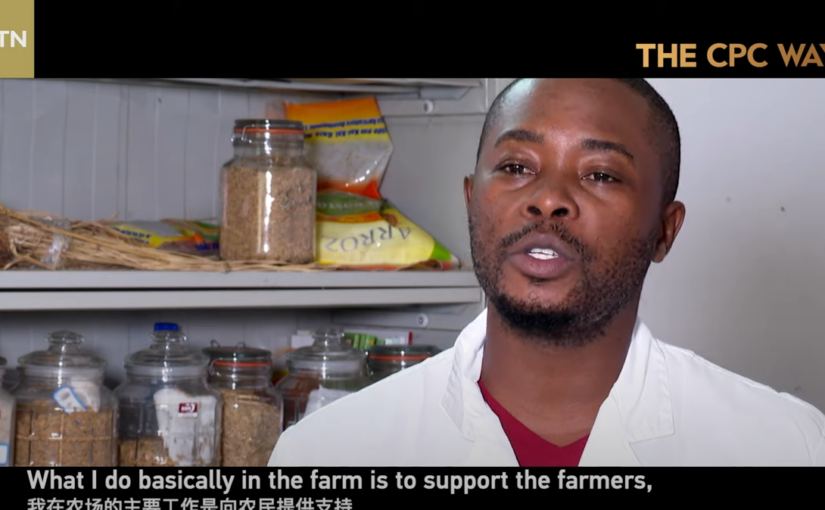
China contributes to Mozambique’s rice revolution
This informative video from CGTN gives an overview of the contribution China is making towards development and poverty alleviation in Mozambique, specifically in relation to rice production, in which area China is sharing its advanced technology and extensive experience.
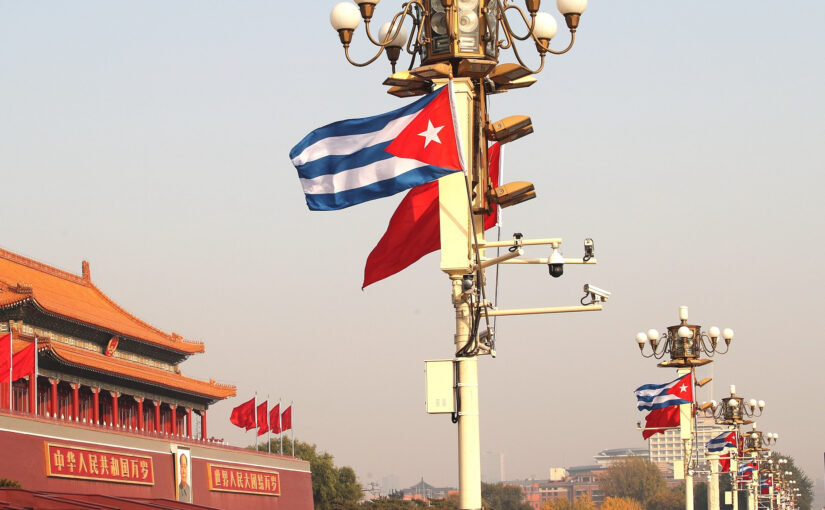
Chinese and Cuban media report on Xi Jinping phone call with Miguel Diaz-Canel
On August 30, 2021, Chinese President Xi Jinping had a phone conversation with Cuban President Miguel Diaz-Canel. The two sides reaffirmed their strong friendship and support for each other’s path of socialist development. China-Cuba bilateral ties were described has having “become a model for cooperation between developing countries.” We reproduce below two reports of the conversation, one from CGTN and the other from Prensa Latina.
President Xi Jinping reaffirms support for Cuba no matter how the situation changes
CGTN, 30 August 2021
Chinese President Xi Jinping reaffirmed China’s support of Cuba no matter how the situation changes during a phone conversation with Cuban President Miguel Diaz-Canel on Monday.
In the phone call, Xi hailed the remarkable achievements Cuba made through relentless struggle under the strong leadership of the Communist Party of Cuba (PCC).
Continue reading Chinese and Cuban media report on Xi Jinping phone call with Miguel Diaz-Canel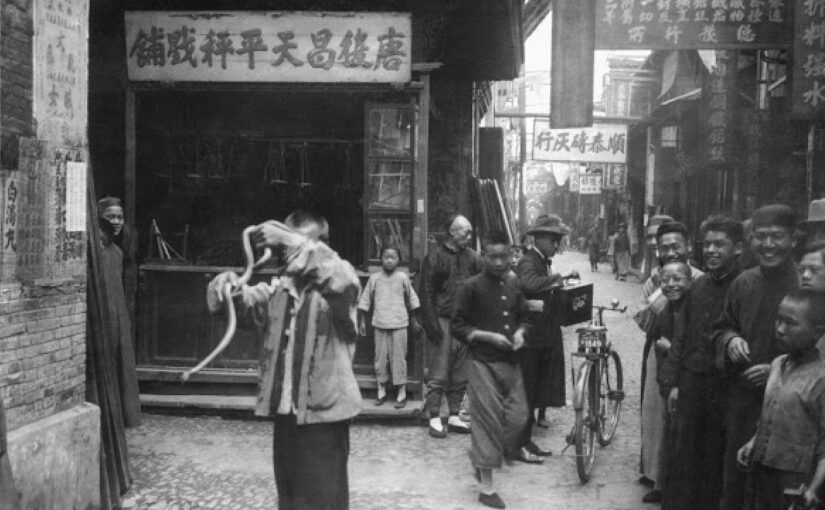
The first international Marxist study group in Shanghai
We are pleased to republish this fascinating history, written by Zhang Wei and published in the Chinese People’s Association for Friendship with Foreign Countries‘ quarterly magazine ‘Voice of Friendship’ (June 2021), about the first international Marxist study group in Shanghai. The group was supported by Soong Chingling and included such legendary friends of China as Rewi Alley, Agnes Smedley and Helen Foster Snow.
In 1934, encouraged and supported by Soong Ching Ling, about 20 Chinese and foreign leftists established the first international Marxist study group in Shanghai. They studied classic theories, conducted social research, discussed current affairs and actively joined in and assisted the struggle of the Communist Party of China. In fact, the group became the foreign ally of the Chinese revolution.
Three core members
Rewi Alley, a core member of the study group, was a social activist and writer from New Zealand. At the time, he was chief inspector of the fire department and the chief of the industrial department under the municipal council in the Shanghai international settlement. He was shocked to witness a large number of Chinese people in deep distress during an inspection of the factories. He gave an important description of the study group in the 1980s when recalling those days. He presented a clear list of the members of the group as follows:
“In 1934, like-minded people gradually gathered together to discuss politics. The idea was mainly put forward by German political economy writer Hans Shippe. He wrote articles for the English magazine Pacific Affairs under the pen name Asiaticus. His Chinese name is Xibo. Agnes Smedley said that “we were supposed to know the theories,” but she was too busy and didn’t understand the theories herself. Alec Camplin, an electrical engineer who lived in the same apartment with me in a three-story building on Yuyuan Road, joined our study group. There was also Dr. Hatem, whom Agnes considered a potential participant for the revolution. Other members included the young Austrian progressive Ruth Weiss; Hans Shippe’s wife, Gertrude Rosenberg; the Dutch manager of the leftist Zeitgeist Book Store, Irene Wiedemeyer; four secretaries of the Young Women’s Christian Association, namely, Talitha Gerlach, Maud Russell, Lillian Haass, and Deng Yuzhi; and a teacher at Medhurst High School, Cao Liang. Hans Shippe served as our political instructor. Later, he was killed by enemies while working in the New Fourth Army at Yimeng Mountain, Shandong.”
Continue reading The first international Marxist study group in Shanghai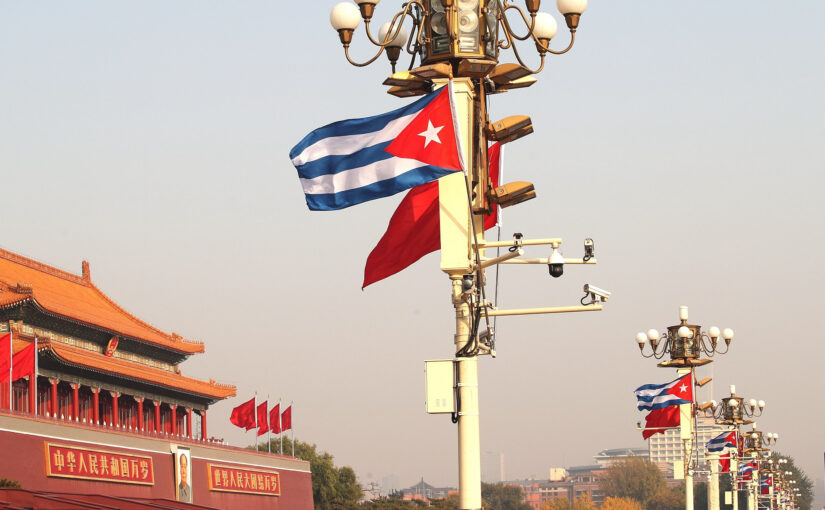
Foreign Ministry spokesperson denounces US sanctions against Cuba
At a Ministry of Foreign Affairs press conference on 4 August 2021, the spokesperson was asked for China’s response to the announcement by the US of new sanctions against Cuba. The response demonstrates China’s solidarity with socialist Cuba and its strict adherence to international law and the principles of non-interference, global cooperation.
Q: It is reported that on July 30, the US Treasury Department announced sanctions against Cuba’s national revolutionary police and its top two officials, citing repression of anti-government protests. During a meeting with Cuban-American figures at the White House, US President Joe Biden said that there would be more sanctions, “unless there’s some drastic change in Cuba”. In response, Cuban Foreign Minister Bruno Rodriguez said on July 30 that “these arbitrary measures, coupled with disinformation and aggression, are used to justify the inhumane blockade of Cuba”. Separately, 30 ventilators provided by the Chinese government to the Cuban government arrived in Havana on July 31. What is China’s comment?
A: China firmly opposes any move to arbitrarily impose unilateral sanctions and interfere in other countries’ internal affairs under the pretext of so-called “freedom”, “human rights” and “democracy”. The recent US sanctions against Cuban institution and officials severely violate the basic norms governing international relations and once again demonstrate to the world the typical US-style double standard and bullyism. As is known to all, it is the economic, commercial and financial embargo of the US that gravely impedes Cuba’s efforts to improve its economy and people’s livelihood, and tramples on the Cuban people’s right to subsistence and development. We urge the US to heed the universal appeal of the international community, immediately and completely lift the sanctions and embargo against Cuba, and immediately stop making excuses to engage in gross interference and destabilization.
Enough with sanctions! The right way is to support. Recently, China and many other friendly countries and international organizations have extended a helping hand to Cuba, aiding the Cuban government and people to fight the epidemic and improve people’s livelihood, illustrating that true friendship stands the test of adversity. China will continue to implement the consensus reached by the leaders of the two countries, deepen China-Cuba friendly relations and firmly support Cuba’s efforts to overcome the impact of the epidemic, promote economic development and maintain social stability.
Evo Morales on China-Bolivia cooperation and the nature of Chinese policy
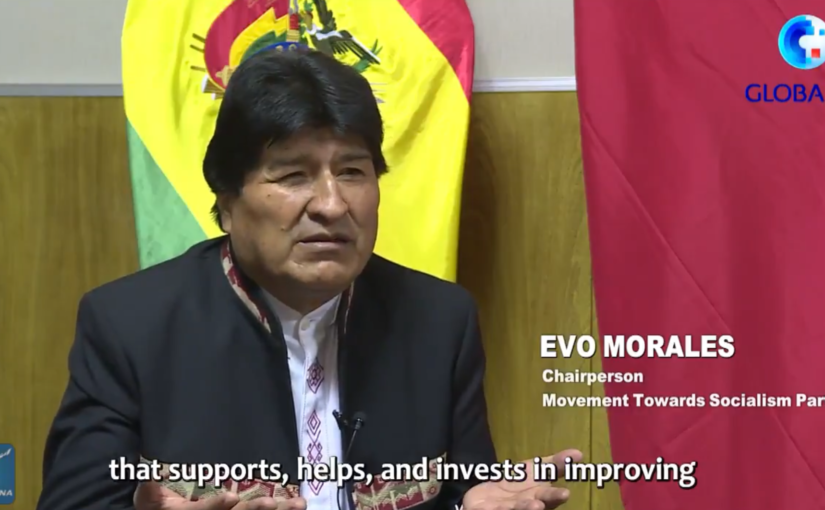
Embedded below is a lovely short video featuring former Bolivian president Evo Morales, leader of the Movement Towards Socialism (MAS), discussing his thoughts on China, the Belt and Road Initiative, China-Bolivia relations, and his impressions of Xi Jinping. The video, produced by Xinhua, first appeared on Twitter.
Text
The best policy is one that supports social equality, that supports, helps, and invests in improving the social and economic situation of the poorest people. China’s policies aim to help countries, peoples, and social sectors that are often forgotten.
China develops, and helps, invests, without any conditions, just to support our development. China is always ready to cooperate unconditionally.
What I understood is that he (President Xi Jinping) treats us brother to brother, as equals. I never felt that they looked at us from above. That is the difference, even with other countries. Again I want to tell you, a population like China, with more than 1,400 million inhabitants dealing with a nation of little more than 10 million inhabitants, treating them as equals, draws my attention. I feel that it is a cultural fact in humanity.
The Belt and Road Initiative is an impressive initiative proposed by China. Not only the Chinese people, but many people (in the world) are also going to benefit from the Belt and Road Initiative. Bolivia’s interoceanic railway project coincides with this Belt and Road plan proposed by China.
I respect, admire, and love the Chinese president, the CPC, and the Chinese people, as they put humanity in their thoughts.