Communist parties of Spain and China meet

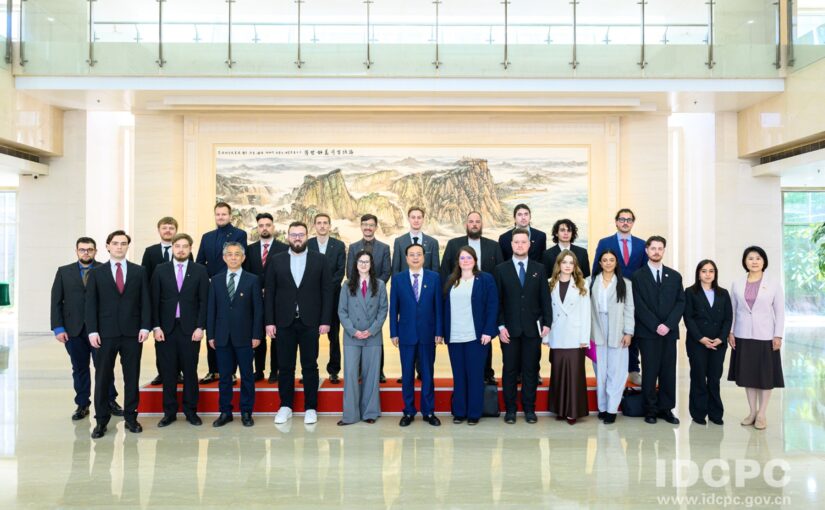
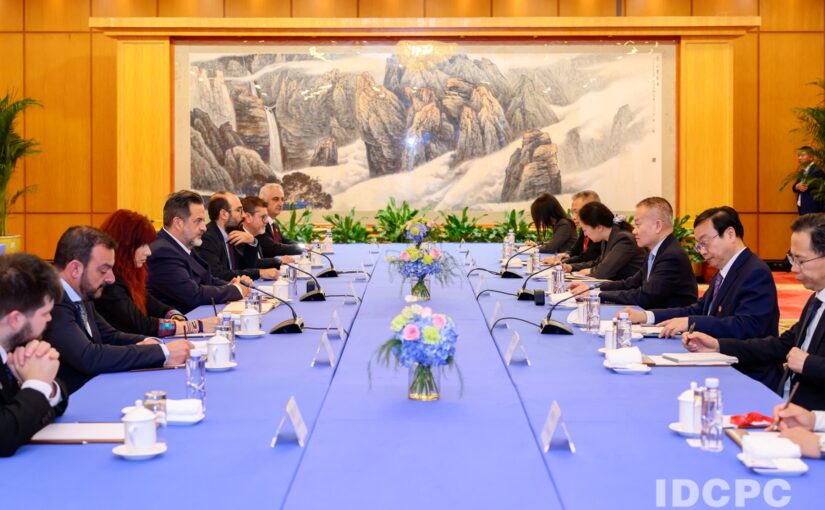
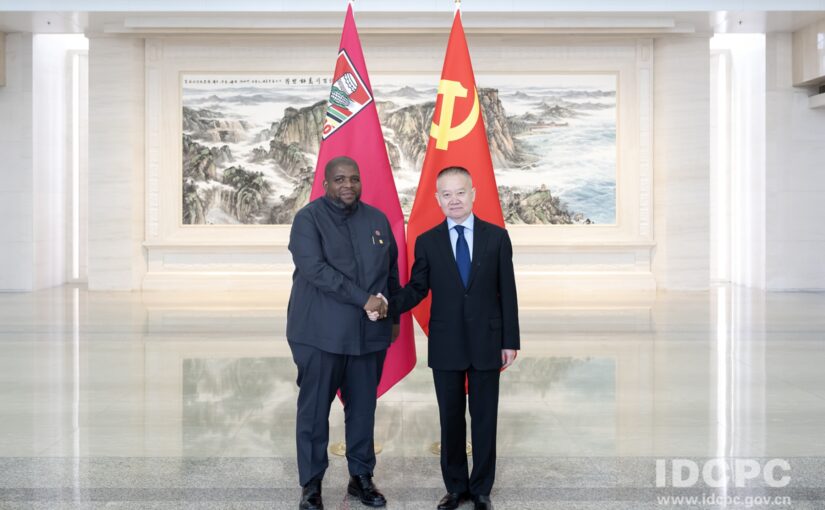
Liu Haixing, Minister of the International Department of the Communist Party of China (CPC) Central Committee (IDCPC), met with a delegation led by Manu Pineda, Secretary of International Relations of the Communist Party of Spain (PCE), on April 23.

Liu said, President Xi Jinping and visiting Prime Minister Pedro Sanchez recently held a successful meeting, charting the course for the future development of China-Spain relations. The PCE plays an important role in Spain’s current centre-left coalition government and has actively contributed to the development of China-Spain relations. The CPC is ready to work with the PCE to implement the important consensus reached by the two countries’ leaders, strengthen exchanges and dialogue, deepen mutual learning of experience in party building and state governance, promote cooperation in economy, trade and local areas, and promote greater development of China-Spain comprehensive strategic partnership.

Pineda said, the PCE and the CPC share a deep friendship. Relations between the two Parties have been continuously strengthened in recent years. The PCE appreciates the CPC’s positive role in leading China to safeguard world peace and stability and supports the Belt and Road Initiative and other major international initiatives proposed by General Secretary Xi Jinping.

The following article was originally published on the IDCPC website.

Shenzhen, April 23rd—Liu Haixing, Minister of the International Department of the CPC Central Committee (IDCPC), met here today with a delegation led by Manu Pineda, Secretary of International Relations of the Communist Party of Spain (PCE). 

Liu said, President Xi Jinping and visiting Prime Minister Pedro Sanchez recently held a successful meeting, charting the course for the future development of China-Spain relations. The PCE plays an important role in the center-left coalition government and has actively contributed to the development of China-Spain relations. Both the CPC and the PCE are century-old Parties. The CPC is ready to work with the PCE to implement the important consensus reached by the two countries’ leaders, strengthen exchanges and dialogue, deepen mutual learning of experience in party building and state governance, promote cooperation in economy, trade and local areas, and promote greater development of China-Spain comprehensive strategic partnership. 

Pineda said, the PCE and the CPC share a deep friendship. Relations between the two Parties have been continuously strengthened in recent years. The PCE appreciates the CPC’s positive role in leading China to safeguard world peace and stability, and supports the Belt and Road Initiative and other major international initiatives proposed by General Secretary Xi Jinping. The PCE is willing to continue to conduct in-depth research on and actively disseminate the CPC’s innovative theories and China’s foreign policies in various ways, so as to help the world better understand China and the CPC. 

Jin Xin, Vice-minister of the IDCPC, was present. 

CPC and Frelimo reaffirm friendship

Coinciding with Mozambican President Daniel Chapo’s state visit to China, his first since assuming office, on April 22, Liu Haixing, Minister of the International Department of the Communist Party of China (CPC) Central Committee (IDCPC), met in Beijing with Chakil Aboobacar, Secretary-General of the Mozambique Liberation Front (Frelimo).

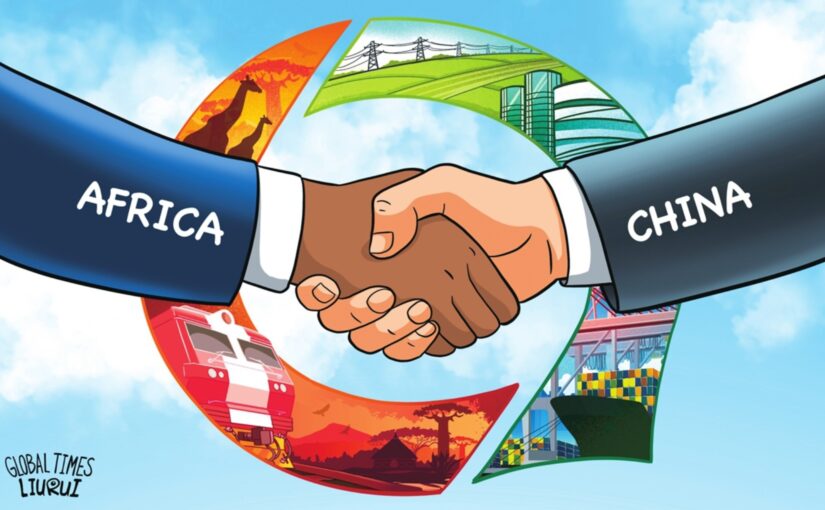
Liu said that the CPC is ready to work with Frelimo, guided by the important consensus reached by the top leaders of the two Parties and countries, to implement the memorandum of understanding on exchanges and cooperation between the two Parties, strengthen strategic communication and high-level exchanges, deepen exchanges of experience in state governance and administration and cooperation in cadre training, promote pragmatic cooperation in various fields through inter-party channels, and further advance the development of China-Mozambique and China-Africa relations.

Aboobacar said, China has always been Mozambique’s true friend standing together through weal and woe and a reliable development partner. He expressed gratitude for China’s long-term selfless support for Mozambique’s economic and social development. Frelimo regards the CPC as its priority strategic partner. Seizing the opportunity of the signing of the memorandum between the two Parties, Frelimo is willing to work with the CPC to further conduct exchanges and mutual learning on experience in state governance and administration and carry out in-depth cooperation in areas including party school development and cadre training, to enhance the governing capacity and level of Frelimo.

Frelimo led the national liberation struggle against Portuguese colonial rule and has led the country since independence in June 1975. The deep ties between the CPC and Frelimo date to the earliest days of the liberation struggle. The founding leader of Frelimo Eduardo Mondlane visited China in 1963.

The following article was originally published on the IDCPC website.

Beijing, April 22nd—Liu Haixing, Minister of the International Department of the CPC Central Committee (IDCPC), met here today with Chakil Aboobacar, Secretary-General of the Mozambique Liberation Front (Frelimo). 

Liu said, President Xi Jinping met with President Daniel Chapo in a cordial and friendly atmosphere yesterday, and the two sides agreed to elevate bilateral relations to a China-Mozambique community with a shared future in the new era. The CPC is ready to work with Frelimo, guided by the important consensus reached by the top leaders of the two Parties and countries, to implement the memorandum of understanding on exchanges and cooperation between the two Parties, strengthen strategic communication and high-level exchanges, deepen exchanges of experience in state governance and administration and cooperation in cadre training, promote pragmatic cooperation in various fields through inter-party channels, and further advance the development of China-Mozambique and China-Africa relations. This year marks the start of China’s 15th Five-Year Plan, and China is willing to strengthen the alignment of development strategies with Mozambique, foster new growth drivers for cooperation, and support Mozambique’s national development. Liu also briefed on China’s efforts in advancing full and rigorous Party self-governance, as well as the CPC’s education campaign to help officials gain a correct understanding of what it means to perform well and act accordingly. 

Aboobacar said, China has always been Mozambique’s true friend standing together through weal and woe and a reliable development partner. He expressed gratitude for China’s long-term selfless support for Mozambique’s economic and social development. Mozambique firmly adheres to the one-China principle and will continue to stand firmly with China on issues concerning China’s core interests. Mozambique is ready to work with China to implement the important consensus of the two heads of state, deepen cooperation in economy, trade, resources and other areas, and pursue modernization hand in hand. Frelimo regards the CPC as its priority strategic partner. Seizing the opportunity of the signing of the memorandum between the two Parties, Frelimo is willing to work with the CPC to further conduct exchanges and mutual learning on experience in state governance and administration, and carry out in-depth cooperation in areas including party school development and cadre training, to enhance the governing capacity and level of Frelimo. 

The Great Qin show in Xi’an: Experiencing Chinese history and its lessons for today

In the following article Bhabani Shankar Nayak reviews a spectacular show he attended in Xi’an during a recent visit to China. Bringing to life the forging of a united China by first emperor Qin Shi Huang but also presenting it from the perspectives of ordinary people, he explains that it “brings audiences together to reflect on the idea of national unification in China in a way that remains inclusive and respectful of both domestic and global perspectives” and that it “conveys to the world that patriotism and nationalism can be inclusive, and need not be grounded in supremacist ideas or practices that undermine others or create divisions in the process of nation-building.”

Bhabani is Professor of Business Management at London Metropolitan University and writes extensively on socialism and anti-imperialism.

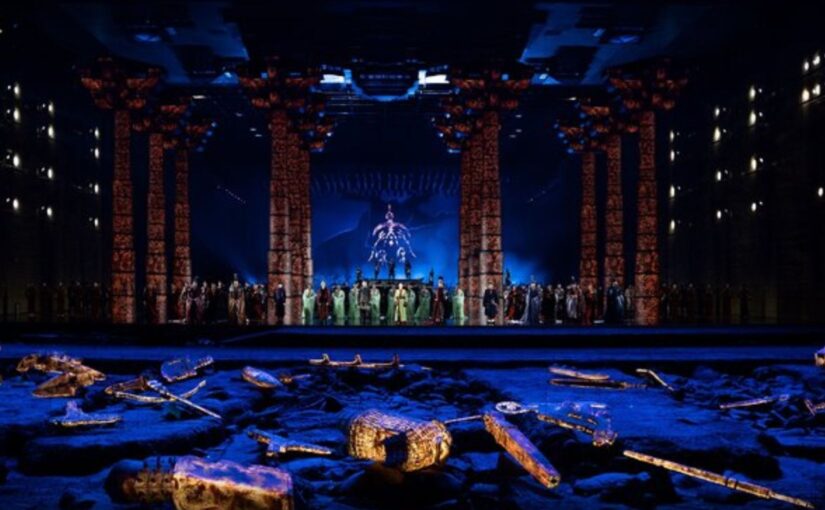
On 15 December 2025, after a hectic day of academic exchanges and talks in the morning, followed by sightseeing in the afternoon, my body was exhausted and it was difficult to keep my eyes open. My mind, however, was immersed in the cultural geography of Xi’an and the history of Shaanxi – the birthplace of Chinese civilisation. Then came an eighty-minute epic fantasy performance produced by the Shaanxi Cultural Investment Group at the Great Qin Performance Theatre located  in a magnificent building on the east side of the Epang Palace in Fengdong New Town, Xixian New Area in Xi’an. This surreal production, led by a blend of acrobatics, dance, drama, technology, and music, made me forget my physical fatigue and drew me completely into the original archaeological setting of the Qin Dynasty. A 500-ton, 37-metre track platform expanded to 95 meters, accompanied by vibrating seats, transporting the audience back to the battlefields, palaces, mountains, oceans, rivers,  agricultural fields, love stories, music, dance and the social and economic lives of ordinary Chinese people in 221 BCE. It was a visual marvel of Chinese history, unfolding the story of the Qin Dynasty through its main character, Hei Fu, a soldier.

The performance began in a realistic workshop setting, where Chinese archaeologists were shown working at an excavation site, restoring the ruins and remains of the Qin Dynasty. As the performance progressed, the story of China’s unification unfolded, following the journey of a Qin Dynasty soldier, Hei Fu, as its central narrative thread. Through his experiences, the performance used the fate of an ordinary individual to depict the broader historical process of Qin’s unification of the six states – Han, Chu, Yan, Zhao, Wei, and Qi. The immersive performance by Chinese theatre artists brought the past vividly to life through technologically led moving track platforms, where the stage transformed seamlessly to suit six different scenes. With 360° panoramic visuals and dynamic stage design, it recreated the military, architectural, cultural, and social landscape of the Qin Dynasty.

Directors Zhou Liya and Han Zhen, through The Great Qin, not only give life to Heifu – a figure inspired by the Terracotta Warriors and Horses Museum of Qin Shi Huang – but also connect his sacrifices to the making of China as a nation. The performance further revives the character of Dajiang Yi, a dedicated craftsman emerging from the ruins of the Epang Palace. Similarly, it portrays Guan Zhixi, an official who offers a legal perspective on the Qin Dynasty. History often reveals that heroes and villains are merely two sides of the same coin. So, the assassins depicted in The Great Qin are not merely threats to Emperor Qin Shihuang; they also serve as powerful reminders of loyalty, betrayal, and commitment in Chinese history.

The Great Qin performance is not merely an immersive theatrical show; it is also a powerful reflection on Chinese history, highlighting how ordinary people and soldiers like Heifu sacrificed their lives in the making of what would eventually become modern China. The story concludes with Heifu’s death, while his beloved continues to wait for him, embodying a quiet yet enduring form of devotion. The performance serves as a poignant reminder of the often-unseen sacrifices made by women in the making of families and nations – while men rule and die in wars, women endure loss and carry forward the continuity of life. In this respect, China is no different from the rest of the world.

There is no doubt that The Great Qin is a political show which portrays Chinese nationalism without undermining any other culture, ethnicity or nation. It brings audiences together to reflect on the idea of national unification in China in a way that remains inclusive and respectful of both domestic and global perspectives. The performance also serves as a reminder to younger generations to uphold the unity and integrity of China, emphasising that these are the results of profound historical sacrifices. The Eurocentric monolithic lens depicts China in its narrow and mono-ethnic outlook underming the diversities in China. The Great Qin  show restores Chinese diversity and rejects dominant North American and European narratives on China.

The Great Qin is not merely an entertaining show; it is also an integral part of contemporary Chinese popular culture. Through the lens of The Great Qin, China once again conveys to the world that patriotism and nationalism can be inclusive, and need not be grounded in supremacist ideas or practices that undermine others or create divisions in the process of nation-building.

China marks May Day with tangible gains for working people

On the eve of May Day, Chinese President Xi Jinping extended festive greetings and best wishes to the country’s working people. He called on workers across the country to work hard, deliver solid results, and play a leading role in driving high-quality economic and social development. Party committees and governments at all levels, he added, should safeguard workers’ lawful rights and interests, address their most pressing concerns, and encourage them to strive unremittingly for the country’s grand goals.

A feature article published by the Xinhua News Agency explored these themes in greater depth.

Noting that Xi Jinping has said that “model workers and exemplary individuals are the moral exemplars of the people and the pillars of the nation,” it added that in the week leading up to May Day, 3,024 individuals and organisations were honoured for their contributions to major national strategies, projects and priority industries. Recipients ranged from engineers, technicians, teachers and doctors, to delivery workers.

The article added: “Xi has built a reputation for hard work since his early years as a village official in a poor rural area of northwest China more than half a century ago. As the country’s top leader, he has called on the society as a whole to respect model workers and promote the spirit they embody and has backed the commitment with a range of policy and institutional measures.

“He has called for building a large, highly skilled industrial workforce with strong ideals, technical expertise, a capacity for innovation, and a sense of responsibility and dedication, while also emphasising workers’ welfare and protections.

“In recent years, China has continued to expand legal protections and social security coverage for workers, with growing attention to those in new forms of employment such as food delivery couriers and ride-hailing drivers, as well as older workers beyond the standard retirement age…

“Beyond policy measures, Xi has also conducted on-site inspections to ensure their needs are being met. In 2023, he went to a migrant worker housing complex in Shanghai, entering homes, inspecting shared facilities such as communal kitchens and laundries, and speaking with residents about their daily lives.

Continue reading China marks May Day with tangible gains for working people

China sets out position on Palestine and Strait of Hormuz at UN

Chinese Ambassador to the UN Fu Cong has reiterated China’s clear positions on the rights of the Palestinian people and on the present situation in the Strait of Hormuz at open debates in the Security Council held on consecutive days.

Speaking on April 28, Fu Cong said:

“The Palestinian question has always been at the heart of the Middle East issue and must not be marginalised under any circumstances. For decades, the Palestinian-Israeli conflict has revolved in cycles. Its fundamental crux is that the two-State solution is only half-realised. The State of Israel was established long ago, while the State of Palestine remains out of reach. Although intense clashes have come to a halt, the Palestinian people are still forced to keep company with death and suffering, the situation in the occupied Palestinian territories continues to worsen, and the foundation of the two-State solution risks being completely hollowed out. Turmoil and war are not the fate of the Palestinian people. The international community must summon the greatest sense of urgency to reverse this negative trajectory and rectify the historic injustice endured by Palestine.”

He went on to make three points:

  • Gaza is not a permanent battlefield, and the suffering of its civilians must cease immediately. While efforts by the international community to broker a ceasefire in Gaza are welcome, the most pressing task remains cementing the ceasefire and scaling up aid. Since October last year, Israel has relentlessly mounted attacks and fortified its military presence, resulting in over 800 fatalities and more than 2,000 wounded. The humanitarian crisis in Gaza remains dire, characterised by scarcity of essential supplies, deplorable sanitary conditions, and a medical system teetering on the precipice of total collapse. Israel must fulfill its international humanitarian law obligations, dismantle all barriers to humanitarian access, and guarantee that UNRWA [the United Nations Relief and Works Agency for Palestine Refugees in the Near East] and other humanitarian agencies can carry out their aid work.
  • Settlement activities are unacceptable, and tensions in the West Bank must be deescalated. Israel is currently accelerating the expansion of settlements, having recently approved the construction of 34 additional settlements and initiating the rebuilding of the Sanur settlement, which had been shuttered for many years. The escalating violence in the West Bank is equally concerning. Settler violence is intensifying, and the occupying power frequently conducts searches, arrests, and raids, even promulgating death penalty legislation specifically targeting Palestinians. Israel must heed the strong appeals of the international community, immediately halt illegal settlement activities, effectively curb settler violence, and ensure robust accountability for all attacks.
  • The two-State solution is non-negotiable, and the independent statehood of Palestine must be supported. It is deeply concerning that voices opposing the two-State solution continue to come from Israel, with some even threatening to strangle the idea of a Palestinian state. The international community must increase support for Palestine to advance the early establishment of a fully sovereign and independent state of Palestine based on the 1967 borders with East Jerusalem as its capital.

The previous day, Fu Cong made remarks on the Safety and Protection of Waterways in the Maritime Domain in which he said:

Continue reading China sets out position on Palestine and Strait of Hormuz at UN

China and Laos mark 65 years of relations

On April 25, Xi Jinping, general secretary of the Communist Party of China (CPC) Central Committee and Chinese president, exchanged congratulations with Thongloun Sisoulith, general secretary of the Lao People’s Revolutionary Party (LPRP) Central Committee and Lao president, on the 65th anniversary of China-Laos diplomatic relations.

Xi said that as socialist neighbours in a community with a shared future, China and Laos are united by shared ideals and beliefs, identical social systems and similar development paths and that their “comradely and brotherly” bond, personally forged by the older generation of leaders of both parties and countries, has grown ever stronger over time.

The Chinese leader voiced willingness to work with Thongloun to take the 65th anniversary of China-Laos diplomatic relations and the Year of China-Laos Friendship as an opportunity to enhance strategic mutual trust, carry forward the traditional friendship, and push for more outcomes in practical cooperation across various fields, so as to deliver more benefits to the two peoples.

For his part, Thongloun said that over the 65 years since the establishment of diplomatic relations, the friendly ties between the two parties, the two countries and the two peoples — marked by solidarity in times of difficulty — have been lifted to higher levels, with fruitful outcomes in building the Laos-China community with a shared future. He expressed gratitude for the long-standing valuable support and assistance provided by the CPC, the Chinese government and people.

Chinese Premier Li Qiang and Lao Prime Minister Sonexay Siphandone also exchanged congratulations on the same day.

A guest column contributed to the Xinhua News Agency by Liu Ting noted:

“Sharing weal and woe for the past 65 years, China and Laos enjoy a friendship that is rooted in the geographical proximity connected by mountains and rivers, tempered by the joint struggle for independence and liberation, and enriched by mutual support in their respective socialist causes.”

He added that: “The 2024-2028 action plan on building a China-Laos community with a shared future signed in October 2023 has drawn up a clear blueprint for all-round cooperation. Connectivity paves the way for win-win cooperation, and the China-Laos Railway stands as a landmark of friendship. As a landmark project of high-quality Belt and Road cooperation, the railway has continued to unleash the efficiency of a ‘golden corridor’ since its opening.”

Continue reading China and Laos mark 65 years of relations

It takes two to tango: Will Ukraine meet China halfway?

In the following article, Kemran Mamedov, a staff member of the Confucius Institute at the Free University of Tbilisi in Georgia, assesses the prospects for China-Ukraine relations, noting that the allegations made against China by powerful forces in Ukrainian society, from President Zelensky downwards, are generally “devoid of substantive content and carry a politically biased undertone.” In contrast, China has consistently sent signals of readiness for constructive dialogue with Ukraine, but Kyiv “rejects the proposed path of finding common ground in relations with Beijing.” In fact, a “careful analysis of Ukraine’s media landscape leads to the conclusion that the country’s leadership is launching a large-scale information campaign to discredit China’s policy.”

On March 2, Ukrainian President Volodymyr Zelensky once again made a loud accusation against China, stating that Beijing is “not involved” in the process of peaceful resolution of the Russian-Ukrainian conflict. “It is very important for us to involve China not in the war, but specifically in ending the war… For us, China’s participation would certainly be valuable, but so far we do not see its involvement,” said the Ukrainian leader.

The Ukrainian president’s attacks on China are traditionally devoid of substantive content and carry a politically biased undertone, which immerses the Ukrainian audience in an atmosphere of fictitious explanations for Ukraine’s military and economic failures as the result of cooperation between Beijing and Moscow.

Meanwhile, China is consistently pursuing a policy of seeking a diplomatic solution to the deep and systemic contradictions between Russia and Ukraine. During a briefing at the United Nations Security Council on February 17, dedicated to Ukraine, China’s Permanent Representative, Fu Cong, stated that Beijing holds an open and clear position on the Ukrainian issue, namely its unconditional willingness to assist in a peaceful dialogue. He emphasised that China is neither the creator of the Ukrainian crisis nor a participant in it. Earlier, during negotiations with Ukraine’s Foreign Minister Andriy Sybiha on the sidelines of the 62nd Munich Security Conference, Chinese Foreign Minister Wang Yi stated that China and Ukraine should adhere to the “right course and support the stable and healthy development of bilateral relations,” highlighting Beijing’s commitment to the principles of mutual respect, equality, and mutually beneficial cooperation.

Continue reading It takes two to tango: Will Ukraine meet China halfway?

Chinese lawyers condemn US and Israel

The Chinese Society of International Law has issued a powerful statement on April 25 opposing the illegal use of force by the United States and Israel, citing the examples of Venezuela and Iran.

The statement notes that Article 2(4) of the United Nations Charter establishes the fundamental principle under international law of the prohibition of the use of force: “All Members shall refrain in their international relations from the threat or use of force against the territorial integrity or political independence of any state, or in any other manner inconsistent with the Purposes of the United Nations.”

It further notes that on January 3 this year, the United States “blatantly launched a military strike against Venezuela, forcibly seized Venezuela’s President Nicolás Maduro and his wife, and removed them to the United States. There is no lawful justification for this US military operation… It has brutally trampled on international law and the basic norms of international relations and must be rectified as soon as possible.”

Turning to Iran, it says: “The joint airstrikes by the United States and Israel have targeted multiple cities and regions including the capital Tehran. These actions constitute the use of force prohibited by international law, amount to an armed attack against and invasion of Iran and violate the rule under international law regarding the personal inviolability of heads of State. The use of force by the United States and Israel against Iran finds no basis in international law; it is a serious illegal act and must cease immediately.”

The following article was originally published by the Xinhua News Agency.

The Chinese Society of International Law on Saturday issued a statement on upholding international law and opposing the illegal use of force.

The statement said that in recent months, there have been grave instances of illegal use of force in Latin America and the Middle East. It solemnly condemns the illegal acts of the United States and Israel, and believes that it is necessary to reaffirm the imperative of observing the Charter of the United Nations (the Charter) and international law in order to effectively safeguard international peace and security.

The statement added that the Charter constitutes the legal cornerstone of the post-World War II international order. Article 2(4) of the Charter establishes the fundamental principle under international law of the prohibition of the use of force: “All Members shall refrain in their international relations from the threat or use of force against the territorial integrity or political independence of any state, or in any other manner inconsistent with the Purposes of the United Nations.” “Territorial integrity” means “the inviolability of territory.” The Charter expressly provides for only two exceptions to this prohibition of the use of force: actions authorized by the United Nations Security Council under Chapter VII of the Charter and the exercise of the inherent right of self-defense of States referred to in Article 51 of the Charter.

The statement said that on Jan. 3 this year, the United States blatantly launched a military strike against Venezuela, forcibly seized Venezuela’s President Nicolás Maduro and his wife, and removed them to the United States. There is no lawful justification for this U.S. military operation. It seriously violates the principle prohibiting the use of force, severely infringes on Venezuela’s territorial sovereignty, and grossly breaches the rule under international law regarding the personal inviolability and immunity of heads of State. It has brutally trampled on international law and the basic norms of international relations and must be rectified as soon as possible.

The statement further stressed that on Feb. 28 this year, the United States and Israel initiated large-scale military strikes against Iran. The armed conflict in the Middle East has continued to this date. The joint airstrikes by the United States and Israel have targeted multiple cities and regions including the capital Tehran. These actions constitute the use of force prohibited by international law, amount to an armed attack against and invasion of Iran, and violate the rule under international law regarding the personal inviolability of heads of State. The use of force by the United States and Israel against Iran finds no basis in international law; it is a serious illegal act and must cease immediately. Furthermore, the attacks on Iranian civilians and civilian objects, including schools, hospitals and energy facilities, also seriously violate international humanitarian law.

The statement called on all States, especially major States with special responsibilities and influence in international affairs, to abide by international law, practice international rule of law, and settle international disputes peacefully. It called on all States to resolutely oppose the illegal use of force in international relations, maintain international peace and security, and promote the building of a community with a shared future for humanity.