With US Speaker Nancy Pelosi’s reported plan to visit Taiwan in August rapidly spiraling into potentially the most serious crisis in China/US relations in decades, former Australian Prime Minister Paul Keating has aptly commented: “It is hard to imagine a more reckless and provocative act.”
His short and succinct statement, which we reproduce below from the Australian website Pearls and Irritations, also notes that: “A visit by Pelosi would be unprecedented – foolish, dangerous and unnecessary to any cause other than her own.”
Paul Keating served as Prime Minister of Australia from 1991-96. Although not considered to be in any sense on the left of the Australian Labor Party (itself by all accounts a somewhat endangered species these days), as an Australian conscious of his Irish heritage, he was in favour of his country severing ties with the British monarchy and becoming a republic. He was equally conscious that Australia was part of the vast and dynamic Asia Pacific region, not an offshore island of Western Europe, and he strongly pushed for the development of relations with such regional powers as China and Indonesia. Certainly he puts the current Australian Labor Prime Minister Anthony Albanese to shame.
Keating has the admirable quality of not mincing his words. In January he described remarks by British Foreign Secretary Liz Truss, that China might engage in military aggression in the Pacific as, “nothing short of demented. Not simply irrational, demented.” He continued: “The reality is Britain does not add up to a row of beans when it comes to East Asia… Britain suffers delusions of grandeur and relevance deprivation… Truss would do us all a favour by hightailing it back to her collapsing, disreputable government, leaving Australia to find its own way in Asia.”
With, on present polling, Ms Truss likely to be installed as the next British Prime Minister before the end of summer, republication of Keating’s January 23 statement in Pearls and Irritations is timely.
When the United States has a divided foreign policy on an issue of such grave importance, the world begins a slide onto very thin ice.
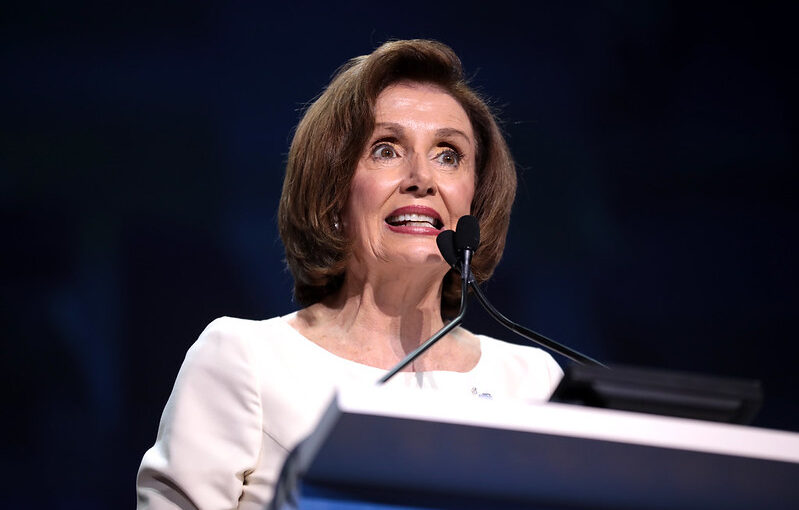
US House Speaker, Nancy Pelosi – the third-ranked figure in the American hierarchy – is reported to be planning a visit to Taiwan, despite the urging of Administration officials from her own party. It is hard to imagine a more reckless and provocative act.
Across the political spectrum, no observer of the cross-straits relationship between China and Taiwan doubts that such a visit by the Speaker of the American Congress may degenerate into military hostilities.
If the situation is misjudged or mishandled, the outcome for the security, prosperity and order of the region and the world (and above all for Taiwan) would be catastrophic.
A visit by Pelosi would be unprecedented – foolish, dangerous and unnecessary to any cause other than her own.
Over decades, countries like the United States and Australia have taken the only realistic option available on cross-straits relations. We encourage both sides to manage the situation in a way that ensures that the outcome for a peaceful resolution is always available.
But that requires a contribution from us – calm, clear and sensitive to the messages being sent. A visit by Pelosi would threaten to trash everything that has gone before.
When the United States has a divided foreign policy on an issue of such grave importance, the world begins a slide onto very thin ice.
Herald indulges UK Foreign Secretary’s demented remarks on China
Australia’s foreign and defence ministers are giving respectability to Britain’s lunge for old-time glory.
Remarks by the British Foreign Secretary Liz Truss that China could engage in military aggression in the Pacific, encouraged by Russia’s contingent moves against Ukraine, are nothing short of demented.
Not simply irrational, demented.
And this piece of nonsense by Truss commanded the front pages of The Sydney Morning Herald in a piece written by the press gallery’s most celebrated beat-up merchant, Peter Hartcher.
Truss said such a move by China ‘could not be ruled out’.
And on those fleeting words, Hartcher pounced, carrying the notion to the readership of the Herald — and the Melbourne Age — that China and Russia are working in concert, justifying the headline, that ‘China could follow Russia into war’.
The irresponsibility of the story and Hartcher’s writing of it is breathtaking.
But it is a measure of how far the Herald has sunk in accommodating Hartcher’s extreme and unworldly positions — especially as they relate to China.
The underlying story is the government’s desperate promotion of Britain as a strategic partner of Australia in a policy of containment of China.
The reality is Britain does not add up to a row of beans when it comes to East Asia. Britain took its main battle fleet out of East Asia in 1904 and finally packed it in with its ‘East of Suez’ policy in the 1970s. And it has never been back.
Britain suffers delusions of grandeur and relevance deprivation. But there they were at Admiralty House kidding the rest of us that their ‘co-operation’ added up to some viable policy.
Australia’s great Foreign ‘non minister’, Marise Payne, supported by the increasingly strident Defence Minister Peter Dutton, standing beside the British Foreign Secretary looking wistfully for Britain’s lost worlds of the 19th and 20th centuries. Really.
Truss would do us all a favour by hightailing it back to her collapsing, disreputable government, leaving Australia to find its own way in Asia.
Xi Jinping told the audience at Davos this week that ‘major economies should see the world as one community’.
Hardly the sort of sentiment that sits contemporaneously with someone about to spring an aggressive military action. A point perhaps way too subtle for the Herald.
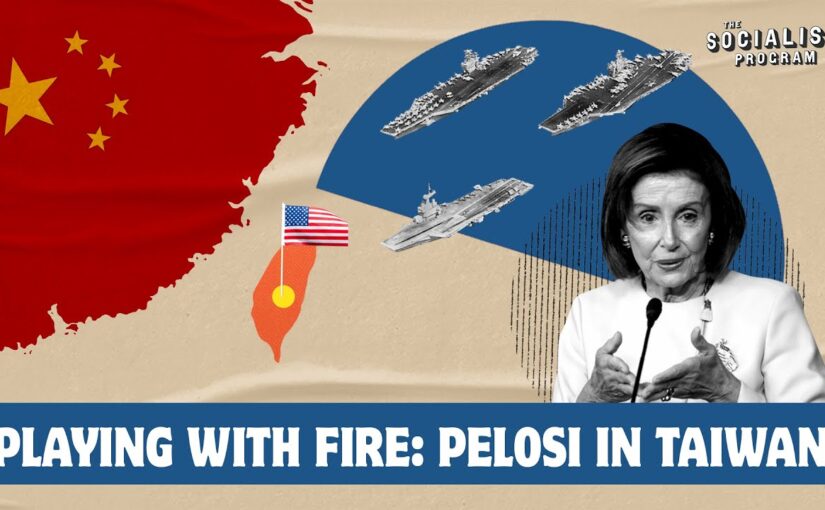
In this episode of The Socialist Program, presented on Breakthrough News, Brian Becker conducts a fascinating interview with Dr. Ken Hammond, Professor of East Asian and Global Studies at New Mexico State University and Friends of Socialist China Advisory Group member.
Taking the reported plan of Nancy Pelosi, Speaker of the US House of Representatives, constitutionally the third position after the President and Vice-President, to visit China’s island province of Taiwan next month as part of a regional tour, Ken and Brian discuss in detail how such a visit would represent a fundamental departure from the basic ‘guard rails’ of China-US relations, starting with the first Shanghai Communique, signed by the two countries during President Nixon’s ‘icebreaking’ visit in February 1972.
They situate this as part of a continuing, and intensifying, record of US provocations against China that Professor Hammond rightly describes as “reckless, irresponsible and very dangerous.”
Both interlocutors explain the centrality of reunification with Taiwan for not only the Chinese government, but also for the Chinese people as a whole, by reference to details of Taiwan’s history, as well as to the specific nature and context of the Chinese revolution – one to overcome the ‘century of humiliation’ and to, in Chairman Mao’s famous words, enable the Chinese people to “stand up.”
They also situate the present dangerous trajectory in Sino-American relations against the background of China’s rise. As Brian Becker points out, Chinese per capita income, although it has risen substantially, is still just 17.9% of the US. Yet China’s life expectancy has already surpassed that of the US. American working people therefore have something to learn from the Chinese example.
Regrettably, faced with the rise of China and the decline of the US, bipartisan American bourgeois policy is sliding towards war with barely a pretense of debate. The US elite, Ken Hammond explains, has not really come to terms with the reality of contemporary China and the fact that they simply cannot out-compete them. Brian and Ken conclude by stressing the importance of the fight for peace and for a progressive alternative for the United States and the American people.
It’s an illuminating discussion and we’re pleased to make it available here.
We’re pleased to republish this article from 2020 by Joshua Cho, originally published in FAIR, about the startling hypocrisy in the media coverage of Hong Kong, particularly when compared to the coverage of Puerto Rico and Palestine. There was a storm of articles about the national security law in Hong Kong, with numerous Western media outlets describing it as an example of “colonialism” – ignoring the rather important fact that Hong Kong is part of China. Meanwhile, these same media outlets participate in a conspiracy of silence around the very real colonialism of the US against the people of Puerto Rico and the Israeli state against the Palestinians.
The article has lost none of its relevance in the period since its original publication.
When China passed a national security law for Hong Kong on June 30, criminalizing terrorism, secession and subversion of the Chinese government, as well as collusion with foreign governments, massive condemnations resounded all over Western media.
Vox (5/21/20) described it as an “official death sentence” for the “one country, two systems” model of governance in Hong Kong. Business Insider’s headline (7/1/20) described China’s national security law as having “killed Hong Kong’s pro-democracy movement in less than a year.” The Washington Post (7/3/20) ran an op-ed mocking China’s actions as “nothing less than imperialism with Chinese characteristics.” The Atlantic (7/1/20) described Hong Kong as a “colony once more,” equating the Chinese government with previous British and Japanese “overlords in a distant capital” making “decisions on Hong Kong’s behalf.”
Of course, while Western media describe the national security law as something China “imposed” on Hong Kong, these same outlets rarely if ever present the “one country, two systems” model of governance in Hong Kong as something that was imposed on China by British imperialism, when London refused to unconditionally return the former colony to China. Hong Kong was violently seized from China with the Treaty of Nanking in 1842, after the British waged a war to impose the opium trade on China, causing about 90 million Chinese people to develop an addiction by the end of the 19th century.
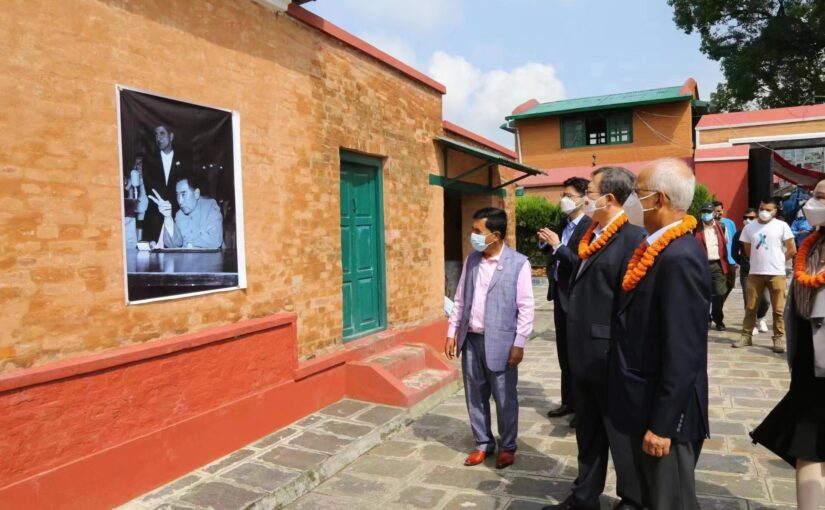
Comrade Liu Jianchao, the newly-appointed Minister of the International Department of the Communist Party of China, recently visited Nepal, his first overseas visit since assuming office. His visit followed closely on from a series of video meetings held with leading Nepalese politicians.
His first reported meetings on arrival in Kathmandu were with the Prime Minister Sher Bahadur Deuba, who is also President of the Nepali Congress Party, and Foreign Minister Narayan Khadka, Leader of the Nepali Congress. (The Nepali Congress is a social democratic party with a broadly similar historical trajectory to that of the Indian National Congress.)
Deuba said that Nepal-China friendship has a long history, and the Nepali Congress Party and the Nepali government have always adhered to a friendly policy toward China. He thanked China for providing important assistance for Nepal in fighting the epidemic, developing economy and improving people’s livelihood, and looked forward to strengthening friendly cooperation with China in various fields and building the Belt and Road initiative together for mutual benefits and win-win results. Nepal sees China as a trustworthy friend and firmly adheres to the one-China principle, and will not allow any force to use its territory for anti-China activities. For his part, Liu said that China has always viewed and developed China-Nepal relations from a strategic and long-term perspective, and has maintained a consistent policy of friendship toward Nepal, maintaining and developing friendly and cooperative relations with all political parties in Nepal. China believes that developing friendly relations with China is also the consensus of all political parties in Nepal and the aspiration of the Nepali people.
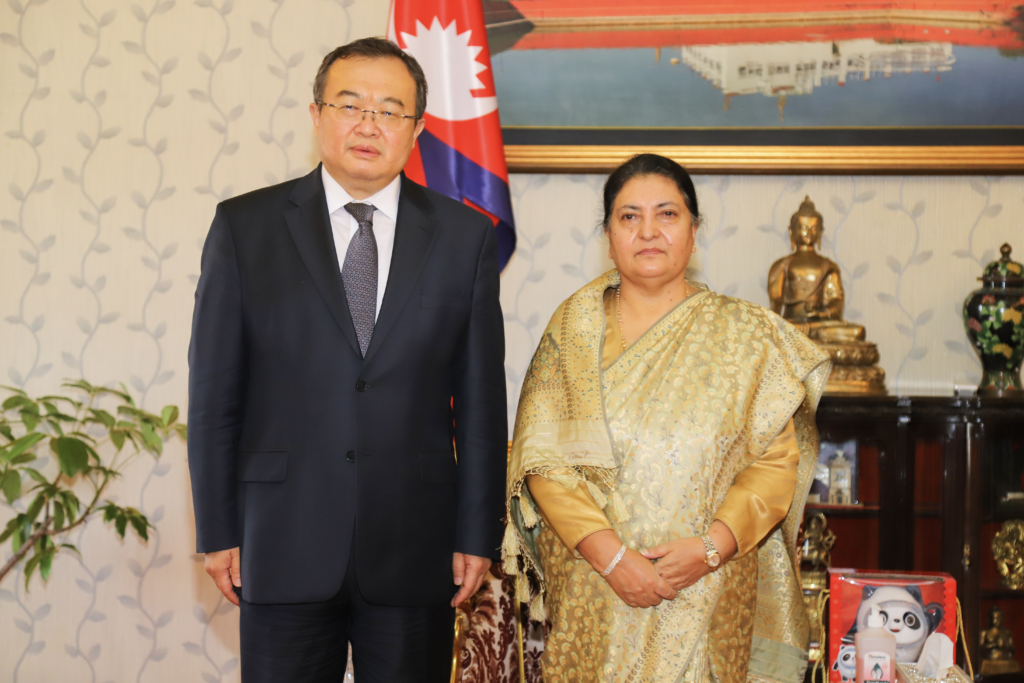
Later in the visit, Liu met with Nepalese President Bidya Devi Bhandari. Prior to becoming head of state, Bhandari was a long-term militant and then central leader of the Communist Party of Nepal (Unified Marxist Leninist). She is also the widow of Madan Bhandari, the General Secretary of the CPN(UML), who died in a suspicious car accident in 1993.
In their meeting, Bhandari said, Nepal and China are good friends and brothers. The most important experience of maintaining the healthy and stable development of Nepal-China relations is that both sides have always respected each other and safeguarded our common interests. The Chinese side has never interfered in the internal affairs of Nepal, and has always opposed the practice of the strong bullying the weak. The Nepali side trusts China completely. She continued, China is an important development partner of Nepal, and has played a significant role in boosting Nepal’s development. When Nepal was struck by a massive earthquake in 2015, the Chinese side immediately lent a helping hand to help Nepal with disaster relief and reconstruction. Now Nepal has survived the huge losses of the earthquake. China’s selfless help for Nepal at the critical moment played a vital role. When the COVID-19 broke out, China once again offered precious help to Nepal. The Nepali people are deeply moved. In his response, Liu said, please rest assured that whenever Nepal is in difficulty, your Chinese brother over the Himalayas is always there for you.
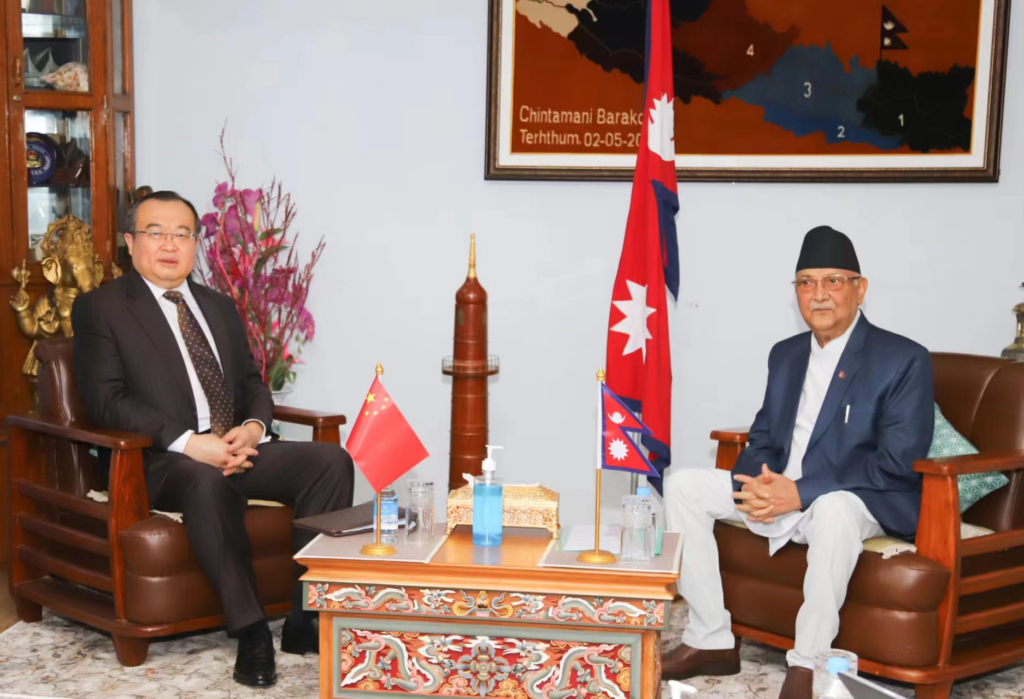
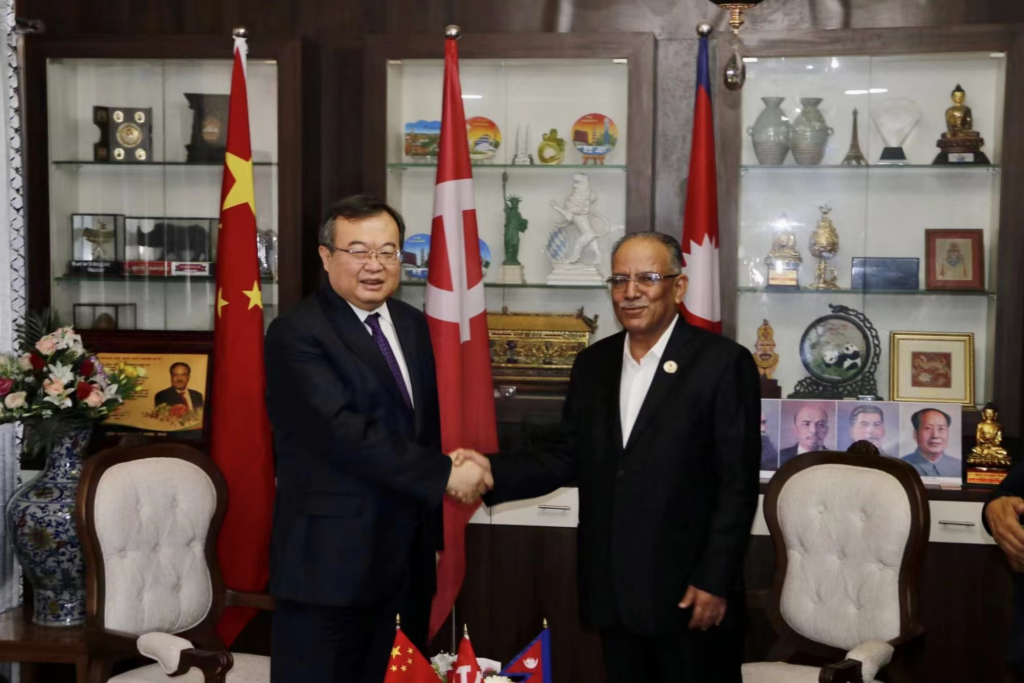
Meetings with the leaders of Nepal’s communist movement also formed an important part of Liu’s visit. They included with KP Sharma Oli, Chairman of the Communist Party of Nepal (Unified Marxist Leninist), Prachanda, Chairman of the Communist Party of Nepal (Maoist Center), Madhav Kumar Nepal, Chairman, and Jhala Nath Khanal, Senior Leader, of the Communist Party of Nepal (Unified Socialist) – all four of whom are also former Prime Ministers – and Narayan Man Bijukchhe, President of the Nepal Workers’ and Peasants’ Party.
Welcoming Liu, Chairman Oli of the CPN(UML) said that Nepal and China are connected by mountains and rivers, and share the same destiny. The Nepali side appreciates the firm support of the Chinese side in Nepal’s efforts in safeguarding sovereignty, independence and territorial integrity, and the selfless support for Nepal’s development and stability over a long time. Liu said that China resolutely supports Nepal’s efforts in safeguarding sovereignty, independence and territorial integrity, supports the Nepali people in choosing a social system and development path independently, and is willing to continue its support and help for Nepal’s economic and social development.
Comrade Prachanda said that Nepal sees China as a trustworthy friend and thanks China for giving a helping hand when needed by Nepal. Though the political parties in Nepal have different political views, they share a high degree of consensus on developing friendly relations with China, are all firmly committed to developing friendly relations with China, and will not allow any force to use Nepal’s territory for anti-China activities.
What was also significant was that the Chinese leader also visited and participated in poverty alleviation programmes supported by China as well as the grassroots units and activities of the communist parties.
On his way home, Liu also made a stop over in Singapore where he held meetings with leading members of the ruling People’s Action Party and government and participated in a dialogue with leading local scholars, including Kishore Mahbubani, author of the influential book, ‘Has China won? The Chinese challenge to American Primacy’.
The following reports first appeared on the website of the CPC International Department.
Sher Bahadur Deuba, Prime Minister of Nepal and President of Nepali Congress Party Meets with Liu Jianchao
Sher Bahadur Deuba, Prime Minister of Nepal and President of Nepali Congress Party met here today on the afternoon with Liu Jianchao, Minister of the International Department of the CPC Central Committee, who was on his visit to Nepal.
Deuba said, Nepal-China friendship has a long history, and the Nepali Congress Party and the Nepali government have always adhered to a friendly policy toward China. He thanked China for providing important assistance for Nepal in fighting the epidemic, developing economy and improving people’s livelihood, and looked forward to strengthening friendly cooperation with China in various fields and building the Belt and Road initiative together for mutual benefits and win-win results. Nepal sees China as a trustworthy friend and firmly adheres to the one-China principle, and will not allow any force to use its territory for anti-China activities. The Nepali Congress Party attaches great importance to developing friendly exchanges with the CPC, and looks forward to deepening exchanges and cooperation between the two Parties to push Nepal-China relations for in-depth development. Deuba wished the 20th CPC National Congress to be held in the second half of 2022 a complete success.
Liu said, China has always viewed and developed China-Nepal relations from a strategic and long-term perspective, and has maintained a consistent policy of friendship toward Nepal, maintaining and developing friendly and cooperative relations with all political parties in Nepal. China believes that developing friendly relations with China is also the consensus of all political parties in Nepal and the aspiration of the Nepali people. The high-level political mutual trust between China and Nepal not only stems from the traditional friendship and extensive common interests between the two countries, but also cannot be separated from the important role played by political parties of both countries in bilateral relations. At a historical moment when the world is undergoing profound changes unseen in a century and the world is entering a period of turbulence and transformation, the CPC is willing to, together with the Nepali Congress Party, strengthen strategic communication, promote mutually beneficial cooperation, deepen exchanges and mutual learning, support each other on issues related to each other’s core interests and major concerns, implement the important consensus reached during General Secretary Xi Jinping’s visit to Nepal in October 2019, and push China-Nepal strategic partnership of cooperation featuring ever-lasting friendship for development and prosperity for constant development, so as to benefit the two countries and peoples.
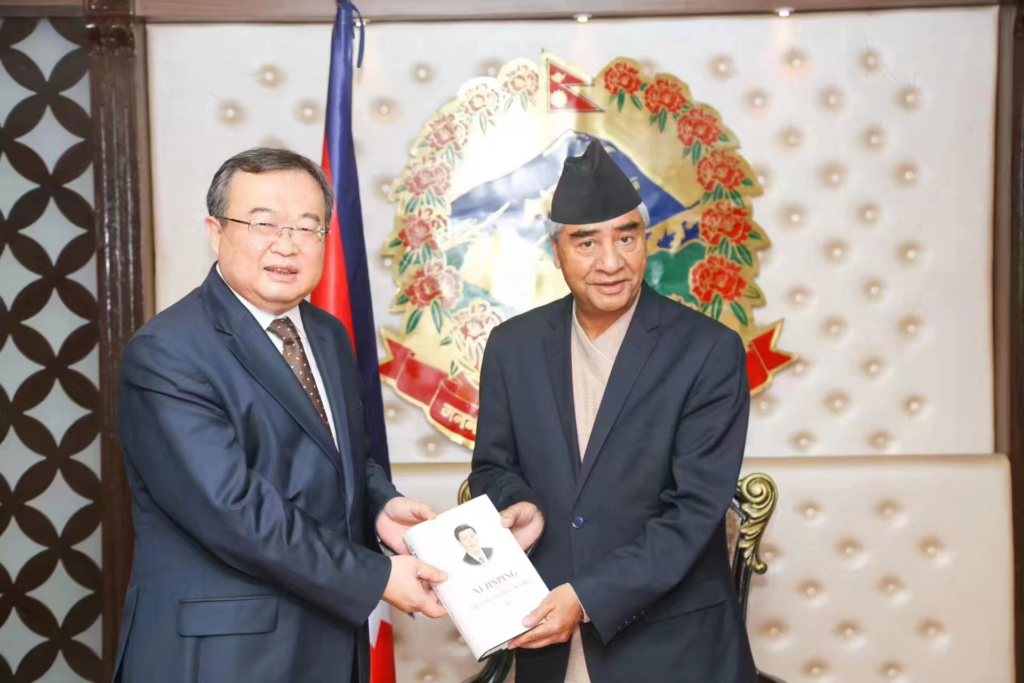
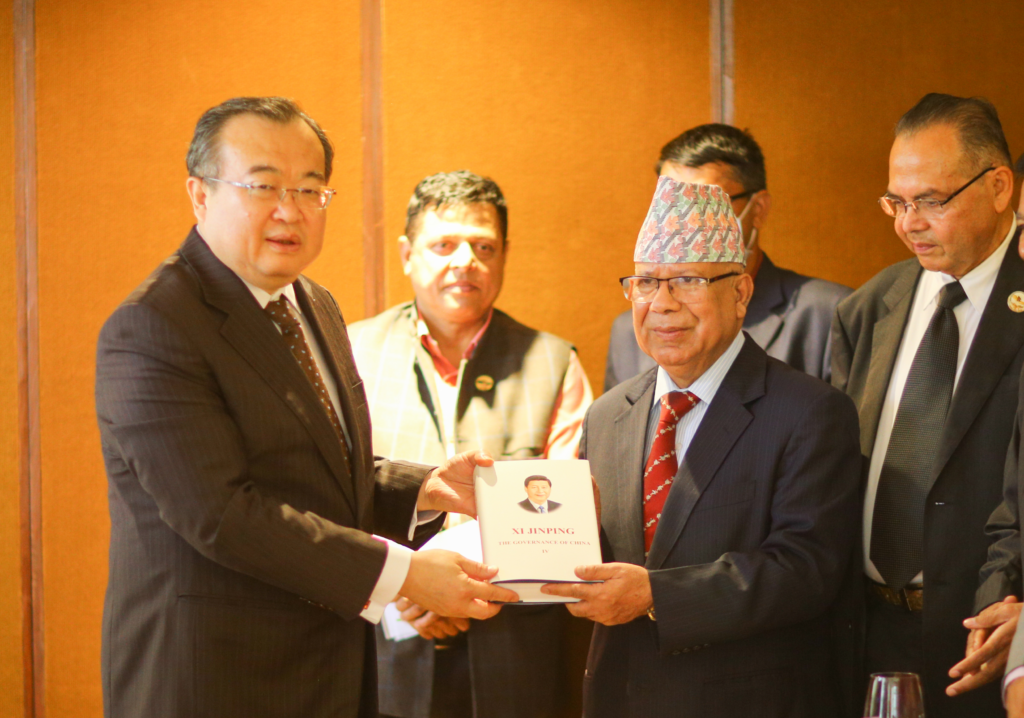
Liu Jianchao presented Deuba with the English version of the fourth volume of “Xi Jinping: The Governance of China”.
Nepali President Bidya Devi Bhandari Meets with Liu Jianchao
Bidya Devi Bhandari, Nepali President, met here today on the morning with Liu Jianchao, Minister of the International Department of the CPC Central Committee.
Bhandari welcomed Liu and his delegation, who were on a visit to Nepal, and asked Liu to convey her warm greetings and best wishes to President Xi Jinping. She said, Nepal and China enjoy an ever-lasting and long-standing friendship. President Xi Jinping paid a historic visit to Nepal in October 2019, bringing Nepal-China relations to new highs with constant new progress. Implementing the important consensus reached between both sides during the visit of President Xi Jinping is a goal that requires the joint efforts of both countries. Nepal hopes to push the construction of Trans-Himalayan Multi-Dimensional Connectivity Network for more fruitful results.
Bhandari said, Nepal and China are good friends and brothers. The most important experience of maintaining the healthy and stable development of Nepal-China relations is that both sides have always respected each other and safeguarded our common interests. The Chinese side has never interfered in the internal affairs of Nepal, and has always opposed the practice of the strong bullying the weak. The Nepali side trusts China completely. Nepal adheres to the one-China principle, and supports the Chinese side’s position on Taiwan and issues regarding Tibet, Xinjiang and Hong Kong. The Nepali side opposes interference and expansion in Nepal of any force, and by no means allows any force to use Nepal’s territory for anti-China activities.
Bhandari said, China is an important development partner of Nepal, and has played a significant role in boosting Nepal’s development. When Nepal was struck by a massive earthquake in 2015, the Chinese side immediately lent a helping hand to help Nepal with disaster relief and reconstruction. Now Nepal has survived the huge losses of the earthquake. China’s selfless help for Nepal at the critical moment played a vital role. When the COVID-19 broke out, China once again offered precious help to Nepal. The Nepali people are deeply moved.
Bhandari said, our world has yet to achieve full peace. China has made huge contributions to safeguarding world peace and development. China develops peaceful and friendly relations with all countries in the world on the basis of mutual respect, winning extensive support from the international community. The Nepali side again congratulates the CPC on its centenary, wishes greater development achievements of the Chinese people under the leadership of the CPC, and wishes the 20th CPC National Congress a complete success.
Liu conveyed President Xi Jinping’s warm greetings and best wishes to President Bhandari. Liu said, the main purpose for my visit is to implement the important consensus reached between President Xi Jinping and President Bhandari in an in-depth way, carry out friendly exchanges with all political parties of Nepal, and push bilateral relations for healthy and stable development. During the visit, I met leaders of the government and political parties of Nepal. I have gained three major impressions. The first is, though the political parties of Nepal have different political views, they all share a high degree of consensus of deepening China-Nepal friendship. The second is that China and Nepal are true friends with mutual support. Nepal firmly adheres to the one-China principle, and does not allow any force to use Nepal’s territory for anti-China activities. The Chinese side resolutely supports Nepal’s efforts in safeguarding sovereignty, independence and territorial integrity, and in choosing a social system and development path suited to its national conditions. The third is that the two peoples share an ever-lasting friendship. Both sides have huge potential in mutually beneficial cooperation. The Chinese side will work with the Nepali side to resolutely promote the implementation of the consensus reached by the two heads of state.
Liu said, developing friendly relations with Nepal is China’s long-term policy that is open to all the political parties and people of Nepal. The Chinese side’s support and assistance for Nepal is truly for the good of Nepal and the Nepali people. The Chinese side is willing to continue to offer support and assistance to Nepal within its capacity in developing economy and improving people’s livelihood. Please rest assured that whenever Nepal is in difficulty, your Chinese brother over the Himalayas is always there for you.
KP Sharma Oli, Chairman of the Communist Party of Nepal (Unified Marxist Leninist) and Former Prime Minister of Nepal, Meets with Liu Jianchao
KP Sharma Oli, Chairman of the Communist Party of Nepal (Unified Marxist Leninist) and former Prime Minister of Nepal, met here today on the morning with Liu Jianchao, Minister of the International Department of the CPC Central Committee.
Oli welcomed Liu and his delegation, who were on a visit to Nepal, saying that Nepal and China are connected by mountains and rivers, and share the same destiny. Recent years have witnessed rapid development of Nepal-China relations. The Nepali side appreciates the firm support of the Chinese side in Nepal’s efforts in safeguarding sovereignty, independence and territorial integrity, and the selfless support for Nepal’s development and stability over a long time. The Nepali side has always adopted a consistent policy towards issues concerning the core interests and major concerns of the Chinese side, has always upheld the one-China principle, and has never allowed any force to use Nepal’s territory for anti-China activities. The achievements and experience of the CPC over the past centenary is an important inspiration to Nepal and Nepal’s political parties. The Communist Party of Nepal (Unified Marxist Leninist) looks forward to strengthening exchange and cooperation with the CPC, and learning the successful experience in party building and state governance from the CPC. Oli wished the 20th CPC National Congress a complete success.
Liu thanked Oli for his contributions to the development of China-Nepal relations, saying that China and Nepal are close neighbors sharing an ever-lasting friendship. The Chinese side appreciates Nepal’s adherence to the one-China principle, and its firm support for China’s position on Taiwan, and issues related to China’s Tibet, Xinjiang and Hong Kong. China firmly adopts a long-term, strategic and solid policy towards Nepal. China resolutely supports Nepal’s efforts in safeguarding sovereignty, independence and territorial integrity, supports the Nepali people in choosing a social system and development path independently, and is willing to continue its support and help for Nepal’s economic and social development. At a historic moment when the world is undergoing profound changes unseen in a century, and the world is entering a period of turbulence and transformation, China-Nepal relations assume more strategic significance. The Chinese side is willing to work with the Nepali side to implement the important consensus reached during General Secretary Xi Jinping’s visit to Nepal in October 2019, and constantly push China-Nepal strategic partnership of cooperation featuring ever-lasting friendship for development and prosperity to new highs. The CPC is willing to reinforce high-level exchanges and strategic communication with the Communist Party of Nepal (Unified Marxist Leninist) and promote practical cooperation.
Prachanda, Chairman of Communist Party of Nepal (Maoist Center) and Former Prime Minister of Nepal Meets with Liu Jianchao
Prachanda, Chairman of the Communist Party of Nepal (Maoist Center) and former Prime Minister of Nepal met here today on the afternoon with Liu Jianchao, Minister of the International Department of the CPC Central Committee.
Prachanda welcomed Liu and the CPC delegation to visit Nepal, and said that Nepal and China are friendly neighbors linked by mountains and rivers. Nepal sees China as a trustworthy friend and thanks China for giving a helping hand when needed by Nepal. Though the political parties in Nepal have different political views, they share a high degree of consensus on developing friendly relations with China, are all firmly committed to developing friendly relations with China, and will not allow any force to use Nepal’s territory for anti-China activities. The Nepalese side supports strengthening Nepal-China friendship and cooperation, and accelerating the construction of the Belt and Road Initiative, especially the Trans-Himalayan Multi-Dimensional Connectivity Network. The Communist Party of Nepal (Maoist Center) admires the development achievements of the CPC in the past century and looks forward to deepening experience exchange and mutual learning between the two sides in party building and state governance, so as to contribute to in-depth development of Nepal-China relations. Prachanda wished the 20th CPC National Congress a complete success.
Liu appreciated Prachanda’s long-standing contributions to the development of China-Nepal relations, saying that the key to the long-term friendly relations between China and Nepal lies in mutual respect for each other’s core interests and major concerns. China’s friendly policy toward Nepal is a long-term policy, not a matter of expediency. China appreciates the Nepalese side for its firm support on issues related to China’s core interests, and will continue to support Nepal in safeguarding national sovereignty and territorial integrity and in exploring a social system and development path suited to its national conditions. The friendly exchanges between the CPC and the Communist Party of Nepal (Maoist Center) are an important bond in the relations between the two countries. In the new situation of accelerating changes unseen in a century and emerging international and regional challenges, the CPC is willing to strengthen high-level contacts and strategic communication with the Communist Party of Nepal (Maoist Center), deepen experience exchange and mutual learning in state governance and administration, jointly implement the important consensus reached between the two sides during General Secretary Xi Jinping’s visit to Nepal, and push China-Nepal strategic partnership of cooperation featuring ever-lasting friendship for development and prosperity for constant development, so as to benefit the two countries and peoples.
Leaders of Communist Party of Nepal (Unified Socialist) Meet with Liu Jianchao
Madhav Kumar Nepal, Chairman of the Communist Party of Nepal (Unified Socialist) and former Prime Minister and Jhala Nath Khanal, the senior leader of the Communist Party of Nepal (Unified Socialist) and former Prime Minister of Nepal met here today on the afternoon with Liu Jianchao, Minister of the International Department of the CPC Central Committee.
The Nepali side said, the two countries and peoples have a history of friendly exchanges spanning thousands of years. Nepal thanks the Chinese side for helping Nepal fight the epidemic, develop its economy and improve people’s livelihood. Nepal’s friendly policy towards China is consistent and Nepal will not allow any force to use Nepal’s territory for anti-China activities. The Nepali side is willing to further strengthen the Belt and Road cooperation with China and support the Global Development Initiative and the Global Security Initiative proposed by the Chinese side. The Communist Party of Nepal (Unified Socialist) hopes to learn more about the successful experience of socialism with Chinese characteristics, and looks forward to strengthening experience exchanges and mutual learning with the CPC in party building and state governance, so as to contribute to the further development of Nepal-China relations. The Nepali side wished the 20th CPC National Congress a complete success.
Liu appreciated the long-standing contributions of Nepal and Khanal to the development of China-Nepal relations and said that his visit aims at deepening the traditional friendship between China and Nepal and promoting friendly exchanges with the political parties in Nepal. The Chinese side appreciates Nepal’s long-term friendly policy toward China. The Chinese side’s friendly policy toward Nepal is long-term and consistent, and the Chinese side firmly supports Nepal in safeguarding its sovereign, independence and territorial integrity. Under the new situation, the CPC is willing to strengthen contacts with the Communist Party of Nepal (Unified Socialist), deepen experience exchange and mutual learning in state governance and administration, and push China-Nepal friendship and practical cooperation for constant development.
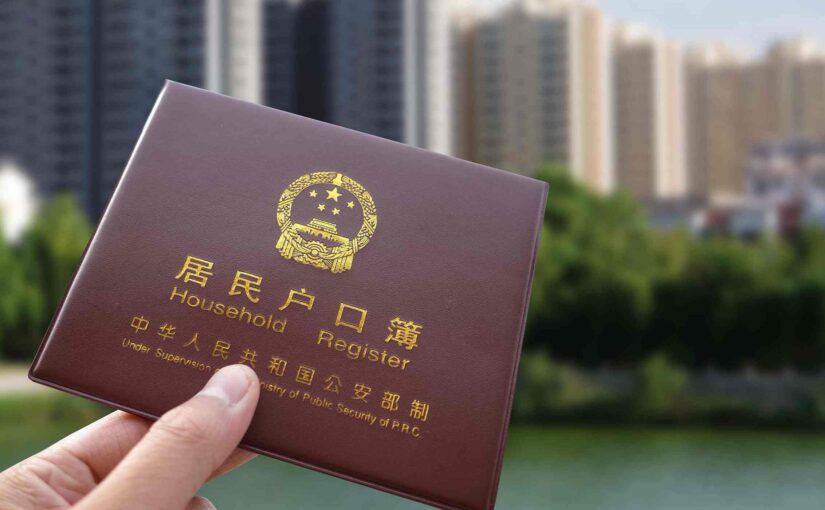
In this useful article, republished from China Daily, Keith Lamb provides an overview of the Hukou household registration system and the reasons for the recently-announced plans to reform it. Lamb notes that Hukou was originally introduced in order to prevent uncontrolled urban migration and the accompanying problems (in particular the emergence of slums, which can be found in practically all other recently-industrialized countries). However, the economic and social needs of a modern, increasingly urbanized socialist country require loosening restrictions on household registration and improving the rights and living conditions of people migrating to the cities. As the author observes, “when it comes to building a modern socialist state, inequality in accessing services must eventually, on principle, be transformed into a state of equality.”
China’s National Development and Reform Commission recently announced that the household registration system, popularly known by its Mandarin name Hukou, will be streamlined to encourage urbanization. All cities with a population under 3 million will have Hukou limits removed and registration for an urban Hukou in cities with a population between three and five million will be eased.
The modern Hukou, which reached maturity in 1958, determines who has access to local social amenities, such as education, healthcare and employment. Originally, it was an effective measure that prevented mass internal migration when China had an undeveloped economy based on agricultural production.
Checking mass migration from rural to urban centers prevented slums from building up, which was common in neighboring developing countries. Labor was also paired with the land which was important considering it was the location where the majority of production took place, allowing agriculture to be used in the service of industrialization.
In this second episode of their Latin America Review, Camila Escalante and Ollie Vargas from Kawsachun News interview Michael Campbell, Vice Minister and Presidential Adviser for International Relations and the Greater Caribbean in the Nicaraguan government.
With a focus on Nicaragua’s renewed relationship with China since last December, Campbell makes the important point that, although the diplomatic relations between the two countries were severed by the neoliberal government that emerged when the Sandinista revolution experienced a severe setback in 1990, the Sandinista National Liberation Front (FSLN) and the Communist Party of China (CPC) maintained their close ties throughout the ensuing period. He identifies the reasons for this in the numerous commonalities between the Chinese and Nicaraguan revolutions, for example the elimination of poverty and hunger domestically and the promotion of multipolarity against hegemonism and imperialism on the international level.
Noting that exchanges between the two parties and governments are now taking place on a daily basis, Campbell stresses that they are completely different to Nicaragua and Latin America’s history of relations with the United States and Europe. The former embraces the widest range of people-to-people exchanges whilst the latter is with the oligarchy and at the expense of the people.
The interview also touches on a wide range of other issues, including Nicaragua’s process of joining fellow revolutionary states Cuba and Venezuela in exiting the Organisation of American States (OAS), which Campbell describes as a “ministry of colonies”, the contrast with the Community of Latin American and Caribbean States (CELAC), the Sandinista revival of diversified international relations – for example with Africa, and his government’s pro-people, pro-poor approach to development, a notable achievement of which is that 90% of food consumed in Nicaragua is now produced domestically, with the aim to reach 100% by 2030.
There is also a cultural component, where, after Minister Campbell has explained the unique history of his country’s Caribbean coast, and the extensive autonomy that the revolution has brought to its indigenous and Afro-descendant peoples, he and Ollie prepare a great Nicaraguan dinner party.
‘A China Reader: Socialist Education Project’, edited by Duncan McFarland, was published last year. Roger Keeran begins his detailed review, originally published by Marxism-Leninism Today, and which we reproduce below, with these words: “Everyone, particularly those on the left, should study China. I say ‘study’ and not just ‘read about.'”
Describing the book as “the best one volume political introduction to China”, Keeran notes: “The major strength of ‘A China Reader’ is that it raises the major questions and concerns that Marxists and other progressives naturally have about China and does not propose any pat answers about the nature and future of Chinese socialism. Yet, from a sympathetic viewpoint, it provides a variety of perspectives and a wealth of solid information. The major weakness of the book is that some of the articles and thus some of the statistics are a bit dated.”
Noting that contributors range from such major historical figures as Norman Bethune, Agnes Smedley and Langston Hughes, through a range of mainly (but certainly not exclusively) American academics and political activists, through to Chinese communists including President Xi Jinping, the reviewer observes that: “Though the overall point of view is highly favorable toward China and the Chinese socialist project, the book also contains frank discussions of the setbacks and challenges faced by the socialist project.”
Outlining the contributions of Xi Jinping in the anthology, Keeran notes: “According to Xi, in spite of the ‘large mistakes as the Cultural Revolution,’ the party has not discarded the ‘banner of Mao Zedong,’ but is building on his accomplishments. Similarly, the party does not reject the experience of the Soviet Union but has tried to learn from its mistakes, particularly the Soviet Communists’ underestimation of the importance of ideology and its own history. ‘To completely repudiate the history of the CPSU [Communist Party of the Soviet Union], to repudiate Lenin, to repudiate Stalin was to wreak chaos in Soviet ideology and engage in historical nihilism,’ Xi Jinping says forcefully and clearly: ‘The party’s highest ideal and ultimate goal is to achieve communism.’
Keeran goes on to address some of the apparent contradictions in the Chinese socialist project, such as the encouragement of private enterprise and the emergence of billionaires and millionaires, adding: “Given such concerns, one might be forgiven for asking: Is all of this talk by the Chinese of building socialism and adhering to Marxist-Leninist principles just self-delusion or an elaborate Chinese shadow play designed to mislead the Party faithful and coverup an increasingly capitalist society of corruption, nepotism, and self-dealing? If that were true, it would be the first time in history that opportunism, revisionism or social democracy has so enthusiastically embraced Marxist-Leninist orthodoxy.”
Noting that only 5,000 Chinese have died from Covid, compared to over a million Americans, Keeran states: “If this is an example of the failure of Chinese socialism, most of the world would be happy to fail so grandly.” Likewise, “just as the Soviet Union escaped the Great Depression, so the Chinese avoided the global consequences of the Great Financial Crisis of 2008 and after. After 2008 the Chinese actually increased wages and consumption and created enough jobs to compensate for those lost by the crisis.”
Noting the role that planning continues to play in the Chinese economy, Keeran writes: “In 2007, the Chinese planned to lay 8,000 miles of high-speed railway by 2020 and later advanced the date to 2012. The World Bank called this ‘the biggest single planned program of passenger rail investment there has ever been in one country.’ It is inconceivable that the state sector would remain so large and that working class wages would grow if China was undergoing a capitalist counter-revolution. Certainly, this did not occur in the Soviet Union after 1991.”
His review is well worth reading. And, as it makes clear, so is the book. The paperback can be ordered from Lulu, and the PDF can be downloaded from the Online University of the Left.
Everyone, particularly those on the left, should study China. I say “study” and not just “read about,” because to learn about China by reading the mass media is not learning at all; it is consuming propaganda on behalf of the aggressive anti-China policies pursued by Presidents Obama, Trump, and now Biden. The bulk of the stories portray China negatively, often on the basis of dubious anecdotes allegedly showing China’s failures, its problems, its authoritarianism, its genocides and so forth. Therefore, it takes a little motivation and persistence to find sources that are factual and that explain the Chinese accomplishments, policies, and point of view. It is also difficult to find research that raises questions of interest to socialists and other progressives.
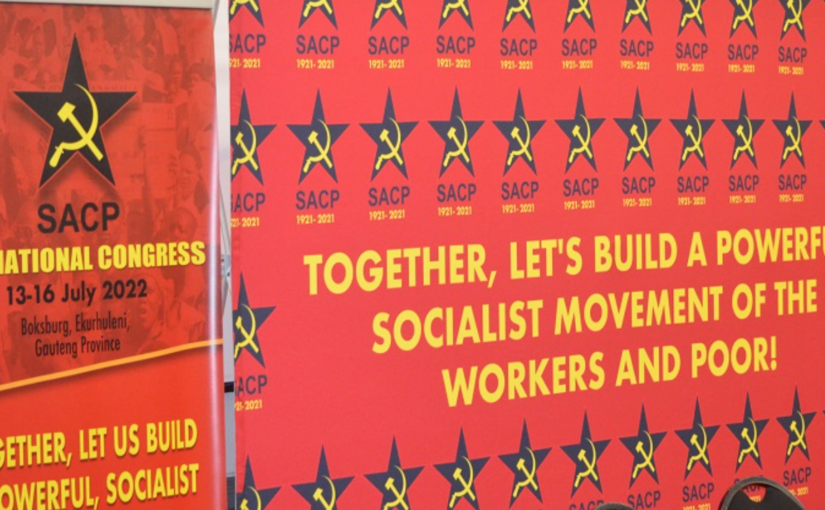
The South African Communist Party (SACP), Africa’s oldest communist party, held its 15th National Congress from July 13-16. Solly Mapaila was elected as the new General Secretary, replacing Blade Nzimande, who had held the post since 1998. Nzimande was elected Party President. Congress heard that the Party now had well over 330,000 members.
Li Mingxiang, Assistant Minister of the Communist Party of China’s International Department, attended and addressed the congress via video link, presenting greetings from the CPC Central Committee. He spoke positively of the SACP’s contributions to ending apartheid, founding and developing a new South Africa, and advancing the exploration of socialism in South Africa over the past century and more. Also addressing the congress were Cyril Ramaphosa, President of the African National Congress (ANC) and of the Republic of South Africa, representatives of the ruling parties of Cuba, Venezuela and Palestine, the Communist Party of the Russian Federation, and others.
Li Mingxiang, Assistant-minister of the International Department of the CPC Central Committee (IDCPC), attended here today the 15th National Conference of the South African Communist Party (SACP) via video link upon invitation, and read out the congratulatory letter of the CPC Central Committee to the SACP Central Committee.
In his speech, Li spoke positively of SACP’s contributions to ending apartheid, founding and developing a new South Africa, and advancing the exploration of socialism in South Africa over the past century and more. Li introduced the historic achievements of the CPC Central Committee, with Comrade Xi Jinping as the core, in pushing socialism with Chinese characteristics in the new era against the backdrop of profound changes unseen in a century, and briefed on the upcoming 20th CPC National Congress and the fourth volume of “Xi Jinping: The Governance of China” which was released recently. Li said, the CPC is willing to work with the SACP to conform to the trend of times, march towards the right direction of building a community with a shared future for mankind, and open up a future together.
Themed on “Together, Let’s Build a Powerful, Socialist Movement of the Workers and Poor”, the 15th National Conference of the SACP was held from July 13th to 16th in Johannesburg, South Africa. Cyril Ramaphosa, President of the African National Congress and the Republic of South Africa, major leaders of the coalition, representatives from international friendly parties such as Communist Party of the Russian Federation and the Communist Party of Cuba, and some diplomatic envoys in South Africa attended the conference upon invitation.
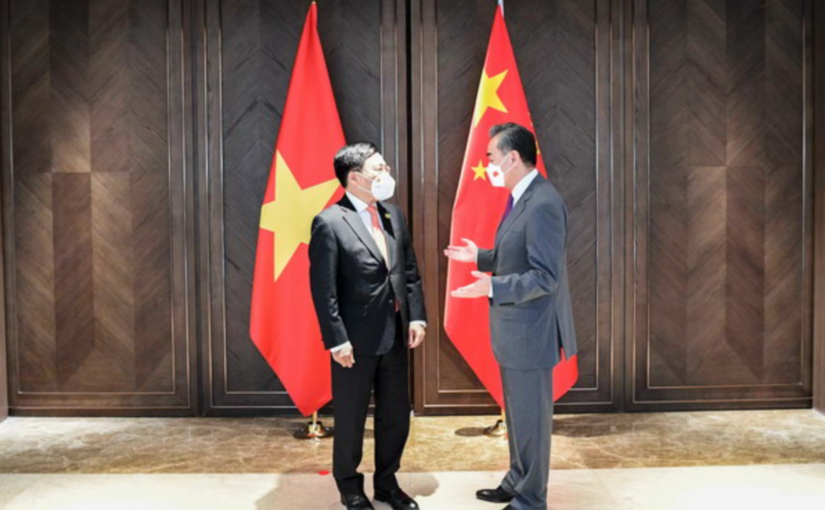
Immediately following an extensive tour of South East Asian nations, which included both bilateral visits and meetings as well as participation in regional and international fora, on July 13, Chinese Foreign Minister Wang Yi held the 14th meeting of the China-Vietnam Steering Committee for Bilateral Cooperation in Nanning, capital of the Guangxi Zhuang Autonomous Region, together with Pham Binh Minh, Vietnam’s Standing Deputy Prime Minister.
Citing the two countries special friendship, Wang Yi said that their two parties should “provide strong theoretical support for the development of the socialist cause of the two countries.”
Pham Binh Minh said, “China and Vietnam are brotherly and friendly neighbors with the same socialist cause, and also comprehensive strategic cooperative partners. Vietnam sticks to the leadership of the Communist Party of Vietnam and the path of socialism, and pursues an independent, all-round and diversified foreign policy. Relations with China are the top priority of Vietnam’s foreign policy, and it’s Vietnam’s strategic choice to develop friendly relations with China.”
The next day, Wang Yi held the Sixth Meeting of the China-Cambodia Intergovernmental Coordination Committee via video link, together with Cambodian Deputy Prime Minister Hor Namhong. Wang noted that next year will see the 65th anniversary of the establishment of diplomatic relations between China and Cambodia, and added:
“China and Cambodia have built a community with a shared future under the guidance of high-level exchanges, strengthened solidarity and mutual assistance with the goal of safeguarding common interests, deepened mutually beneficial cooperation in a people-centered approach, and strengthened multilateral coordination and collaboration with the purpose of championing international fairness and justice, thus consolidating political mutual trust and cementing the foundation for strategic cooperation. Facts have proved that the building of a China-Cambodia community with a shared future serves the fundamental and long-term interests of the two peoples, meets the trend of the times, and conforms to the big picture of peace and stability in the region, thus representing a completely right direction.”
The following reports were first carried on the website of the Chinese Foreign Ministry.
The 14th Meeting of the China-Vietnam Steering Committee for Bilateral Cooperation Is Held
On July 13, 2022, the 14th Meeting of the China-Vietnam Steering Committee for Bilateral Cooperation was held in Nanning, Guangxi Zhuang Autonomous Region. The meeting was co-chaired by State Councilor and Foreign Minister Wang Yi and Vietnamese Standing Deputy Prime Minister Pham Binh Minh, and attended by officials in charge of relevant ministries, commissions, and local governments from both sides in an online and offline format.
Wang Yi said, General Secretary Xi Jinping and General Secretary Nguyen Phu Trong have maintained strategic communication to steer bilateral relations. All departments of both sides have made joint efforts to continuously push for new progress in practical cooperation. This year, both China and Vietnam have important domestic political agendas. It’s important to strengthen coordination in a holistic approach, and make joint efforts in the direction of building a strategic community with a shared future. Facing the risks and challenges on the way forward and the arduous tasks of reform and development, we should inherit and carry forward the special friendship, consolidate solidarity and mutual trust, and deepen mutually beneficial cooperation, so as to serve respective national construction and development, and make greater contributions to peace, stability and prosperity in the region.
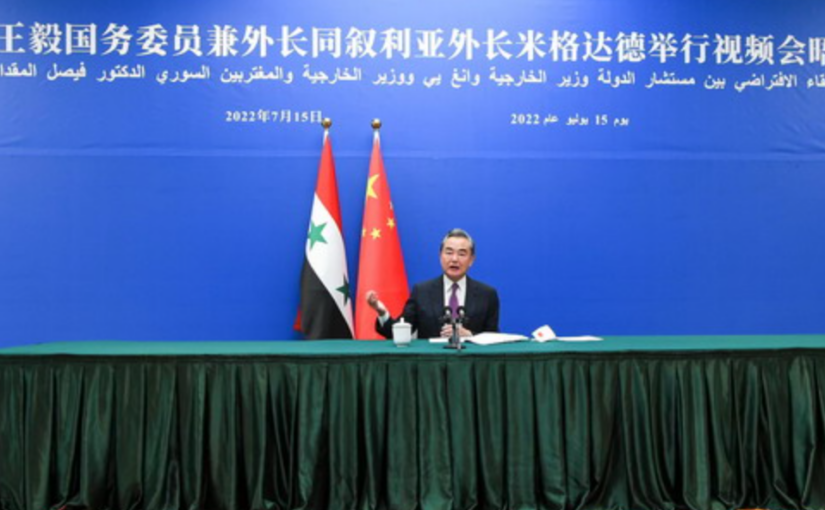
Chinese Foreign Minister Wang Yi held a video meeting with his Syrian counterpart Faisal Mekdad on July 15.
During the call, Wang said that China, “will continue to speak up for Syria’s efforts to safeguard sovereignty, independence, territorial integrity and national dignity, and support Syria in improving relations with its neighboring countries.” He added that, “with no fear of power politics, the Syrian people resolutely defend national interests and always stand tall and firm in the Middle East region, demonstrating the tenacity and perseverance of the nation.”
Mekdad expressed support for China’s core interests and key international initiatives and continued: “China has always upheld a rational and impartial position, helped small and medium-sized countries develop together, and played an active role in promoting multipolarity in the world and human development and progress. One who upholds justice enjoys much support, and justice will prevail. Syria is ready to strengthen coordination with China, firmly support multilateralism, and strive for a world where hegemony and power politics are kept away and all countries can enjoy peace, security and stability together.”
According to Wang Yi, the world, “should have less hegemony and more cooperation, less unilateral acts and more multilateralism, and no more wars but lasting peace.” He stressed that “the Palestinian question is the core of the Middle East issue and should not be forgotten by the international community, let alone be marginalized. The plight of the Palestinian people should not continue. China is ready to strengthen coordination with all parties to push the Palestinian question back to the priority of the international agenda.”
On July 15, 2022, State Councilor and Foreign Minister Wang Yi held a video meeting with Syrian Foreign Minister Faisal Mekdad.
Wang Yi said, China is ready to work with Syria to follow through on the important consensus reached by the two heads of state, and promote the sustained, steady and sound development of China-Syria relations. China will continue to speak up for Syria’s efforts to safeguard sovereignty, independence, territorial integrity and national dignity, and support Syria in improving relations with its neighboring countries. China wishes Syria an early restoration of peace and stability and an early return to the big family of the League of Arab States.
Wang Yi said, with no fear of power politics, the Syrian people resolutely defend national interests and always stand tall and firm in the Middle East region, demonstrating the tenacity and perseverance of the nation. The political settlement of the Syrian issue should follow the “Syrian-led, Syrian-owned” principle, and the future of Syria should be independently decided by the Syrian people. The international community should provide humanitarian assistance for Syria without any political strings attached to help Syria’s recovery and reconstruction.
Mekdad wishes the 20th National Congress of the Community Party of China (CPC) a complete success, expressing the belief that under the leadership of President Xi Jinping, the CPC will surely lead the Chinese people to make greater progress and successfully achieve the second centenary goal. He extended congratulations on the 25th anniversary of Hong Kong’s return to China. The Syrian side firmly supports China in safeguarding its sovereignty and territorial integrity, and resolutely opposes external forces interfering in China’s internal affairs. Rumors about Xinjiang, Hong Kong and Xizang spread by the United States and other Western countries will fall apart.
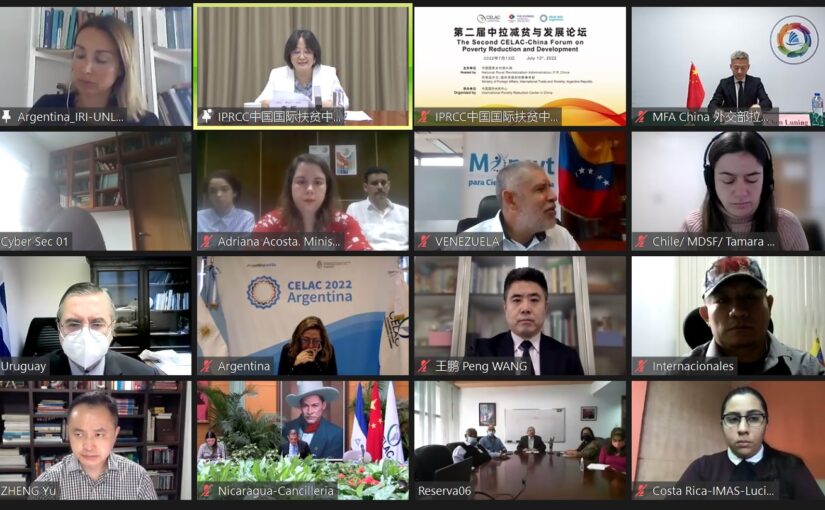
China and the countries of Latin America and the Caribbean have agreed to cooperate more closely in poverty reduction, especially through post-pandemic economic recovery, infrastructure construction and digital technology, following the second Forum on Poverty Reduction and Development between China and CELAC (Community of Latin American and Caribbean States), held virtually last week.
CELAC officials and experts “praised China’s efforts to eradicate absolute poverty, especially through rural-urban integration and digital technology support, which are seen as valuable for Latin American countries to alleviate poverty.”
Stressing the urgency of the tasks in hand, an Argentinian delegate noted that: “The epidemic has exacerbated social inequality and brought a devastating impact on the most vulnerable. We need to find solutions through bilateral and multilateral cooperation.”
Two days before the meeting, Nicaragua’s Trade and Industry minister announced that his government was expediting the conclusion of a Free Trade Agreement with China.
The following report is reprinted from Global Times.
China and Latin American and Caribbean countries have agreed on deeper cooperation in poverty reduction, with joint efforts in areas such as post-pandemic economic recovery, infrastructure construction and digital technology, officials and experts said at the second Community of Latin American and Caribbean States (CELAC)-China Forum on Poverty Reduction and Development, held virtually on Wednesday.
At the forum, officials and experts from CELAC also praised China’s efforts to eradicate absolute poverty, especially through rural-urban integration and digital technology support, which are seen as valuable for Latin American countries to alleviate poverty and promote the implementation of the 2030 Agenda for Sustainable Development.
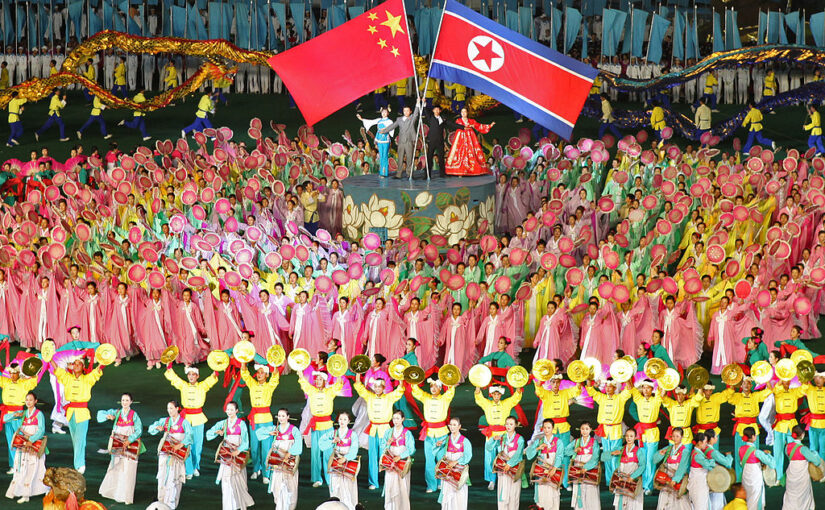
July 11 marked the 61st anniversary of the DPRK (Democratic People’s Republic of Korea)-China Treaty of Friendship, Cooperation and Mutual Assistance. Signed in Beijing by Premier Zhou Enlai and President Kim Il Sung, the treaty is still in force. It is China’s only formal alliance with any country.
Marking the occasion the leading newspapers of the Communist Party of China and the Workers’ Party of Korea, Renmin Ribao (People’s Daily) and Rodong Sinmum (Workers’ Daily) both carried authoritative articles.
According to People’s Daily: “The China-DPRK friendship, personally provided by the leaders of elder generation of the two countries in the struggle against the imperialists’ aggression, is a precious wealth common to both sides.
“China, as a good comrade and neighbor, will as ever continue to support the DPRK developing the economy, improving the people’s living standard and accelerating socialist construction. And it heartily wishes the fraternal Korean people greater successes on the road of achieving the prosperity of the country and creating happiness.
“No matter how the international and regional situation may change, invariable are the firm stand of the Chinese party and government to reliably defend the China-DPRK relations and consolidate and develop them on good terms, the Chinese people’s feelings of friendship toward the Korean people and the support of China to socialist Korea.”
Roding Sinmun noted that the treaty had served as “a motive force accelerating the struggle of the Korean and Chinese peoples for socialism” and continued:
“Our people sincerely hope that everything will go well in China and successes will be registered in socialist construction of China.
“We will as ever extend full support and solidarity to all the measures taken by the Chinese party and government to defend the core interests of the country, preserve the development of the state and defend the life and security of the people, and will always be with the Chinese people on the road of further developing the bilateral relations of friendship with socialism as the core.”
The following reports were originally carried by the Korean Central News Agency (KCNA).
Chinese Paper on China-DPRK Friendship
The Chinese People’s Daily carried its commentator’s article on July 11, the 61st anniversary of the conclusion of the DPRK-China Treaty of Friendship, Cooperation and Mutual Assistance.
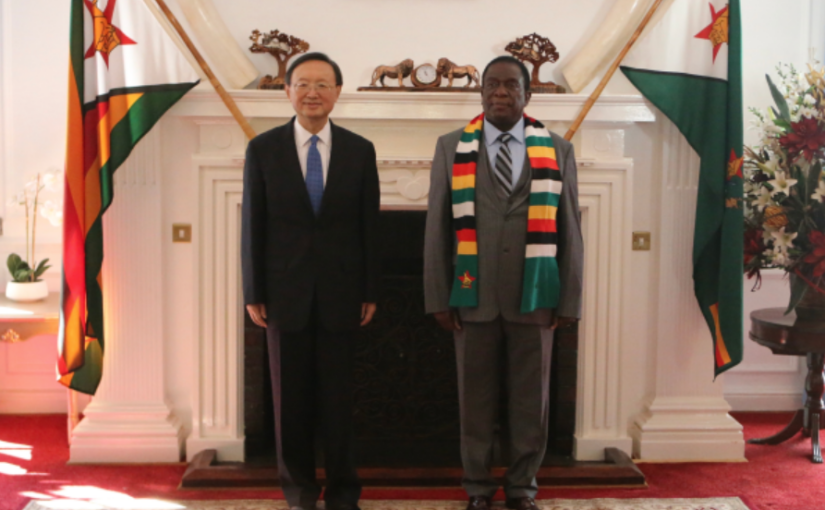
China’s top diplomat Yang Jiechi visited Zimbabwe and Mozambique at the beginning of July as the final part of a foreign tour that had previously taken him to Pakistan and the United Arab Emirates (UAE). China and the two southern African nations enjoy particularly close and friendly relations since Beijing extended all-out support to their armed struggles for national liberation against imperialism, colonialism and racism in the 1960s and 70s.
In a July 10 article entitled ‘Visit by China’s top diplomat underscores importance of Zimbabwe ties’, Hong Kong’s South China Morning Post (SCMP) observed that: “A trip to Harare this month by China’s top diplomat has underscored the importance of Beijing’s relationship with Zimbabwe, its firmest economic and diplomatic ally in Africa. Zimbabwe has been cut off from global capital markets in the two decades since the United States and some other Western nations imposed sanctions on Harare…leaving Beijing as the main financier of infrastructure projects such as hydroelectric dams, airports and roads.”
The paper quoted Yang as saying that China “stands ready to further strengthen all-dimensional exchanges with Zimbabwe, be it party to party, government to government, military to military or people to people”. It further noted that: “China provided arms and training to the guerrillas of the Zimbabwe African National Liberation Army during the armed struggle that toppled the country’s white minority government in 1980. Zimbabwean President Emmerson Mnangagwa…was among those trained by Beijing” and continued:
“At a meeting in Harare on July 3, Mnangagwa told Yang that if China had not vetoed a push by Western powers for the United Nations to punish Zimbabwe over the land reforms that evicted white farmers, the country could have been destroyed. ‘This speaks volumes of the solid relations between Zimbabwe and China,’ Mnangagwa said after the meeting. ‘In 2008, when the Western countries, the Americans and the British and their allies, wanted to invoke the United Nations Charter which [would have] allowed them to invade Zimbabwe, the Chinese exercised their veto. This is why we are still here and remain independent, so these are solid friends of Zimbabwe.’
“He said China also funded the upgrading of the Hwange 7 and 8 thermal power plants at an estimated cost of US$1.2 billion. The Chinese embassy in Harare said the Hwange expansion project is 88 per cent complete and is expected to add 600 megawatts to Zimbabwe’s national grid.
“China has also financed the building of major airports such as Robert Gabriel Mugabe International Airport in Harare and Victoria Falls International Airport… Tsingshan Group, through subsidiary Dinson Iron and Steel, is spending an estimated US$1 billion to build an iron ore mine and carbon steel plant capable of producing 2 million tonnes a year in Manhize, Mvuma – south of Harare – that will be the biggest steel plant in southern Africa.”
Earlier, on July 4, the SCMP reported that: “China is preparing to hand over a new US$140 million parliament building as a gift to Zimbabwe…The site at Mount Hampden, about 18km (11 miles) northwest of the capital Harare, heralds the start of a new city.” Noting that the complex, built by the Shanghai Construction Group, had been fully paid for by China as a gift to Zimbabwe, the paper wrote: “The contractors said the facility was now ready to be handed over, 3½ years after construction started on a project that employed more than 500 Chinese technicians and 1,200 local workers. ‘There is no doubt that the new parliament will become a landmark building in Zimbabwe and even in the whole of Southern Africa,’ Shanghai Construction Group manager Libo Cai said… ‘It will be yet another milestone for the China-Zimbabwe friendship which keeps getting stronger year after year.’”
In their meetings with Yang, both Zimbabwean President Emmerson Mnangagwa and Mozambican President Filipe Nyusi extended congratulations on the 101st anniversary of the founding of the Communist Party of China and wished complete success to the party’s forthcoming 20th National Congress. Yang told Nyusi that China and Mozambique had “forged a profound traditional friendship in the struggle against imperialism and colonialism.” They were both, he continued, “developing countries that adhere to independence.”
The following reports of Yang’s meetings with the Zimbabwean and Mozambican Presidents first appeared on the website of the Chinese Foreign Ministry.
With world attention still focused on the multiple crises – political, economic, humanitarian – gripping the South Asian island nation of Sri Lanka, we are very pleased to republish this admirable and thorough article by our Advisory Group member Benjamin Norton, originally carried on Multipolarista. With the Sri Lankan situation being cynically distorted into a supposed example of alleged Chinese ‘debt trap diplomacy’, Benjamin makes clear that 81% of Sri Lanka’s external debt is owed to US and European financial institutions, along with those of Japan and India. China accounts for just 10%. Sri Lanka has already suffered the imposition of no less than 16 IMF structural adjustment programs – a key factor in the country’s economically parlous state.
Benjamin notes that the Sri Lankan protests have been “driven by skyrocketing rates of inflation, as well as rampant corruption and widespread shortages of fuel, food and medicine – a product of the country’s inability to pay for imports.” He considers claims that the popular protests constituted some kind of “anti-China uprising” in the former British colony to be “even more detached from reality” than those suggesting ‘debt trap diplomacy’ on the part of Beijing. With regard to that issue, he shows in detail how both the BBC and mainstream academics have debunked such notions.
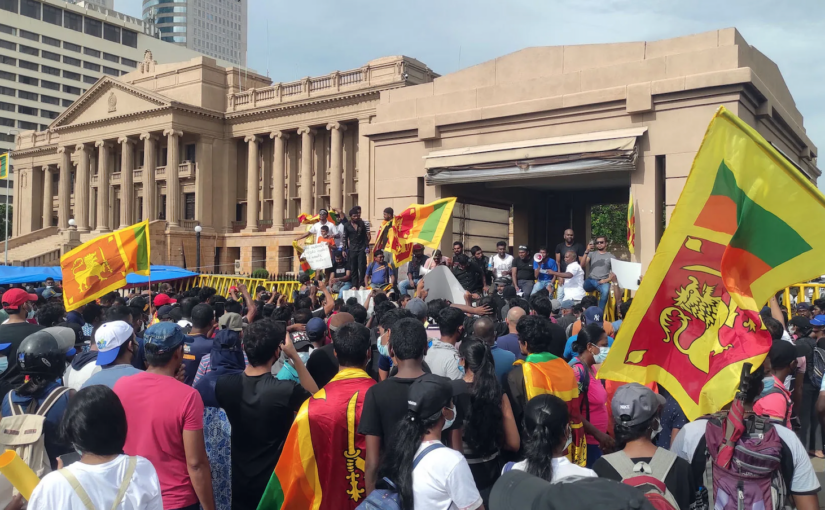
Facing a deep economic crisis and bankruptcy, Sri Lanka was rocked by large protests this July, which led to the resignation of the government.
Numerous Western political leaders and media outlets blamed this uprising on a supposed Chinese “debt trap,” echoing a deceptive narrative that has been thoroughly debunked by mainstream academics.
In reality, the vast majority of the South Asian nation’s foreign debt is owed to the West.
These structural adjustment programs clearly have not worked, given Sri Lanka’s economy has been managed by the IMF for many of the decades since it achieved independence from British colonialism in 1948.
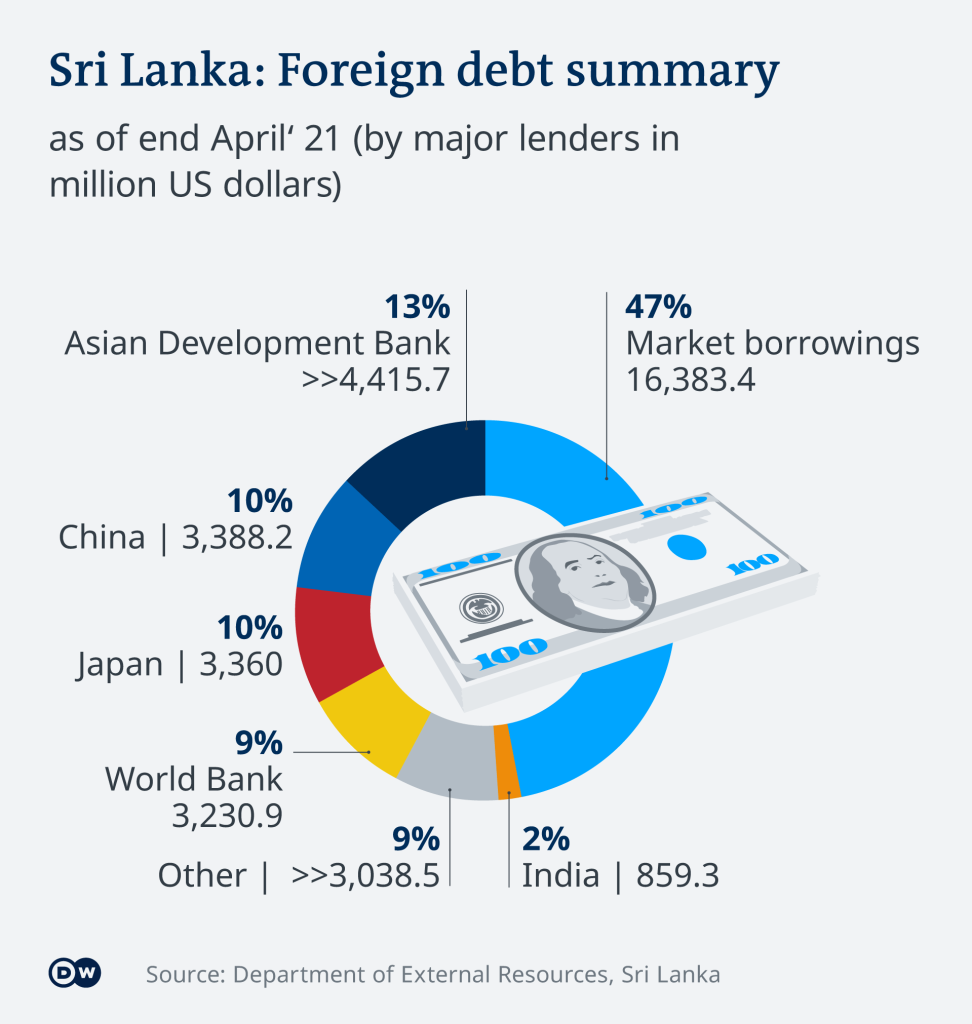
As of 2021, a staggering 81% of Sri Lanka’s foreign debt was owned by US and European financial institutions, as well as Western allies Japan and India.
This pales in comparison to the mere 10% owed to Beijing.
According to official statistics from Sri Lanka’s Department of External Resources, as of the end of April 2021, the plurality of its foreign debt is owned by Western vulture funds and banks, which have nearly half, at 47%.
The top holders of the Sri Lankan government’s debt, in the form of international sovereign bonds (ISBs), are the following firms:
BlackRock (US)
Ashmore Group (Britain)
Allianz (Germany)
UBS (Switzerland)
HSBC (Britain)
JPMorgan Chase (US)
Prudential (US)
The Asian Development Bank and World Bank, which are thoroughly dominated by the United States, own 13% and 9% of Sri Lanka’s foreign debt, respectively.
The “Uyghur Forced Labor Prevention Act”, the latest anti-China legislation to be enacted in the United States, came into effect on June 23, having been signed by President Biden last December. Under this law, all goods from China’s Xinjiang are barred from the US unless the importer can prove they were produced “free of forced labor”. It is, of course, notoriously difficult to “prove” a negative, something compounded by the arbitrary designations and assertions already advanced by the US with regard to the autonomous region.
In this article, originally published by Workers World, Betsey Piette notes that this measure will harm US industries and further fuel inflation. More especially she notes that, “if US politicians and anti-China lobbyists are genuinely concerned about protecting people from being subjected to ‘forced labor,’ they should look no further than the US prison-industrial complex. According to a report the American Civil Liberties Union released June 15, incarcerated workers in the US produce roughly $11 billion in goods and services each year but receive pennies an hour in ‘wages’ for their work.”
The US imprisons a higher percentage of its population than any other country, with some 800,000 people subject to such forced labor.
First signed by President Joe Biden in December, the “Uyghur Forced Labor Prevention Act” took effect June 23. Under this latest anti-China measure, all goods made in Xinjiang province are banned, unless the importer can demonstrate the imports were produced “free of forced labor.” The ban also impacts programs that transport Uyghur workers to job sites.
The new law could affect a handful of companies or far more. Its implementation could result in more detention of goods at the U.S. border, further delaying product deliveries and further fueling inflation. Hardest hit will be U.S. industries that rely on the import of commodities using lithium, nickel manganese, beryllium copper and gold mined in Xinjiang. These include manufacturers of solar panels, auto companies and energy firms.
This latest U.S. anti-China propaganda campaign is based on unsubstantiated claims that Uyghur people were forced to take up new jobs in industries recently relocated to Xinjiang.
However, if U.S. politicians and anti-China lobbyists are genuinely concerned about protecting people from being subjected to “forced labor,” they should look no further than the U.S. prison-industrial complex. According to a report the American Civil Liberties Union released June 15, incarcerated workers in the U.S. produce roughly $11 billion in goods and services each year but receive pennies an hour in “wages” for their work.
Jennifer Turner, principal author of the report stated: “The United States has a long, problematic history of using incarcerated workers as a source of cheap labor and to subsidize the costs of our bloated prison system. Incarcerated workers are stripped of even the most minimal protections against labor exploitation and abuse. They are paid pennies for their work in often unsafe working conditions, even as they produce billions of dollars for states and the federal government.”
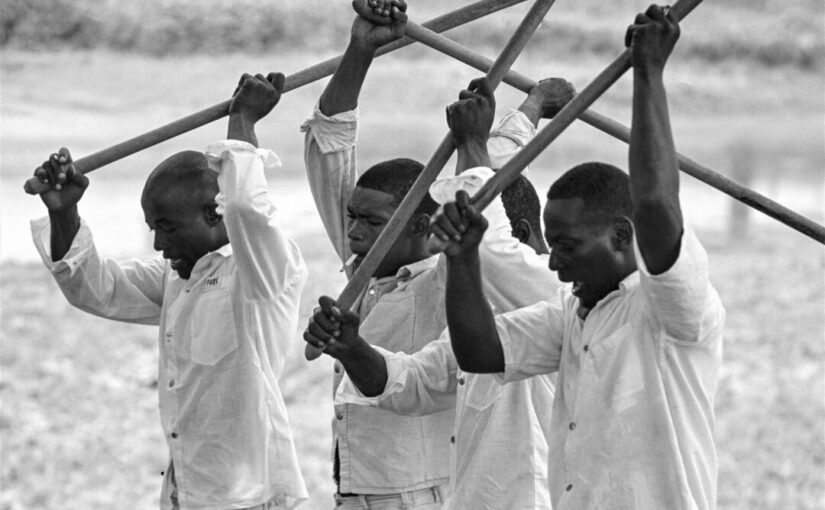
In the U.S., which imprisons a higher percentage of its population than any other country, roughly 800,000 people are subject to this forced labor, making roughly 13 cents to 52 cents per hour. In Alabama, Arkansas, Florida, Georgia, Mississippi, South Carolina and Texas, incarcerated workers are essentially enslaved — paid nothing for their labor.
Over 75% of incarcerated workers interviewed by the ACLU told researchers that if they refuse to work, they are subjected to punishment, including solitary confinement, loss of family visits and denial of reduced sentences.
The Global Times, which is publishing a series of stories to expose the U.S. as a real “contemporary slavery empire,” says that this exploitation of incarcerated workers “plainly demonstrates the U.S.’s real disregard for basic human rights and their brutal exploitation of the country’s workforce.”
The 13th Amendment to the U.S. Constitution, passed on Jan. 31, 1865, while abolishing enslavement actually allowed enslavement to remain legal, as “a punishment for crime whereof the party shall have been duly convicted.” This amendment lets the government legally impose forced labor on incarcerated workers across the country.
Prison labor insourcing
Part of the problem for the U.S. enforcement of the anti-China labor ban is identifying what companies produce goods involving Uyghur labor in Xinjiang province. But it is very easy to find what U.S. companies are profiting directly from privatizing prisons or exploiting prison labor.
A majority of the labor performed by exploited prisoner-workers directly benefits the states managing prisons. Incarcerated workers are forced to perform various tasks from food preparation to laundry services. But many private companies profit as well.
Two major companies — Core Civic and Geo Group — are the giants of the U.S. private prison industry. Core Civic recognized $526 million in annual gross profits in 2021. Geo Group made $628 million. But these companies are not alone in profiting from prisons.
A Feb. 15 report by CareerAddict.com estimated that 4,200 large corporations use over 600,000 incarcerated workers to produce goods and services. There are several well-known companies on this list. McDonalds and Wendy’s use prison labor to produce frozen beef patties and other products. Calls to Verizon, Sprint or Avis for service may be answered by incarcerated workers.
Walmart and Starbucks use enslaved prison labor to cut down their costs of producing goods and services. Prison labor produces circuit boards for Compaq. For years Aramark has used incarcerated workers to prepare and package most food items used in prisons. In 2019 Aramark was sued for using “involuntary servitude” — they were not paying incarcerated workers anything.
Politicians could amend the 13th Amendment to remove the prison labor exclusion clause. Biden could take measures to end contracts with private prison companies. But none of this is likely to happen under capitalism.
Those genuinely concerned about “forced labor” should be on board with the movement to abolish prisons.
On his first visit back to Hong Kong since 2019, long-term East Asian resident, and Friends of Socialist China Advisory Group member, Kenny Coyle writes that he found a city becalmed. “Rarely”, he observes, “has Western mainstream propaganda so successfully shrouded the truth about a city and society as open as Hong Kong.”
Kenny clarifies the meaning behind China’s insistence that Hong Kong was never a British colony, but rather a Chinese territory under illegal British occupation. His article, which also features an interview with Nixie Lam, a Legislative Council member from the Democratic Alliance for the Betterment and Progress of Hong Kong (DAB), the territory’s largest and most influential patriotic political party, is full of useful information. It was originally published in the Morning Star and we are pleased to reprint it here.
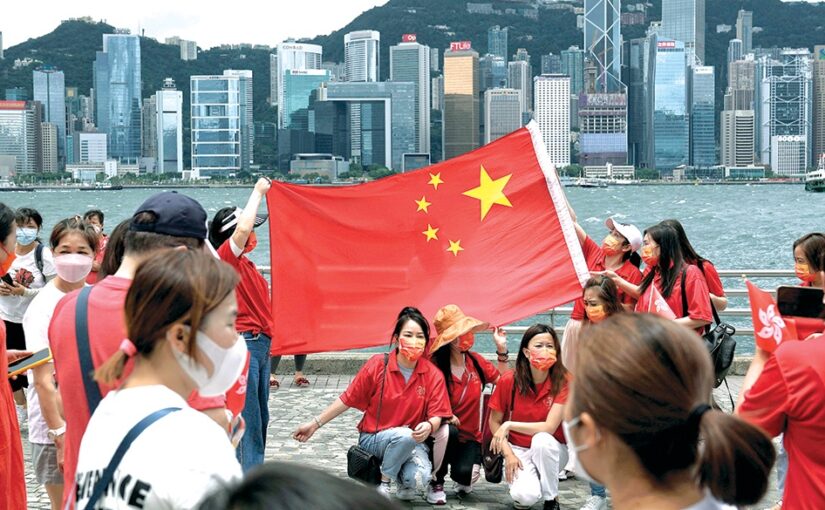
Hong Kong marked the 25th anniversary of its return to Chinese sovereignty with Chinese president Xi Jinping appearing in the city to witness the inauguration of the Chinese territory’s new leadership headed by John Lee.
The largely indoor ceremony had been forecast to take place amid a mild tropical typhoon, but for the past three years Hong Kong has been battered by quite different kinds of storms.
Xi’s visit takes place after an unprecedented period of turmoil. The first stage beginning in 2019 was characterised by a wave of initially peaceful mass protests against extradition legislation, which rapidly spiralled into violent anti-China protests.
The second stage by the ongoing battle to control the Covid pandemic in the city.
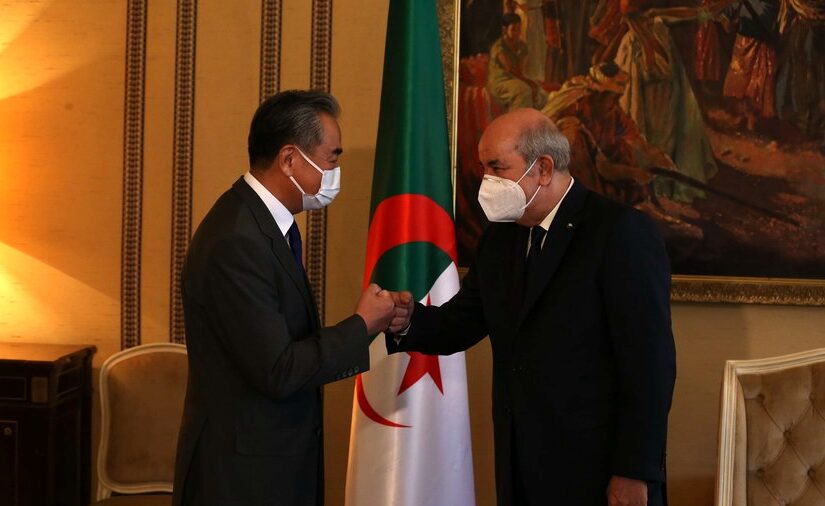
This month marks the 60th anniversary of the Algerian people’s victory in their war of independence and the foundation of the People’s Democratic Republic of Algeria. It is estimated that more than a million Algerians sacrificed their lives as the French colonialists fought a brutal war to hold on to their North African colony.
Greeting his Algerian counterpart Abdelmajid Tebboune on this significant occasion, Chinese President Xi Jinping wrote that “the Algerian people realised national independence and liberation after going through an arduous struggle, writing a glorious chapter of the liberation movements of the Arabian and African peoples. The Chinese government and the Chinese people provided support and assistance to Algeria’s independence revolution, and the two countries and two peoples forged a profound friendship during the struggles.”
Premier Li Keqiang and Foreign Minister Wang Yi also addressed messages to their Algerian counterparts.
China was the first non-Arab country to recognise the Algerian provisional government declared by the National Liberation Front (FLN) in 1958 and provided extensive assistance to the Algerian people in the form of weapons, funds and training. Algerian Foreign Minister Abdelkader Messahel, referred in a 2018 speech to “the vital contribution that China has brought to the Algerian revolution to help it regain its independence. The unwavering support of China continued as it was the first country to recognise the Provisional Government of the Algerian Republic (GPRA) a few weeks after its proclamation.”
Shortly after independence, Algeria welcomed the first ever medical aid team that China sent to Africa.
Xi Jinping Sends Message of Congratulation to Algerian President Abdelmadjid Tebboune on the 60th Anniversary of the Victory of the Algerian War of Independence / Li Keqiang Sends Message of Congratulation to Algerian Prime Minister Aymene Benabderrahmane
On July 5, 2022, President Xi Jinping sent a congratulatory message to President of the People’s Democratic Republic of Algeria Abdelmadjid Tebboune on the 60th anniversary of the victory of the Algerian War of Independence.
Xi Jinping pointed out, sixty years ago, the Algerian people realized national independence and liberation after going through an arduous struggle, writing a glorious chapter of the liberation movements of the Arabian and African peoples. The Chinese government and the Chinese people provided support and assistance to Algeria’s independence revolution, and the two countries and two peoples forged a profound friendship during the struggles. In recent years, political mutual trust between the two countries has been strengthened continuously and bilateral practical cooperation has been fruitful, taking the China-Algeria comprehensive strategic partnership to ever new levels. I attach great importance to the development of China-Algeria relations and stand ready to work with President Tebboune to push forward exchanges and cooperation in all fields within the framework of the Belt and Road cooperation for the benefit of the two countries and two peoples.
On the same day, Premier Li Keqiang sent a congratulatory message to Algerian Prime Minister Aymene Benabderrahmane. Li Keqiang said, since the establishment of diplomatic ties between the two countries 64 years ago, bilateral relations have been developing in a sound and stable manner. I would like to join hands with Prime Minister Aymene Benabderrahmane to expand and deepen mutually beneficial cooperation across the board, enrich the China-Algeria comprehensive strategic partnership and continuously improve the well-being of the two peoples.
In this article written for the Global Times, lawyer and peace activist Dan Kovalik provides a big-picture analysis of the major trends in geopolitics. Dan points out that for the last several decades, while the US and its key allies have oriented their economies largely to finance capital and the military-industrial complex, the socialist countries of Asia “are lifting hundreds of millions out of poverty and building sustainable infrastructure in their own countries and around the world.” It would benefit the people of the US to work with, and learn from, China and other developing countries rather than treating them as enemies.
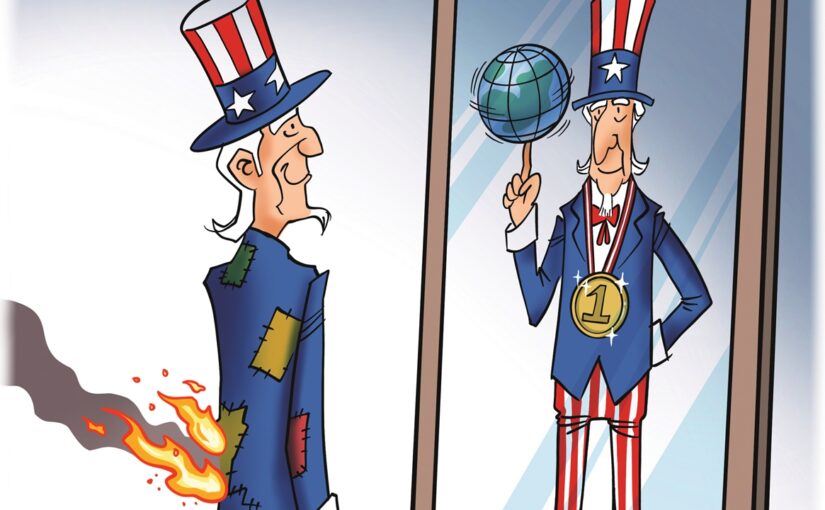
We are now witnessing a great realignment and transformation. The so-called “American Century” has given way to a new century in which other countries are asserting themselves and taking the lead in the world. This new world order seemed quite unlikely several decades ago when the USSR collapsed and it appeared, and the US certainly declared, that the United States would be the one, dominant power for many decades to come. Ironically, it was the US’ very attempt to maintain this status which has inexorably led to its losing it, and to its decline as a nation.
While ironic, this was all quite predictable. Indeed, the Democratic Party, in its 1900 party platform, warned of this very outcome when it stated, “[w]e assert that no nation can long endure half republic and half empire, and we warn the American people that imperialism abroad will lead quickly and inevitably to despotism at home.” But no sooner were these words uttered than that the US embarked upon unprecedented empire-building beyond its already-giant mainland which itself was the product of a brutal settler-colonial project which displaced, subdued and killed millions of people already living from the Atlantic to the Pacific.
The US, of course, settled upon the instruments of war and violence to achieve its imperial aims. After all, the reasoning went, these had worked so well for it in building the nation to begin with. This addiction to unending expansion through costly wars, however, was not and is not sustainable. Indeed, in his farewell address in 1961, President Dwight D. Eisenhower, himself a former General, warned that the US republic was under threat, not from abroad, but from a growing “military-industrial complex” which was threatening to usurp democratic and civilian rule of the country.
More recently, in what sounded like a postmortem of the United States, Jimmy Carter told President Trump when discussing China in 2019 that the US is “the most warlike nation in the history of the world,” and that this has cost the US dearly.
As Carter explained, “We have wasted, I think, $3 trillion [on military spending since 1979]. … China has not wasted a single penny on war, and that’s why they’re ahead of us. In almost every way.
The following article, published recently in People’s Daily (one of the most important, longstanding and widely-read newspapers in China), responds to NATO’s recently-issued Strategic Concept document, which describes China as a ‘systemic challenge’ and outlines NATO’s role in confronting this purported challenge. The article points out that – unlike the US or NATO – China’s record is one of consistently pursuing peace, multilateralism, non-interference and mutual benefit in international relations. The author calls on NATO to drop its anti-China aggression, put an end to New Cold War activity, and orient itself towards global peace.
The so-called new “Strategic Concept” document issued at the just-concluded 2022 NATO Summit distorts China’s domestic and foreign policies. It claims that China challenges NATO’s “interests, security and values,” and NATO will jointly respond to such “systemic challenge” posed by China.
NATO’s efforts to make and spread lies about China and hype the so-called “China threat” are driven by the organization’s reemerging Cold War mentality and ideological bias. It is just an awkward show staged by the U.S. to extend NATO’s reach to the Asia-Pacific region.
NATO’s practice encourages confrontation and threatens global security. Regional countries and the international society must stay alert to it.
China follows an independent foreign policy of peace and is always a staunch force for global peace and prosperity. The country has never initiated a war or conflict and never taken an inch of foreign land, nor has it interfered in other countries domestic affairs or exported ideology. It never engages itself in long-arm jurisdiction, unilateral sanctions, or economic coercion.
China is firmly committed to upholding multilateralism, supporting the international system with the United Nations at its core and the international order based on the Charter of the UN, international law and the universally recognized basic norms governing international relations.
Pursuing a peaceful development path, China is actively building a society with a shared future for mankind and advancing the high-quality construction of the Belt and Road Initiative. It has proposed and been implementing the Global Development Initiative and the Global Security Initiative, and offered a number of public products to help the international community deal with major issues on peace and development.
China presents valuable opportunities for world peace and development. It does not pose “systemic challenges”, as wrongly purported by NATO. NATO has disregarded facts and confounded black with white when making groundless accusations, smears and attacks against China. However, it will never change the fact or the international society’s positive evaluation on China.
NATO is a Cold War product that is gradually becoming a tool for the U.S. to maintain its hegemony and instigate a new “Cold War.” The first-ever mentioning of China in NATO’s so-called “Strategic Concept” document is closely related to U.S. coercion.
The incumbent U.S. administration inherits the wrong practices of its predecessor and keeps seeing China as a strategic competitor. It has formed cliques to oppress China.
The NATO Summit this year has not only hyped the so-called “China threat,” but also invited some Asia-Pacific allies of the U.S. It exactly exposed the strategic scheme of the U.S. to make NATO’s foray into the Asia-Pacific.
China has to pay a high attention and make a systematic response to NATO’s so-called “systemic challenge” rhetoric. Any attempt to hurt China’s legitimate interests will be met with strong reactions. The country has a firm resolution to safeguard its sovereignty, security and development interests. The U.S., emboldening itself by involving a few of its allies, will only see its plot fail at the end.
NATO has always been haunted by the Cold War mentality though the geopolitical tension has already ended for some 30 years. It has never stopped making enemies out of nothing. Indeed, NATO is a “systemic challenge” for global security.
NATO, or North Atlantic Treaty Organization, always poses as a regional defensive organization. However, it has never stopped geographical expansion. It has started and been involved in a big number of wars, killing innocent civilians, hurting world peace and creating humanitarian disasters.
To seek its own absolute security, NATO constantly moved its borders eastward, which led to the bitter fruit of the Ukraine crisis that seriously impacted the peaceful development of Europe and even the world at large.
NATO”s previous expansions and disruptive practices were all under the disguise of “consolidating democracy” and “extending stability, promoting common values.” Today, it is once again playing the same old trick, calling its conspiracy to disrupt the Asia-Pacific region a move to protect “international order” and safeguard its values. Even former NATO Secretary General Javier Solana warned that a “global NATO” or “NATO plus” could divide the world into adversarial blocs.
The outdated Cold War script must not be repeated in the Asia-Pacific, neither shall the disorder and conflict currently taking place in Europe be duplicated in the region.
We sternly warn NATO that it must immediately stop its groundless accusation and provocative remarks on China, abandon its outworn Cold War mentality and zero-sum game, and halt its dangerous practice of disordering Europe and the Asia-Pacific region.
Any attempt to reverse the trend of history is doomed to fail.
This article by Carlos Martinez discusses the themes emerging from the recently-concluded 50th Session of the UN Human Rights Council, in particular the stark disparity in the conduct of the imperialist powers (plus a few hangers-on) and the majority of the world’s countries. While the US and its allies continue their campaign to cynically use human rights issues to slander certain countries and promote their New Cold War, the rest of the world increasingly demands the depoliticisation of human rights. This article was originally published on CGTN.
Global politics seems to be moving in two opposite directions. On the one hand, the US and its closest allies are stepping up their efforts to consolidate and expand US hegemony. On the other hand, the countries of the developing world, the socialist countries and the formerly-colonised countries are increasingly united in their efforts to promote multipolarity, multilateralism, sovereign development, and democracy in international relations.
These two contrasting approaches have been evident during the 50th Session of the UN Human Rights Council, which concluded recently on 8 July.
A group of 47 countries issued a joint statement to the session, making all sorts of lurid accusations against China regarding its treatment of the people of the Xinjiang Uyghur Autonomous Region. The countries signing up to this slanderous statement were the “usual suspects” of the US, Western Europe, Japan, Australia, Canada and a handful of others.
Out of 30 NATO members, the only countries not to sign were Turkey, Greece and Hungary. All the ‘Five Eyes’ signed. Meanwhile, not a single one of the approximately 50 Muslim-majority countries put their names to this statement, although it purportedly represents the interests of Uyghur Muslims.