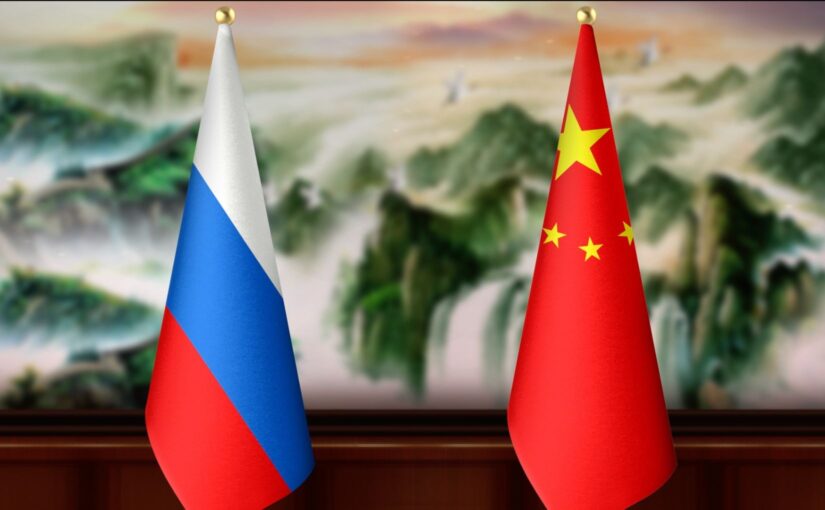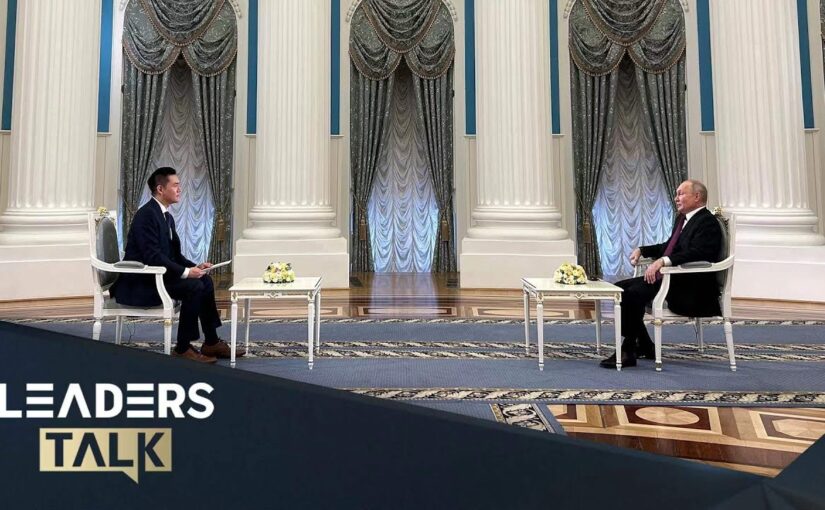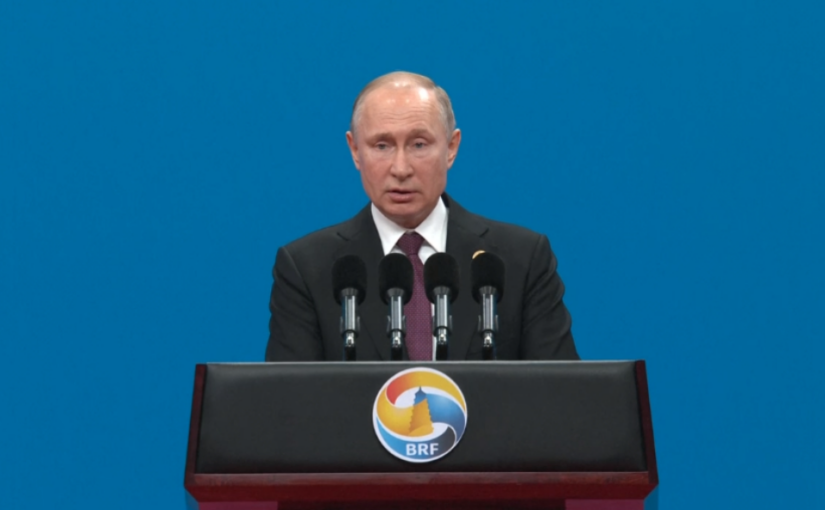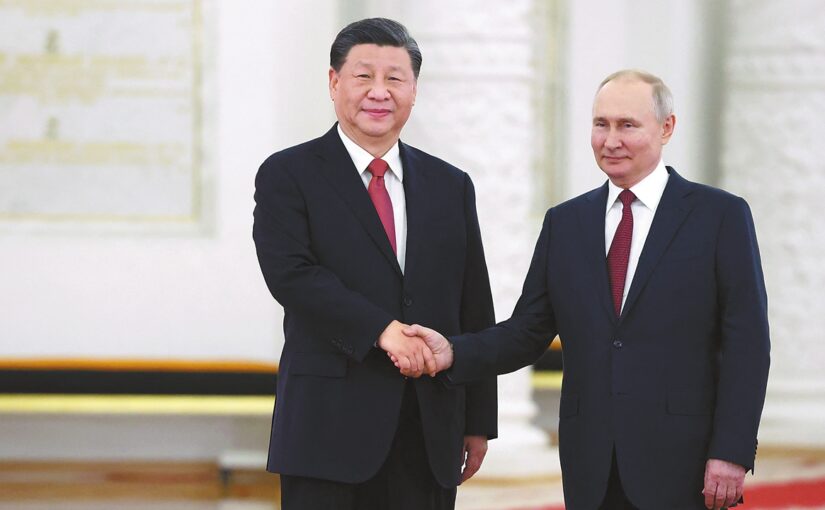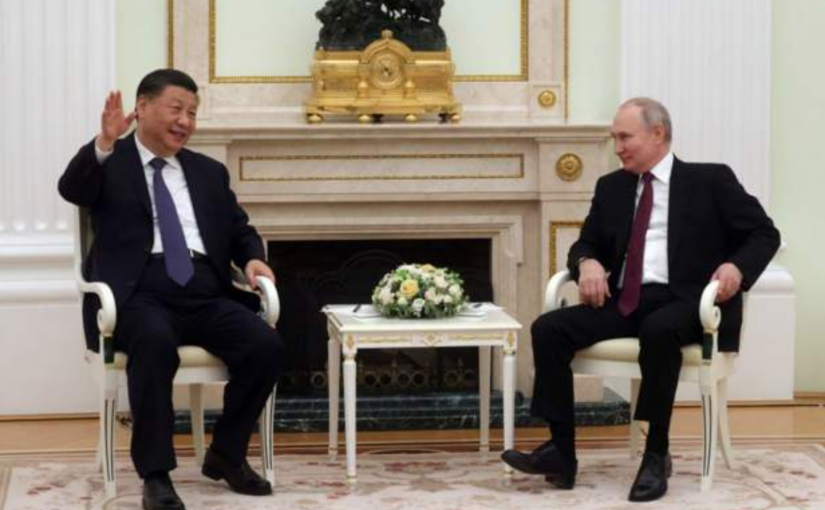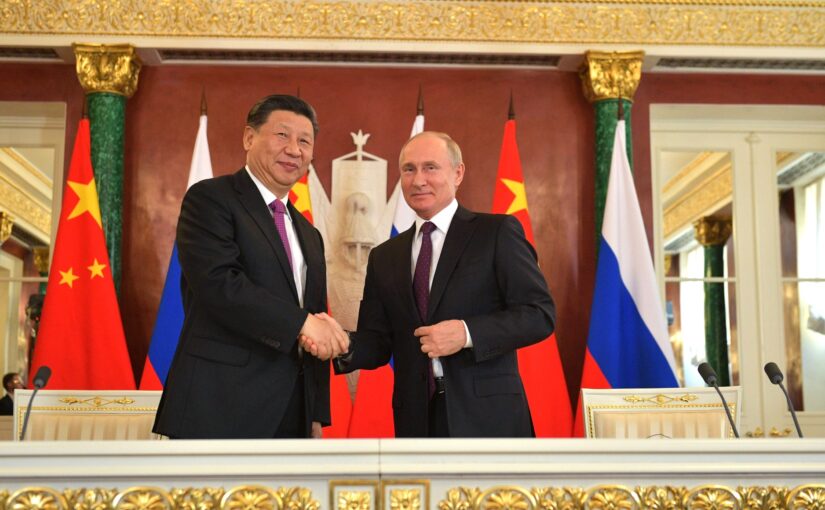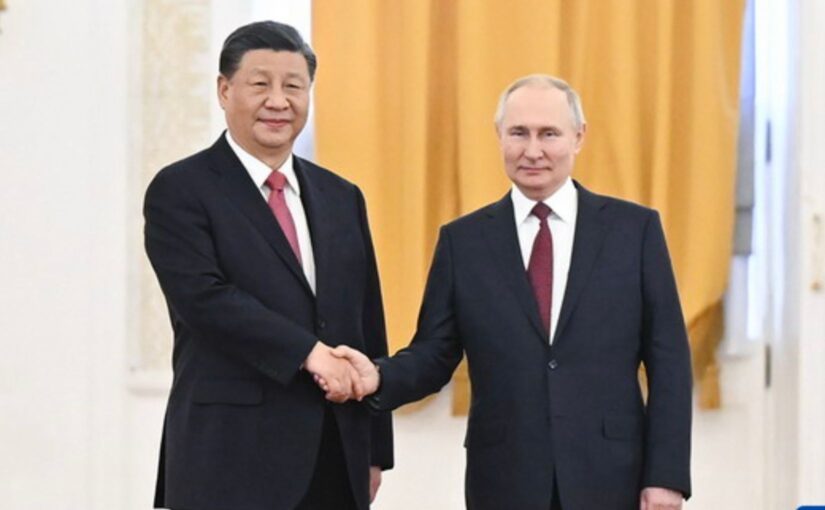
The Presidents of China and Russia exchanged friendly greetings and reviewed their bilateral relations, along with a range of regional and international issues, in a February 8 telephone call in advance of the Chinese New Year.
President Xi Jinping told his Russian counterpart Vladimir Putin that China and Russia withstood many tests together in the past, and their relations embrace new development opportunities in the future. He added that it has become a fine tradition for him and Putin to exchange greetings at the turn of the year, review the achievements of the development of bilateral relations, and jointly look forward to the future.
Noting that this year marks the 75th anniversary of the establishment of diplomatic relations between China and Russia, Xi said that China is ready to continue to uphold the spirit of mutual assistance and everlasting friendship with Russia so as to jointly write a new chapter in China-Russia relations.
He stressed that the two sides should strengthen strategic coordination, safeguard the national sovereignty, security and development interests of their respective countries, and resolutely oppose external interference in their internal affairs.
He also called on both sides to support Kazakhstan in holding a successful Shanghai Cooperation Organization summit this year, enhance unity and mutual trust, and safeguard regional security and stability as well as the common interests of regional countries, adding that China also actively supports Russia as the rotating BRICS presidency this year.
President Putin said this year marks the 75th anniversary of the establishment of diplomatic relations between Russia and China. Under the joint efforts of both sides, bilateral relations have reached an unprecedented high level.
Expressing thanks to China for supporting Russia’s work in the BRICS rotating presidency this year, Putin said Russia stands ready to strengthen communication and coordination with the Chinese side in regional and international multilateral frameworks such as the Shanghai Cooperation Organization, to support each other, and to uphold multilateralism and safeguard respective legitimate interests.
Russia firmly abides by the one-China principle, opposes any dangerous actions provoking China on the Taiwan question, and believes that any plot impeding China’s peaceful reunification will not succeed, Putin noted.
The following article was originally published by the Xinhua News Agency.
BEIJING, Feb. 8 (Xinhua) — China and Russia withstood many tests together in the past, and their relations embrace new development opportunities in the future, said Chinese President Xi Jinping on Thursday.
Xi made the remarks in his phone conversation with his Russian counterpart, Vladimir Putin, ahead of the Chinese New Year. In the phone call, the two heads of state also exchanged greetings of the Chinese New Year.
Noting that the Chinese Spring Festival is approaching and the festive atmosphere is strong, Xi said that the Chinese people are full of hope and confidence towards the coming Year of the Dragon.
Extending his best wishes to the friendly Chinese people, Putin said that the dragon symbolizes wisdom and strength in the Chinese culture.
He wished the Chinese people happiness in the Year of the Dragon and hoped that all their wishes would be fulfilled.
In the phone call, Xi said that it has become a fine tradition for him and Putin to exchange greetings by the turn of the year, review the achievements of the development of bilateral relations, and jointly look forward to the future.
Noting that he and Putin met twice and reached many important consensuses in the past year, Xi said that under the two leaders’ joint guidance, the governments, legislatures and political parties of the two countries have engaged in active exchanges, and bilateral cooperation in various fields has shown resilience and vitality, Xi said.
The annual bilateral trade volume met the aim ahead of schedule, while cultural and local exchanges between the two countries were vigorously carried out, and the Years of Sports Exchange between China and Russia were successfully concluded, Xi said.
Noting that this year marks the 75th anniversary of the establishment of diplomatic relations between China and Russia, Xi said that China is ready to continue to uphold the spirit of mutual assistance and everlasting friendship with Russia to jointly write a new chapter in China-Russia relations.
Xi stressed that the two sides should strengthen strategic coordination, safeguard the national sovereignty, security and development interests of their respective countries, and resolutely oppose external interference in their internal affairs.
The two sides should cultivate new momentum for bilateral cooperation, maintain the stability of the industrial and supply chains, jointly host the China-Russia Years of Culture, hold down-to-earth and warm cultural exchanges that connect the hearts of the two peoples, and constantly tighten the bonds of their people, Xi said.
Xi called on both sides to support Kazakhstan in holding a successful Shanghai Cooperation Organization summit this year, enhance unity and mutual trust, and safeguard regional security and stability as well as the common interests of regional countries, adding that China also actively supports Russia as the rotating BRICS presidency this year.
China stands ready to strengthen international multilateral coordination with Russia, practice the true multilateralism, advocate an equal and orderly multipolar world and economic globalization that benefits all, and make the global governance system more just and reasonable, so as to make positive contributions to building a community with a shared future for mankind, Xi said.
For his part, Putin said this year marks the 75th anniversary of establishment of diplomatic relations between Russia and China. Under the joint efforts of both sides, bilateral relations have reached an unprecedented high level.
Last year, Russia-China cooperation in various fields yielded fruitful results, Putin said, expressing his willingness to continue to maintain close interaction with President Xi, so that the two leaders can guide the two countries to achieve new progress in cooperation in all fields.
He hopes the two sides will successfully hold the Russia-China Years of Culture and a series of cultural and people-to-people exchanges this year, further cementing the foundation of friendship between the two peoples.
Expressing thanks to China for supporting Russia’s work in the BRICS rotating presidency this year, Putin said Russia stands ready to strengthen communication and coordination with the Chinese side in regional and international multilateral frameworks such as the Shanghai Cooperation Organization, to support each other, and to uphold multilateralism and safeguard respective legitimate interests.
Russia firmly abides by the one-China principle, opposes any dangerous actions provoking China on the Taiwan question, and believes that any plot impeding China’s peaceful reunification will not succeed, Putin noted.
The two heads of state also exchanged in-depth views on current international and regional hotspot issues. The two heads of state agreed to keep close contact in the new year, and have in-depth exchanges on China-Russia relations and strategic issues of common concern.