China sets out position on Palestine and Strait of Hormuz at UN

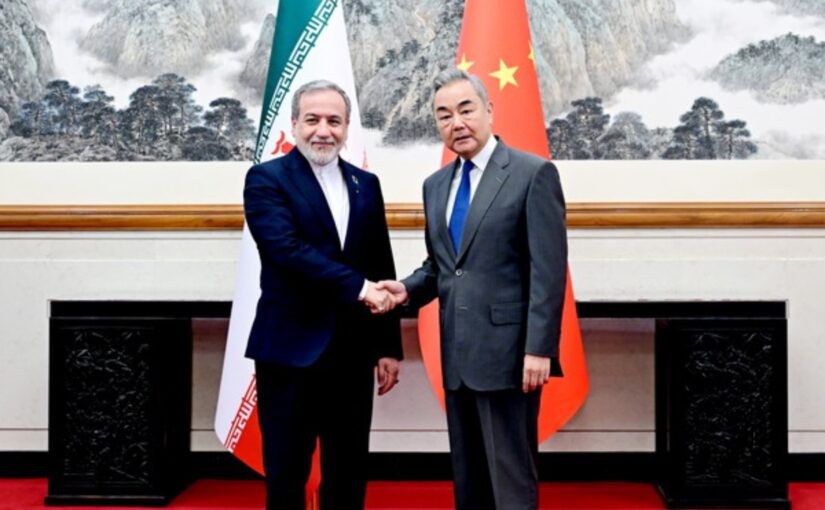
Chinese Ambassador to the UN Fu Cong has reiterated China’s clear positions on the rights of the Palestinian people and on the present situation in the Strait of Hormuz at open debates in the Security Council held on consecutive days.

Speaking on April 28, Fu Cong said:

“The Palestinian question has always been at the heart of the Middle East issue and must not be marginalised under any circumstances. For decades, the Palestinian-Israeli conflict has revolved in cycles. Its fundamental crux is that the two-State solution is only half-realised. The State of Israel was established long ago, while the State of Palestine remains out of reach. Although intense clashes have come to a halt, the Palestinian people are still forced to keep company with death and suffering, the situation in the occupied Palestinian territories continues to worsen, and the foundation of the two-State solution risks being completely hollowed out. Turmoil and war are not the fate of the Palestinian people. The international community must summon the greatest sense of urgency to reverse this negative trajectory and rectify the historic injustice endured by Palestine.”

He went on to make three points:

  • Gaza is not a permanent battlefield, and the suffering of its civilians must cease immediately. While efforts by the international community to broker a ceasefire in Gaza are welcome, the most pressing task remains cementing the ceasefire and scaling up aid. Since October last year, Israel has relentlessly mounted attacks and fortified its military presence, resulting in over 800 fatalities and more than 2,000 wounded. The humanitarian crisis in Gaza remains dire, characterised by scarcity of essential supplies, deplorable sanitary conditions, and a medical system teetering on the precipice of total collapse. Israel must fulfill its international humanitarian law obligations, dismantle all barriers to humanitarian access, and guarantee that UNRWA [the United Nations Relief and Works Agency for Palestine Refugees in the Near East] and other humanitarian agencies can carry out their aid work.
  • Settlement activities are unacceptable, and tensions in the West Bank must be deescalated. Israel is currently accelerating the expansion of settlements, having recently approved the construction of 34 additional settlements and initiating the rebuilding of the Sanur settlement, which had been shuttered for many years. The escalating violence in the West Bank is equally concerning. Settler violence is intensifying, and the occupying power frequently conducts searches, arrests, and raids, even promulgating death penalty legislation specifically targeting Palestinians. Israel must heed the strong appeals of the international community, immediately halt illegal settlement activities, effectively curb settler violence, and ensure robust accountability for all attacks.
  • The two-State solution is non-negotiable, and the independent statehood of Palestine must be supported. It is deeply concerning that voices opposing the two-State solution continue to come from Israel, with some even threatening to strangle the idea of a Palestinian state. The international community must increase support for Palestine to advance the early establishment of a fully sovereign and independent state of Palestine based on the 1967 borders with East Jerusalem as its capital.

The previous day, Fu Cong made remarks on the Safety and Protection of Waterways in the Maritime Domain in which he said:

Continue reading China sets out position on Palestine and Strait of Hormuz at UN

China and Laos mark 65 years of relations

On April 25, Xi Jinping, general secretary of the Communist Party of China (CPC) Central Committee and Chinese president, exchanged congratulations with Thongloun Sisoulith, general secretary of the Lao People’s Revolutionary Party (LPRP) Central Committee and Lao president, on the 65th anniversary of China-Laos diplomatic relations.

Xi said that as socialist neighbours in a community with a shared future, China and Laos are united by shared ideals and beliefs, identical social systems and similar development paths and that their “comradely and brotherly” bond, personally forged by the older generation of leaders of both parties and countries, has grown ever stronger over time.

The Chinese leader voiced willingness to work with Thongloun to take the 65th anniversary of China-Laos diplomatic relations and the Year of China-Laos Friendship as an opportunity to enhance strategic mutual trust, carry forward the traditional friendship, and push for more outcomes in practical cooperation across various fields, so as to deliver more benefits to the two peoples.

For his part, Thongloun said that over the 65 years since the establishment of diplomatic relations, the friendly ties between the two parties, the two countries and the two peoples — marked by solidarity in times of difficulty — have been lifted to higher levels, with fruitful outcomes in building the Laos-China community with a shared future. He expressed gratitude for the long-standing valuable support and assistance provided by the CPC, the Chinese government and people.

Chinese Premier Li Qiang and Lao Prime Minister Sonexay Siphandone also exchanged congratulations on the same day.

A guest column contributed to the Xinhua News Agency by Liu Ting noted:

“Sharing weal and woe for the past 65 years, China and Laos enjoy a friendship that is rooted in the geographical proximity connected by mountains and rivers, tempered by the joint struggle for independence and liberation, and enriched by mutual support in their respective socialist causes.”

He added that: “The 2024-2028 action plan on building a China-Laos community with a shared future signed in October 2023 has drawn up a clear blueprint for all-round cooperation. Connectivity paves the way for win-win cooperation, and the China-Laos Railway stands as a landmark of friendship. As a landmark project of high-quality Belt and Road cooperation, the railway has continued to unleash the efficiency of a ‘golden corridor’ since its opening.”

Continue reading China and Laos mark 65 years of relations

It takes two to tango: Will Ukraine meet China halfway?

In the following article, Kemran Mamedov, a staff member of the Confucius Institute at the Free University of Tbilisi in Georgia, assesses the prospects for China-Ukraine relations, noting that the allegations made against China by powerful forces in Ukrainian society, from President Zelensky downwards, are generally “devoid of substantive content and carry a politically biased undertone.” In contrast, China has consistently sent signals of readiness for constructive dialogue with Ukraine, but Kyiv “rejects the proposed path of finding common ground in relations with Beijing.” In fact, a “careful analysis of Ukraine’s media landscape leads to the conclusion that the country’s leadership is launching a large-scale information campaign to discredit China’s policy.”

On March 2, Ukrainian President Volodymyr Zelensky once again made a loud accusation against China, stating that Beijing is “not involved” in the process of peaceful resolution of the Russian-Ukrainian conflict. “It is very important for us to involve China not in the war, but specifically in ending the war… For us, China’s participation would certainly be valuable, but so far we do not see its involvement,” said the Ukrainian leader.

The Ukrainian president’s attacks on China are traditionally devoid of substantive content and carry a politically biased undertone, which immerses the Ukrainian audience in an atmosphere of fictitious explanations for Ukraine’s military and economic failures as the result of cooperation between Beijing and Moscow.

Meanwhile, China is consistently pursuing a policy of seeking a diplomatic solution to the deep and systemic contradictions between Russia and Ukraine. During a briefing at the United Nations Security Council on February 17, dedicated to Ukraine, China’s Permanent Representative, Fu Cong, stated that Beijing holds an open and clear position on the Ukrainian issue, namely its unconditional willingness to assist in a peaceful dialogue. He emphasised that China is neither the creator of the Ukrainian crisis nor a participant in it. Earlier, during negotiations with Ukraine’s Foreign Minister Andriy Sybiha on the sidelines of the 62nd Munich Security Conference, Chinese Foreign Minister Wang Yi stated that China and Ukraine should adhere to the “right course and support the stable and healthy development of bilateral relations,” highlighting Beijing’s commitment to the principles of mutual respect, equality, and mutually beneficial cooperation.

Continue reading It takes two to tango: Will Ukraine meet China halfway?

Chinese lawyers condemn US and Israel

The Chinese Society of International Law has issued a powerful statement on April 25 opposing the illegal use of force by the United States and Israel, citing the examples of Venezuela and Iran.

The statement notes that Article 2(4) of the United Nations Charter establishes the fundamental principle under international law of the prohibition of the use of force: “All Members shall refrain in their international relations from the threat or use of force against the territorial integrity or political independence of any state, or in any other manner inconsistent with the Purposes of the United Nations.”

It further notes that on January 3 this year, the United States “blatantly launched a military strike against Venezuela, forcibly seized Venezuela’s President Nicolás Maduro and his wife, and removed them to the United States. There is no lawful justification for this US military operation… It has brutally trampled on international law and the basic norms of international relations and must be rectified as soon as possible.”

Turning to Iran, it says: “The joint airstrikes by the United States and Israel have targeted multiple cities and regions including the capital Tehran. These actions constitute the use of force prohibited by international law, amount to an armed attack against and invasion of Iran and violate the rule under international law regarding the personal inviolability of heads of State. The use of force by the United States and Israel against Iran finds no basis in international law; it is a serious illegal act and must cease immediately.”

The following article was originally published by the Xinhua News Agency.

The Chinese Society of International Law on Saturday issued a statement on upholding international law and opposing the illegal use of force.

The statement said that in recent months, there have been grave instances of illegal use of force in Latin America and the Middle East. It solemnly condemns the illegal acts of the United States and Israel, and believes that it is necessary to reaffirm the imperative of observing the Charter of the United Nations (the Charter) and international law in order to effectively safeguard international peace and security.

The statement added that the Charter constitutes the legal cornerstone of the post-World War II international order. Article 2(4) of the Charter establishes the fundamental principle under international law of the prohibition of the use of force: “All Members shall refrain in their international relations from the threat or use of force against the territorial integrity or political independence of any state, or in any other manner inconsistent with the Purposes of the United Nations.” “Territorial integrity” means “the inviolability of territory.” The Charter expressly provides for only two exceptions to this prohibition of the use of force: actions authorized by the United Nations Security Council under Chapter VII of the Charter and the exercise of the inherent right of self-defense of States referred to in Article 51 of the Charter.

The statement said that on Jan. 3 this year, the United States blatantly launched a military strike against Venezuela, forcibly seized Venezuela’s President Nicolás Maduro and his wife, and removed them to the United States. There is no lawful justification for this U.S. military operation. It seriously violates the principle prohibiting the use of force, severely infringes on Venezuela’s territorial sovereignty, and grossly breaches the rule under international law regarding the personal inviolability and immunity of heads of State. It has brutally trampled on international law and the basic norms of international relations and must be rectified as soon as possible.

The statement further stressed that on Feb. 28 this year, the United States and Israel initiated large-scale military strikes against Iran. The armed conflict in the Middle East has continued to this date. The joint airstrikes by the United States and Israel have targeted multiple cities and regions including the capital Tehran. These actions constitute the use of force prohibited by international law, amount to an armed attack against and invasion of Iran, and violate the rule under international law regarding the personal inviolability of heads of State. The use of force by the United States and Israel against Iran finds no basis in international law; it is a serious illegal act and must cease immediately. Furthermore, the attacks on Iranian civilians and civilian objects, including schools, hospitals and energy facilities, also seriously violate international humanitarian law.

The statement called on all States, especially major States with special responsibilities and influence in international affairs, to abide by international law, practice international rule of law, and settle international disputes peacefully. It called on all States to resolutely oppose the illegal use of force in international relations, maintain international peace and security, and promote the building of a community with a shared future for humanity.

China’s aid to Cuba: Solidarity against the US embargo in the time of Trump 2.0

The following article by Lee Siu Hin, originally published in Workers World, documents the scale and substance of China’s support for Cuba under the intensified pressure of Trump’s second term.

While the Trump regime tightens the screws on Cuba, China has been demonstrating its solidarity with the Cuban people in myriad ways, including sending food aid, restoring buses to the streets of Havana, and building solar power infrastructure designed to free Cuba from the energy stranglehold that forms the sharpest edge of the US blockade.

Since Trump returned to the White House last year, the embargo on Cuba has reached its most punishing levels. The US invasion of Venezuela in January, which severed Cuba’s oil supply lifeline, has compounded the crisis. Cuba faces food shortages, an energy emergency, and the continued denial of basic medical supplies – not through political or economic mismanagement (as the Western media would have you believe) but as a deliberate policy of economic warfare conducted by the US empire.

China’s response has been concrete and strategic. Ninety thousand tons of rice; emergency financial assistance of $80 million; medical equipment that Cuba cannot source elsewhere due to the embargo. The solar energy program being developed by the two countries is designed not merely to plug gaps but to structurally transform Cuba’s energy system so that it can enjoy energy sovereignty.

The economic aid provided by China constitutes a comprehensive, multi-pronged strategy, encompassing not only firm and robust political backing but also extensive, substantive assistance across vital sectors such as energy, food security and public welfare.

This is what solidarity looks like when it is not a gesture. Siu Hin concludes:

Everyone has a vital role to play in international solidarity. Western activists can also learn a great deal from the positive experience of the Global South, notably from China.

China has supported Cuba since its revolution in 1959. Shortly after, Che Guevara visited China in 1960 to secure comprehensive support for the newly born socialist island nation.

China played a critical role as a true friend in times of U.S. threat

For the past year, since Donald Trump returned to the White House in 2025, he has continued the imperialist policy of all-out blockade against Cuba — first during his initial term (2017–2021) and then under Biden (2021–2025). In response, China has offered timely and critical assistance to Cuba when it was needed most. The Chinese Foreign Ministry spokesperson declared on Jan. 27 that China “calls for immediate lifting of blockade and sanctions on Cuba. We will continue to support and assist Cuba.” (Spokesperson of Ministry of Foreign Affairs of China on X)

Continue reading China’s aid to Cuba: Solidarity against the US embargo in the time of Trump 2.0

The KMT-CPC Meeting: Architecture of peace and global stability in a changing world

In April 2026, against the backdrop of a global crisis – most notably a criminal war waged by the United States and Israel against Iran that has effectively closed the Strait of Hormuz and sent energy prices soaring to levels not seen in a generation – something highly significant took place in the Great Hall of the People in Beijing: President Xi Jinping met with Cheng Li-wun, Chairwoman of the Kuomintang (KMT), reopening a high-level cross-strait dialogue that had been frozen for nearly a decade (as reported on this website on 13 April).

The following article – submitted by Douglas de Castro, Professor of International Law at Lanzhou University – examines that meeting through the lens of international law, arguing that the CPC-KMT dialogue is a demonstration of what the UN Charter’s core principles – peaceful resolution of disputes, non-interference, sovereign equality – actually look like in practice.

Professor de Castro’s analysis unpacks the legal architecture of the meeting – from UNGA Resolution 2758 and the 1992 Consensus to China’s Anti-Secession Law and the Global Governance Initiative – and shows why the lessons of Cheng Li-wun’s visit extend well beyond the Taiwan Strait.

The meeting in April 2026 between President Xi Jinping, the General Secretary of the Communist Party of China (CPC) Central Committee, and Cheng Li-wun, the Chairwoman of the Kuomintang (KMT), was a historic moment in modern diplomacy. It took place during one of the most turbulent times in recent international relations history. This dialogue took place in the East Hall of the Great Hall of the People in Beijing.

As a scholar of international law, I found that the meeting not only reopened high-level communication channels between parties that had been closed for almost ten years but also demonstrated how the principle of non-interference and the peaceful resolution of conflicts, when applied in practice, can ease tensions in regions important to the international system. It upholds and reaffirms the importance of Articles 2(3) and 2(4) of the UN Charter, which require that disputes be settled peacefully and that no State threaten or use force against the territorial integrity of another State or region.

Continue reading The KMT-CPC Meeting: Architecture of peace and global stability in a changing world

Victory for Swazi people as Taiwan separatist leader forced to abandon plan to celebrate their oppression

The planned visit by Taiwan’s separatist leader to Eswatini (Swaziland), where he was due to “celebrate” 40 years of rule by Africa’s last absolute monarch, was aborted after three African nations, Mauritius, Seychelles and Madagascar, took the principled stand of refusing to let his aircraft transit their air space.

The Taiwan Affairs Office of China’s State Council “appreciated the position and actions of the relevant countries in upholding the one-China principle”. Eswatini is the only African country to maintain so-called “diplomatic relations” with Taiwan.

Separatist leader Lai Ching-te complained on X that, “China’s coercive actions undermine the status quo, once again exposing the risks authoritarian regimes pose to the international order.”

But writing in People’s Dispatch, Pavan Kulkarni responded that: “While characterising China’s government as an ‘authoritarian regime’, Lai whined about not being able to travel to Swaziland to join the celebration to mark 40 years of rule by Africa’s last absolute monarch, King Mswati III, whom he referred to as a ‘like-minded partner’.

“Crowned on April 25, 1986, Mswati inherited the throne from his father, King Sobhuza II, who seized all power in 1973 by a royal decree that suspended the 1968 constitution and banned all political parties, which remain illegal to date.

“‘This milestone’ on April 25, 2026, marking 40 years of Mswati’s absolute monarchical rule, ‘is not a cause for celebration but rather a reminder of the ongoing struggles for democratic governance and human rights,’ said the Communist Party of Swaziland (CPS)…

“Mswati…  has taken 16 wives, and owns palaces, private jets, and a fleet of Rolls-Royce cars, while nearly 60% of his subjects live in abject poverty, eking out a survival on less than two dollars a day. But the monarchy’s status quo is becoming increasingly untenable as its domestic unpopularity reached a fever pitch in mid-2021, when a violent crackdown on the country-wide, pro-democracy protests sparked a mass uprising against the monarchy. Amid attacks on his properties and businesses, Mswati fled the country, returning only after his army suppressed the uprising, killing scores and wounding hundreds.”

The article adds that: “‘Helicopters, weapons, and ammunition supplied by Taiwan were used by the Swaziland army to kill protesters. It is widely known that Taiwan supplies arms and also provides training for the army,’ CPS head of publicity, Sandile Xaba, told Peoples Dispatch.

“‘The Taiwanese separatist regime plays a dangerous role in sustaining the absolute monarchy in Swaziland,’ the party maintains. Taiwan, in turn, extracts massive surpluses from cheap Swazi labour, especially women, labouring in the textile sector in which it is heavily invested.

Continue reading Victory for Swazi people as Taiwan separatist leader forced to abandon plan to celebrate their oppression

Pakistani astronaut to join China’s space station

Two Pakistani candidates have been selected as the first foreign astronauts for China’s space mission training, the China Manned Space Agency announced on April 22, calling it a landmark achievement in international cooperation on the Chinese space station.

The statement added that Muhammad Zeeshan Ali and Khurram Daud will come to China soon as reserve astronauts for training. After completing all training and evaluations, one of them will participate in a space mission as a payload specialist, becoming the first foreign astronaut onboard the Tiangong space station. This selection and training of astronauts for Pakistan, it noted, is also a milestone in China’s space program and another successful example of the China-Pakistan all-weather strategic cooperative partnership in the space sector, adding that the peaceful use of outer space for the benefit of all humanity has always been the original aspiration and mission of China’s space program development.

The following day, Pakistan Prime Minister Shehbaz Sharif met the astronauts and described their participation in space research as a landmark achievement for the country and a matter of national pride. The successful candidate will conduct several scientific experiments in microgravity, which span areas including material science, fluid physics, life and bio science, and biotechnology.

“I am confident that you are going to write a new chapter in Pakistan’s history,” the prime minister told the astronauts, appreciating their dedication and hard work that enabled them to reach this important stage.

The astronauts expressed gratitude for the opportunity and termed their participation in space research a “unique honour and a source of pride for Pakistan”. They reaffirmed their resolve to meet the nation’s expectations through dedication and hard work.

On April 24, the Xinhua News Agency reported that the two astronauts had arrived in China and been admitted to the Astronaut Centre of China in Beijing.

The next day, Xinhua further reported that China had launched a Pakistani satellite from the Taiyuan Satellite Launch Centre in north China’s Shanxi Province. The satellite, named PRSC-EO3, was lifted off at 8:15 p.m. by a Long March-6 carrier rocket and successfully entered its planned orbit. This launch marked the 640th flight mission of the Long March carrier rocket series.

On the evening of April 25, our co-editor Keith Bennett was an invited speaker at the annual dinner of Third World Solidarity, in which many prominent members of Britain’s Pakistani community participated. In the course of his speech, Keith said:

“And there is something else to take pride in this week. Thanks to Pakistan’s friendship with China, on Wednesday it was announced that two Pakistani candidates have been selected for training as the first foreign astronauts to participate in China’s space program. Muhammad Zeeshan Ali and Khurram Daud arrived in China today and later this year one of them will be chosen to participate in a space mission as a payload specialist, becoming the first foreign astronaut onboard the Tiangong space station.

“It is often said that China-Pakistan friendship is higher than the Himalayas. Well, now it is literally true. And just as the smiling face and engaging personality of Yuri Gagarin, the first man in space, won hearts around the world, I’m sure that Pakistan’s astronauts, or taikonauts as they are termed in China, will win hearts not just in Pakistan, but throughout the Ummah [the global Muslim community] and indeed beyond.”

The following articles were originally published by the Xinhua News Agency and by the Pakistani newspaper Express Tribune.

Two Pakistani astronauts selected for China’s space mission training

BEIJING, April 22 (Xinhua) — Two Pakistani candidates have been selected as the first foreign astronauts for China’s space mission training, the China Manned Space Agency announced on Wednesday afternoon, calling it a landmark achievement in international cooperation on the Chinese space station.

The agency said in a statement that Muhammad Zeeshan Ali and Khurram Daud will come to China soon as reserve astronauts for training. After completing all training and evaluations, one of them will participate in a space mission as a payload specialist, becoming the first foreign astronaut onboard the Tiangong space station.

In February 2025, China and Pakistan signed a cooperation agreement on the spaceflight of a Pakistani astronaut to the Chinese space station in Islamabad, officially launching the selection process for Pakistani astronauts. After three rounds of rigorous screening, two Pakistani reserve astronauts were ultimately chosen.

Continue reading Pakistani astronaut to join China’s space station

Why has China blocked Meta’s purchase of Manus AI?

When China’s National Development and Reform Commission ordered Meta to unwind its $2 billion acquisition of AI startup Manus on 27 April, Western media reached predictably for its standard toolkit: “authoritarian overreach”, “arbitrary intervention”, an assault on the “democratisation of technology.” What this framing systematically obscures is the substantive legal, strategic and political logic behind the decision.

The two pieces collected here provide that missing context. Sara Vivacqua’s investigation, published by the progressive Brazilian outlet Diário do Centro do Mundo and translated into English by the author, dissects both the legal architecture of China’s decision and the character of the company it rejected. Manus is not simply a commercial product; it is an autonomous AI agent – capable of operating inside authenticated platforms, accessing local sessions and executing complex multi-step tasks – built by Chinese engineers in China, with Chinese state support, before a hasty relocation to Singapore (presumably for purposes of regulatory evasion). The NDRC’s ruling establishes a clear and consequential precedent: jurisdictional control follows where technology is built and who builds it, not where a holding company is incorporated.

But Sara goes further, placing the ruling in the context of what Meta actually is. The company’s integration into US military AI development, its Llama models deployed across federal agencies and Five Eyes intelligence partners, its partnership with defence contractor Anduril, and its documented history of global electoral interference through the Cambridge Analytica scandal – all of this reframes the acquisition not as a business deal but as a potential intelligence operation. The question the Western press refuses to ask is the obvious one: why would any sovereign state hand strategic AI infrastructure to a company that functions as an arm of the US national security apparatus?

Below Sara Vivacqua’s article, we reproduce a Global Times editorial making the complementary case from a Chinese regulatory perspective: that the decision is legally grounded, internationally consistent, and entirely compatible with China’s continued openness to foreign investment in non-sensitive sectors. The EU, the US and Japan all operate comparable review mechanisms; the difference is that when China uses them, it is treated in the Western media as evidence of authoritarianism rather than ordinary statecraft.

Together, these two pieces offer what the mainstream coverage has failed to provide: a clear-eyed account of a decision that is legally sound and strategically coherent.

How China Blocked Zuckerberg’s Espionage Project with Manus AI

Meta, owned by Mark Zuckerberg and the parent company of Facebook, Instagram and WhatsApp, found itself frustrated this Monday (27th April) in its attempt to appropriate Chinese artificial intelligence technology.

Continue reading Why has China blocked Meta’s purchase of Manus AI?

China strengthens ties with southeast Asian neighbours

Chinese Foreign Minister Wang Yi paid visits to Cambodia, Thailand and Myanmar, three of China’s southeast Asian neighbours, between April 22-25.

The first meeting of the China-Cambodia “2+2” strategic dialogue mechanism between foreign and defence ministers was held in the Cambodian capital Phnom Penh on April 22.

Wang Yi and Minister of National Defence Dong Jun co-chaired the meeting with Cambodian Deputy Prime Minister and Minister of Foreign Affairs and International Cooperation Prak Sokhonn and Deputy Prime Minister and Defence Minister Tea Seiha. The two sides exchanged in-depth views on bilateral relations, political and defence security cooperation and international and regional issues and reached a broad consensus.

Wang Yi stated that the current international situation is undergoing turbulent changes and intertwined disruptions, weighing on the stability and development of regional countries. In the face of a complex and grim external environment, China and Cambodia have maintained strategic clarity, stood side by side and supported each other, which has further cemented bilateral mutual trust and steadily boosted strategic resilience. President Xi Jinping’s historic visit to Cambodia last April and in-depth strategic communication with Cambodian leaders opened a new chapter for building an all-weather China-Cambodia community with a shared future in the new era. The leaders of both countries agreed on establishing the “2+2” strategic dialogue mechanism between foreign ministers and defence ministers of the two countries to inject new impetus into fostering stronger strategic mutual trust and strategic coordination.

The Chinese Foreign Minister noted that amid accelerated major changes unseen in a century, China and Cambodia need to need to forge closer solidarity than ever before. Both sides should deepen political and security cooperation, strengthen the exchange of governance experience, enhance their respective governance capabilities, and firmly keep the initiative in national development and security in their own hands. China is ready to provide platforms for more comprehensive and effective communication between Cambodia and Thailand (following their recent border conflict). China will continue to support Cambodia in accelerating development and revitalisation, and its efforts to improve people’s livelihoods. China will also continue providing humanitarian support for the resettlement of Cambodian border residents and other needs, and advance cooperation on poverty alleviation demonstration projects.

He added that the international community is currently undergoing the most profound turbulence and transformation since the end of the Cold War. China appreciates Cambodia’s active support for the four major global initiatives proposed by President Xi Jinping, and stands ready to deepen cooperation with Cambodia within the framework of the initiatives, build an Asian security model featuring common security, seeking common ground while reserving differences, and dialogue and consultation, and steer the global governance system toward greater fairness and equity.

Continue reading China strengthens ties with southeast Asian neighbours

Xi Jinping says that China and Laos should take a strategic perspective on the future and destiny of socialism

Special envoy of General Secretary of the Lao People’s Revolutionary Party (LPRP) Central Committee and President of Laos Thongloun Sisoulith, Saleumxay Kommasith, recently visited China. The visit took place within the context of the close comradely relations between the two neighbouring socialist countries, and in particular to further brief China’s leaders on the key outcomes of the 12th National Congress of the LPRP, which took place in early January, and also as part of the Year of China-Laos Friendship, with 2026 marking the 65th anniversary of their diplomatic relations.

Chinese President and General Secretary of the Communist Party of China (CPC) Central Committee Xi Jinping met with Saleumxay Kommasith on April 21.

Xi pointed out that the mutual dispatch of special envoys by the CPC and the LPRP to brief each other on major political agendas demonstrates the profound traditional friendship and high-level political mutual trust between the two sides. He expressed his belief that that under the leadership of the Central Committee of the LPRP headed by General Secretary Thongloun, the Lao Party, state and people will surely overcome all difficulties, successfully complete all goals and tasks, steadily follow the socialist path, and achieve the centenary goal of the Party.

Xi emphasised that, at this new historical starting point, China and Laos should follow the policy of long-term stability, forward thinking, good neighbourliness and comprehensive cooperation, and the spirit of being good neighbours, good friends, good comrades and good partners. The two sides should take a strategic perspective on the future and destiny of socialism to maintain close coordination and cooperation, deepen strategic alignment, expand practical cooperation, jointly address common challenges, and advance the building of a China-Laos community with a shared future toward high standards, high quality and high levels.

Saleumxay, who is a member of the Political Bureau of the LPRP Central Committee and deputy prime minister of Laos, conveyed a letter from Thongloun to Xi and briefed him on the 12th National Congress of the LPRP. He noted that China has maintained a safe and stable domestic political and social environment for a long time and created a miracle of sustained and rapid economic growth, and its role and influence on the international stage have been continuously enhanced.

Chinese Foreign Minister Wang Yi, who is also a member of the Political Bureau of the CPC Central Committee, met with Saleumxay on the same day.

Continue reading Xi Jinping says that China and Laos should take a strategic perspective on the future and destiny of socialism

Chinamaxxing in the 1960s and 1970s

The following is the full text of the presentation prepared by our co-editor Keith Bennett for our April 12 webinar on the subject of ‘Socialist Chinamaxxing: How China’s achievements are a product of socialism’. Due to time constraints, Keith previously delivered an abbreviated version of his remarks. The livestream of the webinar and videos of all the speeches as delivered can be viewed here. The video of Keith’s speech is embedded below the text.

We’ve heard some excellent speakers on the present trend of Chinamaxxing.

For my part, I’m going to attempt to give a certain historical and comparative perspective. Going back to the 1960s and 70s. And therefore, if you like, making a case that what we see today is at least Chinamaxxing 2.0, even if the term itself didn’t previously exist.

My focus here is on the cultural and intellectual rather than the party political. Although the background and context are inevitably political.

The late 1960s and 70s were a time of great change in China. Political life was still in tumult, but the mass mobilisations of the Cultural Revolution abated and were curtailed. A stridently revolutionary foreign policy gave way to handshakes between Chairman Mao and President Nixon. And a procession of other western political leaders generally from the right of the political spectrum, such as Britain’s Edward Heath.

But what remained at the time was a sense that China was a remote and somewhat mysterious place. Literally a world away from the West. Few people went there. Besides political considerations on both sides there were also objective factors. Social media and mobile telephony simply did not exist. As late as the mid-1980s, the London-Beijing flight with BA was London-Rome-Bahrain-Hong Kong-Beijing.

Yet the fascination for China in important sectors of western societies belied and overcame the physical and mental remoteness.

The political seeped into the cultural and each impacted on the other.

Barely two months after France had been shaken by the events of May 1968, and four months after demonstrators protesting the American war in Vietnam had clashed with police outside the US embassy in London, the Beatles recorded a track entitled Revolution, composed by John Lennon. Initially released as the B side to the single Hey Jude, it includes the lines:

But if you go carryin’ pictures of Chairman Mao

You ain’t gonna make it with anyone anyhow

Apparently, this was a late addition to the words, being added in the studio, but Lennon said in a promotional clip that he regarded them as the song’s most important lyrics.

They may have been meant to express disapproval, but he had certainly noticed the phenomenon. Moreover, they encountered a backlash.

New Left Review dismissed the song as “a lamentable petty bourgeois cry of fear.” But by January 1971, in a conversation with Tariq Ali, Lennon said of the song: “I made a mistake, you know. The mistake was that it was anti-revolution.” The following year, he remarked: “I should have never said that about Chairman Mao.”

Continue reading Chinamaxxing in the 1960s and 1970s

Pioneers of Ireland-China friendship make 50th anniversary return trip

On April 22, 18 former students from University College Dublin (UCD) arrived in Beijing for what for most of them is their first visit to China for half a century. The last time was in September 1976 when they came as members of a 24-strong UCD Soccer Club squad, the first Western football team to play in China since the establishment of the People’s Republic in 1949.

In an interesting article previewing this return visit, Denis Staunton, the newspaper’s Beijing correspondent, writes in the Irish Times:

“Richard Nixon and Henry Kissinger had already initiated the West’s opening to Beijing, which was by then represented at the United Nations, but it was still a highly unusual destination for Irish people.”

Indeed, it was to still be another three years before Ireland and China established diplomatic relations.

Setting out some of the background, Staunton writes: “Paddy Dwyer was an 18-year-old commerce student when he captained the team in China on an expedition that seemed too outlandish when their coach Tony O’Neill proposed it. A medical student known as the Doc, O’Neill worked out the plan, found contacts in China and secured sponsors to help pay for the trip.”

“Certainly, my parents were in disbelief initially. I don’t think anybody believed that it was going to materialise,” Dwyer recalls.

“David Andrews,” Staunton continues, “who was the club’s president and already a Fianna Fáil TD [member of the Irish parliament], described the idea of playing in China as like going on a trip to the moon.”

Their first game was in Shanghai, where they played in front of a crowd of 40,000 people. Dwyer recalls: “We were wearing green Irish jerseys. And I think in retrospect, the Chinese soccer people believed that this was an Irish team. But this was an under-19 UCD team.

“For me, the team that we played against, it was like a provincial team. It would be the equivalent of a Leinster team or a Munster team now in rugby terms. It wasn’t a university side. I think they hammered us 4-1.”

Their trip was to take a dramatic turn. John McGrath, one of the team’s goalkeepers who was a first-year student of history and politics, recalls that a few days after the match in Shanghai, they walked up a hillside to a tea house where they were drinking “a cup of hot water with some tea leaves in it”, when Andrews appeared.

Continue reading Pioneers of Ireland-China friendship make 50th anniversary return trip

Xi’s envoy attends inauguration of Congolese President

Shao Hong, vice chairperson of the National Committee of the Chinese People’s Political Consultative Conference (CPPCC), attended the April 16 inauguration ceremony of President of the Republic of the Congo Denis Sassou Nguesso as the special envoy of President Xi Jinping. Sassou Nguesso was elected by an overwhelming majority on March 15 to his fifth presidential term as the candidate of the Congolese Party of Labour (PCT).

At a bilateral meeting the day following the inauguration, Shao conveyed cordial greetings and best wishes from Xi to Sassou Nguesso and said that the friendship between China and the Republic of the Congo enjoys a long history and has grown stronger over time. China attaches great importance to the development of bilateral relations and is willing to work with the Congolese side to implement the consensus reached by the two heads of state, deepen mutually beneficial cooperation, and fulfill their responsibilities as co-chairs of the Forum on China-Africa Cooperation (FOCAC) to lead the development of China-Africa relations and strengthen solidarity and coordination among the Global South.

Sassou Nguesso spoke highly of the bilateral relations, stressing that the Congolese side cherishes the traditional friendship between the two countries and is willing to deepen friendly cooperation with China in various fields, strengthen communication and coordination on international hotspot issues, and further advance the building of a high-level community with a shared future between the two countries.

The inauguration took place in a stadium in Kintélé, a suburb north of the capital of Brazzaville, which was filled with tens of thousands of supporters waving national flags. Among the large number of foreign dignitaries present were the presidents of Angola, the Democratic Republic of Congo (DRC), the Central African Republic (CAR), Equatorial Guinea, Rwanda, Chad, Gabon, Togo, Ghana and Burundi.

In his inaugural address, Sassou Nguesso pledged to implement his development programme, titled “Accelerating the March Toward Development,” with a focus on economic diversification and modernisation, agricultural mechanisation, infrastructure development, education, youth training, and improvements to the health system. He said peace, stability and infrastructure development would be the priorities of his new mandate.

The president also called on Congolese citizens to promote Pan-Africanism and strengthen regional integration, while reaffirming his support for initiatives aimed at advancing Africa’s economic development.

Earlier, on March 30, President Xi Jinping had sent a congratulatory message to Denis Sassou Nguesso on his re-election as President of the Republic of the Congo.

Xi Jinping noted that China and the Republic of the Congo share a profound traditional friendship. In recent years, the two sides have continuously consolidated political mutual trust, firmly supported each other on issues concerning each other’s core interests and major concerns, and conducted fruitful cooperation in various fields. The two countries have joined hands to fulfill their roles as co-chairs of the Forum on China-Africa Cooperation (FOCAC), playing a leading role in promoting the development of China-Africa relations and South-South cooperation.

The following articles were originally published by the Xinhua News Agency and on the website of the Chinese Foreign Ministry.

Chinese envoy attends inauguration of president of Republic of the Congo

BRAZZAVILLE, April 17 (Xinhua) — Chinese President Xi Jinping’s special envoy Shao Hong attended the inauguration ceremony of President of the Republic of the Congo Denis Sassou Nguesso here on Thursday at the invitation of Sassou Nguesso.

On Friday, Sassou Nguesso met with Shao, also vice chairperson of the National Committee of the Chinese People’s Political Consultative Conference, at the presidential palace in Brazzaville.

After conveying cordial greetings and best wishes from Xi to Sassou Nguesso, Shao said that the friendship between China and the Republic of the Congo enjoys a long history and has grown stronger over time.

China attaches great importance to the development of bilateral relations and is willing to work with the Congolese side to implement the consensus reached by the two heads of state, deepen mutually beneficial cooperation, and fulfill their responsibilities as co-chairs of the Forum on China-Africa Cooperation to lead the development of China-Africa relations and strengthen solidarity and coordination among the Global South, Shao said.

Sassou Nguesso asked Shao to convey his sincere greetings to Xi and thanked the Chinese president for sending a special envoy to attend his inauguration ceremony.

He spoke highly of the bilateral relations, stressing that the Congolese side cherishes the traditional friendship between the two countries and is willing to deepen friendly cooperation with China in various fields, strengthen communication and coordination on international hotspot issues, and further advance the building of a high-level community with a shared future between the two countries.


Denis Sassou Nguesso sworn in as president of Republic of the Congo

BRAZZAVILLE, April 16 (Xinhua) — President of the Republic of the Congo Denis Sassou Nguesso, re-elected in the March 15 presidential election, was sworn in on Thursday for a new five-year term.

The ceremony took place at Kintele Stadium in the northern suburbs of Brazzaville, the capital city, in the presence of several African heads of state.

In his inaugural address, Sassou Nguesso pledged to implement his development programme, titled “Accelerating the March Toward Development,” with a focus on economic diversification and modernization, agricultural mechanization, infrastructure development, education, youth training, and improvements to the health system.

He said peace, stability and infrastructure development would be the priorities of his new mandate.

The president also called on Congolese citizens to promote Pan-Africanism and strengthen regional integration, while reaffirming his support for initiatives aimed at advancing Africa’s economic development. 


Xi Jinping Sends Congratulatory Message to Denis Sassou Nguesso on His Re-election as President of the Republic of the Congo

March 30 (MFA) – On March 30, 2026, President Xi Jinping sent a congratulatory message to Denis Sassou Nguesso on his re-election as President of the Republic of the Congo.

Xi Jinping noted that China and the Republic of the Congo share a profound traditional friendship. In recent years, the two sides have continuously consolidated political mutual trust, firmly supported each other on issues concerning each other’s core interests and major concerns, and conducted fruitful cooperation in various fields. The two countries have joined hands to fulfill their roles as co-chairs of the Forum on China-Africa Cooperation (FOCAC), playing a leading role in promoting the development of China-Africa relations and South-South cooperation. Xi said that he attaches great importance to the development of bilateral relations and stands ready to work with President Denis Sassou Nguesso to continuously add new dimension to the high-level community with a shared future between China and the Republic of the Congo, making greater contributions to the building of an all-weather China-Africa community with a shared future for the new era.

President Chapo’s visit strengthens traditional China-Mozambique friendship

Mozambican President Daniel Chapo paid a state visit to China, April 16-22, at the invitation of his Chinese counterpart Xi Jinping.

Meeting with President Chapo in Beijing on April 21, Xi Jinping pointed out that the China-Mozambique traditional friendship has travelled through history and across mountains and seas. Since the establishment of diplomatic relations, China and Mozambique have extended mutual trust and mutual support for each other, setting up a fine example of China-Africa friendship and South-South cooperation. Under the new circumstances, further deepening China-Mozambique friendly cooperation meets the shared expectations of the people of both countries and conforms to the prevailing trend of stronger solidarity and coordination among Global South countries against common challenges. He further stressed that friendship and mutual trust are the defining features and political strengths of China-Mozambique relations. Facing the changing and turbulent international landscape, the two sides should continue to strengthen coordination, solidarity and collaboration in the UN and other institutions, and jointly advocate an equal and orderly multipolar world and a universally beneficial and inclusive economic globalisation, and safeguard international fairness and justice.

President Xi Jinping noted that in the past 70 years of China-Africa diplomatic relations, no matter how the international landscape evolved, the two sides have always forged ahead shoulder to shoulder, through thick and thin. China and Africa, together with other Global South countries, represent a just force in this turbulent and transforming world. The conflicts in the Middle East are spilling over into African countries. China is ready to work with Africa to navigate these challenging times and jointly promote peace and seek common development. As it expands high-standard opening-up, China always puts Africa in a special and prioritised position. Starting from May 1, China will roll out zero-tariff measures across the board to all the 53 African countries having diplomatic relations with China and further expand access of African products to the Chinese market through an upgrade of the green channel and other initiatives.

President Chapo noted that it is a great pleasure to be the first leader of an African country to pay a state visit to China this year, which testifies to the friendly and brotherly bond between the two countries, and carries great significance to the people of Mozambique. He congratulated China on its remarkable achievements made under the leadership of President Xi Jinping, and on China’s exemplary role among Global South countries. China is a true friend of Mozambique that all along extends selfless support and assistance to his country.

Following the talks, the two heads of state jointly witnessed the signing of over 20 cooperation documents in areas including Belt and Road cooperation, implementation of the Global Security Initiative, economy and trade, people-to-people exchanges, medical and health, and news media. The two sides issued the Joint Statement Between the People’s Republic of China and the Republic of Mozambique on Building the China-Mozambique Community with a Shared Future in the New Era.

The Mozambican leader met with Chinese Premier Li Qiang the same day.

Li said that China will help Mozambique extend its industrial chains, increase added value and better turn its resource advantages into development momentum. China stands ready to strengthen the alignment of development strategies with Mozambique, steadily expand the scale of bilateral trade, and deepen cooperation in fields such as agriculture, fisheries, energy and mineral resources, and infrastructure construction.

The two sides should also strengthen cooperation in healthcare, education, culture, tourism, disaster prevention and mitigation, among other areas. And given the changing international landscape, China and Africa should strengthen solidarity and collaboration, actively implement the four major global initiatives, uphold fairness and justice, and safeguard shared interests.

Continue reading President Chapo’s visit strengthens traditional China-Mozambique friendship

China boosts natural gas partnership with Turkmenistan

China and Turkmenistan marked a major advance in their cooperation in the natural gas sector on April 17 when Vice Premier Ding Xuexiang, in his capacity of special representative of President Xi Jinping, attended the ceremony to break ground on work to expand production at the  giant Galkynysh gas field, in the fourth of seven planned development phases, together with National Leader of the Turkmen People and Chairman of the Halk Maslahaty of Turkmenistan Gurbanguly Berdimuhamedov.

Turkmenistan holds the world’s fourth largest gas reserves and nearly all its exports go to China. Galkynysh, which is located in the Karakum desert about 400 kilometres (250 miles) east of the capital Ashgabat, has been producing gas since 2013 and is the world’s second-largest gas field. The expansion work is being carried out by the China National Petroleum Corporation (CNPC) together with local partner Türkmengaz. Both are state owned companies.

Speaking at the ceremony, Ding, who is also a member of the Standing Committee of the Political Bureau of the Communist Party of China Central Committee, said that the smooth commencement of the fourth phase of the Galkynysh gas field will further elevate energy cooperation between China and Turkmenistan to a new level.

He added that under the strategic guidance of the two countries’ top leaders, China-Turkmenistan natural gas cooperation has yielded fruitful results, strongly supporting the economic and social development of both countries and benefiting their people.

And he advanced a three-point proposal:

  • Both sides should prioritise quality and build the project into a premium one by promoting craftsmanship and advancing construction to high standards, thus striving to deliver a first-class project that can stand the test of time.
  • Both sides should pursue innovation-driven development and make the project a benchmark by promoting innovations in project management, technology and cooperation models, so as to provide experience and demonstration for major natural gas projects.
  • Both sides should adhere to win-win cooperation and make the project a symbol of friendship by strengthening technical exchanges and personnel training, ensuring that the outcomes of cooperation better benefit the two peoples and contribute to China-Turkmenistan friendship.

Speaking at the opening ceremony of a symposium marking the 20th anniversary of strategic cooperation between China and Turkmenistan in the natural gas sector held in the capital Ashgabat the previous day, Ding said that natural gas cooperation has served as a cornerstone of China-Turkmenistan relations. Under the strategic guidance of the two countries’ leaders, China and Turkmenistan have always stayed true to their original aspirations, taking strategic mutual trust as the fundamental premise, traditional friendship as the solid foundation, mutual benefit as the key driving force, and a long-term perspective as an important safeguard.

Continue reading China boosts natural gas partnership with Turkmenistan

Xi Jinping meets with To Lam: The leadership of the communist party is the most essential feature and the greatest strength of socialism

As previously reported by us, To Lam, general secretary of the Communist Party of Vietnam (CPV) and president of the Socialist Republic of Vietnam, paid a state visit to China from April 14-17, his first foreign visit since his recent election as state president.

The majority of his high-level political meetings were held in Beijing on April 15. As reported by the Xinhua News Agency, meeting with General Secretary of the Communist Party of China (CPC) Central Committee and Chinese President Xi Jinping, the Chinese leader said that his country will advance high-quality comprehensive strategic cooperation with Vietnam and accelerate the building of a higher-level China-Vietnam community with a shared future that carries strategic significance.

“Your visit to China at the earliest opportunity after being elected president of Vietnam demonstrates the great importance you have attached to the development of China-Vietnam relations,” Xi said, adding that China has always regarded Vietnam as a priority in its neighbourhood diplomacy.

Xi expressed confidence that under the strong leadership of the CPV Central Committee headed by Lam, Vietnam will firmly follow the path of socialism and strive toward its two centennial goals of transforming Vietnam into a high-income and developed socialist-oriented nation.

Lam said Vietnam congratulates China on the successful completion of its 14th Five-Year Plan and its historic achievements, and believes that China will smoothly implement its 15th Five-Year Plan, continue to advance high-quality development and socialist modernisation, achieve the Second Centenary Goal as scheduled, and become a pillar and primary driving force for world peace and development. Vietnam will firmly regard the development of relations with China as an objective necessity, a strategic choice and a top priority.

Xi said the leadership of the communist party is the most essential feature and the greatest strength of socialism, and defending the socialist system and the ruling position of the communist party is the greatest common strategic interest of the CPC and the CPV. The two sides must maintain a high degree of strategic vigilance and strong strategic resolve, always remain confident in their path and system, and ensure that all reform will not change the direction of the path or the nature of the system.

Lam said Vietnam will work with China to upgrade the level of cooperation in economy, trade, investment, railways and other infrastructure, as well as tourism, and step up cooperation in education, training, science and technology, people-to-people exchanges, and sub-national cooperation, adding that efforts will be made to better manage the land border and maintain maritime peace.

The Vietnamese newspaper Nhân Dân adds that the two leaders expressed their satisfaction with the positive developments in bilateral ties in recent years. Notably, high-level strategic exchanges have become increasingly frequent; cooperation mechanisms have been more comprehensive, diverse, and trustworthy; and defence and security cooperation has evolved from exchanges to more substantive activities. Economic, trade, and investment ties, along with transport connectivity, have seen new breakthroughs, while local-level cooperation and people-to-people exchanges have remained vibrant. Coordination in multilateral frameworks has also grown closer.

Continue reading Xi Jinping meets with To Lam: The leadership of the communist party is the most essential feature and the greatest strength of socialism

China and Namibia reinforce traditional friendship

Minister of International Relations and Trade of Namibia Selma Ashipala-Musavyi paid an official visit to China between April 11-18.

On April 17, she met with her Chinese counterpart Wang Yi.

Wang Yi stated that the traditional friendship between the two parties [the Communist Party of China and the South West Africa People’s Organisation {SWAPO} of Namibia] and two countries is deeply rooted and has withstood the test of global changes. China and Namibia have stood shoulder to shoulder in the fight for independence and freedom and joined hand in hand for development and prosperity. Amid profound changes unseen in a century, it is even more important to strengthen unity and cooperation to uphold international fairness and justice. Expanding and deepening China-Namibia cooperation is in the interest of the two peoples, aligns with the development trend of China-Africa relations, and reflects the efforts of the Global South in strengthening solidarity.

China, he added, has been a reliable partner that Africa has always been able to count on throughout history, and China’s diplomacy stands firmly with developing countries and with African partners. China is ready to work with Africa in a spirit of mutual trust and support, jointly pursue common development, prosperity and modernisation, strengthen the Global South, and work for a more just and equitable global governance system, so as to make greater contributions to world peace, development, and international fairness and justice.

Selma Ashipala-Musavyi stated that Namibia and China are traditional partners and sincere friends, and their comprehensive strategic partnership is built on the foundation of mutual support and mutual benefit. She appreciated China’s long-standing and invaluable support to Namibia and other African countries, stating that without China, there would be no such development achievements in Africa today.

The two foreign ministers issued a joint press statement in which both sides reiterated their strong commitment to multilateralism, particularly in promoting international cooperation and strengthening global governance. They emphasised that global challenges should be addressed collectively through inclusive dialogue rather than unilaterally.

They agreed to continue to expand mutually beneficial cooperation across a broad range of sectors, including new energy, oil and gas, mineral, agriculture, science and technology, education, tourism, infrastructure, and human resources.

Namibia underscored the importance of such cooperation in enhancing the added value of natural resources, including critical minerals such as uranium. This is to be achieved by promoting processing, conversion and related downstream cooperation, thereby extending the value chain for local benefits. All these efforts are aimed at promoting industrialisation, strengthening local processing capacity, creating employment, and increasing Namibia’s integration into the global industrial chains, particularly in key sectors such as green hydrogen, oil and gas, mining, and tourism.

The following articles were originally published on the website of the Chinese Foreign Ministry.

Wang Yi Holds Talks with Minister of International Relations and Trade of Namibia Selma Ashipala-Musavyi

April 17 (MFA) – On April 17, 2026, Member of the Political Bureau of the CPC Central Committee and Foreign Minister Wang Yi held talks with Minister of International Relations and Trade of Namibia Selma Ashipala-Musavyi in Beijing.

Wang Yi stated that the traditional friendship between the two parties and two countries is deeply rooted and has withstood the test of global changes. China and Namibia have stood shoulder to shoulder in the fight for independence and freedom, and joined hand in hand for development and prosperity. Amid profound changes unseen in a century, it is even more important to strengthen unity and cooperation to uphold international fairness and justice. Expanding and deepening China-Namibia cooperation is in the interest of the two peoples, aligns with the development trend of China-Africa relations, and reflects the efforts of the Global South in strengthening solidarity. China is willing to work with Namibia to implement the important common understandings reached between the two heads of state, carry forward traditional friendship, enhance high-level exchanges, consolidate political mutual trust, expand mutually beneficial cooperation, and continuously enrich the connotation of the China-Namibia comprehensive strategic cooperative partnership.

Continue reading China and Namibia reinforce traditional friendship

China gives emergency aid to Iran

China has decided to provide 58 tons of emergency humanitarian assistance to Iran. This was announced on April 15 by Ambassador Cong Peiwu at the headquarters of the Iranian Red Crescent Society (IRCS).

Cong said China and Iran are good friends and partners with a long-standing friendship between their peoples. He added that China has always been concerned about the Iranian people, noting that China’s assistance reflects its commitment to international humanitarian obligations and the vision of building a community with a shared future for humanity.

IRCS President Pirhossein Kolivand expressed appreciation for China’s continued support and assistance to Iran in difficult times and for firmly supporting Iran in bilateral and multilateral occasions, emphasising that the friendship between the two countries has grown stronger over time. He also noted China’s earlier humanitarian donation following the US attack on the girls’ school in Minab, southern Iran, in which some 175 civilians, the majority of them young schoolgirls, were murdered.

The following article was originally published by the Xinhua News Agency.

TEHRAN, April 17 (Xinhua) — China has decided to provide 58 tons of emergency humanitarian assistance to Iran, a Chinese envoy said recently.

At the headquarters of the Iranian Red Crescent Society (IRCS), Chinese Ambassador to Iran Cong Peiwu announced the decision during a signing ceremony for the handover certificates of China’s emergency humanitarian assistance to Iran on Wednesday, which was also attended by IRCS President Pirhossein Kolivand.

Cong said China and Iran are good friends and partners with a long-standing friendship between their peoples. He added that China has always been concerned about the Iranian people, noting that China’s assistance reflects its commitment to international humanitarian obligations and the vision of building a community with a shared future for humanity.

He said that since the outbreak of the conflict, China has been working to promote regional peace and end hostilities, and will continue to work with the international community to support peace and stability in the Middle East.

Kolivand expressed appreciation for China’s continued support and assistance to Iran in difficult times and for firmly supporting Iran in bilateral and multilateral occasions, emphasizing that the friendship between the two countries has grown stronger over time. He also noted China’s earlier humanitarian donation following an attack on a girls’ school in Minab, southern Iran.

He said that the U.S. and Israeli attacks on Iran have caused extensive damage to over 137,000 infrastructure facilities, including airports, fuel storage facilities, bridges, and railways, all of which violate international humanitarian law. 

Spain opposes a new cold war – Prime Minister Sánchez in Beijing

Spanish Prime Minister Pedro Sánchez paid an official visit to China between April 11-15 at the invitation of his Chinese counterpart Li Qiang. It was the fourth visit paid to China by the Spanish head of government in four years and both this symbolism and the substance of the visit served to underline that Spain under its current government is the most friendly country to China in western Europe.

Sánchez’s substantive political meetings were held in Beijing on April 14.

In his meeting with President Xi Jinping, the Chinese leader noted that despite the changing and turbulent international landscape, China-Spain relations have developed steadily, forging a relationship with strategic resolve. An important experience of this lies in the ability to make the right decisions based on common interests. Facts have proven that deepening cooperation serves the interests of both peoples, aligns with the prevailing trend of our times, and bolsters each other’s strength and confidence in pursuing an independent path. China combines its long-term strategic goals with phased objectives, and acts with historical patience to draw up and carry out five-year plans generation after generation. China has firm resolve in advancing Chinese modernisation and the broad-mindedness to share development opportunities with the world through high-standard opening up.

Xi Jinping emphasised that today’s turbulent world faces the struggle between right and might. How a country approaches international law and the international order reflects its views of the world, order, and values, and its sense of responsibility. China and Spain are both countries that value principle and justice. We need to strengthen communication, consolidate mutual trust, and work closely together to reject any backslide into the law of the jungle, jointly uphold true multilateralism, safeguard the UN-centred international system and the international order underpinned by international law, promote an equal and orderly multipolar world and a universally beneficial and inclusive economic globalisation, and foster the building of a community with a shared future for humanity.

Sánchez noted that his four visits to China in four years demonstrate the high importance both sides attach to Spain-China relations. Investment and cooperation by Chinese businesses in Spain have strongly boosted Spain’s economic development. Spain firmly adheres to the one-China principle, highly values China’s status as a major country, and is deeply committed to developing a Spain-China partnership with strategic resolve. Spain hopes to strengthen cooperation in trade, investment, new energy, and other sectors, as well as to enhance people-to-people exchanges. Faced with a complex and challenging international situation and multiple recurring conflicts and disputes, only by adhering to multilateralism and fostering a multipolar world can lasting peace be achieved for humanity. Spain actively supports the four major Global Initiatives proposed by President Xi Jinping and stands ready to maintain close communication and coordination with China to jointly address challenges related to international geopolitics, trade protectionism, and climate change, while upholding international law and multilateralism. Spain opposes a new Cold War and attempts to decouple and sever supply chains, and supports enhanced communication, understanding and cooperation between Europe and China. The sound development of EU-China relations serves the common interests of both sides and contributes to world peace and stability.

In their meeting, Premier Li Qiang said that China is ready to import more high-quality products from Spain and encourages more capable Chinese enterprises to invest in Spain. The more volatile and turbulent the international landscape becomes, the more China and Spain should strengthen practical cooperation, empower each other and achieve mutual success.

China is willing to enhance cooperation with Spain in areas such as new energy vehicles and energy storage to create more highlights of cooperation, Li said, adding that China supports universities, research institutions and enterprises from both sides to strengthen joint research and development, enhance scientific and technological innovation capabilities, and work together to seize future development opportunities.

Sánchez  said the Spanish side is willing to maintain close and high-level political dialogue with China, enhance strategic communication, increase mutual understanding, expand cooperation in trade, investment, science and technology, renewable energy, education, culture and other fields, expand tourism and people-to-people exchanges, continuously enhance the stability and sustainability of bilateral relations, and better benefit the two peoples. Spain is ready to enhance multilateral communication and coordination with China and firmly support the United Nations and multilateralism.

In his meeting with Zhao Leji, chairman of the National People’s Congress (NPC) Standing Committee, Sánchez  said that Spain firmly adheres to the one-China principle and hopes to enhance cooperation with China in trade, investment, culture, education, tourism and other fields, promote exchanges between legislative bodies, uphold multilateralism, and facilitate the healthy and stable development of Spain-China and Europe-China relations.

The following day, the China-Spain innovative enterprises exchange conference brought together over 100 representatives from Chinese and Spanish businesses.

Chinese Commerce Minister Wang Wentao said that China is willing to work with Spain to strengthen strategic alignment and policy coordination, continuously improve the business environment, and promote deeper cooperation among enterprises in technological innovation and industrial and supply chains. The two countries can foster more landmark projects in sectors such as new energy vehicles, intelligent manufacturing, and photovoltaic and wind power, which will benefit enterprises and people of both sides.

Sánchez said that bilateral relations are at their best in history, with deep cooperation in trade, investment, green energy, industrial manufacturing and technological innovation.

Earlier, on April 13, Sánchez delivered a speech at Beijing’s prestigious Tsinghua University.

Beginning by referring to the China visit of the Italian Jesuit Matteo Ricci in the late 16th century, he said:

Continue reading Spain opposes a new cold war – Prime Minister Sánchez in Beijing