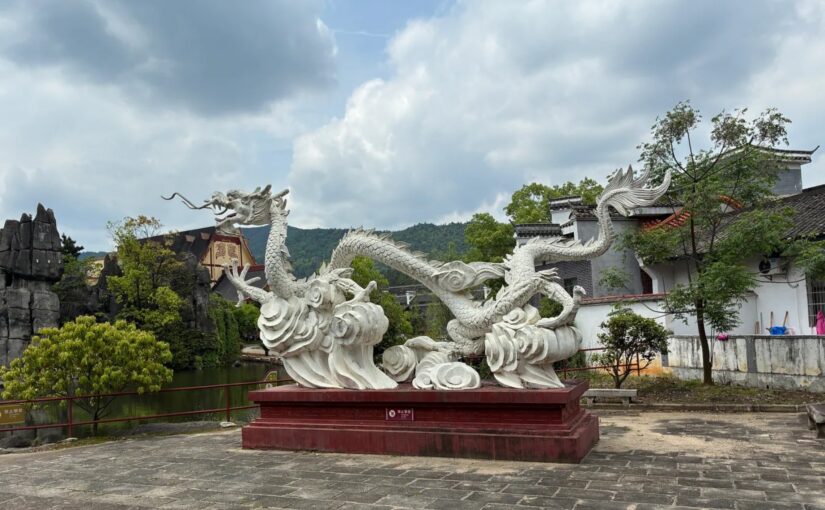
Sri Lanka’s Hambantota port and the complete collapse of the “debt trap” narrative

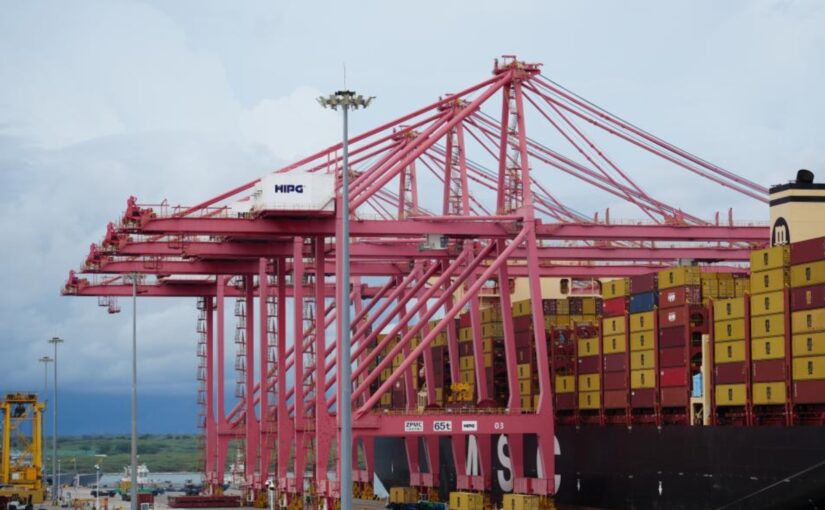
For years, Sri Lanka’s Hambantota port was the textbook example of what Western politicians called Chinese “debt-trap diplomacy” – the claim that Beijing lures poor countries into unpayable loans and then seizes their strategic infrastructure. In the following article, Friends of Socialist China co-editor Carlos Martinez shows how comprehensively that story has collapsed.

Drawing on studies by Chatham House, the Johns Hopkins economist Deborah Bräutigam and Sri Lankan officials themselves, Carlos sets out the facts: the port was a Sri Lankan initiative, not a Chinese one; Washington and Delhi were asked to fund it and declined; and Chinese loans made up just 9 percent of Sri Lanka’s government debt. As the country’s then ports minister put it, “We thank China for arranging this investor to save us from the debt trap.” Sri Lanka’s debt crisis “was made on Wall Street, not in Beijing.”

Far from a predatory white elephant, Hambantota has become one of the fastest-growing trans-shipment hubs in the Indian Ocean, drawing the largest foreign investment in Sri Lankan history. The real debt trap, the article argues, is sprung by the IMF, the World Bank and Western bond markets – and the campaign against the Belt and Road is “a blatant act of self-projection.”

Continue reading Sri Lanka’s Hambantota port and the complete collapse of the “debt trap” narrative

Xi’s visit set to deepen China-DPRK ties

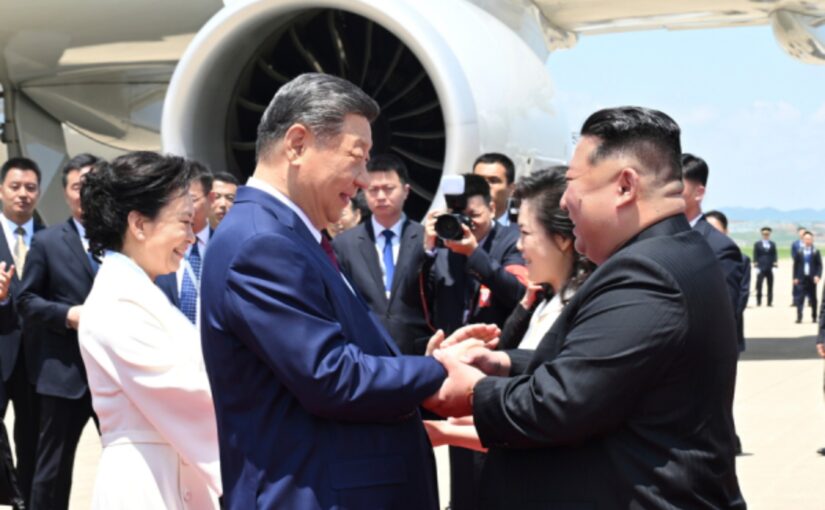
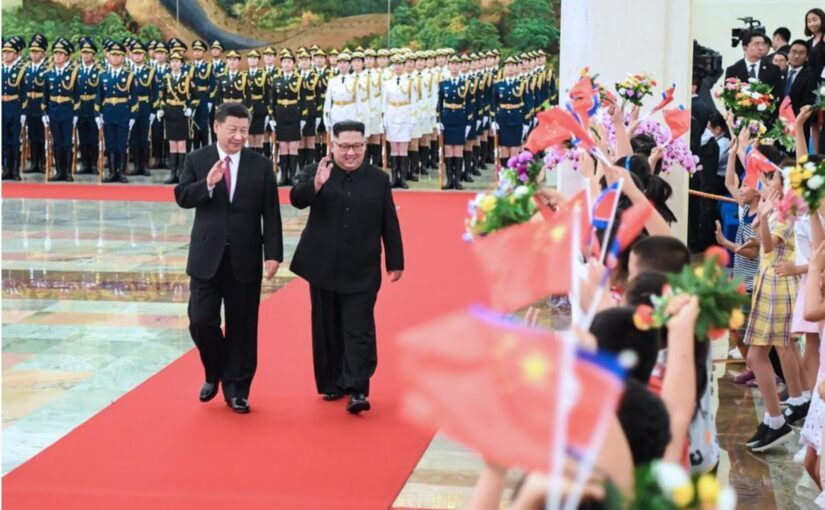
On June 5, the Xinhua News Agency and the Korean Central News Agency (KCNA) both announced that at the invitation of Comrade Kim Jong Un, General Secretary of the Workers’ Party of Korea and President of the State Affairs of the Democratic People’s Republic of Korea (DPRK), Comrade Xi Jinping, General Secretary of the Central Committee of the Communist Party of China and President of the People’s Republic of China, will pay a state visit to the DPRK on June 8 and 9.

In a feature article previewing the visit, Xinhua noted that, “Xi’s upcoming visit, his first to the neighbouring country in seven years, is expected to draw a new blueprint for the development of relations between the two parties and the two countries, inject strong impetus into the joint cause of socialist construction, and make new contributions to regional peace, stability and prosperity.”

It went on to note that in March 2018, the two leaders held their first meeting, during which they reached principled consensus on four aspects of developing China-DPRK relations in the new era. Xi and Kim met three times in less than 100 days that year, making history in high-level exchanges between China and the DPRK.

The two leaders also exchanged visits in the first half of 2019 and in September 2025, Kim made another visit to China. Since 2018, the top leaders of the two parties and the two countries have held six meetings and maintained close communication in various forms, leading the China-DPRK relations to forge ahead in the new era.

Xinhua added: “This year marks the 65th anniversary of the signing of the China-DPRK Treaty of Friendship, Cooperation and Mutual Assistance, making Xi’s upcoming visit to the DPRK even more important.”

The article noted that during his previous visit, Xi paid homage to the martyrs of the Chinese People’s Volunteers at the Friendship Tower in Pyongyang. Xi wrote in the inscription book, “To remember the martyrs” and “The China-DPRK friendship lasts from generation to generation.”

The traditional friendship between China and the DPRK was forged by the elder generation of leaders of the two parties and two countries, cemented in the revolutionary struggle, and continuously deepened in the course of socialist construction, Xi said in his exchange of New Year greeting messages with Kim in 2024.

During Xi’s visit to the DPRK in 2019, hundreds of thousands of residents in Pyongyang lined the streets to welcome the Chinese president, leading Xi to recall the occasion during his talks with Kim in Beijing last year, saying he could feel the family-like friendship between the two peoples all along the way.

This, Xinhua noted, finds its expression in the fact that “from economic and trade exchanges to education and sports cooperation, China-DPRK exchanges and cooperation in various fields continued to deepen and has grown ever more solid, bringing benefits to the peoples of both countries.”

The article concludes: “China-DPRK relations are vividly described in a Chinese song: ‘We share a great friendship; we share common ideals; which have united us with incomparable strength.’”

Continue reading Xi’s visit set to deepen China-DPRK ties

Wang Yi interacts with counterparts at the UN in New York

During his recent visit to the United Nations in New York to attend the UN Security Council high-level meeting on ‘Upholding the Purposes and Principles of the UN Charter and Strengthening the UN-centred International System’, called by China during its rotating presidency, along with the meeting of the Group of Friends of Global Governance, Chinese Foreign Minister Wang Yi also held numerous bilateral meetings with his counterparts who had also made special trips to join the meetings.

The following are some of the highlights:

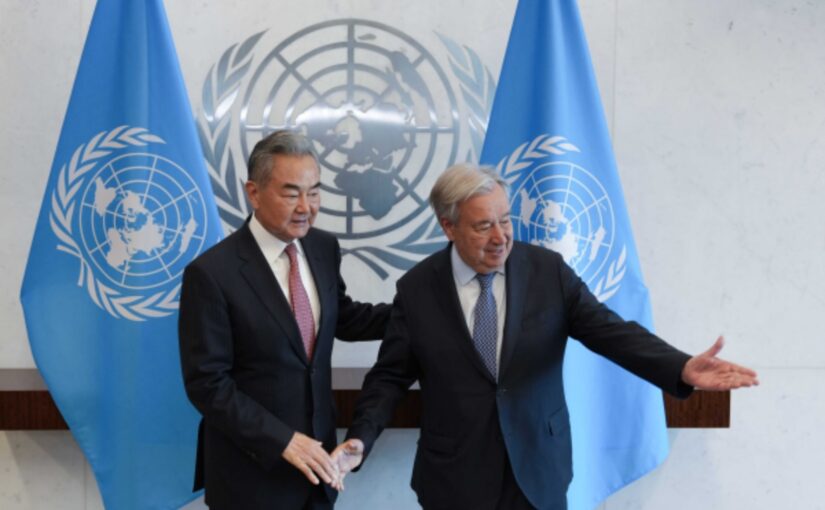
On May 26, Wang met with the foreign ministers of Azerbaijan, Panama, Indonesia, Argentina, Czech Republic, Kyrgyzstan, Colombia, Thailand and Bahrain, as well as with the United Nations Secretary-General.

Meeting with Azerbaijani Foreign Minister Jeyhun Bayramov, Wang Yi said that no matter how the international situation changes, China’s determination to develop relations with and deepen cooperation with Azerbaijan will not waver. China stands ready to work with Azerbaijan, following the consensus reached by the two heads of state, to firmly support each other, jointly build the Belt and Road, share development opportunities, strengthen multilateral coordination and better support each other’s modernisation efforts. China will fully support Azerbaijan’s chairmanship of the Conference on Interaction and Confidence Building Measures in Asia (CICA).

Jeyhun Bayramov thanked China for sending high-level representatives to attend the World Urban Forum held in Baku and for supporting Azerbaijan in assuming the chairmanship of the CICA. Azerbaijan firmly supports China on issues related to Taiwan, Hong Kong and Xinjiang, and always regards China as an important strategic cooperative partner.

Meeting with Panamanian Foreign Minister Javier Martínez-Acha Vásquez, Wang Yi stated that China and Panama enjoy a long history of exchanges. In the 19th century, large numbers of Chinese labourers traveled to Panama to build railways and dig the Panama Canal, contributing to Panama’s economic and social development. Nearly nine years since the establishment of diplomatic relations between China and Panama, bilateral relations have generally progressed smoothly, with trade volume doubling compared to the pre-establishment period, delivering tangible benefits to the Panamanian people. Facts fully prove that the establishment of diplomatic relations between China and Panama serves the long-term interests of both countries and represents the shared aspiration and irresistible trend of the times. Adherence to the one-China principle is the political foundation of the establishment of the bilateral diplomatic ties. Chinese enterprises have operated in Panama for years, making important contributions to Panama’s economic growth and people’s well-being. It is hoped that Panama will earnestly safeguard the legitimate rights and interests of Chinese enterprises. China has always maintained that bilateral relations do not target any third party nor should they be subject to third-party interference. China stands ready to work with Panama to uphold the original aspiration of establishing diplomatic relations, deepen practical cooperation, fend off external disruptions, and promote the healthy and stable development of bilateral ties.

Javier Martínez-Acha Vásquez said that the Panamanian people remember the contributions made by the Chinese people to the construction of Panama’s railways and the Canal in early years. Panama stands ready to work with China to look to the future, resolve differences through constructive dialogue on the basis of mutual respect, build solid mutual trust, and turn a new page in Panama-China relations.

Relations between China and Panama have become strained recently as the government buckled in the face of threats by US President Donald Trump to annex the Panama Canal. As a result, Panama withdrew from the Belt and Road Initiative (BRI) and arbitrarily cancelled operational contracts regarding the Panama Canal hitherto enjoyed by Hong Kong Chinese company CK Hutchison Holdings owned by Li Ka-shing.

Continue reading Wang Yi interacts with counterparts at the UN in New York

Nissan, Chery and the case for cooperation with China

In early June 2026, the Financial Times reported that Nissan’s Sunderland plant – the UK’s largest car factory, employing 6,000 people – has secured its long-term future through a deal to manufacture vehicles for the Chinese carmaker Chery from 2027. In the following article, Friends of Socialist China co-editor Carlos Martinez argues that the agreement offers a concrete glimpse of a different economic path for Britain.

With Nissan’s global restructuring threatening thousands of jobs, and the motor industry’s own trade body admitting that Britain’s 2035 production targets are unreachable without Chinese manufacturers, Chinese industry is offering British workers what no British government has for forty years: high-quality jobs in a globally competitive, future-facing sector.

The predictable cries of ‘national security’ and ‘Chinese influence’, Martinez writes, are merely a manifestation of empire nostalgia. The real choice facing Britain is between embracing the multipolar transition or managing further decline in the service of a declining United States.

Continue reading Nissan, Chery and the case for cooperation with China

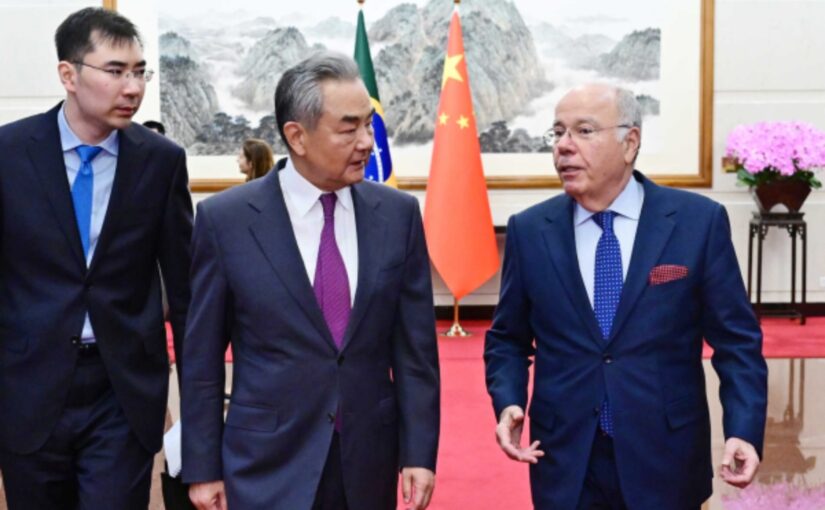
China and Brazil hold Comprehensive Strategic Dialogue

Brazilian Foreign Minister Mauro Vieira visited China, May 31-June 2, at the invitation of his Chinese counterpart Wang Yi.

On June 1, they held the fifth China-Brazil Foreign Ministerial-Level Comprehensive Strategic Dialogue in Beijing.

Wang Yi stated that in recent years, under the strategic guidance of President Xi Jinping and President Luiz Inácio Lula da Silva, China-Brazil relations have achieved a milestone leap from a comprehensive strategic partnership to a China-Brazil community with a shared future. Practical cooperation across various fields has continuously improved and upgraded, bringing the peoples of the two countries closer than ever before. China and Brazil have maintained close coordination on the international stage, demonstrating a sense of responsibility and emerging as a vital force for maintaining stability and promoting development in today’s world. With changes unseen in a century accelerating and the international community increasingly longing for peace and stability, reform of the global governance system should be placed on the agenda as soon as possible. Both sides should fully implement the important consensus reached by the two heads of state, continue to deepen the building of a China-Brazil community with a shared future, and jointly withstand external challenges. The two countries should build greater synergy in advancing their respective modernisation processes and strengthening solidarity and self-reliance among Global South countries, while providing greater certainty for a turbulent world.

Mauro Vieira stated that the Brazil-China relationship is a benchmark for developing countries in upholding independence, strengthening solidarity and enhancing coordination. The successful mutual visits between the two heads of state have elevated the bilateral relationship to a China-Brazil community with a shared future for a more just world and a more sustainable planet. This has provided crucial strategic guidance for both sides to deepen political mutual trust and strengthen bonds of cooperation, which holds even greater significance in the current international context.

Mauro Vieira also met with Chinese Vice President Han Zheng on the same day.

Pointing out that practical cooperation between China and Brazil is highly complementary and enjoys a strong internal driving force, Han said both sides should give better play to the role of mechanisms such as the China-Brazil High-level Coordination and Cooperation Committee to work for greater science and technology cooperation, with higher added value and greater strategic significance.

Vieira said at present, multilateralism is suffering an unprecedented blow, and it is particularly important for Brazil and China to deepen the construction of the community of a shared future.

Continue reading China and Brazil hold Comprehensive Strategic Dialogue

China and Cuba stand together at UN

During his recent stay in New York, where he attended the United Nations Security Council high-level meeting on ‘Upholding the Purposes and Principles of the UN Charter and Strengthening the UN-centred International System’, called by China during its rotating presidency, along with the meeting of the Group of Friends of Global Governance, Chinese Foreign Minister Wang Yi also held numerous bilateral meetings with his counterparts who had also made special trips to join the meetings.

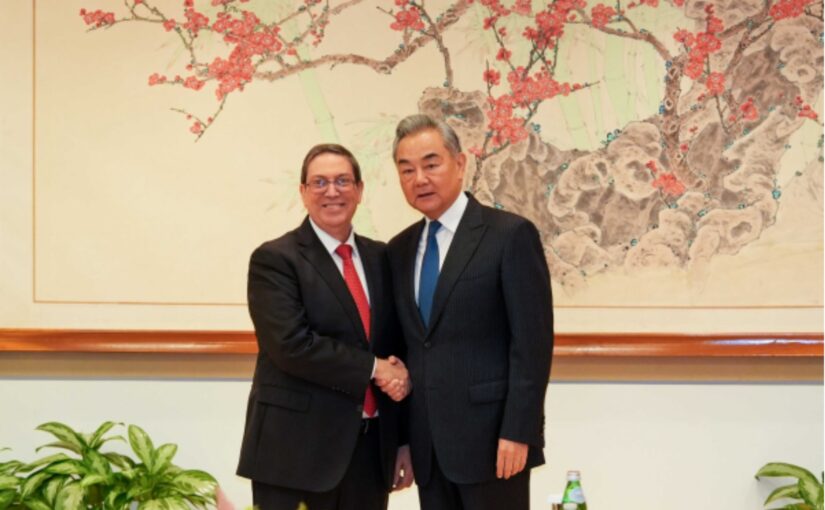
On May 27, Wang met with Cuban Foreign Minister Bruno Rodríguez Parrilla.

Having conveyed President Xi Jinping’s sincere greetings to Comrade Raúl Modesto Castro Ruz and President Miguel Díaz-Canel Bermúdez, Wang noted that the theme of the UN meeting has received wide response and support. To achieve its goal, it is essential to respect the sovereignty and independence of all countries and oppose all forms of power politics and bullying. The Cuban people, united as one, firmly safeguard their legitimate rights and interests, demonstrating a strong will to oppose external blockade and interference, which has earned the respect of the international community. China will continue to stand up for justice for Cuba, support the just cause of the Cuban people, and assist Cuba in its economic and social development.

Bruno Rodríguez Parrilla thanked China for inviting Cuba to the meeting, stating that the world today is facing turmoil and disorder. Only China is capable of convening such a meeting, building consensus among the international community, and safeguarding the legitimate rights and interests of the Global South. Cuba is experiencing its most severe situation since the revolution, the root cause of which is the US blockade and sanctions against Cuba. Cuba appreciates China’s firm support for its sovereignty and security, as well as the assistance and vocal support provided during difficult times. This fully demonstrates the special friendship between Cuba and China.

The previous day, Minister Rodríguez had addressed the Security Council meeting.

In his remarks, he acknowledged China’s leadership in convening the debate and linked the defence of the international order to the need to address conflicts and threats affecting global stability.

The Foreign Minister denounced US policy toward Cuba, which he described as a violation of international law and a threat to regional peace. He rejected the indictment against Army General Raúl Castro Ruz, considering it a politically motivated decision, and warned of its possible use as a pretext to justify military aggression against the island. He also noted that the energy blockade and the tightening of the embargo have serious humanitarian consequences for the Cuban population.

He reiterated that Cuba does not pose a threat to the United States and reaffirmed the country’s willingness to engage in bilateral dialogue on issues of common interest, always based on respect for sovereignty and non-interference. Finally, he called on the international community, Latin America and the Caribbean, the Global South, the UN Security Council, and the UN General Assembly to act to prevent a humanitarian catastrophe or military aggression against Cuba.

Continue reading China and Cuba stand together at UN

China’s courts draw a line in the sand: AI cannot be an excuse to fire workers

Artificial intelligence is reshaping the world of work at breakneck speed, and almost everywhere the same question is being asked: who pays the price when a machine can do your job? Across much of the capitalist world the answer has been brutally simple – the worker does. In China, the courts are giving a very different answer.

In this detailed original analysis for Friends of Socialist China, İbrahim Can Eraslan examines a landmark ruling handed down by the Hangzhou Intermediate People’s Court on the eve of International Workers’ Day 2026, which found that a technology company had unlawfully dismissed an employee after replacing his role with AI. Far from being an isolated case, Eraslan shows how it builds on a consistent and growing body of jurisprudence in Beijing, Guangzhou and beyond, all resting on a single principle: that voluntary AI adoption is a business decision, and that companies which automate must therefore shoulder the corresponding social responsibilities rather than dumping the costs onto their workforce.

Crucially, Eraslan situates these rulings within China’s wider policy architecture – from the 15th Five-Year Plan’s commitment to assessing AI’s employment effects, to proposals for compulsory employment impact assessments before large-scale AI deployment – and contrasts this socialist, employment-first approach with the ‘employment at will’ doctrine of the United States and the patchwork protections of the European Union. The result, he argues, is one of the first coherent national legal frameworks anywhere in the world for managing AI-driven job displacement: not Luddism, but a principled insistence that the fruits of technological progress be shared and that its costs not be socialised onto working people.

He concludes:

China’s courts have drawn a line in the sand. AI is welcome. But AI cannot be an excuse to fire workers. The cost of progress must be shared, and the burden must not fall on those who can least afford to bear it. In a world where capital everywhere is racing to automate labor out of existence, China’s socialist legal system is saying: not so fast.

Continue reading China’s courts draw a line in the sand: AI cannot be an excuse to fire workers

China and the Global Green Revolution – a webinar review

Friends of Socialist China’s US committee recently organised a hybrid event in Portland on the theme ‘China’s Global Green Revolution’, co-facilitated by Sara Flounders and Carlos Martinez, alongside seven contributors to the book China Changes Everything. The discussion explored how China’s lead in renewable energy, reforestation, ecological agriculture and green technology is reshaping the global response to the climate crisis – and why defending that contribution against the new cold war matters for the whole of humanity.

The following review, by Lyn Neeley, summarises the speakers’ contributions, from record-efficiency coal plants and the race for lunar helium-3 to glow-in-the-dark street plants and saltwater rice. A recording of the event is available via the International Action Center.

Continue reading China and the Global Green Revolution – a webinar review

Wang Yi sets out China’s global vision at UN

China held the rotating presidency of the United Nations Security Council in May, 2026. In that capacity, it called a high-level meeting on May 26. The theme of this meeting was ‘Upholding the Purposes and Principles of the UN Charter and Strengthening the UN-centred International System’. Chinese Foreign Minister Wang Yi, who is also a member of the Political Bureau of the Communist Party of China’s Central Committee, travelled to New York to chair the meeting. He also attended the meeting of the Group of Friends of Global Governance at the UN headquarters in New York on May 28 and held a considerable number of bilateral meetings, particularly with his counterparts who had also travelled to New York to attend the meetings. Prior to returning home, Wang also visited Canada, May 28-30.

In his remarks to the high-level meeting held on May 26, Wang Yi said that the international situation is undergoing the most complex and profound changes since the end of World War II. The giant ship of human civilisation is sailing into dangerous waters, and world peace and development are at a crossroads. The challenges confronting us are testing the international community’s commitment to safeguarding peace, its resolve to stand up for justice, and its courage to make bold reforms. Members must stand united and act together to defend, revitalise and strengthen the UN.

He advanced a number of proposals in this regard:

  • Reinvigorating the UN Charter for stronger leadership. The root cause of the chaos in today’s world is not that the Charter’s spirit is outdated, but that the international order and the basic norms governing international relations, both set out in the Charter, are not being effectively upheld and observed. Members must uphold sovereign equality, oppose interference in internal affairs; uphold the peaceful settlement of disputes, oppose the use of force; uphold the victorious outcomes of World War II, oppose glorifying the history of aggression. Major countries, in particular, have the responsibility to lead by example in following the rule of law and the right path, and should not practice double standards, exceptionalism or selective application.
  • Reinvigorating the authority of the Security Council for greater ability to act. What comes with Security Council membership is not privileges, but responsibilities. Members should rise above the narrow national interests and use international public goods responsibly. Any unilateral military action that circumvents the Council’s mandate is unacceptable, and any unilateral sanction that exceeds the Council’s resolutions lacks legitimacy.
  • Reinvigorating global development cooperation for stronger mobilisation. As the implementation of the Sustainable Development Goals is woefully behind schedule, the UN needs to vigorously coordinate global actions and fully mobilise global resources. It is important to solidify the pillar of development, strengthen the development system, provide countries of the Global South with more funding, technological and intellectual support in key areas such as poverty reduction, and urge developed countries to deliver on their development financing pledges. It is imperative to earnestly increase the representation and say of developing countries at the IMF and the World Bank. China supports the UN in strengthening dialogue with BRICS countries, the G20, the New Development Bank and the Asian Infrastructure Investment Bank, for a universally beneficial and balanced global economic and financial governance system.
  • Reinvigorating the global governance platform for stronger execution capacity. Faced with emerging threats and challenges, no country can stay unaffected. A united response is the only way forward. Members should strengthen the sense of a community with a shared future for humanity, replace coercion with consultation, zero-sum with win-win, and small circles with greater unity.
  • Reinvigorating the effectiveness of the UN system for stronger vitality. Member states should fulfill their financial obligations with real actions, support the UN in performing its mandate, and steadily contribute to the cause of the UN, rather than willfully withdraw from treaties and organisations, still less establish alternatives.

Wang Yi stressed that this year marks the 55th anniversary of the restoration of the lawful seat of the People’s Republic of China in the UN. For 55 years, as a permanent member of the Security Council, China has taken an active part in the UN cause. From this historic point onward, China will continue to uphold principles and follow the path of justice. Together with all countries, China will pursue greater unity under the banner of multilateralism, promote a more just and equitable global governance system, and move toward the goal of building a community with a shared future for humanity.

Following the meeting Wang Yi briefed the press.

He explained that the meeting was proposed by China in its capacity as the rotating President of the Security Council. He pointed out that in recent times, the purposes of the UN Charter have been disregarded, the basic norms governing international relations have been undermined, and world peace and security are in jeopardy. At this critical juncture, the Security Council must step forward and shoulder its responsibilities.

It was widely agreed that the UN Charter has not become outdated and remains the cornerstone of the international order. The centrality of the UN must be strengthened, not weakened. As none of us wants to see international relations slide back to the law of the jungle, we need to uphold the same system, the U.N.-centered international system, and observe the same set of rules – the basic norms governing international relations based on the Charter.

It was also widely agreed that the trend toward a multipolar world is unstoppable, and that the domination of international affairs by one or a few countries no longer corresponds to the trend of the times. We should firmly follow the path of multilateralism, do our utmost to safeguard unity, oppose division, seek cooperation, reject confrontation, and jointly inject much-needed stability and certainty into the world.

The view that current global governance has visibly fallen behind and needs to be reformed and improved in keeping with the times was also widely shared. Global governance should reflect the aspirations of all countries in a more balanced way and ensure equal participation and shared benefits for all. In particular, it is important to increase the representation and voice of the Global South and jointly build a more just and equitable global governance system.

Wang also pointed out that to reinvigorate the UN, the Security Council must first be reinvigorated. To achieve this goal, he stressed the following:

  • All Security Council members must regard the maintenance of peace as their shared responsibility, observe the Charter, uphold justice, refrain from pursuing narrow self-interest, and avoid bloc confrontation.
  • The representation and voice of developing countries and small and medium-sized states should be increased through reform, in particular by addressing the historical injustice faced by Africa.
  • The objectivity, fairness, and inclusiveness of Security Council proposals should be enhanced, and the five permanent members, in particular, should play an exemplary role in this regard.
  • The international community should jointly oppose all unilateral acts that bypass the Security Council, so that unilateral bullying finds no support and no legitimacy.

In his keynote speech to the May 28 meeting of the Group of Friends of Global Governance, Wang Yi said that the current international situation is marked by intertwined changes and turbulence. Countries are calling for fairness and justice, longing for solidarity and cooperation, and aspiring to peace and stability. Against this backdrop, President Xi Jinping solemnly put forward the Global Governance Initiative last September, emphasising five core concepts: sovereign equality, international rule of law, multilateralism, people-centred approach, and real actions. In less than a year, the initiative has received support and response from nearly 160 countries and international organisations. The Group of Friends of Global Governance has been successively established in New York, Geneva and Vienna, with membership reaching over 60 countries. Guided by the spirit of equality and mutual respect, members have held extensive discussions and reached consensus on five key points including advancing greater democracy in international relations, upholding the purposes and principles of the UN Charter, safeguarding the central role of the United Nations, narrowing the North-South divide, and addressing the most pressing challenges.

He stressed that reforming and improving global governance is a historic mission for this generation and said that China proposes the following nine reform directions:

  • Promoting UN reform for greater efficiency. The purpose of reform is to enhance the United Nations, not weaken it. UN reform should be led by member states and carried out in a fair, inclusive and transparent manner. Member states should be urged to fulfill their financial obligations, and budget management and fiscal accountability should be strengthened.
  • Enhancing the authority and capacity of the Security Council. The voice of developing countries and the vast number of small and medium-sized countries should be strengthened, and the historical injustice faced by Africa should be addressed as a priority. Unilateral actions and sanctions that bypass the Security Council should be opposed.
  • Adapting peacekeeping operations to the demands of the times. The three principles of peacekeeping should be upheld and improved, and peacekeeping operations should be better mandated and empowered. The United Nations should be supported in strengthening coordination with regional organisations such as the African Union and the League of Arab States, so as to build a combined force for mediation on regional hotspot issues.
  • Building international consensus on accelerating development. Development should be pushed back to the centre of the UN agenda, and the post-2030 development agenda should be planned ahead. Developed countries should fulfill their commitments on development financing. The principle of common but differentiated responsibilities should be upheld, and a fair, reasonable and win-win global climate governance system should be built.
  • Steering global human rights governance in the right direction. The one-sided approach of placing human rights above sovereignty should be abandoned, and it should be made clear that it is the people of each country who judge and improve their own human rights.
  • Deepening reform of the economic and financial system. The shareholding review of the World Bank should be accelerated, and a meaningful adjustment of IMF quota shares should be achieved as soon as possible. The dispute settlement mechanism should be restored to normal operation, and World Trade Organisation (WTO) rules should be updated to keep pace with the times.
  • Establishing rules for artificial intelligence (AI) governance. A people-centred and AI-for-good approach should be upheld, and the United Nations should be supported in playing its role as the main channel. The digital divide should be prevented from widening, and guardrails should be set for military applications and governance of AI.
  • Strengthening governance in emerging domains such as cyberspace and outer space. The four principles of respecting cyber sovereignty, maintaining peace and security, promoting open cooperation and building good order should be upheld, and the United Nations should be supported in advancing global cyberspace and digital governance. Outer space should be used for peaceful purposes.
  • Promoting exchanges among civilisations and achieving inclusive mutual learning.

The meeting reached consensus on five key points:

  • All members support the democratisation of international relations. All countries, regardless of size, strength or wealth, have the right to choose their own social systems and development paths, and to participate, decide and benefit equally in global governance.
  • All members call for upholding the purposes and principles of the UN Charter, ensuring the equal application of international law and international rules, and opposing double standards and coercion.
  • All members support safeguarding the central role of the United Nations, practicing multilateralism, strengthening multilateral mechanisms, and opposing unilateralism and power politics.
  • All members support reforming and improving global governance and narrowing the North-South divide to ensure that all countries share the benefits of development and that no country is left behind.
  • All members call for addressing the most pressing challenges facing the international community through concrete actions and practical results to ensure global governance meets the needs of the times and the people.
Continue reading Wang Yi sets out China’s global vision at UN

Jostein Hauge: This is why I’m Chinamaxxing

The following article by Jostein Hauge, political economist and an Associate Professor in Development Studies at the University of Cambridge, makes a clear and refreshing case for taking China’s achievements seriously. Hauge sets out the facts plainly – China’s unprecedented reduction of poverty, its leadership in clean energy, the scale and quality of its infrastructure, and its emergence as a counterweight to US hegemony – and insists that these gains are worth celebrating rather than treating, as so much Western commentary does, as a threat to be managed.

These are precisely the themes we explored in our recent webinar, Socialist Chinamaxxing: How China’s achievements are a product of its socialist system, which brought together speakers including George Galloway, Li Jingjing, Ben Norton, Danny Haiphong, Tings Chak, Chen Weihua, Ileana Chan, Keith Bennett and Qiao Collective to argue that China’s progress flows directly from its socialist system, and would not have been possible within a framework of capitalist rule.

We would, however, raise one friendly disagreement. Hauge writes that “China does not hold competitive national elections and practises considerable censorship”, and concludes that “China’s authoritarianism deserves real scrutiny”. In our view this concedes too much to the very liberal framework that the rest of his article so effectively challenges: the assumption that genuine democracy is defined by the Westminster parliamentary system, and that its absence amounts to “authoritarianism”.

This framing does not engage seriously with China’s socialist democracy. As we have argued, liberal democracy presents democracy as a purely procedural matter – periodic elections between rival capitalist parties – while obscuring the more fundamental question of which social class actually holds power. Meaningful democracy is not defined by what happens at the ballot box once every few years; it is about the ongoing participation of ordinary people in the running of society, and the degree to which the state is genuinely responsive to the needs of the majority. Measured this way – through its system of People’s Congresses combined with extensive structures of consultative democracy, and its consistent record of delivering for ordinary people – China’s socialist democracy can be considered to be more substantive than its Western counterparts, not less.

Xi Jinping has put the point sharply: a system in which “the people are awakened only at voting time and dormant afterward” is not true democracy.

Continue reading Jostein Hauge: This is why I’m Chinamaxxing

Socialist and anti-colonial movements laid groundwork for multipolarity

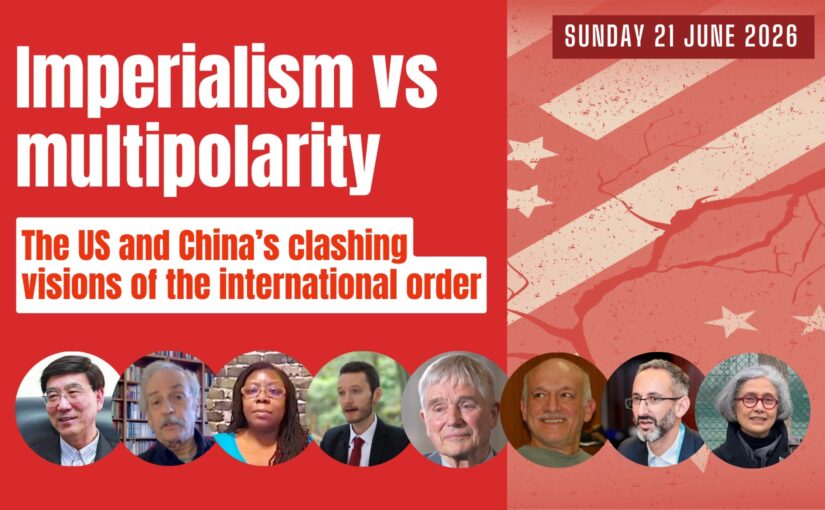
The following article, by Gregory E. Williams, argues that we can’t understand multipolarity through an international relations or geopolitics lens alone; it is primarily a class question.

The post-1991 “unipolar moment” wasn’t simply the absence of a rival superpower. It was a counter-revolutionary opening for the global capitalist class – Wall Street ascendant, the IMF and World Bank disciplining the Global South, Reagan and Thatcher austerity at home, an unbroken line of attack on the working class running from there down to Musk’s DOGE cuts.

And the multipolar trajectory we witness today has its origins in the revolutions of the twentieth century: the Bolshevik Revolution, the Chinese Revolution, the wave of national liberation movements from Algeria to Vietnam, Bandung 1955, the 1979 Iranian Revolution, the long resistance in Palestine, Lebanon and Yemen. China’s industrial power today is the inheritance of 1949. Iran’s defiance is the inheritance of 1979.

The class character of the two camps isn’t symmetrical. The forces driving towards the defeat of US-led imperialism represent the working class and the oppressed peoples of the Global South.

Continue reading Socialist and anti-colonial movements laid groundwork for multipolarity

Brazil’s Lula hails China-developed surgical robot as ‘incredible’

Brazilian President Luiz Inácio Lula da Silva recently performed a simulated surgery from 1,400 kilometres away, using a Chinese-built Toumai MT-1000 surgical robot – the world’s only commercial remote surgery system supporting all major specialties. He remarked: “It is incredible to see up close how innovation can expand access, save lives, and further strengthen Brazil’s Unified Health System.”

Brazil’s Unified Health System is one of the largest free, universal public health systems on the planet. Chinese surgical-robotics technology, developed by Shanghai MicroPort MedBot, is being integrated in the service of a public, free-at-the-point-of-use system. At the cancer hospital Lula visited, annual patient throughput has already risen from around 400 to 680 since the Toumai was installed.

China is now Brazil’s largest trading partner, with two-way trade of around $188 billion in 2024. As Lula has put it, China is Brazil’s “best partner.” This cooperation goes well beyond soybeans and other primary commodities; it includes assisting Brazil’s industrial strategy and working closely on cutting-edge medical technology.

Continue reading Brazil’s Lula hails China-developed surgical robot as ‘incredible’

China and DPRK reject Quad moves to stoke tension in the Asia-Pacific

The foreign ministers of the Quad (Quadrilateral Security Dialogue) met in the Indian capital New Delhi on May 26. This US-led body which also comprises Japan, Australia and India plays a provocative role in US imperialism’s attempts to encircle and contain China as well as other socialist countries and anti-imperialist forces in the Asia-Pacific region.

On May 27, the Xinhua News Agency released a commentary stressing the need to guard against what it called the Quad’s “bloc politics”, noting that its members had “again hyped maritime issues related to the East and South China Seas.”

It added: “In recent years, nearly every joint statement issued after Quad foreign ministers’ meetings has reiterated these themes. Yet such patronising rhetoric about safeguarding so-called ‘freedom of navigation’ cannot obscure the reality that the bloc itself has become a source of turbulence, fueling tensions and deepening confrontation in the region.

“At a time when most Asia-Pacific countries are focused on economic recovery and regional integration, the Quad appears to be moving in the opposite direction by unveiling a raft of new measures — a move widely seen as driven by a Cold War mentality aimed at containing China’s development.”

According to Xinhua: “While the Quad foreign ministers voiced concern over regional peace and stability, few will overlook the irony that the war against Iran launched by Washington is itself undermining supply-chain resilience across the Asia-Pacific.

“Regional economies such as India — also a Quad member — are already bearing the brunt of the resulting turmoil in global energy markets. In the meantime, the still-undecided date for the Quad leaders’ summit offers a glimpse into the grouping’s growing disarray.”

However, it warned that “the world should still stay vigilant against countries like Japan [attempting] to use this bloc as a cover to hype up groundless security concerns in the region for its own militarist agenda… What the region needs is cooperative frameworks that prioritise development, mutual trust and shared prosperity over ideological alignment and geopolitical calculation. The Quad should recognise that Asia’s future lies in cooperation, not confrontation.”

The following day, the Korean Central News Agency (KCNA) reported the answers given by a spokesperson for the foreign ministry of the Democratic People’s Republic of Korea (DPRK) regarding the meeting.

The spokesperson noted that the joint statement issued by the meeting “not only seriously distorted the immediate and urgent challenges and threats faced by the countries in the Asia-Pacific region but also clearly exposed the hostile intention against specific countries.

“Quad talked about the strengthening of cooperation while expressing ‘concern’ over the situation in the South Sea and East Sea of China. It is aimed at justifying Japan’s moves for rearmament and Australia’s possession of a nuclear submarine, which are arousing concern of the international community.”

They continued: “In particular, the US-led Quad members took issue with the DPRK’s legitimate exercise of sovereign rights, calling for ‘denuclearisation’. This goes to prove that Quad is nothing but a political and diplomatic tool serving the US strategy for unipolar domination… The Foreign Ministry of the DPRK resolutely denounces and rejects the US-led Quad’s hostile stand against the DPRK and other regional countries and strongly demands that it drop its attempt to escalate inter-camp confrontation destroying regional peace and stability.”

Continue reading China and DPRK reject Quad moves to stoke tension in the Asia-Pacific