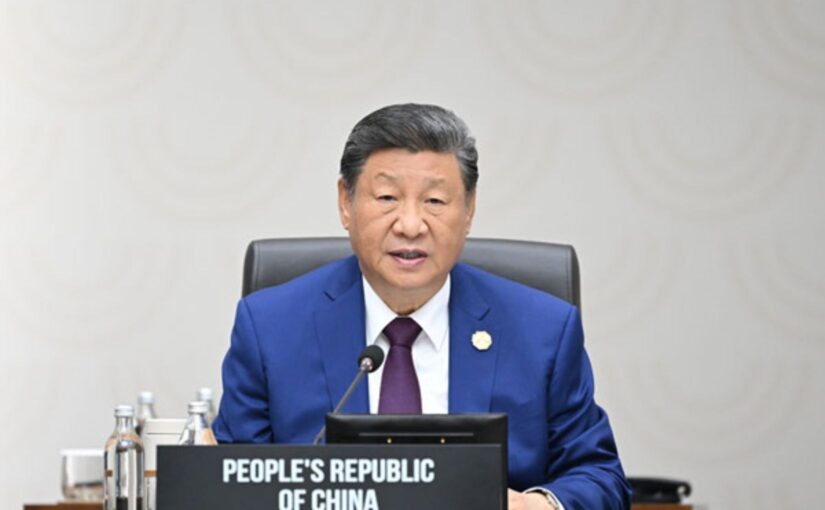
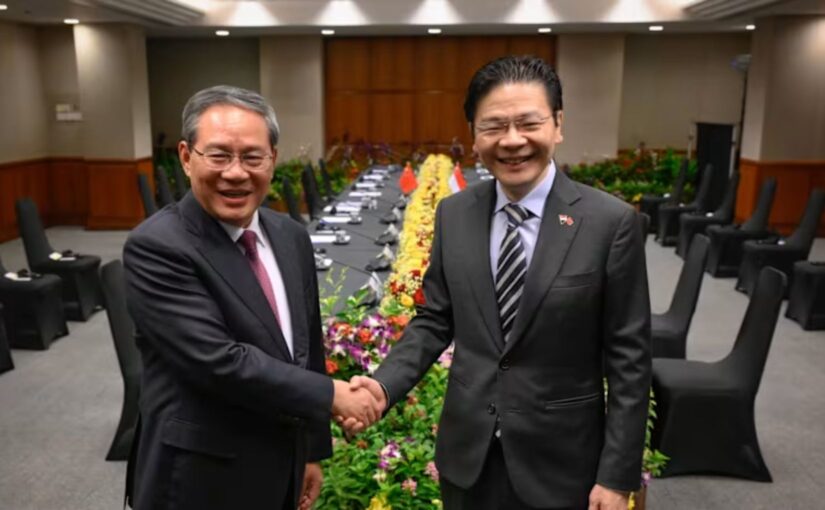
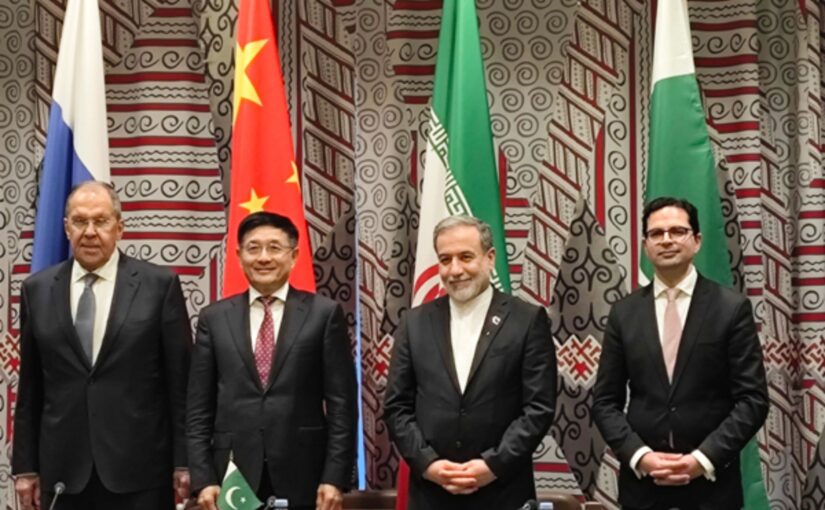
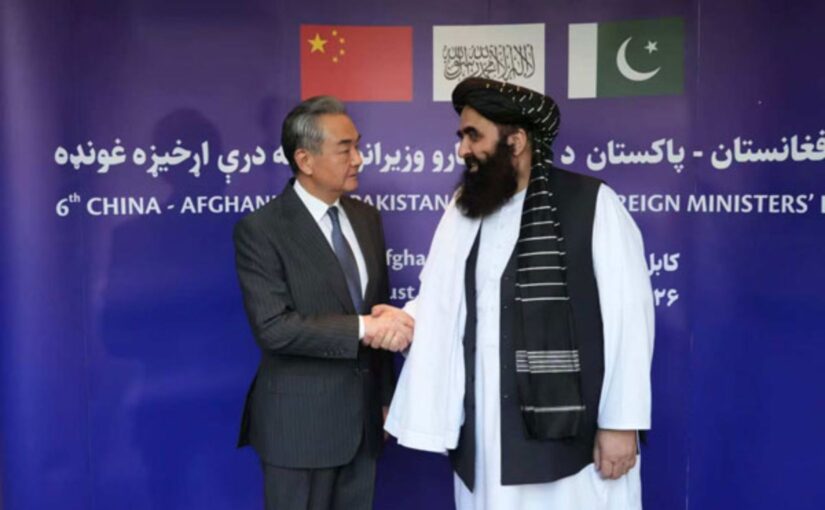
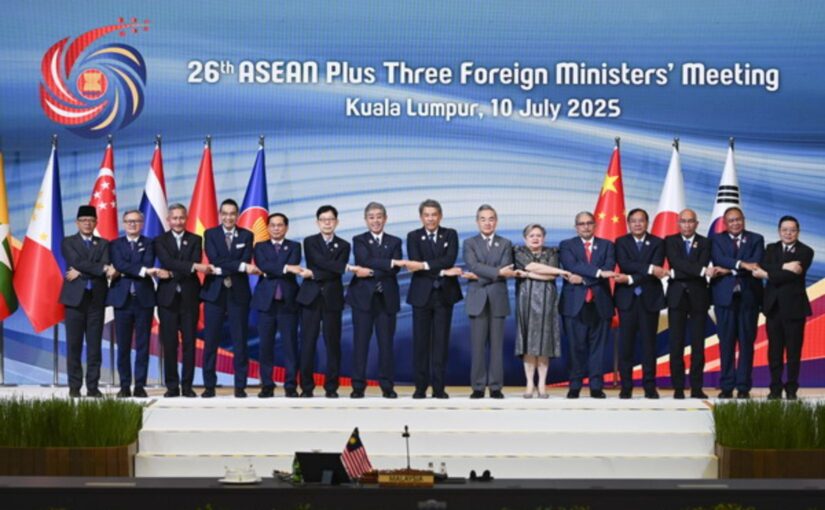
Chinese Foreign Minister Wang Yi attended the China-ASEAN [Association of South East Asian Nations] Foreign Ministers’ Meeting, the ASEAN Plus Three Foreign Ministers’ Meeting, the East Asia Summit Foreign Ministers’ Meeting and the ASEAN Regional Forum Foreign Ministers’ Meeting in Kuala Lumpur, Malaysia, from July 10-11.
The China-ASEAN Foreign Ministers’ Meeting was held on July 10. Wang Yi said that China and ASEAN share similar visions for development, common demands, and converging interests. China regards ASEAN as a priority in its neighbourhood diplomacy and a pioneer area for building a community with a shared future for humanity. The two sides should support each other and help each other succeed in advancing the modernisation process of Asia.
He briefed on the achievements of China-ASEAN cooperation and put forward four suggestions:
- To act as a model in defending international fairness and justice. The two sides should firmly uphold the international system with the United Nations at its core and the international order underpinned by international law.
- To act as a model for safeguarding regional peace and stability. In the turbulent world today, peace and stability in the region are particularly precious and must be firmly protected. No geopolitical conflicts or bloc confrontations should be allowed to infiltrate the Asian home. China is willing to take the lead in signing the Protocol to the Treaty on the Southeast Asia Nuclear Weapon-Free Zone. The South China Sea is a shared home for countries in the region, not an arena for major power rivalry. China is ready to work with ASEAN countries to expand cooperation in areas such as marine environmental protection, navigation safety, maritime law enforcement, and key marine infrastructure, and jointly foster a new narrative of cooperation, stability, and friendship in the South China Sea. The two sides should fully implement the Declaration on the Conduct of Parties in the South China Sea, advance consultations on a Code of Conduct in the South China Sea (COC), and always keep the initiative on the South China Sea issue in the hands of regional countries.
- To set an example of conducting mutually beneficial and win-win cooperation. China is ready to work with ASEAN to jointly build the Version 3.0 China-ASEAN Free Trade Area, promote high-quality implementation of the Regional Comprehensive Economic Partnership (RCEP), and create a high-level free trade network. China will continue to take the high-quality Belt and Road cooperation as the main platform to strengthen connectivity and cooperation in industrial and supply chains with ASEAN, and create highlights of cooperation in artificial intelligence, digital transformation, and clean energy.
- To set an example for promoting inclusiveness and mutual learning. China is willing to work with ASEAN countries to continue advocating for dialogue, exchanges and mutual learning among different civilisations, and jointly build an Asian family that promotes harmony, inclusiveness, and respect for differences.
Attending the ASEAN Plus China, Japan, Republic of Korea (ROK) (ASEAN Plus Three – APT) Foreign Ministers’ Meeting, Wang Yi noted that since the establishment of the APT cooperation mechanism, all parties have continuously strengthened their crisis response capabilities, advanced the process of regional economic integration, and fostered new drivers for development through joint efforts. Cooperation in various areas has yielded fruitful results, helping East Asia become the most dynamic region in the world.
The focus on development and commitment to cooperation is the general trend and mainstream, though challenges persist, including the impact of unilateralism and protectionism, and the abuse of tariffs by a certain major country. The more complex the situation, the more the APT cooperation should stay undisturbed, work in solidarity, and keep strengthening the momentum for cooperation, enhancing development resilience, and continuously advancing the process of regional integration to make the shared home a better place.
At the 32nd ASEAN Regional Forum (ARF) Foreign Ministers’ Meeting, Wang Yi noted that security is closely connected with development. The rapid development of the Asia-Pacific benefited from a generally peaceful and stable regional environment, which should be cherished all the more.
Wang Yi stated that the world today has entered a period of turbulence and transformation. To ensure the stability and development of the Asia-Pacific and to enable the ARF to continue playing its due role, China proposes the following: uphold the vision of common, comprehensive, cooperative and sustainable security; work to build a balanced, effective and sustainable regional security architecture; actively build a model of security for Asia that features sharing weal and woe, seeking common ground while shelving differences, and prioritising dialogue and consultation; and blaze a new path toward security that features dialogue over confrontation, partnership over alliance, and win-win results over zero-sum game.
There is no such thing as “absolute security” in the world, and no one’s security is superior to that of others. Creating division and confrontation through a zero-sum mindset runs counter to the goal of maintaining security. It is essential to respect the sovereignty and territorial integrity of all countries, uphold peaceful settlement of disputes, oppose the threat or use of force, and address both symptoms and root causes to eliminate the sources of conflict and war. This year marks the 70th anniversary of the Bandung Conference. It is important to draw wisdom from the Bandung Spirit, seek common ground while overcoming differences, and take seriously and accommodate the legitimate security concerns of all parties.
At the 15th East Asia Summit Foreign Ministers’ Meeting, Wang Yi stressed the need for a return to dialogue. He said the original intention of the Summit is to carry out constructive dialogue and enhance strategic mutual trust. However, certain countries outside the region have deviated from this track in recent years, frequently using the Summit platform to hype up differences, attack other countries, and interfere in internal affairs. Wang Yi expressed the hope that all parties can respect each other, communicate in good faith, and focus on increasing understanding and cooperation.
China supports the ASEAN-centred regional cooperation architecture, firmly upholds the multilateral trading system, builds a high-level regional free trade network, and promotes regional integration. China opposes bringing Cold War mentality and bloc confrontation into the region and rejects attempts to create competing structures or exclusive “small circles”.
Wang Yi emphasised that the root cause of tensions in the Taiwan Strait lies in the increasingly rampant separatist activities of ”Taiwan independence” and the connivance and support by external forces. Some claim to safeguard peace and stability across the Taiwan Strait, but if they truly care about peace and stability across the Taiwan Strait, they must resolutely stop the “Taiwan independence” forces from expanding. Some say that the status quo of the Taiwan Strait should not be changed, but the fact that Taiwan and the mainland both belong to one and the same China is the fundamental status quo of the Taiwan Strait. He expressed the hope that all countries will continue to unequivocally uphold the one-China principle, oppose any form of “Taiwan independence”, and support China’s reunification.
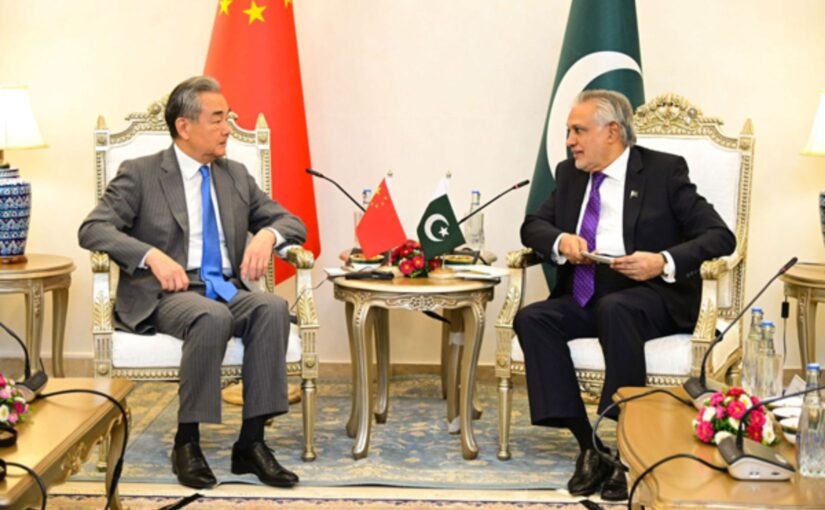
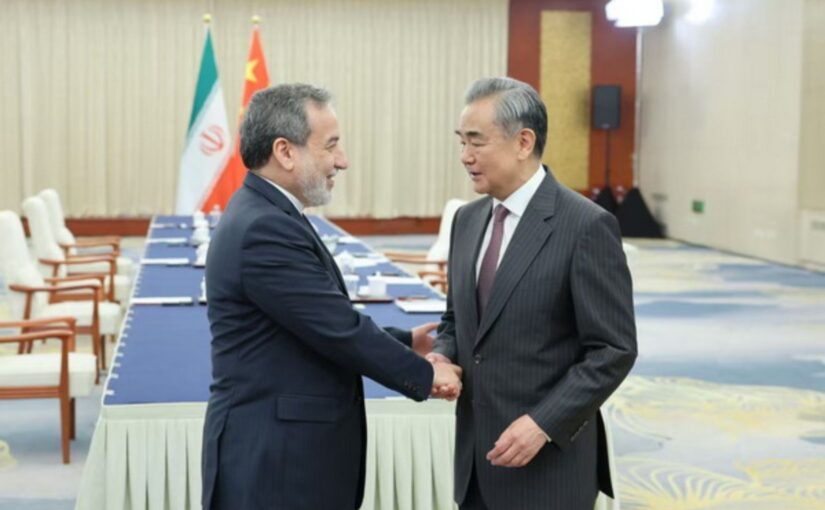
Wang Yi also held a number of bilateral meetings on the sidelines of the above meetings.
On July 11, he met with Malaysian Prime Minister Anwar Ibrahim in Putrajaya.
Anwar Ibrahim asked Wang Yi to convey his cordial greetings to President Xi Jinping, stating that China is a trustworthy friend and partner of Malaysia. President Xi Jinping’s successful visit this year is a significant event in the history of Malaysia-China relations. President Xi Jinping’s care and thoughts about the future and destiny of the world have earned the heartfelt respect of the Malaysian government and people.
Wang Yi said that the tide of history always moves forward, and the rise of the Global South is unstoppable. As developing countries, emerging economies, and key representatives of the Global South, China and Malaysia should join hands to address challenges and seek development and revitalisation. The United States’ unilateral imposition of high tariffs is irresponsible and unpopular. China will always stand with the vast number of developing countries.
In a separate meeting with Malaysian Foreign Minister Mohamad Hasan, Wang Yi said that the two sides should work together to deliver on the important common understandings reached between the leaders of the two countries, put into practice the Belt and Road cooperation plan, strengthen cooperation on economy, trade, investment and connectivity, advance key projects such as the East Coast Rail Link and the “Two Countries, Twin Parks”, deepen cooperation in frontier areas, seize the opportunities of the new industrial revolution, and jointly build a regional highland for cooperation on new quality productive forces. The two sides should continue to successfully hold the “Confucian-Islamic Civilisational Dialogue” and ensure the implementation of the mutual visa exemption agreement that will soon come into effect to strengthen people-to-people exchanges and consolidate the public foundation.
The United States has imposed high tariffs on ASEAN countries simply based on a single letter, which is a typical act of unilateralism and bullying that no country would recognise or support. China’s resolute countermeasures are not only to safeguard its own interests, but also to defend the common interests of all countries, including ASEAN member states. China is ready to strengthen cooperation with ASEAN to jointly uphold the multilateral trading system, keep global industrial and supply chains stable, and promote a universally beneficial and inclusive economic globalisation.
Mohamad Hasan said that under the current circumstances, it is clear who is a true friend. In the face of tariffs and other issues, Malaysia will not just consider its own interests, nor will it sacrifice the interests of third parties, as that is not the ASEAN way.
Meeting with Russian Foreign Minister Sergei Lavrov, Wang Yi said that in May this year, President Xi Jinping paid a successful visit to Russia and attended the celebrations marking the 80th anniversary of the victory in the Great Patriotic War of the Soviet Union, commemorating history together with the peace-loving people of all countries and opening up the future. Last month, the two heads of state had a phone call, jointly sending a strong voice of China and Russia on international and regional hotspot issues. China is ready to work with Russia to fully implement the common understandings reached between the two heads of state, continuously elevate the level of China-Russia strategic coordination, safeguard the security and development interests of both countries, and support each other’s development and rejuvenation.
Sergei Lavrov, on behalf of Russia, extended congratulations on the 104th anniversary of the founding of the Communist Party of China (CPC). The two countries should remain vigilant against attempts by a certain major power to sow division and provoke confrontation in the region. Russia will fully support China in assuming the rotating presidency of the Shanghai Cooperation Organisation, jointly prepare for the next phase of high-level exchanges and cooperation in various fields, and strengthen communication and coordination within frameworks such as BRICS.
Wang Yi thanked Russia for its congratulations on the 104th anniversary of the founding of the CPC, saying that this reflects the traditional friendship between the two sides. The CPC has more than 100 million members, making it the world’s largest political party and demonstrating an ever-growing vitality and vigor. As General Secretary Xi Jinping pointed out, dedicated to the great long-term cause of the Chinese nation, the CPC at its centenary is right in its prime.
Meeting with Deputy Prime Minister and Foreign Minister of Viet Nam Bui Thanh Son, Wang Yi said that in April this year, General Secretary and President Xi Jinping paid a successful state visit to Viet Nam, during which the top leaders of the two Parties and the two countries made strategic plans to deepen the China-Viet Nam community with a shared future that carries strategic significance. At present, bilateral cooperation in various fields continues to expand, connectivity development is being advanced across the board, and people-to-people exchanges are delivering numerous highlights.
China welcomes Viet Nam to become a BRICS partner country and supports Viet Nam in joining the big family of the Shanghai Cooperation Organisation at an early date to jointly uphold true multilateralism and safeguard international fairness and justice. China always opposes economic and trade bullying as well as tariff coercion, and advocates for resolving economic, trade and tariff issues through equal-footed dialogue. China stands ready to work with Viet Nam to jointly uphold multilateral trade rules and systems and safeguard the legitimate interests of all countries through solidarity and self-reliance.
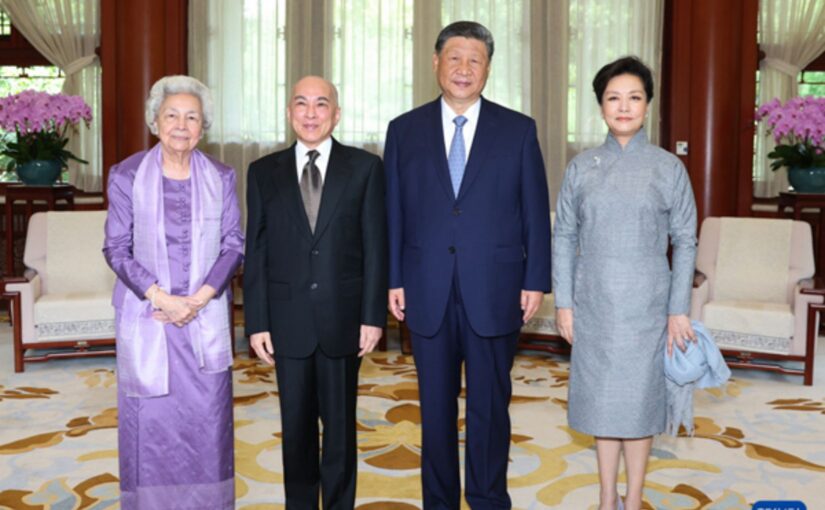
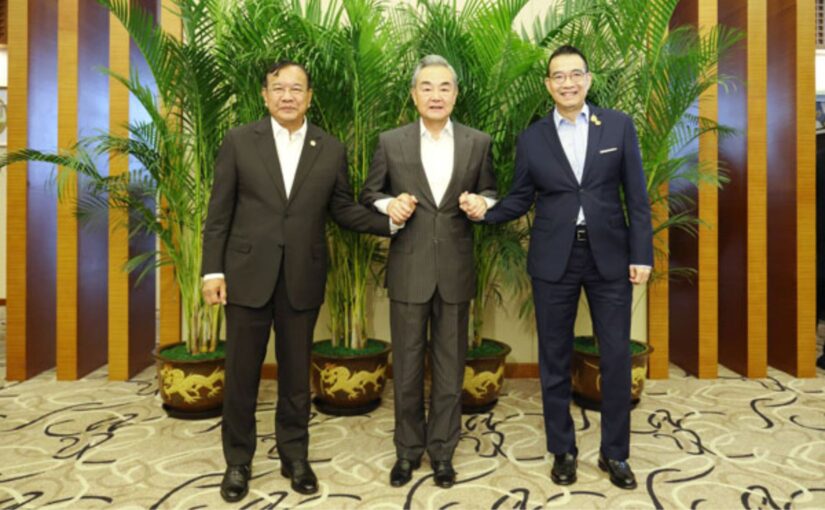
Meeting with Cambodian Deputy Prime Minister and Minister of Foreign Affairs and International Cooperation Prak Sokhonn, Wang Yi said that the China-Cambodia friendship has withstood the tests of international changes and remains rock-solid. In April this year, President Xi Jinping paid a historic visit to Cambodia, which was of milestone significance. The two leaders jointly announced the building of an all-weather China-Cambodia community with a shared future in the new era, and both sides have once again taken the lead in building a community with a shared future for humanity. Facing the volatile and turbulent international situation, China is ready to be a trustworthy friend and partner of Cambodia.
He stressed that the United States imposing high tariffs on Cambodia and other Southeast Asian countries is an attempt to deprive all parties of their legitimate rights to development. He expressed confidence that Southeast Asian countries are capable of coping with the complex situation, upholding principled positions, and safeguarding their own interests as well as the common interests of all parties.
Prak Sokhonn said that China is Cambodia’s most reliable friend. President Xi Jinping’s visit to Cambodia this year was very successful, and both sides decided to build an all-weather Cambodia-China community with a shared future in the new era. He expressed gratitude for China’s selfless assistance in Cambodia’s economic and social development and the willingness to follow through on the common understandings reached between the leaders of the two countries, and to deepen pragmatic cooperation in trade, infrastructure and other fields. He thanked China for giving zero-tariff treatment for 100 percent tariff lines from Cambodia, calling it an act of friendship and brotherhood and a great help to Cambodia, which stands in stark contrast to the 36 percent tariff imposed by the United States on Cambodia. Cambodia is willing to resolve differences with the United States through negotiations but will neither abandon its principles and interests nor sacrifice the interests of third parties.
Wang Yi listened to Prak Sokhonn’s briefing on the situation at the Cambodia-Thailand border. He said that although Cambodia and Thailand hold different positions, both sides are willing to manage the situation and ease tensions. Noting that Cambodia and Thailand are neighbours that cannot be moved away, Wang Yi expressed the belief that both sides will surely uphold the spirit of valuing the primacy of peace and forging friendships with neighbours to properly handle the issue. China will maintain an impartial, fair and just stance, respond to the needs of the parties concerned, and play a constructive role in this regard.
Meeting with Thai Foreign Minister Maris Sangiampongsa, Wang Yi called on the two sides to accelerate the construction of the China-Thailand Railway and give play to the demonstration effect of major projects to promote the implementation of the vision of interconnected development of China, Laos and Thailand. He said that the abuse of tariffs by the United States undermines the free trade system and disrupts the stability of the global industrial and supply chains. He expressed the belief that Thailand and other ASEAN countries will safeguard their respective legitimate interests, resist unilateralism, power politics and bullying acts, deepen the building of a community with a shared future among Lancang-Mekong countries, and promote the sound development of East Asian cooperation.
Wang Yi emphasised that both Thailand and Cambodia are China’s good neighbours and good friends. Regarding the border dispute between Thailand and Cambodia, China hopes that both sides will act in goodwill towards each other and properly resolve the issue through friendly dialogue and consultation, so as to deescalate the situation and restore stability at an early date. China will uphold an objective and impartial stance and play a constructive role in promoting harmonious coexistence between Thailand and Cambodia.
Maris Sangiampongsa said that China is a reliable friend of Thailand. Over the past 50 years since the establishment of diplomatic relations, the two sides have maintained mutual trust and respected each other’s core interests. Thailand and China continue to be as close as one family, and new results have been achieved constantly in the building of a Thailand-China community with a shared future.
Meeting with Sri Lankan Foreign Minister Vijitha Herath, Wang Yi said that China and Sri Lanka enjoy a traditional friendship. In January this year, President Xi Jinping held fruitful talks with President Anura Kumara Dissanayake, during which they reached important common understandings on deepening the China-Sri Lanka strategic cooperative partnership and jointly building a China-Sri Lanka community with a shared future, charting the course and providing guidance for the development of China-Sri Lanka relations. China is ready to work with Sri Lanka to promote the development of the strategic cooperative partnership featuring sincere mutual assistance and ever-lasting friendship between the two countries.
The two sides should deepen high-quality Belt and Road cooperation and practical cooperation in various fields. Both sides should jointly implement the two flagship projects for the comprehensive development of Colombo Port City and Hambantota Port, accelerate the negotiations on the China-Sri Lanka Free Trade Agreement, and create new growth drivers for cooperation in areas such as green energy, digital economy, modern agriculture and marine economy. China-Sri Lanka maritime cooperation is mutually beneficial and win-win. It does not target any third party and should not be disrupted by any third party.
Continue reading Wang Yi pursues regional cooperation and friendship in Kuala Lumpur