We are pleased to republish the following article by Alex Lo, which addresses one of the latest anti-China smears emanating from US political circles.
Democrat Congressman Jared Moskowitz says that China is following the ‘Nazi playbook’ by using TikTok to ‘brainwash’ American youth. Alex Lo writes:
“China has been accused of doing many nefarious things in the United States, but deliberately spreading anti-semitism?
“That’s the claim made by Democrat Congressman Jared Moskowitz in an official hearing. You have to admit facts-free China criticism in the US gets more inventive by the day.”
Moskowitz said: “This is not going well for Jews right now, and it isn’t getting better. We have not yet peaked… We are losing the youth of this country. We are losing them on TikTok, which is owned by a foreign country… The Chinese plan is to get us angry and divisive. And the Chinese plan is to start with the easiest plan possible, and that is us.”
Alex’s retort is clear and to the point: “There is a simple reason why many American youth are becoming critical of Israel – they read the news.”
Writing on July 6, he cites a number of reports published since the start of June including:
“Israeli air strike kills Gaza hospital director along with his family – Israeli attacks have killed 70 healthcare workers over the past 50 days.”
“Israeli forces kill 112 Palestinians in Gaza over 24 hours – At least 16 were reported killed while seeking aid.”
“Israel has demolished 1,000 Palestinian homes in West Bank camps since January”.
Others he cites were reported by Associated Press, the Financial Times and the Israeli newspaper Haaretz. He concludes:
“Anti-semitism has been a scourge responsible for some of the worst horrors in history and remains a problem today. But by committing genocide, Israel is making itself a pariah state.”
Alex Lo is a regular columnist for Hong Kong’s South China Morning Post since 2012. A journalist for 25 years, he has worked for various publications in Hong Kong and Toronto, Canada, as a news reporter and editor. He has also lectured in journalism at the University of Hong Kong.
The article was originally published in the South China Morning Post and is reproduced with the kind permission of the author.
China has been accused of doing many nefarious things in the United States, but deliberately spreading antisemitism?
That’s the claim made by Democrat Congressman Jared Moskowitz in an official hearing. You have to admit facts-free China criticism in the US gets more inventive by the day.
Beijing has been criticised for allowing antisemitic content without online censorship within China, and TikTok has been accused – the big reason it faces being banned – of platforming antisemitic criticism of Israel in the US. But equating the two explicitly is pretty new.
“This is not going well for Jews right now, and it isn’t getting better. We have not yet peaked,” Moskowitz said.
“We are losing the youth of this country. We are losing them on TikTok, which is owned by a foreign country that the president has now extended beyond what the law has allowed.”
He was referring to Donald Trump’s repeated extension of the deadline for a total ban or a forced sale of TikTok required by US law.
Moskowitz continues: “I don’t want TikTok to go away but I want it to get out of the hands of the Chinese. They are doing the Nazi playbook. They are dividing us. They are funding. They don’t need to do it with B2 bombers.
“That’s not what the Chinese plan is. The Chinese plan is to get us fighting among ourselves. The Chinese plan is to get us angry and divisive. And the Chinese plan is to start with the easiest plan possible, and that is us. Until we stop this ‘who did what to who’ stuff, we are not going to solve this.
“Jews are losing their usual allies. Those allies that we’ve had for decades and decades, groups that Jews have stood up for, we are losing them by the moment, especially among young people.
“This [congressional] hearing ain’t gonna fix s***. This is a virus that is spreading; until we are serious about what’s going on online and the brainwashing of our kids, this is going to get worse and more people are going to die in this country.”
There is a simple reason why many American youth are becoming critical of Israel – they read the news. Here are some reports since the start of June:
“Israeli air strike kills Gaza hospital director along with his family – Israeli attacks have killed 70 healthcare workers over the past 50 days.”
“Israeli forces kill 112 Palestinians in Gaza over 24 hours – At least 16 were reported killed while seeking aid.”
“Israel has demolished 1,000 Palestinian homes in West Bank camps since January”.
“UN report accuses global corporations of profiting from Gaza genocide.”
“Gazans survive among unexploded bombs – ‘Uninhabitable’ according to the US government, the Gaza Strip is strewn with undetonated explosives.”
“Hundreds of Palestinian families flee West Bank camp ahead of Israeli demolition orders.”
“West Bank town becomes ‘big prison’ as Israel fences it in”.
This one is from Haaretz, a leading liberal Israeli newspaper, so it’s not fake news: “‘It’s a killing field’: IDF aoldiers ordered to shoot deliberately at unarmed Gazans waiting for humanitarian aid.”
This one is from the Associated Press, so it’s not fake news either: “US contractors say their colleagues are firing live ammo as Palestinians seek food in Gaza”.
This news summary is from +972, an Israeli online news magazine: “Near-daily Israeli massacres at food distribution sites have killed over 400 Palestinians in the past month alone. Survivors describe stepping over corpses to get their hands on a bag of flour: ‘What choice do we have?’”
This is an investigative report by the Financial Times about a leading global firm, Boston Consulting Group: “BCG modelled plan to ‘relocate’ Palestinians from Gaza – Consulting firm had multimillion-dollar role in contentious new aid scheme for shattered enclave”.
Antisemitism has been a scourge responsible for some of the worst horrors in history and remains a problem today. But by committing genocide, Israel is making itself a pariah state.
The video below features a discussion between KJ Noh and Carlos Martinez, originally aired on BreakThrough News on 9 July 2025, about China’s development and its role in the world.
KJ and Carlos discuss the recent Friends of Socialist China delegation to China; the US and China’s contrasting visions for the world (‘clash of civilisations’ vs the Global Civilisation Initiative); living standards in China and the West; increasing poverty, repression, racism and xenophobia in Britain and the US; the reasons for US hostility towards China; China’s world-historic successes in tackling extreme poverty and building renewable energy and advanced infrastructure; the relationship between capital and political power in China and the West; and the relationship between the US-Israeli criminal war on Iran and the ongoing campaign to encircle and contain the People’s Republic of China.
In the following article, which was originally published by the Morning Star, Diane Abbott sounds a warning that, “Europe is acquiescing in Trump’s manoeuvrings – where Europe takes over the US forever war in Ukraine while Washington gets ready for a future fight with China. And it’s working people who will be left paying the price.”
Noting that the recent NATO Summit saw members commit to spending five percent of GDP on “defence”, Diane explains: “This is more than we were spending during the Gulf war and much more than when this country was waging war on Iraq and Afghanistan. We have not seen such a rapid expansion of military spending in this country since the beginning of the second world war.”
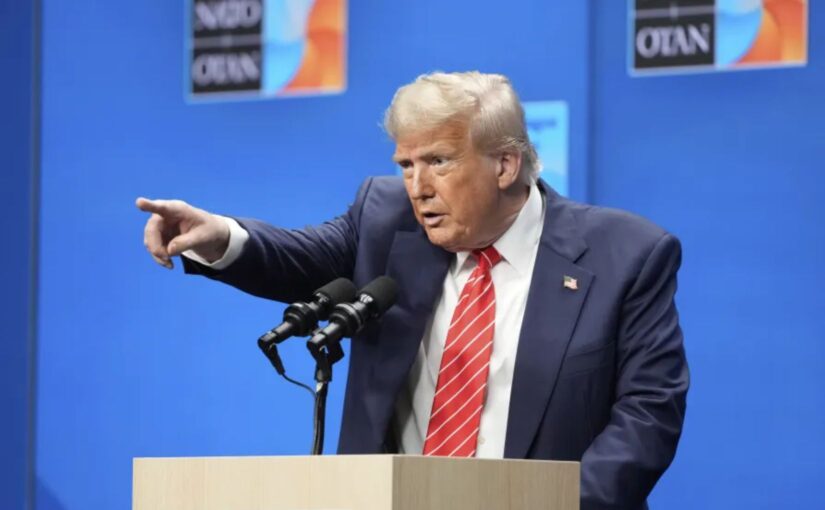
Explaining what lies behind this, she writes: “The US president described the outcome of the Nato summit as ‘a great victory.’ For once, he was telling the truth. It was a great personal victory for him and for the US war machine.
“Trump’s plan, as he said himself, is to ‘un-unite’ Russia and China, so that he can pursue a confrontation with the latter. All of his recent manoeuvrings in imposing tariffs on the world have clearly had that as a central objective, including trying to dictate that other countries are not allowed to trade with China, under threat of even more tariffs.
“Europe’s role in all this is to replace the US resources (under the Nato banner) in Europe that are being used to fight Russia. Those US resources can then be freed up and redeployed to south-east Asia and the coming fight with China.”
She notes that one exception to this policy is the Socialist government in Spain led by Pedro Sánchez. “He is no left-wing firebrand and verbally he makes all the warmongers’ noises about the threats we face and the need for a military upgrade and reform. The essential difference is that he refuses to fund Trump’s war machine and argues that the current level of 2.1 per cent of GDP in the military is quite sufficient. Actions are more important than rhetoric.”
She exposes NATO’s warmongering record: “Despite widespread claims to the contrary, it is not as if the NATO members have a record of demonstrating peaceful intent. NATO was part of the aggression against Serbia, Afghanistan and Libya. Currently, its members have been helping the Israeli genocide, bombing Yemen, installing terrorists in Syria and fighting a nuclear-armed Russia. The latest illegal act is the bombing of Iran. As much-discussed scenarios for the start of World War III go, that is almost the complete set.”
Finally, she clearly draws the link between imperialist war abroad and attacks on the working class at home:
“From the government’s perspective, very large welfare and other cuts are necessary to deliver on the promises to increase the military budget. The war drive and the austerity drive go hand-in-hand. But the sheer scale of the planned rise in the MoD [Ministry of Defence] budget means that austerity, in a number of forms, will go much wider and deeper than it has already. We must be prepared to fight them both.”
Diane Abbott is the Labour MP for Hackney North and Stoke Newington in East London. In 1987, she became the first ever black woman to be elected to the British parliament. She is now the ‘Mother of the House’, the longest continuously serving female member of the House of Commons. Consistently on the left of the party, she served as Shadow Home Secretary during Jeremy Corbyn’s leadership and subsequently defeated a vicious campaign spearheaded by Keir Starmer to drive her out of the Labour Party.
At the recent Nato summit most member countries committed themselves to a target of spending 5 per cent of GDP on the military budget. This is more than we were spending during the Gulf war and much more than when this country was waging war on Iraq and Afghanistan. We have not seen such a rapid expansion of military spending in this country since the beginning of the second world war.
The consequences for the safety and security of this country will be very grave and there will be very significant, negative consequences for most other areas of government spending as a result. The government plans to shift us to a wartime economy, with all the serious consequences that implies.
The US president described the outcome of the Nato summit as “a great victory.” For once, he was telling the truth. It was a great personal victory for him and for the US war machine.
The following article by Carlos Martinez, originally published in the Morning Star, argues that the criminal Israeli-US strikes on Iran are not credibly rooted in concerns over the latter’s alleged nuclear weapons program, but rather in its consistent anti-imperialist stance and its far-reaching material support for the cause of Palestinian freedom.
The article also links the attacks to broader geopolitical dynamics, especially Iran’s deepening alliance with China. Since signing a 25-year cooperation agreement with China in 2021, Iran has become integral to the Belt and Road Initiative, in addition to joining BRICS and the Shanghai Cooperation Organisation, and emerging as China’s primary trading partner in West Asia.
This growing partnership makes Iran a strategic obstacle to US-led imperialism, especially in the context of the New Cold War against China. Carlos draws parallels with the 1953 coup against Iran’s Prime Minister Mossadegh, orchestrated by the CIA and MI6 to protect Western oil interests in the context of the original Cold War.
Today, the New Cold War, centred on US efforts to encircle and contain the People’s Republic of China, is adding urgency to the US’s bid for regime change in Iran. Iran’s deepening integration into the Belt and Road Initiative, and its close coordination with China and Russia, mark it as a frontline state in the struggle between the Project for a New American Century and the Global Community of Shared Future…
The installation of a US proxy regime in Tehran would be a major blow to the Belt and Road Initiative, and it would potentially compromise China’s energy security, giving the US de facto control over the flow of oil and other resources through the Persian Gulf.
The article concludes by urging Western anti-war movements to oppose this escalating campaign to preserve and expand imperialist hegemony.
There has been a great deal of speculation as to the reasons for the criminal Israeli-US attack on Iran.
The reason proffered by Israeli Prime Minister Benjamin Netanyahu and US President Donald Trump is that Iran is on the cusp of acquiring a nuclear weapon, and that therefore the forcible dismantling of its nuclear infrastructure is a matter of great urgency.
Obviously, no reasonable person believes this; certainly nobody who remembers Tony Blair’s cynical 2003 claim that Iraq could deploy weapons of mass destruction within 45 minutes.
After all, Netanyahu first publicly accused Iran of developing nuclear weapons back in 1992 – 33 years ago – when, in a speech to the Knesset as Deputy Foreign Minister, he declared that Iran was three to five years away from acquiring a nuclear weapon and argued for preemptive action.
Netanyahu was later subjected to widespread mockery in September 2012 when, holding up a cartoonish drawing of a bomb during his speech at the UN, he claimed that Iran was 90 percent of the way to the level of uranium enrichment needed for weaponisation.
Meanwhile, Iran continues to deny seeking nuclear weapons and is a longstanding signatory to the Treaty on the Non-Proliferation of Nuclear Weapons (NPT). The country’s government maintains a strict edict against the development, production, stockpiling and use of nuclear weapons or indeed any weapons of mass destruction – contrasting rather starkly with Israel, an undeclared nuclear weapons state and non-signatory to the NPT. Furthermore, there has been no credible intelligence validating Netanyahu and Trump’s claims about Iran’s weapons program.
La guerra «fría» liderada por Estados Unidos contra China está fracasando manifiestamente en sus objetivos de suprimir el ascenso de China y debilitar su influencia global.
La economía de China sigue creciendo de manera constante. En términos de paridad de poder adquisitivo (PPA), ya es el más grande del mundo. Su movilización de recursos extraordinarios para salir del subdesarrollo y convertirse en una superpotencia de ciencia y tecnología parece estar dando dividendos sustanciales, con el país estableciendo un claro liderazgo mundial en energía renovable, vehículos eléctricos, telecomunicaciones, fabricación avanzada, construcción de infraestructura y más. Es, con mucho, el líder mundial en el alivio de la pobreza y el desarrollo sostenible. Las sanciones a las exportaciones de semiconductores no han frenado el progreso de China en informática y, de hecho, han tenido un efecto enzimático en su industria nacional de chips. El espectacular éxito del modelo de lenguaje grande R1 de código abierto de DeepSeek indica que Estados Unidos ya no puede dar por sentado su liderazgo en el ámbito digital.
Mientras tanto, los intentos de Occidente de «desacoplarse» de China han dado muy pocos frutos. Si bien un puñado de países imperialistas han prometido eliminar a Huawei de su infraestructura de red, y mientras las sanciones a los vehículos eléctricos chinos significan que los consumidores de Occidente tienen que pagar sumas obscenas por automóviles de calidad inferior, la integración de China y la cooperación mutuamente beneficiosa con el mundo han seguido expandiéndose. China es el mayor socio comercial de aproximadamente dos tercios de los países del mundo. Más de 150 estados se han adherido a la Iniciativa de la Franja y la Ruta. China se encuentra en el centro de los BRICS y de la Organización de Cooperación de Shanghái.Play
Los aranceles de Trump estaban destinados a coaccionar a China para que aceptara los términos comerciales de EE.UU. y obligar a otros países a unirse sin ambigüedades al «campo» económico y geopolítico de Washington, alienando así a China. Nada de eso ha ocurrido. Incluso la Unión Europea, normalmente supina, ha denunciado los aranceles y ha señalado su intención de ampliar el comercio con China.
En resumen, el Proyecto para un Nuevo Siglo Americano no va bien. Zbigniew Brzezinski escribió en su famoso libro El gran tablero de ajedrez: la primacía estadounidense y sus imperativos geoestratégicos (1997) que «el escenario más peligroso sería una gran coalición de China, Rusia y tal vez Irán, una coalición ‘antihegemónica’ unida no por ideología sino por agravios complementarios». Precisamente esa coalición antihegemónica existe, y está uniendo a los países de Asia, África, América Latina, el Caribe y el Pacífico en un proyecto de construcción de un futuro multipolar, lo que plantea un desafío existencial al llamado «orden internacional basado en reglas» basado en los principios del unilateralismo, la guerra, la desestabilización, la coerción y el intercambio desigual.
¿De la guerra fría a la guerra caliente?
Hasta aquí, todo positivo. Pero no hay que olvidar que «la guerra es la continuación de la política por otros medios». Si la política imperialista no está teniendo el efecto deseado, existe un riesgo muy real de que la clase dominante estadounidense y sus secuaces recurran a la guerra abierta en pos de sus ambiciones hegemónicas.
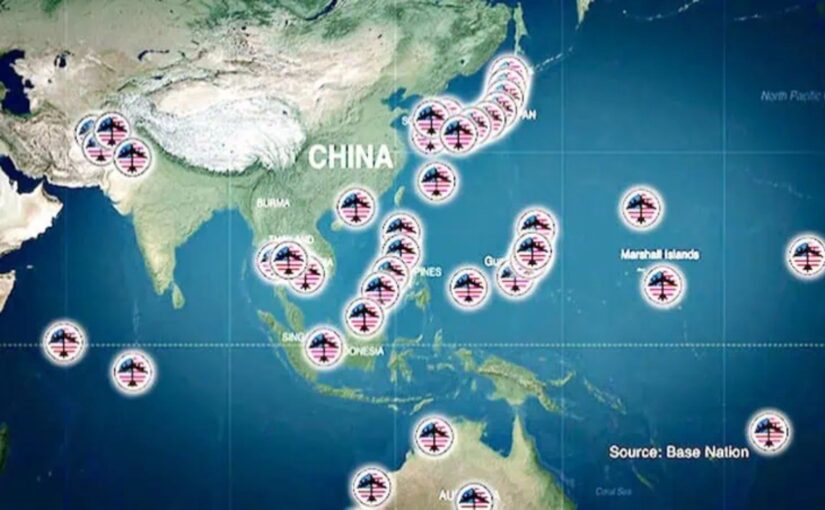
El poder político surge del cañón de una pistola, dijo Mao Zedong. Y aunque el dominio económico de Estados Unidos puede estar disminuyendo, todavía tiene una gran cantidad de armas con las que proyectar poder político. Donald Trump anunció recientemente, sentado junto al genocida maníaco en jefe Benjamin Netanyahu en la Casa Blanca, que el próximo presupuesto de Estados Unidos asignará un billón de dólares récord a las fuerzas armadas. Esto es más de tres veces el gasto militar de China y aproximadamente diez veces el de Rusia. Mientras tanto, Estados Unidos tiene más de 800 bases militares extranjeras, un arsenal de alrededor de 5.500 ojivas nucleares y vastos despliegues de tropas y armas en todo el mundo, cada vez más concentrados en la vecindad de China.
The British government published its new “defence” strategy on June 2.
According to a summary carried by the South China Morning Post (SCMP), it “aims to put a ‘stronger, more lethal’ Nato at the forefront of British defence plans as the country boosts its nuclear deterrent, rebuilds munitions and weapons stockpiles and invests billions of pounds into technologically advanced warfare methods.”
Filled with bellicose, Cold War rhetoric, the strategy, as reported by the SCMP:
Recommends that Britain should begin discussions with the US and NATO on the “potential benefits and feasibility of enhanced UK participation in NATO’s nuclear mission”. The government wants to achieve this by renewing its existing nuclear deterrent, investing £15 billion (US$20 billion) in its warhead programme.
The review is explicit in the need for Britain to play a greater role in nuclear deterrence, as the only European country to assign its nuclear capability to the defence of NATO – something that France does not currently do. The need for stepped-up UK action is driven by “the unprecedented challenge” of the US facing two “near-peer” nuclear powers in Russia and China.
With Trident already absorbing much of the UK’s defence expenditure, the policy is likely to be expensive. As well as the investment in nuclear warheads, Britain plans to build as many as 12 new submarines.
The study also describes China as a “sophisticated and persistent challenge” while falling short of calling it a threat – in line with the government’s existing approach to the Asian nation. It does warn, however, that the UK is likely to face Chinese technology wherever and with whomever it fights.
Simon Tisdall, foreign affairs commentator for the Guardian newspaper, described the new strategy as escalating the global nuclear arms race and “bringing us closer to Armageddon.”
He writes: “Plans by Keir Starmer’s government to modernise and potentially expand Britain’s nuclear weapons arsenal, unveiled in the 2025 strategic defence review (SDR), seriously undermine international non-proliferation efforts… This dangerous path leads in one direction only: towards the normalisation of nuclear warfare.
“These unconscionable proposals are a far cry from the days when Robin Cook, Labour’s foreign secretary from 1997 to 2001, championed unilateral nuclear disarmament and helped scrap the UK’s airdropped gravity bombs. They are a continuation of a redundant, inhuman, immoral, potentially international law-breaking deterrence policy that cash-strapped Britain can ill afford, will struggle to implement at cost and on time, and which perpetuates illusions about its global power status.”
Responding to the review, a spokesperson for China’s Ministry of Defence rebuked Britain for hyping up the so-called “China threat”. He urged the British side to perceive China in a correct manner and objectively and rationally view China and its military development. “The British side should make more practical efforts to contribute to the growth of relations between the two countries and their militaries.”
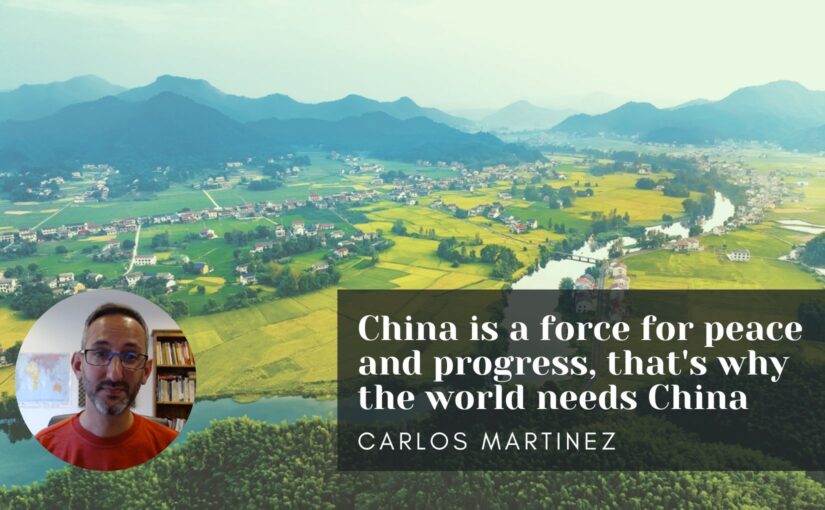
Friends of Socialist China was among the organisers of a hybrid event in Portland, Oregon (US), held on 22 June 2025, discussing Kyle Ferrana’s important book Why the World Needs China.
In his speech (delivered via Zoom), Carlos Martinez endorsed the central thesis of the book, arguing that China represents a global vision centred around peace, progress and sustainable development; whereas the US and its allies represent a global vision centred around imperialism, hegemony, war, ecocide and chaos.
Discussing recent developments in West Asia, in particular the US-Israeli criminal attacks on Iran and the ongoing genocide in Gaza, Carlos highlighted China’s constructive role in the region, including its mediation between Iran and Saudi Arabia and its support for Palestinian unity. He linked the attacks on Iran with the West’s continuing efforts to destabilise China and broader imperialist resistance against a rising multipolar world.
Emphasising the need for global solidarity, Carlos called for building “a global united front composed of the socialist countries, the national liberation movements, the anti-imperialist forces of the Global South, and the progressive forces in the advanced capitalist countries”, for supporting the forces of liberation worldwide, and for supporting the socialist countries – “and particularly China, as the largest and most advanced socialist country, as the country which is at the core of the emerging multipolar system”.
The video of the speech is embedded below, followed by the text.
“Why the World Needs China” is the somewhat provocative title of Kyle’s book.
But in my view the essential correctness of this title is becoming clearer and clearer with every passing day, and specifically with every despicable act of aggression carried out by the United States and its Israeli proxy against the people of Palestine, of Iran, of Yemen and of Lebanon.
As you all know, last night the US military openly joined Israel’s criminal war against Iran, bombing three nuclear facilities. I say “openly joined the war”, because the fact is that the US and its allies been providing weapons, intelligence, logistical support, war propaganda and diplomatic cover from the very beginning – both for this war on Iran and for the genocidal assault on Gaza.
The whole world can increasingly see what the United States and its allies represent, and increasingly the whole world can see what China represents. And these are two vastly different visions of the future of the world, one put forward by the capitalist class in the United States, one put forward by the working class in China.
The US is proposing a Project for a New American Century. This neoconservative notion – originally associated with notorious hawks such as Paul Wolfowitz, Donald Rumsfeld and Dick Cheney – has become a consensus position in mainstream US politics, adhered to by all administrations, Republican and Democrat alike. It’s a fundamentally hegemonist, imperialist proposal; a proposal for spreading death and destruction for the sake of projecting the US’s domination of the 20th century into the 21st century.
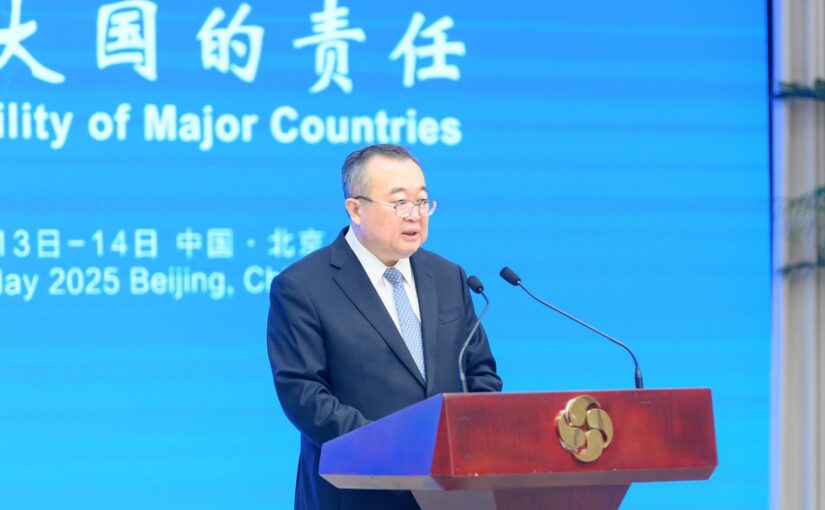
From May 13-14, the Chinese People’s Association for Peace and Disarmament (CPAPD), which works under the direction of the International Department of the Communist Party of China Central Committee (IDCPC) hosted the Fourth Wanshou Dialogue on Global Security, themed as “Universal Security in a Turbulent World: The Responsibility of Major Countries”. Liu Jianchao, Minister of the IDCPC, attended the event and delivered a keynote speech.
More than 50 international security experts from over 30 countries, including Pino Arlacchi, former Under-Secretary-General of the United Nations, Andrey Kortunov, former director general of the Russian International Affairs Council, Benny Octaviar, former head of the Indonesian Military Research Centre, Douglas Bandow, a special assistant to former US president Ronald Reagan and a senior research fellow at the Cato Institute, and Zizi Kodwa, a member of the National Executive Committee of the African National Congress (ANC) and former Minister of Sports, Arts and Culture of South Africa, attended the event.
The participants held in-depth discussions around four topics, namely Pressing Issues of Global Security, The Responsibility of Major Countries Amidst Once in a Century Transformations, Major Country Relations and Security in the Asia Pacific and Pathways to Universal Security.
Friends of Socialist China was invited to participate in the dialogue and we were ably represented by Dr. Jenny Clegg, a Member of our Advisory Group, who is the author of ‘China’s Global Strategy: Towards a Multipolar World’, a Vice President of the Society for Anglo-Chinese Understanding (SACU) and a leading member of the Campaign for Nuclear Disarmament (CND) and the Stop the War Coalition.
We reproduce below Jenny’s report of the event as well as the text of her speech, which was delivered to the panel session on Major Country Relations and Security in the Asia Pacific.
We also reprint the report of the opening session which was originally carried on the IDCPC website.
The CPAPD website carried a brief report on the event as well as a meeting with Peng Qinghua, Vice-Chairman of the Standing Committee of the National People’s Congress (NPC).
Labour Outlook also carried an article, based in part on Jenny’s speech.
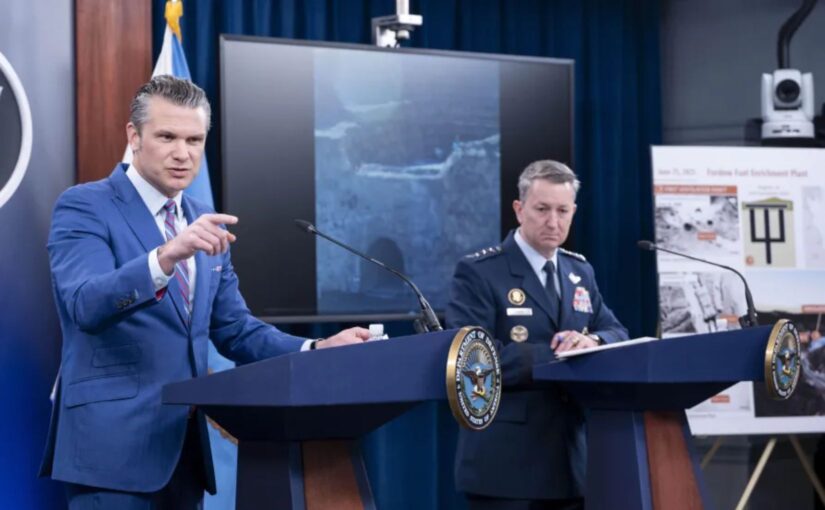
In this article for Struggle La Lucha, Gary Wilson critiques US Defence Secretary Pete Hegseth’s speech at the recent Shangri-La Dialogue, in which Hegseth urged the US’s regional allies to ramp up military spending in preparation for possible war with China.
Hegseth claimed in his speech that Beijing is preparing to wage war in order to reunite Taiwan Province with the mainland, declaring that “the threat China poses is real, and it could be imminent”. Gary writes:
Hegseth and the Trump administration are attempting to recast China’s efforts to maintain national sovereignty as “aggression,” while portraying US military escalation in China’s immediate periphery as defensive. It’s a textbook example of how imperialism inverts reality.
The article notes that Washington in recent years has been persistently undermining the One China policy, through arms sales, military training, naval patrols, intelligence sharing, and diplomatic efforts that treat Taiwan as an independent state. “All of this raises the stakes deliberately. The US is trying to provoke a response from China, just as it did with Russia over NATO’s expansion to Ukraine. In essence, what Hegseth is demanding is a US military takeover of China’s Taiwan — disguised as ‘defending democracy.'”
The article situates these moves within a broader trend: the US’s global war strategy, including support for war in Ukraine and Israel’s assault on Gaza, all components of the US-led response to the crisis of capitalism. As China’s technological and economic rise challenges US hegemony, Gary warns the US is increasingly willing to risk catastrophic war — including nuclear confrontation — to maintain its dominance.
Listing the numerous ways in which the US is escalating its longstanding campaign of encirclement and containment of China, the article concludes:
The Trump administration is determined to strangle China’s rise — by war if necessary. This is not a defensive strategy. It is a conscious plan to preserve U.S. global supremacy, even if it risks nuclear war.
At the annual Shangri-La Dialogue in Singapore on May 31, U.S. Defense Secretary Pete Hegseth delivered an ultimatum to Washington’s Indo-Pacific allies: Escalate your military spending and prepare for imminent war with China.
Framing China as the aggressor, Hegseth accused Beijing of seeking “hegemony in Asia” and warned that a Chinese move on Taiwan would bring “devastating consequences for the Indo-Pacific and the world.” “There’s no reason to sugarcoat it,” he declared. “The threat China poses is real. And it could be imminent.”
Please note that Taiwan is internationally recognized as part of the People’s Republic of China. Under the One China policy, the United States officially acknowledges this. Since the 1970s, the U.S. has agreed not to recognize Taiwan as a separate state.
So when U.S. Defense Secretary Pete Hegseth speaks of preparing for war over Taiwan, what he’s really advocating is: a U.S. military intervention to take away a province of China.
This is akin to China threatening war if the U.S. deployed troops to Long Island, N.Y. or Isle Royale in Lake Superior on Canada’s border.
Hegseth and the Trump administration are attempting to recast China’s efforts to maintain national sovereignty as “aggression,” while portraying U.S. military escalation in China’s immediate periphery as defensive. It’s a textbook example of how imperialism inverts reality.
Furthermore, the U.S. has systematically undermined the One China framework by increasing arms sales to Taiwan, sending high-level officials to visit the island’s capital, Taipei, stationing American troops and conducting joint military training there, and encouraging Taiwanese political figures who flirt with formal declarations of independence.
In addition to arms sales and military visits, the U.S. has steadily undermined the One China policy through a range of provocative actions. These include expanding intelligence sharing and joint military planning with Taiwan, increasing naval and air patrols near the island, and passing legislation to deepen official ties. The U.S. has also promoted Taiwan’s participation in international organizations, supported the development of its domestic arms industry, and formalized trade agreements that treat Taiwan as a separate entity. Collectively, these moves aim to transform Taiwan into a U.S. military and economic outpost, escalating tensions with China and pushing the region closer to open conflict.
All of this raises the stakes deliberately. The U.S. is trying to provoke a response from China, just as it did with Russia over NATO’s expansion to Ukraine. In essence, what Hegseth is demanding is a U.S. military takeover of China’s Taiwan — disguised as “defending democracy.”
The article below by Duncan McFarland and Liu Xuegang argues that US foreign policy – particularly its increasingly hostile stance toward China – has direct and harmful consequences for Chinese and Asian communities in the US.
The authors trace a long history of anti-Asian sentiment linked to US imperialist strategy, from the Chinese Exclusion Act of 1882 to the McCarthyite Cold War propaganda of the 1940s and 50s. In recent years, tensions have escalated sharply under both Republican and Democratic administrations. Trump’s team has declared China a top strategic threat, launched a tariff war, and escalated the state’s attack on Chinese scientists, researchers and students in the US.
The article concludes that US imperialism fosters division and racism at home as it pursues global dominance. It calls for resistance to the New Cold War and urges solidarity with global movements for peace and cooperation.
The international working class does not want war. It is imperative to oppose Cold War 2.0, work for peace, and support initiatives, especially in the Global South and China, for cooperation on global issues such as climate change, pandemics, war, and poverty.
U.S. imperialism divides the world into hostile camps; this is the wrong approach. The people of the world want peace, prosperity, and cooperation. The U.S. policy of hegemony abroad promotes racism at home; the struggle for justice and freedom at home is also a struggle for peace abroad.
This article originally appeared in People’s World. The authors are members of the Asia-Pacific Subcommittee, Peace and Solidarity Commission, CPUSA.
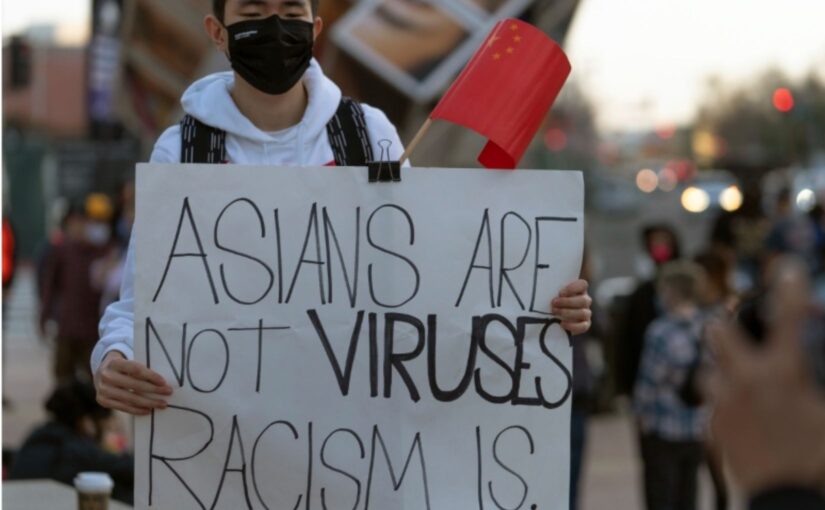
U.S. foreign policy can have a great impact on people’s daily lives here at home, and U.S. policy toward China is a prime example. When the U.S. conducts a hostile, anti-China foreign policy, there is increased racism and repression in the Asian and Chinese American communities in the U.S.
On the other hand, when relations with China are good, such as during World War II or the 1980s, mainstream media depicted Chinese Americans as friendly, patriotic, and the “model minority.”
As U.S. imperialism’s new Cold War against China heats up, familiar patterns are repeating themselves under new conditions.
Historical background
The Central Pacific Railroad employed large numbers of Chinese immigrants to build the western half of the Transcontinental Railway, completed in 1869. However, no Chinese workers were invited to the golden spike ceremony at the completion of the project. Especially with the overthrow of Reconstruction, racist attitudes prevailed, and the Chinese Exclusion Act was signed in 1882. This blocked Chinese workers from entering the U.S.; it was the first anti-immigration legislation targeting a specific ethnic group or country of origin.
In 1913, the novel The Insidious Fu Manchu was a hit and became a cultural icon full of racist stereotypes about the ever-lurking, insidious Dr. Fu. But during the 1930s, the U.S. and China became important allies in the Pacific War against Japanese imperialism and aggression.
The following article, written by Betsey Piette for Workers World, highlights socialist China’s growing role in challenging US-led imperialist domination and argues that defending China is essential to the global struggle against capitalism.
Betsey stresses the need to foster internationalist consciousness among workers and young activists, linking domestic struggles with global anti-imperialist movements. She critiques the propaganda that falsely equates China and the US as being equivalent capitalist ‘superpowers’, arguing that this narrative obscures the exploitative and chaotic nature of US capitalism while ignoring China’s remarkable achievements under socialism.
Betsey observes that, despite the US’s escalating campaign of military encirclement and economic warfare, China’s economy continues to expand, living standards continue to improve, and its international cooperation continues to deepen, including with the US’s “traditional allies”.
Betsey asserts that China’s planned economy and state-led development – which have resulted not only in vastly increased living standards for the Chinese people but also in China becoming a science and technology powerhouse – offer an inspiring alternative model to capitalist neoliberalism.
The article concludes by calling for systematic defence of China’s socialist system against US threats of war, warning that economic aggression may escalate into military conflict. China’s is a revolution in motion that must be defended by the global working class.
Despite decades of wars and occupations of countries abroad, the U.S. faces a global challenge it is unable to contain. This challenge is multifaceted, but three things stand out:
One is the relentless resistance of the people of Palestine and West Asia in elevating their struggle for a free Palestine.
A second is the challenge from socialist China’s resistance to U.S. capitalist domination of the global economy.
The third is a growing awareness among young people that they have no future under capitalism, with its unchecked environmental catastrophes and its ready acceptance of fascist politicians.
A key challenge for the party and the movements we are part of is how to encourage young activists and workers to develop a more global outlook when it comes to capitalism and imperialism and to see why socialism offers the solution.
Demands are important
“From the river to the sea, Palestine will be free” is the most popular demand for Palestine and one that gets the most pushback from the Zionists. This demand doesn’t just raise opposition to the ongoing genocide in Gaza — it supports the future goal for Palestinians. Demands are important.
As we oppose the threat of imperialist war against China, we need to raise awareness about transformation and resulting gains made by socialism in China.
Imperialist propaganda puts an equal sign between the U.S. and China as “superpowers” — as if they are both capitalist countries. Corporate media pundits and politicians promote the lies that “China is repressive, that their economy is failing, that there is widespread unemployment, no opportunities for young people, etc.” It’s like they are looking in a mirror where what is reflected back are the conditions in the U.S., not China.
In the following article, Friends of Socialist China co-editor Carlos Martinez argues that the US-led New Cold War against China is failing. Despite extensive efforts to contain China’s rise – through tariffs, sanctions, and attempts at economic decoupling – China continues to grow economically and technologically. It now leads globally in multiple areas including renewable energy, electric vehicles, and advanced manufacturing. Its global reach is expanding, as evidenced by its central role in BRICS, the Belt and Road Initiative, and its status as the top trading partner for three-quarters of the world’s countries.
The West’s tariffs and sanctions have clearly backfired, invigorating China’s domestic industries rather than weakening them.
However, Carlos warns that the failure of “cold” methods could well provoke a shift toward direct military confrontation. The article identifies Taiwan as the most likely flashpoint, with the US escalating arms sales to the island and increasing its military deployments in the region. In the last two decades, successive US administrations, Democratic and Republican alike, have undermined the One China policy and fanned separatist sentiment, in defiance of international law.
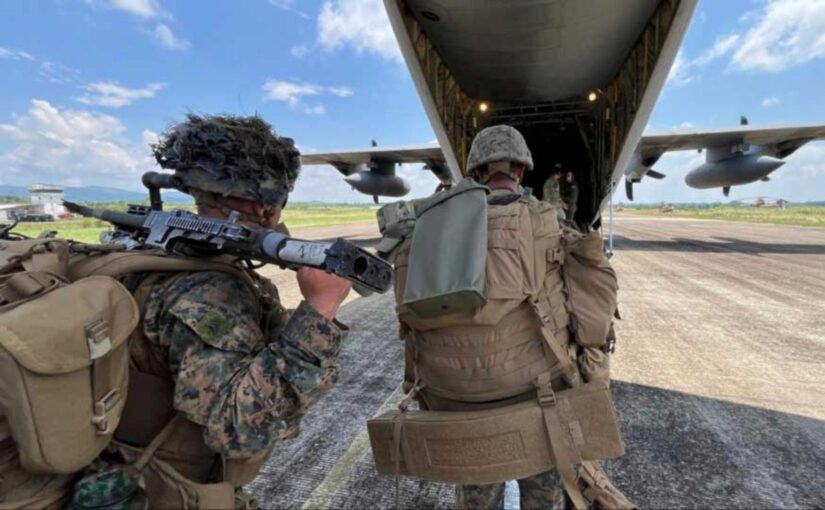
Military preparations, including AUKUS, the rearmament of Japan, and new US bases in the Philippines, reflect a growing bipartisan consensus in Washington in favour of war planning.
This all adds up to accelerating preparations for war with China – a war with the objective of dismantling Chinese socialism, establishing a comprador regime (or set of regimes), privatising China’s economy, rolling back the extraordinary advances of the Chinese working class and peasantry, and replacing common prosperity with common destitution. Needless to say, this would be disastrous not just for the Chinese people but for the entire global working class.
Carlos calls for resolute opposition to this dangerous escalation.
The New Cold War is not working
The US-led ‘cold’ war against China is manifestly failing in its objectives of suppressing China’s rise and weakening its global influence.
China’s economy continues to grow steadily. In purchasing power parity (PPP) terms, it is by now the largest in the world. Its mobilisation of extraordinary resources to break out of underdevelopment and become a science and technology superpower appears to be paying substantial dividends, with the country establishing a clear lead globally in renewable energy, electric vehicles, telecommunications, advanced manufacturing, infrastructure construction and more. It is by far the global leader in poverty alleviation and sustainable development. Sanctions on semiconductor exports have not slowed down China’s progress in computing, and indeed have had an enzymatic effect on its domestic chip industry. The spectacular success of DeepSeek’s open-source R1 large language model indicates that the US can no longer take its leadership in the digital realm for granted.
Meanwhile, the West’s attempts to ‘decouple’ from China have yielded precious little fruit. While a handful of imperialist countries have promised to remove Huawei from their network infrastructure, and while sanctions on Chinese electric vehicles mean that consumers in the West have to pay obscene sums for inferior quality cars, China’s integration and mutually-beneficial cooperation with the world has continued to expand. China is the largest trading partner of approximately two-thirds of the world’s countries. Over 150 states are signed up to the Belt and Road Initiative. China lies at the core of BRICS and the Shanghai Cooperation Organisation.
Trump’s tariffs were meant to coerce China into accepting the US’s trade terms and to force other countries to unambiguously join Washington’s economic and geopolitical ‘camp’, thereby alienating China. Nothing of the sort has taken place. Even the normally supine European Union has denounced the tariffs and signalled its intention to expand trade with China.
In summary, the Project for a New American Century is not going well. Zbigniew Brzezinski famously wrote in his The Grand Chessboard: American Primacy and its Geostrategic Imperatives (1997) that “the most dangerous scenario would be a grand coalition of China, Russia, and perhaps Iran, an ‘anti-hegemonic’ coalition united not by ideology but by complementary grievances.” Precisely such an anti-hegemonic coalition exists, and is uniting the countries of Asia, Africa, Latin America, the Caribbean and the Pacific in a project of building a multipolar future, thereby posing an existential challenge to the so-called ‘rules-based international order’ based on the principles of unilateralism, war, destabilisation, coercion and unequal exchange.
The following article by W. T. Whitney Jr, originally published in People’s World, connects the Trump administration’s hostility towards China back to the US-led campaign of containment and encirclement starting in 1949 with the proclamation of the People’s Republic.
While the current state of relations between the two countries is often described as a New Cold War, Whitney points out that it has a significant military component, with 400 US bases surrounding China with ships, missiles and troops. Furthermore, “US allies in the Western Pacific—Japan and South Korea in the North, Australia and Indonesia in the South, and The Philippines and various islands in between—have long hosted U.S. military installations and/or troop deployments. Nuclear-capable planes and vessels are at the ready. US Navy and Air Force units regularly carry out joint training exercises with the militaries of other nations.”
Vast investment is being ploughed into weapons development in the US, and Trump-supporting producers of advanced modern weaponry (such as Peter Thiel) “exert sufficient influence over government decision-making to ensure happy times for the new breed of weapon producers”.
The article concludes with a call for the anti-war movement in the West to step up in its opposition to war on China, and its efforts to build stronger people-to-people links between the West and China:
Will resistance to war against China end up stronger and more effective than earlier anti-war mobilizations in the post-Vietnam War era? A first step toward resisting would be to build awareness of the reality that war with China may come soon. General knowledge of relevant history should be broadened, with emphasis on how U.S. imperialism works and on its capitalist origins. Anyone standing up for peace and no war ought to be reaching out in solidarity with socialist China.
Despite all the hype about a possible “breakthrough” in the U.S.’ trade war with China due to Trump’s tariff retreats, the reality is that the movement toward an actual war with China accelerates.
The public, focused on troubles currently upending U.S. politics, does not pay much attention to a war that has actually been on the way for decades.
The watershed moment of course came all the way back in 1949 with the victory of China’s socialist revolution. Amid resurgent anti-communism in the United States, accusations flourished of “who ‘lost’ China.”
Loss in U.S. eyes happened in China with the dawning of national independence and promise of social change. In 1946, a year after the Japanese war ended, U.S. Marines, allied with Chinese Nationalist forces, the Kuomintang, were fighting the People’s Liberation Army in Northeast China.
The U.S. government that year was delaying the return home of troops who fought against Japan. Soldier Erwin Marquit, participant in “mutinies” opposing the delay, explained that the U.S. wanted to “keep open the option of intervention by U.S. troops … [to support] the determination of imperialist powers to hold on to their colonies and neocolonies,” China being one of these.
The article below is based on a speech by Friends of Socialist China co-editor Carlos Martinez to a webinar held by the Black Liberation Alliance on the subject of ‘Trump’s Tariff Wars on the Global South and the New Cold War’, held on 8 May 2025.
Carlos positions the tariff war within the broader US-led New Cold War on China. The tariffs are essentially “a continuation and a deepening of Obama’s so-called Pivot to Asia, designed by Hillary Clinton and first announced in 2011”.
The Trump administration’s justifications for its tariff war – that it will result in re-industrialisation of the US and increase in income – are patent nonsense. “In fact, US treasury secretary Scott Bessent stated openly last month that the objective for the tariffs is to persuade Japan, South Korea and India to participate in a ‘grand encirclement’ strategy to isolate and weaken China.”
Carlos writes that “the US is seeking to punish China for its success in building a modern economy, for developing its sovereignty, and for its refusal to bow down to US hegemony… China’s rise disrupts the whole imperialist system. It gets in the way of the relationship the US wants to have with the rest of the world, whereby it can design the global economic and financial system in its own interests.”
The article observes that the tariff war has no chance of being successful: “The US ruling class wants to isolate China, but actually it will end up isolating itself.” However, with the failure of the tariff war comes the possibility of further dangerous developments:
The obvious concern following on from that is that US imperialism’s next weapon against China may be not be a metaphorical one; that the New Cold War will turn hot. Anti-war movements in the West need to be highly vigilant on that score.
The first thing to say about the Trump administration’s tariff war is that it is primarily designed to weaken, undermine and isolate the People’s Republic of China.
It’s part of a broader program of “decoupling” from China and a broader New Cold War on China – a system of hybrid warfare incorporating economic measures, diplomatic measures and propaganda measures, along with a significant military component: the deployment of hundreds of thousands of troops to the Pacific region; the US military bases in the Philippines, Guam, Okinawa, Japan, South Korea, Australia; the deployment of sophisticated weapons systems to the region; and the various attempts to create some sort of Asian NATO.
The following article by Paul Atkin, originally published in Socialist Economic Bulletin, analyses the response by British politicians and journalists to the announcement by Jingye – the Chinese company that acquired British Steel in 2019 – that it would be closing the blast furnaces at its Scunthorpe plant on account of making losses of £255 million per year. This response has been characterised by thinly-veiled Sinophobia and anti-China propaganda, with British politicians accusing Jingye of attempting to sabotage the country’s steel industry, and demanding that Chinese companies be prevented from future investment in British infrastructure.
Paul contrasts this hysteria with the relatively muted response to a very similar crisis at the Port Talbot steel works in 2024. “Both plants owned by companies based overseas. Both seeking a way out of unprofitable production. Both in negotiation for subsidy from successive governments for outcomes that would lead to massive job losses. Both looking to close aging blast furnaces earlier than originally planned because they have been making significant losses.” However, “Indian based Tata Steel’s ownership of Port Talbot was certainly mentioned in news coverage, but not on the blanket, verging on obsessive scale that British Steel’s Chinese ownership has… After Port Talbot, there has been no denunciation of Indian investment into the UK, nor any calls in the media or Parliament for any ‘urgent review’ into India’s role in the UK, or paranoid accusations … that the attempted closure is part of a dastardly plot to sabotage a strategic British industry”.
The article points out that the narrative on British Steel serves two purposes for the British ruling class. First, it feeds into building popular support for the US-led New Cold War on China. Second, it contributes to the fossil fuel industry’s resistance to meaningful action on climate change, given China’s global leadership in renewable energy and electric transport.
Paul notes that Spain is taking a considerably more far-sighted and progressive approach, “both encouraging inward Chinese investment – like the joint venture between CATL and Stellantis to build a battery factory in northern Spain – and deals signed last year between Spain and Chinese companies Envision and Hygreen Energy to build green hydrogen infrastructure in the country.”
It is crucial that environmental activists in the West do not fall into the Sinophobic trap being laid for them by the Cold War hawks in Washington and London.
The contrast between the way the crises in steel production at Scunthorpe and Port Talbot has been stark. Both plants owned by companies based overseas. Both seeking a way out of unprofitable production. Both in negotiation for subsidy from successive governments for outcomes that would lead to massive job losses. Both looking to close aging blast furnaces earlier than originally planned because they have been making significant losses.
In the case of Port Talbot, this led to a deal to convert to Electric Arc Furnaces to secure sustainable steel production at the site, but with the loss of 2,500 jobs and only 300 retained. This was dependent on a subsidy from the government of £500 million. A similar deal was not clinched at Scunthorpe, as the crisis was brought forward by Trump’s imposition of a 25% tariff on UK manufactured steel – which led to an announcement of imminent closure from the company the following morning. A closure would mean 2,700 jobs lost – on the same scale as Port Talbot.
In Port Talbot, in the absence of a serious just transition process involving the unions, which were excluded from the discussions by the company and the then Tory government, the job losses are being dealt with by the same sort of offers of retraining as have been proposed for the Grangemouth oil refinery in Scotland. In the case of Scunthorpe, also with no just transition process, the government has rightly stepped in to take charge of the plant to keep the blast furnaces running in the short term; which means that the losses previously borne by the company will now be borne by the Exchequer. With the company losing £255 million a year, the governments £2.5 billion steel transformation fund can absorb this in the short term. Workers at Port Talbot have expressed some bitterness that this was not considered for them.
What has been different is the mobilisation of Sinophobia around British Steel’s ownership by a Chinese company, Jingye. Indian based Tata Steel’s ownership of Port Talbot was certainly mentioned in news coverage, but not on the blanket, verging on obsessive scale that British Steel’s Chinese ownership has. Tata’s brinkmanship in negotiations was also mentioned, but they were not accused of “negotiating in bad faith” in the way that Jingye have. Both companies have behaved as you’d expect a capitalist company to behave, though if you read Jingye’s Group Introduction you can see how their operations inside China are turned to more positive social objectives – from a high wages policy to greening their workplaces – from being based in a country run by a Communist Party, not by their own class. But here, both Tata and Jingye are in it for the money. Their UK operations have only been viable as a tiny loss making fragment of a much larger business, as part of an attempt to implant themselves in a variety of global markets in the hope of profitability in the medium to long term. Steel production at Port Talbot in 2022, for example, was just 10% of Tata’s global production of 35 million tonnes.
After Port Talbot, there have been no denunciation of Indian investment into the UK, nor any calls in the media or Parliament for any “urgent review” into India’s role in the UK, or paranoid accusations made explicitly by Farage but echoed by “senior Labour figures” as well as Tories in the media but not in the recent Saturday debate in Parliament, that the attempted closure in Scunthorpe is part of a dastardly plot by the Chinese government to sabotage a strategic British industry, not a commercial decision in which a company is seeking to cut its losses in all the ways British capitalist company law allows them to; including cancelling orders for the raw materials they’d need to keep running the blast furnaces they want to close. Instead, there has been serious negotiations with the Indian government to set up a trade deal, which was reported last week as “90% done”.
No decoupling there.
The attack on commercial engagement with China fulfills two objectives. One is a straightforward attempt to mobilise popular sentiment in defence of steel workers jobs behind a Cold War sentiment in a wider context in which the Trump administrations policies have shaken up popular faith in deference to the US. An anti Chinese attack distracts from that and pushes people back towards habitual hostilities.
The other opens another front in the resistance to any serious action on climate change that could threaten the profits of the fossil fuel sector. Accusations from the Right have been:
The blast furnaces could have been kept running with locally sourced coking coal from the cancelled Whitehaven mine. This misses the point that the coke from this mine – had it been developed – would have had such a heavy sulphur content that it was too poor quality to be used at Scunthorpe, so this is a consciously mendacious and fundamentally unserious talking point.
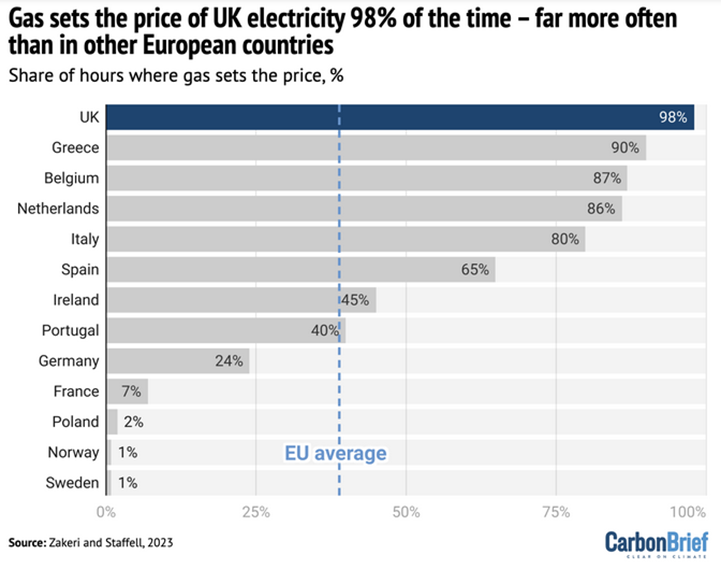
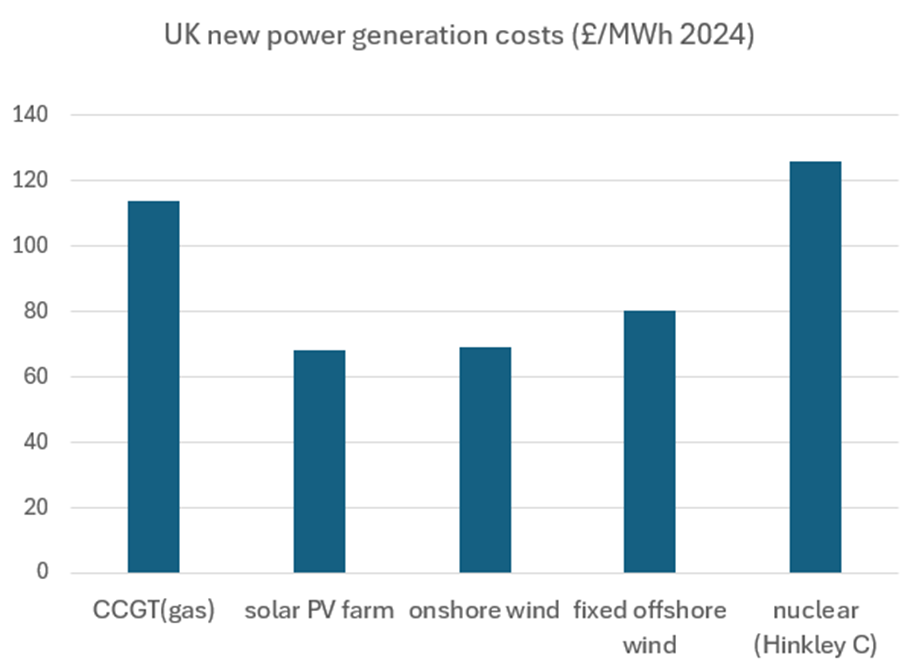
High energy prices in the UK are because of “Net Zero”. This, as they know, is the opposite of the truth. The UK has high energy costs because they are tied to the price of gas far more than any other country in the G7. See Figure 1. We should also note that the oft repeated “solution” to this problem from Reform or the Tories is massive investment in nuclear power instead. The problem with this is that the cost per Kilowatt hour of energy generated by nuclear power is higher than gas, which is higher than renewables. See figure 2. So their way forward would actually compound the problem. Paradoxically, their attack on Chinese investment in UK nuclear power development, and the withdrawal of Chinese investment from Sizewell C in Suffolk and Bradwell in Essex, is making the financing of these projects almost impossible. So, in this case, the contradictions of their politics means they will neither have their cake, nor eat it.
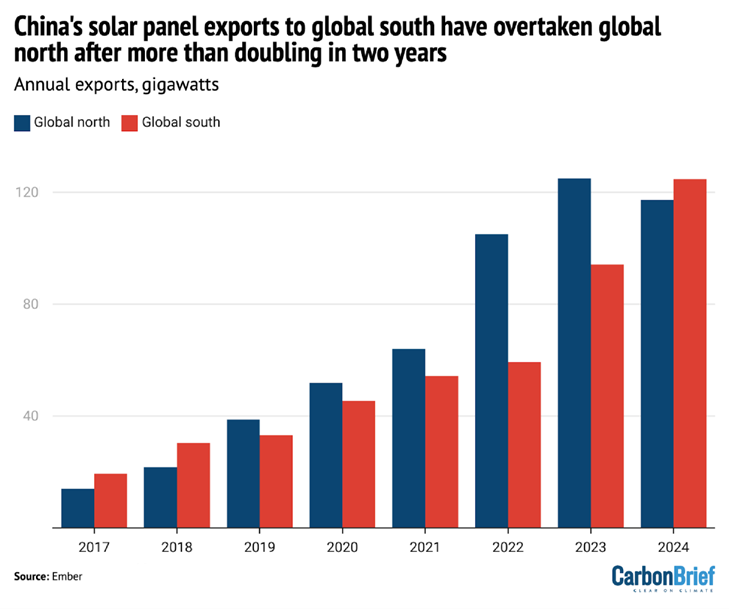
These themes came together in a front page broadside from the Times on 15th April directed at Ed Miliband’s recent trip to China aiming to improve relations and develop better sharing of expertise on the climate transition. Miliband’s is the head that the right wing press is keenest to have on its trophy wall of sacked ministers, hence quite limited and inadequate targets being described as “swivel eyed” and “eye watering” in a constant hammering of lead articles from the Sun to the Telegraph and all the low points in between. Attacks on solar panel installations are increasingly taking the form of accusations of “forced labour” in China, which are untrue, but because it is almost universally believed at Westminster, this threatens a reactionary result on the basis of an apparently progressive concern – as China is the source of 80% of the world’s solar panel supply. However, even if the UK sabotages its green transition by impeding imports of Chinese solar panels this will have little effect globally, as China is increasingly exporting them to the Global South. See Figure 3 Miliband is nevertheless the most popular government minister among Labour members in Labour List’s survey – in which he has a positive rating of 68, compared to Keir Starmer’s 13 – because he is seen as getting on with something positive and progressive, while Liz Kendall and Rachel Reeves are in negative territory.
The call from Dame Helena Kennedy for “an urgent security review of all those Chinese companies operating within our infrastructure which could pose a threat to our national interests – and maybe not just confined to China” threatens to compound the damage already done by the UKs removal of Huewei’s investment in the 5G network, ensuring that the version the country has is slower and more expensive, and the financial difficulty set for Nuclear power station projects by the removal of Chinese investment on the basis of “national security” paranoia. Applied more widely, this neatly lines the UK up with Trump’s trade war against China and sets the UK up for a potential trade deal in which US capital is looking hungrily at the NHS, wants to sell chlorinated chicken and other additive saturated and nutrition less food from their agricultural industrial complex and open up a tax and regulation free for all for their abusive big tech companies, while their President is actively sabotaging global progress towards sustainability by doubling down on fossil fuels. China is doing none of these things. A more positive approach is that being taken by the PSOE government in Spain, which is both encouraging inward Chinese investment – like the joint venture between CATL and Stellantis to build a battery factory in northern Spain and deals signed last year between Spain and Chinese companies Envision and Hygreen Energy to build green hydrogen infrastructure in the country.
Farage, and others on the Right are arguing for nationalisation as a temporary measure just in order for the company to be “sold on” – treating nationalisation as an emergency life support process for private capital -is that there is not exactly a huge queue of companies waiting to buy, and any that did would most likely to be looking at asset stripping. Jingye was the only company interested in 2019, when previous owner Graybull capital gave up on it.
This would also be the government’s preferred approach, because they are nervous of the capital costs involved in making the plant viable. There are three intertwined problems with this.
Attracting a viable private company prepared to put serious money into reviving the plant means attracting overseas capital. Given that more than 50% of global steel production is made by Chinese companies (see figure 4 below) Jonathan Reynolds has changed his tune since the weekend debate in Parliament. That Saturday he was decrying allowing Jingye into UK steel manufacturing as a national security issue, but by mid-week, a few days later, he was prepared to be more pragmatic about it.
Making the plant viable cannot mean investing in new blast furnaces. These would become stranded assets before they had reached the end of their design life. Despite the determined rearguard action from Trump and others, trying to carry on as though the world isn’t changing makes no business sense. In 2024, for example, all new steel plants developed in China were Electric Arc Furnaces, designed to use scrap steel as raw material. As yet, production of virgin steel has been dependent on coking coal, but the first production using (green) hydrogen and electricity looks like coming on stream in Sweden by next year; so if virgin steel production is considered an imperative for the Scunthorpe site, that model will have to be looked at and emulated as a matter of urgency.
New investment in different production on the site – like almost all capital investment – replaces labour with capital. As with Port Talbot, far fewer workers would be needed for EAFs. Reynolds has talked about “a different employment footprint” for the plant; which is one way to put it. So, the issue of how the transition can be made in a way that opens up alternative employment with decent terms and conditions has to be negotiated with the workers themselves through their unions.
What’s needed is a clear industrial plan that consolidates the nationalisation as a precedent for other sectors and builds on the Scunthorpe plant’s strengths in producing, for example, 90% of railway tracks used in the UK, as part of a strategic plan for green transition. This has hitherto been focussed on a transition to Electric Arc Furnaces, but linking the production of green hydrogen to new generation furnaces capable of producing the tougher virgin steel needed for a full range of industrial applications should also be part of the process; because blast furnaces can’t be kept open indefinitely if we are to stop the climate running away out of a safe zone capable of sustaining human civilisation by mid century.
Appendix
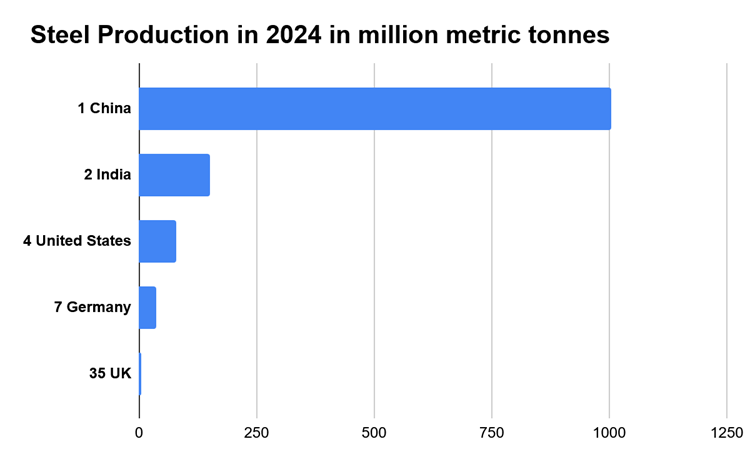
UK steel production is the 35th largest in the world, comparable to Sweden, Slovakia, Argentina and the UAE. Its 4 million tonnes in 2024 is just over a tenth of the production of Germany, a twentieth of the United States, a thirty seventh that of India and a 250th that of China.
The niche, almost token, position of UK based steel manufacturing reflects a wider process in which UK based capital is no longer primarily engaged with manufacture.
The last time the steel industry in the UK was nationalised in 1967 it had 268,500 workers from more than 14 previous UK based privately owned companies with 200 wholly or partly-owned subsidiaries. These companies were considered increasingly unviable because they had failed to invest and modernise, so were increasingly uncompetitive. This is part of a wider story about how the UK capitalist class has transformed itself since the 1960s. While the quantity of manufactured goods has increased since then, the proportion of manufacturing in the economy has shrunk from 30.1% in 1970 to 8.6% in 2024. The service sector has grown from 56% to more than 80%. UK based capital primarily makes money from selling services, mostly financial, to manufacturing capitalists at home and abroad. They are spectacularly bad at large scale manufacturing start ups, as the debacle of British Volt (whose approach of setting themselves up a luxurious executive office suite before they’d secured funding to even build their factory might be described as cashing in on your chickens before you’ve sold any).
What that means is that most of “British Industry” is owned by firms based overseas, so might be better described as “manufacturing that happens to take place in Britain”. Consider the automotive sector. While there are locally based SMEs in the supply chain, all the big manufacturers depend on overseas investment. Nissan, Stellantis, BMW, VW, Geely, Tata (again). As with locally based steel production, firms like Morris, Austin, even Rover, are long gone for the same reasons as BSA – once the world’s biggest motorcycle company – now only builds retro classic designs as a niche luxury product and Guest Keen and Nettlefold had to be nationalised to save its assets.
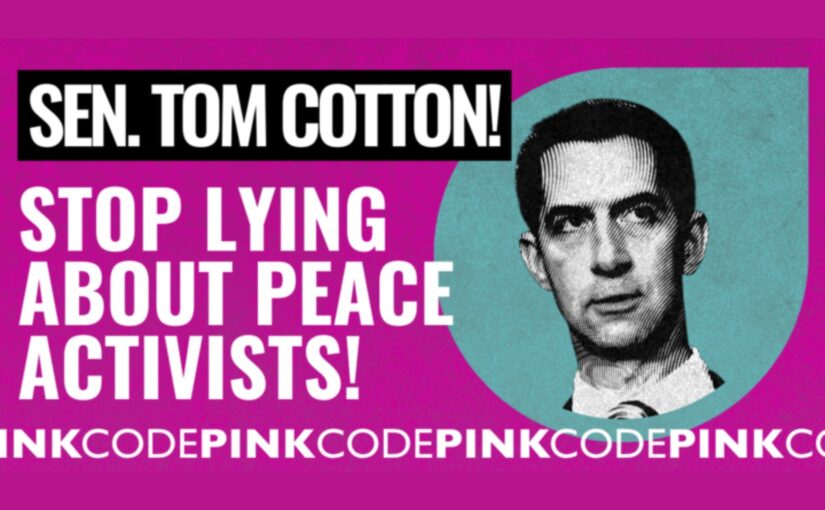
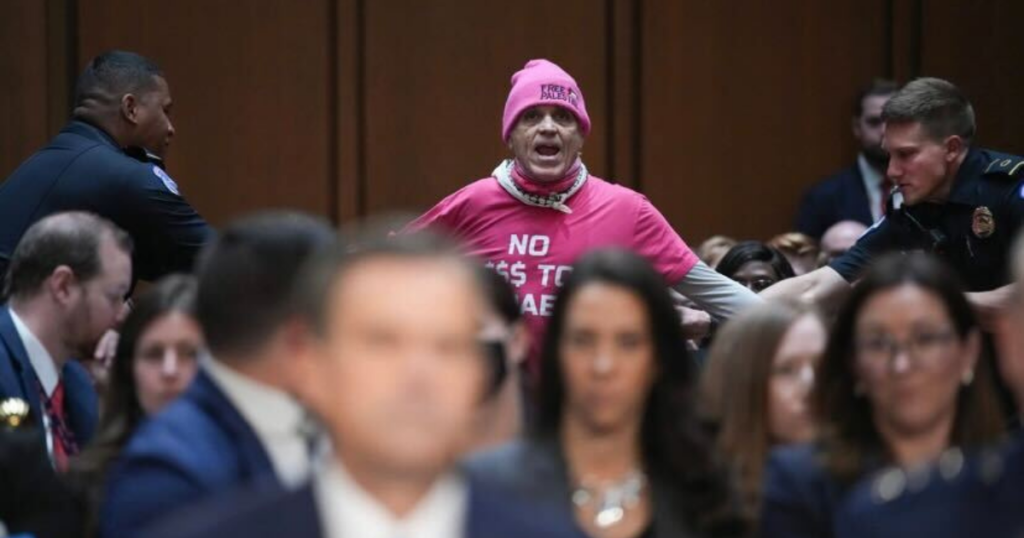
On 25 March 2025, at a US Senate Intelligence Committee hearing on global threats, CODEPINK activist Tighe Barry stood up and called on the US government to stop funding Israel’s genocide in Gaza. Fanatical China hawk Senator Tom Cotton responded by labelling Barry as a “CODEPINK lunatic that was funded by the Communist Party of China”. Retired Colonel Ann Wright stood up and shouted “I’m a retired Army Colonel and former diplomat. I work with CODEPINK and it is not funded by Communist China.”
Both activists were ejected from the room and arrested. Cotton meanwhile proceeded with his McCarthyite diatribe: “The fact that Communist China funds CODEPINK, which interrupts a hearing about Israel illustrates Director Gabbard’s point that China, Russia, Iran and North Korea are working together in greater concert than they ever had before.”
The purpose of this narrative is to portray any opposition to US hegemonism and imperialism as being funded and fomented by foreign powers – just as in the 1950s and 60s, working class, progressive and anti-war activists were portrayed as Soviet agents.
Senate Intelligence Committee Hearing Turns Ugly with McCarthy-Style Lies About CODEPINK: Women for Peace
On March 25, at the U.S. Senate Intelligence Committee hearing on global threats with the five heads of intelligence agencies of the U.S. government, Senator Tom Cotton, accused on national TV a group I have worked with for over 20 years, CODEPINK: Women for Peace, of being funded by the Communist Party of China.
During the hearing CODEPINK activist Tighe Barry stood up following the presentation of the Director of National Security Tulsi Gabbard’s lengthy statement about global threats to U.S. national security and yelled “Stop Funding Israel.”
This was because neither Intelligence Committee Chair Tom Cotton and Vice Chair Mark Warner had mentioned Israel in their opening statement nor had Gabbard mentioned the Israeli genocide of Palestinians in Gaza in her statement either.
The following article by Tasfia Jahangir and Miles Wetherington, originally published in Liberation News, describes the rising McCarthyism in the US, in particular the red-scare narrative around Chinese students and scientists.
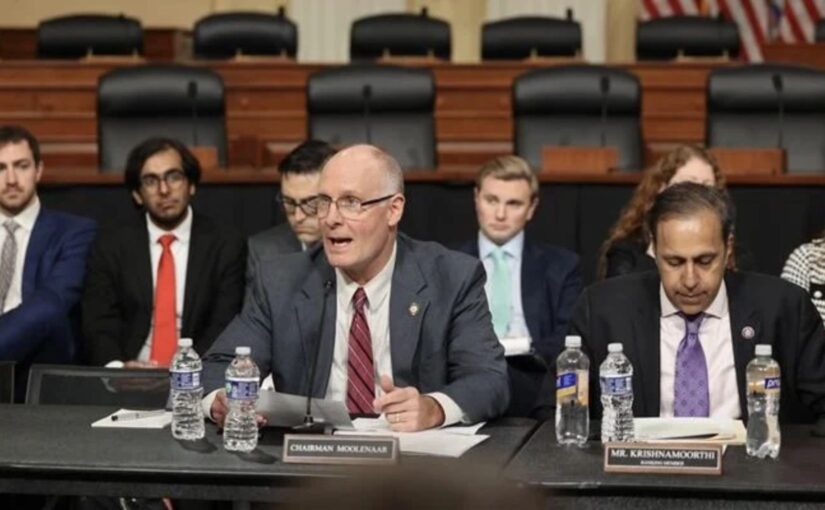
The authors note that John Moolenaar, a Michigan Republican who chairs the House Select Committee on the CPC, has sent letters to six US universities, including Stanford, demanding that they provide detailed information about their entire Chinese student populations, saying that the student visa system has become a “Trojan horse” and implying that “any Chinese national studying in a STEM field — especially those working in key research areas like AI, semiconductors, or aerospace — is potentially a spy”. At the same time, lawmakers have introduced a “Stop Chinese Communist Visas Act”, seeking to block visas for Chinese students studying in the US, on supposed national security grounds.
Hostility towards Chinese students and scientists is bipartisan, and has been trending upwards for years, under both the Trump and Biden administrations. The authors note that this escalation “also fits into a broader pattern of repression targeting international students. Indian students — the largest international group — have been told to ‘self-deport’ for campus activism, while students like Mahmoud Khalil, Rumeysa Ozturk and Momodou Taal have faced repression for opposing the genocide in Palestine.”
The focus on Chinese academics in particular is “part of the US strategy of containment, encirclement and suppression on China”. The US ruling class seeks to win public support for the New Cold War, painting China as a threat to the US and the world. Such a portrayal is becoming increasing untenable:
US officials try to demonise China as if it is on the warpath, but it is the United States that poses the greatest threat to world peace. In the last 30 years alone, the United States has launched 251 military interventions across the globe. In stark contrast, China has eradicated extreme poverty for more than 850 million people, and managed to overcome the legacy of colonialism and underdevelopment by reaching a level of moderate prosperity all while upholding the Five Principles of Peaceful Coexistence.
Ultimately this revival of reds-under-the-bed hysteria will only serve to fuel racism and xenophobia, and to further poison US-China relations. What’s more, it “actively sabotages the kind of international cooperation needed to confront global crises”. Ironically, it will also provide a boost for China’s domestic innovation, as top Chinese students will opt to study at home rather than face an increasingly hostile and dangerous environment in the US.
The authors conclude:
Collaboration between the US and China — two of the largest research and innovation hubs in the world — could offer humanity an opportunity to solve the pressing crises of our time: pandemics, climate change, AI ethics and more. But to those in power, shared progress is a threat. It undermines the need for endless militarisation, sanctions and rivalry. It challenges the US ruling class’ worldview based on zero-sum competition and global hegemony.
On March 19, U.S. Representative John Moolenaar, Chairman of the House Select Committee on the Chinese Communist Party, sent a letter to six American universities demanding that they provide detailed personal, academic, and financial information about Chinese international students in STEM fields. Disguised as a routine inquiry into national security, the letter levies sweeping accusations. It claims that Chinese students “jeopardize” U.S. technological leadership, and labels the American student visa system as a “Trojan horse” for these students to steal intellectual property on behalf of the Chinese government. On top of this, the House also recently introduced the STOP CCP VISAs Act, a bill that, if passed, would ban student visas for all Chinese national students.
We must oppose this vilification of Chinese students and recognize it for what it is — an attack on global science.
The war on Chinese students is a war on global science
The Select Committee on the CCP letter and STOP CCP VISAs Act are part of a decade-long bipartisan campaign to surveil, vilify and push out Chinese researchers and students from American institutions. Under both Trump and Biden administrations, we’ve witnessed countless attacks on Chinese scholars and scientists based solely on their national origin — federal investigations with no evidence, layoffs, cancelled visas, and partnerships dismantled under political pressure.
Moolenaar’s letter escalates this campaign by implying that any Chinese national studying in a STEM field — especially those working in key research areas like AI, semiconductors, or aerospace — is potentially a spy. It makes absurd and xenophobic claims, such as the idea that the mere act of returning to China after graduation should be treated with suspicion. This logic dehumanizes thousands of students as geopolitical pawns rather than what they are: workers, researchers and colleagues striving to build a better future.
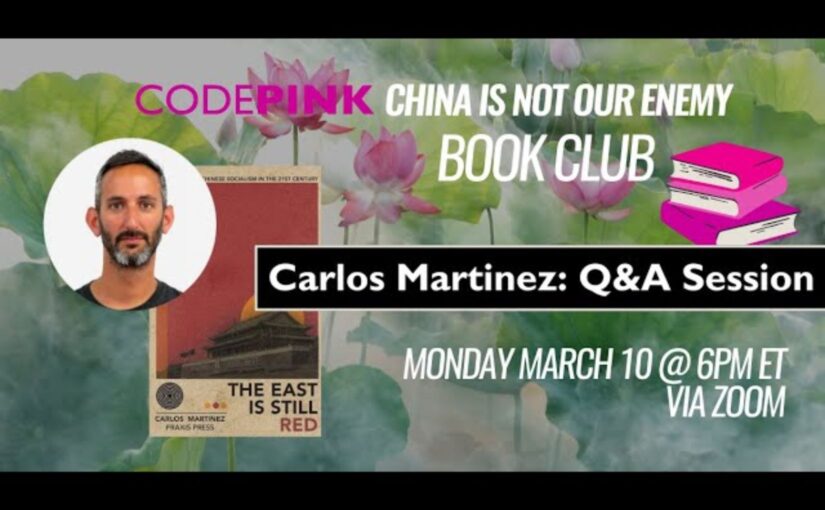
On 10 March 2025, the CODEPINK China Is Not Our Enemy book club hosted Friends of Socialist China co-editor Carlos Martinez for a discussion about The East is Still Red, which was the first book the group read together. The video of the session is embedded below.
The video starts with a 10 minute introduction by Carlos, explaining the key motivations for writing the book: to challenge the New Cold War propaganda against China; and to build understanding of Chinese socialism and counter the notion that China has “gone capitalist”.
The presentation is followed by a wide-ranging discussion about common prosperity, China’s foreign relations, China’s democratic processes, its management of the Covid-19 pandemic, and its actions around preventing climate breakdown.
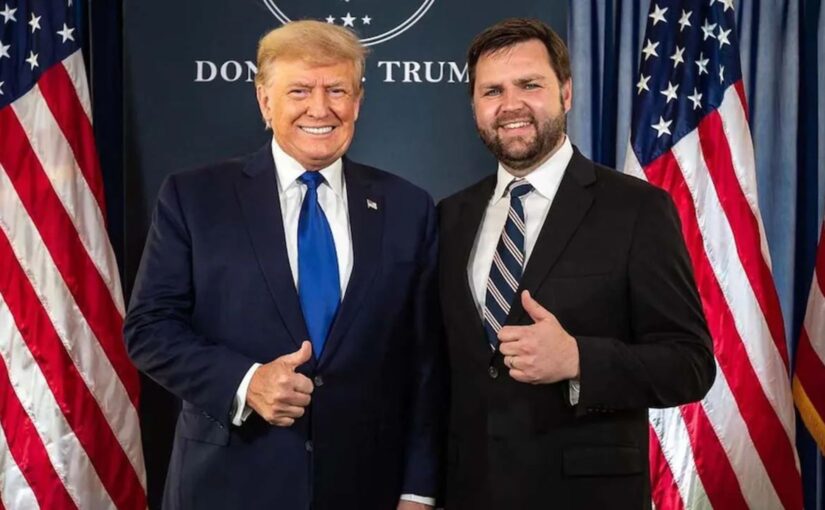
In the following article, that was originally published on his Substack, Geopolitical Economy, Ben Norton draws attention to a recent speech by US Vice President JD Vance on globalisation that made it clear that Washington’s goal is to keep formerly colonised countries in the Global South trapped at the bottom of the global value chain.
Ben outlines how Vance acknowledged that the US-led West wants to maintain a strict international division of labour, in which poor countries in the periphery produce low value-added goods while the rich nations in the core extract exorbitant monopoly rents. Vance made these remarks at a gathering, called the American Dynamism Summit, that was organised by the Silicon Valley venture capital firm Andreessen Horowitz.
Ben goes on to note that Vance is a China hawk who has scapegoated Beijing for the many economic problems in the US, demonising it as “the biggest threat to our country”. After Donald Trump selected Vance to be his running mate in the 2024 presidential election campaign, Vance pledged that they would end the war in Ukraine, not because they wanted peace for peace’s sake, but rather to prioritise containing China.
In his speech at the American Dynamism Summit, Vance said that: “The idea of globalisation was that rich countries would move further up the value chain, while the poor countries made the simpler things.”
Having referenced the Chinese city of Shenzhen, he continued: “But I think we got it wrong. It turns out that the geographies that do the manufacturing get awfully good at the designing of things.
As Ben notes, in these comments, the US vice president inadvertently acknowledged that the fundamental thesis of the dependency theorists in the 1960s was indeed correct. “The rich countries in the core of the world-system (mostly in the Global North) seek to trap the poor, formerly colonised nations in the periphery (mostly in the Global South) in a cycle of dependency on the core’s high value-added products, through monopolistic control of advanced technologies.”
US Vice President JD Vance gave a speech about globalization that made it clear that Washington’s goal is to keep formerly colonized countries in the Global South trapped at the bottom of the global value chain.
Vance acknowledged that the US-led West wants to maintain a strict international division of labor, in which poor countries in the periphery produce low value-added goods (with lots of competition and therefore low profits), whereas the rich nations in the core extract exorbitant monopoly rents through their control over high value-added technologies (with little to no competition, reinforced by strict intellectual property rights).
Silicon Valley prepares for war with China
The US vice president made these remarks at a summit that was organized by the Silicon Valley venture capital firm Andreessen Horowitz. This annual meeting in Washington, DC is called the American Dynamism Summit, and it brings together corporate executives and US government officials to facilitate contracts.
One of their main priorities is preparing for war with China. Andreessen Horowitz promotes 50 US companies that it says are “shaping the fight of the future”, outlining a scenario of a hypothetical 2027 war with China over Taiwan.
Vance is a China hawk who has scapegoated Beijing for the many economic problems in the US, demonizing it as “the biggest threat to our country”.
After Donald Trump selected Vance to be his running mate in the 2024 campaign, Vance pledged that they would end the war in Ukraine, not because they wanted peace for peace’s sake, but rather to prioritize containing China. The US will “bring this thing to a rapid close so America can focus on the real issue, which is China”, Vance told Fox News, claiming, “That’s the biggest threat to our country and we are completely distracted from it”.
In the following article on Geopolitical Economy, Ben Norton exposes the extreme anti-China views of US Defense Secretary Pete Hegseth.
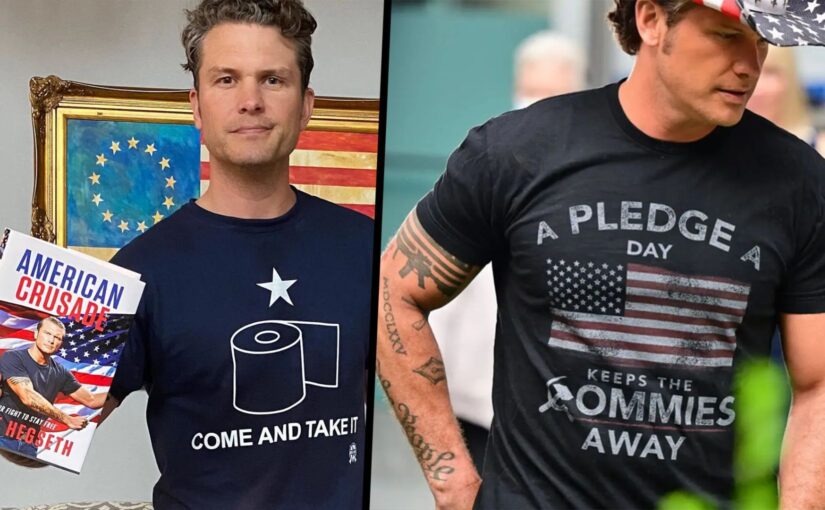
Ben notes that, in his 2020 book American Crusade: Our Fight to Stay Free, Hegseth describes the Chinese as “literally the villains of our generation” and warns: “If we don’t stand up to communist China now, we will be standing for the Chinese anthem someday”.
This anti-China sentiment is not restricted to the past. “As defense secretary, Pete Hegseth has pushed for extremely aggressive policies against Beijing”, commenting just this month on Fox News that the United States is prepared to go to war with China. He calls for the US to stop trading with China and to do everything within its power to stop China’s rise.
These alarming views are combined with flagrant islamophobia, misogyny and homophobia.
Hegseth is not the only China hawk in Trump’s cabinet. As we have noted previously, “Marco Rubio is an anti-China fanatic, who stands for more tariffs, more sanctions, more slander, more support for Taiwanese separatism, more provocations in the South China Sea, and more destabilisation in Hong Kong and Xinjiang. Mike Waltz has long pushed for closer military cooperation with India, Japan, Australia and other countries in the region in preparation for war against China.”
Increasingly, there is consensus within US policy circles in favour of an escalation of the campaign to encircle and contain China. Progressive and anti-war movements in the West must resist this dangerous trajectory.
US Defense Secretary Pete Hegseth is a self-declared “crusader” who believes the United States is in a “holy war” against the left, China, and Islam.
In his 2020 book American Crusade: Our Fight to Stay Free, Hegseth vowed that, if Trump could return to the White House and Republicans could take power, “Communist China will fall—and lick its wounds for another two hundred years”.
Hegseth declared that the Chinese “are literally the villains of our generation”, and warned, “If we don’t stand up to communist China now, we will be standing for the Chinese anthem someday”.
In Hegseth’s conspiratorial worldview, Chinese communists and the international left are conspiring with Islamists against the United States and Israel, which are sacred countries blessed by God.
Under Trump’s leadership, Hegseth promised, “Israel and America will form an even tighter bond, fighting the scourge of Islamism and international leftism that will never fully abate”.
“Islamists will never get a nuclear weapon but will be preemptively bombed back to the 700s when they try”, he added.
In the book, Hegseth heaped praise upon the medieval Crusaders, and he argued that Western conservatives in the 21st century should continue the holy war they started a millennium ago.
One of his chapters is titled “Make the Crusade Great Again”.
On the first page of the book, Hegseth proudly said his “American crusade” is a “holy war”, and he insisted that leftists are not “mere political opponents. We are foes. Either we win, or they win—we agree on nothing else”.
Hegseth also stated with certainty that there will soon be a civil war in the United States, between the right and left.