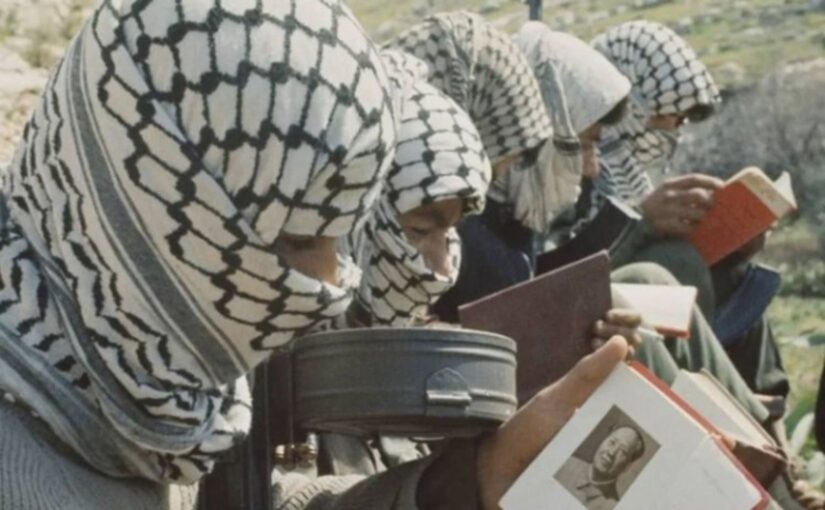
A specific military art of tunnel warfare, as a distinct component of people’s war, was developed by the Chinese communists in the 1930s during the war to resist Japanese aggression. It was subsequently utilised by the Korean and Vietnamese peoples in their wars against US imperialist aggression and is now playing an important part in the Arab resistance to Zionism and imperialism in Palestine, Lebanon and Yemen.
In a recent article written for The Palestine Chronicle, Enrico Di Gregorio, a Brazilian journalist who currently writes for A Nova Democracia, explains:
“More than 80 years after the Chinese communists began building tunnels to resist the Japanese invasion of their country, this tactic of the people’s war, derived from a broader military theory, is still current and developing.
“On July 16, the Lebanese resistance group Hezbollah released a video about an underground military base with impressive capabilities: in the footage, fighters circulate on foot, on motorcycles and in trucks fuelled with rockets, through carefully dug tunnels… Elsewhere on the same base, soldiers work and are treated in a field hospital and provided with supplies that will allow them to survive for a year underground, according to the Al-Mayadeen news outlet.”
The 1965 Chinese film, ‘Tunnel Warfare’, “portrays the different tricks invented by the masses in the tunnels, such as a system that captured the water sent by the Japanese in flood attempts and redirected it to the villages, to reuse it for basic day-to-day operations.
“Experts point out that there is a relationship of influence between the tactics used in Asia and those employed by the Arab peoples. ‘Tunnels have been used for thousands of years, but the Vietnamese and Chinese have used them particularly successfully. There are several direct references to these experiences in Fatah and PFLP [Popular Front for the Liberation of Palestine] materials,’ argues researcher Alberto García Molinero, from the University of Granada.”
Referring to the developments in the Palestinian revolution in the 1960s, Molinero adds: “The success of the guerrilla struggle strategy was very much inspired by China and Vietnam. Both Asian countries were a major global inspiration for the world’s revolutionaries, much more so than the Soviet Union. This was due to various factors, including the essence of Maoism. Both Mao, with his concept of people’s war, and the Vietnamese demonstrated that it was possible to defeat an infinitely superior enemy, such as imperialism, as long as you mobilise the people for the cause.”
Tunnels began to be built in Gaza in the 1980s and later by Hezbollah in Lebanon and by the Ansarallah movement (more commonly known as the Houthis) in Yemen.
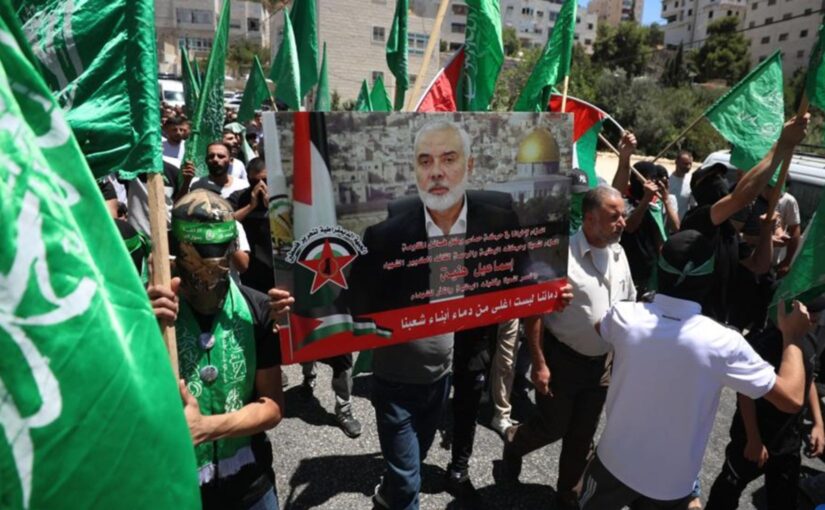
“Today, there is no denying that tunnels play a fundamental role in the anti-imperialist war waged by the various Arab organisations. The scale that these structures have reached is impressive: in 2016, the former head of Hamas’ Political Bureau, Ismail Haniyeh (assassinated by Israel in July 2024), said that the tunnel network in Gaza is twice the size of the Cu Chi tunnels [which had around 250 kilometres of interconnected passages interspersed with small chambers used as classrooms and outpatient clinics and entrances and exits scattered throughout the rainforest.]”
Di Gregiorio concludes: “The anti-imperialist struggle in the Middle East has shown, more than any other revolutionary experience in the 21st century to date, the incredible relevance of the armed struggle and military doctrine developed in China and applied, even partially, by the Arab peoples.”
We reprint the article below.
More than 80 years after the Chinese communists began building tunnels to resist the Japanese invasion of their country, this tactic of the people’s war, derived from a broader military theory, is still current and developing.
On July 16, the Lebanese resistance group Hezbollah released a video about an underground military base with impressive capabilities: in the footage, fighters circulate on foot, on motorcycles and in trucks fueled with rockets, through carefully dug tunnels.
In large chambers, combatants plan day-to-day military operations, while others drive several trucks to gates that, when opened, allow missiles to be fired directly at Israeli territory.
Elsewhere on the same base, soldiers work and are treated in a field hospital and provided with supplies that will allow them to survive for a year underground, according to the Al-Mayadeen news outlet.
Everything takes place in secret. High-tech equipment guarantees absolute encryption of the information, which is transmitted in a combination of speed and clandestinity.
The video shows the remarkable development of tunnel warfare by oppressed peoples, particularly the Arabs, some 50 years after experiences such as the Vietnam War (1955-1975) – one of those conflicts responsible for making this guerrilla tactic famous throughout the world.
Continue reading Tunnel Warfare – From China and Vietnam to the Gaza Strip