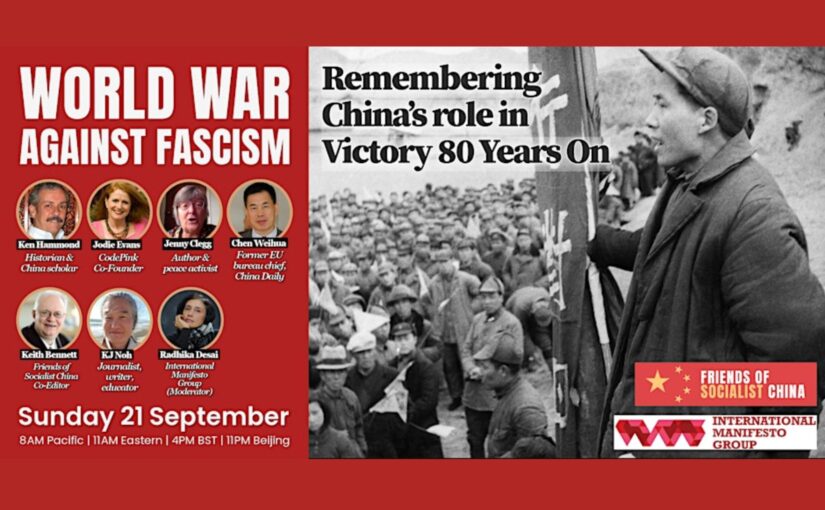
Webinar: World War Against Fascism – Remembering China’s role in victory 80 years on

📆 Sunday 21 September 2025, 4pm Britain, 11am US Eastern, 8am US Pacific

The old adage that history is written by the victors does not seem to apply to the real victors of the Second World War, the Soviets and the Chinese on the Eastern and Pacific fronts respectively.

This webinar will mark the 80th anniversary of Japan’s surrender – marked in China with spectacular celebrations attended by an array of heads of state and government – focussing in particular on the contributions of the Chinese and other Asian forces which are forgotten in the largely Eurocentric narrative of the Second World War.

We will uncover some crucial but little-known aspects of the war: for example, that China was the first country to wage war against fascist occupation; that in the course of 14 years of war (1931-45) China suffered over 35 million casualties; and that without the contribution of Chinese, Korean, Mongolian and largely Communist-led resistance forces across the region, the Japanese imperial armies would have had free rein to deploy their forces against the Soviet Union and the Western Allies.

This webinar is the companion to our commemoration of VE or Victory in Europe Day, ‘The Fight Against Fascism Then and Now: 80 Years after the defeat of Nazism’. Just as that webinar discussed the re-emergence of fascist forces in the West, so in this one, we assess the renewed threats to China and other Asian countries emanating from the US, Japan and the rest of the capitalist world.

Speakers

  • Ken Hammond (Historian and China scholar)
  • Chen Weihua (Former EU bureau chief of China Daily)
  • Jodie Evans (Co-founder of Code Pink)
  • Jenny Clegg (Author and peace activist)
  • Keith Bennett (Co-editor of Friends of Socialist China)
  • KJ Noh (Journalist, writer and educator)
  • Radhika Desai (International Manifesto Group), Moderator.

Organisers

This webinar is organised jointly by the International Manifesto Group and Friends of Socialist China.

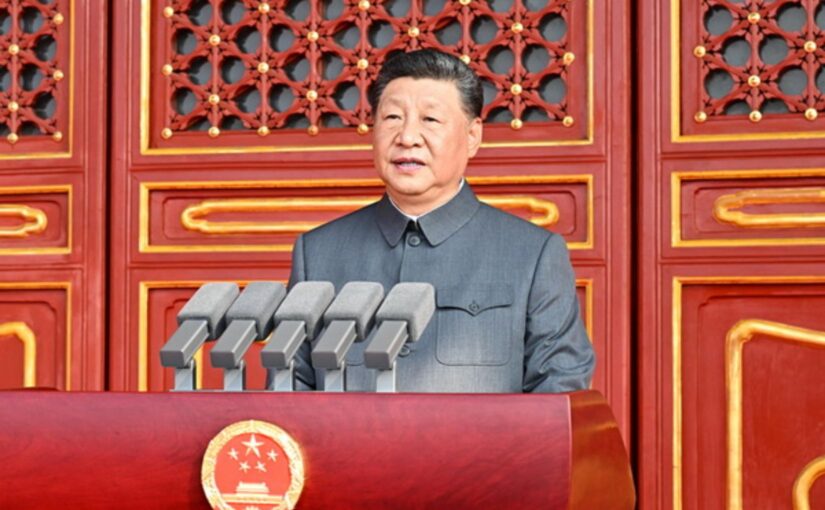
Xi Jinping: At all times, our work must be for the people and we must do our best to improve the well-being of all the people

Chinese President Xi Jinping addressed the commemoration of the 80th anniversary of the victory of the Chinese People’s War of Resistance Against Japanese Aggression and the World Anti-Fascist War, held on September 3 in Beijing’s Tienanmen Square, just prior to the commencement of the military parade.

Xi described it as “an occasion for us to remember history, honour fallen heroes, cherish peace, and create a better future” and paid “high tribute to our veteran soldiers and comrades, patriots, and officers who fought in the War of Resistance Against Japanese Aggression, and to the Chinese nationals from home and abroad who made important contributions to our victory. I express my sincere thanks to foreign governments and friends that supported and assisted the Chinese people in resisting aggression. I also extend a warm welcome to our guests from around the world who are with us today.”

He added: “The Chinese People’s War of Resistance Against Japanese Aggression was a great war fought with tenacity and valour. Under the banner of the national united front against Japanese aggression established at the initiative of the Communist Party of China, the Chinese people stood up to fight the formidable enemy with an iron will, formed a great wall with flesh and blood to defend the nation, and ultimately achieved the first complete victory in resisting foreign aggression in modern times… The Chinese nation is a great nation that is never intimidated by any bullies and always values independence and forges ahead. In the past, when faced with critical struggles between good and evil, light and darkness, progress and reaction, the Chinese people rallied together to defy the enemy. They fought for the survival of the country, for the rejuvenation of the Chinese nation, and for justice for the whole of humanity. Today, humanity again has to choose between peace and war, dialogue and confrontation, win-win cooperation and zero-sum game. The Chinese people firmly stand on the right side of history and the progress of human civilisation. We will remain committed to the path of peaceful development and join hands with all peoples around the world in building a community with a shared future for humanity.”

Towards the conclusion of his remarks he stated: “On the new journey in the new era, the Chinese people of all ethnic groups should, under the strong leadership of the Communist Party of China, follow Marxism-Leninism, Mao Zedong Thought, Deng Xiaoping Theory, the Theory of Three Represents and the Scientific Outlook on Development, and fully implement the Thought on Socialism with Chinese Characteristics for the New Era.”

Shortly afterwards, Xi hosted a lunch in the Great Hall of the People for visiting foreign heads of state and government, other prominent politicians, and the relatives of international friends and comrades who had supported the Chinese people during the war, among others.

He noted: “Eighty years ago, the Chinese people thoroughly defeated the Japanese militarist aggressors after fighting a bitter and heroic war of resistance for 14 years. This marked the complete victory of the World Anti-Fascist War. It was a historic turning point for the Chinese nation emerging from the grave crises in modern times to embark on the journey toward great rejuvenation; it was also a major turning point in the course of world history.

“The Chinese people won the great victory through their united efforts with the anti-fascist allied forces and the people around the world. The Chinese government and people will never forget the foreign governments and international friends who supported and assisted the Chinese people in resisting aggression.”

He said the purpose of the commemoration was to “remember history, honour fallen heroes, cherish peace, and create a better future,” adding:

“Might may rule the moment but right prevails forever. Justice, light and progress will inevitably triumph over evil, darkness, and regression. At all times, we must advocate the common values of humanity, resolutely defend international fairness and justice, and ensure righteousness prevails and brightness shines in our world.

“The people are the creators of history, and the pursuit of a better life is a shared aspiration of all nations. At all times, our hearts must be with the people, our work must be for the people, and we must do our best to improve the well-being of all the people.”

We reprint the full texts of both speeches below as originally published on the website of the Chinese Foreign Ministry.

Continue reading Xi Jinping: At all times, our work must be for the people and we must do our best to improve the well-being of all the people

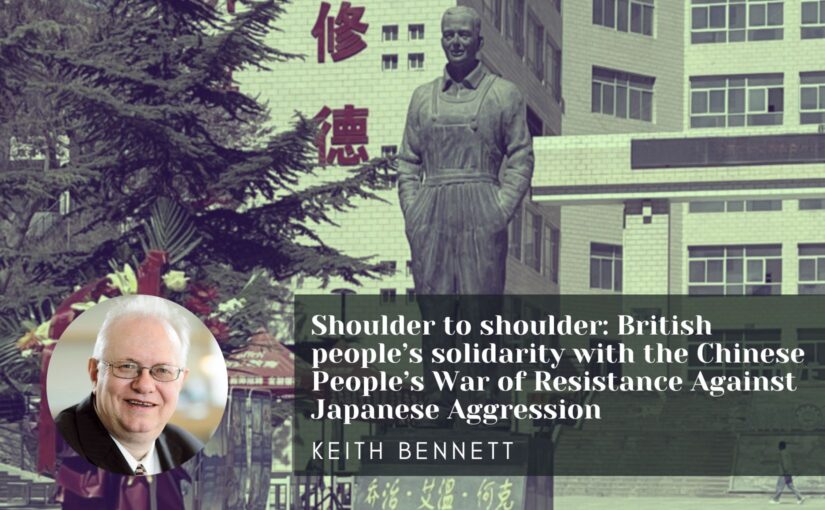
Shoulder to shoulder: British people’s solidarity with the Chinese People’s War of Resistance Against Japanese Aggression
During his recent visit to China for the commemoration of the 80th anniversary of the Chinese people’s victory in the war of resistance against Japanese aggression and the world anti-fascist war, our co-editor Keith Bennett participated in an international symposium organised by the Institute of Party History and Literature of the Communist Party of China (CPC) Central Committee, the Chinese Academy of Social Sciences and the People’s Liberation Army (PLA) Academy of Military Science, on September 2, and the Chinese Modernisation Forum (2025), organised by the School of Marxism, the Institute of Chinese Communist Party History and Party Building, and the Institute of Xi Jinping Thought on Socialism with Chinese Characteristics for a New Era, all of Tsinghua University, on September 4.

We print below the text of the paper presented by Keith, which outlines the solidarity extended by people in Britain to the Chinese people’s heroic resistance, from internationalists like George Hogg who made the journey to China, to the China Campaign Committee which organised and agitated the length and breadth of the country, to the singular contribution of the South Wales miners.

During his state visit to the United Kingdom in 2015, the 70th anniversary year of victory in the global anti-fascist war, in a speech in Buckingham Palace, President Xi Jinping recalled how our two countries had once stood together as allies and fought shoulder to shoulder.

Saying that the Chinese people would never forget this help during their hard time, he mentioned one individual in particular.

George Hogg died of tetanus aged just 30 on 22 July 1945 after devoting the last nearly eight years of his tragically short life to the Chinese people and their struggle for liberation, initially as a journalist and finally as headmaster of the Shandan Bailie School, caring for children orphaned by Japan’s brutal war of aggression.

He is perhaps best remembered for leading his pupils on a month-long 1,100 kilometre (700 miles) journey, most of it on foot and over snow covered mountain paths, to the relative safety of Gansu.

Long acclaimed as a national hero in China, Hogg remained almost entirely unknown in his native country for decades.

This began to be partially rectified with the 2008 publication of James MacManus’s biography, ‘Ocean Devil’.

The same year saw the release of the perhaps overly fictionalised feature film, ‘The Children of Huang Shi’, also called ‘Children of the Silk Road’ or ‘Escape from Huang Shi’, starring Jonathan Rhys Meyers as Hogg and Chow Yun-fat as the legendary Chinese communist Chen Hansheng.

George Hogg came to China as a young idealist. Although from a privileged background, he had a strong family background in pacifism, specifically in the Fellowship of Reconciliation, and rooted in non-conformist Christianity. However, he not only served China. His world outlook was transformed by China, as is well expressed in the title of his book, ‘I see a new China’.

In his 1954 book, ‘The People have Strength’, his mentor, the New Zealand internationalist Rewi Alley wrote: 

“The sixty-odd peasant and refugee kids who carried him out to his grave in what has now become a playing field in a school training new technicians for a new China, will not forget the day. For them it meant the passing of a comrade who was very close to them. It is not given to everyone to live with heroic disciplined revolutionary armies. George had had inspiration from his tour, as correspondent, with the Eighth Route Army and then he came at my bidding, to work with Gung Ho [the Chinese Industrial Cooperatives], where there was little glory, many problems and a simple grave at the end of the trail.

“As he fought with tetanus in his last days of the summer of 1945, he asked to have the ‘Communist Manifesto’ read to him. I read it and he said, ‘That makes sense.’”

Whilst there were also other British friends who made their contribution to China’s struggle against Japanese militarism in China itself, such as Michael Lindsay, later 2nd Baron Lindsay of Birker, whose expertise in radio engineering was much appreciated and personally commended by Mao Zedong, and the Friends Ambulance Unit, organised by the Quakers and composed of conscientious objectors, roughly 200 of whom, with the British contingent being the largest group, served in China, including by providing medical supplies to the Shandan Bailie School, this was obviously an option that was open to relatively few.

But the solidarity of people in Britain with China’s war of national salvation, as a vital, and the first, front of the world peoples’ struggle against fascism was by no means confined to those who made that journey.

By far the most important and effective organisation in this regard was the China Campaign Committee (CCC), which was founded in late August or early September 1937, that is scarcely two months after the July 7 Lugou ‘Marco Polo’ Bridge Incident that heralded Japan’s full-scale invasion and the start of China’s nationwide resistance.

Seven days later, on July 14, the Daily Worker, the newspaper of the Communist Party of Great Britain (CPGB), described this as a “plain case of aggression” in its editorial, adding: “The Chinese people must be backed up.”

In an August 20 resolution passed by its Executive Committee, the CPGB stated: “The cause of peace throughout the world depends to a considerable extent upon the success of the heroic Chinese people… Unless peace forces can be rallied the Japanese attack on Central China will be followed by a German fascist outbreak in Central Europe… The defence of China is the defence of peace.”

Although it operated on an unprecedented scale and with unprecedented breadth of support, the China Campaign Committee did not emerge from a void or a vacuum.

Jenny Clegg, writing for the Society for Anglo-Chinese Understanding (SACU), noted that the “roots of this activism are to be found in Chartist opposition to the first Opium War” and refers to the ‘Hands off China’ Campaign (1925-27) and the ‘Friends of the Chinese People’ (1927-37), founded by the British Section of the League Against Imperialism.

Her father, Arthur Clegg, who served as the CCC’s National Organiser practically from the campaign’s inception, in his memoir, ‘Aid China – 1937-1949’, published in 1989, traces the roots of such solidarity back even further:

“Movements like the China Campaign Committee have long been part of the democratic tradition in Great Britain. They date back to the English Revolution [of the 1640s] when the Levellers took a stand for Irish independence and the end of English interference in Ireland.”

Arthur Clegg details the extraordinary range of forces mobilised by the CCC. They included church and missionary societies, businesses, some of the leading intellectual and cultural figures of the time, members of the House of Lords, the Chinese community, people with a specialised interest in China and Chinese culture, and many others.

On one occasion he even personally received a financial donation from a Colonel Younghusband. Only years later did he realise that it was the same Younghusband who had led the 1905 British invasion aimed at separating Xizang (Tibet) from the rest of China. He writes: “The only explanation I can find was that he was trying to make amends for his past efforts to weaken China.”

Support was forthcoming from many members of the Labour and Liberal parties and even from the occasional Conservative MP. However, Clegg is at pains to point out:

“Our greatest and most consistent supporter was the Communist Party, both directly and indirectly, for in those days it had influence far beyond its small but increasing membership. It was the first party to take a position defending China, the first to issue a pamphlet for China, the first to organise a Hyde Park meeting, where on August 23 [1937], J.R. Campbell demanded a Japanese withdrawal. Its branches and members loyally supported our meetings, distributed our handbills, posted our posters and saw in this a reinforcement for, rather than any rivalry with, the similar work they were doing for Spain. We all knew the issue of Spain and the issue of China were one and the same, the issue of preventing a world war.”

A clear example of how such direct and indirect support worked in practice is provided by the South Wales miners.

Continue reading Shoulder to shoulder: British people’s solidarity with the Chinese People’s War of Resistance Against Japanese Aggression
The “Far East” was never far – a Chinese journalist reflects on the potential for cultural exchange and people’s friendship

We are pleased to publish the below contributed article by Gao Wencheng, a London-based journalist with the Xinhua News Agency, which takes the 80th anniversary of the victory over Japanese militarism as a starting point to highlight the prospects and opportunities of enhanced cultural exchange and people-to-people friendship between Britain and China.

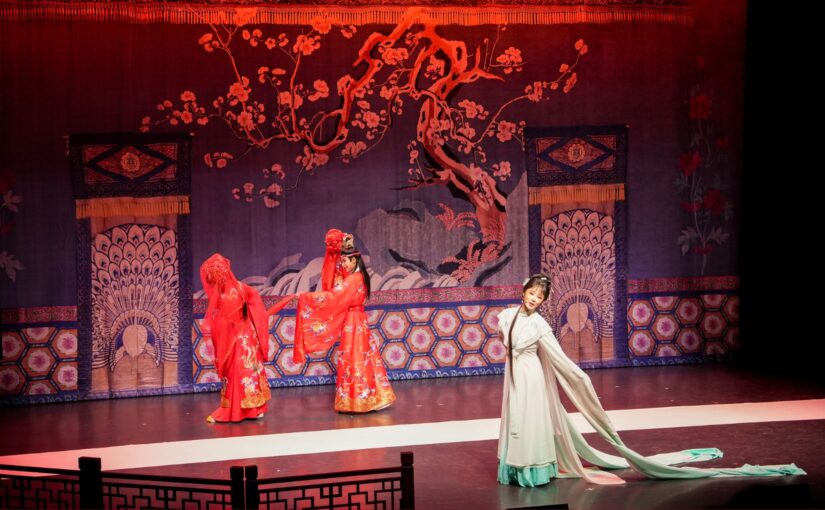
He writes that, “Living in London, I am constantly struck by how near China feels” and notes that: “Only a week after World War II commemorations, London’s Shaw Theatre hosted performances of traditional Chinese Yue Opera.” An August 22 Xinhua report further notes:

“As early as 2016, the Xiaobaihua troupe staged in London a cross-cultural production that brought together characters from Shakespeare’s Coriolanus and Chinese great playwright Tang Xianzu’s The Peony Pavilion. Written around the same time, Coriolanus is a Roman tragedy, while The Peony Pavilion tells of a young woman’s tragic love and resurrection.”

He concludes:

The war against fascism was won through the collective effort of many peoples; no single nation could have achieved victory alone. This truth holds greater significance today than ever before. The ties forged between different nations in the flames of war remind us that peace and justice know no borders.

On August 15, Britain marked the 80th anniversary of VJ (Victory over Japan) Day and the end of the Second World War, with an unusually high-profile tribute. Many iconic sites, from Buckingham Palace to the Palace of Westminster, were illuminated with a “V” for “Victory,” a symbol that has long been more associated with Britain’s participation in the European theatre of World War II.

In this country, the fall of Berlin in May 1945 has always loomed larger in public memory than the surrender of Japan three months later.

But this year felt different. Perhaps it was because it’s a round-number anniversary. Or perhaps it was because of King Charles III’s unusually pointed words, which stressed that those who fought and died in the Pacific and Far East “shall never be forgotten.” At noon, the country even paused for two minutes of silence marking VJ Day.

Continue reading The “Far East” was never far – a Chinese journalist reflects on the potential for cultural exchange and people’s friendship

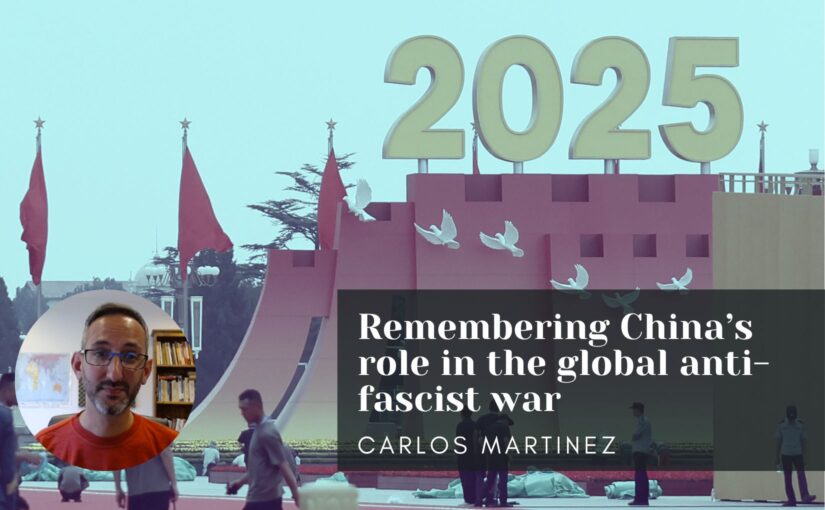
Remembering China’s role in the global anti-fascist war

The following article by Carlos Martinez, a condensed version of which appeared in Beijing Review on 3 September, highlights the often-overlooked role of China in the global victory against fascism during World War II. While mainstream accounts foreground the US and Britain, Carlos stresses that China was the first nation to wage war against fascist occupation and sustained the longest campaign, suffering 35 million casualties and massive displacement.

Japanese aggression began with the invasion of northeast China in 1931. For six years, Chiang Kai-shek’s Kuomintang (KMT) prioritised suppressing the Communists over resisting Japan. Resistance in the northeast was led by the Communist Party of China (CPC), supported by the Soviet Union and joined by Korean fighters (including Kim Il Sung). Mounting student protests and patriotic pressure culminated in the 1936 Xi’an Incident, forcing Chiang into an United Front with the CPC, enabling a coordinated national resistance after Japan’s full-scale invasion in 1937.

The CPC’s people’s war strategy mobilised peasants and established base areas for guerrilla operations, and landmark battles such as Pingxingguan and the Hundred Regiments Campaign broke Japan’s aura of invincibility. Despite being subjected to some of history’s most horrific war crimes, including the Nanjing Massacre, Chinese forces tied down over a million Japanese troops—two-thirds of Japan’s military strength—crippling Tokyo’s expansionist plans and bolstering Allied success in both Europe and the Pacific.

The war had a decisive role in ending China’s century of humiliation, re-establishing its status as a major power, and laying the foundations for the founding of the People’s Republic in 1949. Globally, China’s resistance not only contributed to fascism’s defeat but also inspired anti-colonial struggles across Asia. Carlos concludes:

The courage, sacrifice, daring and strategic brilliance demonstrated by the Chinese people in the War of Resistance Against Japanese Aggression form an indelible chapter in the history of the struggle for a world free from fascism, militarism, colonialism and imperialism.
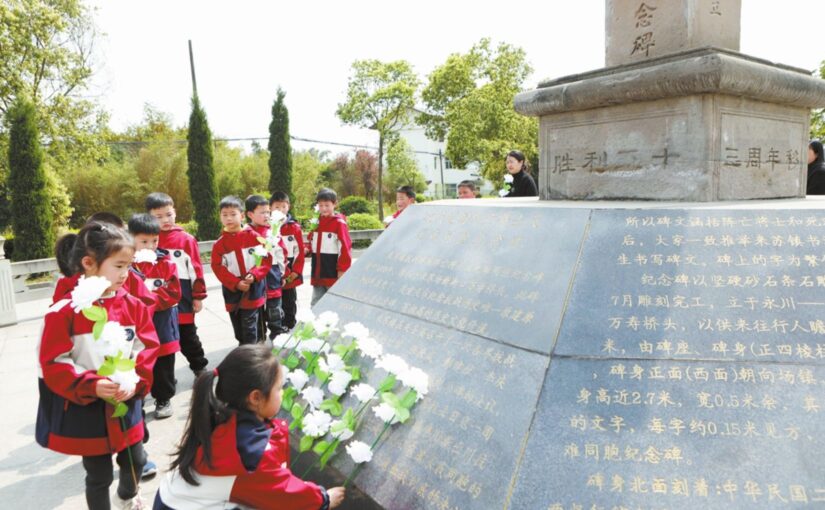
The second of September 2025 marks the 80th anniversary of the signing of the Japanese Instrument of Surrender, bringing an end to World War 2.

China’s role in the war, and indeed the very existence of the Pacific Theatre, has to a significant degree been written out of history. In his book China’s War with Japan: 1937 – 1945, British historian Rana Mitter writes that, “for decades, our understanding of [World War 2] has failed to give a proper account of the role of China. If China was considered at all, it was as a minor player, a bit-part actor in a war where the United States, Soviet Union and Britain played much more significant roles” (Rana Mitter, 2014. China’s War with Japan: 1937 – 1945; the Struggle for Survival. Penguin Books, p5).

However, China was the first country to wage war against fascist occupation, and the Chinese People’s War of Resistance Against Japanese Aggression was of decisive importance to the overall global victory over fascism. In the course of 14 years of war (1931-45), China suffered over 35 million casualties, and around 20 percent of its people were made refugees.
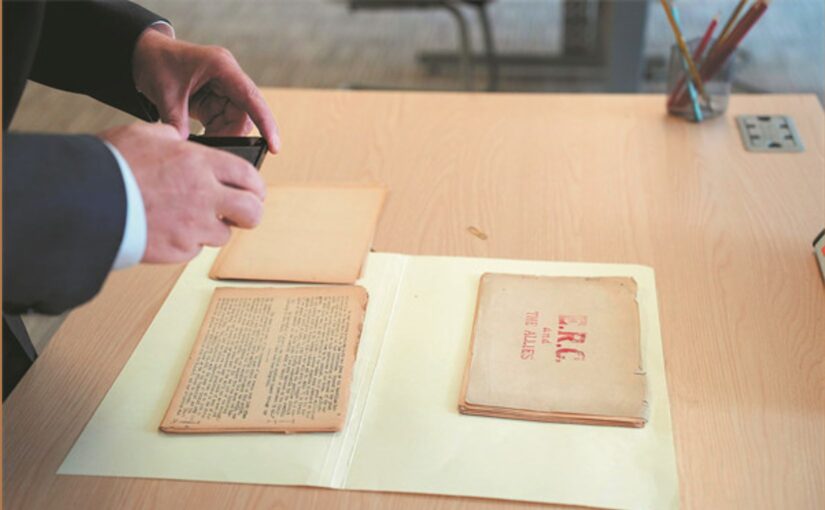
The war started in 1931

Following its emergence as a capitalist country in the second half of the 19th century, Japan had been steadily expanding its colonial ambitions in relation to China, Korea and the Russian Far East. Taiwan, the Penghu Islands and the Liaodong Peninsula were ceded by China to Japan in 1895 under the terms of the Treaty of Shimonoseki, at the conclusion of the First Sino-Japanese War.

Continue reading Remembering China’s role in the global anti-fascist war

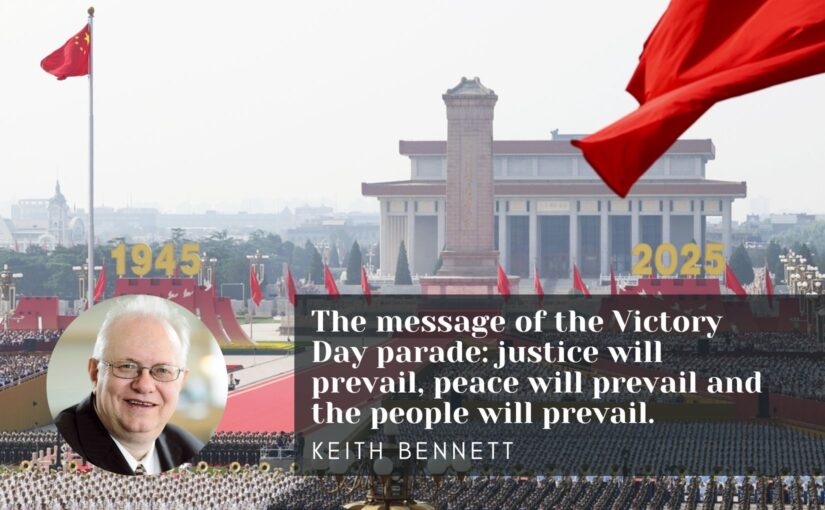
The message of the Victory Day parade: justice will prevail, peace will prevail and the people will prevail

In the following report, our co-editor Keith Bennett reflects on witnessing the grand parade in Beijing marking the 80th anniversary of China’s victory in the War of Resistance Against Japanese Aggression and the Global Anti-Fascist War.
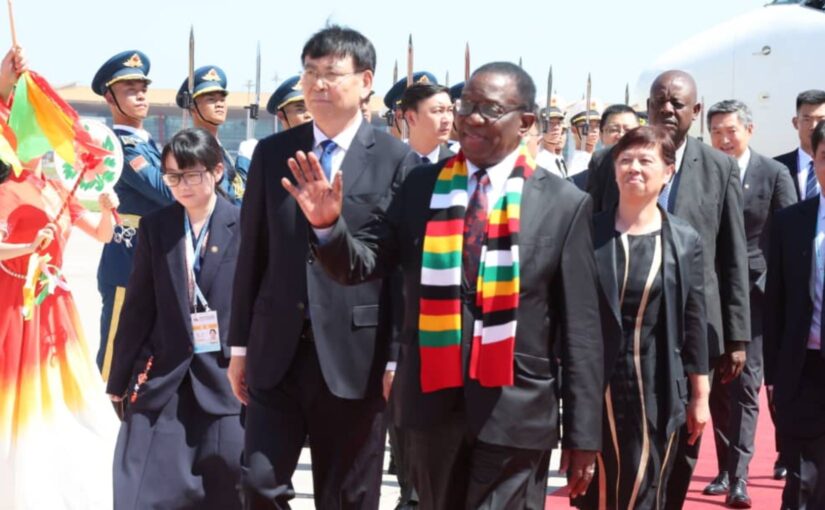
Keith notes that the parade impressively showcased advanced military technology—ranging from hypersonic missiles and drones to nuclear-capable systems—demonstrating China’s defensive strength. Yet, the article stresses, China’s military power is not for domination but to safeguard the Chinese people and contribute to world peace.

President Xi’s address summed up the principal lesson of China’s victory: that justice will prevail, peace will prevail and the people will prevail. Keith observes:

That this vision enjoys ever greater support was shown by the presence of more than two dozen heads of state and government, along with numerous other dignitaries, the majority of them from the Global South, or Global Majority. This underlined, as did the largest ever gathering of the Shanghai Cooperation Organisation just two days previously, that the days when a handful of colonialist, imperialist or hegemonist powers could dominate world affairs have gone forever. If some countries choose to stay away from or seek to undermine this inexorable multipolar dynamic it will only precipitate their decline.

The article was also published by China Today and Morning Star, and is quoted extensively in China Daily.

To be able to witness the grand military parade marking the 80th anniversary of the victory of the Chinese People’s War of Resistance Against Japanese Aggression and the World Anti-Fascist War was an unforgettable experience.
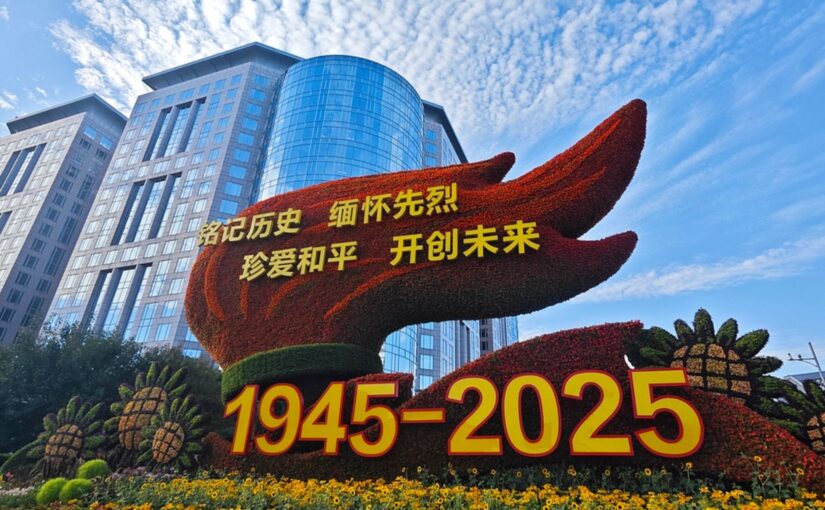
As President Xi pointed out, this was the first complete victory won by the Chinese people in their struggle against foreign aggression and also made a major contribution to the triumph of the people of the world against fascism.

China had promised to show the world the advances in its defensive capabilities. And with an array of new equipment displayed for the first time, including nuclear-capable intercontinental ballistic missiles; a land, sea and air nuclear triad; all-weather hypersonic missiles; reconnaissance and strike drones; unmanned ship-based helicopters; advanced electronic counter-measure equipment; cyberspace warfare equipment; unmanned aerial vehicles; hypersonic anti-ship missiles; long range artillery and new generation tanks, among others, it certainly didn’t disappoint on that front.

But that was not all that left a lasting impression. Unlike some other countries, China’s military might is not there to dominate others, not to bully, oppress, occupy or exploit, but solely to provide a secure basis, a great wall of iron and steel, for the Chinese people to live a peaceful and happy life and to help secure, preserve and defend world peace.

In stark contrast to those who grotesquely speak of other countries being “on the menu”, President Xi again pledged his country to peaceful development. Only when nations across the world treat each other as equals and mutually support one another, he pointed out, can the root cause of war be eliminated, and can we prevent historical tragedies from recurring, by building a community of shared future for humanity.

The lesson of the great victory, he pointed out, was that justice will prevail, peace will prevail and the people will prevail.

That this vision enjoys ever greater support was shown by the presence of more than two dozen heads of state and government, along with numerous other dignitaries, the majority of them from the Global South, or Global Majority. This underlined, as did the largest ever gathering of the Shanghai Cooperation Organisation just two days previously, that the days when a handful of colonialist, imperialist or hegemonist powers could dominate world affairs have gone forever. If some countries choose to stay away from or seek to undermine this inexorable multipolar dynamic it will only precipitate their decline.

The western media may express consternation, whether real or feigned, at the foregrounding of Russian President Vladimir Putin and DPRK leader Kim Jong Un among the honoured foreign guests. They choose to overlook the undeniable fact that it was the peoples of China and the Soviet Union who made the greatest national sacrifice to rid the world of fascist barbarism and save human civilisation. And they equally choose to overlook that Kim Jong Un’s own grandfather fought shoulder-to-shoulder with his Chinese comrades-in-arms against the Japanese aggressors in northeast China. All this found poignant expression as the three leaders greeted war veterans together at the start of the ceremony.

Many other things touched me today. The culmination featuring the release of 80,000 doves and 80,000 multicoloured balloons, reminding us that everything China does is for the sake of peace.

The pride, passion and patriotism with which service men and women and civilians alike joined in singing the national anthem and the Ode to the Motherland.

As you would expect for an event of this scale, organisation was meticulous and logistics were complex but flawless. Security was, of course, necessarily tight. But unlike in any capitalist country none of the security personnel carried arms. And whilst they were there to assist people as much as anything else, they were by far outnumbered by the kind, self-confident and enthusiastic young women and men volunteers one encountered every few steps, on hand to offer whatever help anyone might need. Every one of them a credit to socialist China and a guarantee of its bright future. Every one of them able to realise their dreams thanks to the heroes and martyrs who laid down their lives 80 years ago.

Putin: Russia and China are united in our vision of building a just, multipolar world order, with a focus on the nations of the Global Majority

We are pleased to republish below the full text of Russian President Vladimir Putin’s interview with Xinhua News Agency, conducted on the eve of his visit to China to attend the Shanghai Cooperation Organisation (SCO) Tianjin Summit and the commemorations in Beijing for the 80th anniversary of China’s victory in the War of Resistance against Japanese Aggression.

The interview touches on a wide range of important issues, including Russia-China relations, the global balance of power, the significance of the SCO, and the lessons to be learned from the Second World War.

On the issue of the Global Anti-Fascist War, Putin notes:

The peoples of the Soviet Union and China bore the brunt of the fighting and suffered the heaviest losses. It was our citizens who endured the greatest hardships in the struggle against the invaders and played a decisive role in defeating Nazism and militarism. Through those severe trials, the finest traditions of friendship and mutual assistance were forged and strengthened – traditions that today form a solid foundation for Russian–Chinese relations.

I would remind you that even before the full-scale outbreak of the Second World War, in the 1930s, when Japan treacherously launched a war of aggression against China, the Soviet Union extended a helping hand to the Chinese people. Thousands of our career officers served as military advisers, assisting in strengthening the Chinese army and providing guidance in combat operations. Soviet pilots also fought bravely alongside their Chinese brothers-in-arms.

He adds:

The historical record leaves no doubt as to the scale and ferocity of those battles. We remember the great significance of the famous Hundred Regiments Offensive, when Chinese Communist forces liberated a territory with a population of five million from Japanese occupation. We also recall the unparalleled feats of Soviet troops and commanders in their clashes with Japan at Lake Khasan and the Khalkhin Gol River. In the summer of 1939, our legendary commander Georgy Zhukov won his first major victory in the Mongolian steppes, which in effect foreshadowed the later defeat of the Berlin–Tokyo–Rome Axis. In 1945, the Manchurian Strategic Offensive Operation played a decisive role in liberating northeast China, dramatically altering the situation in the Far East and making the capitulation of militarist Japan inevitable.

And, correctly remembering the crucial role played by China in the defeat of fascism and militarism and the birth of the modern international order, he states:

In Russia, we will never forget that China’s heroic resistance was one of the crucial factors that prevented Japan from stabbing the Soviet Union in the back during the darkest months of 1941–1942. This enabled the Red Army to concentrate its efforts on crushing Nazism and liberating Europe. Close cooperation between our two countries was also an important element in forming the anti-Hitler coalition, strengthening China as a great power, and in the constructive discussions that shaped the post-war settlement and helped to reinvigorate the anti-colonial movement.

Putin observes that, in the West, there are ceaseless attempts to rewrite the history of the Second World War, to downplay the role of the Soviet Union and China in the victory over fascism, and to whitewash the crimes of fascism and militarism. “Historical truth is being distorted and suppressed to suit their current political agendas. Japanese militarism is being revived under the pretext of imaginary Russian or Chinese threats, while in Europe, including Germany, steps are being taken towards the re-militarisation of the continent, with little regard for historical parallels.”

Continue reading Putin: Russia and China are united in our vision of building a just, multipolar world order, with a focus on the nations of the Global Majority

From Spain to China: remembering shared sacrifices in the World Anti-Fascist War

September 3rd marks the 80th anniversary of the victory in the Chinese People’s War of Resistance Against Japanese Aggression. In the following article, originally published in Global Times on 14 August, Spanish geopolitical analyst H. Gomez notes that the history of international solidarity in the World Anti-Fascist War “did not begin in 1939, nor did it end with the fall of the Nazi Germany”.

He highlights the Spanish Civil War of 1936 as an early front in this global fight:

In 1936, when the Spanish Civil War erupted, a little-known but powerful gesture of internationalism took place. Among the first foreign volunteers to arrive in Spain was Xie Weijin, a Chinese Marxist and journalist who had studied in France and was deeply moved by the Republican cause. As bombs fell over Madrid and Barcelona, Xie risked his life to stand with the Spanish people in their resistance against interventions by fascist forces. He was soon followed by other Chinese volunteers who formed part of the International Brigades – multi-national units made up of workers, students and intellectuals from over 50 countries.

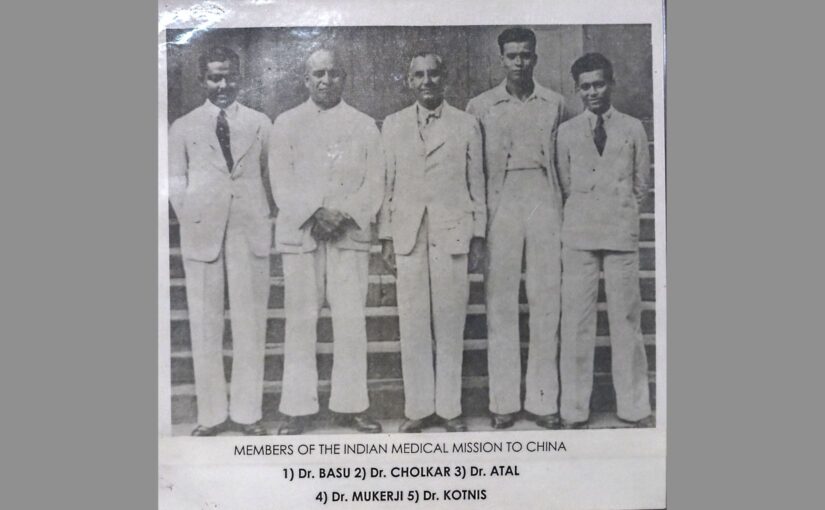
At the same time, China itself was resisting Japanese invasion. The horrors of Nanjing and the bombings of Chongqing became symbols of global anti-fascist resolve, and China too received international solidarity: Canadian doctor Norman Bethune, American aviators of the Flying Tigers, Soviet advisors, and volunteers from across Asia and beyond came to China’s assistance. Indeed, 20 medical doctors serving in the International Brigades went from Spain to China to help defend against Japanese aggression.

These acts of transnational support, Gomez stresses, were not about profit or geopolitics but about a shared moral cause. China has preserved this history through monuments, museums, and remembrance of comrades-in-arms. Yet, he warns, historical revisionism and amnesia in parts of the world threaten to distort or erase these sacrifices, particularly China’s role in the Allied victory.

The author writes that commemorating the war is not only remembrance but a moral imperative. In today’s world—facing pandemics, climate change, and geopolitical tensions—the same spirit of solidarity is urgently needed. China, he concludes, upholds this legacy through peace, cooperation, and its vision of a shared future for humanity:

As China commemorates the victory in the Chinese People’s War of Resistance Against Japanese Aggression and the World Anti-Fascist War, it does so not in isolation but as part of a global family that once stood together in resistance, and must now stand together in rebuilding global trust and cooperation. This is not only a tribute to the past – it is a blueprint for the future.
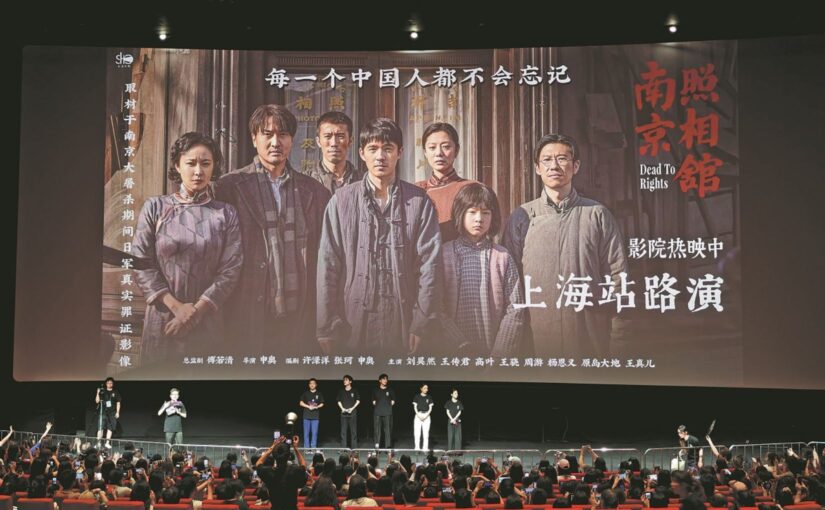
Commenting on Gomez’s article, Jim Jump, Chair of Britain’s International Brigade Memorial Trust, remarked:

Global Times is to be congratulated for recognising the links between the Spanish Civil War and China’s resistance to Japanese militarism in the long Anti-Fascist War of the 1930s and 40s.

The fight against Franco, Hitler and Mussolini in Spain and against Japanese aggression in China was seen by many people in Britain and around the world as one and the same struggle.

The International Brigade Memorial Trust salutes the memory of all those who sent aid to the people of Spain and China and of the volunteers in the International Brigades who went from Spain to China to continue the epic struggle against fascism.

As China and the world prepare to mark the 80th anniversary of the victory in the Chinese People’s War of Resistance Against Japanese Aggression on September 3, it is a fitting moment to revisit the long arc of international solidarity in the World Anti-Fascist War, a history that did not begin in 1939, nor did it end with the fall of the Nazi Germany. 
Continue reading From Spain to China: remembering shared sacrifices in the World Anti-Fascist War

The Chinese scholars keeping the memory of Japanese sexual slavery alive

The following article, which was originally published on Sixth Tone, highlights the work of Su Zhiliang and Chen Lifei, a husband and wife team who are China’s foremost scholar activists researching the Japanese militarists’ heinous ‘comfort women’ system, an insitutionalised practice of mass sexual slavery inflicted on women in China, Korea and elsewhere in Asia during Japanese imperialism’s war of aggression.

This year the couple have published two books: “A Comprehensive History of the Japanese Military ‘Comfort Women’ System,” offers an in-depth analysis of wartime female slavery and is considered the most comprehensive, systematic, and authoritative multi-volume study of its kind to date. The other, “The Search: ‘Comfort Woman’ Park Yong-sim and Her Sisters,” is a revised edition setting out Park Yong-sim’s personal narrative as she was taken from her hometown of Nampo, in what is now the Democratic People’s Republic of Korea, to Nanjing, capital of China’s eastern Jiangsu province, and forced into sexual slavery at the age of 17.

Since they began their research and fieldwork in the 1990s, the couple have identified 358 comfort women survivors in the Chinese mainland, nearly tripling previous estimates. Now, there are only seven remaining survivors – the youngest of whom is 95 years old.

Wu Haiyun interviewed Su Zhiliang ahead of this year’s International Memorial Day for Comfort Women, which falls on August 14.

Explaining how the issue came to be hidden for so long, Su said: “After WWII, the Japanese government knew this was a shameful crime and systematically destroyed archival materials related to the ‘comfort women’ system, so the issue only came to international attention in 1991, when a 67-year-old Korean woman, Kim Hak-sun, courageously came forward to testify that she had been forced into sexual slavery by the Japanese military in China and to file a lawsuit against the Japanese government.”

There were also further obstacles, especially in the early years: “Local officials in China were often uncooperative, as if this history was something to be ashamed of. This resistance began to ease a bit after 2000 (as more survivors sought litigation and public awareness increased), but the survivors themselves would sometimes still decline interviews. For example, we had once arranged for a Shanghai TV crew to travel with us to northern Shanxi province’s capital, Taiyuan, to interview a survivor. Everything was in place, but just before we departed, she called to say she no longer wished to speak on camera. All I could say was that we understood. It’s incredibly painful to recount the most traumatic experiences of your life to strangers.”

He adds: “The history of ‘comfort women’ represents one of the most horrific, systematic violations of women’s rights in modern history. Our research shows that in China alone, the Japanese military established more than 2,100 ‘comfort stations.’  Throughout the entire war, between 360,000 and 410,000 women were forced into sexual slavery by the Japanese military. Many died during their captivity.”

He also sounds a warning that the Japanese government’s stance towards these crimes is now only getting worse:

“In the 1990s, Japanese school textbooks still included references to the ‘comfort women’ system. Now, such content is becoming increasingly rare. One major reason is the decline of left-leaning historians and the weakening of progressive forces, while nationalist and right-wing voices grow stronger. As a result, Japan’s current attitude toward the issue is even more regressive than it was 30 years ago. We must remain vigilant about this… The ‘comfort women’ system and the [Nazi] Holocaust represent two distinct but equally heinous forms of fascist violence… Both were state-sponsored crimes against humanity, and both epitomise the brutality of fascism and militarism.”

This year, China’s core scholars on “comfort women” — women and girls forced into sexual slavery by the Japanese army in World War II — published two career-defining books.

One, “A Comprehensive History of the Japanese Military ‘Comfort Women’ System,” offers an in-depth analysis of wartime female slavery and is considered the most comprehensive, systematic, and authoritative multi-volume study of its kind to date. The other, “The Search: ‘Comfort Woman’ Park Yong-sim and Her Sisters,” is a revised edition about Park Yong-sim’s personal narrative as she was taken from her hometown of Nampo, Korea, to Nanjing, capital of China’s eastern Jiangsu province, and forced into sexual slavery at the age of 17.

In many ways, the works are a fitting capstone to Su Zhiliang and Chen Lifei’s decadeslong scholarship and advocacy, as the husband-and-wife pair, now nearing their 70s, consider stepping back. Taken together, the books encapsulate the dual approach that has defined the Shanghai Normal University scholars’ foundational work to document and identify survivors of the wartime female slavery system.

However, as the couple contemplate the future of their research, challenges remain. Since they began their research and fieldwork in the 1990s, they have identified 358 comfort women survivors in the Chinese mainland, nearly tripling previous estimates. Now, there are only seven remaining survivors — the youngest of whom is 95 years old.

Continue reading The Chinese scholars keeping the memory of Japanese sexual slavery alive

The Taiping Rebellion and the spectre of peasant communism

In the following article, originally published on his website Weaponized Information, Prince Kapone gives an acute analysis and mounts a trenchant defence of China’s Taiping Rebellion (1850-1864), generally regarded as one of the greatest peasant rebellions, as well as bloodiest conflicts, in human history.

Describing it as the “spectre of peasant communism”, Kapone situates the rebellion against the background of the stagnation and decline of China’s feudal system, of the Qing dynasty in particular, and the way this opened up the country to imperialist depredations, most notably the British Opium Wars (1839-1842; 1856-1860).

He explains: “The opium-induced decomposition of Chinese society was no accident; it was policy. This narcotic primitive accumulation did not represent the entry of capitalism through ‘natural’ development, but its violent imposition through military discipline. As in India, Ireland, and Egypt, the arrival of the capitalist world market meant the annihilation of local metabolic rationality in favour of cash crop logic, debt servitude, and currency crisis. The Qing state, no matter its robes or rituals, had become a tributary of London finance.

“It is within this furnace of contradiction that the Taiping Rebellion arose – not as an aberration, nor a reactionary nostalgia for a vanished harmony, but as the spontaneous combustion of a people compressed between imperial plunder and domestic parasitism. In this sense, the Taiping were the dialectical consequence of a global contradiction: the fusion of foreign capital’s devastation with the internal bankruptcy of a feudal order. What followed was not simply rebellion, but the premature birth of a proletarian-peasant war in the belly of a still-feudal dragon.”

He goes on to outline the form and essence of peasant revolt: “When the peasantry takes up arms, it does not quote Hegel – it dreams. But the dream, far from being false, is the condensed expression of real suffering, organised into symbolic form. The bourgeois mind, unable to see beyond its own secular fetishisms, calls this ‘madness,’ ‘fanaticism,’ ‘superstition.’ Yet just as the commodity hides labour beneath its surface, so too does ideology conceal class. The gods of the Taiping did not descend from heaven – they rose from the rice paddies.

“Hong Xiuquan, the failed scholar who declared himself the younger brother of Christ, has been mocked by European scribes as a deluded zealot. But what is delusion in a world where imperial capital arrives by gunship? In the dream of paradise, in the vision of a Heavenly Kingdom on earth, the Chinese peasantry gave voice to their deepest material yearnings: land, bread, justice, revenge. That this expression wore the garb of biblical apocalypse is no stranger than the French Revolution quoting Rome or the English Levellers citing scripture. The form is borrowed; the content is real…

“This was a weaponised syncretism: a theology forged in the crucible of examination failure, landlord extortion, opium hunger, and state decay. Christ, repurposed by Hong, was not a redeemer of souls but a hammer of kings. The Taiping gospel was less a catechism than a call to arms, less sermon than strategy.”

Continue reading The Taiping Rebellion and the spectre of peasant communism

Hong Lei warns of the continued danger of Japanese militarism as China prepares for key anniversary

We previously reported on the 26 foreign heads of state or government who will attend China’s September 3 commemoration of the 80th anniversary of victory in  the Chinese People’s War of Resistance Against Japanese Aggression and the World Anti-Fascist War at the invitation of President Xi Jinping.
At his press conference, given on August 28, Chinese Assistant Foreign Minister Hong Lei also gave details of some other high-ranking persons who will participate, noteworthy among whom are:

  • Speaker of the National Parliament of Timor Leste Maria Fernanda Lay
  • President of the National Assembly of Venezuela Jorge Rodriguez Gómez
  • Chairman of the Bulgarian Socialist Party and Deputy Prime Minister of Bulgaria Atanas Zafirov
  • Speaker of the National Assembly of the Republic of Korea (ROK) Woo Won-Shik
  • Chief Adviser to the Brazilian President Celso Amorim
  • Representative of the Nicaraguan Government and Presidential Adviser Laureano Ortega Murillo
  • Minister of War Veterans and Rights Holders of Algeria Laid Rebiga
  • President of the New Development Bank (and former Brazilian President) Dilma Rousseff
  • Former Prime Minister of Japan Yukio Hatoyama
  • Former Prime Minister of Greece George Papandreou
  • Former Prime Ministers of New Zealand Helen Clark and John Key
  • Former Foreign Minister of Australia Robert (Bob) Carr

Also, in addition to his comments regarding the participation of Russian President Vladimir Putin and leader of the Democratic People’s Republic of Korea (DPRK) Kim Jong Un, as well as on the significance of the broad representation from the Global South, which we previously reported, Hong also touched on a number of other questions, including the present situation regarding Japan, where he commented:

“Within Japan, there have all along been some forces that try to deny and glorify aggression, distort history, and even honour the war criminals and justify their crimes. This constitutes a challenge to the post-war international order, a challenge to human conscience and a challenge to all peace-loving people. In recent years, Japan has also drastically adjusted its security policy, increased its defence budget year by year and continued to ease restrictions on arms exports, seeking a breakthrough in military development. Naturally, this arouses the strong scepticism of its Asian neighbours and the international community, as to whether Japan is genuinely committed to an exclusively defence-oriented policy and to peaceful development.”

The following is the full text of the press conference. It was originally published on the website of the Chinese Foreign Ministry.

Head of the press center for the events commemorating the 80th anniversary of the victory in the Chinese People’s War of Resistance Against Japanese Aggression and the World Anti-Fascist War Shou Xiaoli: Ladies and gentlemen, good morning. Welcome to the first press conference hosted by the Press Center for the events commemorating the 80th anniversary of the victory of the Chinese People’s War of Resistance Against Japanese Aggression and the World Anti-Fascist War.
Continue reading Hong Lei warns of the continued danger of Japanese militarism as China prepares for key anniversary

China’s victory in the war against Japanese aggression inspired the oppressed people of the Global South

Chinese Assistant Foreign Minister Hong Lei has stated that the victory in the Chinese People’s War of Resistance against Japanese Aggression was the first complete victory in China’s modern national liberation struggle and added that this greatly inspired the people of colonised and semi-colonised countries around the world that had suffered from aggression and oppression.

He was speaking at an August 28 press conference where he introduced the 26 heads of state or government who will attend Beijing’s September 3 commemoration of the 80th anniversary of victory in the War of Resistance Against Japanese Aggression and the World Anti-Fascist War at the invitation of President Xi Jinping.
Responding to a comment regarding the heavy representation of leaders from the Global South, Hong added that China’s victory had given the oppressed nations confidence and courage to fight for national independence and liberation and had exerted a profound influence on their eventual triumph.

Eighty years later, the era when a handful of countries dominated the destinies of others, monopolised international affairs and held exclusive advantages in development has become a thing of the past. The collective rise of the Global South is fundamentally reshaping the global landscape. No longer the “silent majority” or a “vast backward bloc,” the Global South now represents an awakened new force and new source of hope in changes unseen in a century, Hong noted. The following article was originally published by Global Times.

When asked to comment that among the foreign guests and dignitaries attending China’s V-Day commemorations in Beijing, many are leaders from Global South countries, Assistant Foreign Minister Hong Lei stated that the victory in the Chinese People’s War of Resistance against Japanese Aggression was the first complete victory in China’s modern national liberation struggle, greatly inspiring colonized and semi-colonized countries around the world that had suffered from aggression and oppression.
It gave them the confidence and courage to fight for national independence and liberation, exerting a profound influence on their eventual triumph, said Hong.

Eighty years later, the era when a handful of countries dominated the destinies of others, monopolized international affairs and held exclusive advantages in development has become a thing of the past. The collective rise of the Global South is fundamentally reshaping the global landscape.

Over the past 40 years, the share of Global South countries in global GDP has risen from 24 percent to over 40 percent, and in the past 20 years they have contributed as much as 80 percent of global economic growth. Increasingly, Global South countries are hosting BRICS, APEC and G20 summits, making their voices heard and leaving a clear imprint, said Hong.

No longer the “silent majority” or a “vast backward bloc,” the Global South now represents an awakened new force and new source of hope in changes unseen in a century, Hong noted.

More than 80 years ago, in that life-and-death struggle between justice and evil, peace-loving people around the world united to form a broad anti-fascist front, defeating brutal aggressors, creating world peace and laying an important foundation for the postwar international order. Today, China stands ready to work together with Global South countries and others to promote a more equal and orderly multipolar world, advance inclusive and beneficial economic globalization and jointly contribute to the just cause of world peace, development and progress, Hong said.

London concert honours China’s victory over fascism

More than 300 people gathered at the Royal College of Music in London’s Kensington district on the evening of August 28 for a concert arranged by the Chinese Embassy in commemoration of the 80th anniversary of the victory in the Chinese People’s War of Resistance against Japanese aggression and the World Anti-Fascist War.

With the theme, Honour History for a Better Future, the concert featured ten pieces of Chinese and Western music presented by the Hunan Provincial Song and Dance Theatre and New Elements Music.

Founded in 1953, the Hunan Provincial Song and Dance Theatre is one of China’s most prestigious performing arts groups.  New Elements Music was founded in London in 2019 and is dedicated to building bridges between Chinese and global music cultures. There were also guest performers from the London City Orchestra and the Camden Philharmonia Orchestra.

Opening with the Ode to the Red Flag, a classic of revolutionary Chinese music composed by Lü Qiming in 1965, the program featured Chinese modern folk music from the period of war and revolution along with contemporary work inspired by the vision of building a community of shared future for humanity. Western pieces included Sir Edward Elgar’s Nimrod.

Particularly poignant for a number of people in the audience was Long Way from Home, the theme song from the documentary film The Sinking of the Lisbon Maru, performed live by Elly O’Keeffe, the London-based Irish singer, who also sings it in the film, accompanied by clips from the film.

A stirring finale was provided by the piano solo Ode to the Yellow River, performed by Di Xiao, Professor at the Royal Birmingham Conservatoire, followed by the choral singing of Defend the Yellow River and My Motherland.

Defend the Yellow River is the last movement of the Yellow River Piano Cantata composed by Xian Xinghai during the war against Japanese aggression. In 1970, it was also adapted into the Yellow River Piano Concerto, which incorporates phrases from The East is Red and the Internationale.

The mixed choir was formed by members of the Choir of the Chinese Embassy in London, the London Chinese Philharmonic Choir and a team from the London Branch of the Bank of China.

Special mention should also be made of the evening’s conductors, Ray Lin from New Elements Music and Thomas Payne, Musical Director of the London City Orchestra.

The event was sponsored by the London Branch of the Bank of China.

Among the distinguished friends of China present were Labour member of the House of Lords, Lord Davidson of Glen Cova; Mrs Denise Wynne, daughter of Lisbon Maru survivor Dennis Morley; former President of the British Sociological Association Martin Albrow; and Jack Perry, Chairman of the 48 Group Club. Friends of Socialist China was represented by our co-editors Carlos Martinez and Keith Bennett.

A short report of the evening was carried by the Xinhua News Agency.

World leaders to gather in China to mark victory in anti-fascist war

China will stage a massive military parade on September 3 to commemorate the 80th anniversary of the victory in the Chinese People’s War of Resistance Against Japanese Aggression and the World Anti-Fascist War and 26 heads of state or government will attend on the invitation of President Xi Jinping.
This was announced by Chinese Assistant Foreign Minister Hong Lei on August 28.

China’s official listing foregrounds Russian President Vladimir Putin and Democratic People’s Republic of Korea (DPRK) top leader Kim Jong Un. With Kim also being joined by the Presidents of Vietnam, Laos and Cuba, this represents an unprecedented gathering of the heads of state of all five presently existing socialist countries.

The presidents of all five of China’s Central Asian neighbours – Kazakhstan, Kyrgyzstan, Uzbekistan, Tajikistan and Turkmenistan – will also attend, as will the leaders of Belarus, Armenia and Azerbaijan, meaning that nine of the 15 former republics of the USSR, who collectively waged the Great Patriotic War against Nazism, will be represented at top level. Other national leaders from countries with a long and significant history of friendship with China, include those from Cambodia, Mongolia, Nepal, Zimbabwe, the Republic of Congo, Iran, Serbia and Slovakia, the last mentioned being the only member of the European Union and NATO to be represented at top level.

Besides those mentioned above, China’s southeast Asian neigbours will also be represented by Indonesia, Malaysia and Myanmar (meaning that six of the ten members of the Association of South East Asian Nations, ASEAN, will be represented at top level), while Pakistan and the Maldives join Nepal in representing China’s South Asian neighbours.

In addition, at the invitation of the Chinese government, heads of parliaments, deputy prime ministers and high-level representatives from various countries, heads of international organisations, and former political dignitaries will also attend the V-Day commemorations.

Announcing the participation of Kim Jong Un, Hong Lei said that China and the DPRK are traditional friendly neighbours. He noted that during the arduous years of war, the Chinese and DPRK people supported each other and fought side by side against Japanese aggression, making important contributions to the victory of the World Anti-Fascist War and humanity’s just cause. He further said that safeguarding, consolidating and developing China-DPRK relations is the firm stance of the Communist Party of China and the Chinese government, adding that China stands ready to continue working with the DPRK to enhance exchanges and cooperation, and advance socialist development.

The Korean Central News Agency (KCNA) also announced Kim’s China visit.

Hong also said that President Putin’s attendance at the commemoration events further highlights the high level of the China-Russia comprehensive strategic partnership of coordination for a new era and underscores their unity in safeguarding the victorious outcome of World War II. He stressed that China and the Soviet Union, as the main battlefields of World War II in Asia and Europe, respectively, served as pillars in the fight against militarism and fascism 80 years ago and made immense national sacrifices.

Continue reading World leaders to gather in China to mark victory in anti-fascist war

China and DPRK jointly celebrate the 80th anniversary of victory over Japanese imperialism

China and the Democratic People’s Republic of Korea (DPRK) have jointly marked the 80th anniversary of the victory of the war to resist aggression and the world anti-fascist war with a number of events.

The Chinese Embassy in the DPRK capital Pyongyang organised a reception on August 20. The Xinhua News Agency reported that among the guests present were Choe Ryong Hae, member of the Presidium of the Political Bureau of the Central Committee of the Workers’ Party of Korea (WPK), First Vice-President of the State Affairs Commission of the DPRK, and Chairman of the Standing Committee of the Supreme People’s Assembly of the DPRK, and DPRK Culture Minister Sung Jong Gyu.

Reporting the speech delivered by Chinese Ambassador Wang Yajun, the Korean Central News Agency (KCNA) said that he noted that, “the China-DPRK friendship was provided in the flames of the bloody revolutionary struggle, [and] stressed that Comrade Kim Il Sung, the great leader of the Korean people and a close friend of the Chinese people, made a great contribution to the victory of the Chinese People’s War of Resistance against Japanese Aggression by waging a death-defying struggle with the Japanese aggressors, together with the Northeast Anti-Japanese Allied Army.
“It is the steadfast policy of the Chinese party and government to successfully defend, consolidate and develop the traditional China-DPRK friendship at all times, he said, expressing the readiness to thoroughly implement the important common understanding made by the top leaders of China and the DPRK and thus advance the socialist cause of the two countries and to make contribution to the happiness of the peoples of the two countries and global peace and stability.”

His speech was followed by that from DPRK Culture Minister Sung Jong Gyu, who paid high tribute to the forerunners of the two countries who sacrificed their youth and lives without hesitation in the sacred anti-Japanese war, and said that the victory in the anti-Japanese war was a world historic event that brought to a close the Second World War with the victory of the world anti-fascist democratic forces and made a great contribution to form a main current with independence and peace in international relations.

He said that the DPRK will make joint efforts together with the Chinese comrades to steadily develop the friendly and cooperative relations forged on the road of accomplishing the cause of anti-imperialist independence and socialism true to the noble intention of the top leaders of the two parties and the two countries.

The website of the Chinese Embassy in Pyongyang carried the full text of both speeches.

It quoted Ambassador Wang Yajun as stating:

“The traditional friendship between China and the DPRK was forged in the revolutionary struggle of blood and fire. More than 80 years ago, the military and civilians of the two countries shared the same hatred and dealt a heavy blow to the Japanese invaders. Many people with lofty ideals in Korea went to China to carry out the anti-Japanese struggle, which received strong support from the Chinese people and inspired the fighting spirit of the Chinese people. In particular, Comrade Kim Il Sung, the great leader of the Korean people and a close friend of the Chinese people, fought to the death against the Japanese invaders together with the Northeast Anti-Japanese Allied Army of China, not only making immortal contributions to the liberation of Korea, but also making important contributions to the victory of the Chinese People’s War of Resistance Against Japanese Aggression. Comrade Kim Il Sung once fondly recalled the days when he was with his comrades-in-arms of the Northeast Anti-Japanese Alliance, saying that he had ‘stablished a deep friendship’ and that ‘the scene of that year is still fresh in his memory’.

“I would like to reiterate that safeguarding, consolidating and developing the traditional friendship between China and the DPRK has always been the unswerving policy of the Chinese Party and government. China is willing to work with the DPRK to resolutely implement the important consensus reached by the top leaders of the two parties and two countries, develop the traditional friendly and cooperative relations between China and the DPRK, promote the steady and far-reaching socialist cause of the two countries, benefit the two peoples, and promote regional and world peace and stability.”

Continue reading China and DPRK jointly celebrate the 80th anniversary of victory over Japanese imperialism

Dongji Rescue: An inspiring blockbuster of courage, resistance and shared humanity

Friends of Socialist China (FOSC) was grateful to be invited to the European premiere of the film Dongji Rescue by the Chinese Embassy. The screening took place in the Odeon Luxe in Leicester Square, a grand venue fit for the opening of such a blockbuster film, attended by some of China’s biggest acting stars. The premiere took place on the 15th of August, the 80th anniversary of VJ day, commemorating the allied victory over imperial Japan in World War Two, the most appropriate date for a film examining the shared Chinese and British fight against fascism.

We are very pleased to publish the following review by FOSC Britain Committee member Alfie Howis and hope that as many as possible of our readers take the opportunity to see this inspiring and moving film.

Dongji Rescue is effectively a follow up to the documentary The Sinking of the Lisbon Maru which was released earlier this year. The documentary was a groundbreaking study of the sinking of a Japanese ship off China in 1942 by a US submarine, killing over 800 British POWs onboard who had been captured in Hong Kong, with 384 others rescued from the water by Chinese villagers from the nearby island. The film follows the story of the people on Dongji Island defying their Japanese occupiers and setting sail to rescue, and fight alongside, the drowning British soldiers at the shipwreck. The film was made possible as part of an initiative by the Chinese government to promote media about the Chinese People’s War of Resistance Against Japanese Aggression and the World Anti-fascist War, to maintain accurate memory of Japanese imperialism and learn lessons from the successful fight against it.
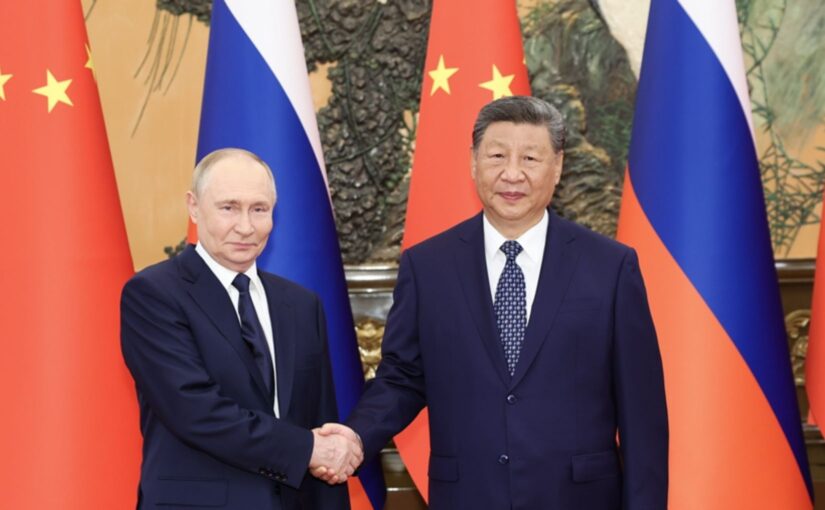
“At the darkest hour of the Second World War, China and the UK fought on different fronts but shared a common mission: to defend humanity against fascism and aggression. Fighting side by side, the peoples of our two countries forged a deep friendship,” said Chinese Ambassador Zheng Zeguang at the premiere. Public awareness of China’s role in WW2 is deeply lacking in Britain, and even where there is knowledge of it, the scale of China’s contribution, even beyond their own fight for national liberation, is lost on most. Dongji Rescue, which is now on general release across UK cinemas, will go some way to rectifying that and may help contribute to a deepening  of the understanding of this topic.

Dongji Rescue is a film about heroism, solidarity, and anti-fascism, but above all it shows the power of collective, militant struggle to resist oppression and take the most just course of action. Throughout the film there are individual heroes, but the central junction of the narrative is the collective decision of the islanders, after wavering on the part of some, to rise up against the Japanese occupation, take to their boats, and risk death together in order to save the soldiers. This would not have been possible without all of the boats taking to the seas as one in a unified action, able to overwhelm the Japanese forces on the sinking ship and provide enough space to rescue hundreds of POWs. The sense of solidarity that the villagers embody as they liberated themselves, however briefly, from occupation is extended to the British men as they share the same struggle in that one moment, both fighting for their lives under attack from the same seemingly overwhelming force, in the end blunted by their collective bravery and resistance. Even the regimented and rank subordinated POWs can only succeed through self-organised collective efforts. Whether freeing themselves from the locked hold or flipping Japanese motorboats, the reactive instinct of the men goes beyond the orders from their commanders and is more akin to the spirit embodied by the islanders, which ultimately saves many of their lives.

Continue reading Dongji Rescue: An inspiring blockbuster of courage, resistance and shared humanity

80 years since the end of World War II – Japanese militarism has not changed its spots

In the following contributed article, Stephen Chang of People’s Forum Ltd. (UK) outlines how, far from uprooting the soil in which Japanese militarism and fascism had bred, the United States, as the occupying power following Japan’s surrender 80 years ago, pressed leading war criminals from Emperor Hirohito himself down into the service of its own hegemonic project. As a result, the USA, along with its client state Japan, remains today the greatest threat to peace in the Asia Pacific region. Vigilance is needed.

As we commemorate Japan’s unconditional surrender 80 years ago, on 15 August 1945, which ended WWII in Asia Pacific, we must remain vigilant.

Hirohito, the war time emperor of Japan, was a war criminal who escaped punishment on the insistence of the US.  Hirohito was directly and personally involved in the conduct of Japan’s invasion of sovereign nations and the death and atrocities inflicted on millions of civilians during WWII in Asia Pacific. Hirohito’s surrender speech is full of lies, half-truths and distortion of facts about Japan’s declaration, conduct and even surrender of its barbaric war against the people of the Asia Pacific region.

Hirohito, in his surrender speech, referred to Japan’s four years of war in Asia Pacific.  This is a blatant lie. Japan invaded and occupied part of northern China, namely the Manchurian region, on 18 September in 1931, attacked and bombed Shanghai in 1932, and expanded its war on the rest of China in 1937.  The reference to four years by Hirohito (1941-1945) is a deliberate attempt on the part of fascist Japan to exclude and ignore its invasion and occupation of part of China from 1931 and the atrocities committed in China like the massacre of 300,000 Chinese civilians, men, women and children, in Nanjing in 1937.

Fascist Japan announced its unconditional surrender to the Allied powers (China, Soviet Union, UK and USA) on 15 August 1945 and formally surrendered on 2 September 1945.   China declared the end of the Chinese people’s war against the Japanese invaders on 3 September 1945, and the formal ceremony of Japan’s surrender to China took place on 9 September 1945.  So, WWII in Asia lasted 14 years, not four years as claimed by war criminal Hirohito, as China forms a large part of Asia and suffered most severely from Japan’s war crimes and atrocities.

Why was Hirohito not tried as a war criminal?  Because the USA wanted a fascist puppet regime in the Asia Pacific region to further its post WWII global imperial domination.  Hirohito remained emperor of Japan until his death in 1989.  In 1971, the UK, a subservient nation to the US, accorded this war criminal the highest honour of an official State Visit.  Under Hirohito, and Japan’s post war constitution drafted by the US, Japan became an effective puppet state of the US from the end of WWII to the present time.

We should know that Nobusuke Kishi, Prime Minister of Japan from 1957 to 1960, was the mastermind of Japan exploitative economic and industrial policies in the Manchurian region of China from 1932 following its invasion in 1931, enslaving millions of Chinese for the benefit of Japan.  This is also where Japan’s Unit 731, the secret Japanese military testing facility (on live Chinese, Korean, Russian and other men, women and children) for biological warfare was based – in Harbin.

None of the leaders of Unit 731 were prosecuted for war crimes at the insistence of the US, in exchange for full disclosure to the US by Japan of the findings and results of its biological warfare experiments. (Only the Soviet government set up a special military tribunal at Khabarovsk in December 1949 to hold a joint trial of 12 former Japanese army officers on criminal charges relating to Unit 731’s wartime activities.) Unit 731 commanding officer Surgeon General Shiro Ishii, who commanded bubonic plague attacks on the Chinese cities of Changde and Ningbo, was awarded a special service medal by war criminal Hirohito and was granted immunity from war crimes against humanity by the US in 1948.  He was subsequently hired by the US to lecture US officers at Fort Detrick on the use of bioweapons and the findings made by Unit 731.

General Dr Masaji Kitano was the second commander of Unit 731 from 1942.  He too was granted immunity from war crimes prosecution and released as a POW and repatriated to Japan in 1946.   Using his biological warfare knowledge, in 1950 Kitano was a founder of Green Cross Corporation, which became one of Japan’s premier pharmaceutical companies, now known as Mitsubishi Pharma Corporation.  Murray Sanders, the US officer who led the US cover-up of Japanese war crimes, became a consultant to Green Cross.

In 1941 Kishi became a member of Japan’s WWII cabinet.  He was arrested to face trial as a Class A war criminal on Japan’s surrender.  However, the US released him without charges in 1948 and groomed him to be a leader of post war Japan.  This war criminal was elected to Japan’s parliament (National Diet) in 1953. With US support, he consolidated Japanese conservatives so as to counter the influence of Japan’s Socialist and Communist parties.  In 1955 he was instrumental in the establishment of the Liberal Democratic Party.  He was also key to setting up the “1955 System” that provided the basis for the LDP to remain Japan’s dominant party.

Kishi’s (the war criminal turned prime minister of Japan) younger brother, Eisaku Sato, was Japan’s prime minister from 1964 to 1972.   Kishi’s grandson, Shinzo Abe, was Japan’s prime minister from 2012 (the start of the Obama/Clinton “Pivot to Asia Pacific” designed to contain China) to 2020.

We should know that today:

  • Japan’s military is the fifth largest in the world and based on its current military budget is projected to become the third largest after the US and China.
  • The US has 120 active military bases and 55,000 military personnel in Japan.
  • Japan is home to the US’ largest and most heavily armed overseas military base.
  • The US military is the main and greatest beneficiary from the Japanese WWII Unit 731 biowarfare research on live human beings.

The US, the leader of the “free world” since WWII, self-styled beacon of democracy and human rights, and party to Japan’s war crimes against humanity, is today, together with its puppet client state Japan, the greatest threat to peace in the Asia Pacific region and globally.

While we commemorate the end of WWII 80 years ago, we must remember that the US is the main country in the world that has waged covert and overt wars against sovereign nations in most if not all of the 80 years since the end of WWII.

Beyond victory: Rethinking WWII’s legacy in a fractured world

We are pleased to publish below an original article by Wu Yanni, a Beijing-based political commentator and contributor to Chinese and international media, arguing that the lessons of World War II remain relevant – and indeed urgent – in today’s geopolitical context.

Marking the 80th anniversary of the victory over fascism and the founding of the United Nations, Wu stresses that the war’s devastation—100 million casualties worldwide, including 35 million Chinese lives—is a sobering reminder that militarism “leads not to greatness, but to ruin.” For China, the 14-year resistance against Japan became both a struggle for survival and part of the foundation of its modern nationhood.

A central theme is the danger of selective memory. Wu critiques attempts in Japan to downplay atrocities such as the Nanjing Massacre or Unit 731, a secret research facility in Heilongjiang, northeast China, where criminal and inhumane experiments were carried out on Chinese, Russian, Korean and other prisoners. Globally, she warns, invoking distorted history to justify present-day militarism and aggression undermines the spirit of the UN Charter and runs counter to the multipolar trend.

The article highlights the overlooked role of the Global South in the war: India’s 2.5 million volunteer soldiers, African and Latin American contributions, and Brazil’s combat role. These experiences have been marginalised and largely ignored in Western historical accounts. Wu writes:

As soldiers returned home, many questioned why they had fought for freedom abroad while being denied basic rights at home. From Vietnam to Ghana to Indonesia, national liberation movements accelerated. The 1955 Bandung Conference, where newly independent nations charted a path toward nonalignment and sovereignty, marked a turning point.

Today, however, “the Global South is no longer a silent object of history. From BRICS cooperation to African-led development frameworks and Latin American regionalism, formerly marginalised voices are demanding a say in shaping global rules.”

Wu Yanni concludes by recounting China’s peaceful rise and its consistent orientation towards inclusive development and multilateral cooperation. As such, China is helping to truly apply the lessons of WWII, “building a future where peace is sustained not by dominance but by cooperation, equity, and respect”.

War and peace have always shaped the trajectory of human civilization. This year marks the 80th anniversary of the victory in the Chinese People’s War of Resistance Against Japanese Aggression and the broader World Anti-Fascist War, as well as the founding of the United Nations.
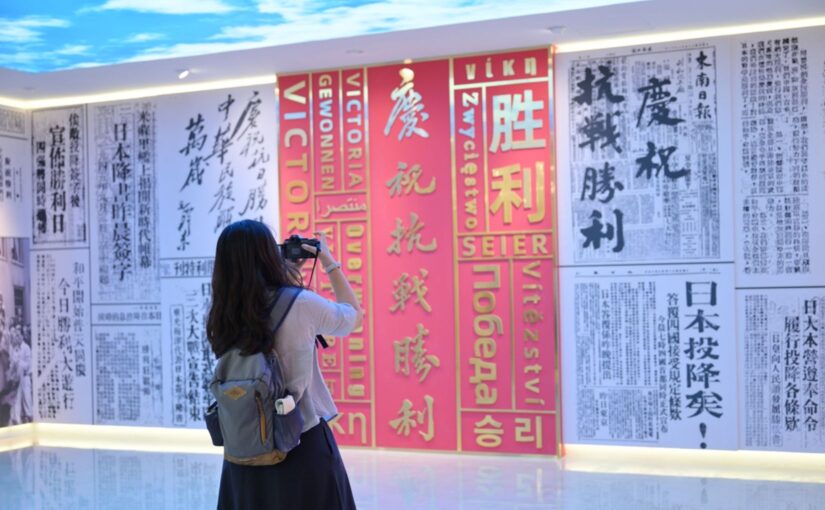
Eighty years ago, nations came together in the wake of unprecedented devastation to chart a new path for global peace. China, along with the Soviet Union, was among the first to sign the UN Charter, an act symbolizing a shared hope that the horrors of fascism would never be repeated.

The price of that hope was staggering: over 100 million casualties, with half of humanity drawn into the conflict. For China, the war was not just a battleground against foreign invasion; it was a pivotal moment in its modern nationhood. The 14-year resistance against Japanese aggression, which cost 35 million Chinese military and civilian lives, held the Eastern Front and helped shape the moral foundation of the postwar international order.

Looking back from today’s fractured and uncertain world, the lessons of that war remain painfully relevant. Militarism, no matter how technologically advanced or ideologically justified, inevitably breeds destruction. Dominant narratives that claim moral superiority cannot contain the rising currents of multipolarity. Real peace cannot be achieved through alliances defined by exclusion. It requires a shared commitment to inclusion, fairness, and mutual respect.

Continue reading Beyond victory: Rethinking WWII’s legacy in a fractured world

Chinese Ambassador recalls wartime solidarity between Chinese and British people

On August 15, which marked the 80th anniversary of Japan’s surrender in the Second World War, Chinese Ambassador to Britain Zheng Zeguang published an article in the Guardian newspaper entitled, ‘China and Britain shared a mission to fight aggression and fascism. And we can work together today’.

Ambassador Zheng wrote: “At the darkest hour of the Second World War, China and the UK fought on different fronts but shared a common mission: to defend humanity against fascism and aggression. Millions of lives were lost, cities razed, and families torn apart. Yet in that darkness, courage and solidarity illuminated the way forward. The Chinese and British peoples stood shoulder to shoulder, united by sacrifice and a shared belief in freedom and justice.”

Among the examples he cites:

  • In Asia, Chinese forces made immense sacrifices to support Allied efforts. In 1942, the Chinese Expeditionary Force marched over 1,500 gruelling kilometers through the jungles of Myanmar to rescue British forces trapped by Japanese troops.
  • In Britain, thousands of Chinese seamen served with quiet courage in perilous convoys. They braved the freezing Atlantic to deliver fuel and supplies to British forces on the front lines – often with little recognition and no promise of return. [In fact, thousands of them were shamefully deported after the war in an act of egregious racism by the Labour government that tore families apart forever.]
  • In October 1942, when the Lisbon Maru, a Japanese transport vessel carrying over 1,800 British prisoners of war, was mistakenly torpedoed by a US submarine… local fishermen risked their lives, dodging volleys of Japanese gunfire, to rescue 384 survivors from the sea.
  • Across the UK, ordinary citizens formed aid organisations, held fundraisers, and sent donations to support the Chinese people.
  • George Hogg, a young man from Harpenden (a one-time reporter for the Manchester Guardian) [the precursor of today’s Guardian]… journeyed to China to provide schooling and shelter for displaced children, dedicating his youth, passion and ultimately his life to a just cause. His internationalist spirit remains deeply cherished by the Chinese people. 

“History has shown,” Zheng Zeguang writes, “what China and the UK can achieve when we stand together. As we commemorate this historic anniversary, China stands ready to work with the UK to carry forward the legacy of those who came before us.”

The following is the full text of the Ambassador’s article as reproduced on the website of the Chinese Embassy in London.

This year marks the 80th anniversary of the victory in the Chinese people’s war of resistance against Japanese aggression and the world anti-fascist war. There will be a two-minute silence at 12 noon in the UK to honour the 80th anniversary of VJ Day. This is a moment not only for solemn remembrance, but also for reflection on the enduring bonds forged in the crucible of history—bonds that continue to resonate in our world today.

At the darkest hour of the second world war, China and the UK fought on different fronts but shared a common mission: to defend humanity against fascism and aggression. Millions of lives were lost, cities razed, and families torn apart. Yet in that darkness, courage and solidarity illuminated the way forward. The Chinese and British peoples stood shoulder to shoulder, united by sacrifice and a shared belief in freedom and justice.

Continue reading Chinese Ambassador recalls wartime solidarity between Chinese and British people

Chinese and Russian diplomats celebrate anti-fascist victory in DPRK

Chinese and Russian diplomats in the Democratic People’s Republic of Korea (DPRK) jointly commemorated the 80th anniversary of the victory of the Chinese People’s War of Resistance Against Japanese Aggression and the World Anti-Fascist War on July 31.
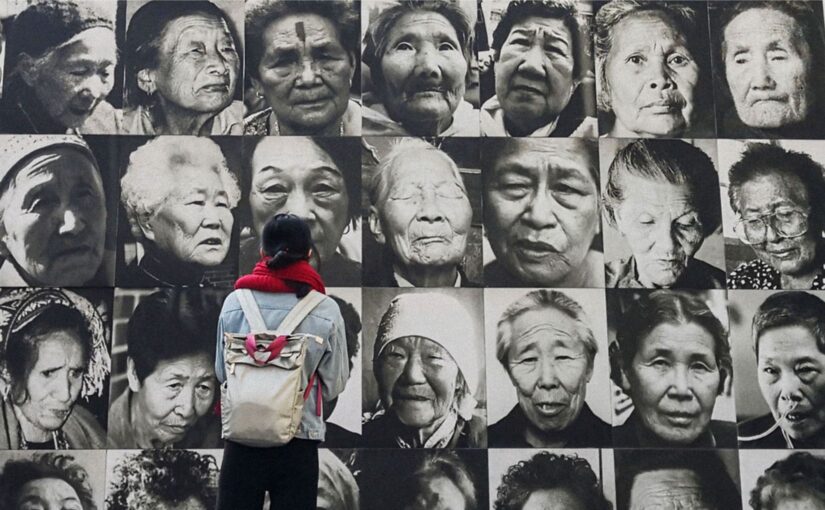
Chinese Ambassador Wang Yajun said that 80 years ago, China and the Soviet Union fought side by side and supported each other, won the War of Resistance Against Japanese Aggression and the Great Patriotic War on their respective battlefields, and made significant historical contributions to the victory of the world anti-fascist war. In May this year, President Xi Jinping attended a celebration commemorating the 80th anniversary of the victory of the Soviet Union in the Great Patriotic War. In September, President Putin will also attend the 80th anniversary of the victory of the Chinese People’s War of Resistance Against Japanese Aggression.
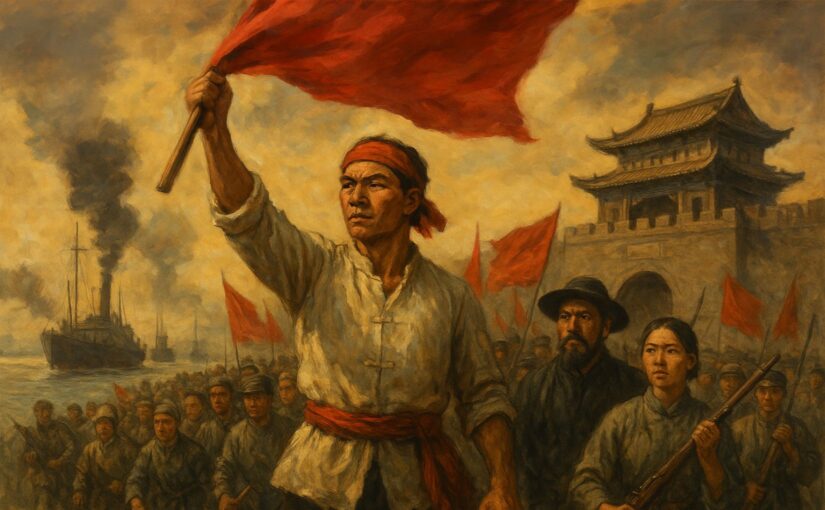
Russian Ambassador Alexander Matsegora congratulated the Chinese people on the 80th anniversary of the victory in the War of Resistance Against Japanese Aggression, saying that the Russian and Chinese peoples made the greatest sacrifices in the European and Pacific theatres respectively and played a decisive role in the struggle to defeat German Nazism and Japanese militarism.

The following article was originally published in Chinese on the website of the Chinese Embassy in the DPRK and has been machine translated.

On July 31, 2025, Ambassador Wang Yajun and Russian Ambassador to the DPRK Matsegora led diplomats from the Chinese and Russian embassies in the DPRK in a friendly exchange event to commemorate the 80th anniversary of the victory of the Chinese People’s War of Resistance Against Japanese Aggression and the World Anti-Fascist War. The event was attended by Minister Feng Chuntai of the Chinese Embassy in the DPRK, Defense Attaché Major General Wang Yisheng, Counsellor Gao Wu, and Counsellor Xu Feng, as well as Minister Counsellor Topeha, Defense Attaché Major General Batusov, and Political Counselor Shutov of the Russian Embassy in the DPRK.

Ambassador Wang stated that 80 years ago, China and the Soviet Union fought side by side and supported each other, achieving victory in the War of Resistance Against Japanese Aggression and the Great Patriotic War on their respective fronts, making significant historical contributions to the victory of the World Anti-Fascist War. In May of this year, President Xi Jinping attended the celebrations commemorating the 80th anniversary of the Soviet Union’s victory in the Great Patriotic War. In September, President Putin will also attend the commemorations of the 80th anniversary of the victory of the Chinese People’s War of Resistance Against Japanese Aggression. China is willing to work with Russia, guided by the important consensus reached by the two heads of state, to remember history, cherish the memory of the martyrs, promote a correct view of World War II history, safeguard the achievements of World War II and the post-war international order, and uphold international fairness and justice and regional peace and stability.

Ambassador Matsegora congratulated the Chinese people on the 80th anniversary of the victory of the War of Resistance Against Japanese Aggression. He stated that the Russian and Chinese peoples made the greatest sacrifices in the European and Pacific theaters, respectively, and played a decisive role in defeating German Nazism and Japanese militarism. Russia has always advocated peace and hopes to create a peaceful and stable environment for economic development and improving people’s livelihoods. The international community should work together to build a just and peaceful international order and ensure equal rights for all nations and peoples.

The two sides jointly watched a video commemorating the victory of the Chinese People’s War of Resistance Against Japanese Aggression and the victory of Russia’s Great Patriotic War. Chinese and Russian diplomats respectively recited the poem “The Eternal Torch” and sang the song “Blood Type” to express their remembrance of history and their cherishment of peace.