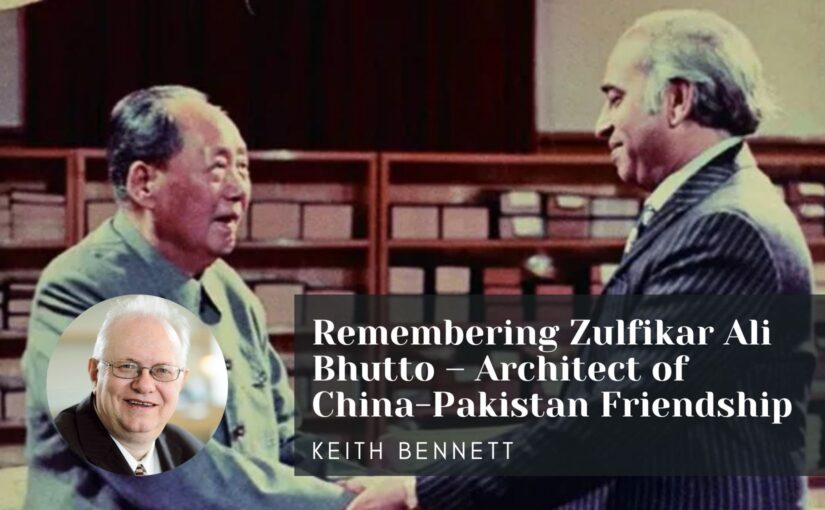
Third World Solidarity organised a meeting on Monday January 5, 2026, marking the 98th birth anniversary of the late Pakistani leader Zulfikar Ali Bhutto, who made an outstanding contribution to the friendship between his country and China.
The meeting, held in the Baseline Studios, home to a number of community organisations and projects in west London, was attended by many prominent members of the Pakistani community, and others who have been friends with members of the Bhutto family.
Chairing the meeting, Mushtaq Lasharie, Chair of Third World Solidarity, the British Pakistani Mayors Association and Lancaster West Residents Association, drew attention to the price that has often been paid by leaders of the Global South who stand for independence and popular democracy, from the martyrdom of Zulfikar Ali Bhutto and his daughter Benazir Bhutto, to today’s illegal kidnapping of Venezuelan President Maduro and his wife. This was also one of the themes that was returned to in the discussion period following the main speeches, in which Keith Bennett explained how the hand of US imperialism was present in all these cases, whether overtly or covertly.
The first speaker was London-based Pakistani journalist Javed Soomro, whose family has long had a close relationship with the Bhuttos. He explained that before Z.A. Bhutto founded and led the Pakistan People’s Party (PPP), politics in the country had been confined to the feudal class and the boardrooms of the industrialists. The people were irrelevant. Bhutto was “the first to bring the voices of the masses and ordinary people” to the political arena. The basic slogan of the PPP was for clothes, food and shelter. [Note: In its simplicity and profundity this has echoes of the Bolshevik call for bread, peace and land.]
In 1974, he organised a major conference aimed at uniting the Muslim countries. This effort was key to the animosity that the United States came to harbour for Bhutto. [This has clear parallels with the way that the efforts of the late Hugo Chávez and President Maduro to unite the countries of Latin America and the Caribbean has intensified the hatred of the United States for the Bolivarian revolution in Venezuela.]
Javed was followed by Keith Bennett, co-editor of Friends of Socialist China, who spoke on the great contributions of Z.A. Bhutto, as well as his daughter Benazir Bhutto and grandson Bilawal Bhutto Zardari, to Pakistan’s friendship with both the People’s Republic of China and the Democratic People’s Republic of Korea (DPRK).
The full text of Keith’s speech is reproduced below.
The final speaker was Victoria Schofield, author of ‘Bhutto: Trial and Execution’ (1979) and ‘The Fragrance of Tears: My Friendship with Benazir Bhutto’ (2020).
Victoria forged a close friendship with Benazir Bhutto when they were fellow students at Oxford University. With Benazir’s encouragement she succeeded her as President of the Oxford Union. She travelled to Pakistan in 1978, when Z.A. Bhutto was on trial and subsequently hanged, at Benazir’s invitation. She was one of the last people to see Bhutto alive and recalled how Benazir was not even allowed to hug her father on their last meeting, just a couple of days before he was executed.
She further recalled Bhutto’s vision for his country, as outlined to the Spectator:
“My vision is that of a Pakistan whose social standards are comparable to some parts of Europe. This means a war against illiteracy and ignorance. It means fighting prejudice and obscurantism. It involves the equality of men and women. It demands the mobilisation of the people’s selected energies. It dictates the restoration of dignity to the human person… It requires a check on the growth of population and easy access to education and medical care throughout the country. It contemplates better towns and cities and cleaner villages. It raises 100 challenges. It is a long haul. We have braced ourselves for it.”
Following a lively Q&A, closing remarks were delivered by Mian Saleem, President of PPP Greater London.
The formal proceedings were followed by two songs from Hugh Goodacre on guitar and dinner.
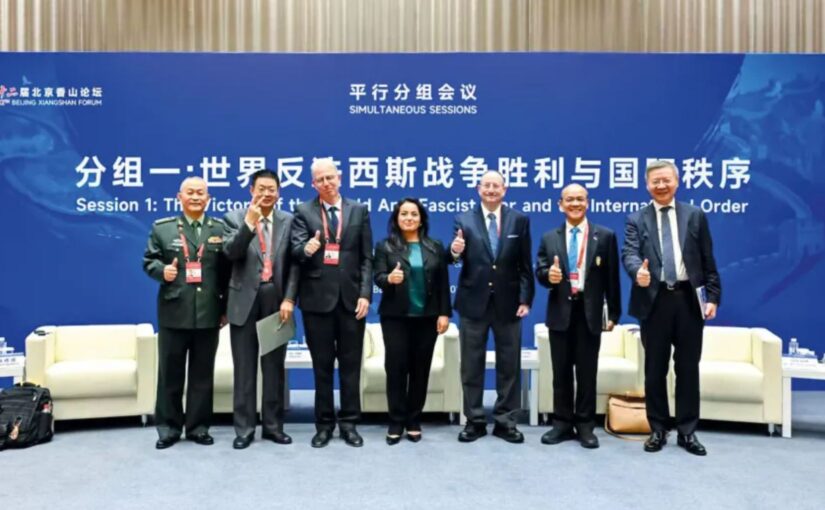
The following is a speech given by Sevim Dagdelen, foreign policy spokesperson for Germany’s Sahra Wagenknecht Alliance (BSW) and a former member of the Bundestag (German parliament), to the 12th Beiing Xiangshan Forum, which took place between September 17-19, 2025.
Dagdelen begins by noting that: “The High Representative of the European Union, Kaja Kallas, declared in September 2025 that it was entirely new to her that Russia and China referred to a shared past as fighters against fascism and militarism in the Second World War. Russia and China wanted to rewrite history, and the world believed them, according to Kallas.”
She goes on to note that what is interesting is that this statement encountered no objection from the heads of state and government of Germany, France, Poland and Italy.
Having pointed out that it was the Soviet Union and China that bore the main burden of the struggle against the fascist powers joined together in the “Anti-Comintern Pact”, she adds: “That pact was complemented by the secret German-Japanese agreement of 1937. Joint plans of military intelligence aimed at dividing Central Asia and the Caucasus into German and Japanese spheres of influence.”
The attempts to deny this history are intended not only to make people forget the crimes of the Nazi regime and Japanese militarism but above all to seek a revision of the outcomes of the war.
“Germany and Japan had attempted with their imperialist wars of plunder to subjugate the USSR and China and to divide the countries. Both powers failed due to bitter anti-fascist resistance. On the ruins of the destructive works of the Third Reich and the Japanese empire, a multipolar world was to emerge, not least shaped by the national liberation struggle of colonised peoples.”
Now, “US President Donald Trump, with his punitive tariffs against India and – with qualifications – also German Chancellor Friedrich Merz, with the conclusion of the German-Japanese armaments agreement, have revealed to the world that a departure from colonialism can only be achieved against the West and its leading powers.”
“However, the global balance of power has changed fundamentally. Neither China nor Russia nor India allows its policy to be dictated any longer by Washington, Brussels, Berlin or Tokyo. The west has simply missed the rise of the Global South.”
However, the west will not simply accept this situation. Presciently, she notes: “Latin America and a claimed Western hemisphere seem to be the first focus of the US, while in Asia, the Middle East, and Europe, Washington’s allies are placed in the front row to preserve US resources.”
She concludes: “We have a just world to gain. We should not let this opportunity pass.”
At its recent congress, the BSW voted to rename the party as the Alliance for Social Justice and Economic Reason, effective from October 1, 2026, while retaining the same initials. A brief report of the congress was carried by the Xinhua News Agency.
The following article was originally published by Consortium News.
The High Representative of the European Union, Kaja Kallas, declared in September 2025 that it was entirely new to her that Russia and China referred to a shared past as fighters against fascism and militarism in the second world war. Russia and China wanted to rewrite history, and the world believed them, according to Kallas.
One could dismiss this statement by one of the E.U.’s highest representatives as confused or uninformed. What is interesting, however, is that it encountered no objection from the heads of state and government of Germany, France, Poland and Italy. One must therefore understand Kallas’s historical judgment as an expression of an E.U. policy that seeks to rewrite history in order to flank the preparation for war with historical politics.
In any case, Kallas’s remark is reminiscent of the phrase by the Spanish-American philosopher George Santayana (1863-1952): “Those who cannot remember the past are condemned to repeat it.”
For the last nearly six months, a landmark exhibition at the National Museum of Australia in the capital Canberra has been reminding visitors that Indigenous-Chinese bonds helped forge the links between the two peoples long before the two countries established diplomatic relations in 1972.
Our Story: Aboriginal–Chinese People in Australia, is the fruit of a five-year research project led and curated by Chinese-Australian artist Zhou Xiaoping and shows how mixed heritage communities wove ties of survival and solidarity on nineteenth century goldfields and in pearling camps. Drawing on historical records and oral histories, Our Story challenges monolithic accounts of Australian history.
During the gold rushes and in industries such as pearling, railways, and agriculture (1850s–1900), Chinese labourers settled across northern Australia and many formed relationships with Aboriginal women, in the face of the White Australia policy and other racist legislation that targeted both peoples.
These families blended Chinese traditions – language, cuisine, festivals – with Aboriginal kinship and cultural practices. “I’m Aboriginal, but I’m also proud of my Chinese heritage,” says Peter Yu, whose family photographs in the exhibition tell the story of how his Hakka father and Yawuru mother raised nine children under restrictive cohabitation laws, similar to those of apartheid South Africa.
Survival often demanded ingenuity. In the 1930s, Wen Liqun registered her Larrakia stepson – her Chinese husband’s son with a Larrakia woman – as “Chinese” to shield him from the Stolen Generations. (According to Wikipedia: “The Stolen Generations [also known as Stolen Children] were the children of Australian Aboriginal and Torres Strait Islander descent who were removed from their families by the Australian federal and state government agencies and church missions, under acts of their respective parliaments. The removals of those referred to as ‘half-caste’ children were conducted in the period between approximately 1905 and 1967, although in some places mixed-race children were still being taken into the 1970s. Official government estimates are that in certain regions between one in ten and one in three Indigenous Australian children were forcibly taken from their families and communities between 1910 and 1970. The Bringing Them Home Royal Commission report [1997] described the Australian policies of removing Aboriginal children as genocide.”)
In the article published below, which was originally published on the website of the Australian Institute of International Affairs, Dr. Marina Yue Zhang, an associate professor at the Australia-China Relations Institute, University of Technology Sydney (UTS: ACRI), writes:
“As the exhibition prepares to tour China in 2026, it forces a reckoning: how does a nation reconcile its suppressed histories with its multicultural present? By reconnecting with these hidden roots – embodied in everyday objects and intimate stories – Australia may yet forge its most resilient, relational partnership with China and its people.
“‘In an age of tariff wars and tech sanctions,’ says Dr. Jilda Andrews, curator of the museum, ‘Our Story isn’t just an exhibition. It’s a milestone in putting First Nations voices at the centre – creating a space for truth-telling, listening and honest conversation.’”
As the exhibition prepares to move on to China next year, readers in Australia still have until 27 January 2026 to see it at Canberra’s National Museum of Australia.
As Australia marked Reconciliation Week (27 May – 3June ), a landmark exhibition at the National Museum of Australia reminds us that Indigenous–Chinese bonds helped forge the links between the two peoples long before Canberra and Beijing formalised diplomacy in 1972.
Our Story: Aboriginal–Chinese People in Australia, a five-year research project led and curated by Chinese-Australian artist Zhou Xiaoping, uncovers a legacy of resilience and cultural fusion. Mixed-heritage communities—unwitting pioneers of people-to-people diplomacy—wove ties of survival and solidarity on 19th-century goldfields and in pearling camps. Drawing on historical records and oral histories, their stories—Our Story, the untold narratives of the nation—challenge monolithic accounts of Australian history and reveal a premodern form of “soft power.”
Through videos, installations, and embedded texts in family trees and photographs, the exhibition invites contemporary Aboriginal artists to interpret these “our stories.” Together, they illuminate the accidental diplomacy of Chinese men and Aboriginal women who built communities against the odds.
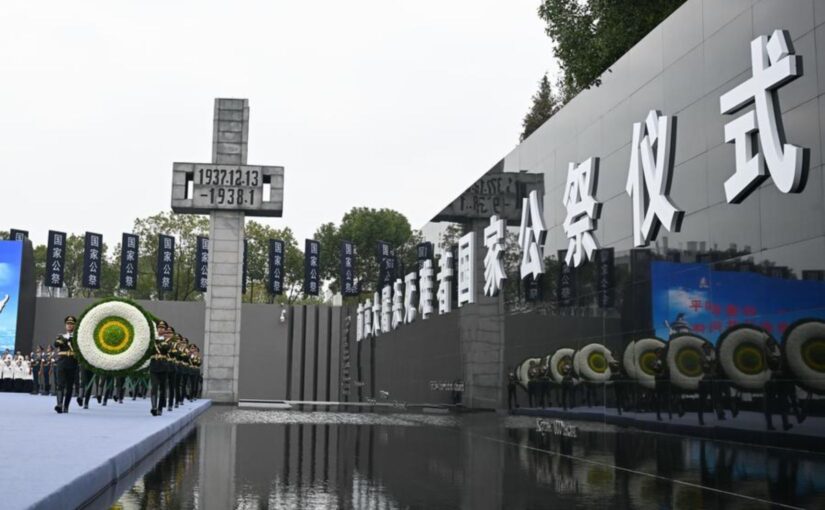
We are very pleased to publish below an article by Stephen Chang, Director of People’s Forum Limited, written to mark the 88th anniversary of the Nanjing Massacre and China’s 12th National Memorial Day. In the course of just six weeks, the Japanese slaughtered some 300,000 civilians in the city. Today, there are just 24 registered survivors of the massacre, after eight of them passed away in the course of this year.
Having outlined the cruelty and barbarity of the fascist Japanese army, Stephen notes that in the West such facts remain little-known, for example in comparison to the Nazi war crimes. This is in large part due to the United States incorporating the Japanese fascist remnants as junior partners in their own imperial and hegemonic project right from the end of the war. This has extended through a number of Japanese prime ministers, up to and including the present incumbent, whose shameless far right ultra-militarism and dangerous threats against China have plunged relations between the two countries to a new low.
Stephen concludes with a poignant account of his China visit this April, when he took his three youngest grandchildren to see for themselves the real China:
“In Nanjing we spent three solid hours at the Nanjing Massacre Museum as my youngest grandson aged 12 was totally absorbed in slowly looking at the museum’s exhibits and reading the English translations. It is very heartening to see the younger generation taking an interest and learning from history, and hopefully contributing to a better world… We all have a duty to equip the younger generation to learn from history.”
December 13 was the anniversary of the Nanjing massacre by the fascist Japanese Imperial Army, a barbaric force subservient to war criminal Emperor Hirohito who was worshipped by the Japanese Imperial Army and people as a deity.
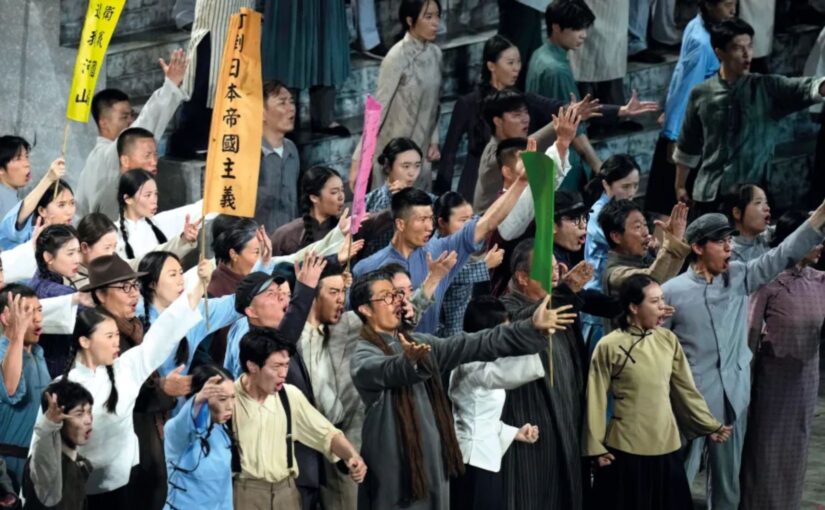
The fascist Japanese invaded and occupied the Northeastern part of China on 18 September 1931 and attacked the whole of China from 1937. The Nanjing massacre started on 13 Dec 1937, four days following the retreat of China’s National Revolutionary Army following its defeat at the Battle of Nanjing. For six weeks the fascist Japanese army, with orders to kill all and burn all, rampaged through Nanjing, committing acts of barbaric inhuman violence on defenceless civilians, murdering 300,000 men, women and children and raping between 60,000 to 80,000 women, followed by killing them so that they could never bear witness. The Japanese barbaric and animalistic crimes against women are the most notorious in modern warfare.
To put the scale of Japan’s atrocities into perspective the number of people killed by the fascist Japanese exceeded (1) the estimated deaths of 80,000 to 120,000 by the US bombing of Japan throughout WW2, and (2) the combined estimated 140,000 and 70,000 killed by the atomic bombs on Hiroshima and Nagasaki respectively in August 1945.
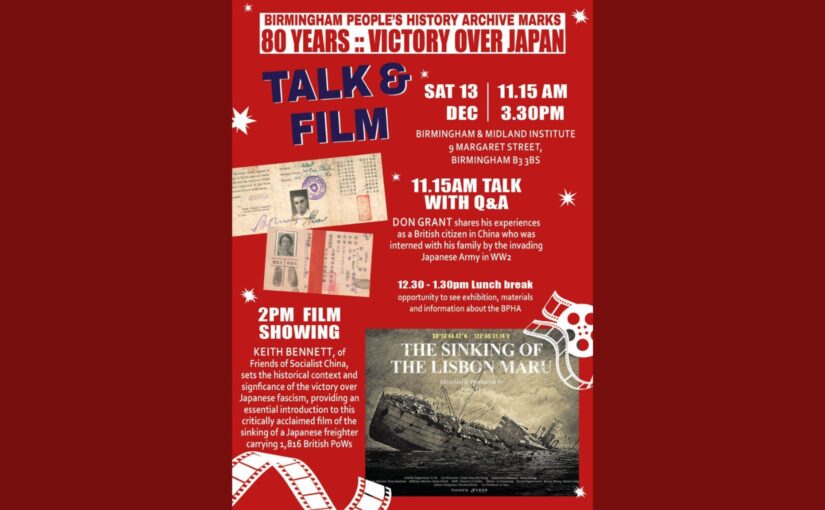
Held in the Birmingham and Midland Institute, which houses the archive, it was attended by over 50 people, including academics, trades unionists and members of the city’s Asian community. The day’s proceedings were chaired by Pete Higgins, a trustee of the archive, who first welcomed BPHA patron Andy Hudd, who is also Vice President of the train driver’s union ASLEF, to make opening remarks.
Pete then facilitated a fascinating conversation with Don Grant. Don is a mentally and physically agile 97-year-old who held the audience enthralled and spellbound with his at times harrowing, but always matter-of-fact account of life as a teenage prisoner of the Japanese in 1940s China.
Don was born in Shanghai in 1928. His father had first moved to China to work in 1910, having previously been a fireman on the railways, and returned to Shanghai in 1919, following service in World War I.
To give a small flavour of his account:
“It was while at the playing fields that I witnessed another awful event. It was in the summer of 1941 … They ringed the city and controlled the amount and flow of rice allowed in … A number of people had been caught by a Jap patrol including men, women and several children, and were being herded along by the soldiers with their rifles, but one poor fellow was being dragged along with his hands tied behind him and a rope around his neck … Then one of the soldiers took a trenching tool and went behind the mound where the man lay and killed him, the rest were led away and later their bodies were laid in the road on our side of the boundary. All of them were shot as a warning to others…
“We witnessed on many occasions small columns of similar groups … who had managed to cross the line only to be shot openly in the street by the Kempetei [Japanese Gestapo].”
BPHA hopes to publish Don’s full memoir in 2026 and are seeking support to help make this possible. It is an entirely voluntary organisation and you can email birminghampha@gmail.com if you’d like to help.
Following a ‘Birmingham seasonal’ lunch of samosas and mulled wine, Keith Bennett, on behalf of Friends of Socialist China, delivered a talk highlighting some key aspects of the war against Japanese militarism.
First picking up on a point made by Don, he noted that December 13 was the 88th anniversary of the start of the Nanjing Massacre, as well as China’s 12th National Memorial Day. In the course of just six weeks the Japanese slaughtered some 300,000 civilians in that city. In a long period of world war marked by countless atrocities this stands out as one of the most egregious.
He noted that the Second World War did not begin in 1939 in Europe but in 1931 in China and highlighted the key roles played by the Chinese people, led by the Communist Party, as well as by the Soviet Union.
Keith said that “had not the Chinese people tied down millions of Japanese troops, thereby preventing them from opening up a second front against the USSR, the consequences could well have been calamitous, and not least for Western Europe and for this country as well.
“In other words, when we faced the most existential threat to our country and people, China and Russia, and their peoples, were not our enemies. They were our indispensable, vital, sincere, loyal and good friends, allies and comrades-in-arms,” adding that, “we absolutely cannot separate the march to war against the very countries that saved us from fascism from the march towards fascism here and in almost all the imperialist countries.”
Finally, he introduced the film, ‘The Sinking of the Lisbon Maru’, which depicts the heroism of a Chinese fishing community who risked everything to rescue British POWs, who had been left to drown by the Japanese.
Keith was followed by Philip Harris, from the Lisbon Maru Memorial Association. Philip’s father-in-law was among the rescued POWs and was sheltered and cared for by Chinese fishermen and their families for three months.
After he left the army, Philip’s father-in-law became a post man. Having been denied the award due to him for long service on a technicality, the local council then took away his beloved allotment, whereupon he became the gardener and porter for his local community hospital. He died from pancreatic cancer three days after his retirement party.
Interestingly, Don Grant’s story also served to illustrate the ruling class contempt for working class people. When he and his family were finally released from internment and repatriated to Britain they were presented with a bill for their Red Cross parcels.
The event concluded with a showing of ‘The Sinking of the Lisbon Maru’, followed by a social.
The media were represented by China’s CCTV television and BBC Midlands Today television.
The following is the text of Keith’s speech.
I’d like to thank the Birmingham People’s History Archive for organising this important event and for inviting me. It’s an honour to be here.
I want first to pick up on a point that Don made during the Q&A part of his presentation. He referred to the book, ‘The Rape of Nanking’ and to the terrible atrocity committed by the Japanese in that city.
Today is the 88th anniversary of the start of the Nanjing Massacre. And it is also China’s 12th National Memorial Day established in that connection. In the course of just six weeks the Japanese slaughtered some 300,000 civilians in that city. In a long period of world war marked by countless atrocities this stands out as one of the most egregious. There are now just 24 recognised survivors and sadly the laws of nature dictate that they grow fewer with each passing year.
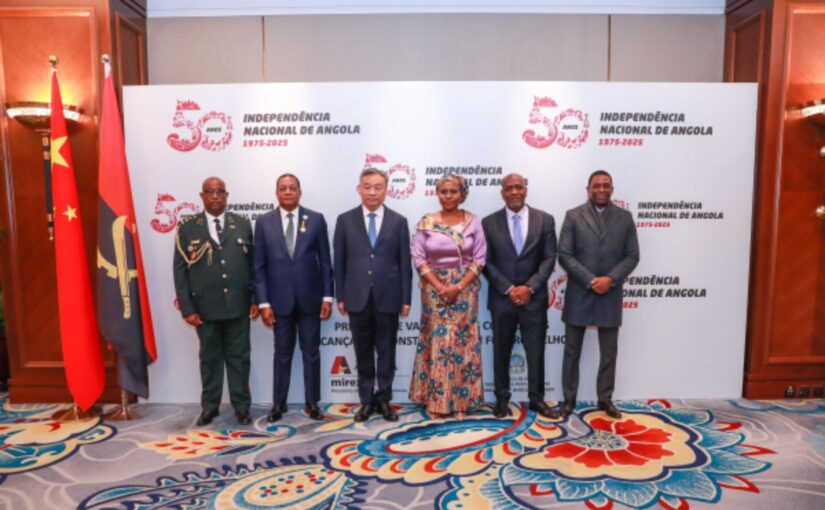
China last month marked the 50th anniversary of Angolan independence (November 11th 1975), which followed a protracted armed struggle for liberation against Portuguese colonialism and the overthrow of the fascist regime in Lisbon.
On November 28, Vice Foreign Minister Miao Deyu attended and spoke at the reception hosted by the Angolan Embassy in Beijing.
He stated that the friendship between China and Angola has a long history and enjoys a solid foundation. In recent years, under the strategic guidance of President Xi Jinping and President João Manuel Gonçalves Lourenço, practical cooperation in various fields between China and Angola has yielded fruitful results, benefiting the peoples of both countries. China is willing to work with Angola to carry forward the traditional friendship, join hands in seeking common development, and make greater contributions to building an all-weather China-Africa community with a shared future for the new era.
Ambassador of Angola Dalva Maurĺcia Calombo Ringote Allen stated that Angola and China share a deep traditional friendship, and that bilateral relations are rooted in the values of friendship, peace, solidarity, respect, and mutual benefit. The Angolan side sincerely thanks the Chinese side for the valuable support it has long provided for Angola’s national independence, reconstruction and development.
Earlier, from November 10 to 11, Special Representative of the Chinese Government on African Affairs Liu Yuxi visited Angola. Angolan President João Manuel Gonçalves Lourenço met with him, and they exchanged views on bilateral relations and issues of common concern.
Liu Yuxi handed over President Xi Jinping’s congratulatory message on the 50th anniversary of Angola’s independence and stated that under the strategic guidance of the leaders of both countries, the bilateral relationship between China and Angola has gained in-depth development, and mutually beneficial cooperation has yielded fruitful results.
President João Manuel Gonçalves Lourenço thanked President Xi Jinping for his congratulatory message, and expressed that Angola admires the historic achievements China has made under the leadership of President Xi Jinping, regards China as the most important partner for development cooperation, and is willing to strengthen coordination and cooperation with China to safeguard the interests of the vast number of developing countries, including those in Africa.
During the visit, Liu Yuxi also held working exchanges with Foreign Minister Téte António and attended the celebration of the 50th anniversary of Angola’s independence on behalf of the Chinese side.
In all, some 45 foreign delegations, including more than a dozen heads of state or government, along with a number of former African Presidents, attended the celebrations in the capital Luanda, which included both civilian and military parades. Among them were the Presidents of Namibia, Zimbabwe, the Republic of Congo, São Tomé and Príncipe, Cape Verde, Comoros, the Sahrawi Arab Democratic Republic (SADR), and Portugal, the Prime Minister of the Democratic Republic of Congo, the President of the Assembly of Mozambique, and the President of the Council of the Nation of Algeria. An especially warm welcome was given to Esteban Lazo Hernández, member of the Political Bureau of the Communist Party of Cuba Central Committee and President of the National Assembly of People’s Power and the Council of State.
Granma, the newspaper of the PCC, reported: “Our country’s internationalist epic, especially during the heroic Operation Carlota, was an enduring page of altruism and solidarity, whose contribution was decisive in preserving and consolidating Angola’s independence and achieving that of Namibia, as well as making a significant contribution to the demise of the apartheid regime.
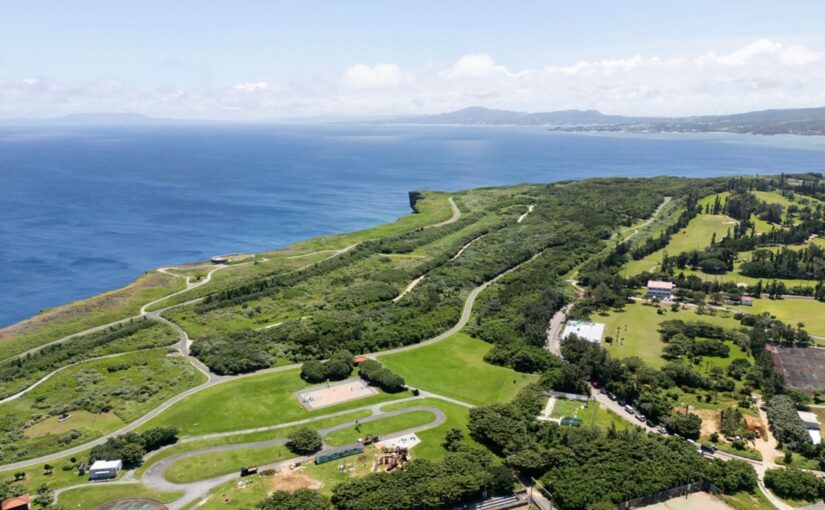
Academic circles in China are paying increasing attention to Ryukyu studies, specifically the history of the island group, often referred to as Okinawa, and the legitimacy or otherwise of Japan’s claim to sovereignty over the ancient kingdom.
On November 18, the Global Times newspaper reported that an academic conference marking the 30th anniversary of the China Ryukyu Research Institute, and advancing the development of Ryukyu studies, had been held at Fujian Normal University.
Global Times spoke with Professor Xie Bizhen, academic head of the institute, who emphasised that Japan’s annexation of Ryukyu and subsequent assimilation policies, including the forced change of surnames, place names, and even rebranding the “Ryukyu Islands” as the “Southwestern Islands,” were aimed at erasing historical memory. “As a result, many Okinawans today are unfamiliar with this part of their own past,” he said. “This is why our research matters: to restore historical truth, preserve collective memory.”
On November 23, CGTN published an opinion piece by Tang Yongliang, a researcher at the Institute of Japanese Studies of the Chinese Academy of Social Sciences, outlining what he described as the “undetermined status of Ryukyu.”
Stating that “the sovereignty over the Ryukyu Islands remains disputed,” Tang added that this could be understood in both a broad and a narrow way.
“In the broad sense, the ‘undetermined status of Ryukyu’ refers to the situation since modern times, where Ryukyu was illegally occupied by Japan without widespread recognition by the international community. To this day, the sovereignty issue remains unresolved.
“In the narrow sense, it refers specifically to the end of World War II, when the Cairo Declaration and the Potsdam Proclamation – documents concerning the post-war disposition of fascist Japan – explicitly delimited Japan’s territorial scope, separated Ryukyu from Japan, placed it as a ‘potential trusteeship territory’ and left its sovereignty legally unsettled to this day.”
Further in the broad sense: “Historically, Ryukyu was an independent kingdom. Japan’s modern annexation of Ryukyu was a unilateral act of violent seizure: no treaty regarding state sovereignty was concluded, no consent was obtained from China, the suzerain power, and the annexation contravened international legal norms on the acquisition of territorial sovereignty in the 19th century.”
Further in the narrow sense: “From November 22 to 26, 1943, the leaders of China, the United States, and the United Kingdom convened the Cairo Conference in Egypt, during which they discussed the post-war disposition of Ryukyu. Although the issue was not ultimately written into the Cairo Declaration, the declaration’s provision that ‘Japan will also be expelled from all other territories which she has taken by violence and greed’ undoubtedly applied to Ryukyu.
“On July 26, 1945, the three nations issued the Potsdam Proclamation, urging Japan’s unconditional surrender. It clearly stated that ‘the terms of the Cairo Declaration shall be carried out’ and that ‘the Japanese sovereignty shall be limited to the islands of Honshu, Hokkaido, Kyushu, Shikoku and such minor islands as we determine,’ thereby explicitly separating Ryukyu from Japanese territory.”
What happened later was that: “With the deepening of the Cold War, the US-Japan alliance became increasingly intertwined; the United States gradually relaxed its restrictions on Japanese influence within the Ryukyu Islands, and in 1953 and 1968 unilaterally transferred administrative rights over the Amami Islands and the Nanpo Islands to Japan.
“In 1971, under pressure from the Vietnam War and the Ryukyuan anti-US movement, the Nixon administration concluded the ‘Agreement Between Japan and the United States of America Concerning the Ryukyu Islands and the Daito Islands,’ again unilaterally transferring administrative rights to Japan on the condition that Japan allow continued US military presence in the islands.
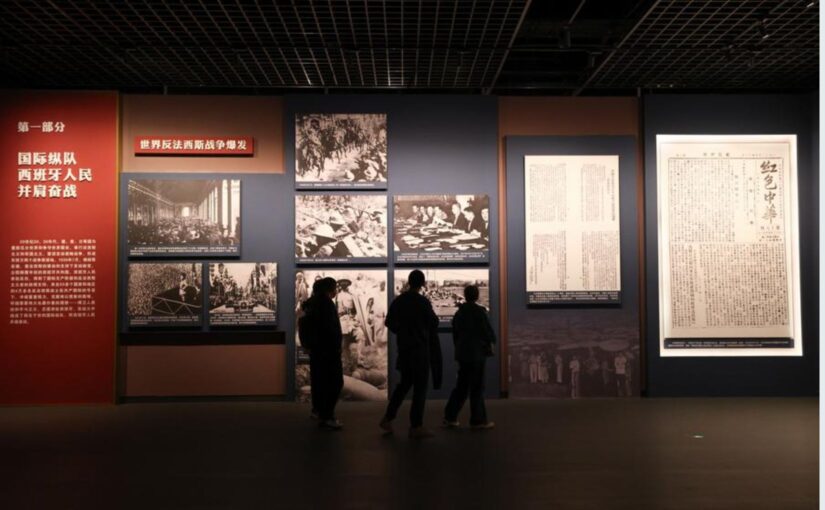
“For a Common Cause: From the Spanish Battlefield to China’s War of Resistance Against Japanese Aggression,” is the title of a major exhibition which opened in August at Beijing’s Museum of the Communist Party of China (CPC), marking the 80th anniversary of victory in the Chinese People’s War of Resistance Against Japanese Aggression and the World Anti-Fascist War. It will run till the end of 2025.
Through more than 260 photographs, 150 cultural relics and historical footage, the exhibition shows how anti-fascist volunteers of the International Brigades fought bravely on both the Spanish and Chinese battlefronts – unfolding an inspiring chapter of mutual aid in the global struggle against fascism.
A feature article published by the Xinhua News Agency on November 27 notes that: “The International Brigades mobilised over 40,000 volunteers from more than 50 countries to defend the Spanish Republic against forces including those sent from fascist Italy and Nazi Germany during its civil war (1936-1939). They fought in brutal battles such as the Defence of Madrid and the Battle of Jarama, where an estimated 10,000 lives were lost.”
It adds that less widely recognised is the Chinese contribution to this history. Among the International Brigades’ volunteers were more than 100 Chinese, many of whom were CPC members.
One prominent figure was Xie Weijin, who fought under the alias Lin Jishi. He fought in pivotal engagements, sustained two battle wounds, and narrowly avoided amputation. Beyond the frontline, Xie established an orphanage for over 100 children.
In a 1938 speech, Xie crystallised the shared struggle: “The Spanish and Chinese peoples are in a very tense phase of struggle… They are waging a revolutionary war for the national and social liberation of their respective countries, leading the fight against fascism…”
After the International Brigades were withdrawn from Spain that year, a number of internationalist fighters made their way to China, which was the main anti-fascist battlefield in the east. Among them was the Canadian surgeon Norman Bethune. After pioneering a mobile blood-transfusion service in Spain, he arrived in north China in 1938. There, he famously worked 40-hour shifts and championed setting up operating tables near the front lines. Alongside other international medical workers, Bethune saved countless lives and revolutionised battlefield medicine in China.
The following article was originally published by the Xinhua News Agency.
“There’s a valley in Spain called Jarama. It’s a place that we all know so well. It was there that we gave of our manhood, where so many of our brave comrades fell.”
These plaintive strains of the folk ballad “Jarama Valley” are more than a memorial — they are a portal to the stories of the International Brigades. This diverse group of anti-fascist fighters, drawn from across continents, now takes center stage in a touching exhibition in Beijing.
Titled “For a Common Cause: From the Spanish Battlefield to China’s War of Resistance Against Japanese Aggression,” the ongoing exhibition opened in August at the Museum of the Communist Party of China (CPC), marking the 80th anniversary of victory in the Chinese People’s War of Resistance Against Japanese Aggression and the World Anti-Fascist War.
Through more than 260 photographs, 150 cultural relics and historical footage, the exhibition shows how anti-fascist volunteers of the International Brigades fought bravely on both the Spanish and Chinese battlefronts — unfolding an inspiring chapter of mutual aid in the global struggle against fascism.
“This marks the first time China has contextualized the two battlefields within a single exhibition space, underscoring the united anti-fascist spirit of people across the world,” said Zhao Jiaojian, planner of the exhibition, which will run through the end of 2025.
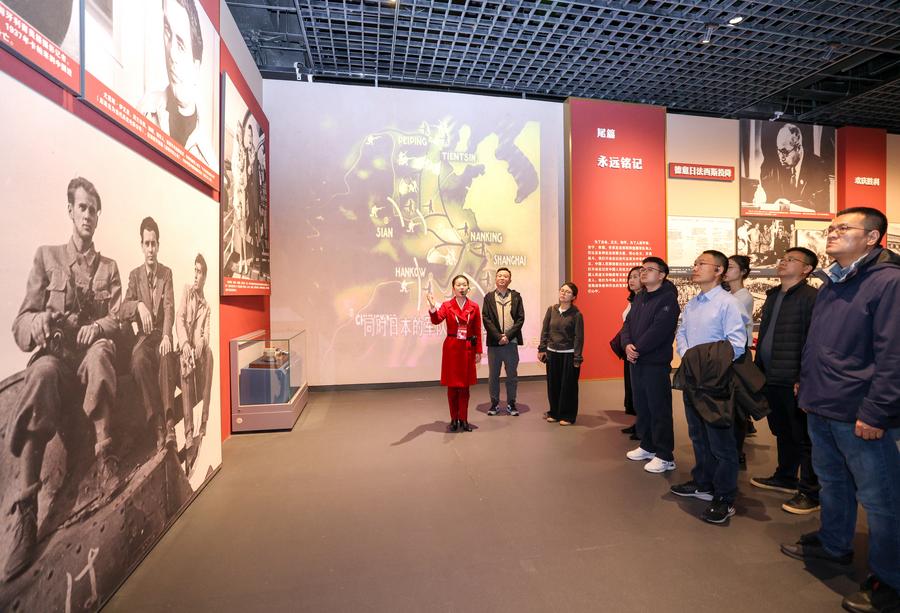
A staff member introduces exhibits to visitors at the exhibition titled “For a Common Cause: From the Spanish Battlefield to China’s War of Resistance Against Japanese Aggression” held at the Museum of the Communist Party of China (CPC) in Beijing, capital of China, Nov. 14, 2025. (Xinhua/Yin Gang)
BATTLES IN SPAIN
Organized by the Comintern — an international communist alliance — the International Brigades mobilized over 40,000 volunteers from more than 50 countries to defend the Spanish Republic against forces including those sent from fascist Italy and Nazi Germany during its civil war (1936-1939). They fought in brutal battles such as the Defense of Madrid and the Battle of Jarama, where an estimated 10,000 lives were lost.
Less widely recognized is the Chinese dimension of this chapter. Among the International Brigades’ volunteers were more than 100 Chinese, many of whom were CPC members.
One prominent figure was Xie Weijin, who fought under the alias Lin Jishi. A multilingual individual with military training, Xie rose to lead the Chinese volunteers and serve as the political commissar of an artillery brigade.
He fought in pivotal engagements, sustained two battle wounds, and narrowly avoided amputation. Beyond the frontline, Xie established an orphanage for war-orphaned children, which provided shelter for over 100 children by 1938.
In a speech delivered that year, Xie crystallized the shared struggle: “The Spanish and Chinese peoples are in a very tense phase of struggle… They are waging a revolutionary war for the national and social liberation of their respective countries, leading the fight against fascism…”
Their contributions were acknowledged back in China. A replica of the red banner sent by then CPC leaders to the volunteers in Spain is now displayed at the Beijing exhibition, bearing the inscription: “Unite the peoples of Spain and China! Down with the common foe of mankind — the Fascists!”
The heroic deeds of the volunteers, exemplified by figures like Xie, demonstrated “a commitment to justice that crossed national borders, and constituted an indelible chapter in the global fight against fascism that should never be forgotten,” said Jiang Ying, researcher of the Academy of Military Sciences.
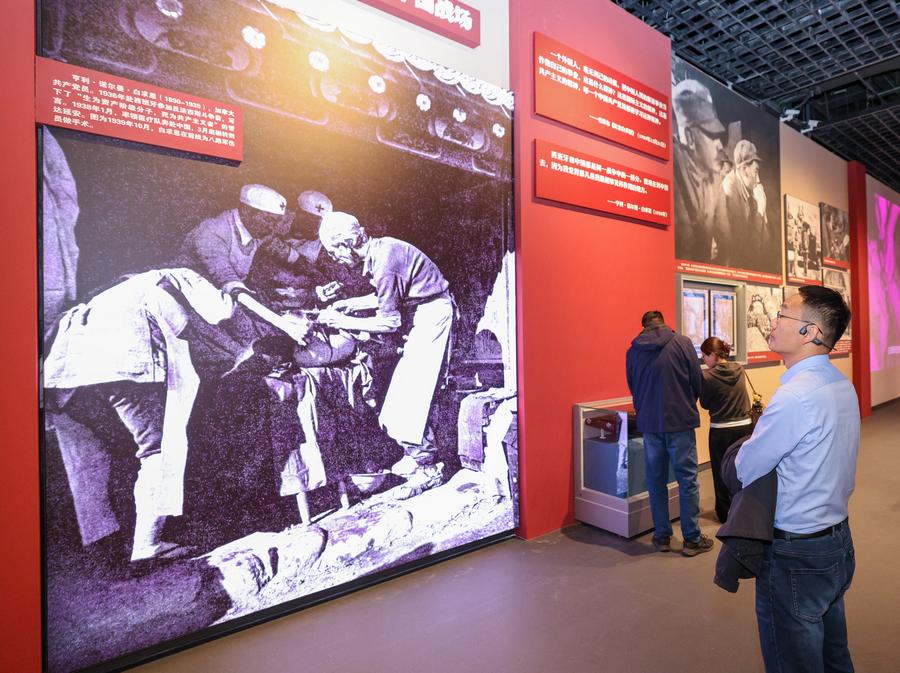
A visitor views a photo of Canadian surgeon Norman Bethune at the exhibition titled “For a Common Cause: From the Spanish Battlefield to China’s War of Resistance Against Japanese Aggression” held at the Museum of the Communist Party of China (CPC) in Beijing, capital of China, Nov. 14, 2025. (Xinhua/Yin Gang)
THE EASTERN FRONT
As the Spanish Civil War drew to a close in 1938, the International Brigades were officially withdrawn. Following a period of internment in France, the Chinese volunteers returned home to join in China’s nationwide resistance against Japanese aggression.
Yet the tide of internationalism did not recede — it flowed eastward. Foreign fighters redirected their focus from Spain to China, which had become the main theater of the World Anti-Fascist War in the East.
Among these volunteers, the most renowned was Canadian surgeon Norman Bethune, a household name in China. After pioneering a mobile blood-transfusion service in Spain, he arrived in north China in 1938. There, he famously worked 40-hour shifts and championed setting up operating tables near the front lines. Alongside other international medical workers, Bethune saved countless lives and revolutionized battlefield medicine in China.
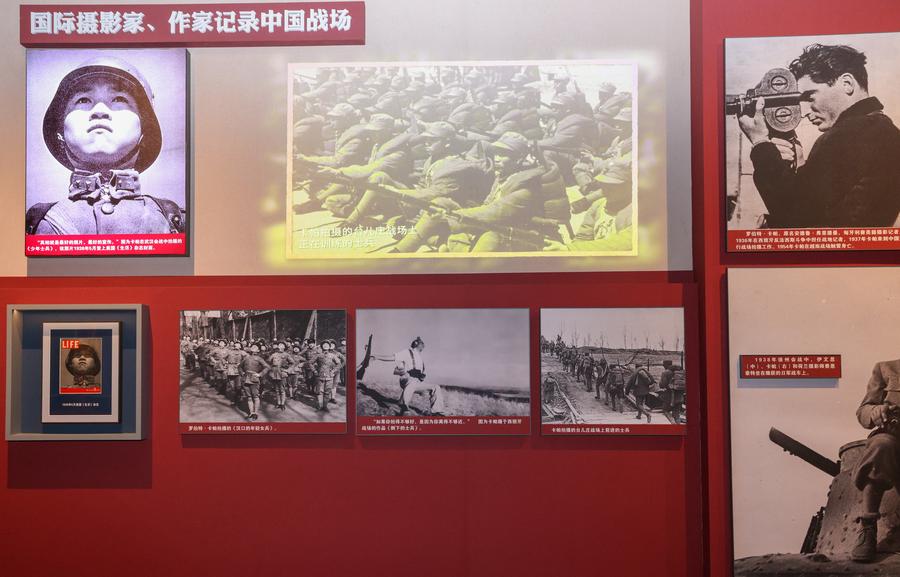
They were joined by journalists and artists who documented the Chinese people’s arduous struggle for the rest of the world. Among them, Hungarian-American photographer Robert Capa captured the war’s brutal reality in 1937, while Dutch filmmaker Joris Ivens arrived in 1938 to produce “The 400 Million” — the first Western documentary to portray China’s resistance in a positive light, galvanizing global support.
“In this exhibition, I can clearly see how the Chinese people assisted foreign revolutionaries and how foreign revolutionaries assisted the Chinese people,” said Lin Tao, a doctoral student at Hunan Normal University, while visiting the exhibition.
This photo taken on Nov. 14, 2025 shows photographic works by Hungarian-American photographer Robert Capa displayed at the exhibition titled “For a Common Cause: From the Spanish Battlefield to China’s War of Resistance Against Japanese Aggression” at the Museum of the Communist Party of China (CPC) in Beijing, capital of China. (Xinhua/Yin Gang)
Many young Chinese visitors like Lin have been profoundly moved by the exhibition, which also highlights the pivotal contributions of International Brigades anti-fascist fighters on the Chinese battlefield.
Decades later, China continues to honor this international solidarity. On the occasion of marking the 80th anniversary of its victory in World War II on Sept. 3 this year, the nation expressed sincere gratitude to the foreign governments and individuals who aided its people.
China was the first country to rise against fascist aggression with the longest-lasting resistance that began in 1931. The country tied down and struck over half of Japan’s overseas forces, at the cost of 35 million military and civilian casualties — accounting for approximately one-third of all WWII casualties worldwide.
“The exhibition aims to deepen the understanding that the Chinese people, at a tremendous national cost, made significant contributions to the victory of the World Anti-Fascist War,” Zhao told Xinhua.
“Meanwhile, the Chinese People’s War of Resistance Against Japanese Aggression received extensive support from the international community, and the Chinese people will forever cherish these contributions. China will continue to work hand in hand with the rest of the world — and strive tirelessly to build a brighter future for humanity,” Zhao added.
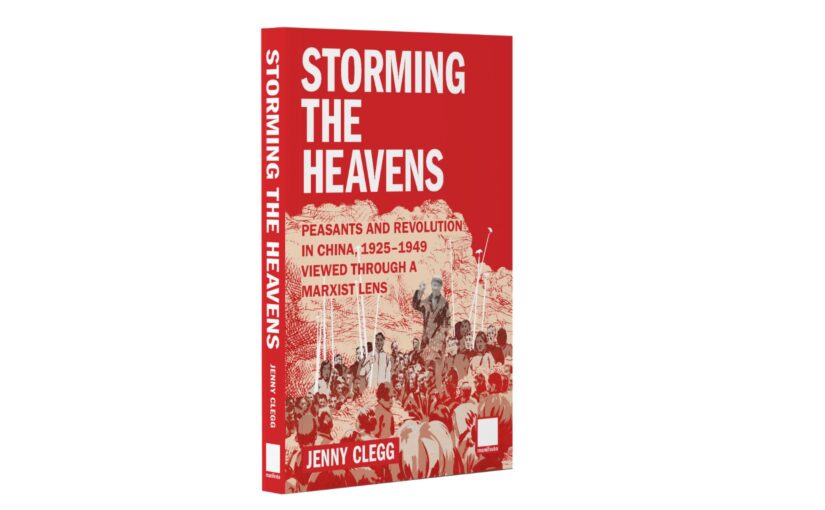
We are pleased to announce the release of a new book by Jenny Clegg.
Storming the Heavens: Peasants and Revolution in China, 1925-1949 – viewed through a Marxist lens brings into focus the central role of peasant mass power in China’s revolutionary transformation. Engaging with debates in peasant studies, on China’s historical transformation, as well as within the Communist movement, it delves into both objective and subjective aspects of the peasant struggle.
In critiquing reformist-orientated perspectives of mainstream Western Sinology, the discussion draws on the neglected works of Chinese Marxists, Chen Hanseng and Chen Boda, to reveal how a system of monopoly rent exacerbated land hunger impacting both poor and middle peasants, making radical land reform the central issue for the revolution. It goes on to explore how the Asiatic features of Chinese feudalism shaped landlord power to complicate peasant organisation at local levels.
Going on to address questions of peasant agency and CPC leadership, traditional rebellion and modern proletarian revolution, the work considers case studies from the field of Chinese peasant studies together with Party documents. Following the zig-zag revolutionary process, it sees how Party and peasant were brought together in a dynamic relationship of mutual learning within a context of change.
Mao’s methods of rural work, Party building and mass organisation are shown as meaningful in meeting the practical challenges of agrarian transformation. Applying a distinctive class analysis, the book shows how the CPC found ways to tackle the resilience of feudal power, handling the contradictions both among the peasants and between the agrarian and national movements to unite the revolutionary forces in reaching towards a socialist future.
Jenny Clegg is a China specialist. She first visited China in 1971 and has followed its development and international role ever since. She was awarded a PhD by the University of Manchester for her thesis on peasants and revolution in China in 1989, and subsequently became a Senior Lecturer in Afro-Asian Studies and Asia Pacific Studies at universities in the North of England. She continues to research and write about China from a Marxist perspective. She is a member of the Friends of Socialist China advisory panel.
Endorsements
Storming the Heavens is a major accomplishment. It combines detailed historical analysis of China’s agrarian social relations, prior to 1949 and beyond, with a keen sense of theory, integrating Western and Chinese sources, Marxist and non-Marxist alike, into a vibrant picture of struggle and transformation. The CPC’s programs and practices are given detailed, and often admiring, attention, while still being carefully dissected with an eye to errors, misjudgments and shortcomings. The complexities of national vs. agrarian movements, relations between poor and middle peasants, navigation of stages in social and political development, differences in class structure between north and south, and much more — all of this unfolds in a story that is both remarkably specific and deeply universal in its implications. All in all, a fine addition to our knowledge of modern China.
David Laibman, Professor Emeritus, Economics, City University of New York, Editor Emeritus, Science & Society
This monograph is a systematic study by a British Marxist economist of the situation in rural China during the Republican period. It presents an insightful analysis of the new democratic revolution in the countryside of China centred on the agrarian revolution led by Mao Zedong. This book is very important for any Chinese scholar who wishes to learn about the perspectives of research from experts outside China, and is extremely useful in all capitalist countries, especially those in the South, for understanding how to develop the countryside and truly safeguard the interests of the peasants through reforms, as well as for understanding the theories of Marxism-Leninism and its sinicization.
Cheng Enfu, Member of the the Chinese Academy of Social Sciences, President of the World Association for Political Economy
For those who wish to understand the origins of the Chinese revolution, this book is an essential guide to negotiating the complex terrain of the agrarian class structure in pre-revolutionary China; the Marxist and alternative analyses of this structure; and the debates which underlay the eventual formulation by the CPC of the strategy that led to victory over both the Japanese and the Kuomintang. As well as discussion of the theoretical contribution of Mao Zedong to Marxism, as this guided CPC strategy….the book covers a range of debates over an extensive area of discourse.
Utsa Patnaik, Professor Emerita at the Centre for Economic Studies and Planning, Jawaharlal Nehru University, in New Delhi, India.
Jenny Clegg’s Storming the Heavens offers a brilliantly enlightening Marxist understanding of socialist China. Based on years of research it is focused on the dynamic and transforming relationship between the Communist Party of China and China’s diverse peasant communities. Like the studies made by Lenin of Russia’s peasantry, or Connolly’s of Ireland’s, both very different, it enables us to understand the specifically national characteristics of the party’s Marxist practice. It is essential reading for anyone wanting to understand China’s role in the world today.
John Foster, Emeritus Professor of Social Sciences, University of the West of Scotland
Contents
Introduction
Part 1 Landlord monopoly and peasant land hunger – the distinct characteristics of China’s agrarian structure
Introduction
Chapter 1: Land Ownership, Rent and the Condition of the Peasantry
Chapter 2: Landlordism and Commerce
Chapter 3: Landlord, State and Village – the Articulation of Economic and Political Power in Chinese Feudalism
Chapter 4: The Impact of Imperialism
Part 2 From stagnation to crisis: economic and political dimensionsof agrarian China’s decline
Introduction
Chapter 5: Market and Technological Constraints and the Problem of Monopoly Rent
Chapter 6: Huang and the Involuting Peasant Economy of North China – Between Lenin and Chayanov
Chapter 7: The Role of the State – for the Common Good or Legitimising Landlord Power?
Chapter 8: The Tenacity of Chinese Feudalism
Chapter 9: Peasant Rebellions and Why They Failed
Chapter 10: The Failure of Reforms
Chapter 11: The Convoluted Trajectory to Revolution
Part 3 China’s revolutionary experience from United Front to landrevolution (1924-1937) and the evolution of Mao’s strategy
Introduction
Chapter 12: Peasants and Revolution – from Lenin to Mao
Chapter 13: China’s First Revolution and the CPC-KMT United Front (1924-1927)
Chapter 14: From the Towns to the Countryside – Rethinking Revolutionary Strategy
Chapter 15: The Land Revolution, Soviet Power and the Dynamics of Peasant Class Struggle
Chapter 16: Mao and the Sinification of Marxism – Class Analysis and the Mass Line
Chapter 17: From Agrarian to National Revolution
Part 4 China’s revolutionary experience from Second United Frontto land revolution (1937-1949) and the implementation of Mao’s strategy
Introduction
Chapter 18: The Anti-Japanese War and the United Front (1937–1945) – the Challenges of Party Building
Chapter 19: Building the New Democratic State
Chapter 20: The Return to Land Revolution (1946-48) – from Moderate to Radical Land Policies
Chapter 21: The Return to Land Revolution (1946-48) – Mao’s methods refined
Part 5 Peasants, revolution and the CPC
Introduction
Chapter 22: From Traditional Rebellion to Modern Revolution
Chapter 23: Peasants as Free Trade Familialists – Thaxton’s Contribution
Chapter 24: What Difference did CPC Leadership Make?
The Democratic People’s Republic of Korea (DPRK) held solemn commemorations to mark the 75th anniversary of the entry of the Chinese People’s Volunteers (CPV) into the war known in China as the War to Resist US Aggression and Aid Korea and in the DPRK as the Fatherland Liberation War.
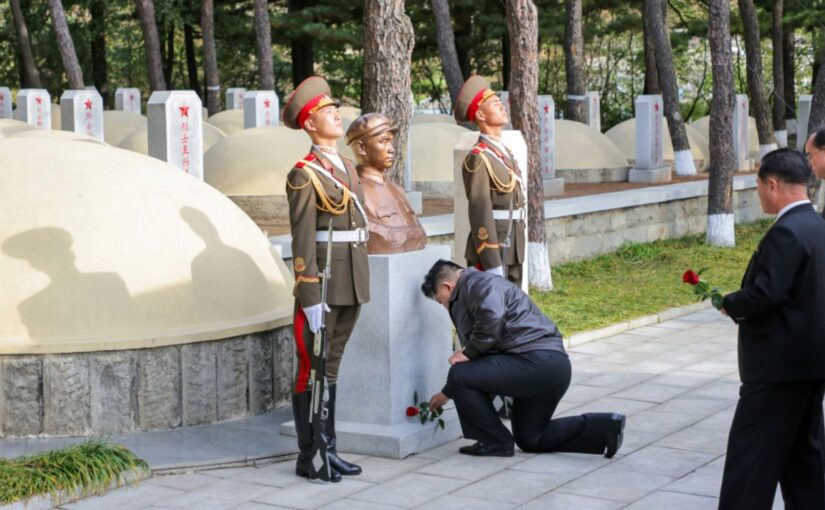
On October 24, Kim Jong Un, General Secretary of the Workers’ Party of Korea and President of the State Affairs of the Democratic People’s Republic of Korea, visited the Cemetery of the Fallen Soldiers of the Chinese People’s Volunteers in Hoechang County, South Phyongan Province and paid a high tribute to them.
Following the main ceremony, Kim Jong Un visited the grave of Mao Anying, the son of Comrade Mao Zedong, where he placed a flower and paid homage.
The Korean Central News Agency (KCNA) commented: “The faces of the CPV fallen soldiers, who assisted the revolutionary war of our people at the cost of their blood with the spirit of internationalism and the feeling of fraternal friendship, remain deep in the hearts of the peoples of the two countries as a symbol of valuable DPRK-China friendship.
“Our people will never forget the blood shed by the excellent sons and daughters of the Chinese people and their immortal feats even after a lapse of many years and the shift of generations.
“The DPRK-China friendship forged at the cost of blood would powerfully demonstrate its inexhaustible vitality in the sacred struggle to realise the cause of independence against imperialism, the socialist cause, in the future, too.”
The following day a further ceremony was held at the Friendship Tower in downtown Pyongyang, which honours the CPV martyrs.
Earlier, on October 22, a ceremony for remodeling the cemetery of fallen fighters of the Chinese People’s Volunteers was held in Sinphyong County, North Hwanghae Province. Among those present were DPRK Vice-Minister of Urban Management Kang Chol Ho, joined by Wang Yajun, Chinese Ambassador to the DPRK, staff members of his embassy, the delegation of the veterans and families of martyrs of the CPV on a visit to the DPRK, Chinese guests staying in the DPRK, and Chinese students and residents in the DPRK.
A delegation of the Chinese People’s Liberation Army led by Xia Zhihe, Political Commissar of the National Defence University of the PLA also visited the DPRK from October 25 to October 28 to take part in commemorative functions.
Functions were also held at the Chinese Embassy in Pyongyang and the DPRK Embassy in Beijing on October 25.
At the reception hosted in Pyongyang by Chinese Ambassador Wang Yajun, speakers referred to the historic significance of the CPV’s entry into the Korean front 75 years ago and the feats of the martyrs of the volunteers who devoted their precious lives to the revolutionary war of the Korean people.
They expressed the will to carry forward the glorious tradition and the great friendship under the strategic guidance of the top leaders of the two parties and two countries and thus open up a more beautiful future of the socialist cause of the two countries and the DPRK-China relations.
At the DPRK embassy in Beijing, speakers paid high tribute to the martyrs and veterans of the Chinese People’s Volunteers who entered the Korean front and fought shoulder to shoulder with the Korean people. They said that looking back on the history of 75 years ago is of great significance in remembering the forerunners and inheriting their spirit.
They expressed the will to promote the traditional DPRK-China friendship on the road of accomplishing the socialist cause, opposing the imperialists’ aggression and hegemony and defending regional peace and security, international fairness and justice.
Korean diplomatic staff also paid tribute at the cemeteries of CPV martyrs in the cities of Shenyang and Dandong, in China’s Liaoning Province.
The following articles were originally published on the website of KCNA. China’s People’s Daily also reported the commemorations.
Respected Comrade Kim Jong Un Visits Cemetery of CPV Fallen Soldiers on Occasion of 75th Anniversary of Entry of CPV into Korean Front
Pyongyang, October 25 (KCNA) — Kim Jong Un, general secretary of the Workers’ Party of Korea and president of the State Affairs of the Democratic People’s Republic of Korea, visited the Cemetery of the Fallen Soldiers of the Chinese People’s Volunteers in Hoechang County, South Phyongan Province and paid a high tribute to them on Oct. 24 on the occasion of the 75th anniversary of the entry of the CPV into the Korean front.
The respected Comrade Kim Jong Un was accompanied by Jo Yong Won, Pak Jong Chon and Kim Tok Hun, secretaries of the Central Committee of the WPK, and Choe Son Hui, foreign minister of the DPRK.
The guard of honor of the Korean People’s Army lined up at the cemetery.
The national anthems of the People’s Republic of China and the Democratic People’s Republic of Korea were played.
A flower basket in the name of Kim Jong Un and the flower baskets in the names of the Central Committee of the WPK and the State Affairs Commission of the DPRK were laid before the cemetery.
Kim Jong Un paid a silent tribute in memory of the CPV fallen soldiers.
Then, he visited the grave of Mao Anying at the cemetery.
He placed a flower before the grave and paid homage.
The faces of the CPV fallen soldiers, who assisted the revolutionary war of our people at the cost of their blood with the spirit of internationalism and the feeling of fraternal friendship, remain deep in the hearts of the peoples of the two countries as a symbol of valuable DPRK-China friendship.
Our people will never forget the blood shed by the excellent sons and daughters of the Chinese people and their immortal feats even after a lapse of many years and the shift of generations.
The DPRK-China friendship forged at the cost of blood would powerfully demonstrate its inexhaustible vitality in the sacred struggle to realize the cause of independence against imperialism, the socialist cause, in the future, too.
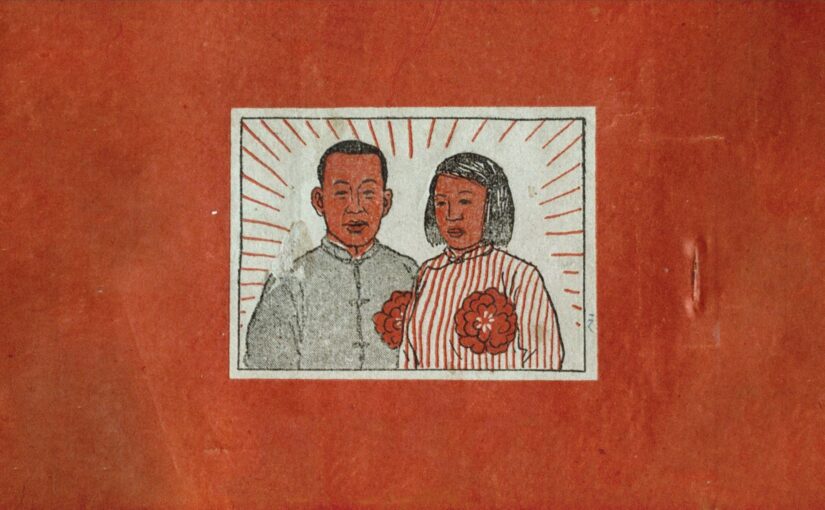
The following article, originally published in Sixth Tone, describes how, 75 years ago, the newly founded People’s Republic of China passed its first law — the 1950 Marriage Law — signalling the revolutionary state’s commitment to social transformation and gender equality. This law took priority because reforming marriage was seen as essential to dismantling feudal traditions that subordinated women and sustained patriarchal family structures. The new legislation enshrined freedom of marriage, monogamy, and gender equality, fundamentally redefining Chinese family life.
However, implementation of the law was predictably complicated. Deep-rooted conservative attitudes persisted, and early inspections revealed violent resistance to reform. Recognising the need for widespread education, the Communist Party launched China’s first national legal awareness campaign. Propaganda posters, songs, illustrated guides, and plays — including new versions of traditional stories like The Butterfly Lovers and Southeast Flies the Peacock — promoted the ideals of free marriage and women’s liberation in accessible, culturally resonant forms.
By 1953, the campaign reached its peak during the “Month of Promoting the Implementation of the Marriage Law,” with factories, schools, and workplaces across China holding lectures, exhibitions, and radio broadcasts.
Though the national campaign formally ended in 1953, its impact was enduring. The Marriage Law not only transformed Chinese social relations but also marked the beginning of a state-led effort to educate citizens in law and equality, embedding women’s rights in the foundations of the new China. While the road to equality and an end to discrimination is a long one, China continues to make impressive progress.
Seventy-five years ago, the People’s Republic of China issued its first law. It wasn’t the Constitution, nor was it the Civil Code — it was the Marriage Law.
This unique level of importance reflected the times. In revolutionary China, marriage reform was a major subject among early 20th-century intellectuals, who felt feudal concepts of family and marriage significantly stifled the individual freedoms of Chinese people — especially women — and hindered their participation in reshaping China. While choosing a partner to marry may be the status quo now, for centuries, families arranged marriages, divorce was rare, and women were subordinate to their husbands. As legal historian Qu Tongzu wrote in the book “Law and Society in Traditional China,” the main purpose of marriage in Imperial China was “to produce offspring to carry on ancestor worship” and was in no way concerned with the couple’s wishes.
In the following article, which originally appeared in the Morning Star, Jenny Clegg reflects on the abiding lessons to be drawn from China’s role in the allied victory over fascism in World War II. She points out:
“That China was the first country to resist fascist aggression, its most consistent opponent, fighting for 14 years (1931-45) at a cost of some 35 million casualties, is little understood in Britain: for most people the victory of WWII was won by the West.
“In fact, the Chinese people’s resistance held down some 50 to 60 per cent of Japan’s forces which otherwise would have been used to intensify the fighting in the Pacific and Burma theatres, even opening up a second front against the USSR. Had the USSR not been able to concentrate all its forces against Hitler, the Allies’ war in Europe could well have been lost.”
Jenny, whose father Arthur Clegg led the work of the China Campaign Committee in the 1930s and 1940s, was one of the delegation of family members of those foreign friends and comrades who supported the Chinese people during the war, who were invited to Beijing to attend the 80th anniversary commemoration of victory. She notes:
“China’s display of military defence on September 3 was in total contrast to its weak and divided state in the 1930s in the face of Japanese aggression, a reassurance to the Chinese people that their sacrifices of over eighty years ago would not occur again.”
Chinese society itself was transformed in the course of the war: “Class and gender relations were shattered as the Westernised city-elites began to rebuild their lives in the semi-feudal hinterland, the urban and the rural mixing together… Forging close links between the party, army and rural population, Mao saw resistance as integral to the revolutionary process, transforming the national democratic movement in due course into a social revolution.”
Today: “We cannot understand international developments without understanding the rise of China, and we cannot understand China without understanding both its transformation through war and its transformative role in WWII.”
Jenny presented a similar analysis in her contribution to the webinar on ‘World War Against Fascism: Remembering China’s Role in Victory 80 Years On’, organised by Friends of Socialist China and the International Manifesto Group on September 21.
At China’s Victory Day parade on September 3, Xi Jinping delivered a warning — the world stands at a crossroads between peace and war, and to prevent a catastrophic conflict engulfing the world again, nations must learn from history.
That China was the first country to resist fascist aggression, its most consistent opponent, fighting for 14 years (1931-45) at a cost of some 35 million casualties, is little understood in Britain: for most people the victory of WWII was won by the West.
In fact the Chinese people’s resistance held down some 50 to 60 per cent of Japan’s forces which otherwise would have been used to intensify the fighting in the Pacific and Burma theatres, even opening up a second front against the USSR. Had the USSR not been able to concentrate all its forces against Hitler, the Allies’ war in Europe could well have been lost.
Japan’s expansion into the Pacific in 1941 forced Churchill and Roosevelt to recognise China as an ally and an equal. Britain abrogated the Unequal Treaties (barring Hong Kong) in January 1943, and, as an allied power, China became a founding member of the United Nations in 1945. Why has all this been forgotten in the West and why should we remember this today?
China’s display of military defence on September 3 was in total contrast to its weak and divided state in the 1930s in the face of Japanese aggression, a reassurance to the Chinese people that their sacrifices of over eighty years ago would not occur again.
China’s war dates from Japan’s invasion of Manchuria in 1931, an aggression which shattered the League of Nations’ fragile structure of peace. Local resistance was brutally suppressed but Chiang Kaishek chose instead to concentrate his forces against the CPC’s bases.
Beyond words of condemnation, the world’s major powers took no action, emboldening Japan and the forces of fascism worldwide further. Japan’s invasion of 1937, following the 1936 German-Japan Anti-Comintern pact, was an act of world war. Under pressure from the left wing of the KMT, Chiang ended the anti-communist drive, joining the CPC-initiated United Front to resist the aggression.
The Chinese people stood virtually alone. While Britain leaned towards appeasement, even closing China’s supply route along the Burma Road in 1940, US loans came too little and too late. For a couple of years, the USSR supplied military and financial aid, sending advisers and volunteer pilots under a secret agreement with the KMT. The heroic 10-month stand of Wuhan in 1938 against grinding Japanese savagery, gained China a high international profile.
A chance discovery during an office move has rekindled historic ties between the Morning Star and China’s Xinhua Daily.
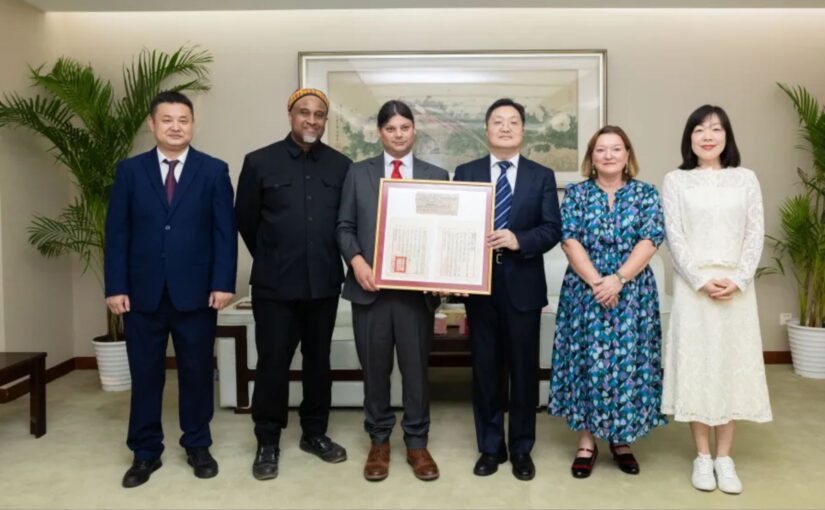
In 2021, assistant business manager Bernadette Keaveney unearthed a 1950 letter in traditional Chinese characters, written by Xinhua to the Daily Worker — the Morning Star’s predecessor — congratulating it on its 20th anniversary. Rediscovered thanks to the widow of former editor Pat Devine, the letter has now been formally presented to Xinhua Daily’s museum in Nanjing by a delegation from the Star.
Founded in 1938 by Zhou Enlai and other prominent leaders, Xinhua Daily was the first national newspaper of the Communist Party of China. Its history of resilience — publishing under Japanese bombardment and Kuomintang censorship — resonated with the Morning Star delegation, who recalled the Daily Worker’s own sacrifices during the Spanish Civil War and the Blitz.
At a ceremony in Nanjing, Xinhua vice-president Chen Renyun hailed the “deep historical roots and similar values” of the two papers, calling them comrades-in-arms united by “a friendship which crosses national borders and is based on common ideals.” Chen proposed deepening content collaboration and embracing digital co-operation to revitalise this relationship in the modern era.
Morning Star editor Ben Chacko emphasised the significance of renewing ties at a time when the West is pushing a New Cold War narrative. “We want to challenge those voices who present China’s rise as a threat,” he said, praising China’s commitment to peace, development and win-win co-operation. He concluded: “Like our past comrades who corresponded all those decades ago, we live far apart, but are united by our shared ideals.”
The following report by Roger McKenzie first appeared in the Morning Star on 27 September 2025.
A chance find during an office move led a delegation from the Morning Star to a reception thousands of miles away in China this week to renew a decades-old comradeship.
While clearing out our old building in 2021, the Star’s stalwart assistant business manager Bernadette Keaveney came across a historic letter.
The letter, written in old style Mandarin from China’s Xinhua Daily to the Morning Star’s predecessor the Daily Worker in 1950, congratulates our paper on its 20th anniversary.
This rediscovery of the letter from the Nanjing, east China-based newspaper would not have been possible without Gloria Findlay, the widow of former Daily Worker international editor Pat Devine — the letter’s addressee. She sent the letter back to us after his death knowing it was an important piece of our history.
The following article, originally published by China Daily, movingly describes the little known but heroic story of the guerrilla struggle waged under the leadership of the Communist Party of China against the Japanese occupation of Hong Kong.
Journalist Li Xiang writes: “The agonised cry, ‘If I die, avenge me!’ has echoed in Lam Chun’s mind for 82 years. It was May 1943 in Kowloon City, when Japanese soldiers dragged her 23-year-old sister, Lam Chin, into their home. The accusation was theft – a charge fabricated after she rejected a soldier’s advances. A laundry worker at the Japanese barracks, Lam Chin was subjected to a relentless beating, with rifle butts smashing against her bones.”
“That day left a deep impression on me,” Lam Chun, now 90, recalled. “It wasn’t a day for just our family’s shame, but also the nation’s suffering.”
What her tormentors didn’t know was that Lam Chin was secretly smuggling intelligence for guerrillas led by the Communist Party of China in their fight to liberate Hong Kong.
That night, as her family dressed her wounds, Lam Chin revealed her secret. A former leader in the student movement supporting the Chinese People’s War of Resistance Against Japanese Aggression (1931-45), she had long been fighting back. Her suffering, coupled with this revelation, became a call to arms – not just for vengeance, but for victory.
“If we’re beaten for no reason at home, we might as well fight,” Lam Chun remembered her mother declaring.
Within months, Lam Chun, her mother, and her brother joined the Hong Kong Independent Battalion – her sister’s unit. Nearly 1,000 strong and composed almost entirely of locals, the battalion became a relentless foe to Japan after its December 8, 1941, invasion of Hong Kong.
The then-British colony’s defences collapsed in just 18 days – a swift defeat that historians see as emblematic of Britain’s halfhearted commitment to defending the colony.
Now, as the last survivors fade, their stories – once buried under colonial and wartime politics – have resurfaced. Their resistance played a crucial role in the broader Allied effort to defeat fascism and weaken the Japanese war machine.
“Many Hong Kong families joined the resistance together – fighting as one,” said Lam Chun, now President of the Society of the Veterans of the Original Hong Kong Independent Battalion of the Dongjiang Column, which documents this wartime heroism.
Few embodied this spirit more than the Law family of Sha Tau Kok, with nine of its 11 members taking up arms as guerrillas. Born in 1930, Law King-fai grew up amid the resistance efforts. His childhood was defined by the cause and even as a toddler he was taught patriotic songs.
“Fight the Japanese, fight the Japanese! Down with Japanese imperialism, protect our homeland!” the 95-year-old recalled, singing along.
Hong Kong is launching a series of events to educate its youth on national history and commemorate the 80th anniversary of the victory in the war. The initiative includes exhibitions, workshops, film screenings, and exchange tours to historical sites on the Chinese mainland. “It’s not fair for those who gave their lives decades ago that today’s Hong Kong youth don’t even know the history,” Chan Hoi-lun said, citing the colonial-era authorities’ neglect of local efforts to fight Japanese aggression. Chan Hoi-lun is the daughter of Tsau Sheung-ling, who played a key role in one of the war’s boldest missions, in which over 800 Chinese cultural figures, their relatives, and soldiers of international allies were smuggled out of occupied Hong Kong.
At a recent forum, Hong Kong Special Administrative Region Chief Executive John Lee Ka-chiu underscored the city’s significant role in China’s war efforts. He cited the city’s work in shipping war supplies, rescue operations, and front-line defence, embodied by brave groups like the Hong Kong Independent Battalion.
In a recent interview with China Daily, Hong Kong lawmaker Chan Yung, Vice Chair of the Democratic Alliance for the Betterment and Progress of Hong Kong (DAB), said that while history education has improved significantly since the 1997 handover, more must be done to strengthen the understanding of national history, particularly amid current global tensions.
The agonized cry, “If I die, avenge me!” has echoed in Lam Chun’s mind for 82 years.
It was May 1943 in Kowloon City, when Japanese soldiers dragged her 23-year-old sister, Lam Chin, into their home. The accusation was theft — a charge fabricated after she rejected a soldier’s advances.
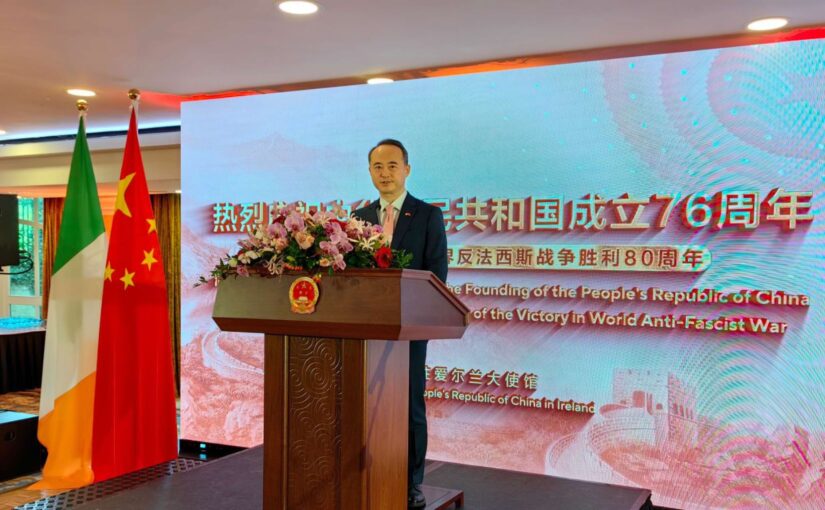
On September 22, the Chinese Embassy in Ireland hosted a reception to celebrate the 76th anniversary of the founding of the People’s Republic of China, and to commemorate the 80th anniversary of the victory of the Chinese People’s War of Resistance Against Japanese Aggression and the World Anti-Fascist War. Chinese Ambassador Zhao Xiyuan and Ceann Comhairle [Speaker of Dáil Éireann, the lower house of the Irish parliament] Verona Murphy delivered speeches.
In his speech, Ambassador Zhao Xiyuan said: “Over the past 76 years, under the strong leadership of the Communist Party of China, the Chinese people have forged ahead with determination, continuously advancing Chinese modernisation. These 76 years have also seen China making increasingly significant contributions to world peace, global development, and the progress of humanity. China has historically eradicated absolute poverty, lifting over 800 million people out of destitution and achieving the UN 2030 Agenda for Sustainable Development’s poverty reduction goal a full decade ahead of schedule, contributing more than 70% to global poverty alleviation. Since the launch of the Belt and Road Initiative, over 40 million people in developing countries have been lifted out of poverty.”
He added that: “While celebrating these achievements, China will never forget its journey. Eighty years ago, China was a war-torn and impoverished nation just extricating itself from foreign aggression. China had borne 35 million casualties, accounting for one third of total lost lives in the Second World War. The Western front of the Second World War is often marked by Nazi Germany’s invasion of Poland in 1939. Yet even earlier, on September 18, 1931, the Chinese people fired the first shot of resistance against Japanese aggression in Northeast China, marking the beginning of the Eastern front. China’s War of Resistance Against Japanese Aggression was the earliest, longest, and most costly campaign of the global Anti-Fascist War. China’s victory on the Eastern front prevented Japanese militarism from joining forces with European fascists, making a vital contribution to the final victory of the Second World War.
“China, though ravaged by war, was never isolated. Doctors, journalists, merchants, and artists from around the world came to China, transforming scalpels, typewriters, and cameras into instruments of rescue. Chinese people will always remember Father Patrick Maurice Connaughton, an Irish bishop born in Galway, who actively raised funds for Chinese people during the war, provided relief to displaced civilians, and supported the education of children amid the devastation of war.”
He also said that: “Over the 46 years since the establishment of diplomatic relations, China and Ireland have deepened exchanges and cooperation across politics, economy, science and technology, and culture, bringing tangible benefits to both peoples. China appreciates Ireland’s commitment to the one-China policy and is ready to work together to implement the consensus reached by the two state leaders, strengthen high-level mutual trust, deepen high-quality cooperation, and advance our Strategic Partnership of Mutual Benefit, jointly contributing to a more peaceful, stable, and prosperous future.
On Sunday 21 September, Friends of Socialist China (FoSC) and the International Manifesto Group (IMG) jointly organised a webinar on the theme, ‘World War Against Fascism: Remembering China’s Role in Victory 80 Years On’.
Speakers were:
Ken Hammond (Historian and China scholar)
Chen Weihua (Former EU bureau chief of China Daily)
Jodie Evans (Co-founder of Code Pink)
Jenny Clegg (Author and peace activist)
Keith Bennett (Co-editor of Friends of Socialist China)
KJ Noh (Journalist, writer and educator)
Radhika Desai (International Manifesto Group), Moderator.
Below we carry the full text of Keith’s contribution. (It was shortened somewhat on delivery due to time constraints.)
The livestream of the webinar may be viewed here. And all the individual speeches as delivered may be found on the IMG’s YouTube channel.
On May 8, 1945, people in Britain celebrated VE Day. Six years of all-out war in Europe against Nazi and fascist tyranny had come to a victorious conclusion.
But whilst the nation struggled with a collective hangover the next day, it did so with the knowledge that the war in East and Southeast Asia, and in the Pacific, continued. And, at that point, nobody could be sure for how long.
Given the circumstances of the time, the war in the East may have seemed remote to many. But not to those whose loved ones were fighting in Burma or elsewhere or worse still were enduring the dreadful cruelty that characterised being a Japanese Prisoner of War.
While, as events transpired, the war in Asia-Pacific was to last just a few more months – due not least to the decisive intervention of the Soviet Red Army rather than to the criminal bombing of Hiroshima and Nagasaki – this does serve to underline that the world anti-fascist war began first in the East, specifically in China, and that it lasted the longest.
Conventional British history would have us believe that the war began on September 3, 1939. Although it may not have seemed that way to the peoples of Spain, whose courageous fight against fascism began in 1936. Or to the people of Ethiopia – their country invaded by fascist Italy the previous year.
But the Chinese people’s war of resistance against Japanese aggression began in 1931, after Japan rigged up the puppet state of Manchukuo in northeast China.
This in turn became a nationwide war of resistance in 1937, with the Marco Polo, or Lugou, Bridge Incident heralding Japan’s all out invasion.
At that time, while progressive people around the world rallied to the support of China, the only state to take a clear stand in support of the Chinese people’s resistance was the USSR. And this clearly impacted on the entire geopolitical pattern in the region.
As President Xi Jinping noted in his article for the Russian media, published just prior to his state visit to attend the victory celebrations in Moscow this May: “In the darkest hours of the Chinese People’s War of Resistance Against Japanese Aggression, the Soviet Volunteer Group, which was part of the Soviet Air Force, came to Nanjing, Wuhan and Chongqing to fight alongside the Chinese people, bravely engaging Japanese invaders in aerial combat—many sacrificing their precious lives.”
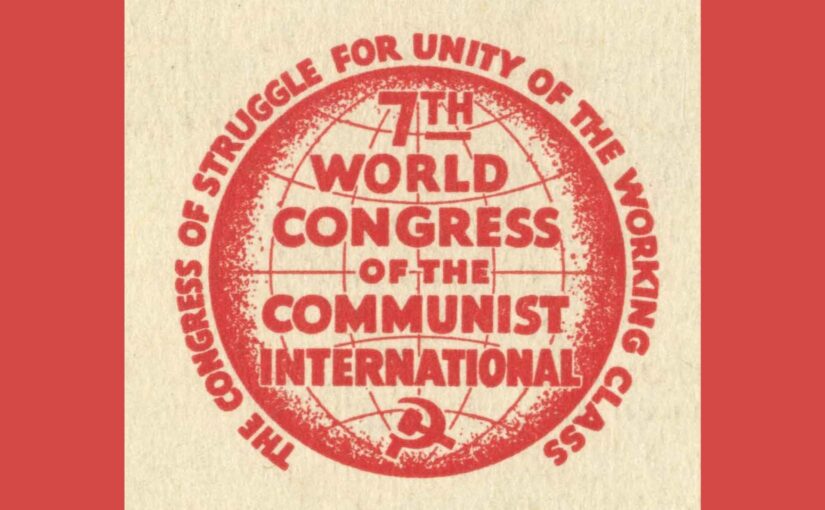
In the following article, Salvatore Tinè makes a comparative analysis of the theory of the popular front against fascism, advanced by the Bulgarian communist Georgi Dimitrov at the Seventh Congress of the Communist International (Comintern) in 1935, and China’s united front against Japanese aggression developed principally by Mao Zedong.
Arguing for a linkage between the two, he explains that this strategy laid the foundation for a new understanding of the nexus between the struggle for democracy and the struggle for socialism, as well as that between the struggle against capitalism and the struggle against imperialism on the part of colonial and semi-colonial nations. It is Mao Zedong, with his theory of new democracy, who develops in the most organic, and also most original way, the united front strategy by adapting it to the special conditions of a semi-feudal and semi-colonial country like China. This new democracy, the state form of the joint dictatorship of all the anti-imperialist classes united in the anti-Japanese united front, corresponds to the bourgeois democratic stage of the Chinese revolution, distinct from but at the same time organically connected to the proletarian socialist revolution. It is a resumption of the united front tactic that had already characterised the Chinese revolution in the years 1924-1927, but on a much broader mass basis and under social and political conditions much more conducive to the development of the alliance among all anti-imperialist classes, not least, as Dimitrov argued in his report due to, “the creation of Soviet territories in a considerable part of the country and the organisation of a powerful Red Army… Only the Chinese Soviets can act as the unifying centre of the struggle against the subjugation and partition of China by the imperialists, as the centre that rallies all anti-imperialist forces for the national struggle of the Chinese people.”
The Chinese communists’ brilliant theoretical and strategic elaboration has acquired universal value and meaning – both within the international communist movement and in the broader global struggle against capitalism and imperialism.
Salvatore Tinè is a Researcher in Modern History at the Department of Humanities of the University of Catania, in Sicily, Italy. The article is the text of a paper he presented at two international symposia held in Beijing in early September marking the 80th anniversary of victory in the Chinese People’s War of Resistance Against Japanese Aggression and the World Anti-Fascist War.
The Chinese Communist Party’s adoption of the anti-Japanese united front strategy is closely connected to the development, in the mid-1930s, of the Communist International’s (Comintern’s) policy aimed at creating broad anti-fascist popular fronts in the more advanced capitalist countries. The link between the formation of a new anti-imperialist united front in China and the policy of anti-fascist unity in action in the European communist movement lies primarily in the fact that the revolutionary struggle of the international proletariat had, by then, assumed a genuinely global dimension, no longer merely Eurocentric. This was due to the rapid development of anti-colonial and national revolutions in Asia—particularly in China.
In his landmark report to the 7th Congress of the Comintern, Georgi Dimitrov emphasised that the revolutionary struggle of the proletariat against the offensive of capital and the threat of war was unfolding within the broader framework of “international unity in action,” that is, a “world anti-imperialist front” made up of oppressed nationalities in colonies and semi-colonies fighting for national liberation. Not by chance, in the same report, the Bulgarian leader underlined that “in light of changes in both the domestic and international situation, in all colonial and semi-colonial countries, the issue of the anti-imperialist united front assumes exceptional importance.” Dimitrov praised the initiative of the Chinese communists to establish a broad national front against Japanese imperialism, founded on a solid and united popular and mass base, both politically and militarily.
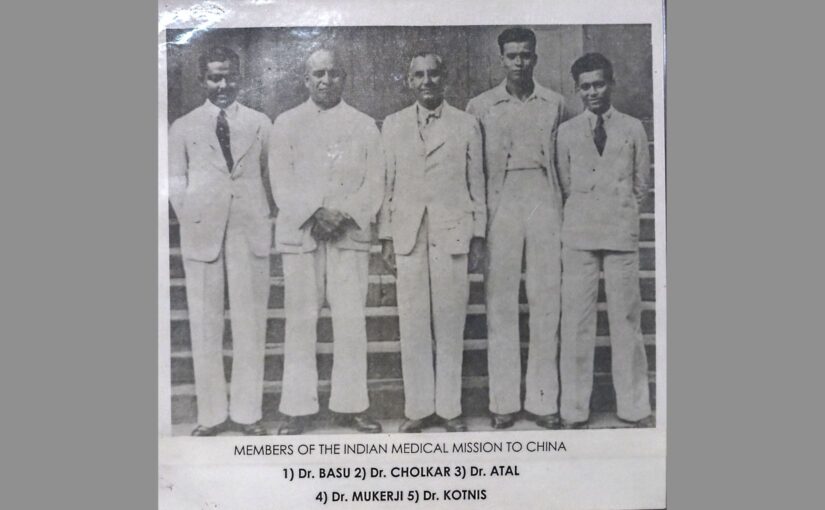
We are pleased to publish the below article by Ajay Kamalakaran, which was originally carried by Mumbai’s Free Press Journal, on the life of Dr. Madan Mohan Lal Atal, who led the five-member Indian Medical Mission sent by the Indian National Congress to help the Chinese people in their war of resistance against Japanese aggression, after General Zhu De made a personal request to Jawaharlal Nehru.
Ajay explains that Atal was attracted to left-wing ideas from his days as a medical student in Edinburgh, Scotland. An anti-colonialist and staunch believer in the right of self-determination of peoples, he got involved in causes that went well beyond the borders of British India.
In 1937 he joined the Spanish Medical Aid Committee, a British organisation that supported the Republican Popular Front government in the war against the fascist uprising led by General Franco.
Details of the ‘Spanish Doctors’, from many nations, may be found in this article, published by The Volunteer, founded by the veterans of the Abraham Lincoln Brigade, the US section of the International Brigades who fought fascism in Spain.
A year later, Atal was asked to return to India from Spain in order to lead the medical mission to China. He was 50-years-old and well aware of the risks involved:
“How long we stay in China depends on the accuracy of Japanese aviators,” he told international correspondents in October 1938. “I interviewed [Mahatma] Gandhi before I left India. I told him we would stay until the end of the war, and if we were slaughtered by the Japanese, another unit would take our place.”
In fact, over 700 people applied to join the mission in China when a special committee called for volunteers. These included over 100 doctors, including two women. The applications came from all across the Indian subcontinent, as well as from Mauritius, East Africa, Syria and England.
As the head of the mission, Atal worked in China for 21 months under the most challenging of circumstances. He addressed the local press when he arrived in Hong Kong in August 1940: “From all accounts the Chinese soldiers are fighting well. If China continues to resist, I think she will emerge victorious, provided of course Chinese leaders remain united.”
He also spoke of the other foreign doctors he had met in China, including German Jewish Dr. Hans Müller, “who did splendid work among the war wounded.”
Müller was indeed another extraordinary figure. Coming to China at the age of 24, Müller fought side by side with the Communist Party of China and the Chinese people in the War of Resistance Against Japanese Aggression and later in the War of Liberation (1946-49). A 2021 article in China Daily explained:
“Born into a Jewish family in Dusseldorf, a city on the River Rhine in western Germany, in 1915, Müller, upon finishing high school, found it difficult to stay on in Germany due to the anti-Semitism at the time. He left to continue his studies at the University of Basel, the oldest university in Switzerland, until he earned his PhD in medical science in 1939.”
In order to fight fascism, he made his way to China, sailing from the French port of Marseilles to Hong Kong:
“Following introductions to revolutionary figure Liao Chengzhi and Polish-born Chinese journalist and writer Israel Epstein, Müller was able to reach Yan’an along with the supplies. In Yan’an, Müller met top CPC leaders, including Chairman Mao Zedong and Zhu De, then commander-in-chief of the Eighth Route Army, and joined the Eighth Route Army. A month later, he followed an Indian medical team to the Taihang Mountains. The trip came just a few days after the death of the Canadian doctor Norman Bethune.”
Chinese Foreign Minister Wang Yi visited Austria, Slovenia and Poland from September 12-16 at the invitation of Austrian Federal Minister for European and International Affairs Beate Meinl-Reisinger, Slovenian Deputy Prime Minister and Minister of Foreign and European Affairs Tanja Fajon, and Polish Deputy Prime Minister and Foreign Minister Radosław Sikorski.
Meeting with Wang in Warsaw on September 15, Polish President Karol Nawrocki said that Poland was among the first countries to establish diplomatic relations with China, and the two countries have maintained a good friendship. He said that as a historian, he is particularly aware of China’s tremendous sacrifices and contributions to secure victory in the Chinese People’s War of Resistance against Japanese Aggression. Poland values its traditional friendship with China and is willing to enhance exchanges and deepen cooperation with China, draw lessons from history, promote the sustained development of bilateral relations, and jointly safeguard world peace and security.
Wang Yi said that Poland was among the first countries to establish diplomatic relations with the People’s Republic of China. For more than half a century, friendship has always been the main theme and cooperation the dominant trend in China-Poland relations, despite changes in the international landscape. China values Poland’s position and influence in Europe and the world and is ready to continue to deepen strategic mutual trust, enhance strategic cooperation, and jointly advance the sustained development of the China-Poland comprehensive strategic partnership. He expressed the hope that Poland will play an active role in encouraging the European Union to develop an objective and rational understanding of China.
Wang Yi added that as the main battlefield in Asia during World War II, China was the first to resist Japanese militarism, fought the longest, and made the greatest national sacrifices, making a tremendous historic contribution to the victory of the World Anti-Fascist War. Not long ago, China held a commemoration, aiming to remember history, honour fallen heroes, cherish peace, and create a better future. Both China and Poland are independent countries that firmly safeguard national sovereignty and territorial integrity. The separatist activities of “Taiwan independence” forces, which attempt to split the country and challenge the outcomes of the victory of World War II, run counter to the tide of history and are doomed to fail. Wang Yi expressed his confidence that Poland will continue to uphold the one-China policy and support China’s great cause of national reunification. Karol Nawrocki said that since 1949, the Polish government has recognised the Government of the People’s Republic of China as the sole legal government representing the whole of China and will continue to firmly abide by the one-China principle.
Wang Yi briefed Marko Lotrič on China’s development path and philosophy, saying that history has shown that the most important thing for a country’s development is to find a path that suits its own national conditions. China has found a path of socialism with Chinese characteristics that integrates the basic tenets of Marxism with China’s specific realities and fine traditional Chinese culture. The path is deeply rooted in the people while keeping pace with the trends of the times, receiving firm support and endorsement from the Chinese people. This is a successful path of peace, development, openness, and win-win cooperation and China will continue to unswervingly move forward along this path. China is committed to expanding high-standard opening up, promoting green, low-carbon and sustainable development and realising Chinese modernisation. In international relations, China advocates mutual respect, mutual accommodation, and win-win cooperation, striving to build a community with a shared future for humanity. China’s sustained development will offer opportunities to countries around the world, including Slovenia.
We are pleased to republish the below article by Ishida Ryuji, a Japanese scholar at the School of Humanities at Shanghai Jiaotong University, which was originally published by Global Times on September 2.
In the article, Ryuji makes a profound comparative study of China’s protracted struggle against Japanese fascism in the 1930s and 1940s and the country’s protracted struggle against imperialist powers led by the United States and including Japan today.
The author notes that: “Eighty years ago, after 14 years of arduous struggle and tremendous sacrifice, China finally defeated the war of aggression launched by Japanese fascists. Eighty years later, Japan still seems unable to cast off the shadow of fascism.”
He gives an explanation of fascism that resonates today with regard to other capitalist powers besides Japan: “A typical fascist regime is characterised by the following features: instead of addressing economic stagnation and the resulting political and social unrest through domestic reform or narrowing class disparities, it seeks to shift the crisis outward under the pretext of ‘racial superiority’ through external aggression and expansion.”
He warns that: “Beginning in the 1990s, a generational shift among researchers coincided with the rise of historical revisionist currents and movements. As a result, tendencies to blur or deny the facts of aggression – and even to glorify war through distortions of history – have spread increasingly throughout Japanese society. Whether in reference to wartime Japan or today’s rightward shift, the scholarly atmosphere of analysing these phenomena through the lens of fascism has grown exceedingly faint in the country.”
This is related to the historical trajectory of the Cold War: “After WWII, Western countries led by the US – including Japan, which had once been a fascist state – forcibly imposed the Cold War system… After the collapse of the Soviet Union, the Japan-US security alliance was redefined as a military one targeting China.”
Bringing things up to the present, Ryuji writes: “Despite comprehensive inferiority in military, economic and technological domains, the Chinese people ultimately defeated the invaders. Many Japanese to this day remain trapped in the illusion of ‘might makes right,’ with some even clinging to the absurd claim that ‘the Japanese army never lost in China.’ Those who hold such views fail to grasp how the Communist Party of China, armed with theoretical innovation and practical experience, developed the strategies of protracted war and guerrilla warfare that mobilised the immense strength of the entire nation in resisting aggression. Such a strategy of undermining the enemy’s rule from within not only secured China’s victory but also offered invaluable and lasting inspiration for the subsequent global anti-colonial and national liberation movements.
“Today, China is facing interference and coercion from countries such as Japan and the US. Yet China will neither yield nor compromise; instead, it is committed to waging a protracted war full of hardships.