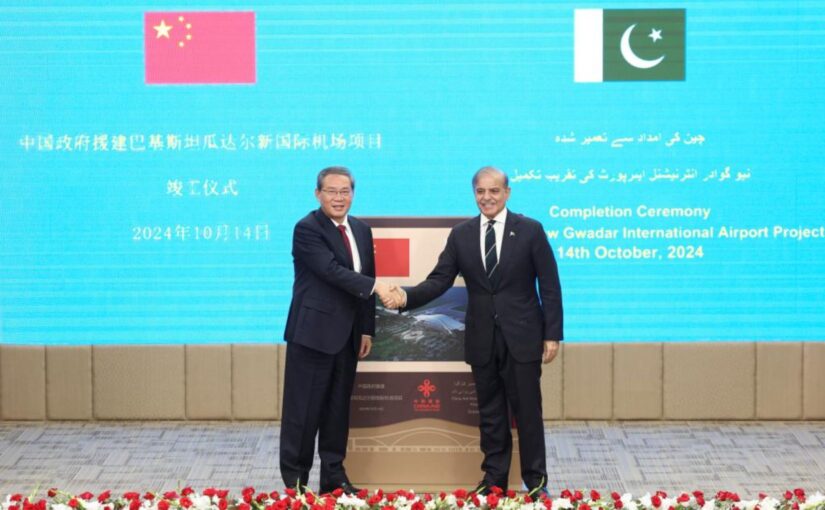
Li Qiang attends SCO heads of government meeting in Moscow

From November 17-24, Chinese Premier Li Qiang visited Russia to attend the 24th Meeting of the Council of Heads of Government of Member States of the Shanghai Cooperation Organisation (SCO); Zambia to pay an official visit; and South Africa to attend the 20th G20 Summit.

On November 17, Li Qiang met with his Russian counterpart Mikhail Mishustin and said that China stands ready to deepen cooperation with Russia in investment, energy, agriculture and other fields, adding that the Chinese market welcomes more high-quality agricultural and food products from Russia.

Li said that not too long ago he and Mishustin held in Hangzhou, the capital of east China’s Zhejiang Province, the 30th regular meeting of the Chinese and Russian heads of government, which focused on the implementation of the important consensus reached by Chinese President Xi Jinping and Russian President Vladimir Putin.

China stands ready to work with Russia to follow the strategic guidance of the two heads of state, further strengthen communication, continuously deepen mutually beneficial cooperation between the two sides, and create more benefits for the two peoples, Li said. He also urged both sides to continue to expand people-to-people and cultural exchanges, and to strengthen cooperation in areas such as culture, education and films.

Noting that the Tianjin Summit of the Shanghai Cooperation Organisation (SCO) held in September achieved a series of fruitful results, Li said China is willing to maintain close coordination and collaboration with Russia to encourage all parties of the SCO to uphold the Shanghai Spirit and materialise the development blueprint outlined by the leaders at an early date.

He urged further advancing pragmatic cooperation to bolster the development momentum of all member states, to continuously improve the institutional building of the SCO, to enhance its influence in international affairs, and to stand in solidarity with the vast number of Global South countries to promote an equitable and orderly multipolar world as well as a universally beneficial and inclusive economic globalisation.

Continue reading Li Qiang attends SCO heads of government meeting in Moscow

Tianjin Declaration advances roadmap for Shanghai Cooperation Organisation

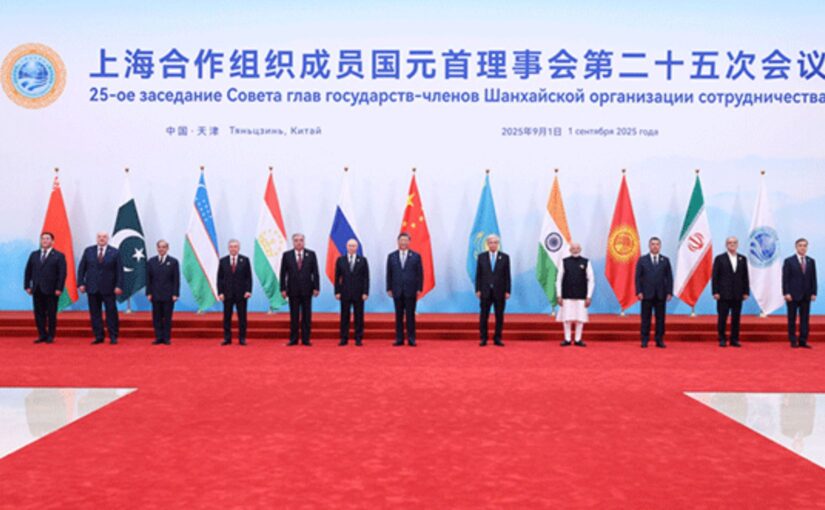
On August 31-September 1, the Chinese coastal city of Tianjin hosted the 25th Meeting of the Council of Heads of State of the Shanghai Cooperation Organisation (SCO).

The meeting adopted the Tianjin Declaration. At just over 6,000 words, it sets out a comprehensive roadmap for the next phase of the organisation’s development across a wide range of issues and sectors. It begins by noting that:

“The global political and economic landscape, as well as other fields of international relations, are undergoing profound historical changes. The international system is evolving toward a more just, equitable, and representative multipolarity, opening new prospects for countries’ own development and mutually beneficial cooperation.

“At the same time, geopolitical confrontations are intensifying, posing threats and challenges to the security and stability of the world and the SCO region. The global economy, particularly international trade and financial markets, is suffering severe shocks.

“The year 2025 marks the 80th anniversary of the victory in World War II and the founding of the United Nations. The great victory of peace-loving nations united to defeat Nazism, fascism, and militarism determined the course of world history and created conditions for establishing a stable international relations system ensuring peaceful development for humanity. Member states call for remembering the heroic feats of peoples and the historical lessons of World War II.”

In a clear reference to the Five Principles of Peaceful Coexistence, adopted by China’s Premier Zhou Enlai and Indian Prime Minister Jawaharlal Nehru in 1954, it states:

“Member states advocate respect for the right of all peoples to independently choose their political, economic, and social development paths, emphasising that mutual respect for sovereignty, independence, territorial integrity, equality, mutual benefit, non-interference in internal affairs, and the principle of non-use or threat of use of force are the foundation for the stable development of international relations.”

It adds that: “Member states reaffirm the practical significance of promoting the building of a new type of international relations featuring mutual respect, fairness, justice, and win-win cooperation, as well as a community with a shared future for humanity, and conducting dialogue based on the concept of ‘One Earth, One Family, One Future.’”

Regarding some key international issues at present, the Declaration affirms:

PALESTINE:

“Member states reaffirm their deep concern over the ongoing escalation of the Palestinian-Israeli conflict and strongly condemn the actions that have caused numerous civilian casualties and a humanitarian disaster in the Gaza Strip.

Continue reading Tianjin Declaration advances roadmap for Shanghai Cooperation Organisation

Xi Jinping meets UN Secretary General and leaders from Egypt, Myanmar and Kazakhstan

With the largest ever gathering of the quarter century old Shanghai Cooperation Organisation (SCO) in Tianjin (August 31-September 1) and the commemoration of the 80th anniversary of the victory in the Chinese People’s War of Resistance Against Japanese Aggression and the World Anti-Fascist War in Beijing (September 3), China’s high-level diplomacy has recently experienced a particularly busy period.

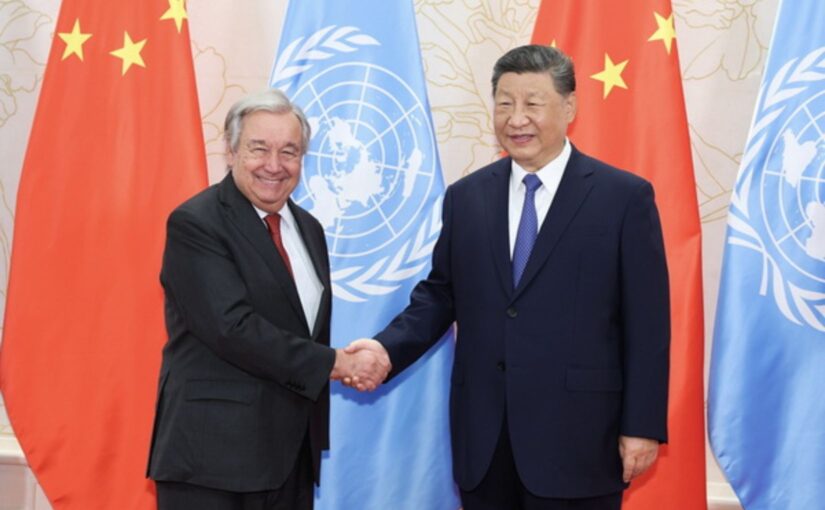
President Xi Jinping began a round of bilateral meetings in Tianjin on August 30, the eve of the SCO Summit, meeting with United Nations Secretary General António Guterres, Egyptian Prime Minister Mostafa Madbouly and Myanmar’s Acting President Min Aung Hlaing in the afternoon and with Kazakhstan President Kassym-Jomart Tokayev in the evening.

Meeting with António Guterres, President Xi noted that the founding of the United Nations was the most important decision made by the international community at the end of the Second World War. This year marks the 80th anniversary of the victory of the World Anti-Fascist War and the founding of the United Nations. History teaches that multilateralism, solidarity and cooperation are the right way to address global challenges.

Guterres expressed his gratitude for China’s strong and solid support to the UN. He noted that at a time when multilateralism, international law and the authority of the United Nations are being challenged, and the international governance architecture is in urgent need of reform, it is all the more important to recall the founding mission and values that led to the creation of the UN 80 years ago. China has made significant contributions to safeguarding international law and ensuring international rule of law and has been a cornerstone of multilateralism. The UN will strengthen cooperation with China to uphold the purposes and principles of the UN Charter, defend the basic norms of international relations, advance a multipolar world, enhance the representation of developing countries, and enable the UN to play a greater role in international affairs.

Meeting with Egyptian Prime Minister Mostafa Madbouly, President Xi noted that Egypt was the first Arab and African country to establish diplomatic relations with the People’s Republic of China. Next year marks the 70th anniversary of China-Egypt diplomatic ties. The two sides should take it as an opportunity to steer the bilateral relationship toward the goal of building a China-Egypt community with a shared future in the new era, add new impetus to China-Arab and China-Africa relations, and make greater contributions to upholding world peace and stability and promoting global development and prosperity. The two countries should be good friends that closely collaborate in multilateral affairs, shoulder historical and major-country responsibilities as important members of the Global South, safeguard the victorious outcomes of World War II, jointly oppose unilateralism and bullying practices, and defend the international system with the United Nations at its core and the international order underpinned by international law.

Prime Minister Madbouly said China is a true partner and friend of Egypt, and the two sides have always trusted and supported each other. Egypt places high importance on its relations with China and is firmly committed to the one-China principle. Egypt stands ready to take next year’s 70th anniversary of diplomatic ties with China as an opportunity to increase high-level exchanges, expand trade and investment, and deepen cooperation in such areas as new energy, electric vehicles, finance and seawater desalination, in a bid to achieve greater progress in bilateral relations.

Meeting with Myanmar’s Acting President Min Aung Hlaing, President Xi noted that Myanmar was part of the Eastern battlefield of the World Anti-Fascist War and it is an important dialogue partner of the SCO. The China-Myanmar pauk-phaw (brotherly) friendship, rooted in the hearts of the two peoples, is as strong and relevant as ever. The two sides should seize the opportunity of the 75th anniversary of their diplomatic relations to deepen strategic cooperation, accelerate the building of their community with a shared future, and bring greater benefits to people in both countries.

The two sides should advance key projects of the China-Myanmar Economic Corridor and promote economic and trade cooperation. Joint efforts should be made to combat cross-border crimes, maintain peace and tranquility in the China-Myanmar border region, and ensure the safety and security of Chinese personnel, institutions, and projects in Myanmar.

Acting President Min Aung Hlaing said that Myanmar and China share a deep pauk-phaw friendship and a common pursuit of peace and stability, and both countries made significant contributions to the victory of the World Anti-Fascist War. China has always been a good neighbour and a good friend to Myanmar, providing long-term assistance to Myanmar’s economic and social development, supporting its post-disaster rehabilitation efforts, and playing a constructive role in facilitating peace and stability in northern Myanmar.

Continue reading Xi Jinping meets UN Secretary General and leaders from Egypt, Myanmar and Kazakhstan

Largest ever gathering of SCO family held in Tianjin

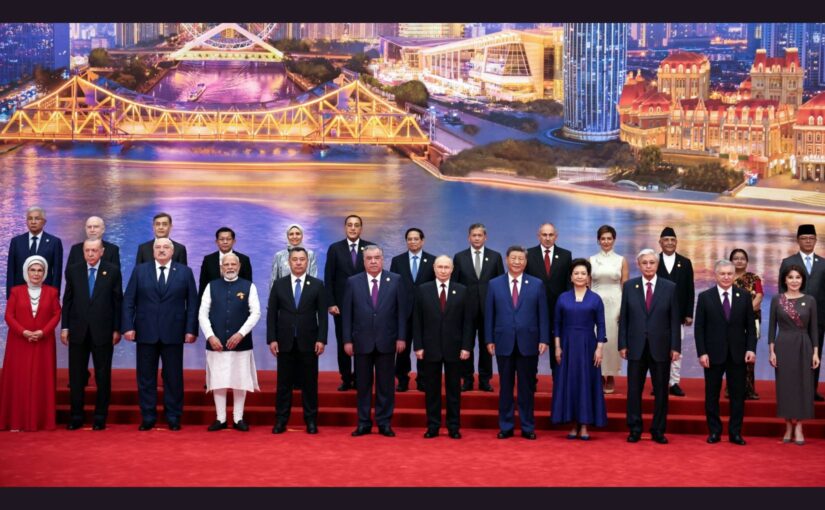
On August 31-September 1, immediately prior to China’s grand celebration of the 80th anniversary of victory in the Chinese People’s War of Resistance Against Japanese Aggression and the World Anti-Fascist War, the north China coastal city of Tianjin, near to Beijing, hosted the 25th Meeting of the Council of Heads of State of the Shanghai Cooperation Organisation (SCO) followed by the Shanghai Cooperation Organisation Plus meeting.

These were the biggest gatherings to date in the SCO’s quarter century history, drawing more than 20 heads of state or government, along with the heads of 10 international organisations, including the Secretary-General of the United Nations.

As we previously reported, at the latter meeting, President Xi Jinping proposed the Global Governance Initiative (GGI), which aims at establishing “a more just and equitable global governance system and advancing toward a community with a shared future for humanity.”

Presiding over the SCO Summit, President Xi delivered an important statement entitled, “Staying True to SCO Founding Mission and Ushering in a Better Future.”

He said that the SCO has established itself as a model for a new type of international relations. The organisation was the first to set up a military confidence-building mechanism in its member states’ border areas and the first to take multilateral actions against the three forces of terrorism, separatism and extremism, thereby maintaining peace and tranquility in the region. The SCO was the first to launch Belt and Road cooperation, providing a robust driving force for development and prosperity and further improving the multidimensional connectivity network across the region. The SCO was the first to conclude a treaty on long-term good-neighbourliness, friendship and cooperation, and proclaim the member states’ commitment to forge lasting friendship and refrain from hostilities, bringing the hearts of the peoples closer to each other. The SCO was the first to put forth a vision of global governance featuring extensive consultation and joint contribution for shared benefit as an effort to practice true multilateralism, thus becoming a proactive force for world peace and development.

President Xi emphasised that the SCO has grown into the world’s largest regional organisation, and its international influence and appeal are increasing day by day. Looking ahead, the member states should carry forward the Shanghai Spirit, forge ahead with solid steps, and better tap into the potential of the SCO in the following five ways:

  • Seeking common ground while putting aside differences. SCO member states should respect their differences, maintain strategic communication, build up consensus, and strengthen solidarity and collaboration.
  • Pursuing mutual benefit and win-win results. SCO member states need to better align their development strategies and promote the high-quality implementation of the Belt and Road Initiative, improve trade and investment facilitation, enhance cooperation in such areas as energy, infrastructure, green industry, the digital economy, scientific and technological innovation, and artificial intelligence, so as to march toward modernisation hand in hand by bringing out the best in one another and working together for a shared future.
  • Championing openness and inclusiveness. SCO member states need to enhance mutual understanding and friendship through people-to-people exchanges, firmly support one another in economic cooperation, and jointly cultivate a garden of civilisations in which all cultures flourish in prosperity and harmony through mutual enlightenment.
  • Upholding fairness and justice. SCO member states must promote a correct historical perspective on World War II, oppose the Cold War mentality, bloc confrontation and bullying practices, safeguard the UN-centred international system, support the multilateral trading system with the WTO at its core, and make the global governance system more just and equitable.
  • Striving for real results and high efficiency. SCO member states should continuously promote the reform of the Organisation, increase resources input and enhance capacity building to improve its institutional structure and make its decision-making more scientific and its actions more efficient, and provide stronger underpinnings for security and economic cooperation among them.

The leaders of the member states signed and issued the Tianjin Declaration of the Council of Heads of State of the Shanghai Cooperation Organisation, approved the SCO Development Strategy to 2035, released a statement on the victory of World War II and the 80th anniversary of the founding of the United Nations, a statement on supporting the multilateral trading system, and adopted 24 outcome documents covering enhanced cooperation in security, economy, people-to-people ties, and organisational development.

Continue reading Largest ever gathering of SCO family held in Tianjin

China proposes Global Governance Initiative

On Monday 1 September at the Shanghai Cooperation Organisation Plus meeting in Tianjin, President Xi Jinping proposed the Global Governance Initiative (GGI), which aims at establishing “a more just and equitable global governance system and advancing toward a community with a shared future for humanity”.

He set out five guiding principles for the GGI:

  • Adhere to sovereign equality: all countries, regardless of size, strength or wealth, have their sovereignty and dignity respected; have the right to independently choose their social system and development path; and have the right to participate in, make decisions in and benefit from the global governance process as equals.
  • Abide by international rule of law: The purposes and principles of the UN Charter are universally recognised as the basic norms of international relations. International law and rules must be applied equally and uniformly, without double standards.
  • Practise multilateralism: Global affairs should be decided by all, the governance system built by all, and the fruits of governance shared by all.
  • Commit to a people-centred approach: The people of all nations are the fundamental actors in global governance, and their well-being is its ultimate benefit.
  • Focus on results: Effective global governance is essentially one that resolves real problems.

The proposal makes clear that the GGI is not about overturning the UN-based system or trying to create a parallel international order. Rather, it aims to improve the existing international system and make it more effective in addressing global challenges. In his speech announcing the initiative, Xi Jinping observed that “while the historical trends of peace, development, cooperation and mutual benefit remain unchanged, Cold War mentality, hegemonism and protectionism continue to haunt the world”, and noted that new threats and challenges to peace and development are emerging.

The GGI concept paper notes some important deficiencies in global governance that need to be urgently addressed:

  • First, serious underrepresentation of the Global South. “The collective rise of emerging markets and developing countries necessitates boosting the representation of the Global South and redressing historical injustice.”
  • Second, erosion of the UN’s authority, particularly due to unilateral measures and violations of international law taken by some countries.
  • Third, the need for greater effectiveness. Urgent issues such as climate change, the digital divide, AI regulation and cyberspace need to be effectively managed within a global framework.

The concept paper insists:

We must stand firmly on the right side of history, and join hands with all progressive forces in the world to build a community with a shared future for humanity and make relentless efforts for mankind’s noble cause of peace and development.

The GGI is the fourth major initiative proposed by China, following the Global Development Initiative (GDI), the Global Security Initiative (GSI) and the Global Civilisation Initiative (GCI), which collectively aim to foster global development, peace, friendship, understanding and cooperation. Xinhua reports that Russia, Cuba, Pakistan, Nicaragua, Nepal and Venezuela – as well as UN Secretary-General Antonio Guterres – have already stated their support for the initiative.

Continue reading China proposes Global Governance Initiative

Li Qiang: The only true security is security for all
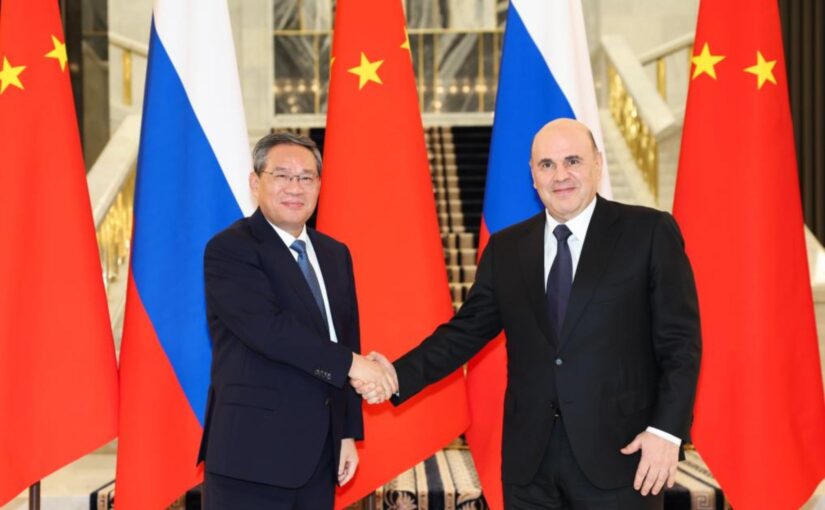
Following his visits to Laos and Vietnam, Chinese Premier Li Qiang paid an official visit to Pakistan, October 14-17, and participated in the 23rd Meeting of the Council of Heads of Government of Member States of the Shanghai Cooperation Organisation (SCO), chaired by Pakistan.

In his address to the heads of government meeting, delivered on October 16, Premier Li noted that:

“At the Astana Summit held last July, President Xi Jinping and fellow leaders of member states reached important understandings on jointly building a common home of the SCO featuring solidarity and mutual trust, peace and tranquility, prosperity and development, good-neighbourliness and friendship, and fairness and justice. This endeavour to build a common home is driven by the values we all share; it focuses on the tough issues we all face, and will help create a future we all desire.”

He expressed the view that this common vision necessitated efforts in five aspects:

  • To build an even more solid political foundation.
  • To provide more reliable security safeguards. “As we speak, geopolitical conflicts, power politics and acts of bullying continue to undermine regional peace and stability, while on such fronts as cyber security and biosecurity, new threats and new challenges continue to emerge. No country is immune, and the only true security is security for all.”
  • To foster closer economic bonds. “The SCO’s continuous expansion of membership in recent years has created more notable economic complementarity among member states. By deepening our economic ties, resisting external attempts at pulling us apart, and tapping into and pooling our respective strengths in resources, market and industries, we will be able to foster even stronger synergy for development.”
  • To cultivate stronger emotional bonds. “Our region is home to diverse and splendid civilisations, where different nations and cultures have interacted and converged with each other throughout the course of history and coexisted in harmony. This has been the source of popular support for cooperation among SCO member states.”
  • To boost coordination in multilateral fora. “Embracing 26 countries from three continents [including Members, Observers and Dialogue Partners], the SCO family is a constructive force that carries important global influence.”

The meeting adopted a Joint Communique, in which:

“The Heads of Delegation noted that the Member States advocate respect for the right of peoples to independently and democratically choose their political, social and economic development, emphasising that the principles of mutual respect for the sovereignty, independence, and territorial integrity of states, equality, mutual benefit, non-interference in internal affairs, non-use of force or threat of use of force, are the basis for the sustainable development of international relations. They reaffirm the commitment to the peaceful settlement of differences and disputes between countries through dialogue and consultations.”

They further noted the tectonic shifts in the global economy, characterised by rapid advancements and interconnectivity in the areas of information technology, digitalisation, artificial intelligence, virtual/digital assets, e-commerce, and so on. They expressed concern over the exacerbation of various challenges that have led to reduced investment flows, disrupted supply chains and caused uncertainty in global financial markets as a result of protectionist measures and other impediments to international trade.

They also opposed protectionist actions, unilateral sanctions and trade restrictions that undermine the multilateral trading system and impede global sustainable development. The heads of delegations emphasised that the unilateral application of sanctions is incompatible with the principles of international law and has a negative impact on third countries and international economic relations.

Recognising the unique role of physical culture and sport in strengthening solidarity and peace, the Heads of Delegations stressed that the SCO Member States will promote the development of international sports cooperation on an equal and depoliticised basis, oppose discrimination against athletes on any grounds, including nationality, language, political and other beliefs, national or social origin. [This refers, in particular, to the discrimination against and exclusion of athletes from member states Russia and Belarus by the Olympic and Paralympic movements as well as some other international sporting bodies.]

The communique further addresses a large number of practical matters across a broad range of subjects.

On October 16, in the margins of the meeting, Li Qiang met with his Russian counterpart Mikhail Mishustin.

Li noted that, under the strategic guidance of President Xi Jinping and President Vladimir Putin, the China-Russia comprehensive strategic partnership of coordination for a new era has maintained a high level of development. The two sides firmly support each other on issues concerning their respective core interests and enjoy fruitful strategic coordination, continued progress in practical cooperation, as well as vigorous people-to-people and sub-national exchanges, delivering tangible benefits to the people of both countries.

Continue reading Li Qiang: The only true security is security for all