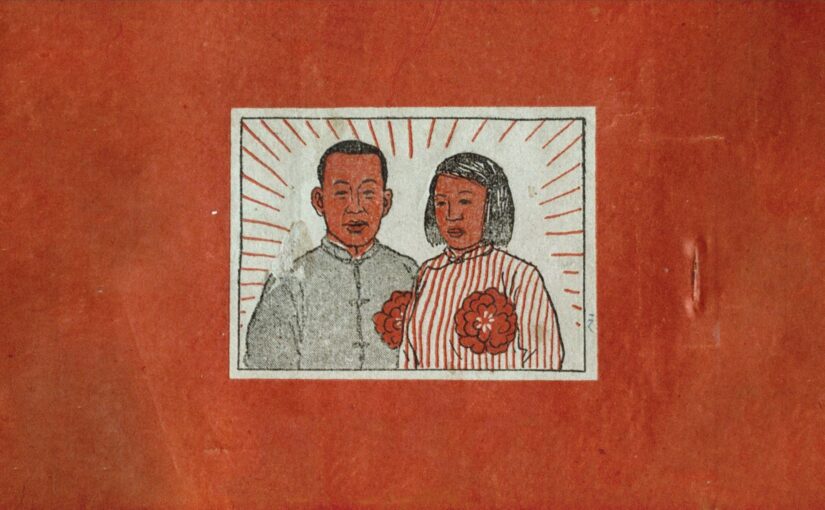
Inside the early push to revolutionise marriage in China

The following article, originally published in Sixth Tone, describes how, 75 years ago, the newly founded People’s Republic of China passed its first law — the 1950 Marriage Law — signalling the revolutionary state’s commitment to social transformation and gender equality. This law took priority because reforming marriage was seen as essential to dismantling feudal traditions that subordinated women and sustained patriarchal family structures. The new legislation enshrined freedom of marriage, monogamy, and gender equality, fundamentally redefining Chinese family life.

However, implementation of the law was predictably complicated. Deep-rooted conservative attitudes persisted, and early inspections revealed violent resistance to reform. Recognising the need for widespread education, the Communist Party launched China’s first national legal awareness campaign. Propaganda posters, songs, illustrated guides, and plays — including new versions of traditional stories like The Butterfly Lovers and Southeast Flies the Peacock — promoted the ideals of free marriage and women’s liberation in accessible, culturally resonant forms.

By 1953, the campaign reached its peak during the “Month of Promoting the Implementation of the Marriage Law,” with factories, schools, and workplaces across China holding lectures, exhibitions, and radio broadcasts.

Though the national campaign formally ended in 1953, its impact was enduring. The Marriage Law not only transformed Chinese social relations but also marked the beginning of a state-led effort to educate citizens in law and equality, embedding women’s rights in the foundations of the new China. While the road to equality and an end to discrimination is a long one, China continues to make impressive progress.

Seventy-five years ago, the People’s Republic of China issued its first law. It wasn’t the Constitution, nor was it the Civil Code — it was the Marriage Law.

This unique level of importance reflected the times. In revolutionary China, marriage reform was a major subject among early 20th-century intellectuals, who felt feudal concepts of family and marriage significantly stifled the individual freedoms of Chinese people — especially women — and hindered their participation in reshaping China. While choosing a partner to marry may be the status quo now, for centuries, families arranged marriages, divorce was rare, and women were subordinate to their husbands. As legal historian Qu Tongzu wrote in the book “Law and Society in Traditional China,” the main purpose of marriage in Imperial China was “to produce offspring to carry on ancestor worship” and was in no way concerned with the couple’s wishes.

Continue reading Inside the early push to revolutionise marriage in China
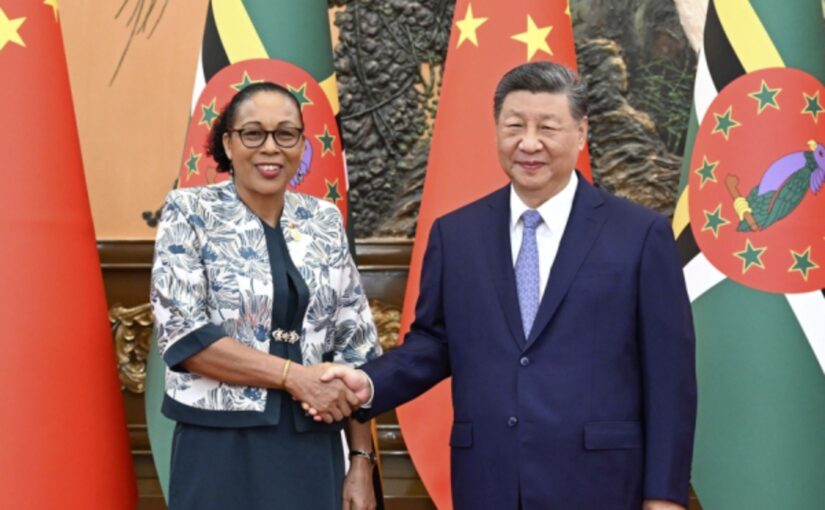
Xi Jinping meets with heads of state and government attending Global Leaders’ Meeting on Women

Following the 2025 Global Leaders’ Meeting on Women, which was held in Beijing on October 13, Chinese President Xi Jinping met the following day with the five heads of state or government – four of them women – who had attended.

Meeting with President of Dominica Sylvanie Burton, President Xi noted that Dominica is China’s good friend and good partner in the Caribbean. Since the establishment of diplomatic ties more than 20 years ago, the two sides have always respected each other and treated each other as equals. With ever consolidating political mutual trust, growing exchanges and cooperation in various fields and deepening friendship between the people, China and Dominica set a good example of friendly cooperation between countries of different social systems and sizes. China will continue supporting Dominica in enhancing capabilities in climate action and disaster prevention and mitigation, strengthen cooperation in such areas as infrastructure, clean energy, healthcare, agriculture and empowerment of women, and enhance people-to-people exchanges in culture, education and tourism. Efforts should be made to implement the consensus reached at the Global Leaders’ Meeting on Women and deepen cooperation on women’s capacity building.

President Burton said that China is a great friend and highly valued partner of Dominica and appreciated China’s valuable support and sincere friendship. Dominica and China share common ideals and pursuits, and deepening bilateral relations will bring bright prospects for the people of Dominica. Dominica is steadfastly committed to the one-China principle. It will enhance cooperation with China in trade, agriculture, the green economy, new energy, healthcare, and climate response, among other areas, strengthen people-to-people exchanges, advance cooperation between Latin America and the Caribbean and China, and write a new chapter in bilateral relations. China is a crucial force for peace and stability in today’s world. Its vision of building a community with a shared future for humanity and commitment to sharing development opportunities with the world and promoting solidarity among the Global South is inspiring and is a beacon of hope for the world. Dominica stands ready to work closely with China to oppose unilateralism and hegemonism and safeguard the common interests of developing countries.

Meeting with Icelandic President Halla Tómasdóttir, President Xi noted that, over the past 54 years since the establishment of diplomatic ties, China and Iceland have respected each other and pursued win-win cooperation. The fruitful outcomes achieved in bilateral relations have fully shown that countries with different national conditions are fully capable of transcending differences in social system and other areas to achieve mutual benefit.

The two sides should deepen practical cooperation in such areas as economy and trade, geothermal energy and healthcare, and jointly promote green transition and address climate change. The two sides should also step up people-to-people exchanges in tourism, education and other fields to enhance friendship and mutual understanding between the two peoples. Both China and Iceland support multilateralism, the international system with the UN at its core and the international order underpinned by international law. The two sides should strengthen communication and coordination, commit to addressing international disputes through dialogue and consultation, and strive for a more just and equitable global governance system. It is important to build on the successful convening of the Global Leaders’ Meeting on Women to promote continued progress in the global cause of women.

President Tómasdóttir congratulated China on the successful hosting of the Global Leaders’ Meeting on Women and appreciated China for the warm reception and full respect shown to a small country like Iceland. Iceland highly appreciates China’s significant contributions to promoting the global women’s cause and will strengthen communication and cooperation with China to advance the all-round development of women worldwide. Iceland and China have enjoyed friendship over decades. The strong and robust bilateral relationship has yielded fruitful results in such areas as trade, geothermal energy and tourism.

Continue reading Xi Jinping meets with heads of state and government attending Global Leaders’ Meeting on Women

China makes firm commitment to advancing the cause of women’s equality at a global level

On 13 October, the 2025 Global Leaders’ Meeting on Women was held in Beijing, on the theme One Shared Future: New and Accelerated Process for Women’s All-round Development. The meeting, co-hosted by China and UN Women, brought together numerous heads of state, government officials and representatives from several continents, and was timed to coincide with the 30th anniversary of the groundbreaking United Nations World Conference on Women that took place in the city in 1995.

China has been a strong, persistent and active supporter of gender equality, adhering to Mao Zedong’s famous phrase that “women hold up half the sky”. As UN Women Executive Director Sima Bahous has remarked, “China’s experience in promoting gender equality offers valuable lessons for the world.”

Gender disparity in education has essentially disappeared in China, with females making up 49 percent of the university student population. Women constitute 43 percent of the workforce, and are well-represented in every field, from science and technology to commerce, from politics to agriculture. Women also make up 31 percent of Communist Party members, a figure which has been steadily increasing in recent decades. Maternal mortality rate has reduced to 15.1 per 100,000 live births, a quarter of what it was 30 years ago. The average life expectancy for Chinese women is 81 years.

A robust legal framework has been constructed to protect and promote women’s rights, including the 1950 Marriage Law enshrining gender equality and marital freedom; the 2016 Anti-Domestic Violence Law; and the 2022 revision of the Law on the Protection of Women’s Rights and Interests, which explicitly bans workplace discrimination. Meanwhile, campaigns raising awareness about women’s rights and opposing gender discrimination and bias have been implemented at all levels of the education system.

In his keynote address to the meeting, President Xi Jinping observed that women’s equality has become a global consensus:

Gender equality has been etched in the agenda of our times, galvanising the whole world in its unwavering pursuit of that goal… Equality between men and women is now a universal consensus of the international community. It has been included in United Nations development agenda and priority development targets, and 189 countries have ratified the Convention on the Elimination of All Forms of Discrimination against Women.

He further noted that, “thanks to years of hard work, we have secured historic achievements and seen historic changes in the cause of women in China.”

We have reduced maternal mortality ratio by nearly 80 percent since 1995, and joined the leading upper-middle-income countries in core indicators for maternal and child health. Today, women in China truly “hold up half the sky” in economic and social development. They make up more than 40 percent of the workforce, more than half of internet start-up founders, and more than 60 percent of all medalists in the past four Summer Olympic Games. In the new era, Chinese women, more confident and vibrant than ever before, are taking part in the whole process of state and social governance. They are fighting on the front lines for rural revitalisation and common prosperity as well as scientific innovation and digital transition. They are writing a splendid history of the cause of women in China. On the new journey of Chinese modernisation, every woman is a star.

Nonetheless, there is a great deal of work remaining to be done in this field, both in China and globally. “Complex challenges still hamper women’s all-round development… Deep-rooted problems such as violence and discrimination still persist, the gender digital divide is widening, and equality between men and women remains a lofty yet arduous task.” Xi called on all countries to “improve mechanisms against violence and resolutely crack down on all forms of violence against women” and to “improve institutions and laws, introduce further tangible and accessible policy measures, channel more quality health and educational resources to all women, and strive to afford all women full and equal enjoyment of various rights”.

Xi’s speech concluded with a promise of substantial support for global projects in support of women’s equality.

To further support the global cause of women, I’d like to make the following announcement: In the next five years, China will donate another 10 million US dollars to UN Women; earmark a quota of 100 million US dollars in China’s Global Development and South-South Cooperation Fund for implementing development cooperation projects for women and girls in collaboration with international organisations; launch 1,000 “small and beautiful” livelihood programs with Chinese assistance that take women and girls as priority beneficiaries; invite 50,000 women to China for exchange and training programs; and establish a Global Center for Women’s Capacity Building, which is aimed at conducting capacity building and other development cooperation with relevant countries and international organisations to train more female talent.

We publish below the text of Xi Jinping’s speech, originally published in Xinhua, as well as a recently published detailed white paper from China’s State Council Information Office, entitled China’s Achievements in Women’s Well-Rounded Development in the New Era, originally published in English on Global Times.

Carrying Forward the Spirit of the Beijing World Conference on Women and Promoting the New and Accelerated Process for Women’s All-Round Development

Keynote Address by H.E. Xi Jinping President of the People’s Republic of Chin at the Opening Ceremony of the Global Leaders’ Meeting on Women, Beijing, October 13, 2025

Distinguished Colleagues and Guests,

Ladies and Gentlemen,

Friends,

Continue reading China makes firm commitment to advancing the cause of women’s equality at a global level

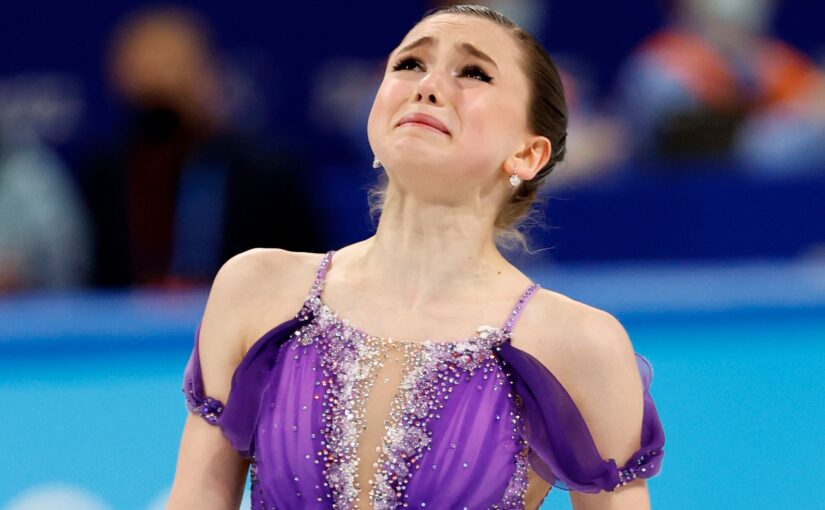
Kamila Valieva and Eileen Gu: Young Women Athletes as Enemies of Empire

In this article, originally published by Countercurrents, women’s historian Linda Ford analyzes and condemns the misogynist and racist animus directed by US imperialism towards two outstanding teenage woman athletes, Gu Ailing (Eileen Gu) of China and Kamila Valieva of Russia, in the service of the new Cold War.

As Ford rightly concludes:

“Here is hegemonic politics, and ruthless patriarchy and racism, coming together. And here are two remarkably strong and level-headed young women athletes who are braving the results of being who they are. In its overwhelming power, the US Empire has made evil all things Chinese and Russian, and women athletes have not been spared the weaponizing of that hate.”

As one who has followed Olympic women’s figure skating, especially since Michelle Kwan (ironically a Chinese-American), I was—as an egalitarian feminist when it comes to sports—excited to learn that there was a 15-year-old Russian woman skater, Kamila Valieva, who could do effortless quad jumps.  Waiting in anticipation of her first Olympic performance, I listened to commentators and former US skaters Tara Lipinsky and Johnny Weir rave about her spectacular talent.  They told the audience that we were about to see “the best skating in the world”…that “a talent like this comes around once in a lifetime.”  They found her first performance in the short skate “incredible… flawless… perfect in every way.”  It was, they said, a rare privilege to watch her perform:  “she will have an amazing legacy.”  Days later they would say nothing watching her perform.

Continue reading Kamila Valieva and Eileen Gu: Young Women Athletes as Enemies of Empire

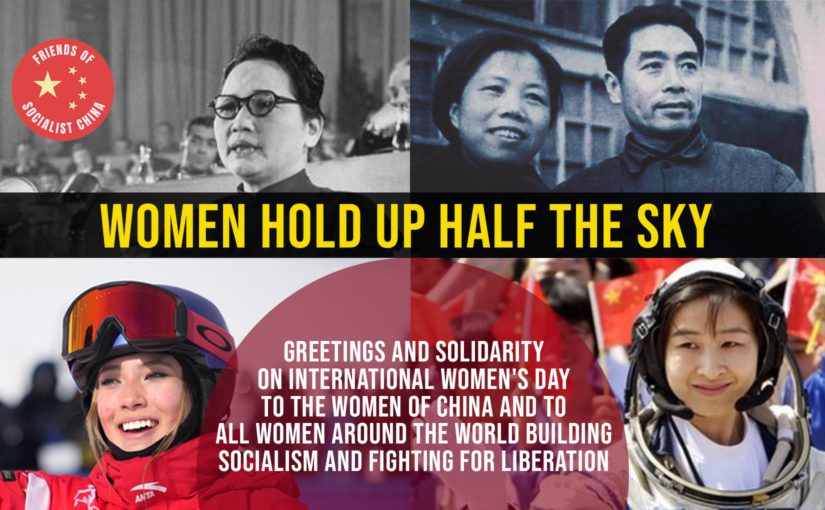
Greetings on International Women’s Day

Greetings and solidarity on International Women’s Day to the women of China and to all women around the world building socialism and fighting for liberation.