China at COP30: unswervingly promote green development and build a beautiful world of harmony between humanity and nature

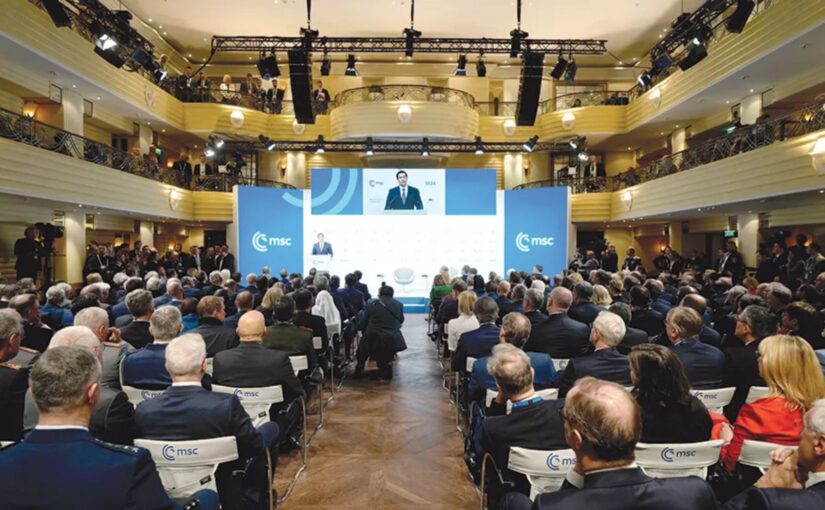
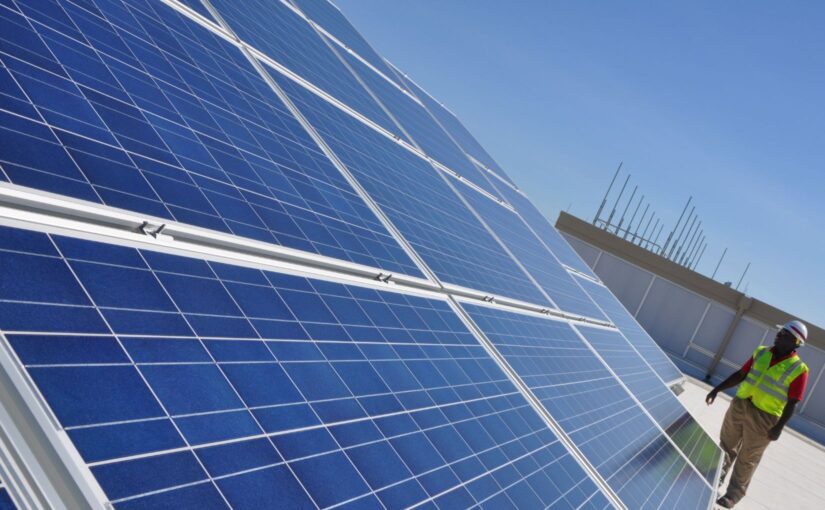
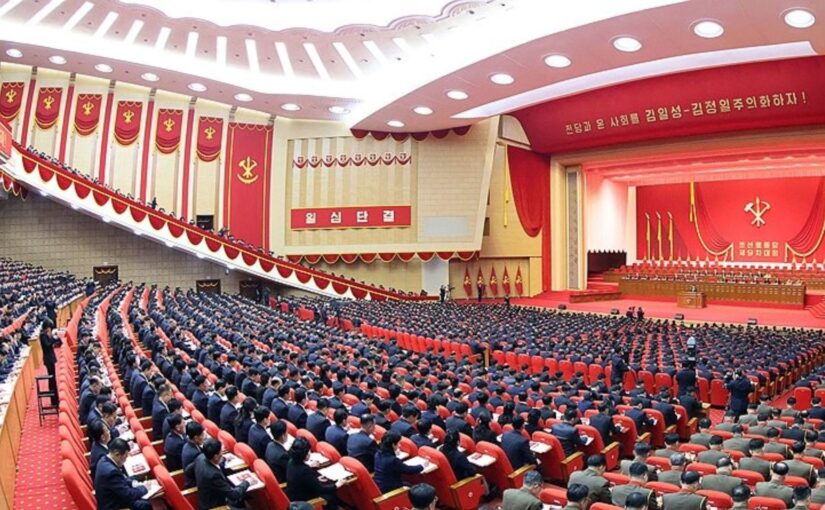
At the Belém Climate Summit, Chinese Vice Premier Ding Xuexiang praised Brazil’s leadership in global climate governance and expressed support for a successful COP30. Marking the 10th anniversary of the Paris Agreement, he stressed that global climate action has entered a critical phase. Ding highlighted China’s progress toward its 2030 goals, noting it has already surpassed targets for wind and solar capacity and forest stock, and highlighting the country’s 2035 Nationally Determined Contributions, which include its first absolute emissions-reduction target.

Vice Premier Ding emphasised that China will accelerate a comprehensive green transition across its economy as part of the 15th Five-Year Plan, guided by goals for peak carbon and carbon neutrality, and reiterated that China is a country that honours its commitments.

China will accelerate the green transition in all areas of economic and social development, work actively and prudently toward peak carbon emissions, and make greater contributions to addressing climate change.

Ding urged the assembled representatives from around the world to stay on the path of green, low-carbon development while balancing environmental goals with growth, jobs, and poverty reduction; to translate commitments into concrete action, upholding the principle of common but differentiated responsibilities, with developed nations taking the lead in emissions cuts and financing; and to deepen openness and cooperation, removing trade barriers and boosting collaboration on green technology and industries.

He concluded: “China is ready to work with all parties to unswervingly promote green and low-carbon development and build a beautiful world of harmony between humanity and nature.”

We republish the full speech below. It was originally published in English on the website of the State Council of the People’s Republic of China.

Remarks by H.E. Ding Xuexiang
Special Representative of President Xi Jinping,
Member of the Standing Committee of the Political Bureau of The CPC Central Committee, and
Vice Premier of the State Council of the People’s Republic of China
At the Belem Climate Summit
Belem, November 6, 2025

Your Excellency President Luiz Inacio Lula da Silva,

Colleagues,

Good morning! It gives me great pleasure to attend the Belem Climate Summit as the special representative of Chinese President Xi Jinping. First of all, I have the honor to convey the best wishes from President Xi Jinping to Brazil for hosting this Summit. President Xi Jinping highly commends the important contributions made by the Brazilian Presidency to global climate governance, and wishes COP30 a full success.

Continue reading China at COP30: unswervingly promote green development and build a beautiful world of harmony between humanity and nature

Lao and Chinese communists discuss theory

The Communist Party of China (CPC) and the Lao People’s Revolutionary Party (LPRP) held their 13th Theoretical Seminar, November 10-11, in the Lao province of Champassak. The Chinese delegation was headed by Li Shulei, Member of the Political Bureau, Secretary of the Secretariat, and Head of the CPC Central Committee’s Publicity Department.

Thongloun Sisoulith, LPRP General Secretary and President of the Lao People’s Democratic Republic, met with Li on November 11, on the conclusion of the seminar.

President Thongloun warmly welcomed the delegation, noting that the visit represented a meaningful contribution to strengthening the traditional friendship and comprehensive strategic partnership between the two Parties and nations. He emphasised that the visit exemplified the “Four Good” principles of Laos-China relations – good neighbours, good friends, good comrades, and good partners.

The President underscored the importance of the 13th Theoretical Seminar as a significant platform for sharing experiences in Party building, state governance, and national administration. He highlighted that the seminar’s theme was particularly relevant as both Parties are preparing their new five-year socio-economic development plans aimed at advancing socialist development in each country.

For his part, Li Shulei expressed his gratitude for the warm reception and extended congratulations to Laos on the forthcoming 50th anniversary of the founding of the Lao People’s Democratic Republic. He also conveyed his best wishes for the success of the 12th National Congress of the Lao People’s Revolutionary Party, scheduled for early 2026. He further commended the recent meeting between President Thongloun and President Xi Jinping in Beijing in September 2025, describing it as substantive and forward-looking.

Following his visit to Laos, Li Shulei continued to Vietnam, where he attended the 20th theory seminar between the CPC and the Communist Party of Vietnam.

The following article was originally published by the KPL Lao News Agency. A report was also carried by the Xinhua News Agency.

State President and Party General Secretary Thongloun Sisoulith received a senior delegation from the Communist Party of China (CPC) led by Mr. Li Shulei, Member of the Political Bureau, Secretary of the Secretariat, and Head of the CPC Central Committee’s Publicity Department.

The meeting took place on 11 November 2025 at the Lao People’s Revolutionary Party (LPRP) Central Office in Vientiane. The Chinese delegation visited Laos to attend the 13th Lao–Chinese Theoretical Seminar, held from 10 to 11 November in Champassak Province.

President Thongloun warmly welcomed the delegation, noting that the visit represented a meaningful contribution to strengthening the traditional friendship and comprehensive strategic partnership between the two Parties and nations. He emphasized that the visit exemplified the “Four Good” principles of Laos–China relations — good neighbours, good friends, good comrades, and good partners.

He also commended the close cooperation between the Central Publicity and Training Boards of the two Parties and encouraged both sides to continue enhancing collaboration and information exchange.

The President underscored the importance of the 13th Theoretical Seminar as a significant platform for sharing experiences in Party building, state governance, and national administration. He highlighted that the seminar’s theme was particularly relevant as both Parties are preparing their new five-year socio-economic development plans aimed at advancing socialist development in each country.

For his part, Mr. Li Shulei expressed his gratitude for the warm reception and extended congratulations to Laos on the forthcoming 50th anniversary of the founding of the Lao People’s Democratic Republic. He also conveyed his best wishes for the success of the 12th National Congress of the Lao People’s Revolutionary Party, scheduled for early 2026.

Mr. Li commended the recent meeting between President Thongloun and President Xi Jinping in Beijing in September 2025, describing it as substantive and forward-looking. He noted that the outcomes of the meeting would provide further guidance for strengthening cooperation between the two Parties and countries.

He expressed confidence that, under the leadership of both Parties, China–Laos relations will continue to deepen, becoming more effective and comprehensive in the years to come.

Palestine, Venezuela and China, united in the struggle against imperialism

The following is the text of a speech given by Russel Harland, representing Friends of Socialist China’s Britain Committee, at an event held on 15 November at Bolívar Hall in London on the theme Viva Venezuela: stand against fascism, imperialism and war.

Russel argues that the world is entering a historic period of crisis and transformation marked by imperialist violence, economic oppression, and popular resistance. Drawing a line from colonialism to contemporary neoliberalism, he cites the genocide in Gaza as the culmination of imperialism’s lawless depravity, enabled by the complicity of Western governments, including that of Britain.

The speech links Palestine’s struggle against colonial oppression to US attempts to impose regime change on Venezuela, driven by its socialist orientation, its natural resources, and its close friendly relations with China and other countries that refuse to bend to US diktat. In general, the crises we are witnessing form part of the West’s response to the global multipolar shift, driven in large part by China’s rise – a “megatrend” that Western elites increasingly openly cannot prevent or reverse.

The speech concludes that defending working class interests in Britain requires supporting sovereignty and anti-imperialist struggles globally as part of a revolutionary moment demanding systemic change.

Dear friends and comrades,

It is a pleasure to speak with you today as a representative of Friends of Socialist China during what are terrifyingly dangerous times.

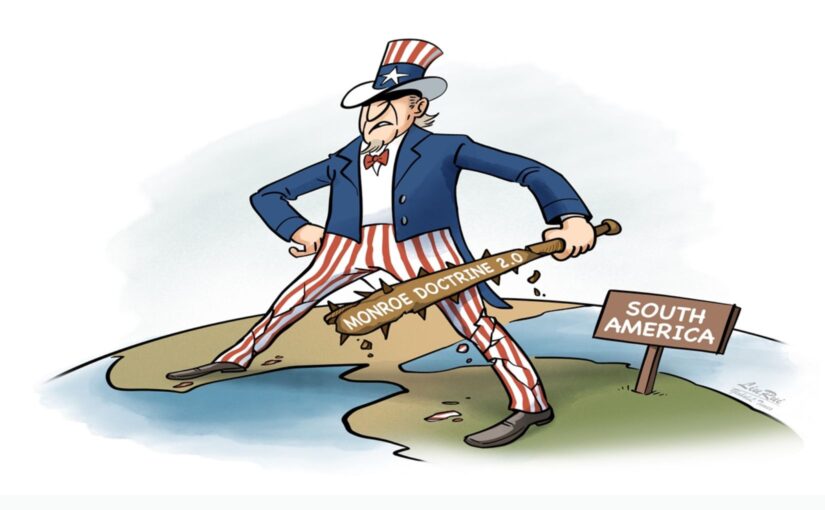
From the Monroe Doctrine to the Opium Wars, to the Balfour Declaration and beyond, oppressed and working-class people globally have faced a unified war of subjugation by the forces of capitalism, colonialism and imperialism. Ordinary people around the world have been dehumanised, demonised, oppressed and repressed, and their scope for economic development has been systematically constrained.1

Yet in the decaying world of neo-liberalism, capitalism’s most brutal guise2, the ongoing genocide in Gaza has propelled imperialists to the zenith of their lawless depravity. This is a watershed moment that corresponds with the Communist Party of China’s statement in its new Five-Year Plan, that “internationally, momentous changes of a magnitude not seen in a century are unfolding across the world at a faster pace”.

Continue reading Palestine, Venezuela and China, united in the struggle against imperialism

China explains its abstention in UN Gaza vote

On November 17, the United Nations Security Council (UNSC) adopted Resolution 2803 (2025), which sets out proposed post-war arrangements for the Palestinian territory of Gaza. The resolution was adopted with 13 votes in favour and no votes against. China and Russia abstained from the vote. As permanent members of the Security Council, a negative vote by either country would have vetoed the resolution.

Following the vote, China’s UN Ambassador Fu Cong made an explanatory statement. He began by stating that:

“Gaza, brutalised by two years of war, is a land of ruins in dire need of rebuilding. Over two million people continue to live in deprivation and struggle in displacement. China supports the Security Council in taking all necessary actions to achieve a lasting ceasefire, relieve the humanitarian disaster, and launch post-war reconstruction to rekindle the hope of peace and development for the people in Gaza.”

However, he added: “Regrettably, the draft resolution that was just voted on is lacking in many respects and is deeply worrisome” and went on to set out four points in this regard:

  • The draft resolution is vague and unclear on many critical elements. The penholder requests the Council to authorise the establishment of a Board of Peace and international stabilisation force, which will play a key role in the post-war governance in Gaza. It should have explained in details their structure, composition, terms of reference, and criteria of participation, among others… However, the draft resolution contains skimpy details on these critical elements.
  • The draft resolution does not demonstrate the fundamental principle of Palestinians governing Palestine. Gaza belongs to the Palestinian people, not to anyone else. Any post-war arrangements must respect the will of the Palestinian people… The draft resolution outlines post-war governance arrangements for Gaza, but it seems that Palestine is barely visible in it, and the Palestinian sovereignty and ownership are not fully reflected.
  • The draft resolution does not ensure the effective participation of the UN and its Security Council… The UN has ample experience and capacities in post-conflict recovery and economic reconstruction and should therefore play a vital role in Gaza’s post-war governance. However, no such arrangement is made in the draft resolution. 
  • The draft resolution is not a product of full consultations among Council members. Less than two weeks after introducing the draft resolution, the penholder rushed the Council into making a critical decision on the future and destiny of Gaza. Council members responsibly engaged in the consultations, raising a lot of constructive questions and suggestions, but most of them were not taken on board.

However: “Notwithstanding the above-mentioned many issues in the draft resolution and China’s major concerns about it, considering the fragile and severe situation in Gaza, the imperative of maintaining the ceasefire, and the positions of the regional countries and Palestine, China abstained in the vote. It must also be noted that our concerns and worries remain… The Palestinian question lies at the heart of the Middle East issues. It is a matter about international equity and justice… China has always firmly supported the just cause of the Palestinian people in restoring their legitimate national rights. We stand ready to work with the international community to make unremitting efforts for a comprehensive, just, and lasting solution to the Palestinian question.”

Continue reading China explains its abstention in UN Gaza vote

Xi Jinping greets Ireland’s new left-wing President

Catherine Connolly was sworn in as the tenth president (and the third woman president) of the Republic of Ireland on November 11, succeeding Michael D. Higgins, who had completed the constitutionally mandated limit of two terms of office.

Chinese President Xi Jinping sent a congratulatory message to his Irish counterpart on her assumption of office and noted that over the past 46 years since the establishment of diplomatic ties between China and Ireland, the two countries have jointly achieved remarkable development progress through mutual learning and friendly cooperation.

Xi said that he attaches great importance to the development of China-Ireland relations and stands ready to work with Connolly to enhance political mutual trust, carry forward the traditional friendship, jointly support multilateralism and free trade and promote the continuous development of the China-Ireland mutually beneficial strategic partnership to better benefit the two peoples.

Catherine Connolly, an Independent TD (member of the Irish parliament) since 2016, won a landslide victory, taking 63 percent of the vote. Key to her victory was an unprecedented unity among broad sections of the Irish left, something that is already being seen as a template for, and harbinger of, a future left government in Ireland, as well as holding important lessons for the left in Europe and elsewhere.

Seven parties represented in the Irish parliament united to back her campaign, namely Sinn Féin, the Irish Labour Party, the Social Democrats, People Before Profit, 100% Redress, Solidarity, and the Green Party. (Incidentally the first three named parties backing the election of Ireland’s third woman president are also currently led by women.)  They were joined by a number of left and progressive independents (many of whom play significant roles in Irish politics), as well as cultural and other personalities, including Kneecap and (from a previous generation and from Connolly’s own County Galway) the Saw Doctors. A number of smaller left and republican parties, including the Communist Party of Ireland, Éirígí – For A New Republic, the Workers’ Party of Ireland and the Socialist Party of Ireland, also expressed support for her campaign.

Connolly stood on a clear anti-imperialist and pro-working-class platform, which included:

  • Defence of Irish neutrality;
  • Opposition to imperialist war, the militarisation of the European Union and German rearmament;
  • Opposition to the Gaza genocide and clear support for Palestinian self-determination and a Free Palestine;
  • Support for Irish reunification and an end to partition as an inevitable trend;
  • Promotion of the Irish language;
  • Opposition to racism; and
  • Urgent measures to tackle the housing crisis, which is one of the most acute problems currently faced by working people in Ireland.

Her campaign made astute use of social media and won wide support from young people, including through highlighting the 68-year-old’s sporting prowess.

Speaking at her inauguration, President Connolly said:

“The people have spoken and have given their President a powerful mandate to articulate their vision for a new Republic.

“A Republic worthy of its name where everyone is valued and diversity is cherished, where sustainable solutions are urgently implemented and where a home is a fundamental human right.

“The change that led to this joyful day began with a small group of elected representatives and volunteers facing what appeared to be insurmountable challenges.

“We were led to believe that it was too great a leap, that our ideas were too far out, too left, at odds with the prevailing narrative.

“In shared conversations all over the country, however, it became evident that the dominant narrative did not reflect or represent people’s values and concerns… We saw the emergence of hope, we saw the emergence of joy, along with the courage and determination of people to use their voices to shape a country that we can be proud of.”

Continue reading Xi Jinping greets Ireland’s new left-wing President

China mourns veteran DPRK leader Kim Yong Nam

China expressed its deep condolences on the passing of Kim Yong Nam, former Chairman of the Standing Committee of the Supreme People’s Assembly of the Democratic People’s Republic of Korea (DPRK).

Kim, who had also served as the DPRK’s Foreign Minister for many years and was virtually synonymous with his country’s diplomacy, died on November 3, 2025 at the age of 97 from multiple organ failure after battling cancer.

Noting that Kim was an old friend of the Chinese people, Foreign Ministry spokesperson Mao Ning told a daily news briefing on November 4, that during his lifetime, Kim had led delegations on many visits to China and made important contributions to promoting the development of the traditional friendly and cooperative relations between China and the DPRK.

An official obituary issued by the DPRK said that:

The life of Kim Yong Nam was a brilliant one in which he was highly honoured for his allegiance to the revolution with pure loyalty and high ability.

He, who left to study abroad in the early days of building a democratic state, returned home in July 1952, when the homeland experienced a fierce war, and devoted himself to training Party cadres at the then Central Party School. He worked at the Central Committee of the Workers’ Party of Korea (WPK) from the mid-1950s to the first half of the 1960s, contributing to enhancing the external prestige of the Party and conducting dynamic work with the progressive forces supporting and encouraging our cause in the international arena.

After working as a Vice-Minister of Foreign Affairs for four years, he successively held an important post in the field of international affairs of the Party from September 1967. In the period, he displayed strict principle and high practical ability in the important and difficult work of modeling the whole Party on the revolutionary idea of the leader, exposing and frustrating the moves of the counterrevolutionary forces that left a stain in the history of the world socialist movement and defending the revolutionary character and authority of our Party.

Since 1983, he had conducted dynamic political and diplomatic activities to defend the rights and interests of the dignified DPRK in the international arena for nearly 20 years as a Vice-Premier of the Administration Council and Foreign Minister.

In the days when he devoted all his wisdom and energy to thoroughly implementing the foreign policy of the state with independence, peace and friendship as its main idea, he made a great contribution to expanding the scope of the DPRK’s external relations and creating an environment favorable for socialist construction.

Continue reading China mourns veteran DPRK leader Kim Yong Nam

Chinese and Vietnamese communists discuss the path and practice of socialism in the 21st century

The Communist Parties of China and Vietnam held their 20th theory seminar in Vietnam’s northern Ninh Binh province on November 12 under the theme, “The path and practice of socialism in the 21st century.”

Both parties were represented at Politburo level. The Communist Party of China (CPC) delegation was headed by Li Shulei, Politburo member, Secretary of the CPC Central Committee’s Secretariat, and head of the Publicity Department of the CPC Central Committee, while the Communist Party of Vietnam (CPV) delegation was led by Nguyen Xuan Thang, Politburo member, Chairman of the Central Theory Council, and President of the Ho Chi Minh National Academy of Politics. Attending the seminar were representatives of ministries, central agencies, and localities, along with scientists, experts, and scholars from both countries, as well as the Chinese Ambassador to Vietnam.

CPC General Secretary Xi Jinping and CPV General Secretary To Lam both sent congratulatory letters to the seminar.

In the letters, the two leaders affirmed the important role of this highest-level theory exchange mechanism between the two Parties, reflecting their strategic vision, close bond, and shared responsibility in safeguarding, applying, and creatively developing Marxism-Leninism in accordance with each country’s realities, as well as demonstrating the high level of political trust between the two Parties and nations.

Xi Jinping said that both the CPC and the CPV uphold and develop Marxism, unswervingly follow the socialist path, and lead their respective countries in socialist construction, facing many of the same or similar issues of the times.

The two parties have carried out in-depth exchanges of experience in governance, jointly explored a socialist modernisation path that suits their national conditions, and worked together to promote the localisation and modernisation of Marxism and the development of the world socialist movement, constantly writing a new chapter of friendship of “comrades plus brothers” in the new era.

He also called for joint efforts to deepen theoretical discussions and academic exchanges, and to jointly enhance their understanding of the laws that underlie governance by a Communist party, socialist construction, as well as the development of human society, so as to provide theoretical support for the socialist cause of both countries and the construction of the China-Vietnam community with a shared future, and contribute to the noble cause of human peace and development.

To Lam affirmed that the CPV stands ready to work with the CPC to further deepen theory cooperation and share experiences in Party building, national development, and social governance, thereby promoting the development of socialist theory in the context of globalisation and the Fourth Industrial Revolution, for the benefit of the peoples of both countries and for a brighter future for socialism worldwide.

At a meeting between the two heads of delegations, the host congratulated China on its recent achievements, including the successful convening of the fourth plenary session of the 20th CPC Central Committee and the adoption of the orientation for formulating the 15th Five-Year Plan. He reaffirmed that Vietnam always attaches great importance and gives top priority to relations with China.

Li affirmed that the CPC firmly believes in and supports the CPV in successfully organising its 14th National Congress, opening a new era of development for Vietnam. He added that China always prioritises the development of relations with Viet Nam in its neighbourhood diplomacy.

Continue reading Chinese and Vietnamese communists discuss the path and practice of socialism in the 21st century

Why is the West waging a propaganda war against China?

In the following text, based on a speech given by at a Black Liberation Alliance day school in London, Carlos Martinez explains why China’s rapid rise and its policy of win-win cooperation with the Global South threaten Western hegemony and fuel today’s New Cold War.

Carlos begins by emphasising the extraordinary scale of China’s transformation: from one of the poorest countries in the world just 75 years ago to a global leader in renewable energy, infrastructure, telecommunications, AI, electric vehicles and other advanced technologies. This economic and technological leap has been accompanied by vast improvements in living standards – average life expectancy has risen from 35 in 1949 to 79 today – and China is steadily pursuing “modernisation of common prosperity,” ensuring the fruits of development are reaped by the whole population.

Carlos contrasts this progress with the West’s neoliberal trajectory of inequality and stagnation. Crucially, China’s rise has not been based on colonialism or war. Instead, China aligns itself with the Global South, strengthens multipolar institutions such as BRICS and the SCO, and forms partnerships grounded in sovereign equality and mutual benefit. China’s investments in Africa, Asia, Latin America and the Caribbean come without the coercive conditionalities typical of Western trade and investment relationships.

China therefore challenges imperialism both materially and ideologically. Materially, it helps countries escape underdevelopment while defending their sovereignty. Ideologically, it presents the pre-eminent modern example of a socialist-oriented model delivering prosperity, stability and green development. As living standards for Chinese workers approach – and start to surpass – those in Western countries, the legitimacy of Western capitalism weakens by the day.

In response, the US and its allies are escalating their long-term containment campaign in addition to waging a propaganda war which portrays China as authoritarian, repressive, expansionist and predatory. Carlos concludes that progressive and anti-war forces in the West have a vital responsibility to challenge this war propaganda and stand in solidarity with China and the Global South.

I’ve been asked to speak about why China’s rise and its programme of win-win cooperation with the Global South pose such a threat to western hegemony – and how that manifests itself in a New Cold War and as red scare propaganda.

The first thing then is to understand the dimensions of China’s rise, which is really nothing short of remarkable.

China has gone from being one of the poorest and most technologically backward countries in the world, to being the world’s second largest economy in terms of nominal GDP, the world’s largest economy in terms of purchasing power parity, the world’s only renewable energy superpower, a world leader in telecommunications, advanced infrastructure, high speed rail, artificial intelligence, electric vehicles, quantum computing, space exploration, and a whole range of other cutting edge technologies.

And these advances have taken place in combination with an unprecedented improvement in living standards for ordinary people. China’s average life expectancy in 1949, at the time of the founding of the People’s Republic of China, was approximately 35 years, substantially below the global average. Today it’s 79 years, substantially above the global average, and surpassing that of the United States (actually in terms of its healthy lifespan, China is many years ahead of the US). The draft of the 15th Five Year Plan, which will kick off next year, sets out a roadmap for life expectancy to reach at least 80 years by 2030, which will put China in a very exclusive club.

Continue reading Why is the West waging a propaganda war against China?

Socialist countries briefed on China’s Fourth Plenum

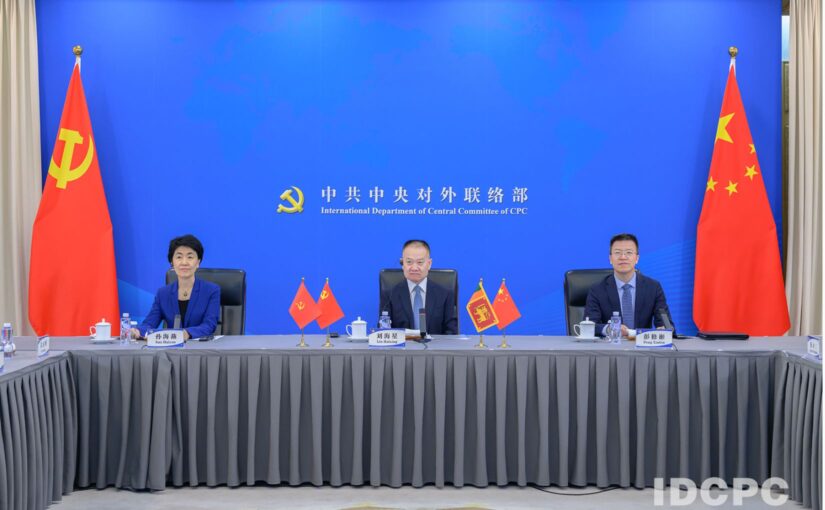
Following the October 20-23 Fourth plenary meeting of the 20th Central Committee of the Communist Party of China (CPC), whose main agenda was to work on developing the country’s 15th Five-Year Plan for National Economic and Social Development, Liu Haixing, Minister of the International Department of the CPC Central Committee (IDCPC), met separately with the ambassadors of the other socialist countries to China to brief them on the main points of the session.

He met first with Pham Thanh Binh, Vietnamese Ambassador to China, on October 31.

Liu said, in recent years, under the personal guidance and active involvement of the general secretaries of the two Parties, the relations between the two Parties and the two countries have enjoyed vigorous development, setting a fine example of common progress, solidarity and cooperation between socialist countries and developing countries.

Having briefed on the main outcomes of the plenary session, he noted that the scientific formulation and successive implementation of the five-year plan are important governance experience shared by both the CPC and the Communist Party of Vietnam (CPV), as well as key political advantages of the socialist systems of the two countries. China stands ready to strengthen exchanges and mutual learning with Vietnam, share development opportunities, and work hand in hand along the path toward socialist modernisation.

Pham Thanh Binh said, under the strategic guidance of the top leaders of the two Parties and the two countries, the relations between Vietnam and China have achieved breakthroughs in various fields and are currently at the best stage in history. The inter-party relations between Vietnam and China play an important leading role in the bilateral relations. He believed that the goals of the 15th Five-Year Plan period (2026-2030) will be smoothly achieved and will also bring new dividends to Vietnam-China cooperation.

On November 5, Minister Liu met with Ri Ryong Nam, Ambassador of the Democratic People’s Republic of Korea (DPRK) to China, as well as with Somphone Sichaleune, Lao Ambassador to China.

Speaking with the DPRK Ambassador, Liu said that the most important outcome of the session is the adoption of the Recommendations of the Central Committee of the CPC for Formulating the 15th Five-Year Plan for National Economic and Social Development, which has provided the top-level design and strategic planning for China’s development over the next five years. It marks another overall mobilisation and deployment as China seizes the momentum and advances the construction of Chinese modernisation and will undoubtedly have a significant and far-reaching impact on the causes of the CPC and the country. China is willing to work with the DPRK to implement the important consensus reached by the top leaders of the two Parties and countries, carry forward this fine tradition, strengthen communication and cooperation, and make due contributions to the development of bilateral relations.

Ri Ryong Nam thanked China for briefing the DPRK on the spirit of the fourth plenary session of the 20th CPC Central Committee. He said, this demonstrated the importance and trust that the CPC and the Chinese government placed on the WPK and the DPRK government, and their cherishing of the DPRK-China friendship. He noted that the adoption of the Recommendations of the Central Committee of the CPC for Formulating the 15th Five-Year Plan for National Economic and Social Development at the plenary session is not only of great significance to building socialism with Chinese characteristics, but also a tremendous encouragement to progressive forces worldwide, especially socialist countries and their people. The DPRK is willing to work with China to implement the important consensus reached by the top leaders of the two Parties and countries, and to promote greater development in DPRK-China relations.

This was Minister Liu’s second meeting with the DPRK Ambassador since his recent appointment to head the IDCPC.

Continue reading Socialist countries briefed on China’s Fourth Plenum

Former British MP extols Xizang’s development

We are pleased to republish the below interview with British political figure Mark Logan, which was originally published by Global Times on November 10, following his visit to the Xizang (Tibet) Autonomous Region, where he participated in the 2025 Forum on the Development of Xizang and visited Nyingchi City.

Logan stated that: “Despite its sparse population, high-altitude terrain and logistical challenges, Xizang has witnessed the common Chinese characteristics of success in the snow-covered plateau over past decades. Its level of infrastructure development is remarkable. Driving from Nyingchi Mainling Airport to the city, I witnessed modern highways winding through difficult landscapes – a testament to engineering feats seldom seen elsewhere.”

Regarding the status of the Tibetan language, he observes: “What impressed me most was the vibrant preservation and everyday use of the Tibetan language. Unlike certain Celtic languages in Northern Ireland – my homeland in the UK – which face varying degrees of endangerment, the Tibetan language is visibly alive in Xizang: on street signs, at formal occasions and in daily conversations among locals. It’s a living language, not a relic.” [Logan refers here to the Irish language along with Ulster Scots, also known as Ullans.]

Similarly: “Tibetan medicine also left a lasting impression… This form of medicine is not only culturally significant but also holds potential for broader commercial and wellness applications. These experiences reflect a living culture, well-integrated into modern life in the region.”

He also addressed the question of the natural environment: “Xizang’s natural landscape is truly stunning, distinguished by its incomparable scale and pristine condition. This is due in large part to the Chinese government’s firm commitment to ecological conservation. It is remarkable that more than 50 percent of Xizang’s total land area has been listed under ecological conservation protection. I observed no signs of pollution during my travel from Nyingchi to other parts of Xizang. This reflects a successful balance between environmental preservation and economic development – a model many nations struggle to achieve. This alignment of ecological and economic goals is not only inspiring but globally significant.”

He added: “It is unfortunate that some Western developed countries often criticise or attempt to corner China on issues like human rights. From my perspective, however, China demonstrates the right approach in terms of governance and public welfare. Though already boasting advanced infrastructure and a strong economy, China remains a developing nation in the most meaningful sense. It is not a static society, but a developing one: always evolving, always striving to deliver better lives for its people, which stands in stark contrast to the static perception of ‘developed societies.’”

Saying that, “based on my firsthand experience, I find many Western media narratives disconnected from the reality,” he concluded:

“We should encourage more people, including intellectuals, nature enthusiasts, climate researchers, linguists and culture seekers, to visit China, learn Putonghua and see it firsthand. That would do more to foster understanding than any political rhetoric.”

Formerly a British diplomat in Shanghai, Logan served as the Conservative Party MP for the north England constituency of Bolton North East, December 2019-May 2024. When then Prime Minister Rishi Sunak called a general election, he announced that he had quit the Conservatives and joined the Labour Party. He did not seek re-election to parliament. Whilst in parliament, he also served as a Vice Chair of the All-Party Parliamentary Group (APPG) on China.

GT: You recently participated in the 2025 Forum on the Development of Xizang and visited Nyingchi City in Southwest China’s Xizang Autonomous Region. Could you share the most unforgettable experiences from this trip? What unique impressions has Xizang left you with, and how does it differ from your experiences in other Chinese provinces and regions?

Continue reading Former British MP extols Xizang’s development

The US war on China, Venezuela and the international left

Over the past two months, the US has been engaged in an alarming military buildup around Venezuela, launching lethal strikes in international waters and openly weighing plans for direct attacks on Venezuelan territory. It is the largest US military concentration in the region in decades.

The arrival of the USS Gerald R Ford, the world’s largest aircraft carrier, along with three destroyers and more than 5,500 troops, has heightened fears of imminent assault. The Ford joins roughly 10,000 US troops already stationed in the region. Ostensibly, these deployments are to counter drug trafficking, but Washington has provided exactly zero to substantiate any such threat. Since early September, US forces have carried out at least 19 airstrikes, killing nearly a hundred people on boats in international waters. These attacks have been widely denounced as being extrajudicial killings and blatant violations of international law.

The article below, written by CODEPINK activists Megan Russell and Michelle Ellner for Counterpunch, argues that the escalation against Venezuela is part of a multi-front war – domestically through repression and abroad through sanctions, tariffs, proxy wars and military aggression – to maintain US hegemony; to assert control over natural resources; and to subvert the global trajectory towards a multipolar world. The US push for war against both China and Venezuela “is but a violent reaction to the impending truth that US hegemonic status is slipping, and with it, its control on global resources, political power, and the ability to dictate the terms of development and sovereignty for the rest of the world.”

A similar point is made by Jeremy Corbyn in a piece for the Stop the War Coalition, in which he writes that the attack on Venezuela “is about the United States reasserting power in its (imperially named) ‘backyard’. It is no coincidence that this action is being taken at a time when countries in Latin and South America are looking increasingly towards BRICS trading partners, particularly China. Military intervention is just one part of a concerted assault on multipolarity.”

Megan and Michelle observe that China’s growing partnership with Venezuela provides a crucial counterweight to US hegemonism. Through loans, infrastructure projects, and friendly, mutually respectful relations, China has provided indispensable support for Venezuela’s sovereign development.

China has, over the past few decades, maintained a strong alliance with Venezuela. Starting in the early 2000s, China began providing Venezuela with tens of billions of dollars in loans to be repaid in oil shipments. This has enabled Venezuela to fund social programs and infrastructure while bypassing Western-controlled financial systems like the IMF and World Bank… China has also helped Venezuela build railways, housing projects, and telecommunications infrastructure as part of its broader Belt and Road Initiative (BRI) to foster development across the Global South.

In response to this latest escalation, China has taken a clear and principled stand, continuing to develop its bilateral cooperation with Venezuela and roundly condemning the US’s “unilateral and excessive enforcement operations”, stressing that these violate international law and the UN Charter. China has urged the US to return to proper judicial cooperation frameworks rather than acting as a self-appointed global policeman. In contrast to Washington’s coercion, China’s position rests on respect for sovereignty and international law, and an orientation towards peace.

The article concludes with a call for the broadest possible solidarity:

The struggle against US imperialism is a global struggle. To stand with Venezuela, with China, or with any nation resisting domination is to stand for the possibility of a new internationalism rooted in solidarity across borders.
That is our task–to connect these struggles, to see in every act of resistance the reflection of our own, and to build a world of shared humanity and global equality.

Everywhere you look, the United States is at war– at home, through military occupation of cities, institutional violence, and state-sanctioned kidnappings, and abroad, through economic coercion, proxy warfare, and endless intervention. In times like these, when it is far too easy to be overwhelmed by the inexhaustible nature of the war machine, we must remember that these are not separate crises, but different fronts of the same struggle. And to resist one is to resist them all.

The enemy, in every case, is U.S. imperialism.

Resistance movements against U.S. imperialism have sprouted up all over the world in response to its indiscriminate violence and disregard for human life. Together, they form the living front of the international left, a network of people and organizations that seek liberation from the same systems of domination and colonial control. While their forms differ, from student encampments to workers’ strikes, the purpose remains the same: an end to empire and the creation of a new multipolar world rooted in the simple truth of our shared humanity and the equal worth of every nation and people.

The alliance between China and Venezuela is part of this broader project. And the U.S. push for war against both nations is but a violent reaction to the impending truth that U.S. hegemonic status is slipping, and with it, its control on global resources, political power, and the ability to dictate the terms of development and sovereignty for the rest of the world.

Continue reading The US war on China, Venezuela and the international left

Western media paints European failure as an “experience”, but Chinese failure as a “socialist defeat”

We are pleased to publish the following article, submitted by Bhabani Shankar Nayak, arguing that Western media coverage of the partial collapse of the Hongqi Bridge in Sichuan exemplifies a longstanding ideological bias: while infrastructure failures in Europe or the US are treated as isolated events, any such setback in China is framed as evidence of systemic “socialist failure.”

Bhabani notes that the Hongqi Bridge—built in a mountainous, landslide-prone region—collapsed without casualties thanks to rapid local action, yet Western outlets seized on the incident to discredit Chinese engineering.

The author counters that China’s record in infrastructure construction is unparalleled. Under CPC leadership, China has built more than a million modern bridges; 90 of the world’s 100 tallest 21st-century bridges are Chinese. Despite challenging terrain, China has created an integrated national transport system, with over half of its high-speed rail network running on bridges. Provinces such as Guizhou and Chongqing—home to tens of thousands of bridges each—illustrate the scale of this achievement.

This success, Bhabani argues, is largely invisible to Western media due to colonial legacies, anticommunism, and an imperialist refusal to acknowledge China’s surpassing of Europe and the US across numerous development indicators. While Western states face declining infrastructure, rising homelessness, eroding labour rights, and deteriorating public services, China has normalised people-centred development in areas such as food security, healthcare, housing, and education.

Bhabani considers that portraying Chinese setbacks as systemic defeat serves to shield Western capitalism from scrutiny and to prevent Western publics from engaging with China’s developmental model. He calls for European and US media to decolonise their perspectives and recognise that learning from mistakes—rather than obscuring them—is central to China’s ongoing progress.

Bhabani Shankar Nayak is a Professor of Business Management at London Metropolitan University. He is the author or editor of numerous books and articles on China and other issues related to development in the Global South.

Every major mainstream media outlet in Europe and the US has reported on the collapse of the recently completed 758-metre-long Hongqi Bridge in the city of Maerkang, located in China’s southwestern Sichuan province. The bridge, which was part of a national highway connecting the country’s heartland with Tibet, collapsed on November 11, 2025. Local authorities promptly closed the bridge to all traffic, and no casualties were reported thanks to timely precautionary measures. The bridge had been built in a challenging mountainous region where landslides had caused cracks in nearby slopes and roads, ultimately leading to its partial collapse. However, Western media outlets and their capitalist commentators quickly blamed “Chinese engineering and its faulures” and “failure of copied designs,” seeking to undermine China’s development and discredit Chinese expertise and achievements.

Under the leadership of the Communist Party of China, the People’s Republic of China has built more than one million modern bridges. Remarkably, 90 of the world’s 100 tallest bridges constructed in the 21st century are located in China. The country is home to both the world’s highest bridges and the longest sea-crossing bridges, most of which have been built within the past seven decades. Despite the fact that nearly 67 percent of China’s terrain is mountainous—with vast areas of mountains, hills, and plateaus—Chinese engineers have successfully developed an integrated and comprehensive transport and communication network. This infrastructure has been central to China’s unprecedented growth and development. Over half of China’s high-speed rail lines run on bridges, reflecting the country’s engineering ingenuity and determination to overcome natural challenges.

Yet, these remarkable achievements remain largely invisible to the capitalist media outlets of Europe and the US. The colonial legacies of Western media still prevent them from acknowledging that China has surpassed Europe and the United States in nearly every measure of human development and scientific advancement. China stands out in the world for its modern infrastructural development, achieved without any form of colonial or imperialist plunder that historically shaped infrastructure development in Europe and America.

Continue reading Western media paints European failure as an “experience”, but Chinese failure as a “socialist defeat”

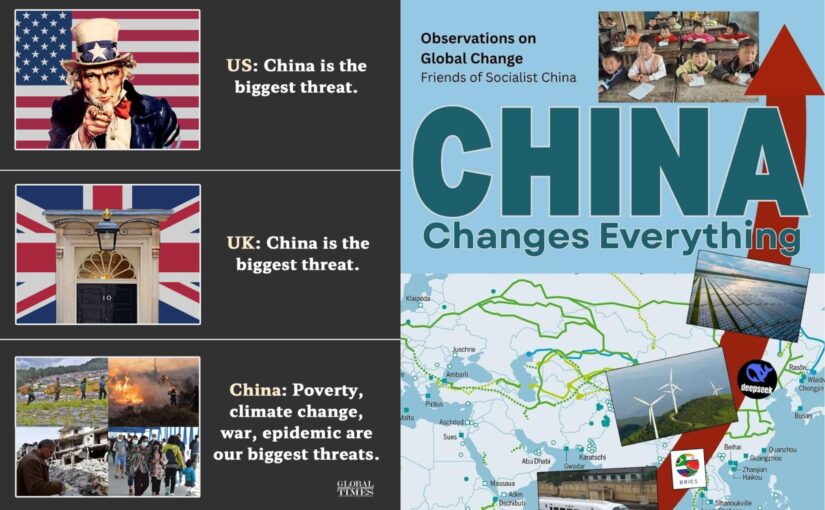
China Changes Everything: An anthology by social justice activists, journalists and commentators

We’re very pleased to announce the release of a new book, compiled by the Friends of Socialist China US Committee and edited by Kyle Ferrana, exploring China’s remarkable rise and its role in the world. Topics include China’s poverty alleviation program, its progress in developing green energy, the Belt and Road Initiative, the nature of the Chinese economy, China’s foreign policy, and much more.

China Changes Everything can be purchased from Amazon US and Amazon UK.

Contents

Part 1: China’s Road to Socialism

  • A Fundamental Difference: China – Socialist or Imperialist? – Sara Flounders
  • Communist Principles & Culture Drive China’s Development for the Benefit Of All Humanity – Jacqueline Luqman
  • Completing the Original Mission: Reinvigorating Marxism in Contemporary China – Ken Hammond

Part 2. Socialist Planning in Practice

Infrastructure:

  • Reflections on How China is Building Socialism – Sydney Loving
  • Steel Tracks vs War Tracks: China Builds Subways and Aids Gaza While the U.S. Builds Militarism – Lee Siu Hin
  • Between the Rust Belt and the Model City – Pawel Wargan
  • A Tale of Two Economic Systems’ Transit – Betsey Piette

Healthcare:

  • If China Provides Universal Healthcare, Why Can’t the U.S.? – Margaret Flowers
  • Healthcare in China: A Cooperative Project – Sue Harris

Green Development:

  • China Leads the World in Energy Production and Green Technology – Lyn Neeley
  • China: Terraforming for the 21st Century – Judy Bello
  • China’s Aquacultural Revolution – Kyle Ferrana

Part 3. Plans for a Future World

  • Contrasting Strategies of the U.S. and China: Prospects for Peace and Solving Global Problems – Roger Harris
  • The Race for Moondust: U.S. Imperialism vs. China – Janet Mayes
  • Science Fiction or Science Reality? Socialism Leads Humanity out of Artificial Scarcity – JR Hagler

Part 4. Moving from Isolation to Prosperity

  • Leadership Was the Key in China’s Targeted Poverty Alleviation Campaign – Dee Knight
  • Dismantling Western Hypocrisy on Xinjiang and Gaza – Arjae Red
  • Xizang’s Leap from Serfdom to Socialism – Arnold August

Part 5. The U.S. War Drive Against China Intensifies

  • The U.S. Advances Its Dystopian Plans to Destroy China – Megan Russell
  • China Cannot Be Contained – Margaret Kimberley
  • The U.S. Wants War with China – Joe Lombardo
  • The Greatest People’s Success Story in Human History – KJ Noh
  • Taiwan’s Residents Reject Being Washington’s Proxy – Chris Fry
  • An Analysis of the Escalating U.S. Threats Toward China – Mick Kelly

Part 6. China’s Impact on the World

  • Around the World China is Turning on the Lights – Greg Dunkel
  • Lips and Teeth: Korea, China, and Northeast Asia’s Long Revolution – Ju-Hyun Park
  • Is China’s Foreign Policy “Good Enough”? – Danny Haiphong
  • China, Yemen and the Red Sea Passage – Ché Marino
  • Should the Renminbi Replace the Dollar? The Surprising Answer – Radhika Desai

Part 7. Looking Back & Looking Forward

  • The Rise of China and the Crisis of U.S. Imperialism – Gerald Horne, Anthony Ballas, Aspen Ballas, and PM Irvin
  • Shoulder to Shoulder: British People’s Solidarity with the Chinese People’s War of Resistance – Keith Bennett
  • 200+ Years of U.S. Military Deployments in and around China – Michael Kramer
  • Defend the Socialist Countries, Stand With the Peoples of the World Against Imperialism – Carlos Martinez

Building whole-process people’s democracy in China

In the following detailed and highly informative article, originally published on Progressive International, Paweł Wargan and Jason Hickel use the regeneration of Minzhu Village in Chongqing as a vivid case study of China’s system of whole-process people’s democracy.

Formerly the site of one of China’s most important enterprises – the Chongqing Construction Machine Tool Factory – Minzhu Village began to decline after the factory was relocated in 2009.

Its infrastructure decayed and its population aged and dwindled. Officials considered demolishing the village and relocating its residents. But the community had generational bonds to the area, which itself held historic significance for the country. Instead of demolition, the village underwent a comprehensive program of regeneration. It became a model for the rest of the country — and provided a striking example of participatory processes in China’s development.

Minzhu was revived not through displacement but via a thoroughgoing democratic process involving hundreds of “courtyard meetings”, a digitised mailbox collecting thousands of suggestions, and surveys at multiple levels. The results – “the farmers’ market was modernised, the stream was cleaned up, the canteen was built, and new institutions and infrastructures for leisure, recreation, and community development were constructed around the village” – shine a light on how socialist democracy can bring about people-centred redevelopment, a far cry from the gentrification typically associated with urban redevelopment in the capitalist world.

This participatory method flows from the mass line, with the political leadership at all levels “continuously interpreting, systematising, and realising the ideas of the people”. The authors contrast this with capitalist democracy, a system which allows “the dominant class — the class with the most financial and organisational power — to determine political outcomes in its own interests, capture the state, and prevent any democratic challenges to its rule”.

In the US, for instance, power is passed back and forth between two establishment parties, both of which are explicitly pro-capitalist and committed to the interests of the capitalist class. Third parties — including socialist parties — are effectively frozen out of the national political process; they face serious obstacles when it comes to getting on ballots and securing airtime in official political debates.

By comparison, socialist democracy extends participation beyond ballots into production and planning. “Socialist democracy must be seen as a historic, multi-generational and dialectical process by which conditions that enable increasing parts of society to play an active role in governance are created, nurtured, and defended.”

The article provides an overview of China’s democratic processes, including electoral and consultative mechanisms across five administrative levels, with the CPC – a party with over 100 million members – functioning as a mass organisation practicing democratic centralism. Continuous, extensive consultation and participation are crucial ingredients of the decision-making and lawmaking systems. As Xi Jinping puts it, democracy means extensive deliberation across society; it is not a system where “people are awakened only at voting time and dormant afterward.”

The authors note that survey data consistently shows high public trust and satisfaction with Chinese governance, challenging Western assumptions that China’s legitimacy rests on coercion. They acknowledge debates over the extent of economic democracy, but argue that public control of the “commanding heights” enables planning toward collectively ratified goals.

Ultimately, Minzhu Village exemplifies a model that binds legitimacy to outcomes – poverty eradication, rising wages and life expectancy – rather than to the “periodic and highly ritualised” procedures of so-called liberal democracy. As Victor Gao quips, it is hard to imagine China’s transformation from poverty and backwardness occurring “without democracy… without the Chinese people actively participating in the decision-making process.”

The article concludes that the implications of China’s ongoing experimentation with whole-process people’s democracy extend beyond China’s borders:

In an era when Western liberal democracies face mounting crises of legitimacy — declining voter participation, growing inequality, institutional dysfunction, rising popular alienation from political processes, and the discarding of liberal democratic norms by states increasingly embroiled in wars of imperial expansion — the Chinese model offers alternative ways of conceptualising the relationship between popular sovereignty and effective governance. It suggests that democracy’s ultimate test lies not in conformity to particular institutional arrangements developed in specific historical contexts, but in its capacity to activate the people in shaping the conditions of their lives and societies. Understanding “whole-process people’s democracy” therefore requires moving beyond the constraints imposed by liberal ideology to engage seriously with socialist approaches to political organisation, which offer critical insights for all societies grappling with questions of development and popular sovereignty in the twenty-first century.

Introduction 

In Minzhu Village, a small community in the Jiulongpo District of the sprawling metropolis of Chongqing, a remarkable transformation has taken place. Once a maze of crumbling buildings and narrow, muddy roads, Minzhu Village is now a modern community with radiant red-brick walls, landscaped paths, and thriving public services. It has a sustainable farmers’ market built with recycled materials, a public canteen that provides free meals for the elderly, fitness parks, stages for public performances, modern and affordable cafes, and a craft-beer bar housed in stacked shipping containers. On the main square, across from the three-story canteen, the Communist Party of China (CPC) operates a sleek public office, where residents can seek the support of Party cadres on anything from repainting their homes to resolving neighbourly disputes. Just a few years ago, sewage ran through a canal down the length of the main thoroughfare. Children and the elderly now dip their feet in the stream that has taken its place. 

Continue reading Building whole-process people’s democracy in China

Martin Jacques and Carlos Martinez discuss Western misconceptions of China

In this episode of Wave Media’s Roughly Chinese podcast, hosted by Mimi Zhu and recorded live in Shanghai in October 2025, Martin Jacques (British academic and author of the bestselling When China Rules the World) and Carlos Martinez (co-editor of Friends of Socialist China and author of The East is Still Red) discuss their motivations for researching and writing about China; the trajectory of Britain-China relations; changing perceptions of China in the West; the long-term crisis of capitalism and its manifestation in an ascendant far-right in Britain; and more.

Webinar: Xizang (Tibet) Autonomous Region at 60 – Eyewitness Reports

📆 Sunday 16 November 2025, 2pm Britain, 9am US Eastern, 10pm China

The year 2025 marks the 60th anniversary of the founding of Southwest China’s Xizang (Tibet) Autonomous Region in 1965. It is also the year when a debate on the appointment of the next Dalai Lama is underway. China, the US, and India (where the current Dalai Lama is located) are weighing in. The International Manifesto Group and Friends of Socialist China are offering a rare occasion by assembling a panel composed exclusively of people who have actually visited Xizang.

President Xi led a central delegation to Lhasa on August 20 to commemorate the 60th anniversary of the celebration activities. Since 1965, Xizang has made remarkable progress, in addition to the accomplishments from 1951, when it was peacefully unified, to 1965. For example, since 1965, the per capita disposable income of rural residents rose from 108 yuan to 21,578 yuan, life expectancy climbed from 35.5 to 72.5 years, road network length expanded from 14,000 km to 124,900 km, the number of schools grew from 1,828 to 3,618, and rail network operation increased from zero to 1,359 km.

What do eyewitness reports say about the miraculous changes from a century-long cruel serfdom/theocracy to an increasingly modern Xizang? By visiting cultural, educational, and economic sites, or just freely wandering about Lhasa, what can we learn from these report-backs? Is it possible to build socialism with Chinese characteristics and modernization in a society that has recently emerged from serfdom?

What is the reality in a Tibetan area of neighboring Qinghai Province regarding the supposed “cultural and linguistic genocidal boarding schools?” How does this compare to the situation of the First Nations’ residential schools in North America and the current status of their original languages?

Speakers

  • Li Jingjing: Beijing-based journalist, analyst & commentator on international affairs, China’s politics
  • Lee Camp: American journalist, Producer of a Xizang (Tibet) documentary
  • Gustavo Ng: Chief Editor in DangDai Magazine, Argentina.
  • Leonardo Sobreira: Brazilian Journalist, Executive Editor at Brasil 247 and China observer
  • Arnold August: Canadian author and journalist, contributes to Friends of Socialist China
  • Radhika Desai (moderator): Professor, University of Manitoba, Convenor of the International Manifesto Group

Organisers

This webinar is organised jointly by the International Manifesto Group and Friends of Socialist China.

Storming the Heavens: Peasants and Revolution in China, 1925-1949 – viewed through a Marxist lens

We are pleased to announce the release of a new book by Jenny Clegg.

Storming the Heavens: Peasants and Revolution in China, 1925-1949 – viewed through a Marxist lens brings into focus the central role of peasant mass power in China’s revolutionary transformation. Engaging with debates in peasant studies, on China’s historical transformation, as well as within the Communist movement, it delves into both objective and subjective aspects of the peasant struggle.

In critiquing reformist-orientated perspectives of mainstream Western Sinology, the discussion draws on the neglected works of Chinese Marxists, Chen Hanseng and Chen Boda, to reveal how a system of monopoly rent exacerbated land hunger impacting both poor and middle peasants, making radical land reform the central issue for the revolution.  It goes on to explore how the Asiatic features of Chinese feudalism shaped landlord power to complicate peasant organisation at local levels. 

Going on to address questions of peasant agency and CPC leadership, traditional rebellion and modern proletarian revolution, the work considers case studies from the field of Chinese peasant studies together with Party documents. Following the zig-zag revolutionary process, it sees how Party and peasant were brought together in a dynamic relationship of mutual learning within a context of change. 

Mao’s methods of rural work, Party building and mass organisation are shown as meaningful in meeting the practical challenges of agrarian transformation. Applying a distinctive class analysis, the book shows how the CPC found ways to tackle the resilience of feudal power, handling the contradictions both among the peasants and between the agrarian and national movements to unite the revolutionary forces in reaching towards a socialist future.

About the author

Jenny Clegg is a China specialist. She first visited China in 1971 and has followed its development and international role ever since. She was awarded a PhD by the University of Manchester for her thesis on peasants and revolution in China in 1989, and subsequently became a Senior Lecturer in Afro-Asian Studies and Asia Pacific Studies at universities in the North of England. She continues to research and write about China from a Marxist perspective. She is a member of the Friends of Socialist China advisory panel.

Endorsements

Storming the Heavens is a major accomplishment.  It combines detailed historical  analysis of China’s agrarian social relations, prior to 1949 and beyond, with a keen sense of theory, integrating Western and Chinese sources, Marxist and non-Marxist alike, into a vibrant picture of struggle and transformation.  The CPC’s programs and practices are given detailed, and often admiring, attention, while still being carefully dissected with an eye to errors, misjudgments and shortcomings.  The complexities of national vs. agrarian movements, relations between poor and middle peasants, navigation of stages in social and political development, differences in class structure between north and south, and much more — all of this unfolds in a story that is both remarkably specific and deeply universal in its implications.  All in all, a fine addition to our knowledge of modern China.

David Laibman, Professor Emeritus, Economics, City University of New York, Editor Emeritus, Science & Society

This monograph is a systematic study by a British Marxist economist of the situation in rural China during the Republican period. It presents an insightful analysis of the new democratic revolution in the countryside of China centred on the agrarian revolution led by Mao Zedong. This book is very important for any Chinese scholar who wishes to learn about the perspectives of research from experts outside China, and is extremely useful in all capitalist countries, especially those in the South, for understanding how to develop the countryside and truly safeguard the interests of the peasants through reforms, as well as for understanding the theories of Marxism-Leninism and its sinicization.

Cheng Enfu, Member of the the Chinese Academy of Social Sciences, President of the World Association for Political Economy 

For those who wish to understand the origins of the Chinese revolution, this book is an essential guide to negotiating the complex terrain of the agrarian class structure in pre-revolutionary China; the Marxist and alternative analyses of this structure; and the debates which underlay the eventual formulation by the CPC of the strategy that led to victory over both the Japanese and the Kuomintang. As well as discussion of the theoretical contribution of Mao Zedong to Marxism, as this guided CPC strategy….the book covers a range of debates over an extensive area of discourse. 

Utsa Patnaik, Professor Emerita at the Centre for Economic Studies and Planning, Jawaharlal Nehru University, in New Delhi, India.

Jenny Clegg’s Storming the Heavens offers a brilliantly enlightening Marxist understanding of socialist China.  Based on years of research it is focused on the dynamic and transforming relationship between the Communist Party of China and China’s diverse peasant communities.  Like the studies made by Lenin of Russia’s peasantry, or Connolly’s of Ireland’s, both very different, it enables us to understand the specifically national characteristics of the party’s Marxist practice.  It is essential reading for anyone wanting to understand China’s role in the world today.

John Foster, Emeritus Professor of Social Sciences, University of the West of Scotland

Contents

Introduction

Part 1 Landlord monopoly and peasant land hunger – the distinct characteristics of China’s agrarian structure

  • Introduction
  • Chapter 1: Land Ownership, Rent and the Condition of the Peasantry
  • Chapter 2: Landlordism and Commerce
  • Chapter 3: Landlord, State and Village – the Articulation of Economic and Political Power in Chinese Feudalism
  • Chapter 4: The Impact of Imperialism

Part 2 From stagnation to crisis: economic and political dimensions of agrarian China’s decline

  • Introduction
  • Chapter 5: Market and Technological Constraints and the Problem of Monopoly Rent
  • Chapter 6: Huang and the Involuting Peasant Economy of North China – Between Lenin and Chayanov
  • Chapter 7: The Role of the State – for the Common Good or Legitimising Landlord Power?
  • Chapter 8: The Tenacity of Chinese Feudalism
  • Chapter 9: Peasant Rebellions and Why They Failed
  • Chapter 10: The Failure of Reforms
  • Chapter 11: The Convoluted Trajectory to Revolution

Part 3 China’s revolutionary experience from United Front to land revolution (1924-1937) and the evolution of Mao’s strategy

  • Introduction
  • Chapter 12: Peasants and Revolution – from Lenin to Mao
  • Chapter 13: China’s First Revolution and the CPC-KMT United Front (1924-1927)
  • Chapter 14: From the Towns to the Countryside – Rethinking Revolutionary Strategy
  • Chapter 15: The Land Revolution, Soviet Power and the Dynamics of Peasant Class Struggle
  • Chapter 16: Mao and the Sinification of Marxism – Class Analysis and the Mass Line
  • Chapter 17: From Agrarian to National Revolution

Part 4 China’s revolutionary experience from Second United Front to land revolution (1937-1949) and the implementation of Mao’s strategy

  • Introduction
  • Chapter 18: The Anti-Japanese War and the United Front (1937–1945) – the Challenges of Party Building
  • Chapter 19: Building the New Democratic State
  • Chapter 20: The Return to Land Revolution (1946-48) – from Moderate to Radical Land Policies
  • Chapter 21: The Return to Land Revolution (1946-48) – Mao’s methods refined

Part 5 Peasants, revolution and the CPC

  • Introduction
  • Chapter 22: From Traditional Rebellion to Modern Revolution
  • Chapter 23: Peasants as Free Trade Familialists – Thaxton’s Contribution
  • Chapter 24: What Difference did CPC Leadership Make?

Conclusion

European Communist leaders discuss prospects for socialism in Beijing 

Friends of Socialist China co-editor Keith Bennett recently joined a panel of leaders of European communist parties for a special one hour discussion programme moderated by Pan Deng for CGTN, China’s English language TV station.

Together with leaders from the Communist Party of Finland, German Communist Party, Communist Party (Denmark), Hungarian Workers’ Party and Communist Party of Italy, Keith discussed a wide range of issues, beginning and concluding with perspectives on the biggest challenges facing the world socialist movement today, and its future, while ranging over:

  • The relationship between discipline and democracy in party building; 
  • China’s whole process people’s democracy and the contrast with bourgeois democracy;
  • The recent 4th Plenum of the 20th Central Committee of the Communist Party of China and China’s upcoming 15th Five Year Plan, with their emphasis on putting people first;
  • The relationship between an efficient market and a well-functioning government;
  • Rising protectionism and unilateralism in the global economy on the one hand and China’s continued commitment to opening up on the other;
  • The development of new high quality productive forces and the upgrading of traditional industries;
  • How to understand and relate to AI and its impact on the working class;
  • Differences between Chinese and Western modernisation;
  • Prospects for cooperation between China and the Western countries to tackle the climate crisis;
  • The trend towards multipolarity and the rise of the Global South, particularly BRICS and the Shanghai Cooperation Organisation;
  • The relationship between the Global Governance Initiative proposed by President Xi Jinping and the Charter of the United Nations.

Also featured was a separately recorded contribution from the Communist Party (Switzerland).

The programme was recorded on November 2 and first broadcast on November 4. The participants were in Beijing to attend the 15th World Socialism Forum organised by the Chinese Academy of Social Science (CASS).

The full programme is embedded below.

Germany is sabotaging its relations with China on behalf of Washington

In the following article, Sevim Dağdelen, German member of parliament from 2005-25 and foreign policy spokesperson of the Bündnis Sahra Wagenknecht (BSW), contrasts two moments in German–Chinese relations, arguing that today’s German foreign policy is abandoning the mutual respect that characterised earlier diplomacy. She begins with the 1975 visit of West German Chancellor Helmut Schmidt to Beijing. Schmidt explicitly sought to break from European colonial attitudes, and called for the West to treat China as an equal partner.

Fifty years later, Dağdelen argues, German Foreign Minister Johann Wadephul represents the opposite approach. She describes Wadephul as adhering to Washington’s geopolitical dictates rather than pursuing an independent German foreign policy. His planned visit to China was cancelled at the last minute, following a trip to Asia in which he issued assorted slanders against Beijing. “His appearance gives the impression that he wants to continue the anti-Chinese turn in German foreign policy from 1937, and again pursue an alliance with Japan against China and Russia.”

Dağdelen writes that “neither German nor European foreign policy seems prepared to apply the principle of reciprocity in international relations.”

Wadephul appears in Asia only as the squire of knight Trump, who attempts to fight the Chinese wind-mills. Concretely, one laments China’s restrictions on the export of rare earths for Western arms companies without recognising that the export bans to China came from the USA. One laments Chinese tariffs on US products without mentioning that the first shot in the trade war with Beijing was clearly fired by the USA. One allows via the Netherlands a Chinese chip-manufacturer to be placed under Western control and then complains that China no longer delivers chips to Europe and Volkswagen’s production lines stand still. And one wants to teach Beijing morals on human rights, yet supports – as the German government does – Israel’s genocide of Palestinians in the Gaza Strip, with arms and trade privileges.

Such behaviour is reprehensible; moreover, it will not succeed, as “China is a country that is ready to accept a challenge”.

The article concludes that Germany, by aligning with Washington’s confrontational stance, risks destroying 50 years of productive relations with China, undermining its own economic interests, and isolating itself from an emerging multipolar world order. Such a trajectory must be firmly resisted.

China is a centre of the multipolar world order. This insight is urgently needed. A German foreign policy that acts in the interest of the desperate maintenance of the USA’s doomed unipolar world order is destined to fail. In the interest of the German population however lies being in good relations with this centre.

This article first appeared in German in the Berliner Zeitung, and was published in English in Geopolitical Economy Report.

The visit of German Chancellor Helmut Schmidt to Beijing 50 years ago was a visit that lifted German-Chinese relations to a completely new level. On 31 October 1975, Schmidt met the Chinese head of state Mao Zedong. In preparation he had read Mao’s poems. It was the first visit of a German chancellor to China.

Schmidt remained someone who, throughout his life, wanted to break with the colonial past of the West in China, and advocated relations on equal footing and with mutual respect. For example, in his discussion of the book The Governance of China by Chinese President Xi Jinping, he called on the West to replace arrogance with fair competition in its relationship with China. Good relations with China were among the priorities of German foreign policy.

Continue reading Germany is sabotaging its relations with China on behalf of Washington

Is China’s foreign policy ‘good enough’?

The following article is a chapter by Friends of Socialist China co-founder Danny Haiphong from the forthcoming compilation China Changes Everything, put together by the FoSC US Committee and featuring chapters by Ken Hammond, Gerald Horne, Paweł Wargan, Kyle Ferrana, Jacquie Luqman, KJ Noh, Margaret Kimberley, Radhika Desai, Dee Knight, Keith Bennett, Carlos Martinez and others.

Danny argues that widespread Western claims about China’s foreign policy – from “debt trap diplomacy” to imperial ambitions – are unfounded and rooted in projection.

The article debunks the “debt trap” narrative, using research by scholars such as Deborah Brautigam showing that most Global South debt is owed to Western lenders, the IMF, and the World Bank rather than China. Cases often cited as examples of Chinese asset seizures, such as Sri Lanka’s Hambantota port or Uganda’s airport, are shown to be fabrications. Meanwhile, the China-proposed Belt and Road Initiative (BRI) focuses on infrastructure development and mutual benefit – building railways, ports, metros, energy systems, communications pathways, schools and hospitals in countries long exploited by colonial powers. These projects create jobs, raise living standards, promote development, and expand global connectivity.

Taking up the complex issue of whether China is “doing enough” in relation to Israel’s genocide in Gaza, Danny rejects the accusation that China is passive. He cites China’s resolute stand at the UN demanding comprehensive ceasefire and withdrawal, its mediation efforts among Palestinian factions, and its support for the principal regional backers of Palestinian self-determination, most notably Iran. Demands that China “do more,” he says, misplace responsibility: the genocide is enabled by US military, financial, and diplomatic support. The real task for people in the West is not to pressure China, but to confront their own governments and the US-led imperial system that causes these crises.

There isn’t a single statement from the Palestinian resistance organizations or from the entire Axis of Resistance demanding that China do more. In fact, these forces are building closer ties to China with the aim of strengthening their stability and therefore their effectiveness in resisting imperialism and colonialism. China’s relations with Iran have grown tremendously, helping the biggest supporter of Palestine to survive and to even make military and industrial advances despite U.S. and EU sanctions.

Furthermore, Danny notes that China is operating under significant constraints while working systematically to oppose imperialism and enable a multipolar world order. He concludes:

It is clear that China is operating within the contradictions of a decaying US-led unipolar order, and by doing so can offer many tangible benefits to humanity. The real question we in the West should be asking is, how can we collectively strengthen our movements to put real pressure on the root cause of the genocide in Gaza: the U.S. empire. Once we do, new and ample opportunities will emerge, to end not only the horrors in Gaza, but also the entire system of empire from which they sprang.

The question in the title may seem hyperbolic, but it is one that comes up in one form or another across the U.S. political spectrum.

U.S. elites slam China’s foreign policy as riddled with “debt traps” for poorer countries in the Global South. The Western corporate media asserts that China is pursuing its own kind of empire and has a target on its own province of Taiwan as well as its neighbors in the South China Sea.

For the US ruling circle and its European vassals, China is an imperial competitor seeking to destroy the West’s “rules-based” international order (actually a euphemism for U.S. imperialism).

There are also plenty on the political “left”, even some communists, who view China in the exact same light. They consider China to be “state-capitalist” and therefore pursuing profits at the expense of humanity. And then there are those who, even if they rebuke this criticism and uphold China’s socialist foundation, are profoundly disappointed in China’s foreign policy. To these critics, China falls short of the global solidarity required in this historical moment and is not aggressive enough in the pursuit of justice.

Continue reading Is China’s foreign policy ‘good enough’?