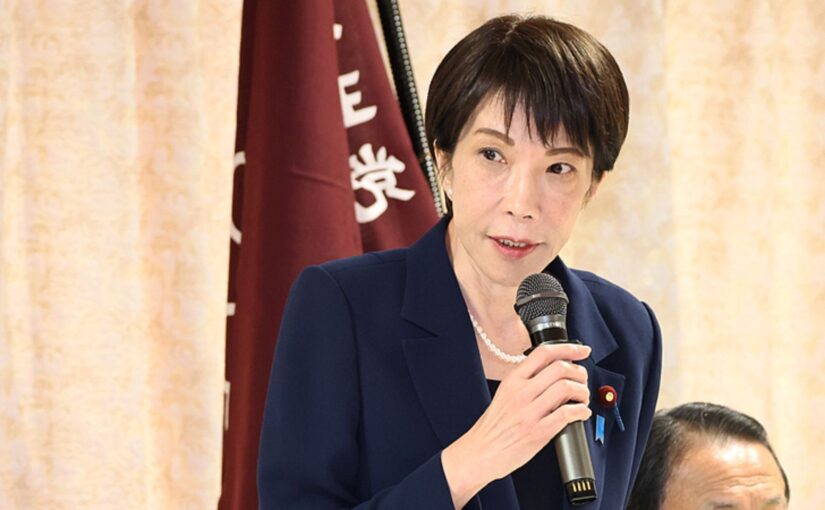
Japanese Communist Party rejects Takaichi’s provocative remarks on Taiwan

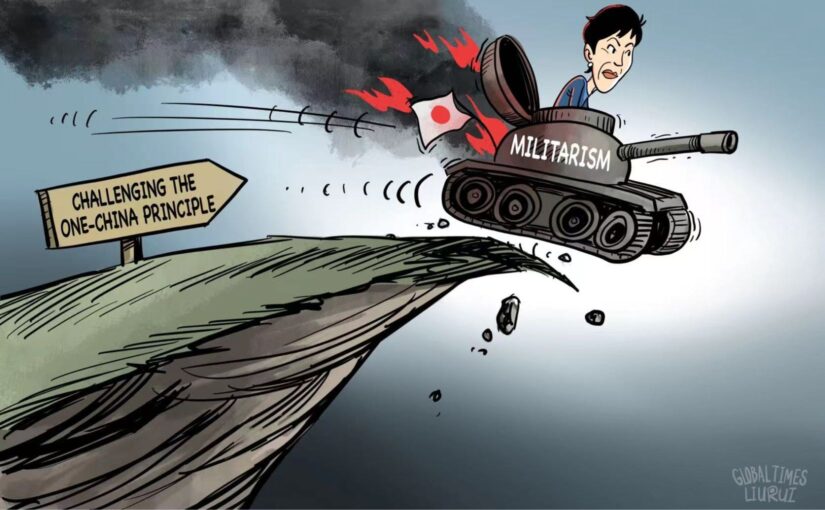
The Japanese Communist Party (JCP) has taken a strong stance against the remarks of Prime Minister Sanae Takaichi in a parliamentary session, that a military “contingency” regarding China’s island province of Taiwan could trigger the involvement of Japanese armed forces, which have plunged relations between China and Japan into their worst crisis in decades.

On November 15, the Chinese newspaper Global Times, citing a release on the website of Shimbun Akahata, the JCP’s daily newspaper, reported that JCP Chair Shii Kazuo had, the previous day, demanded that Takaichi withdraw her remarks, warning that attempts to exaggerate the “crisis” by claiming that a Taiwan emergency would be an existential threat and using it to justify a massive military buildup must be firmly rejected.

Shii Kazuo, who is also a member of the Japanese House of Representatives, had posted on X that the prime minister’s “remarks had escalated into a serious international issue. What is needed to positively resolve Japan-China relations requires calm dialogue grounded in agreements affirmed by both sides, including the 2008 pledge of not posing a threat to each other, rather than provocative rhetoric that intensifies tensions. We again urge her to retract her remarks.”

The Shimbun Akahata report noted that even late former prime minister Shinzo Abe said things like, “a Taiwan contingency is a Japan contingency” only after leaving office, refraining from making such statements while in office. This is because he understood how serious the situation would be. Takaichi lacks such basic diplomatic common sense. This diplomatic blunder should be corrected now, the report said.

Shii Kazuo had made a similar demand previously, on November 11, also in a post on X.

The Japan Press Weekly reported that on November 10, JCP Secretariat Head Koike Akira, at a press conference in the Diet (parliament) building, criticised Takaichi for implying that a “Taiwan contingency” would threaten Japan’s survival and thus allow Japan’s Self-Defence Forces to participate in a US-led war against China. He called the remarks “extremely dangerous.”

Koike added that she is the first prime minister to cite a specific case regarding Japan facing a crisis of “survival-threatening situation” that would justify the country’s use of the collective self-defence right. He criticised the remarks as “dangerous and reckless.”

Japan Press Weekly is an English-language online newsletter issued by the JCP.

Continue reading Japanese Communist Party rejects Takaichi’s provocative remarks on Taiwan

Japan and the US move toward open military confrontation over Taiwan

In the following article, which was originally published by Struggle/La Lucha, Sharon Black analyses the joint moves of Japan and the United States to instigate war against socialist China.

Regarding new Japanese Prime Minister Sanae Takaichi’s statement that any Chinese move to reunify Taiwan with the mainland would threaten Japan’s very survival – and that Tokyo would be ready to join military action to stop it she writes:

“For Beijing, the message was clear: Japan was abandoning its long-standing stance of avoiding any commitment to take sides in a conflict over Taiwan and was now declaring that it would join the United States in a military response.”

Noting reports claiming that Donald Trump had privately urged Takaichi to tone down her public threats, Sharon observes:

“The move fits a familiar Trump pattern: loud public belligerence paired with quiet tactical repositioning when trade negotiations or economic pressure campaigns stall… But far from signaling a real shift, this is political maneuvering. Even as the administration adjusts its tone for trade talks with China, US war planning continues without pause, and Washington is pouring new investments into Japan’s military.

“At the same time that Japan was escalating its rhetoric, the United States approved a new $330 million arms package for Taiwan on November 13 – the first such sale under Trump’s return to office.”

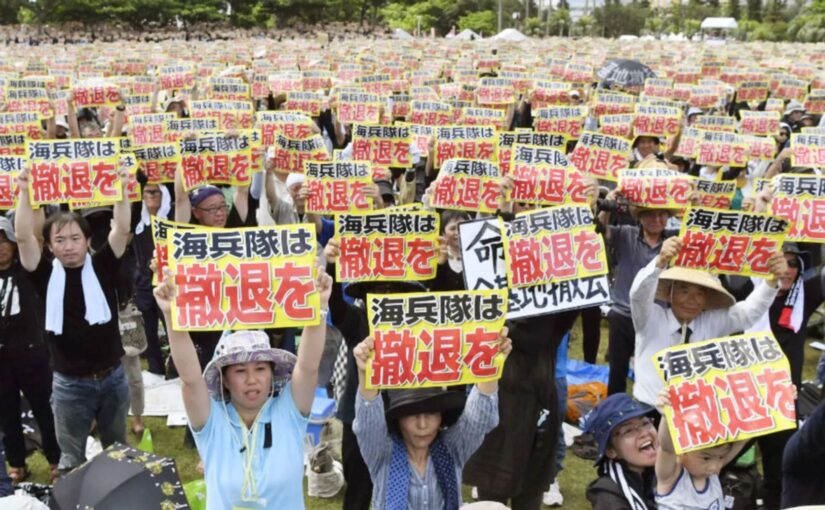
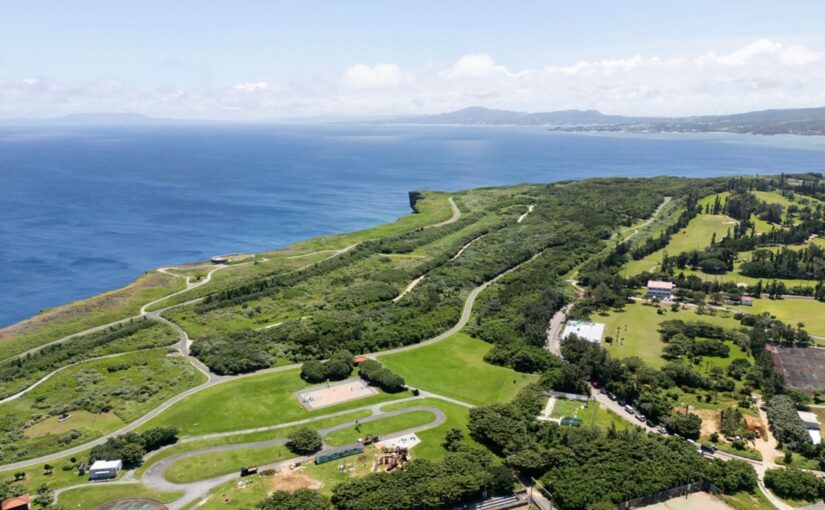
Japan, she notes, remains the centrepiece of Washington’s military strategy in the western Pacific. The United States operates more than 120 military installations across the country, including 15 major bases, and stations over 54,000 troops there – the largest concentration of US forces anywhere outside the continental United States. Okinawa carries the heaviest burden of this occupation, with bases crowding the island and dominating local life.

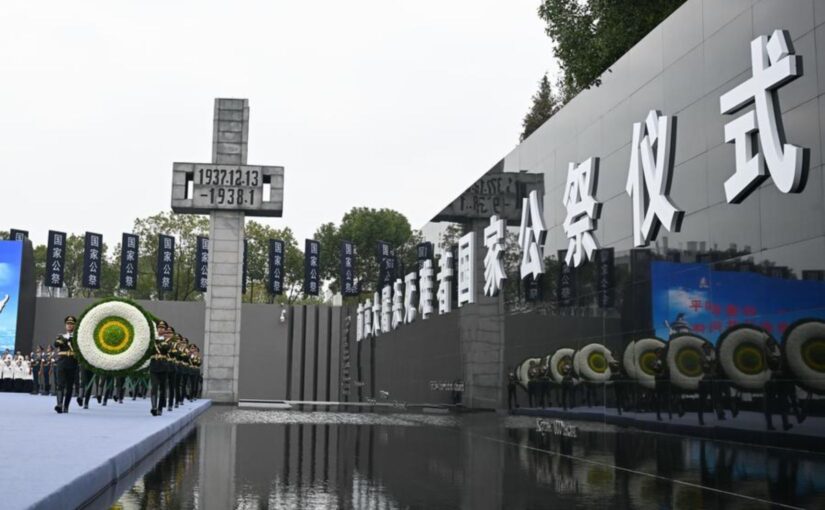
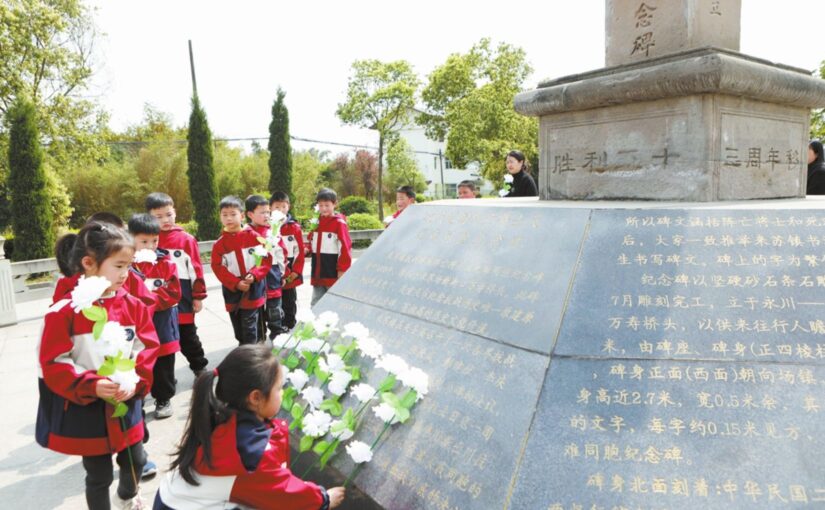
Sharon also reminds readers that China’s response to Japan’s renewed new militarism cannot be understood without remembering the past. In the first half of the 20th century, the Japanese Empire invaded, occupied, and devastated large parts of China. The War of Resistance against Japanese Aggression brought mass displacement, famine, and systematic atrocities. The most infamous was the Nanjing Massacre of 1937, when Japanese troops killed an estimated 200,000 civilians and carried out widespread rape and torture. In the course of the eight-year war, more than 20 million Chinese people were killed.

She further explains that Taiwan’s modern history is inseparable from the Chinese revolution. As the People’s Liberation Army (PLA) defeated the reactionary Kuomintang on the mainland, Chiang Kai-shek evacuated roughly 1.5 to 2 million soldiers, officials, and supporters to Taiwan.

Once ensconced on the island, the KMT imposed martial law and unleashed the “White Terror,” a brutal campaign of repression against workers, students, leftists, and anyone suspected of sympathising with the Chinese revolution. Tens of thousands were imprisoned, thousands were executed, and many simply disappeared into military prisons. The terror lasted for decades, well into the 1980s.

Meanwhile, in June 1950, US President Harry Truman ordered the US Seventh Fleet into the Taiwan Strait, blocking the PLA from liberating Taiwan. For two decades Washington insisted that the Kuomintang remnants represented “Free China” and maneuvered to keep the People’s Republic out of the United Nations.

“This had nothing to do with ‘defending democracy.’ It was part of a broader US effort to contain the Chinese revolution and suppress anti-colonial movements rising across Asia.”

However: “Today, the world situation has changed dramatically. Both the United States and Japan are facing deep capitalist stagnation – marked by slowing growth, rising prices, and long-term economic decline. These crises are pushing the ruling classes in both countries toward greater militarism abroad. At the same time, socialist China has emerged as one of the central engines of the global economy.

Continue reading Japan and the US move toward open military confrontation over Taiwan

Chinese scholars question Japanese sovereignty over Ryukyu islands

Academic circles in China are paying increasing attention to Ryukyu studies, specifically the history of the island group, often referred to as Okinawa, and the legitimacy or otherwise of Japan’s claim to sovereignty over the ancient kingdom.

On November 18, the Global Times newspaper reported that an academic conference marking the 30th anniversary of the China Ryukyu Research Institute, and advancing the development of Ryukyu studies, had been held at Fujian Normal University.

Global Times spoke with Professor Xie Bizhen, academic head of the institute, who emphasised that Japan’s annexation of Ryukyu and subsequent assimilation policies, including the forced change of surnames, place names, and even rebranding the “Ryukyu Islands” as the “Southwestern Islands,” were aimed at erasing historical memory. “As a result, many Okinawans today are unfamiliar with this part of their own past,” he said. “This is why our research matters: to restore historical truth, preserve collective memory.”

On November 23, CGTN published an opinion piece by Tang Yongliang, a researcher at the Institute of Japanese Studies of the Chinese Academy of Social Sciences, outlining what he described as the “undetermined status of Ryukyu.”

Stating that “the sovereignty over the Ryukyu Islands remains disputed,” Tang added that this could be understood in both a broad and a narrow way.

“In the broad sense, the ‘undetermined status of Ryukyu’ refers to the situation since modern times, where Ryukyu was illegally occupied by Japan without widespread recognition by the international community. To this day, the sovereignty issue remains unresolved.

“In the narrow sense, it refers specifically to the end of World War II, when the Cairo Declaration and the Potsdam Proclamation – documents concerning the post-war disposition of fascist Japan – explicitly delimited Japan’s territorial scope, separated Ryukyu from Japan, placed it as a ‘potential trusteeship territory’ and left its sovereignty legally unsettled to this day.”

Further in the broad sense: “Historically, Ryukyu was an independent kingdom. Japan’s modern annexation of Ryukyu was a unilateral act of violent seizure: no treaty regarding state sovereignty was concluded, no consent was obtained from China, the suzerain power, and the annexation contravened international legal norms on the acquisition of territorial sovereignty in the 19th century.”

Further in the narrow sense: “From November 22 to 26, 1943, the leaders of China, the United States, and the United Kingdom convened the Cairo Conference in Egypt, during which they discussed the post-war disposition of Ryukyu. Although the issue was not ultimately written into the Cairo Declaration, the declaration’s provision that ‘Japan will also be expelled from all other territories which she has taken by violence and greed’ undoubtedly applied to Ryukyu.

“On July 26, 1945, the three nations issued the Potsdam Proclamation, urging Japan’s unconditional surrender. It clearly stated that ‘the terms of the Cairo Declaration shall be carried out’ and that ‘the Japanese sovereignty shall be limited to the islands of Honshu, Hokkaido, Kyushu, Shikoku and such minor islands as we determine,’ thereby explicitly separating Ryukyu from Japanese territory.”

What happened later was that: “With the deepening of the Cold War, the US-Japan alliance became increasingly intertwined; the United States gradually relaxed its restrictions on Japanese influence within the Ryukyu Islands, and in 1953 and 1968 unilaterally transferred administrative rights over the Amami Islands and the Nanpo Islands to Japan.

“In 1971, under pressure from the Vietnam War and the Ryukyuan anti-US movement, the Nixon administration concluded the ‘Agreement Between Japan and the United States of America Concerning the Ryukyu Islands and the Daito Islands,’ again unilaterally transferring administrative rights to Japan on the condition that Japan allow continued US military presence in the islands.

Continue reading Chinese scholars question Japanese sovereignty over Ryukyu islands

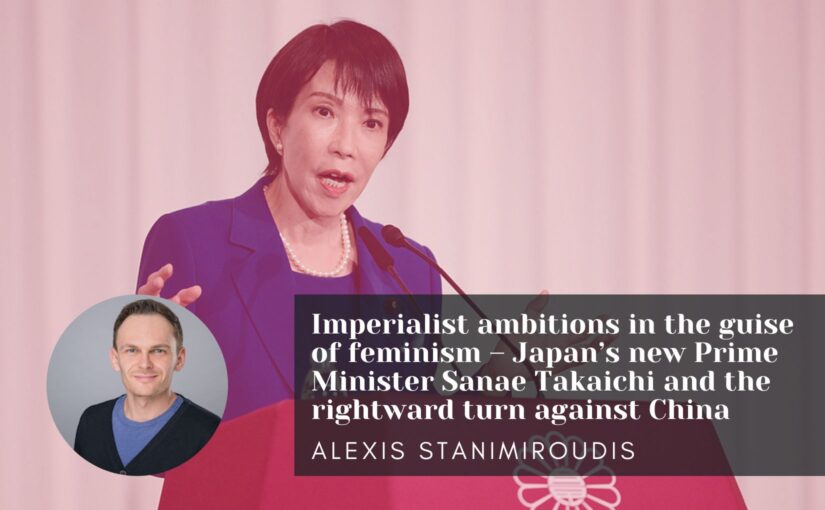
Imperialist ambitions in the guise of feminism – Japan’s new Prime Minister Sanae Takaichi and the rightward turn against China

We are pleased to publish the below article, which has been contributed by Alexis Stanimiroudis, an anti-imperialist scholar based in Germany, and which analyses the political standpoint of Japan’s new Prime Minister Sanae Takaichi and its ideological roots, thereby uncovering the source of her hardline anti-China stance, which has plunged Sino-Japanese relations into a dangerous crisis, less than a month into her premiership.

Alexis draws on the work of Jun Tosaka (1900-1945), a creative Japanese Marxist theorist whose major work, The Japanese Ideology argues that both liberalism and fascism rest on the same idealistic foundation: they prioritise abstract notions of culture, nation, and spirit over the material realities of class struggle and production.

The Japanese Ideology was published in a new English translation by Robert Stolz by Columbia University Press in 2024. According to the publishers:

“Tosaka Jun was among the world’s most incisive – yet underrecognised – theorists of capitalism, fascism, and ideology during the years before World War II. The Japanese Ideology is his masterpiece, first published in 1935, as Japan and the world plummeted into an age of reaction. Tosaka offers a ruthless philosophical critique of contemporary ideology that exposes liberalism’s deep complicity with fascism.

“The Japanese Ideology provides a materialist analysis of the reactionary ideology then overtaking Japan, with profound significance for anywhere fascism has taken root. Modeled after Marx and Engels’s The German Ideology, it critiques idealism as the common ground for liberalism and fascism, against which only historical materialism can suffice. Tosaka demonstrates how liberal and fascist ideas at once justified and concealed Japan’s colonisation of East Asia, and he investigates the many traces of fascism in Japanese thought and society. The Japanese Ideology makes an important intervention in Marxist theory by criticising reliance on the East/West binary and the notion of the ‘Asiatic mode of production.’ Robert Stolz’s translation introduces Anglophone readers to a classic of twentieth-century Marxist thought by an unsung peer of [Antonio] Gramsci… with striking relevance today.”

Contrary to the revival of Japanese militarism, Alexis insists that: “Remembering the immense sacrifices of the Chinese people is essential – not as a gesture of nostalgia, but as a reaffirmation of the historical truth that socialism, not imperialism, was and remains the decisive force against fascism and war.”

The election of Sanae Takaichi as Japan’s new prime minister on October 21, 2025, marks a decisive shift to the right in the country’s political landscape. At 64, Takaichi represents the nationalist-conservative wing of the Liberal Democratic Party (LDP) and is a long-time protégé of the late Prime Minister Shinzo Abe. Her agenda continues Abe’s model of Abenomics – a form of state capitalism based on massive public spending and export-led growth – but also extends his project of remilitarisation and ideological realignment.

Takaichi presents herself as a modern, “feminist” leader, yet her programme represents a return to Japan’s pre-war imperial mindset. Her vision of making Japan “strong and independent again” echoes the chauvinistic nationalism of the early twentieth century. Symbolic of this is her stance toward the Yasukuni Shrine, which honours Japan’s war dead, including convicted war criminals.

Although she abstained from a personal visit in 2025, she made a financial offering instead – an act of calculated diplomacy aimed at appeasing her nationalist base. Japan’s continued refusal to fully acknowledge or apologise for its wartime atrocities, particularly against the Chinese people, remains a central obstacle to genuine reconciliation in East Asia.

Behind Takaichi’s gestures lies the revival of an old imperialist narrative: Japan as a “victim” surrounded by hostile powers. The rhetoric of “defending against China and North Korea [DPRK],” much like Germany’s militarisation under the pretext of fearing Russia, reproduces Cold War logic – mobilising public opinion around the illusion of a perpetual external threat.

Continue reading Imperialist ambitions in the guise of feminism – Japan’s new Prime Minister Sanae Takaichi and the rightward turn against China

China raises Japanese provocation with UN

Relations between China and Japan have been plunged into their worst crisis in decades after Japan’s new Prime Minister Sanae Takaichi, an extreme right-wing, hardline militarist, said in a parliamentary session that a military “contingency” regarding China’s island province of Taiwan could trigger the involvement of Japanese armed forces. This was the first such clear statement from a serving Japanese Prime Minister and has aroused strong indignation from the Chinese people, particularly coming when the country has just marked the 80th anniversary of victory in the war to resist Japanese aggression and the world anti-fascist war, in which millions of Chinese sacrificed their lives.

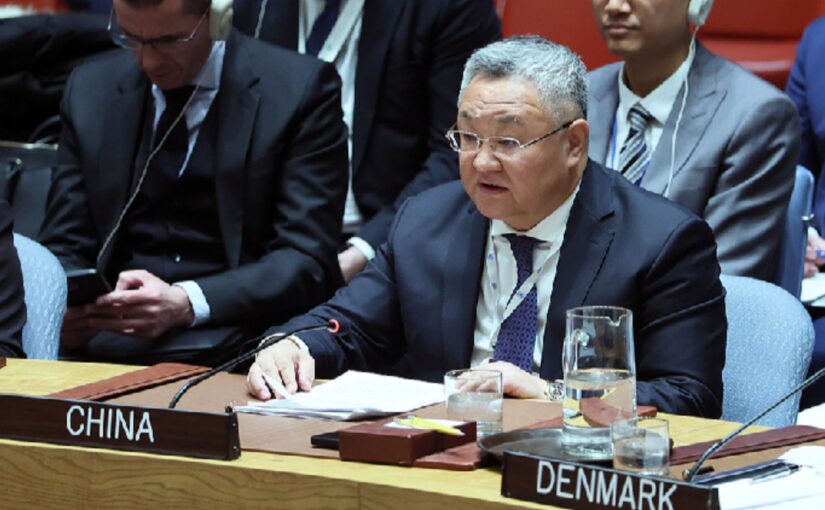
Accordingly, as one aspect of China’s diplomatic response, on November 21, Ambassador Fu Cong, Permanent Representative of China to the United Nations, sent a letter to the UN Secretary-General António Guterres, elaborating on the position of the Chinese government regarding Takaichi’s erroneous remarks.

In his letter, Ambassador Fu notes that Takaichi blatantly made provocative remarks on Taiwan. This marks the first time since Japan’s defeat in 1945 that a Japanese leader has advocated in an official setting the notion that “a contingency for Taiwan is a contingency for Japan” and linked it to the exercise of the right of collective self-defence; the first time Japan has expressed ambitions to intervene militarily in the Taiwan question; and the first time Japan has issued a threat of force against China, openly challenging China’s core interests. These remarks are gravely erroneous and extremely dangerous, with a profoundly malicious nature and impact. Despite China’s repeated démarches and protests, the Japanese side refuses to repent or retract its wrongful statements. China expresses strong dissatisfaction and resolute opposition.

Fu’s letter went on to note that such remarks constitute a grave violation of international law and the basic norms governing international relations, seriously undermine the post-war international order, and represent an open provocation to the more than 1.4 billion Chinese people and to the peoples of other Asian countries that once suffered from Japanese aggression. Taiwan is China’s sacred territory. How to resolve the Taiwan question is a matter for the Chinese people and brooks no foreign interference. If Japan dares to attempt an armed intervention in the cross-Strait situation, it would be an act of aggression. China will resolutely exercise its right of self-defence under the UN Charter and international law and firmly defend its sovereignty and territorial integrity.

The letter has been circulated to all UN member states as an official document of the General Assembly.

The following article was originally published on the website of China’s permanent mission to the UN.

On November 21, Ambassador Fu Cong, Permanent Representative of China to the United Nations, sent a letter to the UN Secretary-General  António Guterres, elaborating on the position of the Chinese Government regarding the erroneous remarks on China made by Japanese Prime Minister Sanae Takaichi.

In his letter, Ambassador Fu Cong noted that recently, when responding at the Diet, Japanese Prime Minister Sanae Takaichi blatantly made provocative remarks on Taiwan. This marks the first time since Japan’s defeat in 1945 that a Japanese leader has advocated in an official setting the notion that “a contingency for Taiwan is a contingency for Japan” and linked it to the exercise of the right of collective self-defense; the first time Japan has expressed ambitions to intervene militarily in the Taiwan question; and the first time Japan has issued a threat of force against China, openly challenging China’s core interests. These remarks are gravely erroneous and extremely dangerous, with a profoundly malicious nature and impact. Despite China’s repeated démarches and protests, the Japanese side refuses to repent or retract its wrongful statements. China expresses strong dissatisfaction and resolute opposition.

Continue reading China raises Japanese provocation with UN

Japanese scholar on the continuing struggle for peace and justice

We are pleased to republish the below article by Ishida Ryuji, a Japanese scholar at the School of Humanities at Shanghai Jiaotong University, which was originally published by Global Times on September 2.

In the article, Ryuji makes a profound comparative study of China’s protracted struggle against Japanese fascism in the 1930s and 1940s and the country’s protracted struggle against imperialist powers led by the United States and including Japan today.

The author notes that: “Eighty years ago, after 14 years of arduous struggle and tremendous sacrifice, China finally defeated the war of aggression launched by Japanese fascists. Eighty years later, Japan still seems unable to cast off the shadow of fascism.”

He gives an explanation of fascism that resonates today with regard to other capitalist powers besides Japan: “A typical fascist regime is characterised by the following features: instead of addressing economic stagnation and the resulting political and social unrest through domestic reform or narrowing class disparities, it seeks to shift the crisis outward under the pretext of ‘racial superiority’ through external aggression and expansion.”

He warns that: “Beginning in the 1990s, a generational shift among researchers coincided with the rise of historical revisionist currents and movements. As a result, tendencies to blur or deny the facts of aggression – and even to glorify war through distortions of history – have spread increasingly throughout Japanese society. Whether in reference to wartime Japan or today’s rightward shift, the scholarly atmosphere of analysing these phenomena through the lens of fascism has grown exceedingly faint in the country.”

This is related to the historical trajectory of the Cold War: “After WWII, Western countries led by the US – including Japan, which had once been a fascist state – forcibly imposed the Cold War system… After the collapse of the Soviet Union, the Japan-US security alliance was redefined as a military one targeting China.”

Bringing things up to the present, Ryuji writes: “Despite comprehensive inferiority in military, economic and technological domains, the Chinese people ultimately defeated the invaders. Many Japanese to this day remain trapped in the illusion of ‘might makes right,’ with some even clinging to the absurd claim that ‘the Japanese army never lost in China.’ Those who hold such views fail to grasp how the Communist Party of China, armed with theoretical innovation and practical experience, developed the strategies of protracted war and guerrilla warfare that mobilised the immense strength of the entire nation in resisting aggression. Such a strategy of undermining the enemy’s rule from within not only secured China’s victory but also offered invaluable and lasting inspiration for the subsequent global anti-colonial and national liberation movements.

“Today, China is facing interference and coercion from countries such as Japan and the US. Yet China will neither yield nor compromise; instead, it is committed to waging a protracted war full of hardships.

Continue reading Japanese scholar on the continuing struggle for peace and justice

Remembering China’s role in the global anti-fascist war

The following article by Carlos Martinez, a condensed version of which appeared in Beijing Review on 3 September, highlights the often-overlooked role of China in the global victory against fascism during World War II. While mainstream accounts foreground the US and Britain, Carlos stresses that China was the first nation to wage war against fascist occupation and sustained the longest campaign, suffering 35 million casualties and massive displacement.

Japanese aggression began with the invasion of northeast China in 1931. For six years, Chiang Kai-shek’s Kuomintang (KMT) prioritised suppressing the Communists over resisting Japan. Resistance in the northeast was led by the Communist Party of China (CPC), supported by the Soviet Union and joined by Korean fighters (including Kim Il Sung). Mounting student protests and patriotic pressure culminated in the 1936 Xi’an Incident, forcing Chiang into an United Front with the CPC, enabling a coordinated national resistance after Japan’s full-scale invasion in 1937.

The CPC’s people’s war strategy mobilised peasants and established base areas for guerrilla operations, and landmark battles such as Pingxingguan and the Hundred Regiments Campaign broke Japan’s aura of invincibility. Despite being subjected to some of history’s most horrific war crimes, including the Nanjing Massacre, Chinese forces tied down over a million Japanese troops—two-thirds of Japan’s military strength—crippling Tokyo’s expansionist plans and bolstering Allied success in both Europe and the Pacific.

The war had a decisive role in ending China’s century of humiliation, re-establishing its status as a major power, and laying the foundations for the founding of the People’s Republic in 1949. Globally, China’s resistance not only contributed to fascism’s defeat but also inspired anti-colonial struggles across Asia. Carlos concludes:

The courage, sacrifice, daring and strategic brilliance demonstrated by the Chinese people in the War of Resistance Against Japanese Aggression form an indelible chapter in the history of the struggle for a world free from fascism, militarism, colonialism and imperialism.

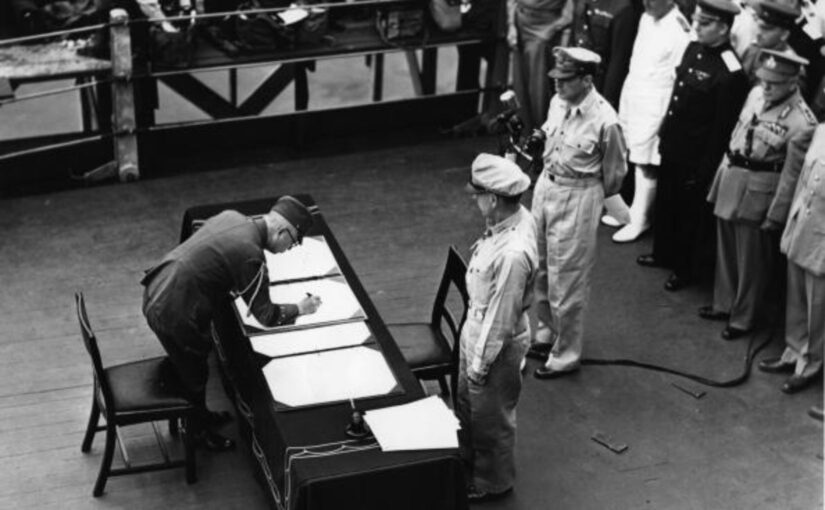
The second of September 2025 marks the 80th anniversary of the signing of the Japanese Instrument of Surrender, bringing an end to World War 2.

China’s role in the war, and indeed the very existence of the Pacific Theatre, has to a significant degree been written out of history. In his book China’s War with Japan: 1937 – 1945, British historian Rana Mitter writes that, “for decades, our understanding of [World War 2] has failed to give a proper account of the role of China. If China was considered at all, it was as a minor player, a bit-part actor in a war where the United States, Soviet Union and Britain played much more significant roles” (Rana Mitter, 2014. China’s War with Japan: 1937 – 1945; the Struggle for Survival. Penguin Books, p5).

However, China was the first country to wage war against fascist occupation, and the Chinese People’s War of Resistance Against Japanese Aggression was of decisive importance to the overall global victory over fascism. In the course of 14 years of war (1931-45), China suffered over 35 million casualties, and around 20 percent of its people were made refugees.

The war started in 1931

Following its emergence as a capitalist country in the second half of the 19th century, Japan had been steadily expanding its colonial ambitions in relation to China, Korea and the Russian Far East. Taiwan, the Penghu Islands and the Liaodong Peninsula were ceded by China to Japan in 1895 under the terms of the Treaty of Shimonoseki, at the conclusion of the First Sino-Japanese War.

Continue reading Remembering China’s role in the global anti-fascist war

The Chinese scholars keeping the memory of Japanese sexual slavery alive

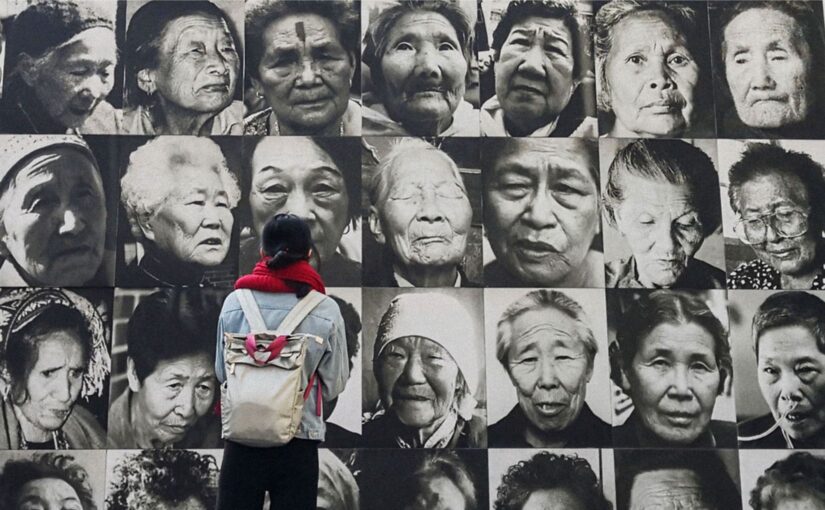
The following article, which was originally published on Sixth Tone, highlights the work of Su Zhiliang and Chen Lifei, a husband and wife team who are China’s foremost scholar activists researching the Japanese militarists’ heinous ‘comfort women’ system, an insitutionalised practice of mass sexual slavery inflicted on women in China, Korea and elsewhere in Asia during Japanese imperialism’s war of aggression.

This year the couple have published two books: “A Comprehensive History of the Japanese Military ‘Comfort Women’ System,” offers an in-depth analysis of wartime female slavery and is considered the most comprehensive, systematic, and authoritative multi-volume study of its kind to date. The other, “The Search: ‘Comfort Woman’ Park Yong-sim and Her Sisters,” is a revised edition setting out Park Yong-sim’s personal narrative as she was taken from her hometown of Nampo, in what is now the Democratic People’s Republic of Korea, to Nanjing, capital of China’s eastern Jiangsu province, and forced into sexual slavery at the age of 17.

Since they began their research and fieldwork in the 1990s, the couple have identified 358 comfort women survivors in the Chinese mainland, nearly tripling previous estimates. Now, there are only seven remaining survivors – the youngest of whom is 95 years old.

Wu Haiyun interviewed Su Zhiliang ahead of this year’s International Memorial Day for Comfort Women, which falls on August 14.

Explaining how the issue came to be hidden for so long, Su said: “After WWII, the Japanese government knew this was a shameful crime and systematically destroyed archival materials related to the ‘comfort women’ system, so the issue only came to international attention in 1991, when a 67-year-old Korean woman, Kim Hak-sun, courageously came forward to testify that she had been forced into sexual slavery by the Japanese military in China and to file a lawsuit against the Japanese government.”

There were also further obstacles, especially in the early years: “Local officials in China were often uncooperative, as if this history was something to be ashamed of. This resistance began to ease a bit after 2000 (as more survivors sought litigation and public awareness increased), but the survivors themselves would sometimes still decline interviews. For example, we had once arranged for a Shanghai TV crew to travel with us to northern Shanxi province’s capital, Taiyuan, to interview a survivor. Everything was in place, but just before we departed, she called to say she no longer wished to speak on camera. All I could say was that we understood. It’s incredibly painful to recount the most traumatic experiences of your life to strangers.”

He adds: “The history of ‘comfort women’ represents one of the most horrific, systematic violations of women’s rights in modern history. Our research shows that in China alone, the Japanese military established more than 2,100 ‘comfort stations.’  Throughout the entire war, between 360,000 and 410,000 women were forced into sexual slavery by the Japanese military. Many died during their captivity.”

He also sounds a warning that the Japanese government’s stance towards these crimes is now only getting worse:

“In the 1990s, Japanese school textbooks still included references to the ‘comfort women’ system. Now, such content is becoming increasingly rare. One major reason is the decline of left-leaning historians and the weakening of progressive forces, while nationalist and right-wing voices grow stronger. As a result, Japan’s current attitude toward the issue is even more regressive than it was 30 years ago. We must remain vigilant about this… The ‘comfort women’ system and the [Nazi] Holocaust represent two distinct but equally heinous forms of fascist violence… Both were state-sponsored crimes against humanity, and both epitomise the brutality of fascism and militarism.”

This year, China’s core scholars on “comfort women” — women and girls forced into sexual slavery by the Japanese army in World War II — published two career-defining books.

One, “A Comprehensive History of the Japanese Military ‘Comfort Women’ System,” offers an in-depth analysis of wartime female slavery and is considered the most comprehensive, systematic, and authoritative multi-volume study of its kind to date. The other, “The Search: ‘Comfort Woman’ Park Yong-sim and Her Sisters,” is a revised edition about Park Yong-sim’s personal narrative as she was taken from her hometown of Nampo, Korea, to Nanjing, capital of China’s eastern Jiangsu province, and forced into sexual slavery at the age of 17.

In many ways, the works are a fitting capstone to Su Zhiliang and Chen Lifei’s decadeslong scholarship and advocacy, as the husband-and-wife pair, now nearing their 70s, consider stepping back. Taken together, the books encapsulate the dual approach that has defined the Shanghai Normal University scholars’ foundational work to document and identify survivors of the wartime female slavery system.

However, as the couple contemplate the future of their research, challenges remain. Since they began their research and fieldwork in the 1990s, they have identified 358 comfort women survivors in the Chinese mainland, nearly tripling previous estimates. Now, there are only seven remaining survivors — the youngest of whom is 95 years old.

Continue reading The Chinese scholars keeping the memory of Japanese sexual slavery alive

Hong Lei warns of the continued danger of Japanese militarism as China prepares for key anniversary

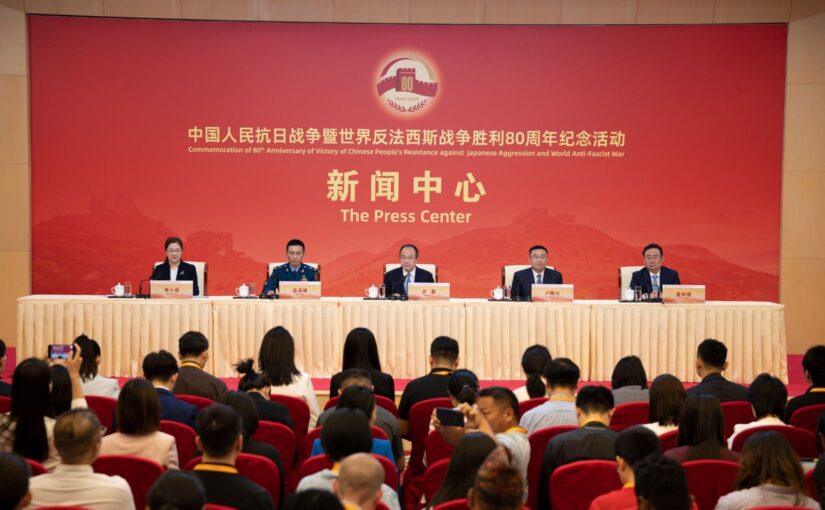
We previously reported on the 26 foreign heads of state or government who will attend China’s September 3 commemoration of the 80th anniversary of victory in  the Chinese People’s War of Resistance Against Japanese Aggression and the World Anti-Fascist War at the invitation of President Xi Jinping.

At his press conference, given on August 28, Chinese Assistant Foreign Minister Hong Lei also gave details of some other high-ranking persons who will participate, noteworthy among whom are:

  • Speaker of the National Parliament of Timor Leste Maria Fernanda Lay
  • President of the National Assembly of Venezuela Jorge Rodriguez Gómez
  • Chairman of the Bulgarian Socialist Party and Deputy Prime Minister of Bulgaria Atanas Zafirov
  • Speaker of the National Assembly of the Republic of Korea (ROK) Woo Won-Shik
  • Chief Adviser to the Brazilian President Celso Amorim
  • Representative of the Nicaraguan Government and Presidential Adviser Laureano Ortega Murillo
  • Minister of War Veterans and Rights Holders of Algeria Laid Rebiga
  • President of the New Development Bank (and former Brazilian President) Dilma Rousseff
  • Former Prime Minister of Japan Yukio Hatoyama
  • Former Prime Minister of Greece George Papandreou
  • Former Prime Ministers of New Zealand Helen Clark and John Key
  • Former Foreign Minister of Australia Robert (Bob) Carr

Also, in addition to his comments regarding the participation of Russian President Vladimir Putin and leader of the Democratic People’s Republic of Korea (DPRK) Kim Jong Un, as well as on the significance of the broad representation from the Global South, which we previously reported, Hong also touched on a number of other questions, including the present situation regarding Japan, where he commented:

“Within Japan, there have all along been some forces that try to deny and glorify aggression, distort history, and even honour the war criminals and justify their crimes. This constitutes a challenge to the post-war international order, a challenge to human conscience and a challenge to all peace-loving people. In recent years, Japan has also drastically adjusted its security policy, increased its defence budget year by year and continued to ease restrictions on arms exports, seeking a breakthrough in military development. Naturally, this arouses the strong scepticism of its Asian neighbours and the international community, as to whether Japan is genuinely committed to an exclusively defence-oriented policy and to peaceful development.”

The following is the full text of the press conference. It was originally published on the website of the Chinese Foreign Ministry.

Head of the press center for the events commemorating the 80th anniversary of the victory in the Chinese People’s War of Resistance Against Japanese Aggression and the World Anti-Fascist War Shou Xiaoli: Ladies and gentlemen, good morning. Welcome to the first press conference hosted by the Press Center for the events commemorating the 80th anniversary of the victory of the Chinese People’s War of Resistance Against Japanese Aggression and the World Anti-Fascist War.

Continue reading Hong Lei warns of the continued danger of Japanese militarism as China prepares for key anniversary

80 years since the end of World War II – Japanese militarism has not changed its spots

In the following contributed article, Stephen Chang of People’s Forum Ltd. (UK) outlines how, far from uprooting the soil in which Japanese militarism and fascism had bred, the United States, as the occupying power following Japan’s surrender 80 years ago, pressed leading war criminals from Emperor Hirohito himself down into the service of its own hegemonic project. As a result, the USA, along with its client state Japan, remains today the greatest threat to peace in the Asia Pacific region. Vigilance is needed.

As we commemorate Japan’s unconditional surrender 80 years ago, on 15 August 1945, which ended WWII in Asia Pacific, we must remain vigilant.

Hirohito, the war time emperor of Japan, was a war criminal who escaped punishment on the insistence of the US.  Hirohito was directly and personally involved in the conduct of Japan’s invasion of sovereign nations and the death and atrocities inflicted on millions of civilians during WWII in Asia Pacific. Hirohito’s surrender speech is full of lies, half-truths and distortion of facts about Japan’s declaration, conduct and even surrender of its barbaric war against the people of the Asia Pacific region.

Hirohito, in his surrender speech, referred to Japan’s four years of war in Asia Pacific.  This is a blatant lie. Japan invaded and occupied part of northern China, namely the Manchurian region, on 18 September in 1931, attacked and bombed Shanghai in 1932, and expanded its war on the rest of China in 1937.  The reference to four years by Hirohito (1941-1945) is a deliberate attempt on the part of fascist Japan to exclude and ignore its invasion and occupation of part of China from 1931 and the atrocities committed in China like the massacre of 300,000 Chinese civilians, men, women and children, in Nanjing in 1937.

Fascist Japan announced its unconditional surrender to the Allied powers (China, Soviet Union, UK and USA) on 15 August 1945 and formally surrendered on 2 September 1945.   China declared the end of the Chinese people’s war against the Japanese invaders on 3 September 1945, and the formal ceremony of Japan’s surrender to China took place on 9 September 1945.  So, WWII in Asia lasted 14 years, not four years as claimed by war criminal Hirohito, as China forms a large part of Asia and suffered most severely from Japan’s war crimes and atrocities.

Why was Hirohito not tried as a war criminal?  Because the USA wanted a fascist puppet regime in the Asia Pacific region to further its post WWII global imperial domination.  Hirohito remained emperor of Japan until his death in 1989.  In 1971, the UK, a subservient nation to the US, accorded this war criminal the highest honour of an official State Visit.  Under Hirohito, and Japan’s post war constitution drafted by the US, Japan became an effective puppet state of the US from the end of WWII to the present time.

We should know that Nobusuke Kishi, Prime Minister of Japan from 1957 to 1960, was the mastermind of Japan exploitative economic and industrial policies in the Manchurian region of China from 1932 following its invasion in 1931, enslaving millions of Chinese for the benefit of Japan.  This is also where Japan’s Unit 731, the secret Japanese military testing facility (on live Chinese, Korean, Russian and other men, women and children) for biological warfare was based – in Harbin.

None of the leaders of Unit 731 were prosecuted for war crimes at the insistence of the US, in exchange for full disclosure to the US by Japan of the findings and results of its biological warfare experiments. (Only the Soviet government set up a special military tribunal at Khabarovsk in December 1949 to hold a joint trial of 12 former Japanese army officers on criminal charges relating to Unit 731’s wartime activities.) Unit 731 commanding officer Surgeon General Shiro Ishii, who commanded bubonic plague attacks on the Chinese cities of Changde and Ningbo, was awarded a special service medal by war criminal Hirohito and was granted immunity from war crimes against humanity by the US in 1948.  He was subsequently hired by the US to lecture US officers at Fort Detrick on the use of bioweapons and the findings made by Unit 731.

General Dr Masaji Kitano was the second commander of Unit 731 from 1942.  He too was granted immunity from war crimes prosecution and released as a POW and repatriated to Japan in 1946.   Using his biological warfare knowledge, in 1950 Kitano was a founder of Green Cross Corporation, which became one of Japan’s premier pharmaceutical companies, now known as Mitsubishi Pharma Corporation.  Murray Sanders, the US officer who led the US cover-up of Japanese war crimes, became a consultant to Green Cross.

In 1941 Kishi became a member of Japan’s WWII cabinet.  He was arrested to face trial as a Class A war criminal on Japan’s surrender.  However, the US released him without charges in 1948 and groomed him to be a leader of post war Japan.  This war criminal was elected to Japan’s parliament (National Diet) in 1953. With US support, he consolidated Japanese conservatives so as to counter the influence of Japan’s Socialist and Communist parties.  In 1955 he was instrumental in the establishment of the Liberal Democratic Party.  He was also key to setting up the “1955 System” that provided the basis for the LDP to remain Japan’s dominant party.

Kishi’s (the war criminal turned prime minister of Japan) younger brother, Eisaku Sato, was Japan’s prime minister from 1964 to 1972.   Kishi’s grandson, Shinzo Abe, was Japan’s prime minister from 2012 (the start of the Obama/Clinton “Pivot to Asia Pacific” designed to contain China) to 2020.

We should know that today:

  • Japan’s military is the fifth largest in the world and based on its current military budget is projected to become the third largest after the US and China.
  • The US has 120 active military bases and 55,000 military personnel in Japan.
  • Japan is home to the US’ largest and most heavily armed overseas military base.
  • The US military is the main and greatest beneficiary from the Japanese WWII Unit 731 biowarfare research on live human beings.

The US, the leader of the “free world” since WWII, self-styled beacon of democracy and human rights, and party to Japan’s war crimes against humanity, is today, together with its puppet client state Japan, the greatest threat to peace in the Asia Pacific region and globally.

While we commemorate the end of WWII 80 years ago, we must remember that the US is the main country in the world that has waged covert and overt wars against sovereign nations in most if not all of the 80 years since the end of WWII.

Chinese leaders meet with delegation of the Social Democratic Party of Japan

A delegation of the Japanese Social Democratic Party (JSDP), headed by its leader Mizuho Fukushima, recently visited China.

Formerly known as the Japan Socialist Party, the JSDP has consistently stood for friendship with China and for peace and has actively opposed militarism and war.

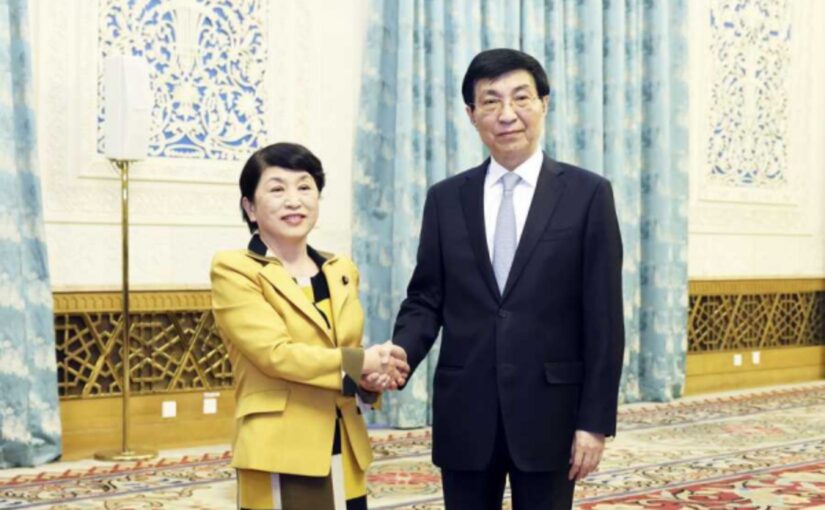
On January 19, Fukushima met with Member of the Standing Committee of the Political Bureau of the Communist Party of China (CPC) Central Committee and Chairman of the National Committee of the Chinese People’s Political Consultative Conference (CPPCC) Wang Huning.

She said that the main purpose of the Social Democratic Party’s visit is to reaffirm peace and friendship between Japan and China. She said Japan had launched the war of aggression against China and caused great harm to China, for which they sincerely apologise. The Social Democratic Party is willing to promote the sound development of Japan-China relations based on the four political documents previously agreed between the two countries.

The same day she and her delegation also met with Liu Jianchao, Minister of the International Department of the CPC Central Committee (IDCPC).

Liu said that the Social Democratic Party has always attached importance to China-Japan relations. It established inter-party exchange relations with the CPC more than 40 years ago and has made important contributions to strengthening friendly cooperation between the two sides and improving and developing China-Japan relations. The Chinese side appreciates this. It is hoped that the Japanese side will abide by the one-China principle and properly handle historical issues as well as issues such as the discharge of the nuclear-contaminated water from the Fukushima Daiichi nuclear power station into the ocean. The CPC is willing to strengthen communication and exchanges with the Social Democratic Party, promote exchanges between legislatures and non-governmental organisations, as well as people-to-people and cultural exchanges, including in media and other fields, and strive to bring China-Japan relations back to the track of healthy development.

Mizuho Fukushima said that the Social Democratic Party has long adhered to the concept of cherishing peace and opposing war, and is committed to promoting Japan-China friendship. Last year, Prime Minister Kishida met with President Xi Jinping, reaffirming the decision to comprehensively advance bilateral ties with the commitment to promoting a strategic relationship of mutual benefit, adhere to the principles established in the four political documents between Japan and China, and bring important opportunities to Japan-China relations. The Social Democratic Party is deeply encouraged by this and is willing to work with the CPC to promote closer economic cooperation and people-to-people and cultural exchanges between the two countries and build a future-oriented Japan-China relationship. The Social Democratic Party, she added, opposed the discharge of nuclear-contaminated water into the ocean.

Fukushima also said: “The delegation visited the Museum of the War of Peoples Resistance Against Japanese Aggression on January 18th, and expressed deep apologies for Japan’s war of aggression against China, which caused severe harm to the Chinese people. On behalf of the Social Democratic Party, I pledged ‘no more war between Japan and China’, opposed the implementation of Japan’s new security strategy, which is a ‘war bill’, and opposed lifting bans on exercising the right of collective self-defence. I believe that Japan should not prepare for war but build peace. The Social Democratic Party hopes to strengthen friendly relations with the CPC and work together to promote the development of Japan-China relations, deepen mutual understanding and trust among Northeast Asian countries, and promote an Asian community with a shared future.”

The following articles were originally published on the websites of the Chinese Foreign Ministry and the IDCPC.

Wang Huning Meets with a Delegation of the Social Democratic Party of Japan

On January 19, 2024, Member of the Standing Committee of the Political Bureau of the Communist Party of China Central Committee and Chairman of the National Committee of the Chinese People’s Political Consultative Conference (CPPCC) Wang Huning met with a delegation led by Head of the Social Democratic Party of Japan Mizuho Fukushima in Beijing.

Wang Huning said that President Xi Jinping met with Prime Minister Fumio Kishida in November last year, and the leaders of the two countries reiterated their commitment to the principles and consensus stipulated in the four political documents between China and Japan, and reaffirmed the positioning of comprehensively advancing a strategic relationship of mutual benefit between China and Japan. He expressed the hope that the two sides will view each other’s development in an objective and rational manner in the spirit of “drawing lessons from history and opening up the future”, respect each other’s core interests and major concerns, and promote the building of a China-Japan relationship that meets the demands of the new era. The CPPCC National Committee is willing to strengthen contact with Japan and make positive contributions to this end.

Mizuho Fukushima said that the main purpose of the Social Democratic Party’s visit is to reaffirm peace and friendship between Japan and China. She said Japan had launched the war of aggression against China and caused great harm to China, for which they sincerely apologize. The Social Democratic Party is willing to promote the sound development of Japan-China relations based on the four political documents between the two countries.

Shi Taifeng and Wang Dongfeng, among others, were present at the meeting.


Liu Jianchao Meets with a Delegation of the Social Democratic Party of Japan

Liu Jianchao, Minister of the International Department of the CPC Central Committee (IDCPC), met here today with a delegation led by Mizuho Fukushima, Leader of the Social Democratic Party of Japan.

Liu said, the Social Democratic Party has always attached importance to China-Japan relations. It established inter-party exchange relations with the CPC more than 40 years ago, and has made important contributions to strengthening friendly cooperation between the two sides and improving and developing China-Japan relations. The Chinese side appreciates this. Last November, President Xi Jinping met with Prime Minister Fumio Kishida in San Francisco, US, and had in-depth exchanges on how to build a China-Japan relationship that can meet the requirements of the new era. Both sides must always abide by the principles established in the four political documents between China and Japan, maintain the foundation for the development of China-Japan relations, proceed from the overall situation, and act on the political consensus of viewing each other as cooperative partner and not posing any threat to each other. It is hoped that the Japanese side will abide by the one-China principle and properly handle historical issues as well as issues such as the discharge of the nuclear-contaminated water from the Fukushima Daiichi nuclear power station into the ocean. We are willing to strengthen communication and exchanges with the Social Democratic Party, promote exchanges between legislatures, non-governmental organizations, people-to-people and cultural exchanges, media and other fields, and strive to bring China-Japan relations back to the track of healthy development.

Liu said, changes unseen in a century are unfolding at an accelerated pace, while regional peace and development are facing more instability and uncertainty. Yet the overall direction of human development and progress will not change, and the overall trend toward a shared future for the international community will not change. Currently, Asia is at an important juncture in its development and revitalization. China will continue to promote high-quality development, adhere to high-level opening up, and promote Chinese modernization on all fronts. China and Japan are the two largest economies in Asia. The two countries shoulder important responsibilities for peace and prosperity in the region and the world at large. It is hoped that both sides will focus on respective long-term interests and regional interests, and make positive contributions to building an Asian community with a shared future.

Mizuho Fukushima said, the Social Democratic Party has long adhered to the concept of cherishing peace and opposing war, and is committed to promoting Japan-China friendship. Last year, Prime Minister Kishida met with President Xi Jinping, reaffirming the decision to comprehensively advance bilateral ties with the commitment to promoting a strategic relationship of mutual benefit, adhere to the principles established in the four political documents between Japan and China, and bring important opportunities to Japan-China relations. The Social Democratic Party is deeply encouraged by this and is willing to work with the CPC to promote closer economic cooperation and people-to-people and cultural exchanges between the two countries and build a future-oriented Japan-China relationship. The Social Democratic Party opposed the discharge of nuclear-contaminated water into the ocean.

The delegation visited the Museum of the War of Peoples Resistance Against Japanese Aggression on January 18th, and expressed deep apologies for Japan’s war of aggression against China, which caused severe harm to the Chinese people. On behalf of the Social Democratic Party, I pledged “no more war between Japan and China”, opposed the implementation of Japan’s new security strategy, which is a “war bill”, and opposed lifting bans on exercising the right of collective self-defense. I believed that Japan should not prepare for war but build peace. The Social Democratic Party hopes to strengthen friendly relations with the CPC, and work together to promote the development of Japan-China relations, deepen mutual understanding and trust among Northeast Asian countries, and promote an Asian community with a shared future.

Sun Haiyan, Vice-minister of the IDCPC, Kunio Arakaki, deputy head of the Social Democratic Party of Japan and Member of the House of Representatives, Yuko Ohtsubaki, deputy head of the Social Democratic Party of Japan and Member of the House of Councillors, and others were present.

Release of Fukushima wastewater threatens workers

We reprint below an article by Otis Grotewohl, originally published in Workers World, about the Japanese government’s release of wastewater from the Fukushima nuclear disaster into the Pacific Ocean.

Otis notes that, while the government in Tokyo has claimed the process is safe, many people are skeptical, including the Japanese opposition parties, fishermen, local residents and environmental campaigners. Greenpeace Japan states that Tokyo’s decision “disregards scientific evidence, violates the human rights of communities in Japan and the Pacific region, and is non-compliant with international maritime law.”

The Chinese government has announced a ban on imports of Japanese seafood in response to the discharge. Japan, in league with the US and other imperialist powers, is now criticizing China for this ban and for spreading disinformation. “Just as the Japanese government and its Western enablers accuse China of ‘disinformation,’ the capitalist rulers of Washington and Tokyo are waging a major public relations campaign to convince people in the region that seafood from the Pacific Ocean will still be safe to consume after the release of wastewater.”

As Otis points out, the Japanese government’s action is a threat to the health and safety of people in the region, and is being carried out solely in accordance with “the material needs and desires of the employing class.” China meanwhile has taken a clear lead on renewable energy and biodiversity, and is advocating for the interests of ordinary people both in China and throughout the region.

“Anyone concerned with the well-being of humanity and our ecosystem should defend China and stand in solidarity with workers in the Asia-Pacific region who are being threatened with a polluted ocean, poisoned water and contaminated seafood.”

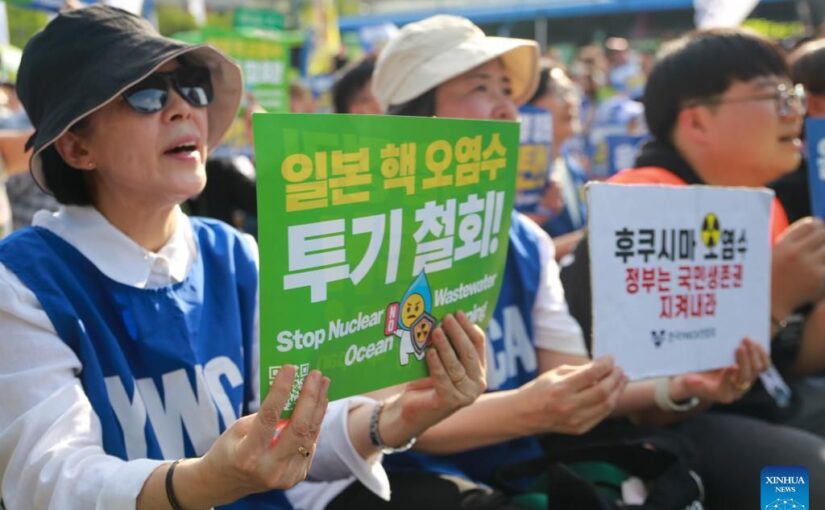
The Japanese government began releasing wastewater from the Fukushima nuclear plant into the Pacific Ocean on Aug. 24. The controversial move has angered workers throughout the region, sparking numerous protests in South Korea, China and Japan.

Following the Tōhoku earthquake and tsunami on March 11, 2011 — which destroyed the Fukushima nuclear plant, resulting in three nuclear meltdowns, three hydrogen explosions and a release of radioactive contaminants — the nuclear company Tepco started pumping in water to cool down the reactors’ fuel rods. 

Radioactive wastewater has been added to tanks every day since then, and more than 1,000 tanks have been filled. The government of Tokyo argues the process is “no longer sustainable” to maintain and promises people that “after treatment and dilution the ‘water is safe to release.’” (BBC, Aug. 24) Many people in the area are understandably skeptical.

More than a million metric tonnes of water stored at the nuclear plant is expected to be discharged over the next 30 years, and there are mixed feelings among scientists about this. Among those who are most supportive of Japan’s plan is the United Nations nuclear “watchdog” known as the International Atomic Energy Agency. Many more people oppose the plan, especially environmentalists and workers in the fishing industry who are familiar with the Pacific Ocean.

Continue reading Release of Fukushima wastewater threatens workers

Is Japan once again treading the path of aggressive militarism?

We are pleased to publish the below article about the dangers of revived Japanese militarism, and its historical antecedents, which has been submitted to us by James De Burghe, a British socialist long resident in the People’s Republic of China.

James outlines how Shinzo Abe, a former Japanese Prime Minister assassinated in 2022, imbibed far-right, racist and militarist views from his grandfather, Nobusuke Kishi, who had been in charge of economic policy when the Japanese occupied northeast China. Initially imprisoned as a class A war criminal by the American occupation authorities after Japan’s defeat in World War 2, he was soon released in order to play a key part in setting up the Liberal Democratic Party (LDP), which has largely dominated Japanese politics ever since, eventually serving as Prime Minister, 1957-1960.

Abe, who served as Prime Minister from 2006-2007 and again from 2012-2020, followed in the same path as his notorious grandparent, controversially revising school textbooks, declining to apologize for – or even acknowledge – Japanese war crimes, and seeking to repeal or revise Article 9, the supposed ‘peace clause’ of the post-war Japanese constitution.

These revanchist policies are now being pursued with a vengeance under Prime Minister Fumio Kishida, leading to fraught relations with Japan’s neighbors, along with increasing resistance from people at home.

There are alarming signs that Japan is once again drifting towards becoming a fascist-led aggressive militaristic state. The legacy of Nobusuke Kishi has borne fruit through the efforts of his grandson, Shinzo Abe, who was Japanese Prime Minister from 2006–2007 and 2012–2020.     

Nobusuke Kishi was the minister who ran Japan’s economic policy in Japanese-occupied Manchuria from 1937 to 1940. He was a convinced supporter of the Yamato race theory that proclaimed Japan as a racially superior nation.  Kishi had nothing but contempt for the Chinese as a people, and he regarded them as “dogs – that need to be trained to obey us without question”. His brutal policies led directly to the deaths of thousands of Chinese civilians forced to work a 120-hour week at gunpoint for meagre food rations. There was no attempt to make working conditions safe, and many slave laborers perished through accidents with molten metals. Thousands more perished from starvation and disease or were executed. Kishi believed there was no point to establishing the rule of law in Manchukuo (as the Japanese called north east China when it was under their occupation) – instead brute force was what was needed to maintain Japanese control.

Continue reading Is Japan once again treading the path of aggressive militarism?