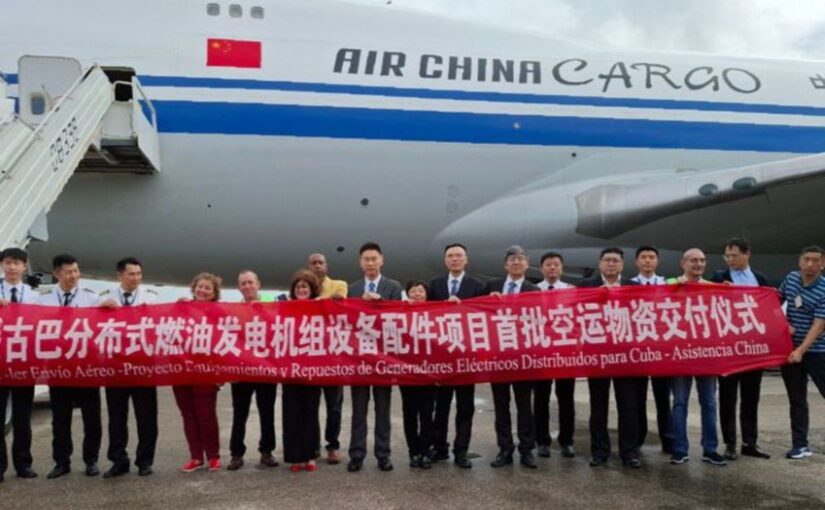
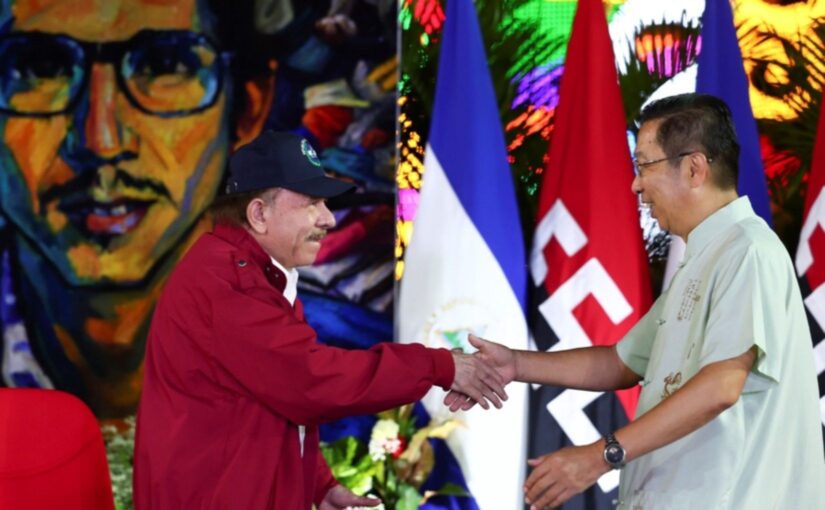
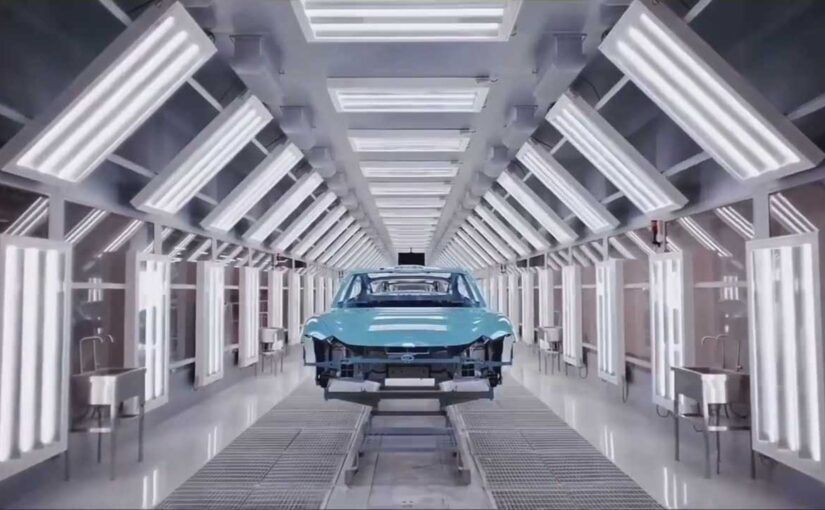
On 13 December 2024, a ceremony took place marking the delivery of 400 buses, manufactured by the Chinese company Yutong (which has its origins in the Zhengzhou Bus Repair Factory, established in 1963), to Nicaragua, an important part of the Nicaraguan government’s plan to modernise its public transport system.
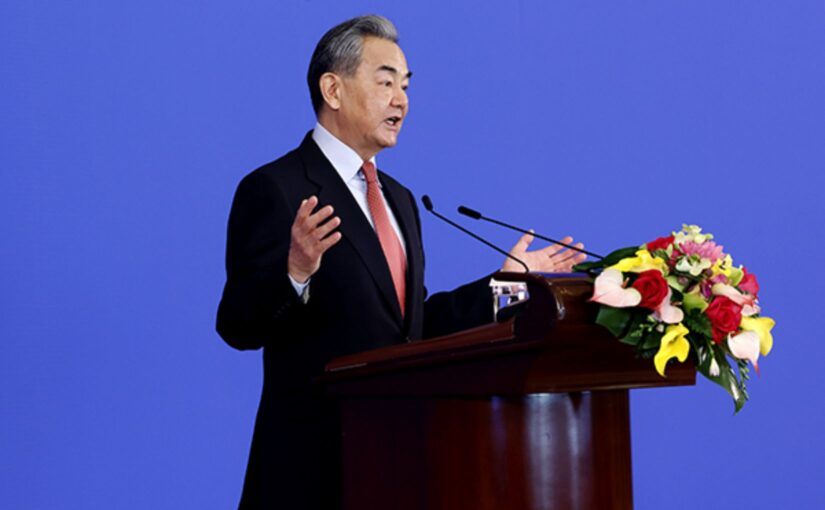
In his speech, Chen Xi, Ambassador of the People’s Republic of China to Nicaragua, observed that in the three years since bilateral relations were re-established, “China and Nicaragua have been able to develop deeper, more solid friendly relations, and the successes of this friendship are becoming ever more visible and palpable every day for the peoples of our two Countries”. Cooperation is blossoming in the areas of transport, education, digital telecommunications, housing, and cultural exchange.
Referencing the impressive progress made in Nicaragua under the people-centred Sandinista government, Chen Xi added: “We are very satisfied that with the Sandinista Popular Revolution and the firm leadership of the Sandinista Government led by Comandante Daniel Ortega, by Compañera Vice President Rosario Murillo, the dreams of the Heroes, of the Sandinista Martyrs, may become reality.”
President Daniel Ortega also gave a speech, expressing profound gratitude for the solidarity and support of the People’s Republic of China. “This transportation that we have here today is transportation resulting from the solidarity of the people of the People’s Republic of China.”
Ortega further praised China’s foreign policy and its orientation towards a multipolar world of peace and prosperity:
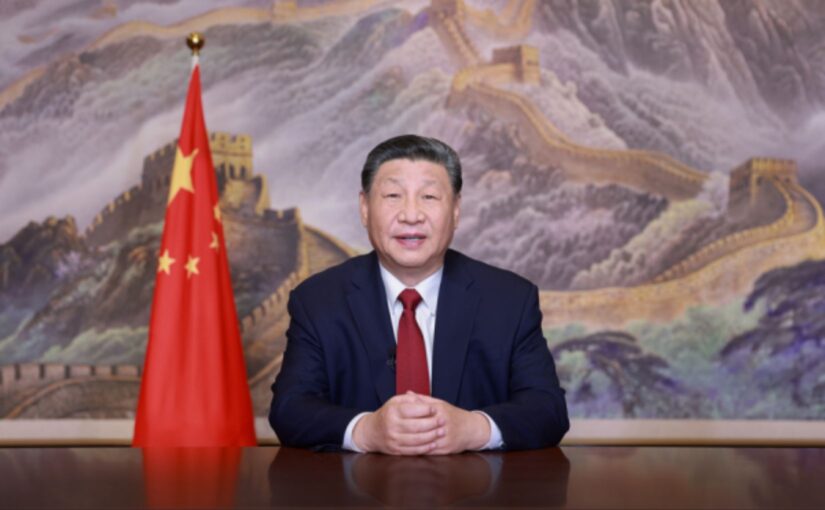
In this world that is so on fire, the People’s Republic of China, with President Xi Jinping, raises the banner of peace with all firmness, and where the brothers of the People’s Republic of China arrive, they arrive with the banner of peace. They don’t set out to promote wars, they don’t set out to snatch away wealth, they don’t set out to appropriate land; on the contrary, they set out to promote development for the peoples of Africa, of Asia, of Latin America… The Chinese People, the Chinese Government, is winning and has won the respect, affection, friendship of the peoples of the world, as it has won the heart of the Nicaraguan people.
We republish below the speeches by Chen Xi and Daniel Ortega. They first appeared in English on the Tortilla Con Sal website.
Address by Ambassador Chen Xi
Dear Comandante Daniel Ortega Saavedra, President of the Republic of Nicaragua; dear Compañera Rosario Murillo, Vice President of the Republic of Nicaragua; dear Friends, Comandante Lumberto Campbell; our dear compañero Fidel Moreno; fellow Chinese compatriots from the YUTONG Company and other compañeros and compañeras from the Board of Directors; dear Transport Operators, Workers of the Transport Network; also our Friends from the Press. A very good evening, everyone.
At a time when China and Nicaragua are celebrating the Third Anniversary of the re-establishment of Diplomatic Relations between our two Countries, we are meeting here today to proceed with a new delivery of Chinese buses to Nicaragua’s Transport Cooperatives.
I would like to take this opportunity to express my warm congratulations to the YUTONG Company and the Nicaraguan Cooperatives for this magnificent Cooperation between China and Nicaragua. I also want to express my sincere greeting to the Nicaraguan people for having been able to continuously enjoy this good transport service, with the Sandinista Government led by Comandante Daniel Ortega and Vice President Rosario Murillo.
Three years is really not very long, a short time, but thanks to the attention of the Leaders of China and Nicaragua, Chinese President Xi Jinping, Nicaraguan President Comandante Daniel Ortega, Vice President Rosario Murillo, and also thanks to the joint efforts of all our governmental and social Institutions, China and Nicaragua have been able to develop deeper, more solid friendly relations, and the successes of this friendship are becoming ever more visible and palpable every day for the peoples of our two Countries.
For example, since the entry into force of the Free Trade Agreement between China and Nicaragua on January 1st of this current year, bilateral trade between China and Nicaragua has developed at a very accelerated speed. Nicaraguan exports to China, according to Nicaraguan statistics, have achieved an increase of more than 250% in the first 10 months of this year, as well as Cooperation Projects in various areas. For example, in the construction of the “New Victories” housing, progress has been made successfully, with quality and with speed, in less than a year. A few days ago I made a tour of the Project and they will soon be ready for delivery, with their good quality offering comfort for the Nicaraguan people.
Other Energy and Transport Projects are also moving forward comfortably, at full speed.
This is so not only in the economic and commercial areas, but in many other areas, such as technology, Huawei Company has been offering important Cooperation to achieve much better development of Digital Telecommunications technology, of much better quality and with a higher level of progress.
Cooperation in educational areas is also developing. China and Nicaragua are cooperating in promoting a Project called the Luban Project, by means of which the Chinese side is going to provide equipment to INATEC so that it can prepare the highest quality, latest generation technologies here in Nicaragua.
Recently, more than three months ago, the first Confucius Institute was established in Managua, at the UNAN-Managua. This institute is preparing Nicaraguans to speak Chinese perhaps much more fluently than the Spanish I speak. They are also getting to know the millenia-old Chinese Culture, willing to develop together with the Peoples of the World, for the Prosperity and Well-being of our Peoples.
Yesterday and today a group of musical artists are visiting Nicaragua, carrying out musical cultural exchanges with the Nicaraguan people, with Nicaraguan artists, and today they are going to hold a concert at the Rubén Darío National Theater. In other words, all the successes of our Cooperation are bearing fruit for the Peoples of our Countries, and all this is due to the will of both the Chinese and the Nicaraguan Governments, the will of the Leaders of our two Countries to accelerate, to deepen our friendship and our Cooperation for the benefit of our Peoples.
Last December, precisely on December 20th last year, Comandante Daniel Ortega held a telephone conversation with Chinese President Xi Jinping in which both Leaders reached broad consensus to promote and deepen our cooperation in broad areas in all aspects that we can develop.
So I am sure that our Friendship, our Cooperation will continue to deepen and achieve greater successes for our two Peoples.
Thank you.
Today also coincides with the 73rd anniversary of the birth of Comandante Camilo Ortega Saavedra. We are very satisfied that with the Sandinista Popular Revolution and the firm leadership of the Sandinista Government led by Comandante Daniel Ortega, by Compañera Vice President Rosario Murillo, the dreams of the Heroes, of the Sandinista Martyrs, may become reality.
And as Comandante Campbell has said, they have been able to achieve great successes throughout Nicaragua’s territory, both on the Caribbean and Pacific Coasts, throughout the National Territory, which is due to the heroism, to the industriousness of the Nicaraguan people.
China is always together with Nicaragua, realizing the dreams of both the Chinese people and the Nicaraguan People for a better Life, more Well-being of the People, the Prosperity of our Countries, to strive together, as they say, side by side, hand in hand, out of Solidarity, firm in our Ideals, so that we advance together, so that the World can enjoy a Community of Shared Destiny, and this delivery today is another testament to the will of the Nicaraguan Government and also of the will of China to cooperate, to work together with the Nicaraguan People.
Thank you very much.
Address by Daniel Ortega
Nicaraguan brothers and sisters, families managing to participate in this Event today even if you are far from this place, because as Comandante Lumberto Campbell recalled, Electricity coverage now, Electrical Energy is reaching the Communities, the Towns of the Caribbean Coast of Nicaragua; and so we greet you, all of you watching via television
And so much pride for Peoples who were marginalized, who were not part of the country’s development, who were confined, imprisoned, because there were not even road communications, and they had to travel during very long days. There was not enough transportation, and so we all had to wait for the vehicles that passed that way to take their passengers just so far and then return back with other passengers, for an exchange to be able to take place.
They were truly dramatic conditions, many of you have traveled that route, or made that journey when there were no Highways. We made that journey when there were no Highways, when the Triumph of the Revolution was just beginning and our Programs included building Highways, Roads and Schools, but the US Government, under Ronald Reagan, decided to launch war against us.
Coming out of a War of Liberation that allowed us to overthrow the Somoza tyranny and the Yankee domination over Nicaragua, President Reagan immediately came and approved funds to arm the Counterrevolution so that we would kill each other here, Brother against Brother. He did not approve funds for Peace, he did not approve funds to build the Roads that were so badly needed, not only on the Caribbean Coast, because also all the very many roads which were needed in this Pacific Region, how many bridges were needed, the streets of the cities, the streets of Managua were destroyed.
But what the Empire in its madness did was to approve millions of millions of dollars for death. That naturally left the Caribbean Coast in even more complex, even more difficult conditions, and even worse when they provoked confrontation between Brothers, Sisters . Because here we are all Brothers and Sisters, and when we are in a confrontation where there are shootings, where there are fires, where a compañero is doused with fuel and then they set fire to him, that brings neither Peace nor Stability to any Country.
And we discovered the Caribbean Coast ourselves, in the year 1979, just after the Triumph of the Revolution we made a long journey with Lumberto and other compañeros and compañeras, and it gave us insight, for just to cross the river, the famous Wawa River, I had no idea that we had to stop because there was a very wide river there where there was no way to cross it except with a boat or with a barge that moved from one side to the other.
That is to say, the barge was used to pick up vehicles that were going from Managua to the Coast, the vehicles were mounted on the boat, they crossed, the vehicles got off and then the vehicles that came the other way were mounted. That alone, that alone was an economic loss, a waste of time, because it was not a quick operation, it was a very slow operation, and when the rainy season came and the Wawa River swelled, the Wawa River overflowed, and the barge would be carried away by the Wawa River, ending up who knows where, then road communication would be cut.
There was also aerial communication, by flight, but very expensive, using planes with little capacity, that is, they could transport very few people, even if the plane was large, given the payment for the flight, people could not afford it.
And in those Communities, in the Regions, we were discovering another world there, where the Pacific Coastal area seemed like a world of luxury, compared to the world of the Caribbean Coast. And today, fulfilling our Commitment to develop the Caribbean, to build Highways, Roads, bring Energy, Water, etc., we are making progress there, but we needed transportation yes, and this transportation that we have here today is transportation resulting from the Solidarity of the People of the People’s Republic of China.
And we thank President Xi Jinping, and we thank the People of the People’s Republic of China, who also have great challenges and are fighting great Battles for the Well-being of the Peoples of the World, fighting great Battles against those who want war, who promote war, and who are waging war. Fighting battles for peace!
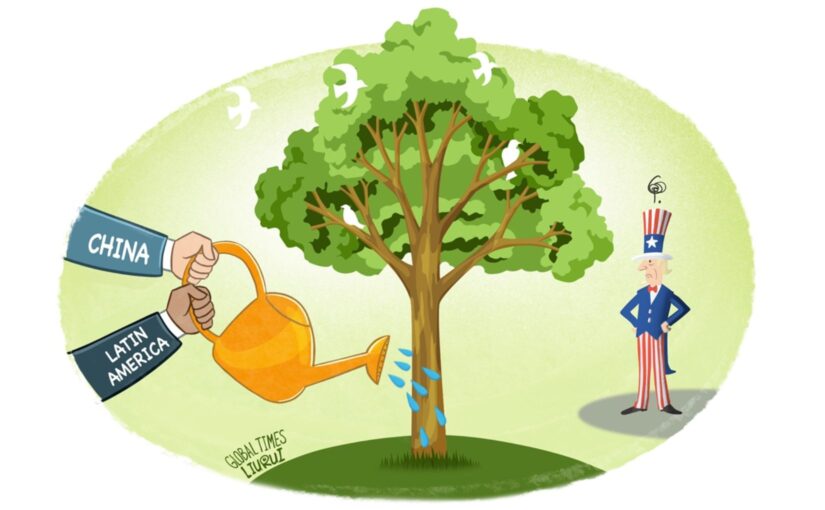
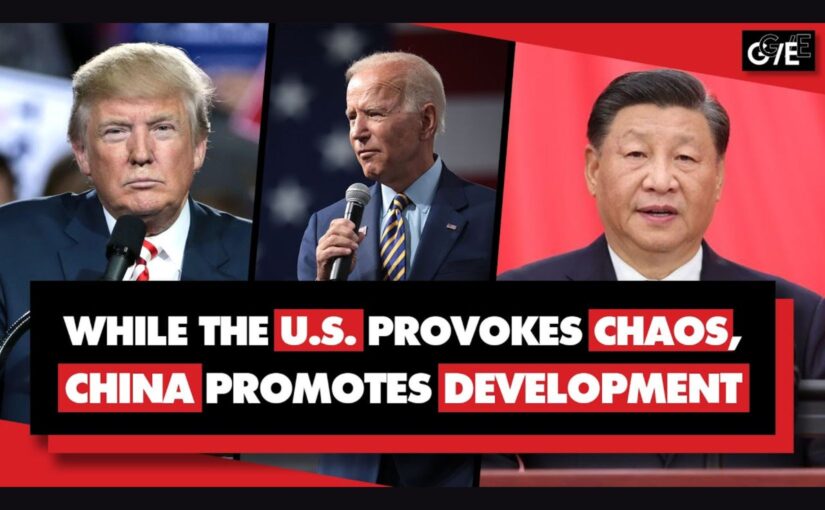
In this World that is so on fire, the People’s Republic of China, with President Xi Jinping, raises the Banner of Peace with all firmness, and where the Brothers of the People’s Republic of China arrive, they arrive with the Banner of Peace. They don’t set out to promote wars, they don’t set out to snatch away wealth, they don’t set out to appropriate land, to the contrary, they set out to promote Development for the Peoples of Africa, of Asia, of Latin America.
Today we are joined here by compañero Pedro Li Yingbin, who is the Director for Latin America of Transportation. Here’ is the Compañero. Welcome! Your first visit to Nicaragua. Welcome!
Just look at the development of Projects for the Well-being of our Latin American and Caribbean Peoples. That shows a Heart where there is Respect, a Heart where there is Love, a Heart that even with all the attacks that are launched against the People’s Republic of China, the slanders, the threats, the Chinese People, their Leaders, are a People with Leaders of great Wisdom who do not allow themselves to be provoked, and continue to do what they have to do, even when they are being threatened. Because they are being threatened by the Imperialist Powers, led by the Yankees and the Europeans, they are being threatened… Imagine, how they threaten you! They threaten you because they are possessed by the devil, the devil is the one they have inside. Instead of Heart, they are full of devils, demons, hungry to dominate the World, to invade the World, to continue provoking war around the World.
In the face of these threats, we hear their threats every day and they are made by the main Leaders of Western Europe, the main Leaders of NATO, the main Leaders of the United States of North America, making threats in every field against the People’s Republic of China, simply because the Chinese People, the Chinese Government, is winning and has won the Respect, Affection, Friendship of the Peoples of the World, as it has won the Heart of the Nicaraguan People.
We have listened to the Brother Ambassador, compañero Chen Xi, who made a good summary of all the things under way, and since he does not stay in his office, but goes out to see how the Projects are going, making their way, what the quality is of the Projects.
Today we are in the month of December, a month that is one of Celebration here in Nicaragua, we have celebrated, commemorating the Virgin, the Virgin Mary, Mary of Nicaragua, Nicaragua of Mary, and we cried out: Who causes so much Joy? And the People have gone about everywhere, with Joy, with Tranquility, with Solidarity. And we also commemorated the little Virgin of Guadalupe, who is also beloved by the Nicaraguan People, the Virgin of Guadalupe. Our Christian Brothers and Sisters from different Evangelical Churches have also made their own Celebrations, because everyone here has the right to celebrate, to honor their Religious Principles.
As regards the date that the buses were coming being on this date, it was never deliberately thought about or planned to bring them for these days, it’s just that was the calculation made by the Technicians, the Specialists, to see when these 400 buses could be taken to Nicaragua; they made the calculations and everything else, no one was thinking about this Celebration.
And you see we can tell you that in these Holidays, in which falls also the Birth of Christ, Christ Jesus, in these Christmas Holidays, the God of all the inhabitants of this Planet Earth, because regardless of any particular Religion, there is a God, and God has brought to the Nicaraguan People, via the hand of the People of the People’s Republic of China, this new gift for the Nicaraguan People.
Also this delivery of buses coincides with the birth of Camilo, my younger brother. Camilo was not born in Chontales, I was born while still in Chontales, in La Libertad, why? Because my father, who was born in the region of Las Rinconadas, there in Masatepe, his mother, a cook, on a small dirt-floor shack throwing tortillas, selling curds, cheese, I don’t know how he did it but he managed to get to Sixth Grade himself, then he started looking for a job and came to work in Granada, in a Pharmacy, and he took advantage of being there to read, to cultivate himself. At that time there was a gold rush in Chontales, in La Libertad, Chontales, Santo Domingo, in all those towns, and even the rich went there to set up their companies and exploit the gold, as well as those without a job were going there looking for how to get work, and my father left for La Libertad looking for work, and they gave him a job in one of the mines.
There he met my mother, who was born in La Libertad, and they had a girl, my elder sister, the girl of course in very poor conditions. And the fevers that constantly attack, that continue to attack, such that children have to be taken care of and adults have to be taken care of, at the age of five, I did not manage to meet her, since I had not been born, but I saw her photograph, a photo taken of her on the cobbled streets of La Libertad, as a five-year-old girl she died.
Then another child came, a boy, and the boy began to grow up but also suffered from the same ailments that children get, and more so in situations of poverty, and at the age of 4 he also died. My two siblings are buried there, at the entrance to La Libertad, in the cemetery. The little girl, Germania, and the boy, Siegfried, those two children lie there.
But the family were in need of work and they stayed in La Libertad, and suddenly I arrived, and God must have wanted me to survive, because the way things were going was not great either… I arrived, and over time, in very difficult conditions, they managed to do a little better… I remember that my mother used to say how she dreamed of a little house, but there was no chance of the little house, and so in order to rent, to rent rooms they moved to Juigalpa.
In Juigalpa, we also slept in one room there, at that time, my father, my mother and I were sleeping in scissor-beds; and in Juigalpa Humberto was born, and then in Juigalpa another little girl was also born, whom my father also named Germania to replace the girl who had died, and so we were then a Family of three children, Germania, Humberto and me, plus my father and my mother.
Then, since conditions were still very difficult because for a poor family migrating from one place to another is not easy, they decided to come here to Managua.
Meanwhile, two things had happened before they met in La Libertad: My father had been thrown into prison because he was with General Sandino, and they had already ordered his assassination. But my father was very firm, and in the end, because my father’s grandfather had been a Teacher, a Principal, that helped to keep him from being executed.
And back then my mother, living in La Libertad, had a boyfriend in Juigalpa, and that boy from Juigalpa left for Costa Rica but they wrote to each other, and sometimes they wrote in code words, a game of boys and girls, of young people, quite normal. But the National Guard was intercepting correspondence, and when they found those letters with code words, they immediately sent my mother to prison there in La Libertad.
They brought her from La Libertad by truck to Puerto Díaz; to Puerto Díaz by boat, and then to Granada, and then from Granada to Campo Marte, to interrogate her. They thought they had discovered a great conspiracy, but there was no such conspiracy.
And my father was always like that, pounding away with his Revolutionary, Sandinista Principles, and we listened to him, we just listened, we listened, and that formed our consciousness. But they were also Christians and talked a lot about Christ, and that’s where when I heard about Christ, I became an admirer of Christ, and subconsciously I was already becoming a Revolutionary.
Because for me Christ was someone really extraordinary, because he was there visiting the poor, helping the poor, healing the poor. Christ did not walk around in fine clothes, Christ did not ask to have a palace built for him like the one in the Vatican. Christ never asked for a palace, he was born in a humble ranch and lived in the houses of the townspeople.
That was when my Revolutionary Feeling was born, it was not because I had read or known other revolutionary experiences, but because of what Christ meant, and that led me to fight and then commit myself to the Struggle of Sandino, and to commit myself to the Struggle of the Sandinista Front. Also Camilo, the same, in the same way, and Humberto, so; in other words, we didn’t go to sign up to some Party to become Revolutionaries, but that’s how it turned out, and suddenly, when my father saw that we were then discussing things, he started taking us to a few demonstrations that were taking place here, like when some Student Leaders had been murdered there in León. In those demonstrations, the National Guard came with clubs, with bullets, killing people, but even so we forged on.
But, going back a little, we lived in Juigalpa for a while and from Juigalpa we moved to Managua. Here in Managua my father looked for a place to rent a room, and he rented one, he found a room here near the Stanley Cayasso Baseball Stadium, the old former Stadium, over there.
And such are the ironies of Life, the owner of the apartments had given them the name “Colonia Somoza”, not that we paid mind to that, nor did my father, he was simply looking for the apartment and he found the room, renting it for 50 pesos. They were apartments that had a living room and then the bedroom where there were two, three scissor-beds, a sink for washing, a wire to hang clothes out and a bathroom. They were small apartments of 50 pesos, at that time 50 pesos was a lot.
Camilo hadn’t been born there yet, and we, boys, well. Camilo was born in 1951, I was born in 1945, that is to say in 1951 I would have been 6 years old, Humberto would have been 5 years old, La Germania would have been 3 years old. Then, a moment came which caught our attention when we saw that every afternoon, and also at night, a lady with a cloth over her head, all covered up, would come in, and the living room and the room were divided by curtains, there was no door, only curtains; then the lady opened the curtain and entered. And for us, it was a mystery, but we did not even ask what the lady was doing there, until one of those days we heard the screams of Camilo. Because my mother gave birth to us all naturally with a midwife, she had six children helped by a midwife. And for Camilo, that lady whom we didn’t know who she was, was in fact the Midwife who came to take care of her, and she’s the one who assisted her delivery in the end, and everything went well, thank God.
And by those ironies of Life, Camilo was born in an apartment of the Colonia Somoza. And then joining the Struggle, studying, because we were students, but already integrated into the Struggle, first with the Revolutionary Student Front, then with Patriotic Youth, and then the Sandinista Front, finally with the Sandinista National Liberation Front, we all took that way.
Camilo was the youngest, and really, if we went by biological reasoning we would say, the first ones who must die are the older ones, but it’s not like that, life’s not like that.
Camilo fought for Unity and that was recognized by Colleagues who did not agree over Unity. But when Camilo received weapons, he would tell us that the compañeros of another group were asking him for weapons, and he thought it was good thing to give them weapons because that would allow us to be more united. And that’s what he did, he gave them the weapons, and that’s what strengthened us and that’s why the People and Sandinismo called Camilo, a Revolutionary Comandante, the Apostle of Unity.
We have heard the words of Guillermo, who is a worthy representative of the transport operators, the bus operators who are an essential body offering service to the population, and the Bus Operators are well known for being hardworking and humble, but also combative. Not fighting for fighting’s sake, but fighting when it is necessary to defend the Rights of the Transport Operators, the Rights of the People, the Rights of Workers. And now a greater responsibility for you, Brothers and Sisters, with more buses, and I tell you to make every effort, the maximum effort, not to be fighting for passengers and driving at high speed; we are having and have had too many deaths due to traffic accidents. We are not saying that you are at fault, but that we do have many deaths due to traffic accidents.
With the Police we are working on a Plan, where, motorists should not be surprised, those who are speeding should not be surprised, when the Police stop them and punish them, taking away their license, prohibiting them for a certain time from driving, their vehicles will be withheld, whether it is a motorcycle or any other vehicle.
Other accidents really have more to do with vehicles in bad condition; which requires more attention. You Brothers and Sisters have the advantage that you are working with a company that gives us more capability to take care of vehicles and discover defects that may cause an accident.
But we also send this message to compañeros and compañeras operating transport who are not in these programs of ours, to be more careful, to realize that it is the lives and well being of their passengers that are in their hands. Because we have many traffic accidents and it is terrible to see the suffering of relatives seen lying there on the street, dead or seriously injured.
There have been many accidents over these days, so the responsibility is great, Brothers and Sisters, and we trust in you that you will be the first to take care of these vehicles and to see that fewer accidents occur. There will always be accidents, but they have to decrease, we must decrease the number of accidents.
And dear Ambassador, please tell him, tell President Xi Jinping, that today, December 13th on the day of the anniversary of Camilo’s birth, of the Apostle of Unity, here in the company of the Bus Operators who have discipline, who have Conscience and who are among those who don’t take one step back, please tell the President that on this day, among these Religious Celebrations, you have carried out the delivery of buses and are making a delivery right now.
They began delivering buses, mind, in October of last year with 250, in November of last year with 250, in May of this year with 250, in July of this year with 250, and in August this year with 100… And today, this December 13th, 400 buses. For a overall total of 3,000 buses. We thank the President, we thank the Yutong Company, and we thank above all the Noble, Brave, People of the People’s Republic of China.
Long live the People’s Republic of China! Long live the unity of our Peoples!
Sandino Lives On!