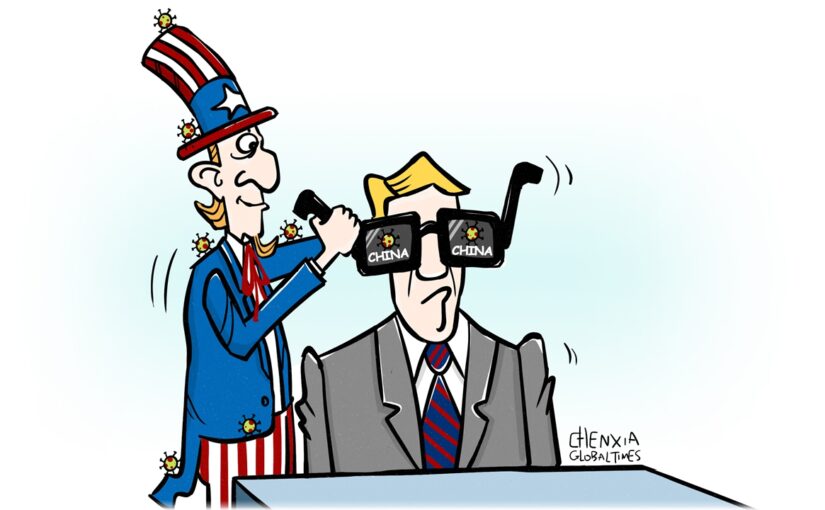
In the following brief article, Ding Gang, a senior editor with People’s Daily and senior fellow with the Chongyang Institute for Financial Studies, discusses the historical roots of the current wave of anti-China fearmongering in the British media and political establishment.
Ding Gang references the notorious fictional character Fu Manchu, invented by Sax Rohmer in the early 20th century. Fu Manchu was the personification of the “menace from the East”, masterminding a dangerous conspiracy to undermine Western civilisation. As China expert and peace activist Jenny Clegg has pointed out, the image of Fu Manchu came to “resonate into the deepest recesses of popular consciousness the world over”.
Ding Gang explains that the Fu Manchu character feeds into a racist ‘yellow-peril’ narrative, within which “East Asians pose a mortal threat to the Western world … reflecting and reinforcing Western anxieties about Asian influence and power.” This mentality continues to stand in the way of mutual understanding and cooperation between China and the West.
The author concludes:
Recognizing and addressing the historical roots of Western perceptions can lead to an informed, respectful and conducive approach to engaging with China for a constructive global future, fostering dialogue and exchanges between China and Britain to build mutual understanding and respect.
This article first appeared in Global Times on 27 March 2024.
The concepts in this article are explored further in a 2021 Society for Anglo-Chinese Understanding webinar Standing Up to Sinophobia – from Fu Manchu to Bat Soup!.
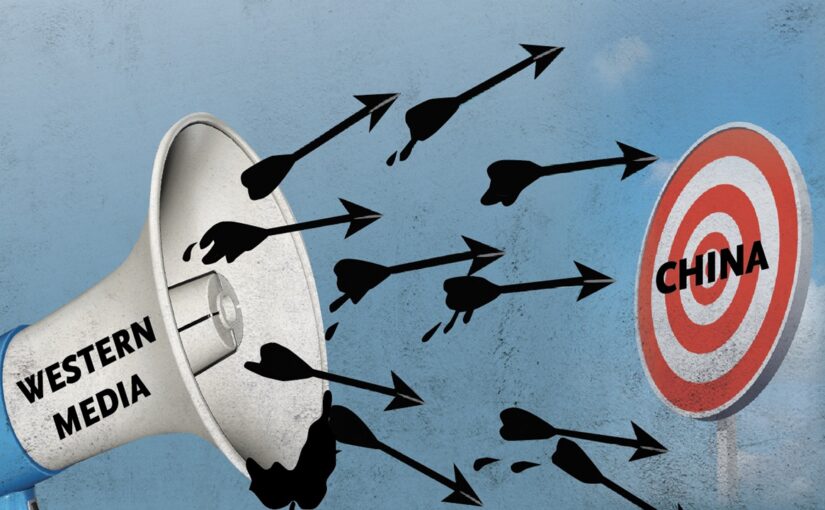
“China could use its electric cars to attack the West” was the title of a commentary I recently read on The Telegraph’s website. The article has even more eye-catching content: “Data espionage has become the signature weapon of the Chinese party state.”
Several other major British media outlets ran front-page headlines on Monday and Tuesday about the so-called Chinese cybersecurity threat, “identifying” China as a significant threat to the UK.
A wave of Sinophobia is sweeping across the country, reminding me of a name that Chinese people have long forgotten, Dr Fu Manchu.
Fu is a fictional character created by English author Sax Rohmer in the early 20th century. He first appeared in the 1913 novel The Mystery of Dr Fu Manchu. Fu is depicted as a brilliant but evil genius, embodying the Western archetype of the “yellow peril.” Over the years, the character has appeared in a series of Rohmer novels and numerous movies, television shows, radio dramas and comic books.
The term refers to the racist ideology that East Asians pose a mortal threat to the Western world. Fu and his adventures inspire and perpetuate fears of the “exotic” and “mysterious” Orient, reflecting and reinforcing Western anxieties about Asian influence and power. Fu’s opponents are usually the British and other Western protagonists who endeavor to thwart Fu’s evil schemes.
As we explore the complexities of modern-day Sinophobia in the UK, it is essential to recognize that the specter of Fu and the historical prejudices he represents still influence contemporary attitudes toward China and its people.
Few figures in the tapestry of British cultural history have cast such a long and dark shadow over perceptions of China as Fu.
While today’s Sinophobia is shaped by the realities of the geopolitical and economic challenges posed by a rising China, it cannot be fully understood without recognizing this historical legacy.
Fu is a creation of the early 20th-century imagination that has continued to resonate in the Western collective consciousness for over a century, regardless of Britain’s shift from a dominant empire to its current state as a declining Western power.
This is not to diminish the possibility of an old empire’s fears about an Eastern power, especially one it once colonized, but to emphasize how historical biases can affect our perceptions and responses today.
If we fail to scrutinize these issues, there will be a danger of worsening the conflict and misinterpreting China’s growth and its population in the future, which will pose a significant challenge to the Western world.
The narrative of China as an economic and security threat, engaging in unfair trade practices and threatening jobs in the West, may help politicians gain votes, but it hinders constructive engagement with China. Misunderstanding the country only fuels unfounded fears and narrow-mindedness.
It reveals, in one way or another, how complex, challenging, and long-term the process of Western acceptance of China’s rise has been. However, there is one thing that even these politicians who promote the “China threat” theory know only too well: China’s rise is unstoppable. What the West needs to do is to sit down with China and find the best way for common development.
In the face of modern Sinophobia, there are serious shortcomings in Western historical education and views on civilization. Their insistence on the superiority of Western civilization often causes them to project their current issues onto external changes, hindering their ability to effectively address such transformations.
As we move forward, let us remember that the shadows cast by figures like Fu Manchu are long. Still, through work and efforts that the sunlight of civilization’s evolution can shine.
Recognizing and addressing the historical roots of Western perceptions can lead to an informed, respectful and conducive approach to engaging with China for a constructive global future, fostering dialogue and exchanges between China and Britain to build mutual understanding and respect.