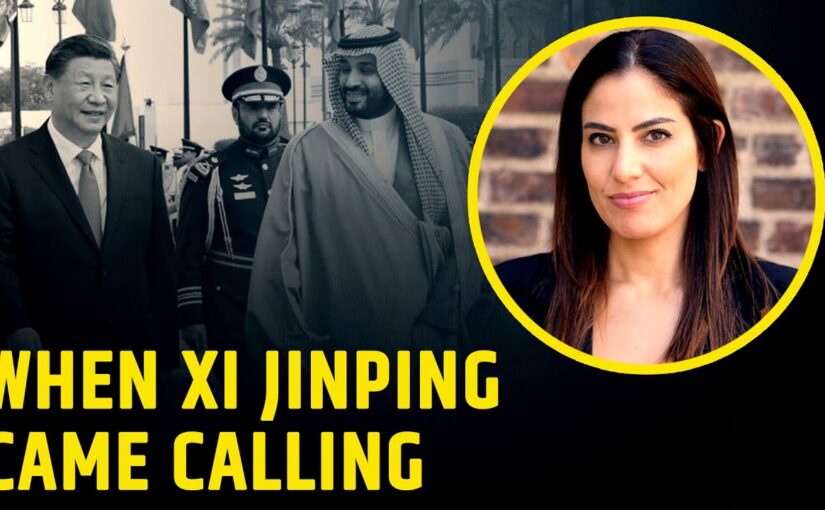
Video: Xi Jinping’s visit to the Gulf and changing geo-political realities

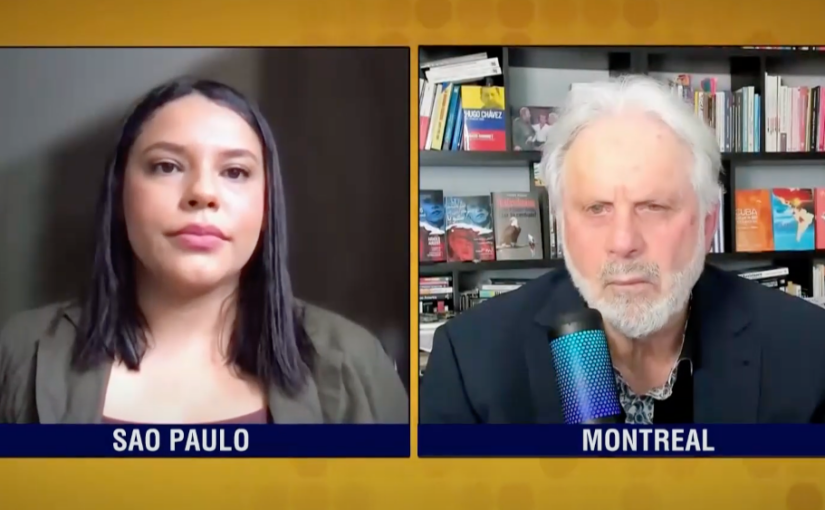
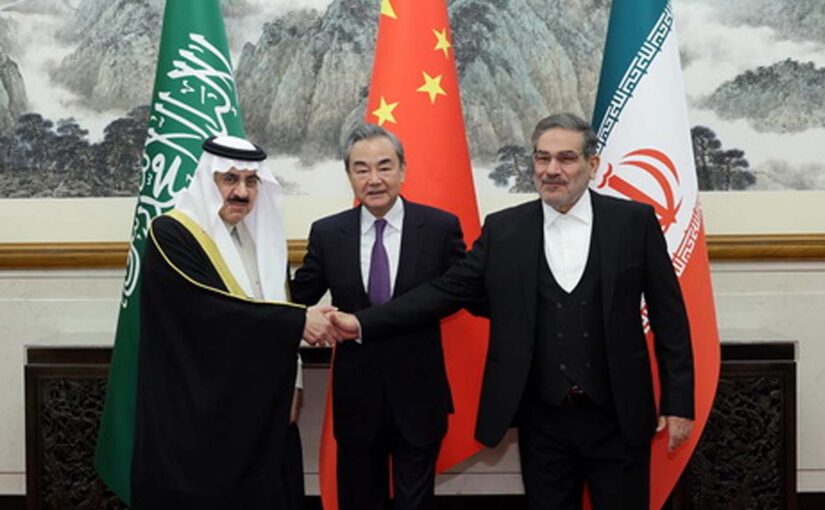
In this interview with People’s Dispatch, Rania Khalek assesses the significance and results of Xi Jinping’s December 2022 visit to Saudi Arabia and his meetings with the leaders of the region. Rania observes that, while US-Saudi relations have been on a downturn in recent years, China has been steadily strengthening its ties with the countries of the Middle East. The Riyadh Declaration of the First China-Arab States Summit, conducted on 10 December, announced that China and the Arab States would work collectively to build a China-Arab community with a shared future – one component of which may very well include the emergence of China’s yuan in global energy markets.

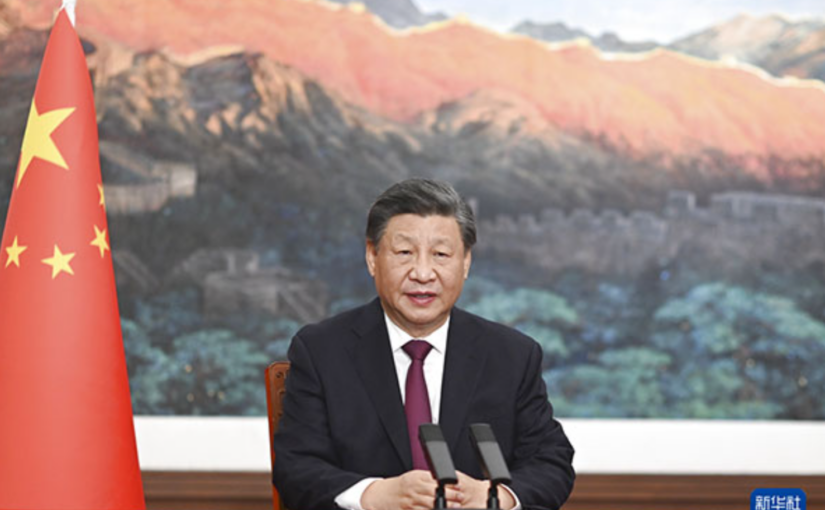
Rania notes that the rise of China is helping to create an alternative foreign policy path for Saudi Arabia, which for decades has tended to act as a proxy for US imperialism in the region. Such a development is profoundly consequential, since China has a strong and consistent interest in promoting peace and stability in the region, and operates on the basis of peaceful coexistence, mutual respect and non-interference. Rania points out that the Riyadh Declaration affirmed the illegality of Israeli settlements in the Palestinian territories and condemned Israel’s unilateral attempts to change the status quo in Jerusalem. The spirit of this text is profoundly different to what would have been written in Washington, and bodes well for the struggle of the Palestinian people to restore their national rights. Indeed, Xi stated in his keynote speech at China-Arab States Summit: “The historical injustices done to the Palestinian people should not be left unattended indefinitely. The legitimate rights of a nation are not up for trade, and the demand for an independent state shan’t be denied. China firmly supports the establishment of a State of Palestine.”

China stands on the right side of history and on the side of human progress

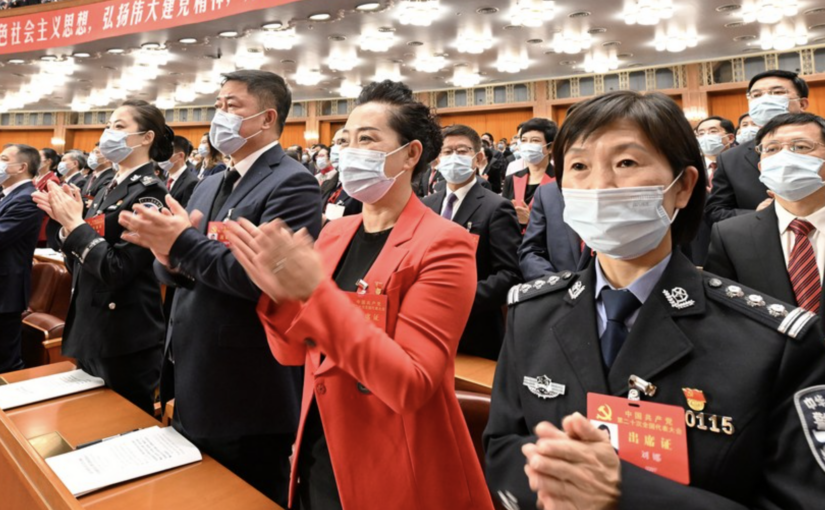
We are honored to publish below the text of the speech by Ms Wang Yingchun, Deputy Director-General of the Bureau for North American, Oceanian and Nordic Affairs, International Department of the Communist Party of China (IDCPC), given on 17 December at the second of two online seminars on the theme ‘The 20th National Congress of the Communist Party of China and its World Significance’, organised jointly by Friends of Socialist China and IDCPC.

Comrade Wang Yingchun’s speech provides an inspiring summary of the major decisions, themes and achievements of the 20th Congress, and outlines the CPC’s positions on issues of global importance – particularly the pursuit of world peace and security, and putting sustainable, sovereign development at the center of the international agenda. The decisions of the Congress reflect the CPC’s resolute opposition to hegemonism and Cold War, and its commitment to respectful and mutually-beneficial relations on the basis of international law and the Five Principles of Peaceful Coexistence. China seeks “to be a pillar of global progressive forces and inject strong positive energy into safeguarding world peace on its new journey to fully build a modern socialist country.”

Good morning! I’m delighted to join you in this webinar. As old friends of China and experts on China, all of you have been following China and the CPC for a long time. I believe you’ve had deep understanding of the 20th CPC National Congress. Last weekend, I attended your online exchanges with Professor Liu Genfa of CELAP and Professor Qu Bo of China Foreign Affairs University. It is inspirational.

The significance of the 20th CPC National Congress is self-evident. My colleagues and I are still in the process of studying. I think it can be understood from the following perspectives:

From the history of the CPC, the Congress was held at a crucial moment when our Party has successfully completed its century-long struggle and embarked on another journey to take new tests. For the CPC, the largest Marxist party of government in the world, moving from one century to the new one is a very important historical juncture.

From the course of the new era of socialism with Chinese characteristics, the Congress was convened at an important moment as the first decade of the new era came to an end and the second has begun. It has outlined the strategic plan for building China into a great modern socialist country. All the Party members and the Chinese people have high expectations and high hopes from the Congress.

From the perspective of adapting Marxism to the Chinese context and the needs of the times, the Congress elaborated in depth on major issues such as breaking new grounds for adapting Marxism to the Chinese context and the needs of the times and Chinese modernization. Xi Jinping Thought of socialism with Chinese Characteristics for a New Era is the Marxism of contemporary China and the Marxism of the 21st century. The great changes in the new era over the past decade have fully demonstrated how true and practical this scientific theory is. So it greatly strengthened the conviction of the CPC and the Chinese people in upholding and developing socialism with Chinese characteristics.

Internationally, the Congress takes place at a critical time when the world is undergoing profound changes unseen in a century and the international situation is becoming more volatile. How our Party responds to the situation, creates new opportunities and breaks new grounds will not only have bearings on China’s reform and development in the future, but also on world peace and development.

Next, I would like to share some of my observations around the theme of this event, “The 20th CPC National Congress and its world significance”.

The Congress has provided strong positive energy for safeguarding world peace

People all over the world long for peace, so does the Chinese nation for more than 5000 years. When Zheng He led what was then the world’s largest fleet to make seven maritime expeditions going as far as the South Seas and across the Indian Ocean (the Western seas) more than 600 years ago, he brought silk, tea and porcelain instead of war, colonization and plunder. China always believes that all countries, big or small, strong or weak, developed or otherwise, should uphold and promote peace.

General Secretary Xi Jinping proposed the Global Security Initiative, stressing that security is the prerequisite for development and mankind is an inseparable security community. He calls for a vision of common, comprehensive, cooperative and sustainable security. We advocate that all sides should adhere to mutual respect and consultation on an equal footing, bridge differences through dialogue and resolve disputes through negotiation. We oppose hegemonism and power politics in all forms. We have decided our position on the merits of matters, pushed for the political settlement of hotspot issues, be it the Iranian nuclear issue, the Korean Peninsula nuclear issue or Afghanistan issue. And we have been playing a constructive role in the Ukrainian crisis in our own way. We stand firmly on the right side of history and on the side of human progress. China has actively promoted international security cooperation and sent more than 50,000 personnel to UN peacekeeping operations. China is the second largest contributor to UN peacekeeping and the largest contributor of peacekeepers among the permanent members of the UN Security Council.

The report of the Congress solemnly declares that China firmly pursues an independent foreign policy of peace and that “taking the road of peaceful development” is one of the five features of Chinese modernization. I believe comrades here will agree that China’s development is a growing force for world peace. China has always been a builder of world peace and will never seek hegemony or expansion. This is the solemn political commitment of the CPC. We are confident that China, the world’s second largest economy with a population of over 1.4 billion, will continue to be a pillar of global progressive forces and inject strong positive energy into safeguarding world peace on its new journey to fully build a modern socialist country.

The Congress has offered new opportunities for common development

Development is the eternal theme of human society and the top priority of the CPC in governance and in rejuvenating the nation. In the new era, we have continued to promote all-round material abundance as well as people’s well-rounded development, and created two miracles, namely rapid economic growth and long-term social stability. Over the past decade, China’s GDP has grown from 54 trillion yuan to 114 trillion yuan, contributing about 30 percent to global growth on average annually, more than the combined contribution of the G7 countries. Thus, China becomes the primary driving force for world economic growth. We have built the world’s largest education, social security, and healthcare systems, and Chinese average life expectancy has risen to 78.2 years. We have won the battle against poverty, lifting nearly 100 million people out of absolute poverty and contributing 70 percent of the global poverty reduction.

We have worked hard to put development at the center of the international agenda. General Secretary Xi Jinping put forward the Global Development Initiative to accelerate the implementation of the UN 2030 Agenda for Sustainable Development and achieve stronger, greener and healthier global development. We have promoted high-quality Belt and Road cooperation and signed cooperation documents with 149 countries and 32 international organizations. The Belt and Road Initiative has become a popular international public good and a platform for international cooperation, providing a strong driving force for global development. More importantly, the great achievements China has made in economic and social development over the past 10 years have successfully promoted and expanded the Chinese modernization, created a new form of human advancement, provided other developing countries with valuable experience and set a successful example, and offered humanity a new choice for achieving modernization. The Congress has outlined an ambitious blueprint for advancing the rejuvenation of the Chinese nation on all fronts through a Chinese path to modernization. We will adhere to the fundamental national policy of opening-up and adopt high-quality opening-up to help create a new development pattern and achieve high-quality development. China will provide new opportunities for the world with its own development. We will input more resource for global development cooperation, remain committed to narrowing the North-South gap, and firmly support and help other developing countries accelerate their own development.

The Congress has injected new impetus to win-win cooperation

As we meet, the world has entered a new phase of instability and transformation, with geopolitical tensions overlapping with the evolving economic dynamics. The COVID-19 pandemic keeps resurging. The global economy faces mounting downward pressure and growing risk of recession. Food, energy and debt crises are emerging together. The Cold War mentality, hegemonism, unilateralism and protectionism are mounting. Human society is facing unprecedented challenges, when no country can stand alone. This requires all countries to pull together in times of difficulty, replace division with unity, confrontation with cooperation and exclusion with inclusiveness, accommodate the legitimate concerns of others while pursuing their own interests, and promote common development of all countries while pursuing their own development.

China is committed to the belief that the future of the world lies in the hands of all countries that international rules be written by all countries, that global affairs be managed by all countries, and that the fruits of development be shared by all countries. China is both a strong voice and practitioner of win-win cooperation. Over the past decade, we have worked hard to build a community with a shared future for mankind, firmly upheld international fairness and justice, advocated and practiced true multilateralism, and unequivocally opposed all hegemonism and power politics, and all acts of unilateralism, protectionism and bullying. As a responsible major country, we have taken an active part in the reform and development of the global governance system, and carried out comprehensive international cooperation in the fight against COVID-19, which has won widespread international acclaim.

Since the 20th CPC National Congress, the world has witnessed a wave of China’s “head of state diplomacy”. General Secretary Xi Jinping met with many visiting leaders of foreign countries and international organizations, and attended the G20 Summit, the APEC Economic Leaders’ Meeting, the first China-Arab States Summit, and the first China-Gulf Cooperation Council (GCC) Summit. He has been vigorously promoting global governance, setting comprehensive vision for regional cooperation, and ushering in a new era of comprehensively deepening bilateral and multilateral relations. This fully demonstrates China’s strategic choice and firm confidence in working with other countries to meet global challenges and strengthen solidarity and coordination. On its new journey, the CPC will strengthen exchanges and cooperation with political parties and organizations of other countries on the basis of the principles of independence, complete equality, mutual respect and non-interference in each other’s internal affairs. China will continue to develop friendly cooperation with other countries on the basis of the Five Principles of Peaceful Coexistence, promote the building of a new type of international relations, deepen and expand global partnerships of equality, openness and cooperation, and strive to expand converging interests with other countries.

China has been and will always be a defender of the international order. We stand ready to strengthen solidarity and cooperation with other progressive forces in the world and jointly create a better future for mankind.

Comrades and Friends,

The 20th CPC National Congress has outlined an ambitious blueprint for China’s future development. On the new journey, we will unswervingly continue to uphold and strengthen the overall leadership of the Party, adhere to Marxism and follow the path of socialism based on our national conditions, so as to safeguard and deliver the fundamental interests of the people and make new and greater contribution to the noble cause of peace and development of mankind. A China that continues to modernize itself will provide more opportunities for the world, inject greater impetus into international cooperation and the world socialist movement, and make greater contribution to the progress of mankind!

On the journey ahead, we are also ready to maintain exchanges and cooperation with you, true friends of China, Chinese people and the CPC.

Thank you!

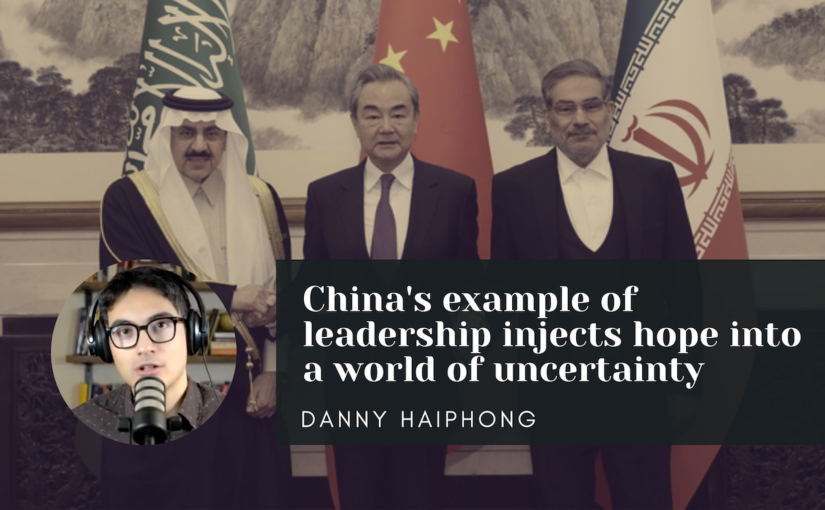
Danny Haiphong: China’s leadership shines bright in Asia’s moment

In this article for CGTN, co-editor of FoSC Danny Haiphong discusses the week of major diplomatic exchanges that occurred in Asia from November 11-18, highlighting how China’s leadership stood out as a major force for global stability and peace in Asia’s moment of ascendence.

Asia possesses many of the world’s largest and fastest-growing economies. In this era of growing discord and crisis in the West, the majority of nations around the world are looking to Asia to set a different example. The region took center stage in the week of November 11 to 18 as the emerging economies of Cambodia, Indonesia, and Thailand hosted the Association of Southeast Asian Nations (ASEAN) Summit, the G20, and the Asia-Pacific Economic Cooperation (APEC) Economic Leaders’ Meeting respectively. These important exchanges provided numerous opportunities for major countries to assert their leadership on the world stage. And in this regard, it was China that shined the brightest.

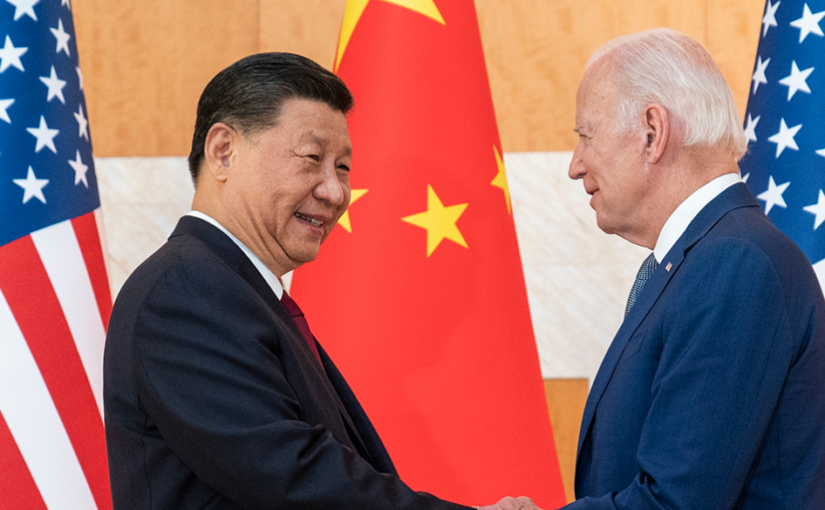
One of the highlights was Chinese President Xi Jinping’s meeting with U.S. President Joe Biden in Bali, Indonesia ahead of the convening of the G20 summit. Xi and Biden spoke for more than three hours and made positive inroads toward reopening channels of cooperation between the two largest economies in the world. Perhaps more significantly, the readouts of the meeting between the two heads of state revealed the superiority of China’s vision for building a community with a shared future for mankind. While the White House readout attempted to balance language of cooperation with its continued interference in China’s internal affairs, China emphasized that the many ways that stronger China-U.S. relations benefit both sides and the world. However, China remained firm in its position that strong bilateral ties depend on mutual respect for sovereignty and expressed hope that the U.S. would follow its words with actions.

And it is here where the U.S. and China diverge in their approach to global leadership. At the G20 summit, for example, China highlighted the benefits of its concrete cooperation with Indonesia. The Jakarta-Bandung High-Speed Railway is set to debut in June 2023 with the help of Chinese technology under the Belt and Road Initiative (BRI). During the APEC Economic Leaders’ Meeting, President Xi and Japanese Prime Minister Fumio Kishida agreed to build stable and constructive bilateral relations. The meeting was yet another example of the deep limitations of the U.S. attempt to contain China through regional alliances.

Outside of positive talks with China, the Biden administration used much of its time during the meetings in Asia to reinforce the problematic hegemony and imperialistic leadership that have characterized U.S. foreign policy for many decades. Biden lectured ASEAN members on the importance of standing with the U.S.’s militarist stance on the Russia-Ukraine conflict. The U.S. offered little assurance that it would follow the G20 or ASEAN meetings with concrete action on the pressing problems facing humanity. Biden failed to dismiss media reports that the U.S. plans to move forward on building relationships with nations in Asia that are specifically meant to weaken China. Of course, none of this serves nations in Asia or the world at large seeking solutions for poverty, war and climate change.

In just a week, China showed how its leadership approach is a stabilizing force in the world. China does not use opportunities for diplomacy to push a self-interested agenda. Zero-sum politics are rejected in favor of win-win cooperation. While detractors in the U.S.-led West claim that China is not sincere in its principle, this assertion is not backed up by facts. The countries in the Global South continue to express interest in the China-led economic arrangements because of the concrete benefits they bring to their development.

Furthermore, China does not wage wars of aggression. When disputes emerge with other nations, China takes great care to establish channels of diplomacy and goodwill in resolving them.

This is a major reason why much of the world is relieved that China has emerged as a different kind of world leader from the United States. Hegemony and domination no longer have a role to play in advancing human progress. China takes part in neither.

China has also achieved enormous feats under difficult circumstances in the last two years alone, including the eradication of absolute poverty and the rapid development of high-technology and infrastructure. Both have given emerging economies much inspiration in their own battles with poverty and underdevelopment. Perhaps China’s most important accomplishment, however, is its consistent advancement of peace and self-determination as outlined in the UN Charter. The 21st century is Asia’s moment of ascendance, and both China and the region’s future is dependent on a stable world environment conducive to meeting the needs of the people and the planet.`

The Xi-Biden summit shows China has created a space for peace

In this article, first published in the Morning Star, Doug Nicholls, General Secretary of Britain’s General Federation of Trade Unions (GFTU), analyses the meeting between Xi Jinping and Joe Biden, which he says, “creates an opportunity to build for peace.”

Doug attributes this to China’s skillful manoeuvering as well as to the fact that, “more countries throughout the world want peaceful coexistence between nations and multipolar political equality rather than US hegemony. China is recognised as the leading advocate of this position.” He also notes that, “China expressed its very powerful alternative vision of a socialist world eloquently in the talks.”

We are very pleased to make available this excellent analysis.

AFTER I had been startled by John Pilger’s film The Coming War on China which charts the military and policy escalation against the country, I started to take closer note of how the US was driving fast to a hot war, using its proxy war against Russia in the Ukraine and a spectacular global misinformation programme.

The Labour and Tory parties’ dutiful allegiance to the “special relationship” with the US, and the extreme belligerence of them both against China, were convincing me that the war drums were about to accompany bombers and troops.

And I think they would have done by now had China and its allies not so skilfully outmanoeuvred the US and forced them into a significant retreat. The talks between PresidentS Biden and Xi in Bali were historic. They create an opportunity to build for peace.

While it had been obvious to the world in the lead-up to the talks that the US was doing everything it could to provoke real aggression against China, as soon as Biden opened his mouth in the public session and declared military conflict was not the US intention, a global sigh of relief could be heard.

However hard it is to believe any word a US president says, this was not a position we can condemn and we should recognise the significance of the climbdown. It is not going to be easy to renege upon quickly, and any breathing room in this febrile situation is welcome.

A number of factors had weakened Biden’s hand in negotiations. They all relate in one way or another to the fact that more countries throughout the world want peaceful coexistence between nations and multipolar political equality rather than US hegemony. China is recognised as the leading advocate of this position.

Continue reading The Xi-Biden summit shows China has created a space for peace

Cheng Enfu: The new pattern of international economy and politics is conducive to the development of world socialism

The International Manifesto Group (IMG), a discussion group of academics and activists in which Friends of Socialist China participates, held an online symposium on Sunday October 16 to mark one year since the launch of its manifesto, Through Pluripolarity to Socialism.

Joining an impressive line-up of speakers, Professor Cheng Enfu, a leading academician at the Chinese Academy of Social Sciences (CASS) and President of the World Association of Political Economy (WAPE), lauded the Manifesto for its “clear theme, profound ideas and magnificent momentum” in appraising the past, present and future of socialism.

According to Professor Cheng, the response to Covid and the Ukraine conflict have both served to expose imperialism and led more people in the world to support socialism. 

Faced with imperialist aggression, the close relationship between China and Russia objectively constitutes the core of the world progressive forces today, he argues.

According to Professor Cheng, the Soviet Union did not collapse due to any failure of socialism, but rather to the treachery of the Gorbachev and Yeltsin leading groups combined with the long imperialist encirclement.

We are pleased to publish Professor Cheng’s speech below.

In September 2021, I spoke at the launch meeting of the Manifesto: Through Pluripolarity to Socialism. The Manifesto has a clear theme, profound ideas, magnificent momentum, and clearly articulated the history of world socialism, its present status quo and future. The international situation over the past year has continued to confirm the fundamental point of the Manifesto. In the following I would like to share with you a few points of mine on the development of socialism in the world, for the sake of discussion.

First, the severe situation of the Covid-19 pandemic in the West has led more people around the world to realize the advantages of the socialist system and its way of governance. So far Russia has exposed dozens of US biological labs in Ukraine, scientists from various countries have revealed that the coronavirus originated in the United States, and the spokesperson of China’s Foreign Ministry has also raised questions about whether the coronavirus originated in the United States. The United States has evaded all these questions. It is now the third year of the pandemic, and no one knows how long it is going to last. As the Manifesto rightly says, “As ramshackle capitalisms responded to the pandemic inevitably shambolically, matters nosedived. Whether they denied it or falsely pitted lives against livelihoods—the capitalist class’s euphemism for profits—their response to the pandemic amounted to the social murder of millions and induced economic crises of historic proportions.”

More and more people around the world are realizing that the developed capitalist countries in the West are responsible for the pandemic and the high mortality rate. The class position and prejudice of Francis Fukuyama, Joseph Nye, etc. lead them to defend the Western system, claiming that the difference between governments of Western countries such as the US and that of China is only the capacity of governance. Such defense is futile. In contrast to the situation in the West, socialist countries like China, Vietnam, Cuba and the Democratic People’s Republic of Korea follow the human rights principle that prioritizes people’s life and health and have achieved the dual goal of epidemic prevention and control and economic development.

Continue reading Cheng Enfu: The new pattern of international economy and politics is conducive to the development of world socialism

Xi Jinping: Enhance solidarity and cooperation to embrace a better future

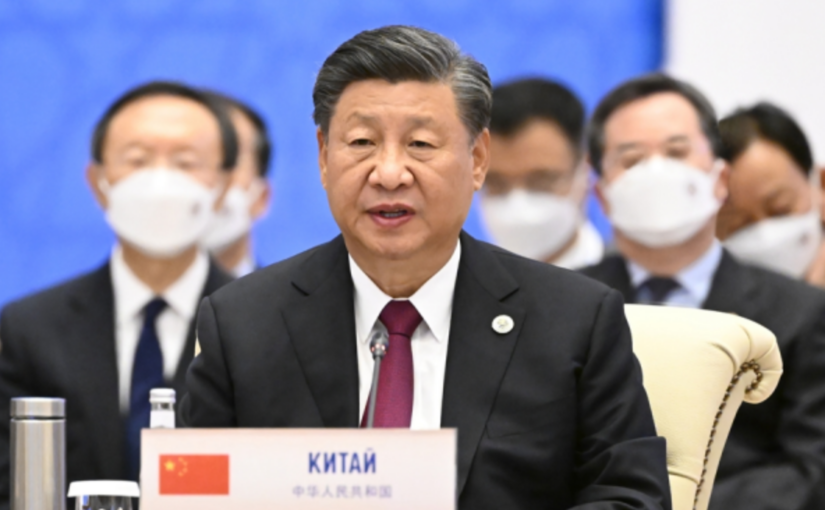
From September 14-16, 2022, Chinese President Xi Jinping attended the 22nd Meeting of the Council of Heads of State of the Shanghai Cooperation Organization (SCO), held in Samarkand, Uzbekistan’s historic Silk Road city, and paid state visits to Kazakhstan and Uzbekistan. Attending nearly 30 multilateral and bilateral events in 48 hours, this was the Chinese leader’s first foreign visit since the onset of the global pandemic.

Below, we publish two important articles – the full text of Xi Jinping’s speech to the SCO summit, reproduced from the website of the Xinhua News Agency, and the briefing on the visit, given to accompanying journalists by Foreign Minister Wang Yi at its conclusion, reproduced from the website of the Chinese Foreign Ministry.

In his speech, President Xi identified a number of positives to be drawn on in the SCO’s practice:

  • Political Trust: “We respect each other’s core interests and choice of development path and support each other in achieving peace, stability, development, and rejuvenation.
  • Win-win cooperation.
  • Equality between nations: “We reject the practice of the strong bullying the weak or the big bullying the small.”
  • Openness and inclusiveness.
  • Equity and justice: “We are committed to the purposes and principles of the UN Charter…and oppose the pursuit of one’s own agenda at the expense of other countries’ legitimate rights and interests.”

He went on to outline what the organization needed to do:

  • We need to enhance mutual support: “We should guard against attempts by external forces to instigate ‘color revolution,’ jointly oppose interference in other countries’ internal affairs under any pretext and hold our future firmly in our own hands.”
  • We need to expand security cooperation.
  • We need to deepen practical cooperation. “To deliver a better life for people of all countries in the region is our shared goal.” SCO member states should “expand shares of local currency settlement, better develop the system for cross-border payment and settlement in local currencies, work for the establishment of an SCO development bank, and thus speed up regional economic integration… China stands ready to carry out space cooperation with all other parties and provide satellite data service to support them in agricultural development, connectivity and disaster mitigation and relief.”
  • We need to enhance people-to-people and cultural exchanges.
  • We need to uphold multilateralism.

Xi Jinping noted that: “In recent years, an increasing number of countries have applied to join our SCO family. This fully demonstrates the power of SCO’s vision and the widely shared confidence in its future.” Elaborating in his briefing, Wang Yi said:

“At the summit, the SCO accepted Iran as a member state, supported the starting of the procedure for the accession of Belarus, granted Egypt, Saudi Arabia, and Qatar the status of SCO dialogue partners, and reached agreement on admitting Bahrain, the Maldives, the United Arab Emirates (UAE), Kuwait and Myanmar as new dialogue partners…It helps consolidate the standing and influence of the SCO as an organization for regional cooperation with the largest population and the largest landmass in the world, and…also fully shows that the SCO is not an isolated and exclusive ‘small circle’, but an open and inclusive ‘big family’.”

Regarding President Xi’s diplomatic work, Wang Yi noted that besides the summit meetings held during his state visits to Kazakhstan and Uzbekistan, the Chinese leader held bilateral meetings with the leaders of Russia, Kyrgyzstan, Turkmenistan, Tajikistan, Iran, Belarus, Pakistan, Mongolia, Türkiye and Azerbaijan, as well as a trilateral meeting together with Russia and Mongolia. Together with Belarus President Aleksandr Lukashenko, Xi issued a joint statement, unanimously deciding to upgrade China-Belarus relations to an all-weather comprehensive strategic partnership.

Wang Yi observed that international commentary had described the President’s tour as, “a strategic step China has taken to unite with its SCO friends in order to penetrate the attempted encirclement by the United States.”

Ride on the Trend of the Times and Enhance Solidarity and Cooperation to Embrace a Better Future

Statement by Xi Jinping at the 22nd Meeting of the Council of Heads of State of The Shanghai Cooperation Organization, Samarkand, Sept. 16, 2022

Your Excellency President Shavkat Mirziyoyev,

Colleagues,

I am delighted to attend the meeting of the Council of Heads of State of the Shanghai Cooperation Organization (SCO). I would like to thank you, President Mirziyoyev, for your warm hospitality and thoughtful arrangements. I salute Uzbekistan for the great job it has done to promote SCO cooperation in various fields during its presidency over the past year.

Samarkand, renowned as the pearl on the Silk Road, witnessed the glory of the ancient Silk Road, a route that greatly boosted the flow of goods, spread of science and technology, interaction of ideas, and integration of diverse cultures on the Eurasian continent. Indeed, the ancient Silk Road has remained a historical source of inspiration for us SCO member states as we pursue peace and development.

Continue reading Xi Jinping: Enhance solidarity and cooperation to embrace a better future

Wang Yi: Making every effort for peace and development and shouldering the responsibility for solidarity and progress

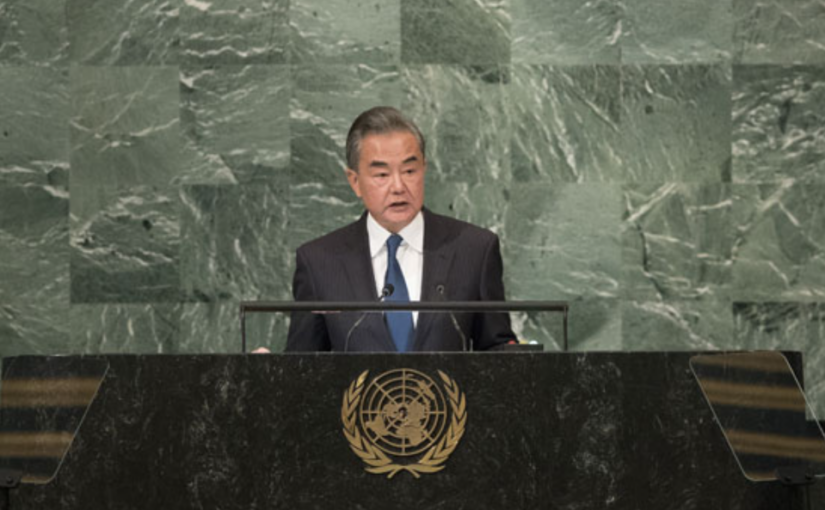
China’s State Councilor and Foreign Minister Comrade Wang Yi attended the 77th Session of the United Nations General Assembly in New York last month.

Besides delivering his address to the assembly on September 24, Wang Yi had a packed programme, which saw him:

  • Hold tens of bilateral meetings with other national leaders, both from countries friendly to China as well as those not so friendly, along with senior UN officials and leaders of international organizations
  • Meet with former US Secretary of State Henry Kissinger
  • Meet jointly with representatives of the National Committee on US-China Relations, US-China Business Council and US Chamber of Commerce
  • Chair the Ministerial Meeting of the Group of Friends of the Global Development Initiative (GDI), attended by senior leaders from more than 40 countries
  • Address the Informal Leaders’ Roundtable on Climate Action
  • Attend the Security Council Foreign Ministers’ meeting on the Ukraine issue
  • Deliver a major speech on the prospects for China-US relations to the Asia Society
  • Participate in the meeting of BRICS Foreign Ministers

Delivering his September 24 speech, Wang began by noting that humanity was facing various challenges, including the continued resurfacing of the Covid-19 pandemic, uncertain global security, and fragile and unsteady global recovery. “The world has entered a new phase of turbulence and transformation…But we are also at a time full of hope. The world continues to move towards multipolarity…Around the world, the people’s call for progress and cooperation is getting louder than ever before.”

Posing the question of how to “ride on the trend of history to build a community with a shared future for mankind”, he explained that “China’s answer is firm and clear”:

  • We must uphold peace and oppose war and turbulence. “Turbulence and war can only open Pandora’s box, and he who instigates a proxy war can easily burn his own hands.”
  • We must pursue development and eliminate poverty, upholding all countries’ legitimate right to development.
  • We must remain open and oppose exclusion – “decoupling and supply chain disruption will hurt both those who practice them and others.”
  • We must stay engaged in cooperation and oppose confrontation. “Our biggest strength will come from solidarity; our best strategy is to stick together through thick and thin; and the brightest prospect is win-win cooperation.”
  • We must strengthen solidarity and oppose division. “Peace, development, fairness, justice, democracy and freedom are common values of humanity.”
  • We must uphold equity and oppose bullying.  “International rules should be drawn up by all countries together. No country is above others, and no country should abuse its power to bully other sovereign countries.”

Affirming that China will “pursue the shared interests of the vast majority of countries”, Wang went on to note that:

  • China has been a builder of world peace and is “the only one among the five Nuclear-Weapon States that is committed to no-first-use of nuclear weapons.” (Note: Wang Yi refers here to the five recognised nuclear powers under the Non-Proliferation Treaty. The DPRK, India, Pakistan and Israel also possess nuclear weapons.)
  • China has been a contributor to global development. “Contributing about 30 percent of annual global growth, China is the biggest engine driving the global economy. China is a pacesetter in implementing the UN 2030 Agenda for Sustainable Development. It has met the poverty reduction goal ten years ahead of the envisioned timeframe and accounts for 70 percent of the gains in global poverty reduction… It has provided development aid to more than 160 countries in need and extended more debt-service payments owed by developing countries than any other G20 member state.”
  • China has been a defender of the international order. By this, Wang refers to “the international system with the UN at its core and the international order based on international law”, which, it should be noted, is very different from the so-called ‘rules based international order’, constantly touted by a handful of countries, principally the United States and Great Britain, which is nothing but a flimsy cover for the attempted maintenance of imperial diktat. “As a member of the developing world, China will forever stand together with other developing countries. We are heartened to see the rapid progress achieved by the developing world in recent years, and we will continue to speak up for other developing countries…Developing countries are no longer the ‘silent majority’ in international and multilateral processes. With stronger solidarity among ourselves, we China and other developing countries have spoken out for justice, and we have become a pillar of promoting development cooperation and safeguarding equity and justice.”
  • China has been a provider of public goods. “We have done our best to provide anti-pandemic supplies and shared our practices on combating the virus. China is among the first to promise making COVID-19 vaccines a global public good and to support waiving intellectual property rights on the vaccines. China has provided over 2.2 billion doses of vaccines to more than 120 countries and international organizations…In response to climate change, China is committed to pursuing a development path that puts ecological conservation first, one of green and low-carbon growth…China accounts for one-fourth of all the trees planted globally. We have been making unremitting efforts to foster a community of life for man and Nature… This year, we have provided over 15,000 tons of emergency humanitarian food assistance to other developing countries in need.”
  • China has been a mediator of hotspot issues. “While adhering to the principle of non-interference in others’ domestic affairs and respecting the will and needs of the countries concerned, China has endeavoured to help settle hotspot issues in a constructive way…China supports all efforts conducive to the peaceful resolution of the Ukraine crisis…The Palestinian question is at the heart of the Middle East issue. Justice is already late in coming, but it must not be absent… China firmly supports the Cuban people in their just struggle to defend their sovereignty and oppose external interference and blockade.”

Turning to the Taiwan issue, Wang Yi noted that: “Fifty-one years ago, right in this august hall, the UN General Assembly adopted Resolution 2758 with an overwhelming majority, which decided to restore the lawful seat of the People’s Republic of China in the UN and to expel the ‘representatives’ of the Taiwan authorities from the place which they had unlawfully occupied. The so-called ‘dual representation’ proposal put forth by the United States and a few other countries to keep Taiwan’s seat in the UN became a piece of waste paper…When entering into diplomatic relations with China, 181 countries all recognized and accepted that there is but one China in the world and Taiwan is a part of China, and that the Government of the People’s Republic of China is the sole legal government representing the whole of China. By firmly upholding the one-China principle, China is not only upholding its sovereignty and territorial integrity, but also truly safeguarding peace and stability across the Taiwan Strait, and non-interference in others’ internal affairs, a basic norm of international relations that is of vital importance to the large number of developing countries.”

Coming to the conclusion of his speech, Wang Yi declared: “As China has one-fifth of the global population, its march toward modernization has important, far-reaching significance for the world. The path that China pursues is one of peace and development, not one of plunder and colonialism; it is a path of win-win cooperation, not one of zero-sum game; and it is one of harmony between man and Nature, not one of destructive exploitation of resources.”

We reprint below the full text of Comrade Wang Yi’s speech, which was originally carried on the website of the Chinese Foreign Ministry. In a subsequent post, we will present some highlights from the minister’s New York meetings with the representatives of a number of friendly, progressive and developing countries.

Mr. President, 
Dear Colleagues,

We are at a time fraught with challenges. The COVID-19 pandemic has kept resurfacing. Global security faces uncertainty. Global economic recovery is fragile and unsteady, and various risks and crises are emerging. The world has entered a new phase of turbulence and transformation. Changes unseen in a century are accelerating. 

Continue reading Wang Yi: Making every effort for peace and development and shouldering the responsibility for solidarity and progress

Lowkey and Ben Norton on the end of US hegemony and the rise of BRICS

In this episode of The Watchdog (a MintPress News podcast hosted by British-Iraqi political analyst and hip-hop artist Lowkey), Lowkey interviews Ben Norton about the significance of BRICS and the Shanghai Cooperation Organization (SCO) in relation to the decline of US-led imperialism and the emergence of a multipolar world.

The two explain the dimensions and purpose of BRICS and the significance of its proposed expansion to include Iran and Argentina, among others. Ben mentions Zbigniew Brzezinski’s 1997 book The Grand Chessboard, in which Brzezinski urges US policymakers to do everything possible to prevent the possibility of a China-Russia-Iran alliance in opposition to US hegemony. With the growing influence of multilateral organizations of the Global South such as BRICS, the SCO, the Community of Latin American and Caribbean States (CELAC) and others, Brzezinski’s nightmares are being turned into reality.

Lowkey and Ben discuss the escalating New Cold War, in which the US is forcing countries around the world to pick between “the West or the rest”. The US is surprised to find that many countries are unwilling to align themselves exclusively with the West – they want to continue having mutually-advantageous relations with China and they are refusing to join the unilateral sanctions on Russia. Indeed, for developing countries, China and Russia are better and more reliable partners than the West: they don’t mandate a neoliberal economic model, they don’t force privatisation, they don’t impose crippling debt conditions, and they don’t compromise other countries’ sovereignty.

Ben highlights China’s economic successes under its model of Socialism with Chinese Characteristics, noting that with over 40 percent of GDP controlled by state-owned enterprises, the major banks owned by the state, all land owned by the state, and the state closely regulating the overall economy, China is showing the world that neoliberalism is by no means inevitable or indeed desirable.

The two conclude that the New Cold War is very unlikely to work in the US’s favor; that BRICS and others are opening up an important space for sovereign development around the world; that dollar hegemony is under significant threat; and that developing countries in particular stand to benefit a great deal from an emerging multipolarity.

The video is embedded below.

China’s agenda: a multipolar world order with shared security and prosperity

This insightful article by CGTN reporter Zhou Jiaxin, first published in the Morning Star, analyses the increasingly hostile rhetoric employed by US politicians in relation to China – in particular that China is undermining the “rules-based international order”. Such rhetoric provides a cloak for expanding NATO’s scope to the Pacific and for developing anti-China military alliances such as AUKUS and the Quad. Zhou Jiaxin contrasts the aggressive actions of the US and its allies with China’s consistent multilateralism, its support for organisations such as BRICS, its emphasis on cooperation, and its role in “counterbalancing and reshaping the world into one that is no longer dominated by only Western powers”.

When USAF C-17 took off from Kabul International Airport last year, shocking videos showed people plunging to their deaths as hundreds of Afghans tried to cling onto the final departing flight. It marked the bloody and chaotic end to the US’s longest war overseas.

Almost a year later, the world order remains threatened by what Beijing calls the politics of “small circles” — and this is creating confrontation and insecurity.

“Some countries are now seeking absolute security via expansion of military alliances to force other countries to take sides and create bloc confrontation, to overlook other countries’ interests and rights and seek supremacy,” Chinese President Xi Jinping said at the latest Brics summit, attended by major developing countries Brazil, Russia, India and South Africa.

The message from Beijing closely follows rhetoric from Moscow that has described six rounds of Nato eastward expansion as a threat amid Ukraine’s anticipated accession to the military bloc.

Continue reading China’s agenda: a multipolar world order with shared security and prosperity

The decline of the US and the rise of the East

In this article written for the Global Times, lawyer and peace activist Dan Kovalik provides a big-picture analysis of the major trends in geopolitics. Dan points out that for the last several decades, while the US and its key allies have oriented their economies largely to finance capital and the military-industrial complex, the socialist countries of Asia “are lifting hundreds of millions out of poverty and building sustainable infrastructure in their own countries and around the world.” It would benefit the people of the US to work with, and learn from, China and other developing countries rather than treating them as enemies.

We are now witnessing a great realignment and transformation. The so-called “American Century” has given way to a new century in which other countries are asserting themselves and taking the lead in the world. This new world order seemed quite unlikely several decades ago when the USSR collapsed and it appeared, and the US certainly declared, that the United States would be the one, dominant power for many decades to come. Ironically, it was the US’ very attempt to maintain this status which has inexorably led to its losing it, and to its decline as a nation.

While ironic, this was all quite predictable. Indeed, the Democratic Party, in its 1900 party platform, warned of this very outcome when it stated, “[w]e assert that no nation can long endure half republic and half empire, and we warn the American people that imperialism abroad will lead quickly and inevitably to despotism at home.” But no sooner were these words uttered than that the US embarked upon unprecedented empire-building beyond its already-giant mainland which itself was the product of a brutal settler-colonial project which displaced, subdued and killed millions of people already living from the Atlantic to the Pacific.

The US, of course, settled upon the instruments of war and violence to achieve its imperial aims. After all, the reasoning went, these had worked so well for it in building the nation to begin with. This addiction to unending expansion through costly wars, however, was not and is not sustainable. Indeed, in his farewell address in 1961, President Dwight D. Eisenhower, himself a former General, warned that the US republic was under threat, not from abroad, but from a growing “military-industrial complex” which was threatening to usurp democratic and civilian rule of the country.

More recently, in what sounded like a postmortem of the United States, Jimmy Carter told President Trump when discussing China in 2019 that the US is “the most warlike nation in the history of the world,” and that this has cost the US dearly.

As Carter explained, “We have wasted, I think, $3 trillion [on military spending since 1979]. … China has not wasted a single penny on war, and that’s why they’re ahead of us. In almost every way.

Continue reading The decline of the US and the rise of the East

The US’s cynical misuse of human rights

This article by Carlos Martinez discusses the themes emerging from the recently-concluded 50th Session of the UN Human Rights Council, in particular the stark disparity in the conduct of the imperialist powers (plus a few hangers-on) and the majority of the world’s countries. While the US and its allies continue their campaign to cynically use human rights issues to slander certain countries and promote their New Cold War, the rest of the world increasingly demands the depoliticisation of human rights. This article was originally published on CGTN.

Global politics seems to be moving in two opposite directions. On the one hand, the US and its closest allies are stepping up their efforts to consolidate and expand US hegemony. On the other hand, the countries of the developing world, the socialist countries and the formerly-colonised countries are increasingly united in their efforts to promote multipolarity, multilateralism, sovereign development, and democracy in international relations.

These two contrasting approaches have been evident during the 50th Session of the UN Human Rights Council, which concluded recently on 8 July.

A group of 47 countries issued a joint statement to the session, making all sorts of lurid accusations against China regarding its treatment of the people of the Xinjiang Uyghur Autonomous Region. The countries signing up to this slanderous statement were the “usual suspects” of the US, Western Europe, Japan, Australia, Canada and a handful of others.

Out of 30 NATO members, the only countries not to sign were Turkey, Greece and Hungary. All the ‘Five Eyes’ signed. Meanwhile, not a single one of the approximately 50 Muslim-majority countries put their names to this statement, although it purportedly represents the interests of Uyghur Muslims.

Continue reading The US’s cynical misuse of human rights

Danny Haiphong and Carlos Martinez discuss NATO, BRICS and the New Cold War

On 1 July, our co-editors Danny Haiphong and Carlos Martinez had a detailed discussion on Danny’s Left Lens YouTube show about the crisis in Ukraine, NATO’s escalation against both Russia and China, the comparison between the recent BRICS and NATO Summits, and the foreign policy continuity from Trump to Biden. Watch below.

Big Power Competition in the post-pandemic world order and the Belt and Road Initiative

As part of its Friends of the Silk Road Series, the Pakistan China Institute organised a webinar on the theme, ‘Big Power Competition in the Post-Pandemic World Order and the Belt and Road Initiative’ on June 20th. Co-Editor of Friends of Socialist China Keith Bennett made a presentation on ‘What to Expect in big power competition – how the Global South Should Respond’. We print his remarks below.

The event was chaired by Tehmina Janjua, former Foreign Secretary of Pakistan. The other speakers were Senator Mushahid Hussain Sayed, Chairman of the Defence Committee of the Pakistan Senate and of the Pakistan China Institute; Mustafa Hyder Sayed, Executive Director of the Pakistan China Institute; Jayanath Colombage, former Foreign Secretary of Sri Lanka and former Commander of the Sri Lankan Navy; Suos Yara, Member of the Central Committee of the Cambodia People’s Party, Spokesperson and Vice-Chair of its Commission for External Relations, as well as member of the National Assembly of Cambodia and Chairman of its Commission of Foreign Affairs, International Cooperation, Media and Information; Wang Wen, Executive Dean of the Chongyang Institute for Financial Studies at Beijing’s Renmin University; and William Jones, Senior Non-Resident Fellow of the Chongyang Institute.

The full event stream is also embedded below.

Dear Friends

Thank you to the Pakistan China Institute for your invitation to speak at this important and timely webinar. And thank you for your consistent and sincere support to Friends of Socialist China which we greatly value.

It is nearly 33 years since the fall of the Berlin Wall. And nearly 31 years since the red flag was lowered from the Kremlin and the USSR ceased to exist. Such was the air of triumphalism that one political philosopher was even moved to declare the end of history.

In return, we were promised a peace dividend. But for the peoples of the Global South, in particular, there was no dividend. And there was no peace. For the peoples of Iraq, Afghanistan and a number of other countries there was only starvation sanctions and devastating war.

Continue reading Big Power Competition in the post-pandemic world order and the Belt and Road Initiative

BRICS indispensable for the collective interests of developing countries

The following article, by Friends of Socialist China co-editor Carlos Martinez, is a slightly expanded version of a piece written for Global Times and published on 20 June 2022. Carlos writes about what to expect from the forthcoming BRICS Summit, which will be hosted by China on 24 June 2022, and discusses the global significance of BRICS in terms of the pursuit of a democratic and multipolar system of international relations.

The 14th BRICS Summit, to be held virtually on 24 June, comes at a crucial moment, as the US is escalating and expanding its New Cold War. While waging a proxy war in Ukraine with a view to inflicting a heavy blow against Russia, the US and its allies are also stepping up their anti-China rhetoric, recklessly undermining the One China principle, sending warships and spy planes to Chinese waters and airspace, and reviving their despicable slanders about the human rights situation in Xinjiang.

The Ukraine crisis has exposed important fault-lines in the so-called rules-based international order. The US has been able to persuade its European and Anglo-Saxon allies to impose unprecedented sanctions on Russia – at significant cost to ordinary people in those countries, who now face a cost of living crisis that threatens to drive millions into poverty. These sanctions, and the provision of heavy weaponry to Kyiv, are aimed not at resolving the conflict but prolonging it.

However, most countries of the developing world have rejected the West’s strategy of division and escalation. China’s principled opposition to unilateral sanctions and its emphasis on a negotiated solution to the crisis are well known. India, which the US has long sought to cultivate as a stable ally and stalking horse against China, has also been firm in its opposition to sanctions against Russia. South African president Cyril Ramaphosa incurred the wrath of the Western media when he stated the blunt truth that the Ukraine war was primarily a result of NATO expansion. Even Brazil, while tending under its current government to side with the US, is taking a position of neutrality in relation to Ukraine.

Continue reading BRICS indispensable for the collective interests of developing countries

Danny Haiphong: The trend toward a multipolar world is defined by class struggle

These edited remarks were given by Friends of Socialist China co-editor Danny Haiphong at our recent webinar, The Empire Strikes Back: Imperialism’s Global War on Multipolarity. The full event can be viewed on YouTube.

In the post-Soviet era, it has become fashionable to strip all geopolitical developments of their class roots. Wars have been explained away by bourgeois propaganda: the War on Terror, Great Power Competition, and matters of “national security.” The Ukraine crisis is a case in point.  Russia’s military operation in Ukraine has been labeled a war without a cause by Western detractors. But underneath the cacophony of capitalist ideology and propaganda is a class struggle occurring on the global stage for multipolarity where the Russia-Ukraine conflict is but one flashpoint.

Vladimir Lenin is perhaps the most well-known Marxist revolutionary to advance a modern theory of international relations rooted in the class struggle brought about by imperialism. Lenin concluded that the ascendency of monopoly and finance capital divided the world into colonies and oppressed nations. The self-determination of these nations would therefore form a core pillar in the struggle for socialism worldwide. Without self-determination, workers and oppressed people of the world would suffer immeasurable losses from the scourge of colonial domination and its triple evils of military occupation, economic plunder, and racial discrimination.

Multipolarity is in essence a continuation of the struggle for self-determination in the modern era. After years of imperialist ramblings about the “End of History” and “There is No Alternative” (TINA) to neoliberalism, the trend toward a multipolar world is demonstrating that the exact opposite is true. In all corners of the globe, the unipolar dominance of U.S. imperialism is collapsing upon its own contradictions. In Europe, U.S. imperialism threatens to shut the lights out and place what was once the center of capitalist development into a permanent state of decay. In Latin America, insurgent left-wing governments led by Cuba, Venezuela, Nicaragua, Bolivia, and others are rejecting U.S. domination in their pursuit of peoples-centered socialist development and integration. In Africa, Western plunder and militarization led by the U.S. has led many countries to pursue stronger relations with China and Russia.

Continue reading Danny Haiphong: The trend toward a multipolar world is defined by class struggle

Videos: The Empire Strikes Back – Imperialism’s global war on multipolarity

Our webinar The Empire Strikes Back – Imperialism’s global war on multipolarity took place on Saturday 11 June 2022, addressing the latest developments in international politics, particularly around NATO, AUKUS, the war in Ukraine, and the increasing militarization of the US-led New Cold War. The full set of videos is embedded below.

Full event stream

Radhika Desai: Pluripolarity is indispensable to the project of undermining imperialism

Victor Gao: China’s successes are based on its socialist system; its focus on peace and development

Li Jingjing: The West deliberately spreads disinformation about Xinjiang in order to discredit China

Ding Yifan: We must mobilize social forces to unmask and oppose the US’s wars and proxy wars

Ben Norton: Socialist countries play a vital role orienting multipolarity towards anti-imperialism

Rob Kajiwara: China doesn’t seek domination of Okinawa or Guam or Hawai’i or other Pacific islands

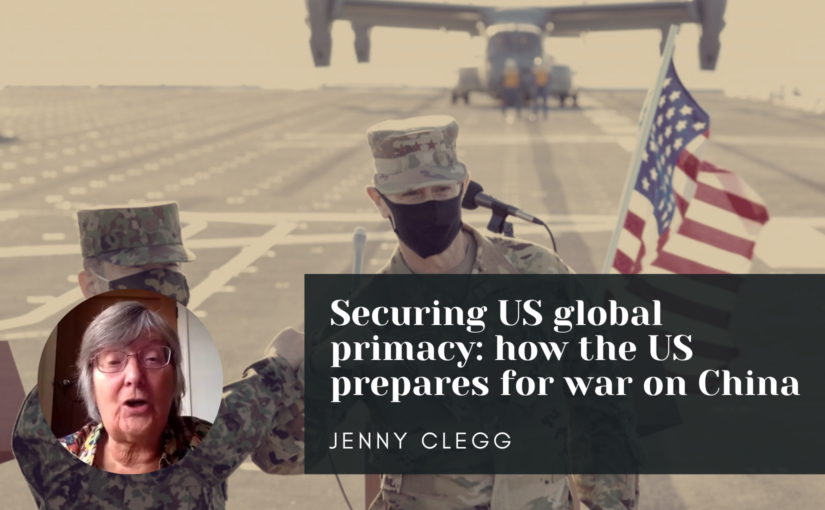
Jenny Clegg: The US-led empire is seeking to simultaneously crush Russia and isolate China

Mustafa Hyder Sayed: The US needs to understand that the world rejects a New Cold War

Chris Matlhako: In a time of crisis, unite against the forces of colonialism, neoliberalism, fascism

Ju-Hyun Park: The US opposes Korean reunification because it would undermine US regional domination

Sara Flounders: The socialist countries are leading the way in terms of meeting humanity’s needs

Danny Haiphong: US imperialism’s war on multipolarity is a war on self-determination and sovereignty

Arnold August: BRICS expansion in the context of rising multipolarity

We are pleased to reproduce extracts from the May 21st edition of the Spotlight programme of Iran’s Press TV, in which Canadian activist and political analyst, focused on Latin America and China, Arnold August assesses the significance of the May 19th virtual meeting of the foreign ministers of the BRICS powers (Brazil, Russia, India, China and South Africa) which backed a Chinese proposal to expand the group’s membership to other emerging economies and developing countries. This will be the first such expansion since South Africa joined the original group in December 2010. August outlines the significance of this move, specifically in terms of building opposition to the new cold war and promoting multipolarity. He also contrasts this inclusive approach to the US moves to exclude such countries as Cuba, Venezuela and Nicaragua from the proposed Summit of the Americas scheduled for next month.

Webinar: The Empire Strikes Back – Imperialism’s global war on multipolarity

Our next webinar takes place on Saturday 11 June 2022, 11am (US Eastern) / 8am (US Pacific) / 4pm (Britain) / 11pm (China).

This webinar will address the latest developments in international politics, particularly around NATO, AUKUS, the war in Ukraine, and the increasing militarization of the US-led New Cold War.

Topics include:

  • NATO, AUKUS and the military infrastructure of the New Cold War
  • The evolving China-Russia relationship and the West’s response
  • The Biden administration’s undermining of the One China Principle
  • Solomon Islands and the West’s plan for hegemony in the Pacific
  • NATO’s plan for Ukraine and how this impacts China
  • Prospects for sovereign development in the Global South

Confirmed speakers:

  • Victor Gao (Vice President, Center for China and Globalization)
  • Ben Norton (Editor, Multipolarista)
  • Li Jingjing (Reporter, CGTN)
  • Jenny Clegg (Author, ‘China’s Global Strategy: Toward a Multipolar World’)
  • Danny Haiphong (Author, ‘American Exceptionalism and American Innocence’)
  • Chris Matlhako (SACP Second Deputy General Secretary)
  • Mustafa Hyder Sayed (Executive Director, Pakistan-China Institute)
  • Professor Ding Yifan (Senior Fellow, Taihe Institute, China)
  • Ju-Hyun Park (Writer and organizer, Nodutdol for Korean Community Development)
  • Rob Kajiwara (President, Peace For Okinawa Coalition)
  • Sara Flounders (United National Antiwar Coalition, International Action Center)
  • Yury Tavrovsky (Chairman, Russian-Chinese Committee for Friendship, Peace and Development)
  • Radhika Desai (Convener, International Manifesto Group)

Developing nations should jointly deal with fallout of Western sanctions on Russia

We’re pleased to republish this thought-provoking opinion piece from Wang Jiamei in the Global Times. Wang notes that the unilateral sanctions being imposed by the major Western countries are causing significant economic harm around the world, driving up energy and food prices, along with inflation. Furthermore, the extreme financial sanctions (such as removing Russia from the SWIFT system) may affect the ability of developing countries to trade with Russia, and serve as a reminder that the developing countries need to deepen their coordination in order to insulate themselves from the negative effects of the decisions taken by the imperialist countries.

It seems that a gradual embargo on Russian oil has become the focus of the latest round of US-led economic sanctions against Russia, which may lead to further volatility throughout the world economy.

Leaders of the Group of Seven (G7) nations committed on Sunday to “phasing out or banning the import of the Russian oil” in an aim to remove reliance on Russian energy supplies, according to a joint statement.

The G7 decision came just days after Ursula von der Leyen, president of the European Commission, announced a plan last week to phase out Russian crude oil within six months and refined products by the end of the year.

Continue reading Developing nations should jointly deal with fallout of Western sanctions on Russia

Xi Jinping’s speech at 2022 Boao Forum for Asia

We are very pleased to publish the full text of President Xi Jinping’s important speech delivered via video to the opening session of this year’s Boao Forum for Asia on the morning of April 21. Often referred to as the ‘Asian Davos’, this year’s forum was joined virtually by several regional leaders, including the presidents of the Philippines, Mongolia and Nepal and the Prime Ministers of Laos and Kazakhstan.

In his comprehensive speech, President Xi made a number of important calls to the Asian and wider international community, stressing the need to unite together to win final victory over the Covid-19 pandemic; to promote economic recovery and to overcome uneven and inadequate development through the Global Development Initiative; and to work together to promote peace and stability in the world.

The Cold War mentality, President Xi explained, would only wreck the global peace framework, hegemonism and power politics would only endanger world peace, and bloc confrontation would only exacerbate security challenges in the 21st century.

China would therefore like to propose a Global Security Initiative – to stay committed to the vision of common, comprehensive, cooperative and sustainable security, and work together to maintain world peace and security; stay committed to respecting the sovereignty and territorial integrity of all countries, uphold non-interference in internal affairs, and respect the independent choices of development paths and social systems made by people in different countries; stay committed to abiding by the purposes and principles of the UN Charter, reject the Cold War mentality, oppose unilateralism, and say no to group politics and bloc confrontation; stay committed to taking the legitimate security concerns of all countries seriously, uphold the principle of indivisible security, build a balanced, effective and sustainable security architecture, and oppose the pursuit of one’s own security at the cost of others’ security; stay committed to peacefully resolving differences and disputes between countries through dialogue and consultation, support all efforts conducive to the peaceful settlement of crises, reject double standards, and oppose the wanton use of unilateral sanctions and long-arm jurisdiction; stay committed to maintaining security in both traditional and non-traditional domains, and work together on regional disputes and global challenges such as terrorism, climate change, cybersecurity and biosecurity.

Specifically turning to Asian issues, the Chinese president noted that: “The Five Principles of Peaceful Coexistence and the Bandung Spirit, first advocated by Asia, are all the more relevant today. We should honor such principles as mutual respect, equality, mutual benefit and peaceful coexistence, follow a policy of good-neighborliness and friendship, and make sure that we always keep our future in our own hands.”

The entry into force of the Regional Comprehensive Economic Partnership (RCEP), and specifically the opening to traffic of the China-Laos Railway, were cited by Xi as key examples of Asian cooperation.

Continue reading Xi Jinping’s speech at 2022 Boao Forum for Asia