On the development of China’s environmental policies towards an ecological civilization

We are very pleased to republish this important article by Efe Can Gürcan, Associate Professor at Türkiye’s Istinye University, which originally appeared in Volume 3 Issue 3 of the BRIQ (Belt & Road Initiative Quarterly).

The author argues that China has already developed a firm understanding of its environmental problems and their severity to the extent that it now frames them as a “matter of survival” and has brought these issues to the center of its revised national security strategy. China’s strategy is predicated on an alternative proposal for “ecological civilization”, which may potentially lead to the reversal of “ecological imperialism”. China is in the early stages of building an ecological civilization and requires a lot of work to reach a high level of ecological development.

China’s key achievements on the path towards ecological civilization involve a series of three unfolding and mutually conditioning revolutionary processes that also lead the way in international environmental cooperation. They include a clean energy revolution, a sustainable agricultural revolution, and a green urban revolution.

China has already become a global leader in green finance. It leads the eco-city movement, with over 43 percent of the world’s eco-cities being Chinese, and is the second leader in sustainable architecture, next to Canada. Many Chinese cities have dropped down or out of the list of the most polluted cities, leaving India and Pakistan at the top. China’s cities have also joined the ranks of those with the strongest sewage treatment capacity in the world. In addition, China has the most electric vehicles, bikes, and efficient public transportation. China is considered to be not only the world’s centre of electric bus production and consumption but also as having cities with the world’s longest subway systems.

From 2013 onwards, the share of coal in China’s total energy consumption has seen a noticeable decline, accompanied by the increasing share of renewable resources in total energy consumption as a result of conscious efforts at a clean energy revolution.

Key to this revolution in the making is China’s strong reputation as the world’s top investor in clean energy. As such, it has succeeded in creating the world’s largest wind, solar, and hydroelectric systems for power generation.

Finally, concerning China’s unfolding revolution in sustainable agriculture, one should acknowledge, not only its adoption of green food standards and the expansion of its agricultural area under certified organic farming, but especially the fact that, as a world leader in green agriculture, it now ranks third in the list of countries with the largest agricultural area under organic farming.

China is the world’s largest country by population size and fourth largest by surface area. Combined with its excessive demographic and geographic size is the continued legacy of Western imperialism in China as a former semi-colony, whose negative effects are amplified by current Western efforts in geopolitical and geo-economic containment. This adds to China’s resource scarcity which acts as another structural adversity constraining its development potential. China possesses only 7% of the world’s arable land and freshwater resources and 8% of the world’s natural resources, even though its population represents 22% of the world’s population. Furthermore, only 19% of its surface area is suitable for human habitation and 65% of its surface area is rugged, which severely cripples China’s farming capabilities and facilitates ethnic heterogeneity as a potential impediment to political cohesion (Morton, 2006; Naughton, 2018).

Despite such adversities, China has come to develop an exemplary model of economic development that inspires much of the developing world. The 1979-2018 period testified to an average growth rate of 9.4% in the lead of the Communist Party of China (CPC), which made China the world’s second-largest economy, top producer, and the leading exporter of technological goods (Hu, 2020). By 2015, China came to assume the global production of 40% of washing machines, 50% of textiles, 60% of buttons, 70% of shoes, 80% of televisions, and 90% of toys. Recently, China has made significant progress in the production of added higher-value products in computer, aviation, and medical technology sectors, among others. Besides its historic success in economic growth, industrial production and technological development, the Chinese economic miracle is credited for 70% of global poverty eradication between 1990 and 2015 (Gardner, 2018).

The huge ecological cost of such a fast-paced and dramatic development –unprecedented in the history of human civilization– is nothing but expected. According to 2009 estimates, the annual economic cost of environmental pollution amounts to 3.8% of China’s Gross Domestic Product (GDP) (Zhang, 2014:32-48). Over 80% of China’s underground and river water resources are no longer fit for human use due to pollution (Jie, 2016). Land pollution and soil erosion are also part of China’s major environmental problems. It is common knowledge that excessive use of pesticides and industrial pollution constitute a major source of land pollution, prompting the loss of organic matter and soil erosion. 2013 estimates suggest that close to 20% of China’s cultivated farmland suffers from contamination and 38% of the soil is subjected to erosion-related loss of nutrients and organic matter (Scott et al., 2018:26; Gardner, 2018:9). Indeed, the contraction of arable land is a natural result of soil contamination and erosion. This also explains China’s over 4% loss of arable land between 1990 and 2018, from 124,481,000 to 119,488,700 hectares (FAO, 2021; Figure 1).

China being the world’s largest pesticide producer and consumer exacerbates this tendency. In the 1990- 2018 period alone, China’s pesticide use rose by 129% (FAO, 2021; see Figure 2). Furthermore, 70% of the world’s electronic waste is recycled in China at the expense of environmental and public health. Industrial pollution, environmentally detrimental recycling practices, and industrial agriculture combined to create China’s “cancer villages” (Gardner, 2018). Map 1 provides a more detailed outline of China’s major environmental problems (Sanjuan, 2018).

Continue reading On the development of China’s environmental policies towards an ecological civilization

Wang Yi meets with Sergey Lavrov

As part of the recent week of intensive diplomatic activity in Asia, focused around regional and global gatherings successively in Cambodia, Indonesia and Thailand, Chinese Foreign Minister Wang Yi met with his Russian counterpart Sergey Lavrov in Bali, Indonesia, on November 15, on the sidelines of the G20 Summit of major economies.

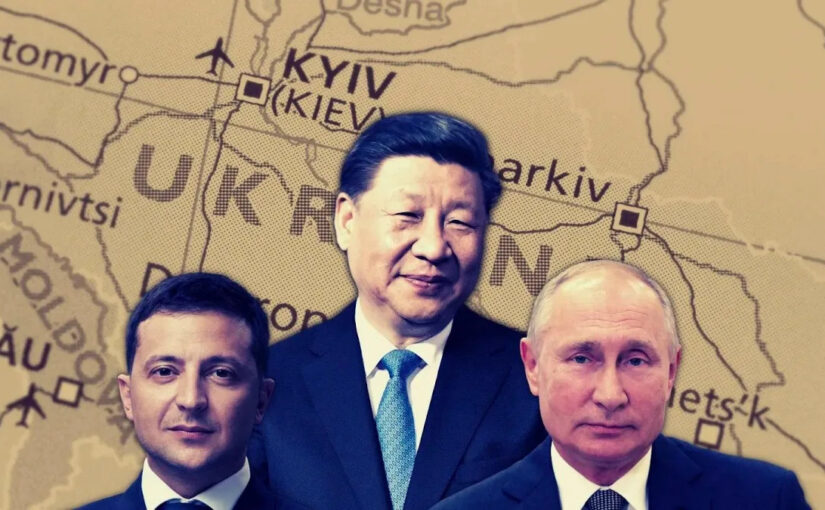
Discussing the Ukraine issue, Wang Yi said that China has noted that Russia recently reiterated its established position that a nuclear war must never be fought, which represents a rational and responsible attitude of Russia.

The importance of this statement is that it clearly debunks the, deliberate or otherwise, misrepresentation of the comments made by Chinese President Xi Jinping, for example in his meeting with German Chancellor Scholz, opposing the use or threat of use of nuclear weapons in the context of the Ukraine conflict as somehow representing an attack on Russia or indicating a fundamental difference between the two countries.

The following article was first published on the website of the Chinese Foreign Ministry.

On November 15, 2022 local time, Member of the Political Bureau of the CPC Central Committee, State Councilor and Foreign Minister Wang Yi, who was accompanying President Xi Jinping to the Group of Twenty (G20) Bali Summit, met with Russian Foreign Minister Sergei Lavrov on the sidelines of the summit.

Lavrov once again extended warm congratulations on the success of the 20th National Congress of the Communist Party of China (CPC). He said that President Xi Jinping’s re-election as General Secretary of the CPC Central Committee by a unanimous vote testifies to the lofty political prestige of President Xi Jinping and the deep trust and strong support from the Chinese people. Russia is ready to work with China to further consolidate the sound momentum of high-level exchanges between the two countries, maintain the continuity of the Russia-China comprehensive strategic partnership of coordination, expand pragmatic cooperation between the two sides, and strengthen international coordination, so as to fully release the potential of Russia-China relations.

Wang Yi said that the success of the 20th CPC National Congress has been in the limelight in China and the world as a whole. The most important outcome of the congress is the election of a new central leadership with Comrade Xi Jinping at its core. That fully reflects the common will of the whole Party and the people across the country. Steered by General Secretary Xi Jinping at the core of the Party central committee and in the Party as a whole, and under the guidance of Xi Jinping Thought on Socialism with Chinese Characteristics for a New Era, China, as a giant ship,  will forge ahead toward the established goal of realizing the great rejuvenation of the Chinese nation without fear of any winds and storms. China is ready to work with Russia to pursue a well-coordinated approach to high-level exchanges and exchanges in various fields, deepen pragmatic cooperation, and facilitate personnel exchanges.

Continue reading Wang Yi meets with Sergey Lavrov

China is building an ecological civilisation

In this detailed essay, Friends of Socialist China co-editor Carlos Martinez analyses China’s pursuit of an ecological civilisation, characterised by “green, circular, and low-carbon development.”

Explaining how China came to be the world’s largest emitter of greenhouse gases, and contextualising this within the country’s rapid industrialisation and development, Carlos details the steps China is taking in support of its goals to peak emissions before 2030 and achieve carbon neutrality by 2060. Its achievements to date – in the fields of renewable energy, reduction of coal usage, nuclear power, energy efficiency, low-carbon transport and forestation – are all world-leading.

Carlos concludes the article with a discussion of why China, as opposed to any of the leading capitalist countries, has emerged as the global leader in sustainable development. The central component is that “the balance of power in capitalist countries is such that even relatively progressive governments find it very difficult to prioritise long-term needs of the population over short-term interests of capital,” whereas in socialist countries, “the interests of private profit are subordinate to the needs of society.”

Referencing the role played by the construction of welfare states in the Soviet Union and Eastern Europe in pressuring the Western ruling classes to grant concessions to the working class (in the form of universal education, social housing and healthcare systems), the author opines that, today, “China’s environmental strategy can create pressure on the capitalist ruling classes to stop destroying the planet and commit to climate justice.”

This is an expanded and update version of the 2019 article China leads the way in tackling climate breakdown. A concise summary of the current version was carried by the Morning Star on 19 November 2022.

We must strike a balance between economic growth and environmental protection. We will be more conscientious in promoting green, circular, and low-carbon development. We will never again seek economic growth at the cost of the environment. (Xi Jinping)[1]

The cost of development

Few events in human history have resonated throughout the world as profoundly as the Chinese Revolution. Standing in Tiananmen Square on 1 October 1949, pronouncing the birth of the People’s Republic of China, Mao Zedong said “the Chinese people have stood up”. In standing up, in building a modern socialist society and throwing off the shackles of feudalism, colonialism, backwardness, illiteracy and grinding poverty, China has blazed a trail for the entire Global South. Lifting hundreds of millions of people out of poverty has been described even by ardent capitalists as “the greatest leap to overcome poverty in history”.[2] The UN Development Programme (UNDP) describes China’s development as having produced “the most rapid decline in absolute poverty ever witnessed”.[3] It is an extraordinary accomplishment that all Chinese people now have secure access to food, housing, clothing, clean water, modern energy, education and healthcare.

In environmental terms, however, this progress has come at a cost. Just as economic development in Europe and the Americas was fuelled by the voracious burning of fossil fuels, China’s development has been built to a significant degree on ‘Old King Coal’, the most polluting and emissions-intensive of the fossil fuels. Two decades ago, coal made up around 80 percent of China’s energy mix. Environmental law expert Barbara Finamore notes that “coal, plentiful and cheap, was the energy source of choice, not just for power plants, but also for direct combustion by heavy industry and for heating and cooking in people’s homes.”[4]

Continue reading China is building an ecological civilisation

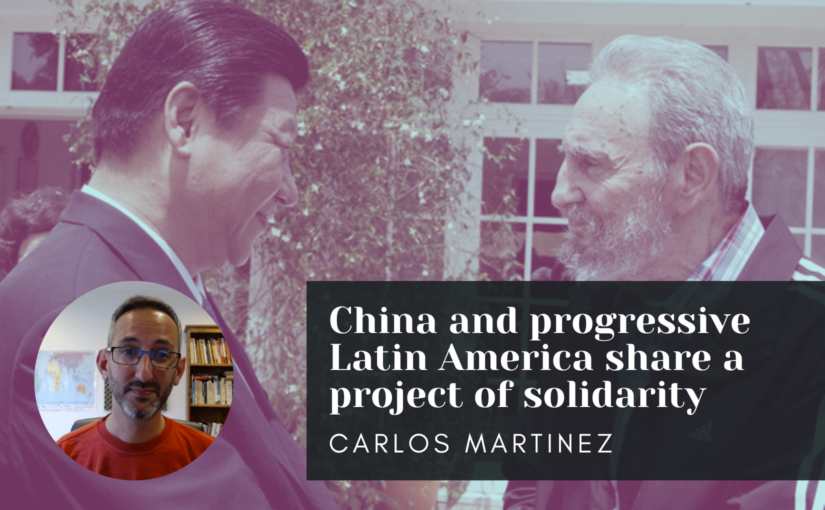
Cuban president Miguel Díaz-Canel to visit China

Cuban President Miguel Díaz-Canel Bermudez is due to arrive in Beijing on Thursday 24 November, the last stop of an international trip that has so far taken him to Russia, Algeria and Türkiye. Díaz-Canel is the first head of state from Latin America and the Caribbean to visit China following the recent National Congress of the CPC. It is notable that two leaders of socialist countries, Díaz-Canel and Nguyen Phu Trong, are among the first world leaders to carry out state visits to China following the Congress.

Commenting on the Cuban leader’s impending visit, Foreign Ministry spokesperson Mao Ning said on 21 November: “China and Cuba are good friends, good comrades and good brothers. They join hands on the socialist path, support each other on core interests, coordinate closely on international and regional issues, setting a model of solidarity of socialist countries and cooperation between developing countries.”

Cuba has consistently stood up in international forums against the politicisation of human rights and the attempts to interfere in China’s internal affairs. Likewise, China has been outspoken in its opposition to the criminal blockade imposed by the US on Cuba. Undoubtedly, Miguel Díaz-Canel’s state visit to China will serve to further strengthen the economic, diplomatic and cultural links between these two fraternal socialist countries.

We publish below an article by Zhang Han in the Global Times outlining the key issues in China-Cuba relations.

At the invitation of General Secretary of the Communist Party of China (CPC) Central Committee and Chinese President Xi Jinping, First Secretary of the Central Committee of the Communist Party of Cuba and Cuban President Miguel Diaz-Canel Bermudez will pay a state visit to China from Thursday to Saturday.

Diaz-Canel will be the first foreign leader to visit China after Xi returned from a diplomatic whirlwind at the G20 Leaders’ Summit in Indonesia and the Asia-Pacific Economic Cooperation (APEC) meetings in Thailand. 

Xu Shicheng, a research fellow at the Institute of Latin American Studies at the Chinese Academy of Social Sciences, told the Global Times the visit not only carries traditional friendship of the two countries, but also reflected close bonds between the two parties. 

China and Cuba are good friends, good comrades and good brothers. They join hands on the socialist path, support each other on core interests, coordinate closely on international and regional issues, setting a model of solidarity of socialist countries and cooperation between developing countries, Mao Ning, a spokesperson of China’s Foreign Ministry, said at a routine press briefing on Monday. 

Continue reading Cuban president Miguel Díaz-Canel to visit China

The Biden-Xi summit and our need to resist a cold war against China

The following editorial, published by the Morning Star following the meeting between the Chinese and US presidents in Indonesia, makes a number of important points. It states that: “Western media has attacked every Chinese administration since it became clear economic reforms were never intended to lead to Western-style market primacy — when Hu Jintao retired a decade ago pundits were bewailing China’s ‘lost decade’ under his leadership since it had still not dispensed with the dominant role of public ownership (it still hasn’t).”

Refuting the claim that China is pursuing isolationist policies, it notes that the Belt and Road Initiative has eclipsed the World Bank as the biggest source of development credit worldwide and that China is the biggest trading partner of a majority of nations. It adds: “US policy has created the cold war. It is the product of an effort to maintain the hegemony of Washington and the Washington consensus — an international economic pecking order no socialist should support… The lesson is clear. Support for the new cold war on China is contrary to everything the left stands for — it’s a threat to peace and a defence of a grossly unjust world order… A serious socialist left should neither accept nor ignore the normalisation of anti-China aggression. It serves the interests of our ruling class — and undermines our own.”

Joe Biden claims a new cold war with China can be avoided.

Washington and Beijing have a responsibility to “manage our differences”, the US president says.

Fine words, and welcome, if the three-hour head to head between Biden and Xi Jinping has actually opened a path to greater co-operation.

We must hope so. China and the United States are the world’s largest economies, the world’s biggest emitters of greenhouse gases, the world leaders in scientific development.

Arresting global warming is one crucial area where it is difficult to see how progress can be made unless the breakdown in relations between Washington and Beijing is reversed.

But given the barrage of misinformation that substitutes for fact-based assessments of China across the West, we need to take Biden’s description of the cold war with a pinch of salt.

The narrative pushed openly by the Biden administration and parroted by the gormless war hawks who lead Britain’s Conservative and Labour parties is that the democratic West faces an existential threat from rising “authoritarian powers,” notably China and Russia.

Continue reading The Biden-Xi summit and our need to resist a cold war against China

Celebrating 50 years of diplomatic relations between China and Jamaica

November 21 is the 50th anniversary of the establishment of diplomatic relations between China and Jamaica. Coming 10 years after the Jamaican people won independence from British colonial rule, the country became the second in the English-speaking Caribbean, and the first of the islands, to establish relations with the People’s Republic after Guyana had led the way some five months previously.

Jamaica’s move came eight months after the People’s National Party (PNP) assumed office, with Michael Manley becoming Prime Minister. Manley sought to take his country in the direction of socialist orientation, not only recognising the People’s Republic of China, but especially forging close ties with socialist Cuba and giving strong support to the liberation movements in southern Africa. He established a minimum wage for all workers, including domestic workers, introduced free education and adult literacy programs, promoted land reform, lowered the voting age, and introduced equal pay for women, alongside a host of other progressive measures. At the 1979 Non-Aligned Summit in the Cuban capital Havana, he declared: “All anti-imperialists know that the balance of forces in the world shifted irrevocably in 1917 when there was a movement and a man in the October Revolution, and Lenin was the man.”

President Xi Jinping greeted the 50th anniversary with an exchange of messages with Jamaican Governor-General Patrick Allen, in which the Chinese leader noted that the two countries’ relations had “always maintained a good momentum of development, with the two sides deepening political mutual trust, achieving fruitful results in practical cooperation and increasing friendship between their people.”

Premier Li Keqiang also exchanged messages with Prime Minister Andrew Holness.

Writing for CGTN, Jamaica’s Ambassador to China, Antonia Hugh said that the two countries had fostered “a strong, dynamic and vibrant partnership.” Although the diplomatic relationship dates back 50 years, people-to-people friendship begins from 1849, when the first group of Chinese arrived on the island.

Ambassador Hugh hailed the countries’ bilateral partnership, highlighting in particular the fields of infrastructure development, health and education.

China’s Ambassador to Jamaica, Chen Daojiang took up his post earlier this year. In his first interview, given to Jamaica Information Services (JIS) on July 29, Ambassador Chen hailed the 60th anniversary of Jamaican independence and continued:

“Slavery and colonialism have brought catastrophic sufferings to the world and left a very disgraceful page in human history. The days when Western colonists could do whatever they want have gone. However, we must also realize that the colonialist thinking and its derivative power politics and bullying are still manifested in various forms in international relations, which are still severely impacting the normal international order and seriously undermining the sovereignty, security, and development interests as well as political, economic and social stability of relevant countries. The international community still has a long way to go to completely eliminate the impacts of slavery and colonialism.

“There is a proverb in Jamaica, which goes ‘Wi likkle, but wi tallawah’. China also always upholds that all countries are equal, regardless of their size. The history of Jamaica’s fight against the colonial rule and slavery was laudable and emotionally moving. The braveness, resilience and wisdom shown by Jamaican people in the fight is very impressive and admirable. China had similar history with Jamaica in modern times when both countries were invaded and suppressed by Western colonialists for a long time and both countries faced same tasks of seeking independence of the nation, prosperity of the country and happiness of the people. Similar history makes our two countries easier to understand and support each other.

“In 1949, under the leadership of the Communist Party of China (CPC), the People’s Republic of China was established. China has completely expelled the forces of Western imperialists in China, and the Chinese people has truly become the master of the country since then. Under the strong leadership of the CPC, China has successfully embarked on a development path that suits its national conditions, namely the path of socialism with Chinese characteristics, and has achieved the tremendous transformation from standing up and growing prosperous to becoming strong. China is now marching in confident strides toward the second centenary goal of building China into a great modern socialist country in all respects.”

The following articles were originally published by the Xinhua News Agency and CGTN and on the website of the Chinese Foreign Ministry.

Xi exchanges congratulations with governor-general of Jamaica over 50th anniversary of diplomatic ties

Chinese President Xi Jinping on Monday exchanged congratulatory messages with Governor-General of Jamaica Patrick Allen on the 50th anniversary of the establishment of diplomatic relations between the two countries.

Jamaica was among the first countries in the English-speaking Caribbean region to establish diplomatic relations with China, Xi said.

In the past 50 years, China-Jamaica ties have always maintained a good momentum of development, with the two sides deepening political mutual trust, achieving fruitful results in practical cooperation and increasing friendship between their people, he added.

In the face of the COVID-19 pandemic, Xi said, China and Jamaica have been helping each other and jointly fighting the coronavirus, injecting fresh impetus into the friendly cooperation between the two countries.

Xi said he attaches great importance to the development of China-Jamaica relations, and is ready to work with Allen, taking the 50th anniversary as a new starting point, to deepen cooperation in various fields, promote high-quality Belt and Road cooperation, jointly lead China-Jamaica strategic partnership to a new level, and work together to build a China-Jamaica community of a shared future in the new era.

Allen said since the establishment of their diplomatic ties, friendly relations between Jamaica and China have been developing continuously with cooperation in various fields yielding remarkable results, which is encouraging.

He added that Jamaica is ready to continue to strengthen cooperation with China and further deepen their strategic partnership.

Also on Monday, Chinese Premier Li Keqiang exchanged congratulatory messages with Jamaica’s Prime Minister Andrew Holness.

Li said Jamaica is an important cooperative partner of China in the Caribbean region, adding that China is ready to work with Jamaica to further deepen and cement the strategic partnership, so as to bring more benefits to their people.

For his part, Holness said Jamaica highly appreciates China’s valuable support for its economic growth and social development and his country stands ready to continue to strengthen cooperation with China to ensure that the strategic partnership will benefit their people. 


Jamaica and China’s golden 50: Special bonds of friendship

As the Ambassador of Jamaica to the People’s Republic of China, I welcome this opportunity to commemorate the 50th anniversary of the establishment of diplomatic relations between Jamaica and the People’s Republic of China, and to celebrate the special bonds of friendship, which our two countries have enjoyed over these 50 years.

On November 21, 1972, Jamaica proudly created diplomatic history when it became the first English-speaking Caribbean island to support the one-China principle, and establish diplomatic relations with China. Since then, Jamaica and China have made remarkable progress in fostering a strong, dynamic, and vibrant partnership.

Jamaica and China have longstanding people-to-people engagement, which goes beyond 50 years, dating as far back as 1849, when the first cohort of Chinese arrived in the island, followed by a larger cohort in 1854. The 1972 landmark Agreement was, therefore, a consolidation of the special relationship that had long existed between our peoples. 

In this regard, we celebrate the fact that today, Chinese Jamaicans have been wonderfully woven into the fabric of Jamaican society and have become an inseparable part of our vibrant cultural heritage. Chinese in Jamaica and Jamaicans of Chinese descent have contributed greatly to Jamaica’s economy, particularly in the areas of retail, banking and the culinary arts, as well as in the political and musical spheres.

The special relationship between Jamaica and China is underpinned by deep mutual respect and shared values, and is continuously reinforced by our extensive cooperation at the bilateral, regional and multilateral levels. 

In this connection, both countries have consistently demonstrated an unwavering commitment to the development of a sustained technical and functional cooperation program, which has allowed us to forge and maintain our dynamic and mutually beneficial partnership.

Within a global context, the People’s Republic of China has made an indelible mark on almost every sphere of human endeavor, including in the arts, medicine, education, economics, engineering, science and technology, just to name a few – and as a result, the world is looking to China as a key driver of global economic development, and a partner in addressing common challenges. 

China is also home to the world’s largest population. This ancient civilization with a legacy of innovation and focused determination, has become the world’s largest manufacturing economy and the largest exporter of goods, achieving strong, sustained economic growth and inclusive development for its people.

We wish to commend China on its accomplishment of eradicating extreme poverty. We are impressed by the fact that China has met the 2030 Agenda for Sustainable Development target 10 years ahead of schedule and thus has contributed to greatly to global poverty reduction. 

We admire China’s steadfast commitment to the goal of modernization and its relentless pursuit of situating the needs of the people within that mandate and we look forward with anticipation, to the unfolding of its modernization plan from 2020 through to 2035 and beyond.

In light of the foregoing, I would also like to commend China for pursuing, with the same tenacity it pursues national development, international outreach and in particular, South-South Cooperation, through which Jamaica has benefited tremendously.

Through our bilateral cooperation agreements and initiatives, the government of China has provided invaluable support to Jamaica particularly in the areas of infrastructure development, health, and education. 

Today, China stands as one of the key partners in Jamaica’s drive for infrastructural development and modernization. Across Jamaica, there are many examples of this fruitful partnership, including the new fit-for-purpose headquarters of the Foreign Ministry and the outstanding Edward Seaga Highway, which connects the north and south of the country.

Jamaicans are appreciative of China’s instrumental role in the achievement of our social development goals. Given the critical role that education plays in development, China has sought to make meaningful contributions to Jamaica’s education landscape. 

Through China’s medical scholarship program, the dreams of many ambitious Jamaican students who aspire to pursue medicine are financed and supported. Hundreds of other students have been awarded scholarships to pursue studies in China at top universities and all have expressed their gratitude at the opportunity to use what they have learned in China to build their country. 

Within this vein, I am reminded that many Jamaican teachers have been assigned to work across China’s provinces, thereby improving their individual economic realities in practical and fulfilling way.

It is often said that “hard times reveal good friends” and so I would like to seize this opportunity to express my profound gratitude to the Chinese government and people for their support and assistance throughout the COVID-19 pandemic, arguably among the most difficult years of our lives. Throughout this pandemic we observed how the Chinese spirit of solidarity, resilience and innovation has led a nation to rebound from the pandemic with renewed agility.

We observed how China, in the midst of its own trials and challenges, chooses continuously, to cling to hope and extend its goodwill by helping other countries including my own. In this connection, I reiterate our gratitude for China’s commitment in the construction of the Western Children’s and Adolescents’ Hospital in Montego Bay, another first in the English-speaking Caribbean.

China and Jamaica elevated relations to that of a strategic partnership in 2019 during the visit of Prime Minister Andrew Holness to China. This was a watershed moment in our history, which followed the groundwork laid in previous official visits and high-level exchanges, including when we opened the Jamaican Embassy in China’s capital Beijing in 2005; and Chinese President Xi Jinping’s visit to Jamaica in 2009, when he was Vice President.

As we celebrate our 50th anniversary, Jamaica intends to increase the frequency and scope of our policy dialogue with China. We look forward to developing innovative and lasting platforms for direct interaction between policymakers, business, and other vital segments of society. We also look forward to finalizing more groundbreaking agreements and MOUs, which will serve to build mutual understanding to create more opportunities for commerce and social programs to thrive.

On a cultural note, cognizant of the fact that Jamaican products provide Chinese people with enriched and diversified access to new cultural experiences, we will continue producing and exporting consistent volumes of the luxurious Jamaican Blue Mountain Coffee to China. We will also seek to provide more delicious lobsters and aged rum and continue to share the magic of Reggae music with the beautiful people of China. Similarly, we encourage landmark institutions such as the Confucius Institute, established at the University of the West Indies in Kingston, to enhance the dissemination of Chinese history and culture among Jamaicans.

On this, our Golden Jubilee – our Golden 50, let us seize this historic opportunity to promote our “win-win” relationship under the guidance of our leaders and endeavor to continue making solid contributions to building a community with a shared future for humanity.

Happy 50th anniversary Jamaica and China!

Happy Golden Jubilee!


Chinese Ambassador to Jamaica Chen Daojiang Gives an Interview to Jamaica Information Services

On July 29, 2022, H.E. Mr. Chen Daojiang, Ambassador of the People’s Republic of China to Jamaica gave an interview to Jamaica Information Services (JIS), expressing congratulations on the 60th anniversary of the independence of Jamaica and answered questions regarding the China-Jamaica relations, the 50th anniversary of the establishment of diplomatic relations between China and Jamaica and the Global Development Initiative, etc. The interview has recently been published and broadcast on the website and radio of JIS and RJR (Radio Jamaica). The full interview is as follows:

Ambassador Chen Daojiang: I am very glad to be interviewed by Jamaica Information Services on the occasion of upcoming 60th anniversary of the Independence of Jamaica, and this is my first interview during my tenure. First of all, on behalf of the Chinese Government and Chinese people, I would like to extend warm congratulations and best wishes to the Jamaican Government and Jamaican people. Big up, Jamaica!

I am honoured to come to Jamaica, a shining pearl on the Caribbean Sea, to serve as the Chinese Ambassador to Jamaica. Over the past two months, I have paid courtesy calls on many Jamaican officials and friends from various walks of life, talked with heads of Chinese enterprises and communities in Jamaica, toured several projects contracted by Chinese enterprises, and visited the National Gallery of Jamaica, from which I got some strong feelings that Jamaica is a beautiful, open and vibrant country and Jamaicans are enthusiastic, friendly and optimistic. The friendship between the two governments and two peoples is profound. Jamaica enjoys geographic advantages, unique culture and abundant creativity, and has huge potential and a promising future for economic and social development. I believe that Jamaica will yield more and more development achievements in the future.

JIS: What’s your general remarks on the importance of the island’s Diamond Jubilee? Do the people of China think it’s also important and why?

Ambassador Chen: On 6 August 1962, Jamaica declared its independence from colonial rule, opening a new chapter in Jamaican history. Jamaica entered a stage of rapid economic growth under the leadership of The Right Excellent Sir William Alexander Bustamante, the first Prime Minister of Jamaica. Over the past 60 years, under the strong leadership of Jamaican leaders and arduous efforts of Jamaican people, Jamaica has been making big progress in socioeconomic development, constantly moving forward its cause in the fields of science, education, culture, health and sports, continuously improving people’s living standards, and playing an active and important role in international and regional affairs.

As a Chinese old saying goes, “Feel happy for others’ joy and others will do the same”, Chinese people always sincerely feel happy for their friends’ happy and joyful events. As China’s good friend and partner, Jamaica will celebrate its Diamond Jubilee of Independence, and Chinese people will definitely share this great happiness and joy with brotherly and sisterly Jamaicans.

Currently, the world is witnessing a persistent and unchecked COVID-19 pandemic, accelerating changes unseen in a century and a period of turbulence and transformation globally. Faced by unprecedented challenges, countries around the world are looking for answers and humanity needs to make the right choice. Under such circumstances, the international community should strengthen solidarity and cooperation, jointly meet challenges, and continue to promote the building of a community with a shared future for mankind so as to strive together for a brighter and better future for our world.

Diamond Jubilee of Independence provides a great opportunity for Jamaica to gather national strength and plan for future development. I sincerely wish that Jamaica would achieve the goal of “Reigniting a Nation for Greatness” and become “the place of choice to live, work, raise families and do business”.

JIS: What are your thoughts on the resilience of the country, which included Chinese natives, to overcome slavery and now live as a free country?

Ambassador Chen: Slavery and colonialism have brought catastrophic sufferings to the world and left a very disgraceful page in human history. The days when Western colonists could do whatever they want have gone. However, we must also realize that the colonialist thinking and its derivative power politics and bullying are still manifested in various forms in international relations, which are still severely impacting the normal international order and seriously undermining the sovereignty, security, and development interests as well as political, economic and social stability of relevant countries. The international community still has a long way to go to completely eliminate the impacts of slavery and colonialism.

There is a proverb in Jamaica, which goes “Wi likkle, but wi tallawah”. China also always upholds that all countries are equal, regardless of their size. The history of Jamaica’s fight against the colonial rule and slavery was laudable and emotionally moving. The braveness, resilience and wisdom shown by Jamaican people in the fight is very impressive and admirable. China had similar history with Jamaica in modern times when both countries were invaded and suppressed by Western colonialists for a long time and both countries faced same tasks of seeking independence of the nation, prosperity of the country and happiness of the people. Similar history makes our two countries easier to understand and support each other.

In 1949, under the leadership of the Communist Party of China (CPC), the People’s Republic of China was established. China has completely expelled the forces of Western imperialists in China, and the Chinese people has truly become the master of the country since then. Under the strong leadership of the CPC, China has successfully embarked on a development path that suits its national conditions, namely the path of socialism with Chinese characteristics, and has achieved the tremendous transformation from standing up and growing prosperous to becoming strong. China is now marching in confident strides toward the second centenary goal of building China into a great modern socialist country in all respects. I wish Jamaica, under the leadership of Prime Minister Andrew Holness and with joint efforts of Jamaican people, would take the 60th anniversary of Independence as an opportunity to find a development path that suits Jamaica’s national conditions so as to achieve better and faster development.

JIS: Could you briefly speak on why China considers its relationship with Jamaica to be so important?

Ambassador Chen: Jamaica is the largest English-speaking country in the Caribbean region with great influence. China and Jamaica established diplomatic relations on 21 November 1972, and Jamaica was among the first several Caribbean countries to establish diplomatic relations with China. Over the past 50 years, under the strategic guidance of the leaders of our two countries, China-Jamaica relations maintain steady and sound development. During his visit to China in 2019, Prime Minister Andrew Holness, together with President Xi Jinping agreed to elevate the bilateral relations to strategic partnership. Since then, bilateral relations have been enjoying accelerated development. Over the past 50 years, China and Jamaica has been supporting each other on major issues involving each other’s core interests. China highly appreciates Jamaica’s consistent adherence to the one-China principle.

China-Jamaica relations is always at the forefront in the Caribbean region. Jamaica was the first Caribbean country to establish strategic partnership with China, and the first Caribbean country to sign the cooperation plan with China on jointly promoting the Belt and Road cooperation. The Confucius Institute at Mona Campus of the University of the West Indies (UWI) was the first Confucius Institute in English-speaking countries in the Caribbean region. Both history and realities prove that China and Jamaica are good brothers supporting each other, good friends going through ups and downs, and good partners seeking common development.

The steady and sound development of China-Jamaica relations brings many tangible benefits to our two countries and two peoples. The China-aid new headquarter of the Ministry of Foreign Affairs and Foreign Trade of Jamaica, the Chinese Garden at the Hope Royal Botanic Gardens and the Confucius Institute at Mona Campus of the UWI have been the witnesses and symbols of China-Jamaica friendship and cooperation. The China-aid Jamaica Western Children’s Hospital currently under construction, and the Montego Bay Perimeter Road Project, South Coast Highway Project as well as the JISCO Alpart Bauxite Upgrading and Expanding Project contracted or invested by Chinese enterprises will improve medical services, strengthen infrastructure construction, create more jobs and promote economic growth for Jamaica, and these projects will become the new symbols and landmarks of mutually-beneficial cooperation between our two countries. Jamaica’s reggae music, rum, Blue Mountain coffee provide Chinese people with enriched and diversified access to material and cultural experiences. We also welcome more Jamaica-featured products and services such as seafood, pork and tourism being exported to China so as to promote economic recovery and development of our two countries.

This year marks the 50th anniversary of the establishment of diplomatic relations between China and Jamaica. Our two countries will host a series of celebrating events, including co-hosting a reception celebrating our jubilee of diplomatic relations. I would like to take this interview as an opportunity to invite representatives from various circles in Jamaica to attend the reception and other celebrating events and jointly embark on a new journey of China-Jamaica relations then. China stands ready to work with Jamaica and jointly take the 50th anniversary of our diplomatic relations as an opportunity to enhance practical cooperation in various fields, pursue high-quality Belt and Road cooperation, and promote China-Jamaica strategic partnership to a higher level so as to bring more benefits to our two countries and two peoples.

JIS: Do you think the Chinese community in Jamaica, also acknowledges and will celebrate the nation’s independence?

Ambassador Chen: I noticed the motto on Jamaica’s national emblem upon my arrival of this country, which reads “out of many, one people”. This saying vividly shows that Jamaica is a multinational country, or a “melting pot”.

As a matter of fact, the first group of Chinese arrived in Jamaica more than 160 years ago, following whom more and more Chinese nationals came. They overcame various challenges and difficulties and actively integrated themselves into Jamaican society and have made important contributions to Jamaica’s economic, social and cultural development. With family ancestry from China, they also act as ambassadors between China and Jamaica and make their own contributions to promoting China-Jamaica relations, deepening bilateral practical cooperation and consolidating the traditional friendship between our two countries.

Today, Chinese Jamaicans have become an important part of the multinational Jamaica. As other Jamaicans, they live and study across the country and work in various fields, promoting the development of their mother country in their own ways. During the COVID-19 pandemic, Chinese communities in Jamaica donated a large number of medical supplies and items to the Jamaican government and people, supporting Jamaica’s fight against the pandemic. I believe that, on the occasion of the 60th anniversary of Independence, Chinese communities in Jamaica would take an active part in the celebration activities in various manners.

JIS: How will you celebrate with the country during “Emancipendence” week?

Ambassador Chen: “Emancipendence” week is a very important festival for Jamaica and its people. Chinese President Xi Jinping, Premier Li Keqiang, Sate Councilor and Foreign Minister Wang Yi will send Message of Congratulation to the Governor General, the Most Hon. Sir Patrick Allen, Prime Minister, the Most Honourable Andrew Holness and Minister of Foreign Affairs and Foreign Trade, the Honourable Kamina Johnson Smith respectively to congratulate Jamaica’s 60th anniversary of Independence.

I myself will also contribute a signature article to send my own congratulatory messages to Jamaican people and share the happiness of this festival. In addition, I will watch celebration activities through television and Internet, and I would probably attend some activities in person. I believe this is a valuable chance to have a taste of the colorful and unique history and culture of Jamaica.

JIS: Any China’s future plans that you would like to mention at this time which includes mutual benefit between the two countries?

Ambassador Chen: As developing countries, both China and Jamaica face the task of achieving people-centered development and delivering an enjoyable life to our people. Development is the “master key” to solving all problems. Jamaica has already been involved in the Belt and Road Initiative. China and Jamaica have conducted win-win cooperation and yielded fruitful results in various fields such as economic and trade and infrastructure construction. Recently, Prime Minister Andrew Holness emphasized the necessity and importance of infrastructure construction at the Ground-Breaking Ceremony of the Montego Bay Perimeter Road Project.

Last September, President Xi Jinping proposed the Global Development Initiative (GDI), calling for a more robust, greener and more balanced global development. In July this year, China-Caribbean Development Center was established in my hometown Shandong Province. The Center aims to make the best of the geographical advantages of Shandong Province as a coastal province and promote cooperation between China and Caribbean countries in agriculture, logistics, infrastructure construction, information technology so as to seek common development by fully leveraging our respective strengths.

We welcome Jamaica’s participation in the Global Development Initiative and explore more cooperation in areas such as poverty alleviation, food security, COVID-19 response, climate change and green development, industrialization, digital economy and connectivity. We also welcome Jamaica to enhance its cooperation with the China-Caribbean Development Center. By doing these, Jamaica could allocate more resources for and inject stronger impetus into its socioeconomic development. The Chinese Embassy in Jamaica will play its role of a bridge, promoting practical cooperation in related areas and bring more benefits to our two countries and two peoples.

We also welcome more media friends to pay more attention to and increase coverage on the Global Development Initiative and the China-Caribbean Development Center in order to jointly create a positive atmosphere that promotes mutually-beneficial cooperation between China and Jamaica.

The second half of this year will witness the 50th anniversary of the establishment of diplomatic relations between China and Jamaica and we will hold a series of celebration activities. We will fully implement the strategic guidance of the leaders of our two countries and jointly usher in a bright future for China-Jamaica strategic partnership. The CPC will also convene its 20th National Congress, which will offer a panoramic prospect of the two-stage strategic plan for China’s drive to build a great modern socialist country in all respects, and will in particular lay out plans for the strategic missions and major measures in the next five years. More steady steps are to be made by Chinese people under the leadership of the CPC to achieve the great rejuvenation of the Chinese nation. A rich, strong, open and prosperous China will bring more opportunities to Jamaica and the rest of the world. I firmly believe that the future of China-Jamaica strategic partnership would be even brighter and the traditional friendship between our two peoples would be even more profound!

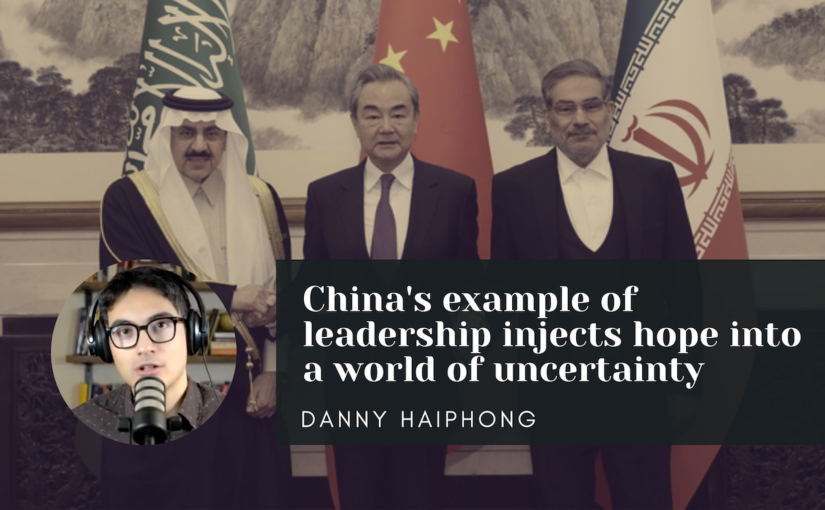
Danny Haiphong: China’s leadership shines bright in Asia’s moment

In this article for CGTN, co-editor of FoSC Danny Haiphong discusses the week of major diplomatic exchanges that occurred in Asia from November 11-18, highlighting how China’s leadership stood out as a major force for global stability and peace in Asia’s moment of ascendence.

Asia possesses many of the world’s largest and fastest-growing economies. In this era of growing discord and crisis in the West, the majority of nations around the world are looking to Asia to set a different example. The region took center stage in the week of November 11 to 18 as the emerging economies of Cambodia, Indonesia, and Thailand hosted the Association of Southeast Asian Nations (ASEAN) Summit, the G20, and the Asia-Pacific Economic Cooperation (APEC) Economic Leaders’ Meeting respectively. These important exchanges provided numerous opportunities for major countries to assert their leadership on the world stage. And in this regard, it was China that shined the brightest.

One of the highlights was Chinese President Xi Jinping’s meeting with U.S. President Joe Biden in Bali, Indonesia ahead of the convening of the G20 summit. Xi and Biden spoke for more than three hours and made positive inroads toward reopening channels of cooperation between the two largest economies in the world. Perhaps more significantly, the readouts of the meeting between the two heads of state revealed the superiority of China’s vision for building a community with a shared future for mankind. While the White House readout attempted to balance language of cooperation with its continued interference in China’s internal affairs, China emphasized that the many ways that stronger China-U.S. relations benefit both sides and the world. However, China remained firm in its position that strong bilateral ties depend on mutual respect for sovereignty and expressed hope that the U.S. would follow its words with actions.

And it is here where the U.S. and China diverge in their approach to global leadership. At the G20 summit, for example, China highlighted the benefits of its concrete cooperation with Indonesia. The Jakarta-Bandung High-Speed Railway is set to debut in June 2023 with the help of Chinese technology under the Belt and Road Initiative (BRI). During the APEC Economic Leaders’ Meeting, President Xi and Japanese Prime Minister Fumio Kishida agreed to build stable and constructive bilateral relations. The meeting was yet another example of the deep limitations of the U.S. attempt to contain China through regional alliances.

Outside of positive talks with China, the Biden administration used much of its time during the meetings in Asia to reinforce the problematic hegemony and imperialistic leadership that have characterized U.S. foreign policy for many decades. Biden lectured ASEAN members on the importance of standing with the U.S.’s militarist stance on the Russia-Ukraine conflict. The U.S. offered little assurance that it would follow the G20 or ASEAN meetings with concrete action on the pressing problems facing humanity. Biden failed to dismiss media reports that the U.S. plans to move forward on building relationships with nations in Asia that are specifically meant to weaken China. Of course, none of this serves nations in Asia or the world at large seeking solutions for poverty, war and climate change.

In just a week, China showed how its leadership approach is a stabilizing force in the world. China does not use opportunities for diplomacy to push a self-interested agenda. Zero-sum politics are rejected in favor of win-win cooperation. While detractors in the U.S.-led West claim that China is not sincere in its principle, this assertion is not backed up by facts. The countries in the Global South continue to express interest in the China-led economic arrangements because of the concrete benefits they bring to their development.

Furthermore, China does not wage wars of aggression. When disputes emerge with other nations, China takes great care to establish channels of diplomacy and goodwill in resolving them.

This is a major reason why much of the world is relieved that China has emerged as a different kind of world leader from the United States. Hegemony and domination no longer have a role to play in advancing human progress. China takes part in neither.

China has also achieved enormous feats under difficult circumstances in the last two years alone, including the eradication of absolute poverty and the rapid development of high-technology and infrastructure. Both have given emerging economies much inspiration in their own battles with poverty and underdevelopment. Perhaps China’s most important accomplishment, however, is its consistent advancement of peace and self-determination as outlined in the UN Charter. The 21st century is Asia’s moment of ascendance, and both China and the region’s future is dependent on a stable world environment conducive to meeting the needs of the people and the planet.`

The Xi-Biden summit shows China has created a space for peace

In this article, first published in the Morning Star, Doug Nicholls, General Secretary of Britain’s General Federation of Trade Unions (GFTU), analyses the meeting between Xi Jinping and Joe Biden, which he says, “creates an opportunity to build for peace.”

Doug attributes this to China’s skillful manoeuvering as well as to the fact that, “more countries throughout the world want peaceful coexistence between nations and multipolar political equality rather than US hegemony. China is recognised as the leading advocate of this position.” He also notes that, “China expressed its very powerful alternative vision of a socialist world eloquently in the talks.”

We are very pleased to make available this excellent analysis.

AFTER I had been startled by John Pilger’s film The Coming War on China which charts the military and policy escalation against the country, I started to take closer note of how the US was driving fast to a hot war, using its proxy war against Russia in the Ukraine and a spectacular global misinformation programme.

The Labour and Tory parties’ dutiful allegiance to the “special relationship” with the US, and the extreme belligerence of them both against China, were convincing me that the war drums were about to accompany bombers and troops.

And I think they would have done by now had China and its allies not so skilfully outmanoeuvred the US and forced them into a significant retreat. The talks between PresidentS Biden and Xi in Bali were historic. They create an opportunity to build for peace.

While it had been obvious to the world in the lead-up to the talks that the US was doing everything it could to provoke real aggression against China, as soon as Biden opened his mouth in the public session and declared military conflict was not the US intention, a global sigh of relief could be heard.

However hard it is to believe any word a US president says, this was not a position we can condemn and we should recognise the significance of the climbdown. It is not going to be easy to renege upon quickly, and any breathing room in this febrile situation is welcome.

A number of factors had weakened Biden’s hand in negotiations. They all relate in one way or another to the fact that more countries throughout the world want peaceful coexistence between nations and multipolar political equality rather than US hegemony. China is recognised as the leading advocate of this position.

Continue reading The Xi-Biden summit shows China has created a space for peace

‘Managed competition’ with China or real peace?

This valuable editorial from the Party for Socialism and Liberation assesses the bilateral meeting that took place between Xi Jinping and Joe Biden on 14 November 2022. Whilst welcoming the possibility of a lessening of hostilities between the world’s two biggest economies, and celebrating the return to dialogue on the key issues facing humanity, the authors point out that US administrations – both Democrat and Republican – have been building up a new Cold War against China over the course of more than a decade. “A new Cold War has already been set in motion through the actions of successive US administrations that have identified China as their number one target and taken aggressive measures to deepen confrontation.”

The editorial observes that several major capitalist powers and US allies such as France and Germany do not consider a full-scale “decoupling” to be in their interests, and that Biden may well be “at least rhetorically softening the US position in a nod to other nations that are uncomfortable with the pace of escalation.”

Lasting peace and wide-ranging cooperation between US and China would be of tremendous benefit to the people of the US, China and indeed the world, but it will require the US to give up on its strategy of hybrid warfare, of containment and encirclement. Most immediately, the US will need to respect China’s territorial integrity, stop supporting Taiwanese separatism, and ends its undermining of the One China principle.

President Biden and Chinese President Xi Jinping held their first meeting since Biden took office today, a high-profile summit meant to set the tone for U.S.-China relations in the coming period. Outwardly, the two leaders remained cordial and affirmed their willingness to maintain dialogue with one another, with Biden going so far as to say “there need not be a new Cold War” between the two powers. The two sides agreed to restart regular talks relating to cooperation in the fight against climate change, and Secretary of State Blinken is set to travel to China for follow up discussions in the near future. 

But in fact, a new Cold War has already been set in motion through the actions of successive U.S. administrations that have identified China as their number one target and taken aggressive measures to deepen confrontation. Real peace would require a complete reorientation of U.S. policy — one that is desperately needed if the world is to avoid catastrophic conflict on a global scale. 

The Biden administration presented today’s meeting in the framework of what they call “managed competition.” This is a reference to the overarching U.S. imperial doctrine of “great power competition,” essentially a euphemism for the new Cold War. For instance, Biden said in a press conference following the summit, “We’re going to compete vigorously. But I’m not looking for conflict, I’m looking to manage this competition responsibly.” 

Biden is signaling his desire to maintain the United States’ posture of fundamental hostility to China, but at least rhetorically softening the U.S. position in a nod to other nations that are uncomfortable with the pace of escalation. China’s economy remains deeply integrated in the world market, and even major capitalist powers like France and Germany do not desire a complete breakdown in relations despite their underlying hostility to China’s socialist system. Given the existing balance of forces in world politics, the United States may calculate that a momentary easing of pressure could reduce the likelihood that the alliance between China and Russia will deepen.  

Continue reading ‘Managed competition’ with China or real peace?

Xi Jinping meets with Joe Biden in Bali

The meeting between Chinese President Xi Jinping and US President Joe Biden in Bali, Indonesia, on November 14th attracted huge attention around the world, as a positive outcome could help to halt or even reverse the dangerous slide to confrontation triggered by the US’ initiation of a new cold war.

China reported that the two presidents had a “candid and in-depth exchange of views on issues of strategic importance in China-US relations and on major global and regional issues.

“President Xi pointed out the current state of China-US relations is not in the fundamental interests of the two countries and peoples and is not what the international community expects. China and the United States need to have a sense of responsibility for history, for the world and for the people, explore the right way to get along with each other in the new era, put the relationship on the right course, and bring it back to the track of healthy and stable growth to the benefit of the two countries and the world as a whole.”

The Chinese leader explained that the policies of his party and government are “open and transparent, with clearly stated and transparent strategic intentions and great continuity and stability.” He further stressed that the Taiwan question “is at the very core of China’s core interests, the bedrock of the political foundation of China-US relations, and the first red line that must not be crossed in China-US relations… Anyone that seeks to split Taiwan from China will be violating the fundamental interests of the Chinese nation; the Chinese people will absolutely not let that happen!”

He also pointed out that “the two countries take different paths; while the United States practices capitalism, China practices socialism. Such difference is nothing new and will continue to exist,” adding, “it is in our mutual interest to benefit from each other’s development. It is also in our mutual interest to promote post-COVID global recovery, tackle climate change and resolve regional issues through China-US coordination and cooperation.”

Xi Jinping’s approach to his talk with Biden was exemplary in combining firmness in principle with flexibility and magnanimity in tactics. Given the extreme importance of the relations between China and the United States to the whole of humanity, it is vitally important to understand what China’s leadership is saying in this regard. We are therefore pleased to reproduce China’s official report of the meeting, taken from the website of the Ministry of Foreign Affairs of the People’s Republic of China.

On the afternoon of 14 November local time, President Xi Jinping had a meeting with U.S. President Joe Biden in Bali, Indonesia. The two presidents had a candid and in-depth exchange of views on issues of strategic importance in China-U.S. relations and on major global and regional issues.

President Xi pointed out the current state of China-U.S. relations is not in the fundamental interests of the two countries and peoples, and is not what the international community expects. China and the United States need to have a sense of responsibility for history, for the world and for the people, explore the right way to get along with each other in the new era, put the relationship on the right course, and bring it back to the track of healthy and stable growth to the benefit of the two countries and the world as a whole.

President Xi expounded on the 20th National Congress of the Communist Party of China (CPC) and its key outcomes. He pointed out that the domestic and foreign policies of the CPC and the Chinese government are open and transparent, with clearly stated and transparent strategic intentions and great continuity and stability. We are advancing the rejuvenation of the Chinese nation on all fronts through a Chinese path to modernization, basing our efforts on the goal of meeting people’s aspirations for a better life, unswervingly pursuing reform and opening-up, and promoting the building of an open global economy. China remains firm in pursuing an independent foreign policy of peace, always decides its position and attitude based on the merits of issues, and advocates resolving disputes peacefully through dialogue and consultation. China is committed to deepening and expanding global partnerships, safeguarding the international system with the United Nations at its core and the international order underpinned by international law, and building a community with a shared future for mankind. China will stay committed to peaceful development, open development and win-win development, participate in and contribute to global development, and pursue common development with countries across the world.

Continue reading Xi Jinping meets with Joe Biden in Bali

Xi Jinping: Working together to meet the challenges of our times and build a better future

We are pleased to republish below the English translation of President Xi Jinping’s speech at the first session of the 17th summit of the G20, delivered on 15 November 2022.

Xi begins by highlighting some of the extremely serious problems currently faced by humanity: “The COVID-19 pandemic still drags on with cases surging here and there. The world economy is getting more fragile. The geopolitical environment remains tense. Global governance is seriously inadequate. Food and energy crises are compounded with one another. All this poses formidable challenges to our development.”

In order to face such challenges, it is essential for all countries to “replace division with unity, confrontation with cooperation, and exclusion with inclusiveness. All countries should join hands together to answer the question of our times – what is wrong with this world, what we should do about it – so as to tide over difficulties and create a better future together.”

It’s noteworthy that the G20 summit takes place at the same time as COP27 in Egypt, where developing countries are loudly raising their demands for climate justice. In his speech to the G20, Xi Jinping added his voice to those demands, reiterating the principle of common but differentiated responsibilities – a principle enshrined in international law, under which the advanced countries must provide funding, technology and support for climate change mitigation and renewable energy transition in the developing world.

Although China is still a developing country, the reality is that it’s China rather than the advanced western countries that’s providing key leadership on environmental issues. China is already working with a large number of Global South countries on green development projects, including in Zambia, South Africa, Kenya, Argentina and Cuba.

Xi spoke up for solidarity and common development, and called on the advanced countries to do more to assist developing countries. “Prosperity and stability cannot be possible in a world where the rich become richer while the poor are made poorer.” Further, he reiterated China’s support for the African Union joining the G20 (China was the first country to publicly do so, as noted by Senegalese President Macky Sall in his bilateral discussion with Xi Jinping the previous day).

The speech is a concise reflection of China’s consistent, enduring and whole-hearted commitment to peace, common prosperity, sustainable development, and global friendship and cooperation.

Your Excellency President Joko Widodo,

Colleagues,

It gives me great pleasure to attend the G20 Bali Summit. At the outset, I wish to thank President Joko Widodo and the Indonesian government for making these thoughtful arrangements for the Summit. I also salute the Indonesian presidency for its important role in promoting G20 cooperation.

We meet at a time of momentous changes unseen in a century, changes that are consequential to the world, to our times, and to history. The COVID-19 pandemic still drags on with cases surging here and there. The world economy is getting more fragile. The geopolitical environment remains tense. Global governance is seriously inadequate. Food and energy crises are compounded with one another. All this poses formidable challenges to our development.

Faced with these challenges, it is imperative that all countries embrace the vision of a community with a shared future for mankind, and advocate peace, development, and win-win cooperation. All countries should replace division with unity, confrontation with cooperation, and exclusion with inclusiveness. All countries should join hands together to answer the question of our times — “what is wrong with this world, what we should do about it” — so as to tide over difficulties and create a better future together.

All G20 members should take the responsibility inherent in being major international and regional players, and should lead by example in promoting development of all nations, improving the well-being for the whole mankind, and advancing progress of the entire world.

We should make global development more inclusive. Solidarity is strength, but division leads nowhere. Living in the same global village, we should stand with each other in the face of risks and challenges. Drawing ideological lines or promoting group politics and bloc confrontation will only divide the world, and hinder global development and human progress. With human civilization already in the 21st century, the Cold-War mentality has long been outdated. What we need to do is to join hands together and elevate our win-win cooperation to a new height.

Continue reading Xi Jinping: Working together to meet the challenges of our times and build a better future

Arnold August: China’s rise is the West’s main fear

We are pleased to reproduce extracts of the November 13, 2022, edition of Press TV’s show Spotlight on the current South China Sea tensions, with Canadian author/journalist Arnold August and Teheran-based anchor/producer Kaveh Taghvai. August focused on China, the BRICS alternative non-US dollar currency as a very significant challenge to US hegemony, and the US vision for leveraging Taiwan against the People’s Republic of China, much as Ukraine is today being used as a pawn in the US/NATO war against the Russian Federation.

Fred M’membe and Kyeretwie Opoku: We have to defend China

We are pleased to run a further extract from the conversation, carried by Wave Media, between leaders of the Socialist Party of Zambia and the Socialist Movement of Ghana, Fred M’membe and Kyeretwie Opoku, regarding the past, present and future of relations between China and Africa. 

They note that more and more young people in both China and Africa are seeing through imperialist lies and that after just a few days stay in China, they have come to the conclusion that the Chinese revolution is unstoppable.

Noting that China and Africa understand each other and are drawn together by a similar history of oppression by colonialism and imperialism from the 19th century onwards, they affirm that China today offers an alternative path to overcome poverty and realize development. In fact, they state, it is now the only path, as the old path of colonial expansion is closed off to those seeking to develop in the contemporary world.  We have to defend China, they insist, because what China has achieved are our achievements, too. They also make the important point that non-interference does not preclude solidarity.

See also: When the West visits Africa, they talk about China

The Hezhe people and the protection of national minorities in China

The below article is republished from China Daily. Its particular interest lies in its depiction of the life of the Hezhe people who live in China’s northeastern Heilongjiang province. (The Hezhe people also live in Russia’s Siberia where they are known as Nanai.)

The Hezhe are described as one of the smallest ethnic groups in China. According to the 2020 national census, they numbered just 5,373 people. Yet, despite the despicable calumnies spread about the supposed oppression of minority nationalities in China, rightly derided as the ‘lie of the century’, the fact that even a nationality of just a few thousand people has its national rights, culture and way of life fully guaranteed (including with representation in the National People’s Congress) shows the extensive democracy practiced by China, as with other socialist countries, when it comes to the national question. The contrast with the long history of suppression and oppression practiced over centuries by the British state against the languages and cultures of Ireland, Scotland, Wales, Cornwall and the Isle of Man, by the French state towards Breton, Basque, Corsican and Occitan, and with the genocide of indigenous peoples by settler colonists in the United States, Canada, Australia and New Zealand, or of the Ainu and Ryukyu peoples at the hands of the Japanese state, could scarcely be clearer.

Wearing traditional grand ethnic costumes, You Mingfen and her fellow villagers watched a live broadcast of the 20th National Congress of the Communist Party of China in the early hours of Sunday, the opening day of the ongoing event.

“We were encouraged to hear the achievements mentioned by Xi Jinping and felt proud of the great changes in our hometown in the past decade,” said You, 57, owner of a rural homestay in Bacha village of Bacha Hezhe township in Tongjiang, Heilongjiang province.

“It also resonated with me when he said the Party must ensure and improve the people’s well-being in the course of pursuing development and encourage everyone to work hard together to meet the people’s aspirations for a better life.”

Bacha, a distinctive village with ethnic minority elements, has a population of 513, including 364 Hezhe people.

The Hezhe people are one of the smallest ethnic groups in China, numbering just 5,373, according to the 2020 national census.

They mainly live in several counties by the Songhua, Heilong and Wusuli rivers in Heilongjiang, where they have long depended on fish for survival.

Since 2016, the tourism industry in Bacha village has been booming, with annual per capita income increasing from about 16,100 yuan ($2,200) to 25,600 yuan. The village has received more than 60,000 tourists, bringing its net tourism revenue to 3 million yuan.

Tourists can feast on a variety of fish and buy unique ornaments made from fish skin and bones.

“The Hezhe people are hospitable, and we usually offer the talaha (grilled raw fish) to our distinguished guests,” said You.

“Fresh fish is grilled medium-rare and then cut into thin slices. People eat it dipped in salt,” she said. “The dish can only be made from wild carp.”

The family also has a fishing boat, with which You’s husband can get the freshest wild fish.

You and her husband started their business in 2018 in their two-story house, providing three rooms and distinguished Hezhe catering for guests from across the country.

“The busiest season lasts from May to October, which can bring us more than 50,000 yuan a year,” she said. “In the winter, we can stay in a warm room enjoying the leisure time that was unimaginable before.”

The better life has inspired more young villagers to return to their hometown, including You Hao.

You Hao (not related to You Mingfen), 32, became a civil servant in Tongjiang after graduating from Harbin University of Commerce in 2013.

“I am a Hezhe native born in Bacha, and I was really happy to see the great change in my hometown,” he said. “When I knew the village urgently needed young talent to support the development of its tourism industry, I decided to return in August 2018.”

He was appointed deputy village Party secretary in charge of the establishment and management of the village’s collective tourism company.

“We are striving to improve infrastructure to better serve tourists,” he said. “Tourists can experience the most original rural life and flavor, which has attracted visitors from different cities in the province, as well as from the provinces of Guangdong, Sichuan and Hebei.”

With government support, Bacha made efforts to change its appearance, including renovating roads, greening and installing street lamps. So far, there are 33 homestays and three restaurants in the village.

In 2018, the company attracted an investment of 11 million yuan from a Beijing company for two sightseeing cruises.

“Tourists from all over the country came and stayed here longer,” said You Hao. “Around 200 villagers are directly involved in the tourism industry, bringing them more income.”

In late 2016, a cooperative was founded in the village, focusing on Hezhe ethnic fish-skin artwork, including paintings and various ornaments, and now has attracted 53 members from the village as well as nearby villages.

“We invited experienced folk craftsmen to give lessons to all the members, helping them create unique ornaments as well as pass on our cultural heritage,” said Wang Haizhu, 45, president of the cooperative. “The ornaments are welcomed by tourists, bringing us an annual income of more than 100,000 yuan.”

Wang and her members also tried to promote their ornaments via livestreaming, which also boosted sales volume and cultural promotion.

“We have so much intangible cultural heritage to be proud of,” she said. “It is the responsibility of all Hezhe people to keep the culture booming in future generations.”

Sergio Rodríguez Gelfenstein: Socialism is alive in China

This article by Sergio Rodriguez Gelfestein, former director of international relations in Venezuela’s presidential office and former ambassador to Nicaragua, discusses the recent 20th National Congress of the Communist Party of China, situating it within the broader process of socialist construction in both China and the world.

The author connects Socialism with Chinese Characteristics to the overall Marxist tradition stretching back to the first works of scientific socialism of the 1840s. Although the global socialist movement suffered a terrible blow with the collapse of the Soviet Union and the European people’s democracies, the CPC has now “shouldered the responsibility and has the confidence and ability to contribute to the development of scientific socialism.”

As such, the emerging US-led New Cold War is not simply a matter of economic competition, or even “inter-imperialist rivalry” as some in the Western left believe; rather it occurs “within a framework of systemic confrontation between development models that emerge from antagonistic ideological proposals.”

The English translation of this article was published by Workers World.

Many important issues were discussed at the recently concluded 20th Congress of the Communist Party of China (CPC). Chinese and foreign analysts have written extensively on the subject. As almost always when giving an opinion about China, the analyses mostly deal with state issues that — in this case — were discussed at the event.

But if I were asked what was the highlight of this event, I would have no hesitation in affirming that the great event of the Chinese Communist Party had a keen orientation toward the internal strengthening of the organization, so that it can play its role as leader of the Chinese society on its way to socialism.

CPC part of a long process

In this context, it seems necessary to highlight the strong ideological content of the debates in this Congress. It continued discussions held in the past and in previous similar events, and has presented a solid vindication of Marxism-Leninism as part of the support that has allowed the Communist Party of China “to comprehensively dominate the great struggle, the great work, the great cause and the great dream” . . . that “has culminated in the historic task of completing the comprehensive construction of a society modestly well-off and the consequent fulfillment of the objective of struggle established for the first centenary (year 2021) and has undertaken the new expedition of the comprehensive construction of a modern socialist country toward the objective of struggle set for the second.” (2049)

Continue reading Sergio Rodríguez Gelfenstein: Socialism is alive in China

Ideological work in the new era of socialism in China

We are pleased to publish this important and well-researched article by Gabriel Martinez on ideological work and struggle in China since the beginning of ‘reform and opening up’ at the end of the 1970s. Gabriel is a postgraduate student from Brazil, currently finishing his studies in Marxist Philosophy at Beijing Normal University. He has lived in China for the last five years.

He notes that the important changes in the country’s economic sphere have been accompanied by a series of ideological changes, with both positive and negative aspects and bringing new challenges for the development of socialism in China. Noting the emergence of a trend of bourgeois liberalization, the author stresses that this has always been opposed by successive generations of Chinese leaders. “However, while recognizing that the Party has always called attention to the need to strengthen ideological work, one cannot fail to recognize that Xi Jinping’s coming to power represents a turning point in the Communist Party of China’s political line… Xi Jinping has been paying close attention to this problem, aiming to restore and consolidate the authority and leading role occupied by Marxism as the theoretical basis guiding socialist construction and modernization in China.”

Analyzing the effects of the existence of capitalist relations of production in the primary stage of socialism on the ideological sphere, Gabriel notes that “it is necessary, therefore, to differentiate between what are the positive effects that capitalist private property can create for the development of the productive forces, from what is the ideology it inevitably produces, and the negative effects generated by capitalist relations of production in the most varied domains of social life.”

A great deal of other important material is covered in the article, which we consider well worth careful study and discussion. It was previously published in Chinese on the website of Kunlunce, a Chinese think tank that publishes articles by Marxist professors and researchers, and in Portuguese on the website Resistencia, which is associated with the Communist Party of Brazil (PCdoB).

The Reform and Opening policy, initiated by the Communist Party of China in 1978, has produced important transformations in the economic sphere of the country. The transformation in the structure of property, little by little, caused the basic structure of property relations in the country to change to a system where the state public economy was considered its backbone, but coexisting with multiple forms of property, which exist and develop together (including domestic and foreign private property). These transformations were accompanied by a series of ideological changes, changes that have an influence on the most varied sectors of social life. This influence can be seen in the way of life of the population, in the economy, in culture, in the arts, and also in politics. Chinese society, from an ideological point of view, has become more “diversified”, and such diversification, obviously, not only has positive aspects, but also produces negative consequences and brings new challenges for the development of socialism in China. In this article I will try to outline some aspects of the formulations of the Communist Party of China on ideological work and how this work is acquiring a new role in China led by Xi Jinping.

The struggle against bourgeois liberalization in the new era of socialism

After the beginning of the reforms, an ideological trend emerged in China called “bourgeois liberalization. The phenomenon of bourgeois liberalization, to this day, exerts a pernicious influence on China’s development process and the building of a socialist culture. How does the Communist Party define this liberalization? According to Deng Xiaoping:

Since the fall of the Gang of Four an ideological trend that we call bourgeois liberalization has emerged. Its exponents idolize the “democracy” and “freedom” of Western capitalist countries and reject socialism. This cannot be tolerated. China must modernize, but she must not promote liberalization or take the capitalist path, as Western countries have done. [1]

Deng Xiaoping’s quotation clearly shows us that, from the very beginning, the problem of bourgeois liberalization has always been the object of attention by the leaders of the Communist Party of China. Deng Xiaoping, Chen Yun, Jiang Zemin, Hu Jintao, etc., dealt with this problem several times. However, it is not wrong to say that over the years, far from being solved, it still exists and exerts considerable influence. Faced with the new political line approved after the 3rd Plenary Session of the 11th Central Committee of the CCP held in 1978, which established a break with the previous line of “taking class struggle as the main link,” placing economic construction and socialist modernization at the center of the Party’s activity, a very active political tendency arose, which defended the idea that besides reforms in the economic sphere, it was also necessary to carry out reforms of a political nature, calling for more “democracy” and “freedom. This ideological current became quite politically active, especially from the 1980s onwards, seeking to divert the Reform and Opening from its original path and direction of perfecting the socialist system, to the path of restoring capitalism and the bourgeois-type political system, as happened in the Soviet Union.

At first, especially among intellectual circles, an anti-Mao Zedong wave swept the country, leading to an open contestation of the resolutions presented by the CCP in its historic document On Some Problems in the History of Our Party from the Founding of the PRC to the Present Day in 1981. The document, while stating that Mao Zedong made some mistakes at the end of his life, is quite clear in its recognition and exaltation of the Chinese leader’s historical role in the history of Party and Republic building. The document clearly states that Mao Zedong’s successes far outweigh his mistakes. Says the resolution:

Continue reading Ideological work in the new era of socialism in China

Former First Minister condemns UK government attack on Confucius Institutes in Scotland

Alex Salmond, former First Minister of Scotland and currently the Leader of the Alba Party, has condemned the British government’s announced intention to close Confucius Institutes, describing it as, “the sort of Cold War mentality on display in Westminster which ends in hot wars.”

Salmond added his condemnation to that expressed by his party’s Westminster Leader Neale Hanvey MP. Hanvey noted that: “Westminster’s feud with China undermines and will deeply damage over a century of Sino-Scottish educational relations.”

The first known student from China to study in the UK enrolled to study medicine at Edinburgh University in the 1860s.

Alex Salmond strongly supported friendship and cooperation with China throughout his time as Scotland’s First Minister, 2007-2014. The March 2014 edition of Voice of Friendship, the magazine of the Chinese People’s Association for Friendship with Foreign Countries, reported on his November 2013 visit to Beijing, describing him as, “an old friend who visited China successively in the years from 2009-2011.” 

On that occasion, Salmond presented State Councillor Yang Jiechi with his government’s document, ‘Scotland’s Strategy for Stronger Engagement with China’. 

Reporting his visit to the Confucius Institute Headquarters, Voice of Friendship noted: “Since he took office, Mr. Salmond has attached great importance to carrying out cultural exchanges with China. Right now, Confucius Institutes have been set up in four universities and Confucius Classrooms in 13 primary and secondary schools in Scotland, with a total of 150 schools and institutions teaching Mandarin.”

Mr. Salmond and the Alba party are to be congratulated for sticking to their principled stand in favour of positive and constructive relations with China. We reprint their statement below.

ALBA Party Leader and Former First Minister Alex Salmond has added his condemnation to the UK Government’s attack on Confucius Institutes in Scotland. 

Commenting Alex Salmond said: 

“This is the sort of Cold War mentality on display by Westminster which ends in hot wars. The Scottish Government should defend these valuable cultural exchanges and oppose any attempts by the UK Government to close them down. We have nothing to fear from talking and exchanging culture. The real danger is from those who wish to divide the world into armed camps and who wish to shut Scotland out from the international community.”

Earlier ALBA Westminster Leader Neale Hanvey MP also reacted to Minister of State for Security Tom Tugendhat MPs announcement that Confucius Institutes in the UK are to close. He said: 

“Scotland’s educational links with China have long presented opportunities to increase trade and secure Chinese investment in industry and infrastructure. 

“The Confucius programme helps promote Scotland’s innovative and creative sector through cultural exchanges and sporting links with China and the Hong Kong Special Administrative Region. These links also promote Scotland as a destination of choice for Chinese tourists – something which pre pandemic delivered 172,000 visits to Scotland from China bringing £142M into the Scottish economy. 

“While the Confucius scheme invests £3M in Scotland to foster these bonds between our two countries, this modest investment has generated a fee income of £790 million for our world class Scottish Universities. 

“Westminster’s unilateral decision to block this programme takes no account of Scotland and China’s cultural links and will have a devastating impact on the entire Scottish Higher Education system. 

“Westminster’s feud with China undermines and will deeply damage over a century of Sino-Scottish educational relations”

China’s socialist modernisation is a contribution to human progress

Friends of Socialist China co-editor Carlos Martinez was invited by the Chongyang Institute for Financial Studies at Renmin University of China to make a contribution at the thematic symposium on Chinese Governance and Multiple Paths of Modernization at the 5th Hongqiao International Economic Forum, held in Shanghai from 5 to 10 November, 2022.

What follows is the transcript of his remarks, in which he reviews the imperialist countries’ process of modernisation – characterised by colonial violence and plunder – and contrasts this with China’s evolving modernisation path, which is peaceful, sustainable, and based on common prosperity.

All countries have a right to modernisation. Modernisation is a process that enables higher living standards for the masses of the people. It enables common prosperity. With modernised industry, production technique, communication methods, transport systems, energy systems and healthcare methods, humanity has the potential to provide a healthy, meaningful and dignified life to everybody.

A life where each individual has reliable access to a healthy diet, to decent housing, to clothing, to education, to healthcare, to a vibrant cultural, social and intellectual life, to interesting work. In short, modernisation makes it possible to attend to people’s fundamental human rights.

And furthermore, these days it is possible to modernise in a way that doesn’t damage the planet, in a way that doesn’t compromise the sustainability of human existence on Earth.

What China has shown the world is that there is more than one path to modernisation.

For a long time, the predominant ideology – particularly in the West – has affirmed that the only path to modernisation is the one laid down by the imperialist powers.

And what does that path look like? Countries such as the United States and Britain claim that the secret of their success was the combination of free-market capitalism and a system of Western-style parliamentary democracy.

However, there are plenty of countries in the developing world that have attempted to apply that formula and that have achieved little more than chaos.

Indeed, the reality of the West’s path to modernisation looks profoundly different to the picture that has been painted. The industrial revolution, carried out first in Britain, was built to a significant degree on the profits of colonial plunder and the slave trade.

Britain accumulated extraordinary wealth from its colonial ventures in Ireland, India, the Caribbean, the Americas, Africa and elsewhere – not to mention the profits from forcing opium on China, a project so lucrative that Britain went to war multiple times in order to protect it.

It was British, Spanish, Portuguese and French ships that took captured African slaves to the Americas to be worked to death in the plantations, producing sugar, cotton and tobacco for the world market.

Karl Marx famously wrote in Volume 1 of Capital: “The discovery of gold and silver in America, the enslavement and entombment in mines of the aboriginal population, the beginning of the conquest and looting of the East Indies, the turning of Africa into a warren for the commercial hunting of black-skins, signalled the rosy dawn of the era of capitalist production.”

This is the ugly truth of European modernisation. And the story is not so different in the United States. The so-called founding fathers of that country were slave-owners, and they established a slave-owners’ society. They went to war against the indigenous tribes and against Mexico in order to expand their territory.

In the 20th century, having established their domination over the Americas, they constructed a neocolonial global system that is still in place to a significant degree, imposing American hegemony on the world.

A network of 800 foreign military bases. NATO. An enormous nuclear arsenal. Genocidal wars waged on Korea, Vietnam, Yugoslavia, Afghanistan, Iraq, Libya. Systems of economic coercion and unilateral sanctions. Proxy wars, coups, regime change projects, destabilisation.

This is the global system of violence that has facilitated and accompanied imperialist modernisation.

Furthermore, the benefits of this modernisation have been distributed vastly unequally. The wealthy in the US, Britain and elsewhere live an incredibly ‘modern’ life, but there are hundreds of thousands of homeless people; tens of millions that will have to choose between heating and eating this winter; tens of millions that don’t have access to healthcare.

China has also been modernising. China’s modernisation starts in 1949 with the founding of The People’s Republic, the early construction of socialist industry, nationalisation of the land, and the provision of education and healthcare services to the whole population.

In 1963, Premier Zhou Enlai first raised the question of the Four Modernisations: of agriculture, industry, defence, and science and technology. With the launch of reform and opening up in 1978, China accelerated its pursuit of those goals, and ushered in an era of rapid development of the productive forces and improvement in the people’s living standards.

China’s journey of modernisation has evolved again in recent years with the pursuit of the second centenary goal: of building a great modern socialist country that is prosperous, strong, democratic, culturally advanced, harmonious and beautiful by 2049.

China’s modernisation, however, is a socialist modernisation. It’s distinct from the capitalist model of in several important ways:

  1. It is built on the efforts of the Chinese people rather than on war, colonialism and slavery.
  2. Its fruits are to be shared by everybody, not dominated by the wealthy. As General Secretary Xi Jinping said in his work report to the 20th National Congress of the Communist Party of China, China’s modernisation is “the modernisation of common prosperity for all.”
  3. It is becoming a green modernisation, fuelled by clean energy, careful not to destroy the planet that sustains us. Again quoting Xi Jinping’s work report, “it is the modernisation of harmony between humanity and nature.”

This evolving, peaceful, sustainable and fair modernisation constitutes a valuable contribution to our collective human understanding, and shows that there is more than one path to modernisation.

But this did not come about by accident.

China’s achievements, its commitment to common prosperity, its commitment to ending poverty and underdevelopment, its commitment to preventing climate collapse and its commitment to peace are a function of China’s political system, its revolutionary history, and the leadership of the CPC.

While democracy turns out not to have been the essential ingredient in the West’s modernisation, socialist democracy is certainly an essential ingredient of China’s modernisation. Because of China’s revolution and the party’s adherence to the Four Cardinal Principles, power in China is exercised by, and on behalf of, the people – not a small group of wealthy people that own and deploy capital. As such, China’s modernisation serves the people.

China’s ongoing process of socialist modernisation is therefore an inspiration and a valuable lesson to progressive and peace-loving people the world over.

China forges bonds of friendship as it builds a modern socialist country

Co-editor of Friends of Socialist China Danny Haiphong places the historic meeting between Nguyen Phu Trong, general secretary of the Communist Party of Vietnam (CPV), and Chinese President and CPC general secretary Xi Jinping in the context of the US’s ongoing trajectory of decline. He argues that while China is forging deep bonds of solidarity with socialist countries, the US is committing errors that will only strengthen China’s model of cooperation as a global alternative for oppressed nations.

This article originally appeared in CGTN.

The Communist Party of China (CPC) concluded its 20th National Congress in late October, marking a landmark period for China’s development. CPC delegates reviewed achievements, voted for top leadership and deliberated on China’s path forward to becoming a modern socialist country by 2050.

Among the most heralded of China’s achievements over the past five years since the 19th CPC National Congress has been the eradication of extreme poverty and the successful management of the COVID-19 pandemic. For the world’s largest economy, the United States, the overall picture is far less hopeful. While China is making history, the U.S. appears doomed to repeat it.

Nowhere is this more definitive than in the differences between China’s and the U.S.’s approaches to foreign policy and global cooperation. The first political leader to visit China following the 20th CPC Congress was Nguyen Phu Trong, general secretary of the Communist Party of Vietnam (CPV). Despite numerous efforts of the U.S. to mobilize Vietnam and the broader Asia Pacific against China, the visit sent a strong message of regional unity.

Continue reading China forges bonds of friendship as it builds a modern socialist country

President Hassan’s visit reflects long-standing special relationship between China and Tanzania

As part of its post-Congress diplomacy, Tanzania’s President Samia Suluhu Hassan, the East African country’s first female head of state, was one of four foreign leaders to visit China last week and the first from Africa to visit after the conclusion of the 20th Congress. This fully reflects the long-standing special relationship and solidarity between the two countries, forged by Tanzania’s founding President Julius Nyerere and successive generations of Chinese leaders, including Chairman Mao Zedong, Premier Zhou Enlai and Deng Xiaoping. Tanzania was also one of the four countries visited by Xi Jinping in his first overseas visit on being elected President of China in 2013. 

Symbolic of this history, among the 15 agreements signed during President Hassan’s visit was one to upgrade the Tazara railway, built by China between 1970-75 to allow landlocked Zambia to export its goods via Tanzanian ports at a time when the country was blockaded by the white racist regimes then in power in ‘Rhodesia’ (now Zimbabwe) and South Africa.

In its coverage of the state visit, China’s Global Times noted: “Running some 1,870 kilometers, the railway is sometimes regarded as the greatest engineering effort of its kind since World War II. The railway took only five years to build and was finished ahead of schedule in 1975.”

Hong Kong’s South China Morning Post wrote: “China’s involvement in the Tazara railway began in the 1970s under the leadership of Mao Zedong and then premier Zhou Enlai, when the country was facing its own financial difficulties. Lusaka was desperate for a railway link to the Tanzanian coast. Neighbouring white-controlled Rhodesia (now Zimbabwe) had cut landlocked Zambia’s only outlet to the sea for its main export copper, in response to its support of African nationalist guerrillas fighting for the transfer of power to the Rhodesian black majority. China stepped in after the US and Russia refused to fund a new railway, on the grounds it did not make economic sense, and the Tazara was built for about a billion yuan – billions of US dollars at today’s rates – in interest-free loans. The 1,860km (1,155 miles) of track stretching from Zambia’s copper belt to the Tanzanian port of Dar es Salaam on the Indian Ocean was built between 1970 and 1975 with the help of 50,000 Chinese workers.”

Reporting on Xi Jinping’s meeting with his Tanzanian counterpart, the Xinhua News Agency wrote that the Chinese leader pointed out both the CPC and the Tanzanian Revolutionary Party (Chama Cha Mapinduzi) shoulder the historical mission of strengthening themselves and the country they govern, adding that the CPC will expand exchanges and cooperation with the CCM and support the curriculum and operation of the Mwalimu Julius Nyerere Leadership School. Xi stressed that China views its relations with Tanzania from a strategic perspective and will always be a trustworthy friend of the country.

The Mwalimu Julius Nyerere Leadership School was built by China in Tanzania as a joint cadre training school for the progressive ruling parties in that country, along with those of Zimbabwe, Mozambique, South Africa, Namibia and Angola, all of whom led the liberation struggle in their respective countries. 

Referring to the Tazara Railway, Xi said that it marks a milestone in China-Tanzania and China-Africa friendship. Even when China was poor, it tightened its belt to help its African brothers build this railway. “Now that China is more developed, it is better placed to act on the principle of sincerity, real results, amity and good faith, help our African friends achieve common development, and build a stronger China-Africa community with a shared future in the new era.”

The following reports were first carried by the Xinhua News Agency and the website of the Chinese Foreign Ministry.

Xi holds talks with Tanzanian president

Chinese President Xi Jinping held talks with visiting Tanzanian President Samia Suluhu Hassan in Beijing on Thursday. The two presidents announced the elevation of the bilateral relationship to a comprehensive strategic cooperative partnership.

Noting that President Hassan is the first African head of state China has received after the 20th National Congress of the Communist Party of China (CPC), Xi said it speaks volumes about the two countries’ close ties and the important position of China-Africa relations on China’s diplomatic agenda.

Xi recalled putting forth, while visiting Tanzania in 2013, the principle of sincerity, real results, amity and good faith to guide China’s cooperation with African countries. It has now become the basic policy guiding China’s solidarity and cooperation with other developing countries.

Continue reading President Hassan’s visit reflects long-standing special relationship between China and Tanzania