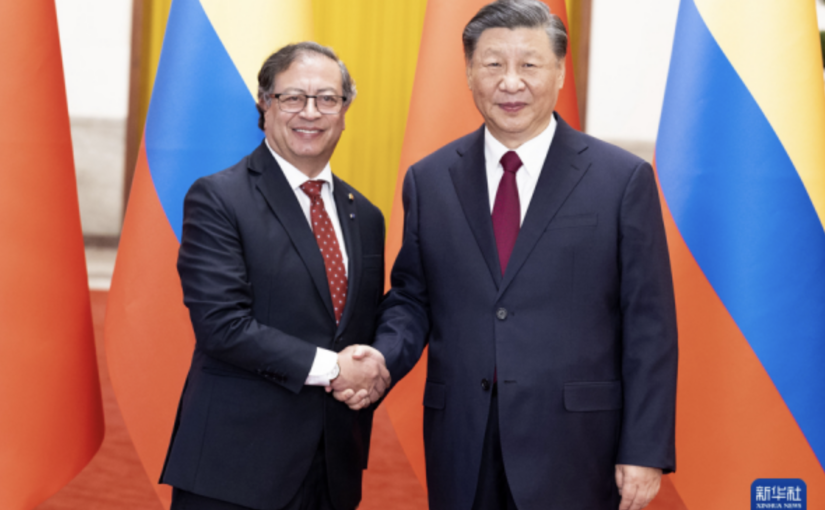
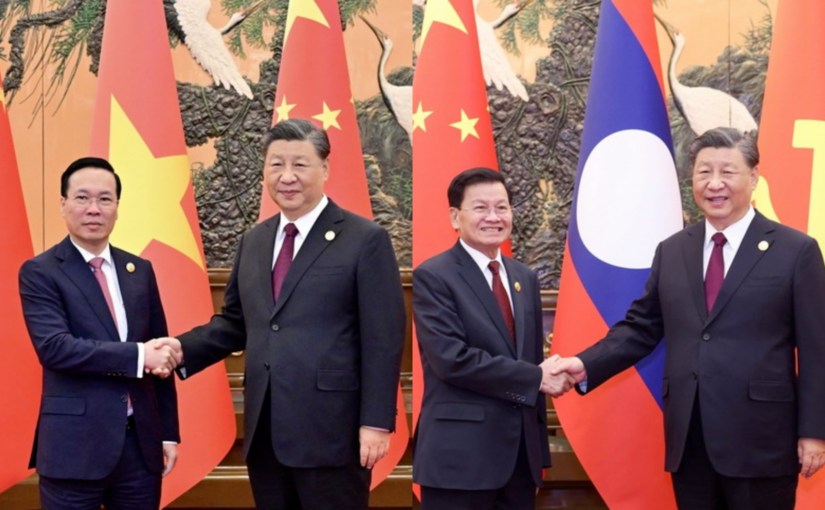
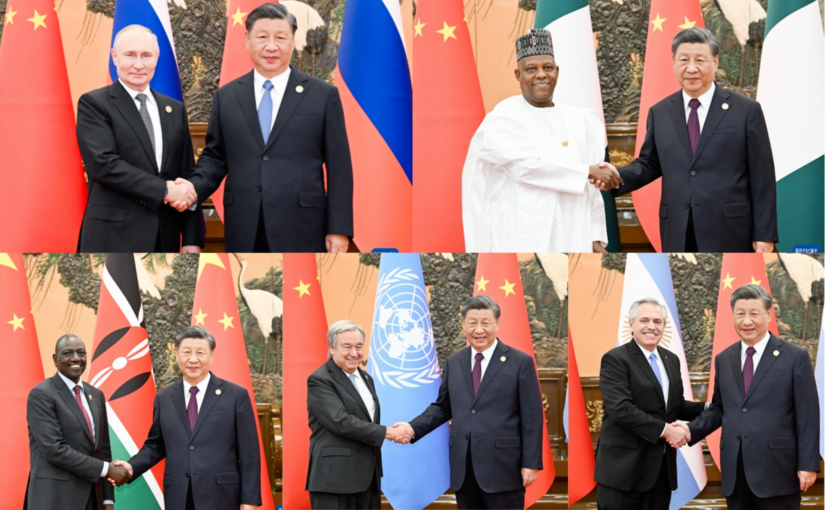
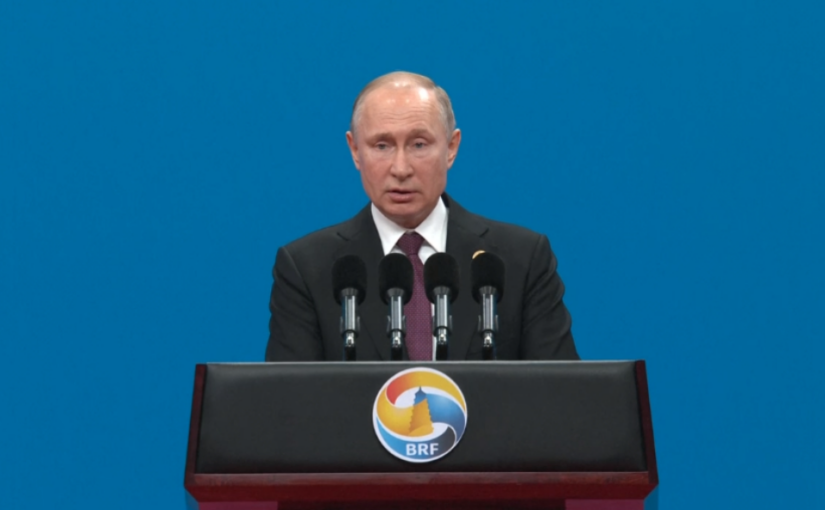
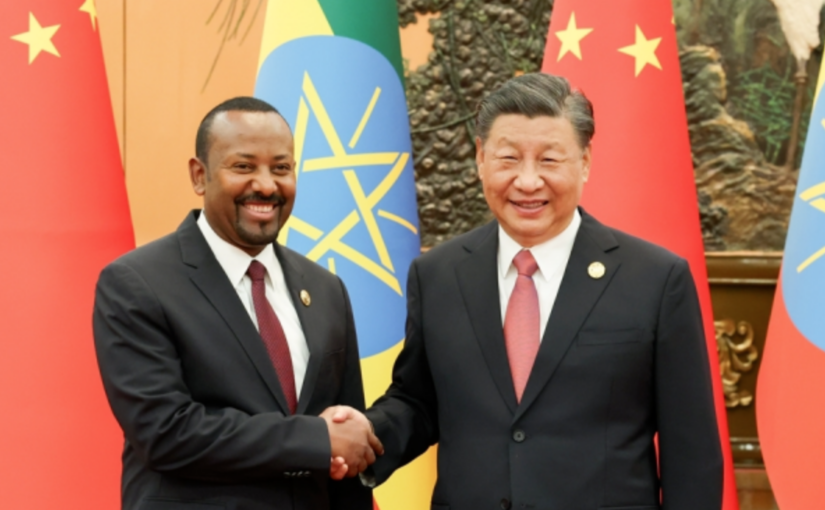
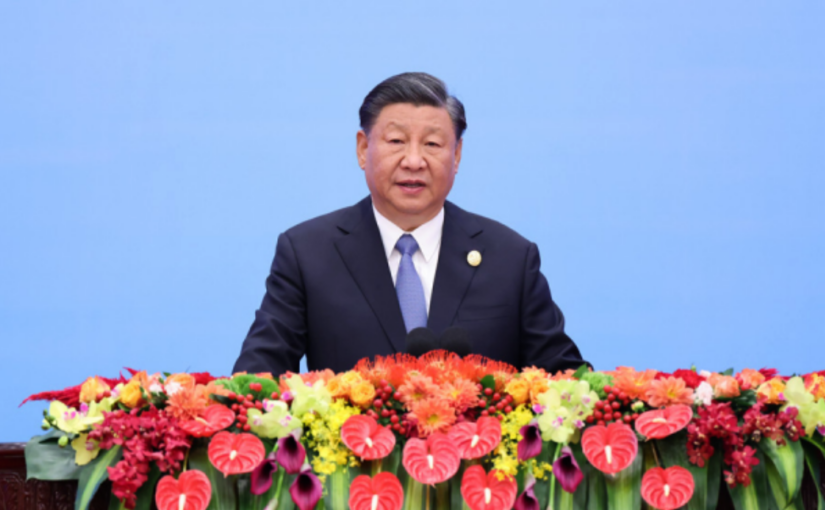
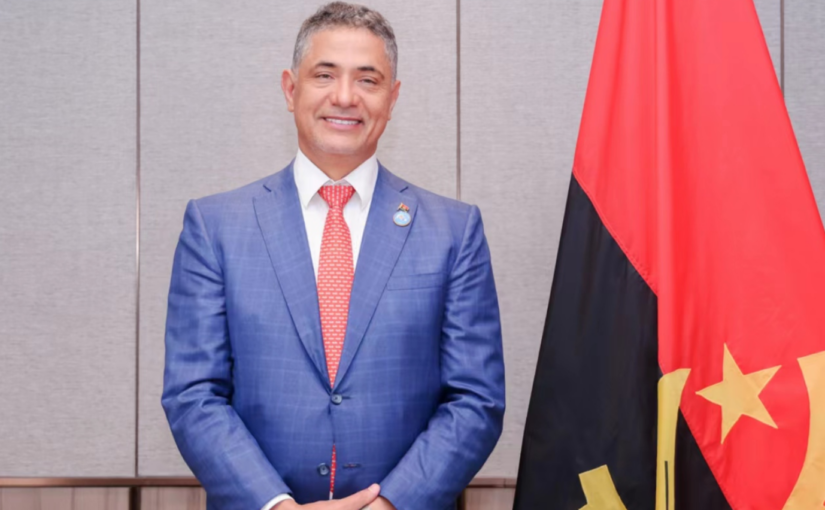
On October 19, Chinese President Xi Jinping held ten high-level bilateral meetings in the margins of the third Belt and Road International Cooperation Forum (BRF).
In the morning, he met with Cambodian Prime Minister Hun Manet, Egyptian Prime Minister Mostafa Madbouly, Sri Lankan President Ranil Wickremesinghe, Mongolian President Ukhnaa Khurelsukh, and Gurbanguly Berdimuhamedov, National Leader of the Turkmen people and Chairman of the Halk Maslahaty of Turkmenistan.
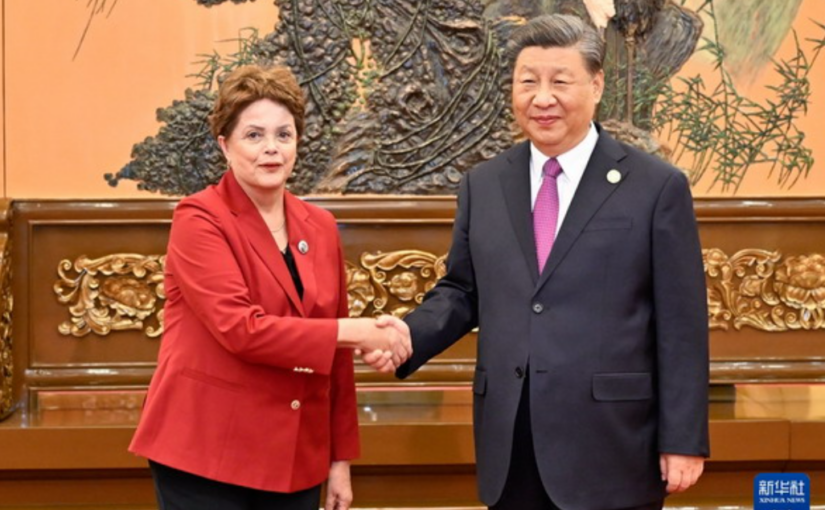
In the afternoon, he met with Prime Minister of Thailand Srettha Thavisin and President of the Republic of Congo Denis Sassou-N’Guesso. And in the evening, he met with Prime Minister of Mozambique Adriano Afonso Maleiane, Prime Minister of Pakistan Anwaar-ul-Haq Kakar, and the former President of Brazil, Dilma Rousseff, who is now the President of the New Development Bank (NDB).
Meeting Prime Minister Hun Manet, Xi Jinping pointed out that since the establishment of diplomatic relations 65 years ago, China and Cambodia have respected, trusted, and supported each other and contributed to each other’s success, setting a fine example of equal treatment and win-win cooperation between countries different in size. Both China and Cambodia are countries that value friendship, and the China-Cambodia ironclad friendship is unbreakable.
He stressed that the Belt and Road cooperation has brought tangible development opportunities to Cambodia. China is ready to uphold the principle of “planning together, building together, and benefiting together”, enhance synergy between the Belt and Road Initiative and Cambodia’s Pentagonal Strategy, flesh out the China-Cambodia “diamond hexagon” cooperation framework at a faster pace, build well the “Industrial Development Corridor” and the “Fish and Rice Corridor”, and push for the implementation of more projects that benefit the people. China supports Cambodia’s projects such as airport construction and cultural relic restoration, welcomes more Cambodian agricultural products to the Chinese market, and encourages more Chinese tourists to visit Cambodia.
Hun Manet thanked China for its valuable support to Cambodia over the years and stressed that his country steadfastly pursues a friendly policy toward China and firmly supports China’s core interests. Cambodia is ready to take the 65th anniversary of the establishment of diplomatic relations between Cambodia and China as an opportunity to strengthen exchanges and cooperation with China, advance cooperation on the “Industrial Development Corridor” and the “Fish and Rice Corridor” and build a Cambodia-China community with a shared future.
In his meeting with the Egyptian Prime Minister, Xi Jinping pointed out that Egypt was the first Arab and African country to establish diplomatic relations with the People’s Republic of China. China and Egypt are good friends with common purposes and mutual trust and good partners for joint development and common prosperity.
He congratulated Egypt on joining the BRICS cooperation mechanism upon invitation, and pointed out that China is ready to strengthen cooperation with Egypt within the China-Arab and China-Africa frameworks, enhance coordination and cooperation at the United Nations, BRICS and other multilateral platforms, uphold true multilateralism and international fairness and justice, and safeguard the common interests of developing countries, so as to inject more certainty and stability into the region and the world.
Mostafa Madbouly said that Egypt sees China as a role model for emerging economies and developing countries. He expressed gratitude for China’s long-term, valuable support to Egypt, and noted that the Belt and Road cooperation has greatly improved Egypt’s transportation and logistics capabilities and given a strong boost to its economic development. Madbouly thanked China for supporting Egypt’s accession to the BRICS cooperation mechanism and expressed his readiness to work closely with China in multilateral cooperation to make the international landscape more balanced and just.
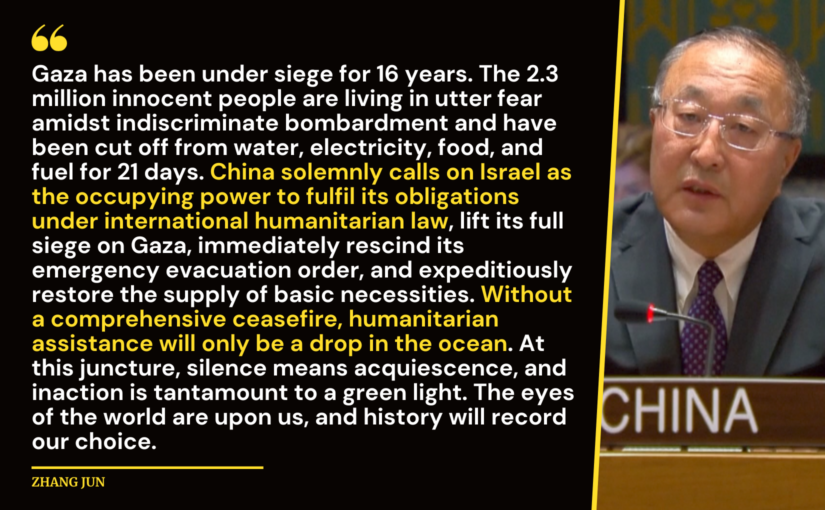
President Xi stated China’s principled position on the current Palestinian-Israeli situation. He stressed that the top priority is to stop the fighting as soon as possible, prevent the conflict from spreading or even getting out of control and causing a severe humanitarian crisis. The fundamental way out of the recurring Palestinian-Israeli conflicts is to implement the two-state solution, establish an independent State of Palestine and achieve peaceful coexistence between Palestine and Israel.
Meeting his Sri Lankan counterpart, Xi Jinping pointed out that the Chinese and Sri Lankan people have enjoyed a time-honoured friendship marked by mutual learning and mutual help, and have been partners for self-reliant development. He emphasised that China firmly supports Sri Lanka in upholding strategic autonomy, and safeguarding national sovereignty, independence, and dignity. China will continue to provide assistance to Sri Lanka with no political strings attached and help the country cope with difficulties affecting social life and people’s livelihood and is happy to see Sri Lanka become a commercial centre of the Indian Ocean. The two sides should step up coordination in international and regional affairs, oppose politicisation of human rights issues and bloc confrontation, and safeguard the common interests of the two countries and fellow developing countries.
Wickremesinghe said that the development of the Belt and Road, especially the Maritime Silk Road, has greatly facilitated Sri Lanka’s economic and social development and is conducive to enhancing Sri Lanka’s unique influence in the region. Sri Lanka hopes to work more closely with China in the future, as China can be an important partner in Sri Lanka’s modernisation. Sri Lanka believes that the Indian Ocean should embrace openness and is ready to strengthen communication with China on regional affairs and support the solidarity and cooperation among developing countries.
At his meeting with the President of Mongolia, Xi Jinping noted that China is ready to work with Mongolia to respect each other’s independence, sovereignty, and territorial integrity, support each other in safeguarding respective core interests, and build a solid foundation for the China-Mongolia community with a shared future. China will continue to help Mongolia revitalise its economy, move ahead with the construction of relevant border ports in an orderly manner, and open up new channels for connectivity between the two countries. The China-Mongolia Desertification Prevention and Control Cooperation Centre has been established. China will continue to support Mongolia’s “Planting One Billion Trees” plan and join hands with Mongolia in carrying out ecological conservation. China would also like to expand trilateral cooperation with Mongolia and Russia, and steadily advance the building of the China-Mongolia-Russia Economic Corridor.
President Khurelsukh noted that the outcomes of the current BRF will contribute to achieving the United Nations Sustainable Development Goals and inject new momentum into global economic growth. Mongolia takes developing relations with China as a key priority in its foreign policy. Next year will mark the 75th anniversary of diplomatic relations between Mongolia and China. It will also mark the 10th anniversary of President Xi Jinping’s visit to Mongolia and the establishment of comprehensive strategic partnership between the two countries. Mongolia is ready to strengthen high-level exchanges with China, respect and support each other and promote cooperation in such areas as trade and economy, connectivity, mining and energy, desertification prevention and control, and green development, as well as enhancing people-to-people exchanges. Mongolia also places a high premium on the Mongolia-China-Russia cooperation and is ready to closely communicate and collaborate with China in multilateral fields.
Meeting with the leader of Turkmenistan, Xi Jinping pointed out that China is a trustworthy friend and partner of the central Asian country. In January this year, he and President Serdar Berdimuhamedov jointly announced the elevation of their bilateral relationship to a comprehensive strategic partnership and the establishment of a community with a shared future at the bilateral level, opening a new chapter in the development of China-Turkmenistan relations. Developing a comprehensive strategic partnership between China and Turkmenistan meets the fundamental interests of both countries and the common aspirations of the two peoples.
China appreciates Turkmenistan’s strong support on issues concerning China’s core interests and major concerns, and will continue to support Turkmenistan in safeguarding its national sovereignty, security, and development interests and in pursuing a development path that suits its national conditions.
Gurbanguly Berdimuhamedov said that the ancient Silk Road has connected the people of Turkmenistan and China and contributed to the progress of world civilisation. Today, close synergy has been forged between Turkmenistan’s strategy of reviving the Great Silk Road and the Belt and Road Initiative, which has greatly facilitated the connectivity, development, and revitalisation of both countries as well as countries in the region.
In his meeting with Srettha Thavisin, Xi Jinping noted that the recently appointed Thai Prime Minister had made China the destination of his first official visit outside ASEAN (the Association of South East Asian Nations), fully demonstrating the great importance the new Thai government attaches to Thailand-China relations. China and Thailand are close neighbours, and their friendship has taken deep roots in the hearts of the two peoples. Xi said he is happy to see that the outcomes of his visit to Thailand last November are being actively and effectively implemented.
Srettha Thavisin said he sincerely admires President Xi Jinping’s vision and China’s achievements in poverty reduction and would like to learn from China’s governance experience. He expressed his hope that the two sides will deepen practical cooperation in various fields, jointly build the Thailand-China Railway, and advance the implementation of the China-Laos-Thailand Connectivity Development Corridor Outlook.
Meeting with President of the Republic of Congo (ROC) Denis Sassou-N’Guesso, Xi Jinping said that the successful implementation of such projects as the No.1 National Highway in the ROC, is exemplary. China and the ROC are true friends and good partners.
Reflecting the long-standing orientation of the Republic of Congo regarding its close relations with China and other socialist countries, Xi Jinping emphasised that shared ideals, mutual trust and mutual support are the key to the sustained and steady growth of China-ROC relations. China appreciates the resolute support given by the ROC on issues related to China’s core interests and major concerns. China supports the ROC in safeguarding national independence, opposing foreign interference, and adhering to a development path that suits its national conditions, and supports the ROC in playing a greater role in international and regional affairs. China also stands ready to coordinate closely with the ROC in multilateral arena to promote the building of a fairer and more equitable international order.
Sassou-N’Guesso said that his country is ready to take the opportunity of celebrating the 60th anniversary of diplomatic relations with China next year to further develop bilateral relations. The ROC firmly adheres to the one-China policy and looks forward to continuing mutual support with China, strengthening pragmatic cooperation in infrastructure, green energy, and other fields, and enhancing communication and collaboration within the framework of the Forum on China-Africa Cooperation (FOCAC).
Similar sentiments animated President Xi’s meeting with the Prime Minister of Mozambique, Adriano Afonso Maleiane. Reflecting the fact that China’s relationship with Mozambique dates to its staunch support for the southern African country’s national liberation struggle, Xi Jinping pointed out that China and Mozambique are true friends and true brothers standing together in adversity and helping each other in difficulty. China is ready to work with Mozambique and other African countries to build the Belt and Road to high standard, and promote the implementation of three cooperative measures, namely, the Initiative on Supporting Africa’s Industrialisation, the Plan for China Supporting Africa’s Agricultural Modernisation, and the Plan for China-Africa Cooperation on Talent Development.
Xi Jinping further emphasised that China is ready to work with Mozambique to further deepen traditional friendship, strengthen strategic coordination, and promote new progress in the China-Mozambique comprehensive strategic cooperative partnership. China supports Mozambique in safeguarding national sovereignty, security, and development interests, and following a development path suited to its own national conditions. The two sides need to deepen cooperation in such fields as energy and agriculture, and promote educational, cultural, sub-national and non-governmental exchanges.
Maleiane remarked that the Belt and Road Initiative, the Global Development Initiative and other important initiatives are conducive to helping other countries eliminate poverty, grow the economy, and improve the people’s livelihood. China’s development and foreign policies are based on peace, equality, respect, and friendship, and are positive energy for world peace and development. Maleiane noted that China has always given Mozambique firm support as a true friend, whether during Mozambique’s struggle for national independence or the fight against the COVID-19 pandemic. Mozambique is firmly committed to the one-China policy and hopes to learn from China’s experience in modernisation to find a better way to realise its own development, and deepen practical cooperation with China across the board to promote the building of a community with a shared future for humanity.
Meeting Prime Minister of Pakistan, Anwaar-ul-Haq Kakar, Xi Jinping pointed out that China and Pakistan are all-weather strategic cooperative partners and ironclad friends. Successive Pakistani governments have actively supported and participated in Belt and Road cooperation. Over the past decade, the China-Pakistan Economic Corridor (CPEC) has achieved fruitful results, giving a strong boost to Pakistan’s economic and social development, and becoming an important signature project of Belt and Road cooperation. He said that the two sides should take the 10th anniversary of the CPEC this year as an opportunity to build an “upgraded version” of the corridor featuring growth, livelihood, innovation, greenness and openness, strengthen cooperation in areas like industrial park, agriculture, mining and new energy, and promote the early implementation of major connectivity projects and the achievement of practical results.
Anwaar-ul-Haq Kakar said that the successful practice of Chinese modernisation has set an example and provided impetus for other developing countries. China’s efforts to build a human community with a shared future have brought confidence and hope to other countries. Pakistan will always be a trustworthy and reliable friend of China, will never allow any force to undermine the friendship between Pakistan and China, and will remain committed to deepening the all-weather strategic cooperative partnership between Pakistan and China. Pakistan is ready to work closely with China to promote the high-quality development of the CPEC. The Pakistani government will make every effort to protect the safety and interests of Chinese citizens and institutions in Pakistan.
Meeting with Dilma Rousseff, Xi Jinping recalled the birth of the New Development Bank which he and President Rousseff jointly witnessed in 2014 in Brazil. He pointed out that the bank has made remarkable achievements and grown from strength to strength in recent years. He noted that the world today is facing intertwined risks and crises. As an important emerging force in the international financial system, the New Development Bank should play its due role, and build itself into a new-type multilateral development institution in the 21st century that works to make the international financial system fairer and more equitable and effectively enhance the representation and say of emerging markets and developing countries.
Dilma Rousseff said that under the current international circumstances, all countries in the world need to take concerted actions to respond to common challenges. Strengthening infrastructure development and connectivity is of crucial importance for developing countries to realise common development. No other initiatives in human history have ever brought more than 150 countries together like the BRI does. She thanked the Chinese government for greatly supporting the New Development Bank’s work, noting that bank has a shared purpose and ideals with the BRI, and is ready to actively participate in the Belt and Road cooperation and make due contributions to a multi-polar world and the reform of the international financial system.
The following reports were originally published on the website of the Chinese Foreign Ministry.