Liu Jianchao visits Algeria

Following his recent visit to South Africa, where he attended the Liberation Movements Summit, Liu Jianchao, Minister of the Communist Party of China’s International Department (IDCPC), paid a visit to Algeria.

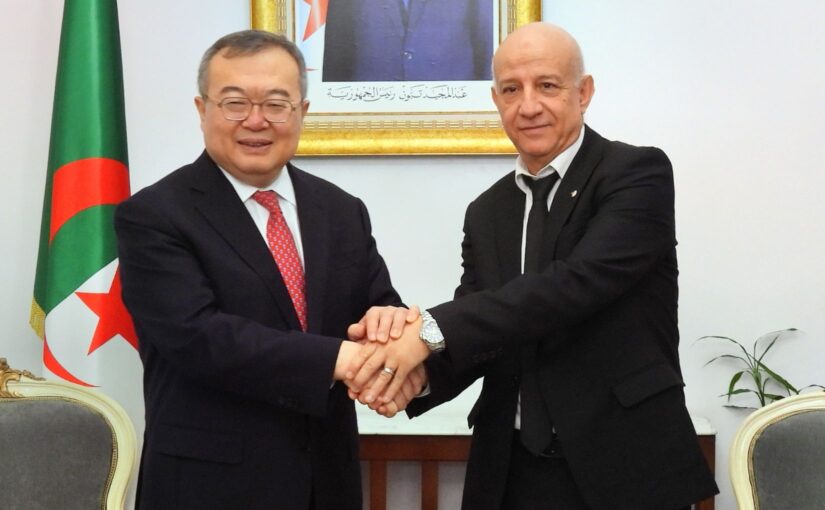
On July 28, he met with Abdelkrim Benmebarek, Secretary-General of the National Liberation Front (FLN) of Algeria.

Liu said, for a long time, China and Algeria have always stood firmly together in their respective struggles for national liberation and development. Seventy years ago, China and Algeria jointly promoted the formation of the Bandung spirit of solidarity, friendship and cooperation. The current global governance system is characterised by imbalance and disorder, with rising isolationism and neocolonialism, posing severe challenges to the development of the Global South countries. China is willing to work with Algeria to inherit and carry forward the Bandung spirit, enhance communication and coordination on international and regional issues, promote solidarity and cooperation among the Global South countries, and jointly address global challenges.

He added that the CPC and the FLN share similar ideas and have similar experiences in the struggle. Under the new circumstances, the CPC is willing to implement the consensus reached by the two heads of state through inter-party channels, further enhance the level of cooperation between the two parties, increase political mutual trust and mutual understanding, and be fellow companions sharing the same ideals; strengthen political dialogue, deepen cooperation in areas such as party building and cadre training, and serve the cause of the two parties; promote exchanges and practical cooperation in various fields such as social organisations, media, think tanks and localities through the “political party +” platform, and promote greater development of China-Algeria relations.

Benmebarek said, the friendship between Algeria and China is close and solid and has been tested over time. The FLN and the CPC share similar views on many issues and have a common vision for maintaining international fairness and justice, which stems from our joint struggle for national liberation. The FLN values the brotherly friendship with the CPC and hopes to work with the CPC to keep pace with the times, comprehensively plan cooperation, and enhance personnel exchanges and ideological exchanges.

The next day, Liu met with Mustapha Haidaoui, President of the Supreme Youth Council and Minister of Youth of Algeria.

He said that the world is undergoing profound changes unseen in a century. The successful practice of Chinese modernisation demonstrates that modernisation is not the same as Westernisation, and that there are diverse paths to modernisation. China is willing to work with Algeria to uphold independence and self-reliance, pursue development paths that suit respective national conditions, and advance progress in modernisation progress. China, Algeria, and other developing countries should strengthen solidarity and cooperation to safeguard the common interests of the Global South countries and promote a more just and equitable international order.

Liu noted that young people are the future and the hope of the country. The CPC has always attached great importance to youth work. General Secretary Xi Jinping has repeatedly encouraged young Chinese people to carry forward the spirit of struggle and contribute their strength to Chinese modernisation in the new era. The CPC is willing to work with the Supreme Youth Council of Algeria to implement the important consensus reached by the two heads of state on the China-Algeria comprehensive strategic partnership, intensify exchanges and cooperation between young politicians, scientists, engineers, and entrepreneurs, strengthen mutual learning of experience in state governance and administration, and strengthen strategic coordination in politics, economy, science and technology, so that the younger generations of the two countries can take up the baton of the traditional China-Algeria friendship.

Haidaoui stated that the friendship between Algeria and China is unbreakable, and China is a strategic partner of Algeria. The aim of establishing the Supreme Youth Council is to empower young people, expand their participation in the country’s political, economic, cultural, and social life, carry forward the revolutionary legacy, and contribute to national development. The Supreme Youth Council has benefited greatly from the exchanges with the CPC and looks forward to strengthening exchanges and cooperation in politics, economy, and the international field, carrying forward the revolutionary friendship between Algeria and China, creating more positive conditions for all-round cooperation between the two countries, and helping build a better multipolar world.

On July 29, Liu visited the Tipaza Provincial Party headquarters of the FLN He said, the CPC is ready to carry forward the revolutionary friendship with the National Liberation Front, deepen exchanges of experience in grassroots party building, and empower both parties to lead their respective countries towards better development.

That day, he also met with two other Algerian political parties.

Continue reading Liu Jianchao visits Algeria
China strengthens party ties with Honduras

The Communist Party of China (CPC) has strengthened its friendly ties with the ruling Liberty and Refoundation (LIBRE) Party of Honduras.

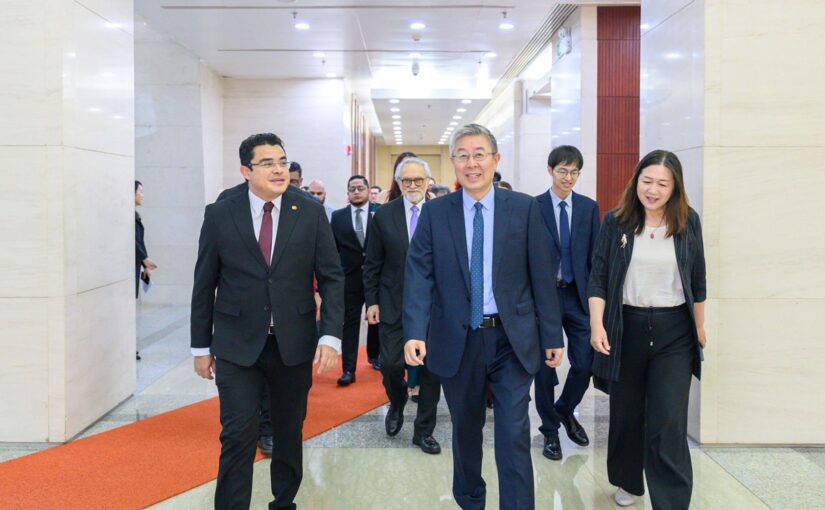
On July 27, Ma Hui, Vice-Minister of the International Department of the CPC Central Committee (IDCPC), met in Beijing with a LIBRE delegation led by Gerardo Torres, Secretary of International Liaison for the party and Vice Foreign Minister of Honduras.

Ma positively evaluated the benefits brought to the people of both countries by the development of bilateral relations since the establishment of diplomatic relations between China and Honduras. He said, the CPC and LIBRE had friendly exchanges before the establishment of diplomatic relations between the two countries. This visit is the first visit to China by a LIBRE delegation after the establishment of diplomatic relations, opening a new chapter in the relations between the two parties.

China and Honduras established diplomatic relations on March 26, 2023. President Iris Xiomara Castro Sarmiento paid a state visit to China from June 9-14, 2023.

The next day, Ma Hui met with a delegation from the Autonomous Community of Catalonia of Spain, led by Salvador Illa, Secretary of the Spanish Socialist Workers’ Party (PSOE) of the Autonomous Community of Catalonia and President of the Government of Catalonia.

Ma said that the CPC is willing to work with the PSOE to implement the important consensus reached by the leaders of the two countries, enhance exchanges between the two parties, give full play to the role of the “political party +” platform, and support the practical cooperation between the Autonomous Community of Catalonia and China, so as to contribute to the healthy and stable development of China-Spain and China-European Union relations.

Illa said that the Autonomous Community of Catalonia will adhere to the friendly policy towards China of the Spanish central government and promote mutually beneficial cooperation with China in various fields, so as to achieve common development.

This was the second reported contact between the CPC and political forces in Catalonia in recent months. Our previous report may be read here.

And on July 29, Ma Hui met with a delegation of Chilean parliamentarians led by Gastón Saavedra from the Socialist Party (PS), and who is head of the labour and social security committee of the Chilean Senate, who were visiting China at the invitation of the National People’s Congress (NPC).

Ma positively evaluated the friendly relations between China and Chile, stating that exchanges between political parties are an important part of bilateral relations. The CPC has maintained close ties with Chilean political parties from both the ruling and opposition sides for a long time, enhancing mutual understanding and friendship.

After the meeting, Ma Hui joined the Chilean delegation in participating in an exchange activity with teachers and students from Dingri in Xigaze City, Xizang (Tibet) Autonomous Region, who were in Beijing for a program on the introductory journey into diplomacy of young people from Xizang.

We previously reported on Ma Hui’s visit to Nicaragua to participate in the anniversary celebrations of the July 19 Sandinista popular revolution. Following this, and prior to returning to Beijing, he led a CPC delegation to visit El Salvador, July 21-22, and Costa Rica, July 23-24.

The following articles were originally published on the IDCPC website.

Ma Hui Meets with a Delegation of the LIBRE Party of Honduras

Beijing, July 27th (IDCPC) —Ma Hui, Vice-minister of the International Department of the CPC Central Committee, met here today with a delegation of the Liberty and Refoundation (LIBRE) Party led by Gerardo Torres, Secretary of International Liaison for the Liberty and Refoundation (LIBRE) Party and Vice Foreign Minister of Honduras.

Ma positively evaluated the benefits brought to the people of both countries by the development of bilateral relations since the establishment of diplomatic relations between China and Honduras. He said, the CPC and the LIBRE had friendly exchanges before the establishment of diplomatic relations between the two countries. This visit is the first visit to China by a LIBRE delegation after the establishment of diplomatic relations, opening a new chapter in the relations between the two Parties. China is willing to deepen exchanges of experience in state governance and administration with the LIBRE, enhance the breadth and depth of inter-party cooperation, and promote the steady and long-term development of China-Honduras relations.

Torres reaffirmed Honduras’ firm commitment to the one-China principle, and said that the LIBRE hopes to strengthen exchanges and mutual learning of experience in party building and state governance with the CPC, promote the development of bilateral relations, and better benefit the people of both countries.

Continue reading China strengthens party ties with Honduras

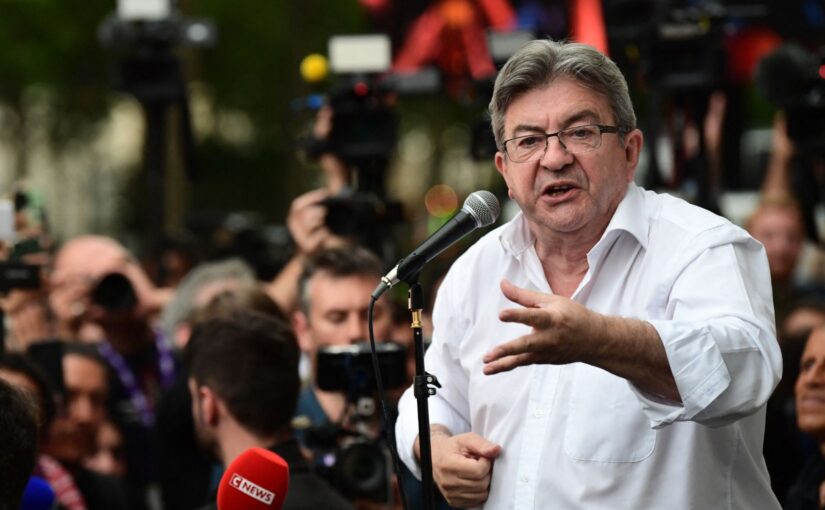
Jean-Luc Mélenchon discusses China with Tariq Ali

The following is an extensive interview with the French left-wing leader Jean-Luc Mélenchon that was conducted by Tariq Ali, the veteran writer and activist, and that was originally published on Sidecar, the blog published by New Left Review.

In their wide-ranging discussion Mélenchon makes a number of important comments about China – to which he has consistently advocated a position of friendship – which are especially significant coming from probably the most important leader of the contemporary European left.

Asked by Ali about the significance of the recent conflict between Iran and Israel, and specifically the role played by the United States, Mélenchon responds:

“We must try to understand the rationale of these Western states. It’s not simply that Trump is crazy or that the Europeans are cowards; maybe they are those things, but what they are doing is nonetheless based on a long-term plan, one that has failed in the past but is now in the process of being realized. The plan is, first, to reorganize the entire Middle East to secure access to oil for the countries of the Global North; and, second, to create the conditions for war with China.”

This theme is further developed in the two men’s conversation, with Tariq Ali positing:

“You mentioned that the second part of America’s plan is conflict with China. A lot of liberals and left-liberals are now finally recoiling from the events in Middle East and saying that our real target should be China. But what they don’t realize is that the real target is China, because, as you say, if the United States controls all the region’s oil – as it would if Iran were to fall – then they would control the flow of this basic commodity. They could force Beijing to beg for it, which would help to keep it in check. So the US strategy in the Middle East might seem completely crazy – and it is crazy on various levels – but there is also a deep logic behind it: that it’s better to fight China in this way than to go to war with it. This has already started to create huge problems across the East. I noticed that the leaders of Japan nor South Korea, two countries that have major US military bases, abruptly cancelled plans to attend the NATO summit in June.”

Mélenchon replies: “The conflict between the US and China is over trade and resource networks, and in some respects the Chinese have already won, because they produce almost everything the world consumes. They have no interest in fighting a war because they are already satisfied with their global influence. Yet this is both a strength and a weakness. When 90% of Iranian oil goes to China, for instance, blocking the Strait of Hormuz would cut off crucial supply chains and bring a large part of Chinese production to a halt. So China is vulnerable on that front. You are right to say that some in the West would prefer a cold war to a hot war, encirclement and containment rather than direct conflict. But these are nuances, and in reality it is easy to move from one to the other. One of [former US President] Biden’s top economic advisors said that there is no ‘commercial solution’ to the problem of competition with China, which means there can only be a military one.

“The point about Japan and Korea is also significant. Not only them, but also many other powers in the region, are now strengthening ties with China. Vietnam was supposed to be in the US bloc, but they’ve signed agreements with the Chinese. So has India, despite the tensions between the two countries. The backdrop here is that, throughout much of Asia, capitalism is still defined by dynamic forces of trade and production, whereas in the US it has assumed a predatory and tributary character.”

He recalls that: “I once had an interesting conversation with a Chinese leader. When I said to him that China was flooding the European market with its overproduction of electric cars, he replied, ‘Mr. Mélenchon, do you think there are too many electric cars in the world?’ Of course I had to answer ‘no’. Then he said: ‘We’re not forcing you to buy our products; it’s up to you whether you want to purchase them.’ Here was a Communist explaining to me the benefits of free trade.

Continue reading Jean-Luc Mélenchon discusses China with Tariq Ali

Inside China: Why they’re opening 1,000 new Schools of Marxism

In this wide-ranging conversation on The Socialist Program, historian and China scholar Professor Ken Hammond discusses recent developments in China following a visit in July 2025. He emphasises both the remarkable economic progress as well as the challenges China faces as it pursues further socialist development and modernisation.

Ken notes the absence of extreme poverty and homelessness in urban China, contrasting it with Western cities. Yet he also highlights discussions that are taking place in China as to how best to restrict the influence of big capital and to maintain the core role of the state in directing the economy.

One significant development mentioned is the establishment of over a thousand Schools of Marxism across Chinese universities, reflecting a reassertion of the importance of Marxist ideology and a renewed public discourse around socialism under Xi Jinping’s leadership.

Ken and host Brian Becker discuss the historical rationale behind China’s use of markets, viewing it as a pragmatic strategy to gain technology, expertise and capital from the advanced capitalist countries. Contrary to US expectations, this has not led to a capitalist counterrevolution. Instead, with a remarkable improvement in their living conditions, Chinese people have considerable confidence in their social system.

Ken and Brian also analyse China’s approach to international relations, based not on exporting its model but promoting multipolarity and cultural respect through initiatives like the Global Civilisation Initiative. As Ken puts it, socialism with Chinese characteristics is still very much a work in progress.

Europe at the crossroads

The following article by Carlos Martinez in Beijing Review explores the 50-year evolution of China–EU relations, highlighting both their historic cooperation and current tensions amid US pressure.

The establishment of diplomatic ties between China and the European Economic Community in 1975 marked a strategic shift for both parties. China viewed Europe as a crucial partner in accessing capital and technology to fuel its Four Modernisations, while Europe gained access to a vast and growing market. Carlos notes that, over the last 50 years, “trade between China and the EU has increased by a factor of 300,” now approaching $800 billion annually. This relationship has extended beyond economics into joint efforts on global issues like climate change.

Geopolitically, China sought ties with Europe as part of Mao Zedong’s strategy of engaging the “intermediate zone”—countries that, like China, sought independence from US hegemony. Mao warned in 1954 that the US aimed “to occupy the countries in this vast intermediate zone, bully them, control their economies.”

However, in recent years, the US-led New Cold War has created pressure on Europe to distance itself from China. The EU has labeled China a “systemic rival” and imposed sanctions over alleged human rights concerns. Under US influence, the EU has delayed ratifying the China–EU Comprehensive Agreement on Investment, excluded Huawei from network infrastructure, and imposed tariffs on Chinese electric vehicles.

Carlos argues that this hostility harms European interests. He cites The Economist to suggest that Chinese green subsidies are in fact a boon: “If China wants to spend taxpayers’ money subsidising global consumers and speeding up the energy transition, the best response is to welcome it.”

A more autonomous European strategy, grounded in cooperation, would better serve its people. Carlos concludes that China remains a force for “peace, progress, stability and sustainability”—a partner Europe should engage with as an equal, rather than as a pawn in US strategic games.

The establishment of bilateral ties between China and the European Economic Community, the precursor of the European Union (EU), on May 6, 1975, was a pivotal moment in modern history. Since that time, the China-Europe relationship has been among the most important in global politics.

From the start, both sides had a huge amount to gain from the relationship. For China, Europe promised to be a valuable partner in facilitating access to Western technology and capital, thereby supporting China’s Four Modernizations (in agriculture, industry, defense and science and technology). As China became increasingly integrated into the global economy, Europe provided much-needed investment as well as being a major export market for Chinese manufactured goods.

Geopolitically, China was keen to diversify its international relationships, and particularly to build strong ties with countries in what Mao Zedong theorized as the “intermediate zone,” recognizing that both the Global South and the advanced countries of Europe had cause to assert their sovereignty and reject domination.

Indeed, Mao’s comments from August 1954, in discussion with a delegation from Britain’s Labour Party, are resonant today: “The objective of the U.S. is to occupy the countries in this vast intermediate zone, bully them, control their economies, establish military bases on their territory, and see to it that they are increasingly weakened.”

Continue reading Europe at the crossroads

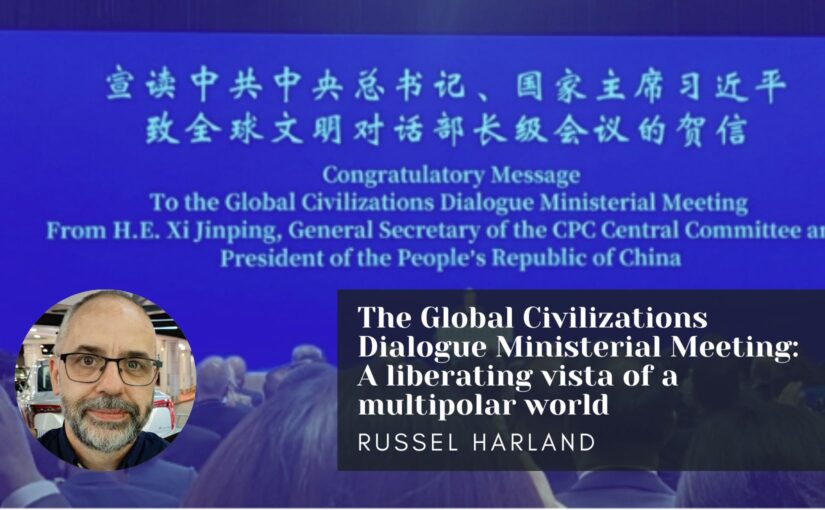
The Global Civilizations Dialogue Ministerial Meeting: A liberating vista of a multipolar world

In the following article, Russel Harland (Deputy Branch Secretary and International Relations Officer, Surrey County UNISON, and a member of the Friends of Socialist China Britain Committee) reflects on his participation in the Global Civilizations Dialogue Ministerial Meeting held in Beijing in July 2025, as part of a diverse international delegation.

The conference, attended by over 600 delegates from more than 140 countries, aimed to foster intercivilisational dialogue, mutual understanding, and peace—core principles of President Xi Jinping’s Global Civilisation Initiative (GCI), which, Russel writes, provides a transformative alternative to neoliberal and hegemonic worldviews.

The event’s central theme—Safeguarding Diversity of Human Civilisations for World Peace and Development—was especially resonant amidst current global crises, including the genocide being waged in Gaza. Speeches by senior Chinese officials and international guests praised China’s commitment to peace, multiculturalism, and people-centred development. President Xi’s message underscored values of equality, inclusivity, and cooperation among civilisations.

Participants, including former leaders of Belgium, Japan, and Indonesia, expressed admiration for China’s leadership and global vision. The second day featured smaller roundtables on civilisational exchange, where speakers—from astronauts to poets—stressed the need for empathy, solidarity, and shared progress. Delegates from the Global South highlighted their struggles against colonialism and neoliberalism, echoing a shared history of resistance.

Russel found inspiration in the conference and his pre-conference travels with fellow delegates, seeing China as a hub of cultural diplomacy and hope. He drew parallels with Ireland’s colonial past and stressed the need to break historical constraints through dialogue and understanding. Ultimately, he sees the GCI as a platform for building a just, multipolar world in which, as the Irish poet Seamus Heaney put it, “hope and history rhyme.”

It was an honour to attend the Global Civilisations Dialogue Ministerial Meeting on 10-11 July 2025 in Beijing as an Irish delegate from Friends of Socialist China.This momentous event brought togethermore than six hundred delegates from over 140 countries and regions. Its purpose was to enhance cultural exchanges among civilisations so as to strengthen trust and mutual understanding and transcend differences, recognising the importance of working together for the common aspirationsof humanity.  

The conference came a month after the first United Nations International Day for Dialogue among Civilisations, which followed a China-sponsored resolution calling for June 10th to be recognised as a global day for furthering civil dialogue and promoting peace among nations. It is rooted in President Xi Jinping’s 2023 Global Civilisation Initiative (GCI). Together with the Global Development Initiative, and the Global Security Initiative, also proposed by President Xi, they constitute a framework for global transformation away from such neo-liberal maxims as “there is no alternative” and that relations between nations are a “zero-sum game.”  

Continue reading The Global Civilizations Dialogue Ministerial Meeting: A liberating vista of a multipolar world

Vietnam and China to celebrate key anniversaries

Socialist neighbours China and Vietnam have confirmed that they will exchange high level delegations on the upcoming 80th anniversaries of Vietnam’s August Revolution and National Day along with the Chinese people’s war of resistance against Japanese aggression and the world anti-fascist war.

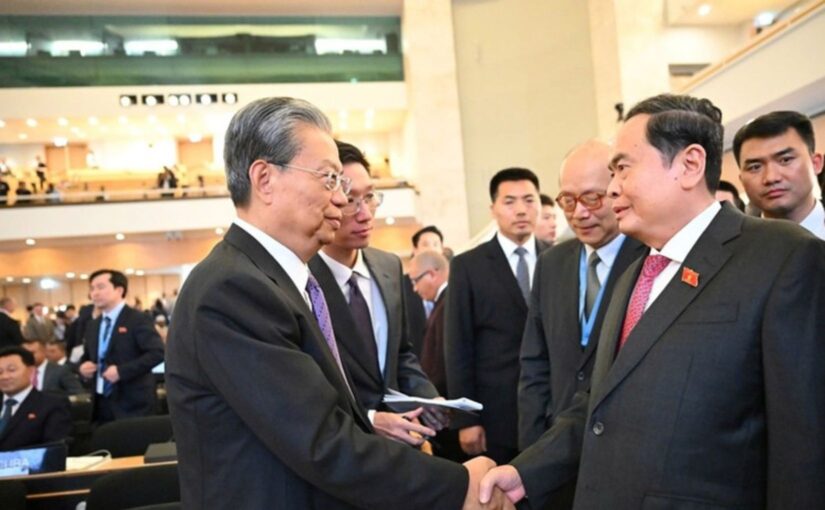
The pledge came when Vietnamese National Assembly Chairman Tran Thanh Man met with Zhao Leji, Chairman of the Standing Committee of the National People’s Congress (NPC) of China, in Geneva, Switzerland, on July 29, on the sidelines of the Sixth World Conference of Speakers of Parliament (WCSP 6).

Tran Thanh Man affirmed that the Vietnamese Party, State and people highly evaluated Party General Secretary and President Xi Jinping’s recent state visit to Vietnam, calling it a historic milestone and a bright highlight in the bilateral relations in 2025.

The Vietnamese top legislator further noted that the bilateral relations have seen remarkable progress, with growing political trust between the two Parties and States, increasingly comprehensive and effective cooperation mechanisms, and closer legislative ties. He informed his Chinese counterpart that the Vietnamese National Assembly is actively preparing for the first session of the Vietnam–China Inter-Parliamentary Committee and expressed his hope to welcome Chairman Zhao to Vietnam to co-chair this important event.

Both sides shared delight at the upcoming participation of senior leaders from the two countries in the celebrations marking the 80th anniversary of Vietnam’s August Revolution and National Day, as well as the 80th anniversary of the Chinese people’s victory against fascism.

The next day Vietnam’s Nhân Dân newspaper reported that the first joint army training exercise of the Vietnamese and Chinese ground forces had wrapped up at the Jianglong Chongzuo Training Base in China’s Guangxi Zhuang Autonomous Region on July 30.

The exercise, which ran from July 21-30, focused on major military disciplines such as reconnaissance, camouflage, unmanned aerial vehicle (UAV) operations, marksmanship, medical aid, chemical defence, field logistics, and coordinated tactical operations. In particular, the UAV exercises involved six practical combat scenarios in mountainous terrain, enhancing reconnaissance, strike, and rescue capabilities while improving coordination between the two forces. Cultural and sports exchanges within the program, including basketball, table tennis, chess, calligraphy, traditional medicine, and artistic performances, also helped strengthen mutual understanding and trust.

Earlier, on July 7, China Daily reported that a four-day exchange program, held under the theme “Youth Uniting for the Future”, was jointly organised by the Publicity Department of the Communist Party of China (CPC) Guizhou Provincial Committee and China Daily, bringing together Chinese and Vietnamese youth delegates, along with Vietnamese experts.

The event was part of broader efforts to implement agreements reached by the top leaders of China and Vietnam. In April, President Xi Jinping proposed inviting Vietnamese youths to China for “Red Study Tours” over the next three years to strengthen bilateral ties.

Continue reading Vietnam and China to celebrate key anniversaries

Strengthening ties between Irish and Chinese Marxists

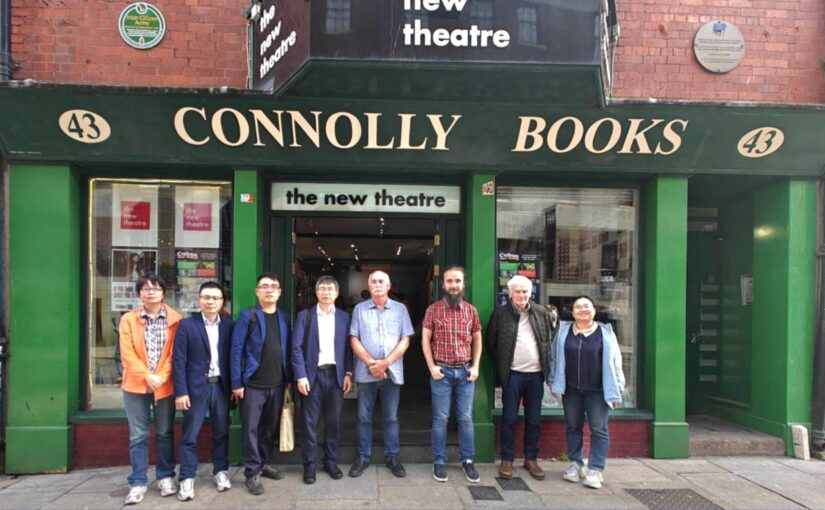
A delegation from the Academy of Marxism of the Chinese Academy of Social Sciences recently visited Ireland as part of a European tour that also took them to Britain and Portugal.

In the following article, Gearóid Ó Machail outlines the delegation’s program in Ireland. Gearóid is a member of the National Executive Committee of the Communist Party of Ireland (CPI) as well as of the Advisory Group of Friends of Socialist China.

We previously published a report of the delegation’s time in London. While in Britain, they also visited Cambridge and Manchester.

The Communist Party of Ireland (CPI) recently welcomed a visiting delegation from the Institute of Marxism at the Chinese Academy of Social Sciences (CASS) to Dublin for a series of bilateral engagements and discussions.

The Chinese delegation arrived on the afternoon of Friday July 18 and began their program with discussions at their country’s Dublin embassy.

The next day they engaged with a group of Marxist academics at Trinity College Dublin (TCD). This dialogue brought together academics from three Dublin universities and was facilitated by Assistant Professor Harun Šiljak of the CPI. The Irish delegation also included Emeritus Professor at Dublin City University Helena Sheehan who has recently returned from a teaching post at Peking University.

The Irish hosts engaged with the Chinese comrades to discuss Irish academia and Marxism, perspectives on Chinese modernisation, ecology, the contradictions of capitalism, ‘Socialism with Chinese Characteristics’ and other topics.

The visiting delegation comprised researchers and professors from the Institute of Marxism at the Chinese Academy of Social Sciences (CASS) – a research institution established by the Communist Party of China (CPC) in 2005.

Comrade Professor Chen Zhigang, Vice President of the Institute, led the discussion from the Chinese side, offering valuable insights into the workings of the CPC and its role in China’s development. He addressed the challenges facing rural development in China and elaborated on the concept of socialism with Chinese characteristics, the guiding principles of Xi Jinping Thought and its fundamental opposition to the Western model of globalisation and imperialist agendas. Professor Chen advocated for a model of inclusive globalisation that benefits all nations.

Throughout the discussion, he also reiterated China’s commitment to building an ecological civilisation grounded in world peace and inclusive development.

Comrade Han Dongjun translated Professor Chen’s remarks, while comrades Liu Yan, Fang Tao, and Zhuo Mingliang highlighted various achievements of China under the leadership of the CPC.

Following their meeting with the academics on Saturday morning, the CASS representatives had a bilateral meeting with leading representatives from the Communist Party of Ireland at their Party premises in Temple Bar, Dublin.

Former General Secretary of the CPI and member of the National Executive Committee of the party, Comrade Eugene McCartan was accompanied by Comrade Tommy McKearney of the Betty Sinclair Branch and Dublin Branch Secretary Comrade Harun Šiljak. Both delegations exchanged political experiences and views.

The CPI outlined its class-based, anti-imperialist approach to key political questions. Discussions focussed on ending British rule in Ireland, the defence of Irish neutrality and opposition to the growing threat posed by increased EU militarisation.

The CPI comrades highlighted their strategy to break the “Triple Lock of Imperialism” -the financial, diplomatic and military controls and instruments deployed by the USA, the EU and Britain aimed at restricting and undermining the political and economic sovereignty and destiny of the Irish people.

They also outlined to the visiting Chinese delegation how the Irish nation’s interests are currently subordinated to the needs of imperialism as a result of the political and economic subservience arising from the class interests of the comprador Irish ruling class.

Professor Chen Zhigang provided a detailed presentation on the development of Chinese Marxism, stating that it’s because of Marxism that China has been able to achieve remarkable successes. Comrade Chen discussed the meaning and relevance of Xi Jinping Thought, as the latest development of Marxism in China; a Marxism adapted to the conditions prevailing in the 21st century and the array of new challenges that present themselves.

He further pointed to what should be a well-understood and obvious truth: that as society develops, theory must develop along with it. “If Marxism does not evolve, its vitality will be limited.” He also noted that Socialism with Chinese Characteristics has developed and thrived by combining Marxist ideas with Chinese culture and traditions, hence Chinese people do not think of Marxism as a foreign phenomenon.

Regarding the global applicability of Xi Jinping Thought, Comrade Chen said that China seeks to offer Chinese wisdom towards the solution of problems of global governance. The concept of a Global Community of Shared Future, the Belt and Road Initiative, the Global Development Initiative, the Global Civilisation Initiative and the Global Security Initiative are all based on the principles of mutual learning, exchanges and dialogue, and all seek to promote peace, sustainability, development, cooperation and friendship.

The meeting provided another opportunity to consolidate and strengthen the bonds of friendship between Irish and Chinese communists.

China’s development demonstrates that there is a viable alternative to capitalism and imperialism, and their hegemonic control over people and the planet. Yet, imperialist powers and their capitalist regimes remain determined and are working actively every day to try to undermine China, its people, and their revolutionary achievements.

The comrades from Ireland and China reaffirmed their belief in Marxism’s potential to offer a genuine alternative to capitalism and its warmongering, imperialist hegemony, which undermines peace and disempowers people across the globe. A better world is possible.

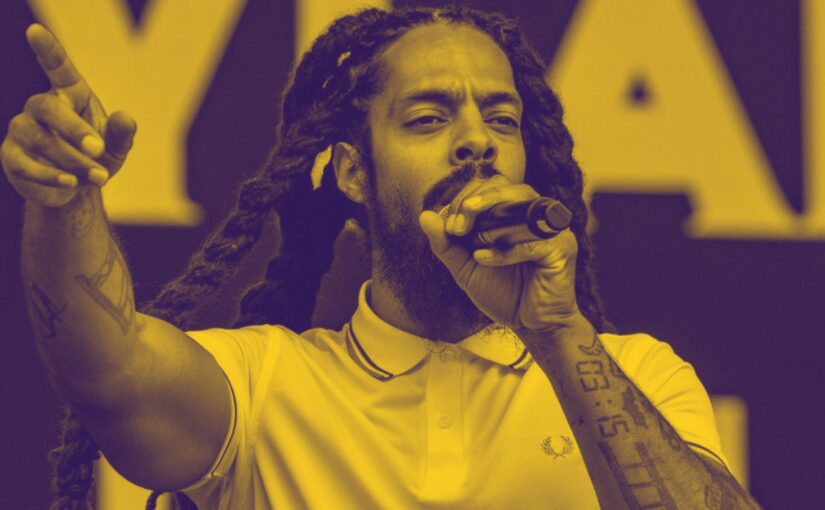
Bob Vylan at Glastonbury – A lawyer’s view from Hong Kong

We are pleased to republish the following article, which originally appeared in China Daily, in which Grenville Cross recaps the furore which ensued at the Glastonbury music festival in England after punk rock duo Bob Vylan gave expression to the sentiments shared by the overwhelming majority of the many thousands of people present, who stood as one in solidarity with the Palestinian people and against Israel’s genocidal war of aggression.

Grenville writes: “Although Bob Vylan must have been surprised by the reaction, they were not cowed. In an Instagram statement, they denied they were ‘the number one threat to world peace’. They did not advocate the death of any group, Jewish or otherwise, but were ‘for the dismantling of a violent military machine’ that had ‘destroyed much of Gaza’.”

In the measured terms befitting a senior lawyer, he adds: “If, however, Bob Vylan’s critics had shown some sense of perspective, they might have had more credibility,” before going on to itemise a series of Israeli atrocities and noting:

“Although the Gaza Health Ministry, on June 25, reported 56,200 Palestinian dead since October 2023, the first independent survey of deaths, reported last month by the journal Nature, estimated almost 84,000 Palestinians had died. The study, posted on the preprint server medRxiv on June 27, revealed that over half of the victims were women aged 18 to 64, children, or individuals over 65 years old.”

What this means, he notes, is that Bob Vylan’s critics “treat a chant as far graver than daily killings in Gaza, about which they are silent.”

UK Prime Minister Keir Starmer, he writes, “should focus on bringing Netanyahu to justice. The UK is a signatory to the Rome Statute, which created the ICC [International Criminal Court], and is obliged to execute its arrest warrants… Starmer’s duty is clear, and he must uphold British honour, even if it upsets the US. It is Netanyahu who should be in the dock, not Bob Vylan or the BBC. Global justice must finally prevail.”

Ian Grenville Cross GBS, SBS, SC joined the Attorney General’s Chambers of Hong Kong as Crown Counsel in 1978. He served as the Deputy Director of Public Prosecutions of Hong Kong from 1990 to 1997, and as the Director of Public Prosecutions of the Hong Kong Special Administrative Region from 1997 to 2009. In 1974, he was called to the Bar of England & Wales by the Middle Temple and to the Bar of Hong Kong, in 1981. He was appointed Queen’s Counsel in 1990, becoming Senior Counsel in 1997. He is the Vice Chairman (Senate) of the International Association of Prosecutors.

The Glastonbury Festival of Contemporary Performing Arts is held annually in Somerset, the United Kingdom. Many musicians showcase their talents, although this year the audience got rather more than it expected.

On June 28, when the punk rock duo Bob Vylan performed, the rapper, Pascal Robinson-Foster, deviated from the script. Referring to the Israel Defense Forces’ activities in the Gaza Strip, he chanted “death, death to the IDF”, which the BBC livestreamed. When they chanted “Free! Free!”, the crowd responded: “Palestine!”

BBC’s director-general Tim Davie decided the duo’s set should not be made available to watch on demand, although the chant remained on iPlayer for five hours.

Continue reading Bob Vylan at Glastonbury – A lawyer’s view from Hong Kong

Fact and fiction in Tibet: An eyewitness account

In the following article, which was originally published by Global Times as part of its “Truth Seen in Xizang” series, which draws on the eyewitness accounts by foreigners of their visits to China’s Xizang (Tibet) Autonomous Region, Arnold August, a Montreal-based writer and activist, and a leading member of the International Manifesto Group (IMG), reflects on his 2023 visit and notes:

“I am deeply interested in how China strives to integrate the most dynamic aspects of the religious features of culture into its thinking and actions. This applies locally to Buddhism in Xizang.”

Graphically describing the synthesis between tradition and modernity as an ancient civilisation experiences a period of rapid development, he recalls: “We see most people dressed in traditional garments, witness hundreds of Buddhist monks in their religious garb while walking and/or praying, traditional Buddhist architecture side by side with modern malls, kids rollerblading, others enjoying themselves with their families in an amusement park, or the less timid approaching our group to practice their English and satisfy their curiosity.”

Visiting the Jokhang Temple in the old part of the regional capital Lhasa, which features traditional Tibetan architecture, “what attracted my attention was that it houses the Gelug school monastery (Gelug means ‘virtuous’), the most recent of several vital schools of Tibetan Buddhism. The teaching language, of course, is Tibetan.” And the Potala Palace, which overlooks the city, “contains nearly 700 murals and 10,000 painted scrolls, as well as an impressive collection of important historical documents. If the Western-driven fable of Tibetan ‘suppression’ is true, then how can we explain China’s dedication to the history of the Xizang region?

“To claim that a culture is being ‘eradicated’ while its language is taught, its religion practiced, and its history displayed and studied is a contradiction too glaring to ignore. It raises the uncomfortable question: Who gets to define what cultural survival looks like?”

Arnold writes: “As someone born and raised in Montreal, Quebec, I have a deep appreciation for issues of language, identity and cultural preservation. This personal background made me particularly sensitive to what I observed in Xizang.”

Having described what he’d seen on the visit, he concludes: “In contrast, what is the situation in Quebec, whose distinct cultural heritage goes back to 1618? Unlike the situation for Tibetans, our music, film, journalism, novels and poetry remain just an obscure footnote to Anglo-American cultural and linguistic domination… My main message is to visit Xizang and experience the contrast between fact and fiction.”

Xizang, a region known for its breathtaking landscapes and unique cultural traditions, has long become a target of Western smear campaigns and falsehoods about China. What is the truth? In the “Truth Seen in Xizang” series, the Global Times publishes conversations with and articles from scholars and observers from around the world who have visited the region, sharing their firsthand experience of traveling to Xizang and observing the daily lives of people there. Through their insights and experiences, we aim to present an authentic perspective on the Xizang Autonomous Region. This is the seventh piece of the series.

In 2023, I had the honor of visiting China’s Xizang Autonomous Region as a delegate in the autumn cohort of scholars and journalists, alongside representatives from the Americas, Europe, and Australasia. I am deeply grateful to have been invited to visit Xizang. There are various reports from the ground to share. This is just one.
As someone born and raised in Montreal, Quebec, I have a deep appreciation for issues of language, identity and cultural preservation. This personal background made me particularly sensitive to what I observed in Xizang.

Continue reading Fact and fiction in Tibet: An eyewitness account

China strikes diabetes

The following article by Bhabani Shankar Nayak highlights China’s groundbreaking advances in tackling one of the world’s most devastating illnesses. According to the International Diabetes Federation, 589 million adults currently live with diabetes, a figure projected to reach 853 million by 2050. The disease causes 3.4 million deaths annually and costs over USD 1 trillion in healthcare spending. For Western pharmaceutical corporations, the author argues, this represents a lucrative “business of sickness,” that is focused not on curing diabetes but on managing it – for a profit.

Bhabani writes that China may now be disrupting this model. Scientists at Tianjin First Central Hospital have developed a stem-cell therapy using patients’ own fat cells to generate insulin-producing islet cells. Implanted under the abdomen, these cells restore natural insulin regulation. Clinical trials show extraordinary results: Type-1 patients stopped insulin within 75 days, and Type-2 patients within eleven weeks. The European Medical Journal hailed this as a “milestone,” while China’s National Medical Products Administration is fast-tracking further trials to make the therapy widely available within three years.

This development comes hot on the heels of a recent innovation by Shanghai doctors restoring normal insulin production using pancreatic cells derived from the patient’s own stem cells.

Bhabani stresses that China’s successes in medical science are rooted in the country’s policy-driven investment in public health and medical research, exemplified by the “Shanghai Integration Model” that integrates public initiatives with research-based medicine. Unlike profit-driven Western systems, China’s approach is grounded in the principle of health over profit, producing breakthroughs not only in diabetes but also in AIDS and obesity treatment.

Contrasting China’s people-centred development with Western capitalism, Bhabani concludes that while “imperialism—led by the United States—invests in war,” China invests in life-saving science. Its model, he argues, offers an alternative based on collective welfare, innovation, and human dignity.

In a world shaped by competing models of development, China’s approach stands as a powerful alternative rooted in collective welfare, scientific progress, and the dignity of life.

Bhabani Shankar Nayak is a Professor of Business Management at London Metropolitan University. He is the author or editor of numerous books and articles on China and other issues related to development in the Global South. This article was first published in Countercurrents.

The International Diabetes Federation (IDF)’s Diabetes Atlas reports that 589 million adults (aged 20–79) are currently living with diabetes—equivalent to 1 in 9 adults worldwide. This number is projected to rise to 853 million by 2050. The report also states that diabetes was responsible for 3.4 million deaths in 2024, equating to one death every nine seconds. Additionally, diabetes accounted for at least USD 1 trillion in health expenditures, representing a 338% increase over the past 17 years. The report further predicts that diabetes-related health spending will continue to rise, exceeding USD 1.054 trillion by 2045.

Diabetes is a silent epidemic, causing death and suffering on an unimaginable scale. However, for pharmaceutical corporations, insurance companies, and private healthcare providers, it represents a highly profitable business opportunity. The commercialization of illness lies at the heart of capitalism, particularly in the healthcare models practiced by many large corporations based in the United States and Europe. The pharmaceutical industry manages diabetes through ongoing treatment but rarely invests in a cure—treating the disease as though it were incurable.

Continue reading China strikes diabetes

Communist Party of China joins Liberation Movements Summit in South Africa

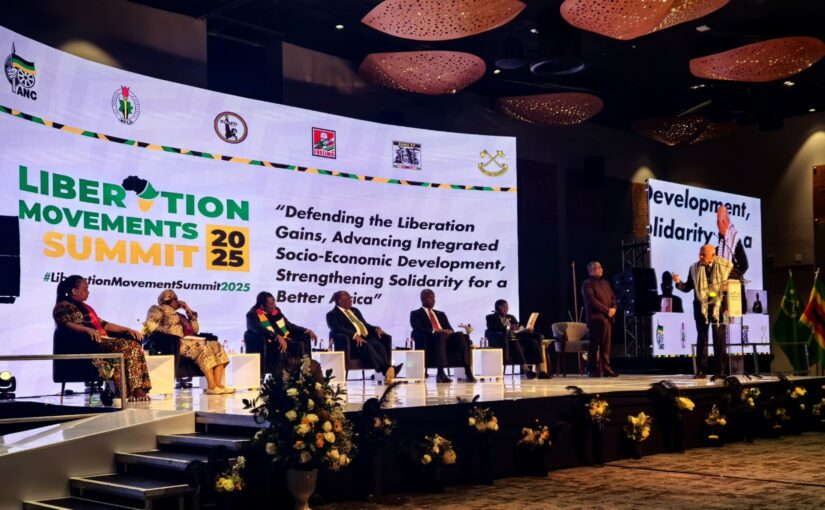
The Communist Party of China (CPC) joined the Liberation Movements Summit that was hosted by the African National Congress (ANC) of South Africa in Johannesburg, between July 25-28, under the theme, ‘Defending the Liberation Gains, Advancing Integrated Socio-Economic Development, Strengthening Solidarity for a Better Africa.’

Besides the ANC, the core participants were the five other main liberation movements in the region – the Popular Liberation Movement of Angola (MPLA), the South West Africa People’s Organisation (SWAPO) of Namibia, the Mozambique Liberation Front (FRELIMO), the Zimbabwe African National Union – Patriotic Front (ZANU-PF) and the Chama Cha Mapinduzi (Revolutionary Party of Tanzania – CCM).

In a statement, the ANC said: “This critical gathering reaffirms the ideological foundations of the six Southern African liberation movements… and their historical role in securing independence, dignity and development across the region. It also seeks to reassert the relevance of these movements in a rapidly shifting global order.

“Southern Africa’s liberation movements transformed the region’s political landscape, resisting colonial rule and apartheid, and ushering in people-centred governance. Since independence, these movements have implemented landmark policies on land reform, education, housing, infrastructure and social protection.

“However, these gains now face erosion due to renewed imperial pressures, economic crises, and attempts at neo-colonial interference. The Summit provides a united platform to confront these threats and consolidate progressive regional responses grounded in Pan-Africanism, internationalism and multilateralism.

“The Summit is a strategic intervention in organisational renewal, deepening intra-party solidarity, and realignment of liberation movements with the socio-economic aspirations of a new generation. The ANC believes that the political, economic and cultural survival of Southern Africa’s liberation legacy demands honest introspection, shared learning and actionable unity.

“The Summit will advance frameworks for inter-party collaboration, regional integration, youth engagement, and sovereign resource governance. Through reaffirming shared values and strengthening alliances, the 2025 Liberation Movements Summit will chart a path forward, one that protects the gains of the past while building a just, inclusive and self-determined African future.”

Further details of the conference perspectives may be read here.

Besides these six movements, the POLISARIO Front of the Sahrawi Arab Democratic Republic (SADR) and the Palestinian National Liberation Movement Fatah were also represented at a senior level, along with the South African Communist Party (SACP), Pan-Africanist Congress (PAC) of Azania, the Congress of South African Trade Unions (COSATU) and the South African National Civics Organisation (SANCO).

The Communist Party of China was represented by Liu Jianchao, Minister of the International Department of the Party Central Committee (IDCPC).

Among other parties represented were United Russia, the Communist Party of Cuba, the National Liberation Front (FLN) of Algeria, the Sandinista National Liberation Front (FSLN) of Nicaragua, the Botswana National Front (BNF – the main component of the progressive ruling Umbrella for Democratic Change coalition), and the Botswana Democratic Party, while messages of greetings included that from the Communist Party of the Russian Federation.

In his keynote address, Cyril Ramaphosa, President of the ANC and of the Republic of South Africa, said:

Continue reading Communist Party of China joins Liberation Movements Summit in South Africa