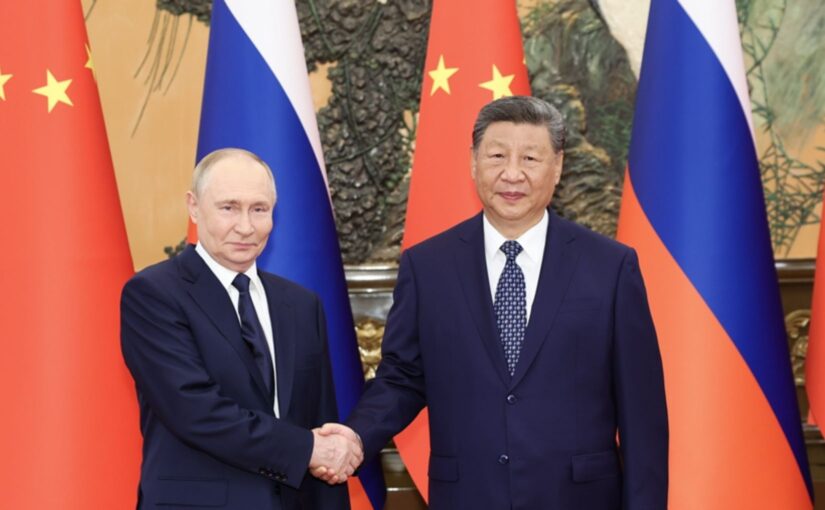
Wang Yi meets leading politicians from Uganda, Liberia, Mozambique and other countries

On June 12, Chinese Foreign Minister Wang Yi held a series of bilateral meetings, for the third consecutive day, with leading politicians from a number of African countries who were in Changsha, Hunan to attend the  Ministerial Meeting of Coordinators on the Implementation of the Follow-up Actions of the Forum on China-Africa Cooperation (FOCAC) as well as the fourth China-Africa Economic and Trade Expo.

Meeting with Ugandan Prime Minister Robinah Nabbanja, Wang Yi said that Uganda is an important country in Africa and a representative of emerging economies. President Xi Jinping and President Yoweri Kaguta Museveni have established mutual trust and friendship, providing impetus and assurance for the development of China-Uganda relations. Last autumn, the Beijing Summit of FOCAC was successfully held, and the outcomes of the Summit have already been effectively implemented in Uganda. In the first quarter of this year, Uganda’s exports to China increased by nearly 90 percent year on year.

Wang Yi stated that China and Uganda maintain strategic communication and coordination on international and multilateral affairs and jointly safeguard the legitimate rights and interests of Africa and the vast number of developing countries. China is willing to work with Uganda and other African brothers and sisters to support and practice multilateralism, oppose unilateral bullying, and safeguard the basic norms governing international relations.

Robinah Nabbanja said that Uganda and China respect and understand each other and keep close communication and contact. She expressed appreciation to China for its long-term and valuable support to Uganda’s infrastructure construction and economic and social development. Uganda and China have achieved remarkable results in cooperation within the frameworks of the Belt and Road Initiative and the FOCAC.

Meeting with Vice President of Liberia Jeremiah Kpan Koung, Wang Yi extended congratulations on Liberia’s election as a non-permanent member of the United Nations Security Council. He said that China is ready to strengthen solidarity and coordination with Liberia, practice the vision of multilateralism, and safeguard the legitimate rights and interests of developing countries, especially African countries. China’s foreign policy remains consistent and stable, and China stands firmly with developing countries and speaks up for small and medium-sized nations.

Jeremiah Kpan Koung said that China is a reliable friend. He expressed appreciation for China’s long-term, selfless support and assistance to Liberia, saying that China’s zero-tariff policy for African countries has brought significant benefits to Liberia. Liberia is willing to work with China to continue implementing the important common understandings reached between the two heads of state and advance cooperation in various fields such as maritime affairs, green energy, healthcare, and agriculture. 

Continue reading Wang Yi meets leading politicians from Uganda, Liberia, Mozambique and other countries

China provides a powerful counterexample to the moral rot and immiseration of the capitalist imperial core

The recent Friends of Socialist China delegation to China contributed to a parallel session of the Dialogue on Exchanges and Mutual Learning Among Civilisations, organised by Schwarzman Scholars of Tsinghua University, on the theme of Youth power in dialogue among civilisations.

Creighton Ward, a member of Qiao Collective and of Friends of Socialist China’s US committee, gave the following brief presentation focused on the deteriorating economic, social and political conditions faced by young people in the US, and highlighting all that oppressed and working class communities in the West can learn from Socialist China.

Thank you to the hosts and organizers of this event, I am honored to join you as a representative of Friends of Socialist China and the Qiao Collective. Thank you for your interest in a youth perspective and for convening this dialogue.

The majority of youth in the US, including myself, face a variety of challenges even in the rich imperial core: crumbling infrastructure, the gutting of the administrative state, austerity, the evaporation of pandemic welfare programs and regressive health policies that openly embrace eugenics, skyrocketing rent and food prices, the deregulation of agencies tasked with monitoring food safety and infectious disease.

We are dealing with a social atmosphere of climate nihilism, social atomization to the highest degree, depoliticization, and counterinsurgency.

The imperialist reorganization underway in the second Trump administration has been accompanied by the rapid degradation in quality of life for workers, brazenly genocidal moves domestically and abroad, and a pivot away from the US’ proxy wars in Palestine and Ukraine in preparation for war with China. We should not underestimate the degree of ideological defeat instilled in the western left, or its problems of racial chauvinism and anticommunism.

Yet despite the bleak conditions that youth are confronted with, it is obvious that there have been significant shifts in the global balance of power against US hegemony. We are fortunate to live in a time when the second-largest political party in the world is an experienced and highly capable communist party, and I find myself thinking frequently about how much worse off we would all be if China had not taken the socialist path.

China provides a powerful counterexample to the moral rot and immiseration of the capitalist imperial core. We have much to learn from its antipoverty measures, commitment to building ecological civilization, and autonomous development. Its successes reflect the historical agency of labor in the world’s largest socialist state and the necessity of socialism to restore ecologically harmonious social and economic relations. The Chinese experience demystifies the fact that mass communist politics are the only thing capable of responding to the contradictions of our time.

In the introduction to The Long Transition Towards Socialism and the End of Capitalism, Danish communist Torkil Lauesen said,

“To see the struggle for socialism as a long process of global transformation since the mid-nineteenth century is also somehow comforting on a psychological level for an old man. The struggle and suffering of millions of communists and socialists for the past two hundred years have not been in vain…to be part of this process–a tiny cogwheel in the machinery of transformation–and give it a little push in the right direction seems to be ‘the meaning of life.’”

I hope that my generation and those to come find the necessary courage to accept our place in an intergenerational struggle for peace and ecological society.

Xi Jinping commemorates revolutionary forerunner Chen Yun

At a meeting held on June 13 in Beijing’s Great Hall of the People, Chinese President Xi Jinping called for learning from veteran leader Chen Yun and carrying forward his legacy.

Xi, who is also the General Secretary of the Communist Party of China (CPC) Central Committee and Chairman of the Central Military Commission, acclaimed Chen Yun as a great proletarian revolutionary and statesman, and as one of the founding figures of the country’s socialist economy. He was a key member of both the Party’s first generation of central collective leadership with Mao Zedong at the core and the second generation of central collective leadership with Deng Xiaoping at the core.

Chen was born in 1905 and joined the Party in 1925. He died in 1995 at the age of 90.

Among the key points made by Xi Jinping in his address were:

  • Comrade Chen Yun was a great proletarian revolutionary, statesman, and outstanding Marxist, one of the founders and builders of China’s socialist economic construction, an outstanding leader of the party and the country who had been tested for a long time, and an important member of the party’s first-generation central leadership collective with Comrade Mao Zedong at the core and the party’s second-generation central leadership collective with Comrade Deng Xiaoping at the core, who had made major contributions to the development of the cause of the party and the people.
  • Comrade Chen Yun joined the Communist Party of China in 1925, and in his 70-year revolutionary career, he experienced many major events in which our party led the people in revolution, construction, and reform, participated in the formulation and organization of a series of major policy decisions made by the party Central Committee in different historical periods, and devoted his whole life to the development and victory of the new democratic revolution, the establishment and consolidation of China’s socialist system, and the pioneering and development of China’s reform, opening up, and socialist modernization.
  • During the period of the New Democratic Revolution, Comrade Chen Yun threw himself into the workers’ movement in the torrent of the Great Revolution and grew up to become a leader of the workers’ movement in the course of practical struggles. He took part in the Red Army’s Long March, firmly supported Comrade Mao Zedong’s correct propositions at the Zunyi Conference and supported the conference in establishing the correct leadership represented by Comrade Mao Zedong.
  • He participated in the leadership of the liberation of Northeast China and led the Northeast Base Area to take the lead in restoring the economy and supporting the national liberation war. He instructed cadres to “always pay attention to the new situation, new tasks, and new work methods in the new areas” and not to “mechanically apply the old experience of the old liberated areas to the new areas,” thus exploring useful experiences for our party to shift from war to peaceful construction.
  • During the period of socialist revolution and construction, Comrade Chen Yun was appointed to preside over and lead the nation’s financial and economic work at the beginning of the founding of New China, and under the leadership of the party Central Committee, he coordinated the forces from all quarters to win the “economic war” in the fields of grain, cotton, cotton cloth, and coal, and achieved national financial and economic unification in less than a year, stabilized financial prices, and economically consolidated the nascent people’s political power.
  • He opposed impatient and reckless progress in disregard of the actual conditions and the rush to achieve results, discovered the problems brought about by the “Great Leap Forward” at an early stage, participated in the deployment and leadership of the readjustment of the national economy, and paid special attention to solving the problems of agricultural difficulties and food shortages, thus playing an important role in extricating the national economy and the people’s livelihood from their predicament.
  • At a major historical juncture, he resolutely supported the reform and opening up advocated by Comrade Deng Xiaoping and resolutely upheld Comrade Deng Xiaoping’s position as the core of the central leadership collective and the authority of the party Central Committee. He actively promoted the peaceful reversal of unjust, false and wrongly decided cases, put forward important opinions on the drafting of the “Resolution on Several Historical Issues of the Party Since the Founding of the People’s Republic of China,” and supported Comrade Deng Xiaoping’s correct proposition on scientifically establishing Comrade Mao Zedong’s historical status and upholding and developing Mao Zedong Thought.
  • We should learn from Comrade Chen Yun’s lofty spiritual demeanour. He said: “The most pleasant thing for a person is to participate in the revolution and fight for the interests of the people. Anyone who leaves the people and the party cannot accomplish anything.” At critical moments, he always adhered to the correct political position and clearly showed his attitude. When the development of the party’s cause encountered difficulties, he was always able to keep a clear head, put forward unique views on the basis of careful consideration, and came up with effective ways to solve problems.
  • In the new era and new journey, we must strengthen our ideals and beliefs, establish confidence in victory, maintain political determination in the face of chaos and complexity, and not be afraid of clouds to cover our eyes. It is necessary to consciously practice the fundamental purpose of serving the people wholeheartedly, stand firmly on the people’s position, cultivate the feelings of the people, take the mass line of the party in the new era, investigate the people’s feelings, listen to the people’s voices, obey the people’s will, solve the people’s worries, and closely rely on the people to create historical achievements.
  • In the area of being in charge of economic work, Comrade Chen Yun put forward many important viewpoints and major measures and explored effective ways to creatively solve problems and open up the work situation. In the process of presiding over the formulation and implementation of the first five-year plan, he not only paid attention to learning from the experience of the Soviet Union, but also insisted on proceeding from China’s national conditions, making scientific arrangements, and steadily promoting socialist industrialization.
  • After the socialist transformation was basically completed, he actively explored the socialist economic system and economic system that suited the development of China’s productive forces and put forward the idea of “three main bodies and three supplements,” which provided important enlightenment for overcoming the shortcomings of the Soviet model.
  • After the reform and opening up, he profoundly summed up the positive and negative experiences of socialist economic construction and proposed that “the economic construction that our country is carrying out now is socialist economic construction, and the reform of the economic system is also the reform of the socialist economic system”
  • He stressed that vigorously cultivating and selecting tens of thousands of middle-aged and young cadres with both ability and political integrity is a strategic task that determines the future of the party and the country, and it is necessary to persist in combining the old, middle-aged and young cadres, maintain the continuity and stability of the contingent of cadres, and ensure that the party’s leadership is always in the hands of Marxists.
  • He stressed the need to vigorously promote those cadres who have strong party spirit, upright work style, and the courage to uphold principles, and actively support and implement the policy of making the contingent of cadres more revolutionary, younger, more knowledgeable, and more professional.
  • He pointed out: “The Communist Party must uphold party discipline at all times, whether it is working underground or in power.”
  • He put forward the important thesis that “the issue of the party style of the ruling party is an issue related to the life and death of the party,” stressing that “the issue of party style must be tackled with great attention and forever.” In order to maintain the flesh-and-blood ties between the party and the masses of the people, it is necessary to properly resolve the two key issues of earnestly safeguarding the people’s vital interests and resolutely opposing unhealthy tendencies within the party.
  • We should study Comrade Chen Yun’s scientific thinking and work methods. Persisting in seeking truth from facts is a distinctive characteristic of Comrade Chen Yun.
  • He regarded investigation and study as an important prerequisite for policy decision-making, stressing: “Leading organs should devote more than 90 percent of their time to investigation and study in formulating policies.”
  • In the new era and new journey, it is necessary to improve the quality of investigation and study, and through various channels and methods, accurately grasp the new situation, new problems, and new trends in economic and social development, accurately grasp the needs of the grassroots and the expectations of the masses and make policy decisions more in line with reality and the wishes of the masses.

A number of other speakers also addressed the meeting.

Continue reading Xi Jinping commemorates revolutionary forerunner Chen Yun

Chinese Foreign Minister meets his counterparts from South Africa, Burkina Faso, Niger, Guinea-Bissau and other African countries

Following his June 10 meetings, Chinese Foreign Minister Wang Yi met with his counterparts from South Africa, Burkina Faso, Niger, Guinea-Bissau, the Republic of the Congo, the Democratic Republic of the Congo, Ghana, Nigeria, Ethiopia and Djibouti the following day in Changsha, Hunan.

Meeting with South African Minister of International Relations and Cooperation Ronald Lamola, Wang Yi said that the foreign ministers of the two countries have met four times in a year, demonstrating the close ties between China and South Africa and the high level of China-South Africa all-round strategic cooperative partnership in the new era. China and South Africa are good friends with shared ideals and good partners for mutual benefit and win-win results, and the friendship between the two countries has grown stronger over time. China and South Africa are major developing countries with common experiences and shared pursuits. The more complex the situation and the sharper the challenges, the more the two countries should unite and cooperate, and strive for self-reliance and strength. China is happy to see South Africa play a greater role on the international and regional stage, and supports South Africa in fulfilling its duties as the G20 presidency.

The previous day, Chinese Defence Minister Admiral Dong Jun met with the visiting Chief of the South African National Defence Force (SANDF) General Rudzani Maphwanya in Beijing.

Admiral Dong Jun praised that the traditional friendship between China and South Africa has endured over time and forged a special bond of “comrades and brothers” through the tests of the international situation. In recent years, under the strategic guidance of the heads of state of the two countries, cooperation between the two militaries in various fields has flourished. “China is willing to work with South Africa to practice the true multilateralism and jointly oppose the hegemony, bullying, power politics, and division and confrontation,” stressed Admiral Dong, adding that both sides should enhance exchanges, strengthen strategic communication, optimise cooperation mechanisms, expand pragmatic cooperation, and promote deeper, wider mil-to-mil relations, so as to contribute more to building a high-level community with a shared future for China and South Africa.

General Maphwanya appreciated the Chinese military’s long-standing strong support and assistance to the SANDF.

The 10th meeting of the China-South Africa Defence Committee took place in Beijing on the same day. Both parties expressed commitment to further explore cooperation prospects, broadening cooperation areas, and enhancing levels of collaboration under the strategic guidance of the two countries’ leaders. They agreed to continuously enrich the all-round strategic cooperative partnership for the new era between China and South Africa, thereby making a positive contribution to maintaining international and regional security and stability.

The South China Morning Post reported that the “solidarity pledge to South African general comes after Washington’s controversial move to fast-track asylum for 59 white Afrikaners.” It described China’s defence minister as stressing that their historical links were rooted in China’s support for the African National Congress (ANC) during the apartheid era. The report added:

“Maphwanya thanked China for its long-standing support for the development of South Africa’s military, calling the Chinese military a ‘sincere friend and partner’.

“‘South Africa values its friendship with China and looks forward to closer cooperation in joint drills, military education, personnel training and maritime security,” Maphwanya was quoted as saying.

“Visits to China by South African military officials are not uncommon, but the timing has drawn attention due to growing scrutiny over Pretoria’s geopolitical alignments.”

Meeting with Minister of Foreign Affairs, Regional Cooperation and Burkinabe Abroad of Burkina Faso Karamoko Jean Marie Traoré, Wang Yi said that since the resumption of diplomatic relations seven years ago, China and Burkina Faso have fully restored bilateral relations, contributing to the national development and economic growth of Burkina Faso, bringing tangible benefits to the Burkinabe people. Facts have proven that the resumption of diplomatic relations between China and Burkina Faso fully serves the fundamental and long-term interests of Burkina Faso and its people. China consistently upholds the principle of non-interference in internal affairs and respects the choices made by the Burkinabe people. China will continue to support Burkina Faso in safeguarding its legitimate rights and interests and in exploring a development path suited to its national conditions and driven by self-reliance. China is ready to consolidate mutual trust and friendship with Burkina Faso, enhance the exchange of governance experience, and provide support and assistance within its capacity for Burkina Faso’s development and revitalisation.

Continue reading Chinese Foreign Minister meets his counterparts from South Africa, Burkina Faso, Niger, Guinea-Bissau and other African countries

Wang Yi meets his counterparts from Angola, Namibia and other African countries

Over a period of three days, Chinese Foreign Minister Wang Yi held bilateral meetings with his counterparts from numerous African countries in the margins of the Ministerial Meeting of Coordinators on the Implementation of the Follow-up Actions of the Forum on China-Africa Cooperation (FOCAC) as well as the fourth China-Africa Economic and Trade Expo, both held in Changsha, Hunan.

On June 10, Wang met with ministers from Angola, Namibia, Tanzania, Botswana and Kenya.

Meeting with Minister of External Relations of Angola Téte António, Wang Yi said that last autumn, President Xi Jinping announced the ten partnership actions to support Africa’s revitalisation at the Beijing Summit of FOCAC. Thanks to the joint efforts of both sides, this initiative has already yielded notable early results. At present, unilateralism and protectionism are making a comeback, free trade and international rules are suffering serious setbacks, and developing countries are facing severe challenges. China firmly stands with the Global South, especially African countries, to jointly uphold the multilateral trading system and safeguard international fairness and justice. China will continue to support Angola in fulfilling its responsibilities as the rotating chair of the African Union (AU). China supports Angola’s efforts to advance national development and is ready to share China’s development opportunities with Angola, expand cooperation in various fields such as agricultural modernisation, healthcare, and human resources training, and support Angola in accelerating its industrialisation process.

Téte António said that Hunan is the birthplace of Chairman Mao Zedong, the founding leader of the People’s Republic of China. Many African people came to learn about Hunan through him, which has facilitated mutually beneficial cooperation with Hunan. Angola and China share a profound traditional friendship and have close ties. Upholding a spirit of solidarity, both sides have made fruitful progress in bilateral relations, and friendship with China has become a consensus among all sectors in Angola. The FOCAC mechanism is becoming increasingly mature, and Angola looks forward to working with China to implement the outcomes of the summit. Angola supports the series of important global initiatives proposed by China and is willing to enhance multilateral coordination with China, fulfil its responsibilities as the AU rotating chair, correct historical injustice, and uphold fairness and justice.

Following the meeting, the two sides issued a joint press communiqué.

According to the communiqué, China reiterates its firm support for the Angolan people to independently choose a development path suited to their national conditions, and for Angola to safeguard its national independence, sovereignty, security and interests. The Angolan side reiterates its firm adherence to the one-China principle, recognises that Taiwan is an inalienable part of China’s territory, opposes any form of “Taiwan independence”, and firmly supports all efforts made by the Chinese government to achieve national reunification.

The two sides agreed that the development of human rights is the common cause of all humanity, and that the right to subsistence and development are the primary basic human rights, and that human rights exchanges and cooperation should be carried out on the basis of mutual respect and equal treatment. Respect for the sovereignty, independence and territorial integrity of all countries and non-interference in the internal affairs of sovereign states are the basic norms governing international relations.

The world is undergoing changes in a century at an accelerated pace. China and Angola are committed to promoting greater representation and voice of the Global South in the international system. The two sides are ready to work together to build a community with a shared future for humanity, carry out high-quality Belt and Road cooperation, and jointly build an open, inclusive, clean and beautiful world featuring lasting peace, universal security and common prosperity. China and Angola are ready to jointly implement the Global Development Initiative, the Global Security Initiative and the Global Civilisation Initiative, promote global governance based on extensive consultation, joint contribution and shared benefits, resolutely abandon the law of the jungle, oppose hegemonism, power politics and all forms of unilateralism and protectionism, and contribute to promoting lasting peace and development in the world.

Meeting with Minister of International Relations and Trade of Namibia Selma Ashipala-Musavyi, Wang Yi said that at the beginning of this year, he, as Chinese foreign minister continued the friendly tradition of making Africa the destination of the first overseas visit in the new year, with Namibia as the first stop. This demonstrates China’s high regard for China-Namibia relations and its sincere commitment to strengthening China-Africa solidarity and cooperation.

China is ready to work with Namibia to carry forward the fine tradition of mutual trust, mutual support and sincerity, solidify the political foundation of bilateral relations and inject new vitality into China-Namibia friendship in the new era. The two sides should seek greater synergy of development strategies and upgrade mutually beneficial cooperation in such areas as energy and mining, nuclear energy, smart cities, agricultural technology, and vocational education and training, to support Namibia in increasing industrial added value, accelerating industrialisation, and delivering greater benefits to the Namibian people.

Wang Yi said that the 21st century is the century of joint development and revitalisation for Asia and Africa. This Ministerial Meeting of Coordinators will demonstrate the strong resolve of China and Africa to advance their respective modernisation, showcase the powerful strength of China-Africa solidarity, and send a strong message of the two sides’ joint commitment to upholding international fairness and justice. As important members of the Global South, China and Namibia should enhance coordination, overcome external interference, and jointly resist unilateralism and protectionism in the face of an increasingly uncertain and unstable international landscape, so as to safeguard the legitimate rights and interests of the Global South.

Continue reading Wang Yi meets his counterparts from Angola, Namibia and other African countries

Nicaragua and China break ground on landmark solar project to power water access and energy sovereignty

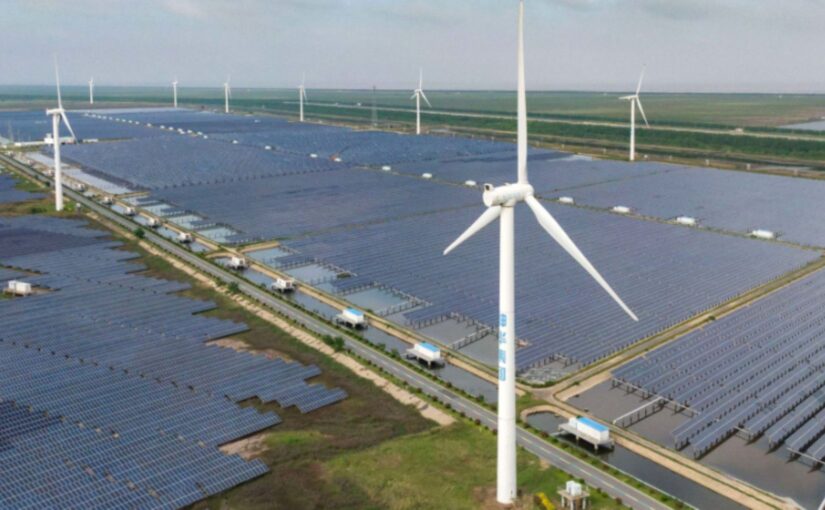
The following report in Telesur notes that Nicaragua, in partnership with China, has inaugurated construction on the country’s largest solar plant to date, powering water systems, cutting energy costs, and deepening South-South cooperation on infrastructure for social good. The plant marks “a strategic leap toward energy independence, climate resilience, and universal access to clean water”.

According to the article, the Enesolar-3 photovoltaic facility in Masaya, funded with $83 million of Chinese investment, is set to supply renewable energy to the country’s water utility, ENACAL, directly benefiting nearly 4 million people across urban and rural communities.

Framed as more than just an infrastructure project, Enesolar-3 is part of a broader initiative by the Sandinista government to expand renewable energy, reduce fossil fuel dependency, and ensure access to public utilities as a basic human right.

Laureano Ortega Murillo, presidential advisor for investment and international cooperation, stated at the the cornerstone ceremony that “this is our Sandinista Popular Revolution delivering works of progress, development, dignity, and peace for the Nicaraguan people—together with our brothers from the People’s Republic of China”.

When construction is complete, Enesolar-3 will be Nicaragua’s largest green solar power plant.

China’s ambassador to Nicaragua, Chen Xi, “reaffirmed China’s support for Nicaragua’s development and praised the South-South partnership as one rooted in equality, sovereignty, and mutual respect”.

Nicaragua has inaugurated construction on a major solar power plant in partnership with China, marking a strategic leap toward energy independence, climate resilience, and universal access to clean water. Funded by an $83 million investment from Beijing, the Enesolar-3 photovoltaic facility in Nindirí, Masaya, is set to supply renewable energy to the country’s water utility, ENACAL, directly benefiting nearly 4 million people across urban and rural communities.

Continue reading Nicaragua and China break ground on landmark solar project to power water access and energy sovereignty

Strangers When We Meet: A nuanced projection of life on the edge in today’s China

Friends of Socialist China was invited to the Tiantan Award Panorama, a Chinese Film Event, presented by the Beijing International Film Festival (BJIFF).

This week-long journey through six exceptional Chinese films – powerful dramas, emotional stories, and thought-provoking themes that reflect the vibrant and evolving landscape of the country’s cinema – was held from May 10-17, at the Genesis Cinema in East London.

In the below review, Alfie Howis, a writer and activist based in London, looks at an emotional, quasi-romantic drama featuring two ex-prisoners entwined in a somewhat toxic relationship with a precipitous age gap and diverging visions of marriage.

Strangers When We Meet is a 2024 film by Zhang Guoli, starring Fan Wei and Zhou Dongyu. I had the pleasure of viewing this film in London as part of the Beijing International Film Festival’s international screenings. It is an emotional, quasi-romantic drama featuring two ex-prisoners entwined in a somewhat toxic relationship with a precipitous age gap and diverging visions of marriage. The plot is well paced and doesn’t feel rushed despite the hairpin twists and turns, while the high-quality, beautiful cinematography shows the technical and artistic prowess of contemporary Chinese cinema.

Warning: spoilers below

What struck me about this film was its non-judgemental and sympathetic approach to its central characters despite their backgrounds. Lao Qin, Zhou Dongyu’s character and Chang Juan, Fan Wei’s character, are both revealed to have been in prison for murder. The opening section of the film features the end of Lao Qin’s time in prison and his release, where he is treated kindly by prison guards and told that it doesn’t matter what he did now that he is free. He gets back on his feet, finding an apartment and trying to work, tasks all of which seem to be relatively easy and unaffected by his rather long stint in prison that just ended. Although emotionally Lao casts a downtrodden image, it is not as a result of any discrimination he faces as an ex-prisoner. Similarly, when Chang Juan goes missing in the mid to late section of the film, the prison authorities have a great concern for her wellbeing and work with Lao Qin to try and find her – there is no hint of disdain or inhumanity when dealing with such serious ex-criminals. On the contrary, they are generally humanised and treated normally, not overly sympathised, coddled, or patronised, but treated as people just trying to get by despite their hard circumstances.

The approach to wealth and its utility is complex and goes far beyond a basic consumerist ideology, despite one of the central themes being that Lao Qin comes into a large sum of state compensation from the demolition of his family home. Chang Juan is more attached to excessive consumption, buying expensive clothes with Lao Qin’s money and pushing for various reckless and self-indulgent spending decisions. While this is softly mocked and an object of comedy in the plot, it turns out to be a broader feint of Chang Juan’s character, as her ultimate goal is to abscond with a chunk of the money to pay off the innocent victim of a crime she committed. This is ultimately a noble goal, and even at times took on a feminist character as Chang Juan uses the patriarchal marriage system, with its bride cost, to right the wrongs of her crime.

Continue reading Strangers When We Meet: A nuanced projection of life on the edge in today’s China

China and Africa consolidate dynamic partnership

On June 11, 2025, the Ministerial Meeting of Coordinators on the Implementation of the Follow-up Actions of the Forum on China-Africa Cooperation (FOCAC) was held in Changsha, capital of China’s Hunan Province.

Chinese Foreign Minister Wang Yi attended the opening ceremony and read out the congratulatory letter from President Xi Jinping. Foreign Minister Jean-Claude Gakosso of the Republic of the Congo, the current African co-chair of the FOCAC, read out the congratulatory letter from President Denis Sassou Nguesso.

Xi Jinping pointed out that since its establishment 25 years ago, the FOCAC has strongly driven the flourishing development of China-Africa cooperation and become a model for solidarity and cooperation in the Global South. Through the entry into agreements on economic partnership for shared development, China implements zero-tariff measures of granting 53 African countries having diplomatic relations with China zero-tariff treatment for 100 percent of tariff lines, and facilitates greater access for exports from Africa’s least developed countries to China.

President Denis Sassou Nguesso pledged to make all-out efforts and work unwaveringly with President Xi Jinping to make greater progress in building an Africa-China community with a shared future and to enhance the well-being of the people on both sides. As the African co-chair of the FOCAC, the Republic of the Congo will work with China and other Global South countries to strengthen cooperation under the Belt and Road Initiative, jointly build a multipolar world free from unilateralism and protectionism, and usher in a new era of universally beneficial and inclusive globalisation.

Wang Yi said that since its establishment 25 years ago, the FOCAC has grown rapidly, driving China-Africa relations to achieve leapfrog development and ushering in their best period in history. The FOCAC Beijing Summit held in September last year marked the beginning of a new journey for jointly building a China-Africa community with a shared future. Guided by the consensus reached at the summit, China and Africa have actively implemented the ten partnership actions and achieved new, encouraging outcomes. Strategic mutual trust between China and Africa has become stronger, practical cooperation has been increasingly deepened, and multilateral coordination has become closer. Facts have proved that China-Africa cooperation has a solid foundation, extensive demands, and enormous potential, and is brimming with vigour and vitality. When China and Africa stand shoulder to shoulder, the development and revitalisation of the Global South will be more promising, and international fairness and justice will be more guaranteed.

The Chinese Foreign Minister emphasised that China and Africa, as the largest developing country and the continent home to the largest number of developing countries, together form the backbone of the Global South. The more complex and turbulent the international landscape becomes, the more imperative it is for China and Africa to uphold solidarity and self-reliance, stand firmly on the right side of history, actively steer the course of the times, and respond to uncertainties in the world with the stability and resilience of China-Africa relations.

Continue reading China and Africa consolidate dynamic partnership

Don’t believe the New Cold War lies, China is leading the world in climate solutions

In the following article for Liberation News, Tina Landis – author of the book Climate Solutions Beyond Capitalism – argues that recent trend of placing blame for the climate crisis on China is incorrect and ahistorical. While it’s true that China currently emits more carbon dioxide than any other countries, this statistic ignores critical context: China manufactures 30 percent of the world’s goods and houses nearly 18 percent of its population. On a per capita and consumption-based level, US emissions are significantly higher. Meanwhile, the US’s outsourcing of production – and thereby pollution – to China is rarely acknowledged.

China’s centrally planned socialist system has enabled rapid and large-scale action on environmental issues. Since the early 2000s, China has embedded ecological goals into its national development strategies. It has implemented stringent environmental impact assessments, halted major polluting projects, and dramatically improved air quality. By 2021, particulate pollution dropped by 42 percent. The country still uses fossil fuels but is aggressively expanding renewables: by mid-2024, wind and solar capacity surpassed coal, and China is on track to reach its ambitious renewable energy goals ahead of time.

China leads globally in electric vehicles and public transit electrification, producing 60 percent of the world’s electric vehicles and 90 percent of electric buses. It also has by far the world’s most extensive high-speed rail network. What’s more, these sustainable development projects have not resulted in poverty; indeed they have helped to lift hundreds of millions out of poverty.

Massive ecological restoration efforts such as as taking place in the Loess Plateau, the vast afforestation projects, and the construction of sponge cities have all contributed to improving biodiversity and climate resilience. The Belt and Road Initiative exports this model of green development abroad.

Tina concludes that such extraordinary progress is only possible within a context of socialism, urging readers in the West to reject anti-China narratives and learn from China’s example.

These types of large scale projects inside and outside of China can only be achieved under a centralised, socialist planned economy. Here in the heart of empire, we need to see past the demonisation campaigns that are meant to win our support for U.S. war with China, and instead learn from the ecologically sustainable development efforts that they are leading.

At the time of the 1949 revolution, China was largely an agrarian society with widespread poverty, famine and lack of infrastructure. Rapid development over several decades resulted in a significant rise in pollution in China. 

The U.S. mainstream media never addresses the outsourcing of production to China and thus the outsourcing of pollution. Rarely are emissions accounted for based on where goods are produced versus where those goods are consumed, or population size of a country relative to emissions levels. If you take a snapshot of emissions today and ignore population and consumption of goods, China does have the highest carbon emissions with the U.S. coming in second. But China produces 30% of the world’s goods and accounts for 17.7% of global population, while the U.S. is the largest consumer of Chinese goods globally and accounts for 4.3% of global population.

When you look at per capita emissions of each country, as well as per capita consumption-based emissions, the U.S. is responsible for a much larger portion of global emissions than China. 

Continue reading Don’t believe the New Cold War lies, China is leading the world in climate solutions

China will continue to be a stabilising force for peace and progress

From May 13-14, the Chinese People’s Association for Peace and Disarmament (CPAPD), which works under the direction of the International Department of the Communist Party of China Central Committee (IDCPC) hosted the Fourth Wanshou Dialogue on Global Security, themed as “Universal Security in a Turbulent World: The Responsibility of Major Countries”. Liu Jianchao, Minister of the IDCPC, attended the event and delivered a keynote speech.

More than 50 international security experts from over 30 countries, including Pino Arlacchi, former Under-Secretary-General of the United Nations, Andrey Kortunov, former director general of the Russian International Affairs Council, Benny Octaviar, former head of the Indonesian Military Research Centre, Douglas Bandow, a special assistant to former US president Ronald Reagan and a senior research fellow at the Cato Institute, and Zizi Kodwa, a member of the National Executive Committee of the African National Congress (ANC) and former Minister of Sports, Arts and Culture of South Africa, attended the event.

The participants held in-depth discussions around four topics, namely Pressing Issues of Global Security, The Responsibility of Major Countries Amidst Once in a Century Transformations, Major Country Relations and Security in the Asia Pacific and Pathways to Universal Security.

Friends of Socialist China was invited to participate in the dialogue and we were ably represented by Dr. Jenny Clegg, a Member of our Advisory Group, who is the author of ‘China’s Global Strategy: Towards a Multipolar World’, a Vice President of the Society for Anglo-Chinese Understanding (SACU) and a leading member of the Campaign for Nuclear Disarmament (CND) and the Stop the War Coalition.

We reproduce below Jenny’s report of the event as well as the text of her speech, which was delivered to the panel session on Major Country Relations and Security in the Asia Pacific.

We also reprint the report of the opening session which was originally carried on the IDCPC website.

The CPAPD website carried a brief report on the event as well as a meeting with Peng Qinghua, Vice-Chairman of the Standing Committee of the National People’s Congress (NPC).

Labour Outlook also carried an article, based in part on Jenny’s speech.

Continue reading China will continue to be a stabilising force for peace and progress

Belarus President pays ‘family visit’ to China

Belarusian President Aleksandr Lukashenko paid his 15th visit to China, June 2-4.

On the morning of June 4, President Xi Jinping met with Lukashenko at Zhongnanhai, the compound in central Beijing where the top Chinese leadership live and work.

Xi Jinping congratulated Aleksandr Lukashenko again on his reelection as President of Belarus. Xi pointed out that China and Belarus are true friends and good partners. The two countries have always treated each other with sincerity and engaged each other with trust. Noting that China and Belarus share enduring traditional friendship, unshakable political mutual trust and comprehensively advancing cooperation in all fields, Xi Jinping said China always views and develops its relations with Belarus from a strategic and long-term perspective. China is ready to work with Belarus to ensure the steady and sustained growth of bilateral relations and mutually beneficial cooperation. Both sides should further strengthen coordination and cooperation within multilateral frameworks such as the United Nations and the Shanghai Cooperation Organisation, jointly oppose hegemonic, domineering and bullying acts, and uphold international fairness and justice.

Aleksandr Lukashenko said that this is his 15th visit to China, and on each occasion, he has truly felt the profound friendship extended by the Chinese side. Belarus thanked China for its long-standing strong support and assistance and has high-degree trust in China. Belarus will remain committed to developing its relations with China and actively advancing cooperation with China. In international affairs, China has firmly upheld multilateralism, opposed unilateralism and sanctions and pressure, and set an example for the world. Belarus deeply admires this and is willing to work with China to jointly defend international fairness and justice.

The Belarusian Telegraph Agency (BelTA) reported that main event of Lukashenko’s visit was his meeting with Xi Jinping, which was held for the first time at the Chinese leader’s home – at the Zhongnanhai residence. This is a sign of special favour and friendship between the heads of state.

“My office is literally next door. This is the first time I receive you here,” Xi Jinping said during the meeting.

Aleksandr Lukashenko noted, in turn, that he greatly appreciates the friendly attitude of his Chinese counterpart: “Enough to say that you have invited me to your home. I am very grateful to you and, naturally, I invite you to my home.

“I am still surprised and amazed by the way you treat your guests, although this is my 15th time in China and I have been cooperating with your country for 30 years already. Believe me, this is a widely shared opinion. We discuss it with other presidents, especially leaders of the post-Soviet republics. We have the same opinion about it. And we don’t take it for granted; we appreciate it very much.” said Aleksandr Lukashenko.

According to BeLTA, Xi Jinping emphasized that neither Belarus nor China will ever bow to any international hegemony or yield to the policy of bullying. “Together, we defend international justice and equality.”

“You have very correctly identified the main trend of our time – the West’s unprecedented pressure on us, primarily on the People’s Republic of China. And today the eyes of many countries, including Belarus, are on you – Beijing,” the Belarusian leader emphasised.

Five years ago people would say: “If China holds out, the world will be balanced and will go on. Today they are already saying: ‘China has held out, China will not allow the world order to be broken’. Many nations strongly believe in this. I have heard this from the heads of state with whom I have met.”

Xi Jinping has also invited Lukashenko to attend the Shanghai Cooperation Organisation summit and a parade in Beijing that will take place in late August – early September this year, BelTA reports.

Continue reading Belarus President pays ‘family visit’ to China

China strongly condemns Israeli aggression against Iran

China has strongly condemned the most recent acts of Israeli aggression against Iran.

Speaking at a United Nations Security Council briefing on June 13, Ambassador Fu Cong said:

“China condemns Israel’s actions that violate Iran’s sovereignty, security, and territorial integrity, opposes the intensification of tensions and the expansion of conflicts, and is deeply concerned about the potential grave consequences of the Israeli operations.”

He added: “We oppose the use of force and illegal unilateral sanctions and oppose armed attacks on peaceful nuclear facilities. As a State Party to the Treaty on the Non-Proliferation of Nuclear Weapons (NPT), Iran’s right to the peaceful uses of nuclear energy should be fully respected.”

Drawing the necessary connection to Israel’s genocidal war in Gaza, Fu Cong concluded:

“Gaza has been subjected to prolonged attacks and blockades, with over two million people trapped in an unprecedented humanitarian disaster. The international community should work together to promote a ceasefire in Gaza, deescalate the regional situation, and effectively curb the spread of conflict. The country with significant influence over Israel should effectively play a constructive role. The Security Council should make full use of all the means conferred on it by the Charter to ensure the implementation of its relevant resolutions and to play its due role in maintaining regional peace and security.”

The following day, Chinese Foreign Minister Wang Yi had a phone call with Iranian Foreign Minister Seyed Abbas Araghchi.

Araghchi thanked China for its consistent understanding and support of Iran’s position and expressed confidence that China will play an even more important role in promoting regional peace and stability.

Wang said that China condemns Israel’s violation of Iran’s sovereignty, security and territorial integrity, and firmly opposes the reckless attacks targeting Iranian officials and causing civilian casualties. China supports Iran in safeguarding its national sovereignty, defending its legitimate rights and interests, and ensuring the safety of its people, he said, adding that Israel’s actions seriously violate the principles of the UN Charter and the basic norms governing international relations. In particular, Israeli attacks on Iranian nuclear facilities have set a dangerous precedent with potentially catastrophic consequences.

The Xinhua News Agency also reported that Wang held a telephone conversation with Israeli Foreign Minister Gideon Sa’ar the same day, in which he stressed that China firmly opposes Israel’s use of force against Iran in violation of international law.

Slightly more detailed read outs of Wang Yi’s conversations with his Iranian and Israeli counterparts, released by the Chinese Foreign Ministry may be read here and here.

The following articles were originally published on the website of China’s Permanent Mission to the UN and by the Xinhua News Agency.

Remarks on the Situation in the Middle East by Ambassador Fu Cong at the UN Security Council Briefing

President, 

Thank you for convening this emergency meeting. I thank Director General Rafael Mariano Grossi and Under-Secretary-General Rosemary DiCarlo for their briefings. 

Early this morning, Israel launched large-scale attacks on multiple targets in Iran, causing damage to Iran’s nuclear facilities and casualties. The Israeli side said that its military operations would last as many days as it takes. China condemns Israel’s actions that violate Iran’s sovereignty, security, and territorial integrity, opposes the intensification of tensions and the expansion of conflicts, and is deeply concerned about the potential grave consequences of the Israeli operations. The abrupt heating-up of the region serves no one’s interests. We urge Israel to immediately cease all military adventurism and avoid further escalating tensions. We call on all relevant parties to abide by the UN Charter and international law, resolve disputes through political and diplomatic means, and jointly maintain regional peace and stability. 

Continue reading China strongly condemns Israeli aggression against Iran

China and Africa issue powerful declaration on Global South solidarity and cooperation

The China-Africa Changsha Declaration – signed between the People’s Republic of China, 53 African countries and the African Union Commission on 11 June at the Ministerial Meeting of Coordinators on the Implementation of the Follow-up Actions of the Forum on China-Africa Cooperation in Changsha, Hunan – affirmed that:

  • All countries of the Global South should work together to safeguard multilateralism, promote multipolarity and oppose unilateralism and bullying.
  • The US’s tariffs, unilateralism, protectionism and economic bullying are severely damaging to Africa and must be opposed.
  • China will expand its zero-tariff treatment on 100 percent of tariff lines to all 53 African countries having diplomatic relations with China (that is, all African countries except for Eswatini).
  • China will continue actively contributing to Africa’s modernisation, including in green energy, AI, science and technology.
  • All countries should work together to build a community with a shared future for humanity, promote Belt and Road cooperation, and implement the Global Development Initiative, the Global Security Initiative and the Global Civilisation Initiative.

The declaration is a strong reaffirmation of the principles of solidarity, cooperation and mutual benefit that underpin China’s relations with Africa, and a powerful statement against the US’s attempts to divide the Global South.

It highlights the fact that, while the US is putting up tariff barriers, China is tearing them down; that while the US has slashed development aid, China is steadily increasing its support for African development. It clearly puts forward China’s strong support for Africa’s modernisation and sustainable development.

We are pleased to republish the full text of the statement below. The text was first published in English on the website of China’s Ministry of Foreign Affairs. We will be publishing further material on this important development in due course.

We, the representatives of the People’s Republic of China, 53 African countries and the African Union Commission, guided by the consensus reached by our leaders during the 2024 Beijing Summit of the Forum on China-Africa Cooperation (FOCAC), gathered in Changsha to advance the full implementation of the Beijing Declaration on Jointly Building an All-Weather China-Africa Community with a Shared Future for the New Era.

I. We agree that the rise and growth of the Global South represents the trend of the times and the future of development. China and Africa are both important members of and staunch forces in the Global South. We call on all countries, especially countries in the Global South, to work together to build a community with a shared future for mankind, promote high-quality Belt and Road cooperation, and implement the Global Development Initiative, the Global Security Initiative and the Global Civilization Initiative. We commend the initiative of jointly building an all-weather China-Africa community with a shared future for the new era for its positive significance in safeguarding solidarity and cooperation of the Global South and defending multilateralism.

Continue reading China and Africa issue powerful declaration on Global South solidarity and cooperation

Wang Yi meets counterparts from Asia, Africa and Europe

During his visit to Hong Kong, to attend the founding ceremony of the International Organisation for Mediation (IOMed), Chinese Foreign Minister Wang Yi held a number of meetings on May 30 with his counterparts from Asian, African and European countries, who were attending the same event.

Meeting with Lao Deputy Prime Minister Saleumxay Kommasith, Wang Yi noted their joint attendance at the signing ceremony of the Convention on the Establishment of the IOMed in the morning. Laos has actively participated in the establishment of the IOMed and is among the first to sign the Convention, making significant contributions, which China appreciates.

Wang Yi said that China and Laos, sharing common ideals and standing together through thick and thin, always treat each other with sincerity and offer mutual support. Under the strategic guidance of General Secretary and President Xi Jinping and General Secretary and President Thongloun Sisoulith, the building of the China-Laos community with a shared future has steadily advanced, demonstrating the broad prospects of the development of relations between the two Parties and two countries. China is ready to work with Laos, focusing on implementing the important common understandings reached by the top leaders of the two Parties and two countries, to deepen strategic cooperation, foster new drivers of cooperation, enhance coordination and collaboration at both bilateral and multilateral levels, jointly resist unilateralism and bullying acts, uphold multilateralism and international fairness and justice, and advance the China-Laos community with a shared future to a higher level.

The Lao side expressed appreciation for China’s long-standing and firm support, and expressed the willingness to implement the important common understandings reached by the top leaders of the two Parties and two countries, strengthen exchanges at all levels, advance cooperation projects such as the Laos-China-Thailand Railway, and work for more outcomes in building the Laos-China community with a shared future.

Meeting with Zimbabwean Foreign Minister Amon Murwira, Wang Yi noted that Zimbabwe has actively participated in the establishment of the IOMed, and today it was among the first to sign the Convention and became a founding member. China congratulates Zimbabwe on this. The IOMed is an important public good in the field of the rule of law that embodies the purposes of the United Nations Charter. It was jointly initiated by countries of the Global South and reflects the common aspirations of developing countries, especially small and medium-sized nations.

In September last year, President Xi Jinping and President Emmerson Mnangagwa provided new strategic guidance for the development of bilateral relations. This year marks the 45th anniversary of the establishment of diplomatic relations between China and Zimbabwe. Since the establishment of diplomatic relations, China-Zimbabwe friendship has withstood the test of the evolving international landscape and remained rock-solid. China has always viewed the development of China-Zimbabwe relations from a strategic and long-term perspective, supports Zimbabwe in safeguarding its own interests and opposes external interference. China is ready to work with Zimbabwe to maintain high-level strategic mutual trust, continue firmly supporting each other on issues concerning their respective core interests, strengthen exchanges of governance experience, advance cooperation in various fields in a coordinated manner, and guide China-Zimbabwe relations toward steady and sustained development.

Amon Murwira said that Zimbabwe is willing to play an active role in promoting the settlement of disputes through peaceful and mutually respectful means. The friendship between Zimbabwe and China is profound. The Zimbabwean side will never forget the firm support given by China during Zimbabwe’s efforts to strive for national independence, safeguard national sovereignty and oppose Western sanctions. Zimbabwe is grateful for the valuable support China has provided for its economic and social development. Zimbabwe firmly abides by the one-China principle, supports the Belt and Road Initiative, the series of global initiatives and the Forum on China-Africa Cooperation proposed by China, and stands ready to continue to firmly support each other and work closely with China to build a closer Zimbabwe-China community with a shared future.

Meeting with Mauritanian Foreign Minister Mohamed Salem Ould Merzoug, Wang Yi said, this year marks the 60th anniversary of the establishment of diplomatic relations between China and Mauritania. Over the past 60 years, the two sides have always treated each other with mutual respect and equality, setting an example of mutual support, mutual benefit and win-win results between developing countries. During the Beijing Summit of the Forum on China-Africa Cooperation in September last year, President Xi Jinping and President Mohamed Ould Cheikh Ghazouani jointly announced the establishment of a strategic partnership, charting the course for the development of bilateral relations. China is ready to work with Mauritania to fully deliver on the important common understandings reached between the two heads of state, carry forward the traditional friendship, consolidate unity and cooperation, jointly maintain peace and stability in the Sahel region, and constantly create new prospects for the development of the China-Mauritania strategic partnership.

Mohamed Salem Ould Merzoug said that the friendly relations between Mauritania and China are solid. China is a true strategic partner of Mauritania. Mauritania is ready to work with China to jointly celebrate the 60th anniversary of the establishment of diplomatic relations, enhance exchanges at all levels, deepen mutually beneficial cooperation and promote the continuous development of bilateral relations.

Meeting with Beninese Foreign Minister Shegun Adjadi Bakari, Wang Yi said, Benin is China’s strategic partner in Africa. The important common understandings reached between President Xi Jinping and President Patrice Athanase Guillaume Talon as well as the various measures proposed at the Beijing Summit of the Forum on China-Africa Cooperation are being steadily implemented. The political mutual trust between the two countries has deepened continuously, and cooperation in various fields has yielded fruitful results. China is ready to work with Benin to deliver on the ten partnership actions for China and Africa to jointly advance modernisation, accelerate the process of common development, and continuously promote greater development of China-Benin strategic partnership.

Shegun Adjadi Bakari said, Benin is honoured to be one of the first signatories of the IOMed, which stems from the strategic partnership between Benin and China. Both sides share similar philosophies, uphold multilateralism, and advocate for dialogue and consultation to resolve conflicts and disputes. Benin will accelerate the ratification of the Convention and strive for the prompt operation of the IOMed to bring more stability to the world, which is of great significance to the African continent. China is a great friend and a reliable and important partner of Benin.

Meeting with Cameroonian Minister of External Relations Lejeune Mbella Mbella, Wang Yi said that China and Cameroon enjoy a traditional friendship, and the bilateral relations have stood the test of time. China appreciates Cameroon’s consistent and firm support on issues concerning China’s core interests and is willing to strengthen exchanges at all levels between the two sides, deepen practical cooperation, and help Cameroon achieve better development.

Lejeune Mbella Mbella said that Cameroon cherishes its traditional friendship and partnership with China and appreciates China’s effective cooperation with Cameroon in fields such as energy, health, and infrastructure, which has made significant contributions to Cameroon’s national development. Regardless of changes in the international situation, Cameroon will remain committed to the one-China principle.

Meeting with Pakistani Deputy Prime Minister and Foreign Minister Mohammad Ishaq Dar, Wang Yi said that China is ready to work with Pakistan and like-minded countries to promote the unique advantages of the IOMed, so as to provide countries with a new, voluntary and efficient option for dispute resolution, and offer a new platform for Global South nations to safeguard peace, stability, fairness and justice.

Mohammad Ishaq Dar said that China’s initiative to establish the IOMed is timely and represents an important contribution to strengthening the multilateral system. The informal trilateral meeting of foreign ministers of Pakistan, China and Afghanistan was recently held successfully in Beijing. Pakistan has decided to accept China’s mediation proposal and upgrade its diplomatic relations with Afghanistan to the ambassadorial level. Pakistan fully supports China in hosting the Shanghai Cooperation Organisation Summit in Tianjin and will further deepen all-round cooperation between the two sides.

Wang Yi stated that Pakistan’s upgrading of diplomatic relations with Afghanistan will help improve Pakistan-Afghanistan relations, enhance mutual trust, and strengthen cooperation. China is ready to work with Pakistan to deepen the all-weather strategic cooperative partnership, support Pakistan in safeguarding its national sovereignty and territorial integrity, and support Pakistan’s assumption of the rotating presidency of the United Nations Security Council in July and its contribution to international peace and security.

Meeting with Nepali Foreign Minister Arzu Rana Deuba, Wang Yi said that China appreciates Foreign Minister Arzu Rana Deuba’s special trip to Hong Kong to attend the ceremony and looks forward to Nepal’s early accession to the IOMed, making joint contribution to the improvement of global governance.

He added that China and Nepal are traditionally friendly neighbours. China has always placed Nepal in an important position in its neighbourhood diplomacy. In December last year, Prime Minister KP Sharma Oli successfully paid an official visit to China. This year marks the 70th anniversary of the establishment of diplomatic relations between China and Nepal, and the strategic partnership of cooperation featuring ever-lasting friendship for development and prosperity between the two countries faces new opportunities for growth. China is ready to summarise successful experiences with Nepal, advance high-quality Belt and Road cooperation, and jointly create a better and more glorious China-Nepal relationship for the next 70 years.

Arzu Rana Deuba congratulated China on the successful signing ceremony of the Convention on the Establishment of the IOMed and said that it is an ideal choice to have the IOMed headquarters in Hong Kong. Nepal-China relations are based on friendship, equality, and respect. She expressed gratitude for the valuable assistance provided by the Chinese side to Nepal’s national development and the improvement of people’s livelihoods over the years. Nepal firmly abides by the one-China principle, supports the policy of “One Country, Two Systems”, and will never allow any force to use Nepal’s territory to engage in activities that harm China’s interests. Nepal is willing to enhance high-level exchanges with China, deepen practical cooperation, and promote better development of Nepal-China relations.

Meeting with Swiss Federal Councillor and Foreign Minister Ignazio Cassis, Wang Yi said that the Foreign Minister’s special trip to Hong Kong to attend the event demonstrated both his personal and Switzerland’s support for the establishment of the IOMed. It also reflected Switzerland’s positive attitude as a neutral country in practicing multilateralism and supporting the resolution of differences through dialogue and consultation. The Chinese side commends Switzerland for leveraging its role as a “bridge-builder” in international affairs and looks forward to working with the Swiss side to enhance communication, collaboration and experience sharing in areas such as dispute resolution through the new platform of the IOMed.

He added that the successful practice of “One Country, Two Systems” in Hong Kong has effectively promoted social stability and economic development in the region. Wang expressed the hope that Switzerland will deepen exchanges and cooperation with Hong Kong across various fields to achieve mutual benefits and win-win outcomes. He also introduced the recent high-level meeting on economic and trade affairs between China and the United States in Geneva and expressed appreciation for the facilitation provided by Switzerland.

Continue reading Wang Yi meets counterparts from Asia, Africa and Europe

Wang Yi meets his South Pacific counterparts

On May 28-29, Chinese Foreign Minister Wang Yi held bilateral meetings with his counterparts from South Pacific island nations on the sidelines of the Third China-Pacific Island Countries Foreign Ministers’ Meeting, held in the city of Xiamen in China’s Fujian province.

Meeting with President and Foreign Minister of Kiribati Taneti Maamau on May 28, Wang Yi said that since the resumption of diplomatic relations between China and Kiribati more than five years ago, bilateral relations have developed rapidly, with continuously deepening political mutual trust and fruitful results in exchanges and cooperation across various fields. Facts have proved that the decision made by President Taneti Maamau and the people of Kiribati to resume diplomatic relations with China is on the right side of history and is fully in line with the fundamental and long-term interests of the two peoples.

Wang Yi added that since the resumption of diplomatic relations between China and Kiribati, exchanges and cooperation in such fields as education, health, police affairs, culture, sports, and youth and at sub-national levels have gained thriving development. The Chinese Embassy was the first among foreign diplomatic missions in Kiribati to offer visa services, and Chinese medical teams have effectively addressed local medical service shortages. Under the framework of the Blue Partnership, the two sides can strengthen cooperation in the protection, development and utilisation of marine resources. China fully understands the special difficulties and legitimate concerns of Pacific Island countries (PICs) in addressing the climate change issue. China is willing to unite and cooperate with developing countries, including Kiribati, to jointly urge developed countries to face squarely their historical responsibilities, fulfil their commitments as soon as possible, and increase support for developing countries in terms of funds, technology and capacity building. China will continue to provide assistance to Kiribati in enhancing its capacity to address climate change within the framework of South-South cooperation.

Taneti Maamau thanked China for its strong support for Kiribati’s economic and social development. The resumption of diplomatic relations between Kiribati and China is a historic moment. Over the past five years, Kiribati has firmly pursued the one-China policy, and the practical cooperation between the two countries has yielded fruitful results, significantly improving the livelihood of the Kiribati people.

Meeting with Prime Minister and Foreign Minister of Niue Dalton Tagelagi, Wang Yi stated that China upholds equality among all countries regardless of size, which is a tradition, belief, and principle of China’s diplomacy, and also distinguishes it from other major countries. China has always taken pride in this. [Niue’s current population is just 1,821 people.] Since the establishment of diplomatic relations between China and Niue, bilateral relations have made significant progress, and in 2018, a comprehensive strategic partnership featuring mutual respect and common development was established, serving as a model for equality and common development between countries of different sizes. In providing assistance to PICs, China never attaches any political strings, never imposes its will on others, and never makes empty promises. China’s development of friendly and cooperative relations with Niue is open and transparent and is not targeted at any third party. China deeply empathises with the special concerns of small island countries on the climate change issue, and is willing to work with Niue to uphold the principle of common but differentiated responsibilities and jointly build a fair and equitable global climate governance system for win-win cooperation.

Dalton Tagelagi said that Niue is ready to seize the development opportunities brought by China to continue strengthening cooperation in infrastructure, marine conservation, people-to-people and cultural exchanges, tourism, telecommunications and other fields, so as to promote each other’s modernisation process.

Meeting with Crown Prince and Minister for Foreign Affairs of Tonga Tupouto’a ‘Ulukalala, Wang Yi said that since the establishment of diplomatic relations between China and Tonga 27 years ago, bilateral relations have experienced sustained and rapid development. Whether in responding to natural disasters or in working together to fight the COVID-19 pandemic, China and Tonga have always supported and helped each other in times of difficulty, acting on the vision of building a community with a shared future for humanity with concrete actions.

Continue reading Wang Yi meets his South Pacific counterparts

China establishes International Organisation for Mediation in Hong Kong

A major step in China’s multilateral diplomacy was taken on May 30, 2025, with the signing ceremony of the Convention on the Establishment of the International Organisation for Mediation (IOMed) in Hong Kong. Chinese Foreign Minister Wang Yi attended the event and delivered a speech. Around 400 high-level representatives from 85 countries across Asia, Africa, Latin America, and Europe, as well as nearly 20 international organisations, attended the event. Among them, 33 countries signed the Convention on site, becoming the founding members.

Wang Yi said that the UN Charter, in its preamble, states a clear purpose of different countries living together in peace and maintaining international peace and security. China always advocates addressing disagreements in a spirit of mutual understanding and accommodation, building consensus through dialogue and consultation, promoting development through win-win cooperation, and solving issues with a future-oriented perspective. China has been actively exploring ways of hotspot issue settlement that carry the Chinese touch. Three years ago, China and like-minded countries jointly initiated the establishment of the IOMed. Through diligent efforts, they have finally concluded the Convention and received extensive support and positive responses from the international community. An innovative step in international rule of law, the IOMed has great significance in the history of international relations.

The establishment of the IOMed is an example of a civilisational belief in harmony. It can help transcend the “you-lose-I-win” zero-sum mentality, promote the amicable resolution of international disputes, and foster more harmonious international relations.

Wang Yi stated that China looks forward to signatories’ early ratification of the Convention and welcomes the active participation of more countries. He called on signatories to uphold fairness, justice and equity, stress the true spirit of the rule of law, ensure both procedural justice and outcome justice, enhance the participation of developing countries, and improve the representation and say of the Global South in international governance.

He said that as decided through consultation among countries participating in the negotiation of the Convention, the IOMed will be headquartered in Hong Kong, whose handover is itself a success story of peaceful settlement of international disputes. What’s more, the city enjoys exceptional advantages in international mediation, for example, its affinity to the motherland and connection to the world, and its strength in both common law and civil law.

Pakistani Deputy Prime Minister and Foreign Minister Mohammad Ishaq Dar, Zimbabwean Minister of Foreign Affairs and International Trade Amon Murwira, Attorney General of Nicaragua Wendy Carolina Morales Urbina, Serbian Minister of Justice Nenad Vujić, Swiss Foreign Minister Ignazio Cassis, and Under-Secretary-General of the United Nations Li Junhua also spoke.

Chief Executive of the Hong Kong Special Administrative Region (HKSAR) John Lee delivered a speech to welcome the establishment of the world’s first intergovernmental international organisation dedicated to mediation in Hong Kong. Hong Kong will leverage the institutional strengths of “One Country, Two Systems” and fully support the work of the IOMed.

Following the signing ceremony, the Global Forum on International Mediation was convened.

Continue reading China establishes International Organisation for Mediation in Hong Kong

China and Pacific Island countries join together to address the challenge of climate change

In a striking practical demonstration of China’s principled stand on the equality of nations, be they big or small, Foreign Minister Wang Yi hosted the Third China-Pacific Island Countries Foreign Ministers’ Meeting in Xiamen (Fujian province) on May 28-29. Wang co-chaired the meeting with President and Foreign Minister of Kiribati Taneti Maamau and it was attended by those Pacific Island countries having diplomatic relations with China – Niue, Tonga, Federated States of Micronesia, Solomon Islands, Vanuatu, Papua New Guinea, the Cook Islands, Nauru, Fiji and Samoa.

Wang Yi said that this year marks the 50th anniversary of the establishment of diplomatic relations between China and Pacific Island countries (PICs). The everlasting friendship between the two sides has transcended mountains and seas. Regardless of changes in the international landscape, China has always regarded PICs as good friends, good partners, and good brothers. The development of the bilateral ties vividly demonstrates that friendship, whenever it happens, is cherishable; cooperation, whatever its size, is valuable. The “four full respects” principle put forward by President Xi Jinping, that is, China fully respects the sovereignty and independence of PICs, fully respects their will, fully respects their cultural traditions and fully respects their effort to seek strength through unity, constitutes the fundamental guideline for China’s relations with PICs.

He added that China’s cooperation with PICs follows the trend of history, responds to the call of the times, and has yielded fruitful outcomes that benefit the people of PICs. It has not only helped each other succeed but also promoted regional peace, stability and prosperity, setting a model for peaceful coexistence between countries of different sizes and serving as an example for seeking development through unity among the Global South.

Wang Yi put forward a six-point suggestion on building a community with a shared future between China and PICs:

  • Uphold mutual respect. China will firmly defend the basic norm in international relations of non-interference in other countries’ internal affairs, and resolutely support PICs in safeguarding their sovereignty, security, and development interests. China believes that PICs will continue to abide by the one-China principle and support China’s just position on the question of Taiwan.
  • Prioritise development. Efforts will be made to accelerate negotiations on bilateral free trade agreements, strengthen cooperation in agricultural and fishery technology demonstration and training, and expand cooperation on tourism.
  • Adopt a people-centred approach. China is ready to strengthen experience sharing with PICs in poverty alleviation and primary-level governance. Seven groups of 56 medical personnel, as well as additional Traditional Chinese Medicine doctors, will be dispatched to further contribute to the well-being of the people in PICs.
  • Promote exchange and mutual learning. Both sides should enhance people-to-people exchanges in areas such as media, youth, women, and sports, and maintain close and frequent interactions like relatives. China is ready to carry out joint archaeology and research on the Austronesian language family.
  • Safeguard fairness and justice. China is ready to work with PICs to firmly safeguard the international system with the United Nations at its core and the international order based on international law.
  • Maintain solidarity in challenging times. China is ready to enhance coordination and cooperation with PICs in global climate governance, promote the full and effective implementation of the Paris Agreement, uphold the principle of common but differentiated responsibilities and respective capabilities, and urge developed countries to provide funding, technology, and capacity-building support to developing countries. China stays committed to assisting PICs in strengthening climate resilience within the framework of South-South cooperation.

The Chinese Foreign Minister stressed that the world today is far from tranquil, with resurfacing hegemonism and power politics as well as resurging unilateralism and protectionism. In the face of changes of the times and history, China firmly believes that peace, development, cooperation, and win-win outcomes remain the only right choice. China is committed to safeguarding world peace, contributing to global development, and upholding international order. China steadfastly stands on the side of international fairness and justice, the right side of history, and the side of the vast number of developing countries and consistently acts as a trustworthy and reliable partner for Global South countries. The vastness of the Pacific Ocean lies in its capacity to embrace all rivers without rejecting small streams, and the progress of human civilisation depends on pooling strength to overcome difficulties together. China is ready to join hands with all parties to write a new chapter in building a community with a shared future between China and PICs.

China also announced a six-point Initiative on Deepening Cooperation with Pacific Island Countries on Combating Climate Change:

  • China will work with PICs to build a global climate governance system featuring fairness, equity and win-win cooperation. Reaffirming that the United Nations Framework Convention on Climate Change and its Paris Agreement are the main channel and basic legal framework for international cooperation on climate change, China stays committed to their goals, principles and rules and guided by the principles of equity, common but differentiated responsibilities and respective capabilities established in the Convention.
  • China will enhance coordination and cooperation with PICs in the multilateral climate response process. China will encourage the international community to fully understand the special situation and concerns of developing countries, especially PICs, on the issue of climate change. China will urge developed countries to earnestly fulfil their obligations and commitments, and provide adequate funding, technology and capacity-building support to developing countries.
  • China will firmly support PICs in addressing climate change through sustainable development.
  • China will speed up the implementation of cooperation programs on climate change response. Efforts will be made to promote the establishment of low-carbon demonstration zones, carry out capacity-building training programs to support PICs in cultivating professional personnel, and strengthen the leading role of South-South cooperation projects in enhancing PICs’ capacity to address climate change. China welcomes more PICs to join the International Zero-Carbon Island Cooperation Initiative.
  • China will deepen cooperation with PICs on disaster prevention, mitigation and response and provide disaster monitoring and early warning technology and services, post-disaster emergency supplies assistance, emergency humanitarian assistance and disaster assessment support.
  • China fully understands the importance of marine environment to PICs. China will support PICs in protecting the marine ecological environment, improving the infrastructure and capacity to respond to sea level rising, coastal erosion and marine disasters, and carrying out studies and exchanges on the impact of sea level rising on islands.

In the joint statement adopted by the meeting, China reiterated its policy on developing relations with Pacific Island Countries put forth by President Xi Jinping: fully respecting the sovereignty and independence of Pacific Island Countries, fully respecting the will of Pacific Island Countries, fully respecting the ethnic and cultural traditions of Pacific Island Countries, and fully respecting Pacific Island Countries’ efforts to seek strength through unity. China stressed that there are no political strings attached to China’s assistance, no imposing one’s will onto others, and no empty promises.

Continue reading China and Pacific Island countries join together to address the challenge of climate change

Chinese Premier meets Malaysian, Vietnamese, Cambodian and Kuwaiti counterparts

During his visit to Malaysia to participate in the first ASEAN (the Association of South East Asian Nations)-GCC (the Gulf Cooperation Council)-China Summit, May 26-28, held in the capital Kuala Lumpur, Chinese Premier Li Qiang also met on the sidelines with his host, Prime Minister Anwar Ibrahim, as well as with his counterparts from Vietnam and Cambodia and the Crown Prince of Kuwait.

Meeting with Anwar Ibrahim, Li said that China is ready to work with Malaysia to deepen exchanges and collaboration across various fields, and jointly usher in a new “Golden 50 Years” for bilateral ties guided by the principles of mutual respect and trust, equality and mutual benefit for win-win outcomes.

Recalling that Chinese President Xi Jinping paid a state visit to Malaysia last month, Li said that both sides agreed to build a high-level strategic China-Malaysia community with a shared future and mapped out the strategic direction for the development of bilateral relations. China is willing to work with Malaysia to implement the important outcomes of this historic visit. He urged the two sides to continue expanding trade and investment cooperation with a focus on cutting-edge areas, including the digital economy, the green economy and artificial intelligence, promote the integrated development of industrial and supply chains and value chains, and steadily advance major projects such as the “Two Countries, Twin Parks” and the East Coast Rail Link, so as to strengthen the economic growth engine of the China-Malaysia community with a shared future.

Noting that Malaysia is both the rotating chair of ASEAN and the host of the trilateral summit, Li said that China is ready to work closely with Malaysia to take the event as an opportunity to push for closer economic cooperation among the three sides, build a model of global cooperation and development, jointly safeguard free trade and the multilateral trading system and address global challenges together, so as to contribute greater stability, certainty and positive energy to a turbulent world.

Meeting with Vietnamese Prime Minister Pham Minh Chinh, Li said that not long ago, General Secretary of the Communist Party of China Central Committee and Chinese President Xi Jinping paid a successful state visit to Vietnam, where the two sides agreed to accelerate the building of a China-Vietnam community with a shared future that carries strategic significance. China stands ready to work with Vietnam to implement the outcomes of the visit, maintain high-level exchanges, deepen mutual political trust and enhance mutually beneficial cooperation in various fields.

For his part, Pham Minh Chinh noted that Xi paid a successful state visit to Vietnam last month. He said Vietnam will join hands with China to actively implement the important consensus reached by the top leaders of the two parties and the two countries, intensify high-level exchanges and deepen mutually beneficial cooperation in various fields. The Vietnamese side congratulates on the success of the first ASEAN-China-GCC Summit, he said, voicing his country’s willingness to work with China to pursue more practical achievements in tripartite cooperation.

Meeting Cambodian Prime Minister Hun Manet, Li said that Chinese President Xi Jinping has lately paid a historic visit to Cambodia, during which both sides jointly announced the building of an all-weather China-Cambodia community with a shared future in the new era.

 China-Cambodia relations have once again taken the lead in building a community with a shared future for humanity, and the ironclad friendship between the two countries has been further deepened, he added.

China stands ready to work with Cambodia to follow through on the outcomes of Xi’s visit, strengthen high-level exchanges, deepen political mutual trust, make good use of the China-Cambodia Intergovernmental Coordination Committee, and steadily advance practical cooperation across various fields. Encouraging more Chinese enterprises to invest in Cambodia, China is willing to strengthen cooperation with Cambodia in such areas as infrastructure, digital economy, advanced manufacturing and clean energy. China is willing to work with Cambodia and other countries in the region to strengthen solidarity and cooperation, jointly oppose unilateralism and power politics, safeguard international fairness and justice, uphold the multilateral trading system and maintain the stable and smooth flow of industrial and supply chains, so as to inject more positive energy into world peace, stability, prosperity and development.

Hun Manet said the Cambodian side stands ready to work with China to follow through on the outcomes of Xi’s visit, maintain high-level exchanges, give full play to the role of various dialogue mechanisms, boost practical cooperation, enhance cultural and people-to-people exchanges, and jointly combat cross-border crimes.

Noting that Cambodia supports the three global initiatives proposed by Xi, Hun Manet said that Cambodia looks forward to working with China to further strengthen multilateral coordination, uphold multilateralism, oppose protectionism, maintain regional security and stability, and promote global common development.

Continue reading Chinese Premier meets Malaysian, Vietnamese, Cambodian and Kuwaiti counterparts

Delegates from Britain and the US build friendship with China

The second Friends of Socialist China delegation to the People’s Republic of China took place from 26 May to 5 June 2025.

Invited by the China NGO Network for International Exchanges (CNIE), which works under the direction of the International Department of the Central Committee of the Communist Party of China (IDCPC), 15 comrades (nine from Britain and six from the United States) visited Xi’an and Yan’an (Shaanxi province), Dunhuang and Jiayuguan (Gansu province) and Shanghai. The delegates attended the 4th Dialogue on Exchanges and Mutual Learning among Civilisations, as well as participating in discussions and visiting a range of historic revolutionary sites, museums, famous scenic spots, cooperatives, as well as demonstrations of cutting edge technology.

Celebrating revolutionary heritage

On 28 May, the delegation travelled by train from Xi’an to Yan’an, the quintessential ‘Red Tourism’ destination that was the centre of the Chinese Revolution between 1936 and 1948 – where the leadership and army were based, where the largest and most important pre-liberation revolutionary base area was set up, where much of the theoretical work of the revolution was done, and where Mao Zedong Thought was officially adopted by the party. Classic works of Mao Zedong such as On Practice, On Contradiction, On Protracted War, and On New Democracy were written there, based on extensive study and discussion, and synthesising the lessons of the movement’s experience up to that point with the existing theory of Marxism-Leninism.

We visited the caves where Mao, Zhou Enlai, Zhu De, Liu Shaoqi and others lived and worked for over a decade, and where legendary foreign friends such as Edgar Snow, Norman Bethune, Anna Louise Strong and Agnes Smedley visited. We also visited the building where the 7th National Congress of the CPC was held, from 23 April to 11 June 1945 – a crucial event setting out the strategy for the final phase of the struggle against Japanese occupation and for the pursuit of New Democracy.

We toured the beautiful Yan’an Revolutionary Memorial Hall, first opened in 1951, displaying 1,300 revolutionary cultural relics and telling the whole story of China’s struggle for liberation. The last agenda item for the day was an inspiring lecture and discussion with a representative of the Shaanxi Provincial Committee of the CPC.

Several days later, in Shanghai’s former French Concession, we were taken on a guided tour of the Site of the First National Congress of the CPC. The museum at the site includes powerful exhibits telling the story of why and how the CPC was established. Incidentally, last year’s delegation visited the Red Boat in Jiaxing, Zhejiang province, where the First Congress moved to in order to avoid the attention of the French Concession police.

Red Tourism is hugely popular in China. Important sites connected with the history of the Chinese Revolution are extremely well preserved and managed, and they attract large volumes of visitors from around the country. This type of tourism plays an important role promoting an understanding of China’s revolutionary history and connecting younger people in particular to the generations that made extraordinary sacrifices in order that China could stand up, assert its sovereignty, build socialism and become a force for good in the world. This feeds in to a widespread confidence and belief in socialism, which unites the Chinese people and forms a line of defence against the imperialist powers’ pernicious anti-communist propaganda.

Promoting civilisational exchange

On 30 May, our delegation attended the opening session of the Fourth Dialogue on Exchanges and Mutual Learning Among Civilisations, in Dunhuang, Gansu province. Moderated by Liu Jianchao, Minister of the International Department of the CPC Central Committee (IDCPC), the session featured a keynote speech by Vice President Han Zheng, plus addresses from Dithapelo Keorapetse (Speaker of the National Assembly of the Republic of Botswana), Ji Bingxuan (Vice Chairman of the Standing Committee of the 13th National People’s Congress), Sommad Pholsena (Vice President of the National Assembly of the Lao People’s Democratic Republic), Hu Changsheng (Secretary of the CPC Gansu Provincial Committee) and Bidya Devi Bhandari (former President of Nepal).

Continue reading Delegates from Britain and the US build friendship with China

ASEAN, GCC and China forge the new golden triangle of South-South Cooperation

Following his visit to Indonesia, Chinese Premier Li Qiang visited Malaysia for the first ASEAN (the Association of Southeast Asian Nations)-GCC (the Gulf Cooperation Council)-China Summit, held in the capital Kuala Lumpur, May 26-28.

This meeting, bringing together three key economic centres in the Global South, is being seen as a landmark development in international geopolitics and geoeconomics.

A commentary published by the Xinhua News Agency on the eve of the gathering described it as a new inter-regional cooperation model in Asia that will boost Global South unity:

“As leaders of the Association of Southeast Asian Nations (ASEAN) prepare for their 46th summit, an inaugural ASEAN-GCC (the Gulf Cooperation Council)-China Summit is also on the agenda, with expectations to expand inter-regional cooperation in Asia and shore up the common development of Global South countries.

“The gatherings, bringing together leaders of the three sides that have their unique strengths, will innovate cooperation models, boost growth momentum for Asia and beyond, and set a good example for Global South countries to unite and consolidate their collective development rights.

“The new endeavour is of special significance at a time when the world is haunted by the menace of protectionism and unilateralism, and international institutions are confronted with the challenge of fragmentation.

“ASEAN countries are beaming with economic vitality and development potential, while the GCC is a bloc rich in energy resources and investment capital. China, the world’s second-largest economy, also has much to offer in creating new cooperation opportunities through its vast consumer market and complete industrial system.

“China, the region’s economic powerhouse and an ardent promoter of cooperation, enjoys strong ties with both ASEAN and GCC countries.

“Trade, people-to-people exchanges, cooperation in energy, connectivity projects, finance and investment, innovation and green development have all witnessed steadfast growth among the three sides.

“As neighbours, China and ASEAN had by 2024 been each other’s largest trading partner for five consecutive years. Bilateral trade value soared from less than 8 billion US dollars in 1991 to nearly 1 trillion dollars in 2024.

“In  the latest development, China and 10 ASEAN countries have fully completed negotiations on the Version 3.0 China-ASEAN Free Trade Area, a milestone in bilateral trade cooperation that will inject greater momentum and stability into the world economy.

“With the GCC, China established contact upon the bloc’s inception in 1981. Forty-plus years on, the two sides have written together a splendid chapter of solidarity, mutual assistance and win-win cooperation.

“In 2024, trade between China and GCC countries reached over 288 billion dollars. Cooperation in investment, energy and green transformation is on the rise, thanks to the growing mutual trust and the high degree of complementarity in their respective economies.

“As the trilateral model of ASEAN-GCC-China cooperation continues to take shape, more growth momentum can be expected. Moreover, the three sides can coordinate better on regional and international affairs.

“With expanded and strengthened cooperation, the new model, together with mechanisms like the BRICS, can help create more solidarity and common prosperity for Global South countries.”

Xinhua also published a guest column by Julia Roknifard, a senior lecturer at the School of Law and Governance at Malaysia’s Taylor’s University, entitled “ASEAN-GCC-China cooperation a new ‘golden triangle’ in global affairs”.

According to Roknifard, “A remarkable mechanism of multilateral cooperation is emerging as the Association of Southeast Asian Nations (ASEAN), China and the Gulf Cooperation Council (GCC) are to hold an inaugural joint summit.

“The three parties now have more incentive than ever to coordinate in the current geopolitical climate, as some major countries are pursuing confrontation and protectionism, making the list of divergent interests only growing longer.

“China has already had a transformative impact on ASEAN and the broader Middle East economically, including the GCC states, through major infrastructure, trade and development efforts – particularly the Belt and Road Initiative and the Global Development Initiative. But the relationship runs deeper, with growing cooperation in technology, industrial development, tourism, cultural exchange and longstanding people-to-people ties.”

She adds: “China’s diplomatic and stabilising role on crucial issues has also boosted its standing in the region. Its calls for a peaceful and just resolution to the Palestinian conflict resonate with many in ASEAN, while its success in bringing together key Middle East powers, especially Iran and Saudi Arabia, has further elevated its profile and generated goodwill across the region.

“Despite efforts to draw ASEAN and the GCC members into bloc confrontation, the West is unable to pressure these countries as it previously could with its military and economic power, signaling a steady erosion of the leverage it once had. Amid ongoing conflicts and shifting economic realities, countries are increasingly prioritising partnerships that best serve their development goals, rather than accepting policies that hinder their progress.

“Bringing together all three parties creates a new platform for cooperation. Barring interference from outside parties, this emerging ‘Golden Triangle’ of resources, manufacturing, and consumers is poised to drive the global economy forward. It could also accelerate the spread of cutting-edge technologies pioneered by China – particularly in renewable energy vehicles and artificial intelligence tools like DeepSeek, which is developed at a fraction of the cost of Western counterparts.”

By way of contrast she notes: “As major European economies are close to recession and de-industrialisation, and the United States itself has lost its edge in shipbuilding tonnage and continues to lapse in other sectors, China continues to move forward as it is able to recognize this simple fact that ASEAN, the GCC and other regional groupings across Africa and Latin America are looking forward to a new era of peace and stable international relations.”

Addressing the summit, Premier Li Qiang said: “China, ASEAN and GCC countries have a long history of friendly interactions, with exchanges and cooperation between us spanning thousands of years from the ancient Silk Road to the Belt and Road Initiative. Today, against a volatile international landscape and sluggish global growth, the establishment of the ASEAN-China-GCC Summit creates a platform for exchanges and a mechanism for cooperation. It is a groundbreaking initiative in regional economic cooperation that has carried forward the legacy of history, and more importantly, answered the call of the times.

“Together, China, ASEAN and the GCC account for roughly a quarter of the world’s population and economic output. Our markets, if fully connected, will generate even greater space for development and more substantial economies of scale… China is ready to, on the basis of mutual respect and equality, work with ASEAN and the GCC to strengthen the alignment of development strategies, increase macro policy coordination, and deepen collaboration on industrial specialisation. We should make efforts to turn our respective strengths into collective strengths and help each other tackle development challenges.

“Countries of the three sides have diverse civilisations. At the same time, we all belong to the same Asian family and share the same Asian values of peace, cooperation, openness and inclusiveness. We should deepen people-to-people exchanges to further consolidate the foundation for mutual trust. We should effectively manage differences in the spirit of mutual understanding, advance win-win cooperation through the exchange of ideas, and explore a new way for promoting the inclusiveness and common progress of different civilisations. China actively supports [Malaysian] Prime Minister Anwar’s initiative on Islam-Confucianism dialogue.

“We should enhance synergy and connectivity in infrastructure, market rules and payment systems, actively consider establishing a regional business council, deepen economic integration, and make development more resilient and efficient. While expanding cooperation in traditional areas such as energy and agriculture, we also need to step up cooperation in emerging areas such as AI, the digital economy, and green and low-carbon development to foster and cultivate new growth drivers.

“At the global level, we should always stand on the right side of history and add more positive energy to world peace and development. We should pursue equal, mutually beneficial, open, inclusive, practical and efficient cooperation, and, through our example, encourage the international community to uphold multilateralism and free trade and reject unilateralism and protectionism. China will work with ASEAN and GCC countries to step up communication and coordination in multilateral mechanisms including the United Nations, vigorously defend the common interests of developing countries, categorically oppose hegemonism and power politics, and make global governance more just and equitable.”

Continue reading ASEAN, GCC and China forge the new golden triangle of South-South Cooperation