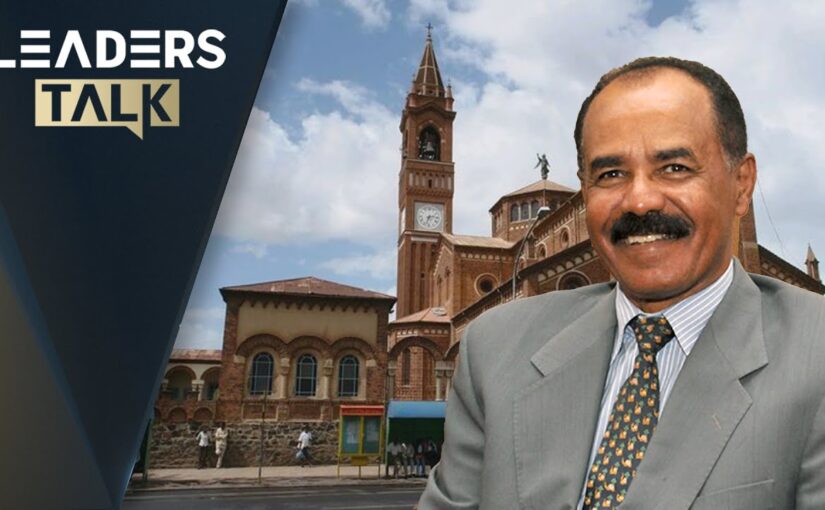
In this edition of the CGTN series Leaders Talk, Zou Yun interviews Eritrean President Isaias Afwerki during the latter’s recent state visit to China.
Speaking on the day after his talks with Chinese President Xi Jinping, and on the eve of the 30th anniversary of the counties’ diplomatic relations, which were established on the day that Eritrea proclaimed its independence, President Afwerki situated the bilateral relationship within what he described as the broader context of the historic mission of humanity. China had immediately stood on the side of the right of the Eritrean people to independence. Independence is the foundation of any international relationship. China, he said, stands on the side of the people of the world. And Eritrea, in solidarity with China, continues to uphold a mission for humanity.
The interview discussed the recent fallout from the conflict in Sudan, where Eritrea had assisted Chinese people who were being evacuated from the war-struck country, while China had also helped Eritrean people to leave Sudan. The Eritrean president described this as “our commitment to our common cause”. In words that should shame British government ministers, he described how Eritrea had opened its borders to refugees – “No visa. No permissions. Everything is open for saving human lives.”
There was a need, Afwerki said, to create a new world order. No people can survive without solidarity and what China has achieved, both domestically and internationally, is very attractive to people around the world.
Saying that the future is bright, the Eritrean leader was of the view that hegemonism “is no longer the rule of the game” because of what China has achieved.
Turning to the sanctions imposed on his country by the United States and some other countries, Afwerki described them as the product of a sick mind. Such sanctions, he said, are imposed on all those who defend their independence and sovereignty. Sanctions have inflicted tremendous damage on Eritrea and its development, but they have also taught a powerful lesson with regard to the struggle that needs to be waged to build a nation and have made the Eritrean people more determined to continue that struggle.
Zou Yun referred to President Afwerki as having a “special bond” with China. Over 50 years ago, at the age of 20, he came to China and spent two years in military and political training at the dawn of the Eritrean revolution. Questioned on this period, he said that he learned so much in a short time and what he had learned had changed lives. The main lesson, he said, was the commitment of the country’s leaders and the Communist Party to the people. This has provided a model of success for everyone. China had been considered a backward country by others, but now it is reshaping the global order.
The full interview with President Isaias Afwerki is embedded below.
Category: Africa
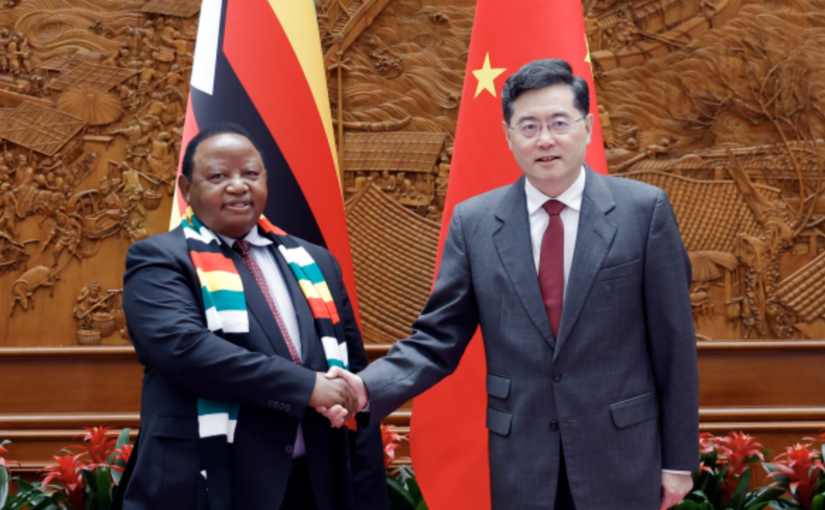
China continues to support Zimbabwe in opposing interference and sanctions
Chinese State Councilor and Foreign Minister Qin Gang met his Zimbabwean counterpart Frederick Shava, Minister of Foreign Affairs and International Trade, in Beijing on May 29, 2023. Shava was visiting China on Qin’s invitation.
Qin Gang said that since the two countries established diplomatic relations more than 40 years ago, no matter how the international landscape evolves, the traditional friendship between the two countries has always been rock-solid, and the two countries have been good brothers and good partners that trust and support each other.
Zimbabwe and China established diplomatic relations on the day that the southern African country achieved its independence. China had been the main international supporter and backer of the Zimbabwe African National Union (ZANU), whose liberation fighters, organized in the Zimbabwe African National Liberation Army (ZANLA), played the main role in liberating the country.
Qin Gang pointed out that China will, as always, firmly support Zimbabwe in opposing external interference and sanctions, and in taking a development path suited to its national conditions. Imperialist powers, led by the United States and Britain, have placed crippling sanctions on Zimbabwe, since the country embarked on a radical land reform to benefit primarily the masses of rural poor, the main victims of settler colonialism.
Shava said that Zimbabwe-China relations have withstood the test of time and the level of friendly cooperation has been greatly improved. Zimbabwe stands ready to deepen mutually beneficial cooperation with China in various fields, strengthen cooperation within the framework of the Forum on China Africa Cooperation (FOCAC), and continuously bring the comprehensive strategic cooperative partnership between Zimbabwe and China to new levels.
The following article originally appeared on the website of the Chinese Foreign Ministry.
On May 29, 2023, State Councilor and Foreign Minister Qin Gang held talks with Minister of Foreign Affairs and International Trade of Zimbabwe Frederick Shava in Beijing.
Qin Gang said that since the two countries established diplomatic relations more than 40 years ago, no matter how the international landscape evolves, the traditional friendship between the two countries has always been rock-solid, and the two countries have been good brothers and good partners that trust and support each other. China stands ready to work with Zimbabwe to implement the important common understandings reached between the two heads of state, firmly support each other on issues concerning respective core interests, and continuously strive for new and greater development of China-Zimbabwe relations.
Qin Gang pointed out that China will, as always, firmly support Zimbabwe in opposing external interference and sanctions, and in taking a development path suited to its national conditions. China is ready to deepen exchanges of experience in state governance with Zimbabwe, enhance synergies in development strategies, advance high-quality Belt and Road cooperation, and implement all cooperation measures with Africa within the framework of the Forum on China-Africa Cooperation (FOCAC). China will tap the potential for cooperation with Zimbabwe in such fields as investment, trade, energy and mineral resources, clean energy and human resources development, and upgrade bilateral cooperation. China will continue to encourage Chinese enterprises to invest and do business in Zimbabwe. China is ready to work closely with Zimbabwe in international cooperation to promote the implementation of the Global Development Initiative, the Global Security Initiative and the Global Civilization Initiative.
Shava said that Zimbabwe-China relations have withstood the test of time and the level of friendly cooperation has been greatly improved. Zimbabwe firmly pursues the one-China policy and supports the principle of “One Country, Two Systems” formulated by China, as well as the Belt and Road Initiative, the Global Development Initiative, the Global Security Initiative and the Global Civilization Initiative proposed by China. Zimbabwe appreciated China’s strong support to the country in its poverty reduction and fight against the COVID-19 pandemic. Zimbabwe stands ready to deepen mutually beneficial cooperation with China in various fields, strengthen cooperation within the framework of the FOCAC, and continuously bring the comprehensive strategic cooperative partnership between Zimbabwe and China to new levels.
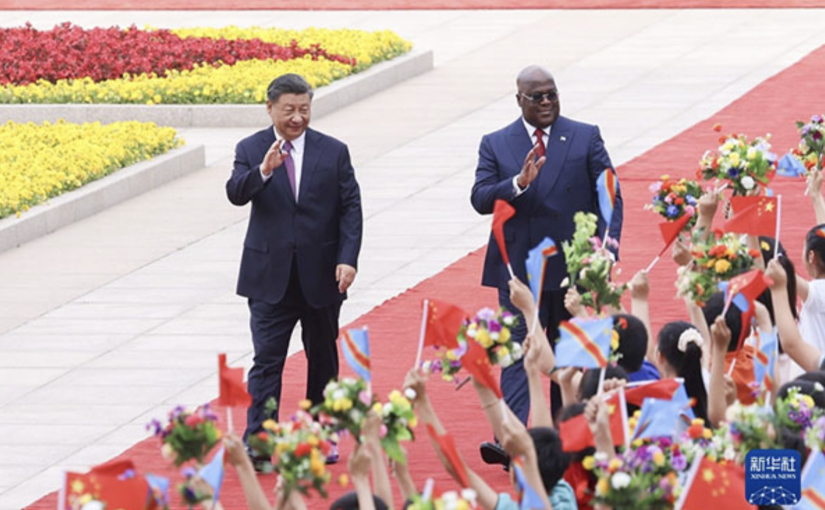
China and the Democratic Republic of the Congo expand cooperation
The President of the Democratic Republic of the Congo (DRC), Félix Antoine Tshisekedi Tshilombo, paid a state visit to China at the invitation of his counterpart, President Xi Jinping, May 24-29.
Meeting on May 26, the two heads of state announced the elevation of their bilateral relationship from a strategic partnership of win-win cooperation to a comprehensive strategic cooperative partnership.
Xi Jinping pointed out that China and the DRC have established a profound traditional friendship in the historical process of striving for national liberation and opposing colonial aggression, and the two countries are strategic partners sharing broad common understandings and working jointly for common progress.
This statement of President Xi carries deep and profound historical content and significance. When the founding father of the DRC, the Pan-Africanist and revolutionary socialist Patrice Lumumba, was murdered by the imperialists and their local stooges in 1961, millions of people across China gathered to express their militant solidarity with the Congolese people and mourn for their slain leader. Premier Zhou Enlai presided over one such gathering of 100,000 people in Beijing’s Workers’ Stadium.
On November 29 1964, when the US and other imperialist powers escalated their overt intervention in the Congo in response to the tenacious resistance of the Congolese people, millions of Chinese again mobilized in solidarity. Mao Zedong, joined by other senior Chinese leaders, including Zhou Enlai, Liu Shaoqi, Zhu De, Deng Xiaoping, Peng Zhen, Dong Biwu and Guo Moro, presided over a mass rally of 700,000 people in Beijing’s Tiananmen Square. Similar gatherings took place in Shanghai, Guangzhou, Xian, Kunming and across the country.
The previous day, Chairman Mao had issued a statement in support of the Congolese people and against US aggression. US imperialism, the Chinese leader noted, had “murdered the Congolese national hero Lumumba, and subverted the lawful Congolese government. It imposed the puppet Tshombe on the Congolese people, and dispatched mercenary troops to suppress the Congolese national liberation movement. And now, in collusion with Belgium and Britain, it is carrying out direct armed intervention in the Congo. In doing this, the purpose of US imperialism is not only to control the Congo, but to also once again enmesh the whole of Africa, particularly the newly independent African countries, in the grip of US neo-colonialism. US aggression has encountered heroic resistance from the Congolese people and aroused the indignation of the people of Africa and the whole world.”
Mao’s statement continued:
“Congolese people, you are not alone in your just struggle. All the Chinese people are with you. All people throughout the world who oppose imperialism are with you… By strengthening national unity and persevering in protracted struggle, the Congolese people will certainly be victorious and US imperialism will certainly be defeated.”
China’s solidarity with the Congolese people’s struggle was not confined to words and gestures. Throughout the 1960s, China rendered significant moral and material support to the armed struggle of the Congolese people against imperialism and neo-colonialism waged by such historic leaders as Laurent-Désiré Kabila and Antoine Gizenga.
Having referred to this history, Xi Jinping went on to say that China has been the largest trading partner and largest source of foreign investment for the DRC for many consecutive years. The successful experience of Chinese modernization shows that developing countries have the right and ability to explore paths to modernization suited to their national conditions. China is ready to work with the DRC to further synergize their development strategies, and to support each other and pursue cooperation for greater development and common progress on their paths to development and revitalization.
Xi Jinping pointed out that China will continue to provide assistance for the economic and social development of the DRC, support the DRC’s industrialization strategy, strengthen cooperation with the DRC in such fields as energy, minerals, agriculture, infrastructure and manufacturing, and further tap into their potential for cooperation in such fields as digital economy, education and health. China is also ready to send agricultural technology experts to the DRC.
Under the current international circumstances, he noted, China and Africa should strengthen solidarity and cooperation more than ever. Both sides should stay committed to the basic norms governing international relations, reject all forms of hegemonism and power politics, oppose interference in other countries’ internal affair, and safeguard the common interests of developing countries.
Having congratulated Xi on his re-election as General Secretary of the Communist Party of China and as President of China, President Tshisekedi noted that the friendly cooperation between the DRC and China, having withstood the test of time and achieved fruitful results over the past half a century, deserves to be cherished by both sides. He thanked China for its important help and valuable support for the DRC’s economic and social development over the years, and stressed that the DRC remains firmly committed to the one-China policy and firmly supports China’s efforts to realize national reunification.
After the talks, the two heads of state jointly witnessed the signing of multiple bilateral cooperation agreements in such areas as investment, green economy and digital economy.
President Tshisekedi also met with other Chinese leaders, including Premier Li Qiang. Premier Li noted that China and the DRC are good friends, partners and brothers, adding that bilateral relations will surely achieve greater development and better benefit the two peoples. For his part, Tshisekedi noted that the DRC highly values cooperation with China and is willing to learn from China’s experience in its leapfrog development.
In the joint statement signed by the two heads of state, China and the DRC agreed to expand cooperation in education, scientific research, health, infrastructure construction, mining, agriculture, digital, environment, sustainable development, hydrocarbon fuels, energy, defense and security, and other fields in line with the interests of both sides.
China reiterated its firm support for the Congolese side in safeguarding national independence, sovereignty and territorial integrity, safeguarding its own security and development interests, firmly supporting the Congolese side in steadily advancing major domestic political agendas, firmly supporting the Congolese people in independently choosing a development path suited to their national conditions, and resolutely opposing interference by external forces in the internal affairs of the Democratic Republic of the Congo.
They agreed to strengthen cooperation in the field of peace and security, especially closer military exchanges between the two countries, cooperation in personnel training, combating transnational crime, equipment technology, military industry, joint exercises and training.
China will encourage more enterprises to invest in the Democratic Republic of the Congo and participate in infrastructure construction in accordance with the relevant plans formulated and recommended by the DRC, so as to help the diversified development and industrialization of the Congolese economy. And it will strengthen mutually beneficial cooperation in agriculture, processing and manufacturing, natural resource exploration, development, and local processing to increase its added value, and support the Congo in achieving independent and sustainable development.
The two sides agreed to regularly evaluate mining cooperation and consolidate relevant cooperation based on the long-term and mutual interests of the two countries. With an attitude of mutual trust, pragmatism and fairness, problems arising in the process of cooperation should be resolved through friendly consultations. China will continue to encourage enterprises to accelerate the implementation of agreed infrastructure projects, strengthen cooperation with the Congolese mining sector, encourage enterprises to participate in investment in the development of the new energy battery value chain, support the upgrading of the industrial chain and enhance independent development capabilities.
They also agreed to deepen high-quality cooperation under the framework of the Belt and Road Initiative. China welcomes the Democratic Republic of the Congo to join the Group of Friends of the Global Development Initiative. The DRC is willing to strengthen cooperation with China at the bilateral and multilateral levels on the implementation of the Global Development Initiative, the Global Security Initiative and the Global Civilization Initiative.
President Xi Jinping was invited to pay a state visit to the Democratic Republic of the Congo. The specific date will be agreed through diplomatic channels.
Immediately prior and preparatory to the state visit, the DRC’s Vice Prime Minister and Foreign Minister Christophe Lutundula visited China at the invitation of State Councilor and Foreign Minister Qin Gang.
Qin said that China is willing to help the DRC to turn its resource advantages into a driving engine for economic development, and hopes that the DRC could create a sound business environment and provide security guarantee for Chinese investors, adding that both sides should strengthen solidarity and coordination at the UN and on other multilateral occasions, firmly safeguard the principle of non-interference in other countries’ internal affairs, safeguard the common interests of developing countries, and jointly develop fairer and more equitable international order and global governance.
Alexis Gisaro Muvuni, DRC’s minister of state for infrastructure and public works, a member of President Tshisekedi’s delegation, in an interview with Xinhua prior to the visit, praised the results of the two countries’ infrastructure cooperation, such as the People’s Palace, home to the National Assembly and the Senate, and the Martyrs Stadium, which can accommodate 80,000 people. The minister said that Chinese companies genuinely support Africa by building infrastructure, including roads and bridges, and bring tangible benefits to the Congolese people.
The following articles were originally carried on the websites of the Chinese Foreign Ministry, Xinhua News Agency and People’s Daily. The Joint Statement was machine translated from Chinese and lightly edited by us.
Xi Jinping Holds Talks with DRC President Félix-Antoine Tshisekedi Tshilombo
Chinese Foreign Ministry, 26 May 2023
On the afternoon of May 26, 2023, President Xi Jinping held talks at the Great Hall of the People with President Félix-Antoine Tshisekedi Tshilombo of the Democratic Republic of the Congo (DRC) who was in China for a state visit. The two heads of state announced the elevation of the bilateral relationship from a strategic partnership of win-win cooperation to a comprehensive strategic cooperative partnership.
Xi Jinping pointed out that China and the DRC have established a profound traditional friendship in the historical process of striving for national liberation and opposing colonial aggression, and the two countries are strategic partners sharing broad common understandings and working jointly for common progress. Xi said in recent years, bilateral cooperation in various fields has yielded fruitful results. China has been the largest trading partner and largest source of foreign investment for the DRC for many consecutive years, and the two sides have become a close-knit community with shared interests and a shared future. The successful experience of Chinese modernization shows that developing countries have the right and ability to explore paths to modernization suited to their national conditions. China is ready to work with the DRC to further synergize their development strategies, and support each other and pursue cooperation for greater development and common progress on their paths to development and revitalization. Xi Jinping expressed the confidence that China’s high-quality development will create more cooperation opportunities and a broader market for the DRC, and promote greater progress of bilateral relations.
Xi Jinping pointed out that China will continue to provide assistance for the economic and social development of the DRC, support the DRC’s industrialization strategy, strengthen cooperation with the DRC in such fields as energy, minerals, agriculture, infrastructure and manufacturing, and further tap into their potential of cooperation in such fields as digital economy, education and health. China is also ready to send agricultural technology experts to the DRC. China hopes that the DRC will provide policy support and convenient services to Chinese enterprises investing and doing business in the DRC, and foster a fair, just, and safe business environment. China is ready to work with the DRC to strengthen coordination and cooperation in multilateral affairs, jointly practice true multilateralism, and uphold international fairness and justice.
Xi Jinping stressed that China and Africa, being the world’s largest developing country and the continent home to the largest number of developing countries, have always been a community with a shared future. Under the current international circumstances, China and Africa should strengthen solidarity and cooperation more than ever. Both sides should stay committed to carrying on the basic norms governing international relations, reject all forms of hegemonism and power politics, oppose interference in other countries’ internal affair, and safeguard the common interests of developing countries. China firmly supports Africa in pursuing an independent development path and becoming an important pole in the world politically, economically, and culturally. China is ready to create new opportunities for African countries with its own new development, and will work with African brothers to follow through on the outcomes of the Dakar meeting of the Forum on China-Africa Cooperation, advance the Belt and Road cooperation, support Africa in achieving sustainable development, and jointly build a China-Africa community with a shared future in the new era.
On behalf of the people of the DRC, Tshisekedi once again expressed warm congratulations on the success of the 20th National Congress of the Communist Party of China (CPC) and the Two Sessions of China, on President Xi Jinping’s re-election as General Secretary of the CPC Central Committee and President of China, and on China’s great achievements in the new era under the leadership of President Xi Jinping. He expressed the confidence that China will realize the second centenary goal. Tshisekedi noted that the friendly cooperation between the DRC and China, having withstood the test of time and achieved fruitful results over the past half a century, deserves to be cherished by both sides. He thanked China for its important help and valuable support for the DRC’s economic and social development over the years, and stressed that the DRC remains firmly committed to the one-China policy and firmly supports China’s efforts to realize national reunification. The DRC is ready to work with China to deepen cooperation in such areas as economy, trade, resources, infrastructure and healthcare, enrich the DRC-China comprehensive strategic cooperative partnership, and build a mature, stable and groundbreaking DRC-China relationship for the benefit of the two peoples.
After the talks, the two heads of state jointly witnessed the signing of multiple bilateral cooperation agreements in such areas as investment, green economy and digital economy.
The two sides issued a Joint Statement on Establishing a Comprehensive Strategic Cooperative Partnership between the People’s Republic of China and the Democratic Republic of the Congo.
Chinese premier meets with DRC president
Chinese Premier Li Qiang met with visiting President of the Democratic Republic of the Congo (DRC) Felix-Antoine Tshisekedi Tshilombo here on Friday.
Noting that China and the DRC are good friends, partners and brothers, Li said under the strategic guidance of the two heads of state, bilateral relations will surely achieve greater development and better benefit the two peoples.
China is willing to further synergize development strategies with the DRC, work for open cooperation that is mutually beneficial, share development opportunities, jointly promote the development and prosperity of the two countries, said the premier.
Li urged efforts to further expand trade and investment cooperation, boost cooperation in such traditional fields as infrastructure construction and mining industry, and actively explore new growth drivers of cooperation in such areas as agriculture, finance, new energy, and cultural and people-to-people exchange.
It is hoped the DRC can provide a fair and just business environment for Chinese enterprises to make investment in the country, and better guarantee the security and legitimate rights and interests of Chinese citizens and institutions there, Li said.
China will further enhance unity and cooperation with African countries at large including the DRC, support the implementation of the African Union’s Agenda 2063 and the economic recovery and sustainable development in Africa after the pandemic, Li added.
Noting the DRC highly values cooperation with China, Tshisekedi said the country is willing to learn from China’s experience in its leapfrog development, further promote bilateral cooperation, consolidate friendship between the two peoples, and jointly respond to climate change and other global challenges.
Joint statement of the People’s Republic of China and the Democratic Republic of the Congo on the establishment of a comprehensive strategic cooperative partnership
People’s Daily (Chinese), 27 May 2023
At the invitation of President Xi Jinping of the People’s Republic of China, the President of the Democratic Republic of the Congo, Félix Antoine Tshisekedi Tshilombo, paid a state visit to the People’s Republic of China from May 24 to May 29,2023.
During the visit, the two heads of state held talks in a cordial and friendly atmosphere, exchanged in-depth views on China-Congo and China-Africa relations and international and regional issues of common concern, and reached broad and important consensus.
Li Qiang, Premier of the State Council of the People’s Republic of China, and Zhao Leji, Chairman of the Standing Committee of the National People’s Congress, separately met with President Tshisekedi.
The two heads of state said that since the normalization of diplomatic relations between the People’s Republic of China and the Democratic Republic of the Congo in 1972, the friendship between the two countries has stood the test of time and endured for 51 years, benefiting the two peoples.
The two heads of state expressed satisfaction with this and believed that China-Congo friendship is a common precious wealth of both sides and worthy of continuous strengthening and meticulous safeguarding by both sides. In order to further consolidate political mutual trust and deepen and expand practical cooperation in various fields, the two heads of state announced that their bilateral relations will be upgraded to a comprehensive strategic cooperative partnership.
The Congo once again warmly congratulated the 20th National Congress of the Communist Party of China and the national parliamentary ‘Two Sessions’ President Tshisekedi warmly congratulated President Xi Jinping on his outstanding leadership of China and his re-election as General Secretary of the Central Committee of the Communist Party of China and President of the People’s Republic of China.
The Parties agree that:
(1) We will further give play to the leading role of the head of state diplomacy, maintain the momentum of political dialogue and high-level exchanges between the two countries, and strengthen mutual trust and joint efforts between the two countries;
(2) Further enhance China-Congo relations and expand cooperation to education, scientific research, health, infrastructure construction, mining, agriculture, digital, environment, sustainable development, hydrocarbon fuels, energy, defense and security and other fields in line with the interests of both sides;
(3) To continuously enhance people-to-people exchanges between the two countries, carry out close cultural exchanges and interactions, promote tourism, and consolidate the achievements made in the field of human rights in a spirit of independence and mutual respect;
(4) Maintain consultations to revitalize the mechanism of the Economic and Trade Mixed Commission of the two countries as a powerful framework for planning, promoting and guiding bilateral cooperation, and jointly promote the comprehensive strategic cooperative partnership;
(5) Strengthen the exchange of experience, better align the goals of Chinese-style modernization and the Democratic Republic of the Congo, and establish a fruitful, innovative, fair, closer and more stable strategic partnership;
(6) Strengthening mutual support on issues involving each other’s core interests is the core essence of China-Congo relations. Here, China reiterates its firm support for the Congolese side in safeguarding national independence, sovereignty and territorial integrity, safeguarding its own security and development interests, firmly supporting the Congolese side in steadily advancing major domestic political agendas, firmly supporting the Congolese people in independently choosing a development path suited to their national conditions, and resolutely opposing interference by external forces in the internal affairs of the Democratic Republic of the Congo. The Congolese side reaffirms its firm adherence to the one-China principle, considers Taiwan to be an inalienable part of China, and opposes any words and deeds that undermine China’s sovereignty and territorial integrity;
(7) To support each other in international affairs and defend the international order based on international law and norms governing international relations in accordance with the purposes and principles of the Charter of the United Nations and relevant international conventions;
(8) Strengthen solidarity and cooperation among countries, support true multilateralism, and promote the building of a community with a shared future for humanity;
(9) Strengthen cooperation in the field of peace and security, especially closer military exchanges between the two countries, cooperation in personnel training, combating transnational crime, equipment technology, military industry, joint exercises and training. The two sides agreed to strengthen the protection of the security and legitimate rights and interests of citizens and institutions of the other side in their respective territories. China has provided assistance to the Democratic Republic of the Congo in the implementation of the Military Planning Law and military capacity building.
(10) Promote cooperation in the field of investment under the framework of the strategic partnership established by the mixed committee, in accordance with market rules and the terms of relevant contracts signed. The two sides are willing to promote the high-quality development of investment cooperation between the two countries in accordance with the principle of marketization and the spirit of the contract. China will encourage more enterprises to invest in the Democratic Republic of the Congo and participate in infrastructure construction in accordance with the relevant plans formulated and recommended by the Democratic Republic of the Congo, so as to help the diversified development and industrialization of the Congolese economy. China will help the Congo implement its digital transformation plan, continue to expand investment and financing cooperation with the Congo, strengthen mutually beneficial cooperation in agriculture, processing and manufacturing, natural resource exploration, development, and local processing to increase its added value, and support the Congo in achieving independent and sustainable development. The Congo will further improve the business environment, provide good conditions for Chinese enterprises to operate in the Democratic Republic of the Congo, and effectively protect their legitimate rights and interests, while Chinese enterprises must abide by the laws and regulations of the Democratic Republic of the Congo;
(11) Regularly evaluate mining cooperation and consolidate relevant cooperation based on the long-term and mutual interests of the two countries. In an attitude of mutual trust, pragmatism and fairness, problems arising in the process of cooperation should be resolved through friendly consultations. China will continue to encourage enterprises to accelerate the implementation of agreed infrastructure projects, strengthen cooperation with Congolese mining, encourage enterprises to participate in investment in the development of the new energy battery value chain, and support the upgrading of the industrial chain and enhance independent development capabilities.
(12) Strengthen consultation and coordination on the affairs of the Forum on China-Africa Cooperation (FOCAC), highly value the important role of FOCAC in promoting the comprehensive strategic cooperative partnership between China and Africa, and jointly implement practical cooperation in various fields within the framework of the Dakar Action Plan (2022-2024);
(13) Deepen high-quality cooperation under the framework of the Belt and Road Initiative.
China welcomes the Democratic Republic of the Congo to join the Group of Friends of the Global Development Initiative. The Democratic Republic of the Congo is willing to strengthen cooperation with China at the bilateral and multilateral levels on the implementation of the Global Development Initiative, the Global Security Initiative and the Global Civilization Initiative.
China is highly concerned about the situation in eastern Congo and believes that the countries of the Great Lakes region are a community of shared destiny and security. China calls on all countries concerned to abide by the purposes and principles of the Charter of the United Nations and the Constitution of the African Union and to respect and safeguard the sovereignty, security and territorial integrity of member States. China condemns the violence and human rights abuses committed by armed groups, expresses its sympathy to the Congolese people who have suffered from criminal acts, and supports the re-establishment of confidence and peace through the implementation of the Nairobi Process and the Luanda Road Map. China supports the efforts of relevant regional organizations to restore peace and security in eastern Congo. China firmly supports Africans in resolving African issues in African ways and supports and encourages relevant regional organizations and the UN Secretary-General’s Special Envoy on the Great Lakes Region to continue to play a constructive role.
China appreciates President Tshisekedi’s insistence on putting “people first” as his policy, as put forward by President Xi Jinping in his people-centered development thinking. President Xi spoke highly of the remarkable achievements made by the Democratic Republic of the Congo under the leadership of President Tshisekedi in advancing the domestic political, economic and social development agenda, safeguarding national security, stability and territorial integrity, and enhancing the country’s international influence. China believes that under the leadership of President Tshisekedi, the Democratic Republic of the Congo will accelerate the realization of peace and stability throughout its territory and rapidly restart economic and social development.
The Congolese side highly appreciates China’s support for projects such as the Central African Culture and Art Center and the Koluvić Vocational and Technical Training School. China will strengthen cooperation with the Democratic Republic of the Congo in vocational and technical education and continue to send medical teams to the Democratic Republic of the Congo.
The two sides undertake to implement the important consensus reached during the visit and relevant cooperation agreements.
The two sides agreed that the complete success of President Tshisekedi’s visit to China is of great significance to promoting the development of China-Congo relations and promoting the building of a China-Africa community with a shared future in the new era.
President Tshisekedi expressed his heartfelt thanks to President Xi Jinping and the Chinese government and people for the warm and friendly reception extended to his wife and the Congolese delegation during his visit, and invited President Xi Jinping to pay a state visit to the Democratic Republic of the Congo, the specific date to be agreed upon by the diplomatic channels of the two sides.
Chinese FM meets DRC vice PM
Xinhua, 23 May 2023
Chinese State Councilor and Foreign Minister Qin Gang on Monday met in Beijing with Christophe Lutundula, Vice Prime Minister and Foreign Minister of the Democratic Republic of the Congo (DRC).
Noting China and the DRC are good friends and brothers that enjoy a time-honored friendship, Qin said China warmly welcomes President Felix-Antoine Tshisekedi Tshilombo’s upcoming state visit to China and expects that the two heads of state will make top-level planning and define the strategic direction for the development of China-DRC relations in the next stage.
Qin pointed out that China has been the largest trading partner and source of investment to the DRC for many consecutive years. China will continue to work with the DRC to advance the building of high-quality Belt and Road cooperation, implement the consensus under the framework of the Forum on China-Africa Cooperation, and achieve win-win cooperation.
China is willing to help the DRC to turn the resource advantages into a driving engine for its economic development, and hopes that the DRC could create a sound business environment and provide security guarantee for Chinese investors, Qin said.
Qin said both sides should strengthen solidarity and coordination at the UN and other multilateral occasions, firmly safeguard the principle of non-interference in other countries’ internal affairs, safeguard the common interests of developing countries, and jointly develop fairer and more equitable international order and global governance.
Lutundula thanked China for its important assistance and valuable support to the DRC’s economic and social development over the years, noting that the DRC firmly upholds the one-China policy.
He said that the DRC will promote pragmatic cooperation in various fields and strengthen communication and coordination with China to bring more benefits to the two countries and peoples.
Interview: DRC-China infrastructure cooperation beneficial to Congolese people, says state minister
Infrastructure cooperation between the Democratic Republic of the Congo (DRC) and China has yielded fruitful results and practical benefits for the Congolese people, Alexis Gisaro Muvuni, DRC’s minister of state for infrastructure and public works, has said.
Before the DRC’s President Felix Tshisekedi’s state visit to China from May 24 to 29, Muvuni, a member of the Congolese government delegation, praised the infrastructure cooperation between both countries in an interview with Xinhua.
Since the 1970s, the Chinese government has aided the construction of projects such as the People’s Palace, home to the National Assembly and the Senate, and the Martyrs Stadium, said Muvuni.
“The People’s Palace is the place where major political events take place, while the Martyrs Stadium, which can accommodate 80,000 people, often holds various major events. So these projects testified to the vitality of China-Congo infrastructure cooperation,” he said, adding that the China-aided Haut-Katanga General Demonstration Hospital, which was handed over in 2020, is another example of such cooperation.
According to Muvuni, the China-aided Central African Cultural and Arts Center is the project that excites him the most. The project is considered one of Africa’s most significant China-aided initiatives and is expected to be completed by the year-end.
“This is another flagship project for the cooperation between the two countries,” said Muvuni, adding that he closely follows the art center’s construction progress.
Chinese companies and investors have vigorously promoted bilateral infrastructure cooperation and made concrete contributions to local communities over the years, Muvuni said.
He said that Chinese companies genuinely support Africa by building infrastructure, including roads and bridges, and bringing tangible benefits to the Congolese people.
Muvuni also expects closer commercial exchanges between the two countries to serve the bigger picture of the two economies.
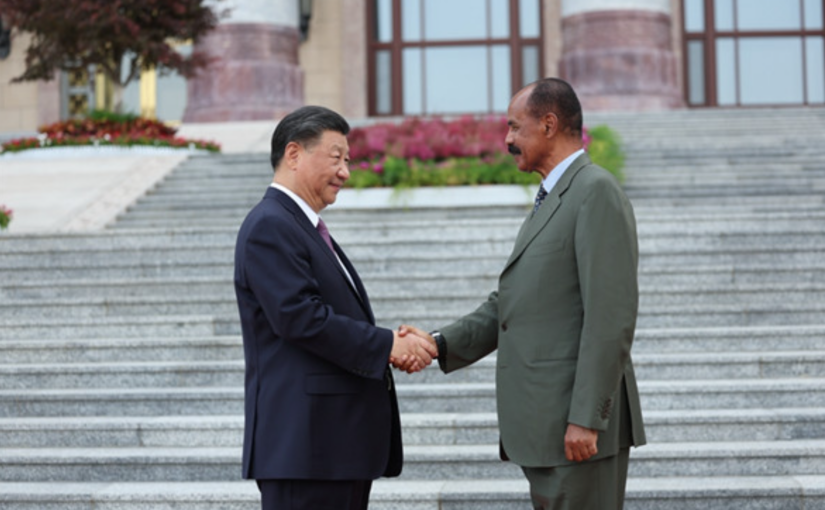
Report on Eritrean president’s state visit to China
The President of Eritrea, Isaias Afwerki, paid a state visit to China, beginning on May 14. The visit was, in part, timed to coincide with the 30th anniversary of Eritrea’s independence, which falls this May 24. The very same day is also the 30th anniversary of the establishment of diplomatic relations between China and Eritrea.
Although the two countries formally established relations on the day of Eritrea’s independence, their ties go much farther back, not least as China actively supported the Eritrean people during the protracted armed struggle they waged to win their national independence and liberation. President Afwerki himself came to China in 1967 as one of a group of young Eritrean revolutionaries to receive military and political training at a military academy in Nanjing. This period was formative to his later leadership of the liberation struggle and the building of a new society. Over the years, the Nanjing academy provided training to freedom fighters from many African countries engaged in armed national liberation struggles against imperialism, colonialism and racism and later to promote the development of armed forces of the continent’s newly independent countries.
Meeting President Afwerki on May 15, President Xi Jinping praised him as “a senior African leader and an old friend of China. Just now, on your way here [referring to their moving from the welcoming ceremony in Tiananmen Square to talks in the Great Hall of the People], you talked about your experience in China and your deep feelings towards China.”
Noting that China and Eritrea share a deep traditional friendship, Xi continued to note that in the face of the current international situation, which is full of instability and uncertainty, developing a sound China-Eritrea relationship not only serves the common and long-term interests of the two countries, but is also of great significance to safeguarding regional peace and international fairness and justice. China is ready to work with Eritrea to deepen a close and friendly relationship between the two countries as friends and comrades.
Xi Jinping emphasized that China appreciates Eritrea’s long-standing adherence to an independent foreign policy, firmly supports Eritrea in exploring a development path suited to its national conditions, firmly supports Eritrea in safeguarding its sovereignty, security and development interests, and opposes external interference in Eritrea’s internal affairs and the imposition of unilateral sanctions. China is ready to share experience with Eritrea on national governance, continue to support each other, jointly oppose unilateralism and bullying, and safeguard the common interests of the two countries and the vast number of other developing countries. The Chinese leader also thanked Eritrea for providing support and assistance to China during its recent evacuation of Chinese citizens in Sudan, which again demonstrated the profound friendship between the two countries of sharing weal and woe and helping each other in difficulties.
For his part, Isaias Afwerki began by referring again to the support that China had extended to the struggle of the Eritrean people for independence and expressed his “profound gratitude” to the Communist Party of China. Whilst 30 years of diplomatic relations are being celebrated, practical strategic ties of friendship and cooperation began in earnest 60 years ago. He spoke of his special bond with China that has lasted for over half a century, and said that the Eritrean people will never forget the precious mental and material support the Chinese people provided for Eritrea’s independence and liberation. China is a great country. Since the founding of the People’s Republic of China, the country has grown from a poor and backward country into a major country in the world, making outstanding contributions to peace and development of humanity. China has always held the moral high ground, put forward its own solutions to global challenges, upheld international fairness and justice, and encouraged developing countries seeking independence and development. Any attempt to contain or suppress China’s development is bound to fail. The evolution of the international order is at a critical stage, and African countries still face hegemonism and various unfair and unjust treatment. The international community expects and believes that China will make greater contributions to human development and progress and international fairness and justice. Eritrea hopes to strengthen cooperation with China and believes that Eritrea-China strategic partnership will help Eritrea achieve national economic and social development.
Earlier that day, Afwerki had also met with Chinese Premier Li Qiang. Li pointed out that the two sides should further synergize their economic and social development strategies and strengthen exchanges on formulating industrial development plans, building industrial parks and supporting the development of key industries. Both sides should deepen cooperation in infrastructure, marine fisheries, water resources and energy and mineral resources development, and foster new highlights of cooperation in such areas as digital economy, green economy and blue economy. China will continue to provide assistance for Eritrea’s economic and social development to the best of its ability.
President Afwerki said that the Eritrean side appreciates China’s firm support for Eritrea’s independence and development and highly applauds China’s important contribution to maintaining world peace and opening up a new path for the modernization of humanity. Eritrea is ready to step up friendly cooperation with China, draw on China’s experience, promote further development of the Eritrea-China strategic partnership, write a new chapter in the Africa-China friendship, jointly oppose hegemonism, and join hands to build a more equitable and just international order.
The below reports on the two meetings were originally carried on the website of the Chinese Foreign Ministry. For background information, we also reproduce below an interview with China’s Ambassador to Eritrea Cai Ge, originally carried by ChinAfrica, which is published under the auspices of Beijing Review.
Ambassador Cai refers to Sino-Eritrean large-scale cooperation in gold, polymetallic and potash mining, as well as in telecommunications, heavy equipment and infrastructure. He notes that China has been Eritrea’s top trading partner, largest source of investment and top contractor for years. The two countries also cooperate closely in health, agriculture, education and culture. As of 2022, China has sent 275 doctors to Eritrea in 15 groups and also built the country’s largest hospital. In terms of cultural cooperation, he notes that the Chinese TV drama Minning Town has been broadcast on Eritrean national television. This series has been immensely popular in China for its inspiring but gritty and realistic depiction of a community rising out of poverty. It tells the story of villagers from the Ningxia Hui autonomous region, who migrated and built Minning Town from scratch on the edge of the Gobi desert, with help coming in time from counterparts in the more prosperous province of Fujian. All 23 episodes, with English subtitles, are available to watch on YouTube.
In summary, Ambassador Cai notes that: “The China-Eritrea partnership, which is based on similar historical experiences and shared values and has its roots in mutual support in revolutions and national construction, has been strengthened over time. Both countries uphold an independent foreign policy and multilateralism, oppose hegemony and hegemonic acts, advocate the right of all countries to choose their own path of development, insist that African issues should be solved by Africans through African means, and object [to] interference in internal affairs.”
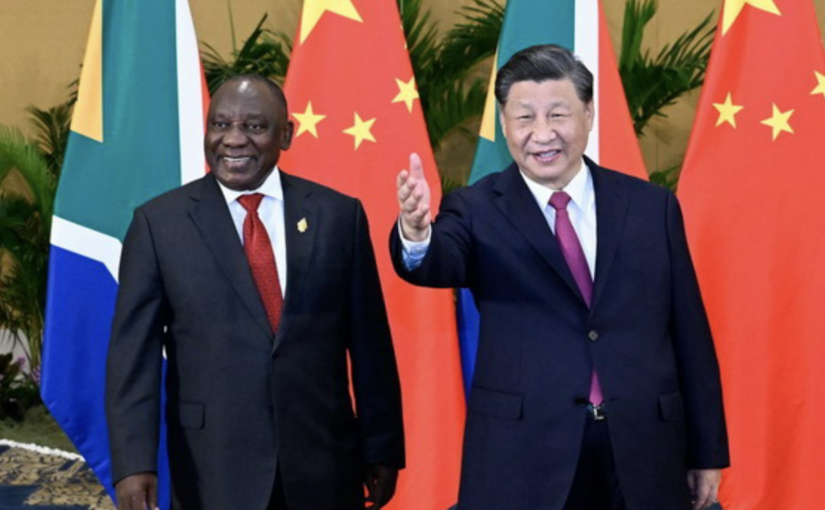
South African president: cooperating toward a peaceful, prosperous and equitable world order
We are pleased to republish the speech given by Cyril Ramaphosa, the President of the African National Congress (ANC) of South Africa, as well as of the Republic of South Africa, at the CPC in Dialogue with World Political Parties High-level Meeting, which was organized by the Communist Party of China on 15 March. It was originally carried on the website of the CPC’s International Department.
Speaking directly after the keynote address by President Xi Jinping, President Ramaphosa congratulated his Chinese counterpart on his re-election and looked forward, “as the ANC , to deepening the bonds of cooperation that you yourself have always championed.”
Echoing Xi’s call for a Global Civilization Initiative (GCI), first made on this occasion, Ramaphosa said that, as a “liberation movement steeped in the traditions of revolutionary progress”, the ANC seeks to advance the best in human civilization and believes that dialogue is always to be preferred to violence.
Supporting Xi’s call for dialogue and cooperation, Ramaphosa drew attention to such global problems as climate change, pandemics, terrorism, conflict, rising geopolitical tension, poverty, hunger, unemployment, illiteracy, and inequality within and between nations. He expressed gratitude for China’s support to the countries of Africa in dealing with Covid-19.
Stressing his opposition to a unipolar world, and his support for a multipolar global order, the South African leader called for the, “forging of a progressive global movement”, underlining that, “progressive internationalism requires building alliances and solidarity amongst like-minded parties in both the South and North.”
General Secretary of the Communist Party of China, President Xi Jinping, Members of the Central Committee of the CPC,
Leaders from political parties,
Comrades and friends,
It is indeed an honour and privilege to represent the African National Congress of South Africa in this dialogue with world political parties.
President Xi, allow me to extend congratulations and best wishes to you on your unanimous election as President by the National People’s Congress. We look forward, as the ANC, to deepening the bonds of cooperation that you yourself have always championed.
The African National Congress is a liberation movement that is steeped in the traditions of revolutionary progress. Central to our mission is to defend humanity against all social and economic ills.
We therefore seek to advance the best in human civilisation.
We negotiated an end to apartheid as South Africans and forged a democratic consensus through dialogue with our enemies. From this experience, we learned the profound lesson that continues to inform our principled position on many global issues: that dialogue is always to be preferred to violence.
Our history of conflict has instilled in our people a great appreciation of the value of social cohesion, of unity in diversity, and of tolerance and respect.
We therefore readily align ourselves with the Four Calling-ons articulated by President Xi, which call on all countries to respect the diversity of human civilisations and perspectives while advancing the common values of humanity.
We support the call by President Xi for dialogue and cooperation; that all peoples should join hands in advancing the development and progress of human civilisation.
This approach is becoming ever more important as the world confronts challenges that have the potential for great devastation. Today we are faced with the effects of climate change, global pandemics, terrorism, conflict and rising geopolitical tension.
At the same time, we are called upon to end poverty, hunger, unemployment, illiteracy and the inequality that exists within and between nations.
The recent COVID-19 pandemic has demonstrated both the extent of global inequality and the power of solidarity and cooperation. As countries of Africa, we are grateful for China’s support for our continental response to COVID-19 and for those within the international community that stood by the countries of the Global South as they confronted this devastating disease and its consequences.
Our commitment to the best values and practices in human civilisation necessarily places us on the side of the oppressed and poor of the world.
South Africa applauds China’s principled foreign policy posture as it is based on the principles of non-interference and mutual benefit. We are keen that these principles are strengthened and directed at developmental initiatives that are critical for our collective success as nations of the South.
The ANC continues to respect the United Nations and its Charter as the basis for international law. We continue to call for the reform of international institutions, including the UN Security Council and global financial institutions, to foster peace, stability, inclusive economic growth and a development path that leaves no one behind.
We are opposed to a unipolar world order driven by unilateralism and continue to strive for a multipolar global order based on mutual respect and the creation of win- win partnerships.
The idea that there should be harmony between humanity and nature is an ancient value that we need as we reverse the effects of climate change threats while building a human community with a shared future.
Comrades and friends, we live in difficult times.
The global economy is under pressure, multilateralism is severely challenged, and there are great threats to the peaceful world order. As nations of the South, we cannot accept the increasing burden of global inequality and poverty.
Yet, we are not powerless in the face of such difficulties.
Progressive internationalism requires building alliances and solidarity amongst like- minded parties in both the South and North. It requires bold advocacy for the fundamental transformation of the global balance of forces, a radical restructuring of global governance and the forging of a progressive global movement
Through engagements of this nature, I believe that we can continue our cooperation toward a peaceful, prosperous and equitable world order.
I thank you for this opportunity. The ANC of South Africa is pleased to participate in this Dialogue.
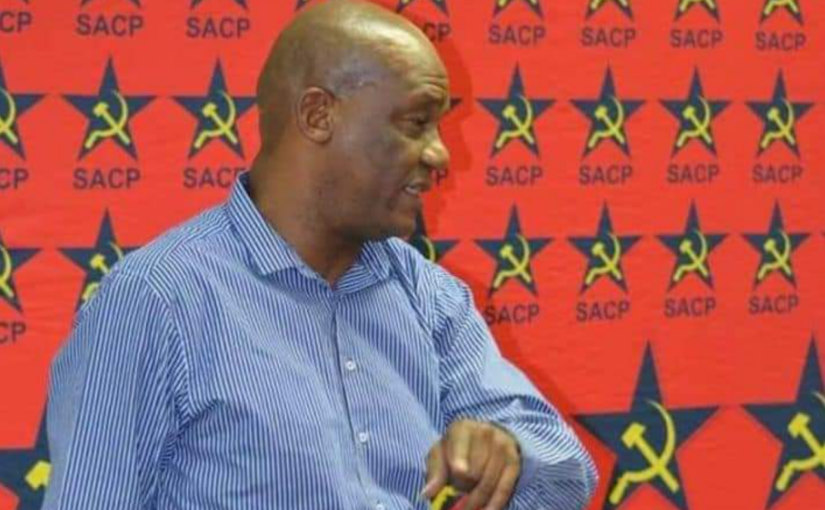
Comrade Chris Matlhako, rest in power
We are deeply saddened to learn of the passing of comrade Chris Matlhako – Secretary for International Relations of the South African Communist Party, freedom fighter and internationalist. In addition to his leadership role in the SACP, Chris was a member of the ANC, General Secretary of the Friends of Cuba Society – South Africa (FOCUS-SA) and a leader of the South African Peace Initiative (SAPI).
Chris was a longstanding friend of China and an advocate of close China-Africa relations, which topic he discussed in his contribution to the China and the Left conference organised by Qiao Collective in September 2021. Remarking on the joint centenary of the SACP and CPC in 2021, he stated that the two parties “have in their own separate ways contributed enormously toward theorization and further elaboration of socialist theory” and that the Belt and Road Initiative, “which enables the post-apartheid South African state and progressive political forces including the SACP to play an important part, is paving the road for further achievement.”
When we formed Friends of Socialist China in May 2021, he immediately agreed to be part of our advisory group. He was consistently supportive of our work, including speaking at our June 2022 event The Empire Strikes Back: Imperialism’s global war on multipolarity. He was a founding signatory of the International Manifesto Group’s manifesto, Through Pluripolarity to Socialism: A Manifesto, and spoke at its launch in September 2021.
We remember his insight, commitment, passion and humility, and we will always be grateful for his support and encouragement. As Enrique Orta González, Cuban ambassador to South Africa, remarked on Twitter, the world has lost one of its most exceptional sons.
Hamba Kahle Comrade Chris!
Published below are the tributes issued by the SACP and ANC.
SACP dips its red flag and mourns the passing of Central Committee member Comrade Chris Matlhako (21 October 1964 – 20 April 2023)
The South African Communist Party (SACP) conveys its message of deepest condolences to the family of Comrade Chris Matlhako, SACP 15th National Congress Central Committee member who served our Party and movement diligently.
Comrade Chris Matlhako passed away on Thursday morning, 20 April 2023.
The SACP also sends its message of condolences to the entire liberation movement which he served till he breathed his last, as well as the working-class across the world.
At the time of his passing, Comrade Chris Matlhako served the SACP as a full-time Central Committee Member as elected by the SACP 15th National Congress held 13 – 16 July 2022. In this capacity, he served as Secretary for International Relations at the Party’s Headquarters in Johannesburg. Previously, he was the SACP 2nd Deputy General Secretary as elected by the 14th National Congress in 2017, and served as a Central Committee member before that tenure. He was also a member of the African National Congress and participated in the mass democratic movement as an activist and leader.
Comrade Chris Matlhako joined the South Africa liberation struggle as a student, actively participating in the student movement to fight against the apartheid system. He later joined the SACP and never shifted from the socialist course.
An astute intellectual fully committed to the socialist cause, Comrade Chris penned many articles for various publications, local and international, on numerous subjects concerning the revolution. A collection of his articles published in various publications over the years was made available and serialised in the magazine Thinking Che, with the first volume appearing in 2019.
Comrade Chris Matlhako did not limit himself to serving the South African working-class, however. He also spread himself across the world, helping to raise the international struggle against imperialism and assiduously delivering the SACP’s message to various parts of the world. As part of his internationalist work, Comrade Chris served as the General-Secretary of the Friends of Cuba Society – South Africa (FOCUS-SA) and was also a member of the South African Peace Initiative, among other responsibilities. He also represented the Party in the Working Group of the International Communist and Workers Parties, directly contributing to shaping and sharpening the socialist voices across all lands.
In paying tribute to Comrade Chris Matlhako, the SACP will continue to tirelessly organise the working-class, galvanise the left forces in order to deepen the building of a socialist movement of the workers and the poor, as mandated by our 15th National Congress. In taking forward his work, the SACP calls for more revolutionaries to actively involve themselves in Marxist-Leninist intellectual work as well as working-class internationalism. The SACP calls upon young communists, as led by the Young Communist League of South Africa, whom Comrade Chris worked very hard to nurture, to preserve his legacy by organising the youth of our country to fight against imperialism, towards socialism.
ANC pays tribute to Comrade Chris Matlhako
The African National Congress (ANC) mourns the passing of a revolutionary, a freedom fighter, internationalist and one of the finest intellectuals produced by our liberation movement. We add our collective voice by exclaiming that the death of Comrade Chris Matlhaku has dealt a devastating blow to the liberation movement by robbing us of one its best and selfless cadres.
Comrade Chris was elected as Central Committee Member of the South African Communist Party (SACP) at its 15th National Congress held 13 to 16 July 2022. He served in a full-time capacity as SACP Secretary for International Relations. Comrade Chris was a committed revolutionary who served both the ANC and SACP until his last breath. The whole country and the entire democratic movement has lost a dedicated and loyal servant.
Comrade Chris joined the struggle at a very tender age when it was extremely dangerous to do so. He consciously chose to risk his life and sacrifice his youth in pursuit of the liberation struggle. As a student and youth activist, he personified the spirit of “no compromise and no surrender”. He was a humble, yet fierce fighter against the injustices of the apartheid regime.
Comrade Chris is an unsung hero of our struggle whose real contribution to our freedom is still to be fully acknowledged and documented. His name will be mentioned alongside those of the best sons and daughters of our country who passed on with dignity and honor after making an outstanding contribution to our liberation.
As a true revolutionary and a patriot, Comrade Chris’ contribution to the struggle for liberation was not aimed at seeking personal glory and fame. It was not motivated by the pursuit of personal ambition, self-interest and or lust for power and self-privilege. His was a genuine commitment to build for our people a future that is qualitatively better than our ugly past.
All freedom-loving people of our country will sorely miss his intellectual sharpness, political maturity and passionate commitment to the plight and aspirations of the working class.
As the Alliance, we must make a solemn commitment never to betray the cause for which he fought all his life. In his honour and in taking forward his legacy, we must continue to work tirelessly towards the unity and renewal of our movement. We must uproot corruption and factionalism wherever they may rear their ugly heads. Consistent with the revolutionary spirit of Comrade Chris, we must do all of these things not to seek personal glory or popularity, but as part of our revolutionary duty to defend the gains of the 1994 democratic breakthrough.
The ANC urges all its cadres, especially young people, to emulate the revolutionary example of selfless service, discipline and loyalty that was displayed by this distinguished son of the soil.
The ANC conveys its heartfelt condolences to his family, comrades, and the entire mass democratic movement. We wish them strength and fortitude during this difficult time. We hope that the family will find comfort in the knowledge that they are not the only ones who have lost a loved one. To the family, we wish to say that we are with you in your difficult hour. Your pain is the ANC’s pain. The whole nation shares in your grief.
May his revolutionary soul find eternal peace.
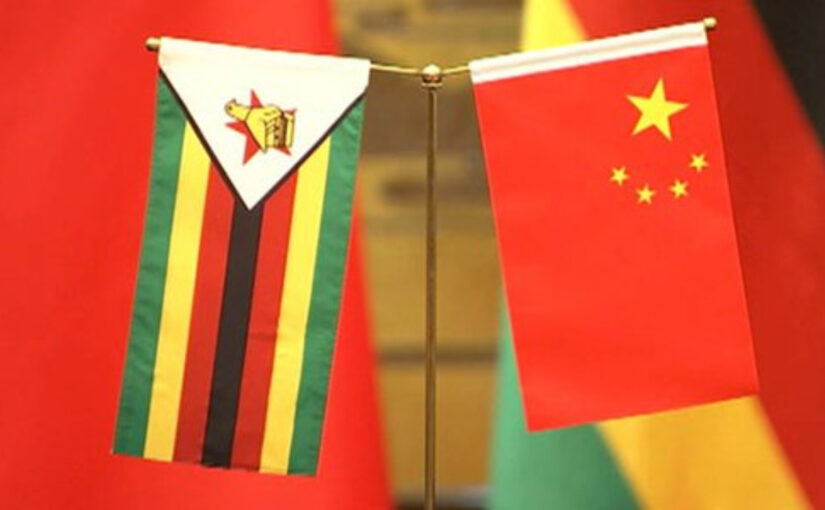
43 years on, China remains Zimbabwe’s all-weather friend
On April 18, Zimbabwe celebrated its 43rd independence anniversary. The Southern African country won its liberation primarily through a people’s war, known as Chimurenga, that defeated British colonial and white racist rule. This liberation struggle was strongly supported by China and a number of other countries.
Marking this anniversary, the Xinhua News Agency, in an article we reprint below, quoted Christopher Mutsvangwa, Secretary for Information and Publicity of the ruling Zimbabwe African National Union – Patriotic Front (ZANU-PF), which played the main role in the liberation struggle, as saying that, after standing firmly with Zimbabwe in its struggle for national independence and liberation, China has been playing an important role in the country’s economic transformation by investing in its key economic pillars such as mining, agriculture and infrastructure. “This is probably the most exciting time just like in the 1960s and 1970s when China’s arrival gave an option to the liberation movements to fight for their freedom.”
He added that, through Chinese investment in infrastructure, Zimbabwe will be transformed into a regional trade hub, citing the Chinese-funded expansion of the Robert Gabriel Mugabe International Airport, the country’s largest, as an example.
As Zimbabwe is celebrating its Independence Day on Tuesday, experts have praised China for having been the African country’s all-weather friend for more than four decades.
After standing firmly with Zimbabwe in its struggle for national independence and liberation, China has been playing an important role in the country’s economic transformation by investing in its key economic pillars such as mining, agriculture and infrastructure, said Christopher Mutsvangwa, secretary for information and publicity for Zimbabwe’s ruling Zimbabwe African National Union party.
He said Chinese modernization has created opportunities for African countries including Zimbabwe.
“This is probably the most exciting time just like in the 1960s and 1970s when China’s arrival gave an option to the liberation movements to fight for their freedom,” Mutsvangwa told Xinhua, adding that Zimbabwe’s victory against colonial forces would have been unthinkable without Chinese support.
“Now this has moved into the economic era where the world markets have become flat so that if you are not happy with the price in New York you can always try Shanghai,” he said.
Mutsvangwa further said through Chinese investment in infrastructure, Zimbabwe will be transformed into a regional trade hub.
For example, the Chinese-funded expansion of Zimbabwe’s largest airport — the Robert Gabriel Mugabe International Airport — is due for completion in 2023. The upgrade will allow the airport to grow its passenger handling capacity to about 6 million a year from the current 2.5 million.
Hopewell Mupanganyama, chairman for the youth desk in the Ministry of Foreign Affairs and International Trade, praised China for standing with African countries in their quest for national independence and liberation.
“Around the 1970s, though China was classified to be a poor country of Asia in terms of development,” it “made sure” that it assisted “Africa to dismantle colonialism,” Mupanganyama said, adding that China now once again stands at the forefront of transforming African economies through investment and trade.
Over the years, China and Zimbabwe have kept boosting economic and trade ties. Trade between the two countries surged nearly 30 percent year-on-year to a record high of 2.43 billion U.S. dollars in 2022, the Chinese Embassy in Zimbabwe said.
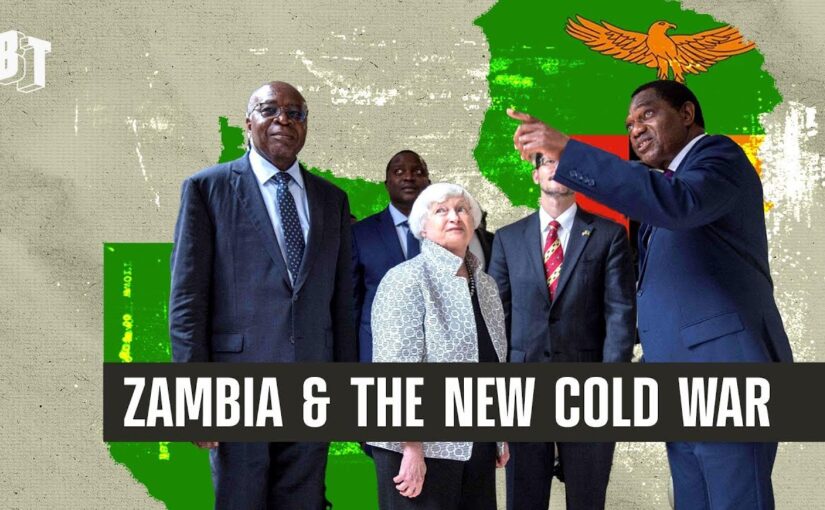
Fred M’membe: It’s the US, not China, that threatens African sovereignty
In this powerful interview on BreakThrough News, Fred M’membe (leader of the Socialist Party of Zambia) explodes the myth of Chinese colonialism in Zambia. He states: “China has never threatened our independence. We’ve never been subjected to any form of mistreatment or exploitation by China, but we can’t say the same about the US.”
M’membe recalls that China was a key supporter of post-liberation Zambia, providing both economic aid and military equipment to defend against the attacks of the apartheid regime in South Africa. He says that Zambia turned to the US for support but was turned away; China was a true friend, even making enormous sacrifices to build the Tazara Railway, which was essential for the country’s development.
He compares the US’s strategy of domination with China’s strategy of solidarity and friendship: “The US supported the apartheid regimes in South Africa and Rhodesia. The US has been involved in reactionary coups and assassinations all over Africa, including the assassination of Patrice Lumumba, the overthrow of Kwame Nkrumah, the assassination of Muammar Gaddafi. China has never participated in any coup, has never killed an African.”
Referencing the accusations of a “Chinese debt trap”, M’membe points out that China only holds 10 percent of Zambia’s debt. And what have Chinese loans been used for? Hydropower stations, airports, roads, water systems, hospitals, schools, government buildings. “The debt problem we have is the debt we owe to Western institutions, that’s 70 percent. The China debt trap narrative is a lie.”
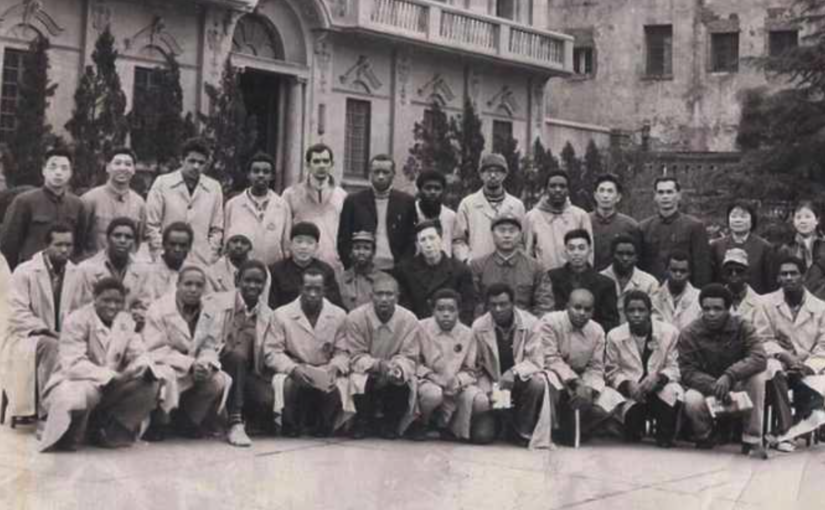
The long-standing friendship between the Chinese PLA and the South African liberation forces
We are pleased to republish the following article that provides rare detail of the long-standing and sincere support provided by the People’s Republic of China to the armed struggle waged by South Africa’s national liberation movements to overthrow the racist apartheid regime.
It was originally published on IOL (Independent Online), a major South African news website, on August 1 2022, marking the 95th anniversary of the founding of China’s People’s Liberation Army (PLA) and was co-authored by Mbuelo Musi and Cedric Masters, who were respectively members of uMkhonto we Sizwe (MK), the armed wing of the African National Congress of South Africa (ANC), and the Azanian People’s Liberation Army (APLA, formerly known as Poqo), the armed wing of the Pan-Africanist Congress of Azania (PAC). Such collaboration is not only noteworthy in itself – it also enables a more comprehensive account of the totality of China’s long-term commitment to South African liberation.
The authors note that China’s support for the armed struggle dates back more than six decades, to October 1961, following the Sharpeville Massacre, when the apartheid regime killed 65 peaceful protestors, injured many more, and banned the organisations of the liberation movement.
The first group of MK trainees stayed in China from November 1961 to December 1962, in which time they met Chairman Mao Zedong on two occasions. The article notes the significance of the links between the Chinese and South African communist parties in facilitating this relationship. China’s support for MK from its inception was first discussed by Chairman Mao and visiting SACP leaders Yusuf Dadoo and Vella Pillay.
The article also highlights the training received by APLA cadres in the 1970s, which was notable for the evident degree of attention given by the Chinese instructors to the actual conditions and circumstances of South Africa. It also notes that the training provided in China itself, “constituted only a small portion of the PLA’s support”, it being complemented, for example, by training in African countries, including Ghana and Congo (Brazzaville).
In conclusion the authors note that the training provided by China to comrades of both organisations has also benefited the state and non-state institutions they have served since the end of apartheid.
Reading this article one can better understand why President Xi Jinping describes the ties between South Africa and China as a “special bond of comrades plus brothers.”
The occasion of the 95th Anniversary of the Peoples Liberation Army (PLA) provides us, former members of the South African Liberation Movement, with a perfect opportunity to reflect on our experience, growth and military careers in the South African National Defence Force (SANDF) since those far-off days of our training by PLA instructors.
The training also benefited those who pursued civilian careers in democratic South Africa and elsewhere. Mbulelo Musi, National Political Commissar of MK Liberation War Veterans (MKLWV) and Major-General (Retired) Cedric Masters a former APLA operative recount the long-standing relations between the PLA and South African freedom fighters.
The politico-military relations between the People’s Republic of China and the ANC-led MK would be over 60 years today, dating back to October 1961. Historically, it was in October 1961 in China that these military relations began. This was after the then apartheid cruel minority system had unleashed brutal repression and banned all forms of protests.
It had just committed a massacre in Sharpeville, which led to the killing of over 65 people, and the injury and arrests of many. Organisations of the people such as the ANC and the PAC were banned and were thus forced to declare the armed Struggle against the racist regime. The apartheid colonial system had declared war against the majority of the people of SA.
Continue reading The long-standing friendship between the Chinese PLA and the South African liberation forces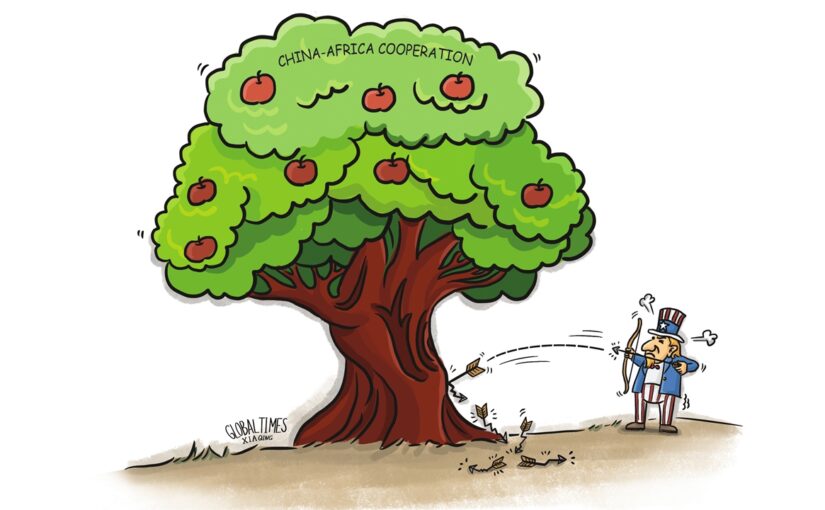
Key facts the US deliberately ignores about African debt
This important article, first published in Xinhua on 7 February 2023, takes up the question of Africa’s debt crisis, which has been a hot topic particularly in the light of US treasury secretary Janet Yellen’s recent visit to Zambia, in which she attempted to pin blame for the crisis onto China. This connects to an ongoing slander campaign about “Chinese debt traps” – a campaign which seeks both to divert attention away from the West’s horrifying record of trapping the developing world in debt, and to weaken the bonds of solidarity between China and the countries of the Global South.
The article cites a report published last year by Debt Justice, a British NGO, showing that only 12 percent of the external debt of African countries is owed to Chinese lenders, with much of the rest being owed to Western private lenders and multilateral institutions. Furthermore, the interest rates on Chinese loans is on average around half that of the interest charged by Western private lenders. Tim Jones, head of policy at Debt Justice, is quoted: “Western leaders blame China for debt crises in Africa, but this is a distraction. The truth is their own banks, asset managers and oil traders are far more responsible, but the G7 (the Group of Seven) are letting them off the hook.” Indeed, China has been an ardent supporter of the G20 Debt Service Suspension Initiative, reaching agreements with 19 African countries on debt relief and suspending the most debt service payments of any G20 member.
China’s loans to Africa are typically directed towards key infrastructure projects, with the aim of helping African countries to break out of the cycle of underdevelopment in which they have been locked as a result of centuries of colonialism and neocolonialism. Sustainable modernisation will bring tremendous benefit to the peoples of the continent, and will create conditions such that it will no longer be necessary to take out predatory loans.
Like many senior U.S. officials who have visited Africa, U.S. Treasury Secretary Janet Yellen did not fail to target China and raise concerns about China’s role in the debt problem during a recent visit to the continent.
While hyping up the bizarre “Chinese debt trap,” the U.S. officials deliberately ignored some key facts about African debt.
Who holds most African debt?
According to the World Bank’s International Debt Statistics, multilateral financial institutions and commercial creditors hold nearly three-quarters of Africa’s total external debt.
A report published last July by the British NGO Debt Justice showed that 12 percent of the external debt of African countries is owed to Chinese lenders, compared to 35 percent to Western private lenders. The average interest rate of these private loans is 5 percent, compared with 2.7 percent for loans from Chinese public and private lenders.
“Western leaders blame China for debt crises in Africa, but this is a distraction. The truth is their own banks, asset managers and oil traders are far more responsible, but the G7 (the Group of Seven) are letting them off the hook,” said Tim Jones, head of policy at Debt Justice.
Continue reading Key facts the US deliberately ignores about African debt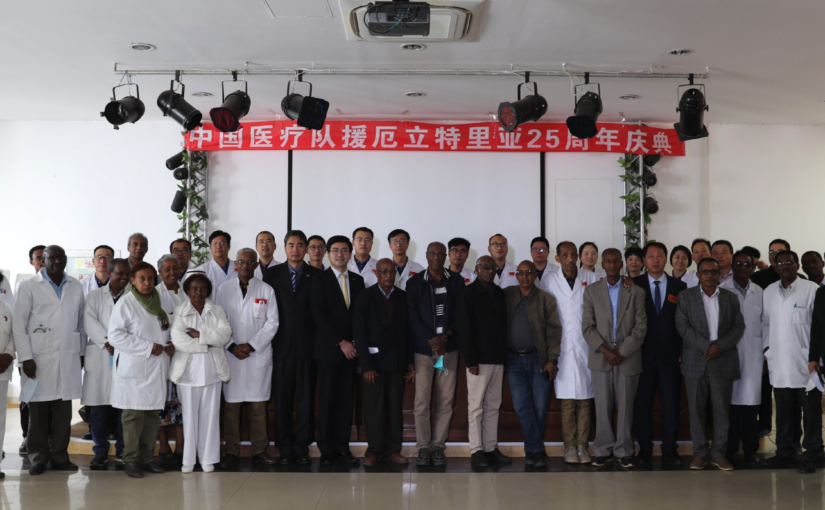
Health cooperation between China and Eritrea contributes to a lasting friendship
In the following article, which was originally carried in ChinAfrica, a publication issued under the auspices of Beijing Review, Fikrejesus Amahazion, an Eritrean educator and researcher, explains how cooperation in the healthcare sector epitomises the close friendship between China and Eritrea.
In November 2022, members of the Chinese medical team, working side-by-side with Eritrean doctors, performed complex spinal surgeries on patients in the capital Asmara for the first time in the nation’s history. This coincided with the 25th anniversary of the first dispatch of a Chinese medical team to Eritrea and served as “a timely and powerful reflection of the longstanding ties and enduring friendship between China and Eritrea.”
Contacts between China and Eritrea, the author notes, date back almost 2,000 years. However, “contemporary ties can be traced back to Eritrea’s long struggle for independence, when China offered support to Eritrea’s independence movement.”
In Amahazion’s view, “A key factor that underlies the success of health cooperation between Eritrea and China, as well as the broader relationship, is the firm commitment to the principles of mutual understanding, trust, and respect…The Eritrean government has historically insisted on establishing genuine partnerships and cooperation, while retaining firm control of its development agenda and local implementation. It encourages assistance addressing specific needs that cannot be met internally, and that complements and strengthens, rather than replacing, the country’s own institutional capacity to implement projects.”
This is rooted in a great desire to avoid crippling dependence and to foster a strong, clear sense of responsibility for and genuine ownership of the country’s future among all citizens. “For its part,” he notes, “China’s own approach to assistance has considerable similarities.”
Local media outlets in Eritrea recently reported about how members of the Chinese medical team, working side by side with Eritrean doctors, performed complex spinal surgeries on patients at Halibet Hospital in Asmara in November 2022. The extremely technical operations, which are the first-ever procedures of their kind within Eritrea, are an exciting landmark in the country’s medical sector and history.
Coinciding with the 25th anniversary of the first dispatch of Chinese medical team to Eritrea, the recent surgeries also serve as a timely and powerful reflection of the longstanding ties and enduring friendship between China and Eritrea, especially in the field of health. For a quarter of a century, health cooperation between China and Eritrea has positively contributed to the lives and wellbeing of the Eritrean people nationwide, and also helped to move the country’s health system forward.
Historical background
Although it has received significant global attention in recent years, China’s engagement with Africa actually dates back centuries and spans a number of ancient dynasties. Modern Sino-African ties can be traced to the earliest years of African independence in the 1950s and 1960s. Since then, China has become the continent’s leading trading partner, while Chinese investment in and lending to African countries have grown rapidly. Over the years, the relationship has steadily broadened to reach an array of other sectors, including culture, digital infrastructure and technology, security, and education.
Continue reading Health cooperation between China and Eritrea contributes to a lasting friendship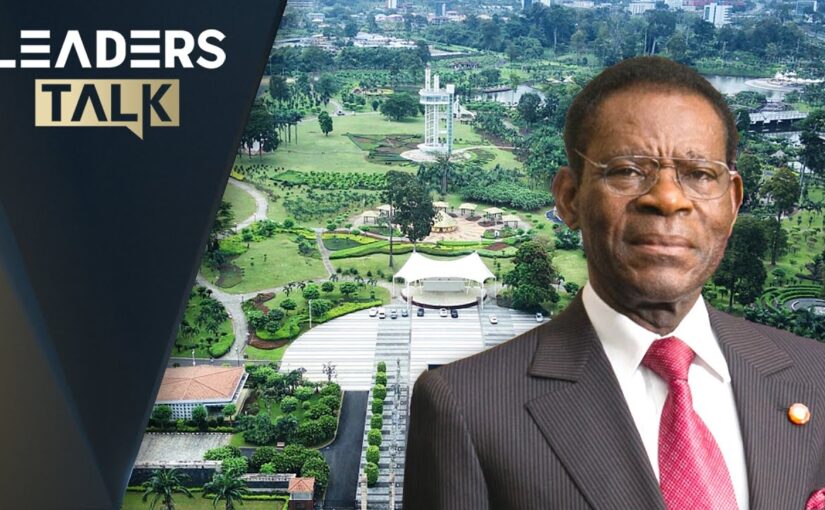
President Obiang: China is the first partner to help Equatorial Guinea
In this episode of the new CGTN series Leaders Talk, Li Peichun interviews Africa’s longest-serving head of state, President Teodoro Obiang Nguema Mbasago of Equatorial Guinea.
A Spanish colony for centuries, Equatorial Guinea was one of the poorest countries in Africa when it finally achieved independence in 1968. It was only with the discovery of major oil reserves that the country embarked on the road of rapid development in the 1990s. However, with reductions in the price of oil in recent years, the country now faces the task of economic diversification. President Obiang explains that as soon as his country discovered oil, it set out a short, medium and long-term national development plan, with the intention that the gains from oil production be used for national investment. The country’s economic diversification programme lays emphasis on agriculture and fisheries, so that the country can become self-sufficient in food and not rely on any one product.
President Obiang paid the first of his 10 state visits to China in 1984, two years after he assumed the presidency. In the interview, he reflects on the major changes he has observed in China over that period, from a country where the main form of transportation was the bicycle to a strong economic power, with modern infrastructure, and a major provider of aid to developing countries. In his view, the ideal of the Communist Party of China (CPC) is to serve the people of China wholeheartedly, by promoting development and modernisation, so as to make both the country and the people strong. The CPC, the President says, is a pioneer party that can help other political parties, especially his Democratic Party of Equatorial Guinea (PDEG), to develop their own ideals and principles.
The programme highlights how, when Covid-19 was first detected in Wuhan, Equatorial Guinea promptly donated US$2million to assist the Chinese city in dealing with the unexpected outbreak. Later, China sent medical experts and materials, as well as batches of vaccines, to help Equatorial Guinea to fight the virus. Due to their trust in China, President Obiang and his family opted to receive Chinese vaccinations.
Turning to China’s Belt and Road Initiative (BRI), President Obiang begins by noting that the development of Africa should be led by Africans. African leaders, he insists, must think about how to improve their countries, else they will not prosper. It was on this basis that his country had decided to cooperate with the BRI, because China is the first partner to help Equatorial Guinea and even Africa as a whole. The BRI, he notes, is the way for Africa to overcome the underdevelopment, suffering and poverty it is currently facing.
Refuting accusations of Chinese ‘neo-colonialism’ or ‘debt trap diplomacy’, President Obiang is crystal clear: “This is a smear and western countries should be ashamed of it.” Africa, he notes, receives very little assistance from the western countries, and what they do receive is accompanied by political conditions that undermine the stability of the country. “Those who want to accept such assistance are often those who encounter great difficulties.” China, he notes, did not colonise any African countries, it was the west, so their criticism is intended to contain China and to prevent it from helping the development of the African continent. “But we have discovered that China is our best friend… Equatorial Guinea has not received any international development assistance except from China.”
In another example of the close friendship between the two countries, towards the end of the interview, President Obiang sends a personal message to the students of the China-Equatorial Guinea Friendship Primary School in China’s south-western Yunnan province, whose renovation was paid for by the Equatorial Guinean government.
The full interview is embedded below.
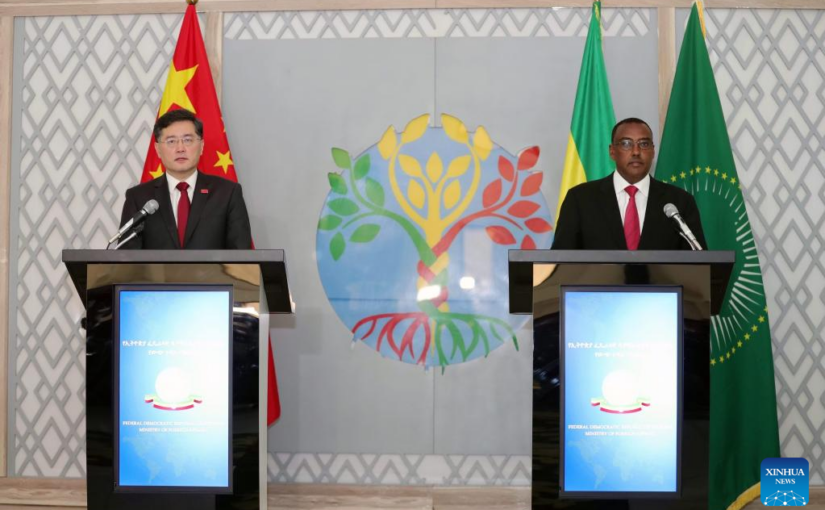
China supports peace, unity and development in Ethiopia
During his recent visit to Ethiopia, the first leg of his ongoing Africa tour, Chinese Foreign Minister Qin Gang addressed the current peace process in the East African country in a press conference he gave together with Ethiopian Deputy Prime Minister and Foreign Minister Demeke Mekonnen.
Asked for his views on the recent peace agreement, signed on November 2, 2022 in South Africa, Qin Gang noted that that Ethiopia is the common home of all Ethiopian people, including those from Tigray.
Ethiopia has now entered a new stage of looking forward to peace and focusing on development after the recent signing of a ceasefire agreement between the federal government of Ethiopia and the Tigray People’s Liberation Front (TPLF), which has been gradually implemented, he said.
China is sincerely glad to see this and extends warm congratulations to the government and people of Ethiopia, Qin added.
He said China has always taken the view that the conflict in Tigray is an internal affair of Ethiopia and that the Ethiopian people have the wisdom and ability to independently resolve their internal differences.
The TPLF was the principal component of the now defunct Ethiopian People’s Revolutionary Democratic Front (EPRDF), which was the ruling party in Ethiopia until 2019.
Qin Gang also responded to questions on the “Outlook on Peace and Development in the Horn of Africa”, proposed by China.
The following article was originally published by the Xinhua News Agency.
Chinese Foreign Minister Qin Gang on Tuesday addressed members of the press along with Ethiopian Deputy Prime Minister and Foreign Minister Demeke Mekonnen, after their talks in Addis Ababa.
When asked about China’s views on the peace agreement in Ethiopia and the progress of the China-proposed “Outlook on Peace and Development in the Horn of Africa” in Ethiopia, Qin said that Ethiopia is the common home of all Ethiopian people, including those from Tigray.
Ethiopia has now entered a new stage of looking forward to peace and focusing on development after the recent signing of a ceasefire agreement between the federal government of Ethiopia and the Tigray People’s Liberation Front (TPLF), which has been gradually implemented, he said.
Continue reading China supports peace, unity and development in Ethiopia
China and Angola celebrate 40 years of diplomatic relations
China and Angola celebrated the 40th anniversary of their establishing diplomatic relations on January 12, with an exchange of messages between President Xi Jinping and his Angolan counterpart João Lourenço.
Xi pointed out in his message that since the establishment of diplomatic ties, China and Angola have always been sincere and friendly towards each other, worked hand in hand, and understood and supported each other on issues involving their respective core interests and major concerns.
For his part, Lourenço noted that the two countries agree with each other on many international issues. He said Angola is willing to strengthen friendly and cooperative relations with China, build a shared win-win future, as well as achieve common progress, prosperity and development, so as to bring more benefits to the people of the two countries.
Meanwhile, some 600 people attended a reception marking the occasion on the evening of July 11, held by the Chinese Embassy in the Angolan capital Luanda. Chinese Ambassador to Angola Gong Tao said in his address that China and Angola have always adhered to solidarity and mutual assistance, achieving fruitful cooperation and exchanges in various areas during the past 40 years.
For many years, China has been Angola’s biggest trading partner, biggest export market, and significant source of investment. In turn, Angola has become China’s second-largest trading partner and the largest supplier of crude oil in Africa.
Underlining these excellent relations, Chinese Foreign Minister Qin Gang, presently on a tour of Africa, will visit Angola shortly.
The following articles were first published by the Xinhua News Agency.
Xi, Angolan president exchange congratulations on 40th anniversary of diplomatic ties
Xinhua, 12 January 2023
Chinese President Xi Jinping on Thursday exchanged congratulations with Angolan President Joao Lourenco on the 40th anniversary of diplomatic relations between the two countries.
Xi pointed out in his message that since the establishment of diplomatic ties 40 years ago, China and Angola have always been sincere and friendly towards each other, worked hand in hand, and understood and supported each other on issues involving their respective core interests and major concerns.
At present, China-Angola relations enjoy a sound development momentum, and bilateral cooperation in various fields has yielded fruitful results, bringing tangible benefits to the people of the two countries, Xi noted.
Continue reading China and Angola celebrate 40 years of diplomatic relations
Fred M’membe and Kyeretwie Opoku: We have to defend China
We are pleased to run a further extract from the conversation, carried by Wave Media, between leaders of the Socialist Party of Zambia and the Socialist Movement of Ghana, Fred M’membe and Kyeretwie Opoku, regarding the past, present and future of relations between China and Africa.
They note that more and more young people in both China and Africa are seeing through imperialist lies and that after just a few days stay in China, they have come to the conclusion that the Chinese revolution is unstoppable.
Noting that China and Africa understand each other and are drawn together by a similar history of oppression by colonialism and imperialism from the 19th century onwards, they affirm that China today offers an alternative path to overcome poverty and realize development. In fact, they state, it is now the only path, as the old path of colonial expansion is closed off to those seeking to develop in the contemporary world. We have to defend China, they insist, because what China has achieved are our achievements, too. They also make the important point that non-interference does not preclude solidarity.
See also: When the West visits Africa, they talk about China
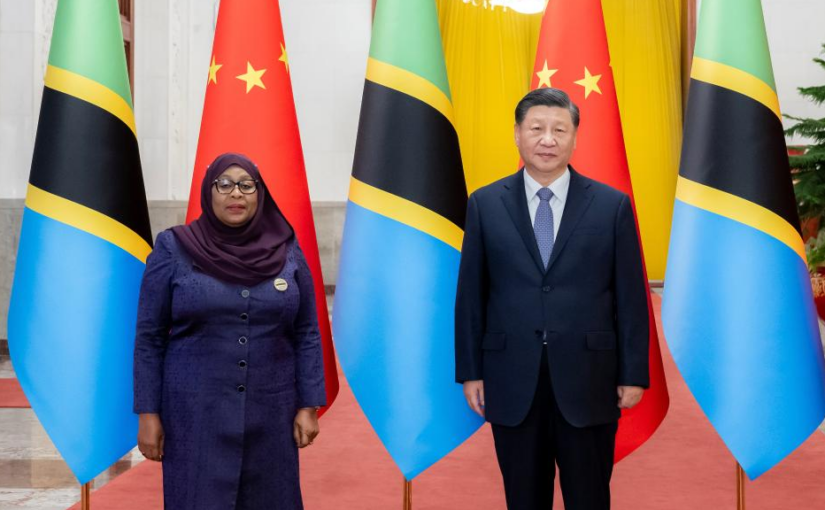
President Hassan’s visit reflects long-standing special relationship between China and Tanzania
As part of its post-Congress diplomacy, Tanzania’s President Samia Suluhu Hassan, the East African country’s first female head of state, was one of four foreign leaders to visit China last week and the first from Africa to visit after the conclusion of the 20th Congress. This fully reflects the long-standing special relationship and solidarity between the two countries, forged by Tanzania’s founding President Julius Nyerere and successive generations of Chinese leaders, including Chairman Mao Zedong, Premier Zhou Enlai and Deng Xiaoping. Tanzania was also one of the four countries visited by Xi Jinping in his first overseas visit on being elected President of China in 2013.
Symbolic of this history, among the 15 agreements signed during President Hassan’s visit was one to upgrade the Tazara railway, built by China between 1970-75 to allow landlocked Zambia to export its goods via Tanzanian ports at a time when the country was blockaded by the white racist regimes then in power in ‘Rhodesia’ (now Zimbabwe) and South Africa.
In its coverage of the state visit, China’s Global Times noted: “Running some 1,870 kilometers, the railway is sometimes regarded as the greatest engineering effort of its kind since World War II. The railway took only five years to build and was finished ahead of schedule in 1975.”
Hong Kong’s South China Morning Post wrote: “China’s involvement in the Tazara railway began in the 1970s under the leadership of Mao Zedong and then premier Zhou Enlai, when the country was facing its own financial difficulties. Lusaka was desperate for a railway link to the Tanzanian coast. Neighbouring white-controlled Rhodesia (now Zimbabwe) had cut landlocked Zambia’s only outlet to the sea for its main export copper, in response to its support of African nationalist guerrillas fighting for the transfer of power to the Rhodesian black majority. China stepped in after the US and Russia refused to fund a new railway, on the grounds it did not make economic sense, and the Tazara was built for about a billion yuan – billions of US dollars at today’s rates – in interest-free loans. The 1,860km (1,155 miles) of track stretching from Zambia’s copper belt to the Tanzanian port of Dar es Salaam on the Indian Ocean was built between 1970 and 1975 with the help of 50,000 Chinese workers.”
Reporting on Xi Jinping’s meeting with his Tanzanian counterpart, the Xinhua News Agency wrote that the Chinese leader pointed out both the CPC and the Tanzanian Revolutionary Party (Chama Cha Mapinduzi) shoulder the historical mission of strengthening themselves and the country they govern, adding that the CPC will expand exchanges and cooperation with the CCM and support the curriculum and operation of the Mwalimu Julius Nyerere Leadership School. Xi stressed that China views its relations with Tanzania from a strategic perspective and will always be a trustworthy friend of the country.
The Mwalimu Julius Nyerere Leadership School was built by China in Tanzania as a joint cadre training school for the progressive ruling parties in that country, along with those of Zimbabwe, Mozambique, South Africa, Namibia and Angola, all of whom led the liberation struggle in their respective countries.
Referring to the Tazara Railway, Xi said that it marks a milestone in China-Tanzania and China-Africa friendship. Even when China was poor, it tightened its belt to help its African brothers build this railway. “Now that China is more developed, it is better placed to act on the principle of sincerity, real results, amity and good faith, help our African friends achieve common development, and build a stronger China-Africa community with a shared future in the new era.”
The following reports were first carried by the Xinhua News Agency and the website of the Chinese Foreign Ministry.
Xi holds talks with Tanzanian president
Chinese President Xi Jinping held talks with visiting Tanzanian President Samia Suluhu Hassan in Beijing on Thursday. The two presidents announced the elevation of the bilateral relationship to a comprehensive strategic cooperative partnership.
Noting that President Hassan is the first African head of state China has received after the 20th National Congress of the Communist Party of China (CPC), Xi said it speaks volumes about the two countries’ close ties and the important position of China-Africa relations on China’s diplomatic agenda.
Xi recalled putting forth, while visiting Tanzania in 2013, the principle of sincerity, real results, amity and good faith to guide China’s cooperation with African countries. It has now become the basic policy guiding China’s solidarity and cooperation with other developing countries.
Continue reading President Hassan’s visit reflects long-standing special relationship between China and Tanzania
Video: When the West visits Africa, they talk about China
We are pleased to reproduce this video from Wave Media featuring a dialogue between Fred M’membe, President of the Socialist Party of Zambia, and Kyeretwie Opoku, Convenor of the Socialist Movement of Ghana, two of the new-emerging Marxist parties in Africa, on the question of relations between Africa and China.
According to the discussants, China is not an enemy of Africa. China has never attempted to colonize an African country and still has no ambitions to do so. In contrast, they note that the imperialist powers, particularly the United States, are increasingly trying to recolonize the continent. With their setting up of more military bases, their aim is both to suppress popular revolts as well as to exclude those they deem to be external competitors. The US and other Western powers are not there to defend the local people but rather their control of strategic minerals. The Democratic Republic of Congo (DRC) has an estimated 70% of the world’s cobalt resources, and neighboring countries like Zambia, Namibia and Niger are also rich in cobalt, uranium and other minerals. A Nigerien uranium mine supplies one third of France’s electricity. In one of the world’s poorest countries, people are being poisoned for generations to come by having to work in this open-pit mine.
When the west was colonizing Africa, the discussants note, China was supporting the liberation struggle, and subsequently helped defend Africa’s newly won independence. A key example was the Tazara Railway, which enabled landlocked Zambia to break out of its blockade and encirclement by countries still then under racist and colonial rule. Both the United States and Britain refused to help build the railway, but China stepped in, even though it had no comparable railways of its own at that time and many African countries had a higher GDP per capita than China. Today, almost all the major new infrastructure projects to be seen in Africa have been built by China.
Similarly, in the 1970s, Zambia was repeatedly bombed by the white racist regimes in South Africa and ‘Rhodesia’. The country had no air defenses to protect its territory or the bases of the national liberation movements it was hosting. The Americans, British and even the Soviet Union refused to sell air defenses to Zambia. China was the only country prepared to aid Zambia in this way, sending an entire squadron of MiG21s, even though China itself possessed only limited defenses at that time.
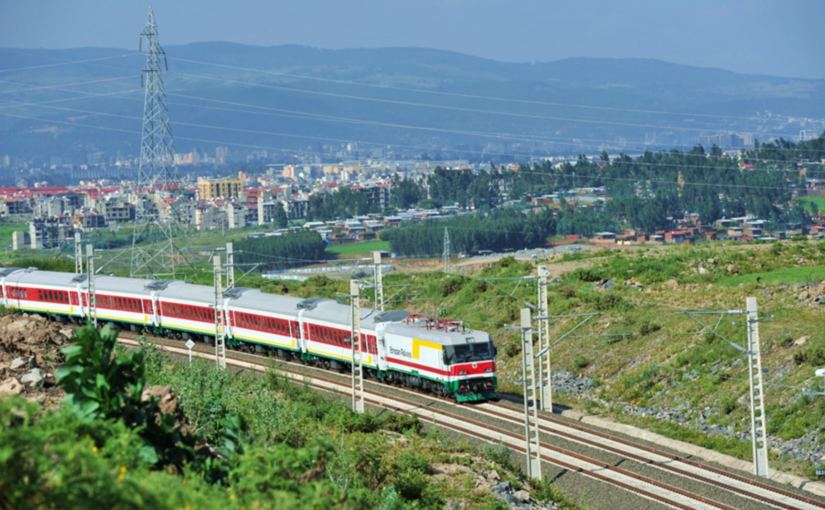
China has proved itself to be key partner for African development
We are pleased to reprint the below article by Michael Olugbode, a journalist with the Nigerian newspaper, This Day, originally carried by People’s Daily Online.
Situating his argument in the context of the contributions of the great Pan-African and socialist revolutionaries Walter Rodney and Frantz Fanon, respectively from Guyana and Martinique, and their most famous works, How Europe Underdeveloped Africa and The Wretched of the Earth, Michael goes on to assert:
“It has been many decades since colonization ‘ended’ on the African continent, but the continent has not fully healed from this past trauma and continues to search for a path to continue from where its development was disrupted. Perhaps this search may have at last come to an end with the support of a country that had also once witnessed a dose of colonization and whose people has since healed from this inhumane history, having emerged from the ruins of colonization and wars to become the fastest growing economy on the planet. That country is none other than the People’s Republic of China.”
Outlining details of the multifaceted cooperation between China and Africa, he notes that the 10 plans that President Xi Jinping outlined at the 2015 FOCAC (Forum on China-Africa Cooperation) Summit in Johannesburg have been implemented in full, with the construction of numerous railways, highways, airports, ports and other infrastructure projects, and concludes:
“The facts are there for everyone to see that Africa has finally and gradually started moving towards a promising mode of development thanks to the fellow brother that China has proven itself to be.”
Modern science, and especially the latest archeological discoveries, has shown that the African continent is the cradle of humankind. Its people were developing slowly and steadily at their own pace until some external forces invaded the continent and carted away its able bodied men and women to strange lands where they were forced to toil for generations building the emerging economies of another continent.
Some have referred to this process as an exchange or perhaps a kind of trade, but could it be described as such when humans, treated like nothing but property, were exchanged for goods such as guns and gin. No wonder Walter Rodney, in reference to his book How Europe Underdeveloped Africa, argued that it was a combination of power politics and economic exploitation of Africa by Europeans that eventually led to the poor state of African political and economic development as became evident in the late 20th century. Although the author did not state his intention “to remove the ultimate responsibility for development from the shoulders of Africans… [He believes that] every African has a responsibility to understand the [capitalist] system and work for its overthrow.”
Similarly, Frantz Fanon’s The Wretched of the Earth provides insights into how the developmental strides of Africa were distorted. The psychiatrist provided a psychological and psychiatric analysis of the dehumanizing effects of colonization upon the individuals and the nations of Africa, and discussed the broader social, cultural, and political implications of establishing a social movement for the decolonization of a person and of a people.
It has been many decades since colonization “ended” on the African continent, but the continent has not fully healed from this past trauma and continues to search for a path to continue from where its development was disrupted. Perhaps this search may have at last come to an end with the support of a country that had also once witnessed a dose of colonization and whose people has since healed from this inhumane history, having emerged from the ruins of colonization and wars to become the fastest growing economy on the planet. That country is none other than the People’s Republic of China.
China has presented Africa with a way out of its constant state of underdevelopment by offering a friendly win-win international development springboard in the form of the Forum on China-Africa Cooperation (FOCAC). At the opening ceremony of the 2018 FOCAC Beijing Summit, Chinese President Xi Jinping quoted the observations of an ancient Chinese scholar, who stated that: “Only with deep roots can a tree yield rich fruit; only filled with oil can a lamp burn brightly.” Xi noted that history follows its own rules and logic, and that with a similar fate in the past and a common mission, China and Africa have extended sympathy to and helped each other throughout all the past years. He said: “Together, we have embarked on a distinctive path of win-win cooperation.”
“Marching on this path, China has followed the principle of sincerity, real results, amity and good faith and the principle of pursuing the greater good and shared interests. China has stood with African countries. Together, we have worked in unity and forged ahead,” said Xi.
The words of President Xi is the moving spirit behind the FOCAC. Since the 2015 FOCAC Johannesburg Summit, China has fully implemented the 10 cooperation plans adopted at the Summit. A large number of railways, highways, airports, ports and other infrastructure projects as well as a number of economic and trade cooperation zones have been built or are under construction. Mutual cooperation on peace and security, science and technology, education, culture, health, poverty reduction, and people-to-people exchanges has been deepened. The massive financing pledged by China has been either delivered or arranged to be delivered. These 10 cooperation plans have brought huge benefits to the African and Chinese peoples. They have fully demonstrated the creativity, rallying power and efficiency of China-Africa cooperation, and have lifted the China-Africa comprehensive strategic and cooperative partnership to new heights.
China has meanwhile promised to build an even closer-knit China-Africa community with a shared future in the new era. It has even gone a step further to launch an industrial promotion initiative and a China-Africa economic and trade expo in China to encourage Chinese companies to increase their investment in Africa, in addition to building and upgrading a number of economic and trade cooperation zones in Africa. China also has a plan to support Africa in achieving general food security by 2030, working with Africa to formulate and implement a program of action to promote China-Africa cooperation on agricultural modernization. China has continued to strengthen cooperation with African countries in local currency settlement and has made good use of the China-Africa Development Fund, the China-Africa Fund for Industrial Cooperation, and the Special Loan for the Development of African SMEs.
The list is endless. Every series of important cooperation plans proposed by China during each FOCAC Summit has been effectively implemented, which has provided a great boost to the economic and social development of Africa and which has been highly praised by the African people and the international community.
China-Africa trade and cooperation have both blossomed. A number of major Chinese-assisted infrastructure projects have been completed, including the Ethiopia-Djibouti railway, Kenya’s standard gauge railway from Mombasa to Nairobi, and Cote d’Ivoire’s Soubre hydropower plant. These projects provide much needed transport and energy infrastructure to help further develop local industries.
The facts are there for everyone to see that Africa has finally and gradually started moving towards a promising mode of development thanks to the fellow brother that China has proven itself to be.
Danny Haiphong: Does China practice imperialism in Africa?
In this video breakdown on the Left Lens, co-editor of Friends of Socialist China Danny Haiphong analyzes China’s recent announcement that 23 interest-free loans to 17 African nations will be forgiven in the context of its broader relationship with the continent. Haiphong argues that China not only provides more flexible loan terms but also prioritizes the industrial development and export markets of African nations, something Western imperialism has never done.
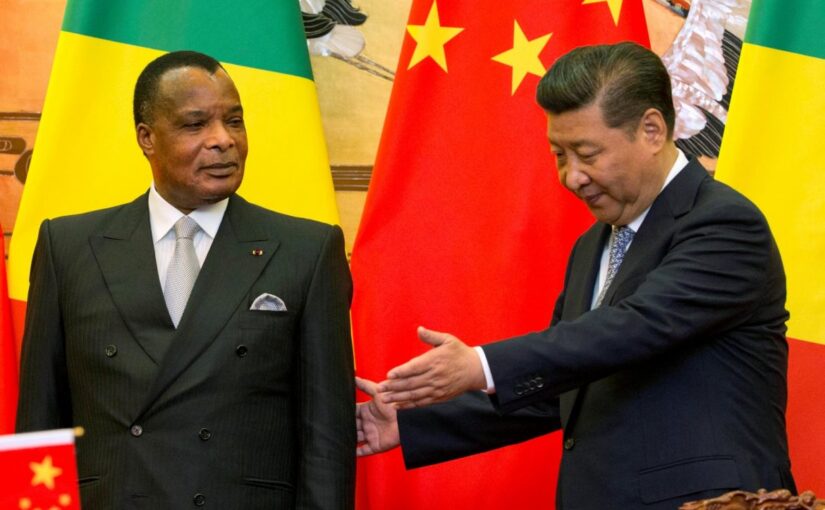
Congo-China friendship “not empty words”
The below article, which we republish from the Xinhua News Agency, details how the Republic of Congo stepped forward to rebuild a primary school in a Tibetan autonomous area of China’s Qinghai province after the region was hit by a devastating earthquake in 2010. This touching story highlights the fact that the Republic of Congo (capital Brazzaville) is one of China’s long-standing special friends in Africa. This close friendship dates above all to the presidency of the late Marien Ngoubai, who served as head of state, 1969-1977, in which time he made a serious attempt to build a socialist state and founded the Congolese Labour Party (PTC). A major landmark in this regard was his 1973 visit to China, (North) Vietnam and the DPRK. For his part, President Xi Jinping took Congo as the final stop of his first overseas visit as head of state, in March 2013, which saw him first visit Russia, Tanzania and South Africa, where he also attended a BRICS Summit. The PTC, which is still the ruling party in Congo, was among the participants in last month’s world forum of Marxist parties hosted by the CPC.
For Basile Ikouebe, former foreign minister of the Republic of the Congo, the day when he inaugurated a Congo-aided school on China’s Qinghai-Tibet Plateau 10 years ago remains fresh in his memory.
In April 2010, a 7.1-magnitude earthquake struck Yushu Tibetan Autonomous Prefecture in northwest China’s Qinghai Province.
As locals were struggling to rebuild their homes, Congo, a country on the other side of the world, decided to reach out. When attending the Shanghai World Expo in 2010, Congolese President Denis Sassou Nguesso announced that the country would help rebuild a primary school in the quake-hit area.
“The friendship between our two countries is not empty words,” said Ikouebe. Friendship between Congo and China has always stood the test of time with solidarity and a heart of gold.
“To see our partner dealing with such a difficult situation, we should express our compassion and solidarity,” explained Ikouebe in a recent interview with Xinhua, underlining that Congo has “the heart to honor its commitments and solidarity” with China.
Continue reading Congo-China friendship “not empty words”