The following article, originally published in Xinhua, provides an overview of the four major global initiatives proposed by President Xi Jinping over the last five years – the Global Development Initiative (GDI, 2021), the Global Security Initiative (GSI, 2022), the Global Civilisation Initiative (GCI, 2023) and the Global Governance Initiative (GGI) – and discusses how these proposals link together to form a unified framework for building a community with a shared future for humanity, addressing, respectively, material development, peace and stability, cultural understanding, and institutional reform.
The article notes that UN Secretary-General Antonio Guterres has described the initiatives as being “totally compatible with the UN Charter” and that they have attracted broad support from countries around the world, particularly the Global South.
The piece argues that systems of international cooperation are increasingly fractured by unilateralism, sanctions, protectionism and bloc confrontation, contrasting these trends with China’s emphasis on sovereign equality, dialogue and multilateralism. It highlights deepening global crises: development is in reverse in parts of the world, the poverty gap is widening, and security tensions are intensifying. The article states that progress toward the UN’s 2030 Sustainable Development Goals has stalled: only 35 percent of targets are on track, nearly half are moving too slowly, and 18 percent have regressed. It stresses worsening global inequalities, noting the poorest half of humanity holds only 2 percent of global wealth, billions face food insecurity exacerbated by conflicts, and climate-adaptation financing gaps are growing.
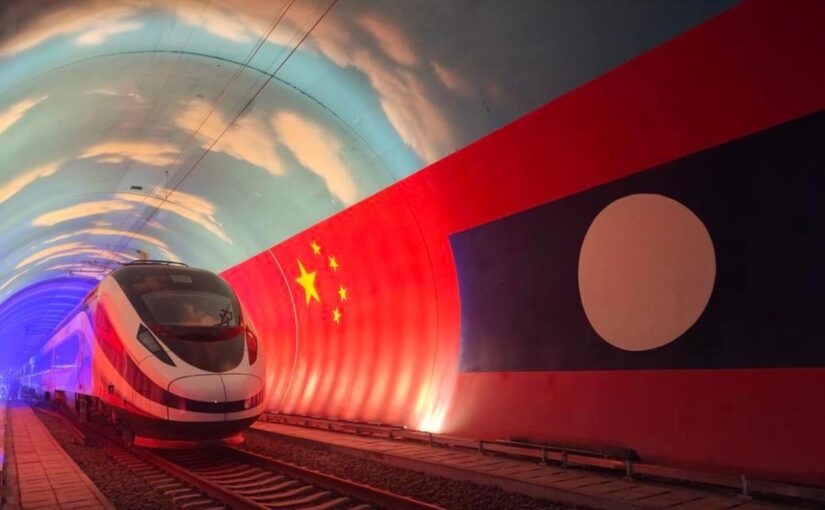
The article describes the GDI as a break from Western-dominated development models, emphasising China’s long-term planning combined with market dynamism. Projects funded by the Global Development and South-South Cooperation Fund in Nepal and major infrastructure cooperation such as the China-Laos Railway are cited as examples of China “teaching a man to fish”: the Laos railway cut logistics costs by over 30 percent and created 100,000 jobs, while China-Africa Agricultural Technology Demonstration Centres increased crop yields by 30-60 percent and benefited over a million farmers. Meanwhile, China-Brazil clean-energy cooperation centres are extending power access to remote communities, linking development to ecological protection.
The Global Governance Initiative, which was announced in September this year, proposes a program of global governance reform rooted in respect for sovereign equality, international rule of law, genuine multilateralism, adherence to the principles and purposes of the UN Charter, and a people-centred focus on employment, education and healthcare. China is turning these ideas into practice by supporting reforms in multilateral institutions, expanding BRICS and SCO cooperation, promoting South-South platforms such as FOCAC (Forum on China-Africa Cooperation) and the China-CELAC Forum, and advancing new governance norms in data security, AI, and cross-border data flows. The article notes China’s increased funding to the China-UN Peace and Development Fund, and highlights the creation of the International Organisation for Mediation headquartered in Hong Kong, established with more than 30 countries, as an example of security governance via law rather than force.
Continue reading How China’s initiatives are paving a new path to a better world