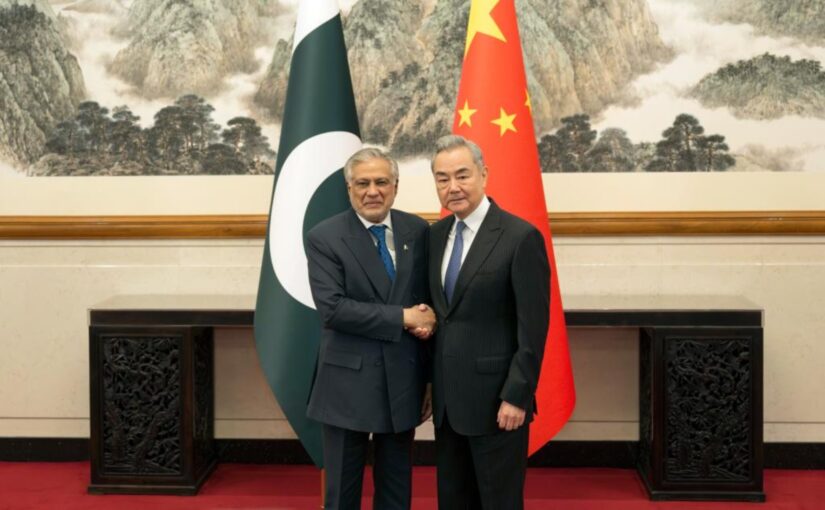
Strategic dialogue enhances China-Pakistan friendship

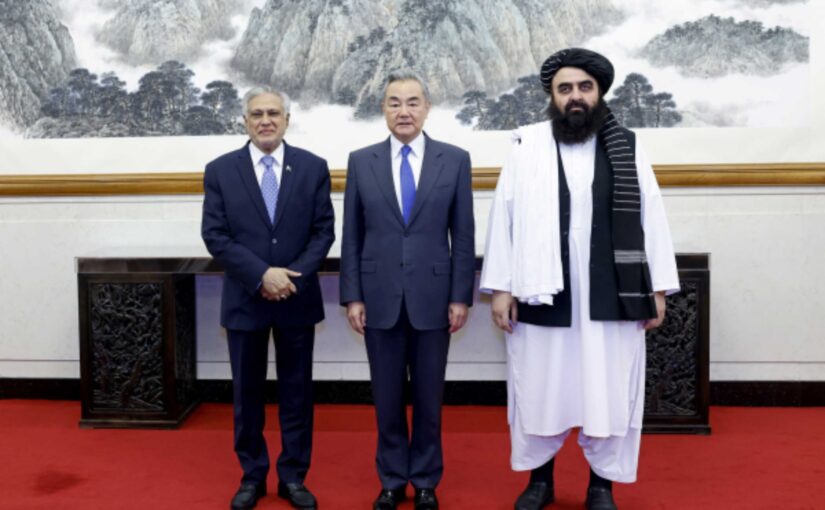
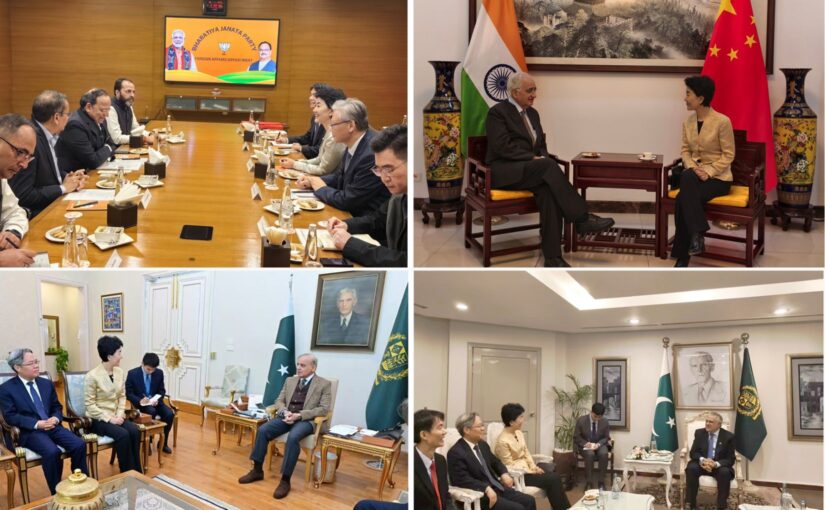
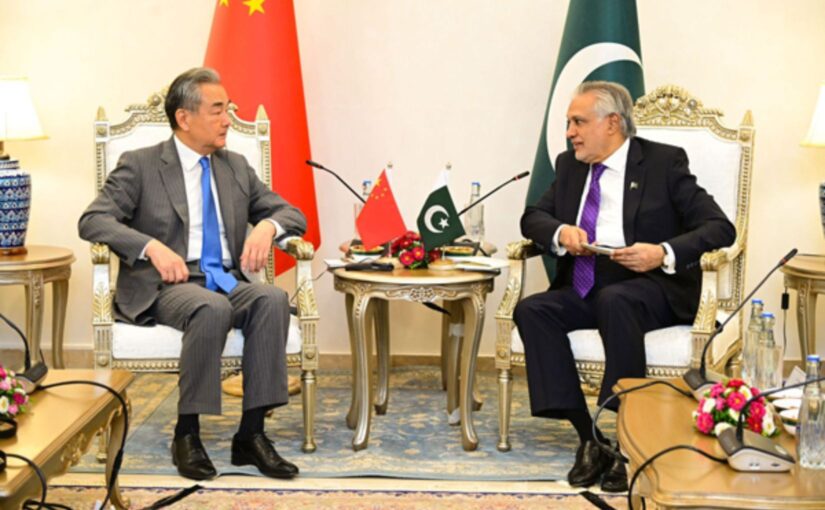
Mohammad Ishaq Dar, Deputy Prime Minister and Foreign Minister of Pakistan, visited China from January 3-5, 2026 and co-chaired the Seventh Round of China-Pakistan Foreign Ministers’ Strategic Dialogue in Beijing with his Chinese counterpart and host Wang Yi on January 4.

Following the dialogue a detailed Joint Press Communiqué was issued setting out its decisions. Among its key points are:

  • The two sides announced the launch of commemorative activities in 2026 celebrating the 75th anniversary of the establishment of diplomatic relations between China and Pakistan, which will serve as an opportunity to consolidate China-Pakistan friendship and expand new areas of cooperation so that China-Pakistan friendship could grow from strength to strength and pass from generation to generation.
  • The two sides reaffirmed their unyielding support for each other on issues concerning their respective core interests. Pakistan reaffirmed its firm commitment to the one-China principle and reiterated that Taiwan is an inalienable part of China’s territory. Pakistan firmly supports every effort of China to achieve national reunification and opposes any form of “Taiwan independence” and any attempt to create “two Chinas” or “one China, one Taiwan.”
  • China reiterated its steadfast support for Pakistan in safeguarding its sovereignty, independence and territorial integrity. China supports Pakistan in pursuing a development path suited to its national conditions and achieving economic prosperity and supports Pakistan in firmly combating terrorism and playing a bigger role in international and regional affairs.
  • The two sides agreed to further align their development plans and priorities and build an upgraded version 2.0 of the China-Pakistan Economic Corridor (CPEC), which is a pioneering project of the Belt and Road Initiative. The two sides agreed to focus on the three key sectors of industry, agriculture and mining, promote the building and operation of the Gwadar Port, ensure the smooth passage of the Karakoram Highway, and enhance Pakistan’s capacity for sustainable development. The two sides will deepen cooperation in areas such as trade and investment, information technology, science and technology, cybersecurity, technical and vocational training and education, and people-to-people and cultural exchanges.
  • The two sides welcomed third-party participation in CPEC cooperation that conforms with the modalities set by China and Pakistan.
  • The two sides expressed satisfaction at their expanding space cooperation and for the expected early entrance of Pakistani astronauts into the China Space Station. They agreed to explore space in a peaceful and mutually beneficial manner for greater economic and social development and prosperity.
  • The two sides agreed that it is essential to firmly uphold the outcomes of the victory of World War II, adhere to the purposes and principles of the UN Charter, reject attempts to distort historical facts, and oppose the plotted resurgence of fascism and militarism.
  • The two sides emphasised the importance of a South Asian regional order underpinned by the UN Charter, international law, and the basic norms governing international relations, reiterated opposition to any unilateral actions, and reaffirmed the significance of maintaining peace and stability in South Asia and the necessity of resolving all outstanding disputes through dialogue and consultation.
  • The Pakistani side briefed the Chinese side on its position on and latest developments of the situation in Jammu and Kashmir. China reiterated that the Jammu and Kashmir dispute is left over from history and should be properly and peacefully resolved in accordance with the UN Charter, relevant UN Security Council resolutions and bilateral agreements.
  • The two sides expressed readiness to continue leveraging the China-Afghanistan-Pakistan Trilateral Foreign Ministers’ Dialogue and the China-Bangladesh-Pakistan cooperation mechanism to deliver new outcomes.
  • Pakistan highly commended China’s efforts to safeguard developing countries’ right to sustainable development.
  • The two sides expressed satisfaction over their cooperation within multilateral mechanisms such as the UN and the Shanghai Cooperation Organisation (SCO) and agreed to deepen coordination and collaboration to safeguard the common interests of developing countries and international fairness and justice.
  • The two sides reaffirmed their commitment to the purposes and principles of the UN Charter, their support for multilateralism and free trade, and their opposition to hegemonism, bullying behaviours violating national sovereignty of other countries, the forming of “small circles” and bloc confrontation.
  • China congratulated Pakistan on its outstanding performance during its UN Security Council presidency and expressed full support for Pakistan to work as the rotating president of the SCO from 2026 to 2027.
  • The two sides agreed to keep in close communication and coordination on the Afghan issue, work with the international community to encourage the Afghan government to build an inclusive political framework, adopt moderate policies, focus on development, pursue good-neighbourliness, and play a constructive role in helping Afghanistan achieve stable development and integrate into the international community. The two sides called for more visible and verifiable actions to dismantle and eliminate all terrorist organisations based in Afghanistan which continue to pose serious threats to regional and global security and prevent terrorist organisations from using the Afghan territory for terrorism against any other country and to endanger any other country.
  • The two sides called for an unconditional, comprehensive and permanent ceasefire in Gaza, and reaffirmed their support for the Palestinian people’s right to self-determination and for the implementation of the two-state solution with the establishment of an independent state of Palestine. The two sides also expressed their concern at the situation in the occupied West Bank and urged the need for urgently addressing it.
  • The two sides agreed to hold the next round of Foreign Ministers’ Strategic Dialogue in Islamabad next year on mutually convenient dates.

The following is the full text of the joint communiqué. It was originally published by the Xinhua News Agency.

Continue reading Strategic dialogue enhances China-Pakistan friendship

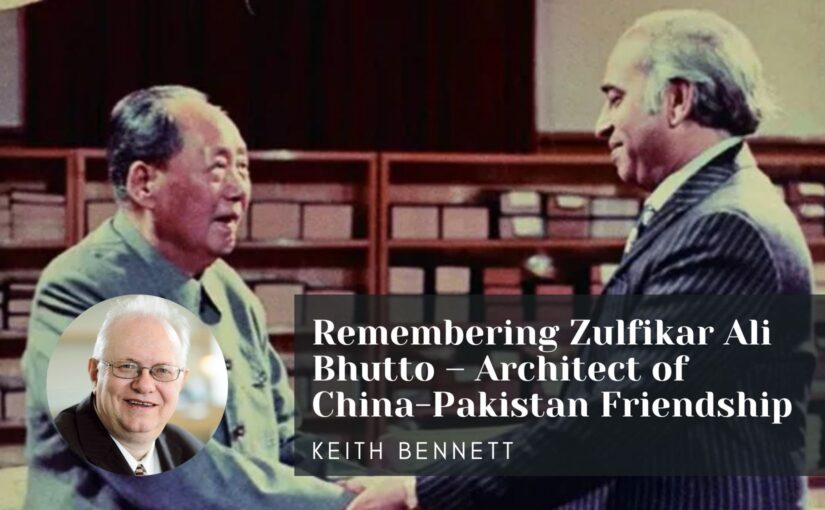
Remembering Zulfikar Ali Bhutto – Architect of China-Pakistan Friendship

Third World Solidarity organised a meeting on Monday January 5, 2026, marking the 98th birth anniversary of the late Pakistani leader Zulfikar Ali Bhutto, who made an outstanding contribution to the friendship between his country and China.

The meeting, held in the Baseline Studios, home to a number of community organisations and projects in west London, was attended by many prominent members of the Pakistani community, and others who have been friends with members of the Bhutto family.

Chairing the meeting, Mushtaq Lasharie, Chair of Third World Solidarity, the British Pakistani Mayors Association and Lancaster West Residents Association, drew attention to the price that has often been paid by leaders of the Global South who stand for independence and popular democracy, from the martyrdom of Zulfikar Ali Bhutto and his daughter Benazir Bhutto, to today’s illegal kidnapping of Venezuelan President Maduro and his wife. This was also one of the themes that was returned to in the discussion period following the main speeches, in which Keith Bennett explained how the hand of US imperialism was present in all these cases, whether overtly or covertly.

The first speaker was London-based Pakistani journalist Javed Soomro, whose family has long had a close relationship with the Bhuttos. He explained that before Z.A. Bhutto founded and led the Pakistan People’s Party (PPP), politics in the country had been confined to the feudal class and the boardrooms of the industrialists. The people were irrelevant. Bhutto was “the first to bring the voices of the masses and ordinary people” to the political arena. The basic slogan of the PPP was for clothes, food and shelter. [Note: In its simplicity and profundity this has echoes of the Bolshevik call for bread, peace and land.]

In 1974, he organised a major conference aimed at uniting the Muslim countries. This effort was key to the animosity that the United States came to harbour for Bhutto. [This has clear parallels with the way that the efforts of the late Hugo Chávez and President Maduro to unite the countries of Latin America and the Caribbean has intensified the hatred of the United States for the Bolivarian revolution in Venezuela.]

Javed was followed by Keith Bennett, co-editor of Friends of Socialist China, who spoke on the great contributions of Z.A. Bhutto, as well as his daughter Benazir Bhutto and grandson Bilawal Bhutto Zardari, to Pakistan’s friendship with both the People’s Republic of China and the Democratic People’s Republic of Korea (DPRK).

The full text of Keith’s speech is reproduced below.

The final speaker was Victoria Schofield, author of ‘Bhutto: Trial and Execution’ (1979) and ‘The Fragrance of Tears: My Friendship with Benazir Bhutto’ (2020).

Victoria forged a close friendship with Benazir Bhutto when they were fellow students at Oxford University. With Benazir’s encouragement she succeeded her as President of the Oxford Union. She travelled to Pakistan in 1978, when Z.A. Bhutto was on trial and subsequently hanged, at Benazir’s invitation. She was one of the last people to see Bhutto alive and recalled how Benazir was not even allowed to hug her father on their last meeting, just a couple of days before he was executed.

She further recalled Bhutto’s vision for his country, as outlined to the Spectator:

“My vision is that of a Pakistan whose social standards are comparable to some parts of Europe. This means a war against illiteracy and ignorance. It means fighting prejudice and obscurantism. It involves the equality of men and women. It demands the mobilisation of the people’s selected energies. It dictates the restoration of dignity to the human person… It requires a check on the growth of population and easy access to education and medical care throughout the country. It contemplates better towns and cities and cleaner villages. It raises 100 challenges. It is a long haul. We have braced ourselves for it.”

Following a lively Q&A, closing remarks were delivered by Mian Saleem, President of PPP Greater London.

The formal proceedings were followed by two songs from Hugh Goodacre on guitar and dinner.

The following is the full text of Keith’s speech.

Continue reading Remembering Zulfikar Ali Bhutto – Architect of China-Pakistan Friendship